Balkinization
an unanticipated consequence of
Jack M. Balkin
Balkinization Symposiums: A Continuing List
E-mail:
Jack Balkin:
jackbalkin at yahoo.com
Bruce Ackerman
bruce.ackerman at yale.edu
Ian Ayres
ian.ayres at yale.edu
Corey Brettschneider
corey_brettschneider at brown.edu
Mary Dudziak
mary.l.dudziak at emory.edu
Joey Fishkin
joey.fishkin at gmail.com
Heather Gerken heather.gerken at yale.edu
Abbe Gluck abbe.gluck at yale.edu
Mark Graber
mgraber at law.umaryland.edu
Stephen Griffin
sgriffin at tulane.edu
Jonathan Hafetz
jonathan.hafetz at shu.edu
Jeremy Kessler
jkessler at law.columbia.edu
Andrew Koppelman
akoppelman at law.northwestern.edu
Marty Lederman
msl46 at law.georgetown.edu
Sanford Levinson
slevinson at law.utexas.edu
David Luban
david.luban at gmail.com
Gerard Magliocca
gmaglioc at iupui.edu
Jason Mazzone
mazzonej at illinois.edu
Linda McClain
lmcclain at bu.edu
John Mikhail
mikhail at law.georgetown.edu
Frank Pasquale
pasquale.frank at gmail.com
Nate Persily
npersily at gmail.com
Michael Stokes Paulsen
michaelstokespaulsen at gmail.com
Deborah Pearlstein
dpearlst at yu.edu
Rick Pildes
rick.pildes at nyu.edu
David Pozen
dpozen at law.columbia.edu
Richard Primus
raprimus at umich.edu
K. Sabeel Rahmansabeel.rahman at brooklaw.edu
Alice Ristroph
alice.ristroph at shu.edu
Neil Siegel
siegel at law.duke.edu
David Super
david.super at law.georgetown.edu
Brian Tamanaha
btamanaha at wulaw.wustl.edu
Nelson Tebbe
nelson.tebbe at brooklaw.edu
Mark Tushnet
mtushnet at law.harvard.edu
Adam Winkler
winkler at ucla.edu
Compendium of posts on Hobby Lobby and related cases
The Anti-Torture Memos: Balkinization Posts on Torture, Interrogation, Detention, War Powers, and OLC
The Anti-Torture Memos (arranged by topic)
Recent Posts
Best books of 2006
Hello 2007
Gerald Ford and the Transformation of the American Party System
A Truly Poor Metaphor: "The Constitution is a Contract"
The Laziest Son - A Rumination
The Metamorphosis
Clueless in Silver Spring
Fellow Liberals: Be a "Legal Formalist," Join the Recovering Realists Club (Small Meetings Likely)
“I don’t think the public would stand for it.”
Should we have executed Jefferson Davis and Robert E. Lee?
A Christmas Musical Mystery
On Friendship, and a New Year - A Meditation
Ogres Are Like Onsions
The Anti-Torture Memos
![[Powered by Blogger]](https://lh3.googleusercontent.com/blogger_img_proxy/AEn0k_spKOjtOnbivFnx_N3fswOLCBXmpluczsVGTIoUArAE090b8qj6GDe1oanQ9pcWgqxuHUDMPR6AcyR_cBaE4h4fBeQB-hBf1rpZmLjxEHoa=s0-d)
Just A Few Blogs
ACS Blog
Alas, a Blog
Althouse
Arts and Letters Daily
Atrios (Eschaton)
Bill of Health
Buzzflash.com
Buzz Machine
Cato at Liberty
Juan Cole (Informed Comment)
Concurring Opinions
The Constitution in 2020
Corrente
Crooked Timber
Daily Howler
Daily Kos
Dana Boyd
Brad DeLong
Digby (Hullabaloo)
Discriminations
Daniel Drezner
Kevin Drum (Mother Jones)
Electrolite
En Banc
Eunomia (Daniel Larison)
Fafblog
Michael Froomkin (Discourse.net)
GovLab (Beth Noveck)
Rick Hasen (Election Law)
History News Network
How Appealing
Ignatz (Sam Heldman)
The Importance of (Ernie Miller)
Infolaw
Instapundit
International Economic Law and Policy Blog
IntLawGrrls
Jacob Levy
Jesus' General
Jurisdynamics
The Kitchen Cabinet
Mark Kleiman
Law Blog Central
Larry Lessig
Lawyers, Guns and Money
Liberal Oasis
Brian Leiter's Law School Reports
The Leiter Reports
Marginal Revolution
Megan McArdle
Memeorandum
Metafilter
Mirror of Justice
The New Republic
Newseum
No More Mister Nice Blog
Brendan Nyhan
Opinio Juris
Orcinus
The Originalism Blog
Pandagon
Passport (Foreign Policy)
Overcoming Bias
Political Animal (Washington Monthly)
Political Theory Daily Review
Political Wire (Taegan Goddard)
The Poor Man
Virginia Postrel
Prawfsblawg
Public Reason
Jonathan Rauch
Raw Story
Redstate
ReligiousLeftLaw.com
Reporters Committee For Freedom of the Press
Reproductive Rights Blog
Rothman's Roadmap to the Right of Publicity
SCOTUS Blog
Seeing the Forest
Clay Shirky
The Shifted Librarian
The Situationist
Larry Solum (Legal Theory)
Andrew Sullivan
Talking Points Memo
Talk Left
Tapped
Tbogg
TechPresident
The Paper Chase (Jurist)
Tom Paine
Tom Tomorrow (This Modern World)
Eve Tushnet
Uggabugga
University of Chicago Law School Faculty Blog
Unqualified Offerings
The Volokh Conspiracy
War and Piece (Laura Rozen)
Wampum
Oliver Willis
Wonkette
Written Description
Matthew Yglesias
Yin
Your Choice of Feeds
1. XML
powered by

2. Atom Feed
3. RSS 2.0
Best books of 2006
Sandy Levinson
The Austin American-Statesman asked me, along with many other Austinites, to select the best book we read of those published in 2006. My response follows:
"Dred Scott and the Problem of Constitutional Evil," Mark A. Graber
This is a stunning meditation on the limits of the Constitution and on those who believe that we can escape the problems it poses by adopting one method of interpretation, be it "original intent" or the "fundamental values" of our polity. The title's "constitutional evil" is slavery and the infamous Dred Scott decision is the enduring symbol of the Founding Fathers' decision to prefer Union over Justice. It is comforting to believe that the case represents "judges on a rampage," instead of "constitutional fidelity," an enduring trope in our debates over the Constitution. But Graber shows that a constitutionally "faithful" judge could come to the awful conclusion that blacks had no rights that whites were bound to respect. This book is important for anyone who wishes to understand how our history has been shaped, not always for the best, by a Constitution that we too easily venerate (and recommend to other countries as a model for solving their political problems).
If the American Statesman had let me list two books, my other choice would have been Larry Wright's The Looming Tower, a remarkable history of the formation of Al-Qaeda, based on meticulous research and many trips to such countries as Sudan, Yemen, Saudi Arabia, etc. He also has extremely depressing chapters on the dysfunctional relationship between the FBI and CIA, which almost certainly contributed to our unjustifiable "surprise" on September 11. A member of the 9/11 Commission told me that he considered this the best book yet published on Al Qaeda and said that he wished it had been available to the Commission while it was doing its own analysis.
Posted
3:46 PM
by Sandy Levinson [link]
(25) comments
Hello 2007
Brian Tamanaha
2006 was a difficult year for America. 2007 will be better. People are standing up and pulling together.
Let me close the year by recommending two books that should be of interest to both liberals and conservatives, to be read together. Sandy Levinson's Our Undemocratic Constitution (see sidebar to right) has received much praise. Borrowing a term used after the last election, I would describe the book as a "thumping" of our veneration of the Constitution and of our taken-for-granted belief in the democratic nature of our system. The second book is Bertrand de Jouvenel's On Power (which can be purchased at Liberty Fund). It was written a half century ago by a now forgotten, old-fashioned conservative. The book, to pare it to its core, demonstrates how the modern state utilizes the rhetoric and institutions of "democracy" to consolidate power and to wage wars in which many people are killed in the name of the people. It is a startling argument, given that we are often told that democracies are free and peaceful. Even if you disagree with their respective arguments, in combination, the two books call us all to think critically about the system we have, and about the system we want.
Thank you Jack for allowing me to contribute to Balkinization. Thank you readers for taking the time to read and respond to my posts. Thoughtful responses have many times forced me to rethink my position. I have learned a great deal from all the contributors (those who post and those who comment) to this wonderful blog.
A Happy New Year to all!
Posted
12:11 PM
by Brian Tamanaha [link]
(19) comments
Gerald Ford and the Transformation of the American Party System
JB
People today may be surprised to learn that Gerald Ford supported affirmative action and was a moderate on abortion rights. But that's because they have forgotten what the Republican Party was until Ronald Reagan and the New Right effectively remade the Republican coalition in 1980.
The Republican Party post-World War II was primarily the party of business (as it still is today) but it included many people that we would today call social liberals. In foreign policy it was strongly anti-communist. But there were many ways to oppose communism. The Republican Party had its fair share of isolationists, but especially after the Eisenhower years, it had a significant number of internationalists, of whom Gerald Ford and Richard Nixon were examples. These internationalists often agreed on many issues with Democratic Cold Warriors like John Kennedy and Lyndon Johnson.
The Republican Party in Congress, which was mostly in the minority during these years, was nevertheless able to form alliances across the aisle: with conservative Democrats on some policies, and with liberal Democrats on others. The 1964 Civil Rights Act (which both Goldwater and Reagan opposed for libertarian and federalist reasons) would not have been possible without a bi-partisan coalition of Democratic and Republican moderates and liberals. The Republican Party was still the party of Lincoln. Had Nixon been elected in 1960 instead of Kennedy-- and he actually may have won that election-- it is quite possible that Nixon would be remembered today not for Watergate but for having pushed through the key civil rights bills of the 1960's rather than Kennedy or Johnson.
Indeed, had Nixon won the 1960 election, and pushed through the Civil Rights Acts, there probably would have been no Southern Strategy in 1968. Instead, conservative Republicans might have moved into the Democratic Party with its political base still largely in the South; and many liberals might have found themselves drawn into the party of Richard Nixon, Nelson Rockefeller, and Gerald Ford.
The modern Republican Party as we know it arose because Kennedy, and not Nixon, entered the White House in 1960. Nixon, who was a moderate on many social issues, devised his Southern Strategy in part to take advantage of the widening chasm between the two halves of the Democratic coalition, which had been split by the civil rights revolution. He chose a position between the liberal Democrats and George Wallace, supporting Brown v. Board of Education and the Civil Rights Acts but opposing forced busing. He predicted, correctly, that this position would marginalize Wallace and bring Southern Democrats (and a few Northern Democrats upset with busing) into the Republican Party. But Nixon's position on race was moderate. Even as he opposed busing, he promoted affirmative action, in part to discomfit organized labor.
During the period between 1968 and 1980, there was still plenty of room in the Republican Party for fiscal conservatives who were social moderates-to-liberals like Gerald Ford. Indeed, the struggle for the soul of the Republican Party continued throughout the Reagan years, and we have seen the last vestiges of that struggle in the all but complete wipeout of Republican moderates in the 2006 Congressional elections.
Gerald Ford represents the declining power of the fiscal conservative/social moderate to liberal wing of the Republican Party. He is the last member of that wing to become President, and his defeat in 1976, along with Nixon's resignation in 1974, spurred on that decline. Nixon's disgrace and Ford's loss opened a path for Ronald Reagan to embrace the New Right and create a new, successful coalition that combined the traditional business constituencies of the Republican party with religious conservatives.
Consider, for a moment, what would have happened if Ford had won in 1976, an election that he in fact almost did win, coming back from a 30 point deficit. Between 1976 and 1980, Ford would have inherited most if not all of the problems that Jimmy Carter faced, including inflation, unemployment, the gas crisis, and quite possibly the Iranian revolution and the hostage crisis that followed it.
These problems, taken as a whole would have been daunting to anyone, and by 1980, Ford would most likely not have been a very popular president. Reagan might well have won the Republican nomination in 1980, but he would be running in the wake of an unpopular Ford Presidency rather than an unpopular Carter Presidency. He would not have been able to portray himself as an agent of necessary change in the way he did in his race against the Democratic incumbent, Jimmy Carter. And even if Ford had done better in a second term than Carter did, the state of the economy would have made the public anxious for change by 1980. Hence the public might have turned to the Democrats for the first time since 1968, either to a traditional liberal like Walter Mondale or Teddy Kennedy, or perhaps a Scoop Jackson-style moderate.
If Reagan had run and lost in 1980, there probably would have been no Reagan Revolution. By 1984 he probably would have been judged too old to run for a first term. A successful conservative coalition might still have formed, but it would be a shadow of what Reagan actually produced, and it would not have been as successful at displacing the moderate wing of the Republican Party. A Ford victory in 1976 would probably have produced a Republican Party quite different from the one we see today, still the party of business, but far more evenly split on social and cultural issues.
Thus, Gerald Ford was truly a pivotal figure in American politics, not merely for helping the country through the trauma of Watergate, but because he narrowly lost the 1976 election. By losing that election, he helped set in motion the gradual extinction of the moderate wing of the party he represented, and made possible the transition to the party system we know today.
But everything cycles, and it is possible that, just as Ford passed away, the country may be ready for a new version of moderate Republicanism, a combination of fiscal conservativism and social liberalism. Indeed, in one sense, this combination already resurfaced and already succeeded in the 1990s: Bill Clinton, although nominally a Democrat, governed in many respects like a liberal Republican. We don't normally think of Ford and Clinton together-- they were very different personalities-- but the combination of Clinton plus a Republican Congress produced pretty much what moderate Republicans of Ford's stripe stood for: balanced budgets, low inflation, and moderate liberalism on social issues. The last of these Clinton always tried to package as a combination of tolerance, equal opportunity, and just plain common sense; this was, of course, part and parcel of his triangulation strategy. The country liked Clinton well enough when he stuck to that formula, and it liked him far less when he strayed from it. There might be a lesson here for both political parties.
Posted
7:01 AM
by JB [link]
(22) comments
A Truly Poor Metaphor: "The Constitution is a Contract"
Brian Tamanaha
In response to my post yesterday listing the problems with the "orginal meaning" theory of constitutional interpretation, Bart DePalma, an articulate reader of this blog, argued in response that this theory is the only correct one. His argument rested on this claim: "The Constitution is a contract..." If we don't enforce the terms of the contract as the parties intended, DePalma argued, the contract is "a nullity."
It has often been said that the Constitution as "a contract." The Constitution is not literally a contract, of course, so this is meant in a metaphorical sense. This metaphor delivers a powerful conclusion: "We agreed to it, so we are bound by it." The beauty of this metaphor is that it glosses over many problems. Rather than go on at length about these problems, which are generally known, I will instead recite this passage by Robert Dahl (in his How Democratic is the American Constitution?) about the origins of this "contract."I want to recall how the Constitutional Convention that met in Philadelphia during the summer of 1787 was made up. Although we tend to assume that all thirteen states sent delegates, in fact Rhode Island refused to attend, and the delegates from New Hampshire didn't arrive until some weeks after the Convention opened. As a result, several crucial votes in June and July were taken with only eleven state delegations in attendance. Moreover, the votes were counted by states, and although most of time most state delegations agreed on a single position, on occasion they were too divided internally to cast a vote.
My question, then, is this: Why should we feel bound today by a document produced more than two centuries ago by a goup of fifty-five mortal men, actually signed by only thirty-nine, a fair number of whom were slaveholders, and adopted in only thirteen states by the votes of fewer than two thousand men, all of whom are long since dead and mainly forgotten?
The usual response to this question is to point to the power to amend the Constitution. Roughly, the argument goes like this: if we don't like the terms of the "contract", we are free to change it. Since we don't change it, we agree to its terms as originally meant. As Sandy points out in his Our Undemocratic Constitution, however, it has become almost impossible to amend the Constitution, and this extreme difficulty was by design. Madison and Hamilton and others did not entirely trust the people (in whose name this contract is being enforced today) and their passions.
There are many serious arguments to be made about the Constitution and how it should be interpreted, but we should stop using the metaphor that it is a contract.
Addendum in response to several comments:
Sorry for not taking seriously the idea that the Constitution is literally a contract.
So let me see if I get it. Just over two hundred years ago, a few thousand people created a "contract" that was binding not only upon the majority of the people at the time who did not consent to the terms of the contract, but upon all future generations as well--many hundreds of millions of people, for hundreds and perhaps thousands of years. In addition, this intrepid group made it extremely difficult (and later nigh impossible) to alter the terms of the contract. And forever after, their shared views about the meaning of the terms of the contract controls all decisions, no matter how much change takes place in society, the economy, the political system, the population, technology, culture, and everything else.
Is that an attractive (or sensible) way to understand the foundational terms of our society and government?
Posted
11:59 AM
by Brian Tamanaha [link]
(54) comments
The Laziest Son - A Rumination
Scott Horton
A man on his deathbed left instructions
For dividing up his goods among his three sons.
He had devoted his entire spirit to those sons.
They stood like cypress trees around him,
Quiet and strong.
He told the town judge,
"Whichever of my sons is laziest,
Give him all the inheritance."
Then he died, and the judge turned to the three,
"Each of you must give some account of your laziness,
so I can understand just how you are lazy."
Mystics are experts in laziness. They rely on it,
Because they continuously see God working all around them.
The harvest keeps coming in, yet they
Never even did the plowing!
"Come on. Say something about the ways you are lazy."
Every spoken word is a covering for the inner self.
A little curtain-flick no wider than a slice
Of roast meat can reveal hundreds of exploding suns.
Even if what is being said is trivial and wrong,
The listener hears the source. One breeze comes
From across a garden. Another from across the ash-heap.
Think how different the voices of the fox
And the lion, and what they tell you!
Hearing someone is lifting the lid off the cooking pot.
You learn what's for supper. Though some people
Can know just by the smell, a sweet stew
From a sour soup cooked with vinegar.
A man taps a clay pot before he buys it
To know by the sound if it has a crack.
The eldest of the three brothers told the judge,
"I can know a man by his voice,
and if he won't speak,
I wait three days, and then I know him intuitively."
The second brother, "I know him when he speaks,
And if he won't talk, I strike up a conversation."
"But what if he knows that trick?" asked the judge.
Which reminds me of the mother who tells her child
"When you're walking through the graveyard at night
and you see a boogeyman, run at it,
and it will go away."
"But what," replies the child, "if the boogeyman's
Mother has told it to do the same thing?
Boogeymen have mothers too."
The second brother had no answer.
"I sit in front of him in silence,
And set up a ladder made of patience,
And if in his presence a language from beyond joy
And beyond grief begins to pour from my chest,
I know that his soul is as deep and bright
As the star Canopus rising over Yemen.
And so when I start speaking a powerful right arm
Of words sweeping down, I know him from what I say,
And how I say it, because there's a window open
Between us, mixing the night air of our beings."
The youngest was, obviously,
The laziest. He won.
- - -
Not Christian or Jew or Muslim, not Hindu,
Buddhist, sufi, or zen. Not any religion
Or cultural system. I am not from the East
Or the West, not out of the ocean or up
From the ground, not natural or ethereal, not
Composed of elements at all. I do not exist,
Am not an entity in this world or the next,
Did not descend from Adam and Eve or any
Origin story. My place is placeless, a trace
Of the traceless. Neither body nor soul.
I belong to the beloved, have seen the two
Worlds as one and that one call to and know,
First, last, outer, inner, only that
Breath breathing human being.
There is a way between voice and presence
Where information flows.
In disciplined silence it opens,
With wandering talk it closes.
- Mawlana Jalal ad-Din Muhammad Balkhi (Rumi), Masnavi-ye Manavi (ca. 1265)(Coleman Barks transl.)
If we had to craft a list of the ten greatest poets of human history, then certainly this thirteenth-century Muslim theologian, who began his life in modern day Afghanistan and ended it in what later became Turkey, would have an assured position on the list. And as for universality – what better measure than the fact that in 2004, Rumi ranked in surveys as the best read poet in Turkey, Iran, Afghanistan and, thanks to the brilliant translations of Coleman Barks, the United States. As with any Rumi poem, this one has many layers of meaning to it. But here's my understanding.
Like Boccaccio's ring story in the Decameron (the third from the cycle of the first day) or Lessing's parable from Nathan the Wise (act 3, scene 4)– this choice of virtue among three sons should be immediately understood (and certainly would have been understood by a contemporary of Rumi's) this way: which of the three faiths "of the Book" is the true faith? The father is, of course, the God of the Book, and the sons, "tall like Cypresses," are Islam, Christianity and Judaism. Rumi echoes that in the follow-on ("Not Christian, Jew or Muslim…") And to this question Rumi offers several answers, mostly laden with irony. He tells us that professed belief counts for little, particularly if not sincerely held. "I can know a man by his voice," says the eldest son, who is promptly ejected from the contest. (But compare this with the wiser man – as Rumi reminds us, the clay pot must be tapped to test for a crack; the buyer who relies on the outward appearance alone is a fool). And, like Boccaccio and Lessing, he says that it is our conduct that matters and must ultimately provide the basis for a judgment.
But on this point the irony of a Sufi mystic kicks in. For conduct, Rumi takes "laziness," for which here I see the introspective process of truth-seeking that is Rumi's hallmark, and that of the Mevlevi Brotherhood which he helped define. It involves discipline and rigor ("disciplined silence"), but to the uninitiated it must, of course, seem nothing but "laziness." ("Mystics are experts in laziness.") Can you hear the laughter? Rumi mocks himself, or at least, shows that he has a sense of humor.
Importantly, Rumi warns us against demonization of the outsider, of the nonbeliever (the "boogeyman," who, he reminds us through the voice of a child, "has a mother, too.")
But back to our question. Who is the chosen son? In the end we learn that it is "the youngest son," and the youngest of the three faiths is, of course, Islam. But this is not Rumi's ultimate meaning. The true answer is to point to the false premise of the question. The answer lies in what unites, not in what divides humankind – what ties humans one to another and to the world in which they live. A Sufi faithful would know this as the doctrine of the oneness of God, tauhid. Hence, the right answer: "there's a window open/ Between us, mixing the night air of our beings." Those who are driven by differentiation and false pride for their religious choice – whatever the religious choice - have failed the test in the most miserable way.
And on this point, Rumi, Boccaccio and Lessing – the Muslim, the Catholic, and the Protestant who launched the drive for the emancipation of Europe's Jews - see things very much eye-to-eye. But their message is a vital one for our day. We live in an age in which thoughts of crusaders and caliphates have been resurrected for shameful and blood-drenched purposes. This must be overcome with urgency.
So for the New Year, I wish what Rumi wishes – not a rejection of faith, but a faith more profound, based on tolerance, compassion and respect for the ties that bind humankind. I wish that the land where Rumi once walked – from his native city of Balkh in Afghanistan to his final home in Anatolian Konya - would know his thoughts and hopes again, and the peace that they promise. But I wish the same thing for my fellow citizens at home in the United States, where the poison of religious bigotry seeps ever closer to the groundwater. I hope we all can find that way "between voice and presence" of which Rumi writes. We need it badly. "With disciplined silence it opens/ With wandering talk it closes." So here's a resolve for the New Year: Let us find the tools to keep that window open. There is nothing that humanity requires more urgently than this.
Posted
8:55 AM
by Scott Horton [link]
(30) comments
The Metamorphosis
JB
One morning, as Pierre Schlag was waking up from anxious dreams, he discovered that in bed he had been changed into a monstrous footnote, footnote 233 to be exact. Schlag, a law professor at Colorado, has long been one of the most interesting members of the American legal academy. His entire career has been one long epatez le bourgeois directed at the traditional forms of legal scholarship. His 2004 essay (now up on SSRN), "My Dinner at Langdell's," is an amusing rumination on how law professors become reduced to footnotes: authorities cited by other law professors to stand for certain arguments, positions, and propositions. Indeed, Schlag suggests, if we are successful, that is what we are fated to become, and indeed, all that we become: Another way of putting it is that every scholar hopes to become a successful meme, which catches on, and which is repeated and repeatedly discussed throughout the generations. That is so even if the meme becomes increasingly ambiguous, increasingly foreshortened, increasingly separate from what we believed our thought and our personality to be about. We all want to be memes, because being a successful meme means surviving, it means being perpetual. The problem of being a meme, however, is twofold. First, as one is perpetually repeatedly, one will be perpetually misunderstood-- one will be foreshortened, summarized, synthesized, bowlderized, taken out of context, and used for a whole host of purposes and causes that will send shivers down one's spine. Second, as one's ideas are repeated and cited, they lose connection with who one feels one is-- the flesh and blood person who originated those ideas, and who was motivated to state them at a particular time in a particular context and with a particular motivation and purpose. The meme stands for us, but it is not us; it is a false mask that is associated with us, and the likeness is not always flattering. People mistake us for something we said twenty years ago-- that is, if anybody cares what we said twenty years ago. But that, of course, is the rub. For the alternative to being cited, and miscited, and taken out of context, and reduced to a shorthand, or a phrase, is not to be cited or discussed at all. As Oscar Wilde once said (and thus, in the process is mis-re-presented by my very citation of his words), the only thing worse than being talked about is not being talked about. Perhaps our concern about preserving our authenticity is misplaced. Perhaps a significant part of us, if not most of us, is what we mean to others, what other people think we signify, what they think we stand for, what they remember of us and about us. If that is so, then perhaps we should embrace ultimately becoming a meme, or a symbol, or a footnote, or a memory. You might think that Schlag, who began his career as a postmodernist, would embrace this thoroughly postmodern view of the self as a bundle of representations in the eyes of others. But it seems clear from his essay that he resists, and the reason is not difficult to tell. Even if we put aside the belief in a spurious authenticity which is separate from what others think of us, even if we reflect that a part of what we are, and what we will be when we die, is what others think of/say about/remember about/ us, some representations will please us better than others. And, more to Schlag's point-- for his is also an attack on legal thought-- some ways of remembering will actually promote creative thought, while others will tend to arrest it and limit it.But I am an immortal now. I am 233. At night, when the lights go out in the library, it is very cold. A dry cold, like on a clear night with a full moon. The tomes of law reviews all rest silently on the shelves. We are still, but we are perfect.
Schlag aims his barbs, as he so often has, at the aesthetics of American legal scholarship, but what he says could be true of almost any field of scholarly endeavor. And it is by no means clear that most scholars would find the metamorphosis unwelcome. To succeed in the business of scholarship is to be made a footnote, a shorthand, a symbol of a particular idea or set of ideas that can be cited repeatedly, and through this repetition, become alienated from who we thought we were.
Posted
7:01 AM
by JB [link]
(27) comments
Clueless in Silver Spring
Mark Graber
My name is Mark A. Graber and, apologies to Brian Tamanaha, I do not have a clue as to what it might mean to be a legal formalist as opposed to being a legal realist.
Ronald Dworkin and many others claim that certain constitutional provisions and precedents are best interpreted as requiring constitutional decision makers to apply their best understanding of free speech, cruel and unusual punishment, due process and the like. If Dworkin is right about the original meaning of the First Amendment (or BROWN v. BOARD OF EDUCATION), then legal formalists are in the same boat as legal realists. Of course, Dworkin may be wrong, but that is not an issue of legal formalism versus legal realism, but of the best application of formalist principles. Whether the constitution requires recourse to moral principles and what those principles are is a question of interpretation, not a question whether to interpret.
The sacred Dred Scott book (now available for 14.50 at Amazon!--hey, I've got another kid applying to an expensive college) claims that when constitutional controversies have excited a society for any period of time, constitutional sociology almost guarantees that both sides will be making plausible originalist, aspirational, and institutionalist arguments. If this is correct, then the difference between legal formalists and legal realists is again likely to be quite small in practice. I think, for example, when we combine LOVING V. VIRGINIA (persons have a constitutional right to marry persons of any race) with UNITED STATES V. VIRGINIA (gender classifications should be judged almost as strictly as race classifications), the obvious conclusion is that persons have a constitutional right to marry persons of any gender. This is as close to a logical deduction as you get in precedential reasoning, but lots of people disagree. The broader point is that if formalism cannot determine the constitutional status of gay marriage, it is unlikely to resolve other problems clearly as well.
At the bottom, everyone agrees that original meanings, text, and precedent matter. Disputes exist over the proper mix, but more important, disputes exist over the extent to which recourse to original meanings, text, precedent, structure, and aspirations resolve contemporary problems. Legitimate questions exist as to how much indeterminacy exists in law, but this is not a question between legal formalists and legal realists. A legal formalist might conclude, for example, that 200 years of inconsistent precedents, vague constitutional texts, and unanticipated regime changes have resulted in a great deal of indeterminacy. Another might conclude that, in fact, far more constitutional questions are resolved by simple application of precedent than the law reviews suggest. The important point is that this is as much an argument between formalists as between formalists and some other school of thought.
Posted
5:31 PM
by Mark Graber [link]
(24) comments
Fellow Liberals: Be a "Legal Formalist," Join the Recovering Realists Club (Small Meetings Likely)
Brian Tamanaha
Anyone who boldly proclaims to be a “legal formalist” today can be dismissed as naïve or deluded, or as an old fogey who slept through the last century of jurisprudence. Right? We are all Legal Realists now, and the Realists buried legal formalism.
Hold on a minute. A notable contemporary legal theorist who cannot be dismissed as naïve or deluded recently declared his allegiance to legal formalism. His coming out announcement bears quoting:I was having a lunchtime conversation with distinguished colleagues and we were discussing the topic du jour—the Alito hearings. One of my colleagues, whom I consider to be one of the greatest legal philosophers of the post-war period, was discussing Justice Roberts’s analogy between judging and umpiring. You may remember the following testimony:
“Judges are like umpires. Umpires don’t make the rules, they apply them. The role of an umpire and a judge is critical. They make sure everybody plays by the rules, but it is a limited role…”
My colleague then proceeded to ridicule Roberts’s view. I can’t remember the exact words, but they amounted to something like the following: No one (serious) could possibly think that judges are like umpires. Of course, judges make the law—they have to. Who could (seriously) think otherwise?
I bravely raised my right hand, branding myself as beyond the jurisprudential pale—as someone who takes seriously the idea that judges should apply the law rather than make it. I felt like I should go to a peculiar sort of twelve-step meeting, where I would be required to say, “My name is Lawrence Solum and I am a legal formalist.”
For anyone not familiar with jurisprudence, this passage might seem overwrought. But Solum is right that Roberts’s comments elicited snickering from within the legal academy, especially among jurisprudes. Alito’s comments, below, also prompted a few guffaws:When I became a judge, I stopped being a practicing attorney. And that was a big change in role. The role of a practicing attorney is to achieve a desirable result for the client in the particular case at hand. But a judge can’t think that way. A judge can’t have any agenda. A judge can’t have any preferred outcome in any particular case, and a judge certainly doesn’t have a client. The judge’s only obligation, and it’s a solemn obligation, is to the rule of law. And what that means is that in every single case the judge has to do what the law requires.
These respective statements by Roberts and Alito were dismissed by many jurisprudential sophisticates, many legal academics, and many (many!) liberals, as pablum for public consumption, not to be taken seriously by anyone in the know. The Supreme Court deals with complex, open, disputed legal issues, many of which appear impossible to resolve by legal analysis alone. Judge Richard Posner’s recent review of the Supreme Court in the Harvard Law Review was entitled “A Political Court.” He wrote: “The evidence of the influence of policy judgments, and hence of politics, on constitutional adjudication on the Supreme Court is everywhere at hand.”
In the face of this widely held view, Solum’s declaration of allegiance to legal formalism seems foolishly quixotic. But Solum is too smart to be put away so easily. Here is what he means by “legal formalism:” “The core idea of formalism is that the law (constitutions, statutes, regulations, and precedent) provides rules and that these rules can, do, and should provide a public standard for what is lawful (or not).”
Few people would dispute that as a general proposition. The problem arises owing to legal indeterminacy. Most people in the legal academy accept that there is a measurable degree of indeterminacy in law, particularly in the winnowed cases taken up by the Supreme Court. Given this indeterminacy, it seems that the only realistic path is to embrace the irreducibly political nature of judging, at least for the Supreme Court—hence skepticism about the formalistic statements by Roberts and Alito.
Among liberals, there are additional reasons for such skepticism. As a historical matter, the so-called “legal formalists” were the bad conservative judges who rendered laissez faire decisions, issued labor injunctions, and invalidated social welfare legislation, all in the name of strict fidelity to law. Today, the most noted legal formalists on the Supreme Court, Justices Scalia and Thomas (and now Roberts and Alito) are politically conservative. Liberals suspect that formalistic talk by these conservatives is merely cover for rendering decisions that conform to their political views. Moreover, Scalia’s formalistic original meaning theory of constitutional interpretation has a built in conservative bent, grounding the meaning of constitutional provisions in views that prevailed more than a century ago.
The problem with such objections by liberals (and their insistence that constitutional judging is inevitably political) is that it cedes the high ground to conservatives. Formalistic assertions--that judges are supposed to “apply the law, not make law;” that judges “rule according to the law, not their political views”--resonate because, well, that is what judges are supposed to do! Yes, the Legal Realists taught us that the reality of judging is more complicated than that, but their work did not alter the ideal of judging, nor did it change general expectations about the proper role and orientation of judges. After all, as is taught in civics classes from the fourth grade through high school, in a democracy the legislature makes the law and judges apply it.
Against the weight of this prevailing view, liberals who insist that constitutional judging is politics will lose to an avowed legal formalist every time. Imagine the uproar that would ensue if a liberal appointee for the Supreme Court were to testify before the Senate that her political views will determine her interpretation of the Constitution. Jurisprudes and liberal legal academics might celebrate her candor (while questioning her strategic savvy), but will they offer her a position on their law faculties after she is voted down as unqualified to be a Justice?
After decades of ideological screening of judicial candidates, the bulk of judges on the Supreme Court and on lower federal courts are political conservatives. Liberals have responded to this by proposing ways to limit judicial power (abolish judicial review, establish age or term limits for judges, etc.), by lobbying against far right appointees during the confirmation process, and by hoping for electoral victories and a liberal President who will achieve a liberal makeover of the bench. Good luck!
Liberals should consider a different approach: retake the high road and insist that judges should rule according to the law. Rather than ridicule formalistic statements by conservative judges, let’s applaud them, then hold the judges to their avowed legal formalism, vociferously criticizing decisions that appear to be politically driven (remember Bush v Gore!), condemning violators as hypocrites and offenders of the rule of law. I fervently hope that Justices Scalia, Thomas, Roberts and Alito do not decide cases based upon their political views. Legal formalism stands against this as well.
For these reasons (which are not my reasons, as I will indicate momentarily), liberals should give legal formalism a serious second look. Were it not for the long association of formalism with conservatism, the influence of Legal Realism (ramped up by CLS) (supplemented by social scientific studies of ideology in judging), and the conservative bent of original meaning theory, the benefits of a rapprochement with legal formalism would be obvious to liberals. But few liberals have dedicated sustained efforts to developing a sound understanding of legal formalism, and the subject has not drawn much attention in jurisprudence (with the notable exception of old work by Frederick Schauer).
This brings me back to Solum’s declaration that he is a legal formalist. [I should add that I don’t know what his politics are, which does not seem directly relevant to his theory anyway.] He rejects the view that political judging is inevitable on the Supreme Court (with certain caveats). His article lays out concrete guidelines for a formalistic (rule-based) approach to constitutional analysis. His formalism incorporates but does not center upon Scalia’s “original meaning” theory. Solum instead begins with precedent, plain meaning, and constitutional text and structure (then factors in originalism, and additional considerations).
Solum’s formalism avoids the obvious flaws of original meaning theory (specifically: its dependence upon historical questions that cannot be conclusively resolved by historians (much less judges), problems with applying centuries-old meanings to present situations, and the fact that a great deal of modern legislation and precedent would be hard to square with old understandings), and avoids its built-in conservative bent. Scalia has correctly responded to critics that one cannot win the day with criticism alone, but must present a superior alternative. Solum’s article elaborates an avowedly formalistic alternative to Scalia’s. Solum’s argument is realistic, and fits easily with our current understandings of constitutional law. Whether or not one agrees with all of its details, his proposal merits serious consideration.
A central theme of Solum’s piece is what he labels our predicament of “the antinomy of realism and formalism,” in which our legal culture, in an almost schizophrenic fashion, is both formalistic and instrumental in its understandings of and approaches to law. My recent book, Law as a Means to an End, presents an intellectual history that describes how this uneasy antinomy came about, and elaborates on its corrosive consequences for the rule of law.
If my argument in the book is correct, the development of a plausible (realistic) legal formalism for the contemporary age, through the efforts of Solum and others, will be essential if we are to avoid inflicting damage upon our rule of law tradition.
Finally, I must preempt a misimpression that might be created by the tenor of this post, which has articulated reasons why liberals should take legal formalism seriously. Although I am a liberal, those are not my reasons for doing so. I genuinely believe that the rule of law is essential to our society. Liberals and conservatives disagree about much, but on recognizing the signal importance of the rule of law we should be united. At the core of the rule of law is legal formalism, especially legal formalism by judges. For this reason:
“My name is Brian Tamanaha and I am a legal formalist.”
(Yuck, that was not an easy statement to make—try it and see.)
Posted
2:22 PM
by Brian Tamanaha [link]
(37) comments
“I don’t think the public would stand for it.”
Ian Ayres
When asked during his vice-presidential confirmation hearings about whether he would grant Nixon a pardon should he need one, Ford replied: "I don't think the public would stand for it."
In some ways, these are the most important nine words of Ford’s career, but they are almost absent from the web.
Unlike other Presidential commitments like George Bush’s “read my lips” or George W’s unequivocal promise not to reinstate the draft, it is not clear whether Ford’s comment was even a promise. It can be read as being literally non-responsive to the question asked and instead opining on the public’s possible future reaction to any such pardon. [In a press conference after the pardon, Ford claimed that he hadn’t promised “I said in answer to that hypothetical question, I did not say I wouldn't. I simply said that under the way the question was phrased, the American people would object.” At the same press conference he seemed to forget the nine words when he said “I must say that the decision has created more antagonism than I anticipated.”]
But Ford’s nine words can also be read as being implicitly responsive. “Would you pardon the man who nominated?” “[Oh no,] I don’t think the public would stand for it.”
It was ill-advised for Ford to utter these nine words. To even intimate a commitment not to pardon at that early date was inappropriate if there was even a possibility that he would later feel compelled to do so.
People have focused on the wrong question when it comes to the Nixon pardon. Too many people just ask whether Nixon should have been pardoned. But to my mind there is a subsidiary question of whether Ford was the right person to pardon him. Even if you believe that Nixon should be pardoned, there are two reasons to think that Ford was not the appropriate person to grant that pardon. First, the nine words. Ford had intimated in his confirmation hearings that he would not. Second, it is unseemly for Ford to pardon the person who nominated him for the job. At a minimum, it creates an appearance of impropriety.
Nixon had actually considered pardoning himself before resigning and Al Haig had indirectly suggested to Ford the idea of a Ford pardon before Nixon resigned. Ford was worried that his silence during these meetings might have “implie[d] assent” and Ford called Haig and read him a statement which he intended to make clear that there was no pardon deal in place. Ford read to Haig: “I want you to understand that I have no intention of recommending what the President should do about resigning or not resigning and that nothing we talked about yesterday afternoon should be given any consideration in whatever decision the President may wish to make.”
This statement of course failed to mention the p-word. The subsequent revelation of these failed pardon negotiations make it ethically even more inappropriate for Ford to be the one to grant the pardon.
But there was another way for Ford to move the country forward. Imagine that Ford, on Sept. 8, 1974 barely a month into office, had not gone on TV and uttered these words:
“Now, therefore, I, Gerald R. Ford, President of the United States, pursuant to the pardon power conferred upon me by Article II, Section 2, of the Constitution, have granted and by these presents do grant a full, free and absolute pardon unto Richard Nixon for all offenses against the United States which he, Richard Nixon, has committed or may have committed or taken part in during the period from January 20, 1969, through Au gust 9, 1974."
Imagine instead that Ford had gone on TV and told the American people that he had come to believe that for the good of the country Nixon must be pardoned. But he did not feel he was appropriate person to pardon him. Ford could have announced he intended to resign in three weeks unless both houses of Congress pass a joint resolution supporting a presidential pardon.
Congress would have a choice of keeping Ford as president with a Nixon pardon or they could have Nelson Rockefeller as the country's new president. If both houses of congress passed the resolution, there would be no impropriety in Ford then granting the pardon. If Congress failed to pass the resolution, Ford would resign and then Rockefeller would have had greater ethical freedom to pardon Nixon. Rockefeller did not intimate that he would not pardon. Rockefeller was not nominated by the person seeking a pardon.
If Ford thought that there really was a compelling case for a pardon, he could make his case to Congress and to the American people. If he could not forge a consensus in Congress that it was a time to heal, then he might step aside and let another President make the call.
Posted
8:11 AM
by Ian Ayres [link]
(17) comments
Should we have executed Jefferson Davis and Robert E. Lee?
Sandy Levinson
The New York Times has just indicated that an Iraqi appeals court has upheld the death sentence for Sadam Hussein "in a decision that clears the way for his execution within 30 days, Iraqi officials said."
So the question is this: Should the victorious Union in 1865 have tried, convicted, and then executed Jefferson Davis and Robert E. Lee for the treason they undoubtedly (as a legal matter) engaged in? Indeed, though the term is obviously anachronistic vis-a-vis 1865, should they have been tried for "crimes against humanity" with regard to their collaboration, to the point of secession, with slavery?
I suspect that most Americans, rightly or wrongly, believe the answer is no, that the wisdom of Lincoln's Second Inaugural was precisely to avoid "malice" toward the defeated South, including its leaders. From a more realpolitik perspective, the answer is surely no, unless one is willing at the same time to support a far, far more rigorous and bloody "reconstruction" (also known as "regime change") against the insurrection that would surely have been multiplied had Davis and Lee swumg from the gallows.
So why should anyone cheer the imminent execution of Saddam Hussein, however much one may believe that if capital punishment is ever justified, then he surely qualifies? Can any sane person believe that his execution will in any manner whatsoever serve to bring any further stability to Iraq? The United States is without the slightest authority, moral or political, to intervene in this "self-inflicted wound" (to quote Charles Evans Hughes's description of some notable Supreme Court fiascoes). Can anyone, or are we doomed, as in a Greek tragedy to the execution of the tyrant followed by ever-increasing retaliation against Shi'ites and so on. Does any sane person believe that a "surge" in US forces, coupled with Saddam's execution, makes the slightest bit of sense, unless we want to declare ourselves unequivocal partisans of the Shi'ites (and, indirectly, of increased Iranian influence?).
Posted 2:03 PM by Sandy Levinson [link] (47) comments
A Christmas Musical Mystery
JB
Have you noticed that the opening four notes of "Rudolph the Red Nosed Reindeer" are the same as those of "Silent Night?" (Try singing "Rudolph the Red" and then "Silent Night" and see for yourself.) Coincidence? I think not.
Posted
2:02 PM
by JB [link]
(15) comments
On Friendship, and a New Year - A Meditation
Scott Horton
"Even while understanding that friendship includes a great number of important advantages, it must be said that it excels all other things in this respect: that it projects a bright ray of hope into the future, and upholds the spirit which otherwise might falter or grow faint. He who looks upon a true friend, looks, as it were, upon a better image of himself. For this is what we mean by friends: even when they are absent, yet they are with us; even when they lack some things, still they have an abundance of others; even when they are weak, in truth they are strong; and hardest of all to say, but also most deeply felt: even when they are dead, in truth they are alive with us, for so great is the esteem of a true friend, the tender recollection and the deep longing that still abide with them."
- Marcus Tullius Cicero, De amicitia, lib. vii (ca. 45 BCE)(my transl.)(in the Loeb edition of the works of Cicero, vol. 20, p. 132).
A season of celebration is here and with it more time than we ordinarily accord ourselves for a communion of friendship. Underneath the crass commercialism of this season and the current demeaning bickering over the correct salutations, this is what I find a reason to rejoice and relish. In the past year and a half, I have added the blogging team that Jack established and that Sandy Levinson, Marty Lederman and so many others have enlivened, to my own friends, and beyond them, a circle of readers - some crotchety, some exasperating, and others who offer essential moral support (and even a keen editorial eye and blue pencil, which must be what every poster hopes for). I am adventurous enough to call them all friends, though for some the ties are deep and for others the ties of friendship are testy. Nevertheless, the blog concept has proven its usefulness, and I think the writings of Jack, Marty and Sandy in particular have made solid contributions to a national debate focused on the question of torture and the use of Executive authority to sustain it. This has been a vital question to our country and to legal scholarship, but a question which the mainstream was also painfully slow to understand. The blog medium, with Balkinization in the lead, bridged the gap and proved itself. I feel accomplishment just in being on the periphery of this effort.
Our bloggers have differing approaches to their writing, but in general their work is marked by sharp insight, spontaneity and an eagerness for dialogue. I ask if this isn't the best use for the blog? It seems to me it is well suited as a stepping stone for more serious research, allowing individual problems to be tossed out and thought through. Blogging is a process after all.
This requires of our readers some indulgence. So I ask them to view me as a friend and to treat whatever I write in that sense – in the sense in which Emerson writes, in his journal, that one of the comforts of friendship is that one can afford at least occasionally to be a bit foolish in a friend's presence. Looking back at the index that Jack just posted I see several things I would not have written today, or would have written differently. But then if we approached the process with too much caution, we would never have managed the 800-plus pages on the torture memoranda that our team collectively mustered. There are mistakes in those pages, but they contributed enormously to our understanding of the subject matter, and they did it in real time. Emerson would say, I believe, that it was worth being a bit foolish to achieve this.
We come to the end of the year, a time when it behooves us all to think not only of our friends who are about us but also those who have passed before us and who may in some way have added to our lives. This is one of the ways that we recognize in humanity not a collection of people now in being, but a continuum of life which reaches deep into the past and projects forward into the future, and with it the fundamental principle of hope which is essential to our continuation and happiness. The greater whole is an enrichment and nourishment for us all. And this is the message of the seventh book of De amicitia which I have retranslated above. A few weeks ago, my friend Andrew Sullivan flagged this for me, and after reading his impressive essay on friendship (the third section of Love Undetectable) – I came back to it at the end of a particularly disquieting week. I took the Loeb translation by Falconer, which has been reworked twice, but is still I think too far from the key meanings. My translation here takes some admitted liberties (so that this translation may in candor be a mixture of the great orator and an obscure New York lawyer), though none beyond what is necessary to fully unfold the meaning, but I am confident of the accuracy of its sentiments.
To all readers of Balkinization I wish warmth not from a furnace or a fireplace, but from friendship, and good cheer as this year ends and the next begins.
Posted
3:38 PM
by Scott Horton [link]
(24) comments
Ogres Are Like Onsions
Ian Ayres
SHREK: Ogres are like onions.
DONKEY: [Sniffs] They stink?
SHREK: Yes. No!
DONKEY: They make you cry?
SHREK: No!
DONKEY: You leave them out in the sun, they get all brown, start sprouting' little white hairs.
SHREK: No! Layers! Onions have layers!
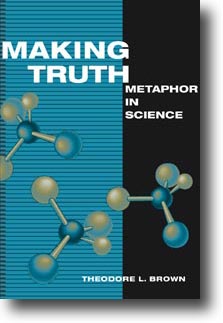
I overhead my kids playacting these lines and they seemed a perfect example of a central mistake in using metaphors. The author’s intended meaning is often not the meaning taken by the audience. Every metaphor has maniforld meanings. Every metaphor "hides" part of its meaning. My father-in-law, Theodore L. Brown, taught me this in his excellent book, Making Truth: Metaphor in Science.
When you tell a friend: “This article about city corruption is dynamite.” You might only intend to suggest that it is interesting. But the metaphor, like dynamite, might explode in ways that injurer the author.
A hard, but useful, lesson is to pause and consider unintended meanings of metaphors before you trot them out.
I still fall prey to this problem. I remember presenting to my colleagues the case for a truly great appointments candidate late one Spring. I concluded my presentation by saying that the recommendation of the appointments committee put me in mind of the “Wedding at Cana”. I had intended this to bring to their minds that the appointments committee had saved the best for last. But some of my colleagues pointed out that I might have been implying that this was the committee’s first miracle, or even worse that this process had somehow converting the candidate’s scholarship from water into wine.
Posted
12:32 PM
by Ian Ayres [link]
(18) comments
The Anti-Torture Memos
JB
The Anti-Torture Memos
Arranged by topic
We've previously compiled a running list of all posts related to civil liberties, the War on Terror, and presidential power, listed by author.
By popular demand, here is a list of the essays grouped by topic. We've eliminated postings that are very short or that mostly quote newspaper articles. What follows is a compendium of substantive analyses on some of the key issues of the War on Terror by the authors here at Balkinization.
The Anti-Torture Memos: Balkinization Posts on Civil Liberties, the War on Terror and Presidential Power
Part I-- Civil Liberties
Part II-- Presidential Power and Constitutional Structure
Part III-- Torture and the "Torture Memos"
Part IV– The NSA Controversy and Government Surveillance
Part V-- Hamdan
Part VI-- The Military Commissions Act of 2006
Miscellaneous Posts
Posts by Guest Bloggers
Part I-- Civil Liberties
(general essays on civil liberties)
1. Jack M. Balkin, Using Our Fears to Justify A Power Grab (Los Angeles Times, November 29th, 2001)
2. Jack M. Balkin, Who's Next? (Hartford Courant, June 20th, 2002)
3. Jack M. Balkin, In Giving Up Our Rights, We'd Lose the War (New Orleans Times-Picayune, September 11th, 2002)
4. Jack M. Balkin, The Truth About Our Institutions (The Responsive Community, October 2002)
5. Jack M. Balkin, Justice Department: Constitution? We Don't Need Your Stinking Constitution (June 3, 2004)
6. Jack M. Balkin, An Admission of Failure (Sept. 23, 2004)
7. Jack M. Balkin, Attorney General Denounces Rule of Law As Aid To Terrorism (Nov. 13, 2004)
8. Brian Tamanaha, Undisclosed Prisons, Detention Without Charges, and Now Secret Laws: the Bush Adminstration's Latest Act of Contempt for the Rule of Law (Dec. 12, 2005)
9. Jack M. Balkin, To Our Great Shame (Jan. 6, 2005)
10. Brian Tamanaha, U.S. Loses Critical Battle in GWOT (Mar. 14, 2006)
11. Jack M. Balkin, Detention for Dangerous Speech? (June 25, 2006)
12. Sandy Levinson, The 1% Solution and the Marginalization of Civil Liberties (Aug. 20, 2006)
13. Jack M. Balkin, September 11 and American Politics, Five Years Later (Sept. 12, 2006)
14. Jack M. Balkin, The Great Debate Over the Rule of Law -- and Civic Courage (Sept. 14, 2006)
15. Sandy Levinson, Article 48 and the U.S. Constitution (Sept. 14, 2006)
16. Sandy Levinson, Thucydides Weighs In (Sept. 25, 2006)
17. Mark Graber, More Advice from Classical Greece (Sept. 25, 2006)
18. Stephen Griffin, . . . And From the Roman Republic (Spet. 25, 2006)
19. Brian Tamanaha, Comparing the U.S. and the European Responses to the Threat of Terrorism (Oct. 2, 2006)
20. Mark Graber, A Modest Proposal (Oct. 11, 2006)
21. Jack Balkin, Bye Bye, First Amendment, Hello Prior Restraints (December 14, 2006)
22. Marty Lederman, A First Amendment Right to Hold Classified Documents? (December 14, 2006)
Part II-- Presidential Power and Constitutional Structure
(including the Padilla case and presidential signing statements)
1. 16. Jack M. Balkin, Above the Law? (June 9, 2004)
2. 29. Jack M. Balkin, The Election and the Constitution (June 22, 2004)
3. 38. Jack M. Balkin, More on the detention cases (June 28, 2004)
4. Jack M. Balkin, The Next Battle: Transparency (July 1, 2004)
5. Jack M. Balkin, Not Your Founding Fathers' Checks and Balances (July 13, 2004)
6. Jack M. Balkin, The Constitutionality of Military Tribunals (July 16, 2005)
7. Brian Tamanaha, A Brainteaser About "Acting Above the Law" (Aug. 1, 2005)
8. Marty Lederman, Padilla (Sept. 9, 2005)
9. Marty Lederman, Further Thoughts on Preventing Padilla from "Returning" to the Afghan Battlefield (Sept. 10, 2005)
10. Jack M. Balkin, The Constitutional Trifecta: A Problem of Executive Oversight (Nov. 2, 2005)
11. Jack M. Balkin, Padilla Indicted (Nov. 22, 2005)
12. 2. Sandy Levinson, Judge Alito and Executive Power (Dec. 29, 2005)
13. Jack M. Balkin, Our Legal and Political Culture (Dec. 31, 2005)
14. Sandy Levinson, The Alito Nomination: The Plot Thickens (Jan. 2, 2006)
15. Marty Lederman, I Suppose That Depends On What the Definition of "the Law of the Land" Is (Jan. 5, 2006)
16. 4. Sandy Levinson, Is James Madison Completely Irrelevant? (Jan. 8, 2006)
17. David Luban, Mansfield on Bush: Machiavelli Made Me Do It (Jan. 11, 2006)
18. Jack M. Balkin, Who's Afraid of Presidential Signing Statements? (Jan. 17, 2006)
19. 87. Jack M. Balkin, Congressional Oversight, Party Loyalty, and Separation of Powers (Feb. 10, 2006)
20. Jack M. Balkin, DOJ Memo Defends Cheney Shooting (Feb. 14, 2006)
21. Brian Tamanaha, Soliciting Nominations for the Cox-Richardson-Ruckleshaus Award (Mar. 15, 2006)
22. Sandy Levinson, Iran-Contra and our Present Constitutional Discontents (Mar. 14, 2006)
23. Jack M. Balkin, Reductio Ad Dictatorem (Apr. 7, 2006)
24. Jack M. Balkin, President Bush: "It's Not Law Unless I Say So (And Even If I Said So)" (May 1, 2006)
25. Jack M. Balkin, Bush is just another word for nothing left to lose (May 12, 2006)
26. Sandy Levinson, Malfeasance and Misfeasance (May 12, 2006)
27. Sandy Levinson, Paying the Price for Defending Clinton (May 13, 2006)
28. Sandy Levinson, The whiff of fascism in the air (May 13, 2006)
29. Sandy Levinson, West Wing and the Constitution (finale) (May 14, 2006)
30. Jack M. Balkin, A Corrupt Congress is Shocked to Discover a Lawless Executive (May 25, 2006)
31. Jack M. Balkin, Secret DOJ Memo Explains Why the Flag Burning Amendment is Unnecessary (June 8, 2006)
32. Sandy Levinson, Is Congress Autonomous? (July 2, 2006)
33. Sandy Levinson, "Creativity," Candor, and Lawyering (July 3, 2006)
34. Marty Lederman, Chalk on the Spikes: What is the Proper Role of Executive Branch Lawyers, Anyway? (July 4, 2006)
35. Jack M. Balkin, Tales from the Unitary Executive, Part II (July 18, 2006)
36. Jack M. Balkin, What the Bush Veto Means (July 19, 2006)
37. Marty Lederman, ABA Task Force Report on Presidential Signing Statements (July 23, 2006)
38. Mark Graber, The Politics of Signing Statements (July 25, 2006)
39. Marty Lederman, The Problem Isn't Signing Statements (July 30, 2006)
40. Marty Lederman, Untangling the Debate on Signing Statements [written with seven former OLC colleagues and posted on the Georgetown Law site] (July 31, 2006)
41. Jack M. Balkin, Partisan Entrenchment in the Civil Rights Division (Aug. 2, 2006)
42. Stephen Griffin, The Constitution Outside the Courts: Apotheosis or Gotterdammerung? (Aug. 2, 2006)
43. Marty Lederman, More on the ABA Signing-Statements Resolutions (Aug. 5, 2006)
44. Sandy Levinson, Better a Criminal Than an Overreaching Incompetent?(Aug. 6, 2006)
45. Stephen Griffin, The ABA Report and Constitutional Change (Aug. 8, 2006)
46. Sandy Levinson, "Walls" Between the FBI and CIA (and Within the FBI) (Aug. 12, 2006)
47. Jack M. Balkin, How the Presidency Regained Its Balance, Indeed (Sept. 19, 2006)
48. Mark Graber, Sunday Morning Thoughts on Moderation (Oct. 1, 2006)
49. Sandy Levinson, On Language Proper to Our Situation (Oct. 1, 2006)
50. Sandy Levinson, The Fault is in Our Constitution (Oct. 3, 2006)
51. Marty Lederman, Shameless: The President's Constitutional Authority to Appoint Political Hacks to Run FEMA (Oct. 5, 2006)
52. Sandy Levinson, Abraham Lincoln as Myth and Symbol (Oct. 5, 2006)
53. Mark Graber, The Lincoln Trope (Oct. 6, 2006)
54. Marty Lederman, Three Senators Respond to the President's Assertion of an Appointments Clause Prerogative (Oct. 12, 2006)
55. David Luban, What Makes a War? (Nov. 26, 2006)
56. Scott Horton, A Question for December 7 (December 8, 2006)
57. Jack M. Balkin, A Vote of No Confidence for Presidents in the American System (December 7, 2006)
58. Jack M. Balkin, Presidential Caesarism: The Executive versus the Bureaucracy (December 8, 2006)
59. Marty Lederman, How Congress Might send a "Message" to the President About Iraq (December 10, 2006)
Part III-- Torture and the "Torture Memos"
(including the McCain Amendment and the Detainee Treatment Act of 2005)
1. Jack M. Balkin, Reaping What You Sow (May 6, 2004)
2. Jack M. Balkin, Anything Goes (May 12, 2004)
3. Jack M. Balkin, Misleading the Supremes (May 14, 2004)
4. Jack M. Balkin, Arguments That Make You Ashamed to be a Lawyer (June 9, 2004)
5. Jack M. Balkin, Yoo: If you don't like our torture, vote us out of office (June 11, 2004)
6. Jack M. Balkin, Moral Clarity (June 13, 2004)
7. Jack M. Balkin, It's Official: Bush Administration Received Legal Advice Permitting Torture (June 14, 2004)
8. Jack M. Balkin, Moral Clarity, Part 2 (June 21, 2004)
9. Jack M. Balkin, White House Backs Away from Torture Memo (June 23, 2004)
10. Sandy Levinson, The Administration backtracks on torture (June 23, 2004)
11. Jack M. Balkin, Imperial Presidency Alive and Well (June 23, 2004)
12. Jack M. Balkin, Legal Scholars Assess the Torture Memos (June 26, 2004)
13. Jack M. Balkin, Vermeule and Posner Defend the Torture Memo (July 13, 2004)
14. Jack M. Balkin, Youngstown and the President's Power to Torture (July 16, 2004)
15. Jack M. Balkin, Ghost Detainees (Sept. 10, 2004)
16. Marty Lederman, Principles to Guide the Office of Legal Counsel (with 18 other former OLC attorneys) (Dec. 21, 2004)
17. Marty Lederman, Understanding the OLC Torture Memos (Part I) (Jan. 8, 2005)
18. Marty Lederman, Understanding the OLC Torture Memos (Part II) (Jan. 8, 2005)
19. Marty Lederman, Understanding the OLC Torture Memos (Part III) (Jan. 8, 2005)
20. Marty Lederman, Understanding the OLC Torture Memos (Coda) (Jan. 8, 2005)
21. Marty Lederman, Heather MacDonald's Dubious Counter-"Narrative" on Torture (Jan. 11, 2005)
22. Marty Lederman, Administration Confirms Its View that CIA May Engage in "Cruel, Inhuman and Degrading" Treatment (Jan. 12, 2005)
23. Marty Lederman, The White House Dissembles on Torture and the CIA's Authority to Engage in Cruel, Inhuman and Degrading Treatment (Jan. 14, 2005)
24. Marty Lederman, Judge Gonzales' Senate Responses (Jan. 18, 2005)
25. Marty Lederman, Heather Mac Donald's "Few Bad Apples" Theory of Abuse (Jan. 23, 2005)
26. Marty Lederman, More Responses from Judge Gonzales (Jan. 25, 2005)
27. Marty Lederman, So, Does the President Think That the CIA Should be Forbidden from Engaging in Cruel, Inhuman and Degarding Treatment? (Jan. 27, 2005)
28. Marty Lederman, Defining Torture Down (Mar. 17, 2005)
29. Marty Lederman, Triple-Threat to Our Security: International Fora, Judicial Processes and Terrorism (Mar. 26, 2005)
30. Marty Lederman, Waldron/Yoo Debate on Torture (Apr. 26, 2005)
31. Marty Lederman, Has Congress Prohibited "Torture Light"? (May 11, 2005)
32. Jack M. Balkin, Closing down Gitmo (June 9, 2005)
33. Marty Lederman, Defining "Humanely" Down, Part II (June 13, 2005)
34. Marty Lederman, GTMO: Where Was the Law? Whither the UCMJ? (June 14, 2005)
35. Jack M. Balkin, President Bush Lashes Out at His Administration's Conduct at Gitmo and Secret CIA Detention Centers (July 1, 2005)
36. Marty Lederman, Defining "Humane" Down, Part III -- The Schmidt Report (July 14, 2005)
37. Marty Lederman, The Importance of Geneva Common Article 3 (July 17, 2005)
38. Marty Lederman, The Graham Hearing on Detainees -- Progress on the Congressional Front (July 18, 2005)
39. Marty Lederman, President Tells Congress to Take a Hike on Detention and Interrogation (July 22, 2005)
40. Marty Lederman, The Heroes of the Pentagon's Interrogation Scandal -- Finally, the JAG Memos (July 23, 2005)
41. Marty Lederman, The JAG Memos on Military Interrogation and OLC's Legal Analysis (July 27, 2005)
42. Marty Lederman, Horrifying. Shameful. (Aug. 3, 2005)
43. Marty Lederman, The Mowhoush Murder, Geneva, the Scorpions, and Military "Special Forces" (Aug. 3, 2005)
44. Marty Lederman, Rendition to Torture (Aug. 6, 2005)
45. Marty Lederman, "We Don't Torture." "We Abide By Our Treaty Obligations." "We Treat Detainees Humanely." (Repeat as Needed.) (Sept. 21, 2005)
46. Marty Lederman, Silver Linings (or, the Strange But True Fate of the Second (or was it the Third?) OLC Torture Memo) (Sept. 21, 2005)
47. Scott Horton, Shirking Responsibility (Sept. 25, 2005)
48. Marty Lederman, Captain Fishback's Letter to Senator McCain (Sept. 28, 2005)
49. Scott Horton, The Judge as POW (Sept. 28, 2005)
50. Scott Horton, What the England Courtmartial Doesn't Tell Us (Oct. 1, 2005)
51. Marty Lederman, Halftime Score: John McCain 90, Dick Cheney 9 (Oct. 5, 2005)
52. Scott Horton, Sexual Perversion in Rumsfeld's Pentagon (Oct. 9, 2005)
53. Marty Lederman, Beware the "Augmented" McCain Amendment! (Oct. 15, 2005)
54. Marty Lederman, Battle Royale at the Pentagon: David Addington v. Common Article 3 (Nov. 1, 2005)
55. Marty Lederman, The CIA's "Black Sites": Beyond the Rule of Law? (Nov. 1, 2005)
56. Marty Lederman, Look on the Bright Side -- We May Be Torturing in Eastern European Detention Facilities, But Our Black Sites Aren't as Bad as the Gulag! (Nov. 7, 2005)
57. Scott Horton, The Return of Carl Schmitt (Nov. 7, 2005)
58. Scott Horton, Rumsfeld's 'Humane' Doesn't Cut It (Nov. 10, 2005)
59. Marty Lederman, Hamdan, Rasul, et al., Imperiled (Nov. 11, 2005)
60. Marty Lederman, No Need to Fret About Waterboarding: It's Merely a Psychological Ploy (Nov. 12, 2005)
61. Marty Lederman, Confusing Developments Senate-Side on GTMO Detention, Commissions and Habeas (Nov. 15, 2005)
62. Scott Horton, Nuremberg at Sixty: Is Jackson's Poisoned Chalice Now at Bush's Lips? (Nov. 20, 2005)
63. Marty Lederman, CIA "Enhanced Interrogation Techniques" Revealed (Nov. 21, 2005)
64. Jack M. Balkin, Will The Threads Start To Unravel? (Nov. 24, 2005)
65. Jack M. Balkin, Luban and the Real Debate About Torture (Nov. 27, 2005)
66. Marty Lederman, Condi Rice's "No Torture" Pledge: Don't Believe the Hype! (Dec. 7, 2005)
67. Jack M. Balkin, One Reason Why Torture Might Not Work (Dec. 9, 2005)
68. Scott Horton, The Curious Word 'Honor' (Dec. 13, 2005)
69. Scott Horton, Torture By the Back Door (Dec. 15, 2005)
70. Jack M. Balkin, Why Evidence Obtained From Torture Should Never Be Admissible (Dec. 16, 2005)
71. Marty Lederman, The McCain Amendment -- The Good (Dec. 16, 2005)
72. Marty Lederman, The McCain Amendment -- The (Potentially) Bad (Dec. 16, 2005)
73. Marty Lederman, The McCain Amendment -- The Ugly (Dec. 16, 2005)
74. Marty Lederman, The McCain Amendment -- What Would the Law Be, Anyway? (Dec. 16, 2005)
75. Marty Lederman, The McCain and Graham/Levin/Kyl Amendments -- Here They Are (Dec. 24, 2005)
76. Marty Lederman, So Much for the President's Assent to the McCain Amendment (Jan. 2, 2006)
77. Marty Lederman, Senator McCain Lays Down a Marker (Jan. 4, 2006)
78. Marty Lederman, How the Pentagon Came to Adopt Criminal Abuse as Official Policy (Feb. 20, 2006)
79. Jack M. Balkin, Don't be Distracted by the Gay Porn (Feb. 24, 2006)
80. Marty Lederman, But Jack, Abuse is Not Mistreatment (Feb. 24, 2006)
81. David Luban, An Embarrassment of Riches (Mar. 4, 2006)
82. Marty Lederman, Does the Army Field Manual Authorize "Creative" Humiliation of Detainees? (Mar. 16, 2006)
83. Marty Lederman, So Brutal, Even the CIA Flinches (Mar. 18, 2006)
84. Marty Lederman, Army Confirms: Rumsfeld Authorized Criminal Conduct (Apr. 28, 2006)
85. David Luban, Sitting Here in Limbo: The Exonerated Detainees (May 6, 2006)
86. David Luban, An Asymmetrical Assault on Reality (June 12, 2006)
87. Jack M. Balkin, How Torture Works (June 20, 2006)
88. Marty Lederman, Why Close GTMO? (June 22, 2006)
89. Marty Lederman, Newsflash: Pentagon Agrees to Abide by Supreme Court Ruling -- Or Does It? -- and a Short Riff on the Haynes Nomination (July 11, 2006)
90. Marty Lederman, Airtight Logic (July 11, 2006)
91. Marty Lederman, Not-so-Common Article 3 (July 13, 2006)
92. Jack M. Balkin, CCR Report: Prisoner Mistreatment at Guantanamo (July 13, 2006)
93. Jack M. Balkin, An Alternative Set of Procedures (Sept. 7, 2006)
94. Brian Tamanaha, On Stalin's (Torturous) "Alternative Set of Procedures" (Sept. 11, 2006)
95. Stephen Griffin, Torture and the Ticking Time Bomb (Oct. 10, 2006)
96. Jack M. Balkin, A Dunk in the Water for Clarity (Oct. 28, 2006)
97. Marty Lederman, Yes, It's a No-Brainer: Waterboarding Is Torture (Oct. 28, 2006)
98. Jack M. Balkin, U.S. citizen alleges he was tortured in U.S. custody inside the U.S. (Nov. 1, 2006)
99. Jack M. Balkin, We could tell you how we torture people, but then we'd have to kill you (Nov. 4, 2006)
100. Marty Lederman, You Call It "Torture"; We Call It "Coming Into Possession of Classified Information" (Nov. 4, 2006)
101. Jack M. Balkin, Karpinski: Rumsfeld Approved Coercive Interrogation Methods (Nov. 25, 2006)
102. Jack M. Balkin, U.S. Government: You can't believe Padilla when he says we tortured him because he's crazy from all the things we did to him (December 14, 2006)
103. Marty Lederman, Murky's Law (December 16, 2006)
Part IV– The NSA Controversy and Government Surveillance
(Including the debate over amending FISA)
1. Jack M. Balkin, Domestic Spying (Dec. 16, 2005)
2. Jack M. Balkin, The Constitution: A Safe Haven for Terrorists (Dec. 19, 2005)
3. Marty Lederman, Which Is It, Mr. President? (Dec. 19, 2005)
4. Marty Lederman, Definition of "Audacity" (Dec. 19, 2005)
5. Jack M. Balkin, Governing Through Terrorism (Dec. 20, 2005)
6. Marty Lederman, Another Reason Why the AUMF Argument is Wrong, and Why This Surveillance Program is Lawless (Dec. 20, 2005)
7. Marty Lederman, Judge Posner and "Ad Hoc Initiatives" (i.e., Presidentially Sanctioned Felonies) (Dec. 21, 2005)
8. Marty Lederman, Why They Didn't Simply Go to the FISA Court -- Because That Court Will Not Approve Illegal Surveillance (Dec. 22, 2005)
9. Marty Lederman, "Inherent Authority" to Violate Federal Law? (Dec. 22, 2005)
10. Stephen Griffin, Why FISA is Important (Dec. 22, 2005)
11. Jack M. Balkin, Data Storage and the Fourth Amendment (Dec. 23, 2005)
12. Marty Lederman, If You're Going to Read Only One Thing About the NSA Spying Program (Dec. 25, 2005)
13. Marty Lederman, NSA Euphemism Watch, Part 2 (Dec. 28. 2005)
14. Jack M. Balkin, Prosecutorial Discretion (Dec. 30, 2005)
15. Marty Lederman, Prosecutorial Discretion, Continued -- A Special Counsel? (Dec. 31, 2005)
16. Marty Lederman, Analysis of the Legality of the Secret NSA Warrantless Electronic Surveillance Program (Jan. 9, 2006)
17. Marty Lederman, What Can Be Done About the NSA Dispute? (Jan. 20, 2006)
18. Jack M. Balkin, The NSA Program and the Rule of Law (Feb. 1, 2006)
19. Marty Lederman, Scholars' Reply to DOJ "White Paper" on NSA, FISA, the AUMF and Article II (Feb. 2, 2006)
20. Jack M. Balkin, Why the Administration is Stonewalling on Its Justifications for the NSA Program (Feb. 2, 2006)
21. Marty Lederman, Senator Roberts Declares FISA Unconstitutional (Feb. 3, 2006)
22. Jack M. Balkin, Shorter Attorney General Gonzales (Feb. 7, 2006)
23. Marty Lederman, Mother of Mercy, Is This the End of FISA?! (Feb. 26, 2006)
24. Marty Lederman, Gall (and Desperation): How Low Can Frist Stoop? (Mar. 4, 2006)
25. Marty Lederman, A Thorough Debunking of the "Statutory" Argument for the NSA Surveillance Program -- But Alas, Congress Doesn't Care (Mar. 9, 2006)
26. Jack M. Balkin, Strange Days (Mar. 16, 2006)
27. Marty Lederman, The Reward for Lawbreaking Act of 2006 (Mar. 17, 2006)
28. Jack M. Balkin, Bush Administration Claims Authority For Warrantless Physical Searches (Mar. 19, 2006)
29. Jack M. Balkin, The New Constitutional Order and the National Surveillance State (Mar. 23, 2006)
30. Marty Lederman, Kris Testimony on NSA Surveillance and Possible Amendments to FISA (Mar. 28, 2006)
31. Marty Lederman, The Schumer NSA Bill and the Feingold Censure Resolution (Mar. 31, 2006)
32. Marty Lederman, New York Times on the Schumer Bill (Apr. 6, 2006)
33. Jack M. Balkin, Tales from the Unitary Executive -- The NSA and Domestic Surveillance (May 11, 2006)
34. Marty Lederman, The (Il)legality of the NSA Phone-Records-Interception Program (May 11, 2006)
35. Marty Lederman, Further Thoughts on the Lawfulness of the Newly Disclosed NSA Program (May 11, 2006)
36. Marty Lederman, Where There's Smoke . . . There's Cheney and Addington (May 13, 2006)
37. Jack M. Balkin, FBI: We're Using National Security Letters to "Backtrack" Reporters' Calls (May 16, 2006)
38. Jack M. Balkin, The Twin Dangers of the National Surveillance State (May 17, 2006)
39. Marty Lederman, Michael Hayden and Article II (May 19, 2006)
40. Marty Lederman, The Unfortunate Transparency of Law: Why They (Allegedly) Could Not Simply Amend FISA (May 22, 2006)
41. Marty Lederman, Ceballos and Public Speech: Response to Roosevelt (June 1, 2006)
42. Jack M. Balkin, Data Retention in the National Surveillance State (June 2, 2006)
43. Jack M. Balkin, I Could Tell You Why What I'm Doing Is Legal But Then I'd Have To Shoot You (June 12, 2006)
44. Jack M. Balkin, The Public/Private "Handshake" and the National Surveillance State (June 15, 2006)
45. Jack M. Balkin, The Administration That Cried Wolf (June 26, 2006)
46. Jack M. Balkin, Hamdan and the NSA Dispute (June 30, 2006)
47. Marty Lederman, Hamdan and the NSA Domestic Surveillance Program: What Next? (July 7, 3006)
48. Marty Lederman, Open Letter in Response to Cass Sunstein on the NSA and FISA (July 9, 2006)
49. Marty Lederman, Well, Now It's Clear: Hamdan's Just a Bump in the Road (July 11, 2006)
50. Jack M. Balkin, Bush Administration to Justice Stevens: Drop Dead (July 12, 2006)
51. Marty Lederman, The Specter Monstrosity (July 13, 2006)
52. Jack M. Balkin, Specter Gives Up the Game -- The Sham NSA Bill (July 14, 2006)
53. Jack M. Balkin, Breaking and Entering Under the Specter Bill (July 14, 2006)
54. Marty Lederman, The NSA, FISA and Hamdan: Response to DOJ from Scholars and Former Officials (July 14, 2006)
55. Marty Lederman, Has the Onion Infiltrated the Offices of Time Magazine? (July 15, 2006)
56. Marty Lederman, A Tale of Two Washington Posts (July 15, 2006)
57. Marty Lederman, New York Times Editorial Page Gets It, Too (Mostly) (July 15, 2006)
58. Marty Lederman, As If Hamdan Never Happened: Don't Give an Inch on Article II (July 19, 2006)
59. Marty Lederman, Note to Senator Specter -- A Youngstown Refresher (July 19, 2006)
60. Marty Lederman, Proof Positive That Arlen Specter Does Not Read Balkinization (July 23, 2006)
61. Jack M. Balkin, Total Information Awareness-- it's back (and never actually left) (July 24, 2006)
62. Jack M. Balkin, Secret Earmarks (July 24, 2006)
63. Jack M. Balkin, Stopping Terror Legally (Aug. 11, 2006)
64. Marty Lederman, Random Searches on New York City Subways (Aug. 14, 2006)
65. Jack M. Balkin, Stopping Terror Legally, Part II (Aug. 16, 2006)
66. Jack M. Balkin, Federal Court Strikes Down NSA Domestic Surveillance Program (Aug. 17, 2006)
67. Marty Lederman, Ah, Well, That Explains It (Aug. 18, 2006)
68. Jack M. Balkin, The Secret Advantages of Judge Taylor's Opinion in ACLU v. NSA (Aug. 18, 2006)
69. Marty Lederman, Why Should We be "Boxed In" by the Constitution and Laws of the United States? (Aug. 22, 2006)
Part V-- Hamdan
1. David Luban, Human Rights in the Balance: What's at Stake in Hamdan (Oct. 12, 2005)
2. Jack M. Balkin, The Hamdan Oral Argument (Mar. 28, 2006)
3. Jack M. Balkin, Hamdan Decided-- Geneva Conventions Not So "Quaint" After All (June 29, 2006)
4. Marty Lederman, Hamdan Summary -- And HUGE News (on SCOTUSblog) (June 29, 2006)
5. Jack M. Balkin, Hamdan as a Democracy-Forcing Decision (June 29, 2006)
6. Marty Lederman, Legislative Supremacy, The Laws of War, and the Geneva Holding (June 29, 2006)
7. Mark Graber, Hamdan As What We Make It (June 29, 2006)
8. Marty Lederman, Hamdan is a Big Deal Regardless of What Congress Does (June 30, 2006)
9. Mark Graber, Hamdan's Politics (July 1, 2006)
10. Marty Lederman, Truer Words Were Never Spoken (July 2, 2006)
11. Marty Lederman, Top Ten Myths About Hamdan, Geneva, and Interrogations (on Georgetown Law Faculty Blog) (July 5, 2006)
12. Jack M. Balkin, Out with the "New Paradigm," in with the Old? (July 11, 2006)
13. Marty Lederman, Two More Hamdan Myths (July 15, 2006)
14. Marty Lederman, Two (or Three) More Myths About Hamdan [on Georgetown Law site] (July 15, 2006)
Part VI-- The Military Commissions Act of 2006
(the legislative history and the aftermath)
1. Jack M. Balkin, Bush Administration to Congress: We're Not Budging on Military Tribunals (July 26, 2006)
2. Marty Lederman, The Bush Administration Draft Hamdan Response Bill (July 27, 2006)
3. Jack M. Balkin, And While You're at it, We'd Like Impunity from War Crimes Too, Please (July 28, 2006)
4. Marty Lederman, What's to Become of Common Article 3? (Aug. 2, 2006)
5. Marty Lederman, Why Bother with Military Commissions? (Aug. 4, 2006)
6. Marty Lederman, The CIA Cruelty Authorization Act of 2006 (Aug. 14, 2006)
7. Marty Lederman, Will the Geneva Conventions Be the First "Universally Accepted" Treaties? (Aug. 22, 2006)
8. Marty Lederman, Here's the Administration's Cruel Treatment and Torture Authorization Act (Sept. 6, 2006)
9. Marty Lederman, The CIA's "Alternative Set of Procedures": Calling Things by Their Right Names (Sept. 6, 2006)
10. Marty Lederman, Does Torture Save Lives? (Sept. 7, 2006)
11. Marty Lederman, (CIA) Business as Usual?: Would the Administration Bill Effectively "Overrule" Hamdan? (Sept. 8, 2006)
12. Jack M. Balkin, Draft of Warner-Graham Bill on Military Commissions (Sept. 8, 2006)
13. Jack M. Balkin, Third Draft of Warner-Graham Bill on Military Commissions (Sept. 11, 2006)
14. Marty Lederman, Will Congress Authorize Violations of the Geneva Conventions? (Sept. 13, 2006)
15. Marty Lederman, At Last, the Issue is Publicly Joined . . . and When All the Smoke has Cleared, the Central Question is Quite Simple (Sept. 15, 2006)
16. Jack M. Balkin, "Final" Version of the Warner-McCain-Graham Bill on Military Commissions (Sept. 15, 2006)
17. Marty Lederman, Getting with "The Program": Clarity Through Obfuscation (Sept. 16, 2005)
18. Jack M. Balkin, The Top Ten Reasons President Bush Wants to Limit the War Crimes Act and the Geneva Conventions(Sept. 16, 2006)
19. Marty Lederman, Even OLC is Unwilling to Say That That These Techniques Comply with Geneva (Sept. 16, 2006)
20. Jack M. Balkin, Specter Sees the Light on the Great Habeas Swindle (Sept. 19, 2006)
21. Marty Lederman, The Torture Chorus (Sept. 21, 2006)
22. Marty Lederman, Senators Snatch Defeat From Jaws of Victory: U.S. to be First Nation to Authorize Violations of Geneva (Sept. 21, 2006)
23. Marty Lederman, Three of the Most Significant Problems with the "Compromise" (Sept. 22, 2006)
24. Sandy Levinson, Legal Realism 101 and the McCain Capitulation (Sept. 22, 2006)
23. Sandy Levinson, Is John McCain a Tragic Figure? (Sept. 22, 2006)
24. David Luban, The Burning Question (Sept. 22, 2006)
25. Jack M. Balkin, Text of Current Bush-Senate Compromise Bill (Sept. 22, 2006)
26. Marty Lederman, Clarification of What the War Crimes Amendment Would (Not) "Authorize" (Sept. 23, 2006)
27. Marty Lederman, Oh, Well, That Explains It (Sept. 23, 2006)
28. Sandy Levinson, On the Way to a Banana Republic (Sept. 23, 2006)
29. Sandy Levinson, Is a Filibuster Really Unthinkable? (Sept. 23, 2006)
30. Marty Lederman, Senator McCain's Understanding of His Own "Compromise" Legislation (Sept. 24, 2006)
31. Marty Lederman, It Gets Worse (Sept. 26, 2006)
32. Sandy Levinson, Further Tales from a Banana Republic (Sept. 26, 2006)
33. Marty Lederman, Hate to Rain on the Torture Parade . . . (Sept. 26, 2006)
34. Marty Lederman, Imagine Giving Donald Rumsfeld Unbounded Discretion to Detain You Indefinitely (Sept. 27, 2006)
35. Jack M. Balkin, Spineless Democrats Deserve to Lose (Sept. 27. 2006)
36. Marty Lederman, "Tyranny": "Our Generation's Version of the Alien and Sedition Acts" (Sept. 28, 2006)
37. David Luban, Civilized Is As Civilized Does (Sept. 28, 2006)
38. Jack M. Balkin, And What Did the Democrats Get for Selling Out? (Sept, 28, 2006)
39. Mark Graber, The Party of Torture (Sept. 28, 2006)
40. Jack M. Balkin, What Hamdan Hath Wrought (Sept. 29, 2006)
41. Does the Military Commissions Act Apply to Citizens? (Sept. 29, 2006)
42. Stephen Griffin, If Democrats Had Spine (or were Thinking like Republicans) (Sept. 30, 2006)
43. Sandy Levinson, Does Japan Offer the Better Analogy? (Oct. 2, 2006)
44. Jack M. Balkin, Has Congress Unconstitutionally Suspended the Writ of Habeas Corpus? (Oct. 3, 2006)
45. Jack M. Balkin, This Administration Can't Be Broken, Even with Waterboarding (Oct. 5, 2006)
46. Scott Horton, When Lawyers Are War Criminals (Oct. 8, 2006)
47. Marty Lederman, John Yoo on Court-Stripping (Oct. 19, 2006)
48. Jack M. Balkin, Parallel Tracks in the National Surveillance State (Oct. 23, 2006)
49. Jack M. Balkin, U.S. to Immigrants: You Have no Rights Which We Are Bound to Respect (Nov. 14, 2006)
Miscellaneous Posts
1. Jack M. Balkin, A Dreadful Act II (Los Angeles Times, February 13th, 2003)
2. Jack M. Balkin, No Blank Check For Bush (Hartford Courant, May 16th, 2004)
3. Jack M. Balkin, The Scandal of Abu Ghraib, One Year Later (Apr. 27, 2005)
4. Kim Lane Scheppele, Does the Posse Comitatus Act Still Exist? (July 15, 2005)
5. Marty Lederman, Cheney v. McCain for the Soul of the Republican Party? (July 23, 2005)
6. Marty Lederman, Judge Roberts on Presidential and Congressional War Powers (Sept. 14, 2005)
7. Jack M. Balkin, Will Bush Pardon Rumsfeld? (Apr. 14, 2006)
8. Sandy Levinson, Death Squads (May 9, 2006)
9. Marty Lederman, So, What About the Merits?: Was the Search of Rep. Jefferson's Chambers Lawful? (May 27, 2006)
10. Sandy Levinson, Clinton impeachment revisited yet again (July 10, 2006)
11. Scott Horton, The Letter [on Leo Strauss] (July 16, 2006)
12. Sandy Levinson, Legal Realism, the Court, and the Press (Aug. 18, 2006)
13. Sandy Levinson, Legal Realism and the Press (II) (Aug. 19, 2006)
14. Brian Tamanaha, Dicey Versus Posner On Ordinary Courts (Aug. 22, 2006)
15. Jack M. Balkin, Online Legal Scholarship: The Medium and the Message [in Yale Law Journal Pocket Part] (Sept. 6, 2006)
16. Marty Lederman, Ariel Dorfman on Complicity (Sept. 24, 2006)
17. Sandy Levinson, How Language Works (Sept. 24, 2006)
18. Scott Horton, An American Sentenced to Death in Iraq (Oct. 14, 2006)
19. Scott Horton, Carl Schmitt, the Dolchstoßlegende and the Law of Armed Conflict (Oct. 21, 2006)
20. Scott Horton, To the Memory of Alyssa Peterson (Nov. 4, 2006)
21. Scott Horton, Two Texts: An Election Eve Meditation (Nov. 5, 2006)
22. Scott Horton, In the Penal Colony (prepared remarks for the Nov. 17, 2006, meeting of the Club de Madrid, Berlin, Germany) (Nov. 17, 2006)
23. Sandy Levinson, This Just In (And Why We Should be Very Afraid) (Nov. 19, 2006)
Posts by Guest Bloggers
1. Torture and the Iraq Constitution (June 24, 2004) (Cass Sunstein)
2. Hamdan Again (Oct. 27, 2005) (Oona Hathaway)
3. Hamdan Redux (Nov. 3, 2005) (Oona Hathaway)
4. The Basic Case Against Alito (Jan. 9, 2006) (Robert W. Gordon)
5. False Confessions Without Torture (May 3, 2006) (Ian Ayres)
6. The NSA and Hamdan (July 8, 2006) (Cass Sunstein)
7. Cass Sunstein Replies (July 9, 2006) (Cass Sunstein)
8. Representative Harman on the Specter Bill (July 14, 2006) (Cong. Jane Harman)
9. Larry Tribe on the ABA Signing Statements Report (Aug. 6, 2006) (Laurence Tribe)
10. The Bloggerati Response to Judge Taylor's Ruling in the NSA Case (Aug. 19, 2006) (Laurence Tribe)
11. Why The Specter Bill Won't Let Courts Decide the Legality of the NSA Program (Sept. 15, 2006) (David Barron)
12. Thucydides on Democratic Imperialism (Sept. 27, 2006) (Alan Gilbert)
13. Suspending Habeas Corpus at Guantánamo and Beyond (Oct. 4, 2006) (Jonathan Hafetz)
Posted
2:31 PM
by JB [link]
(0) comments
Books by Balkinization Bloggers

Gerard N. Magliocca, The Actual Art of Governing: Justice Robert H. Jackson's Concurring Opinion in the Steel Seizure Case (Oxford University Press, 2025)

Linda C. McClain and Aziza Ahmed, The Routledge Companion to Gender and COVID-19 (Routledge, 2024)

David Pozen, The Constitution of the War on Drugs (Oxford University Press, 2024)

Jack M. Balkin, Memory and Authority: The Uses of History in Constitutional Interpretation (Yale University Press, 2024)
Mark A. Graber, Punish Treason, Reward Loyalty: The Forgotten Goals of Constitutional Reform after the Civil War (University of Kansas Press, 2023)
Jack M. Balkin, What Roe v. Wade Should Have Said: The Nation's Top Legal Experts Rewrite America's Most Controversial Decision - Revised Edition (NYU Press, 2023)

Andrew Koppelman, Burning Down the House: How Libertarian Philosophy Was Corrupted by Delusion and Greed (St. Martin’s Press, 2022)

Gerard N. Magliocca, Washington's Heir: The Life of Justice Bushrod Washington (Oxford University Press, 2022)
Joseph Fishkin and William E. Forbath, The Anti-Oligarchy Constitution: Reconstructing the Economic Foundations of American Democracy (Harvard University Press, 2022)
Mark Tushnet and Bojan Bugaric, Power to the People: Constitutionalism in the Age of Populism (Oxford University Press 2021).

Mark Philip Bradley and Mary L. Dudziak, eds., Making the Forever War: Marilyn B. Young on the Culture and Politics of American Militarism Culture and Politics in the Cold War and Beyond (University of Massachusetts Press, 2021).

Jack M. Balkin, What Obergefell v. Hodges Should Have Said: The Nation's Top Legal Experts Rewrite America's Same-Sex Marriage Decision (Yale University Press, 2020)

Frank Pasquale, New Laws of Robotics: Defending Human Expertise in the Age of AI (Belknap Press, 2020)

Jack M. Balkin, The Cycles of Constitutional Time (Oxford University Press, 2020)

Mark Tushnet, Taking Back the Constitution: Activist Judges and the Next Age of American Law (Yale University Press 2020).

Andrew Koppelman, Gay Rights vs. Religious Liberty?: The Unnecessary Conflict (Oxford University Press, 2020)

Ezekiel J Emanuel and Abbe R. Gluck, The Trillion Dollar Revolution: How the Affordable Care Act Transformed Politics, Law, and Health Care in America (PublicAffairs, 2020)

Linda C. McClain, Who's the Bigot?: Learning from Conflicts over Marriage and Civil Rights Law (Oxford University Press, 2020)
Sanford Levinson and Jack M. Balkin, Democracy and Dysfunction (University of Chicago Press, 2019)

Sanford Levinson, Written in Stone: Public Monuments in Changing Societies (Duke University Press 2018)

Mark A. Graber, Sanford Levinson, and Mark Tushnet, eds., Constitutional Democracy in Crisis? (Oxford University Press 2018)

Gerard Magliocca, The Heart of the Constitution: How the Bill of Rights became the Bill of Rights (Oxford University Press, 2018)

Cynthia Levinson and Sanford Levinson, Fault Lines in the Constitution: The Framers, Their Fights, and the Flaws that Affect Us Today (Peachtree Publishers, 2017)

Brian Z. Tamanaha, A Realistic Theory of Law (Cambridge University Press 2017)

Sanford Levinson, Nullification and Secession in Modern Constitutional Thought (University Press of Kansas 2016)

Sanford Levinson, An Argument Open to All: Reading The Federalist in the 21st Century (Yale University Press 2015)

Stephen M. Griffin, Broken Trust: Dysfunctional Government and Constitutional Reform (University Press of Kansas, 2015)

Frank Pasquale, The Black Box Society: The Secret Algorithms That Control Money and Information (Harvard University Press, 2015)

Bruce Ackerman, We the People, Volume 3: The Civil Rights Revolution (Harvard University Press, 2014)
Balkinization Symposium on We the People, Volume 3: The Civil Rights Revolution

Joseph Fishkin, Bottlenecks: A New Theory of Equal Opportunity (Oxford University Press, 2014)

Mark A. Graber, A New Introduction to American Constitutionalism (Oxford University Press, 2013)

John Mikhail, Elements of Moral Cognition: Rawls' Linguistic Analogy and the Cognitive Science of Moral and Legal Judgment (Cambridge University Press, 2013)

Gerard N. Magliocca, American Founding Son: John Bingham and the Invention of the Fourteenth Amendment (New York University Press, 2013)

Stephen M. Griffin, Long Wars and the Constitution (Harvard University Press, 2013)

Andrew Koppelman, The Tough Luck Constitution and the Assault on Health Care Reform (Oxford University Press, 2013)

James E. Fleming and Linda C. McClain, Ordered Liberty: Rights, Responsibilities, and Virtues (Harvard University Press, 2013)
Balkinization Symposium on Ordered Liberty: Rights, Responsibilities, and Virtues

Andrew Koppelman, Defending American Religious Neutrality (Harvard University Press, 2013)

Brian Z. Tamanaha, Failing Law Schools (University of Chicago Press, 2012)

Sanford Levinson, Framed: America's 51 Constitutions and the Crisis of Governance (Oxford University Press, 2012)

Linda C. McClain and Joanna L. Grossman, Gender Equality: Dimensions of Women's Equal Citizenship (Cambridge University Press, 2012)

Mary Dudziak, War Time: An Idea, Its History, Its Consequences (Oxford University Press, 2012)

Jack M. Balkin, Living Originalism (Harvard University Press, 2011)

Jason Mazzone, Copyfraud and Other Abuses of Intellectual Property Law (Stanford University Press, 2011)

Richard W. Garnett and Andrew Koppelman, First Amendment Stories, (Foundation Press 2011)

Jack M. Balkin, Constitutional Redemption: Political Faith in an Unjust World (Harvard University Press, 2011)

Gerard Magliocca, The Tragedy of William Jennings Bryan: Constitutional Law and the Politics of Backlash (Yale University Press, 2011)

Bernard Harcourt, The Illusion of Free Markets: Punishment and the Myth of Natural Order (Harvard University Press, 2010)

Bruce Ackerman, The Decline and Fall of the American Republic (Harvard University Press, 2010)
Balkinization Symposium on The Decline and Fall of the American Republic

Ian Ayres. Carrots and Sticks: Unlock the Power of Incentives to Get Things Done (Bantam Books, 2010)

Mark Tushnet, Why the Constitution Matters (Yale University Press 2010)

Ian Ayres and Barry Nalebuff: Lifecycle Investing: A New, Safe, and Audacious Way to Improve the Performance of Your Retirement Portfolio (Basic Books, 2010)
.jpg)
Jack M. Balkin, The Laws of Change: I Ching and the Philosophy of Life (2d Edition, Sybil Creek Press 2009)

Brian Z. Tamanaha, Beyond the Formalist-Realist Divide: The Role of Politics in Judging (Princeton University Press 2009)
Andrew Koppelman and Tobias Barrington Wolff, A Right to Discriminate?: How the Case of Boy Scouts of America v. James Dale Warped the Law of Free Association (Yale University Press 2009)

Jack M. Balkin and Reva B. Siegel, The Constitution in 2020 (Oxford University Press 2009)

Heather K. Gerken, The Democracy Index: Why Our Election System Is Failing and How to Fix It (Princeton University Press 2009)

Mary Dudziak, Exporting American Dreams: Thurgood Marshall's African Journey (Oxford University Press 2008)

David Luban, Legal Ethics and Human Dignity (Cambridge Univ. Press 2007)

Ian Ayres, Super Crunchers: Why Thinking-By-Numbers is the New Way to be Smart (Bantam 2007)

Jack M. Balkin, James Grimmelmann, Eddan Katz, Nimrod Kozlovski, Shlomit Wagman and Tal Zarsky, eds., Cybercrime: Digital Cops in a Networked Environment (N.Y.U. Press 2007)
Jack M. Balkin and Beth Simone Noveck, The State of Play: Law, Games, and Virtual Worlds (N.Y.U. Press 2006)

Andrew Koppelman, Same Sex, Different States: When Same-Sex Marriages Cross State Lines (Yale University Press 2006)

Brian Tamanaha, Law as a Means to an End (Cambridge University Press 2006)

Sanford Levinson, Our Undemocratic Constitution (Oxford University Press 2006)

Mark Graber, Dred Scott and the Problem of Constitutional Evil (Cambridge University Press 2006)

Jack M. Balkin, ed., What Roe v. Wade Should Have Said (N.Y.U. Press 2005)

Sanford Levinson, ed., Torture: A Collection (Oxford University Press 2004)
Balkin.com homepage
Bibliography
Conlaw.net
Cultural Software
Writings
Opeds
The Information Society Project
BrownvBoard.com
Useful Links
Syllabi and Exams
