Balkinization
an unanticipated consequence of
Jack M. Balkin
Balkinization Symposiums: A Continuing List
E-mail:
Jack Balkin:
jackbalkin at yahoo.com
Bruce Ackerman
bruce.ackerman at yale.edu
Ian Ayres
ian.ayres at yale.edu
Corey Brettschneider
corey_brettschneider at brown.edu
Mary Dudziak
mary.l.dudziak at emory.edu
Joey Fishkin
joey.fishkin at gmail.com
Heather Gerken heather.gerken at yale.edu
Abbe Gluck abbe.gluck at yale.edu
Mark Graber
mgraber at law.umaryland.edu
Stephen Griffin
sgriffin at tulane.edu
Jonathan Hafetz
jonathan.hafetz at shu.edu
Jeremy Kessler
jkessler at law.columbia.edu
Andrew Koppelman
akoppelman at law.northwestern.edu
Marty Lederman
msl46 at law.georgetown.edu
Sanford Levinson
slevinson at law.utexas.edu
David Luban
david.luban at gmail.com
Gerard Magliocca
gmaglioc at iupui.edu
Jason Mazzone
mazzonej at illinois.edu
Linda McClain
lmcclain at bu.edu
John Mikhail
mikhail at law.georgetown.edu
Frank Pasquale
pasquale.frank at gmail.com
Nate Persily
npersily at gmail.com
Michael Stokes Paulsen
michaelstokespaulsen at gmail.com
Deborah Pearlstein
dpearlst at yu.edu
Rick Pildes
rick.pildes at nyu.edu
David Pozen
dpozen at law.columbia.edu
Richard Primus
raprimus at umich.edu
K. Sabeel Rahmansabeel.rahman at brooklaw.edu
Alice Ristroph
alice.ristroph at shu.edu
Neil Siegel
siegel at law.duke.edu
David Super
david.super at law.georgetown.edu
Brian Tamanaha
btamanaha at wulaw.wustl.edu
Nelson Tebbe
nelson.tebbe at brooklaw.edu
Mark Tushnet
mtushnet at law.harvard.edu
Adam Winkler
winkler at ucla.edu
Compendium of posts on Hobby Lobby and related cases
The Anti-Torture Memos: Balkinization Posts on Torture, Interrogation, Detention, War Powers, and OLC
The Anti-Torture Memos (arranged by topic)
Recent Posts
Human Rights in the Balance: What's at Stake in Hamdan
![[Powered by Blogger]](https://lh3.googleusercontent.com/blogger_img_proxy/AEn0k_virfd-6roI5D7914No7kq5HBHZf_IchnEpq5swP4LXOzDTl6fKXC2Akd0SwFo3nShBpYRCt0cMWLS9yAhvM_v6vuJokwxrbHqSeDbiDilM=s0-d)
Just A Few Blogs
ACS Blog
Alas, a Blog
Althouse
Arts and Letters Daily
Atrios (Eschaton)
Bill of Health
Buzzflash.com
Buzz Machine
Cato at Liberty
Juan Cole (Informed Comment)
Concurring Opinions
The Constitution in 2020
Corrente
Crooked Timber
Daily Howler
Daily Kos
Dana Boyd
Brad DeLong
Digby (Hullabaloo)
Discriminations
Daniel Drezner
Kevin Drum (Mother Jones)
Electrolite
En Banc
Eunomia (Daniel Larison)
Fafblog
Michael Froomkin (Discourse.net)
GovLab (Beth Noveck)
Rick Hasen (Election Law)
History News Network
How Appealing
Ignatz (Sam Heldman)
The Importance of (Ernie Miller)
Infolaw
Instapundit
International Economic Law and Policy Blog
IntLawGrrls
Jacob Levy
Jesus' General
Jurisdynamics
The Kitchen Cabinet
Mark Kleiman
Law Blog Central
Larry Lessig
Lawyers, Guns and Money
Liberal Oasis
Brian Leiter's Law School Reports
The Leiter Reports
Marginal Revolution
Megan McArdle
Memeorandum
Metafilter
Mirror of Justice
The New Republic
Newseum
No More Mister Nice Blog
Brendan Nyhan
Opinio Juris
Orcinus
The Originalism Blog
Pandagon
Passport (Foreign Policy)
Overcoming Bias
Political Animal (Washington Monthly)
Political Theory Daily Review
Political Wire (Taegan Goddard)
The Poor Man
Virginia Postrel
Prawfsblawg
Public Reason
Jonathan Rauch
Raw Story
Redstate
ReligiousLeftLaw.com
Reporters Committee For Freedom of the Press
Reproductive Rights Blog
Rothman's Roadmap to the Right of Publicity
SCOTUS Blog
Seeing the Forest
Clay Shirky
The Shifted Librarian
The Situationist
Larry Solum (Legal Theory)
Andrew Sullivan
Talking Points Memo
Talk Left
Tapped
Tbogg
TechPresident
The Paper Chase (Jurist)
Tom Paine
Tom Tomorrow (This Modern World)
Eve Tushnet
Uggabugga
University of Chicago Law School Faculty Blog
Unqualified Offerings
The Volokh Conspiracy
War and Piece (Laura Rozen)
Wampum
Oliver Willis
Wonkette
Written Description
Matthew Yglesias
Yin
Your Choice of Feeds
1. XML
powered by

2. Atom Feed
3. RSS 2.0
Human Rights in the Balance: What's at Stake in Hamdan
Guest Blogger
David Luban
This week the United States Supreme Court stands on the verge of a momentous non-decision - a non-decision that would quietly deal a major setback to international human rights, and place the United States at odds with our allies on a crucial issue of how to interpret human rights treaties.
The Court has listed Hamdan v. Rumsfeld for its conference for the second time on Friday - which means that this major case failed to attract the four votes necessary for certiorari the first time around. If the Court decides on Friday not to hear the case, the lower court ruling stands. The very fact that the Supreme Court didn't take up Hamdan the first time around means that the Justices have not appreciated how momentous that lower court ruling is.
Hamdan concerns the legality of President Bush's military commissions to try suspected terrorists at Guantanamo. In mid-July, the D.C. Court of Appeals overturned a decision declaring that the commissions lack the necessary due process features of courts-martial, and violate the Geneva Conventions. The appellate panel - which included now-Chief Justice Roberts - held that the time to address flaws in the military commission procedure is after the trials, not before, and after the defendants have exhausted their military remedies. Perhaps the Supreme Court accepts this conclusion, and that is why it hesitates to take up Hamdan now rather than later.
But another part of the Hamdan decision is doing its damage now. Among the issues Hamdan settled is a crucial question about who the 1949 Geneva Conventions protect. In the only split portion of the decision, the panel voted 2-1 that Geneva does not apply to the Global War on Terror. The implications of this holding are profound, and go to the very heart of modern human rights protection. To see why, it is necessary to understand how Geneva works.
The Geneva Conventions establish two levels of wartime protection, depending on the nature of the war. If the war is an "old paradigm" conflict between states, Geneva provides an elaborate system of protections - for prisoners of war in the Third Convention, and for civilians in the Fourth Convention. (The remaining two conventions concern wounded and sick combatants on land and sea.) But what about conflicts that don't pit state against state? Here, in "common Article Three" (common, that is, to all four Conventions), the Geneva framers insisted on at least minimum human rights for anyone who is detained. These include rights not to be sentenced or punished without minimum due process - the Geneva right on which Hamdan based his argument against the military commissions.
But common Article Three also provides for other basic human rights, including rights against violence, cruel treatment, torture, and "outrages upon personal dignity, in particular, humiliating and degrading treatment." When the D.C. Circuit held that Article Three does not apply to the War on Terror, it stripped away all these basic protections from detainees. In place of the split-level protections of Geneva - full protections in state-against-state wars, and at least minimum human rights the rest of the time - Hamdan creates a third tier of "protections," namely no protections at all, in the War on Terror. Where Geneva creates a main floor and a basement, Hamdan digs beneath the basement and adds a dungeon.
To see why this matters so desperately, consider the astonishing events of the past two weeks. On September 22, the Secretary of the Army and the Chief of Staff for the Army published a self-congratulatory article in the National Review, insisting that the Army has done a splendid job of punishing those who abuse detainees. Ironically, the very next day, Captain Ian Fishback's allegations of widespread detainee abuse by the celebrated 82nd Airborne were published - allegations that included the lamentable story of Fishback's 17 months of futility trying to get the Army to address the abuses, which included outrages like breaking a detainee's leg with an aluminum baseball bat purely for amusement. Then, on October 6, the Senate passed the McCain Amendment by an overwhelming bipartisan vote, demanding that the United States forego cruel, inhuman, and degrading treatment of detainees. The Amendment, attached to a massive defense appropriations bill, plugged a loophole in the law that the Bush administration has used to reach the bizarre conclusion that the ban on cruel, inhuman or degrading treatment does not apply outside U.S. territory. Astoundingly, the Bush Administration replied that the McCain Amendment is so unacceptable that the President might exercise his first veto ever against a bill that has the Amendment attached. This protest is tantamount to an admission that the United States has indeed been abusing detainees abroad, and doesn't want to stop. Why else would the President so vehemently oppose McCain?
The McCain Amendment's heart is in the right place - but, unfortunately, it may not survive the Congressional conference. Even if it does, it contains one conspicuous weakness: it attaches no penalties to violations. Thus, even if the McCain Amendment becomes law, it is still the Geneva Conventions that offer the best hope of legally controlling the kind of practices that led to Abu Ghraib - and, if Fishback's accusations stand up, other abuses as well. Geneva has the tremendous virtue of familiarity: U.S. military standard operating procedures have been built around them for more than fifty years. If the Supreme Court leaves Hamdan's ruling intact, the wall that Geneva built to protect detainees from torture, humiliation, and violence crumbles.
The Hamdan majority adopted the Bush Administration's argument that Geneva does not apply in the War on Terror. According to this argument, Article 3 applies only to "internal" armed conflicts - civil wars within a single country. The War on Terror is not a civil war, nor is it an old-paradigm war between nation-states; neither fish nor fowl, it falls outside all categories that Geneva protects.
The Hamdan majority has treaty text to back up its interpretation. Article Three states that it applies only "in case of armed conflict not of an international character occurring in the territory of one of the High Contracting Parties [i.e., parties to Geneva]." The War on Terror undoubtedly is "of an international character," and it occurs in the territories of many states, not one; thus, Article Three does not apply. So goes the argument, and it has some plausibility.
As Judge Williams notes in his dissent, however, the awkward phrase "not of an international character" simply means "not between nation-states." International law has traditionally been defined as the law governing relations among states - the literal meaning of "inter-national." And so, "not international" doesn't mean "internal" - it merely means "not between nation-states." On that reading, the standard one among international lawyers, Article Three does apply to the War on Terror, which clearly is an armed conflict not between nation-states. Initially, the framers of the Geneva Convention considered limiting Article Three to internal armed conflicts; but they rejected that narrow phrasing in favor of the broader phrase "not of an international character." Nor does the phrase "…occurring in the territory of one of the High Contracting Parties" limit Article Three to conflicts within a single state. That phrase is in the Convention simply to ensure that Geneva applies only to states that are parties to it, not states that aren't. Treaties cannot bind non-parties, and Geneva would have been invalid if it purported to apply outside the territory of at least one of its "High Contracting Parties." Today, that is a non-issue, because every state in the world except the demilitarized island republic of Nauru has joined the Geneva Conventions. But in 1949 it was unclear that Geneva would win such universal acceptance, and so the treaty had to add language limiting its scope to states that agreed. The phrase is there purely for jurisdictional purposes, and it means "at least one High Contracting Party," not "at most one."
Of course, these esoteric interpretive issues can be debated, as the split opinion in Hamdan clearly demonstrates. All the more reason for the Supreme Court to weigh in on the issue rather than ducking it. In the post-Abu Ghraib era, the stakes could not be higher.
The issue goes deeper, however, to the very nature of human rights treaties - and here the D.C. Court of Appeals simply ignores the way that our closest allies read such treaties. The United States has argued - most persuasively in an internal executive branch memo written by the controversial law professor John Yoo - that in 1949 the framers of Geneva never even considered the possibility of a conflict like the War on Terror. All they had in mind was state-against-state wars like World War II, or civil wars, like the Chinese civil war then in its end stages. Yoo argued that to expand Geneva protections to the War on Terror is to go beyond the intent of the drafters and, in effect, to modify the treaty without going through the formal amendment process.
Apparently, the Bush Administration bought this argument, because Yoo's opinion formed the basis of the President's declaration February 7, 2002 that Geneva does not apply to Al Qaeda or Taliban captives. But the argument uses an interpretive method that international law and our allies have rejected. International tribunals and the European Court of Human Rights have argued that there is something special about human rights treaties that calls for a more expansive interpretive method. Thus, in a 1989 decision the European Court noted the "special character" of any "treaty for the collective enforcement of human rights and fundamental freedoms." The "object and purpose" of such treaties "require that its provisions be interpreted and applied so as to make its safeguards practical and effective." In the same vein, the International Criminal Tribunal for Former Yugoslavia thought that expansive readings of human rights treaties guides "the entire logic of international humanitarian law. This body of law is not grounded on formalistic postulates…Rather, it is a realistic body of law, grounded on the notion of effectiveness and inspired by the aim of deterring deviation from its standards to the maximum extent possible." These Courts understand that the whole point of universal human rights is that they are supposed to be, well, universal - and that means you don't loophole human rights treaties like Geneva with the aim of narrowing them. You read them as living documents that expand to fill gaps that changes in the challenges to human rights create. If the nature of war has changed since 1949, it would defeat the purpose of a human rights treaty like common Article Three to restrict it to the kind of wars being fought in 1949.
In fact, the European Court's and Yugoslav Tribunal's conclusion follows the standard methods of treaty-reading that international law creates and that the United States has long accepted. There happens to be a treaty about the law of treaties - the Vienna Convention on the Law of Treaties. According to the Vienna Convention, when the plain meaning of treaty language is unclear, interpreters should look to the "object and purpose" of the treaty. When it is a human rights treaty, object-and-purpose analysis call for generous readings, not cramped, crabbed loophole lawyering. U.S. foreign relations law accepts these provisions of the Vienna Convention - but the Hamdan decision does not so much as mention them. If the D.C. Court of Appeals decision stands, the United States will find itself at odds with much of the rest of the world, including our European allies.
That would be a curious result at a time when it has become controversial whether the Court should consider the way foreign courts treat legal issues. Justices Breyer and Kennedy have both taken fire from the right because of their willingness to cite decisions of foreign courts; currently, a resolution is pending in the House of Representatives condemning the very mention of foreign judgments in U.S. constitutional opinions. Apparently, the idea that U.S. jurists might learn from outsiders is unpatriotic and undemocratic. (Perhaps the logical next step is to forbid U.S. courts from citing scientific evidence written by foreign scientists.) Both these Justices have been admirably steadfast in insisting that solipsism and jingoism have no place in judicial deliberation. When it comes to reading treaties, the case for looking to international sources is even stronger, because the Vienna Convention (in another provision that the United States accepts) instructs interpreters to take into account "any subsequent practice in the application of the treaty which establishes the agreement of the parties regarding its application." In other words, treaty interpreters are supposed to look at how treaties have been applied around the world.
If the Court denies cert to Hamdan, it will say, in effect, that the reach of human rights treaties, and the methods for interpreting them, are simply not issues worthy of the Court's attention. That would be a curious result indeed.
Posted
2:08 PM
by Guest Blogger [link]
Notable among the Hague provisions are art. 25:
"The attack or bombardment, by whatever means, of towns, villages, dwellings, or buildings which are undefended is prohibited."
Which arguably includes prisons containing defenseless prisoners; and especially art. 23[h] which states:
"In addition to the prohibitions provided by special Conventions, it is especially forbidden * * * To declare abolished, suspended, or inadmissible in a court of law the rights and actions of the nationals of the hostile party."
18 USC 2441 applies to any prohibited act by or against a US national or service member anywhere in the world, and it carries the death penalty if the offense results in the death of the victim.
As for the Hamdan decision itself, my own comments on that are available in a statement which I submitted to the Senate Judiciary Committee: Hamdan Commentary.
Regards,
Charles Gittings

(1) It seems eminently reasonable that treaties -- including this one -- is not solely in the hands of the executive power.
(2) As to foreign policy, the courts have something to do with it. Consider the role of the courts in protecting Chinese aliens in this country in the late 19th Century. Again, I do not see why the courts cannot in some fashion be involved here.
(3) The military is interested in good behavior because the opposite results in negative results in any number of situations. Again, this does not generally mean the courts do not have some authority to limit their control. To paraphrase, the civil is above the military power in this country (compare -- the Declaration of Independence)
(4) This blog has noted that military procedure still raises the question of CIA interrogation.
(5) This is not just a question of classified info etc. ... though this might include discussions on how certain evidence was determined by torture, breaking of legs with bats, etc.
(6) Of the POWs of past wars, I assume none were or became defense attorneys. Likewise, is no defense attorneys or members of the ACLU in active duty overseas now or will none be in the future?
"“Private Men may certainly make War again[s]t private Men, as a Travel[l]er against a Robber, and Sovereign Princes again[s]t Sovereign Princes, as David again[s]t the King of the Ammonites; and [s]o may private men against Princes, but not their own, as Abraham did again[s]t the King of Babylon, and his A[ss]ociates.
So may Sovereign Princes against private men, whether their own Subjects, as David against I[s]bbo[s]eth and his Party, or Strangers, as the Romans against Pirates.”
Nothing new under the sun. The focus is on security and keeping our honor clean. I think that Sandra Day O'Connor gets it and that is why this is going around like this. The interesting thing is whether by the time the case did get heard, she would be off the court and Harriet Miers in and the effect that would have on the court's decisions.
Best,
Ben Davis
What's next? Free religion zones for non-christians to be segregated? Free 4th amendment zones for people who are not wealth thy and born of royal blood to be cordoned off and searched?
Obat kutil kelamin dari dalam
Obat antibiotik kutil kelamin
Obat kutil kelamin yang dijual di apotik
Beli obat kutil kelamin di apotik
Nama obat kutil kelamin di apotek
Obat kutil kelamin yang tersedia di apotik
Cuka apel obat kutil kelamin
Obat ampuh menghilangkan kutil kelamin
Obat alami menyembuhkan kutil kelamin
Obat apotek untuk kutil kelamin
Ace max's obat kutil kelamin
Cara ampuh mengobati jengger ayam tanpa kambuh lagi
Cara ampuh mengobati jengger ayam tanpa kambuh lagi
obat apotik jengger ayam
obat dokter jengger ayam
obat herbal untuk jengger ayam
obat penyakit kulit jengger ayam
obat untuk menghilangkan jengger ayam
obat untuk menghilangkan jengger ayam
obat penyakit jengger ayam alami
obat ampuh jengger ayam
obat antibiotik jengger ayam
obat alami untuk penyakit jengger ayam
obat ampuh penyakit jengger ayam
obat kutil atau jengger ayam
obat dokter penyakit jengger ayam
obat ampuh menyembuhkan gonore
obat ampuh menyembuhkan gonore
obat tetes mata gonore
madu obat gonore
obat tradisional untuk mengobati gonore
obat mujarab gonore
obat gonore paling manjur
obat tradisional menyembuhkan gonore
obat untuk mengobati gonore
merk obat gonore di apotik
macam2 obat gonore
nama obat gonore
Obat sipilis herbal
Obat sipilis murah
Obat sipilis manjur
Obat sipilis antibiotik
Obat sipilis adalah
Obat sipilis generik
Obat sipilis ampuh
Obat sipilis atau raja singa
Obat sipilis herbal
Obat sipilis murah
Obat sipilis jogja
Obat sipilis Yang manjur
obat sipilis denature indonesia
Obat sipilis resep dokter
Obat sipilis paling manjur
Obat sipilis pada wanita
Obat sipilis paling ampuh
Obat sipilis manjur
Obat sipilis ampuh
Obat sipilis atau raja singa
Obat sipilis herbal
Obat sipilis murah
Obat sipilis ampuh
Obat sipilis atau raja singa
Obat sipilis herbal
Obat sipilis murah
Obat sipilis jogja
Obat sipilis apotik
Obat sipilis apa ya
Obat sipilis akut
Obat sipilis amoxilin
resep obat herpes
ramuan obat herpes
obat herpes kulit ringan
obat herpes selain acyclovir
obat herpes salep acyclovir
obat herpes secara alami
obat herpes sembuh total
obat herpes selangkangan
Obat kutil kelamin/jengger ayam
Obat kutil kelamin paling murah
Obat kutil kelamin dari dalam
Obat antibiotik kutil kelamin
Obat kutil kelamin yang dijual di apotik
Beli obat kutil kelamin di apotik
Nama obat kutil kelamin di apotek
Obat kutil kelamin yang tersedia di apotik
Cuka apel obat kutil kelamin
Obat ampuh menghilangkan kutil kelamin
Obat alami menyembuhkan kutil kelamin
Obat apotek untuk kutil kelamin
Apa obat untuk kutil kelamin
Obat alami untuk mengobati kutil kelamin
Obat kutil kelamin yang ada di apotik
Obat kutil kelamin bandung
Beli obat kutil kelamin
Dimana beli obat kutil kelamin
Obat wasir anoral
Obat wasir ambeven
Obat wasir ardium hd
Obat wasir berdarah di apotik
Obat wasir bentuk peluru
Obat wasir bengkak
Obat wasir boraginol
Obat wasir bagus
Obat wasir paling ampuh
Obat wasir ardium
Obat wasir di apotik
Obat wasir luar
Obat wasir ampuh di apotik
Obat wasir alami dari tumbuhan
Obat wasir untuk ibu menyusui
Obat wasir parah
Obat wasir venaron
Obat wasir dalam
Obat wasir alami bagus
Obat wasir ampuh tanpa operasi
Obat wasir ambeien
Obat wasir ambeclear
Obat wasir akut
Obat wasir atau ambeien
Obat wasir aman untuk ibu hamil
Obat wasir ampuh bagus
Obat wasir alami untuk ibu hamil
Obat wasir anak
Cuka apel obat kutil kelamin
Obat ampuh menghilangkan kutil kelamin
Obat alami menyembuhkan kutil kelamin
Obat apotek untuk kutil kelamin
Apa obat untuk kutil kelamin
Obat kutil kelamin yang ada di apotik
Dimana beli obat kutil kelamin
Obat tradisional buat kutil kelamin
Beli obat kutil kelamin
Obat salep buat kutil kelamin
Www.obat kutil kelamin.com
Obat cina kutil kelamin
Cuka obat kutil kelamin
Obat cina untuk kutil kelamin
Obat cina penghilang kutil kelamin
Obat china untuk kutil kelamin
Obat kutil di kelamin pria
Obat tradisional kutil di kelamin
Obat kutil di daerah kelamin
Obat untuk menghilangkan kutil di kelamin
Obat dokter untuk kutil kelamin
Obat kutil di sekitar kelamin
Obat farmasi untuk kutil kelamin
Obat generik untuk kutil kelamin
Obat kutil kelamin imiquimod
Jual obat kutil kelamin
Jual obat kutil kelamin murah
Obat kutil kelamin yg di jual di apotik
Jual obat penghilang kutil kelamin
Obat sipilis raja singa paling ampuh
obat sipilis amoxicillin
obat sipilis adalah
obat sipilis atau raja singa
obat sipilis apa
obat sipilis anjuran dokter
obat sipilis apa ya
obat sifilis akut
obat sipilis apa namanya
obat alami sipilis pada pria
obat antibiotik sipilis di apotik
obat sifilis ampuh
apa obat sipilis
obat sifilis apotek
obat sifilis adalah
obat sifilis atau raja singa
Cara paling ampuh mengobati kutil kelamin
pengobatan ampuh kutil kelamin pada wanita
obat kutil kelamin yang ada di apotik
obat kutil kelamin yg dijual di apotik
obat kutil di kemaluan wanita
pengobatan kutil kelamin pada pria
pengobatan penyakit kutil kelamin pada pria
obat penyakit kutil pada kelamin pria
Pengobatan kutil kelamin aman dan tanpa operasi
obat kutil pada alat kelamin pria
pengobatan kutil kelamin
Obat herpes zoster tradisional
Obat herpes untuk ibu hamil
Obat herpes ampuh
Obat herpes untuk anak
Obat herpes mulut
Obat herpes tradisional yang ampuh
Obat herpes selain acyclovir
Obat herpes di wajah
Obat herpes alami
Obat herpes di leher
Obat salep buat kutil kelamin
Obat cina kutil kelamin
Cuka obat kutil kelamin
Obat cina untuk kutil kelamin
Obat cina penghilang kutil kelamin
Obat china untuk kutil kelamin
Obat kutil di kelamin pria
Obat tradisional kutil di kelamin
Obat kutil di daerah kelamin
Obat untuk menghilangkan kutil di kelamin
Obat sipilis
Obat sipilis Yang manjur
obat sipilis denature indonesia
Obat sipilis resep dokter
Obat sipilis paling manjur
Obat sipilis pada wanita
Obat sipilis paling ampuh
Obat sipilis manjur
Obat sipilis ampuh
Obat sipilis atau raja singa
Obat sipilis herbal
Obat sipilis murah
Obat sipilis anjuran dokter
Obat sipilis apa namanya
Obat sipilis dijual di apotik
Obat alami sipilis pada pria
Obat sifilis ampuh
Obat sipilis buat wanita
Obat sipilis bagi wanita
Obat buat sipilis
Obat herpes selain acyclovir
Obat herpes di wajah
Obat herpes alami
Obat herpes di leher
Obat salep buat kutil kelamin
Obat cina kutil kelamin
Cuka obat kutil kelamin
Obat cina untuk kutil kelamin
Obat cina penghilang kutil kelamin
Obat china untuk kutil kelamin
Obat kutil di kelamin pria
Obat tradisional kutil di kelamin
Obat kutil di daerah kelamin
Obat untuk menghilangkan kutil di kelamin
Obat sipilis
Obat sipilis Yang manjur
obat sipilis denature indonesia
Obat sipilis resep dokter
Obat sipilis paling manjur
Obat sipilis pada wanita
Obat sipilis paling ampuh
Obat sipilis manjur
Obat sipilis ampuh
Obat sipilis atau raja singa
Obat sipilis herbal
Obat sipilis murah
Obat sipilis anjuran dokter
Obat sipilis apa namanya
Obat sipilis dijual di apotik
Obat alami sipilis pada pria
Obat sifilis ampuh
Obat sipilis buat wanita
Obat sipilis bagi wanita
Obat buat sipilis
Obat kutil di sekitar kelamin
Obat farmasi untuk kutil kelamin
Obat generik untuk kutil kelamin
Obat kutil kelamin imiquimod
Jual obat kutil kelamin
Jual obat kutil kelamin murah
Obat kutil kelamin yg di jual di apotik
Jual obat penghilang kutil kelamin
Obat kimia kutil kelamin
Obat kutil kelamin/jengger ayam
Obat kutil kelamin paling murah
Obat kutil kelamin dari dalam
Obat antibiotik kutil kelamin
Obat kutil kelamin yang dijual di apotik
Beli obat kutil kelamin di apotik
Nama obat kutil kelamin di apotek
Obat kutil kelamin yang tersedia di apotik
Obat kutil kelamin tradisional
Obat kutil kelamin
Obat kutil kelamin wanita
Obat kutil kelamin di apotik
Obat kutil kelamin mujarab
http://oplosanobatkutilkelamin.blogspot.com/
http://www.smaboy.com/u/obatkutil
http://tinyblogs.net/u/obatkutil/
http://tinyblogs.net/u/obatkutil/
http://obatkutil.over-blog.com/
http://obatkutilkelamin-tradisional.jimdo.com/
http://www.lautanindonesia.com/blog/obatkutilkelamindanjenggerayam/
http://obatkutilmanjur.weebly.com/
http://obatkutilampuh.livejournal.com/
http://obatkutilkelamintradisional123.blogdetik.com/
http://obatkutil12345.edublogs.org/
http://pengobatankutil.blog.planetbiru.com/
http://obatkutil.freeblog.biz/
http://batkutil.blog.com/
Pengobatan kencing nanah atau gonore manjur
Obat kencing nanah pada pria
Obat kencing nanah pada pria di apotik
Obat kencing nanah di apotik
Obat kencing nanah di apotek
Obat kencing nanah herbal
Obat kencing nanah yang ada di apotik
Obat kencing nanah di apotik kimia farma
Obat kencing nanah yang di jual di apotik
Obat kencing nanah dari dokter
Obat kencing nanah ampuh
Obat kencing nanah kaskus
Obat kencing nanah surabaya
Obat kencing nanah jogja
Obat kencing nanah yang tersedia di apotik
Obat kencing nanah apotek
Obat kencing nanah yang ada di apotek
Cara mengobati sipilis atau gonore (GO)
Cara pengobatan kencing nanah dan sipilis
Agen Judi Online Terpercaya
Books by Balkinization Bloggers

Mark Tushnet and Bojan Bugaric, Constitutionalism and Its Discontents (University of Chicago Press, 2026)

Gerard N. Magliocca, The Actual Art of Governing: Justice Robert H. Jackson's Concurring Opinion in the Steel Seizure Case (Oxford University Press, 2025)

Linda C. McClain and Aziza Ahmed, The Routledge Companion to Gender and COVID-19 (Routledge, 2024)

David Pozen, The Constitution of the War on Drugs (Oxford University Press, 2024)

Jack M. Balkin, Memory and Authority: The Uses of History in Constitutional Interpretation (Yale University Press, 2024)
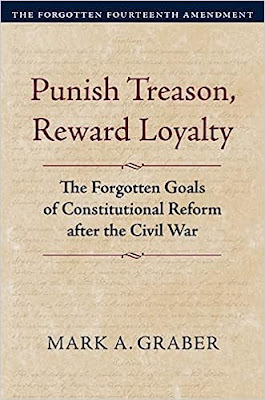
Mark A. Graber, Punish Treason, Reward Loyalty: The Forgotten Goals of Constitutional Reform after the Civil War (University of Kansas Press, 2023)
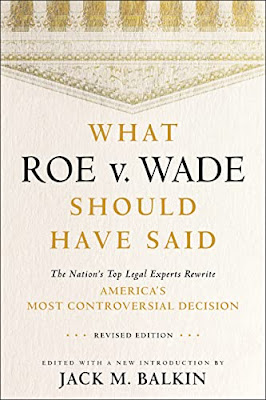
Jack M. Balkin, What Roe v. Wade Should Have Said: The Nation's Top Legal Experts Rewrite America's Most Controversial Decision - Revised Edition (NYU Press, 2023)

Andrew Koppelman, Burning Down the House: How Libertarian Philosophy Was Corrupted by Delusion and Greed (St. Martin’s Press, 2022)

Gerard N. Magliocca, Washington's Heir: The Life of Justice Bushrod Washington (Oxford University Press, 2022)
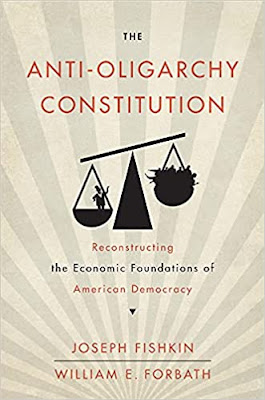
Joseph Fishkin and William E. Forbath, The Anti-Oligarchy Constitution: Reconstructing the Economic Foundations of American Democracy (Harvard University Press, 2022)
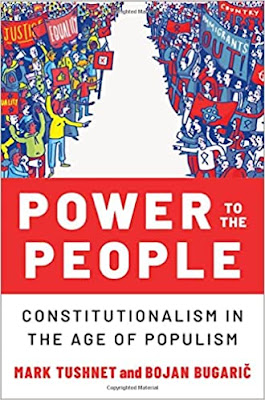
Mark Tushnet and Bojan Bugaric, Power to the People: Constitutionalism in the Age of Populism (Oxford University Press 2021).

Mark Philip Bradley and Mary L. Dudziak, eds., Making the Forever War: Marilyn B. Young on the Culture and Politics of American Militarism Culture and Politics in the Cold War and Beyond (University of Massachusetts Press, 2021).

Jack M. Balkin, What Obergefell v. Hodges Should Have Said: The Nation's Top Legal Experts Rewrite America's Same-Sex Marriage Decision (Yale University Press, 2020)

Frank Pasquale, New Laws of Robotics: Defending Human Expertise in the Age of AI (Belknap Press, 2020)

Jack M. Balkin, The Cycles of Constitutional Time (Oxford University Press, 2020)

Mark Tushnet, Taking Back the Constitution: Activist Judges and the Next Age of American Law (Yale University Press 2020).

Andrew Koppelman, Gay Rights vs. Religious Liberty?: The Unnecessary Conflict (Oxford University Press, 2020)

Ezekiel J Emanuel and Abbe R. Gluck, The Trillion Dollar Revolution: How the Affordable Care Act Transformed Politics, Law, and Health Care in America (PublicAffairs, 2020)

Linda C. McClain, Who's the Bigot?: Learning from Conflicts over Marriage and Civil Rights Law (Oxford University Press, 2020)
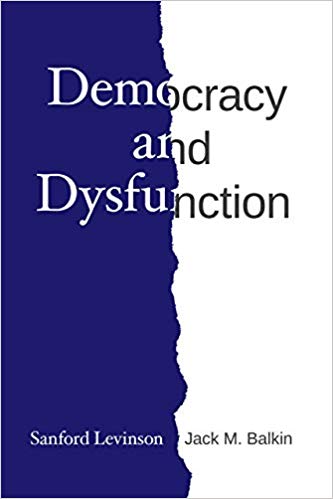
Sanford Levinson and Jack M. Balkin, Democracy and Dysfunction (University of Chicago Press, 2019)

Sanford Levinson, Written in Stone: Public Monuments in Changing Societies (Duke University Press 2018)

Mark A. Graber, Sanford Levinson, and Mark Tushnet, eds., Constitutional Democracy in Crisis? (Oxford University Press 2018)

Gerard Magliocca, The Heart of the Constitution: How the Bill of Rights became the Bill of Rights (Oxford University Press, 2018)

Cynthia Levinson and Sanford Levinson, Fault Lines in the Constitution: The Framers, Their Fights, and the Flaws that Affect Us Today (Peachtree Publishers, 2017)

Brian Z. Tamanaha, A Realistic Theory of Law (Cambridge University Press 2017)

Sanford Levinson, Nullification and Secession in Modern Constitutional Thought (University Press of Kansas 2016)

Sanford Levinson, An Argument Open to All: Reading The Federalist in the 21st Century (Yale University Press 2015)

Stephen M. Griffin, Broken Trust: Dysfunctional Government and Constitutional Reform (University Press of Kansas, 2015)

Frank Pasquale, The Black Box Society: The Secret Algorithms That Control Money and Information (Harvard University Press, 2015)

Bruce Ackerman, We the People, Volume 3: The Civil Rights Revolution (Harvard University Press, 2014)
Balkinization Symposium on We the People, Volume 3: The Civil Rights Revolution

Joseph Fishkin, Bottlenecks: A New Theory of Equal Opportunity (Oxford University Press, 2014)

Mark A. Graber, A New Introduction to American Constitutionalism (Oxford University Press, 2013)

John Mikhail, Elements of Moral Cognition: Rawls' Linguistic Analogy and the Cognitive Science of Moral and Legal Judgment (Cambridge University Press, 2013)

Gerard N. Magliocca, American Founding Son: John Bingham and the Invention of the Fourteenth Amendment (New York University Press, 2013)

Stephen M. Griffin, Long Wars and the Constitution (Harvard University Press, 2013)

Andrew Koppelman, The Tough Luck Constitution and the Assault on Health Care Reform (Oxford University Press, 2013)

James E. Fleming and Linda C. McClain, Ordered Liberty: Rights, Responsibilities, and Virtues (Harvard University Press, 2013)
Balkinization Symposium on Ordered Liberty: Rights, Responsibilities, and Virtues

Andrew Koppelman, Defending American Religious Neutrality (Harvard University Press, 2013)

Brian Z. Tamanaha, Failing Law Schools (University of Chicago Press, 2012)

Sanford Levinson, Framed: America's 51 Constitutions and the Crisis of Governance (Oxford University Press, 2012)

Linda C. McClain and Joanna L. Grossman, Gender Equality: Dimensions of Women's Equal Citizenship (Cambridge University Press, 2012)

Mary Dudziak, War Time: An Idea, Its History, Its Consequences (Oxford University Press, 2012)

Jack M. Balkin, Living Originalism (Harvard University Press, 2011)

Jason Mazzone, Copyfraud and Other Abuses of Intellectual Property Law (Stanford University Press, 2011)

Richard W. Garnett and Andrew Koppelman, First Amendment Stories, (Foundation Press 2011)

Jack M. Balkin, Constitutional Redemption: Political Faith in an Unjust World (Harvard University Press, 2011)

Gerard Magliocca, The Tragedy of William Jennings Bryan: Constitutional Law and the Politics of Backlash (Yale University Press, 2011)

Bernard Harcourt, The Illusion of Free Markets: Punishment and the Myth of Natural Order (Harvard University Press, 2010)

Bruce Ackerman, The Decline and Fall of the American Republic (Harvard University Press, 2010)
Balkinization Symposium on The Decline and Fall of the American Republic

Ian Ayres. Carrots and Sticks: Unlock the Power of Incentives to Get Things Done (Bantam Books, 2010)

Mark Tushnet, Why the Constitution Matters (Yale University Press 2010)

Ian Ayres and Barry Nalebuff: Lifecycle Investing: A New, Safe, and Audacious Way to Improve the Performance of Your Retirement Portfolio (Basic Books, 2010)
.jpg)
Jack M. Balkin, The Laws of Change: I Ching and the Philosophy of Life (2d Edition, Sybil Creek Press 2009)

Brian Z. Tamanaha, Beyond the Formalist-Realist Divide: The Role of Politics in Judging (Princeton University Press 2009)
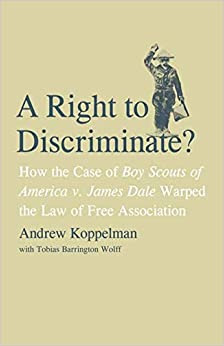
Andrew Koppelman and Tobias Barrington Wolff, A Right to Discriminate?: How the Case of Boy Scouts of America v. James Dale Warped the Law of Free Association (Yale University Press 2009)

Jack M. Balkin and Reva B. Siegel, The Constitution in 2020 (Oxford University Press 2009)

Heather K. Gerken, The Democracy Index: Why Our Election System Is Failing and How to Fix It (Princeton University Press 2009)

Mary Dudziak, Exporting American Dreams: Thurgood Marshall's African Journey (Oxford University Press 2008)

David Luban, Legal Ethics and Human Dignity (Cambridge Univ. Press 2007)

Ian Ayres, Super Crunchers: Why Thinking-By-Numbers is the New Way to be Smart (Bantam 2007)

Jack M. Balkin, James Grimmelmann, Eddan Katz, Nimrod Kozlovski, Shlomit Wagman and Tal Zarsky, eds., Cybercrime: Digital Cops in a Networked Environment (N.Y.U. Press 2007)
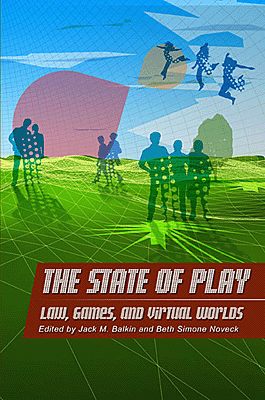
Jack M. Balkin and Beth Simone Noveck, The State of Play: Law, Games, and Virtual Worlds (N.Y.U. Press 2006)

Andrew Koppelman, Same Sex, Different States: When Same-Sex Marriages Cross State Lines (Yale University Press 2006)

Brian Tamanaha, Law as a Means to an End (Cambridge University Press 2006)

Sanford Levinson, Our Undemocratic Constitution (Oxford University Press 2006)

Mark Graber, Dred Scott and the Problem of Constitutional Evil (Cambridge University Press 2006)

Jack M. Balkin, ed., What Roe v. Wade Should Have Said (N.Y.U. Press 2005)

Sanford Levinson, ed., Torture: A Collection (Oxford University Press 2004)
Balkin.com homepage
Bibliography
Conlaw.net
Cultural Software
Writings
Opeds
The Information Society Project
BrownvBoard.com
Useful Links
Syllabi and Exams
