Balkinization
an unanticipated consequence of
Jack M. Balkin
Balkinization Symposiums: A Continuing List
E-mail:
Jack Balkin:
jackbalkin at yahoo.com
Bruce Ackerman
bruce.ackerman at yale.edu
Ian Ayres
ian.ayres at yale.edu
Corey Brettschneider
corey_brettschneider at brown.edu
Mary Dudziak
mary.l.dudziak at emory.edu
Joey Fishkin
joey.fishkin at gmail.com
Heather Gerken heather.gerken at yale.edu
Abbe Gluck abbe.gluck at yale.edu
Mark Graber
mgraber at law.umaryland.edu
Stephen Griffin
sgriffin at tulane.edu
Jonathan Hafetz
jonathan.hafetz at shu.edu
Jeremy Kessler
jkessler at law.columbia.edu
Andrew Koppelman
akoppelman at law.northwestern.edu
Marty Lederman
msl46 at law.georgetown.edu
Sanford Levinson
slevinson at law.utexas.edu
David Luban
david.luban at gmail.com
Gerard Magliocca
gmaglioc at iupui.edu
Jason Mazzone
mazzonej at illinois.edu
Linda McClain
lmcclain at bu.edu
John Mikhail
mikhail at law.georgetown.edu
Frank Pasquale
pasquale.frank at gmail.com
Nate Persily
npersily at gmail.com
Michael Stokes Paulsen
michaelstokespaulsen at gmail.com
Deborah Pearlstein
dpearlst at yu.edu
Rick Pildes
rick.pildes at nyu.edu
David Pozen
dpozen at law.columbia.edu
Richard Primus
raprimus at umich.edu
K. Sabeel Rahmansabeel.rahman at brooklaw.edu
Alice Ristroph
alice.ristroph at shu.edu
Neil Siegel
siegel at law.duke.edu
David Super
david.super at law.georgetown.edu
Brian Tamanaha
btamanaha at wulaw.wustl.edu
Nelson Tebbe
nelson.tebbe at brooklaw.edu
Mark Tushnet
mtushnet at law.harvard.edu
Adam Winkler
winkler at ucla.edu
Compendium of posts on Hobby Lobby and related cases
The Anti-Torture Memos: Balkinization Posts on Torture, Interrogation, Detention, War Powers, and OLC
The Anti-Torture Memos (arranged by topic)
Recent Posts
Nimmer Lecture: Free Speech versus the First Amendment
Why should we protect free speech? The Harvard Law and Philosophy Society Podcast
The Supreme Court's Upcoming Cases On Platform Regulation
Journal of American Constitutional History: Inaugural Issue
More on Section 3
The Supreme Court Lets Domestic Abusers Have Their Guns
National Conference of Constitutional Law Scholars
The Speech and Debate Clause?
Call for Papers--Conference on Constitutional History: Comparative Perspectives--Bologna, September 14-15, 2023
The Balkinization 20th Anniversary Symposium on the Present State of Constitutional Theory -- Collected Posts
Mootness in Moore v. Harper?
The “Independent Protective Force” of State Constitutions, from Goodridge to Planned Parenthood South Atlantic: Recalling Justice Brennan’s Admonition
The Fluidity of Political Legitimacy: On Michelman’s Constitutional Essentials
Just How Bad Would an Article V Convention Be?
The phony rape exception to abortion bans
A Post In Memoriam
The Man Who Wrote "We the People"
![[Powered by Blogger]](https://lh3.googleusercontent.com/blogger_img_proxy/AEn0k_vkh4Tu93793zsYQ95E2Aer4L2ov2PSa9MN2Nrlp2cvUl-ae45xKt-r-XrmV3QuAI7_pqE0gQZ7SRyLl4JXHOy3BrP8q1bIURnjUdC-ZETo=s0-d)
Just A Few Blogs
ACS Blog
Alas, a Blog
Althouse
Arts and Letters Daily
Atrios (Eschaton)
Bill of Health
Buzzflash.com
Buzz Machine
Cato at Liberty
Juan Cole (Informed Comment)
Concurring Opinions
The Constitution in 2020
Corrente
Crooked Timber
Daily Howler
Daily Kos
Dana Boyd
Brad DeLong
Digby (Hullabaloo)
Discriminations
Daniel Drezner
Kevin Drum (Mother Jones)
Electrolite
En Banc
Eunomia (Daniel Larison)
Fafblog
Michael Froomkin (Discourse.net)
GovLab (Beth Noveck)
Rick Hasen (Election Law)
History News Network
How Appealing
Ignatz (Sam Heldman)
The Importance of (Ernie Miller)
Infolaw
Instapundit
International Economic Law and Policy Blog
IntLawGrrls
Jacob Levy
Jesus' General
Jurisdynamics
The Kitchen Cabinet
Mark Kleiman
Law Blog Central
Larry Lessig
Lawyers, Guns and Money
Liberal Oasis
Brian Leiter's Law School Reports
The Leiter Reports
Marginal Revolution
Megan McArdle
Memeorandum
Metafilter
Mirror of Justice
The New Republic
Newseum
No More Mister Nice Blog
Brendan Nyhan
Opinio Juris
Orcinus
The Originalism Blog
Pandagon
Passport (Foreign Policy)
Overcoming Bias
Political Animal (Washington Monthly)
Political Theory Daily Review
Political Wire (Taegan Goddard)
The Poor Man
Virginia Postrel
Prawfsblawg
Public Reason
Jonathan Rauch
Raw Story
Redstate
ReligiousLeftLaw.com
Reporters Committee For Freedom of the Press
Reproductive Rights Blog
Rothman's Roadmap to the Right of Publicity
SCOTUS Blog
Seeing the Forest
Clay Shirky
The Shifted Librarian
The Situationist
Larry Solum (Legal Theory)
Andrew Sullivan
Talking Points Memo
Talk Left
Tapped
Tbogg
TechPresident
The Paper Chase (Jurist)
Tom Paine
Tom Tomorrow (This Modern World)
Eve Tushnet
Uggabugga
University of Chicago Law School Faculty Blog
Unqualified Offerings
The Volokh Conspiracy
War and Piece (Laura Rozen)
Wampum
Oliver Willis
Wonkette
Written Description
Matthew Yglesias
Yin
Your Choice of Feeds
1. XML
powered by

2. Atom Feed
3. RSS 2.0
Nimmer Lecture: Free Speech versus the First Amendment
JB
Last week at UCLA, I gave the 2023 Melville B. Nimmer Memorial Lecture, "Free Speech versus the First Amendment." The lecture describes how the conditions of online speech decenter the First Amendment and widen the gap between what the First Amendment protects and the realization of the values that underlie and justify the First Amendment. Here is a recording of the live stream. Click on the icons in the smaller box on the left to see the lecture in full screen.
Posted
9:30 AM
by JB [link]
Why should we protect free speech? The Harvard Law and Philosophy Society Podcast
JB
Max Diamond of the Harvard Law and Philosophy Society interviewed me on the Society's podcast. Our conversation started with the standard justifications for free speech, but quickly shifted to digital speech and how we have to rethink the law of free speech in the 21st century.
Posted
9:30 AM
by JB [link]
The Supreme Court's Upcoming Cases On Platform Regulation
JB
Posted
9:30 AM
by JB [link]
Journal of American Constitutional History: Inaugural Issue
John Mikhail
The inaugural issue of the Journal of American Constitutional History has now been published: Volume 1, Winter 2023 Mary Sarah Bilder, The Soul of a Free Government: The
Influence of John Adams’s A Defence on the Constitutional Convention “Not a Lawyer’s Contract:”
Reflections on FDR’s Constitution Day Address The Public Defender Movement in the
Age of Mass Incarceration: Georgia’s Experience JACH is currently accepting
submissions for its Spring and Summer issues. Articles will be published on a
rolling basis as they are completed, from April 1 to June 30 (Spring) and July
1 to September 30 (Summer). To submit articles, or for more
information, please visit the journal's website. For questions, please contact its editor-in-chief, David Schwartz, at editor-jach@law.wisc.edu.
Posted
1:50 PM
by John Mikhail [link]
More on Section 3
Mark Graber
Why the obvious meaning of Section 3 is the obvious meaning. Disqualification From Office: Donald Trump v. the 39th Congress - Lawfare (lawfareblog.com)
Posted
12:56 PM
by Mark Graber [link]
The Supreme Court Lets Domestic Abusers Have Their Guns
Andrew Koppelman
The Fifth Circuit Court of Appeals declared
earlier this month that even when a person has a demonstrated history of
violent abuse of their romantic partners or the partners’ children, and even
when a court has determined that the person is “a credible threat to the
physical safety of such intimate partner or child,” that abuser has a Second
Amendment right to possess as many guns as he wants. Laws restricting such
possession exist in many states, backed up by the federal statute that the
court struck down.
People will certainly die as a result of this ruling. Nearly half of female
homicide victims are killed by intimate partners, usually with a gun. The
restrictions now struck down have been found to reduce such homicides by as
much as 25 per cent. Domestic abusers are also likely to kill police officers.
Moreover, most perpetrators of mass shootings have a history of domestic
violence.
But don’t blame the judges of the Fifth Circuit, which is notorious for
conservative activism. It faithfully applied the (not-really-originalist) rules
that the Supreme Court laid down last June in New York State Rifle & Pistol
Association, Inc. v. Bruen.
I explain in a new piece at The American Prospect, here.
Posted
5:05 PM
by Andrew Koppelman [link]
National Conference of Constitutional Law Scholars
Andrew Coan
The University of Arizona's Rehnquist Center is pleased to announce the fifth annual National Conference of Constitutional Law Scholars. This year’s event will be held entirely in-person at the historic Hacienda del Sol Resort in Tucson on March 24–25, 2023. The weather should be beautiful, and the resort has breathtaking views of the Catalina Mountains, with many outdoor recreational opportunities nearby. As in previous years, there will be a series of panels organized by subject matter moderated by Distinguished Commentators. To maximize the value of the in-person experience, the program will also include several break-out “lightning sessions,” in which participants deliver short, no-paper presentations on early-stage projects followed by group discussion. The conference schedule will include plenty of time for informal conversation and outstanding food. Aziz Huq (Chicago) will give a keynote lecture. Distinguished Commentators for 2023 include: All constitutional law scholars are invited to attend. A full program and registration information are available here.
Posted
10:00 AM
by Andrew Coan [link]
The Speech and Debate Clause?
Gerard N. Magliocca
Press reports today say that former Vice President Pence plans to oppose a subpoena from the Special Counsel investigating his former boss. One asserted ground for this position is that the Speech and Debate Clause of Article I shields him from such questions because he was President of the Senate on January 6th, 2021. This is probably wrong many times over. First, there is the age-old problem of whether the Vice President is properly viewed as (a) a member of the Executive Branch; (2) a member of the Senate; (3) both; or (4) neither. The Speech and Debate Clause could apply to Pence only if you consider him part of the Senate. Second, the Vice President does not engage in Speech or Debate in Congress. Accordingly, the functional role of the provision does not apply to Pence even if you think of him as part of the Senate. Third, I do not think that the privilege prevents members from being questioned about alleged crimes committed by other people who are not members of Congress. Finally, the Speech and Debate Clause contains exceptions for felonies and "breach of the peace" that might apply here.
Posted
2:34 PM
by Gerard N. Magliocca [link]
(0) comments
Call for Papers--Conference on Constitutional History: Comparative Perspectives--Bologna, September 14-15, 2023
Jason Mazzone
Call for Papers Constitutional History: Comparative Perspectives Bologna, Italy September 14-15, 2023 An international conference sponsored by: Paper proposals are invited for the Fifth Illinois-Bologna conference on Constitutional History: Comparative Perspectives. The conference will be held in Bologna at the Department of Legal Studies of the University of Bologna on September 14-15, 2023. The conference keynote speaker will be Professor Mirosław Granat, former Justice of the Constitutional Court of Poland. Read more »
Posted
9:05 AM
by Jason Mazzone [link]
The Balkinization 20th Anniversary Symposium on the Present State of Constitutional Theory -- Collected Posts
JB

Posted
9:30 AM
by JB [link]
Mootness in Moore v. Harper?
Jason Mazzone
There is a new twist in Moore v. Harper, the big election case implicating the Independent State Legislature (ISL) theory. The U.S. Supreme Court heard argument in Moore in December. Last Friday, the North Carolina Supreme Court issued an order to rehear the underlying state court case. Various commentators have said that, as a result, at the U.S. Supreme Court Moore may become moot. I asked my colleague Vik Amar--co-author of the best brief in Moore--his thoughts on the possibility of mootness. He provided a characteristically sophisticated response which he has given me permission to share. Here is what Vik says:
Posted
8:15 PM
by Jason Mazzone [link]
The “Independent Protective Force” of State Constitutions, from Goodridge to Planned Parenthood South Atlantic: Recalling Justice Brennan’s Admonition
Guest Blogger
For the Balkinization 20th Anniversary Symposium
Linda C.
McClain In 1977, Justice William Brennan published State Constitutions and the
Protection of Individual Rights, reminding readers that state constituions were a “font of
individual liberties,” with their protections often extending beyond the U.S.
Supreme Court’s interpretation of federal constitutional law. Observing that the Court was pulling back from
the trend—in the 1960s—of protecting individual liberties, Justice Brennan found
it significant that, “Of late, . . . more and more state courts are construing
state constitutional counterparts of provisions of the Bill of Rights as
guaranteeing citizens of their states even more protection that the federal
provisions, even those identically phrased.” Brennan offered examples of the
independent jurisprudence of state courts, and also opined that state courts
interpreting their own constitutions could “breathe new life” into
understandings of comparable federal clauses and could assert a “position of
prominence in the struggle to protect the people of our nation from
governmental intrusion on their freedoms.” Reflecting on constitutional theory
today, as Balkinization turns twenty, I find Justice Brennan’s words timely and
powerful. In this post, I look back to a landmark state constitutional
decision from twenty years ago, Goodridge v. Department
of Public Health,
in which Chief Justice Margaret Marshall, of the Supreme Judicial Court of
Massachusetts, wove together important U.S. Supreme Court liberty and equality
precedents with state constitutional guarantees to hold that to bar an
individual from “the protections, benefits, and obligations of civil marriage
solely because that person would marry a person of the same-sex violates the
Massachusetts Constitution.” Chief Justice Marshall’s beautifully crafted
opinion, in turn, provided a template for Justice Kennedy’s opinion in Obergefell v. Hodges, with a similar
holding under the U.S. Constitution. I then look forward to the South
Carolina’s recent decision, Planned Parenthood South Atlantic v. South Carolina, holding that the right to privacy
guaranteed in South Carolina’s constitution includes the decision to terminate
a pregnancy and that South Carolina’s Fetal Heartbeat and Protection from
Abortion Act was an “unreasonable restriction” upon “a woman’s right to
privacy.” Writing for the majority, Justice
Kaye G. Hearn pointedly noted that, because Dobbs
v. Jackson Women’s Health Organization criticized Roe v. Wade for resting on a right to “privacy” that (Justice Alito
wrote) nowhere appeared in the text of the U.S. Constitution, Dobbs “does not control, or even shed
light on our decision today” because of the express inclusion of the right of
privacy in the South Carolina Constitution.
I consider the convergence and divergence of federal and state
constitutional protections in these two state cases and possible implications
for the next two decades of constitutional theory and the pursuit of constitutional
justice.
Posted
9:30 AM
by Guest Blogger [link]
The Fluidity of Political Legitimacy: On Michelman’s Constitutional Essentials
Andrew Koppelman
What can constitutional law contribute to the justification of political power? Quite a lot, Frank Michelman argues in his new book, Constitutional Essentials. It can establish a publicly known framework for addressing the deep disagreements that are inevitable in any free society.
Posted
4:44 PM
by Andrew Koppelman [link]
Just How Bad Would an Article V Convention Be?
David Super
In progressive advocacy
as in lawncare, the grass always looks greener on the other side. Among immigrants’ rights, anti-poverty, and
other progressive advocates, those most engaged in legislative advocacy are
among the first to say that we need to accomplish more through litigation. The litigators, on the other hand, keep
insisting that we need to stop dilly-dallying and fix these problems legislatively. The reason for this
symmetrical divergence of opinions is obvious. Litigators know only too well the problems with
doctrine and the courts’ composition that keep holding them back, but they
imagine a silver bullet exists in the legislative arena, which they know far
less well. Legislative advocates, in
turn, are acutely aware of the political and procedural obstacles preventing
their proposals from even coming to a vote but imagine that this or that legal
argument is so compelling that the courts will “have to” right the injustices
that they see. In both instances, distance
(from the mechanics of policy-making) causes the heart to grow fonder. The ultimate
expression of this ignorance-is-bliss approach to progressive reform is the fondness
some are expressing for constitutional amendments. Congress at some point might negotiate some
genuinely useful amendments on a bipartisan basis, but these certainly would not
be dramatic changes tilting the playing field leftwards. That limitation understandably leaves many progressives
dissatisfied. Some progressives’
eyes therefore turn toward an Article V convention. As this country has gone 235 years since its
last constitutional convention, it is easy to imagine the convention as a
congenial gathering of public-spirited problem-solvers, a sort of compact
version of Ackerman and Fishkin’s Deliberation
Day. Progressives who feel reason
and justice is on their side believe that they cannot help but prevail before
such a body. This is, of course, the
same sort of idealization that makes legislative advocates confident their cause
would prevail if properly presented to justice-seeking courts and litigators
certain that some first-rate lobbying can mobilize legislative moderates to the
cause of justice. Contrary to what starry-eyed
convention advocates would like to believe, the make-up of an Article V
convention is actually quite knowable.
And the picture is not a pretty one, at least not for progressives. Last summer, the
Center for Media and Democracy surveyed
state laws on how the delegates to an Article V convention would be
selected. In only one state – Rhode Island
– would the voters have anything to say about it. Everywhere else, the selection would be made
by the legislature, alone or in collaboration with the governor. Applying these
laws to the partisan control of state governments as it was at that time, the
Center found that Republicans would have complete control of 31 state
delegations, Democrats would control 15, and the remaining four would be
split. That is a slightly worse for Democrats
than the Supreme Court’s 2-1 Republican majority or the Mississippi Legislature’s
111-63 Republican dominance. Democrats did
fairly well at the state level in last fall’s elections, but even applying states’
laws to the current array of state partisan control,
Republicans would control 29 delegations to just 18 for Democrats. And as anyone who works closely with state
legislatures can tell you, state Republican parties lead even the national party
in their stampede toward the MAGA and ultra-MAGA right. These will not be moderate Republican delegations
by any stretch of the imagination. While progressives
dream about eliminating the Electoral College and reversing their most-loathed
Supreme Court decisions, Republicans are recognizing the opportunity to lock in
their values once and for all. As the
Center reports: Constitutional
convention advocates are keenly aware of this advantage in a one-state-one-vote
proceeding and want to make full use of it. “I think we are on the cusp of a
supermajority moment,” Convention of States Action President Mark Meckler said
during a session for legislators at ALEC's December 2021 national policy
convention. Suggesting that progressives would have little voice in rewriting
the Constitution, Meckler pointed out that Tories were not included in the
crafting of the Constitution and Confederates weren't included in adopting the
post-Civil War amendments. Republicans
control small rural states that “actually have an outsized granted power under
this process,” former Senator Rick Santorum explained. “We have the opportunity
as a result of that to have a supermajority, even though...we may not even be
in an absolute majority when it comes to the people who agree with us." The reality of an
Article V convention is even grimmer for progressive values than that of the current
Supreme Court – and far worse than that of Congress. Progressives that
dally with the idea of an Article V convention are providing the same service
to the Republican Party’s worst elements that Lenin is said to
have imagined capitalists providing to Marxist revolutionaries. And in both cases, by the time the mistake becomes
apparent, it will be altogether too late. @DavidASuper1
Posted
4:07 PM
by David Super [link]
The phony rape exception to abortion bans
Andrew Koppelman
Now that the Supreme Court permits states to outlaw
abortion, Republican state legislators are bitterly
split
over whether abortion bans should include exceptions in cases of rape. This is an entirely pointless political
fight. Rape exceptions are fake. Laws forbidding abortion inevitably force
women to bear their rapists’ babies. If
you don’t want to do that, don’t support abortion prohibitions. I elaborate in a new column at The Hill.
Posted
12:06 PM
by Andrew Koppelman [link]
A Post In Memoriam
Guest Blogger
For the Balkinization 20th Anniversary Symposium Aziz Z. Huq
As I sat down on a Saturday
morning to write, belatedly, a contribution to this Balkinization festschrift,
I learned of the passing of my
1L professor R. Kent Greenawalt. The two decades since his class mark the
duration, roughly, of Balkinization. The news sparked reflection, at least for
me, about the personal qualities that make a constitutional scholar great, and
even exceptional. Accordingly, I want to use this opportunity to reflect on
Greenawalt as an exemplar scholar in relation to this symposium’s themes. I did not have many occasions
to interact with Greenawalt; only one exchange of significance after I
graduated comes to mind. Yet his rich practice as teacher and scholar offered a
formative template for my understanding of the academic practice of
constitutional theory. I encountered Greenawalt first, and foremost, as a
classroom professor. And I will dwell on that experience here not only for
narrow, autobiographical reasons: I do so also because the institutional
context of the American law school, centered on its teaching function,
necessarily provides existence conditions and vectors for constitutional
theory.
Posted
9:30 AM
by Guest Blogger [link]
The Man Who Wrote "We the People"
John Mikhail
For the Balkinization 20th
Anniversary Symposium Sometime
during the last week of July or the first week of August, 1787, a 44-year-old
immigrant sat down at his desk, began jotting down ideas for a preamble to a
new constitution, and crafted a statement that changed the course of history:
“We the People…do…ordain and establish…the Constitution.” The author played with
different language, wrestling with details such as what the new government
should be called and where its name should first appear in his draft. Each subsequent version of his preamble,
however, began with the same three words—“We the People”—indicating that the new
system rested on popular sovereignty. The
Constitution of the United States has been called the world’s most important
legal document. While that might be a stretch, there is no doubt that its
influence has been enormous. Today, 235 years after it was framed and ratified,
it still governs a diverse nation of over 330 million people. Dozens of countries
around the world have modeled their constitutions on the U.S Constitution. The clearest
signs are their preambles,
boldly affirming the principle of self-government. “We the People of the United
States” has become “We the People of Afghanistan,” “We, the People of Albania,”
“We, the people of Angola,” “We, the people of Bangladesh,” “We, the Bolivian
people”—and so on, for a dazzling variety of nations, large and small. Even the Charter of the United Nations
follows the same pattern: “We the Peoples of the United Nations….” Who
wrote these majestic opening words of the Constitution? That man was James
Wilson, a “founding father” so integral to the creation of the United States that
his relative neglect by historians and constitutional theorists is nothing less
than astonishing. The story of Wilson’s life is as remarkable as that of any
other founder because of his humble origins, his status as “another immigrant
coming up from the bottom,” his seminal contributions to the American
Revolution, his pivotal support for the Declaration of Independence, his dedicated
service on the first Supreme Court, and, above all, his unrivaled influence on
the drafting and ratification of the Constitution. Yet many scholars hardly
know him, and most Americans have never
heard of him.
Posted
9:30 AM
by John Mikhail [link]
Books by Balkinization Bloggers

Gerard N. Magliocca, The Actual Art of Governing: Justice Robert H. Jackson's Concurring Opinion in the Steel Seizure Case (Oxford University Press, 2025)

Linda C. McClain and Aziza Ahmed, The Routledge Companion to Gender and COVID-19 (Routledge, 2024)

David Pozen, The Constitution of the War on Drugs (Oxford University Press, 2024)

Jack M. Balkin, Memory and Authority: The Uses of History in Constitutional Interpretation (Yale University Press, 2024)
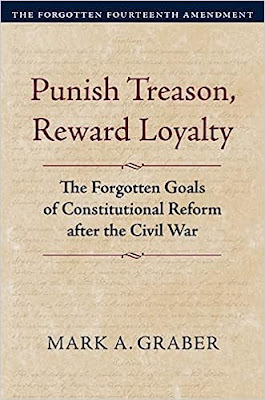
Mark A. Graber, Punish Treason, Reward Loyalty: The Forgotten Goals of Constitutional Reform after the Civil War (University of Kansas Press, 2023)
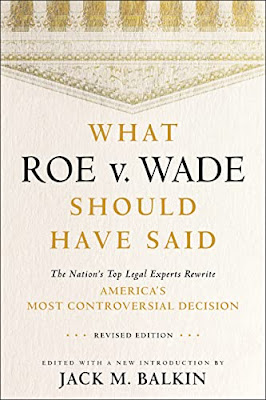
Jack M. Balkin, What Roe v. Wade Should Have Said: The Nation's Top Legal Experts Rewrite America's Most Controversial Decision - Revised Edition (NYU Press, 2023)

Andrew Koppelman, Burning Down the House: How Libertarian Philosophy Was Corrupted by Delusion and Greed (St. Martin’s Press, 2022)

Gerard N. Magliocca, Washington's Heir: The Life of Justice Bushrod Washington (Oxford University Press, 2022)
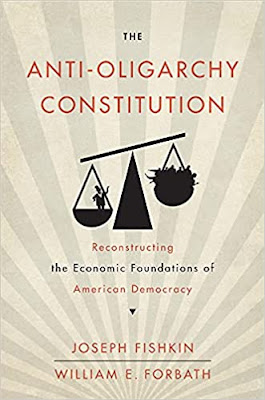
Joseph Fishkin and William E. Forbath, The Anti-Oligarchy Constitution: Reconstructing the Economic Foundations of American Democracy (Harvard University Press, 2022)
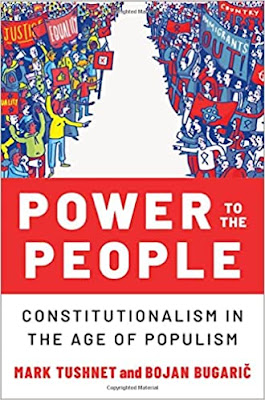
Mark Tushnet and Bojan Bugaric, Power to the People: Constitutionalism in the Age of Populism (Oxford University Press 2021).

Mark Philip Bradley and Mary L. Dudziak, eds., Making the Forever War: Marilyn B. Young on the Culture and Politics of American Militarism Culture and Politics in the Cold War and Beyond (University of Massachusetts Press, 2021).

Jack M. Balkin, What Obergefell v. Hodges Should Have Said: The Nation's Top Legal Experts Rewrite America's Same-Sex Marriage Decision (Yale University Press, 2020)

Frank Pasquale, New Laws of Robotics: Defending Human Expertise in the Age of AI (Belknap Press, 2020)

Jack M. Balkin, The Cycles of Constitutional Time (Oxford University Press, 2020)

Mark Tushnet, Taking Back the Constitution: Activist Judges and the Next Age of American Law (Yale University Press 2020).

Andrew Koppelman, Gay Rights vs. Religious Liberty?: The Unnecessary Conflict (Oxford University Press, 2020)

Ezekiel J Emanuel and Abbe R. Gluck, The Trillion Dollar Revolution: How the Affordable Care Act Transformed Politics, Law, and Health Care in America (PublicAffairs, 2020)

Linda C. McClain, Who's the Bigot?: Learning from Conflicts over Marriage and Civil Rights Law (Oxford University Press, 2020)
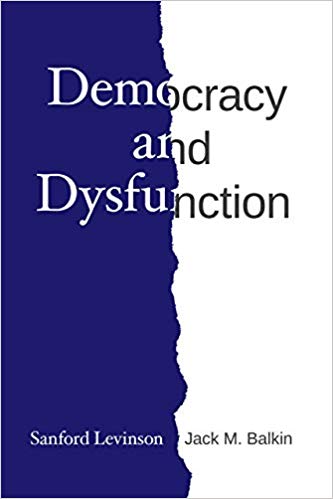
Sanford Levinson and Jack M. Balkin, Democracy and Dysfunction (University of Chicago Press, 2019)

Sanford Levinson, Written in Stone: Public Monuments in Changing Societies (Duke University Press 2018)

Mark A. Graber, Sanford Levinson, and Mark Tushnet, eds., Constitutional Democracy in Crisis? (Oxford University Press 2018)

Gerard Magliocca, The Heart of the Constitution: How the Bill of Rights became the Bill of Rights (Oxford University Press, 2018)

Cynthia Levinson and Sanford Levinson, Fault Lines in the Constitution: The Framers, Their Fights, and the Flaws that Affect Us Today (Peachtree Publishers, 2017)

Brian Z. Tamanaha, A Realistic Theory of Law (Cambridge University Press 2017)

Sanford Levinson, Nullification and Secession in Modern Constitutional Thought (University Press of Kansas 2016)

Sanford Levinson, An Argument Open to All: Reading The Federalist in the 21st Century (Yale University Press 2015)

Stephen M. Griffin, Broken Trust: Dysfunctional Government and Constitutional Reform (University Press of Kansas, 2015)

Frank Pasquale, The Black Box Society: The Secret Algorithms That Control Money and Information (Harvard University Press, 2015)

Bruce Ackerman, We the People, Volume 3: The Civil Rights Revolution (Harvard University Press, 2014)
Balkinization Symposium on We the People, Volume 3: The Civil Rights Revolution

Joseph Fishkin, Bottlenecks: A New Theory of Equal Opportunity (Oxford University Press, 2014)

Mark A. Graber, A New Introduction to American Constitutionalism (Oxford University Press, 2013)

John Mikhail, Elements of Moral Cognition: Rawls' Linguistic Analogy and the Cognitive Science of Moral and Legal Judgment (Cambridge University Press, 2013)

Gerard N. Magliocca, American Founding Son: John Bingham and the Invention of the Fourteenth Amendment (New York University Press, 2013)

Stephen M. Griffin, Long Wars and the Constitution (Harvard University Press, 2013)

Andrew Koppelman, The Tough Luck Constitution and the Assault on Health Care Reform (Oxford University Press, 2013)

James E. Fleming and Linda C. McClain, Ordered Liberty: Rights, Responsibilities, and Virtues (Harvard University Press, 2013)
Balkinization Symposium on Ordered Liberty: Rights, Responsibilities, and Virtues

Andrew Koppelman, Defending American Religious Neutrality (Harvard University Press, 2013)

Brian Z. Tamanaha, Failing Law Schools (University of Chicago Press, 2012)

Sanford Levinson, Framed: America's 51 Constitutions and the Crisis of Governance (Oxford University Press, 2012)

Linda C. McClain and Joanna L. Grossman, Gender Equality: Dimensions of Women's Equal Citizenship (Cambridge University Press, 2012)

Mary Dudziak, War Time: An Idea, Its History, Its Consequences (Oxford University Press, 2012)

Jack M. Balkin, Living Originalism (Harvard University Press, 2011)

Jason Mazzone, Copyfraud and Other Abuses of Intellectual Property Law (Stanford University Press, 2011)

Richard W. Garnett and Andrew Koppelman, First Amendment Stories, (Foundation Press 2011)

Jack M. Balkin, Constitutional Redemption: Political Faith in an Unjust World (Harvard University Press, 2011)

Gerard Magliocca, The Tragedy of William Jennings Bryan: Constitutional Law and the Politics of Backlash (Yale University Press, 2011)

Bernard Harcourt, The Illusion of Free Markets: Punishment and the Myth of Natural Order (Harvard University Press, 2010)

Bruce Ackerman, The Decline and Fall of the American Republic (Harvard University Press, 2010)
Balkinization Symposium on The Decline and Fall of the American Republic

Ian Ayres. Carrots and Sticks: Unlock the Power of Incentives to Get Things Done (Bantam Books, 2010)

Mark Tushnet, Why the Constitution Matters (Yale University Press 2010)

Ian Ayres and Barry Nalebuff: Lifecycle Investing: A New, Safe, and Audacious Way to Improve the Performance of Your Retirement Portfolio (Basic Books, 2010)
.jpg)
Jack M. Balkin, The Laws of Change: I Ching and the Philosophy of Life (2d Edition, Sybil Creek Press 2009)

Brian Z. Tamanaha, Beyond the Formalist-Realist Divide: The Role of Politics in Judging (Princeton University Press 2009)
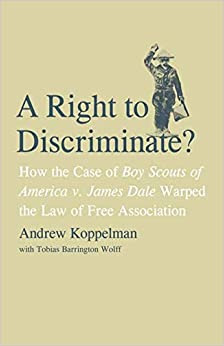
Andrew Koppelman and Tobias Barrington Wolff, A Right to Discriminate?: How the Case of Boy Scouts of America v. James Dale Warped the Law of Free Association (Yale University Press 2009)

Jack M. Balkin and Reva B. Siegel, The Constitution in 2020 (Oxford University Press 2009)

Heather K. Gerken, The Democracy Index: Why Our Election System Is Failing and How to Fix It (Princeton University Press 2009)

Mary Dudziak, Exporting American Dreams: Thurgood Marshall's African Journey (Oxford University Press 2008)

David Luban, Legal Ethics and Human Dignity (Cambridge Univ. Press 2007)

Ian Ayres, Super Crunchers: Why Thinking-By-Numbers is the New Way to be Smart (Bantam 2007)

Jack M. Balkin, James Grimmelmann, Eddan Katz, Nimrod Kozlovski, Shlomit Wagman and Tal Zarsky, eds., Cybercrime: Digital Cops in a Networked Environment (N.Y.U. Press 2007)
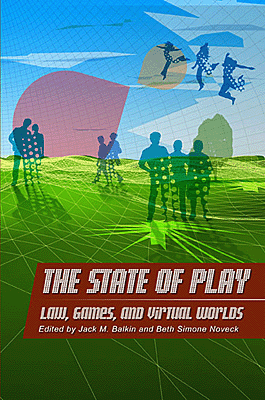
Jack M. Balkin and Beth Simone Noveck, The State of Play: Law, Games, and Virtual Worlds (N.Y.U. Press 2006)

Andrew Koppelman, Same Sex, Different States: When Same-Sex Marriages Cross State Lines (Yale University Press 2006)

Brian Tamanaha, Law as a Means to an End (Cambridge University Press 2006)

Sanford Levinson, Our Undemocratic Constitution (Oxford University Press 2006)

Mark Graber, Dred Scott and the Problem of Constitutional Evil (Cambridge University Press 2006)

Jack M. Balkin, ed., What Roe v. Wade Should Have Said (N.Y.U. Press 2005)

Sanford Levinson, ed., Torture: A Collection (Oxford University Press 2004)
Balkin.com homepage
Bibliography
Conlaw.net
Cultural Software
Writings
Opeds
The Information Society Project
BrownvBoard.com
Useful Links
Syllabi and Exams
