Balkinization
an unanticipated consequence of
Jack M. Balkin
Balkinization Symposiums: A Continuing List
E-mail:
Jack Balkin:
jackbalkin at yahoo.com
Bruce Ackerman
bruce.ackerman at yale.edu
Ian Ayres
ian.ayres at yale.edu
Corey Brettschneider
corey_brettschneider at brown.edu
Mary Dudziak
mary.l.dudziak at emory.edu
Joey Fishkin
joey.fishkin at gmail.com
Heather Gerken heather.gerken at yale.edu
Abbe Gluck abbe.gluck at yale.edu
Mark Graber
mgraber at law.umaryland.edu
Stephen Griffin
sgriffin at tulane.edu
Jonathan Hafetz
jonathan.hafetz at shu.edu
Jeremy Kessler
jkessler at law.columbia.edu
Andrew Koppelman
akoppelman at law.northwestern.edu
Marty Lederman
msl46 at law.georgetown.edu
Sanford Levinson
slevinson at law.utexas.edu
David Luban
david.luban at gmail.com
Gerard Magliocca
gmaglioc at iupui.edu
Jason Mazzone
mazzonej at illinois.edu
Linda McClain
lmcclain at bu.edu
John Mikhail
mikhail at law.georgetown.edu
Frank Pasquale
pasquale.frank at gmail.com
Nate Persily
npersily at gmail.com
Michael Stokes Paulsen
michaelstokespaulsen at gmail.com
Deborah Pearlstein
dpearlst at yu.edu
Rick Pildes
rick.pildes at nyu.edu
David Pozen
dpozen at law.columbia.edu
Richard Primus
raprimus at umich.edu
K. Sabeel Rahmansabeel.rahman at brooklaw.edu
Alice Ristroph
alice.ristroph at shu.edu
Neil Siegel
siegel at law.duke.edu
David Super
david.super at law.georgetown.edu
Brian Tamanaha
btamanaha at wulaw.wustl.edu
Nelson Tebbe
nelson.tebbe at brooklaw.edu
Mark Tushnet
mtushnet at law.harvard.edu
Adam Winkler
winkler at ucla.edu
Compendium of posts on Hobby Lobby and related cases
The Anti-Torture Memos: Balkinization Posts on Torture, Interrogation, Detention, War Powers, and OLC
The Anti-Torture Memos (arranged by topic)
Recent Posts
The days of the dead
The Real Swing Voters
Did Osama see Fahrenheit 911?
That Crazy Osama
The State of Play
The Point of Faith
Bush Steps in QaQaa
Know Where to Vote
El Nino strikes again
Why Iraq Is No Vietnam
Black disenfranchisement, again.
credible vote trading
Bush is Ahead, But He's Behind
Greetings from the Reality Based Community
A Caricature of a Conservative
Why the Supreme Court Makes No Sense
Bush's Faith Now Fair Game?
Off the Wall and Into the Mainstream?, or "Here We Go Again"
Not Rocket Science
Citizen Sovereignty

Just A Few Blogs
ACS Blog
Alas, a Blog
Althouse
Arts and Letters Daily
Atrios (Eschaton)
Bill of Health
Buzzflash.com
Buzz Machine
Cato at Liberty
Juan Cole (Informed Comment)
Concurring Opinions
The Constitution in 2020
Corrente
Crooked Timber
Daily Howler
Daily Kos
Dana Boyd
Brad DeLong
Digby (Hullabaloo)
Discriminations
Daniel Drezner
Kevin Drum (Mother Jones)
Electrolite
En Banc
Eunomia (Daniel Larison)
Fafblog
Michael Froomkin (Discourse.net)
GovLab (Beth Noveck)
Rick Hasen (Election Law)
History News Network
How Appealing
Ignatz (Sam Heldman)
The Importance of (Ernie Miller)
Infolaw
Instapundit
International Economic Law and Policy Blog
IntLawGrrls
Jacob Levy
Jesus' General
Jurisdynamics
The Kitchen Cabinet
Mark Kleiman
Law Blog Central
Larry Lessig
Lawyers, Guns and Money
Liberal Oasis
Brian Leiter's Law School Reports
The Leiter Reports
Marginal Revolution
Megan McArdle
Memeorandum
Metafilter
Mirror of Justice
The New Republic
Newseum
No More Mister Nice Blog
Brendan Nyhan
Opinio Juris
Orcinus
The Originalism Blog
Pandagon
Passport (Foreign Policy)
Overcoming Bias
Political Animal (Washington Monthly)
Political Theory Daily Review
Political Wire (Taegan Goddard)
The Poor Man
Virginia Postrel
Prawfsblawg
Public Reason
Jonathan Rauch
Raw Story
Redstate
ReligiousLeftLaw.com
Reporters Committee For Freedom of the Press
Reproductive Rights Blog
Rothman's Roadmap to the Right of Publicity
SCOTUS Blog
Seeing the Forest
Clay Shirky
The Shifted Librarian
The Situationist
Larry Solum (Legal Theory)
Andrew Sullivan
Talking Points Memo
Talk Left
Tapped
Tbogg
TechPresident
The Paper Chase (Jurist)
Tom Paine
Tom Tomorrow (This Modern World)
Eve Tushnet
Uggabugga
University of Chicago Law School Faculty Blog
Unqualified Offerings
The Volokh Conspiracy
War and Piece (Laura Rozen)
Wampum
Oliver Willis
Wonkette
Written Description
Matthew Yglesias
Yin
Your Choice of Feeds
1. XML
powered by

2. Atom Feed
3. RSS 2.0
The days of the dead
Ian Ayres
The days of the dead (Oct. 31, Nov. 1, and Nov. 2) have special importance this election year. In some Catholic traditions, the three days are times to contemplate three after-life destinations. Halloween, Oct. 31, is a time to contemplate those who have gone to hell. All Saints Day (or All Souls Day), Nov. 1, is a time to contemplate those in triumph who have gone to heaven. And All Souls Day, Nov. 2, is a time to contemplate those still in suffering who are still in purgatory.
Here's hoping the upcoming election can this country out of the purgatory of divisiveness that we seem to find ourselves in.
Posted
1:45 PM
by Ian Ayres [link]
(13) comments
The Real Swing Voters
JB
Washington, D.C. (BP)-- As the election nears, all eyes are on the key group of voters who will decide who becomes President of the United States-- the nine members of the United States Supreme Court.
"In 2000 we discovered that regular voters are just plain stupid," Justice Anthony Kennedy explained. "Too many of them kept voting for the wrong person. As a result, it's become our unsought duty, every four years, to decide who becomes president."
"Having the Supreme Court pick the president is completely consistent with the original intentions of the Framers," Justice Antonin Scalia declared. "The Electoral College was created because the Framers didn't want the president picked by the hoi polloi. They wanted the president picked by elites. Well, there ain't nobody more elite than us, baby!"
As the election nears, questions still remain about the Justices' votes. Will Chief Justice Rehnquist be well enough to make it to the polls? Will Sandra Day O'Connor, the Court's swing Justice, vote for Bush as she did in 2000, or will Bush's fiscal policies cause her to stay home?
Polling of the Justices has been extremely haphazard because of the small sample size, but pollsters are confident that their work is scientifically sound. The latest Gallup poll, for example, shows a decisive 5-4 vote for Bush with a margin of error of plus or minus 9.
Of particular concern is the fact that Justice Clarence Thomas, the Court's youngest member, may not be easy to poll because he owns a cell phone. But a spokesman for the Gallup organization was unconcerned about the Thomas factor: "Because he's a minority, he probably won't get to vote anyway."
Still other pundits were worried about the effect of the recent tape from Osama Bin Laden. "They needn't worry," Justice Kennedy explained. "Osama Bin Laden is not going to decide who becomes the next president. That's *our* job."
Posted
1:05 AM
by JB [link]
(18) comments
Did Osama see Fahrenheit 911?
Ian Ayres
It is a little amazing that the one thing that bin Laden picks out to highlight Bush's incompetence is also the centerpiece of Michael Moore's Farenheit 911:
It appeared to him (Bush) that a little girl's talk about her goat and its butting was more important than the planes and their butting of the skyscrapers. That gave us three times the required time to carry out the operations, thank God. I can understand why Kerry chooses not to respond to this taunt, but it is strange how little ephasis the media is giving to the idea.
This quotation reminds me of one of the four word reviews of the film:
Goat book takes priority.
Posted
2:59 PM
by Ian Ayres [link]
(17) comments
That Crazy Osama
JB
Osama bin Laden issued a taped message on Friday making fun of Bush and warning of more terror attacks if the United States doesn't change course.
Hmm, I guess that means that Osama wants to tilt the election to Kerry by showing that Bush is incompetent and by scaring us with future threats of terrorist attacks.
Unless he's *really* trying to tilt the election toward Bush, because he figures that the public will naturally come to Bush's side if it sees that Osama is criticizing him.
Unless that's what Osama *wants* us to think! Maybe he thinks that we'll easily see through that ruse-- attacking Bush to push us toward Bush, and so we'll move to Kerry just to spite Osama, which is exactly what Osama wanted all along!
Of course, maybe *that's* just what Osama wants us to think. By criticizing Bush, we'll realize that he really wants to support Kerry, but we'll see through his game and support Bush instead, which is in fact just what Osama wanted all along!
Hmmmm. This is just too difficult. Maybe we should just ignore the bastard and vote for whoever we damn well please.
Posted
11:52 PM
by JB [link]
(0) comments
The State of Play
JB
I'm in New York City this weekend at the State of Play conference, the second annual event sponsored by New York Law School's Institute for Information Law and Policy, run by Professor Beth Noveck, and Yale's Information Society Project, of which I am the director.
The State of Play is about the fascinating problems of law and regulation in virtual worlds and multiplayer online games, which are fast becoming among the most important forms of online entertainment and online community building. If you are interested in my take on some of these issues, you can read this article, which will be coming out in the University of Virginia Law Review in December.
Posted
10:42 PM
by JB [link]
(20) comments
The Point of Faith
JB
In a previous post, I wrote:
Commenting on this post, Sean wrote:
Put another way, we must not use faith as a crutch to keep us from confronting unpleasant realities. Instead, we must use faith as a source of strength given the fact that life is not always fair and does not always hand us the best set of circumstances. We must play the cards we are dealt, and to do that, we need faith.
Thus, there are two kinds of faith: faith that lets people go on believing what they want to believe in spite of good evidence to the contrary, and faith that enables people to surmount difficulties in their lives that no one else thought they could surmount. The former sort of faith is a form of blindness; the latter sort of faith requires honesty about one's self and one's situation. The former sort of faith keeps us stuck in our present circumstances; the latter sort of faith allows us to improve our circumstances and the circumstances of those around us.
Which kind of faith does the President have? Which kind does he expect from those who support him? The answers to these questions are central to what people should do in this upcoming election.
The point of having faith is not to escape reality, but to see it clearly, as it is, and still be able to go on, because one has hope for something better and believes in something higher. This sort of faith takes strength of character, and it gives strength in return. It is precisely this sort of faith-- and this sort of strength of character that Bush lacks. Bush's problem, in short, is not that he has faith. It is that he lacks character.
I'm not sure I understand "the point of having faith is ... to see [reality] clearly". Isn't a good definition of faith "belief in the absence of evidence"? Whatever good points faith may have, I don't see how one can argue that seeing reality clearly is one of them.
Faith is paradoxical in this sense: Although it depends on belief in what cannot be known, it helps us deal with what can be known. Having faith means being able to accept the world and all of its imperfections for what it is, and still be able to go on, because one believes in something else.
Posted
7:10 PM
by JB [link]
(14) comments
Bush Steps in QaQaa
JB
Bush finally spoke out about the 380 tons of missing high explosives that have gone missing from the Al Qaqaa storage facility 30 miles outside Baghdad. Not surprisingly, Bush denied that he had done anything wrong-- for example, by sending insufficient troops to Iraq to prevent raiding and looting of key facilities by insurgents. Instead, he blamed Kerry for bringing up the subject.
From the Washington Post:
[Bush] added, "Our military is now investigating a number of possible scenarios, including that the explosives may have been moved before our troops even arrived at the site. This investigation is important and it's ongoing, and a political candidate who jumps to conclusions without knowing the facts is not a person you want as your commander in chief."
In response, retired Army Gen. Wesley K. Clark, a Kerry supporter who competed with him for the Democratic presidential nomination, said Bush's words amounted to "a very compelling and thoughtful argument for why he should not be reelected."
It was Bush who "jumped to conclusions about any connection between Saddam Hussein and 9/11," Clark said in a statement released by the Kerry campaign. "He jumped to conclusions about weapons of mass destruction. He jumped to conclusions about the mission being accomplished. He jumped to conclusions about how we had enough troops on the ground to win the peace. And because he jumped to conclusions, terrorists and insurgents in Iraq may very well have their hands on powerful explosives to attack our troops, we are stuck in Iraq without a plan to win the peace, and Americans are less safe both at home and abroad."
Clark concluded: "By doing all these things, he broke faith with our men and women in uniform. He has let them down. George W. Bush is unfit to be our commander in chief."
Retired Air Force Gen. Merrill A. "Tony" McPeak said in a statement that Bush seems to believe that Kerry should not be criticizing him "since the president thinks he has never made a mistake."
McPeak continued: "Let's be perfectly clear: it is the President who dropped the ball. Senator Kerry is being critical of George Bush, not the troops. By embarking on the line of attack, George Bush is deflecting blame from him over to the military. This is beneath contempt."
The International Atomic Energy Agency officially informed the United Nations Monday that nearly 380 tons of high explosives, including some material under U.N. seal because it could be used in nuclear weapons, were missing from the vast al Qaqaa storage site 30 miles south of Baghdad.
The Iraqi Ministry of Science and Technology said the explosives disappeared after April 9, 2003, the day that Baghdad fell to U.S. forces and the government of president Saddam Hussein collapsed. The ministry blamed a "lack of security" for the loss, and officials expressed suspicion that the munitions had been looted by insurgents.
That is reason enough, one would think, for a change in leadership.
President Bush took up the issue of missing high explosives in Iraq for the first time today, counterattacking Democratic challenger John F. Kerry for making "wild charges" without knowing the facts and accusing the Massachusetts senator of "denigrating" U.S. troops and commanders. . . .
Why is the controversy over Al Qaqaa important? Because it highlights the limitations of this President and his Administration. The Administration was determined to engage in warfare on the cheap, so that it could justify its policy of preemptive war. As a result, it failed to deliver enough troops in Iraq to secure key facilities and prevent looting. Because of this bad strategic choice-- one motivated by ideological committments that blinded the Administration to the facts on the ground-- the insurgency helped itself to a large cache of high explosives that it may have used against American troops. As a result the Administration has weakened our position abroad and put our troops in harm's way.
Posted
4:12 PM
by JB [link]
(21) comments
Know Where to Vote
JB
Remember, if you are challenged about your right to vote, you can vote with a provisional ballot. But in some states (most notably Ohio), if you show up at the wrong precinct, the state may refuse to accept your provisional ballot even if it turns out that you are fully qualified. So if you have any doubts about whether to vote, visit MyPollingPlace.com (link via Political Animal)
Posted
4:01 PM
by JB [link]
(12) comments
El Nino strikes again
JB
Play the Supreme Court survivor game and find out how.
Posted
6:56 PM
by JB [link]
(17) comments
Why Iraq Is No Vietnam
JB
Via Michael Froomkin:
Q: What’s the difference between the Vietnam War and the Iraq War?
A: George Bush had a plan for getting out of Vietnam.
Posted
6:52 PM
by JB [link]
(15) comments
Black disenfranchisement, again.
JB
According to this BBC report, Republican operatives are hoping to make a series of mass challenges to black voters in Florida in the hopes of discouraging people from voting at the polls.
Two e-mails, prepared for the executive director of the Bush campaign in Florida and the campaign's national research director in Washington DC, contain a 15-page so-called "caging list".
It lists 1,886 names and addresses of voters in predominantly black and traditionally Democrat areas of Jacksonville, Florida.
An elections supervisor in Tallahassee, when shown the list, told Newsnight: "The only possible reason why they would keep such a thing is to challenge voters on election day."
Ion Sancho, a Democrat, noted that Florida law allows political party operatives inside polling stations to stop voters from obtaining a ballot.
Mass challenges
They may then only vote "provisionally" after signing an affidavit attesting to their legal voting status.
Mass challenges have never occurred in Florida. Indeed, says Mr Sancho, not one challenge has been made to a voter "in the 16 years I've been supervisor of elections."
"Quite frankly, this process can be used to slow down the voting process and cause chaos on election day; and discourage voters from voting."
Sancho calls it "intimidation." And it may be illegal.
A Republican spokeswoman did not deny that voters would be challenged at polling stations
In Washington, well-known civil rights attorney, Ralph Neas, noted that US federal law prohibits targeting challenges to voters, even if there is a basis for the challenge, if race is a factor in targeting the voters. The Democratic Party and the Kerry-Edwards campaign sent letters Monday to Ohio's 88 county election boards asking them to dismiss the challenges, arguing that they are "unfair" and "arbitrary" and that the Ohio GOP has not provided sufficient evidence under state law that the voters challenged are ineligible.
The rules for challenging voters vary from state to state, and officials nationwide are bracing for an onslaught. In Ohio, the state GOP is drawing on a little-used 1953 law to file its pre-election challenges.
Ohio law states that a party can challenge a voter's eligibility if the challenger has a reasonable doubt that the person is a citizen, is at least 18, or is a legal resident of the state or the county where he shows up to vote. The law also states that local election boards must give voters challenged before Election Day three days' notice before holding a mandatory hearing, no later than two days before the election.
It is not clear, however, how election officials can hold so many hearings, or what they should do after them. It is a shameful enterprise, and it speaks volumes about what the Republican Party has come to stand for. Instead of trying to come up with policies that would attract new voters, Republican operatives have are simply trying to deny people their right to vote.
A secret document obtained from inside Bush campaign headquarters in Florida suggests a plan - possibly in violation of US law - to disrupt voting in the state's African-American voting districts, a BBC Newsnight investigation reveals.
In the meantime, Republicans are planning a series of mass challenges to voter qualifications in Ohio, the Washington Post reports:
Democrats, and some election officials as well, say the most potentially disruptive action could be Republican challenges of voters' eligibility filed over the past few days. Although some of the more than 35,000 challenges have been withdrawn or rejected by county officials, about 25,000 are pending.
Unlike the Florida challenges, the Ohio challenges do not appear to be aimed specifically at African-Americans, but rather at new registrants whom the Republican party fears may vote Democratic.
Posted
6:16 PM
by JB [link]
(30) comments
credible vote trading
Ian Ayres
Imagine that next week Al Gore and Ralph Nader hold a joint press conference. Gore announces that he is withdrawing his name from the ballot in Texas and seven other states where polls project George Bush as a clear winner and Gore directs his supporters in those states to vote for Nader. Nader in turn announces that he is withdrawing his name from the ballot in twelve other swing states and directs his supporters in these states to vote for Gore. This deal represents a kind of interstate vote trading that could be good for both candidates. Nader and his Green party would be virtually assured of receiving more than 5% of the overall votes cast – and thus would qualify for public funding in both this and the next campaign cycle. Gore would gain votes in the crucial swing states that might very well determine the election. While polling results have been notoriously volatile in this campaign, recent polls have shown Gore to be trailing by more than 20 percentage points in Alaska, Idaho, Kansas, Nebraska South Dakota, Texas, Utah, and
In contrast, there are twelve states in which there is less than a 10 percentage point difference between Gore and Bush, but in which Nader
By cutting this deal, Gore would be trading almost 3 votes for every 1 vote that he picked-up from Nader in return -- about 3 million votes in the eight states where he will almost surely lose in exchange for about 1 million votes in the twelve states where Nader’s presence on the ballot may otherwise cost Gore the election. The impetus for vote trading grows out of the winner-take-all structure of state elections. The second place finisher in a state gains no electoral college votes regardless of whether this finisher earned 1% of 49% of that state’s overall vote. Interstate vote trading serves to re-enfranchise substantial voting populations whose votes are trapped as worthless minorities in winner-take-all states by allowing them to have at least an indirect effect on the election. Vote trading can thus overcome certain anti-democratic aspects of the current electoral college system and pushes at least modestly toward a system where the candidate who was nationally most popular would win the election. Of course, Gore’s conceding defeat in selected states might depress democratic turnout for Congressional races -- but democratic Congressional candidates are already preordained to lose most of the subsidiary elections in these staunchly republican states. And vote trading may even spur democratic turnout in these states. Instead, of casting a meaningless vote,
Another problem is that it is too late in some states for candidates to remove their name from the ballot. And express vote trading might offend a sufficient number of undecided or decided voters so that the trading might cost them both more votes than it gains them. But there are many
As a sign of his good faith, Gore might even promise to appoint Nader as the nation’s chief consumer advocate (chair of the Federal Trade Commission) or promise to participate in future Presidential debates only if the Green party candidate is invited. Indeed, it is not necessary for either Gore or Nader to hold a press conference. The idea of interstate vote trading has already occurred to individuals. The press has reported anecdotes of Gore supporters in Texas striking vote trading deals with friends who support Nader in Colorado. But without some centralized coordination it will be hard for this market to clear. At a minimum, it is necessary to propose a focal point for voting. So here goes. I call on Gore supporters in Bush country (Alaska, Idaho, Kansas, Nebraska South Dakota, Texas, Utah, and Wyoming) to vote your conscience. If you think Nader would make the better president, or if you think our public debate would be richer with a better funded Green Party, or even if you just want to help encourage reciprocated Gore support in the swing states, then you should vote for Nader. But if you are a Nader supporter and live in a swing state (Arizona, Arkansas, Colorado, Florida, Minnesota, Missouri, Nevada, New Mexico, Oregon, Pennsylvania, Washington and Wisconsin), you should vote for Gore. In these swing states, a vote for Nader may actually hand the presidency to a more conservative candidate. And if a vote-trading norm takes hold, voting for Gore can even be seen as voting your conscience as it indirectly can give rise to three votes for your preferred candidate in other states. As it turns out this proposal would have worked to perfection in the last election, Nader with the Gore votes from the red states would have qualified for federal funding, and Gore with the Nader votes in the swing states would have easily won Florida and the election. A crazy idea to be sure, but one that Kerry might deploy to respond to the Nader problem this election as well.
Wyoming. But nonetheless almost 3% of the nation’s total votes are predicted to be cast for Gore in these states. Gore gains nothing from these votes, but these same votes if cast for Nader could mean all the difference in qualifying for public funding.
support represents at least 50% of the difference. These swing states (Arizona, Arkansas, Colorado, Florida, Minnesota, Missouri, Nevada, New Mexico, Oregon,
Pennsylvania, Washington and Wisconsin) account for almost one-half of the total electoral college votes that Gore needs to win. In five of these states, the current polls suggest that Nader votes added to Gore’s current support would move Gore from behind to ahead of Governor Bush.
democrats -- can by voting for Nader -- increase the chance that Gore wins the national election.
less explicit ways to trade votes. For example, Gore could hold the press conference without Nader. And instead of expressly withdrawing his name from the ballot, Gore could simply call on his supporters in Texas to vote for Nader, but simultaneously call on all liberals in the swing states to vote for him (as the clear lesser of two evils).
Posted
9:44 AM
by Ian Ayres [link]
(30) comments
Bush is Ahead, But He's Behind
JB
A little more on the incumbent rule from MyDD, estimating that if the election were held tomorrow and 80 percent of the undecideds went to Kerry,
Your mileage may differ. The basic point is that you must keep your eye firmly fixed on the President's numbers in the battleground states. If he polls at 49 or 50 percent or above, he's in ok shape. But if he's polling at 47 or 48 or lower, even if he's currently ahead, he's toast.
Kerry would win 304-234, taking Florida, New Hampshire and Ohio, but losing Iowa. (N.B. This calculation was made on October 22nd; it doesn't take into account more recent polls which suggest that the race has tightened.)
Posted
9:54 AM
by JB [link]
(15) comments
Greetings from the Reality Based Community
JB
The Program on International Policy Attitudes, affiliated with the University of Maryland, just released a study about the different perceptions of Bush and Kerry supporters. Read it and weep about what it says about American democracy. Dana Milbank summarizes some of the findings in the Washington Post:
On al Qaeda's ties to Iraq, similarly, 75 percent of Bush supporters believed that Iraq either gave al Qaeda "substantial support" or direct involvement in the Sept. 11, 2001, attacks; 30 percent of Kerry supporters held these views. A majority of Bush supporters believed the 9/11 commission backed them up on these beliefs, although the panel found no cooperation between the two, only some contacts.
The PIPA poll also found that 31 percent of Bush supporters believed the majority of people in the world opposed the U.S.-led war in Iraq, compared with 74 percent of Kerry supporters. Bush supporters also believed most of the world favors Bush's reelection. PIPA, analyzing these results, found a "tendency of Bush supporters to ignore dissonant information." The PIPA poll does *not* show that if you support Bush you have lost touch with reality. Rather, it shows that losing touch with reality makes it easier to support Bush. Many good people know the facts and still support the President. The point is that if he had to rely only on this group of voters, he wouldn't have a snowball's chance in hell at winning reelection.
The PIPA poll might also tend to suggest that the Bush Administration has engaged in a successful campaign of deceit and disinformation, aided and abetted by eager conservatives in mass media organizations and by a feckless press with a confused notion of journalistic objectivity. I think that the mass media are very much to blame for putting this President in office and for allowing his supporters to manipulate the mass media once there. But I also think that large segments of the American public have also been willing to be duped, or, like the President himself, don't wish to face unpleasant realities.
In other words, there is plenty of blame to go around.
A majority of Bush supporters, 72 percent, believed that Iraq possessed prohibited weapons or had a major weapons of mass destruction program, compared with 26 percent of Kerry supporters who held such beliefs. A majority of Bush supporters also believed experts agree that Iraq possessed banned weapons just before the war, and that U.S. weapons inspector Charles A. Duelfer concluded that Iraq held prohibited arms or ran major programs. In fact, Duelfer and the others who have probed the matter found neither weapons of mass destruction nor major programs for producing them.
This appears to be something that Bush supporters have in common with the candidate they support.
Posted
9:26 AM
by JB [link]
(16) comments
A Caricature of a Conservative
JB
Scott McConnell, writing in the American Conservative, endorses Kerry:
Bush has behaved like a caricature of what a right-wing president is supposed to be, and his continuation in office will discredit any sort of conservatism for generations. The launching of an invasion against a country that posed no threat to the U.S., the doling out of war profits and concessions to politically favored corporations, the financing of the war by ballooning the deficit to be passed on to the nation’s children, the ceaseless drive to cut taxes for those outside the middle class and working poor: it is as if Bush sought to resurrect every false 1960s-era left-wing cliché about predatory imperialism and turn it into administration policy.
Posted
9:21 AM
by JB [link]
(19) comments
Why the Supreme Court Makes No Sense
JB
Charles Fried's op-ed in the New York Times today argues that the decisions of the Burger and Rehnquist courts used to make sense because they were developing a coherent set of doctrines that reflected classical liberalism or classical individualism, but the Court has lately gone off the deep end with its decisions on affirmative action (Grutter) and campaign finance (McConnell).
There are plenty of reasons that Charles might offer to criticize these two recent decisions, but one of them is not that they evidence a departure from a relatively coherent support for classical liberal principles since the mid-1970s. The Supreme Court is not a single mind, but a group of minds, whose personnel is regularly shifting. Liberals are replaced by conservatives, and one kind of liberal or conservative is replaced by another kind. Supreme Court decisions are compromises among the Justices, and tend to reflect, over time, not a consistent political philosophy but rather the changing views of national majorities and national political elites (and where the two conflict, those of national political elites). As a result, Supreme Court decisionmaking tends to go all over the place, hemmed in (albeit sometimes imperfectly) by the Justices' professional roles and existing precedent.
What decisions like Casey v. Planned Parenthood, United States v. Lopez, and Hibbs v. Department of Social Services have in common is not they are are all classical liberal decisions. What they have in common is that Justice O'Connor joined in them or wrote them. So perhaps Charles is really saying that he wishes that O'Connor was more of a classical liberal, and that she has disappointed him in Grutter (the affirmative action case) and McConnell (the campaign finance case). Fair enough. But one shouldn't expect a swing Justice like O'Connor to match a particular coherent political ideology. That's simply not what such Justices do. And don't expect a Court whose decisions depend on what swing Justices do to produce a coherent political ideology. That's not what multimember bodies do, either.
Posted
9:04 AM
by JB [link]
(39) comments
Bush's Faith Now Fair Game?
JB
Maureen Dowd's latest column exemplifies an important trend: until quite recently most people would have thought that President Bush's faith was a strong point. It demonstrated that he had a moral compass and that he could be trusted with the most serious decisions facing the country. The recent Suskind article describing the Administration's rejection of the "reality based community" and the recent interview with Pat Robertson stating that Bush did not believe there would be any casualties in Iraq suggest something different: Now, two weeks before the election, Bush's critics are breaching an unspoken taboo. They are arguing, sometimes implicitly, sometimes explicitly, that Bush's religious faith blinds him and prevents him from making sound public decisions.
One must tread very carefully here. Criticizing Bush on these terms requires that one must take care to distinguish his kind of faith from that practiced by many other Americans. One must make the case that unlike other Americans, whose faith strengthens and grounds them in reality, Bush's faith limits him and allows him to avoid facing hard questions. That is to say, Bush uses his religion in a particular way: to justify what he wants to do to himself, to avoid recalcitrant experience, and escape criticism and condemnation. For George W. Bush, religion is the opiate of the Presidency.
Is this a criticism of religious faith in general? Certainly not. The point of having faith is not to escape reality, but to see it clearly, as it is, and still be able to go on, because one has hope for something better and believes in something higher. This sort of faith takes strength of character, and it gives strength in return. It is precisely this sort of faith-- and this sort of strength of character that Bush lacks. Bush's problem, in short, is not that he has faith. It is that he lacks character.
It is disturbing enough that Bush blinds himself and uses his faith as an excuse for his behavior. What is equally disturbing is that his advisers, many of whom are not particularly religious, have become deeply codependent with his him. He demands completely loyalty from them, and they, in turn, make up whatever stories are necessary to justify an increasingly disastrous course of action to themselves. Their actions cannot be blamed on misguided religious faith. Instead, one must blame their actions on a different kind of faith: a particularly toxic combination of syncophancy toward the President, arrogance toward the outside world, groupthink, and hubris.
Posted
8:56 AM
by JB [link]
(41) comments
Off the Wall and Into the Mainstream?, or "Here We Go Again"
Mark Tushnet
One of the most interesting phenomena in constitutional law is the way in which ideas move from being "off the wall" (that is, basically "crazy") into being within the range of reasonable argument, and then into the mainstream. In my view we observed that process with the so-called "Article II" argument in Bush v. Gore -- the argument that the provision in the Constitution saying that presidential electors shall be chosen in the manner that the "Legislature" directed imposed non-trivial limits on the extent to which a state supreme court could provide meaning to the terms used in the statutes setting out how electors were to be chosen. Now endorsed by three justices, that argument has become the basis of the argument, "Of course there's a serious constitutional issue about whether the people of Colorado could by initiative rather than legislation set out how electors are to be chosen." (Actually, I think the argument about the Colorado initiative is more substantial than the one about judicial interpretation, but that's another story.)
This year's version of the off-the-wall argument moving into the mainstream is the argument that John Kerry is disqualified for the presidency (or, apparently, for the Senate position he currently holds), because of the provision in the Fourteenth Amendment imposing disqualification as a sanction for people who, having sworn an oath to support the Constitution (as soldiers -- and members of Congress -- do), gives aid and comfort to the nation's enemies. The argument is presented by Eugene Volokh at http://volokh.com/archives/archive_2004_10_14.shtml#1098295109. He thinks that, in the end, it doesn't work, but that it's "more interesting [and 'considerably more complex'] than it at first seems."
I don't want to engage the "merits," such as they are, of the argument (precisely because to do so would be part of the process of moving off the wall and into the mainstream). The form of the argument is, it seems to me, indistinguishable from arguments, for example, that the income tax is unconstitutional as applied to those who are not (merely) "Fourteenth Amendment citizens" (basically, as applied to white people). This sort of argument, which is a form of hyperlegalism, is ably analyzed in a wonderful article by Susan Koniak, When Law Risks Madness, 8 Cardozo Stud. L. & Lit. 65 (1996), dealing with the constitutional arguments associated with the Miliitia Movement.
The difference, of course, is that the Militia Movement's arguments are off the wall, and not taken seriously by any serious legal academic. So, perhaps we can identify the first step in the process by which constitutional arguments move off the wall: They are taken seriously by (some) serious legal academics. Or, more precisely, the first step occurs when some serious legal academic decides to take the arguments seriously (for reasons which themselves might be subject to analysis).
Mark Scarberry, who developed the Article II argument, headed his first posting on the Colorado initiative question "Here We Go Again." Maybe that should be said about the Fourteenth Amendment disqualification argument as well.
Posted
7:54 AM
by Mark Tushnet [link]
(31) comments
Not Rocket Science
JB
With less than two weeks left in the presidential campaign, it now looks as if Kerry will win all of the states Al Gore won plus New Hampsire. This gives him 264. If nothing else happens, Bush wins the Presidency, 274-264. To win the Presidency Kerry needs to win either Ohio (20 electoral votes) or Florida (27 electoral votes).
It's as simple as that.
Could something happen to change all of these calculations? Of course, anything is possible. But right now I would spend most of my time campaigning in Ohio and Florida, with occasional forays into Pennsylvania.
Posted
9:05 AM
by JB [link]
(3) comments
Citizen Sovereignty
Ian Ayres
Why not have a non-partisan and non-profit corporation whose purpose is to deepen citizen involvement in American political life?
CitizenSovereignty.org was just created with just this purpose.
Its projects include a pre-election federal holiday for citizen deliberation; and, a plan for fundamental reform of federal campaign finance.
Particularly near and dear to my heart is it's embrace of the Ackerman and Ayres, Voting With Dollars proposal:
Voting with Dollars:The Citizen Sovereignty Act
The Citizen Sovereignty Act is a two-part proposal to invigorate citizen involvement in politics and remedy cynicism about campaign fundraising. The Act extends voters the use of automated teller machines for publicly funded campaign contributions of “Patriot dollars,” and; it renders private campaign contributions anonymous, mimicking the secret ballot as a safeguard to the integrity of the political process.
These measures permit a substantial increase in campaign contribution limits and
associated free speech.
Voting With Dollars, by Bruce Ackerman and Ian Ayres, details the Act and how it satisfies constitutional requirements. A model text for the Citizen Sovereignty Act provides a concrete basis for an effort to restore faith in Congress and the Executive Branch. An excerpted chapter from Voting with Dollars is available for free download.
Posted
6:38 AM
by Ian Ayres [link]
(40) comments
Books by Balkinization Bloggers

Mark Tushnet and Bojan Bugaric, Constitutionalism and Its Discontents (University of Chicago Press, 2026)

Gerard N. Magliocca, The Actual Art of Governing: Justice Robert H. Jackson's Concurring Opinion in the Steel Seizure Case (Oxford University Press, 2025)

Linda C. McClain and Aziza Ahmed, The Routledge Companion to Gender and COVID-19 (Routledge, 2024)

David Pozen, The Constitution of the War on Drugs (Oxford University Press, 2024)

Jack M. Balkin, Memory and Authority: The Uses of History in Constitutional Interpretation (Yale University Press, 2024)
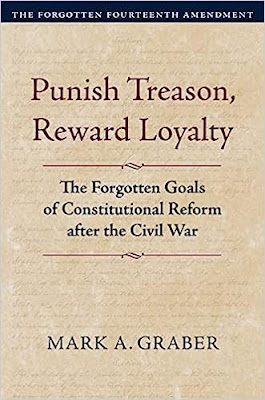
Mark A. Graber, Punish Treason, Reward Loyalty: The Forgotten Goals of Constitutional Reform after the Civil War (University of Kansas Press, 2023)
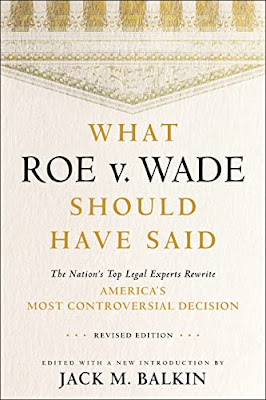
Jack M. Balkin, What Roe v. Wade Should Have Said: The Nation's Top Legal Experts Rewrite America's Most Controversial Decision - Revised Edition (NYU Press, 2023)

Andrew Koppelman, Burning Down the House: How Libertarian Philosophy Was Corrupted by Delusion and Greed (St. Martin’s Press, 2022)

Gerard N. Magliocca, Washington's Heir: The Life of Justice Bushrod Washington (Oxford University Press, 2022)
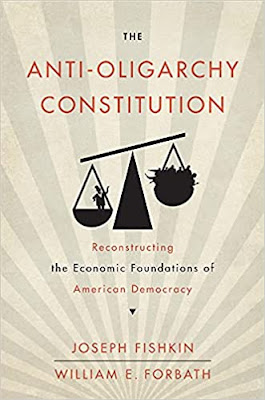
Joseph Fishkin and William E. Forbath, The Anti-Oligarchy Constitution: Reconstructing the Economic Foundations of American Democracy (Harvard University Press, 2022)
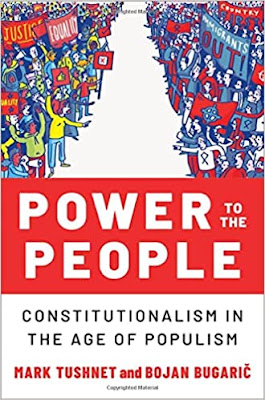
Mark Tushnet and Bojan Bugaric, Power to the People: Constitutionalism in the Age of Populism (Oxford University Press 2021).

Mark Philip Bradley and Mary L. Dudziak, eds., Making the Forever War: Marilyn B. Young on the Culture and Politics of American Militarism Culture and Politics in the Cold War and Beyond (University of Massachusetts Press, 2021).

Jack M. Balkin, What Obergefell v. Hodges Should Have Said: The Nation's Top Legal Experts Rewrite America's Same-Sex Marriage Decision (Yale University Press, 2020)

Frank Pasquale, New Laws of Robotics: Defending Human Expertise in the Age of AI (Belknap Press, 2020)

Jack M. Balkin, The Cycles of Constitutional Time (Oxford University Press, 2020)

Mark Tushnet, Taking Back the Constitution: Activist Judges and the Next Age of American Law (Yale University Press 2020).

Andrew Koppelman, Gay Rights vs. Religious Liberty?: The Unnecessary Conflict (Oxford University Press, 2020)

Ezekiel J Emanuel and Abbe R. Gluck, The Trillion Dollar Revolution: How the Affordable Care Act Transformed Politics, Law, and Health Care in America (PublicAffairs, 2020)

Linda C. McClain, Who's the Bigot?: Learning from Conflicts over Marriage and Civil Rights Law (Oxford University Press, 2020)
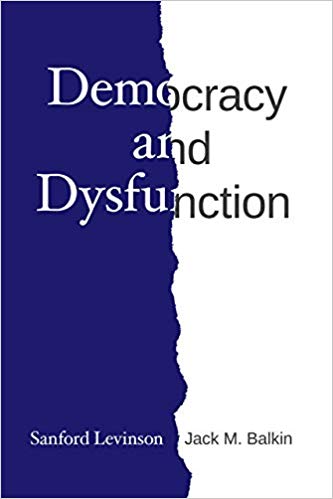
Sanford Levinson and Jack M. Balkin, Democracy and Dysfunction (University of Chicago Press, 2019)

Sanford Levinson, Written in Stone: Public Monuments in Changing Societies (Duke University Press 2018)

Mark A. Graber, Sanford Levinson, and Mark Tushnet, eds., Constitutional Democracy in Crisis? (Oxford University Press 2018)

Gerard Magliocca, The Heart of the Constitution: How the Bill of Rights became the Bill of Rights (Oxford University Press, 2018)

Cynthia Levinson and Sanford Levinson, Fault Lines in the Constitution: The Framers, Their Fights, and the Flaws that Affect Us Today (Peachtree Publishers, 2017)

Brian Z. Tamanaha, A Realistic Theory of Law (Cambridge University Press 2017)

Sanford Levinson, Nullification and Secession in Modern Constitutional Thought (University Press of Kansas 2016)

Sanford Levinson, An Argument Open to All: Reading The Federalist in the 21st Century (Yale University Press 2015)

Stephen M. Griffin, Broken Trust: Dysfunctional Government and Constitutional Reform (University Press of Kansas, 2015)

Frank Pasquale, The Black Box Society: The Secret Algorithms That Control Money and Information (Harvard University Press, 2015)

Bruce Ackerman, We the People, Volume 3: The Civil Rights Revolution (Harvard University Press, 2014)
Balkinization Symposium on We the People, Volume 3: The Civil Rights Revolution

Joseph Fishkin, Bottlenecks: A New Theory of Equal Opportunity (Oxford University Press, 2014)

Mark A. Graber, A New Introduction to American Constitutionalism (Oxford University Press, 2013)

John Mikhail, Elements of Moral Cognition: Rawls' Linguistic Analogy and the Cognitive Science of Moral and Legal Judgment (Cambridge University Press, 2013)

Gerard N. Magliocca, American Founding Son: John Bingham and the Invention of the Fourteenth Amendment (New York University Press, 2013)

Stephen M. Griffin, Long Wars and the Constitution (Harvard University Press, 2013)

Andrew Koppelman, The Tough Luck Constitution and the Assault on Health Care Reform (Oxford University Press, 2013)

James E. Fleming and Linda C. McClain, Ordered Liberty: Rights, Responsibilities, and Virtues (Harvard University Press, 2013)
Balkinization Symposium on Ordered Liberty: Rights, Responsibilities, and Virtues

Andrew Koppelman, Defending American Religious Neutrality (Harvard University Press, 2013)

Brian Z. Tamanaha, Failing Law Schools (University of Chicago Press, 2012)

Sanford Levinson, Framed: America's 51 Constitutions and the Crisis of Governance (Oxford University Press, 2012)

Linda C. McClain and Joanna L. Grossman, Gender Equality: Dimensions of Women's Equal Citizenship (Cambridge University Press, 2012)

Mary Dudziak, War Time: An Idea, Its History, Its Consequences (Oxford University Press, 2012)

Jack M. Balkin, Living Originalism (Harvard University Press, 2011)

Jason Mazzone, Copyfraud and Other Abuses of Intellectual Property Law (Stanford University Press, 2011)

Richard W. Garnett and Andrew Koppelman, First Amendment Stories, (Foundation Press 2011)

Jack M. Balkin, Constitutional Redemption: Political Faith in an Unjust World (Harvard University Press, 2011)

Gerard Magliocca, The Tragedy of William Jennings Bryan: Constitutional Law and the Politics of Backlash (Yale University Press, 2011)

Bernard Harcourt, The Illusion of Free Markets: Punishment and the Myth of Natural Order (Harvard University Press, 2010)

Bruce Ackerman, The Decline and Fall of the American Republic (Harvard University Press, 2010)
Balkinization Symposium on The Decline and Fall of the American Republic

Ian Ayres. Carrots and Sticks: Unlock the Power of Incentives to Get Things Done (Bantam Books, 2010)

Mark Tushnet, Why the Constitution Matters (Yale University Press 2010)

Ian Ayres and Barry Nalebuff: Lifecycle Investing: A New, Safe, and Audacious Way to Improve the Performance of Your Retirement Portfolio (Basic Books, 2010)

Jack M. Balkin, The Laws of Change: I Ching and the Philosophy of Life (2d Edition, Sybil Creek Press 2009)

Brian Z. Tamanaha, Beyond the Formalist-Realist Divide: The Role of Politics in Judging (Princeton University Press 2009)
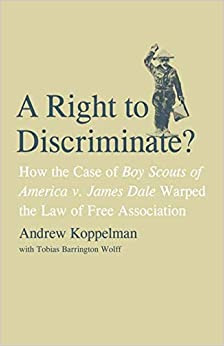
Andrew Koppelman and Tobias Barrington Wolff, A Right to Discriminate?: How the Case of Boy Scouts of America v. James Dale Warped the Law of Free Association (Yale University Press 2009)

Jack M. Balkin and Reva B. Siegel, The Constitution in 2020 (Oxford University Press 2009)

Heather K. Gerken, The Democracy Index: Why Our Election System Is Failing and How to Fix It (Princeton University Press 2009)

Mary Dudziak, Exporting American Dreams: Thurgood Marshall's African Journey (Oxford University Press 2008)

David Luban, Legal Ethics and Human Dignity (Cambridge Univ. Press 2007)

Ian Ayres, Super Crunchers: Why Thinking-By-Numbers is the New Way to be Smart (Bantam 2007)

Jack M. Balkin, James Grimmelmann, Eddan Katz, Nimrod Kozlovski, Shlomit Wagman and Tal Zarsky, eds., Cybercrime: Digital Cops in a Networked Environment (N.Y.U. Press 2007)

Jack M. Balkin and Beth Simone Noveck, The State of Play: Law, Games, and Virtual Worlds (N.Y.U. Press 2006)

Andrew Koppelman, Same Sex, Different States: When Same-Sex Marriages Cross State Lines (Yale University Press 2006)

Brian Tamanaha, Law as a Means to an End (Cambridge University Press 2006)

Sanford Levinson, Our Undemocratic Constitution (Oxford University Press 2006)

Mark Graber, Dred Scott and the Problem of Constitutional Evil (Cambridge University Press 2006)

Jack M. Balkin, ed., What Roe v. Wade Should Have Said (N.Y.U. Press 2005)

Sanford Levinson, ed., Torture: A Collection (Oxford University Press 2004)
Balkin.com homepage
Bibliography
Conlaw.net
Cultural Software
Writings
Opeds
The Information Society Project
BrownvBoard.com
Useful Links
Syllabi and Exams
