Balkinization
an unanticipated consequence of
Jack M. Balkin
Balkinization Symposiums: A Continuing List
E-mail:
Jack Balkin:
jackbalkin at yahoo.com
Bruce Ackerman
bruce.ackerman at yale.edu
Ian Ayres
ian.ayres at yale.edu
Corey Brettschneider
corey_brettschneider at brown.edu
Mary Dudziak
mary.l.dudziak at emory.edu
Joey Fishkin
joey.fishkin at gmail.com
Heather Gerken heather.gerken at yale.edu
Abbe Gluck abbe.gluck at yale.edu
Mark Graber
mgraber at law.umaryland.edu
Stephen Griffin
sgriffin at tulane.edu
Jonathan Hafetz
jonathan.hafetz at shu.edu
Jeremy Kessler
jkessler at law.columbia.edu
Andrew Koppelman
akoppelman at law.northwestern.edu
Marty Lederman
msl46 at law.georgetown.edu
Sanford Levinson
slevinson at law.utexas.edu
David Luban
david.luban at gmail.com
Gerard Magliocca
gmaglioc at iupui.edu
Jason Mazzone
mazzonej at illinois.edu
Linda McClain
lmcclain at bu.edu
John Mikhail
mikhail at law.georgetown.edu
Frank Pasquale
pasquale.frank at gmail.com
Nate Persily
npersily at gmail.com
Michael Stokes Paulsen
michaelstokespaulsen at gmail.com
Deborah Pearlstein
dpearlst at yu.edu
Rick Pildes
rick.pildes at nyu.edu
David Pozen
dpozen at law.columbia.edu
Richard Primus
raprimus at umich.edu
K. Sabeel Rahmansabeel.rahman at brooklaw.edu
Alice Ristroph
alice.ristroph at shu.edu
Neil Siegel
siegel at law.duke.edu
David Super
david.super at law.georgetown.edu
Brian Tamanaha
btamanaha at wulaw.wustl.edu
Nelson Tebbe
nelson.tebbe at brooklaw.edu
Mark Tushnet
mtushnet at law.harvard.edu
Adam Winkler
winkler at ucla.edu
Compendium of posts on Hobby Lobby and related cases
The Anti-Torture Memos: Balkinization Posts on Torture, Interrogation, Detention, War Powers, and OLC
The Anti-Torture Memos (arranged by topic)
Recent Posts
Separation of Powers: How to Preserve Liberty in Troubled Times -- A Critical Reading
Response to Our Readers
Democratic constitutionalism and the end of class-based societies
On the idea of democracy underlying Aileen Kavanagh's The Collaborative Constitution - Part Two
Back to the sources: How to interpret the Constitution, according to Cass Sunstein (Part I)
Constitutionalism and Its Discontents: A Comparativist’s Take
On the idea of democracy underlying Aileen Kavanagh's The Collaborative Constitution - Part One
Back to the sources: How to interpret the Constitution, according to Cass Sunstein (Part II)
Will “Liberal Constitutionalism” Survive the Joint Attacks from “Illiberal” and “Democratic” Constitutionalism?
Balkinization Symposium on Mark Tushnet and Bojan Bugaric, Constitutionalism and Its Discontents-- Collected Posts
Balkinization Symposium on Mark Tushnet and Bojan Bugaric, Constitutionalism and its Discontents
Domesticating Constitutionalism
Constitutional Democracy in Crisis?
Letting Go of Faith in Constitutionalism
![[Powered by Blogger]](https://lh3.googleusercontent.com/blogger_img_proxy/AEn0k_skTRiFIbqrF-UVoaRzKdP3ikKuVwapVt1af4vTIafWQZxJ5HFadwa_2kADD2KfAoPCalIW1N14WLr_r-WRnzCNGaF8Mlpp32Uo3qtwq4qt=s0-d)
Just A Few Blogs
ACS Blog
Alas, a Blog
Althouse
Arts and Letters Daily
Atrios (Eschaton)
Bill of Health
Buzzflash.com
Buzz Machine
Cato at Liberty
Juan Cole (Informed Comment)
Concurring Opinions
The Constitution in 2020
Corrente
Crooked Timber
Daily Howler
Daily Kos
Dana Boyd
Brad DeLong
Digby (Hullabaloo)
Discriminations
Daniel Drezner
Kevin Drum (Mother Jones)
Electrolite
En Banc
Eunomia (Daniel Larison)
Fafblog
Michael Froomkin (Discourse.net)
GovLab (Beth Noveck)
Rick Hasen (Election Law)
History News Network
How Appealing
Ignatz (Sam Heldman)
The Importance of (Ernie Miller)
Infolaw
Instapundit
International Economic Law and Policy Blog
IntLawGrrls
Jacob Levy
Jesus' General
Jurisdynamics
The Kitchen Cabinet
Mark Kleiman
Law Blog Central
Larry Lessig
Lawyers, Guns and Money
Liberal Oasis
Brian Leiter's Law School Reports
The Leiter Reports
Marginal Revolution
Megan McArdle
Memeorandum
Metafilter
Mirror of Justice
The New Republic
Newseum
No More Mister Nice Blog
Brendan Nyhan
Opinio Juris
Orcinus
The Originalism Blog
Pandagon
Passport (Foreign Policy)
Overcoming Bias
Political Animal (Washington Monthly)
Political Theory Daily Review
Political Wire (Taegan Goddard)
The Poor Man
Virginia Postrel
Prawfsblawg
Public Reason
Jonathan Rauch
Raw Story
Redstate
ReligiousLeftLaw.com
Reporters Committee For Freedom of the Press
Reproductive Rights Blog
Rothman's Roadmap to the Right of Publicity
SCOTUS Blog
Seeing the Forest
Clay Shirky
The Shifted Librarian
The Situationist
Larry Solum (Legal Theory)
Andrew Sullivan
Talking Points Memo
Talk Left
Tapped
Tbogg
TechPresident
The Paper Chase (Jurist)
Tom Paine
Tom Tomorrow (This Modern World)
Eve Tushnet
Uggabugga
University of Chicago Law School Faculty Blog
Unqualified Offerings
The Volokh Conspiracy
War and Piece (Laura Rozen)
Wampum
Oliver Willis
Wonkette
Written Description
Matthew Yglesias
Yin
Your Choice of Feeds
1. XML
powered by

2. Atom Feed
3. RSS 2.0
Separation of Powers: How to Preserve Liberty in Troubled Times -- A Critical Reading
Guest Blogger
Roberto Gargarella Separation
of Powers. How to Preserve Liberty in Troubled Times, by Cass
Sunstein. (The MIT Press, 2026) Introduction Separation
of Powers is the latest book published by Cass Sunstein (I am
writing this review in March 2026). As expected, the book, which deals with a
well-chosen and highly relevant subject, brings together many of the virtues
and problems that distinguish Sunstein’s most recent work. Let me begin with
the virtues: it is a clear, didactic book, written by a brilliant author, full
of ideas, and one of the most knowledgeable about the technical literature and
jurisprudence of our time. To all this, we can add another advantage, visible
in the author's latest works, which is that Sunstein incorporates into his
qualified approach the experience and knowledge accumulated during his time in
public service (Sunstein served as administrator of the White House Office of
Information and Regulatory Affairs (OIRA) between 2009 and 2012). Regarding its
problems, I will limit myself to pointing out one particular difficulty,
because it underlies this entire new book. Sunstein has been developing a
peculiar mode of argumentation, in which he asserts a thesis or describes a
fact, only to later begin qualifying his assertions until he shows the
plausibility of the contrary thesis or description. This form of
‘back-and-forth’ argumentation reaches an extreme in this book. This is to the
point that what could be thought of as the very central thesis of the entire
book, that is a statement about the fundamental value of the separation of
powers -against the Schmittian defense of a discretionary executive- is refuted
on the very last page of the text, where he states: ‘Nothing in this book can
be counted as an objection to the grant of a high degree of discretionary power
to the president’ (p. 128). For my taste, too much. Let me
now critically examine some of the central points of this timely book, which I
would like to comment or challenge. I will divide my study into two parts: the
first mainly focused on the issue of democracy, and the second mainly related
to the Executive Branch.
Posted
8:30 AM
by Guest Blogger [link]
Response to Our Readers
Guest Blogger
For the Balkinization symposium on Mark Tushnet and Bojan Bugaric, Constitutionalism and Its Discontents (University of Chicago Press, 2026). Mark Tushnet and Bojan Bugaric As several contributors to this book review symposium emphasize, conventions are important elements in institutional designs that contribute to social and political stability. With that in mind we follow the convention of thanking all the contributors for the attention and seriousness they devoted to our book. We add one thing: a recognition that review symposia like this one are especially well-suited to the blog format even as the long-form blog has gone into serious decline. Coordinating a symposium via Substack would be difficult, even putting aside questions about paywalls and the like; doing so on Bluesky would be impossible; and maintaining a podcast or newsletter, whether paid or not, would require a different level of commitment than does maintaining a blog. So our thanks go to Jack Balkin as well for his continuing support for the long-form blog. We begin by noting that many contributors (alphabetically, Gamboa, Levinson, Nicola, Ragone, O’Cinneide) correctly pick up on something we think lies at the base of our analysis—an insistence that context matters. So, for example, our expressed preference for a “thin” constitution (however defined) can be displaced by thicker ones when circumstances require: an empowered constitutional court—one of Loughlin’s bugbears in the context with which he is concerned—might be appropriate when a nation is in the incipient stages of democratic decline, though as Levinson notes, we are skeptical about the proposition that institution designers will be able to create such a court that will be effective when needed (rather than captured too quickly) and will retreat when the exigency has passed. Here, too, though, context matters. Gamboa and Graber in different ways ask us—the community of scholars to whom our book is addressed—to consider the politics that might produce the Goldilocks solution. We have almost nothing to say about that in our book, apart from the fact that we advocate a greater role for politics, not law, aiming to provide solutions to accumulated problems of neoliberal politics of the last four decades, which make various populist responses thrive, and welcome further scholarly attention to that question, already addressed in other disciplines like political economy, sociology and political science. Read more »
Posted
9:30 AM
by Guest Blogger [link]
Democratic constitutionalism and the end of class-based societies
Guest Blogger
For the Balkinization symposium on Mark Tushnet and Bojan Bugaric, Constitutionalism and Its Discontents (University of Chicago Press, 2026). Roberto Gargarella For many years, I have followed the work of Mark
Tushnet with admiration. Lately, his contributions have been strengthened through
his collaboration with Bojan Bugaric. They have been offering us constitutional
studies that are informed by contemporary doctrine, marked by a strong
attention to comparative law, a consistently critical eye, and a progressive
perspective. Characterized by these traits, the new book that Tushnet and
Bugaric have just published, Constitutionalism and its Discontents,
represents a very good continuation of their previous book, Power to the
People (Oxford UP). Regarding Constitutionalism…, the first thing I
want to say is that I share many of the main lines of analysis that are here
presented. This is relatively obvious, on the one hand, given that the approach
to constitutional law that I propose in my own studies—that of the "law as
a conversation among equals"—is taken up and analyzed in some detail in
this book. Beyond that convergence, and on the other hand, I have long been
drawn to a "thin" reading of constitutionalism, such as the one they
propose: an approach that is modest in its ambitions; aware of the inherent
limitations of institutional reforms; critical of traditional modes of judicial
review; skeptical of resorting to the "old toolbox" of
constitutionalism (i.e., more rights, more courts) to solve the new problems we
face; and radically more democratic in its spirit. Read more »
Posted
9:30 AM
by Guest Blogger [link]
On the idea of democracy underlying Aileen Kavanagh's The Collaborative Constitution - Part Two
Guest Blogger
Roberto
Gargarella PART
II The
Actual Practice of our Constitutional Democracies In
the previous section, we analyzed the -Madisonian- conception of democracy
underlying The Collaborative Constitution. We also examined that this "old"
conception is of little use in describing and thinking about the "new
constitutional times", marked by strong democratic expectations and
demands. We also argued that in this new context -social, legal, institutional-
the collaborative and cooperative behaviors that Kavanagh's book calls for are
not to be expected. Now: What could Aileen Kavanagh say to those of us who
believe that her reliance on the cooperative attitudes of public officials is
unwarranted? What could she answer us, in the face of our skepticism? First of
all, she could tell us that many of the public behaviors she prefers or
postulates as necessary are behaviors that already occur or have already been
shown to be possible: in a way, they are already part of existing practice
(particularly, we might say, in Britain). For Kavanagh -we have explored this
already- her "collaborative account" "is grounded in practice."[9] A
second reply that Kavanagh could try, which in part complements and specifies
the previous one, is related to the presence of "unwritten constitutional
norms" that "lie at the foundation of the collaborative
constitution" (ibid., 8). By such, she refers to "the rules, norms,
and practices of constitutional government accepted as obligatory by those concerned
in the working of the constitution" (ibid.). The usual or traditional
character of such practices would allow us to think of an even stronger
framework: a "constitutional culture." This constitutional culture,
in short, would allow us to speak of an already available "social capital"
-certain "tacit understandings"- that would turn collaborative
constitutional behaviors into expected behaviors (rather than unexpected,
superhuman, or angelic behaviors). [10]
Posted
9:30 AM
by Guest Blogger [link]
Back to the sources: How to interpret the Constitution, according to Cass Sunstein (Part I)
Guest Blogger
Roberto Gargarella Back to sources In what follows, I shall present
and critically examine the book How to Interpret the Constitution, recently
published by the influential jurist Cass Sunstein. I shall divide my study into
two parts: the first one, mainly descriptive, where I shall present the book
under analysis; and the second one, more evaluative, where I shall offer a
critical review of Sunstein’s work. Sunstein’s new book is a simple,
brief, and exciting work through which the Harvard professor deals with a
complex subject, such as constitutional interpretation -perhaps the most
crucial subject in the theory of law. In order to explore this challenging
issue, Sunstein invokes authors, concepts and principles he had already discussed
and defended long ago. In this sense -one could claim- Sunstein "returns
to the sources" of his academic career. This “return to the sources” may
be considered a cause for celebration because many of those bases -I shall
maintain- were very good. They hark back to a Sunstein committed to robust
ideas of democracy, social justice, and equality. In any case, despite the
attractiveness of the main theme under study, and the interesting approach
proposed by Sunstein on the subject, the balance of the work is uneven: the
text is as attractive in some of its conclusions as it is fragile in some of
its foundations.
Posted
9:30 AM
by Guest Blogger [link]
Constitutionalism and Its Discontents: A Comparativist’s Take
Guest Blogger
For the Balkinization symposium on Mark Tushnet and Bojan Bugaric, Constitutionalism and Its Discontents (University of Chicago Press, 2026). Sabrina Ragone There is much to admire in Mark Tushnet and Bojan
Bugaric’s Constitutionalism and Its Discontents, beginning with the
ambition and provocation reflected in its title. The book revolves around a fundamental paradox:
constitutionalism seeks simultaneously to empower democratic self-government
and to constrain the exercise of that very power. The three parts explore
different manifestations of this tension: through the rules of ruling in Part
One; through programmatic constitutionalism in Part Two, where the European
Union and its economic constitution provide an example of how constitutional
commitments intended to enable collective projects may themselves become
constraints to democratic choices; and, in Part Three, through efforts to
forestall or combat democratic decline, eventually shifting the focus from
constitutional design to political parties and the political conditions on
which democratic constitutionalism depends. The paradox is further complicated by a recurring
insight of the book: constitutional remedies aimed at addressing one source of
discontent may end up exacerbating another. The breadth of the inquiry is one
of the book’s strengths, together with the plethora of concrete examples and
imaginary situations, which make even complex theoretical arguments accessible
and the book enjoyable to read; perhaps precisely for this reason, it also
leaves the reader wanting more, as several of the questions it opens would
themselves deserve fuller exploration. Read more »
Posted
9:30 AM
by Guest Blogger [link]
On the idea of democracy underlying Aileen Kavanagh's The Collaborative Constitution - Part One
Guest Blogger
Roberto
Gargarella Introduction The
Collaborative Constitution is one of the
most interesting contributions produced by the legal academia in recent years.[1] It is a
clear, easy to read and at the same time profound book, in which its author,
Professor Aileen Kavanagh, investigates what is the best and most justified way
to protect rights in a democracy. The book offers lucid answers to the dilemmas
posed by the problem under examination. And it does so, at the same time, in a
forceful and challenging way, which serves the author to clearly differentiate
her views from many of the unfertile dichotomies that prevail in contemporary
doctrine. In her work, Kavanagh proposes
to understand constitutionalism as "a collaborative enterprise between all
three branches of government, where each branch has a distinct but
complementary role to play whilst working together with the other branches in
constitutional partnership" (Kavanagah 2023, 1).[2] Her position
implies going beyond traditional “binary options,” like the following: to think
that the task of protecting rights corresponds primarily to the courts, or to
legislatures; to conceive of institutional work either as "the solitary
domain of a Herculean super-judge” or in relation to “the dignified
pronouncements of an enlightened legislature" (ibid., 7); to approach
constitutional law as the "political constitutionalists" do, or in
the opposite way, following the criteria of the "legal
constitutionalists" (ibid., 3).
Posted
9:30 AM
by Guest Blogger [link]
Back to the sources: How to interpret the Constitution, according to Cass Sunstein (Part II)
Guest Blogger
Roberto Gargarella Some critical notes In the first part of this paper,
I described some of the central features of Cass Sunstein's new book, How to
interpret the Constitution. In that initial part, I referred to the
different interpretative theories presented by Sunstein in his book, and also to
the method he proposed for selecting a theory of constitutional interpretation
from among them. The method in question was the Rawlsian "reflective
equilibrium", built on the basis of certain "fixed points" or
paradigmatic judicial cases (say, in the case of American law, judicial
decisions such as Brown or Griswold), and also with the help of
other theoretical "fixed points" (in his proposal, deliberative
democracy and the "anti-caste principle"). Having completed that
descriptive introduction, I will now present the second part of my analysis,
which will be of a more evaluative and critical nature. I will first make two
brief introductory remarks, and then move to a more substantive examination of Sunstein’s
new work.
Posted
9:30 AM
by Guest Blogger [link]
Will “Liberal Constitutionalism” Survive the Joint Attacks from “Illiberal” and “Democratic” Constitutionalism?
Guest Blogger
For the Balkinization 20th Anniversary Symposium Sandy Levinson I have been teaching courses on
American constitutional law for almost 50 years. During most of those years, it was a given
first that the United States was an exemplar of “liberal constitutionalism” and
that, perhaps more importantly, “liberal constitutionalism” was the only valid
form of constitutionalism. What did
“liberal constitutionalism” entail.
Roughly speaking, it is a notion that a constitution, along with setting
out the basic structures of the polity, at the same time establishes limits on
what the polity can do. These are
commonly viewed as “rights,” and a major purpose of a constitution is thought
to be the safeguarding of rights against what is often, especially in the
United States, termed the “tyranny of the majority.” One way of safeguarding minorities against
such tyranny is to make it hard for popular majorities in fact to
legislate. Thus we have notions of both
separation of powers and checks and balances to set up a variety of veto-gates
to serve this purpose. After all, for
any legislation to pass, it must not only procure sufficient support in two
quite different legislative branches, but gain as well presidential
signature. To be sure, Congress can
overrule a presidential veto, but, over our entire history, presidents have
been successful in sustaining their vetoes roughly 95% of the time. Moreover, the very threat of a veto turns the
legislature into a de-facto tricameral institution insofar as the House
and the Senate alone cannot in fact work its will save in extraordinary
situations. But even if a bill does
become a law, all of us are increasingly well aware that that is not the last
step. The federal judiciary, with the
Supreme Court at its head, feels altogether free to exercise its own veto,
based, of course, on often controversial readings of what limits are
established by the Constitution itself. I have for many years been critical
of what I’ve called “our undemocratic Constitution,,” but there is no doubt
that the Constitution was constructed by Framers extremely dubious about the
capacity of “we the People” to engage in actual rule and, as importantly, was
supported by most Americans who were taught from an early age to venerate the
Constitution and view it as a basically sacrosanct scripture that defined what
it meant to be American. And, as suggested,
even critics of one or another part of the Constitution—the electoral college,
say—did not extend that criticism to the idea of “liberal constitutionalism”
itself and to suggest to new countries writing their own constitutions after
World War II that the United States Constitution represented the basic template
of “constitutionalism” in general.
Posted
11:00 AM
by Guest Blogger [link]
Balkinization Symposium on Mark Tushnet and Bojan Bugaric, Constitutionalism and Its Discontents-- Collected Posts
JB
Here are the collected posts for our Balkinization symposium on Mark Tushnet and Bojan Bugaric's new book, Constitutionalism and Its Discontents (University of Chicago Press, 2026). 1. Jack Balkin, Introduction to the Symposium 2. Sabrina Ragone, Constitutionalism and Its Discontents: A Comparativist’s Take 3. Laura Gamboa, Constitutionalism in Times of Democratic Backsliding 4. Jedediah Britton-Purdy, The (not so) Secret Life of Constitutionalism and Its Discontents 5. Roberto Gargarella, Democratic constitutionalism and the end of class-based societies 6. Fernanda G. Nicola, Constitutionalism and the Discontents of Judicial Power 7. Mark Graber, The Enduring Significance of Peggy Sue Got Married (and Constitutionalism and its Discontents) 8. Sandy Levinson, Constitutionalism's Contemporary Critics 9. Martin Loughlin, Discontent with Constitutionalism and Its Discontents 10. Colm O’Cinneide, Letting Go of Faith in Constitutionalism 11. Madhav Khosla, Constitutionalism and Its Contents 12. Mark Tushnet and Bojan Bugaric, Response to Our Readers

Posted
9:30 AM
by JB [link]
Balkinization Symposium on Mark Tushnet and Bojan Bugaric, Constitutionalism and its Discontents
JB
This week at Balkinization we are hosting a symposium on Mark Tushnet and Bojan Bugaric's new book, Constitutionalism and Its Discontents (University of Chicago Press, 2026).
At the conclusion, Mark and Bojan will respond to the commentators.
We have assembled a terrific group of commentators, including Colm O'Cinneide (University College London), Laura Gamboa (Notre Dame), Roberto Gargarella (Torcuato di Tella University and University of Buenos Aires), Mark Graber (Maryland), Madhav Khosla (Columbia), Sandy Levinson (Texas), Martin Loughlin (LSE), Fernanda Nicola (American), Jed Purdy (Duke), and Sabrina Ragone (University of Bologna).
Posted
9:00 AM
by JB [link]
Domesticating Constitutionalism
Guest Blogger
For the Balkinization symposium on Rosalind Dixon and David Landau, Abusive Constitutional Borrowing: Legal globalization and the subversion of liberal democracy (Oxford University Press, 2021). Samuel Issacharoff At first glance, the work of Ros Dixon and David Landau on
constitutional borrowing appears to be centered on the role of constitutions
and courts in securing or compromising democratic governance. As such, it is an invaluable contribution to
the growing literature on comparative constitutional law, one whose
institutional sophistication and deft international scale rewards the reader with
nuance and insight. At another level,
however, Abusive Constitutional Borrowing bears witness to the breaching
of what Madison termed “parchment barriers,” the aspirational commands of
constitutional law that translate imperfectly into the realities of power and
politics. The contemporary inquiry into comparative constitutional law
takes shape after the fall of the Soviet bloc and transformative events in
South Africa, Colombia, the Pacific Rim, and the list goes on. In each case, a heady if unstable mix emerged
featuring a new constitutional order, suddenly assertive constitutional courts,
uncertain political power based loosely on an electoral mandate, and a felt
need to at least gesture in the direction of the prevailing world consensus of
rights and tolerance. Constitutionalism
defined the boundaries of what Dixon and Landau call the “democratic minimum
core,” as well as the contested terrain of social rights. In the face of unsettled political power,
courts acting with a constitutional mandate took on an outsized role in
defining the new world order. The
democratic core could serve as the lower bound of permissible regulation of
politics, while rights claims provided the contested upper bound. In the upswing period of constitutionalism, borrowing lent
legitimacy to the assertion of exacting judicial review in countries bereft of
any tradition of powerful courts. In the
heyday of this borrowing, courts around the world could learn from the basic
structures doctrine of the Indian Supreme Court, from the wise preservation of
political accountability by the Colombian Constitutional Court, from the
sophisticated proportionality analysis of the South African Constitutional
Court, and from the overall judicial stewardship over the transition from
authoritarianism to democracy in countries around the world. Dixon and Landau chronicle the ebbing of the constitutional
tide. This is the moment in which, as
they introduce the study, “increasingly dense” global constitutionalism
coexists “with stagnation and backsliding in democratization …” Although their focus is largely on the
selective and acontextual use of doctrine in the service of illiberal aims,
their book memorializes the fading of constitutionalism in the face of
consolidated political power. For all
that comparative constitutionalists hail the 2010 decision of the Colombian
Court denying President Uribe a chance at a third term in office, the
intervening decade shows just what a momentary outlier that was. The Colombian decision remains the only
judicial intervention in Latin America denying an incumbent continued tenure,
and has been followed by noteworthy decisions striking down any term limits on
incumbents. The “rhetorical triumph” of
constitutionalism, their term, has repeatedly allowed a new form of
anti-liberal electoral politics to claim the mantle not only of majority
support but the authority of transnational fundamental principles of
governance.
Posted
9:30 AM
by Guest Blogger [link]
Constitutional Democracy in Crisis?
Mark Graber
Last fall, Sandy Levinson, Mark Tushnet and I asked thirty-five of the leading experts on constitutionalism to consider the state of constitutional democracy with respect to particular countries, regions and problems. Thanks to amazing responses and even more amazing work by Oxford University Press, Constitutional Democracy in Crisis? ships today and is available for purchase at what we think is a more than reasonable price (39.99) for a more than 700 page volume. The good news is that all essays are designed for a general reader. If you are simply interested in what is going on in South America or Australia, want to know the impact of climate change on constitutional democracy, or wish to learn about both right-wing and left-wing populist movements, you can find an essay to your liking that does not presume three advanced degrees.
We were moved to produce this volume because constitutional
democracies and constitutional democracy appear in trouble throughout the
world. The United States, Israel,
Turkey, South Africa, Poland and Venezuela seem particular problem children,
but the Catalonian secession in Spain, Brexit in the United Kingdom, the rise
of authoritarian constitutionalism in South Asia, the overthrow of the Morsi
government in Egypt, and the continued weakness of constitutional democracy
throughout Africa and Latin American suggest that no earthly haven is immune to
whatever is ailing regimes that purport to be constitutional and democratic. Scholars speak of “Democracy in Retreat,” a
“democratic recession,” “democratic backsliding,” “democratic deconsolidation,”
“constitutional retrogression,” “constitutional failure,” and “constitutional
rot.”
Posted
9:22 AM
by Mark Graber [link]
Letting Go of Faith in Constitutionalism
Guest Blogger
For the Balkinization symposium on Mark Tushnet and Bojan Bugaric, Constitutionalism and Its Discontents (University of Chicago Press, 2026). Colm O’Cinneide Introduction - Keeping the
Constitutional Flame? On the very first page of Constitutionalism
and its Discontents, Mark Tushnet and Bojan Bugaric provide a wonderfully
succinct summary of constitutionalism’s current ‘discontents’. Across the
democratic world, constitutional controls are crumbling, exposed as lacking in
effectiveness, and/or becoming the focus of sustained and divisive political
controversy. As Mark and Bojan point this, the latter is a particularly corrosive
problem: ‘it runs up against one of the hopes held out by constitutionalism’s
proponents, that it provides a neutral framework for the resolution of partisan
conflicts’ (p. 1). In general, the constitutionalist cart seems to be
overloaded: courts and other guarantor institutions are constantly accused of
both over- and under-reaching, even as their authority is increasingly
contested. And yet faith in constitutionalism
persists. If anything, it tends to be professed with extra vigour and devotion.
We hear calls all the time for renewed fidelity to rule of law, separation of
powers and other core constitutional principles - and for associated mechanisms
such as judicial review to be reinforced and strengthened in the face of
Trumpism, Orbanism etc. (The USA is perhaps something of an outlier here: looking
in from the outside, the Supreme Court’s legitimacy
crisis seems to have dampened faith in constitutionalism to a degree that
is (yet?) to be matched elsewhere in the democratic world.) Is this devotion justified? Is the solution
to the crisis of constitutionalism really to double down on constitutionalism? Mark
and Bojan say no. They have come to cast cold water on the fervour of the
constitutionally devout; to demonstrate the hollowness of constitutional
doctrine and the infeasibility of the hopes invested in it; and to disenchant
the true believers. Revivalism, like that offered up in recent work by Fishkin
and Forbath, does not interest them. Instead, they argue that we should abandon
belief in the virtues of embedded constitutionalism - and liberate political
contestation from the dead hand of democracy-constraining constitutionalist
legalism. Read more »
Posted
9:30 AM
by Guest Blogger [link]
Books by Balkinization Bloggers
Mark Tushnet and Bojan Bugaric, Constitutionalism and Its Discontents (University of Chicago Press, 2026)

Gerard N. Magliocca, The Actual Art of Governing: Justice Robert H. Jackson's Concurring Opinion in the Steel Seizure Case (Oxford University Press, 2025)

Linda C. McClain and Aziza Ahmed, The Routledge Companion to Gender and COVID-19 (Routledge, 2024)

David Pozen, The Constitution of the War on Drugs (Oxford University Press, 2024)

Jack M. Balkin, Memory and Authority: The Uses of History in Constitutional Interpretation (Yale University Press, 2024)
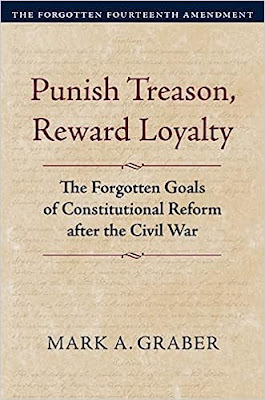
Mark A. Graber, Punish Treason, Reward Loyalty: The Forgotten Goals of Constitutional Reform after the Civil War (University of Kansas Press, 2023)
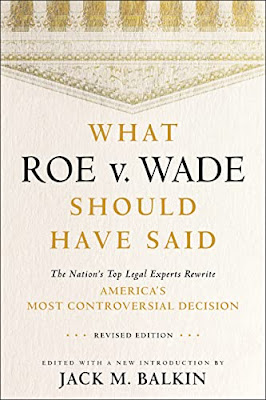
Jack M. Balkin, What Roe v. Wade Should Have Said: The Nation's Top Legal Experts Rewrite America's Most Controversial Decision - Revised Edition (NYU Press, 2023)

Andrew Koppelman, Burning Down the House: How Libertarian Philosophy Was Corrupted by Delusion and Greed (St. Martin’s Press, 2022)

Gerard N. Magliocca, Washington's Heir: The Life of Justice Bushrod Washington (Oxford University Press, 2022)
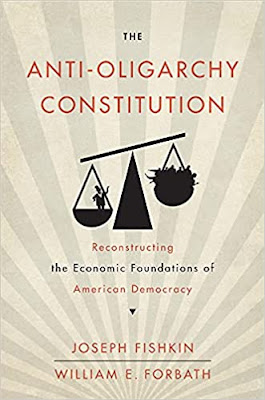
Joseph Fishkin and William E. Forbath, The Anti-Oligarchy Constitution: Reconstructing the Economic Foundations of American Democracy (Harvard University Press, 2022)
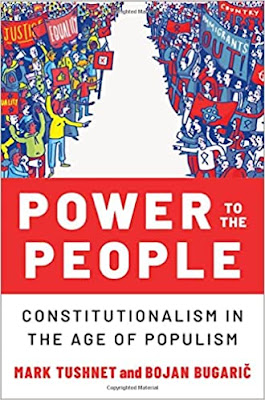
Mark Tushnet and Bojan Bugaric, Power to the People: Constitutionalism in the Age of Populism (Oxford University Press 2021).

Mark Philip Bradley and Mary L. Dudziak, eds., Making the Forever War: Marilyn B. Young on the Culture and Politics of American Militarism Culture and Politics in the Cold War and Beyond (University of Massachusetts Press, 2021).

Jack M. Balkin, What Obergefell v. Hodges Should Have Said: The Nation's Top Legal Experts Rewrite America's Same-Sex Marriage Decision (Yale University Press, 2020)

Frank Pasquale, New Laws of Robotics: Defending Human Expertise in the Age of AI (Belknap Press, 2020)

Jack M. Balkin, The Cycles of Constitutional Time (Oxford University Press, 2020)

Mark Tushnet, Taking Back the Constitution: Activist Judges and the Next Age of American Law (Yale University Press 2020).

Andrew Koppelman, Gay Rights vs. Religious Liberty?: The Unnecessary Conflict (Oxford University Press, 2020)

Ezekiel J Emanuel and Abbe R. Gluck, The Trillion Dollar Revolution: How the Affordable Care Act Transformed Politics, Law, and Health Care in America (PublicAffairs, 2020)

Linda C. McClain, Who's the Bigot?: Learning from Conflicts over Marriage and Civil Rights Law (Oxford University Press, 2020)
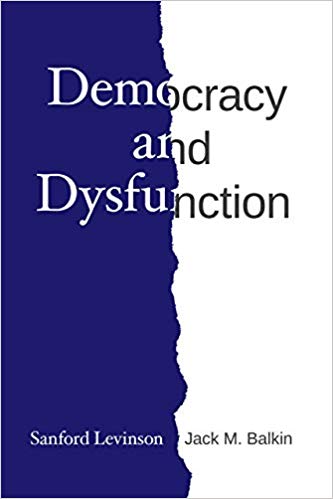
Sanford Levinson and Jack M. Balkin, Democracy and Dysfunction (University of Chicago Press, 2019)

Sanford Levinson, Written in Stone: Public Monuments in Changing Societies (Duke University Press 2018)

Mark A. Graber, Sanford Levinson, and Mark Tushnet, eds., Constitutional Democracy in Crisis? (Oxford University Press 2018)

Gerard Magliocca, The Heart of the Constitution: How the Bill of Rights became the Bill of Rights (Oxford University Press, 2018)

Cynthia Levinson and Sanford Levinson, Fault Lines in the Constitution: The Framers, Their Fights, and the Flaws that Affect Us Today (Peachtree Publishers, 2017)

Brian Z. Tamanaha, A Realistic Theory of Law (Cambridge University Press 2017)

Sanford Levinson, Nullification and Secession in Modern Constitutional Thought (University Press of Kansas 2016)

Sanford Levinson, An Argument Open to All: Reading The Federalist in the 21st Century (Yale University Press 2015)

Stephen M. Griffin, Broken Trust: Dysfunctional Government and Constitutional Reform (University Press of Kansas, 2015)

Frank Pasquale, The Black Box Society: The Secret Algorithms That Control Money and Information (Harvard University Press, 2015)

Bruce Ackerman, We the People, Volume 3: The Civil Rights Revolution (Harvard University Press, 2014)
Balkinization Symposium on We the People, Volume 3: The Civil Rights Revolution

Joseph Fishkin, Bottlenecks: A New Theory of Equal Opportunity (Oxford University Press, 2014)

Mark A. Graber, A New Introduction to American Constitutionalism (Oxford University Press, 2013)

John Mikhail, Elements of Moral Cognition: Rawls' Linguistic Analogy and the Cognitive Science of Moral and Legal Judgment (Cambridge University Press, 2013)

Gerard N. Magliocca, American Founding Son: John Bingham and the Invention of the Fourteenth Amendment (New York University Press, 2013)

Stephen M. Griffin, Long Wars and the Constitution (Harvard University Press, 2013)

Andrew Koppelman, The Tough Luck Constitution and the Assault on Health Care Reform (Oxford University Press, 2013)

James E. Fleming and Linda C. McClain, Ordered Liberty: Rights, Responsibilities, and Virtues (Harvard University Press, 2013)
Balkinization Symposium on Ordered Liberty: Rights, Responsibilities, and Virtues

Andrew Koppelman, Defending American Religious Neutrality (Harvard University Press, 2013)

Brian Z. Tamanaha, Failing Law Schools (University of Chicago Press, 2012)

Sanford Levinson, Framed: America's 51 Constitutions and the Crisis of Governance (Oxford University Press, 2012)

Linda C. McClain and Joanna L. Grossman, Gender Equality: Dimensions of Women's Equal Citizenship (Cambridge University Press, 2012)

Mary Dudziak, War Time: An Idea, Its History, Its Consequences (Oxford University Press, 2012)

Jack M. Balkin, Living Originalism (Harvard University Press, 2011)

Jason Mazzone, Copyfraud and Other Abuses of Intellectual Property Law (Stanford University Press, 2011)

Richard W. Garnett and Andrew Koppelman, First Amendment Stories, (Foundation Press 2011)

Jack M. Balkin, Constitutional Redemption: Political Faith in an Unjust World (Harvard University Press, 2011)

Gerard Magliocca, The Tragedy of William Jennings Bryan: Constitutional Law and the Politics of Backlash (Yale University Press, 2011)

Bernard Harcourt, The Illusion of Free Markets: Punishment and the Myth of Natural Order (Harvard University Press, 2010)

Bruce Ackerman, The Decline and Fall of the American Republic (Harvard University Press, 2010)
Balkinization Symposium on The Decline and Fall of the American Republic

Ian Ayres. Carrots and Sticks: Unlock the Power of Incentives to Get Things Done (Bantam Books, 2010)

Mark Tushnet, Why the Constitution Matters (Yale University Press 2010)

Ian Ayres and Barry Nalebuff: Lifecycle Investing: A New, Safe, and Audacious Way to Improve the Performance of Your Retirement Portfolio (Basic Books, 2010)
.jpg)
Jack M. Balkin, The Laws of Change: I Ching and the Philosophy of Life (2d Edition, Sybil Creek Press 2009)

Brian Z. Tamanaha, Beyond the Formalist-Realist Divide: The Role of Politics in Judging (Princeton University Press 2009)
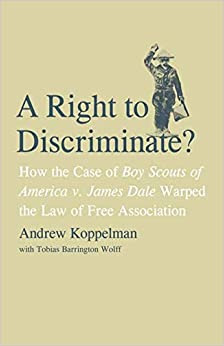
Andrew Koppelman and Tobias Barrington Wolff, A Right to Discriminate?: How the Case of Boy Scouts of America v. James Dale Warped the Law of Free Association (Yale University Press 2009)

Jack M. Balkin and Reva B. Siegel, The Constitution in 2020 (Oxford University Press 2009)

Heather K. Gerken, The Democracy Index: Why Our Election System Is Failing and How to Fix It (Princeton University Press 2009)

Mary Dudziak, Exporting American Dreams: Thurgood Marshall's African Journey (Oxford University Press 2008)

David Luban, Legal Ethics and Human Dignity (Cambridge Univ. Press 2007)

Ian Ayres, Super Crunchers: Why Thinking-By-Numbers is the New Way to be Smart (Bantam 2007)

Jack M. Balkin, James Grimmelmann, Eddan Katz, Nimrod Kozlovski, Shlomit Wagman and Tal Zarsky, eds., Cybercrime: Digital Cops in a Networked Environment (N.Y.U. Press 2007)
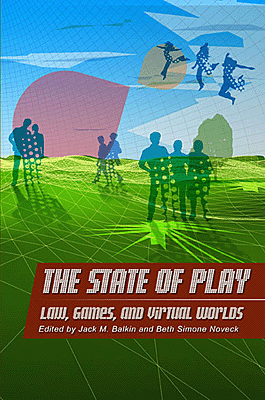
Jack M. Balkin and Beth Simone Noveck, The State of Play: Law, Games, and Virtual Worlds (N.Y.U. Press 2006)

Andrew Koppelman, Same Sex, Different States: When Same-Sex Marriages Cross State Lines (Yale University Press 2006)

Brian Tamanaha, Law as a Means to an End (Cambridge University Press 2006)

Sanford Levinson, Our Undemocratic Constitution (Oxford University Press 2006)

Mark Graber, Dred Scott and the Problem of Constitutional Evil (Cambridge University Press 2006)

Jack M. Balkin, ed., What Roe v. Wade Should Have Said (N.Y.U. Press 2005)

Sanford Levinson, ed., Torture: A Collection (Oxford University Press 2004)
Balkin.com homepage
Bibliography
Conlaw.net
Cultural Software
Writings
Opeds
The Information Society Project
BrownvBoard.com
Useful Links
Syllabi and Exams
