Balkinization
an unanticipated consequence of
Jack M. Balkin
Balkinization Symposiums: A Continuing List
E-mail:
Jack Balkin:
jackbalkin at yahoo.com
Bruce Ackerman
bruce.ackerman at yale.edu
Ian Ayres
ian.ayres at yale.edu
Corey Brettschneider
corey_brettschneider at brown.edu
Mary Dudziak
mary.l.dudziak at emory.edu
Joey Fishkin
joey.fishkin at gmail.com
Heather Gerken heather.gerken at yale.edu
Abbe Gluck abbe.gluck at yale.edu
Mark Graber
mgraber at law.umaryland.edu
Stephen Griffin
sgriffin at tulane.edu
Jonathan Hafetz
jonathan.hafetz at shu.edu
Jeremy Kessler
jkessler at law.columbia.edu
Andrew Koppelman
akoppelman at law.northwestern.edu
Marty Lederman
msl46 at law.georgetown.edu
Sanford Levinson
slevinson at law.utexas.edu
David Luban
david.luban at gmail.com
Gerard Magliocca
gmaglioc at iupui.edu
Jason Mazzone
mazzonej at illinois.edu
Linda McClain
lmcclain at bu.edu
John Mikhail
mikhail at law.georgetown.edu
Frank Pasquale
pasquale.frank at gmail.com
Nate Persily
npersily at gmail.com
Michael Stokes Paulsen
michaelstokespaulsen at gmail.com
Deborah Pearlstein
dpearlst at yu.edu
Rick Pildes
rick.pildes at nyu.edu
David Pozen
dpozen at law.columbia.edu
Richard Primus
raprimus at umich.edu
K. Sabeel Rahmansabeel.rahman at brooklaw.edu
Alice Ristroph
alice.ristroph at shu.edu
Neil Siegel
siegel at law.duke.edu
David Super
david.super at law.georgetown.edu
Brian Tamanaha
btamanaha at wulaw.wustl.edu
Nelson Tebbe
nelson.tebbe at brooklaw.edu
Mark Tushnet
mtushnet at law.harvard.edu
Adam Winkler
winkler at ucla.edu
Compendium of posts on Hobby Lobby and related cases
The Anti-Torture Memos: Balkinization Posts on Torture, Interrogation, Detention, War Powers, and OLC
The Anti-Torture Memos (arranged by topic)
Recent Posts
The Nixon Pardon As a Constitutional Rorschach Test
LevinsonFest on Voting Rights Collected Posts
Comments on the LevinsonFest Voting Rights Panel
Dark Money in Florida Politics Highlights where Professor Levinson was Right
Proportional Representation—Brooding and Omnipresent to the End
Sisyphus and Lingering Whiggishness: A Few Semi-Random Observations
Draft Symposium Essay on Section Three
Rights, Structures, and Our Undemocratic Constitution
Should Progressives Embrace Originalism?
A Mixed Bag in the Year-End Fiscal Legislation
From Baker v. Carr to Bush v. Gore with Sandy Levinson
Nozick vs. Kant on libertarianism
The January 6th Committee's Criminal Referral on Insurrection
Balkinization Symposium on Tanya K. Hernández, Racial Innocence-- Collected Posts
LevinsonFest on Voting Rights
Deneen and Vermeule on liberalism
James Baldwin and Latino Racial Innocence
Social Distance, Social Reproduction, and Dismantling “Latino Anti-Black Bias”: A Comment on Tanya Katerí Hernández, Racial Innocence
![[Powered by Blogger]](https://lh3.googleusercontent.com/blogger_img_proxy/AEn0k_txRGNvoByUmy69c8EayvUSpck2FnEBu5t9qupCmYsIRX3PEf_bT0NqCe8mM7LrrAdUYM1aTFIh8hAfDUjLLbLjdsW1_IlZAU526T6NZx8x=s0-d)
Just A Few Blogs
ACS Blog
Alas, a Blog
Althouse
Arts and Letters Daily
Atrios (Eschaton)
Bill of Health
Buzzflash.com
Buzz Machine
Cato at Liberty
Juan Cole (Informed Comment)
Concurring Opinions
The Constitution in 2020
Corrente
Crooked Timber
Daily Howler
Daily Kos
Dana Boyd
Brad DeLong
Digby (Hullabaloo)
Discriminations
Daniel Drezner
Kevin Drum (Mother Jones)
Electrolite
En Banc
Eunomia (Daniel Larison)
Fafblog
Michael Froomkin (Discourse.net)
GovLab (Beth Noveck)
Rick Hasen (Election Law)
History News Network
How Appealing
Ignatz (Sam Heldman)
The Importance of (Ernie Miller)
Infolaw
Instapundit
International Economic Law and Policy Blog
IntLawGrrls
Jacob Levy
Jesus' General
Jurisdynamics
The Kitchen Cabinet
Mark Kleiman
Law Blog Central
Larry Lessig
Lawyers, Guns and Money
Liberal Oasis
Brian Leiter's Law School Reports
The Leiter Reports
Marginal Revolution
Megan McArdle
Memeorandum
Metafilter
Mirror of Justice
The New Republic
Newseum
No More Mister Nice Blog
Brendan Nyhan
Opinio Juris
Orcinus
The Originalism Blog
Pandagon
Passport (Foreign Policy)
Overcoming Bias
Political Animal (Washington Monthly)
Political Theory Daily Review
Political Wire (Taegan Goddard)
The Poor Man
Virginia Postrel
Prawfsblawg
Public Reason
Jonathan Rauch
Raw Story
Redstate
ReligiousLeftLaw.com
Reporters Committee For Freedom of the Press
Reproductive Rights Blog
Rothman's Roadmap to the Right of Publicity
SCOTUS Blog
Seeing the Forest
Clay Shirky
The Shifted Librarian
The Situationist
Larry Solum (Legal Theory)
Andrew Sullivan
Talking Points Memo
Talk Left
Tapped
Tbogg
TechPresident
The Paper Chase (Jurist)
Tom Paine
Tom Tomorrow (This Modern World)
Eve Tushnet
Uggabugga
University of Chicago Law School Faculty Blog
Unqualified Offerings
The Volokh Conspiracy
War and Piece (Laura Rozen)
Wampum
Oliver Willis
Wonkette
Written Description
Matthew Yglesias
Yin
Your Choice of Feeds
1. XML
powered by

2. Atom Feed
3. RSS 2.0
The Nixon Pardon As a Constitutional Rorschach Test
Gerard N. Magliocca
The next time I teach Constitutional Law I plan to use President Ford's pardon of Richard Nixon and Ford's speech defending the pardon as an introduction to some themes in the course. Ford's pardon is a great way to consider the exercise of constitutional discretion. Everybody agrees that Ford was authorized by Article II to pardon Nixon. But was that the right choice? Ford's pardon raises two starkly different accounts on the rule of law. One is that the pardon was wrong because the failure to hold Nixon criminally accountable for his misconduct undermined the rule of law. The other is that the pardon avoided a divisive trial that would have damaged the rule of law in the eyes of many people (at least this is what Ford said). Your view on Ford's pardon is probably correlated with your view of what should happen to Donald Trump. If you think that the pardon was correct, then you would be less inclined to think that Trump should be prosecuted. If you think that the pardon was incorrect, then you would be more inclined to think that Trump should be prosecuted. You can watch Ford's speech here. Happy New Year!
Posted
1:30 PM
by Gerard N. Magliocca [link]
(0) comments
LevinsonFest on Voting Rights Collected Posts
Guest Blogger
Ashley Moran Below are collected posts on the LevinsonFest 2022 roundtable on voting rights. 1. Ashley Moran, LevinsonFest on Voting
Rights 2. Joseph Fishkin, From Baker v. Carr
to Bush v. Gore with Sandy Levinson 3. Pamela S. Karlan, Rights, Structures,
and Our Undemocratic Constitution 4. Alex Keyssar, Sisyphus and
Lingering Whiggishness: A Few Semi-Random Observations 5. Nicholas
O. Stephanopoulos, Proportional
Representation—Brooding and Omnipresent to the End 6. Ciara
Torres-Spelliscy, Dark Money in Florida
Politics Highlights where Professor Levinson was Right 7. Sanford Levinson, Comments on the
LevinsonFest Voting Rights Panel Ashley Moran is a Lecturer and Postdoctoral Fellow with the
Comparative Constitutions Project at UT-Austin and Distinguished Scholar with
UT’s Robert Strauss Center for International Security and Law. You can contact
her at ashleymoran@utexas.edu.
Posted
9:30 AM
by Guest Blogger [link]
Comments on the LevinsonFest Voting Rights Panel
Guest Blogger
This post was prepared for a
roundtable on
Voting Rights,
convened as part of LevinsonFest 2022. Sanford Levinson First
I must express my continued thanks to the persons actually behind this
remarkable project, Richard Albert, Ashley Moran, and Trish Do. And my thanks
also to Jeff Tulis for moderating this particular gathering. Quite obviously,
my deepest thanks as well to the participants. As I said at the outset of the
Zoom gathering—and on other Levinsonfests as well—I very much feel described by
the old Sesame Street staple, “Which of these things (or persons) does not
belong with the other?” Throughout my career, I have been privileged (and
tolerated) in being able to flit among quite a few different fields, but I hope
that I’ve never confused myself with those who have genuinely mastered any of
the given areas that I have been allowed to invade. I am certainly interested
in the broad area of voting rights and have accepted every invitation to any
symposium that has invited me to participate and to write something relevant to
the topic. But that does not in fact add up to deep scholarly expertise of the
kind instantiated in those who honor me with their presence. So I’m especially
pleased to read (and to comment) on what they had to say and grateful, of
course, to Jack Balkin for continuing to open Balkinization to the material
produced during these “Levinsonfests.” Nick Stephanopoulos
opens his contribution by reference to my “influential 1985 article, Gerrymandering
and the Brooding Omnipresence of Proportional Representation: Why Won’t It Go
Away?” 33 U.C.L.A. L. Rev. 257
(1985) published as part of a symposium (of
course) on voting rights. Pam Karlan also hones in that piece from long ago, as
does Joey Fishkin. I confess that I’ve never had the sense that it has been
“influential, though I’m quite surprised to discover that it has apparently
been cited 111 times. But perhaps that touches on how one measures “influence”
within the sometimes strange world occupied by legal academics. For whom, after
all, do we write and hope to influence?
Posted
9:30 AM
by Guest Blogger [link]
Dark Money in Florida Politics Highlights where Professor Levinson was Right
Guest Blogger
This post was prepared for a roundtable on Voting Rights,
convened as part of LevinsonFest 2022—a year-long series gathering scholars from diverse
disciplines and viewpoints to reflect on Sandy Levinson’s influential work in
constitutional law. Ciara
Torres-Spelliscy “There
is no such thing as a perfect electoral system, any more than there is a
perfect political society.” said Professor Sandy Levinson on November
7, 2016. But surely we can do better than what has happened recently in Florida
elections with dark money funding bogus candidates to trick voters. Because
of Florida’s most famous resident, a petulant ex-president with a mounting list of legal
problems, the press has largely missed a slowly unraveling scandal in Florida’s
state elections. The local press has dubbed this the ghost candidate
scandal. The
scandal broke through after
the 2020 election, when Republicans in the state got caught running bogus no-party-affiliated
candidates to help the election of certain Republicans, especially in the
Florida Senate. But the practice of running these
fake/bogus/insincere/charlatan/ghost candidates happened in the 2018 election too. It’s possible this
underhanded practice goes back even earlier. This
may partially explain why the Florida legislature is so tilted towards
Republicans when the Florida voting population is nearly evenly split between
Democrats and Republicans. According to Pew in 2020: “Democrats
and Republicans now make up similar shares of Florida’s registered voters (37%
and 36%, respectively)[.]” In the Florida legislature 23 of 40 senate seats are
held by Republicans and 76 of 120 house seats are held by Republicans.
Posted
9:30 AM
by Guest Blogger [link]
Proportional Representation—Brooding and Omnipresent to the End
Guest Blogger
This post was prepared for a roundtable on Voting Rights,
convened as part of LevinsonFest 2022—a year-long series gathering scholars from diverse
disciplines and viewpoints to reflect on Sandy Levinson’s influential work in
constitutional law. Nicholas
O. Stephanopoulos Like
Pam Karlan, I want to say a few words about Sandy Levinson’s influential 1985
article, Gerrymandering and the Brooding Omnipresence of Proportional
Representation: Why Won’t It Go Away?. Sandy wrote this piece before
the Court decided its first partisan gerrymandering case in 1986. Sandy
nevertheless anticipated one of the central themes of the Court’s partisan
gerrymandering jurisprudence—a concern that eventually helped to doom the cause
of action in 2019. This concern was that, if the Court recognized partisan
gerrymandering claims, it would eventually be compelled to impose proportional
representation on American legislatures. Only proportional representation, went
the argument, ensures fairness for partisan, racial, and other political groups.
As Sandy put it, proportional representation is “the only political system that
offers substantively equal promise to participants in electoral struggles.” However,
proportional representation (supposedly) has its own flaws that make it an
unattractive candidate for judicial (or other) imposition. One problem is that
it typically requires multiple parties to ally in the legislature to create a
governing coalition. This feature “makes it practically impossible for a strong
government to be formed out of the congeries of political parties, each
organized around a narrow base of issues.” A second defect is that parties
under proportional representation often get to choose their own slates of
nominees, without any popular participation. Granted this discretion, parties
tend to “pick[] their slates more in response to the imperatives of internal
party politics than by consideration of something so abstract as the public
good.” And third (and stemming from the second flaw), proportional
representation is said to change the political culture for the worse—so that it
fixates on political parties instead of nonpartisan virtues like civic
republicanism. Per Sandy, it’s “hard to imagine anyone sympathetic to the
republican ideal endorsing an electoral scheme that . . . relies on
institutionalized parties even more than does the single-member district
system.”
Posted
9:30 AM
by Guest Blogger [link]
Sisyphus and Lingering Whiggishness: A Few Semi-Random Observations
Guest Blogger
This post was prepared for a roundtable on Voting Rights,
convened as part of LevinsonFest 2022—a year-long series gathering scholars from diverse
disciplines and viewpoints to reflect on Sandy Levinson’s influential work in
constitutional law. Alex
Keyssar Although
I am not a legal academic (or even a lawyer), I have for years been a consumer
of Sandy’s writings. (Or at least a portion of them; I think he writes faster
than I read.) I have counted on him to offer a forthright (and sometimes
curmudgeonly) take on matters I care about, to probe beneath surfaces, discern
inconsistencies and pursue implications—all with his trademark blend of learning
about constitutional law, political theory, and American history. For that, I
can only thank him. Since
I’m ill equipped to comment constructively on Sandy’s legal views, I’m going to
slip into the guise of an intellectual historian—or even literary critic!—and
focus my brief remarks on a tension that I think runs through many of his
writings, a tension that may be common to democracy scholars of our generation
(and even those a bit younger). That tension could be characterized simply as “optimism”
versus “pessimism,” but those labels are too flaccid. It is also a tension between
mind and heart, between the perception that our political problems (and the
legal and intellectual problems that accompany them) may resist solution and
the hope—with a hint of Whiggishness—that things will improve and work out
alright because they always have in America. In Sandy’s work, that has yielded
a recurrent and characteristic authorial stance: “the critic as Sisyphus.” Let me
explain – or at least elaborate a bit. Sandy’s intellectual posture in his
writing (or at least the writings that I know) is invariably that of the rigorous,
unyielding critic: of received wisdom, widely accepted interpretations and
proposed solutions to thorny problems (not to mention Scotus decisions). In
“One Person, One Vote: A Mantra in Need of Meaning,” for example, he concluded
that we don’t have a clear idea how that popular mantra applies to all
circumstances, leading (among other things) to some incoherence and
inconsistency in the drawing of legislative district boundaries. More than a
decade earlier, he pointed out that we lack a cogent conception of who should
belong to the “community” of voters – even puckishly suggesting that it might
make more sense to have loyalty oaths than to rely on the purely formal
category of citizenship. Similar issues are broached in “Who Counts?” “ Sez
Who?” (2014). In each of these articles he illuminates inconsistencies of both
theory and practice, as well as the absence of practice grounded in widely
accepted principles.
Posted
9:30 AM
by Guest Blogger [link]
Draft Symposium Essay on Section Three
Gerard N. Magliocca
"Background as Foreground: Section Three of the Fourteenth Amendment and January 6th" can be found here. I will update the draft after the January 6th Report is released. In the meantime, Happy Holidays!
Posted
9:55 AM
by Gerard N. Magliocca [link]
(0) comments
Rights, Structures, and Our Undemocratic Constitution
Guest Blogger
This
post was prepared for a roundtable on Voting Rights,
convened as part of LevinsonFest 2022—a year-long series gathering scholars from diverse
disciplines and viewpoints to reflect on Sandy Levinson’s influential work in
constitutional law. Pamela S.
Karlan[1] On the eve
of the Supreme Court’s hearing Davis v.
Bandemer, 478 U.S. 109 (1986), the case where the Court launched its now-abandoned
effort to articulate judicially enforceable limits on political gerrymandering,
Sandy Levinson published Gerrymandering
and the Brooding Omnipresence of Proportional Representation: Why Won’t It Go
Away?, 33 U.C.L.A. L. Rev. 257 (1985). There, in characteristically clear
language, Sandy explained that “the only thing clear about constitutional
meaning in regard to representation is that it is unclear.” This disarray,
Sandy suggested, “depend[ed] on whether one gives priority in one’s political
theory to rights or structures.” If one were to focus solely on rights—such as
the right to cast a ballot and, in the words of the Voting Rights Act “hav[e]
such ballot counted properly and included in the appropriate totals of votes
cast”—Sandy explained that constitutional values of “fair and effective
representation” (the phrase from Reynolds
v. Sims, 377 U.S. 533 (1964)) might “require[e] something radically
different from the present system.” Single-member geographically based
districts, with their winner-take-all character inevitably waste large numbers
of votes (all the votes cast for losing candidates) and fail to effectively
represent groups that are geographically diffuse. At-large elections are even
worse along this dimension. Moreover, a rights-based theory focused on
electoral inputs ignores the central fact that voting is a means to an end and
that end is decisionmaking within representative bodies. Sandy emphasized that
although Reynolds had used soaring
individualist rhetoric, it had also rested on the idea of democratic
majoritarianism. Thus, Sandy explained, a pure rights-based theory might
require some method of proportional representation for electing candidates. But, Sandy
continued, rights are not everything. Structure matters as well. We might
decide to reject proportional election systems because those systems could
“create a political structure that would make the maintenance of other central
constitutional values more difficult.” They might produce political
instability, or deny voters the ability to elect the candidates they prefer. More
profoundly, because “electoral systems inevitably help to shape the character
of the purported individuals who constitute the polity,” the single- and
narrow-issue political parties that a proportional system might produce could cause
citizens to think in a more partial and single-issue way across their
interactions with one another. At the end
of the piece, Sandy seemed to adopt the position that the judiciary was not
“the best body to cure the discomfort, especially if one doubts that it can be
removed with only narrow surgery.” But his “skepticism
about the propriety of courts getting involved in assessing the substantive
fairness of gerrymanders” hardly left him satisfied with “the way we have
chosen to structure our political institutions.” To the contrary. Scholars,
citizens, and legislatures might have a duty
to seek “significant structural reform” to the electoral process. Much of
Sandy’s work over the past two generations has taken up that duty. Works like Our Undemocratic Constitution have
powerfully shaped how we think about the profound flaws in our current
constitutional structure.
Posted
9:30 AM
by Guest Blogger [link]
Should Progressives Embrace Originalism?
Andrew Coan
In a recent post on this blog, Lawrence Solum praises Justice Ketanji Brown Jackson for “understand[ing] the dangers that judicial supremacy and living constitutionalism pose to democracy and equality—given the reality that conservative justices will dominate the Supreme Court for at least a decade or two.” Solum goes on to advance a relatively narrow critique of progressives who worry that Jackson’s approach will legitimate originalism. But his post naturally invites the broader question: If progressives cannot beat originalists, should they join them? More precisely, is originalism the best way to advance a progressive constitutional vision circa 2023? The argument, which Solum himself has not made or endorsed, would go something like this. Under present circumstances, the standard progressive constitutional arguments will never persuade a majority of the Supreme Court. Originalism, by contrast, offers progressives a fighting chance on at least some issues—perhaps quite a lot, if Solum is right about “the emancipatory power of the Fourteenth Amendment.” Originalism also offers a potent tool for criticizing the “selective mix of history, tradition, and precedent” that Solum calls “conservative living constitutionalism.” But there is an obvious problem: If and when control of the Court shifts, all of the standard progressive reasons for rejecting originalism will regain their force, and the countervailing reasons for progressives to embrace originalism today will disappear. The logical implication is that progressives will be justified in abandoning originalism whenever they next constitute a majority of the Court. This is an originalism of convenience, not the "good-faith originalism" that Solum and other originalists advocate. Yet this may be too quick. In addition to his narrow critique of progressive opponents of originalism, Solum’s post offers a capsule history tracing progressive originalism from Frederick Douglass through Justice Hugo Black to Akhil Amar, Jack Balkin, and Justice Ketanji Brown Jackson. This history is contestable, but it suggests a broader argument for progressives to embrace originalism. Perhaps the tactical advantages of progressive originalism under present circumstances are not an isolated case. Perhaps they are merely one illustration of the larger truth—captured by Solum’s historical account—that progressives have as much to gain from originalism as conservatives over the long run. Originalism will obviously not generate the result progressives favor in every case. As Solum puts it, “there is a price to be paid for good-faith originalism.” But perhaps, over the long run, progressives will do better according to their own lights by embracing originalism than they would by sticking with living constitutionalism—or by cycling between the two as circumstances dictate. Again, Solum himself does not make or endorse this argument, but it is one that we are likely to hear more of in coming years. Read more »
Posted
9:00 AM
by Andrew Coan [link]
A Mixed Bag in the Year-End Fiscal Legislation
David Super
Congressional
negotiators just made public their year-end fiscal legislation. The bill, which likely will pass on Friday,
addresses the fiscal year that began October 1 and, in some instances, future
years. House Republicans early on made
clear their disinterest in this project so negotiations involved the four
forces whose approval legislation requires:
the House majority, the Senate majority, the Senate minority, and the
President. On some key matters, negotiators
were unable to agree, leaving difficult issues unsettled indefinitely. On a surprising number of matters, however, they
found compromises. The core of the
package was appropriations for federal fiscal year 2023. Had negotiators failed, the result would be a
year-long continuing resolution (CR) freezing programs at current levels
without adjustment for inflation. With
full-year CRs highly likely in each of the next two years – and possibly longer
if divided government continues beyond 2024 – getting discretionary programs
necessary funding adjustments was rightly a top priority for Democrats. (The largest domestic programs – including
Social Security, Medicare, and Medicaid – receive funding under permanent
legislation, some of which includes inflation adjustments. But the much more numerous programs that
depend on annual appropriations – from the EPA and the National Park Service to the TSA, air
traffic control and the administration of federal benefit programs – could
seriously erode under a nominal-dollar freeze, reducing key services and conveying
an impression of governmental incompetence.)
In the end, eleven
of the twelve annual appropriations bills were rolled into omnibus legislation
to receive funding increases. The
Pentagon will receive the largest increases, but domestic and international discretionary
programs also will benefit. Final cost
estimates should become available late today or tomorrow. The one exception
was the appropriations bill for the Department of Homeland Security. Negotiators could not reach agreement on
immigration-related riders Republicans sought.
As a result, Homeland Security and related functions will be subject to
a full-year continuing resolution at frozen funding levels. New funding for DHS could have supported both
positive and troubling activities. Several other
pieces of legislation will be attached to the omnibus appropriations bill. Some of these, such as reform of the
Electoral Count Act, will no doubt be addressed by experts in those
fields. I will confine myself to matters
focusing on low- and moderate-income people.
Funding for public
benefit programs in the territories has been chronically inadequate throughout
this country’s history, a remarkable example of lingering de jure
discrimination against a population 98% composed of people of color. (I am about to submit a law journal article
on how to understand this disparity.)
The omnibus does not remotely repair this deficit, but it does provide
substantial new money for Medicaid in Puerto Rico over the next five years
while providing permanent increases for the other territories. Some aggressive moves by the Biden
Administration to bolster Puerto Rico’s funding unilaterally appear to have
provided needed leverage. Republicans long have
complained that the Biden Administration has continued the pandemic-driven
temporary expansions of Medicaid and nutrition assistance programs too
long. Although an end to these measures
was expected during 2023, Republicans wanted to legislate this end badly enough
that they agreed to permanent, structural improvements to programs in both
areas in exchange for a date-certain end to the temporary measures. The estimated savings from an early end to
the temporary expansions also provided fiscal offsets making the permanent
improvements possible. Over the medium-
and long-term, these improvements will bring much more aid to low- and
moderate-income people than the benefits lost by accelerating the end of the
pandemic measures. Among the
improvements are permanent “continuous eligibility” for children in Medicaid. This will prevent children from losing
eligibility due to often-temporary increases in their family income over the
course of a year. The legislation also
will make permanent a version of the highly successful pandemic program
providing children food during summers when school meal programs are
closed. The existing Summer Food Service
Program for Children serves only about one in seven eligible children due to difficulties
securing sponsors. Missing from the legislation
is any improvement in the Child Tax Credit, which significantly reduced child
poverty during the last half of 2021 under a temporary expansion in the American
Rescue Plan Act. Although Democrats dramatically
reduced what they were seeking, Republicans refused even to negotiate on a tax
package. As a result, various tax breaks
that business interests had sought – and that children’s advocates insisted should
only move in tandem with a partial restoration of the Child Tax Credit expansions
– also were not included. If children’s
advocates can maintain the link between corporate tax breaks and the expanded
Child Tax Credit, business interests may pressure the new House majority into
making the concessions that Senate Republicans rejected this time. Unfortunately,
negotiators did agree on largely regressive
retirement savings changes that will funnel more money to the affluent while
doing little for low- and middle-income people who can face serious struggles
during retirement. Democrats have
trouble resisting even badly-designed retirement proposals. Overall, this is a
surprisingly good package, even if it falls far short of what many progressives
had hoped to achieve. This is the most
that could be expected with a rapidly expiring House Democratic majority and just
47 Democrats in the Senate (along with two Independents who are fairly reliable
and one who is decidedly less so). The next two years
look to be unusually unproductive legislatively, with House Republicans likely
too divided, too partisan, and too dependent on their most extreme Members to
make deals even on highly favorable terms.
Senate Republicans knew that and drove a hard bargain. Still, the improvements are real and will be
lasting. This deal was more than worth
doing. The next two years
likely will be consumed with responding to extremist House Republicans’ attempts
to weaponize threats of a government shutdown (blocking appropriations for 2024
and 2025) or a federal government default (blocking increases in the debt
limit). If President Biden proves as
weak a negotiator as President Obama was, this could result in serious, lasting
harm to government’s ability to meet basic human needs. On the other hand, if he stands his ground in
insisting that these measures are basic obligations of whomever is in power, we
could see a lasting move away from brinksmanship and crude extortion in the
federal government. Although
theoretically Democrats could have tried to raise the debt limit through budget
reconciliation during this lame-duck session, that was never a realistic
prospect. Any attempt to do so would certainly
have ended all negotiations with Senate Republicans over the important gains in
the omnibus appropriations bill. It also
might have failed if Sen. Sinema had defected.
And ultimately, it should be unnecessary. House Republicans
have had no qualms about increasing the deficit and raising the debt limit when
Republicans were in the White House.
Democrats resisted foolish advice to hold the debt limit hostage even when
the cause of rising debt was the egregious Trump tax cuts. This ought to provide more than enough
leverage for the President to cast blame on House Republicans for any partial
government shutdowns and for him again to mobilize business leaders to warn Republicans
off flirting with default over the debt limit.
@DavidASuper1
Posted
11:40 AM
by David Super [link]
From Baker v. Carr to Bush v. Gore with Sandy Levinson
Guest Blogger
This post was prepared for a roundtable on Voting Rights,
convened as part of LevinsonFest 2022—a year-long series gathering scholars from diverse
disciplines and viewpoints to reflect on Sandy Levinson’s influential work in
constitutional law. Joseph Fishkin Most
writers and scholars (perhaps most people in general?) tend to believe that a really
good argument is one that has a strong thesis and captures the complete truth
of the matter—or, failing that, is at least truer than all available
alternatives (the first-past-the-post theory of how to win an argument, if you
will). This debate-like approach to scholarly writing is common in many fields,
but it might be especially common in law because of some central practices and
norms of law. Courts need to resolve cases one way or the other; lawyers write
briefs explaining how right their side is and how wrong the other side is. All
this helps bolster one idea of what a good argument sounds like. One
of Sandy Levinson’s virtues as a scholar, writer, and person, is that he’s less
than indifferent to this idea of what scholarship is about. He often wants to
provoke his readers to rethink their assumptions, to consider seemingly
heretical claims and arguments, and/or to see the multi-layered, sometimes
internally contradictory, usually imperfectly-thought-out nature of the conceptual
foundations of whatever area of law he is writing about. (His occasional self-deprecating
self-identification as a “crank” is a disarming way of facilitating this
relationship with a reader or interlocutor: it invites readers to consider what
he is saying without focusing too much on whether they fully agree.) To me, as
a reader, admirer, and friend, this makes Sandy’s work more absorbing and
generative than a lot of scholarship, and perhaps also a bit more honest.
Posted
9:30 AM
by Guest Blogger [link]
Nozick vs. Kant on libertarianism
Andrew Koppelman
Robert Nozick’s Anarchy, State, and Utopia (1974) is the
most important scholarly work of libertarian philosophy. Published just three years after John Rawls’s
A Theory of Justice, it appeared at
an opportune political moment. It
immediately became the most prominent foil to Rawls, who was widely understood
to offer a social contract theory that justified a redistributive welfare state. Nozick’s book is beautifully written and fun
to read. (A lot more fun than Rawls’s
dry-as-dust prose.) Its style is
exciting and digressive, constantly darting off on interesting tangents. Nozick must have been marvelous in the
classroom. It is not generally
understood how much Nozick owes to a far lesser-known thinker, Murray Rothbard. Tracing that connection, and particularly
Nozick’s attempted deployment of Kant to shore up the holes in Rothbard’s
philosophy, reveals that Anarchy, State,
and Utopia is massively overrated, its claims unsalvageable. I explain at the Los Angeles Review of Books Philosophical Forum, here.
Posted
8:06 AM
by Andrew Koppelman [link]
The January 6th Committee's Criminal Referral on Insurrection
Gerard N. Magliocca
While the full report of the Select Committee is still not public, we do know that the Committee referred to the DOJ recommendations for criminal charges against Donald Trump. One of those criminal referrals involves incitement or engagement (among other things) of "insurrection." Let me just clarify two things. First, neither this referral, nor a subsequent prosecution and conviction for insurrection, is necessary to conclude that Donald Trump is barred from serving again as President under Section Three of the Fourteenth Amendment. The evidence and legal analysis in the report supporting the referral, though, will be useful for election officials, litigants, and courts that must address that issue next year. Second, the referral does not "trigger" Section Three as some media reports are suggesting. Section Three was triggered on January 6th, 2021. I'll have more to say when the full report is released.
Posted
2:57 PM
by Gerard N. Magliocca [link]
(0) comments
Balkinization Symposium on Tanya K. Hernández, Racial Innocence-- Collected Posts
JB
2. George A. Martinez, Racial Innocence: Latino Bias, Reality Construction and the Epistemology of Ignorance. 3. Rhonda Reaves, Anti-Black Bias and the Allure of “Whiteness”. 4. Berta Esperanza Hernández-Truyol, Real Life Awakenings – Debunking Latines’ Racial Innocence. 5. Catherine Powell, Afrofuturism Blues in an Age of Racial Innocence. 6. Gerald Torres, On Racial Innocence. 7. Darren Lenard Hutchinson, Unmasking the Complexity of Race. 8. Linda C. McClain, Social Distance, Social Reproduction, and Dismantling “Latino Anti-Black Bias”: A Comment on Tanya Katerí Hernández, Racial Innocence. 9. Tanya Katerí Hernández, James Baldwin and Latino Racial Innocence.

Here are the collected posts for our Balkinization symposium on Tanya K. Hernández's new book, Racial Innocence: Unmasking Latino Anti-Black Bias and the Struggle for Equality (Beacon Press, 2022).
1. Jack Balkin, Introduction to the Symposium.
Posted
9:30 AM
by JB [link]
LevinsonFest on Voting Rights
Guest Blogger
Ashley Moran We’re pleased to share a timely
and thought-provoking set of essays from our recent LevinsonFest 2022 roundtable
on voting rights. The roundtable includes essays from Joseph Fishkin (UCLA),
Pamela Karlan (Stanford University), Alex Keyssar (Harvard
University), Nicholas Stephanopoulos (Harvard University), and Ciara
Torres-Spelliscy (Stetson University), as well as a response from
Sandy Levinson (University of Texas at Austin). The event recording is also available
on the Voting Rights Panel webpage. We hope
you enjoy the discussions! Ashley Moran is a Lecturer and Postdoctoral
Fellow with the Comparative Constitutions Project at UT-Austin and
Distinguished Scholar with UT’s Robert Strauss Center for International
Security and Law. You can contact her at ashleymoran@utexas.edu.
Posted
9:00 AM
by Guest Blogger [link]
Deneen and Vermeule on liberalism
Andrew Koppelman
I’m a liberal who takes conservatives seriously. A lot of the work I do aims to engage
respectfully with conservative thought. I
try to stay open to the strongest arguments on the other side. For instance, when I wrote Burning
Down the House: How Libertarian Philosophy Was Corrupted by Delusion and Greed,
a critique of libertarianism, I was surprised to find that I had more sympathy
for some of Hayek’s arguments than I had expected to. So when the Notre Dame Law Review invited me to a conference
on “Liberalism, Christianity, and Constitutionalism,” I was happy to have the
opportunity to engage with the most prominent contemporary Christian critics of
liberalism, Patrick Deneen and Adrian Vermeule.
My forthcoming
paper is now on SSRN. The engagement was disappointing. I have written about my
admiration for some of Vermeule’s earlier work, but their critiques of
liberalism – more sustained in Deneen than in Vermeule – do not rise to that
standard. Both of them claim that liberalism’s relentless logic tends
to destroy communities and traditions. Their
descriptions of liberalism are distorted.
The allegations of logic and inner necessity promise that we will be
given some account of the alleged mechanism.
The language of historical inevitability is reminiscent of Marx. He however developed a detailed, articulate
account of the alleged inner logic of capitalism, in order to show that it
would inevitably alienate and immiserate the working classes. Marx turned out to be wrong. But at least one could tell what he was
claiming.
Posted
8:11 AM
by Andrew Koppelman [link]
James Baldwin and Latino Racial Innocence
Guest Blogger
For the Balkinization symposium on Tanya K. Hernández, Racial Innocence: Unmasking Latino Anti-Black Bias and the Struggle for Equality (Beacon Press, 2022).
No writing on race today should ever be done
without 1) considering the work of James Baldwin, and 2) being in meaningful conversation
with the contemporary scholars you respect.
I am honored that this book symposium enables me to do both. I wish to
express profound gratitude to Jack Balkin and Linda McClain in organizing the
book symposium and to all the participants for their generosity of time in
carefully assessing what Racial Innocence
has to offer. It was exactly 60 years ago, that Baldwin articulated
the concept of racial innocence in his essay “A Letter to
My Nephew” in The Progressive Magazine, and later
included it in his seminal book The Fire Next Time.
In it he observes: [T]his is the
crime of which I accuse my country and my countrymen . . . that they have destroyed and are
destroying hundreds of thousands of lives and do not know it and do not want to
know it . . . but it is not permissible that the authors of devastation should
also be innocent. It is the innocence
which constitutes the crime. Racial
Innocence extends the Baldwin insight to examining how
people of color themselves commit the crime of racial innocence. The Latino community serves as the case study
for the book. Blogger Gerald Torres importantly questions whether racial
innocence is more a reflection of disingenuity than of true innocence. Like
Baldwin, I do not believe that the two are mutually exclusive when innocents
“do not know and do not want to know” how they are implicated in systems of
oppression. Admittedly, constructing and maintaining the mindset of racial
innocence in a world of evident racial disparities certainly entails concerted
effort. Blogger George Martinez aptly characterizes this as an “epistemology of
ignorance.” However, regardless of the extent of effort involved, it is the
self-image of innocence that does the deleterious work. Blogger Linda
McClain’s work on the “rhetoric of bigotry” also
supports this premise. This is because the
national framing of bigotry as being the opposite of beliefs we sincerely hold,
only reinforces the inclination to resolutely hold onto a self-image of
innocence. The book’s study of Latinos forcefully
underscores the harm that the racial innocence mindset unleashes in normalizing
racial hierarchies and abdicating any responsibility for addressing them. That
Latinos are a racially diverse pan-ethnic group viewed “as people of color”
further entrenches the notion that a “Latino-style” allegiance to colorism is
not as serious as US-style racism. Not as serious for Latinos to address nor
for courts to apply anti-discrimination law to. Yet, labeling Latino racial
attitudes as less serious relies on ignoring the existence of Afro Latinos.
Posted
9:30 AM
by Guest Blogger [link]
Social Distance, Social Reproduction, and Dismantling “Latino Anti-Black Bias”: A Comment on Tanya Katerí Hernández, Racial Innocence
Guest Blogger
For the Balkinization symposium on Tanya K. Hernández, Racial Innocence: Unmasking Latino Anti-Black Bias and the Struggle for Equality (Beacon Press, 2022). Linda C.
McClain
Racial Innocence: Unmasking Latino Anti-Black Bias and the Struggle for
Equality,
by Professor Tanya Katerí Hernández, is a courageous book and a
vital addition to a growing body of work helping readers to recognize and to
dismantle anti-Blackness and structural racism in the United States. (Two
powerful examples are Isabel Wilkerson’s
Caste: The Origins of
Our Discontents and Claudia Rankine’s Just Us: An American
Conversation). In
Racial Innocence’s skillful melding
of personal narrative with scholarly inquiry, I also found some illuminating resonances with
Undoing the Knots: Five Generations of American Catholic Anti-Blackness, by Professor
Maureen H. O’Connell. In challenging the
premise that “Latinos can’t be racist” with powerful stories, case law, and statistics,
along with personal and familial narratives, Professor Hernández demonstrates the limits of
viewing anti-Black racism as being solely about “White non-Hispanics” (12). As Professor Rhonda Reaves observes in this symposium, Racial
Innocence challenges “the traditional notion that race in the United States
coalesces around a Black/White binary and that only Whites can engage in racist
behavior.” In a generative exchange between Leslie Espinoza and Angela Harris, Embracing the Tar-Baby:
Lat-Crit Theory and the Sticky Mess of Race (published both in California Law Review and La Raza Journal), these two scholars candidly
explored the tension between, on the one hand,
criticisms by LatCrit theorists of the “black-white paradigm” in the
U.S. for making “other non-whites invisible”
and, on the other, a defense of “[B]lack exceptionalism,” which centers the
“black-white paradigm” because Black people must be placed at the “center” of
“any analysis of American culture or American white supremacy” (10 La Raza L.J.
517; 85 Calif. L. Rev. 1603). They candidly addressed the worry (citing Ian
Haney-López)
that the embrace of “ethnicity” (rather than race) by Latino/as could
implicitly be a rejection of “blackness” and an accommodation of the “white
over black” hierarchy. Twenty-five years
later, Racial Innocence carefully and
unflinchingly charts “Latino discrimination against Afro-Latinos and African
Americans” to disrupt the narrative that “Latino anti-Blackness is a made-up
problem” and to reveal how this bias contributes to the racial caste system
(5-6, 10).
Posted
9:30 AM
by Guest Blogger [link]
Books by Balkinization Bloggers

Gerard N. Magliocca, The Actual Art of Governing: Justice Robert H. Jackson's Concurring Opinion in the Steel Seizure Case (Oxford University Press, 2025)

Linda C. McClain and Aziza Ahmed, The Routledge Companion to Gender and COVID-19 (Routledge, 2024)

David Pozen, The Constitution of the War on Drugs (Oxford University Press, 2024)

Jack M. Balkin, Memory and Authority: The Uses of History in Constitutional Interpretation (Yale University Press, 2024)
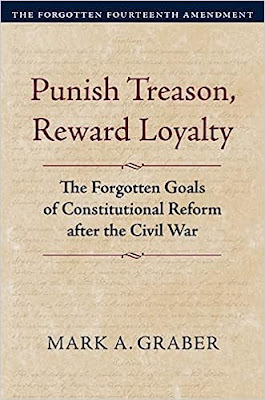
Mark A. Graber, Punish Treason, Reward Loyalty: The Forgotten Goals of Constitutional Reform after the Civil War (University of Kansas Press, 2023)
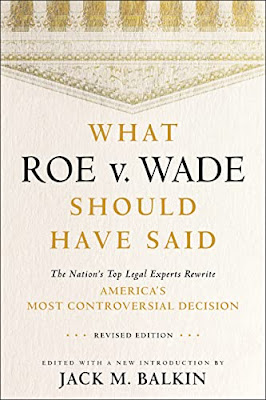
Jack M. Balkin, What Roe v. Wade Should Have Said: The Nation's Top Legal Experts Rewrite America's Most Controversial Decision - Revised Edition (NYU Press, 2023)

Andrew Koppelman, Burning Down the House: How Libertarian Philosophy Was Corrupted by Delusion and Greed (St. Martin’s Press, 2022)

Gerard N. Magliocca, Washington's Heir: The Life of Justice Bushrod Washington (Oxford University Press, 2022)
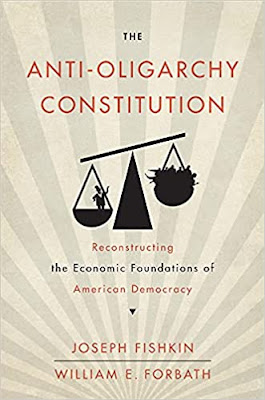
Joseph Fishkin and William E. Forbath, The Anti-Oligarchy Constitution: Reconstructing the Economic Foundations of American Democracy (Harvard University Press, 2022)
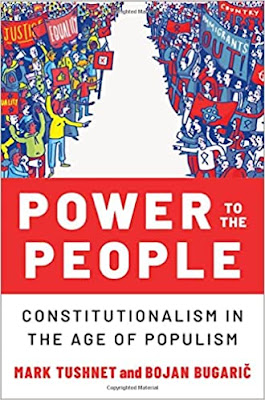
Mark Tushnet and Bojan Bugaric, Power to the People: Constitutionalism in the Age of Populism (Oxford University Press 2021).

Mark Philip Bradley and Mary L. Dudziak, eds., Making the Forever War: Marilyn B. Young on the Culture and Politics of American Militarism Culture and Politics in the Cold War and Beyond (University of Massachusetts Press, 2021).

Jack M. Balkin, What Obergefell v. Hodges Should Have Said: The Nation's Top Legal Experts Rewrite America's Same-Sex Marriage Decision (Yale University Press, 2020)

Frank Pasquale, New Laws of Robotics: Defending Human Expertise in the Age of AI (Belknap Press, 2020)

Jack M. Balkin, The Cycles of Constitutional Time (Oxford University Press, 2020)

Mark Tushnet, Taking Back the Constitution: Activist Judges and the Next Age of American Law (Yale University Press 2020).

Andrew Koppelman, Gay Rights vs. Religious Liberty?: The Unnecessary Conflict (Oxford University Press, 2020)

Ezekiel J Emanuel and Abbe R. Gluck, The Trillion Dollar Revolution: How the Affordable Care Act Transformed Politics, Law, and Health Care in America (PublicAffairs, 2020)

Linda C. McClain, Who's the Bigot?: Learning from Conflicts over Marriage and Civil Rights Law (Oxford University Press, 2020)
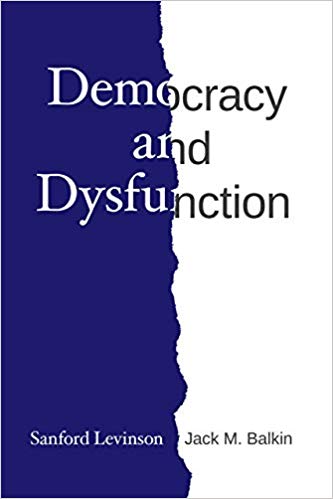
Sanford Levinson and Jack M. Balkin, Democracy and Dysfunction (University of Chicago Press, 2019)

Sanford Levinson, Written in Stone: Public Monuments in Changing Societies (Duke University Press 2018)

Mark A. Graber, Sanford Levinson, and Mark Tushnet, eds., Constitutional Democracy in Crisis? (Oxford University Press 2018)

Gerard Magliocca, The Heart of the Constitution: How the Bill of Rights became the Bill of Rights (Oxford University Press, 2018)

Cynthia Levinson and Sanford Levinson, Fault Lines in the Constitution: The Framers, Their Fights, and the Flaws that Affect Us Today (Peachtree Publishers, 2017)

Brian Z. Tamanaha, A Realistic Theory of Law (Cambridge University Press 2017)

Sanford Levinson, Nullification and Secession in Modern Constitutional Thought (University Press of Kansas 2016)

Sanford Levinson, An Argument Open to All: Reading The Federalist in the 21st Century (Yale University Press 2015)

Stephen M. Griffin, Broken Trust: Dysfunctional Government and Constitutional Reform (University Press of Kansas, 2015)

Frank Pasquale, The Black Box Society: The Secret Algorithms That Control Money and Information (Harvard University Press, 2015)

Bruce Ackerman, We the People, Volume 3: The Civil Rights Revolution (Harvard University Press, 2014)
Balkinization Symposium on We the People, Volume 3: The Civil Rights Revolution

Joseph Fishkin, Bottlenecks: A New Theory of Equal Opportunity (Oxford University Press, 2014)

Mark A. Graber, A New Introduction to American Constitutionalism (Oxford University Press, 2013)

John Mikhail, Elements of Moral Cognition: Rawls' Linguistic Analogy and the Cognitive Science of Moral and Legal Judgment (Cambridge University Press, 2013)

Gerard N. Magliocca, American Founding Son: John Bingham and the Invention of the Fourteenth Amendment (New York University Press, 2013)

Stephen M. Griffin, Long Wars and the Constitution (Harvard University Press, 2013)

Andrew Koppelman, The Tough Luck Constitution and the Assault on Health Care Reform (Oxford University Press, 2013)

James E. Fleming and Linda C. McClain, Ordered Liberty: Rights, Responsibilities, and Virtues (Harvard University Press, 2013)
Balkinization Symposium on Ordered Liberty: Rights, Responsibilities, and Virtues

Andrew Koppelman, Defending American Religious Neutrality (Harvard University Press, 2013)

Brian Z. Tamanaha, Failing Law Schools (University of Chicago Press, 2012)

Sanford Levinson, Framed: America's 51 Constitutions and the Crisis of Governance (Oxford University Press, 2012)

Linda C. McClain and Joanna L. Grossman, Gender Equality: Dimensions of Women's Equal Citizenship (Cambridge University Press, 2012)

Mary Dudziak, War Time: An Idea, Its History, Its Consequences (Oxford University Press, 2012)

Jack M. Balkin, Living Originalism (Harvard University Press, 2011)

Jason Mazzone, Copyfraud and Other Abuses of Intellectual Property Law (Stanford University Press, 2011)

Richard W. Garnett and Andrew Koppelman, First Amendment Stories, (Foundation Press 2011)

Jack M. Balkin, Constitutional Redemption: Political Faith in an Unjust World (Harvard University Press, 2011)

Gerard Magliocca, The Tragedy of William Jennings Bryan: Constitutional Law and the Politics of Backlash (Yale University Press, 2011)

Bernard Harcourt, The Illusion of Free Markets: Punishment and the Myth of Natural Order (Harvard University Press, 2010)

Bruce Ackerman, The Decline and Fall of the American Republic (Harvard University Press, 2010)
Balkinization Symposium on The Decline and Fall of the American Republic

Ian Ayres. Carrots and Sticks: Unlock the Power of Incentives to Get Things Done (Bantam Books, 2010)

Mark Tushnet, Why the Constitution Matters (Yale University Press 2010)

Ian Ayres and Barry Nalebuff: Lifecycle Investing: A New, Safe, and Audacious Way to Improve the Performance of Your Retirement Portfolio (Basic Books, 2010)
.jpg)
Jack M. Balkin, The Laws of Change: I Ching and the Philosophy of Life (2d Edition, Sybil Creek Press 2009)

Brian Z. Tamanaha, Beyond the Formalist-Realist Divide: The Role of Politics in Judging (Princeton University Press 2009)
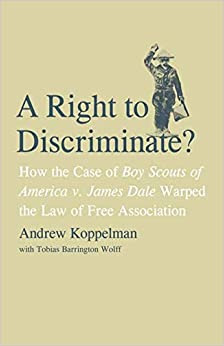
Andrew Koppelman and Tobias Barrington Wolff, A Right to Discriminate?: How the Case of Boy Scouts of America v. James Dale Warped the Law of Free Association (Yale University Press 2009)

Jack M. Balkin and Reva B. Siegel, The Constitution in 2020 (Oxford University Press 2009)

Heather K. Gerken, The Democracy Index: Why Our Election System Is Failing and How to Fix It (Princeton University Press 2009)

Mary Dudziak, Exporting American Dreams: Thurgood Marshall's African Journey (Oxford University Press 2008)

David Luban, Legal Ethics and Human Dignity (Cambridge Univ. Press 2007)

Ian Ayres, Super Crunchers: Why Thinking-By-Numbers is the New Way to be Smart (Bantam 2007)

Jack M. Balkin, James Grimmelmann, Eddan Katz, Nimrod Kozlovski, Shlomit Wagman and Tal Zarsky, eds., Cybercrime: Digital Cops in a Networked Environment (N.Y.U. Press 2007)

Jack M. Balkin and Beth Simone Noveck, The State of Play: Law, Games, and Virtual Worlds (N.Y.U. Press 2006)

Andrew Koppelman, Same Sex, Different States: When Same-Sex Marriages Cross State Lines (Yale University Press 2006)

Brian Tamanaha, Law as a Means to an End (Cambridge University Press 2006)

Sanford Levinson, Our Undemocratic Constitution (Oxford University Press 2006)

Mark Graber, Dred Scott and the Problem of Constitutional Evil (Cambridge University Press 2006)

Jack M. Balkin, ed., What Roe v. Wade Should Have Said (N.Y.U. Press 2005)

Sanford Levinson, ed., Torture: A Collection (Oxford University Press 2004)
Balkin.com homepage
Bibliography
Conlaw.net
Cultural Software
Writings
Opeds
The Information Society Project
BrownvBoard.com
Useful Links
Syllabi and Exams
