Balkinization
an unanticipated consequence of
Jack M. Balkin
Balkinization Symposiums: A Continuing List
E-mail:
Jack Balkin:
jackbalkin at yahoo.com
Bruce Ackerman
bruce.ackerman at yale.edu
Ian Ayres
ian.ayres at yale.edu
Corey Brettschneider
corey_brettschneider at brown.edu
Mary Dudziak
mary.l.dudziak at emory.edu
Joey Fishkin
joey.fishkin at gmail.com
Heather Gerken heather.gerken at yale.edu
Abbe Gluck abbe.gluck at yale.edu
Mark Graber
mgraber at law.umaryland.edu
Stephen Griffin
sgriffin at tulane.edu
Jonathan Hafetz
jonathan.hafetz at shu.edu
Jeremy Kessler
jkessler at law.columbia.edu
Andrew Koppelman
akoppelman at law.northwestern.edu
Marty Lederman
msl46 at law.georgetown.edu
Sanford Levinson
slevinson at law.utexas.edu
David Luban
david.luban at gmail.com
Gerard Magliocca
gmaglioc at iupui.edu
Jason Mazzone
mazzonej at illinois.edu
Linda McClain
lmcclain at bu.edu
John Mikhail
mikhail at law.georgetown.edu
Frank Pasquale
pasquale.frank at gmail.com
Nate Persily
npersily at gmail.com
Michael Stokes Paulsen
michaelstokespaulsen at gmail.com
Deborah Pearlstein
dpearlst at yu.edu
Rick Pildes
rick.pildes at nyu.edu
David Pozen
dpozen at law.columbia.edu
Richard Primus
raprimus at umich.edu
K. Sabeel Rahmansabeel.rahman at brooklaw.edu
Alice Ristroph
alice.ristroph at shu.edu
Neil Siegel
siegel at law.duke.edu
David Super
david.super at law.georgetown.edu
Brian Tamanaha
btamanaha at wulaw.wustl.edu
Nelson Tebbe
nelson.tebbe at brooklaw.edu
Mark Tushnet
mtushnet at law.harvard.edu
Adam Winkler
winkler at ucla.edu
Compendium of posts on Hobby Lobby and related cases
The Anti-Torture Memos: Balkinization Posts on Torture, Interrogation, Detention, War Powers, and OLC
The Anti-Torture Memos (arranged by topic)
Recent Posts
Who's on Ethical Thin Ice in the Hargan v. Garza Abortion Case?
European Commission Savages US
What Next? The Fiscal Agenda for 2018
The SG’s Empty Ethics Case Against Jane Doe’s Lawyers
Two more remarkable things about the Department of Justice's arguments in the unaccompanied minors' abortion litigation
Lawless and Cruel: The HHS Abortion Scandal That's Flying Under the Radar
The Tax Bill and Constitutional Rot
Can a sitting President be sued in a state court?
State "Hostility" to Religion Without Religious Discrimination?: The Unexpected Free Exercise Issue Lurking in Masterpiece Cakeshop
[UPDATED to account for developments through Tuesday morning, 12/19] HHS's shocking new justification for preventing 17-year-old girls in its custody from obtaining abortions: It knows more than they do about whether the abortions would be in their best interests
![[Powered by Blogger]](https://lh3.googleusercontent.com/blogger_img_proxy/AEn0k_vqoPIIKvlfazT_K9Bzker3UO2DTjFlNktfP3m3LgDcsgAP5zOLpsRj3MJjewKdC2z5N_a9-k9KxUqJv7c3ZUr-1XMZ1XM0PsJeaESyMw3U=s0-d)
Just A Few Blogs
ACS Blog
Alas, a Blog
Althouse
Arts and Letters Daily
Atrios (Eschaton)
Bill of Health
Buzzflash.com
Buzz Machine
Cato at Liberty
Juan Cole (Informed Comment)
Concurring Opinions
The Constitution in 2020
Corrente
Crooked Timber
Daily Howler
Daily Kos
Dana Boyd
Brad DeLong
Digby (Hullabaloo)
Discriminations
Daniel Drezner
Kevin Drum (Mother Jones)
Electrolite
En Banc
Eunomia (Daniel Larison)
Fafblog
Michael Froomkin (Discourse.net)
GovLab (Beth Noveck)
Rick Hasen (Election Law)
History News Network
How Appealing
Ignatz (Sam Heldman)
The Importance of (Ernie Miller)
Infolaw
Instapundit
International Economic Law and Policy Blog
IntLawGrrls
Jacob Levy
Jesus' General
Jurisdynamics
The Kitchen Cabinet
Mark Kleiman
Law Blog Central
Larry Lessig
Lawyers, Guns and Money
Liberal Oasis
Brian Leiter's Law School Reports
The Leiter Reports
Marginal Revolution
Megan McArdle
Memeorandum
Metafilter
Mirror of Justice
The New Republic
Newseum
No More Mister Nice Blog
Brendan Nyhan
Opinio Juris
Orcinus
The Originalism Blog
Pandagon
Passport (Foreign Policy)
Overcoming Bias
Political Animal (Washington Monthly)
Political Theory Daily Review
Political Wire (Taegan Goddard)
The Poor Man
Virginia Postrel
Prawfsblawg
Public Reason
Jonathan Rauch
Raw Story
Redstate
ReligiousLeftLaw.com
Reporters Committee For Freedom of the Press
Reproductive Rights Blog
Rothman's Roadmap to the Right of Publicity
SCOTUS Blog
Seeing the Forest
Clay Shirky
The Shifted Librarian
The Situationist
Larry Solum (Legal Theory)
Andrew Sullivan
Talking Points Memo
Talk Left
Tapped
Tbogg
TechPresident
The Paper Chase (Jurist)
Tom Paine
Tom Tomorrow (This Modern World)
Eve Tushnet
Uggabugga
University of Chicago Law School Faculty Blog
Unqualified Offerings
The Volokh Conspiracy
War and Piece (Laura Rozen)
Wampum
Oliver Willis
Wonkette
Written Description
Matthew Yglesias
Yin
Your Choice of Feeds
1. XML
powered by

2. Atom Feed
3. RSS 2.0
Who's on Ethical Thin Ice in the Hargan v. Garza Abortion Case?
Marty Lederman
This coming Friday,
the Supreme Court Justices are scheduled to consider, at conference, the
government’s nominal “petition
for certiorari” in No. 17-654, Hargan
v. Garza. Marty has already written at length on
the petition, and we won’t repeat here the many ways in which it is deeply
problematic. Since that first post, there have been further revealing
proceedings in the case (see, e.g., this post and this one), and Carter
Phillips/Sidley Austin have filed a terrific brief in opposition on behalf of the Respondents, in which they (among other
things) carefully explain why the SG’s accusations of ethical breaches by Jane
Doe’s attorneys are groundless. The SG recently filed a reply brief, which doubles down on
the allegations of unethical attorney behavior; and David has published a post on why the ethics authorities
the SG cites in his reply brief do not support his accusations.
In this post, we address two further items, both
related to the attorney ethics aspect of the petition: (i) First, we note the
incongruity of the SG using this case
to make an unprecedented attack on opposing counsel’s ethics, when the
Department of Justice itself has acted in ways that themselves raise ethical
questions. (ii) Second, we address the death penalty analogy that the SG
invokes on the final page of his reply brief--an
analogy that appears to have had traction with some readers, if our
conversations are any indication.
Posted
1:36 PM
by Marty Lederman [link]
European Commission Savages US
Guest Blogger
James Whitman
Last week there was a landmark moment in comparative law, and in the international crisis of liberal democracy. It should not go unremarked. The European Commission, as the New York Times explained in a condescending editorial, “reminded Poland how a democracy acts,” initiating an Article 7 proceeding because the Law and Justice Party has engineered a “clear risk of a serious breach of the rule of law.” The charge, as readers of this blog must all know, is that “Kaczynski and his ilk,” as the Times call them, pushed though judicial “reforms,” with the result, in the words of the Commission, that “the country’s judiciary is now under the rule of the political majority.”
Now, I have no patience for Kaczynski and his ilk, and none of us should. But there is something unbecoming about an American newspaper, and Americans more broadly, sniffing at a country where “the judiciary is now under the rule of the political majority.” If we’re just going to engage in unselfconscious preaching, we will miss an opportunity to think hard about the way things are done here at home.
The Commission’s press release is not a model of clarity on what might count as a “serious breach of the rule of law,” but the fact is that it has enunciated a crucial rule of law principle in this time of transatlantic crisis. Does it really need to be emphasized that the Commission has come down on Poland at the very moment that the last checks on the politicization of the judicial appointments process have fallen by the wayside in the US Senate? The Europeans—or at least the Western Europeans who are still in control in the EU—have just made a formal declaration of a decisive difference between their understanding of liberal democracy and ours. I think the Commission is on the right side of this divide. Others may differ. But it’s a big post-Cold War moment for all of us when the Europeans effectively declare that there is a serious breach of the rule of law in the United States.
And let’s be clear: The politicization of American judiciary may be reaching its climacteric in the Trump era, but it is much older than that. The Commission is not just (sotto voce) condemning Mitch McConnell. It is condemning an American politicization, or if you prefer “democratization,” of the justice system that goes back at least to the rise of the elected judiciary in the Jacksonian era. The fact is that if Trump and McConnell are succeeding in pulling off a Kaczynksi, it is only because American traditions make it easy for them. In the civilized countries of Western Europe, for those who don’t know, judges are recruited into a highly structured career from a young age, and socialized into the values of professional independence that are the sociological foundation of a meaningful rule of law. And that’s to say nothing of professionalized culture of European prosecutors, European prison officials, and more. I’m sure there’s no hope that the American justice will ever look that. But over the last generation it’s come to look less and less like it, and the European Commission has just called us out.
James Q. Whitman is the Ford Foundation Professor of Comparative and Foreign Law at Yale Law School. You can reach him by e-mail at james.whitman at yale.edu
Posted
1:56 PM
by Guest Blogger [link]
What Next? The Fiscal Agenda for 2018
David Super
Posted
1:26 PM
by David Super [link]
The SG’s Empty Ethics Case Against Jane Doe’s Lawyers
David Luban
Posted
11:16 AM
by David Luban [link]
Two more remarkable things about the Department of Justice's arguments in the unaccompanied minors' abortion litigation
Marty Lederman
In three recent posts, I've sharply criticized briefs filed by the Department of Justice--and by the Solicitor General, in particular--in the various iterations of the Hargan v. Garza litigation, involving the HHS Office for Refugee Resettlement's new practice of preventing minors in its effective custody from obtaining legal abortions. (I summarize many of those DOJ failings in a footnote below.*)
Over the weekend, I was listening once again to the oral argument before the D.C. Circuit back on October 20th, and it occurred to me that two further problematic DOJ arguments are also worth flagging.
Read more »
Posted
12:39 AM
by Marty Lederman [link]
Lawless and Cruel: The HHS Abortion Scandal That's Flying Under the Radar
Marty Lederman
So many horrifying things are
happening every day (see, for example, Jack’s must-read
post on the tax bill) that it has become difficult to keep track of, or
even to appreciate, every such development. This
is one such case that has escaped much attention--it involves remarkable cruelty
and lawlessness, against very vulnerable minors in the custody of the
government, committed by a zealous official at the Department of Health and
Human Services, and, distressingly, abetted by the Department of Justice, which
ought to be putting a stop to the conduct.
As we just learned, the HHS
official in question even asserted the authority to decide it is in the best interest of
a 17-year-old rape victim to carry her pregnancy to term--and to physically
restrain her from exercising her own judgment to the contrary--where that victim was 23 weeks pregnant (in a state where abortion is only lawful until 24 weeks); where the abortion would be lawful without any parental or judicial involvement; where she had expressed a desire to kill herself rather than to bear the child; and where Congress had, in the Hyde Amendment, actually provided that the federal government could subsidize the abortion because the pregnancy was the result of a rape. Even in those circumstances, the Director of the agency purported to exercise an authority, not found in any law, to physically restrain the minor from obtaining the abortion, based upon his own assessment that it would be better for the minor to continue the pregnancy because,
in his considered view, it is "perhaps likely . . . that
this young woman would go on to experience an abortion as an additional trauma
on top of the trauma she experiences as a result of her sexual assault,"
because the abortion would not "undo or erase the memory of the violence
committed against her," and because the notion that "it is possible
to cure violence with further violence, and that the destruction of an unborn
child’s life can in some instances be acceptable as a means to an end," is
"dubious," even if the young woman in question does not appreciate
it.
(Apologies in advance -- because I wanted to get this out quickly after the memo was released, it's rougher than my usual fare, and perhaps somewhat less dispassionate. Then again, one doesn't encounter government memos and briefs such as these every day.)
Posted
1:36 PM
by Marty Lederman [link]
The Tax Bill and Constitutional Rot
JB
Previously I argued that the Republican attempt to pass a tax cut in the form of a health care bill was evidence of constitutional rot-- the descent of the United States into a system that is less democratic (responsive to popular will), less republican (i.e., one in which representatives act to further the public good) and increasingly oligarchical. that The new tax bill is further evidence.
The basic problem is that the contemporary Republican Party is largely controlled by its wealthiest donors. To stay in power, Congressional Republicans must please these donors, regardless of any promises made to actual constituents. Some of the ways that you please donors involve ideological symbolism and low-profile deregulation, but others are essentially cash transfers.
Using the apparatus of government to pay off the people who keep you in power is pretty much the whole point of oligarchy. This explains why Republicans must say one thing to their constituents but actually do something very different in their legislation, and why they must disregard the judgment of economists and budget analysts about what the tax bill actually does and will do. The public justification of the bill has--and indeed, must have--relatively little connection to the point of the bill, which is to please the relatively small class of powerful and wealthy people who keep the Republican Party in power. These people support Republicans because they want something in return; what they want in return is cash on the barrel head. The public would not support a bill designed on these terms; hence Republicans had to rush the bill through with no hearings, and dissemble publicly about the nature and effects of their legislation.
While it is possible to imagine tax bills that lower tax rates in the service of public-spirited goals, this tax bill is not one of them. The tax bill is not an attempt to close loopholes in exchange for a general lowering of the corporate and individual rates. The tax bill does not simplify the tax code as promised; it does add provisions that will benefit specific donors and pad the wallets of individual Congressmen and Senators (not to mention President Trump himself). This last feature is doubly worrisome; not only are Congressmen and Senators paying off their donors, they are also paying off themselves. The bill is enormously unpopular with the public, and it should be; the process by which the bill was passed is evidence of a guilty conscience.
The tax bill will create deficits, but the total additional deficits are still relatively small in proportion to the total amount the federal government spends. The problem is not the total amount of the deficit but that the bill shows that Congress has largely abandoned the goal of using tax and fiscal policy to further the public interest. That is, the Republican party has now become anti-republican. Instead, Congress seeks to pay off a small number of wealthy individuals and groups and personally enrich sitting Congressmen and Senators. If some of them lose their seats in the next election, they can retire secure in the knowledge that they have taken care of themselves in anticipation of their next careers in business and lobbying.
The point of tax and fiscal policy in a republican form of government is to raise and spend money to create incentives and purchase public goods that will benefit the public interest. In oligarchical and autocratic governments, government officials constrict spending on public goods and allow government functions and services to atrophy; they distribute income from the broad base of the public to the wealthy, and they divert government revenues to pay off themselves, their family members, and the class of people who keep them in power. This is also a pretty good description of the new tax bill.
It is important not to be alarmist. The United States is still a wealthy country with a tax system that is still broadly progressive, and a government that still spends a considerable amount on public goods. It can absorb a pretty sizeable amount of corruption and self-dealing and still remain a viable democracy. But the current trend is worrisome. Upward redistribution from the poor and middle class to the wealthy since the end of the 1970s is not simply the result of the economic changes that emerged from globalization; it is also the result of the tax and fiscal policies of an increasingly oligarchical system. These policies have shifted risks away from the upper classes and sent them downward to the broad base of the public, even as they have shifted the proceeds from economic growth upward. The Trump era is simply the exaggeration of existing trends.
Yet if the current trajectory continues, we are likely to see an increasing degradation in government functions, a withering of social insurance programs that benefit the poor and middle class, and ever increasing upward redistribution and self-dealing. These are signs of a political economy that cannot support a vibrant democracy; they are evidence of increasing constitutional rot.
I am hopeful that the public will punish the Republican Party for the tax bill in the coming election cycle. Even so, the way our system of government works, it will be very difficult to undo the self-dealing and upward redistributive effects of the bill for some time.
A strongly polarized politics combined with our presidential system of government means that it is easier to use polarization to get in power, redistribute income upwards and get away with it. That is why polarization tends to work hand in hand with increasing income inequality: Inequality leads to popular outrage, which leads to faux populist candidates who stoke anger and distrust of government but actually pay off wealthy donors with legislation that shifts risks onto and income away from constituents. This produces even more unhappiness, distrust and polarization, and the cycle continues. This cycle of polarization and income inequality is also a feature of the constitutional rot of our current system of government.
Matters are far from hopeless. America lived through the First Gilded Age, generating the populist and progressive movements and the New Deal. Something like this might well happen as a result of this, our Second Gilded Age. But if history is any guide, it will be a long, slow, imperfect and fraught process. My expectation, or rather my hope, is that we are actually fairly far along in this historical transformation, and that the next few election cycles will see a significant change in the terms of our politics-- for the better.
Posted
9:35 AM
by JB [link]
Can a sitting President be sued in a state court?
Richard Primus
Posted
8:24 AM
by Richard Primus [link]
State "Hostility" to Religion Without Religious Discrimination?: The Unexpected Free Exercise Issue Lurking in Masterpiece Cakeshop
Marty Lederman
It therefore came as something of a surprise, three years later, when the Court requested the record in Masterpiece from the state court, put off decision for more than a dozen further conferences after receiving the record, and eventually granted cert. Was there perhaps something in the record of the Masterpiece case that distinguished it
from Elane in a way that troubled one
or more Justices—something that might have been the subject of discussions
among the Justices in the five months of conferences they had on the case after
they received the record from the Colorado state court?
Posted
6:08 PM
by Marty Lederman [link]
[UPDATED to account for developments through Tuesday morning, 12/19] HHS's shocking new justification for preventing 17-year-old girls in its custody from obtaining abortions: It knows more than they do about whether the abortions would be in their best interests
Marty Lederman
1. On Monday evening, Judge Chutkan issued the TRO, which applies to both girls. It requires the defendant ORR officials to "
2. The government moved for stays of the TRO only as applied to Jane Roe in both the court of appeals and the Supreme Court. The government, however, represented that it will not seek a stay as to Jane Poe (the minor who is 22 weeks pregnant).
3. The D.C. Court of Appeals (Judges Rogers, Tatel and Millett) promptly granted a 24-hour stay of the TRO, until 6:05 p.m. on Wednesday, December 20, 2017, to give the court sufficient opportunity to consider the government's emergency motion, but only "to the extent that the order requires appellants to transport Jane Roe or allow Jane Roe to be transported to obtain an abortion procedure."
At 10:09 this morning, Judge Chutkan lifted the stay as applied to Jane Poe (who is 22 weeks pregnant). Presumably, then, Jane Poe will obtain her abortion today (Tuesday), and the case now is confined, on appeal, to Jane Roe, who is approximately 10 weeks pregnant.
4. The D.C. Circuit motions panel further ordered the appellee (i.e., Roe's lawyers) to file a response to the government's emergency motion for stay by 10:00 a.m. this morning, with the government's reply brief due at 3:00 p.m. The plaintiffs filed their brief moments ago.
The panel further directed the parties to address: (1) whether Jane Roe’s independent request for and decision to undergo an abortion fully complies with the relevant state law governing abortions by minors [I believe the answer to this is "yes"]; (2) whether the Office of Refugee Resettlement (ORR) has yet made an individualized decision regarding its view concerning why termination of the pregnancy would not, in its judgment, be in Jane Roe’s best interests [based upon yesterday's oral argument, I believe the answer to this is "no"--and Roe's counsel agrees]; and (3) if no such individualized decision has been made, for ORR to identify "on what basis ORR has concluded that an abortion would not be in Jane Roe’s best interests." As for this final item, my understanding is that although ORR had concluded that an abortion would not be in Jane Poe's best interests (a determination that will apparently be rendered moot if Poe obtains an abortion later today), ORR has not made a similar determination with respect to Jane Roe. It is, instead, trying to prevent Jane Roe from having an abortion even if it is in her best interests, at least until such time as she is transferred to the custody of a "sponsor"--allegedly so as to prevent the ORR from being compelled to "affirmatively facilitate" the abortion (but see my discussion below, questioning the "facilitation" rationale). We shall see shortly whether that understanding is correct.
5. In the meantime, back in the Jane Poe case, yesterday afternoon the government filed, under seal, the ORR Director's "Decision . . . for Jane Poe," which is, presumably, ORR's explanation for why, in its view, an abortion is not in Poe's interests, thereby overriding her decision to the contrary. (See my discussion below.) The ACLU lawyers representing Roe and Poe then filed, with Judge Chutkan, a motion for a public filing of a redacted version of that ORR Decision (and an attached note). Although Poe's own case might be moot as soon as she obtains her abortion (presumably today), the lawyers represent that the ORR Decision, and the attached note, "provide highly relevant information about Defendants’ challenged policy that ought promptly to be made public, as well as important additional facts about Plaintiff Roe’s situation"--information that the plaintiffs hoped to refer to today in their responses to the government’s emergency motions for stays pending appeal. Judge Chutkan presumably will rule on that motion early this morning, at which time we might learn relevant new information that bears on Roe's case going forward. In the meantime, in their filing this morning, Roe's counsel write:
A document filed by Defendants under seal with the district court yesterday regarding the reasons for denying another Plaintiff, Jane Poe’s, request for an abortion makes abundantly clear that Defendants’ refusal to allow young women to access abortions has nothing to do with their best interests and everything to do with Defendant ORR Director Scott Lloyd’s personal opposition to abortion.
END UPDATE (for now)]
Last month I published a post here about the Solicitor General’s nominal “Petition for
Certiorari” in No. 17-654, Hargan v. Garza, the
case involving HHS’s efforts to deny a 17-year-old girl in its custody, “Jane
Doe,” the right to obtain an abortion to which she was entitled under the
Constitution and Texas law.
In sum, ORR simply has no good reason—surely none that Congress
has recognized or authorized the agency to act upon—to continue to require the shelters to physically restrain Roe
and Poe from exercising their constitutional rights. That, in and of itself, is enough to resolve
these cases.
Posted
10:20 AM
by Marty Lederman [link]
Books by Balkinization Bloggers

Gerard N. Magliocca, The Actual Art of Governing: Justice Robert H. Jackson's Concurring Opinion in the Steel Seizure Case (Oxford University Press, 2025)

Linda C. McClain and Aziza Ahmed, The Routledge Companion to Gender and COVID-19 (Routledge, 2024)

David Pozen, The Constitution of the War on Drugs (Oxford University Press, 2024)

Jack M. Balkin, Memory and Authority: The Uses of History in Constitutional Interpretation (Yale University Press, 2024)
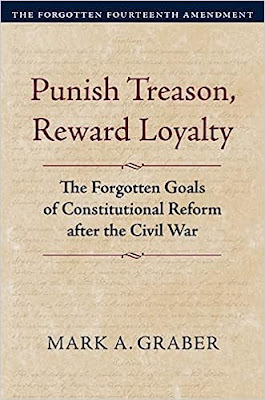
Mark A. Graber, Punish Treason, Reward Loyalty: The Forgotten Goals of Constitutional Reform after the Civil War (University of Kansas Press, 2023)
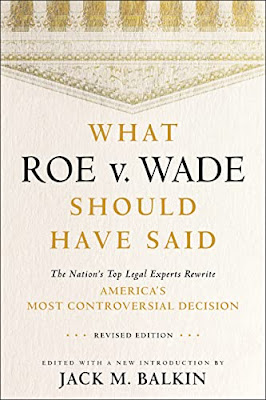
Jack M. Balkin, What Roe v. Wade Should Have Said: The Nation's Top Legal Experts Rewrite America's Most Controversial Decision - Revised Edition (NYU Press, 2023)

Andrew Koppelman, Burning Down the House: How Libertarian Philosophy Was Corrupted by Delusion and Greed (St. Martin’s Press, 2022)

Gerard N. Magliocca, Washington's Heir: The Life of Justice Bushrod Washington (Oxford University Press, 2022)
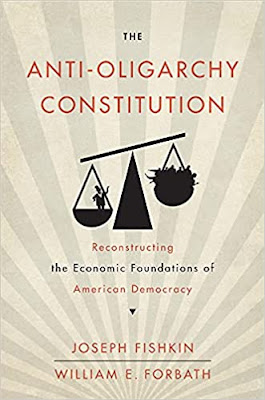
Joseph Fishkin and William E. Forbath, The Anti-Oligarchy Constitution: Reconstructing the Economic Foundations of American Democracy (Harvard University Press, 2022)
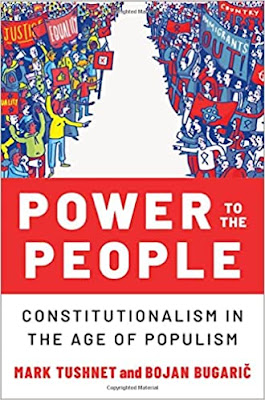
Mark Tushnet and Bojan Bugaric, Power to the People: Constitutionalism in the Age of Populism (Oxford University Press 2021).

Mark Philip Bradley and Mary L. Dudziak, eds., Making the Forever War: Marilyn B. Young on the Culture and Politics of American Militarism Culture and Politics in the Cold War and Beyond (University of Massachusetts Press, 2021).

Jack M. Balkin, What Obergefell v. Hodges Should Have Said: The Nation's Top Legal Experts Rewrite America's Same-Sex Marriage Decision (Yale University Press, 2020)

Frank Pasquale, New Laws of Robotics: Defending Human Expertise in the Age of AI (Belknap Press, 2020)

Jack M. Balkin, The Cycles of Constitutional Time (Oxford University Press, 2020)

Mark Tushnet, Taking Back the Constitution: Activist Judges and the Next Age of American Law (Yale University Press 2020).

Andrew Koppelman, Gay Rights vs. Religious Liberty?: The Unnecessary Conflict (Oxford University Press, 2020)

Ezekiel J Emanuel and Abbe R. Gluck, The Trillion Dollar Revolution: How the Affordable Care Act Transformed Politics, Law, and Health Care in America (PublicAffairs, 2020)

Linda C. McClain, Who's the Bigot?: Learning from Conflicts over Marriage and Civil Rights Law (Oxford University Press, 2020)
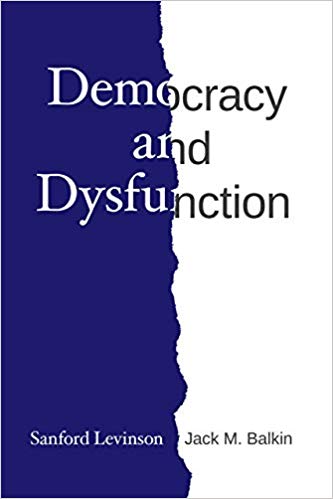
Sanford Levinson and Jack M. Balkin, Democracy and Dysfunction (University of Chicago Press, 2019)

Sanford Levinson, Written in Stone: Public Monuments in Changing Societies (Duke University Press 2018)

Mark A. Graber, Sanford Levinson, and Mark Tushnet, eds., Constitutional Democracy in Crisis? (Oxford University Press 2018)

Gerard Magliocca, The Heart of the Constitution: How the Bill of Rights became the Bill of Rights (Oxford University Press, 2018)

Cynthia Levinson and Sanford Levinson, Fault Lines in the Constitution: The Framers, Their Fights, and the Flaws that Affect Us Today (Peachtree Publishers, 2017)

Brian Z. Tamanaha, A Realistic Theory of Law (Cambridge University Press 2017)

Sanford Levinson, Nullification and Secession in Modern Constitutional Thought (University Press of Kansas 2016)

Sanford Levinson, An Argument Open to All: Reading The Federalist in the 21st Century (Yale University Press 2015)

Stephen M. Griffin, Broken Trust: Dysfunctional Government and Constitutional Reform (University Press of Kansas, 2015)

Frank Pasquale, The Black Box Society: The Secret Algorithms That Control Money and Information (Harvard University Press, 2015)

Bruce Ackerman, We the People, Volume 3: The Civil Rights Revolution (Harvard University Press, 2014)
Balkinization Symposium on We the People, Volume 3: The Civil Rights Revolution

Joseph Fishkin, Bottlenecks: A New Theory of Equal Opportunity (Oxford University Press, 2014)

Mark A. Graber, A New Introduction to American Constitutionalism (Oxford University Press, 2013)

John Mikhail, Elements of Moral Cognition: Rawls' Linguistic Analogy and the Cognitive Science of Moral and Legal Judgment (Cambridge University Press, 2013)

Gerard N. Magliocca, American Founding Son: John Bingham and the Invention of the Fourteenth Amendment (New York University Press, 2013)

Stephen M. Griffin, Long Wars and the Constitution (Harvard University Press, 2013)

Andrew Koppelman, The Tough Luck Constitution and the Assault on Health Care Reform (Oxford University Press, 2013)

James E. Fleming and Linda C. McClain, Ordered Liberty: Rights, Responsibilities, and Virtues (Harvard University Press, 2013)
Balkinization Symposium on Ordered Liberty: Rights, Responsibilities, and Virtues

Andrew Koppelman, Defending American Religious Neutrality (Harvard University Press, 2013)

Brian Z. Tamanaha, Failing Law Schools (University of Chicago Press, 2012)

Sanford Levinson, Framed: America's 51 Constitutions and the Crisis of Governance (Oxford University Press, 2012)

Linda C. McClain and Joanna L. Grossman, Gender Equality: Dimensions of Women's Equal Citizenship (Cambridge University Press, 2012)

Mary Dudziak, War Time: An Idea, Its History, Its Consequences (Oxford University Press, 2012)

Jack M. Balkin, Living Originalism (Harvard University Press, 2011)

Jason Mazzone, Copyfraud and Other Abuses of Intellectual Property Law (Stanford University Press, 2011)

Richard W. Garnett and Andrew Koppelman, First Amendment Stories, (Foundation Press 2011)

Jack M. Balkin, Constitutional Redemption: Political Faith in an Unjust World (Harvard University Press, 2011)

Gerard Magliocca, The Tragedy of William Jennings Bryan: Constitutional Law and the Politics of Backlash (Yale University Press, 2011)

Bernard Harcourt, The Illusion of Free Markets: Punishment and the Myth of Natural Order (Harvard University Press, 2010)

Bruce Ackerman, The Decline and Fall of the American Republic (Harvard University Press, 2010)
Balkinization Symposium on The Decline and Fall of the American Republic

Ian Ayres. Carrots and Sticks: Unlock the Power of Incentives to Get Things Done (Bantam Books, 2010)

Mark Tushnet, Why the Constitution Matters (Yale University Press 2010)

Ian Ayres and Barry Nalebuff: Lifecycle Investing: A New, Safe, and Audacious Way to Improve the Performance of Your Retirement Portfolio (Basic Books, 2010)
.jpg)
Jack M. Balkin, The Laws of Change: I Ching and the Philosophy of Life (2d Edition, Sybil Creek Press 2009)

Brian Z. Tamanaha, Beyond the Formalist-Realist Divide: The Role of Politics in Judging (Princeton University Press 2009)
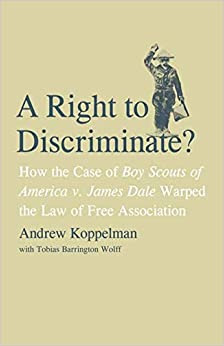
Andrew Koppelman and Tobias Barrington Wolff, A Right to Discriminate?: How the Case of Boy Scouts of America v. James Dale Warped the Law of Free Association (Yale University Press 2009)

Jack M. Balkin and Reva B. Siegel, The Constitution in 2020 (Oxford University Press 2009)

Heather K. Gerken, The Democracy Index: Why Our Election System Is Failing and How to Fix It (Princeton University Press 2009)

Mary Dudziak, Exporting American Dreams: Thurgood Marshall's African Journey (Oxford University Press 2008)

David Luban, Legal Ethics and Human Dignity (Cambridge Univ. Press 2007)

Ian Ayres, Super Crunchers: Why Thinking-By-Numbers is the New Way to be Smart (Bantam 2007)

Jack M. Balkin, James Grimmelmann, Eddan Katz, Nimrod Kozlovski, Shlomit Wagman and Tal Zarsky, eds., Cybercrime: Digital Cops in a Networked Environment (N.Y.U. Press 2007)

Jack M. Balkin and Beth Simone Noveck, The State of Play: Law, Games, and Virtual Worlds (N.Y.U. Press 2006)

Andrew Koppelman, Same Sex, Different States: When Same-Sex Marriages Cross State Lines (Yale University Press 2006)

Brian Tamanaha, Law as a Means to an End (Cambridge University Press 2006)

Sanford Levinson, Our Undemocratic Constitution (Oxford University Press 2006)

Mark Graber, Dred Scott and the Problem of Constitutional Evil (Cambridge University Press 2006)

Jack M. Balkin, ed., What Roe v. Wade Should Have Said (N.Y.U. Press 2005)

Sanford Levinson, ed., Torture: A Collection (Oxford University Press 2004)
Balkin.com homepage
Bibliography
Conlaw.net
Cultural Software
Writings
Opeds
The Information Society Project
BrownvBoard.com
Useful Links
Syllabi and Exams
