Balkinization
an unanticipated consequence of
Jack M. Balkin
Balkinization Symposiums: A Continuing List
E-mail:
Jack Balkin:
jackbalkin at yahoo.com
Bruce Ackerman
bruce.ackerman at yale.edu
Ian Ayres
ian.ayres at yale.edu
Corey Brettschneider
corey_brettschneider at brown.edu
Mary Dudziak
mary.l.dudziak at emory.edu
Joey Fishkin
joey.fishkin at gmail.com
Heather Gerken heather.gerken at yale.edu
Abbe Gluck abbe.gluck at yale.edu
Mark Graber
mgraber at law.umaryland.edu
Stephen Griffin
sgriffin at tulane.edu
Jonathan Hafetz
jonathan.hafetz at shu.edu
Jeremy Kessler
jkessler at law.columbia.edu
Andrew Koppelman
akoppelman at law.northwestern.edu
Marty Lederman
msl46 at law.georgetown.edu
Sanford Levinson
slevinson at law.utexas.edu
David Luban
david.luban at gmail.com
Gerard Magliocca
gmaglioc at iupui.edu
Jason Mazzone
mazzonej at illinois.edu
Linda McClain
lmcclain at bu.edu
John Mikhail
mikhail at law.georgetown.edu
Frank Pasquale
pasquale.frank at gmail.com
Nate Persily
npersily at gmail.com
Michael Stokes Paulsen
michaelstokespaulsen at gmail.com
Deborah Pearlstein
dpearlst at yu.edu
Rick Pildes
rick.pildes at nyu.edu
David Pozen
dpozen at law.columbia.edu
Richard Primus
raprimus at umich.edu
K. Sabeel Rahmansabeel.rahman at brooklaw.edu
Alice Ristroph
alice.ristroph at shu.edu
Neil Siegel
siegel at law.duke.edu
David Super
david.super at law.georgetown.edu
Brian Tamanaha
btamanaha at wulaw.wustl.edu
Nelson Tebbe
nelson.tebbe at brooklaw.edu
Mark Tushnet
mtushnet at law.harvard.edu
Adam Winkler
winkler at ucla.edu
Compendium of posts on Hobby Lobby and related cases
The Anti-Torture Memos: Balkinization Posts on Torture, Interrogation, Detention, War Powers, and OLC
The Anti-Torture Memos (arranged by topic)
Recent Posts
Hobby Lobby’s Bitter Anniversary
The Kennedy Problem
Gay rights, religious accommodations, and antidiscrimination law
Obergefell and the End of Religious Reasons for Lawmaking
A Note to Append to Justice Scalia's Dissent in Arizona Redistricting
Obergefell, Democratic Constitutionalism, and Judicial Review
C-Span video interview about The Tough Luck Constitution
Richard Posner: Marriage Socialist
Modest John Roberts?
Yeah, that's fair
The continuing relevance of Stephen A. Douglas: "Popular sovereignty," federalism, and moral relativism"
Obergefell and Equality
Obergefell and Tradition
Bye, Bye, Glucksberg
Perspectives on Health Law Developed this SCOTUS Term (Podcast Edition)
Obergefell and Shelby County-- and Lochner-- and Roe
Sam Alito, Critical Race Theorist
![[Powered by Blogger]](https://lh3.googleusercontent.com/blogger_img_proxy/AEn0k_vqoPIIKvlfazT_K9Bzker3UO2DTjFlNktfP3m3LgDcsgAP5zOLpsRj3MJjewKdC2z5N_a9-k9KxUqJv7c3ZUr-1XMZ1XM0PsJeaESyMw3U=s0-d)
Just A Few Blogs
ACS Blog
Alas, a Blog
Althouse
Arts and Letters Daily
Atrios (Eschaton)
Bill of Health
Buzzflash.com
Buzz Machine
Cato at Liberty
Juan Cole (Informed Comment)
Concurring Opinions
The Constitution in 2020
Corrente
Crooked Timber
Daily Howler
Daily Kos
Dana Boyd
Brad DeLong
Digby (Hullabaloo)
Discriminations
Daniel Drezner
Kevin Drum (Mother Jones)
Electrolite
En Banc
Eunomia (Daniel Larison)
Fafblog
Michael Froomkin (Discourse.net)
GovLab (Beth Noveck)
Rick Hasen (Election Law)
History News Network
How Appealing
Ignatz (Sam Heldman)
The Importance of (Ernie Miller)
Infolaw
Instapundit
International Economic Law and Policy Blog
IntLawGrrls
Jacob Levy
Jesus' General
Jurisdynamics
The Kitchen Cabinet
Mark Kleiman
Law Blog Central
Larry Lessig
Lawyers, Guns and Money
Liberal Oasis
Brian Leiter's Law School Reports
The Leiter Reports
Marginal Revolution
Megan McArdle
Memeorandum
Metafilter
Mirror of Justice
The New Republic
Newseum
No More Mister Nice Blog
Brendan Nyhan
Opinio Juris
Orcinus
The Originalism Blog
Pandagon
Passport (Foreign Policy)
Overcoming Bias
Political Animal (Washington Monthly)
Political Theory Daily Review
Political Wire (Taegan Goddard)
The Poor Man
Virginia Postrel
Prawfsblawg
Public Reason
Jonathan Rauch
Raw Story
Redstate
ReligiousLeftLaw.com
Reporters Committee For Freedom of the Press
Reproductive Rights Blog
Rothman's Roadmap to the Right of Publicity
SCOTUS Blog
Seeing the Forest
Clay Shirky
The Shifted Librarian
The Situationist
Larry Solum (Legal Theory)
Andrew Sullivan
Talking Points Memo
Talk Left
Tapped
Tbogg
TechPresident
The Paper Chase (Jurist)
Tom Paine
Tom Tomorrow (This Modern World)
Eve Tushnet
Uggabugga
University of Chicago Law School Faculty Blog
Unqualified Offerings
The Volokh Conspiracy
War and Piece (Laura Rozen)
Wampum
Oliver Willis
Wonkette
Written Description
Matthew Yglesias
Yin
Your Choice of Feeds
1. XML
powered by

2. Atom Feed
3. RSS 2.0
Hobby Lobby’s Bitter Anniversary
Nelson Tebbe
Happy birthday, Hobby
Lobby.
Posted
3:52 PM
by Nelson Tebbe [link]
The Kennedy Problem
Jason Mazzone
Over at Concurring Opinions Ronald Collins asks why none of the four "liberal" justices wrote a separate concurring opinion in Obergefell and he notes the same phenomenon in Romer, Lawrence, and Windsor. I have a theory. My guess is that there has long been in place an agreement among the "liberal" justices not to do anything that might upset Kennedy in hot-button cases in which he is in their camp and has taken the majority opinion for himself. A concurring opinion that tilts further left than Kennedy's own opinion risks his rethinking his vote: thus it is best not to write anything at all. (O'Connor in Lawrence didn't have this problem: she concurred in that case on more narrow grounds.) I suspect the agreement among the "liberal" justices extends also to feedback on the draft opinions Kennedy circulates. (And it's quite possible Kennedy's law clerks are in on the game.) My guess is that by agreement such feedback is limited to "Good job, Tony! The only thing I have is that it looks like there is a typo at page 27, line 11." Again, anything more serious or substantive would risk losing the Kennedy vote. Obergefell is just the latest bit of evidence for my theory. It is impossible for me to believe that the amateurish, clunking majority opinion is the product of significant back and forth among five seasoned jurists (and their clerks). Justice Ginsburg is among the best writers in the history of the Court; Justice Kagan, the former Dean of Harvard Law School, knows dreadful prose and half-baked arguments when she sees them. Could these two justices possibly have read without cringing such sentences as "[t]he lifelong union of a man and a woman always has promised nobility and dignity to all persons, without regard to their station in life" and "marriage responds to the universal fear that a lonely person might call out only to find no one there?" Knowing one's own limits is a virtue. It is a real shame that Kennedy didn't have the good judgment to assign the majority opinion in Obergefell to a colleague who could produce a tight, well-reasoned opinion informed by critical feedback.
Posted
12:30 PM
by Jason Mazzone [link]
Gay rights, religious accommodations, and antidiscrimination law
Andrew Koppelman
A symposium on "Religious Accommodations in the Age of Civil Rights" has just been published in the Southern California Law Review. My contribution,"Gay Rights, Religious Accommodations, and the Purposes of Antidiscrimination Law," is available here. This is the abstract:
Religious
conservatives feel that it would be sinful for them to personally
facilitate same-sex marriages, and they have sought to amend the laws to
accommodate their objections. These efforts have been fiercely
resisted. The resistance is largely unnecessary. Gay rights advocates
have misconceived the tort of discrimination as a particularized injury
to the person rather than the artifact of social engineering that it
really is. Religious conservatives likewise have failed to grasp the
purposes of antidiscrimination law, and so have demanded accommodations
that would be massively overbroad. If those purposes are carefully
disaggregated, the result is different from what advocates on either
side have demanded.
This issue exposes a major flaw in
progressive thought, one that entrenches the very inequalities the left
seeks to combat. The individual-injury-based conception of
antidiscrimination law has not only produced excessively harsh treatment
of religious conservatives. It has entrenched racial and gender
subordination, by imagining discrimination to be the conduct of a few
bad actors rather than a structural wrong that demands structural
remedies.
Posted
8:05 AM
by Andrew Koppelman [link]
Obergefell and the End of Religious Reasons for Lawmaking
Nelson Tebbe
Micah Schwartzman, Richard Schragger, and Nelson Tebbe
At Religion & Politics, the online publication of the Danforth Center on Religion and Politics at Washington University in Saint Louis, we argue that Obergefell put an end to exclusive reliance on religious reasons for laws that touch on basic rights. Here are the first few paragraphs:
"In Obergefell v. Hodges, marriage equality for same-sex couples became the law of the land. In the wake of the decision on Friday, focus has intensified on religious freedom for traditionalists. Few of the questions about religious accommodation are novel—they had been playing out in the states for some time. Yet the decision did have important ramifications for the relationship between religion and government in the United States, and it does mark the formal beginning of a new phase in the so-called culture wars.
The most significant impact of the Obergefell decision for the relationship between religion and government is that it put an end to lawmaking solely on the basis of religious reasons. From the beginning, the only real basis for excluding same-sex couples from civil marriage was religious. At the oral argument in the Supreme Court, as in lower courts, the states struggled to justify marriage exclusion in terms that all citizens could understand. Their theory that expanding civil marriage would weaken a conception of marriage linked to procreation, and thereby lead opposite-sex couples to remain unmarried, was nonsensical. In the Obergefell opinion, the Court called it “counterintuitive.”
So when the Court struck down exclusions of same-sex couples from civil marriage, it implicitly—but clearly—rejected the idea that such a law could be based on religious reasons alone, without understandable secular aims. Those justifications could not suffice to justify discrimination with respect to a basic freedom like the ability to marry."
The full article is available here.
Posted
4:31 PM
by Nelson Tebbe [link]
A Note to Append to Justice Scalia's Dissent in Arizona Redistricting
Mark Tushnet
Posted
4:08 PM
by Mark Tushnet [link]
Obergefell, Democratic Constitutionalism, and Judicial Review
JB
Among their many other virtues, the opinions in Obergefell v. Hodges contain an important debate about judicial review in a democratic society. All of the dissenters in Obergefell criticize the majority for preempting the decisions of state legislatures across the country and prematurely ending the debate on same-sex marriage.
Justice Kennedy offers two different kinds of responses. At first glance, they seem to be in some tension with each other; in fact they are two ways of describing the same phenomenon-- how lawyers and judges' understandings of constitutional values change over time in conversation with constitutional debates in the larger public.
One of Kennedy's responses to the dissenters is to quote Justice Jackson in West Virginia Board of Education v. Barnette that “fundamental rights may not be submitted to a vote; they depend on the outcome of no elections.” The relevant question is not how much public support there is for same-sex marriage, but whether the right to marry is fundamental and includes same-sex couples. This is a question of law. For this reason, Kennedy explains, the Court was wrong in Bowers v. Hardwick and should have begun to protect gay rights in 1986, if not earlier. This response treats the interpretation of constitutional rights as isolated from the influences of democratic politics. It boldly proclaims that democracy must yield to fundamental rights, begging the question of how judges discover and articulate implied fundamental rights. Kennedy might respond that judges reason from precedent in common-law fashion. But precedents can be read in many ways.
Elsewhere in the opinion, however, Kennedy reasons quite differently, providing a far more important response to the dissenters.
Read more »
Posted
10:50 AM
by JB [link]
C-Span video interview about The Tough Luck Constitution
Andrew Koppelman
Recorded a couple of weeks before the Court's decision in King v. Burwell.
Here.
Posted
8:50 AM
by Andrew Koppelman [link]
Richard Posner: Marriage Socialist
Mark Graber
Posted
8:25 AM
by Mark Graber [link]
Modest John Roberts?
Andrew Koppelman
Posted
8:14 AM
by Andrew Koppelman [link]
Yeah, that's fair
Andrew Koppelman
The Supreme Court’s ruling Friday that the Constitution protects
same-sex marriage was great news. The party pooper was the remarkably
weak reasoning by which the Court got there. Reading the four dissents
poke holes in Justice Anthony Kennedy’s opinion for the Court, I kept
thinking, “Yeah, that’s fair,” even though on the bottom line the Court
clearly got it right. All of Kennedy’s worst traits — the ponderous
self-importance, the leaps of logic, the worship of state power — were
on display. For a decision this important, the Court should have been
able to do better.
I elaborate in a column at Salon.com, here.
Posted
8:04 AM
by Andrew Koppelman [link]
The continuing relevance of Stephen A. Douglas: "Popular sovereignty," federalism, and moral relativism"
Sandy Levinson
Consider the following passages from the anguished dissents filed by Justices Scalia and Alito in Obergefell:
Scalia: “[t]he substance of today’s decree is not of
immense personal importance to me. The law can recognize as marriage whatever
sexual attachments and living arrangements it wishes, and can accord them
favorable civil consequences, from tax treatment to rights of inheritance.
Those civil consequences—and the public approval that conferring the name of
marriage evidences—can perhaps have adverse social effects, but no more adverse
than the effects of many other controversial laws. So it is not of special
importance to me what the law says about marriage "
Posted
8:01 PM
by Sandy Levinson [link]
(105) comments
Obergefell and Equality
JB
In Obergefell v. Hodges, Justice Kennedy holds that bans on same-sex marriage violate both the Due Process Clause and the Equal Protection Clause. His equal protection analysis does not discuss the standard doctrinal tiers of scrutiny. He does not hold that restricting marriage to opposite-sex couples violates sex equality, as some amici proposed. He does not hold that sexual orientation is a suspect classification, as the Obama Administration urged the Court to do. He does not suggest that limiting marriage to opposite-sex couples involves unconstitutional animus, as he did in Windsor; nor does he say that the ban fails "rational basis with a bite," because it is premised on irrational prejudice.
At the very end of the opinion there is language that suggests that the exclusion of gay couples would violate even the ordinary rational basis standard, because the only justification that the state could come up with--banning gays from marrying will encourage straights to marry--makes no sense: "it is unrealistic to conclude that an opposite-sex couple would choose not to marry simply because same-sex couples may do so." Yet Kennedy does not argue that the exclusion violates rational basis.
Even so, Kennedy's argument for treating same-sex marriage as part of the fundamental right to marry has many significant equality ideas. He states that "[t]here is no difference between same- and opposite sex couples with respect to" marriage's usefulness in grounding the social order. He argues that excluding same-sex couples "teaches that gays and lesbians are unequal in important respects." and that "[i]t demeans gays and lesbians for the State to lock them out of a central institution of the Nation's society." He adds that "laws excluding same-sex couples from the marriage right impose stigma and injury of the kind prohibited by our basic charter."
As in Lawrence v. Texas, the language of stigma and demeaning sounds in civil equality, and the anti-subordination principle. Indeed, later in the opinion, Kennedy says:
Read more »
Posted
1:58 PM
by JB [link]
Obergefell and Tradition
JB
Obergefell v. Hodges is an extended essay on tradition, but the majority and the dissent have very different ways of articulating what constitutionally protected tradition is and how we recognize its contours.
Justice Kennedy argues that constitutionally protected traditions are those which are consistent with the reasons why a social tradition is valuable to us today. "[I]n assessing whether the force and rationale of its cases apply to same-sex couples, the Court must respect the basic reasons why the right to marry has been long protected." Therefore he recites four features of marriage that make it valuable to us today and then argues that same-sex marriage applies to all of them. His opinion assumes that tradition--or at the very least, constitutionally protected tradition--is something that present generations can reason about and rationally extend or alter. Kennedy's recitation of how the couples in the case met, fell in love, married, lived, and raised children in Obergefell is not just an attempt to tug at our heartstrings. He is also trying to show that the reason we sympathize with these couples and their plight is the same reason we sympathize with the hardships and sacrifices of married couples generally.
Roberts, Scalia, and especially Alito, identify constitutionally protected traditions with long-standing traditional practices. They view tradition as the accumulated wisdom of previous generations. Therefore we should not disturb the judgments of previous generations because we are very likely to make a mistake. We view matters from a very narrow perspective--our own lifetimes--and therefore if we try to make significant changes based on contemporary judgments and reasons we are likely to produce unintended and undesirable consequences, as well as destroying institutions of long-standing.
These different conceptions of tradition lead to different views about human knowledge and moral growth. Kennedy regards the evolution of tradition as beneficially shaped by increases in knowledge and understanding. Repeatedly he speaks of "new awareness," "new insight," or "enhanced understanding" of new facts and moral truths, that result from deliberation and political interaction. These recent insights and understandings should properly be incorporated into the constitutional tradition, altering what the tradition means for us today.
The dissenters, by contrast, do not think that present generations are necessarily getting any wiser, even if their values may have changed. At one point in his dissent, Chief Justice Roberts, almost in exasperation, exclaims, "Just who do we think we are?"
Kennedy emphasizes that traditional practices change over time and are always changing. Hence he offers a history of changing conceptions of marriage-- from arranged marriages to marriage for love to the gradual decline of coverture rules to the emergence of companionate marriage between equals. Roberts and Alito, by contrast, emphasize that core features of the institution of marriage have not changed for centuries, and can be found in almost all civilizations, ancient and modern. (Note Chief Justice Roberts' reference to "the Kalahari Bushmen and the Han Chinese, the Carthaginians and the Aztecs.") The changes that Kennedy describes are not central to the core of the tradition, while the union of one man and one woman is central.
It is tempting to identify the dissenters with Burke, and view Kennedy as opposed to Burkeanism. Certainly the dissenters would like to brand Kennedy as a revolutionary or Jacobin, heedlessly destroying a valued institution at the center of society. But this is a caricature of what Kennedy is actually doing in his opinion. Kennedy's use of tradition is also Burkean in its own way. He simply emphasizes different features of Burke's thought. In particular Kennedy emphasizes change through respect for tradition that results from discussion and lived experience--as opposed to change that occurs through violence and revolutionary upheaval. Kennedy emphasizes the natural evolution and growth of previous commitments through debate, contestation and social practice. Our commitments evolve as they we apply them to changed factual circumstances and our wisdom grows through encountering those changed circumstances in practical terms. We can have greater confidence in our judgments achieved in this way because, unlike previous generations, we have the benefit of their experience, while they do not have the benefit of ours.
Posted
10:31 AM
by JB [link]
Bye, Bye, Glucksberg
JB
Justice Kennedy's opinion in Obergefell unceremoniously overrules Washington v. Glucksburg without saying so directly, as the Chief Justice well understands: "It is revealing that the majority’s position
requires it to effectively overrule Glucksberg, the leading modern case
setting the bounds of substantive due process."
A little translation is in order here. Glucksberg is not, in fact, the leading modern case on substantive due process and implied fundamental rights. That would be Griswold or Eisenstadt (as reinterpreted by later courts), or (shudder!) Roe, or Casey or Lawrence, or now, Obergefell.
Rather, Glucksberg is the case that people opposed to implied fundamental rights wish were the leading case and regularly cite as if it were the leading case that applied to every such question.
Chief Justice Rehnquist--no fan of implied fundamental rights himself--wrote Glucksberg in 1997 precisely to lay down a marker so that federal judges would stop trying to imply fundamental rights.
He didn't succeed.
Alas, the Court hasn't taken Glucksberg very seriously since it was decided. Not in Lawrence. Not in Windsor, and certainly not in Obergefell.
Here's what Justice Kennedy has to say about it:
Read more »
Posted
9:27 AM
by JB [link]
Perspectives on Health Law Developed this SCOTUS Term (Podcast Edition)
Frank Pasquale
Nicolas Terry has interviewed two leading health law scholars (Nicole Huberfeld and Wendy Mariner) on King v. Burwell, for our podcast The Week in Health Law (downloadable here). We both interviewed Huberfeld earlier this year regarding ongoing controversies in US health care federalism, including Armstrong v. Exceptional Child Center. And Balkinization readers will likely enjoy Abigail Moncrieff's prescient take on King, as well. For a future podcast, we'll be asking: is the ACA on the road to becoming a "super-statute?"
Posted
9:14 AM
by Frank Pasquale [link]
Obergefell and Shelby County-- and Lochner-- and Roe
JB
The arguments of the dissenters in Obergefell for judicial restraint and respect for democratic deliberation would sound a lot more convincing if they hadn't all joined the opinion in Shelby County v. Holder. Shelby County is truly made up out of whole cloth, and it strikes down key parts of an important civil rights statute passed by overwhelming majorities in Congress. Indeed, at oral argument in Shelby County Justice Scalia suggested that the very fact that the Voting Rights Act was passed by such overwhelming margins is a reason that the courts needed to strike it down. Talk about five lawyers undermining democracy and imposing their ideological convictions on the rest of the country. . .
The Chief Justice trots out Lochner for ritual denunciations. Good for him! After all, what conservative in good standing supports Lochner these days? (Ahem).
But one opinion is strangely missing from the discussion. Roe v. Wade. The term "Roe" appears only in the name of two law review articles cited by the Justices, and it is implied but not mentioned in a sly reference by the Chief to Justice Ginsburg's famous remarks about Roe.
The majority opinion declines to mention Roe or Casey at all when it discusses fundamental rights and the right of privacy. The dissenters don't use the "A" word at all, except for its appearance in the title of a law review article cited by the Chief. Thomas is the only Justice even to mention Casey.
It seems that abundant references to Lochner (and Dred Scott) are doing the work of references to Roe and Casey, the opinions that dare not speak their names.
Nevertheless, the specter of Roe (and Casey) haunts all of the opinions.
The dissenters think (or perhaps hope) that Obergefell will prove to be another Roe, still controversial after all these years. The majority hopes that Obergefell will be like Griswold, Eisenstadt, and Lawrence, all of which are now canonical and beyond question for the vast majority of lawyers, politicians, and citizens. What will actually happen? It's too soon to tell.
My current guess is something in between. Same-sex marriage is already widely accepted, and will become more so as older people die and are replaced by new generations. In this sense, Obergefell will be like Griswold, Eisenstadt, and Lawrence.
On the other hand, the culture wars are hardly over. Every time conservatives have lost one battle, they have found another terrain to fight on. In response to Lawrence, social conservatives quickly understood that it was not worth fighting the criminalization question any more. Therefore they switched to fighting over same-sex marriage.
Now that Obergefell has been decided, it is clear that conservatives will fight over religious liberty to refuse to acknowledge same-sex marriage or treat gay couples equally in public accommodations, educational institutions, and other areas of civil society. Justice Alito's dissent rings many of these themes. Reva Siegel and Doug NeJaime have spelled out a bit of what is to come in the context of reproductive rights in their recent piece, Conscience Wars, which will appear this year in Yale Law Journal.
Posted
2:15 PM
by JB [link]
Sam Alito, Critical Race Theorist
JB
One of the interesting features of Justice Alito's dissent in Obergefell is that it shows how social and religious conservatives are rethinking freedom of speech in the light of the next phase of the culture wars. In the last three decades many social and religious conservatives have been strong defenders of freedom of speech against "political correctness" on the left. But consider how widespread acceptance of gay rights is quietly reshaping their judgments about what freedom of speech means.
Social and religious conservatives have already been arguing--and will continue to argue--that others should not call them discriminators, much less bigots, because they refuse
to accept same-sex marriage or gay equality. Perhaps more important, social conservatives are starting to claim that they are being silenced (and therefore censored) by the larger secular community. Justice Alito explains:
Today’s
decision usurps the constitutional right of the people to decide whether
to keep or alter the traditional understanding of marriage. The
decision will also have other important consequences.It will be used to
vilify Americans who are unwilling to assent to the new orthodoxy. In
the course of its opinion,the majority compares traditional marriage
laws to laws that denied equal treatment for African-Americans and
women. E.g., ante, at 11–13. The implications of this analogy will be
exploited by those who are determined to stamp out every vestige of
dissent.
Perhaps recognizing how its reasoning may be used, the
majority attempts, toward the end of its opinion, to reassure those who
oppose same-sex marriage that their rights of conscience will be
protected. Ante, at 26–27. We will soon see whether this proves to be
true. I assume that those who cling to old beliefs will be able to
whisper their thoughts in the recesses of their homes, but if they
repeat those views in public, they will risk being labeled as bigots and
treated as such by governments, employers, and schools.
In
this respect, social and religious conservatives are reviving left-wing arguments made in the 1980s and 1990s by radical feminists like Catherine MacKinnon and by critical race
theorists like Mari Matsuda. They argued that sexist and racist speech
silenced (and therefore censored) women and minorities, because they were afraid to speak up for themselves and
be thought crazy or disagreeable. In the same way, Alito argues, general acceptance of equal rights for gays is going to silence religious people,
who will be afraid to say what they think because they will be thought
backward or bigoted.
Sam Alito as Mari Matsuda and Catherine MacKinnon. Talk about your ideological drift.
Posted
2:05 PM
by JB [link]
Books by Balkinization Bloggers

Gerard N. Magliocca, The Actual Art of Governing: Justice Robert H. Jackson's Concurring Opinion in the Steel Seizure Case (Oxford University Press, 2025)

Linda C. McClain and Aziza Ahmed, The Routledge Companion to Gender and COVID-19 (Routledge, 2024)

David Pozen, The Constitution of the War on Drugs (Oxford University Press, 2024)

Jack M. Balkin, Memory and Authority: The Uses of History in Constitutional Interpretation (Yale University Press, 2024)
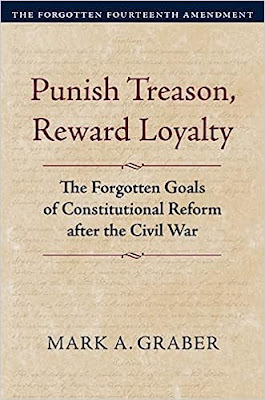
Mark A. Graber, Punish Treason, Reward Loyalty: The Forgotten Goals of Constitutional Reform after the Civil War (University of Kansas Press, 2023)
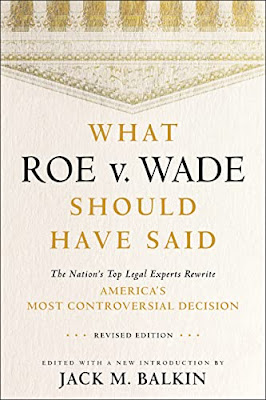
Jack M. Balkin, What Roe v. Wade Should Have Said: The Nation's Top Legal Experts Rewrite America's Most Controversial Decision - Revised Edition (NYU Press, 2023)

Andrew Koppelman, Burning Down the House: How Libertarian Philosophy Was Corrupted by Delusion and Greed (St. Martin’s Press, 2022)

Gerard N. Magliocca, Washington's Heir: The Life of Justice Bushrod Washington (Oxford University Press, 2022)
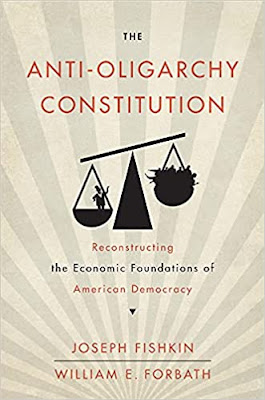
Joseph Fishkin and William E. Forbath, The Anti-Oligarchy Constitution: Reconstructing the Economic Foundations of American Democracy (Harvard University Press, 2022)
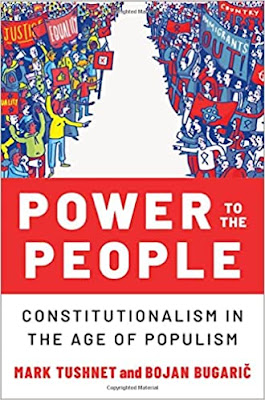
Mark Tushnet and Bojan Bugaric, Power to the People: Constitutionalism in the Age of Populism (Oxford University Press 2021).

Mark Philip Bradley and Mary L. Dudziak, eds., Making the Forever War: Marilyn B. Young on the Culture and Politics of American Militarism Culture and Politics in the Cold War and Beyond (University of Massachusetts Press, 2021).

Jack M. Balkin, What Obergefell v. Hodges Should Have Said: The Nation's Top Legal Experts Rewrite America's Same-Sex Marriage Decision (Yale University Press, 2020)

Frank Pasquale, New Laws of Robotics: Defending Human Expertise in the Age of AI (Belknap Press, 2020)

Jack M. Balkin, The Cycles of Constitutional Time (Oxford University Press, 2020)

Mark Tushnet, Taking Back the Constitution: Activist Judges and the Next Age of American Law (Yale University Press 2020).

Andrew Koppelman, Gay Rights vs. Religious Liberty?: The Unnecessary Conflict (Oxford University Press, 2020)

Ezekiel J Emanuel and Abbe R. Gluck, The Trillion Dollar Revolution: How the Affordable Care Act Transformed Politics, Law, and Health Care in America (PublicAffairs, 2020)

Linda C. McClain, Who's the Bigot?: Learning from Conflicts over Marriage and Civil Rights Law (Oxford University Press, 2020)
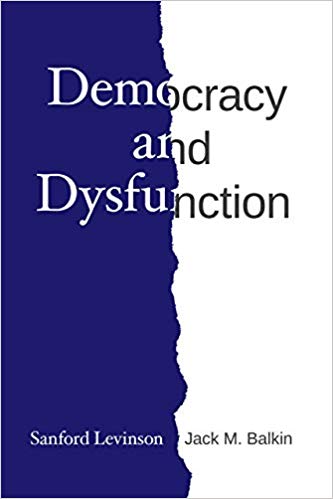
Sanford Levinson and Jack M. Balkin, Democracy and Dysfunction (University of Chicago Press, 2019)

Sanford Levinson, Written in Stone: Public Monuments in Changing Societies (Duke University Press 2018)

Mark A. Graber, Sanford Levinson, and Mark Tushnet, eds., Constitutional Democracy in Crisis? (Oxford University Press 2018)

Gerard Magliocca, The Heart of the Constitution: How the Bill of Rights became the Bill of Rights (Oxford University Press, 2018)

Cynthia Levinson and Sanford Levinson, Fault Lines in the Constitution: The Framers, Their Fights, and the Flaws that Affect Us Today (Peachtree Publishers, 2017)

Brian Z. Tamanaha, A Realistic Theory of Law (Cambridge University Press 2017)

Sanford Levinson, Nullification and Secession in Modern Constitutional Thought (University Press of Kansas 2016)

Sanford Levinson, An Argument Open to All: Reading The Federalist in the 21st Century (Yale University Press 2015)

Stephen M. Griffin, Broken Trust: Dysfunctional Government and Constitutional Reform (University Press of Kansas, 2015)

Frank Pasquale, The Black Box Society: The Secret Algorithms That Control Money and Information (Harvard University Press, 2015)

Bruce Ackerman, We the People, Volume 3: The Civil Rights Revolution (Harvard University Press, 2014)
Balkinization Symposium on We the People, Volume 3: The Civil Rights Revolution

Joseph Fishkin, Bottlenecks: A New Theory of Equal Opportunity (Oxford University Press, 2014)

Mark A. Graber, A New Introduction to American Constitutionalism (Oxford University Press, 2013)

John Mikhail, Elements of Moral Cognition: Rawls' Linguistic Analogy and the Cognitive Science of Moral and Legal Judgment (Cambridge University Press, 2013)

Gerard N. Magliocca, American Founding Son: John Bingham and the Invention of the Fourteenth Amendment (New York University Press, 2013)

Stephen M. Griffin, Long Wars and the Constitution (Harvard University Press, 2013)

Andrew Koppelman, The Tough Luck Constitution and the Assault on Health Care Reform (Oxford University Press, 2013)

James E. Fleming and Linda C. McClain, Ordered Liberty: Rights, Responsibilities, and Virtues (Harvard University Press, 2013)
Balkinization Symposium on Ordered Liberty: Rights, Responsibilities, and Virtues

Andrew Koppelman, Defending American Religious Neutrality (Harvard University Press, 2013)

Brian Z. Tamanaha, Failing Law Schools (University of Chicago Press, 2012)

Sanford Levinson, Framed: America's 51 Constitutions and the Crisis of Governance (Oxford University Press, 2012)

Linda C. McClain and Joanna L. Grossman, Gender Equality: Dimensions of Women's Equal Citizenship (Cambridge University Press, 2012)

Mary Dudziak, War Time: An Idea, Its History, Its Consequences (Oxford University Press, 2012)

Jack M. Balkin, Living Originalism (Harvard University Press, 2011)

Jason Mazzone, Copyfraud and Other Abuses of Intellectual Property Law (Stanford University Press, 2011)

Richard W. Garnett and Andrew Koppelman, First Amendment Stories, (Foundation Press 2011)

Jack M. Balkin, Constitutional Redemption: Political Faith in an Unjust World (Harvard University Press, 2011)

Gerard Magliocca, The Tragedy of William Jennings Bryan: Constitutional Law and the Politics of Backlash (Yale University Press, 2011)

Bernard Harcourt, The Illusion of Free Markets: Punishment and the Myth of Natural Order (Harvard University Press, 2010)

Bruce Ackerman, The Decline and Fall of the American Republic (Harvard University Press, 2010)
Balkinization Symposium on The Decline and Fall of the American Republic

Ian Ayres. Carrots and Sticks: Unlock the Power of Incentives to Get Things Done (Bantam Books, 2010)

Mark Tushnet, Why the Constitution Matters (Yale University Press 2010)

Ian Ayres and Barry Nalebuff: Lifecycle Investing: A New, Safe, and Audacious Way to Improve the Performance of Your Retirement Portfolio (Basic Books, 2010)
.jpg)
Jack M. Balkin, The Laws of Change: I Ching and the Philosophy of Life (2d Edition, Sybil Creek Press 2009)

Brian Z. Tamanaha, Beyond the Formalist-Realist Divide: The Role of Politics in Judging (Princeton University Press 2009)
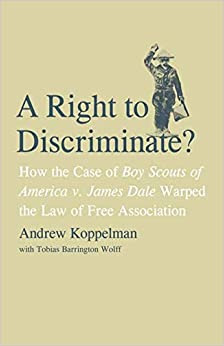
Andrew Koppelman and Tobias Barrington Wolff, A Right to Discriminate?: How the Case of Boy Scouts of America v. James Dale Warped the Law of Free Association (Yale University Press 2009)

Jack M. Balkin and Reva B. Siegel, The Constitution in 2020 (Oxford University Press 2009)

Heather K. Gerken, The Democracy Index: Why Our Election System Is Failing and How to Fix It (Princeton University Press 2009)

Mary Dudziak, Exporting American Dreams: Thurgood Marshall's African Journey (Oxford University Press 2008)

David Luban, Legal Ethics and Human Dignity (Cambridge Univ. Press 2007)

Ian Ayres, Super Crunchers: Why Thinking-By-Numbers is the New Way to be Smart (Bantam 2007)

Jack M. Balkin, James Grimmelmann, Eddan Katz, Nimrod Kozlovski, Shlomit Wagman and Tal Zarsky, eds., Cybercrime: Digital Cops in a Networked Environment (N.Y.U. Press 2007)
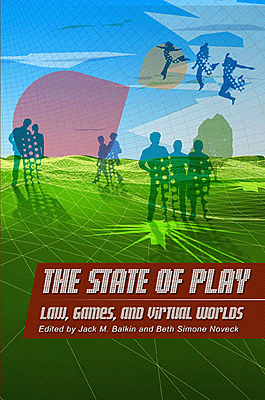
Jack M. Balkin and Beth Simone Noveck, The State of Play: Law, Games, and Virtual Worlds (N.Y.U. Press 2006)

Andrew Koppelman, Same Sex, Different States: When Same-Sex Marriages Cross State Lines (Yale University Press 2006)

Brian Tamanaha, Law as a Means to an End (Cambridge University Press 2006)

Sanford Levinson, Our Undemocratic Constitution (Oxford University Press 2006)

Mark Graber, Dred Scott and the Problem of Constitutional Evil (Cambridge University Press 2006)

Jack M. Balkin, ed., What Roe v. Wade Should Have Said (N.Y.U. Press 2005)

Sanford Levinson, ed., Torture: A Collection (Oxford University Press 2004)
Balkin.com homepage
Bibliography
Conlaw.net
Cultural Software
Writings
Opeds
The Information Society Project
BrownvBoard.com
Useful Links
Syllabi and Exams
