Balkinization
an unanticipated consequence of
Jack M. Balkin
Balkinization Symposiums: A Continuing List
E-mail:
Jack Balkin:
jackbalkin at yahoo.com
Bruce Ackerman
bruce.ackerman at yale.edu
Ian Ayres
ian.ayres at yale.edu
Corey Brettschneider
corey_brettschneider at brown.edu
Mary Dudziak
mary.l.dudziak at emory.edu
Joey Fishkin
joey.fishkin at gmail.com
Heather Gerken heather.gerken at yale.edu
Abbe Gluck abbe.gluck at yale.edu
Mark Graber
mgraber at law.umaryland.edu
Stephen Griffin
sgriffin at tulane.edu
Jonathan Hafetz
jonathan.hafetz at shu.edu
Jeremy Kessler
jkessler at law.columbia.edu
Andrew Koppelman
akoppelman at law.northwestern.edu
Marty Lederman
msl46 at law.georgetown.edu
Sanford Levinson
slevinson at law.utexas.edu
David Luban
david.luban at gmail.com
Gerard Magliocca
gmaglioc at iupui.edu
Jason Mazzone
mazzonej at illinois.edu
Linda McClain
lmcclain at bu.edu
John Mikhail
mikhail at law.georgetown.edu
Frank Pasquale
pasquale.frank at gmail.com
Nate Persily
npersily at gmail.com
Michael Stokes Paulsen
michaelstokespaulsen at gmail.com
Deborah Pearlstein
dpearlst at yu.edu
Rick Pildes
rick.pildes at nyu.edu
David Pozen
dpozen at law.columbia.edu
Richard Primus
raprimus at umich.edu
K. Sabeel Rahmansabeel.rahman at brooklaw.edu
Alice Ristroph
alice.ristroph at shu.edu
Neil Siegel
siegel at law.duke.edu
David Super
david.super at law.georgetown.edu
Brian Tamanaha
btamanaha at wulaw.wustl.edu
Nelson Tebbe
nelson.tebbe at brooklaw.edu
Mark Tushnet
mtushnet at law.harvard.edu
Adam Winkler
winkler at ucla.edu
Compendium of posts on Hobby Lobby and related cases
The Anti-Torture Memos: Balkinization Posts on Torture, Interrogation, Detention, War Powers, and OLC
The Anti-Torture Memos (arranged by topic)
Recent Posts
Will the Geneva Conventions Be the First "Universally Accepted" Treaties?
![[Powered by Blogger]](https://lh3.googleusercontent.com/blogger_img_proxy/AEn0k_svBaHgxvKAuLznOWpkqFCOm8pwWYTi5GvR2LlWWOe0Vh0V2kTrSxz6rb3621dNh_fredEOg1pBwMLHNZQd6z6L5GZeCa2Ktt8vhVzqb58C=s0-d)
Just A Few Blogs
ACS Blog
Alas, a Blog
Althouse
Arts and Letters Daily
Atrios (Eschaton)
Bill of Health
Buzzflash.com
Buzz Machine
Cato at Liberty
Juan Cole (Informed Comment)
Concurring Opinions
The Constitution in 2020
Corrente
Crooked Timber
Daily Howler
Daily Kos
Dana Boyd
Brad DeLong
Digby (Hullabaloo)
Discriminations
Daniel Drezner
Kevin Drum (Mother Jones)
Electrolite
En Banc
Eunomia (Daniel Larison)
Fafblog
Michael Froomkin (Discourse.net)
GovLab (Beth Noveck)
Rick Hasen (Election Law)
History News Network
How Appealing
Ignatz (Sam Heldman)
The Importance of (Ernie Miller)
Infolaw
Instapundit
International Economic Law and Policy Blog
IntLawGrrls
Jacob Levy
Jesus' General
Jurisdynamics
The Kitchen Cabinet
Mark Kleiman
Law Blog Central
Larry Lessig
Lawyers, Guns and Money
Liberal Oasis
Brian Leiter's Law School Reports
The Leiter Reports
Marginal Revolution
Megan McArdle
Memeorandum
Metafilter
Mirror of Justice
The New Republic
Newseum
No More Mister Nice Blog
Brendan Nyhan
Opinio Juris
Orcinus
The Originalism Blog
Pandagon
Passport (Foreign Policy)
Overcoming Bias
Political Animal (Washington Monthly)
Political Theory Daily Review
Political Wire (Taegan Goddard)
The Poor Man
Virginia Postrel
Prawfsblawg
Public Reason
Jonathan Rauch
Raw Story
Redstate
ReligiousLeftLaw.com
Reporters Committee For Freedom of the Press
Reproductive Rights Blog
Rothman's Roadmap to the Right of Publicity
SCOTUS Blog
Seeing the Forest
Clay Shirky
The Shifted Librarian
The Situationist
Larry Solum (Legal Theory)
Andrew Sullivan
Talking Points Memo
Talk Left
Tapped
Tbogg
TechPresident
The Paper Chase (Jurist)
Tom Paine
Tom Tomorrow (This Modern World)
Eve Tushnet
Uggabugga
University of Chicago Law School Faculty Blog
Unqualified Offerings
The Volokh Conspiracy
War and Piece (Laura Rozen)
Wampum
Oliver Willis
Wonkette
Written Description
Matthew Yglesias
Yin
Your Choice of Feeds
1. XML
powered by

2. Atom Feed
3. RSS 2.0
Will the Geneva Conventions Be the First "Universally Accepted" Treaties?
Marty Lederman
This announcement just in from the International Committee of the Red Cross:For the first time in modern history an international treaty has achieved universal acceptance. The recent accessions by the Republic of Nauru and the Republic of Montenegro to the 1949 Geneva Conventions confirm the status of these conventions as the most widely accepted international treaties and represent a landmark in the development of protection for victims of armed conflict. . . . Nauru acceded to the four Geneva Conventions on 27 June and Montenegro on 2 August, bringing the number of States party to these instruments to 194.
Perfect timing, isn't it, for the Administration and Congress to now enact a law authorizing the CIA to violate the Geneva prohibition on "cruel treatment" of detained persons?
[UPDATE: I just noticed that Michael Froomkin offered the same juxtaposition this morning.]
Posted
1:45 PM
by Marty Lederman [link]
No, that's just you striking an obnoxious pose and doing what Republicans do best: telling lies.

Solicitude for our enemies??
What BS that is: I'm just stating an obvious fact.
And I also understand something that you slobbering neo-fascist hypocrites don't:
George Bush and Dick Cheney are the best weapons al Qaeda has.
They are criminals, and you demented right-wing hypocrites support them because you think behaving like criminals is just a good idea.
You people are no better than Nazis, and no where is that more obvious than when you start drooling about the Geneva Conventions. You creeps should crawl back under your rocks in SHAME.
Your first quotation is from CA2, not CA3.
Prior to June 2006, Montengro was part of Yugoslavia, which was a party to Geneva. I'm not certain Montenegro stopped being a party on independence either. They might, as a matter of int'l law, retain some of Yugoslavia's treaty obligations (not sure); they might also be stuck with Geneva if they are a party to an unresolved armed conflict (very sure)... and since you bring it up, Montenegro was a party to Geneva I (1864) and Hague II (1899) *before* they got screwed out of their independence at Versailles.
As for Nauru, they don't actually have an army - just a small police force and an informal defense agreement with Australia, who is a party to Geneva.
Now are you actually worried about the possibility of Montenegro and Nauru forming an "Axis of Evil II" and declaring war on the United States? No.
Is the United States under Bush and Cheney actually obeying the Geneva Conventions and the laws of war? No again.
Geneva doesn't say anything about beheadings per se; doesn't say anything about lethal injections either. It does however say something about fair trials and the humane treatment of prisoners.
The Supreme Court did not actually resolve the question of how much Geneva protection Mr. Hamdan has; what they said was that the minimum standard that would apply to a US military trial was CA3 and that the Bush "military commissions" were illegal even by those minimal requirements.
As a matter of fact, the lower courts have analysed things under CA2, just as you are doing, and by that standard, Mr. Hamdan is protected as a civilian by Geneva IV.
There is simply is no "conundrum" here: you, the Bush administration, and the Hamdan minority are all advocating WAR CRIMES in violation of 18 USC 2441, etc.
Claiming that "international" is defined by art. 125 is a good example of your dishonesty. Armed conflicts are NOT organizations, and the Geneva definition of an international armed conflict (or *occupation*) is stated (quite clearly) by CA2, NOT art. 125.
Then quit suggesting it -- it's just a straw-man argument.
I make no such claim. Have you read the Declaration of Independence, the IMT Charter, or the UN UDHR?
My claim is that everyone has the same basic human rights without exception, even criminals like Osama Bin Ladin and Dick Cheney. Geneva's initial purpose was quite clear: "Wounded or sick combatants, to whatever nation they may belong, shall be collected and cared for." Geneva 1864, art. 6.
* "Are they all war criminals, just like me?"
Of course not: when you selectively quote someone in order to misrepresent their views, it's your fraud, not their war crime. To wit:
"What is meant by "armed conflict not of an international character"? The expression is so general, so vague, that many of the delegations feared that it might be taken to cover any act committed by force of arms -- any form of anarchy, rebellion, or even plain banditry. For example, if a handful of individuals were to rise in rebellion against the State and attack a police station, would that suffice to bring into being an armed conflict within the meaning of the Article? In order to reply to questions of this sort, it was suggested that the term "conflict" should be defined or -- and this would come to the same thing -- that a list should be given of a certain number of conditions on which the application of the Convention would depend. The idea was finally abandoned, and wisely so. Nevertheless, these different - 13 - conditions, although in no way obligatory, constitute convenient criteria, and we therefore think it well to give a list drawn from the various amendments discussed; they are as follows:
(1) That the Party in revolt against the de jure Government possesses an organized military force, an authority responsible for its acts, acting within a determinate territory and having the means of respecting and ensuring respect for the Convention.
(2) That the legal Government is obliged to have recourse to the regular military forces against insurgents organized as military and in possession of a part of the national territory.
(3) (a) That the de jure Government has recognized the insurgents as belligerents; or
(b) That it has claimed for itself the rights of a belligerent; or
(c) That it has accorded the insurgents recognition as belligerents for the purposes only of the present Convention; or
(d) That the dispute has been admitted to the agenda of the Security Council or the General Assembly of the United Nations as being a threat to international peace, a breach of the peace, or an act of aggression.
(4) (a) That the insurgents have an organization purporting to have the characteristics of a State.
(b) That the insurgent civil authority exercises de facto authority over the population within a determinate portion of the national territory.
(c) That the armed forces act under the direction of an organized authority and are prepared to observe the ordinary laws of war.
(d) That the insurgent civil authority agrees to be bound by the provisions of the Convention.
"Does this mean that Article 3 is not applicable in cases where armed strife breaks out in a country, but does not fulfil any of the above conditions? We do not subscribe to this view. We think, on the contrary, that the scope of application of the Article must be as wide as possible. There can be no drawbacks in this, since the Article in its reduced form, contrary to what might be thought, does not in any way limit the right of a State to put down rebellion, nor does it increase in the slightest the authority of the rebel party. It merely demands respect for certain rules, which were already recognized as essential in all civilized countries, and embodied in the national legislation of the States in question, long before the Convention was signed. What Government would dare to claim before the world, in a case of civil disturbances which could justly be described as mere acts of banditry, that, Article 3 not being applicable, it was entitled to leave the wounded uncared for, to torture and mutilate prisoners and take hostages? No Government can object to observing, in its dealings with enemies, whatever the nature of the conflict between it and them, a few essential rules which it in fact observes daily, under its own laws, when dealing with common criminals. "Speaking generally, it must be recognized that the conflicts referred to in Article 3 are armed conflicts, with 'armed forces' on either side engaged in 'hostilities' -- conflicts, in short, which are in many respects similar to an international war, but take place within the confines of a single country."
ICRC Commentary Geneva III POWs, at 35-37.
* "You have no earthly idea whether I approve of the way prisoners have been treated at Guantanamo, or anywhere else. All I have said is that Article 3 doesn't apply to those prisoners at Guantanamo, any more than it applies to prisoners at San Quentin, or applies to astronauts on the Moon."
Oh, well feel free to surprise me and tell me all about what you think is wrong with Guantanamo Bay, but you aren't paying attention: the court didn't resolve whether CA3 applies, it just said CA3 was the minimum that would apply and that the "military tribunals" were illegal.
In fact, the prisoners are protected under CA2, not CA3.
* "You say that the Geneva definition of an international armed conflict is stated by Article 2, rather than Article 125. Strange, then, isn’t it that Article 2 never once uses the word "international" much less the phrase "international character"?
There's nothing strange about it, you just don't like what CA2 and CA3 actually say -- you're too busy trying to make 1 + 1 = 0 or 3 or anything else just as long as it isn't 2.
This is very simple: if it's an armed conflict, it's either under CA2 or CA3. There aren't any exceptions, and it isn't just a matter of Geneva, it's a matter of the IMT Charter, Hague IV (1907), US General Order No. 100 (1863), and customary law. And the US Code.
There is nothing in ANY law that would permit the President, you, or anyone else to treat any human being as an animal. There is nothing in the Constitution that would permit the President to function as a Roman Imperator completely outside the law. Not in peace, not in war.
* "If one of us is guilty of any crime, it would be the crime of pretending that a Treaty that obviously means one thing actually means something else entirely."
The only pretending going on here is yours.
As I understand it, you’re saying that parties were meant to be bound by the convention in relation to non-parties, even if the latter do NOT accept or apply the provisions thereof. This is absurd.
I don't actually care what the treaties say. In my view, governments ARE bound by standards of decency even if "non-parties" don't accept or apply those standards. This is not because of any law or treaty, it's because that's what, fundamentally, separates legitimate governments from the criminals in our midst.
I don't expect criminals to abide by standards. That's what makes them criminals. I do expect governments to do so; that's why I'm willing to give them certain powers to protect me from the criminals. It would be pointless for me to give government such power if government were then to behave just like the criminals.
Governments which behave like criminals are not "tough", they aren't "protecting" me, they aren't even effective. They're just criminals themselves with more power. They're beneath contempt.
That's because the Bush Administration is morally wrong no matter what. If you want to debate this like Stephen Douglas on slavery, resting your political conclusion on narrow legalisms, I'm more than happy to play the Lincoln role. Less eloquently, perhaps.
Lincoln:slavery::Mark:torture
Douglas:slavery::Andrew:torture
The only significant difference is that Justice Stevens has more character, and better legal reasoning skills, than Justice Taney did.
I'm sorry if you felt my argument was "morally superior". It's just that opposing torture IS morally superior to, well, any other position on the subject.
Lincoln was NOT saying to citizens that they should ignore laws with which they disagree, and much less was he saying that judges should ignore them.
How many slaves did the Lincoln Administration send South pursuant to the Fugitive Slave law?
Lincoln got rid of slavery the legal way. Ever heard of the Thirteenth Amendment?
I think this ignores some essential facts like the Union Army and the Emancipation Proclamation. However, I won't quibble on it. I just have one question: What specific words in the Constitution give the President the power to torture people? I'm just asking so we can word the amendment properly.
Oh, and I wanted to add to my previous post that it should be clear that the party which "doesn't care about treaties" is the Administration. No sooner did the Supreme Court reject its bad faith interpretation of its treaty obligations than the Administration proceeded not to actually, you know, abide by them, but to ask Congress for exceptions. Beneath contempt.
* "As I understand it, you’re saying that parties were meant to be bound by the convention in relation to non-parties, even if the latter do NOT accept or apply the provisions thereof. This is absurd."
No, it's just the plain meaning of CA3:
"In the case of armed conflict not of an international character occurring in the territory of one of the High Contracting Parties, each Party to the conflict shall be bound to apply, as a minimum, the following provisions [...]"
CA3 refers to conflicts "occurring in the territory of one of the High Contracting Parties of a GENEVA High Contracting Party ("HCP").
CA3 cannot refer to any conflict *between* two HCPs, because any such conflict would fall under CA2.
Hence, CA3 only refers to armed conflicts where one or more PARTIES TO THE CONFLICT are NOT HCPs.
It follows that the only possible cases are 1) non-HCP rebels fighting the HCP government, or 2) independent non-HCP militas fighting each other while the HCP government remains neutral.
And CA3 states unambiguously that "EACH Party to the conflict shall be bound" without further qualification.
QED. (And try reading the rest of the Commentary on CA3 instead of regurgitating Rivkin and Casey's fruadulent goo already.)
This is not an occult proposition either -- the fact that people commit crimes does not nullify the criminal laws.
* "As I understand it, you’re saying that the conflicts referred to in Article 3 include armed conflicts which do not take place within the confines of a single country. Yet you deny that the commentaries say otherwise. This is absurd."
Well you DON'T understand it, mostly because you don't want to.
We are NOT talking about MY claims here, were talking about DOJs fraudulent BS. CA2 is the applicable law; Afghanistan was and is an international armed conflict or occupation, and Geneva I-IV apply in full, PERIOD.
Or would you rather treat it all as a law enforcement matter? Fine with me.
As for CA3, the text of the convention is very clear, and so is the comprehensive dishonesty of DOJ's brief. The only reason CA3 even comes up is the administration's fraudulent argument's.
Facts are not insults: you are apologising for WAR CRIMINALS who are guitly of the same crimes that we tried the Nazis for at Nuremberg, and the Supreme Court's reasoning on CA3 was absolutely correct.
I'd call that a pretty radical interpretation of my text.
For you to say that the administration interpreted the treaty in bad faith is absurd.
The interpretation it advanced was not in support of some abstract academic debate, it was for the sole purpose of treating prisoners in violation of fundamental human rights, including torture. That alone makes it bad faith, regardless of the abstract legal merits.
Let's look at the Administration's other behavior too. It tried to deceive the courts about the charges against Padilla in a desperate attempt to avoid a hearing on the merits. It got its lackeys in Congress to deprive the courts of jurisdiction to hear claims that it was violating fundamental human rights. It advanced untenable legal theories in public while soft-peddling those arguments in court in order to avoid any real determination of the meritless nature of its political spin. That's more evidence of bad faith.
Not one single justice on the SCOTUS accepted the Administration's strained interpretation of CA3. IIRC, neither did the Court of Appeals, which, again IIRC, decided Hamdan on procedural grounds. The District Court, of course, blasted the Administration's position. An argument so utterly without merit does not deserve to be considered as made in good faith. This is all the more true in light of the factors mentioned above.
The Supreme Court had no legitimate authority to butt in by twisting a Treaty to say something that the Treaty manifestly does not say.
Neither part of this is a serious contention.
How many times do I have to spell this out?
If you want to avoid having your position misunderstood, you should not waste your time defending the Administration when its conduct is utterly and completely indefensible. You'll still have plenty to do defending it against ordinary charges of corruption, incompetence, and moral bankruptcy.
* "I don’t know who "Rivkin and Casey" are, so I can hardly "regurgitate" what they've said."
Oh sure you can, easy as pie -- all you have to do is lap up predigested slime from the mouths of Thomas and Scalia.
* "Guantanamo is a far cry from Auschwitz, and anyone with any grasp of reality would realize that."
Oh, as if your self-serving lies are anything like "reality". In fact, the two camps have quite a bit in common, including the basic purpose of committing crimes against humanity and war crimes against unlawfully detained prisoners, and the nauseating similarity of the slogans at the front gate ("Honor Bound to Defend Freedom" and "Arbeit Macht Frei").
* "The following insults [blah blah blah]..."
Accurate descriptions are not insults, and I'm no more interested in your phony posturing BS than I am in the opinions of anyone who believes it. So spare me the hot air:
As long as you keep on spewing BS, I'm going to rub your nose in it.
* "Well, that’s an interesting proposition. Certainly it’s different from what the Supreme Court said in Hamdan. The Court said that Common Article 3 applies, rather than Article 2. Apparently, we both disagree with the Supreme Court’s Hamdan decision, for different reasons."
No, that isn't what they said, and no, I don't disagree with their opinion, for reasons that I have already explained.
Now quit trying to put words in my mouth, quit with the BS, and GET REAL.
Convicting someone without giving him the chance to see or hear the evidence against him IS a violation of fundamental human rights. And let's not kid ourselves -- the issue of torture was the camel in the tent in Hamdan.
Even more troubling is your contention that the interpretation of a law or treaty should depend upon the results of that interpretation.
That's not my contention. My contention is that asserting petty legalisms in the face of indisputable moral evil is itself a moral wrong. In a sincere effort to avoid Godwin, I'll just use as a comparison Andrew Jackson's Indian removal policy which led to the Trail of Tears. Defending Jackson by arguing that the Supreme Court "butted in" and "twisted" the law would be morally obtuse.
Even lowly scoundrels should get the benefit of applicable laws, regardless of whether Mark thinks they morally deserve that benefit or not.
False analogy. Accused criminals get two basic rights: procedural due process; and the substantive right to have guilt proven beyond a reasonable doubt. In this case, guilt is not in issue -- the Administration admits, nay repellantly brags that it's torturing people and depriving them of other fundamental rights. As for procedural due process rights, the Administration has none and hasn't even asserted any. Its ONLY "defense" consists in trying desperately to prevent courts from hearing its bad faith claims.
It's curious you feel that way about Bush rather than Al Qaeda
So much for Godwin. In light of this comment, I think you lost your standing to complain about being compared to Nazis.
But I do know you're wrong about Hamdan.
You are correct that the dissent did agree with the President's interpretation.
Andrew, I couldn't agree more with the meaning of your quote. I suspect, though, that you and I disagree pretty strongly on its application to the current Administration.
Indeed, it is just as malicious as the PREJUDICE and HYPOCRISY of the various judges who have aided and abetted those crimes by turning a blind eye to the law.
I said it at the top, and I'll say it again...
Andrew is just striking an obnoxious pose and doing what Republican neo-fascists do best: telling lies.
Cari obat sipilis
Contoh obat sipilis
http://agusus1.blogspot.com/
http://agusyafii.blogspot.com/
http://amateursexxxx.blogspot.co.id/
Obat jengger ayam
obat jengger ayam pada wanita
obat jengger ayam pada anus
obat jengger ayam di anus
obat jengger ayam hitam
obat sakit jengger ayam
obat penyakit jengger ayam pada pria
obat penghilang jengger ayam
harga obat jengger ayam
obat apotik jengger ayam
obat dokter jengger ayam
obat herbal untuk jengger ayam
obat penyakit kulit jengger ayam
Cara mengobati jengger ayam ampuh
Cara paling ampuh mengobati gonore atau kencing nanah
nama obat gonore di apotek
obat oral gonore
obat gonore propolis
obat gonore pdf
obat penyakit gonore
obat paten gonore
obat penderita gonore
resep obat penyakit gonore
obat cina penyakit gonore
obat dari penyakit gonore
obat kutil kelamin untuk ibu hamil
obat kutil kelamin tanpa operasi
obat kutil kelamin kaskus
obat kutil kelamin dokter
obat kutil kelamin mujarab
obat kutil kelamin di jakarta
obat kutil kelamin untuk wanita
obat kutil kelamin/jengger ayam
obat kutil kelamin surabaya
obat kutil kelamin yang ada di apotik
obat kutil kelamin bandung
Kapur sirih untuk obat kutil kelamin
Obat kutil kelamin medis
Obat menghilangkan kutil kelamin
Obat menyembuhkan kutil kelamin
Obat tradisional menyembuhkan kutil kelamin
Obat minum untuk kutil kelamin
Obat medis untuk kutil kelamin
Merek obat kutil kelamin
Obat kutil kelamin de nature
Nama obat kutil kelamin
Obat tradisional buat sipilis
Obat herbal buat sipilis
Obat dokter buat sipilis
Obat generik buat sipilis
Obat sipilis dengan bayam duri
Obat sipilis yang bagus
Obat china sipilis
Cara obat sipilis di apotik
Cari obat sipilis
Contoh obat sipilis
http://agusus1.blogspot.com/
http://agusyafii.blogspot.com/
http://amateursexxxx.blogspot.co.id/
Obat jengger ayam
obat jengger ayam pada wanita
obat jengger ayam pada anus
obat jengger ayam di anus
obat jengger ayam hitam
obat sakit jengger ayam
obat penyakit jengger ayam pada pria
obat penghilang jengger ayam
harga obat jengger ayam
obat apotik jengger ayam
obat dokter jengger ayam
obat herbal untuk jengger ayam
obat penyakit kulit jengger ayam
Cara mengobati jengger ayam ampuh
Cara paling ampuh mengobati gonore atau kencing nanah
nama obat gonore di apotek
obat oral gonore
obat gonore propolis
obat gonore pdf
obat penyakit gonore
obat paten gonore
obat penderita gonore
resep obat penyakit gonore
obat cina penyakit gonore
obat dari penyakit gonore
Books by Balkinization Bloggers

Gerard N. Magliocca, The Actual Art of Governing: Justice Robert H. Jackson's Concurring Opinion in the Steel Seizure Case (Oxford University Press, 2025)

Linda C. McClain and Aziza Ahmed, The Routledge Companion to Gender and COVID-19 (Routledge, 2024)

David Pozen, The Constitution of the War on Drugs (Oxford University Press, 2024)

Jack M. Balkin, Memory and Authority: The Uses of History in Constitutional Interpretation (Yale University Press, 2024)
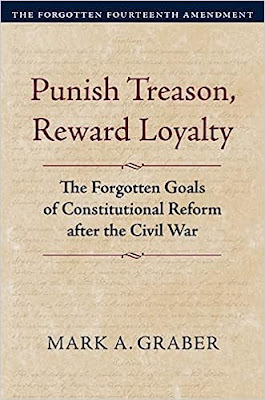
Mark A. Graber, Punish Treason, Reward Loyalty: The Forgotten Goals of Constitutional Reform after the Civil War (University of Kansas Press, 2023)
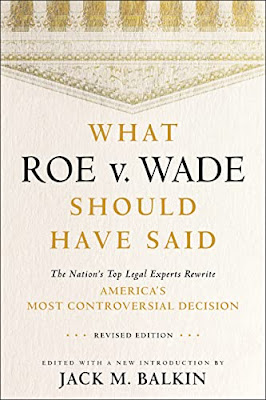
Jack M. Balkin, What Roe v. Wade Should Have Said: The Nation's Top Legal Experts Rewrite America's Most Controversial Decision - Revised Edition (NYU Press, 2023)

Andrew Koppelman, Burning Down the House: How Libertarian Philosophy Was Corrupted by Delusion and Greed (St. Martin’s Press, 2022)

Gerard N. Magliocca, Washington's Heir: The Life of Justice Bushrod Washington (Oxford University Press, 2022)
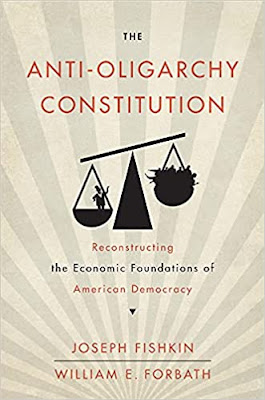
Joseph Fishkin and William E. Forbath, The Anti-Oligarchy Constitution: Reconstructing the Economic Foundations of American Democracy (Harvard University Press, 2022)
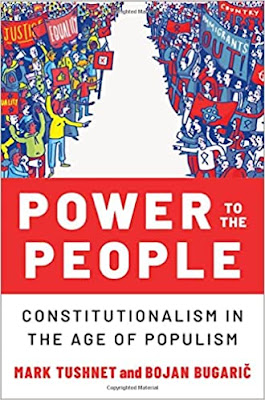
Mark Tushnet and Bojan Bugaric, Power to the People: Constitutionalism in the Age of Populism (Oxford University Press 2021).

Mark Philip Bradley and Mary L. Dudziak, eds., Making the Forever War: Marilyn B. Young on the Culture and Politics of American Militarism Culture and Politics in the Cold War and Beyond (University of Massachusetts Press, 2021).

Jack M. Balkin, What Obergefell v. Hodges Should Have Said: The Nation's Top Legal Experts Rewrite America's Same-Sex Marriage Decision (Yale University Press, 2020)

Frank Pasquale, New Laws of Robotics: Defending Human Expertise in the Age of AI (Belknap Press, 2020)

Jack M. Balkin, The Cycles of Constitutional Time (Oxford University Press, 2020)

Mark Tushnet, Taking Back the Constitution: Activist Judges and the Next Age of American Law (Yale University Press 2020).

Andrew Koppelman, Gay Rights vs. Religious Liberty?: The Unnecessary Conflict (Oxford University Press, 2020)

Ezekiel J Emanuel and Abbe R. Gluck, The Trillion Dollar Revolution: How the Affordable Care Act Transformed Politics, Law, and Health Care in America (PublicAffairs, 2020)

Linda C. McClain, Who's the Bigot?: Learning from Conflicts over Marriage and Civil Rights Law (Oxford University Press, 2020)
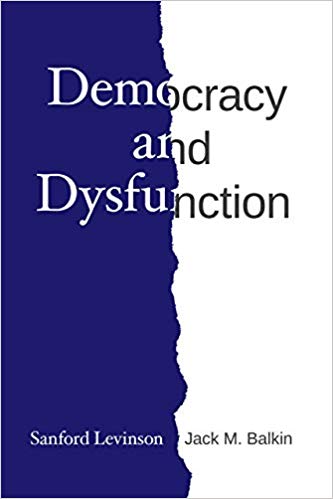
Sanford Levinson and Jack M. Balkin, Democracy and Dysfunction (University of Chicago Press, 2019)

Sanford Levinson, Written in Stone: Public Monuments in Changing Societies (Duke University Press 2018)

Mark A. Graber, Sanford Levinson, and Mark Tushnet, eds., Constitutional Democracy in Crisis? (Oxford University Press 2018)

Gerard Magliocca, The Heart of the Constitution: How the Bill of Rights became the Bill of Rights (Oxford University Press, 2018)

Cynthia Levinson and Sanford Levinson, Fault Lines in the Constitution: The Framers, Their Fights, and the Flaws that Affect Us Today (Peachtree Publishers, 2017)

Brian Z. Tamanaha, A Realistic Theory of Law (Cambridge University Press 2017)

Sanford Levinson, Nullification and Secession in Modern Constitutional Thought (University Press of Kansas 2016)

Sanford Levinson, An Argument Open to All: Reading The Federalist in the 21st Century (Yale University Press 2015)

Stephen M. Griffin, Broken Trust: Dysfunctional Government and Constitutional Reform (University Press of Kansas, 2015)

Frank Pasquale, The Black Box Society: The Secret Algorithms That Control Money and Information (Harvard University Press, 2015)

Bruce Ackerman, We the People, Volume 3: The Civil Rights Revolution (Harvard University Press, 2014)
Balkinization Symposium on We the People, Volume 3: The Civil Rights Revolution

Joseph Fishkin, Bottlenecks: A New Theory of Equal Opportunity (Oxford University Press, 2014)

Mark A. Graber, A New Introduction to American Constitutionalism (Oxford University Press, 2013)

John Mikhail, Elements of Moral Cognition: Rawls' Linguistic Analogy and the Cognitive Science of Moral and Legal Judgment (Cambridge University Press, 2013)

Gerard N. Magliocca, American Founding Son: John Bingham and the Invention of the Fourteenth Amendment (New York University Press, 2013)

Stephen M. Griffin, Long Wars and the Constitution (Harvard University Press, 2013)

Andrew Koppelman, The Tough Luck Constitution and the Assault on Health Care Reform (Oxford University Press, 2013)

James E. Fleming and Linda C. McClain, Ordered Liberty: Rights, Responsibilities, and Virtues (Harvard University Press, 2013)
Balkinization Symposium on Ordered Liberty: Rights, Responsibilities, and Virtues

Andrew Koppelman, Defending American Religious Neutrality (Harvard University Press, 2013)

Brian Z. Tamanaha, Failing Law Schools (University of Chicago Press, 2012)

Sanford Levinson, Framed: America's 51 Constitutions and the Crisis of Governance (Oxford University Press, 2012)

Linda C. McClain and Joanna L. Grossman, Gender Equality: Dimensions of Women's Equal Citizenship (Cambridge University Press, 2012)

Mary Dudziak, War Time: An Idea, Its History, Its Consequences (Oxford University Press, 2012)

Jack M. Balkin, Living Originalism (Harvard University Press, 2011)

Jason Mazzone, Copyfraud and Other Abuses of Intellectual Property Law (Stanford University Press, 2011)

Richard W. Garnett and Andrew Koppelman, First Amendment Stories, (Foundation Press 2011)

Jack M. Balkin, Constitutional Redemption: Political Faith in an Unjust World (Harvard University Press, 2011)

Gerard Magliocca, The Tragedy of William Jennings Bryan: Constitutional Law and the Politics of Backlash (Yale University Press, 2011)

Bernard Harcourt, The Illusion of Free Markets: Punishment and the Myth of Natural Order (Harvard University Press, 2010)

Bruce Ackerman, The Decline and Fall of the American Republic (Harvard University Press, 2010)
Balkinization Symposium on The Decline and Fall of the American Republic

Ian Ayres. Carrots and Sticks: Unlock the Power of Incentives to Get Things Done (Bantam Books, 2010)

Mark Tushnet, Why the Constitution Matters (Yale University Press 2010)

Ian Ayres and Barry Nalebuff: Lifecycle Investing: A New, Safe, and Audacious Way to Improve the Performance of Your Retirement Portfolio (Basic Books, 2010)
.jpg)
Jack M. Balkin, The Laws of Change: I Ching and the Philosophy of Life (2d Edition, Sybil Creek Press 2009)

Brian Z. Tamanaha, Beyond the Formalist-Realist Divide: The Role of Politics in Judging (Princeton University Press 2009)
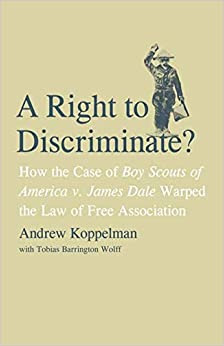
Andrew Koppelman and Tobias Barrington Wolff, A Right to Discriminate?: How the Case of Boy Scouts of America v. James Dale Warped the Law of Free Association (Yale University Press 2009)

Jack M. Balkin and Reva B. Siegel, The Constitution in 2020 (Oxford University Press 2009)

Heather K. Gerken, The Democracy Index: Why Our Election System Is Failing and How to Fix It (Princeton University Press 2009)

Mary Dudziak, Exporting American Dreams: Thurgood Marshall's African Journey (Oxford University Press 2008)

David Luban, Legal Ethics and Human Dignity (Cambridge Univ. Press 2007)

Ian Ayres, Super Crunchers: Why Thinking-By-Numbers is the New Way to be Smart (Bantam 2007)

Jack M. Balkin, James Grimmelmann, Eddan Katz, Nimrod Kozlovski, Shlomit Wagman and Tal Zarsky, eds., Cybercrime: Digital Cops in a Networked Environment (N.Y.U. Press 2007)
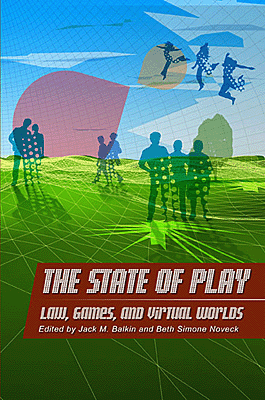
Jack M. Balkin and Beth Simone Noveck, The State of Play: Law, Games, and Virtual Worlds (N.Y.U. Press 2006)

Andrew Koppelman, Same Sex, Different States: When Same-Sex Marriages Cross State Lines (Yale University Press 2006)

Brian Tamanaha, Law as a Means to an End (Cambridge University Press 2006)

Sanford Levinson, Our Undemocratic Constitution (Oxford University Press 2006)

Mark Graber, Dred Scott and the Problem of Constitutional Evil (Cambridge University Press 2006)

Jack M. Balkin, ed., What Roe v. Wade Should Have Said (N.Y.U. Press 2005)

Sanford Levinson, ed., Torture: A Collection (Oxford University Press 2004)
Balkin.com homepage
Bibliography
Conlaw.net
Cultural Software
Writings
Opeds
The Information Society Project
BrownvBoard.com
Useful Links
Syllabi and Exams
