Balkinization
an unanticipated consequence of
Jack M. Balkin
Balkinization Symposiums: A Continuing List
E-mail:
Jack Balkin:
jackbalkin at yahoo.com
Bruce Ackerman
bruce.ackerman at yale.edu
Ian Ayres
ian.ayres at yale.edu
Corey Brettschneider
corey_brettschneider at brown.edu
Mary Dudziak
mary.l.dudziak at emory.edu
Joey Fishkin
joey.fishkin at gmail.com
Heather Gerken heather.gerken at yale.edu
Abbe Gluck abbe.gluck at yale.edu
Mark Graber
mgraber at law.umaryland.edu
Stephen Griffin
sgriffin at tulane.edu
Jonathan Hafetz
jonathan.hafetz at shu.edu
Jeremy Kessler
jkessler at law.columbia.edu
Andrew Koppelman
akoppelman at law.northwestern.edu
Marty Lederman
msl46 at law.georgetown.edu
Sanford Levinson
slevinson at law.utexas.edu
David Luban
david.luban at gmail.com
Gerard Magliocca
gmaglioc at iupui.edu
Jason Mazzone
mazzonej at illinois.edu
Linda McClain
lmcclain at bu.edu
John Mikhail
mikhail at law.georgetown.edu
Frank Pasquale
pasquale.frank at gmail.com
Nate Persily
npersily at gmail.com
Michael Stokes Paulsen
michaelstokespaulsen at gmail.com
Deborah Pearlstein
dpearlst at yu.edu
Rick Pildes
rick.pildes at nyu.edu
David Pozen
dpozen at law.columbia.edu
Richard Primus
raprimus at umich.edu
K. Sabeel Rahmansabeel.rahman at brooklaw.edu
Alice Ristroph
alice.ristroph at shu.edu
Neil Siegel
siegel at law.duke.edu
David Super
david.super at law.georgetown.edu
Brian Tamanaha
btamanaha at wulaw.wustl.edu
Nelson Tebbe
nelson.tebbe at brooklaw.edu
Mark Tushnet
mtushnet at law.harvard.edu
Adam Winkler
winkler at ucla.edu
Compendium of posts on Hobby Lobby and related cases
The Anti-Torture Memos: Balkinization Posts on Torture, Interrogation, Detention, War Powers, and OLC
The Anti-Torture Memos (arranged by topic)
Recent Posts
Setting the Agenda, Part III
![[Powered by Blogger]](https://lh3.googleusercontent.com/blogger_img_proxy/AEn0k_skA5VZJJLjvWfISSrZ-UElYd_k6h6TvGvM_3-o_XPrBLNN0TUBYi4oks0EbcGCFRhR9XyzZoBOxoeVWhFZkljOeim_6bq93-cJdrxTi7zc=s0-d)
Just A Few Blogs
ACS Blog
Alas, a Blog
Althouse
Arts and Letters Daily
Atrios (Eschaton)
Bill of Health
Buzzflash.com
Buzz Machine
Cato at Liberty
Juan Cole (Informed Comment)
Concurring Opinions
The Constitution in 2020
Corrente
Crooked Timber
Daily Howler
Daily Kos
Dana Boyd
Brad DeLong
Digby (Hullabaloo)
Discriminations
Daniel Drezner
Kevin Drum (Mother Jones)
Electrolite
En Banc
Eunomia (Daniel Larison)
Fafblog
Michael Froomkin (Discourse.net)
GovLab (Beth Noveck)
Rick Hasen (Election Law)
History News Network
How Appealing
Ignatz (Sam Heldman)
The Importance of (Ernie Miller)
Infolaw
Instapundit
International Economic Law and Policy Blog
IntLawGrrls
Jacob Levy
Jesus' General
Jurisdynamics
The Kitchen Cabinet
Mark Kleiman
Law Blog Central
Larry Lessig
Lawyers, Guns and Money
Liberal Oasis
Brian Leiter's Law School Reports
The Leiter Reports
Marginal Revolution
Megan McArdle
Memeorandum
Metafilter
Mirror of Justice
The New Republic
Newseum
No More Mister Nice Blog
Brendan Nyhan
Opinio Juris
Orcinus
The Originalism Blog
Pandagon
Passport (Foreign Policy)
Overcoming Bias
Political Animal (Washington Monthly)
Political Theory Daily Review
Political Wire (Taegan Goddard)
The Poor Man
Virginia Postrel
Prawfsblawg
Public Reason
Jonathan Rauch
Raw Story
Redstate
ReligiousLeftLaw.com
Reporters Committee For Freedom of the Press
Reproductive Rights Blog
Rothman's Roadmap to the Right of Publicity
SCOTUS Blog
Seeing the Forest
Clay Shirky
The Shifted Librarian
The Situationist
Larry Solum (Legal Theory)
Andrew Sullivan
Talking Points Memo
Talk Left
Tapped
Tbogg
TechPresident
The Paper Chase (Jurist)
Tom Paine
Tom Tomorrow (This Modern World)
Eve Tushnet
Uggabugga
University of Chicago Law School Faculty Blog
Unqualified Offerings
The Volokh Conspiracy
War and Piece (Laura Rozen)
Wampum
Oliver Willis
Wonkette
Written Description
Matthew Yglesias
Yin
Your Choice of Feeds
1. XML
powered by

2. Atom Feed
3. RSS 2.0
Setting the Agenda, Part III
Heather K. Gerken
Setting the Agenda for Scholarship on Election Reform
Part III: Providing Citizens Better Cues
This is the third part of a series arguing that academics and reformers ought to think harder about the "here to there" problem in the field of election law. Because it is so difficult to get election reform passed in this country, we should think harder about how to change the institutional terrain on which reform battles are fought in the hope of creating a more receptive environment for reform generally. Yesterday I talked about one of the central problems in electoral reform: the foxes are guarding the henhouse. Our system is run by partisan politicians, and they are reluctant to relinquish their power to set the rules by which they are elected. I also proposed a solution that problem: domesticating the foxes. Rather than ask politicians to act contrary to their self-interest, as academics and reformers typically do, we should imagine ways to align the interests of politicians with those of voters. The "here to there" solution is thus to harness partisan self-interest, one of the great engines of our democracy, in the service of reform.
Today I will focus on the flip side of the coin: the fact that election reform proposals get almost no traction with voters. We might not worry too much about partisan self-interest if voters were willing to put pressure on their representatives to do the right thing. But for a variety of reasons -- reform debates are too complex, too abstract, too distanced from substantive politics -- citizens rarely seem to care about election reform. If we want to change the terrain on which reform battles are fought, we must think systematically about how to get citizens more engaged.
One reason that citizens have a hard time getting behind election reform is that the issues are extremely complex. Substantive political questions, of course, are also quite complex. But here voters often have access to heuristics or cues provided by political elites to help guide their decisions (a union member, for instance, might trust a labor proposal backed by Democrats). Unfortunately, in the reform context, it is political elites -- those best able to provide useful cues -- who tend to oppose reform of any type; they hate to mess with the system that got them elected.
Consider, for instance, recent efforts to pass redistricting reform by initiative in California and Ohio. Reformers often look to the initiative process as a strategy for bypassing self-interested legislators and getting reform through. There was every reason to think this strategy would succeed in California and Ohio. After all, a majority of Republicans and Democrats agreed that legislators should not draw their own districts. Yet both proposals were defeated by substantial margins.
Part of the problem (as I have written here, here, and along with Chris Elmendorf here) were the cues available to voters at the time. Voters trying to sort through the merits of the proposal had lots of information about who was backing each one: in California, the most prominent backer was the (then-unpopular) Republican governor, Arnold Schwarzenegger; in Ohio, the proposal was backed by a coalition of Democrats and unions. Perhaps unsurprisingly, California (with a strong Democratic majority) and Ohio (with a strong Republican majority) were unwilling to back the reform. A recent study suggests that the same holds true historically
The problem is obvious. The use of partisan cues is often a perfectly sensible strategy for citizens voting on complex substantive questions. But when it comes to election reform, relying on partisan cues means relying on self-interested legislators, who are likely to resist virtually any change to the status quo. Even citizens who don't trust legislators have a problem, as it is hard to know whom else to trust. The question, then, is how to provide voters better cues when they are voting on election reform.
Chris Elmendorf has done wonderful work on how we might introduce new, better cues for citizens into the reform process. Elmendorf argues that, contrary to the conventional wisdom among reformers, we do not need to create fully independent commissions with plenary authority over election administration in order to improve the health of our democracy. Instead, he shows that advisory commissions with the power to propose legislation -- like those that exist in Australia, Canada, and England -- can be quite effective in pushing reform through the process despite their lack of formal lawmaking authority. Not only can advisory commissions put issues on the public agenda but, if run properly, they can provide what Elmendorf terms an "integrity cue" to voters. Put simply, advisory commissions can serve as something akin to a "Good Housekeeping Seal of Approval" for voters as they sort through the difficult policy questions involved in electoral reform. And, of course, if the public comes to trust the advisory commission, politicians suddenly have an incentive to vie for its blessings and do the right thing.
Another intriguing strategy for realigning the interests of politicians and voters is citizen commissions. One potential problem with the typical advisory commission, which is composed of experts and nonpartisan elites, is that it is vulnerable to at least two types of challenges from disgruntled politicians trying to stymie reform: (1) that a commission composed of experts is undemocratic; and (2) that commission members are not really neutral. Indeed, these were precisely the grounds on which the reform proposals in California and Ohio were attacked.
Citizen commissions are virtually immune to such attacks. Who, after all, is going to claim that a randomly chosen body of voters is undemocratic or that everyday citizens have a partisan axe to grind? Consider one concrete example of how the creation of an advisory citizens' commission can change the reform dynamic, described in one of the papers linked above. When a "Citizens' Assembly" was created to propose electoral reform in British Columbia, the two major parties opposed the proposal but were afraid to speak out against the Assembly. The best they could do was maintain a virtual radio silence on the subject. A citizens' advisory commission not only provides a helpful cue to voters, but can introduce a new dynamic into reform debates by elites.
* * *
Here, then, is another set of questions for those academics and reformers interested in the "here to there" question. Election reform is a complex topic. If we want to improve the institutional terrain on which reform battles are fought, one way to do it is to think more systematically about the ways in which we can provide citizens better and more trustworthy cues to help them sort through these debates.
Posted
8:54 AM
by Heather K. Gerken [link]
Take a state that is majority Democrat, like California. If I were a Californian (I am now, but was not then, but nevermind) and a Democrat, would I have wanted the reform proposal the Governor put forward? I know that the effect of this would probably be to increase Republican representation in the U.S. House (since California's legislature is Democratic, I presume they have been gerrymandering in favor of Democrats). I know, however, that other sites of notorious gerrymandering in favor of Republicans--whether Texas or Pennsylvania--will not be doing likewise. We have a prisoner's dilemma here. Thus, even if my commitment to election reform were stronger than my commitment to party, or to other ideological goals that my party can advance, I would still choose no reform. I would not agree to this proposal, even if I were willing to agree to a national anti-gerrymandering proposal that nonetheless cost my side votes. Indeed, doing so unilaterally actually makes the national government more undemocratic, since at least now Democratic gerrymandering in California offsets Republican gerrymandering in Ohio. If Californians stop gerrymandering, but Republicans in Ohio continue to do so,
One wonders if California and Ohio had teamed up, what they could have accomplished. California has been largely Democratic the last few elections; Ohio, while not as Republican as CA is Democratic, was nonetheless considerably more red up until recently. Perhaps each could have made their proposal take effect only upon the other's adoption of reform.
The FairVote recognizes this problem. There is no way Colorado is going to abandon the winner-take-all-electors system unilaterally, for it would mean no candidate would waste a dime there ever again. California would not, simply because it would mean a massive number of electors going to Republicans; Texas likewise to Democrats (30% of Texans would still yield 10 electors, easily enough to have made the difference in 2000). The FairVote takes effect only after enough states are on board for it to achieve its goals.
I wonder the degree to which even a citizens' commission would be subject to these temptations. A random sampling of Californians would still come up with a majority of Democrats.
Obviously, this only has to do with national politics--the effect is weaker within a state. Nonetheless, this is one of the biggest here-to-there obstacles that I foresee: a problem not merely of politicians self-interest, but of politically minded voters in our federal system.

Not me -- but then, unless this is literally some kind of jury selection system, will this really be a "randomly chosen body of voters"? Surely there will either be some kind of self selection for "reform activists", some kind of "friends of Governor X" history, or most likely both. Nothing terribly wrong with that, but I think it wouldn't be quite as immune to political sniping as you suggest. Or do you actually have a random, jury-like process in mind here?
Don't mean to nitpick, but I think this needs some clarification.
If Californians suspect Ohioans or Wyomingans(?) are running strong voter suppression or election machine fraud systems, they might reconsider throwing their electoral college votes away on the bonfire of a national popular vote system that is, overall, less fair than their own. NPV/FairVote/whatever depends crucially, I think, on federalized, vigorously enforced voter registration and election procedures, but this doesn't seem to be acknowledged by its proponents.
Personally, I rather like the electoral college per se, it's just badly apportioned; a simple tweak (removing the 2 senatorial electors per state) would be an adequate reform. Yes, that would take an amendment and probably a miracle; but so should NPV's corollary requirements, properly understood.
HR 811 (HAVA reform: audited elections, no black box voting machines) may be the other part of the puzzle, in that it acknowledges the need for a uniform federal election process.
Taking this further, for each individual lawmaker, voters cannot accurately grasp what each donor’s contribution received for their vote, nor the cost to them of that decision. They may know that a candidate who receives large sums of campaign contributions year after year is more likely to result in overall corruption, but unless the candidate can show that these donations came from such small amounts that it would be impossible for the legislator to show that the donors received nothing for their contributions. Furthermore, the information costs of trying to figure out which donors are more likely to result in corrupt behavior is too high to become an effective source of information for the voter. Without actually understanding the real effect of corruption on the legislative process, the result is that voters simply have normative
Without actually understanding the real effect of corruption on the legislative process, the result is that voters simply have normative views of contributors based on preset political preferences. As Strauss argues, “[b]oth [civil rights groups and the agricultural lobby] are well organized groups. Both purport to be concerned with the good of society and to be trying to implement a vision of social justice, not just promoting their own selfish interest.”
In CA the dynamic was far from the characterization of unpopularity of Schwarzenegger. The initiative which placed the redistricting measure on the 2005 special election ballot was largely fueled by two sources, both out of state: the measure was funded in part by Schwarzenegger fundraising conducted among wealthies in places such as TX and WADC; and the measure was cookiecutter from the Republican Party strategy book which is based upon expert analysis of how to game the initiative systems in states with robust feedback loops in intrastate politics.
In CA in 2005, further, the legislature was so worried about the initiative's duplicitous advertising that the lawmakers began to offer compromise to the governor, suggesting a majority party weighting formula as an overlay upon the Republican National Party template for balancing CA elections by handing to retirees from the bench the responsibility for studying and redrawing district boundaries. In CA this empirically meant the pool of candidates for the redistricting commission consisted mostly of Republican elderly men, as CA has a penchant for having Republicans as governor, although often the legislature is Democratic Party led; so the retirees appointed predominantly would be judges appointed by people like Ron Reagan, George Deukmejian, Pete Wilson, Arnold Schwarzenegger.
At present the same Democratic Party leaders in-state who offered that sop to Schwarzenegger are engaged in placing a next generation version of that compromise on the next ballot in 2008.
I tend to back the stridency of the political process, and like the fact incumbents can rule on how much money they can fundraise and the way their cloackroom deals map their political futures' mutual security.
One of the problems with intransigence in this matter, though, is its fostering of a pretty much one party system of government; it is a partisanism which draws its bounds, however, at the most controversial issues; for example, when a president's administration steps over the traditional line of keeping political plum appointments strategies separate from key institutional positions and departments where the civil service bureaucracy has functioned best when kept as apolitical as possible.
In sum, we will vote when we see the risk the status quo's upset will usher in something more abusive. I certainly want expertise on a citizen redistricting committee, not some trial by peers voir dire approach to keeping informed and involved persons from membership in such a body. My view is leadership of character is the great apotheosis in the political process; a state which elects an elections official with great insight and drive, as CA did in 2006 in electing then state senator D.Bowen as Secretary of State to oversee elections policies, gives itself the best chance to develop foolproof elections systems, and to diminish the influence of subterfuging plotters and simple charlatans who would subvert elections processes for personal or organizational ends.
Guarantee my vote will be counted, and that the canvassing software is honest, the results auditable; bring the most eloquent and informed advocates into the public forum and provide ample documentation including online links, so I may become educated in issues which apply to all of us. From this beginning come yet more candidates of character.
I think it is possible to address this topic looking at either CA or OH, and without rehashing the OH2006 election, or the fates of some of the principals who assured its outcomes, or the postmortems in print and online which describe the raw politics that was practiced in that election in OH. We have yet to witness a complete rollout of the corrupting effects of the US attorney purges which played out in elections across the US, and clearly those purges were part of an election law savvy strategy; what's worse, the bosses who designed the strategy continue to work in high office. It will be nice to work on these matters in legislatures; and academia needs to develop the intellectual tools to serve the process. I definitely do not support the idea of blue ribbon commissions having the functional equivalency of elected representatives. A vote is a vote and the news is what people talk about a lot. We can accomplish much locally in vote related matters; let the federal government take its cues from what develops in the states. I would be interested in hearing what other observers have to say about the depictions here, of national political strategies having local components. And I wonder who has found a transcript of FEC appointed commissioner von Spakovsky's nomination hearing last week online, though I know video is available, if one has a certain manufacturer's software on one's workstation. We need to be cognizant that the president is nominating to key posts individuals who made a reputation for politicizing voting as a substitute for now illegal processes, and that the DoJ has obliterated most of the apolitical experts from its reviewing section responsible for overseeing vote disputes. There are institutional barriers right now to introducing more fairness into voting law. I look forward to this series' next installment.
One tested and proven mechanism is spelled out in some detail here. In brief, citizens selected at random from from the voter registration list could opt out, either for lack of time or lack of interest, but no one could opt in.
There are two major limitations on the citizens commission idea.
First, if it's conclusions are to have maximum legitimacy, the commission needs to be established the government rather than by (for example) the League of Women Voters or Common Cause. This requires that the foxes themselves think it's at least OK. A proposal similar to the British Columbia Citizens' Assembly was introduced in the California Legislature in 2006. Leaders of the majority party didn't even assign it to a committee for a hearing.
Second, citizens selected in this way prove -- again, this is now demonstrated in practice -- to be both interested in and good students of some pretty complicated subject matter. But they are entirely at the mercy of their teachers, i.e. the "expert" consultants who are hired to develop materials, design presentations, and generally shape the dialogue.
In spite of that, I find the Citizens Assembly idea very, very exciting. But I'm prejudiced. Both of the CA's to date (British Columbia and Ontario) decided in favor of proportional representation, which is what I work on.
It is also easy to overstate the consensus on the need for reforms -- particularly with districting. The often accurate popular image of back room deals in smoky rooms makes alternative redistricting practices seem desirable. However, the risks for minority voters of having no representation whatsoever from many proposed reforms is high. To speak the concrete language of a redistricter, it is because districts are often drawn from census blocks rather than tracts that many minority legislators have seats. Bizarrely shaped districts are representative districts, and if this is not the case we need to be able to explain why not. If the only thing that mattered was the median voter then we need not have districts at all, but at large districts, at least within the confines of the two party system, destroy minority voting strength. In sum, gerrymandering is not simply a matter of partisanship, it is a matter of one's vision of democratic representation.
Of course, reforms that enhance the individual's access to the vote (apart from issues of dilution) should happen sooner rather than later. I take this to be the focus of the Democracy Index. (Insofar as it is not, there is a real risk that theories of democracy will masquerade as objective data.) Voting, however, is collective action. It would really be a shame if scholars lost the big picture out of mere impatience.
Books by Balkinization Bloggers

Mark Tushnet and Bojan Bugaric, Constitutionalism and Its Discontents (University of Chicago Press, 2026)

Gerard N. Magliocca, The Actual Art of Governing: Justice Robert H. Jackson's Concurring Opinion in the Steel Seizure Case (Oxford University Press, 2025)

Linda C. McClain and Aziza Ahmed, The Routledge Companion to Gender and COVID-19 (Routledge, 2024)

David Pozen, The Constitution of the War on Drugs (Oxford University Press, 2024)

Jack M. Balkin, Memory and Authority: The Uses of History in Constitutional Interpretation (Yale University Press, 2024)
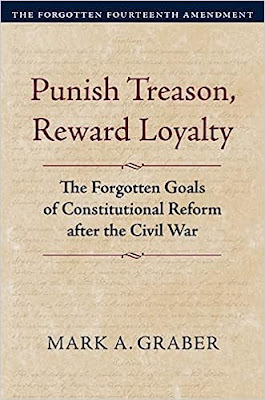
Mark A. Graber, Punish Treason, Reward Loyalty: The Forgotten Goals of Constitutional Reform after the Civil War (University of Kansas Press, 2023)
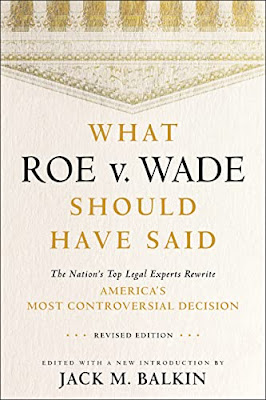
Jack M. Balkin, What Roe v. Wade Should Have Said: The Nation's Top Legal Experts Rewrite America's Most Controversial Decision - Revised Edition (NYU Press, 2023)

Andrew Koppelman, Burning Down the House: How Libertarian Philosophy Was Corrupted by Delusion and Greed (St. Martin’s Press, 2022)

Gerard N. Magliocca, Washington's Heir: The Life of Justice Bushrod Washington (Oxford University Press, 2022)
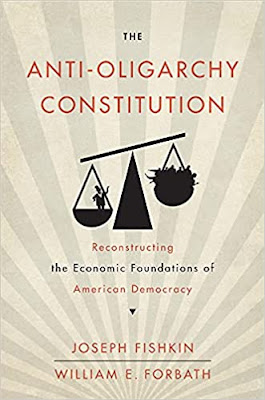
Joseph Fishkin and William E. Forbath, The Anti-Oligarchy Constitution: Reconstructing the Economic Foundations of American Democracy (Harvard University Press, 2022)
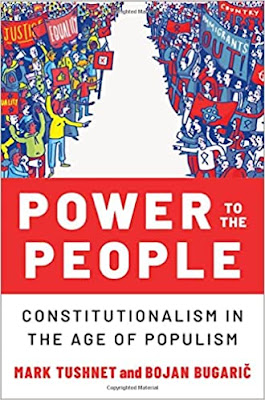
Mark Tushnet and Bojan Bugaric, Power to the People: Constitutionalism in the Age of Populism (Oxford University Press 2021).

Mark Philip Bradley and Mary L. Dudziak, eds., Making the Forever War: Marilyn B. Young on the Culture and Politics of American Militarism Culture and Politics in the Cold War and Beyond (University of Massachusetts Press, 2021).

Jack M. Balkin, What Obergefell v. Hodges Should Have Said: The Nation's Top Legal Experts Rewrite America's Same-Sex Marriage Decision (Yale University Press, 2020)

Frank Pasquale, New Laws of Robotics: Defending Human Expertise in the Age of AI (Belknap Press, 2020)

Jack M. Balkin, The Cycles of Constitutional Time (Oxford University Press, 2020)

Mark Tushnet, Taking Back the Constitution: Activist Judges and the Next Age of American Law (Yale University Press 2020).

Andrew Koppelman, Gay Rights vs. Religious Liberty?: The Unnecessary Conflict (Oxford University Press, 2020)

Ezekiel J Emanuel and Abbe R. Gluck, The Trillion Dollar Revolution: How the Affordable Care Act Transformed Politics, Law, and Health Care in America (PublicAffairs, 2020)

Linda C. McClain, Who's the Bigot?: Learning from Conflicts over Marriage and Civil Rights Law (Oxford University Press, 2020)
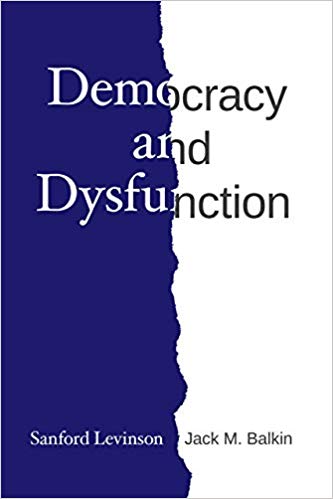
Sanford Levinson and Jack M. Balkin, Democracy and Dysfunction (University of Chicago Press, 2019)

Sanford Levinson, Written in Stone: Public Monuments in Changing Societies (Duke University Press 2018)

Mark A. Graber, Sanford Levinson, and Mark Tushnet, eds., Constitutional Democracy in Crisis? (Oxford University Press 2018)

Gerard Magliocca, The Heart of the Constitution: How the Bill of Rights became the Bill of Rights (Oxford University Press, 2018)

Cynthia Levinson and Sanford Levinson, Fault Lines in the Constitution: The Framers, Their Fights, and the Flaws that Affect Us Today (Peachtree Publishers, 2017)

Brian Z. Tamanaha, A Realistic Theory of Law (Cambridge University Press 2017)

Sanford Levinson, Nullification and Secession in Modern Constitutional Thought (University Press of Kansas 2016)

Sanford Levinson, An Argument Open to All: Reading The Federalist in the 21st Century (Yale University Press 2015)

Stephen M. Griffin, Broken Trust: Dysfunctional Government and Constitutional Reform (University Press of Kansas, 2015)

Frank Pasquale, The Black Box Society: The Secret Algorithms That Control Money and Information (Harvard University Press, 2015)

Bruce Ackerman, We the People, Volume 3: The Civil Rights Revolution (Harvard University Press, 2014)
Balkinization Symposium on We the People, Volume 3: The Civil Rights Revolution

Joseph Fishkin, Bottlenecks: A New Theory of Equal Opportunity (Oxford University Press, 2014)

Mark A. Graber, A New Introduction to American Constitutionalism (Oxford University Press, 2013)

John Mikhail, Elements of Moral Cognition: Rawls' Linguistic Analogy and the Cognitive Science of Moral and Legal Judgment (Cambridge University Press, 2013)

Gerard N. Magliocca, American Founding Son: John Bingham and the Invention of the Fourteenth Amendment (New York University Press, 2013)

Stephen M. Griffin, Long Wars and the Constitution (Harvard University Press, 2013)

Andrew Koppelman, The Tough Luck Constitution and the Assault on Health Care Reform (Oxford University Press, 2013)

James E. Fleming and Linda C. McClain, Ordered Liberty: Rights, Responsibilities, and Virtues (Harvard University Press, 2013)
Balkinization Symposium on Ordered Liberty: Rights, Responsibilities, and Virtues

Andrew Koppelman, Defending American Religious Neutrality (Harvard University Press, 2013)

Brian Z. Tamanaha, Failing Law Schools (University of Chicago Press, 2012)

Sanford Levinson, Framed: America's 51 Constitutions and the Crisis of Governance (Oxford University Press, 2012)

Linda C. McClain and Joanna L. Grossman, Gender Equality: Dimensions of Women's Equal Citizenship (Cambridge University Press, 2012)

Mary Dudziak, War Time: An Idea, Its History, Its Consequences (Oxford University Press, 2012)

Jack M. Balkin, Living Originalism (Harvard University Press, 2011)

Jason Mazzone, Copyfraud and Other Abuses of Intellectual Property Law (Stanford University Press, 2011)

Richard W. Garnett and Andrew Koppelman, First Amendment Stories, (Foundation Press 2011)

Jack M. Balkin, Constitutional Redemption: Political Faith in an Unjust World (Harvard University Press, 2011)

Gerard Magliocca, The Tragedy of William Jennings Bryan: Constitutional Law and the Politics of Backlash (Yale University Press, 2011)

Bernard Harcourt, The Illusion of Free Markets: Punishment and the Myth of Natural Order (Harvard University Press, 2010)

Bruce Ackerman, The Decline and Fall of the American Republic (Harvard University Press, 2010)
Balkinization Symposium on The Decline and Fall of the American Republic

Ian Ayres. Carrots and Sticks: Unlock the Power of Incentives to Get Things Done (Bantam Books, 2010)

Mark Tushnet, Why the Constitution Matters (Yale University Press 2010)

Ian Ayres and Barry Nalebuff: Lifecycle Investing: A New, Safe, and Audacious Way to Improve the Performance of Your Retirement Portfolio (Basic Books, 2010)
.jpg)
Jack M. Balkin, The Laws of Change: I Ching and the Philosophy of Life (2d Edition, Sybil Creek Press 2009)

Brian Z. Tamanaha, Beyond the Formalist-Realist Divide: The Role of Politics in Judging (Princeton University Press 2009)
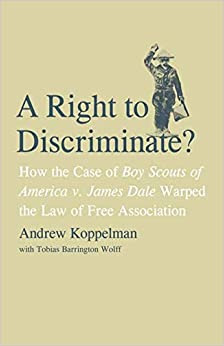
Andrew Koppelman and Tobias Barrington Wolff, A Right to Discriminate?: How the Case of Boy Scouts of America v. James Dale Warped the Law of Free Association (Yale University Press 2009)

Jack M. Balkin and Reva B. Siegel, The Constitution in 2020 (Oxford University Press 2009)

Heather K. Gerken, The Democracy Index: Why Our Election System Is Failing and How to Fix It (Princeton University Press 2009)

Mary Dudziak, Exporting American Dreams: Thurgood Marshall's African Journey (Oxford University Press 2008)

David Luban, Legal Ethics and Human Dignity (Cambridge Univ. Press 2007)

Ian Ayres, Super Crunchers: Why Thinking-By-Numbers is the New Way to be Smart (Bantam 2007)

Jack M. Balkin, James Grimmelmann, Eddan Katz, Nimrod Kozlovski, Shlomit Wagman and Tal Zarsky, eds., Cybercrime: Digital Cops in a Networked Environment (N.Y.U. Press 2007)

Jack M. Balkin and Beth Simone Noveck, The State of Play: Law, Games, and Virtual Worlds (N.Y.U. Press 2006)

Andrew Koppelman, Same Sex, Different States: When Same-Sex Marriages Cross State Lines (Yale University Press 2006)

Brian Tamanaha, Law as a Means to an End (Cambridge University Press 2006)

Sanford Levinson, Our Undemocratic Constitution (Oxford University Press 2006)

Mark Graber, Dred Scott and the Problem of Constitutional Evil (Cambridge University Press 2006)

Jack M. Balkin, ed., What Roe v. Wade Should Have Said (N.Y.U. Press 2005)

Sanford Levinson, ed., Torture: A Collection (Oxford University Press 2004)
Balkin.com homepage
Bibliography
Conlaw.net
Cultural Software
Writings
Opeds
The Information Society Project
BrownvBoard.com
Useful Links
Syllabi and Exams
