Balkinization
an unanticipated consequence of
Jack M. Balkin
Balkinization Symposiums: A Continuing List
E-mail:
Jack Balkin:
jackbalkin at yahoo.com
Bruce Ackerman
bruce.ackerman at yale.edu
Ian Ayres
ian.ayres at yale.edu
Corey Brettschneider
corey_brettschneider at brown.edu
Mary Dudziak
mary.l.dudziak at emory.edu
Joey Fishkin
joey.fishkin at gmail.com
Heather Gerken heather.gerken at yale.edu
Abbe Gluck abbe.gluck at yale.edu
Mark Graber
mgraber at law.umaryland.edu
Stephen Griffin
sgriffin at tulane.edu
Jonathan Hafetz
jonathan.hafetz at shu.edu
Jeremy Kessler
jkessler at law.columbia.edu
Andrew Koppelman
akoppelman at law.northwestern.edu
Marty Lederman
msl46 at law.georgetown.edu
Sanford Levinson
slevinson at law.utexas.edu
David Luban
david.luban at gmail.com
Gerard Magliocca
gmaglioc at iupui.edu
Jason Mazzone
mazzonej at illinois.edu
Linda McClain
lmcclain at bu.edu
John Mikhail
mikhail at law.georgetown.edu
Frank Pasquale
pasquale.frank at gmail.com
Nate Persily
npersily at gmail.com
Michael Stokes Paulsen
michaelstokespaulsen at gmail.com
Deborah Pearlstein
dpearlst at yu.edu
Rick Pildes
rick.pildes at nyu.edu
David Pozen
dpozen at law.columbia.edu
Richard Primus
raprimus at umich.edu
K. Sabeel Rahmansabeel.rahman at brooklaw.edu
Alice Ristroph
alice.ristroph at shu.edu
Neil Siegel
siegel at law.duke.edu
David Super
david.super at law.georgetown.edu
Brian Tamanaha
btamanaha at wulaw.wustl.edu
Nelson Tebbe
nelson.tebbe at brooklaw.edu
Mark Tushnet
mtushnet at law.harvard.edu
Adam Winkler
winkler at ucla.edu
Compendium of posts on Hobby Lobby and related cases
The Anti-Torture Memos: Balkinization Posts on Torture, Interrogation, Detention, War Powers, and OLC
The Anti-Torture Memos (arranged by topic)
Recent Posts
The Power of the Purse IV: Redistributing Power among the Courts
![[Powered by Blogger]](https://lh3.googleusercontent.com/blogger_img_proxy/AEn0k_vLQJDvij1MTNwVpiVnbT4ArcG75w7Eq1yB1-NrVDZ8RuVr6AgMX9Nv6lqsrL2gszY-Q4n0OWxcFUV8jLWg18Ppfa3eIw6M-RVif6ESVZGG=s0-d)
Just A Few Blogs
ACS Blog
Alas, a Blog
Althouse
Arts and Letters Daily
Atrios (Eschaton)
Bill of Health
Buzzflash.com
Buzz Machine
Cato at Liberty
Juan Cole (Informed Comment)
Concurring Opinions
The Constitution in 2020
Corrente
Crooked Timber
Daily Howler
Daily Kos
Dana Boyd
Brad DeLong
Digby (Hullabaloo)
Discriminations
Daniel Drezner
Kevin Drum (Mother Jones)
Electrolite
En Banc
Eunomia (Daniel Larison)
Fafblog
Michael Froomkin (Discourse.net)
GovLab (Beth Noveck)
Rick Hasen (Election Law)
History News Network
How Appealing
Ignatz (Sam Heldman)
The Importance of (Ernie Miller)
Infolaw
Instapundit
International Economic Law and Policy Blog
IntLawGrrls
Jacob Levy
Jesus' General
Jurisdynamics
The Kitchen Cabinet
Mark Kleiman
Law Blog Central
Larry Lessig
Lawyers, Guns and Money
Liberal Oasis
Brian Leiter's Law School Reports
The Leiter Reports
Marginal Revolution
Megan McArdle
Memeorandum
Metafilter
Mirror of Justice
The New Republic
Newseum
No More Mister Nice Blog
Brendan Nyhan
Opinio Juris
Orcinus
The Originalism Blog
Pandagon
Passport (Foreign Policy)
Overcoming Bias
Political Animal (Washington Monthly)
Political Theory Daily Review
Political Wire (Taegan Goddard)
The Poor Man
Virginia Postrel
Prawfsblawg
Public Reason
Jonathan Rauch
Raw Story
Redstate
ReligiousLeftLaw.com
Reporters Committee For Freedom of the Press
Reproductive Rights Blog
Rothman's Roadmap to the Right of Publicity
SCOTUS Blog
Seeing the Forest
Clay Shirky
The Shifted Librarian
The Situationist
Larry Solum (Legal Theory)
Andrew Sullivan
Talking Points Memo
Talk Left
Tapped
Tbogg
TechPresident
The Paper Chase (Jurist)
Tom Paine
Tom Tomorrow (This Modern World)
Eve Tushnet
Uggabugga
University of Chicago Law School Faculty Blog
Unqualified Offerings
The Volokh Conspiracy
War and Piece (Laura Rozen)
Wampum
Oliver Willis
Wonkette
Written Description
Matthew Yglesias
Yin
Your Choice of Feeds
1. XML
powered by

2. Atom Feed
3. RSS 2.0
The Power of the Purse IV: Redistributing Power among the Courts
David Super
As I previously
described, the second Trump Administration has dramatically shifted
the Power of the Purse from Congress to the President. Accompanying this change have been internal
structural transformations of both Congress
and the Executive
Branch that have concentrated power in a few highly partisan hands and
damaged or destroyed mechanisms that brought a broader range of views to
bear. These transformations are both
causes and consequences of the more visible transfer of power from Congress to
the Executive. This post considers how
the President’s seizure of greater fiscal powers has been accompanied and facilitated
by a subtle but crucial power shift within the judiciary. Here, a relatively
efficient structure allowing timely resolution of disputes on their merits has
given way to one that tends to keep the judiciary on the sidelines. Judicial restraint, of course, is a
long-honored value in our system. Much
of its rationale,
however, has been that the “political branches” can take care of
themselves. That is an awkward fit for
disputes in which the President is depriving Congress of perhaps its most
important means of protecting its prerogatives:
the Power of the Purse. For decades prior
to this Administration, the federal courts had a fairly stable division of
labor on spending matters. Questions of
general law – the interpretation and constitutionality of spending statutes and
regulations – were addressed by federal district courts. Where officials applied policies improperly
denying individuals or organizations the benefits they were entitled to
receive, the district courts struck down those policies, with the Supreme Court’s blessing. District courts could act quickly to respond
to recipients’ urgent need
and had sufficient powers to adapt remedial orders to whatever
violations they found. Disputes over payments
allegedly due under the terms of individual federal contracts went to the Court
of Federal Claims. These cases typically
focused on the terms of the given contract and factual issues about whether the
contractor had met those terms rather than broader questions of federal
law. The Court of Federal Claims has far
narrower remedial powers, but with the narrow disputes before it these were
adequate. If the federal government
refused to pay for goods that in fact met contractual specifications, a simple
money judgment was all that was needed. The
Court of Federal Claims was slow, which was a genuine problem, but at least it
could eventually make financially strong contractors whole by awarding interest
penalties
under the Prompt Payment Act. Now, the federal
government is systematically refusing to make payments not because of good-faith
disputes about contractual terms or vendors’ compliance but because the
Administration is asserting an aggressive new theory about the Separation of
Powers. Specifically, it is arguing that
the President is free at any time to reformulate the interests of the United
States notwithstanding contractual terms or duly enacted statutes. Whatever one
thinks of the merits of this theory, it is very much the kind of dispute that
district courts commonly hear and worlds apart from those in the Court of
Federal Claims. To the extent that the
Administration’s theory is incorrect, overall or in particular cases, a court
adjudicating its actions obviously may need to issue extensive remedial orders,
which the Court of Federal Claims lacks the power to do. That is particularly true given this
Administration’s penchant
for disregarding
court orders. Because spending programs
often target people and small entities in great financial need, payments years
late, even with interest, often cannot undo the damage
of withheld funds: agencies that close
often lose the capacity to resume their prior work. Treating the
Administration’s unilateral terminations or restructurings of federal spending
programs as a payments problem fundamentally misconstrues what is at stake and
Congress’s purposes in providing for that spending. Although litigation is often brought, and
standing established, by the entities that had been direct recipients of funds,
programs’ purposes rarely are just to spend money: Congress sought to assist a particular set of
individuals it deemed in need or a designed set of entities to meet some social
purpose. The harms from ignoring those
human needs and social problems often will be irreparable. Moreover, judges
on the Court of Federal Claims lack life tenure and other guarantees of
independence afforded judges on district courts and other Article III
tribunals. President Trump has
aggressively assaulted the independence of other bodies long recognized as
independent. Should the Court of Federal
Claims ever seriously impede his agenda, one might expect he would use his considerable
statutory
powers to direct sensitive cases to judges of his choosing. That would be much harder with life-tenured
district judges. The Supreme Court
has acknowledged
this reality only in part. It has
allowed district courts to continue to hear challenges to unlawful policies but
prevented those courts from ordering payment of improperly withheld funds. It also specifically warned district
courts against granting interim relief against the government in those cases: And while the loss of money is not
typically considered irreparable harm, that changes if the funds “cannot be
recouped” and are thus “irrevocably expended.” Philip Morris USA Inc. v. Scott,
561 U. S. 1301, 1304 (2010) (Scalia, J., in chambers). The Government faces
such harm here. The plaintiffs do not state that they will repay grant money if
the Government ultimately prevails. Moreover, the plaintiffs’ contention that
they lack the resources to continue their research projects without federal
funding is inconsistent with the proposition that they have the resources to
make the Government whole for money already spent. Of course, if any entity challenging the Administration’s
illegal withdrawals of funding did assert that it could pay back the
funds if it lost its case, the Supreme Court has indicated that
entity would itself lack the irreparable injury required to obtain an
injunction. This effectively grants
the Administration a two-year runway to eliminate congressionally mandated
programs no matter how absurd its rationale may be. Perhaps some money might eventually be
disbursed, but by then the mechanism for achieving Congress’s purposes often
will be damaged or gone altogether. A similar picture
seems to be coming into view with respect to one of the Administration’s other
assaults on Congress’s Power of the Purse:
the tariffs it unilaterally imposed and collected for the better part of
a year. At this writing, it seems likely
that many of those that paid this presidential levy will not receive refunds;
those to whom the cost of the tariffs was passed along through price increases
almost certainly will not. This is far from
inevitable. Having acknowledged that
district courts can hear challenges to unlawful policies obstructing the release
of funds Congress has directed to a particular problem, the Supreme Court could
certainly allow
district courts to grant relief sufficient to meet to the problem the Administration’s
actions present. This would ensure that,
as the Supreme Court proclaimed two
years ago, “[i]f the President claims authority to act but in fact exercises
mere ‘individual will’ and ‘authority without law,’ the courts may say so.”
As it did in granting President Trump sweeping immunity from prosecution in
the absence of any textual authority for doing so, the Court might “focus
on the enduring consequences upon the balanced power structure of our
Republic.” The Court demonstrated in 2024 that it observes an emergency exception
to the usual rules of decision for grave threats to the separation of
powers. Few such threats are potentially
more far-reaching than depriving Congress of its Power of the Purse. The Court
certainly could draw guidance from Contract Law, which is capable of distinguishing
between the vast majority of cases involving routine, one-off disputes and a
few exceptional instances of systemic bad faith. Insurance companies contract with vast
numbers of people, who assume they will pay in good faith if the insured suffers
a covered casualty. Resisting payment of
lawful claims can enhance an insurance company’s margin, but it also undermines
the whole concept of insurance.
Accordingly, courts have recognized
that insurance companies denying claims in bad faith should not benefit from
Contract’s usual rule disallowing punitive damages. The federal government, too, assumes
financial obligations to vast numbers of people, who trust it to pay in good
faith. If this Administration is
effectively free to refuse to do so, the federal government’s ability to contract
to meet the country’s needs will be damaged for decades to come. It also should be
noted that the other two types of presidential intrusions on the Power of the
Purse – spending
money without a valid appropriation and declining to collect taxes Congress has
legislated – are unlikely to be vulnerable to judicial challenge because of the
Court’s interpretation
of the “cases and controversies” requirement of Article III. If the Administration is free to impose taxes
and to withhold appropriated funds for a year or two no matter how
unsustainable its legal theory might be, Congress’s Power of the Purse is well
and truly gone as anything more than a ministerial function. @DavidASuper.bsky.social
@DavidASuper1
Posted
9:00 PM
by David Super [link]
Books by Balkinization Bloggers

Mark Tushnet and Bojan Bugaric, Constitutionalism and Its Discontents (University of Chicago Press, 2026)

Gerard N. Magliocca, The Actual Art of Governing: Justice Robert H. Jackson's Concurring Opinion in the Steel Seizure Case (Oxford University Press, 2025)

Linda C. McClain and Aziza Ahmed, The Routledge Companion to Gender and COVID-19 (Routledge, 2024)

David Pozen, The Constitution of the War on Drugs (Oxford University Press, 2024)

Jack M. Balkin, Memory and Authority: The Uses of History in Constitutional Interpretation (Yale University Press, 2024)
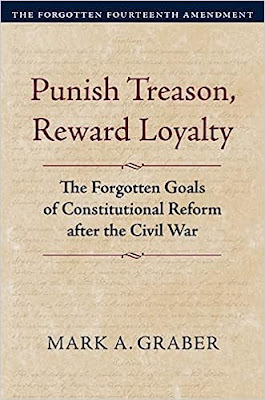
Mark A. Graber, Punish Treason, Reward Loyalty: The Forgotten Goals of Constitutional Reform after the Civil War (University of Kansas Press, 2023)
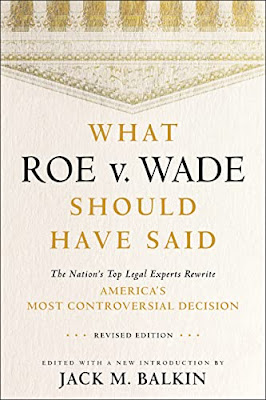
Jack M. Balkin, What Roe v. Wade Should Have Said: The Nation's Top Legal Experts Rewrite America's Most Controversial Decision - Revised Edition (NYU Press, 2023)

Andrew Koppelman, Burning Down the House: How Libertarian Philosophy Was Corrupted by Delusion and Greed (St. Martin’s Press, 2022)

Gerard N. Magliocca, Washington's Heir: The Life of Justice Bushrod Washington (Oxford University Press, 2022)
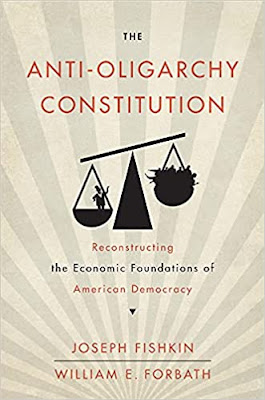
Joseph Fishkin and William E. Forbath, The Anti-Oligarchy Constitution: Reconstructing the Economic Foundations of American Democracy (Harvard University Press, 2022)
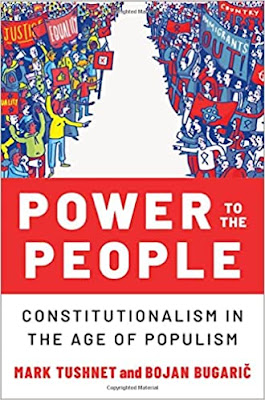
Mark Tushnet and Bojan Bugaric, Power to the People: Constitutionalism in the Age of Populism (Oxford University Press 2021).

Mark Philip Bradley and Mary L. Dudziak, eds., Making the Forever War: Marilyn B. Young on the Culture and Politics of American Militarism Culture and Politics in the Cold War and Beyond (University of Massachusetts Press, 2021).

Jack M. Balkin, What Obergefell v. Hodges Should Have Said: The Nation's Top Legal Experts Rewrite America's Same-Sex Marriage Decision (Yale University Press, 2020)

Frank Pasquale, New Laws of Robotics: Defending Human Expertise in the Age of AI (Belknap Press, 2020)

Jack M. Balkin, The Cycles of Constitutional Time (Oxford University Press, 2020)

Mark Tushnet, Taking Back the Constitution: Activist Judges and the Next Age of American Law (Yale University Press 2020).

Andrew Koppelman, Gay Rights vs. Religious Liberty?: The Unnecessary Conflict (Oxford University Press, 2020)

Ezekiel J Emanuel and Abbe R. Gluck, The Trillion Dollar Revolution: How the Affordable Care Act Transformed Politics, Law, and Health Care in America (PublicAffairs, 2020)

Linda C. McClain, Who's the Bigot?: Learning from Conflicts over Marriage and Civil Rights Law (Oxford University Press, 2020)
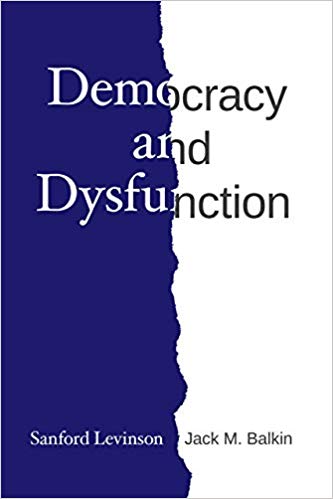
Sanford Levinson and Jack M. Balkin, Democracy and Dysfunction (University of Chicago Press, 2019)

Sanford Levinson, Written in Stone: Public Monuments in Changing Societies (Duke University Press 2018)

Mark A. Graber, Sanford Levinson, and Mark Tushnet, eds., Constitutional Democracy in Crisis? (Oxford University Press 2018)

Gerard Magliocca, The Heart of the Constitution: How the Bill of Rights became the Bill of Rights (Oxford University Press, 2018)

Cynthia Levinson and Sanford Levinson, Fault Lines in the Constitution: The Framers, Their Fights, and the Flaws that Affect Us Today (Peachtree Publishers, 2017)

Brian Z. Tamanaha, A Realistic Theory of Law (Cambridge University Press 2017)

Sanford Levinson, Nullification and Secession in Modern Constitutional Thought (University Press of Kansas 2016)

Sanford Levinson, An Argument Open to All: Reading The Federalist in the 21st Century (Yale University Press 2015)

Stephen M. Griffin, Broken Trust: Dysfunctional Government and Constitutional Reform (University Press of Kansas, 2015)

Frank Pasquale, The Black Box Society: The Secret Algorithms That Control Money and Information (Harvard University Press, 2015)

Bruce Ackerman, We the People, Volume 3: The Civil Rights Revolution (Harvard University Press, 2014)
Balkinization Symposium on We the People, Volume 3: The Civil Rights Revolution

Joseph Fishkin, Bottlenecks: A New Theory of Equal Opportunity (Oxford University Press, 2014)

Mark A. Graber, A New Introduction to American Constitutionalism (Oxford University Press, 2013)

John Mikhail, Elements of Moral Cognition: Rawls' Linguistic Analogy and the Cognitive Science of Moral and Legal Judgment (Cambridge University Press, 2013)

Gerard N. Magliocca, American Founding Son: John Bingham and the Invention of the Fourteenth Amendment (New York University Press, 2013)

Stephen M. Griffin, Long Wars and the Constitution (Harvard University Press, 2013)

Andrew Koppelman, The Tough Luck Constitution and the Assault on Health Care Reform (Oxford University Press, 2013)

James E. Fleming and Linda C. McClain, Ordered Liberty: Rights, Responsibilities, and Virtues (Harvard University Press, 2013)
Balkinization Symposium on Ordered Liberty: Rights, Responsibilities, and Virtues

Andrew Koppelman, Defending American Religious Neutrality (Harvard University Press, 2013)

Brian Z. Tamanaha, Failing Law Schools (University of Chicago Press, 2012)

Sanford Levinson, Framed: America's 51 Constitutions and the Crisis of Governance (Oxford University Press, 2012)

Linda C. McClain and Joanna L. Grossman, Gender Equality: Dimensions of Women's Equal Citizenship (Cambridge University Press, 2012)

Mary Dudziak, War Time: An Idea, Its History, Its Consequences (Oxford University Press, 2012)

Jack M. Balkin, Living Originalism (Harvard University Press, 2011)

Jason Mazzone, Copyfraud and Other Abuses of Intellectual Property Law (Stanford University Press, 2011)

Richard W. Garnett and Andrew Koppelman, First Amendment Stories, (Foundation Press 2011)

Jack M. Balkin, Constitutional Redemption: Political Faith in an Unjust World (Harvard University Press, 2011)

Gerard Magliocca, The Tragedy of William Jennings Bryan: Constitutional Law and the Politics of Backlash (Yale University Press, 2011)

Bernard Harcourt, The Illusion of Free Markets: Punishment and the Myth of Natural Order (Harvard University Press, 2010)

Bruce Ackerman, The Decline and Fall of the American Republic (Harvard University Press, 2010)
Balkinization Symposium on The Decline and Fall of the American Republic

Ian Ayres. Carrots and Sticks: Unlock the Power of Incentives to Get Things Done (Bantam Books, 2010)

Mark Tushnet, Why the Constitution Matters (Yale University Press 2010)

Ian Ayres and Barry Nalebuff: Lifecycle Investing: A New, Safe, and Audacious Way to Improve the Performance of Your Retirement Portfolio (Basic Books, 2010)
.jpg)
Jack M. Balkin, The Laws of Change: I Ching and the Philosophy of Life (2d Edition, Sybil Creek Press 2009)

Brian Z. Tamanaha, Beyond the Formalist-Realist Divide: The Role of Politics in Judging (Princeton University Press 2009)
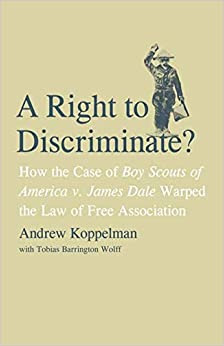
Andrew Koppelman and Tobias Barrington Wolff, A Right to Discriminate?: How the Case of Boy Scouts of America v. James Dale Warped the Law of Free Association (Yale University Press 2009)

Jack M. Balkin and Reva B. Siegel, The Constitution in 2020 (Oxford University Press 2009)

Heather K. Gerken, The Democracy Index: Why Our Election System Is Failing and How to Fix It (Princeton University Press 2009)

Mary Dudziak, Exporting American Dreams: Thurgood Marshall's African Journey (Oxford University Press 2008)

David Luban, Legal Ethics and Human Dignity (Cambridge Univ. Press 2007)

Ian Ayres, Super Crunchers: Why Thinking-By-Numbers is the New Way to be Smart (Bantam 2007)

Jack M. Balkin, James Grimmelmann, Eddan Katz, Nimrod Kozlovski, Shlomit Wagman and Tal Zarsky, eds., Cybercrime: Digital Cops in a Networked Environment (N.Y.U. Press 2007)
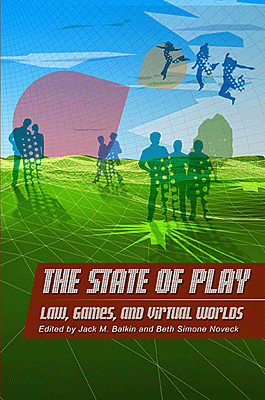
Jack M. Balkin and Beth Simone Noveck, The State of Play: Law, Games, and Virtual Worlds (N.Y.U. Press 2006)

Andrew Koppelman, Same Sex, Different States: When Same-Sex Marriages Cross State Lines (Yale University Press 2006)

Brian Tamanaha, Law as a Means to an End (Cambridge University Press 2006)

Sanford Levinson, Our Undemocratic Constitution (Oxford University Press 2006)

Mark Graber, Dred Scott and the Problem of Constitutional Evil (Cambridge University Press 2006)

Jack M. Balkin, ed., What Roe v. Wade Should Have Said (N.Y.U. Press 2005)

Sanford Levinson, ed., Torture: A Collection (Oxford University Press 2004)
Balkin.com homepage
Bibliography
Conlaw.net
Cultural Software
Writings
Opeds
The Information Society Project
BrownvBoard.com
Useful Links
Syllabi and Exams
