Balkinization
an unanticipated consequence of
Jack M. Balkin
Balkinization Symposiums: A Continuing List
E-mail:
Jack Balkin:
jackbalkin at yahoo.com
Bruce Ackerman
bruce.ackerman at yale.edu
Ian Ayres
ian.ayres at yale.edu
Corey Brettschneider
corey_brettschneider at brown.edu
Mary Dudziak
mary.l.dudziak at emory.edu
Joey Fishkin
joey.fishkin at gmail.com
Heather Gerken heather.gerken at yale.edu
Abbe Gluck abbe.gluck at yale.edu
Mark Graber
mgraber at law.umaryland.edu
Stephen Griffin
sgriffin at tulane.edu
Jonathan Hafetz
jonathan.hafetz at shu.edu
Jeremy Kessler
jkessler at law.columbia.edu
Andrew Koppelman
akoppelman at law.northwestern.edu
Marty Lederman
msl46 at law.georgetown.edu
Sanford Levinson
slevinson at law.utexas.edu
David Luban
david.luban at gmail.com
Gerard Magliocca
gmaglioc at iupui.edu
Jason Mazzone
mazzonej at illinois.edu
Linda McClain
lmcclain at bu.edu
John Mikhail
mikhail at law.georgetown.edu
Frank Pasquale
pasquale.frank at gmail.com
Nate Persily
npersily at gmail.com
Michael Stokes Paulsen
michaelstokespaulsen at gmail.com
Deborah Pearlstein
dpearlst at yu.edu
Rick Pildes
rick.pildes at nyu.edu
David Pozen
dpozen at law.columbia.edu
Richard Primus
raprimus at umich.edu
K. Sabeel Rahmansabeel.rahman at brooklaw.edu
Alice Ristroph
alice.ristroph at shu.edu
Neil Siegel
siegel at law.duke.edu
David Super
david.super at law.georgetown.edu
Brian Tamanaha
btamanaha at wulaw.wustl.edu
Nelson Tebbe
nelson.tebbe at brooklaw.edu
Mark Tushnet
mtushnet at law.harvard.edu
Adam Winkler
winkler at ucla.edu
Compendium of posts on Hobby Lobby and related cases
The Anti-Torture Memos: Balkinization Posts on Torture, Interrogation, Detention, War Powers, and OLC
The Anti-Torture Memos (arranged by topic)
Recent Posts
The Chief Justice and Speaker Denison's Rule
The problematics of impeachment (II): Constitutional interpretation v. constitutional design
Parliamentary Malpractice
The problematics of impeachment (I): The specific problems of Charles Black's take on the presidency
In reply to Alan Dershowitz and Ken Starr
Thinking about (what else) Impeachment
Does Impeachment Work?
Tammany Hall on High Crimes and Misdemeanors
A Reasonable (and Vital) Point of Order
On the Persistence of Really Bad Constitutional Arguments
The Personal is the Political (Impeachment Edition)
Profiles in Cowardice
Another Senate Trial Question
On the eve of trial . . .
Why the Court should grant the petitions in the ACA case despite the absence of any injunction
![[Powered by Blogger]](https://lh3.googleusercontent.com/blogger_img_proxy/AEn0k_ufybnUnJ_D3ciVd-hW0x1SDdiz7RKhwqj8_ChAgHZl3I-G-USA7R0MKZs4o9p-ckofzggfIWh2vB4TvBq1kHWF-bIHvib-RvqDB8A2jFih=s0-d)
Just A Few Blogs
ACS Blog
Alas, a Blog
Althouse
Arts and Letters Daily
Atrios (Eschaton)
Bill of Health
Buzzflash.com
Buzz Machine
Cato at Liberty
Juan Cole (Informed Comment)
Concurring Opinions
The Constitution in 2020
Corrente
Crooked Timber
Daily Howler
Daily Kos
Dana Boyd
Brad DeLong
Digby (Hullabaloo)
Discriminations
Daniel Drezner
Kevin Drum (Mother Jones)
Electrolite
En Banc
Eunomia (Daniel Larison)
Fafblog
Michael Froomkin (Discourse.net)
GovLab (Beth Noveck)
Rick Hasen (Election Law)
History News Network
How Appealing
Ignatz (Sam Heldman)
The Importance of (Ernie Miller)
Infolaw
Instapundit
International Economic Law and Policy Blog
IntLawGrrls
Jacob Levy
Jesus' General
Jurisdynamics
The Kitchen Cabinet
Mark Kleiman
Law Blog Central
Larry Lessig
Lawyers, Guns and Money
Liberal Oasis
Brian Leiter's Law School Reports
The Leiter Reports
Marginal Revolution
Megan McArdle
Memeorandum
Metafilter
Mirror of Justice
The New Republic
Newseum
No More Mister Nice Blog
Brendan Nyhan
Opinio Juris
Orcinus
The Originalism Blog
Pandagon
Passport (Foreign Policy)
Overcoming Bias
Political Animal (Washington Monthly)
Political Theory Daily Review
Political Wire (Taegan Goddard)
The Poor Man
Virginia Postrel
Prawfsblawg
Public Reason
Jonathan Rauch
Raw Story
Redstate
ReligiousLeftLaw.com
Reporters Committee For Freedom of the Press
Reproductive Rights Blog
Rothman's Roadmap to the Right of Publicity
SCOTUS Blog
Seeing the Forest
Clay Shirky
The Shifted Librarian
The Situationist
Larry Solum (Legal Theory)
Andrew Sullivan
Talking Points Memo
Talk Left
Tapped
Tbogg
TechPresident
The Paper Chase (Jurist)
Tom Paine
Tom Tomorrow (This Modern World)
Eve Tushnet
Uggabugga
University of Chicago Law School Faculty Blog
Unqualified Offerings
The Volokh Conspiracy
War and Piece (Laura Rozen)
Wampum
Oliver Willis
Wonkette
Written Description
Matthew Yglesias
Yin
Your Choice of Feeds
1. XML
powered by

2. Atom Feed
3. RSS 2.0
The Chief Justice and Speaker Denison's Rule
Gerard N. Magliocca
Tomorrow the Senate may vote 50-50 to call witnesses in the impeachment trial. Can the Chief Justice vote to break this tie? I believe that he can, based on the precedent set by the Chief Justice Chase in 1868 (which was upheld by the Senate) and on a logical reading of the text, which gives the Vice-President a tie breaking vote and by extension should to any non-member of the Senate who is presiding (the only such person, of course, being the Chief Justice). But how should the Chief Justice use this tie-breaking power? Should he just do whatever he thinks best? I don't think so. That would call into question his impartiality and drag him into politics.
I suggest that the Chief Justice adopt what is known as "Speaker Denison's Rule." This is a convention of the House of Commons, followed by presiding officers in other Commonwealth countries, to ensure that the Speaker maintains his or her neutrality in a principled way.
How does Speaker Denison's Rule work? The idea is always to vote in favor of further debate but not to vote in favor of any final action. In other words, if there is a tie vote on a bill, the Speaker always votes no on the idea that he should not create a majority for legislation. But if there is a tie vote on a motion to continue debate, the Speaker always votes yes one the idea that the presumption should for more debate.
Applying Speaker Denison's Rule to a motion to call witnesses should, I think, lead to the conclusion that the Chief Justice should break a tie in favor of calling witnesses. After all, not calling witnesses is tantamount to ending debate on the fact-finding part of the trial. If the parliamentary presumption is for more discussion rather than less, then breaking a tie against witnesses would be inconsistent with that presumption.
UPDATE: In réponse to a parliamentary inquiry, the Chief Justice responded, in essence, that he thought that he lacked the power to break tie votes in an impeachment trial. (Though there was no tie vote to break.)
Posted
10:26 AM
by Gerard N. Magliocca [link]
(56) comments
The problematics of impeachment (II): Constitutional interpretation v. constitutional design
Sandy Levinson
Because the Impeachment Clause was badly drafted and is the only mechanism, together with the useless 25th Amendment, for displacing an unfit president, it is, of course, the focus of efforts in "constitutional interpretation," a subject that lawyers profess to have some expertise in. So we are being treated to the back-and-forth especially as to how to interpret the truly unfortunate phrase "high crimes and misdemeanor." This is a source of almost endless mischief, as seen most clearly in Alan Dershowitz's lifeline to Trumpistas. I share the almost unanimous view that he is incorrect in his belief that impeachment requires either a crime or something close to one, as against, say, unequivocal "abuse" of presidential power. But let's assume for the moment that Dershowitz is correct. After al, his textual argument, drawing on the maxims ejusdem generis or noscitur a sociis, is the kind of thing we teach to impressionable first-year students as ways of making sense of not altogether precise texts. Were his analysis offered by a first-year student in a final exam, I think we'd give it a quite high grade with regard to demonstrating a mastery of a certain form of legal rhetoric and advocacy. The problem is that it is an almost literally insane way to construe a constitution that, in Marshall's words, is "designed to endure" and/or maintain a republican form of government instead of descending into the worst form of elective monarchy. It means that under his argument, which is now being parroted by Trumpistas, we are stuck with a patently unfit president, whose abuses may constitute clear and present dangers to our national survival even literally, let alone metaphorically, because the abuses do not meet some refined notion of criminality similar to, even if not identical with in terms of seriousness, to "bribery" or "treason." I repeat: No sane person would design such a Constitution if the designers were wisely following the Framers' own important instructions, i.e., learn the "lessons of experience" and thus to design a Constitution that we can quite literally live with in the 21st century. And, by the way, no sane person would believe that the best way to honor the Framers is by endless repetition of whatever they happened to say in the waning days of the summer of 1787, when they wanted to get the hell out of Philadelphia, instead of, indeed, thinking for ourselves, as they themselves did (and which we are unwilling to do).
I have made it crystal clear that I wish we had a "vote of no confidence" provision that would serve, mercifully, to make lawyers nearly irrelevant to the discussion. We don't. Why that isn't viewed as a central defect of the Constitution is beyond me, save that lawyers are simply not educated to ask questions about the wisdom of our Constitution.
A second point: My Balkinization colleague Gerard joins the estimable Charles Black in believing that we ought to have a high burden of proof to surmount before firing an unfit president. Neither adopts "beyond a reasonable doubt" (which is an insane standard for impeachment), but both seem to believe it should be higher even than "clear and convincing evidence." Why? Nothing is offered by way of genuine argument. The answer would seem to require a paralyzing fear of false positives--i.e., misidentifying a worthy president as someone deserving displacement--and therefore accepting a host of false negatives--i.e., keeping in office people who, by stipulation, a majority of the House and even a majority (though not 2/3) of the Senate may agree, on the basis of preponderance or even "clear and convincing" evidence, should be bounced. What explains such a truly questionable--I'm tempted to say irrational--devotion to presidential incumbents? Is it the heightened belief that the "people's choice"--at least as mediated through the also idiotic electoral college system--is entitled to extreme deference, even if, by stipulation, polls plus the elected representatives of "the people" have come to agree that the president is in fact unfit (whether or not indictable as a "criminal")? Perhaps "preponderance' is too lax, though I'm not sure why, especially in a world of political parties where we would continue to need two-thirds of the Senate to convict.
But why in the world isn't the "clear and convincing evidence" that administrative agencies use all the time sufficient? Is the desire to be even stricter simply another sign of the pathological way we treat our presidents as father figures and our strange incorporation of Josh Chafetz's insight that since impeachment=tyrannicide, and therefore paracide, it should become almost literally unthinkable? My colleague Jeff Tulis suggests that we'd be far better off as a political system if impeachment had become a fairly normal part of our politics, beginning, perhaps, with the impeachment, in fact proposed by some, including John Quincy Adams, of His Accidency John Tyler, the unfit part of the Tippacanoe and Tyler too Whig ticket that won the presidency in 1840. I think Jeff is right. We would, at the least, have a more truly adult political system instead of one mired in grand mythology about the importance of presidents and preserving them in office.
Contrary to what some of my critics have suggested, this doesn't mean moving all the way to a parliamentary system, as much as I might prefer that. It would mean, though, that Congress could rid us of unfit chief executives who can do (and in fact do inflict) much mischief, as Tyler did, including the unconstitutional annexation of Texas by ordinary statute instead of the treaty that would never get through the Senate. Instead, both Cass Sunstein and Larry Tribe offer their tut-tuts at the very prospect of impeaching Tyler and generally adopt what has become the party line that impeachment is a true last resort to be used only in exceptional situations. Given the power of the modern president--who, incidentally, is prone to declare "exceptional situations" in all sorts of circumstances in order to enhance his own power--we ought to be more willing to try to make sure that we can sleep at night with a given incumbent in office. Perhaps a well-designed constitution, unlike our own, would spell out not only the criteria for firing a president, but also indicate the level of persuasion that a conscientious legislator--if we can imagine such a thing--would have to achieve. Instead, we are stuck with a Clause whose practical effect, as demonstrated literally every day right now, is only to increase the justified cynicism of ordinary laypeople people and the despair among lawyers who see travesties of legal argument, at least if the arguments are assessed from anything other than the most truly academic of perspectives, accepted as the last word by hyperpartisans looking for any port in a storm.
Posted
11:52 PM
by Sandy Levinson [link]
(54) comments
Parliamentary Malpractice
Gerard N. Magliocca
One surprising aspect of the trial is that no points of order are being raised. This may well be a lost art, but Senators used to be talented at using those questions to make their points or shape debate. It's especially curious to see Senators posing questions about the Chief Justice's role for the Chief Justice to read to lawyers. Why doesn't someone just pose some of those questions to him as the Presiding Officer? He may decline to answer, but who knows. My suspicion is that he is prepared with answers for some questions, but someone must ask and find out.
I would add that I'm heartened to hear (at least according to The Washington Post) that the Chief Justice is refusing to read a question that Senator Paul wants to pose naming the alleged whistleblower. This probably tips his hand on whether the whistleblower can be forced to testify publicly.
Posted
10:18 PM
by Gerard N. Magliocca [link]
(28) comments
The problematics of impeachment (I): The specific problems of Charles Black's take on the presidency
Sandy Levinson
It will presumably surprise no one that one of my major responses to the present debacle going on in Washington is further distaste for what I believe, more than ever, is a deeply flawed and dysfunctional Constitutional that might quite literally contribute to destroying the country (and even the world) as we know it. I will undoubtedly be posting a number of entries elaborating my arguments. But for now I want to focus on a fairly peripheral matter, which is the remarkable authority granted to Charles Black's 1974 Handbook on impeachment. Black was clearly a major presence at the Yale Law School during the 1970s (and in the legal academy for a much longer period). People speak of him with reverence. I have no reason to challenge the veneration directed at him. I met him once, for approximately fifteen seconds, but I of course have read some of his major work, including two unforgettable essays on Brown and on the "state action" doctrine, which he accurately described as a "conceptual disaster area." There is also, of course, his classic book on structural constitutional interpretation. But his principal fame now is as the author of the slender book recently republished by the Yale Press with much new material added by my friend and colleague Philip Bobbitt. Indeed, we are co-teaching a reading course on the book this semester. Mark Tushnet alludes to the book in his excellent comment on the role, if any, that legal academics have to play in the public debate about impeachment.
I want to focus, for now, on why I find the Handbook to be remarkably problematic and in significant ways anachronistic, coming both literally and metaphorically from another era. It is an excellent primary source about how a gifted and important law professor, much venerated by his students, was thinking at the time of Richard Nixon's impeachment in 1974. But that does not speak to its genuine relevance today. I find it somewhat similar to running across a Victorian etiquette book on how to respond if the Queen invites you to tea.
Let me, for now, focus only on the four-page introduction to the book. Paragraph two begins as follows: "The presidency is a prime symbol of our national unity...." Given this ostensible reality, "everyone must shrink from this most drastic of measures," i.e., impeachment. To the extent that one agrees with Black, these are, I believe, among the true pathologies of the American constitutional order.. One of its worst features, perhaps traceable to the Constitution , is the joinder of head of state with the head of government. The British are lucky enough to have a Queen to whom they direct their emotional attachment re the United Kingdom; otherwise, they treat their prime ministers exactly as Ross Perot correctly suggested in his own presidential campaign in 1992 should be the case: as our chief employee. Among other things, this means we should display, as the British in fact do, an unsentimental willingness to sack presidents when they are disserving the country.
What Black is in fact suggesting, without quite saying so, is that we have substituted the "chief executive" for the British Monarch, not only in terms of certain powers (such as pardoning) , but also, as already suggested, as the proper recipient for emotional cathexis. Thus the playing by the Marine Band of "Hail to Chief," which suggests to most people not only the technical reality that he (or in the future she) is Commander-in-Chief of the armed forces (whatever exactly that means) and not in any sense whatsoever our Chief beyond that. George Washington might well have been a symbol of national unity. At least since the election of 1800 (and, as a matter of fact, in 1796, that has been an altogether dubious proposition. Perhaps Black, who I gather was famous for his civility, believed that we ought to treat presidents as unusual individuals who united the country. but one certainly wonder why we should aspire to that in a non-fascist country.
The most fundamental issue, of course, is what it should take to fire a terrible president. I will write later elaborating my view that the capture of the Impeachment Clause by lawyers has been an utter disaster, and, of course, Black in fact contributed to that because of his heightened belief (adopted, incidentally, by Bobbitt), that impeachment is most fundamentally a matter of law and not of politics. But I begin with these introductory comments (by Black) because they capture so well the unfortunately heightened rhetoric we adopt with regard both to whoever occupies the Oval Office and then to the ostensible consequences of displacing that person. Black doesn't explain why it would be so terrible to fire a president. The implicit reason, of course, is that it would be the equivalent of parricide (and not simply, as Josh Chafetz suggested some years ago in an excellent article, a useful substitute for tyrannicide). A more rational political system, I suggest, would not find Professor Black's language so acceptable. Ross Perot was absolutely correct in his unsentimental description of the president. And, as we have seen with regard, say, to the Boeing Corporation, a variety of athletic programs, movie studios, etc., the boards of directors re notably willing to sack ostensible leaders when they are thought to have behaved in one or another dicey way. Even if one believes that immediate firing may be too drastic, very few object to the suspension (perhaps with pay) of the alleged miscreant. Only at the highest level, with regard to the individual who has power over nuclear weapons, do we believe that demonstrably unfit persons must be left in office unless they can be shown, satisfactory to their literally thoughtless partisan supporters, to have committed criminal acts.
Black, to his great credit, rejected the nonsense being purveyed by Alan Dershowitz, who believes that we're talking not about firing an unfit employee, but instead jailing him (or perhaps even committing the equivalent of regiicide, as in 1649). One does not have to demonstrate that a president committed a "criminal" offense, whatever the language of the text. The fact is that the Impeachment Clause, like several other parts of the Constitution, was dreadfully drafted, in part because, contrary to Black's assurance in the introduction, it was not "very carefully considered." The convention was flailing around at that point trying to figure out for once and for all first how to elect a president--and we got the truly terrible electoral college--and then how to displace one. (They were not offended by the possibility that an elected president would be displaced; the only question was what it should take.) But Black still believed, as does Bobbitt, that lawyers have some special insight into what it should take to displace a president. Like Mark Tushnet (I think), I'm really skeptical. My own concerns are those of a concerned a frightened citizen. I genuinely don't know what the various testimony including that by good friends whom I truly like and admire, has added to our common life as citizens.
A final comment for now about Black (and his anachoronism). He emphasizes that theHouse and the Senate, as "responsible tribunals," are "duty bound to act as their own views of the law and the facts, as free as may be of partisan political motives and pressure...." We ought to expect "principled political neutrality." This may be a noble hope, but it is almost literally a fantasy with regard to the world we live in today. Our task is not to utter anachronistic and pious hopes, but to address the awful world we live in (including the very epitome of what Jack accurately calls "constitutional rot," Mitch McConnell, who in a proper system would never have been allowed to perjure himself by taking his oath to be "impartial" in presenting and listening to the evidence). A modern handbook should listen to Donald Rumsfeld: We conduct politics with the political culture (and Constitution) we have, not the one we wish we had. To pretend that Donald Trump is Washington or that Mitch McConnell is entitled to even an iota of respect as a Publian legislator is the equivalent of accepting as true the ravings of huckster.
How can anyone who teaches constitutional law, especially to younger students, possibly pretend that this is really a republic that they should mindlessly pledge allegiance to?
Posted
3:52 PM
by Sandy Levinson [link]
(65) comments
In reply to Alan Dershowitz and Ken Starr
Gerard N. Magliocca
I have one comment on today's presentations. As a preface, I do not believe that the House managers have met their burden of proof to establish the President's guilt. (Though I am interested in hearing what John Bolton has to say.) I believe, though, that both Professor Dershowitz and Judge Starr made a significant error in their legal arguments to the Senate.
Both men claimed today that the "weight of authority" supports their view that no abuse of power by the President (without a violation of law) can be an impeachable offense. Professor Dershowitz relied heavily on the argument of Benjamin Curtis, the distinguished ex-Supreme Court Justice, who argued that view to the Senate during President Johnson's impeachment trial. The problem is that none of the Senators who explained their votes in that trial accepted Justice Curtis's view. They issued self-styled written "opinions" at the end of the trial, which you can read here at pp. 417-524 of the Supplement to the Congressional Globe. If the weight of authority supported Justice Curtis's position as Professor Dershowitz and Judge Starr claim, then surely at least one Senator would have accepted that view in 1868. But none did, or at least none said that they did.
Professor Dershowitz invoked Senator James Grimes of Iowa several times in his presentation. Senator Grimes voted to acquit President Johnson. Professor Dershowitz implied that Senator Grimes supported the Curtis argument. But he did not. At pages 423-24 of the Globe, Grimes explained that he did not think that the President's alleged abuse of power was a high crime and misdemeanor due to the First Amendment's guarantee of freedom of speech. He did not say that he thought that any abuse of power was invalid as a high crime and misdemeanor. Professor Dershowitz also quoted a comment from Senator William Pitt Fessenden implying that he endorsed Curtis's position in voting not guilty. But read his opinion at pp. 456-57. He did no such thing. Senator Fessenden instead said that he thought that that a President could be guilty of a high crime and misdemeanor for abusing his office by insulting the Constitution through words alone. He just said President Johnson had not done so.
The Senate is free to adopt Justice Curtis's arguments today. But this would set a new standard, not apply the one supported by the weight of authority.
Posted
9:43 PM
by Gerard N. Magliocca [link]
(176) comments
Thinking about (what else) Impeachment
Mark Tushnet
Posted
5:17 PM
by Mark Tushnet [link]
Does Impeachment Work?
JB
Is the American Constitution's system for presidential impeachment good or bad constitutional design? Do the Constitution's provisions actually serve their intended purposes? The Trump impeachment trial adds one more data point to a very small number of cases.
If the purpose of impeachment is to remove a president who has abused his power, acted corruptly, or engaged in high crimes and misdemeanors, the Constitution's system for impeachment is a failure. The reason is the emergence of a political party system that the Framers did not expect or intend.
The effects of party control and polarization on impeachment
If the president's party controls the House of Representatives, impeachment is very unlikely. It is no accident that to date all impeachments (involving Johnson, Clinton, Trump, and Nixon's resignation) have occurred when the President's party did not control the House (Andrew Johnson was a Union Democrat who found himself president after Lincoln's assassination, and faced off against a Republican-controlled Congress). If the President's party does control the House--a very common occurrence in American history--impeachment is essentially off the table, and so it will not perform the function that the framers assigned to it.
Even if the House does impeach a president, it still takes a two-thirds vote in the Senate to remove him. If the president has a majority of co-partisans in the Senate--or even close to a majority--and politics is highly polarized, as it now is, the president cannot be removed, no matter how badly he acts.
Richard Nixon's case is instructive. His is the one example where the system appeared to work as the framers designed. Nixon clearly deserved impeachment. He was a criminal who abused his power as president. He was forced to resign when members of his own party encouraged him to go. Unlike today, however, 1974 was still a relatively nonpolarized environment. Our current wave of polarization began in the late 1960s following the passage of the Voting Rights Act, but it did not become a significant force in congressional politics until many years later, in the 1990s. Equally important, Republicans controlled only 43 seats in 1974 (42 Republicans plus one Conservative Senator); today they control 53.
Even in the relatively nonpolarized environment of 1974, Nixon's party still did not abandon him until the Supreme Court ordered him to hand over the Watergate Tapes, which provided conclusive evidence of his crimes. If the Watergate Scandal had occurred in today's America, Nixon would have had the advantages of a highly polarized (and loyal) Republican Party, a Senate majority afraid to cross him, and a devoted conservative media apparatus. (He would also have had the benefit of a conservative Supreme Court majority ideologically predisposed to protect presidential prerogatives.) In other words, if Nixon had today's Republican Party and Fox News, he probably would have survived.
There are multiple reasons to think that the Constitution's system for impeachment will fail in a highly polarized politics. A strongly polarized environment encourages partisan loyalty and epistemic closure. It undermines trust between the two parties, each of whom believes that the other party cannot be trusted with power. Because removal of a president would give the hated opposition a decisive political victory, and undermine the party's electoral chances going forward, senators from the president's party have good reasons to keep the president in power even if they know that he is unfit for office. Losing is not an option, and so one must cling to power at all costs.
In addition, in a highly polarized environment, senators from the president's party have good reasons to fear that they will be disciplined electorally by the president's political allies and by the party's base of voters. In the current context, Republican senators know that they will immediately face an onslaught of attacks from conservative media and that many sources of campaign funding will dry up. A primary challenge is highly likely. President Trump has successfully sidelined congressional and Senate Republicans like Jeff Flake who dared to criticize him openly. They were either defeated in primaries or retired. Accordingly, the remainder of his party in Congress has learned that it is prudent to be either silent and obedient or openly sycophantic. In a period of high polarization, voting to remove your own party's president is an act of political suicide.
Impeachment does not remove demagogues
The Trump Presidency also suggests that the Constitution's system for impeachment and removal will fail us precisely when we need it most. Trump is a demagogue-- the type of leader that the framers feared. However, the kind of political environment that makes it possible for a demagogue to rise to power is also likely to be highly polarized, making impeachment ineffective.
Demagogues threaten the survival of democracies because they undermine democratic norms and culture. They are also likely to be deeply corrupt and a corrupting influence on republics. But successful demagogues are also likely to have devoted followings. Therefore they are able to impose discipline over their followers and co-partisans, who will follow the leader even when he is obviously corrupt. We have seen the unfortunate results of this kind of demagogic politics in the Trump impeachment proceedings.
In addition, demagogues like Trump thrive on polarization and they do their best to make it even worse. Thus, they are protected by and exacerbate the political conditions in which the impeachment power is least effective.
This means that the impeachment process is most likely to fail at its constitutional purposes when American democracy is threatened by a corrupt and demagogic president who can demand complete loyalty from the members of his party. In fact, the more devious, demagogic, and shameless the president, the more insulated he may be from removal. That is because of the way the party system operates in highly polarized times.
Another possible function of impeachment
I began this post with the assumption that the constitutional purpose of impeachment is to remove a president who abuses his power or engages in high crimes and misdemeanors. For reasons I have described, the system is not well designed for this task, and it is least effective when it is most needed.
But impeachment might serve other functions. One function of impeachment might be to undermine the president's party's chances of keeping the White House in the next election. Again, we have only a small number of data points to work with. Nevertheless, the Nixon impeachment likely undermined Gerald Ford's ability to win in 1976 (especially because Ford pardoned Nixon); and the Clinton impeachment probably was a drag on Democratic votes in 2000 because it greatly complicated Al Gore's electoral strategy. He could not easily run as the third term of the Clinton Presidency while still distancing himself from Clinton.
According to this view, it is worth it for the Democrats in Congress to offer as strong case for Trump's impeachment as possible. Showing the American people that Trump has abused his power and committed high crimes and misdemeanors will not by itself remove Trump from office, but it will help undermine his chances for reelection. Put another way, every impeachment has two juries-- the first one is the Senate; the second one is the public in the next election.
It has long been assumed that impeachment proceedings against Trump made little sense when the election is less than a year away. But based on the history of the Nixon and Clinton impeachments, this might be a good time to pursue an impeachment. Everything turns on whether one can successfully use the impeachment process to influence public opinion, and convince just enough people that the party in power cannot be trusted.
Of course, impeachment could have exactly the opposite effect. Trump may use his acquittal-- and his assertion that he has been persecuted by the Democrats and the deep state--as a way to motivate his base. In contrast to Nixon and Clinton, Trump will also be the first president in American history to be impeached and then immediately stand for reelection. So we don't know if impeaching a president weakens his party's chances at staying in power under these circumstances. But if it does, then impeachment might still serve a useful function, just one that the framers did not expect.
Posted
8:55 AM
by JB [link]
Tammany Hall on High Crimes and Misdemeanors
Gerard N. Magliocca
Josh Blackman has an op-ed in The New York Times explaining that just because someone obtains a political benefit from an official action does not mean that he has abused his office. I encourage you to read the op-ed, as Josh makes several good points.
What his op-ed brought to mind was the famous speech in 1905 by George Washington Plunkitt, a state senator from New York, on "Honest Graft vs. Dishonest Graft." One way of understanding the President's defense to the articles of impeachment is that he's saying that he committed an honest high crime and misdemeanor, not a dishonest one. For the benefit of those who have not read Plunkitt's speech, here is a link.
Posted
3:07 PM
by Gerard N. Magliocca [link]
(98) comments
A Reasonable (and Vital) Point of Order
Gerard N. Magliocca
Sometime today or this week, a Senator should raise a point of order asking the Chief Justice if he thinks that he can break a tie vote during the impeachment trial. This point of order would be entirely appropriate, as the question speaks directly to his role as the presiding officer.
There are two reasons why this question should be posed now. First, the Senate and the Chief Justice would be better off knowing the answer before there is a tie vote. Then they can both think through that issue without knowing what the specific application might be. The Senate, for example, could discuss whether the Chief Justice should be able to break ties if he rules that he can. Holding that debate after the Chief has already voted to break a tie (or not) would be awkward, to say the least.
Second, the chances that there will be a tie vote at some point are not low. It's easy to imagine three and only three Republican Senators voting with all of the Democrats at some point. (Perhaps to call John Bolton to the stand.) Will we really not know until that moment whether the Chief Justice can weigh in? I'm sure the Senate leaders on both sides would like to know whether 51 votes without the Chief Justice's vote are always necessary to prevail on a motion.
Posted
3:15 AM
by Gerard N. Magliocca [link]
(96) comments
On the Persistence of Really Bad Constitutional Arguments
Stephen Griffin
Posted
1:19 PM
by Stephen Griffin [link]
The Personal is the Political (Impeachment Edition)
Mark Tushnet
As a reminder, here's the hypothetical: "Assume Putin decides to 'retake' Alaska, the way he 'retook' Crimea.
Assume further that a president allows him to do it, because he believed
that Russia has a legitimate claim to 'its' original territory… That
would be terrible, but would it be impeachable? Not under the text of
the Constitution." Tweak the hypothetical: Putin informs the United States that Russia will occupy Alaska with its own military forces next week. The US president consults widely, and concludes that the risks of all-out war discounted by its improbability exceed any benefits the US will receive from retaining Alaska for the indefinite future. The president therefore informs the world that the US will not forcibly resist the Russian "invasion." Do people think that that is an impeachable act? (If so, was Trump's decision not to escalate against Iran impeachable? The point of this question is to raise the possibility that whether an action is impeachable turns on whether the underlying calculations of the national interest are correct -- or at least are within a range of political reasonableness.)
Closer to the original hypothetical: The president examines Putin's claims on the merits and concludes that they have some basis in reason -- and that maintaining good relations with Russia is in the national interest. Is acceding to Putin impeachable?
My thought here is that ordinary (and honestly done) calculations about what is in the national interest are at best problematically characterized as impeachable acts. (The contrary view, which I think has some merit, would be that at some point such calculations are so out of line with political sentiment in the nation that immediate removal via impeachment is a purely political remedy -- but the arguments for impeachment on these grounds have to be pitched in appropriate terms.)
Posted
9:51 AM
by Mark Tushnet [link]
Profiles in Cowardice
Gerard N. Magliocca
The Vice President attended the law school at which I now teach. Unfortunately, his op-ed in today's Wall Street Journal demonstrates that he did not learn much there about President Andrew Johnson's impeachment trial. (To be fair, though, why would he have?) In the op-ed, the Vice President repeats a set of false assertions about the trial popularized long ago by John F. Kennedy in his book Profiles in Courage. JFK's theme was that the handful of Republican Senators who voted for President Johnson's acquittal were courageous men of principle who stood up to partisan pressure.
These senators were, in fact, cowards. The real profiles in courage were the House impeachment managers, led by John Bingham, who fought body and soul for the Fourteenth Amendment against President Johnson's determined opposition. (Go and read Bingham's closing argument in the trial to see real courage.) Saying this in 1957, when Profiles in Courage was published, would have been highly controversial, so JFK took the easy way out. (He was also running for President and wanted the support of segregationist Democrats.)
Could a person of principle have voted for President Johnson's acquittal in 1868? Probably. Was Senator Edmund Ross of Kansas, whom JFK and the Vice President single out, one of those men? Definitely not. He was bribed for his not guilty vote. Ross was promised lots of federal patronage if he voted in favor of the President. Word of this got out after the trial ended and Bingham wanted the House of Representatives to investigate. Realistically, though, there was nothing that the House could do short of impeaching Johnson a second time, which was impractical at that point.
The Vice President concludes his op-ed by asking "Who will be the 2020 Profile in Courage?" The answer is the same as it was in 1868. The House impeachment managers.
Posted
8:59 AM
by Gerard N. Magliocca [link]
(122) comments
Another Senate Trial Question
Stephen Griffin
Is whether David Super is right that any proposal by Majority Leader McConnell to establish trial rules different from the Senate's permanent impeachment trial rules (last changed in 1986) can and will be filibustered by Democrats. Super thinks the default rules work to the Democrats advantage by giving the Chief Justice more leeway to preside. I've seen no discussion of this possibility in the press. I think filibustering McConnell's rules might be difficult for the Democrats to explain unless they did a lot of work, but I'm not sure. I'm more sure that Super is not remembering the Clinton trial correctly. What everyone remembers about the Clinton trial is the 100-0 vote setting up the initial rules, a vote that McConnell has treated as a "precedent." What everyone seems to forget is that the rest of the trial beyond the ambit of the 100-0 agreement was firmly under the control of Majority Leader Trent Lott. Chief Justice Rehnquist presided and he took Lott's "advice" about how to rule on motions. Any other course would have resulted in Republican senators reversing Rehnquist's rulings on appeal, which presumably Rehnquist didn't want. I think CJ Roberts will be no different.
Posted
8:20 PM
by Stephen Griffin [link]
On the eve of trial . . .
Gerard N. Magliocca
I'm struck by two aspects of the trial. The first is that once a trial begins it takes on a life of its own. This is why most people avoid them: they are unpredictable. If the Senate decides to hear from live witnesses, then the Majority Leader will learn the hard way that he cannot control this process.
The second point is that we will quickly learn whether the Chief Justice wants to play an active role. The Senate impeachment trial rules give him the right to rule on all motions, or he can choose to put those motions directly to a Senate vote. The former gives him more influence over the proceedings. The Senate can overturn the Chief Justice's ruling, but they need 51 votes to do so. More important, rejecting the Chief Justice's position is not the same as taking the same position when he is silent. A presumption of correctness will attach to his rulings, though how strong that would be is unknown. But will he choose to act more like a trial a trial charge or more like a master of ceremonies? Even he may not yet know. The Chief may also be called upon (fairly early on) to break a tie. Will he do so? How will he do so? It's not like calling balls and strikes.
Posted
1:41 PM
by Gerard N. Magliocca [link]
(35) comments
Why the Court should grant the petitions in the ACA case despite the absence of any injunction
Marty Lederman
The recent Affordable Care Act decision by the U.S. Court of Appeals for the Fifth Circuit didn't, as a formal legal matter, result in any coercive judgment against anyone: No party is subject to any judicial decree, and no one is legally obligated to alter their behavior, as a result. Ordinarily, that fact would be reason enough for the Supreme Court not to get involved in the case--not yet, anyway.
But this is no ordinary case. The divided Fifth Circuit panel acted inexplicably--I think it's fair to say indefensibly--in two major respects, and thereby caused a de facto crisis in the national health care markets even in the absence of a formal injunction or declaratory judgment. What's more, from all that appears the court of appeals did so deliberately, just so that its opinion would have such a convulsive impact. That is to say, the upshot and apparent objective of the court of appeals' two egregious errors--something that cries out for immediate correction--is precisely that it chose to issue an interlocutory decision that can't be explained by anything other than a plan to sow chaos (not by any other apparent legitimate reason, anyway). That ought to be reason enough for the Supreme Court to grant certiorari and to correct the court of appeals' errors with dispatch, despite the case's interlocutory posture. [UPDATE: To be clear, I'm usually wary of attributing ill motives to judges and most other government officials except where the evidence is clear. And, as some readers on Twitter have suggested, there are of course other possibilities here -- but all those they've identified would be even less legitimate; as I note below, the respondents and DOJ don't offer any justification for at least the panel's severability punt; and, at a minimum, the panel issued its substantively indefensible rulings without regard to the foreseeable impact on the nation's health markets.]
The intervening defendant States, California, et al., as well as the intervenor House of Representatives, have not only asked the Supreme Court to hear the case in this unusual interlocutory, noninjunctive posture, but also to expedite proceedings so that the Court can resolve the case by the end of its current Term in June. The plaintiffs in the case, including Texas and other states, have opposed the motions for expedition, as has the Department of Justice. And yesterday, the States and the House filed their reply briefs on the motion to expedite. You can find all of the filings here (in the California case, No. 19-840) and here (in the House case, No. 19-841).
As the House explains in its reply brief, the real question before the Court now isn't so much whether to expedite consideration of the cert. petitions but instead whether to grant those petitions themselves, because if four or more Justices are inclined to hear the case in this interlocutory posture, the reason for doing so would be to eliminate the interim, in terrorem impact of the panel decision, something the Court can only do effectively if it resolves the case quickly, i.e., this Term. To be sure, if the Court were to refuse the motion to expedite but then grant cert. later this Term, leading to a final decision in, say, early 2021, that would surely be much better than waiting until the lower courts both issue their decisions. Nevertheless, even a year-long delay would allow for unnecessary damage to the health care system resulting from the court of appeals' interim decision. Therefore, as the House writes, the respondents' arguments, nominally in opposition to the motion to expedite, actually "go[] to whether this Court should grant certiorari now—not whether the Court should expedite consideration of the petitions for certiorari and, should it grant certiorari despite respondents’ arguments, decide the case this Term."
As for whether the Court should grant cert.: I wouldn't ordinarily say this about an interlocutory appeal without any coercive decree, but I think that in this idiosyncratic situation the Court ought to grant the petitions (and thus the motions to expedite) because of the stratagem that two judges on the Fifth Circuit employed here and the foreseeable effects their manipulations will have.
As I noted at the top, the Fifth Circuit panel did two indefensible things.
First, it held that Section 5000A of the ACA, as amended in 2017, is unconstitutional because it now purportedly imposes a legal obligation on individuals to maintain health insurance--something the panel accuses the Republican-majority Congress and Donald Trump of having done in 2017 in defiance of the Supreme Court's own holding in NFIB v. Sebelius that Congress lacks the constitutional authority to impose such a mandate.
As regular Balkinization readers know, I've already explained at length, in a series of posts published before the court of appeals acted, why that reading of the statute--a reading the Department of Justice is now shockingly and irresponsibly defending--is patently implausible for at least four reasons, any one of which ought to have been sufficient to deter any serious lawyer or judge to reject that reading of the law. Here's the short version. (Those of you who're already familiar with my views can skip ahead a few paragraphs to the one beginning "Even so, ... ."):
First, the Supreme Court itself, in NFIB, already construed the two operative provisions of § 5000A to afford covered individuals a lawful choice between two courses of conduct, and the 2017 Congress did not amend those provisions, thereby leaving the lawful choice intact. The court of appeals' contrary reading--that Congress in 2017 amended § 5000A to change a legal choice between two options into an invalid mandate to perform only the first of those options--thus makes no sense and flies in the face of the Supreme Court's authoritative reading of § 5000A (a reading that was necessary to its ultimate judgment).
Second, there’s no evidence in the legislative history—none at all—that any member of the 2017 Congress, let alone majorities of both Houses and the President, intended such a radical change or understood the amendment of subsection 5000A(c) to have such an effect. To the contrary, every member of Congress to speak on the issue in 2017—from then-Speaker Ryan and Leader McConnell on down—as well as President Trump, confirmed that the point of the amendment was to eliminate any legal or financial pressure to purchase insurance, not to establish a legal obligation to buy it. The court of appeals' reading, in other words, is one that no member of Congress or the President intended or foresaw, or that any member of Congress or the President would ever have accepted. Indeed, just yesterday the President tweet-boasted that "I am honored to have terminated the very unfair, costly and unpopular individual mandate for you!"--a statement that directly contradicts and undermines the view his own DOJ is now arguing to the Supreme Court. I don't write this often, but in this case . . . Trump is manifestly right.
Third, the court of appeals' (and DOJ's) reading would mean that tens or hundreds of thousands of people who didn't purchase health insurance were lawbreakers as of January 2019, even though that manifestly wasn't Congress's intent or design--and it would also mean that countless members of Indian tribes and indigent individuals who couldn't afford coverage have been recklessly and audaciously breaking the law for more than five years by failing to maintain covered insurance, even though Congress exempted them from the second of the two options. As I wrote earlier, these implications of the panel's reading of the law are, "of course, ridiculous" fo, as Chief Justice Roberts wrote in NFIB, "Congress did not think it was creating [millions of] outlaws.”
Fourth, as I noted above, construing Congress’s modest amendment in 2017 as having converted Section 5000A from offering a lawful choice to imposing an invalid command to purchase insurance is effectively to accuse the 2017 Congress and the President of directly defying the Supreme Court—the precise opposite of what the constitutional avoidance canon demands.
For all these reasons, I genuinely think it's not hyperbolic to say that the court of appeals' (and DOJ's) reading of the amended § 5000A is about as misguided a case of statutory construction as you're likely ever to find. In dissent, Judge King went so far as to write that it "boggles the mind." I typically think that such rhetoric is inappropriate in judicial opinions. This case, however, is the rare exception: a more courteous description wouldn't capture just how indefensible the panel's reading of § 5000A truly is.
Even so, if that had been the only egregious error the panel made, the case wouldn't be cert.-worthy, because even though that reading of § 5000A led to the panel's additional holding that § 5000A is unconstitutional--a holding no one would dispute if the panel's reading of the provision were correct (which, as noted above, is one big reason why that reading is implausible)--that holding, standing alone, wouldn't change anyone's behavior, because it would have exactly the same impact as the correct reading of the amended § 5000A, which is that the provision doesn't require anyone to do anything. Whether one reaches that conclusion because of the proper statutory interpretation (as any decent attorney or judge would) or because, on the incorrect reading, it's unconstitutional (the panel majority's ruling), makes no practical difference. And it wouldn't warrant the Supreme Court's review at all, let alone on an expedited basis.
If that error stood alone.
But it doesn't.
Which brings us to the panel's second indefensible move: It refused to decide whether the purported unconstitutionality of § 5000A rendered inoperative any or all of the other provisions of the ACA--the "severability" question that's driving the litigation. Instead, the panel remanded that legal question back to District Court Judge O'Connor, knowing full well that he'll affirm his earlier decision that the entire ACA is nonseverable (or at most, that he might perhaps "sever" out a few of the less important provisions of the law). The court of appeals thereby ensured that it'll be months before the question returns to the appellate court, and months more after that until the court of appeals actually enters a judgment enjoining anyone from doing anything.
As Judge King and many others across the political and jurisprudential spectrum have explained, the answer to the severability question is easy and straightforward, too: Of course the 2017 Congress intended that the rest of the ACA would continue to operate even if § 5000A no longer requires or induces anyone to purchase health insurance. Indeed, everyone in Congress in 2017 understood that § 5000A would no longer have those effects--not because it's unconstitutional, but simply because Congress "zeroed out" the shared responsibility payment (one of the two options available under § 5000A)--and yet Congress chose to leave the rest of the statute intact, thereby making its intent in this respect pellucidly clear. As Judge King wrote in dissent:
Given the breadth of the ACA and the importance of the problems that Congress set out to address, it is simply unfathomable to me that Congress hinged the future of the entire statute on the viability of a single, deliberately unenforceable provision. .... If Congress viewed the coverage requirement as so essential to the rest of the ACA that it intended the entire statute to rise and fall with the coverage requirement, it is inconceivable that Congress would have declawed the coverage requirement as it did.
"Unfathomable" and "inconceivable" are not exaggerations. Thus, unsurprisingly, President Trump also understood, when he signed the bill, that it had not undone the key components of the ACA. Indeed, in another tweet yesterday, he wrote that "I was the person who saved Pre-Existing Conditions in your Healthcare." His own Solicitor General is now arguing exactly the opposite to the Supreme Court. Once again, however, the President's understanding of his own (and Congress's) intent in 2017 is far more defensible--because it's obviously true--than the absurd reading the SG is offering.
Whatever one thinks of the merits of the severability question, however, the petitioners are right that little or no value would be served by allowing that question to be adjudicated in the first instance by the district court and the court of appeals, thereby delaying the Supreme Court's ultimate resolution of the case until 2022 or so. There was no basis for the court of appeals to skirt the question. The parties had fully briefed the question, urging opposite, categorical views that are antecedent to the sort of provision-by-provision analysis the panel instructed Judge O'Connor to apply. If either side is right--if either all or none of the ACA provisions are severable from an inoperative § 5000A--that would be the end of the analysis and there'd be no justification for a painstaking severability review of all of the hundreds or thousands of provisions in the ACA, which would be a pointless exercise. And there's nothing at all to be gained by waiting on the district judge's own view on this antecedent question, not only because we already know his view, but also because there's nothing he could add to what the parties themselves already argued to the court of appeals. Severability is thus as ripe for decision as a legal issue can possibly be. And it's a pure question of law of the sort the Supreme Court routinely decides in the first instance--indeed, the Court did so in NFIB itself with respect to the Medicaid expansion provisions of the ACA.
In contrast to the utter absence of benefits in further severability adjudication in the lower courts, the record demonstrates that the costs of waiting would be severe. As the House writes in its reply brief:
[T]he Fifth Circuit’s decision creates crippling uncertainty for the health-care and health insurance marketplaces, and those harms fully warrant this Court’s review during the present Term. See House Mot. To Expedite 5-6; see also State Intervenors Mot. To Expedite 5-7; State Defs. Mot. To Expedite 2-5 (5th Cir. Feb. 1, 2019). As the record reveals, uncertainty over the ACA’s viability makes it difficult for insurers to predict the future of the marketplace, forcing some to raise premiums to account for that instability or to withdraw from the market. See, e.g., State Defs. Mot. To Expedite, Bertko Decl. ¶ 4; Blewett Decl. ¶ 7; 7; Corlette Decl. ¶¶ 4-5, 7; Gobeille Decl. ¶ 4. For smaller states with fewer insurers, losing even a single insurer will “negatively impact the stability and competitiveness” of the states’ health insurance markets. E.g., id. Gobeille Decl. ¶ 2; Sherman Decl. ¶ 2. That uncertainty also makes the process of rate-setting and managing the health insurance marketplace more complicated and costly. E.g., id. Gobeille Decl. ¶¶ 6, 7; Sherman Decl. ¶ 7. And, given that uncertainty, market participants and state governments must invest tremendous time and resources in developing contingency plans to alleviate the catastrophic effects of a sudden and immensely broad invalidation of the ACA. E.g., id. Blewett Decl. ¶ 9; Gobeille Decl. ¶ 6; Sherman Decl. ¶ 7.
I'm the furthest thing from an expert on the health insurance and health care markets and so I don't have any independent views on whether and to what extent the alarms in the experts' declarations are accurate. I do think it's telling, however, that none of the respondents even tries to make a serious case that those experts are wrong--i.e., that the Fifth Circuit’s decision doesn't pose a severe, immediate, and ongoing threat to the orderly operation of health-care markets throughout the country and thus casts doubt on the ability of millions of individuals to continue to be able to afford health care.
To the contrary, DOJ successfully urged the court of appeals to expedite its consideration of the case precisely in order to prevent the harms resulting from the continued “uncertainty in the healthcare sector” that the district court's decision had triggered. Since then, that uncertainty has only gotten much worse because the panel affirmed the district court's absurd ruling that § 5000A is unconstitutional and signaled that it might eventually declare all or most of the ACA invalid as a result of that ruling.
As the House explains, it's especially remarkable that DOJ has now turned its back on its previous representations regarding the need for expedition because "while this litigation continues, the Executive Branch is being forced to devote massive resources, and spend billions of taxpayer dollars, to administer a comprehensive statutory scheme that it believes is wholly invalid. It is difficult to fathom why the Executive would want that state of affairs to persist for years as th[e] Court awaits the outcome of unnecessary further proceedings in the lower courts."
To be sure, and as I noted at the outset of this post, the court of appeals has only issued an interlocutory ruling--one that doesn't include any injunctive decree. But that is, in effect, exactly why the Court should grant certiorari and decide the case this Term. The court of appeals majority (i) went out of its way "only" to (implausibly) declare § 5000A unconstitutional by reading it to do the opposite of what everyone knows Congress intended to do in 2017 (i.e., impose a patently unconstitutional mandate)--a holding that has no legal impact in and of itself--and then (ii) punted on the severability question, the one thing that could have had legal effect, in what appears to have been (iii) a deliberate effort to create an in terrorem situation while the litigation meanders on.
In effect, then, it looks as though the court of appeals is trying to exploit the fact that it issued no operative judgment in order to throw the health markets, and Congress's carefully crafted, complex solution to the nation's health care crisis, into a state of indefinite tumult. Perhaps there's a more benign explanation for what the panel majority did here but, if so, I haven't seen it--and it's conspicuous that neither the respondents nor the SG makes much of an effort to identify any valid reason nor to otherwise defend what the court of appeals did. The Supreme Court should insist, before further damage is done, that that's not an appropriate role for an Article III court to play.
The easiest way to do so would be for the Court simply to reverse the Fifth Circuit's patently mistaken reading of § 5000A--something it could easily do without much effort this Term. Alternatively, the Court could conclude that it doesn't need even to review the panel's interpretation of the 2017 amendment to § 5000A because whether or not the 2017 Congress imposed a mandate to purchase insurance, it undoubtedly intended that the rest of the ACA would be operative even though § 5000A would have no effect.
Either way, the time to act is now.
Posted
8:34 AM
by Marty Lederman [link]
Books by Balkinization Bloggers

Gerard N. Magliocca, The Actual Art of Governing: Justice Robert H. Jackson's Concurring Opinion in the Steel Seizure Case (Oxford University Press, 2025)

Linda C. McClain and Aziza Ahmed, The Routledge Companion to Gender and COVID-19 (Routledge, 2024)

David Pozen, The Constitution of the War on Drugs (Oxford University Press, 2024)

Jack M. Balkin, Memory and Authority: The Uses of History in Constitutional Interpretation (Yale University Press, 2024)
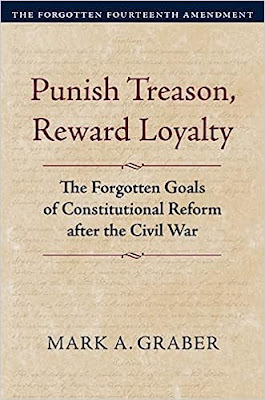
Mark A. Graber, Punish Treason, Reward Loyalty: The Forgotten Goals of Constitutional Reform after the Civil War (University of Kansas Press, 2023)
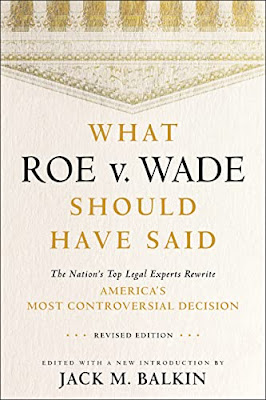
Jack M. Balkin, What Roe v. Wade Should Have Said: The Nation's Top Legal Experts Rewrite America's Most Controversial Decision - Revised Edition (NYU Press, 2023)

Andrew Koppelman, Burning Down the House: How Libertarian Philosophy Was Corrupted by Delusion and Greed (St. Martin’s Press, 2022)

Gerard N. Magliocca, Washington's Heir: The Life of Justice Bushrod Washington (Oxford University Press, 2022)
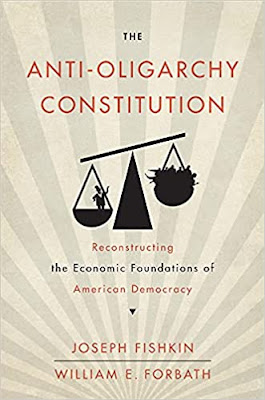
Joseph Fishkin and William E. Forbath, The Anti-Oligarchy Constitution: Reconstructing the Economic Foundations of American Democracy (Harvard University Press, 2022)
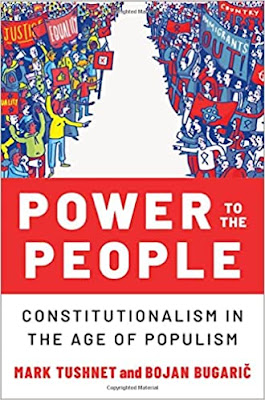
Mark Tushnet and Bojan Bugaric, Power to the People: Constitutionalism in the Age of Populism (Oxford University Press 2021).

Mark Philip Bradley and Mary L. Dudziak, eds., Making the Forever War: Marilyn B. Young on the Culture and Politics of American Militarism Culture and Politics in the Cold War and Beyond (University of Massachusetts Press, 2021).

Jack M. Balkin, What Obergefell v. Hodges Should Have Said: The Nation's Top Legal Experts Rewrite America's Same-Sex Marriage Decision (Yale University Press, 2020)

Frank Pasquale, New Laws of Robotics: Defending Human Expertise in the Age of AI (Belknap Press, 2020)

Jack M. Balkin, The Cycles of Constitutional Time (Oxford University Press, 2020)

Mark Tushnet, Taking Back the Constitution: Activist Judges and the Next Age of American Law (Yale University Press 2020).

Andrew Koppelman, Gay Rights vs. Religious Liberty?: The Unnecessary Conflict (Oxford University Press, 2020)

Ezekiel J Emanuel and Abbe R. Gluck, The Trillion Dollar Revolution: How the Affordable Care Act Transformed Politics, Law, and Health Care in America (PublicAffairs, 2020)

Linda C. McClain, Who's the Bigot?: Learning from Conflicts over Marriage and Civil Rights Law (Oxford University Press, 2020)
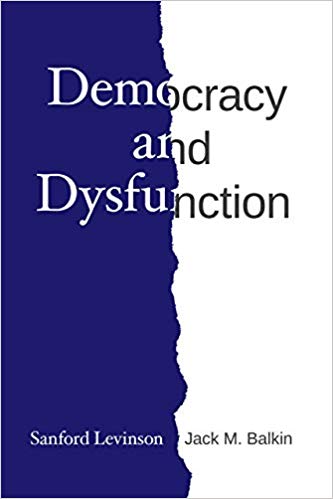
Sanford Levinson and Jack M. Balkin, Democracy and Dysfunction (University of Chicago Press, 2019)

Sanford Levinson, Written in Stone: Public Monuments in Changing Societies (Duke University Press 2018)

Mark A. Graber, Sanford Levinson, and Mark Tushnet, eds., Constitutional Democracy in Crisis? (Oxford University Press 2018)

Gerard Magliocca, The Heart of the Constitution: How the Bill of Rights became the Bill of Rights (Oxford University Press, 2018)

Cynthia Levinson and Sanford Levinson, Fault Lines in the Constitution: The Framers, Their Fights, and the Flaws that Affect Us Today (Peachtree Publishers, 2017)

Brian Z. Tamanaha, A Realistic Theory of Law (Cambridge University Press 2017)

Sanford Levinson, Nullification and Secession in Modern Constitutional Thought (University Press of Kansas 2016)

Sanford Levinson, An Argument Open to All: Reading The Federalist in the 21st Century (Yale University Press 2015)

Stephen M. Griffin, Broken Trust: Dysfunctional Government and Constitutional Reform (University Press of Kansas, 2015)

Frank Pasquale, The Black Box Society: The Secret Algorithms That Control Money and Information (Harvard University Press, 2015)

Bruce Ackerman, We the People, Volume 3: The Civil Rights Revolution (Harvard University Press, 2014)
Balkinization Symposium on We the People, Volume 3: The Civil Rights Revolution

Joseph Fishkin, Bottlenecks: A New Theory of Equal Opportunity (Oxford University Press, 2014)

Mark A. Graber, A New Introduction to American Constitutionalism (Oxford University Press, 2013)

John Mikhail, Elements of Moral Cognition: Rawls' Linguistic Analogy and the Cognitive Science of Moral and Legal Judgment (Cambridge University Press, 2013)

Gerard N. Magliocca, American Founding Son: John Bingham and the Invention of the Fourteenth Amendment (New York University Press, 2013)

Stephen M. Griffin, Long Wars and the Constitution (Harvard University Press, 2013)

Andrew Koppelman, The Tough Luck Constitution and the Assault on Health Care Reform (Oxford University Press, 2013)

James E. Fleming and Linda C. McClain, Ordered Liberty: Rights, Responsibilities, and Virtues (Harvard University Press, 2013)
Balkinization Symposium on Ordered Liberty: Rights, Responsibilities, and Virtues

Andrew Koppelman, Defending American Religious Neutrality (Harvard University Press, 2013)

Brian Z. Tamanaha, Failing Law Schools (University of Chicago Press, 2012)

Sanford Levinson, Framed: America's 51 Constitutions and the Crisis of Governance (Oxford University Press, 2012)

Linda C. McClain and Joanna L. Grossman, Gender Equality: Dimensions of Women's Equal Citizenship (Cambridge University Press, 2012)

Mary Dudziak, War Time: An Idea, Its History, Its Consequences (Oxford University Press, 2012)

Jack M. Balkin, Living Originalism (Harvard University Press, 2011)

Jason Mazzone, Copyfraud and Other Abuses of Intellectual Property Law (Stanford University Press, 2011)

Richard W. Garnett and Andrew Koppelman, First Amendment Stories, (Foundation Press 2011)

Jack M. Balkin, Constitutional Redemption: Political Faith in an Unjust World (Harvard University Press, 2011)

Gerard Magliocca, The Tragedy of William Jennings Bryan: Constitutional Law and the Politics of Backlash (Yale University Press, 2011)

Bernard Harcourt, The Illusion of Free Markets: Punishment and the Myth of Natural Order (Harvard University Press, 2010)

Bruce Ackerman, The Decline and Fall of the American Republic (Harvard University Press, 2010)
Balkinization Symposium on The Decline and Fall of the American Republic

Ian Ayres. Carrots and Sticks: Unlock the Power of Incentives to Get Things Done (Bantam Books, 2010)

Mark Tushnet, Why the Constitution Matters (Yale University Press 2010)

Ian Ayres and Barry Nalebuff: Lifecycle Investing: A New, Safe, and Audacious Way to Improve the Performance of Your Retirement Portfolio (Basic Books, 2010)
.jpg)
Jack M. Balkin, The Laws of Change: I Ching and the Philosophy of Life (2d Edition, Sybil Creek Press 2009)

Brian Z. Tamanaha, Beyond the Formalist-Realist Divide: The Role of Politics in Judging (Princeton University Press 2009)
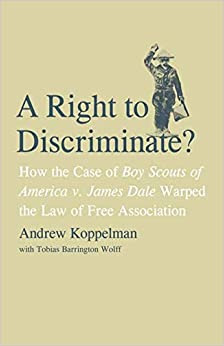
Andrew Koppelman and Tobias Barrington Wolff, A Right to Discriminate?: How the Case of Boy Scouts of America v. James Dale Warped the Law of Free Association (Yale University Press 2009)

Jack M. Balkin and Reva B. Siegel, The Constitution in 2020 (Oxford University Press 2009)

Heather K. Gerken, The Democracy Index: Why Our Election System Is Failing and How to Fix It (Princeton University Press 2009)

Mary Dudziak, Exporting American Dreams: Thurgood Marshall's African Journey (Oxford University Press 2008)

David Luban, Legal Ethics and Human Dignity (Cambridge Univ. Press 2007)

Ian Ayres, Super Crunchers: Why Thinking-By-Numbers is the New Way to be Smart (Bantam 2007)

Jack M. Balkin, James Grimmelmann, Eddan Katz, Nimrod Kozlovski, Shlomit Wagman and Tal Zarsky, eds., Cybercrime: Digital Cops in a Networked Environment (N.Y.U. Press 2007)

Jack M. Balkin and Beth Simone Noveck, The State of Play: Law, Games, and Virtual Worlds (N.Y.U. Press 2006)

Andrew Koppelman, Same Sex, Different States: When Same-Sex Marriages Cross State Lines (Yale University Press 2006)

Brian Tamanaha, Law as a Means to an End (Cambridge University Press 2006)

Sanford Levinson, Our Undemocratic Constitution (Oxford University Press 2006)

Mark Graber, Dred Scott and the Problem of Constitutional Evil (Cambridge University Press 2006)

Jack M. Balkin, ed., What Roe v. Wade Should Have Said (N.Y.U. Press 2005)

Sanford Levinson, ed., Torture: A Collection (Oxford University Press 2004)
Balkin.com homepage
Bibliography
Conlaw.net
Cultural Software
Writings
Opeds
The Information Society Project
BrownvBoard.com
Useful Links
Syllabi and Exams
