Balkinization
an unanticipated consequence of
Jack M. Balkin
Balkinization Symposiums: A Continuing List
E-mail:
Jack Balkin:
jackbalkin at yahoo.com
Bruce Ackerman
bruce.ackerman at yale.edu
Ian Ayres
ian.ayres at yale.edu
Corey Brettschneider
corey_brettschneider at brown.edu
Mary Dudziak
mary.l.dudziak at emory.edu
Joey Fishkin
joey.fishkin at gmail.com
Heather Gerken heather.gerken at yale.edu
Abbe Gluck abbe.gluck at yale.edu
Mark Graber
mgraber at law.umaryland.edu
Stephen Griffin
sgriffin at tulane.edu
Jonathan Hafetz
jonathan.hafetz at shu.edu
Jeremy Kessler
jkessler at law.columbia.edu
Andrew Koppelman
akoppelman at law.northwestern.edu
Marty Lederman
msl46 at law.georgetown.edu
Sanford Levinson
slevinson at law.utexas.edu
David Luban
david.luban at gmail.com
Gerard Magliocca
gmaglioc at iupui.edu
Jason Mazzone
mazzonej at illinois.edu
Linda McClain
lmcclain at bu.edu
John Mikhail
mikhail at law.georgetown.edu
Frank Pasquale
pasquale.frank at gmail.com
Nate Persily
npersily at gmail.com
Michael Stokes Paulsen
michaelstokespaulsen at gmail.com
Deborah Pearlstein
dpearlst at yu.edu
Rick Pildes
rick.pildes at nyu.edu
David Pozen
dpozen at law.columbia.edu
Richard Primus
raprimus at umich.edu
K. Sabeel Rahmansabeel.rahman at brooklaw.edu
Alice Ristroph
alice.ristroph at shu.edu
Neil Siegel
siegel at law.duke.edu
David Super
david.super at law.georgetown.edu
Brian Tamanaha
btamanaha at wulaw.wustl.edu
Nelson Tebbe
nelson.tebbe at brooklaw.edu
Mark Tushnet
mtushnet at law.harvard.edu
Adam Winkler
winkler at ucla.edu
Compendium of posts on Hobby Lobby and related cases
The Anti-Torture Memos: Balkinization Posts on Torture, Interrogation, Detention, War Powers, and OLC
The Anti-Torture Memos (arranged by topic)
Recent Posts
Trump's Victory and Regime Theory
Republicans and the Americans for Democratic Action
President Obama should be supporting a new constitutional convention
The new "political correctness"
The Uncomfortable View from 1824
Advice from the Book of Changes on Recent Events
Will the U.S. survive the 2016 election (continued): A reply to Damon Linker
Upside Down Federalism
Torture and the U.S. Military
Will the United States Survive this election (continued) America on the brink of civil war?
Trump Normalization Watch (conflict of interest)
Choose Your Own Health Insurance Apocalypse
City Power: Final Reflections on Cities and the 2016 Election
Maybe the Democrats Should Help Trump Abolish Obamacare
City Power: The Bankruptness of the Local Economic Development Orthodoxy
![[Powered by Blogger]](https://lh3.googleusercontent.com/blogger_img_proxy/AEn0k_tJ0LhVW8_dc5pTv_92EcbVxqtqimHwUN8t-2QRCZ-UVVkcVRAlInu9JittEDt8eb2EN-CdZdLKKs-lASH1S-OSQiQ4IwqaZs5Sr6uvBnxE=s0-d)
Just A Few Blogs
ACS Blog
Alas, a Blog
Althouse
Arts and Letters Daily
Atrios (Eschaton)
Bill of Health
Buzzflash.com
Buzz Machine
Cato at Liberty
Juan Cole (Informed Comment)
Concurring Opinions
The Constitution in 2020
Corrente
Crooked Timber
Daily Howler
Daily Kos
Dana Boyd
Brad DeLong
Digby (Hullabaloo)
Discriminations
Daniel Drezner
Kevin Drum (Mother Jones)
Electrolite
En Banc
Eunomia (Daniel Larison)
Fafblog
Michael Froomkin (Discourse.net)
GovLab (Beth Noveck)
Rick Hasen (Election Law)
History News Network
How Appealing
Ignatz (Sam Heldman)
The Importance of (Ernie Miller)
Infolaw
Instapundit
International Economic Law and Policy Blog
IntLawGrrls
Jacob Levy
Jesus' General
Jurisdynamics
The Kitchen Cabinet
Mark Kleiman
Law Blog Central
Larry Lessig
Lawyers, Guns and Money
Liberal Oasis
Brian Leiter's Law School Reports
The Leiter Reports
Marginal Revolution
Megan McArdle
Memeorandum
Metafilter
Mirror of Justice
The New Republic
Newseum
No More Mister Nice Blog
Brendan Nyhan
Opinio Juris
Orcinus
The Originalism Blog
Pandagon
Passport (Foreign Policy)
Overcoming Bias
Political Animal (Washington Monthly)
Political Theory Daily Review
Political Wire (Taegan Goddard)
The Poor Man
Virginia Postrel
Prawfsblawg
Public Reason
Jonathan Rauch
Raw Story
Redstate
ReligiousLeftLaw.com
Reporters Committee For Freedom of the Press
Reproductive Rights Blog
Rothman's Roadmap to the Right of Publicity
SCOTUS Blog
Seeing the Forest
Clay Shirky
The Shifted Librarian
The Situationist
Larry Solum (Legal Theory)
Andrew Sullivan
Talking Points Memo
Talk Left
Tapped
Tbogg
TechPresident
The Paper Chase (Jurist)
Tom Paine
Tom Tomorrow (This Modern World)
Eve Tushnet
Uggabugga
University of Chicago Law School Faculty Blog
Unqualified Offerings
The Volokh Conspiracy
War and Piece (Laura Rozen)
Wampum
Oliver Willis
Wonkette
Written Description
Matthew Yglesias
Yin
Your Choice of Feeds
1. XML
powered by

2. Atom Feed
3. RSS 2.0
Trump's Victory and Regime Theory
Stephen Griffin
Posted
5:32 PM
by Stephen Griffin [link]
Republicans and the Americans for Democratic Action
Mark Tushnet
It occurred to me that there was something of a historical analogy worth thinking about. Right now it appears as though proto-fascists have a non-trivial amount of influence in leading circles in the Republican party. In the late 1940s some Democrats were concerned that Stalinists were coming to have a non-trivial amount of influence on the Democratic party. (The parallel isn't exact; the vehicle for Stalinist influence would have been Henry Wallace, but he was dumped by the Democrats in 1944 rather than nominated by them for the presidency in 1948.) In response, leading Democrats organized the Americans for Democratic Action as a vehicle for organizing opposition within and outside the party to Stalinist influence. My sense/recollection is that the ADA was pretty successful. I wonder whether something similar will occur now -- the creation of a formal organized counter, associated with the Republican party, to the great disinhibition. At present, all one sees are assertions that somehow "the Republican establishment" will manage to get some control back, re-imposing the inhibitions that have been unleashed. I wonder whether that can be sufficient; liberals in the 1940s didn't think it would be. I also wonder whether times and institutions have changed so much that something like the ADA couldn't be successful under contemporary circumstances. But, it's early days, and, as the Derek Jacobi character says in "Dead Again," I, for one, am very interested to see what's going to happen next.
Posted
12:00 PM
by Mark Tushnet [link]
President Obama should be supporting a new constitutional convention
Sandy Levinson
From David Remnick's post-election interview with President Obama
“Some of this is really simple and it’s the thing that Mitch McConnell figured out on Day One of my Presidency, which is people aren’t paying that close attention to how Washington works,” he said. “They know there are lobbyists, special interests, gridlock; that the powerful have more influence and access than they do. And if things aren’t working, if there’s gridlock, then the only guy that they actually know is supposed to be in charge and supposed to be helping them is the President. And so the very deliberate strategy that Mitch McConnell and the Republican Party generally employed during the course of my Presidency was effective. What they understood was that, if you embraced old-fashioned dealing, trading, horse-trading, bipartisan achievement, people feel better. And, if people feel better, then they feel better about the President’s party, and the President’s party continues. And, if it feels broken, stuck, and everybody is angry, then that hurts the President or the President’s party.”
This captures in a nutshell one of the central pathologies of our ever-more-dangerous Constitution. As I've repeatedly written, Mitch McConnell is truly evil, but he is not stupid, and his strategy of implacable opposition, including refusing to give Merrick Garland the courtesy of a hearing, was completely rational (and constitutional).
Perhaps the Republican Party will truly emerge as a truly serious "party of government" instead of a "party in opposition" in the next four years, but I wouldn't bet on it. Indeed, I suspect that one reason that McConnell and friends will not eliminate the filibuster on legislation is precisely that they have no desire to dismantle the Obama legacy in its entirety, but lack the political integrity to say so. Thus they will support one of the insane bills that will "repeal Obamacare" while keeping the requirement that insurance companies not take account of pre-existing conditions, secure in the knowledge that 41 Democrats will save them from actually having to take responsibility for it, and they will have the added benefit of being able to blame obstreperous Democrats in the 2018 midterms.
Perhaps a retired President Obama could also speak to the idiocy of the electoral college and of life-tenure for Supreme Court justices. I have a couple of books to suggest that he read!
Posted
6:54 PM
by Sandy Levinson [link]
(34) comments
The new "political correctness"
Sandy Levinson
Anyone who seriously believes that the Trump "election" does in "political correctness" is simply mistaken. Instead, we are daily being visited with new forms of political correctness. In no particular order, let me suggest the following as things that will become a condition for participating in polite public conversation in the all-too-near future, on pain of being thought a political extremist or, even worse, not a "good sport" about being defeated in an election:
1. Donald Trump is not a narcissist, a totally untrustworthy con-man, a sexual predator, or, ultimately, a sociopath. Instead, he is a successful businessman who will bring a breath (and breadth) of fresh air to a Washington that is in dire need of disruption.
2. In addition to overlooking his patent psychological deficiencies, one will also have to deny that he is entirely without any relevant knowledge about almost all of the actual policy areas where the decision-making buck will stop in the Oval Office. Horace Greeley, I believe, once said that he would as soon trust the wisdom of his dog as that of Roger Taney. It would be considered tactless to quote Greeley in the present context. Or one might quote from King Lear that even "a dog's obey'd in office" as the preface to a discussion about political obligation, though that, too, would be considered politically incorrect.
Read more »
Posted
12:15 PM
by Sandy Levinson [link]
(36) comments
The Uncomfortable View from 1824
Mark Graber
UPDATE: I really should read the most recent Balkinization posts before posting. Needless to say, while I share Sandy's fears about a Trump presidency, I think the lesson history teaches is that constitutional parlor tricks (which is what I perceive the "Hamiltonian" solution to be) are failures, even when they work. Perhaps, however, one reason is that I genuinely think that a Rubio presidency with the present Congress is likely to be about as bad as a Trump presidency.
Posted
5:02 PM
by Mark Graber [link]
Advice from the Book of Changes on Recent Events
JB
The Judgment
Shock. Success.
Thunder comes—crack, crack!
Afterward there is laughter and talk—ha, ha!
The shock terrifies for a hundred miles,
But he does not let the sacrificial spoon and chalice fall.
Read more »
Posted
11:57 AM
by JB [link]
Will the U.S. survive the 2016 election (continued): A reply to Damon Linker
Sandy Levinson
Damon Linker has a thoughtful reply in The Week to the New York Daily News op-ed co-authored by my UT colleagues Jeff Tulis, Jeremy Suri, and myself. He certainly does not disagree with our central premise that Donald Trump is a potential menace to the American republic. The gravamen of his argument is as follows:
There is obviously merit in this view. Indeed, this is one reason that I've been expressing my deep fears that we are a country on the brink of civil war. Certainly the social psychology is already there; the question is whether it will indeed take a more violent form, and it would be irresponsible in the extreme to precipitate the latter unless one truly believed it was a better alternative than accepting the risks of a Trump presidency with his enjoying all of the prerogatives--and they are obviously considerable--of what is usually described as "the most powerful office in the world."
We--that is, Tulis, Suri, and myself--do indeed see Trump as an existential threat. I've probably been the most indiscreet in my language, with my repeated reference to him as a sociopath, and I'm not really encouraged to change my tone by anything he's done since election day. But the key question really is the empirical one: Exactly how dangerous does one believe Trump to be, and what risks should his opposition ("loyal" to the country but certainly not to him) be prepared to run? If it were "merely" having to put up with some egregious policy decisions over the next four years before a very likely Democratic victory in 2020, that would be one thing. As James Buchanan argued in 1860, it was politically quite stupid for the South to secede after Lincoln's victory, egregious as it was from their perspective, because it was quite unlikely that he could get any truly radical measures through a Congress that contained representatives and senators from what became the Confederacy, and election prospects would be very good in 1864. (After all, Lincoln won with only 39.8% of the popular vote, and his victory in the electoral college was substantially caused by the presence of three other candidates on the ballot.) So, if one isn't genuinely terrified by Trump, the best thing to do is to plump for a New Deal-style infrastructure program and accept what William Rehnquist might have called "the bitter with the sweet."
We continue to be terrified. Benjamin Franklin famously said that we had a republic, but the test is whether we could "keep it." Mark Graber has argued that the answer was no with the election of Andres Jackson, and there is certainly much to that view. But Donald Trump has broken all of the accepted templates of the American form of democratic politics, along with being a raving narcissist and sheer ignoramus on almost all issues of public policy. The best we could hope for is that he will devote his four years in office to plunder and personal enrichment of himself and his family, since that is really the only thing he seems to care about. If that were the only concern, then OK. Corruption of a personal sort is not an existential danger. Teapot Dome did not destroy the Union.
Read more »
Posted
2:07 PM
by Sandy Levinson [link]
(51) comments
Upside Down Federalism
Gerard N. Magliocca
The outcome of the election may change our understanding of federalism. Part of that change is that Democrats will become more keen on states'-rights and Republicans less so, in the grand tradition of political flip-flopping. A theoretical shift, though, may also be in order.
There are many justifications for federalism. One is tradition, which helps explain why many of the fifty states exist and have the boundaries that they do. Another rationale is that states help check federal authority. There is also the thought that states'-rights protect geographically concentrated minorities (think Quebec) or allow minorities to sort themselves into places that protect rights that are important to them but are not guaranteed nationally.
The current operation of the Electoral College, the Senate, and (maybe) the House of Representatives raises another possibility--federalism exists to protect the majority from the minority. Most people voted for President voted for Hillary Clinton, but she carried only twenty of the fifty states (plus DC) and did not carry the combination of twenty states needed to win. The incoming Republican Senate majority also probably represents a minority, though that is complicated by the fact that some states have one Senator from each party. I don't know what the final totals will show for the overall national vote for the House of Representatives, but you get the idea.
If the minority controls the national government, then where are the protections for the majority? The main candidates are some states, the Senate filibuster (which, as people have pointed out, sometimes represents a majority rather than a minority of voters), and the courts. (I say some states because you have to live in a state that the Democrats carried. Hillary Clinton voters in Texas are on the outs both at the national and the state level, though they could move to another state.) There is nothing novel about the thought that courts sometimes protect the majority from a minority, and the same point is sometimes made about the Senate filibuster. When it comes to states, though, I'm not sure this gets discussed, or at least discussed as much as it should be.
Posted
12:32 PM
by Gerard N. Magliocca [link]
(23) comments
Torture and the U.S. Military
Deborah Pearlstein
Cross-posted at Opinio Juris
Posted
3:03 PM
by Deborah Pearlstein [link]
Will the United States Survive this election (continued) America on the brink of civil war?
Sandy Levinson
I joined my two University of Texas colleagues Jeff Tulis and Jeremy Suri in writing an op-ed, published in today's New York Daily News. As you can see (if you open it), it calls for a coalition of Democratic and at least 37 Republican electors to ally to vote for a Republican other than Donald Trump and thus throw the election into the House, which would presumably elect the alternative Republican and save us from the Trumpian menace, the character of which seems clearer day by day. Even though he cannot be assigned direct responsibility, I note the following postcard that I received today at my Harvard Law School office, mailed, it seems, from the UK. It reads, in toto: "Hey Sandy You just got your kike ass kicked. fuck you hymie. We're gonna Drain the Swamp at Harvard Law. Juden Raus!" There can be no doubt that Trump and Bannon have liberated the worst instincts of a lot of truly deplorable people. The most unequivocally happy supporter of the new Trump regime is David Duke, which makes a lot of sense. This is precisely why it is important for conservatives of good will to come together, at long last, for a true "never Trump" movement that would act completely constitutionally by imploring electors to accept the responsibilities actually envisioned for them by the Philadelphia Framers. One such honorable conservative is Michael Stokes Paulsen, who has a valuable analysis of the electoral college and the constitutionally-guaranteed autonomy of electors. There is also a group calling themselves the "Hamilton Electors," who emphasize the disconnect between the arguments made by Publius/Hamilton re the electoral college and the view that the electors are totally without the ability to engage in what Publius in Federalist 1 called "reflection and choice" about the character and capabilities of candidates to occupy what we call the White House (built, of course, after Philadelphia). If we're going to have a constitutional crisis, which is quite likely, better it be to prevent the sociopath from taking office than trying to figure out how to respond after he begins exercising all of the formidable powers of the modern presidency.
Read more »
Posted
8:41 PM
by Sandy Levinson [link]
(151) comments
Trump Normalization Watch (conflict of interest)
Stephen Griffin
More substantive articles are appearing about Trump's enormous conflict of interest problems. To my mind, the WaPo has the best coverage, with a major story here; Jennifer Rubin's follow up on what was said on the Sunday programs; and Trevor Potter's essential analysis. So, three observations: spokespeople for Trump are using the (nonexistent) law as a shield against what is really a political-policy problem, albeit one that might verge on the constitutional (in my estimation they are bluffing, they don't appear to have a strategy given that Trump almost certainly doesn't want to divest himself of ownership). Second, the issue is indeed ownership not management, as Rubin points out. Third, Trump and the GOP are perhaps concentrating too much in their statements on the possibility of "outbound" corruption (outbound, that is, from the Oval Office), wherein Trump makes a decision based on financial interest, rather than "inbound" corruption, in which a foreign power or entity directs financial benefits Trump's way in the hope of influencing American policy. The only way to solve the latter is through divestiture of ownership. And this is by no means a complete catalog of the difficulties -- there is also the "overhang" problem as federal officials attempt to make decisions in the ordinary course which will somehow affect Trump's financial interests without worrying about their future job security.
UPDATE: Adam Liptak has a good story today in the "failing" NYT on the emoluments clause.
FURTHER UPDATE: Trump was interviewed today by the NYT and pretty clearly, he does not want to sell his assets or use a blind trust. We are probably headed to some sort of political showdown on the conflict of interest issue; if not, there could be a series of major corruption scandals extending through the Trump administration.
Posted
2:43 PM
by Stephen Griffin [link]
Choose Your Own Health Insurance Apocalypse
Joseph Fishkin
443,000; 454,000; 379,000. Those are the estimated number of people in, respectively, Michigan, Ohio, and Pennsylvania who currently have health insurance through the Medicaid expansion component of Obamacare. That’s the part that the Supreme Court gave states the power to opt out of, but which nonetheless has managed to get more people health insurance than the better-known exchanges-with-subsidies component of the system. 31 states now participate in the Medicaid expansion and that includes every Great Lakes state except Scott Walker’s Wisconsin. How many of the people currently receiving expanded-Medicaid coverage were Trump voters? A back-of-the-envelope estimate* is roughly 200,000 actual votes for Trump, in those three states alone. (Note that the outcome in Michigan was decided by fewer than 12,000 votes.) So, simple question: Does Donald Trump want to begin his presidency by kicking all those people off their health insurance? Or does he want to keep this major component of Obamacare, or some version of it, in place?
That’s just one of a series of crucial and politically challenging health policy questions Trump now faces as his transition team lurches toward taking the reins of government and implementing his priorities. Few of those priorities are more explicit than the pledge to “repeal and replace” Obamacare. “Repeal and replace” has been a point of apparent unity between Trump and his Republican allies in Congress: Paul Ryan and other Republicans in Congress have campaigned aggressively on this idea and slogan for years before Trump adopted it during the campaign. But Republicans did not spell out a plan for the “replace” part; when pressed they’d tend to offer a thin soup of pre-ACA talking points that were barely relevant to the main choices at hand. On those big choices they were silent. That silence now seems ominous—not only for Americans who badly need to keep their health insurance, but also for Republicans who badly need to keep their new majority coalition from combusting.
Staying quiet about the actual policy choices involved in choosing any replacement for Obamacare has so far made political sense for Republicans. In reality, almost any non-trivial tweak to health policy, let alone an overhaul, will produce intense pain for one or more groups of people, businesses, insurers, governments, or interest groups that are part of the Republican coalition. When you’re up against Obama’s veto pen anyway, and you’re fighting for votes, why open yourself up to the criticism that an actual plan would attract? But now Republicans are set to control the entire federal government. That means they have to govern, for better and definitely for worse. So they have some big choices to make. Here are six of the biggest (after the jump):
Read more »
Posted
12:26 PM
by Joseph Fishkin [link]
City Power: Final Reflections on Cities and the 2016 Election
Guest Blogger
Richard Schragger
For the Symposium on Richard Schragger, City Power: Urban Governance in a Global Age (2016).
Posted
9:30 AM
by Guest Blogger [link]
Maybe the Democrats Should Help Trump Abolish Obamacare
Andrew Koppelman
Posted
5:25 PM
by Andrew Koppelman [link]
City Power: The Bankruptness of the Local Economic Development Orthodoxy
Guest Blogger
Audrey McFarlane
For the Symposium on Richard Schragger, City Power: Urban Governance in a Global Age (2016).
When Gallileo Gallilei first concluded that the earth did
not circle the sun, he was jailed by the Catholic Church as a heretic. His observations contradicted not only the
authority of the Bible but what could be plainly seen, admittedly imperfectly,
by any casual observer. The sun changed position in the sky every day. So it is with local economic development. To
question local economic development and whether it leads to economic growth and
improvement in economic well-being for a city’s residents is to be branded a
heretic. The strength of the orthodoxy is
hegemonic. When new development happens,
any casual observer can see that impressive new buildings are built, corporate
headquarters take up residence, there’s hustle and bustle as chain stores move
in, coffee shops and boutique shopping thrives, salons and day spas abound. Some people get construction jobs, others are
barristas, janitors or pet groomers. Others
get web design gigs, real estate sales jobs or a key to the C-suite. Through these and other impressive changes in
the built environment, there’s visible change, a public demonstration of
progress.
Posted
9:00 AM
by Guest Blogger [link]
Books by Balkinization Bloggers

Gerard N. Magliocca, The Actual Art of Governing: Justice Robert H. Jackson's Concurring Opinion in the Steel Seizure Case (Oxford University Press, 2025)

Linda C. McClain and Aziza Ahmed, The Routledge Companion to Gender and COVID-19 (Routledge, 2024)

David Pozen, The Constitution of the War on Drugs (Oxford University Press, 2024)

Jack M. Balkin, Memory and Authority: The Uses of History in Constitutional Interpretation (Yale University Press, 2024)
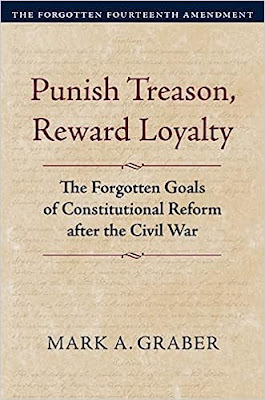
Mark A. Graber, Punish Treason, Reward Loyalty: The Forgotten Goals of Constitutional Reform after the Civil War (University of Kansas Press, 2023)
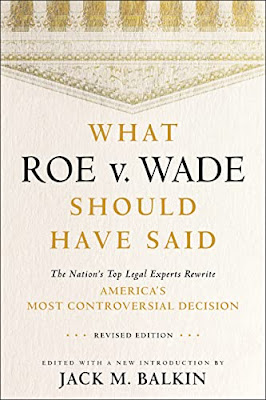
Jack M. Balkin, What Roe v. Wade Should Have Said: The Nation's Top Legal Experts Rewrite America's Most Controversial Decision - Revised Edition (NYU Press, 2023)

Andrew Koppelman, Burning Down the House: How Libertarian Philosophy Was Corrupted by Delusion and Greed (St. Martin’s Press, 2022)

Gerard N. Magliocca, Washington's Heir: The Life of Justice Bushrod Washington (Oxford University Press, 2022)
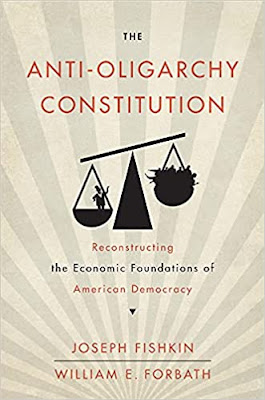
Joseph Fishkin and William E. Forbath, The Anti-Oligarchy Constitution: Reconstructing the Economic Foundations of American Democracy (Harvard University Press, 2022)
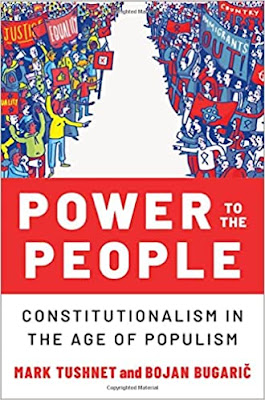
Mark Tushnet and Bojan Bugaric, Power to the People: Constitutionalism in the Age of Populism (Oxford University Press 2021).

Mark Philip Bradley and Mary L. Dudziak, eds., Making the Forever War: Marilyn B. Young on the Culture and Politics of American Militarism Culture and Politics in the Cold War and Beyond (University of Massachusetts Press, 2021).

Jack M. Balkin, What Obergefell v. Hodges Should Have Said: The Nation's Top Legal Experts Rewrite America's Same-Sex Marriage Decision (Yale University Press, 2020)

Frank Pasquale, New Laws of Robotics: Defending Human Expertise in the Age of AI (Belknap Press, 2020)

Jack M. Balkin, The Cycles of Constitutional Time (Oxford University Press, 2020)

Mark Tushnet, Taking Back the Constitution: Activist Judges and the Next Age of American Law (Yale University Press 2020).

Andrew Koppelman, Gay Rights vs. Religious Liberty?: The Unnecessary Conflict (Oxford University Press, 2020)

Ezekiel J Emanuel and Abbe R. Gluck, The Trillion Dollar Revolution: How the Affordable Care Act Transformed Politics, Law, and Health Care in America (PublicAffairs, 2020)

Linda C. McClain, Who's the Bigot?: Learning from Conflicts over Marriage and Civil Rights Law (Oxford University Press, 2020)
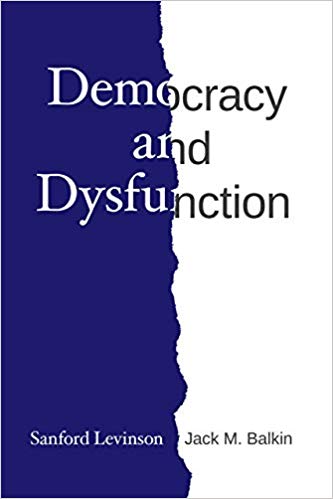
Sanford Levinson and Jack M. Balkin, Democracy and Dysfunction (University of Chicago Press, 2019)

Sanford Levinson, Written in Stone: Public Monuments in Changing Societies (Duke University Press 2018)

Mark A. Graber, Sanford Levinson, and Mark Tushnet, eds., Constitutional Democracy in Crisis? (Oxford University Press 2018)

Gerard Magliocca, The Heart of the Constitution: How the Bill of Rights became the Bill of Rights (Oxford University Press, 2018)

Cynthia Levinson and Sanford Levinson, Fault Lines in the Constitution: The Framers, Their Fights, and the Flaws that Affect Us Today (Peachtree Publishers, 2017)

Brian Z. Tamanaha, A Realistic Theory of Law (Cambridge University Press 2017)

Sanford Levinson, Nullification and Secession in Modern Constitutional Thought (University Press of Kansas 2016)

Sanford Levinson, An Argument Open to All: Reading The Federalist in the 21st Century (Yale University Press 2015)

Stephen M. Griffin, Broken Trust: Dysfunctional Government and Constitutional Reform (University Press of Kansas, 2015)

Frank Pasquale, The Black Box Society: The Secret Algorithms That Control Money and Information (Harvard University Press, 2015)

Bruce Ackerman, We the People, Volume 3: The Civil Rights Revolution (Harvard University Press, 2014)
Balkinization Symposium on We the People, Volume 3: The Civil Rights Revolution

Joseph Fishkin, Bottlenecks: A New Theory of Equal Opportunity (Oxford University Press, 2014)

Mark A. Graber, A New Introduction to American Constitutionalism (Oxford University Press, 2013)

John Mikhail, Elements of Moral Cognition: Rawls' Linguistic Analogy and the Cognitive Science of Moral and Legal Judgment (Cambridge University Press, 2013)

Gerard N. Magliocca, American Founding Son: John Bingham and the Invention of the Fourteenth Amendment (New York University Press, 2013)

Stephen M. Griffin, Long Wars and the Constitution (Harvard University Press, 2013)

Andrew Koppelman, The Tough Luck Constitution and the Assault on Health Care Reform (Oxford University Press, 2013)

James E. Fleming and Linda C. McClain, Ordered Liberty: Rights, Responsibilities, and Virtues (Harvard University Press, 2013)
Balkinization Symposium on Ordered Liberty: Rights, Responsibilities, and Virtues

Andrew Koppelman, Defending American Religious Neutrality (Harvard University Press, 2013)

Brian Z. Tamanaha, Failing Law Schools (University of Chicago Press, 2012)

Sanford Levinson, Framed: America's 51 Constitutions and the Crisis of Governance (Oxford University Press, 2012)

Linda C. McClain and Joanna L. Grossman, Gender Equality: Dimensions of Women's Equal Citizenship (Cambridge University Press, 2012)

Mary Dudziak, War Time: An Idea, Its History, Its Consequences (Oxford University Press, 2012)

Jack M. Balkin, Living Originalism (Harvard University Press, 2011)

Jason Mazzone, Copyfraud and Other Abuses of Intellectual Property Law (Stanford University Press, 2011)

Richard W. Garnett and Andrew Koppelman, First Amendment Stories, (Foundation Press 2011)

Jack M. Balkin, Constitutional Redemption: Political Faith in an Unjust World (Harvard University Press, 2011)

Gerard Magliocca, The Tragedy of William Jennings Bryan: Constitutional Law and the Politics of Backlash (Yale University Press, 2011)

Bernard Harcourt, The Illusion of Free Markets: Punishment and the Myth of Natural Order (Harvard University Press, 2010)

Bruce Ackerman, The Decline and Fall of the American Republic (Harvard University Press, 2010)
Balkinization Symposium on The Decline and Fall of the American Republic

Ian Ayres. Carrots and Sticks: Unlock the Power of Incentives to Get Things Done (Bantam Books, 2010)

Mark Tushnet, Why the Constitution Matters (Yale University Press 2010)

Ian Ayres and Barry Nalebuff: Lifecycle Investing: A New, Safe, and Audacious Way to Improve the Performance of Your Retirement Portfolio (Basic Books, 2010)
.jpg)
Jack M. Balkin, The Laws of Change: I Ching and the Philosophy of Life (2d Edition, Sybil Creek Press 2009)

Brian Z. Tamanaha, Beyond the Formalist-Realist Divide: The Role of Politics in Judging (Princeton University Press 2009)
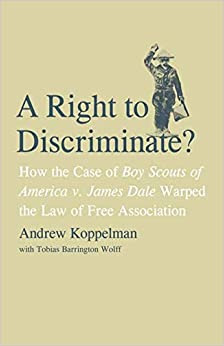
Andrew Koppelman and Tobias Barrington Wolff, A Right to Discriminate?: How the Case of Boy Scouts of America v. James Dale Warped the Law of Free Association (Yale University Press 2009)

Jack M. Balkin and Reva B. Siegel, The Constitution in 2020 (Oxford University Press 2009)

Heather K. Gerken, The Democracy Index: Why Our Election System Is Failing and How to Fix It (Princeton University Press 2009)

Mary Dudziak, Exporting American Dreams: Thurgood Marshall's African Journey (Oxford University Press 2008)

David Luban, Legal Ethics and Human Dignity (Cambridge Univ. Press 2007)

Ian Ayres, Super Crunchers: Why Thinking-By-Numbers is the New Way to be Smart (Bantam 2007)

Jack M. Balkin, James Grimmelmann, Eddan Katz, Nimrod Kozlovski, Shlomit Wagman and Tal Zarsky, eds., Cybercrime: Digital Cops in a Networked Environment (N.Y.U. Press 2007)
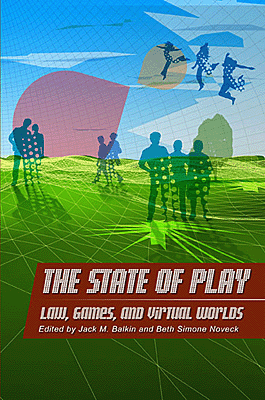
Jack M. Balkin and Beth Simone Noveck, The State of Play: Law, Games, and Virtual Worlds (N.Y.U. Press 2006)

Andrew Koppelman, Same Sex, Different States: When Same-Sex Marriages Cross State Lines (Yale University Press 2006)

Brian Tamanaha, Law as a Means to an End (Cambridge University Press 2006)

Sanford Levinson, Our Undemocratic Constitution (Oxford University Press 2006)

Mark Graber, Dred Scott and the Problem of Constitutional Evil (Cambridge University Press 2006)

Jack M. Balkin, ed., What Roe v. Wade Should Have Said (N.Y.U. Press 2005)

Sanford Levinson, ed., Torture: A Collection (Oxford University Press 2004)
Balkin.com homepage
Bibliography
Conlaw.net
Cultural Software
Writings
Opeds
The Information Society Project
BrownvBoard.com
Useful Links
Syllabi and Exams
