Balkinization
an unanticipated consequence of
Jack M. Balkin
Balkinization Symposiums: A Continuing List
E-mail:
Jack Balkin:
jackbalkin at yahoo.com
Bruce Ackerman
bruce.ackerman at yale.edu
Ian Ayres
ian.ayres at yale.edu
Corey Brettschneider
corey_brettschneider at brown.edu
Mary Dudziak
mary.l.dudziak at emory.edu
Joey Fishkin
joey.fishkin at gmail.com
Heather Gerken heather.gerken at yale.edu
Abbe Gluck abbe.gluck at yale.edu
Mark Graber
mgraber at law.umaryland.edu
Stephen Griffin
sgriffin at tulane.edu
Jonathan Hafetz
jonathan.hafetz at shu.edu
Jeremy Kessler
jkessler at law.columbia.edu
Andrew Koppelman
akoppelman at law.northwestern.edu
Marty Lederman
msl46 at law.georgetown.edu
Sanford Levinson
slevinson at law.utexas.edu
David Luban
david.luban at gmail.com
Gerard Magliocca
gmaglioc at iupui.edu
Jason Mazzone
mazzonej at illinois.edu
Linda McClain
lmcclain at bu.edu
John Mikhail
mikhail at law.georgetown.edu
Frank Pasquale
pasquale.frank at gmail.com
Nate Persily
npersily at gmail.com
Michael Stokes Paulsen
michaelstokespaulsen at gmail.com
Deborah Pearlstein
dpearlst at yu.edu
Rick Pildes
rick.pildes at nyu.edu
David Pozen
dpozen at law.columbia.edu
Richard Primus
raprimus at umich.edu
K. Sabeel Rahmansabeel.rahman at brooklaw.edu
Alice Ristroph
alice.ristroph at shu.edu
Neil Siegel
siegel at law.duke.edu
David Super
david.super at law.georgetown.edu
Brian Tamanaha
btamanaha at wulaw.wustl.edu
Nelson Tebbe
nelson.tebbe at brooklaw.edu
Mark Tushnet
mtushnet at law.harvard.edu
Adam Winkler
winkler at ucla.edu
Compendium of posts on Hobby Lobby and related cases
The Anti-Torture Memos: Balkinization Posts on Torture, Interrogation, Detention, War Powers, and OLC
The Anti-Torture Memos (arranged by topic)
Recent Posts
Accountable Algorithms
The Court's "Notice and Comment" Order in Zubik
Envisioning a forthcoming constitutional crises
Nation symposium
Family law workshop at Illinois (call for papers)
North Carolina’s "Bathroom Bill" and the Right to Local Self-Government
The Zubik oral argument (Part II): Is the theoretical prospect of a new statutory subsidy for "stand-alone" contraception plans on the Exchange a less restrictive means of advancing the government's interests?
The Zubik oral argument (Part I): Of substantial burdens and "hijacking"
Upcoming event
A different take on the selection of a new Supreme Court Justice
Update on Zubik--the nonprofit contraceptive case--and an online symposium on NeJaime and Siegel's Conscience Wars
Republican lemmings?
![[Powered by Blogger]](https://lh3.googleusercontent.com/blogger_img_proxy/AEn0k_s4m1VyhueSP5yKS1zGz2INw5FfUX9vLn9TMzr2fb7RIoCfi-3BPPnsZ6u0kDmwbY7-Zt9kd1IrkfQdIxzw0I6NL_7nZCjL3AeKxblQfbYB=s0-d)
Just A Few Blogs
ACS Blog
Alas, a Blog
Althouse
Arts and Letters Daily
Atrios (Eschaton)
Bill of Health
Buzzflash.com
Buzz Machine
Cato at Liberty
Juan Cole (Informed Comment)
Concurring Opinions
The Constitution in 2020
Corrente
Crooked Timber
Daily Howler
Daily Kos
Dana Boyd
Brad DeLong
Digby (Hullabaloo)
Discriminations
Daniel Drezner
Kevin Drum (Mother Jones)
Electrolite
En Banc
Eunomia (Daniel Larison)
Fafblog
Michael Froomkin (Discourse.net)
GovLab (Beth Noveck)
Rick Hasen (Election Law)
History News Network
How Appealing
Ignatz (Sam Heldman)
The Importance of (Ernie Miller)
Infolaw
Instapundit
International Economic Law and Policy Blog
IntLawGrrls
Jacob Levy
Jesus' General
Jurisdynamics
The Kitchen Cabinet
Mark Kleiman
Law Blog Central
Larry Lessig
Lawyers, Guns and Money
Liberal Oasis
Brian Leiter's Law School Reports
The Leiter Reports
Marginal Revolution
Megan McArdle
Memeorandum
Metafilter
Mirror of Justice
The New Republic
Newseum
No More Mister Nice Blog
Brendan Nyhan
Opinio Juris
Orcinus
The Originalism Blog
Pandagon
Passport (Foreign Policy)
Overcoming Bias
Political Animal (Washington Monthly)
Political Theory Daily Review
Political Wire (Taegan Goddard)
The Poor Man
Virginia Postrel
Prawfsblawg
Public Reason
Jonathan Rauch
Raw Story
Redstate
ReligiousLeftLaw.com
Reporters Committee For Freedom of the Press
Reproductive Rights Blog
Rothman's Roadmap to the Right of Publicity
SCOTUS Blog
Seeing the Forest
Clay Shirky
The Shifted Librarian
The Situationist
Larry Solum (Legal Theory)
Andrew Sullivan
Talking Points Memo
Talk Left
Tapped
Tbogg
TechPresident
The Paper Chase (Jurist)
Tom Paine
Tom Tomorrow (This Modern World)
Eve Tushnet
Uggabugga
University of Chicago Law School Faculty Blog
Unqualified Offerings
The Volokh Conspiracy
War and Piece (Laura Rozen)
Wampum
Oliver Willis
Wonkette
Written Description
Matthew Yglesias
Yin
Your Choice of Feeds
1. XML
powered by

2. Atom Feed
3. RSS 2.0
Accountable Algorithms
Guest Blogger
Joshua A. Kroll, Joanna Huey, Solon Barocas, Edward W. Felten, Joel R. Reidenberg, David G. Robinson, and Harlan Yu, Princeton University Labels: Black Box
Posted
10:55 AM
by Guest Blogger [link]
The Court's "Notice and Comment" Order in Zubik
Gerard N. Magliocca
Marty is the resident expert on this case, but I want to point out that the Supreme Court's request for supplemental issued yesterday is very strange. The order reads more like a proposed rule of an administrative agency, both in its specificity and in the way that it gives interested parties (though in this instance only the parties of record) time to offer their thoughts before a final decision is taken.
I don't see why this case is different from any other where the Court ends up using a legal theory that was not briefed or argued. In every decision of that sort, should the parties be given an opportunity to file supplemental briefs commenting on the idea before the opinion issues? Maybe that procedure will lead to better decisions, but if so it should be used consistently from now on.
Posted
11:02 AM
by Gerard N. Magliocca [link]
(25) comments
Envisioning a forthcoming constitutional crises
Sandy Levinson
Are we in a genuine "constitutional crisis," whatever the dysfunctionality of our national government? Probably not, though if a Republican Senate were to continue to refuse to confirm any nominees by a Democratic President for the judiciary (or anything else), that could easily take on the overtones of a genuine crisis. (One can "starve the beast" almost as easily by refusing to allow the appointment of officials charged with administering the national government as by refusing to fund it.) But, for those who like to envision apocalyptic scenarios besides alien invasion or the dangers of asteroids, think of the following:
There are indeed three or four serious candidates for the presidency this fall, perhaps Trump, Clinton, Gary Johnson of the Libertarian Party., and Mitt Romney for the "Establishment GOP"." Clinton will clearly get more votes than any of the other candidates, but, of course, that doesn't matter. The electoral votes are the only thing that matters. So would the losers accept the verdict if someone other than Clinton got an electoral vote majority, even as she has received far more popular votes (and was in fact the second choice of most of the Romney voters)? And would it matter if, say, North Carolina's or Arizona's electoral votes went to Trump quite clearly because of successful efforts by the Republicans who control those states to suppress likely Democratic votes? Why in the world should Democrats treat that outcome as "legitimate"? Talk about "rioting in the streets"!
But wait, there's more. Imagine that Clinton, with a clear plurality, perhaps even a solid majority of the popular vote, doesn't cobble together the necessary majority, but no one else does either, because, say, Romney manages to carry Utah, while Gary Johnson slips into first place in New Hampshire and Alaska. Then, of course, our 1787 Constitution says that the House must choose, on a one-state, one-vote basis (i.e. equal voting power for Wyoming and California) among the top three candidates, for the presidency, while the Senate chooses between the top two vice presidential candidates for that office. It remains relatively likely that the next House will continue to have a majority of Republican delegations, even if, unexpectedly, the Democrats do well enough to recapture the House by, say, sweeping some of the large states. So would it be legitimate if, say, the Republican House chose Mitt, who came in third with 10 electoral votes (while Trump has 260 and Clinton has 268 votes, respectively)? I presume that there would be conjoint rioting in the streets among Trump reporters on one side of the street and Democrats on the other. And, of course, what if the now-Democratic Senate chose Julian Castro to be VP (over, say, John Kasich, Mitt's running mate)? Or, to finish off the list of possibilities, assume that Clinton, who gets only, say, 43% of the popular vote (the same percentage as her husband in 1992), in fact gets a majority of the electoral vote because, say, Mitt and/or Johnson got enough votes to deprive Trump of a presumptive victory in some key states. Would Trumpists accept that as a legitimate outcome.
This particular scenario, as suggested , doesn't depend on asteroids or even terrorist attacks. All that has to happen is for the 1787 Constitution (as amended in 1803) to work "as designed." The crisis would not be "constitutional breakdown," as when the clear requirements of the Constitution are violated, but rather a genuine and altogether justified crisis of legitimacy when the sheer indefensible stupidity of the Constitution is revealed in all of its glory. This probably won't happen, of course, but I suspect that the likelihood is higher (say, 5%) than is the threat of a truly serious terrorist attack in the US in the next six months. Every politician thinks it necessary to "have a plan" to forestall the latter, none seems even interested in discussing the former. Alas....
Posted
5:44 PM
by Sandy Levinson [link]
(100) comments
Nation symposium
Sandy Levinson
The Nation's web site has a mini-symposium, with essays by Wendy Weiser of the Brennan Center, Rob Ritchie, executive director of Fair Vote, and myself on the kinds of changes that self-styled "political revolutionaries" should support. Needless to say, I offer another critique of Bernie Sanders as a very weak "political revolutionary" inasmuch as, unlike Texas Gov. Greg Abbott, he is incapable of "connecting the dots" between his political vision and the stumbling blocks presented by our decidedly status-quo protecting 1787 Constitution. The other two contributions make perfectly good suggestions about progressive changes that would certainly help, but, from my perspective, they are still vitiated by failing to recognize, for example, that even enhancing voter turnout, which is much to be wished, or getting rid of Citizens United, also to be wished, would do relatively little to assure that national elections were in fact as significant as state elections. The latter tend, for better and for worse, depending on the state, to be swept by a single party in any given election cycle, which means that Republicans in Wisconsin or Michigan, or Democrats in Minnesota or California, can really pass programs, which can be evaluated by the voters in the next election, with sometimes dramatic results. At the national level, however, the most likely result of this year's general election, unless Clinton swamps Trump and brings in a Democratic House as well as Senate, is continued gridlock, with no genuine likelihood of any significant domestic accomplishments. And, as I've argued earlier, it would be even worse if Bernie managed to slip into the Oval Office, since there is no plausible argument that he would bring with him a "democratic socialist" House and Senate. Even in a defensible electoral system, that would be a stretch; in our system, it is impossible.
The Tea Party folks, some of whom participate in the discussions below, are understandably frustrated because they thought their big win in 2014 would be reflected in the ability of the Republican majority actually to pass its programs. That just isn't the case, so Senate is now reduced to refusing even to talk to a conservative-Democratic nominee for the Court as its major "accomplishment" of the 2016 session. Democrats, of course, will be equally frustrated if, say, Clinton wins without flipping the Senate and the House. If the Senate flips, at least she'll be able to make some appointments, once the Democrats, on the first day of the session, eliminate the filibuster for Supreme Court nominees as well as those nominated for "inferior courts." But without the House, it really doesn't matter what ambitious plans she might have.
Posted
5:18 PM
by Sandy Levinson [link]
(107) comments
Family law workshop at Illinois (call for papers)
Jason Mazzone
My colleague Robin Fretwell Wilson is organizing the Second Annual Harry Krause Emerging Family Law Scholars Workshop at the University of Illinois College of Law on Friday, May 27, 2016. The workshop is an opportunity for junior scholars (teaching for seven years or less) to present papers and receive feedback from more senior scholars -- in family law and related fields (such as reproductive rights, biomedical ethics, children and the law, law and gender, and law and sexuality). The deadline for submission of brief paper proposals is April 15, 2016. Full details about the event and submission information are available at this link.
Posted
8:48 PM
by Jason Mazzone [link]
North Carolina’s "Bathroom Bill" and the Right to Local Self-Government
Rich Schragger
Posted
12:37 PM
by Rich Schragger [link]
The Zubik oral argument (Part II): Is the theoretical prospect of a new statutory subsidy for "stand-alone" contraception plans on the Exchange a less restrictive means of advancing the government's interests?
Marty Lederman
The oral argument focused on one of the petitioners' proposed alternatives, raised by Justice Alito--namely, offering women who work for an objecting employer the option of "obtain[ing] a contraceptive-only policy free of charge on one of the Exchanges." Because such contraception-only plans would not really be insurance plans in the typical sense--they would simply be a means of payment for preventive services that the women in question will purchase--such an option would have to be fully subsidized by Congress (for otherwise the insurance companies would have no incentive to offer such stand-alone "coverage").**
Such a "subsidized contraception-only Exchange plan" option would not be a less restrictive means of advancing the government's compelling interests, for purposes of RFRA. Most obviously, it would, quite simply, result in fewer women having access to effective contraception--and thus more unplanned pregnancies--by creating (in the SG's words) "precisely the kinds of barriers" to access "that Congress was trying to eliminate." Part III-A-1-a of the Health Experts' amicus brief (pp. 12-14), filed by Marcy Wilder and Hogan Lovells, offers a compelling explanation of why that's the case: I set out that explanation below.
Before turning to that reason, however, there is an even more fundamental objection: A "subsidized contraception-only exchange plan" option cannot be a less restrictive means for purposes of RFRA because it would require a new legislative enactment, including a new appropriation (or some other financial mechanism, such as tax credits) to pay -- in full -- for the costs of the hypothetical contraception-only plans.
When the Solicitor General began to press this point at oral argument on Wednesday, the Chief Justice was incredulous; he interjected: "Well, the way constitutional objections work is you might have to change current law!"
The Chief Justice is, of course, correct that that is, indeed, the way that some constitutional objections work: When, for instance, the legislature enacts a racially or religiously discriminatory law, or a law that regulates speech on the basis of its content, and the Court finds that the law is facially invalid because the legislature could have furthered its interests in a race- or religion- or content-neutral manner, then the legislature must go back to the drawing board and consider such a neutral law if it wishes to advance its interests. (And in the meantime, the law is inoperative across the board.)
But that is decidedly not how the Court ever applied the very different "less-restrictive-means" test that it used in the Free Exercise jurisprudence that RFRA incorporates, and therefore it is not how the test is properly applied under RFRA, either. In these settings, the law of general applicability is neutral, and no one is challenging its facial validity: claimants are merely seeking individualized exemptions from the facially valid law. Under those circumstances, the Court has never held that the mere theoretical prospect of future legislation in response to the exemption claims--legislation that would almost never transpire--is a "less restrictive means" that compels conferral of the exemptions, and thus a harm to the government's compelling interests, even in the absence of such legislation. That has not been the basis for any of the cases in which the Court has recognized a right to religious exemptions (the Sherbert line of unemployment benefit cases; Yoder; O Centro; and Holt); and if it were the rule, the Court would have granted exemptions in several cases where it did not.
In Braunfeld v. Brown, for example, the legislature could have advanced its interest in uniform Sunday store closings without burdening the religious exercise of Saturday sabbatarians by simply enacting a law to pay the sabbatarians for the income they lost by virtue of staying open five days a week rather than six. But that possibility did not suffice to require allowing the sabbatarians to work on Sundays. In Tony & Susan Alamo Foundation, Congress could have passed a law to subsidize the overtime work of employees who worked for businesses that had religious objections to the requirements of the Fair Labor Standards Act--but of course the Court did not grant the religious exemptions because of the possibility of such a statutory "fix." And in Hernandez v. Commissioner, if the Church of Scientology had been given the tax deductions it was seeking, Congress could have made up for the shortfall in revenue by simply increasing marginal tax rates by a minuscule degree. See also my recent article at pp. 439-40 (discussing U.S. v. Lee).
There is good reason the Court has never applied such a rule in cases seeking religious exemptions from valid, generally applicable laws; and even better reason that Congress would never have imposed such a constraint upon itself--in effect requiring it to either constantly enact statutory "RFRA fixes," or otherwise to suffer significant harms to compelling government interests--as a matter of statutory obligation. I elaborate upon this aspect of the "least restrictive means" part of the RFRA test at much greater length in Part IV-B of this article (pp. 438-40), as do my fellow and amici and I at pages 28-29 and 31-34 of this amicus brief in Zubik.
Even if it were appropriate to consider a theoretical (but unlikely) legislative enactment as a potential "less restrictive alternative," however, the particular alternative that Justice Alito identified would be far less effective in advancing the primary compelling governmental interest in securing women's access to effective contraceptive services (and thus reducing unplanned pregnancies and abortions). The Health Experts' brief explains the two primary reasons why that is so. First:
Finding and obtaining stand-alone contraceptive coverage on the Exchanges would not be easy. Although Petitioners attempt to minimize the burden women would face as well as the damage that burden would do to public health and gender equality, see, e.g., Zubik Pet. Br. 75, it is clear that finding and obtaining stand-alone contraceptive coverage on the Exchanges would be a substantial barrier for many women.
[W]omen would be required to learn of and find their way to the Exchanges in search of supplemental contraceptive coverage (presumably with no help from the employers that sponsor their primary health plans). This alone would be a significant barrier, given that the government, despite considerable effort, continues to face challenges in reaching individuals to inform them of the Exchanges in general. See Kaiser Family Found., Few Uninsured Know Date of Pending Deadline for Obtaining Marketplace Coverage; Many Say They Will Get Coverage Soon, Though Cost is a Concern (Dec. 2015). And, here, given the presumed non-cooperation of objecting employers, the government could not know the identities of the women at issue to target them for outreach and education. Moreover, there is no guarantee that an insurer in a given state would offer contraceptive-only policies on that state's Exchange. Even assuming a contraceptive-only policy were available, women would need to shop for coverage and then navigate the enrollment process.
Each incremental additional step would serve as a barrier to women obtaining coverage. And the well-documented pervasiveness of low health insurance literacy, which is not surprising given how inherently complex a consumer product health insurance is, would compound the cumulative effect of these barriers. Linda J. Blumberg, et al., Public Understanding of Basic Health Insurance Concepts on the Eve of Health Reform, Urban Inst. Health Policy Ctr. (Dec. 2013) (“Almost two out of three adults specifically targeted for enrollment in the new health insurance Marketplaces (60.1 percent) report gaps in their understanding of basic insurance concepts, including co-payments, premiums, deductibles, coinsurance, and provider networks.”). Obtaining coverage on an Exchange can be challenging, and, here, it certainly would not be seamless. Under the accommodation, women face none of these obstacles.
And second, "[e]ven if a woman could obtain a contraceptive-only plan on an Exchange, she would be limited by that stand-alone plan's provider network." As the Health Experts' brief elaborates:
If a woman's current obstetrician, gynecologist, or primary care provider were not a member of that provider network, she would have to switch providers with respect only to contraceptive services and lose the benefit of both her potentially longstanding relationships with providers in her primary health plan and the integration of her contraceptive care with her other preventive care. A system that requires a woman to visit two doctors for her preventive care would materially reduce the number of women who actually receive such care. It could also undermine that care by separating one component for isolated consideration for no clinical reason.
The absurdity of Petitioners' alternative is further laid bare when one considers what contraceptive coverage entails. Petitioners focus on contraceptive pharmaceuticals, but a key component of the contraceptive methods subject to the coverage requirement is “patient education and counseling for all women with reproductive capacity.” Health Res. & Servs. Admin., Women's Preventive Services Guidelines. Patient education and counseling often occur as a part of the well-woman preventive care visits that plans are also required to cover. See id. Petitioners' alternative could require a woman to see one doctor for education and counseling about contraceptive methods and another for education and counseling about the rest of her preventive care. This disjointed and inefficient scheme would clearly not be as effective in furthering the government's compelling interests in either public health or gender equality.***
The "subsidized contraception-only exchange plan" option would also undermine the government's compelling interest in ensuring sex equality. As the government explains in its brief:
Congress enacted the Women’s Health Amendment to ensure that women receive equal health coverage appropriate to their medical needs—needs that make women’s health care “significantly more costly” than men’s. Hobby Lobby, 134 S. Ct. at 2785-2786 (Kennedy, J., concurring). . . . The gender equity that Congress sought to attain would be thwarted if women—and only women—were required to “enroll in new programs or to surmount other hurdles” to get coverage for a critical aspect of their medical care. 80 Fed. Reg. at 41,328. Even the women who succeeded in signing up for such a program and obtaining coverage would still bear the sort of disproportionate burdens that Congress sought to eliminate.
* * * *
Finally, there is no reason to think that such a new "subsidized contraception-only exchange plan" option would not also be met by RFRA objections from at least some of the petitioners and/or other religious employers. Presumably, a woman would be entitled to obtain the new "stand-alone" contraceptive reimbursement on an Exchange only upon proof, at a minimum, that she is employed by an organization that refuses to allow its insurer to provide contraceptive coverage. Because the conveyance of such qualifying information--by the employer or its insurer--would thus be a "but for" cause of the operation of the new law, under petitioners' theory of complicity the employer would remain impermissibly responsible for the woman's eventual use of contraception. As the government writes in its brief:
[T]here is no assurance that any of petitioners’ proffered alternatives could be administered in a manner consistent with their religious objections to the accommodation, or those of other employers. In order to provide special contraceptive coverage through the Exchanges, Title X, or some other government program, the government would still need objecting employers to give notice of their objection in some fashion so that the government could identify their employees, confirm their eligibility, and provide the benefits. That notice requirement would be subject to an objection like the one petitioners press here: employers could assert that providing notice in any form would make them complicit in the government’s subsequent provision of contraceptive coverage.
______________________________
* At oral argument, the Chief Justice repeatedly insisted that the government's compelling interest "is not that women obtain the contraceptive services, but instead "that women obtain the contraceptive services through the insurance plan or the third-party administrator hired by the Petitioners." That verbal formulation confuses cause and effect. The government's compelling interest is, indeed, that women "obtain the contraceptive services." (Indeed, it would be even more accurate to say that the ultimate compelling interest is in enabling the women to avoid unplanned pregnancies and other health problems--results that are only possible if they have full, affordable access to contraceptive services.) The government does not, of course, have an abstract interest in having any particular insurance company pay for those services. But that doesn't mean the government is indifferent as to which insurance company is involved. As I explained in my last post, if the government were unable to require the insurance companies that already have existing relationships with the employees and the providers to make such payments, the system would be far less efficient, and therefore fewer women would have access to the full range of contraceptive services. That is to say, the government has a need to use the insurance companies in question in order to advance its compelling interest in women obtaining the contraceptive services--which in turn prevents health risks and pregnancies, and helps secure women's equality in the workplace.
For the same reason, Michael McConnell is simply incorrect to argue that "the government is essentially trying to define the use of a particular means as the compelling interest in itself." It's doing no such thing. The Solicitor General rejected the idea that a "two-plan system [in which women would be able to purchase a second full insurance plan on an exchange] would pass muster" not because the government has a distinct compelling interest in commandeering a particular insurance company, but because that system would result in far fewer women having access to the range of contraceptive services. Why is that so? Because, as the SG noted, women would have to "pay for that policy," and they've already effectively paid for their employer-provided policy, which is part of the compensation package they receive in exchange for their labor. No rational woman would purchase a whole second policy merely to obtain contraceptive coverage--indeed, the cost of purchasing the contraceptives directly, without reimbursement--their status quo before the contraceptive regulation went into effect--would be far less expensive.
** In his post today, Professor McConnell floats another proposed "alternative" means of advancing the government's interest--one that no Justice raised at oral argument. McConnell notes that Congress already allows some other women to purchase complete health insurance plans (including contraceptive coverage) on an Exchange--with a government subsidy, if necessary. Why, then, he asks, wouldn't "simply allowing petitioners’ employees to purchase health plans on the exchanges" likewise "satisfy the government’s interest – as it does for millions of other employees"? The answer is simple: Those other employees have an incentive--indeed, a need--to purchase Exchange plans, because they are not otherwise receiving, and have not otherwise paid for, a comprehensive employment-based health plan. As I note in the previous footnote, however, the employees of the petitioners, by contrast, have already paid for, and receive, one insurance plan; it would therefore be absurd for them to purchase another plan merely in order to obtain contraceptive coverage.
*** The Guttmacher Institute brief likewise explains:
Some alternatives could deny women the ability to obtain contraceptive counseling and services from their desired provider at the same time they receive other primary and preventive care. A woman going to her gynecologist for an annual examination, for example, may have to go to a different provider to be prescribed (or even discuss) contraception. This disjointed approach increases the time and effort involved in getting needed contraception and interferes with her ability to obtain care from the provider of her choice.
Isolating contraceptive coverage in this way also would interfere with the ability of health care providers to treat women holistically. A woman's choice of contraception can be affected by her other medical conditions (e.g., diabetes, HIV, depression/mental health), and medications such as antibiotics can significantly reduce the effectiveness of some methods of contraception, so a woman's chosen provider must be able to manage all health conditions and needs at the same time.
Compendium of posts on Hobby Lobby, Zubik, and related cases
Posted
7:02 AM
by Marty Lederman [link]
The Zubik oral argument (Part I): Of substantial burdens and "hijacking"
Marty Lederman
The transcript of yesterday's argument is here.
Several early reports predict that the Justices will split 4-4 and not issue an opinion. I think that assumption is premature, and not only because the practical effect of an affirmance by an equally divided Court would be to deny cost-free contraceptive coverage to women who work for objecting religious nonprofit employers in Arkansas, Iowa, Minnesota, Missouri, Nebraska, and the Dakotas, but to guarantee such coverage to beneficiaries of health insurance plans elsewhere in the nation. (Alternatively, if the Justices are split they could decide to set the argument for rehearing when the Court has a ninth Justice--but in that case, there would be likely be litigation about whether the stays currently in place should remain in effect for another year or more. Or the Court could affirm the judgments before it, and then hold the government's petitions in the Eighth Circuit cases, Nos. 15-774, Burwell v. Dordt College, and 15-775, HHS v. CNS Int'l Ministries, until there is a full Court.)
The predictions appear to be based upon Justice Kennedy's evident skepticism of the government's argument that the nonprofit accommodation does not "substantially burden" the claimants' exercise of religion. If that is the basis for the 4-4 predictions, however, they overlook the aspect of the case on which the outcome is likely to turn.
Notwithstanding the fact that the government has prevailed on the "substantial burden" question in almost all the courts of appeals, it has become increasingly evident over the past few months that that is the RFRA ground on which the government is least likely to prevail, in light of the plaintiffs' insistence that the government's arrangement with their insurers would make them complicit in their employees' use of contraceptives (or nonprocreative sex out of marriage); the evolution and strengthening of counsel's description of the "complicity" claims as the cases have reached the Court (so that they are no longer principally based upon mistakes of law); and the Court's deep reluctance to interrogate such religious claims.
Justice Kennedy, like several of the other Justices, expressed concern during the argument that the petitioners' theory of "substantial burden" proves too much, in that it would virtually foreclose judicial assessment whenever a RFRA plaintiff claims that she believes a law makes her impermissibly complicit in sinful conduct, no matter how attenuated and implausible the claim of complicity is.
Even so, Justice Kennedy did not appear to be amenable to the government's proposed limiting principle. The government (echoed by Doug Laycock and the Baptist Joint Committee for Religious Liberty) is asking the Court to announce a new category of claims that do not "substantially burden" religious exercise as a matter of law, just as the Court did in Bowen v. Roy and Lyng v. Northwest Indian Cemetery Protective Ass'n. In those cases, the Court held that plaintiffs cannot demonstrate a cognizable burden on their religious exercise by virtue of the government's own "internal" conduct, notwithstanding that the government action in question might in fact have a catastrophic impact on the plaintiffs' religious exercise (such as, in Lyng, by destroying the conditions at Native American sacred sites "without which the[ir] [religious] practices cannot be conducted"). The government proposes in Zubik that the Court should likewise hold that there is no substantial burden, as a matter of law, when RFRA plaintiffs challenge the government's arrangements with independent third parties "in order to fill a regulatory gap . . . created by the government granting an exemption to a religious entity," even if the plaintiffs insist that such third-party arrangements will make them complicit in sin in a way their religion forbids.
Justice Kennedy appeared to be unsympathetic to this "no substantial burden as a matter of law" proposal, at least where the government is not challenging the plaintiffs' allegations of complicity in sin. He said at argument that if the government is not questioning the plaintiffs' assertions that they believe the accommodation coerces them to be "complicit in [a] moral wrong"--and the government is not challenging that claim--"well, then it seems to me that that's a substantial burden [on their exercise of religion]."
Even if Justice Kennedy does not support the government's "substantial burden" argument, however, that hardly resolves the case. As Kennedy himself said at the argument, "it seems to me then the analysis has to be whether or not there are less restrictive alternatives" for advancing the government's compelling interests in reducing unplanned pregnancies and ensuring women's equal affordable access to needed health care.
Not surprisingly, then, the "least restrictive means" (LRM) question dominated the argument--or at least the Solicitor General's portion of the argument. (I, among others, thought that it might be the key to the case, which is one reason why I and my academic colleagues filed this brief largely devoted to the LRM question.) In particular, the oral argument focused on one of the petitioners' proposed alternatives: as Justice Alito described it, "a woman who does not get contraceptive coverage under . . . a plan offered by a religious nonprofit [would] obtain a contraceptive-only policy free of charge on one of the Exchanges."
It seems to me the outcome of the case may well turn on whether four or more Justices conclude that this proposed "subsidized contraception-only exchange plan" alternative is a "less restrictive means" of advancing the government's compelling interests, for purposes of RFRA. I'll discuss that proposed alternative in my next post.
Before I do so, however, in this post I'll briefly address two misleading characterizations that came up in the oral argument: (i) the idea that, under the accommodation, the government "hijacks" the employer's insurance plan; and (ii) the idea that the accommodation requires objecting employers to "authorize" insurance companies to provide contraception coverage by submitting forms that become "plan instruments" designating those companies as plan administrators.
"Hijacking" the Plan
As Dahlia Lithwick and Lyle Denniston have reported, the Word of the Day was "hijack." Paul Clement introduced that metaphor early in his argument, and it was repeated throughout, by advocates and Justices alike. According to Clement, under the accommodation the government "hijacks" the employer's health insurance plan and "provide[s] contraception coverage through their health care plans." To give the metaphor even more color, he invoked the analogy of the government "com[ing] in to one of the Little Sisters [retirement] homes and set[ting] up shop [to] operate[] a Title X clinic out of our homes." "I think everyone would understand that, of course, we are complicit in the coverage that's provided on our premises," said Clement. "And just because this [the alleged plan "hijacking"] is more intangible, I don't think the principle is any different."
Even if Clement's "Title X clinic in our nursing homes" hypo would substantially burden Little Sisters' religious exercise, however--and surely, at the very least, such a commandeering would be deeply insensitive and objectionable on all sorts of grounds, whether or not it made Little Sisters complicit in the use of the birth control distributed there--that hypo isn't analogous to what happens under the accommodation, especially not with respect to Little Sisters.
Clement was referring to cases involving "self-insured" employee insurance plans that are not "church plans," in which the government requires the third-party plan administrator (TPA) to make payments for contraception. (The government then reimburses the TPA in the form of a reduction in ACA exchange user fees. For greater detail on how the accommodation works for a self-insured plan, see my posts here and here.) Notably, this describes the plans of only three of the 37 petitioners: Thomas Aquinas College, East Texas Baptist University, and Southern Nazarene University. When the TPA of such a plan provides coverage under the accommodation, neither the employer nor the plan pays for anything, directly or indirectly; the TPA must notify employees of the availability of separate contraceptive coverage, in materials that are separate from materials distributed in connection with the plan coverage provided by the employer; and the TPA must make clear to the beneficiaries that the employer “does not administer or fund contraceptive benefits.” So far, that sounds like the furthest thing in the world from a "hijacking."
It is true, however, that in the case of these three petitioners (but not the other 34, including Little Sisters), ERISA would consider the TPA's payments as being part of the same ERISA plan the employer offers to employees, as a technical matter of ERISA law. But this is nothing like using a room in the employer's nursing home, or commandeering its airplane to fly people somewhere against their will. Not only is the government not using any tangible property of the employers; there's really no intangible thing at issue, either (such as intellectual property). There's merely a legal construct--a set of legal rules under ERISA. If ERISA did not deem the payments part of the same "plan," the arrangement would, for all that appears, work the same way and look just the same. (And not even this much is true for Little Sisters, which offers the employees of its nursing homes an ERISA-exempt "church plan." The government cannot require the TPA of such a church plan to provide the coverage; and if the TPA does so voluntarily, that coverage cannot be "part of" the employer’s ERISA-exempt plan, even as a technical legal matter.)
What is more (and this is important), in the unlikely event that the religious obligations of one of the three employers in question, Thomas Aquinas College, East Texas Baptist University, and/or Southern Nazarene University, turned on the technical ERISA status of the payments--i.e., that one of those schools concluded that the technical ERISA fact that "its" plan is being used meant that it is morally complicit in the employees' eventual use of contraceptives, despite all the separation the accommodation insists upon--that school could simply switch over to an "insured" plan, which is the sort of plan that most employers use, and which is, in fact, what Southern Nazarene University itself uses for its student plan. If the school did so, the "issuer" of that plan--an insurance company--would make the contraceptive payments independently, not only with all of the forms of employer separation the accommodation requires for all plans, but also outside the auspices of the plan itself, even as a technical ERISA matter. The regulations specifically provide that the insurer must “[e]xpressly exclude contraceptive coverage from the group health insurance coverage provided in connection with the group health plan” and must instead “[p]rovide separate payments” for contraceptive services. 45 C.F.R. 147.131(c)(2)(i). In other words, such a plan is not (as Noel Francisco put it at the argument) "the vehicle to delivering the objectionable coverage" to employees, even in a technical ERISA sense. Any perceived "hijacking" of a self-insured plan, therefore, can easily be avoided by the employer itself.
The Chief Justice is right: It is important to the government that the coverage be offered by the particular insurance company that administers the employer's plan, rather than by a company that has no relationship to that plan. Why? Because that insurance company, by virtue of its involvement with the underlying employee plan, already has unique, preexisting relationships with the employees on the one hand (namely, information about the employees, such as verification that the women work for the employer, and their addresses), and with their providers (doctors, hospitals, pharmacists) on the other. Preserving these relationships among parties other than the employer is necessary to ensure that a woman's actual insurance "coverage" is seamless--that the woman does not have to deal with two different insurers for different aspects of her health care, including, probably, different aspects of a particular doctor's care, or even of a single visit to the doctor. See 80 Fed. Reg. 41328-29.
Those relationships among third parties are the "infrastructure" to which the Chief Justice referred (taking his cue from the more than 40 times the word appears in one of the petitioners' briefs). To be sure, those particular relationships exist (rather than relationships with a different insurance company) by virtue of the fact that the employer has previously made particular contractual arrangements with the insurer in question and with particular employees--say, Aetna and Jane Smith, rather than Blue Cross and Joe Jones. But then, that is likewise true in, e.g., the case of a subpoena: If the government were investigating a case of possible insurance fraud, it would seek information from the particular employees, doctors and insurance companies thought to be involved, rather than from complete outsiders. And that choice will, of course, be a function of the contracts that the employer chose to make with the insurer and the employees in the first instance.
That hardly seems akin, however, to "hijacking" the employer's room, or plane, or property. Indeed, to the extent one insists on characterizing this, as the Chief implied, as the government "hijacking" the insurers themselves or its relationships with employees and doctors, in either the subpoena case or the contraceptive accommodation . . . well, in that case the "hijacking" is not of the employer, or of something that belongs to the employer, even in a technical ERISA sense.
"Authorizing" the insurance company to provide contraceptive coverage
There are two ways in which an objecting employer can opt out: By sending an "EBSA Form 700" to the insurer or TPA, or by sending a notice to HHS. (Many more details here.) During the argument, Justice Alito asked Paul Clement whether "the Form 700 or the notice to HHS . . . becomes a plan instrument." That question is relevant, again, only with respect to self-insured ERISA plans (which only three of the 37 petitioners use), because of another technical aspect of ERISA--namely, that in order for a TPA of such a plan to provide coverage, it must be designated a "plan administrator" by a "plan instrument."
Clement's response was this: "In both cases, Your Honor, it becomes a plan instrument. They take our objection and then they provide that objection to the third-party administrator, and at least with the self-insured plans, that becomes every bit as much a plan document as the EBSA Form 700."
Posted
9:21 AM
by Marty Lederman [link]
Upcoming event
Sandy Levinson

The Brennan
Center for Justice and American Constitution Society present:
An Argument
Open to All: Reading The Federalist in the
21st Century
W. St. John Garwood and W. St. John Garwood, Jr. Centennial Chair in Law,
University of Texas Law School
Author of Electoral Dysfunction: A Survival Manual for American
Voters
Stephen Vladeck
Professor of Law, American University Washington College of Law
&
Gene Healy
Vice President, Cato Institute
12:00 p.m. – 2:00 p.m.
12:30 p.m. Program
New York University in Washington, D.C.
1307 L Street NW
Washington, D.C. 20005
Posted
12:48 PM
by Sandy Levinson [link]
A different take on the selection of a new Supreme Court Justice
Jason Mazzone
Robin Bradley Kar (Illinois; visiting at Chicago) and I have posted a draft essay that may be of interest to readers who are following current debates over the appointment of a new Justice to fill the vacancy left by the death of Antonin Scalia. As readers likely know, Republican Senators have taken the position that there will be no consideration of any Obama nominee. Yet the President has recently nominated Judge Merrick Garland to the Court.
Written in the context of the current standoff, our essay, Why President Obama Has the Constitutional Power to Appoint—and Not Just Nominate—a Replacement for Justice Scalia, offers a new take on the roles of the President and the Senate with respect to Supreme Court appointments.
In our assessment, much of the back and forth about the powers of the President and those of the Senate with respect to the Scalia vacancy overlooks a basic problem of separation of powers implicated by the plan of Senate Republicans. The problem is that the plan that would effectively delegate the sitting President's appointment authority to an unknown successor. Textual, structural, and historical considerations all weigh against the constitutionality of such a delegation of presidential authority with respect to Supreme Court appointments. The Republican plan thus appears problematic as a constitutional matter in ways not yet appreciated.
(Our historical analysis--itself probably worth the burden of a read--includes an exhaustive analysis of the entire historical record of Supreme Court appointments. In our judgment, discussion of that record has so far suffered from distortions by participants on both sides of the political aisle. We set the historical record straight.)
We hope that the new point we offer in the essay will at a minimum help clarify the constitutional stakes in the current standoff and lead to a more careful consideration of the prudential risks associated with an outright refusal to consider any Obama nominee.
Abstract after the jump.
Read more »
Posted
12:42 PM
by Jason Mazzone [link]
Update on Zubik--the nonprofit contraceptive case--and an online symposium on NeJaime and Siegel's Conscience Wars
Marty Lederman
On Wednesday, the Supreme Court will hear 90 minutes of oral argument in Zubik v. Burwell, et al., the consolidated RFRA cases brought by dozens of nonprofit organizations challenging the federal agencies' accommodation for such organizations. Under that accommodation, the insurance companies that administer employee health plans would pay for beneficiaries' costs of contraception, whereas the objecting employers themselves would not be required to pay for, administer, or otherwise facilitate such coverage.
All of the briefs can be found here. The parties' briefs, on both sides, are excellent; I commend them to you. A good deal of the parties' briefs, as well as many of the amicus briefs, are devoted to the question of whether the accommodation "substantially burdens" the plaintiffs' religious exercise as a matter of law. A few of the amicus briefs, however, focus on the "back end" of RFRA, i.e., on the question of whether denying the RFRA exemptions would be the "least restrictive" means of advancing compelling government interests. At least four of those amicus briefs in support of the government are, IMHO, especially worthy of your attention:
-- The brief of the Guttmacher Institute discusses how cost-free contraceptive coverage results in a much lower incidence of unplanned pregnancies (and thus a lower abortion rate), especially by virtue of the increased use in IUDs, which are among the most effective--but also among the most cost-prohibitive--methods of birth control.
-- Part III of the brief filed by Hogan Lovells on behalf of health-care experts argues that the allegedly "less restrictive" alternatives offered by the petitioners would "erect obstacles of one kind or another to women obtaining contractive services, rendering them much less effective at furthering the compelling government interests in public health and gender equality."
-- The Baptist Joint Committee for Religious Liberty--one of the nation's preeminent defenders of religious liberty and supporters of RFRA--has filed a remarkable brief written by Doug Laycock and Holly Hollman. Part I of the brief elaborates upon the government's argument that even accepting the plaintiffs' claims that the accommodation would somehow coerce them to facilitate contraceptive use in a manner their religion prohibits (by virtue of the involvement of the insurance companies that administer the plans they make available to employees), the Court should conclude that the accommodation as a matter of law would not impose a substantial burden on their religious exercise.
As strong as that argument is, what's most important about the Baptist Joint Committee brief is Part II, which confronts directly a prominent and potentially groundbreaking argument made by the plaintiffs. In their briefs (and those of several of their amici), plaintiffs have, perhaps surprisingly, placed a great deal of emphasis on the argument that their requested RFRA exemptions are compelled by the fact that the agencies have entirely exempted churches and their auxiliaries from the contraception regulation (such that even the plans' insurance companies do not have to offer reimbursement for contraception). The church exemption, argue the plaintiffs, demonstrates that the purportedly compelling government interests must not be so compelling--otherwise, why would the agencies allow the employees of churches to potentially go without coverage?
The BJC brief characterizes this argument as a "mortal threat" to religious liberty in America. It reasons that if the Court were to embrace it, the "underinclusiveness" argument would render suspect many of the lines legislatures and agencies regularly draw when crafting voluntary religious accommodations. And if legislatures and administrators know that RFRA might compel a much broader exemption any time such lines are drawn, that risk would powerfully deter them from offering religious accommodations in the first instance.
The BJC brief is, safe to say, a must-read. (Doug Laycock has just published a much shorter version of the brief's arguments in the Washington Post. The Post piece begins by noting that Doug "had never before filed a brief in support of the government in a case about the free exercise of religion." Also, here's a fine story by Sarah Posner on the BJC brief.)
-- Finally, if I may, together with Tejinder Singh and four fellow religious liberty scholars--Sally Gordon, Kent Greenawalt, Chip Lupu and Bob Tuttle--I filed this brief, which is not so much devoted to the contraception regulation itself, but instead to the history and understanding of what RFRA "restored," and, in particular, to explaining how RFRA's "least restrictive means" test is quite a bit different from, and less demanding than, the sorts of "strict scrutiny" tests the Court often applies in other contexts (such as in facial challenges to statutes that discriminate on the basis of race, religion, or the content of expression).
We argue two things, in particular, that could bear on how the Court treats the RFRA test if it does not reject the plaintiff's "substantial burden" argument:
First, contrary to some statements in the Court's decisions in cases such as City of Boerne and Hobby Lobby, when Congress enacted RFRA it did, in fact, restore, as a matter of statutory law, the very same test the Court had employed in its Free Exercise jurisprudence in the generation before the 1990 decision in Employment Division v. Smith. The Court's decisions in that pre-Smith era, and the reasoning the Court employed in them, therefore should govern how courts apply RFRA.
Second, that pre-Smith "least restrictive means" test, which RFRA restores, is not the same as the test the Court employs when it evaluates a facially discriminatory law; and therefore the Court has erred in referring to the RFRA test as “the most demanding test known to constitutional law.” (We suggest that the Court's error was, at least in the first instance, a function of misleading and unopposed briefing in Boerne that has never, until now, been challenged.) In particular, and of greatest significance to Zubik, we argue that the hypothetical prospect of new legislative appropriations--which almost all of petitioners' alternatives would require--should not be considered "less restrictive alternatives" for advancing the government's compelling interests, or for ameliorating the harms to those interests that would result from the requested religious accommodation.
I elaborate upon these arguments in somewhat greater detail in a recent essay published by the Yale Law Journal, entitled Reconstructing RFRA: The Contested Legacy of Religious Freedom Restoration [pdf version]. That essay is part of a rich symposium the Journal is hosting on Doug NeJaime and Reva Siegel's important and groundbreaking recent article, Conscience Wars: Complicity-Based Conscience Claims in Religion and Politics. Other contributors include Sherif Girgis, Doug Laycock and Robert Post. The other essays are not primarily devoted to the contraception controversy (at least not directly); rather, they focus primarily on another principal subject of the NeJaime/Siegel article, namely, the prospect of RFRA (and analogous) claims for exemptions from laws prohibiting discrimination on the basis of sexual orientation. (For what it's worth, in my essay I predict that such claims will be less frequent, and less successful, than others hope or fear they may be.)
I'm not disinterested, of course, but I strongly recommend the symposium--and the NeJaime/Siegel article--to anyone who is interested in these religious accommodation questions.
Compendium of posts on Hobby Lobby, Zubik, and related cases
Posted
9:14 PM
by Marty Lederman [link]
Republican lemmings?
Andrew Koppelman
Posted
2:09 PM
by Andrew Koppelman [link]
Books by Balkinization Bloggers

Gerard N. Magliocca, The Actual Art of Governing: Justice Robert H. Jackson's Concurring Opinion in the Steel Seizure Case (Oxford University Press, 2025)

Linda C. McClain and Aziza Ahmed, The Routledge Companion to Gender and COVID-19 (Routledge, 2024)

David Pozen, The Constitution of the War on Drugs (Oxford University Press, 2024)

Jack M. Balkin, Memory and Authority: The Uses of History in Constitutional Interpretation (Yale University Press, 2024)
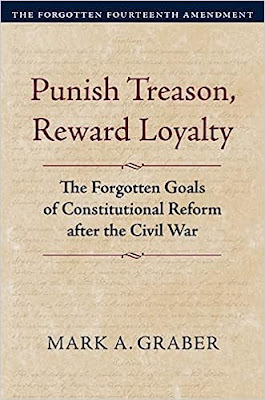
Mark A. Graber, Punish Treason, Reward Loyalty: The Forgotten Goals of Constitutional Reform after the Civil War (University of Kansas Press, 2023)
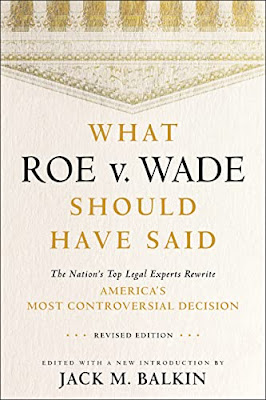
Jack M. Balkin, What Roe v. Wade Should Have Said: The Nation's Top Legal Experts Rewrite America's Most Controversial Decision - Revised Edition (NYU Press, 2023)

Andrew Koppelman, Burning Down the House: How Libertarian Philosophy Was Corrupted by Delusion and Greed (St. Martin’s Press, 2022)

Gerard N. Magliocca, Washington's Heir: The Life of Justice Bushrod Washington (Oxford University Press, 2022)
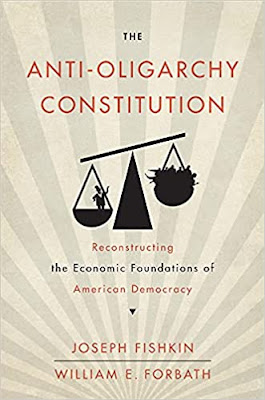
Joseph Fishkin and William E. Forbath, The Anti-Oligarchy Constitution: Reconstructing the Economic Foundations of American Democracy (Harvard University Press, 2022)
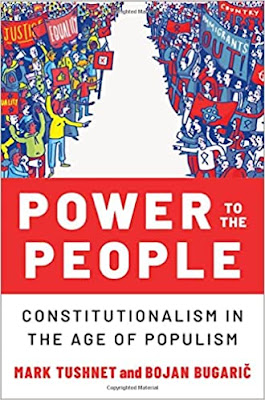
Mark Tushnet and Bojan Bugaric, Power to the People: Constitutionalism in the Age of Populism (Oxford University Press 2021).

Mark Philip Bradley and Mary L. Dudziak, eds., Making the Forever War: Marilyn B. Young on the Culture and Politics of American Militarism Culture and Politics in the Cold War and Beyond (University of Massachusetts Press, 2021).

Jack M. Balkin, What Obergefell v. Hodges Should Have Said: The Nation's Top Legal Experts Rewrite America's Same-Sex Marriage Decision (Yale University Press, 2020)

Frank Pasquale, New Laws of Robotics: Defending Human Expertise in the Age of AI (Belknap Press, 2020)

Jack M. Balkin, The Cycles of Constitutional Time (Oxford University Press, 2020)

Mark Tushnet, Taking Back the Constitution: Activist Judges and the Next Age of American Law (Yale University Press 2020).

Andrew Koppelman, Gay Rights vs. Religious Liberty?: The Unnecessary Conflict (Oxford University Press, 2020)

Ezekiel J Emanuel and Abbe R. Gluck, The Trillion Dollar Revolution: How the Affordable Care Act Transformed Politics, Law, and Health Care in America (PublicAffairs, 2020)

Linda C. McClain, Who's the Bigot?: Learning from Conflicts over Marriage and Civil Rights Law (Oxford University Press, 2020)
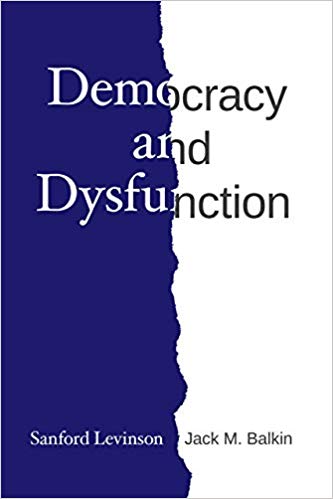
Sanford Levinson and Jack M. Balkin, Democracy and Dysfunction (University of Chicago Press, 2019)

Sanford Levinson, Written in Stone: Public Monuments in Changing Societies (Duke University Press 2018)

Mark A. Graber, Sanford Levinson, and Mark Tushnet, eds., Constitutional Democracy in Crisis? (Oxford University Press 2018)

Gerard Magliocca, The Heart of the Constitution: How the Bill of Rights became the Bill of Rights (Oxford University Press, 2018)

Cynthia Levinson and Sanford Levinson, Fault Lines in the Constitution: The Framers, Their Fights, and the Flaws that Affect Us Today (Peachtree Publishers, 2017)

Brian Z. Tamanaha, A Realistic Theory of Law (Cambridge University Press 2017)

Sanford Levinson, Nullification and Secession in Modern Constitutional Thought (University Press of Kansas 2016)

Sanford Levinson, An Argument Open to All: Reading The Federalist in the 21st Century (Yale University Press 2015)

Stephen M. Griffin, Broken Trust: Dysfunctional Government and Constitutional Reform (University Press of Kansas, 2015)

Frank Pasquale, The Black Box Society: The Secret Algorithms That Control Money and Information (Harvard University Press, 2015)

Bruce Ackerman, We the People, Volume 3: The Civil Rights Revolution (Harvard University Press, 2014)
Balkinization Symposium on We the People, Volume 3: The Civil Rights Revolution

Joseph Fishkin, Bottlenecks: A New Theory of Equal Opportunity (Oxford University Press, 2014)

Mark A. Graber, A New Introduction to American Constitutionalism (Oxford University Press, 2013)

John Mikhail, Elements of Moral Cognition: Rawls' Linguistic Analogy and the Cognitive Science of Moral and Legal Judgment (Cambridge University Press, 2013)

Gerard N. Magliocca, American Founding Son: John Bingham and the Invention of the Fourteenth Amendment (New York University Press, 2013)

Stephen M. Griffin, Long Wars and the Constitution (Harvard University Press, 2013)

Andrew Koppelman, The Tough Luck Constitution and the Assault on Health Care Reform (Oxford University Press, 2013)

James E. Fleming and Linda C. McClain, Ordered Liberty: Rights, Responsibilities, and Virtues (Harvard University Press, 2013)
Balkinization Symposium on Ordered Liberty: Rights, Responsibilities, and Virtues

Andrew Koppelman, Defending American Religious Neutrality (Harvard University Press, 2013)

Brian Z. Tamanaha, Failing Law Schools (University of Chicago Press, 2012)

Sanford Levinson, Framed: America's 51 Constitutions and the Crisis of Governance (Oxford University Press, 2012)

Linda C. McClain and Joanna L. Grossman, Gender Equality: Dimensions of Women's Equal Citizenship (Cambridge University Press, 2012)

Mary Dudziak, War Time: An Idea, Its History, Its Consequences (Oxford University Press, 2012)

Jack M. Balkin, Living Originalism (Harvard University Press, 2011)

Jason Mazzone, Copyfraud and Other Abuses of Intellectual Property Law (Stanford University Press, 2011)

Richard W. Garnett and Andrew Koppelman, First Amendment Stories, (Foundation Press 2011)

Jack M. Balkin, Constitutional Redemption: Political Faith in an Unjust World (Harvard University Press, 2011)

Gerard Magliocca, The Tragedy of William Jennings Bryan: Constitutional Law and the Politics of Backlash (Yale University Press, 2011)

Bernard Harcourt, The Illusion of Free Markets: Punishment and the Myth of Natural Order (Harvard University Press, 2010)

Bruce Ackerman, The Decline and Fall of the American Republic (Harvard University Press, 2010)
Balkinization Symposium on The Decline and Fall of the American Republic

Ian Ayres. Carrots and Sticks: Unlock the Power of Incentives to Get Things Done (Bantam Books, 2010)

Mark Tushnet, Why the Constitution Matters (Yale University Press 2010)

Ian Ayres and Barry Nalebuff: Lifecycle Investing: A New, Safe, and Audacious Way to Improve the Performance of Your Retirement Portfolio (Basic Books, 2010)
.jpg)
Jack M. Balkin, The Laws of Change: I Ching and the Philosophy of Life (2d Edition, Sybil Creek Press 2009)

Brian Z. Tamanaha, Beyond the Formalist-Realist Divide: The Role of Politics in Judging (Princeton University Press 2009)
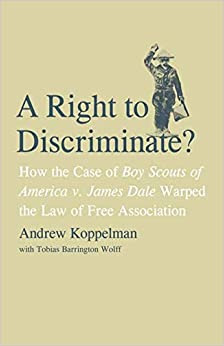
Andrew Koppelman and Tobias Barrington Wolff, A Right to Discriminate?: How the Case of Boy Scouts of America v. James Dale Warped the Law of Free Association (Yale University Press 2009)

Jack M. Balkin and Reva B. Siegel, The Constitution in 2020 (Oxford University Press 2009)

Heather K. Gerken, The Democracy Index: Why Our Election System Is Failing and How to Fix It (Princeton University Press 2009)

Mary Dudziak, Exporting American Dreams: Thurgood Marshall's African Journey (Oxford University Press 2008)

David Luban, Legal Ethics and Human Dignity (Cambridge Univ. Press 2007)

Ian Ayres, Super Crunchers: Why Thinking-By-Numbers is the New Way to be Smart (Bantam 2007)

Jack M. Balkin, James Grimmelmann, Eddan Katz, Nimrod Kozlovski, Shlomit Wagman and Tal Zarsky, eds., Cybercrime: Digital Cops in a Networked Environment (N.Y.U. Press 2007)

Jack M. Balkin and Beth Simone Noveck, The State of Play: Law, Games, and Virtual Worlds (N.Y.U. Press 2006)

Andrew Koppelman, Same Sex, Different States: When Same-Sex Marriages Cross State Lines (Yale University Press 2006)

Brian Tamanaha, Law as a Means to an End (Cambridge University Press 2006)

Sanford Levinson, Our Undemocratic Constitution (Oxford University Press 2006)

Mark Graber, Dred Scott and the Problem of Constitutional Evil (Cambridge University Press 2006)

Jack M. Balkin, ed., What Roe v. Wade Should Have Said (N.Y.U. Press 2005)

Sanford Levinson, ed., Torture: A Collection (Oxford University Press 2004)
Balkin.com homepage
Bibliography
Conlaw.net
Cultural Software
Writings
Opeds
The Information Society Project
BrownvBoard.com
Useful Links
Syllabi and Exams
