Balkinization
an unanticipated consequence of
Jack M. Balkin
Balkinization Symposiums: A Continuing List
E-mail:
Jack Balkin:
jackbalkin at yahoo.com
Bruce Ackerman
bruce.ackerman at yale.edu
Ian Ayres
ian.ayres at yale.edu
Corey Brettschneider
corey_brettschneider at brown.edu
Mary Dudziak
mary.l.dudziak at emory.edu
Joey Fishkin
joey.fishkin at gmail.com
Heather Gerken heather.gerken at yale.edu
Abbe Gluck abbe.gluck at yale.edu
Mark Graber
mgraber at law.umaryland.edu
Stephen Griffin
sgriffin at tulane.edu
Jonathan Hafetz
jonathan.hafetz at shu.edu
Jeremy Kessler
jkessler at law.columbia.edu
Andrew Koppelman
akoppelman at law.northwestern.edu
Marty Lederman
msl46 at law.georgetown.edu
Sanford Levinson
slevinson at law.utexas.edu
David Luban
david.luban at gmail.com
Gerard Magliocca
gmaglioc at iupui.edu
Jason Mazzone
mazzonej at illinois.edu
Linda McClain
lmcclain at bu.edu
John Mikhail
mikhail at law.georgetown.edu
Frank Pasquale
pasquale.frank at gmail.com
Nate Persily
npersily at gmail.com
Michael Stokes Paulsen
michaelstokespaulsen at gmail.com
Deborah Pearlstein
dpearlst at yu.edu
Rick Pildes
rick.pildes at nyu.edu
David Pozen
dpozen at law.columbia.edu
Richard Primus
raprimus at umich.edu
K. Sabeel Rahmansabeel.rahman at brooklaw.edu
Alice Ristroph
alice.ristroph at shu.edu
Neil Siegel
siegel at law.duke.edu
David Super
david.super at law.georgetown.edu
Brian Tamanaha
btamanaha at wulaw.wustl.edu
Nelson Tebbe
nelson.tebbe at brooklaw.edu
Mark Tushnet
mtushnet at law.harvard.edu
Adam Winkler
winkler at ucla.edu
Compendium of posts on Hobby Lobby and related cases
The Anti-Torture Memos: Balkinization Posts on Torture, Interrogation, Detention, War Powers, and OLC
The Anti-Torture Memos (arranged by topic)
Recent Posts
Why the legal issues in the White Paper are not the most important issues, and how Jack Goldsmith gets it right
![[Powered by Blogger]](https://lh3.googleusercontent.com/blogger_img_proxy/AEn0k_tbZc2eyxx9Jkcjedg5KlxSXjf0m7aKdFv66rjGXeE3JW_PAnxymnlatuY_WvCHDUQUJw0H6_B9caj4sXpeXwcHGqYI3YpLu0fdQamArB0s=s0-d)
Just A Few Blogs
ACS Blog
Alas, a Blog
Althouse
Arts and Letters Daily
Atrios (Eschaton)
Bill of Health
Buzzflash.com
Buzz Machine
Cato at Liberty
Juan Cole (Informed Comment)
Concurring Opinions
The Constitution in 2020
Corrente
Crooked Timber
Daily Howler
Daily Kos
Dana Boyd
Brad DeLong
Digby (Hullabaloo)
Discriminations
Daniel Drezner
Kevin Drum (Mother Jones)
Electrolite
En Banc
Eunomia (Daniel Larison)
Fafblog
Michael Froomkin (Discourse.net)
GovLab (Beth Noveck)
Rick Hasen (Election Law)
History News Network
How Appealing
Ignatz (Sam Heldman)
The Importance of (Ernie Miller)
Infolaw
Instapundit
International Economic Law and Policy Blog
IntLawGrrls
Jacob Levy
Jesus' General
Jurisdynamics
The Kitchen Cabinet
Mark Kleiman
Law Blog Central
Larry Lessig
Lawyers, Guns and Money
Liberal Oasis
Brian Leiter's Law School Reports
The Leiter Reports
Marginal Revolution
Megan McArdle
Memeorandum
Metafilter
Mirror of Justice
The New Republic
Newseum
No More Mister Nice Blog
Brendan Nyhan
Opinio Juris
Orcinus
The Originalism Blog
Pandagon
Passport (Foreign Policy)
Overcoming Bias
Political Animal (Washington Monthly)
Political Theory Daily Review
Political Wire (Taegan Goddard)
The Poor Man
Virginia Postrel
Prawfsblawg
Public Reason
Jonathan Rauch
Raw Story
Redstate
ReligiousLeftLaw.com
Reporters Committee For Freedom of the Press
Reproductive Rights Blog
Rothman's Roadmap to the Right of Publicity
SCOTUS Blog
Seeing the Forest
Clay Shirky
The Shifted Librarian
The Situationist
Larry Solum (Legal Theory)
Andrew Sullivan
Talking Points Memo
Talk Left
Tapped
Tbogg
TechPresident
The Paper Chase (Jurist)
Tom Paine
Tom Tomorrow (This Modern World)
Eve Tushnet
Uggabugga
University of Chicago Law School Faculty Blog
Unqualified Offerings
The Volokh Conspiracy
War and Piece (Laura Rozen)
Wampum
Oliver Willis
Wonkette
Written Description
Matthew Yglesias
Yin
Your Choice of Feeds
1. XML
powered by

2. Atom Feed
3. RSS 2.0
Why the legal issues in the White Paper are not the most important issues, and how Jack Goldsmith gets it right
Mary L. Dudziak
The leak of a White Paper on targeting killings is getting the expected attention from law bloggers and others, with much commentary focused on whether the legal analysis is correct – for example the definition of “imminence.” The precise legal analysis is a distraction from more compelling issues, which are taken up by Jack Goldsmith in a Washington Post op-ed. I often disagree with Goldsmith, but this time I find myself in agreement. In part.
Goldsmith begins: “A decade of war is now ending,” President Obama proclaimed in his second inaugural address. But war is not ending, it is changing — and has been for years. Obama has cut back on heavy-footprint, conventional-force war in two countries. At the same time, he has presided over the rise of a secret, nimbler war defined by covert action, Special Forces, drone surveillance and targeting, cyberattacks and other stealthy means deployed in many countries.”
The character of ongoing war, largely off the American political radar screen, has been the focus of scholarly attention across fields. Ongoing secret war is an extension of ongoing small wars – justified for many years by the Cold War-era national security policy that American safety at home could only be protected by the projection of American military force around the world (NSC 68).
Goldsmith is right, unfortunately, that the president is arguing that war is coming to an end, while at the same time he continues it. (A point also made here.) He continues:
This new form of warfare needs a firmer political and legal foundation....Because secret surveillance and targeted strikes, rather than U.S. military detention, are central to the new warfare, there are no viable plaintiffs to test the government’s authorities in court. In short, executive-branch decisions since 2001 have led the nation to a new type of war against new enemies on a new battlefield without focused national debate, deliberate congressional approval or real judicial review.
Although Goldsmith is right that the character of war has changed, his solution is disappointingly conventional: “What the government needs is a new framework statute — akin to the National Security Act of 1947, or the series of intelligence reforms made after Watergate, or even the 2001 authorization of force — to define the scope of the new war, the authorities and limitations on presidential power, and forms of review of the president’s actions.” This is where I disagree. Something more fundamental is in order.
The nation most needs robust political engagement with American military policy, something we have not had in a sustained way since the war in Vietnam. Americans debated the war in Vietnam, and ultimately countless numbers took to the streets. Congress fiercely debated war appropriations. Elections were affected, as candidates gained or lost in the polls based on their position on Vietnam.
Deep public engagement with Vietnam was tied in large part to the fact that the costs of war came home to American families because of the draft. In the years since, the all-volunteer armed forces are one factor among others to isolate many Americans from war. (The other most important issues are privatization/contracting, and changes in war technologies.) A 2011 Pew Research Center report found that "A smaller share of Americans currently serve in the U.S. Armed Forces than at any time since the peace-time era between World Wars I and II." The data reveals "a large generation gap,"with "more than three-quarters (77%) of adults ages 50 and older...[having] an immediate family member –a spouse, parent, sibling or child – who had served in the military." In contrast, for people under 50, "57% of those ages 30-49 say they have an immediate family member who served. And among those ages 18-29, the share is only one-third."
In recent years, I’ve noted elsewhere,
In Iraq and Afghanistan, war...spread across borders as American drones fired on targets in Pakistan and elsewhere. Death and destruction were the province of soldiers and of peoples in faraway lands. The experience of wartime for most Americans largely devolved to encounters between travelers and airport screeners, as the Transportation Security Administration adopted intrusive new practices. At home, wartime had become a policy rather than a state of existence.
The only enduring limit on the use of force comes from an informed and engaged citizenry. The most troubling aspect of an era of secret warfare is that its very “secret, nimbler” character makes it easier to ignore, and thereby harder for democratic limits to function.
More essential than a new framework statute, we need a form of war politics. An essential but inadequate step is transparency, so that Americans have the capacity to know what their nation is doing. More difficult but more essential, we must find a way to care about the nation’s most fearsome power, which is now exercised without our even noticing. Whether the American people can become engaged again without a draft or forces on the ground is something I can’t answer. But finding a path toward political engagement is more important now that, for Americans, the experience of war has become so easy, and so forgettable.
Posted
11:13 PM
by Mary L. Dudziak [link]
I guess political engagement is valuable now simply for the sake of political engagement. The point of such engagement -- ie, transforming the way the US thinks about the use of lethal force abroad, which is ineluctably shaped by the law -- is irrelevant. Very strange.

weed removal toronto
I recently read Robert J. Reinstein's "Slavery, Executive Power and International Law: The Haitian Revolution and American Constitutionalism" that focuses on Presidents Washington, Adams and Jefferson, dealing with foreign policy in the beginning decades of America. The Supremacy Clause of the Constitution is at the center of this paper, focusing on the "law of nations" portion. Legal arguments were involved, some being questionable. Did the Framers/Ratifiers understand the executive power over foreign policy as was developed so soon after the Constitution was adopted? Yes, there were complexities back then, including how to address Haiti, a former slave colony that revolted and declared independence. With the Constitution's slavery provisions that avoided the use of the words "slave" or "slavery," how might the new American Republic respond? I won't "spoil" how it all turned out, but my point is that the complexities of war, foreign policy go back to the beginnings. Much has been written about how from the beginning the power of the executive has increased, perhaps well beyond what originalists might claim the Constitution provided.
Jack Goldsmith's Op-Ed and Mary's post do not go back to Washington, Adams and Jefferson. But what they did as executives has been built upon over the years as war, foreign policy have gotten more complex, to what we have today. Jack Goldsmith made his "bones" serving George W. Bush and cleaning up after YOO know who. President Obama has to a great extent continued the Bush policy (if you can call it a policy). History demonstrates that virtually no President willing gives up power, even if not specified in the Constitution as originalism would interpret/construe it. Consider the GOP challenges to Obama, including the proposed closing of Gitmo. The GOP is the political party of national defense whereas the Democrats had been considered weak on defense. But Obama has been tough and the GOP doesn't like it, so the political response of the GOP is that Obama is stepping on the Constitution. But that's what Bush/Cheney did for eight (8) years and it was okay.
Hopefully Jack Goldsmith's Op-Ed and Mary's post will get us to focus more on the issues of war, foreign policy than the political "gotcha" game.
I applaud the ACLU for pursuing the issues of drone killings of Americans overseas. If their cases go forward, perhaps we may get more transparency.
By the Bybee [no, I have not forgotten him and YOO], Reinstein's paper is available at:
http://ssrn.com/abstract=2205981
It is 118 pages in length, double-spaced, and provides a great deal of information on Haiti and the "law of nations."
Goldsmith's call for a new framework statute is useful -- but won't undo the structural changes in American war politics since the Cold War and Vietnam. It is those changes that have eased the American people out deep engagement with what their political leaders are doing. Getting the American people more deeply engaged is ultimately the only way their members of Congress will act as a more effective check on presidential unilateralism.
This issue is discussed in my book War Time. The more detailed history of how we've gotten to where we are is the focus of the next book.
The idea that we can fight these wars long distance with drones and computers and keep them antiseptic is wishful thinking. Politicians would prefer this because it keeps flag draped caskets from flying home. However, you cannot defeat irregular forces in this way. Since Obama shifted to a drone campaign in Pakistan, al Qaeda has spread across North Africa and sacked our embassy annex in Libya while a drone was flying overhead watching helplessly.
Instead, these wars are fought and won by special ops and marine forces in tandem with local militaries.
Fighting wars is why we hire presidents. Article II grants the president plenary power as CiC to make operational military decisions during wartime.
Article I grants Congress the powers to declare offensive wars, fund them and establish rules of discipline like the UCMJ.
Congress has traditionally reserved declarations of war for nation states. The AQ AUMF was an exception based upon the magnitude of the 9/11 attack and will cover any multitude of operations in the future.
Congress does not have any CiC powers under Article I and Congress generally only tries to seize these when controlled by Democrats and a Republican is in the White House. The Democrat and then divide Congress has given Obama nearly free reign.
The courts have no role whatsoever setting military policy. The courts have since backed off from the awful precedent established by Boumediene, perhaps realizing they have no real competence to make decisions about wartime enemy captures.
In sum, pay attention when you cast a ballot for president because he or she will be setting our war policy.
Shag's reading leads me to mention "The Slave Trade and the Origins of International Human Rights Law" by Jenny S. Martinez.
http://stanfordlawyer.law.stanford.edu/2011/10/the-slave-trade-and-the-origins-of-international-human-rights-law-2/
"In sum, pay attention when you cast a ballot for president because he or she will be setting our war policy."
Alas, not enough voters paid attention in 2004 and reelected Bush/Cheney. (WMDs?) I assume that the detailed history Mary plans for her new book will include the National Security Strategy of 2002 that included preemptive action that served as a foundation for YOO know who (whom?) that has extended into the Obama Administration's executive powers portfolio.
Proposals for a new "framework statute" are meaningless in the absence of true debate. At most, the statute would provide a more appealing veneer of legality on a subject that few care about. Of course it's important whether our war policies comply with law, but can't we do better than that?
We are reaping the consequences of a civil-military gap that discourages civilians from engaging on issues of national security. If you tell civilians they have not earned the right to speak up on military matters because they have not served, eventually they stop engaging. The all-volunteer force, and the way we use it to stifle dissent, has broken our civil-military relations.
A law professor, former Air Force officer, and author of "A More Perfect Military: How the Constitution Can Make Our Military Stronger"

Sandy offers this review of A More Perfect Military: http://www.texaslrev.com/wp-content/uploads/Levinson-TLR-Dicta.pdf
However, I have not noticed a reticence by the civilian political class "from engaging on issues of national security" with the military.
Militarily, the 2007 Congress was more than willing to oppose Gen. Petreaus' Iraq surge plan in favor of surrendering Iraq to al Qeada and President Obama gutted the Afghan surge plan offered to him.
Socially, the President has recently ordered the services to allow homosexuals to serve openly and women to serve in combat arms positions for which almost all of them are unqualified.
Given this backdrop, I am more concerned about a military caste - which is generally more educated, competent and popular with the people than the political class placed in authority above them - deciding one day to launch a coup de tat because of a lack of reticence by the political class.
Will our future look something like the republic in Heinlein's Starship Troopers?
Not even in applying the UMCJ or in holding us to treaties? Art. III expressly contemplates the judiciary having a role in the latter: "The judicial power shall extend to all cases, in law and equity, arising under this Constitution, the laws of the United States, and treaties made, or which shall be made, under their authority"
"I am more concerned about a military caste - which is generally more educated, competent and popular with the people than the political class placed in authority above them - deciding one day to launch a coup de tat because of a lack of reticence by the political class"
So we should let the military do whatever it wants because you're worried if we don't they might take over and do whatever they want?
"Militarily, the 2007 Congress was more than willing to oppose Gen. Petreaus' Iraq surge plan in favor of surrendering Iraq to al Qeada and President Obama gutted the Afghan surge plan offered to him."
The 2007 Congress was controlled by the Democrats. Our yodeler seems to blame the Democrats for the Iraqi War. There are serious questions about the success of the surge and what it actually accomplished, besides killing off or getting certain Iraqis to leave their communities and even Iraq for survival because of the Iraqi leaders' religious biases.
Our yodeler seems to claim that Petraeus walks on water when it comes to surges. Well, the surge in Afghanistan was different than in Iraq. Obama bought into it but the situation in Afghanistan was substantially different than in Iraq. The history of Afghanistan with invasions by several powerful nations substantially differs from Iraq's history. Would Petraeus' Afghan surge have worked? I wouldn't rely upon our yodeler's military expertise. Some, many, say it was a mistake.
Perhaps our yodeler doesn't buy into Ike's concerns with the military/industrial complex. Consider the history of that complex since 1961 and especially the Halliburton Happy Hours during the Bush/Cheney days.
Perhaps our yodeler missed his true casting call.
Mr. W: Not even in applying the UMCJ or in holding us to treaties?
Congress sets the policy for military discipline by enacting and amending the UCMJ. The courts merely enforce the UCMJ.
Likewise, treaties are the policy. The courts only enforce and do not enter in treaties. Additionally, presidents and Congress can and have repeatedly withdrawn from treaties when they deem them against current national interests. The courts can only enforce treaties the elected branches still recognize.
BD: "I am more concerned about a military caste - which is generally more educated, competent and popular with the people than the political class placed in authority above them - deciding one day to launch a coup de tat because of a lack of reticence by the political class"
Mr. W: So we should let the military do whatever it wants because you're worried if we don't they might take over and do whatever they want?
I figured Shag would beat you to this straw man.
The problem is not the concept of civilian command of the military.
The problem is the formation of a military caste and a civilian ruling class and their subsequent estrangement. This is something we as a country need to deal with before estrangement leads to something worse.
If treaties and the UMCJ are the law of the land, then Courts should enforce them, no?
"The problem is the formation of a military caste and a civilian ruling class and their subsequent estrangement"
Ok, but didn't you suggest that a 'lack of reticence' on the part of the civilian class was what you feared would trigger the horrible? If you dress something up in straw, plaid and overalls don't be upset when someone calls it a strawman....
I am interested in what you think should be done about this problem. I doubt a draft would fit well with your libertarian leanings.
I have been thinking about this problem for a long time and I am unsure whether it has a libertarian solution.
The Germans dealt with the problem of a military caste by shrinking their military down to the size of a glorified national police force and compelling those who those who would otherwise not join the military to do so through a draft.
Libertarians would have no problem with shrinking the US military down to a glorified militia, which is where I differ from the libertarians. However, most Americans do and should oppose drafts unless we are facing an existential threat. So long as those of us from military families keep serving and those from the civilian ruling class avoid it like the plague, I am unsure how we bridge that divide.
The civilian ruling class does have a libertarian solution. Shrink the size of government down to its pre-progressive size and elect people from outside the current ruling class who represent your values. Most Americans would have supported military requests for troops and opposed nonsense like putting women into combat arms, removing the provocations to the military.
I agree with you it could be a problem. I also agree with you that drafts are going to be unpopular and that shrinking our military down to a glorified police force is not going to happen and probably should not. Perhaps if we involved our military in less action it would not appeal to only the most military minded families.
I have to question your claim that the military class is generally more educated than civilian leaders. Do you have any citation for that? The average politician is a lawyer with a JD, that's seven years of college. I don't think the average member of the military class can match that.
"The civilian ruling class does have a libertarian solution. Shrink the size of government down to its pre-progressive size"
If anything our government was more elitist in the days of the Founding than it is now.
"Most Americans would have supported military requests for troops and opposed nonsense like putting women into combat arms"
I doubt that seriously. The public opposed the surge for example, and would like us to get out of Afghanistan and Iraq faster than we are and were. Polls also show majorities supporting women in combat.
"By a margin of two-to-one, Americans support allowing women to serve in combat units, a policy change announced last week by outgoing Defense Secretary Leon Panetta. Sixty-six percent of Americans favor the new policy, up from 53 percent when approval was last measured in July 2009. Thirty percent of Americans now disapprove."
http://www.cbsnews.com/8301-34222_162-57567013-10391739/poll-most-support-women-in-combat/
I do not equate education with the number of years you spend in school and do not think much of law degrees in general.
In Germany, law is simply a five year undergraduate course.
I do not think that a law degree qualifies you to do much of anything except regurgitate basic legal theory. You are not particularly qualified to set policy and you learn to practice law afterwards.
As for the military:
In 2004, 92.1 percent of active-duty officer accessions held baccalaureate degrees or higher.[5] From 2000 to 2005, between 10 percent and 17 percent of active-duty officer accessions held advanced degrees, and between 35 percent and 45 percent of the active-duty officer corps held advanced degrees.[6] This indicates that officers continued their education during the course of their military service.
http://www.heritage.org/research/reports/2006/10/who-are-the-recruits-the-demographic-characteristics-of-us-military-enlistment-2003-2005
These are generally policy degrees like foreign affairs, political science and governance to prepare officers for running foreign countries. Moreover, officers go through extensive military training to run the equivalent of massive international companies.
The political class does not compare.
"B.D.: Most Americans would have supported military requests for troops and opposed nonsense like putting women into combat arms"
Mr. W: "By a margin of two-to-one, Americans support allowing women to serve in combat units, a policy change announced last week by outgoing Defense Secretary Leon Panetta. Sixty-six percent of Americans favor the new policy, up from 53 percent when approval was last measured in July 2009. Thirty percent of Americans now disapprove."
"Serve in combat units" is intentionally vague. A Stars and Stripes reporter can and do serve with combat units.
Ask instead whether women should serve in the infantry, armor and artillery; and more importantly whether the services should lower their physical standards to accomplish this.
1. You're just citing numbers for officers, which are only anywhere from 10-20% of all active duty personnel (depending on the branch).
2. Even if we stick to officers I don't think they match the educational attainment of Congresspersons
"As has been true in recent Congresses, the vast majority of Members (92% of House Members
and 99% of Senators) at the beginning of the 112th Congress held bachelor’s degrees.13 The CQ
Roll Call Member Profiles indicate that 25 Members of the House and 1 Senator have no
educational degree beyond a high school diploma.14 Seven Members of the House, but no
Senators, have associate’s degrees as their highest degree, and one House Member has an LPN
(nursing) degree. Eighty-three Members of the House and 16 Senators earned a master’s degree
as their highest educational degree. Law degrees are held by 167 Members of the House (38% of
the total House) and 55 Senators (55% of the total Senate). Of the Members holding a law degree,
four (three House Members and one Senator) also hold an LLM (Master of Laws) degree. Eighteen Representatives (but no Senators) have doctoral (Ph.D.) degrees, and 20 Members of the House and 4 Senators have a medical degree.15"
http://www.fas.org/sgp/crs/misc/R41647.pdf
"Future historians may well classify the surge as a myth concocted to perpetuate a fraud. The myh centers on the claim that a strategy devised in Washington and implemented by a brilliant general saved the day. The fraud is that a 20-year millitary effort to determine the fate of Iraq yielded something approximating a positive outcome."
composiet aanrechtblad
klebe bh
Quit Smoking
terrazzo werkblad
Hufeisenform, welche es ermöglicht die Brustwarzen um einige
Zentimeter nach oben zu positionieren
ttposad11
Immobilienfonds
Bye Bra je jednoduché řešení, jak rychle a efektivně zvýraznit ženské poprsí bez potřeby chirurgie, či dokonce bez klasické podprsenky! Bye Bra je vyrobena z ultratenké a pružné samopřilnoucí fólie ve tvaru podkovy, která umožní posunout bradavky směrem nahoru o několik centimetrů. Může se také použít pro korekci nerovností, například v případě, když má žena rozdílný tvar nebo velikost prsů, nebo asymetricky umístěné bradavky. Bye Bra nabízí speciální technologii 3M hmoty, která se používá i ve zdravotnictví a je proto naprosto bezpečná pro použití. Totéž se zdaleka nedá říci o kvalitě čínských podvodných kopií.
Bye Bra nejenže zvedá poprsí a vytváří symetrii, také výrazně zvyšuje sebevědomí a sebedůvěru její nositelky. Bye Bra také zvyšuje možnosti vašeho šatníku, protože nošení outfitů bez ramínek, se zádovým výstřihem a jiných odvážných kreací je s ní najednou překvapivě jednoduché a pohodlné.
Nezapomeňte, že Bye Bra je voděodolná, takže si ji můžete pohodlně obléknout i pod plavky, dokonce pod bikini!
Neviditelná podprsenka
Neviditelných podprsenek
Podprsenka bez raminek
composiet keukenblad
Infrastrukturfonds
keukenblad
graniet keukenblad
graniet keukenblad
Energiefonds
Leasingfonds
http://www.ourmindfulness.com/
Fifa 14 Ultimate Team Coins
LOL elo boost
Cheap FUT 14 Coins
schifffonds
KLEBE BH
Books by Balkinization Bloggers

Gerard N. Magliocca, The Actual Art of Governing: Justice Robert H. Jackson's Concurring Opinion in the Steel Seizure Case (Oxford University Press, 2025)

Linda C. McClain and Aziza Ahmed, The Routledge Companion to Gender and COVID-19 (Routledge, 2024)

David Pozen, The Constitution of the War on Drugs (Oxford University Press, 2024)

Jack M. Balkin, Memory and Authority: The Uses of History in Constitutional Interpretation (Yale University Press, 2024)
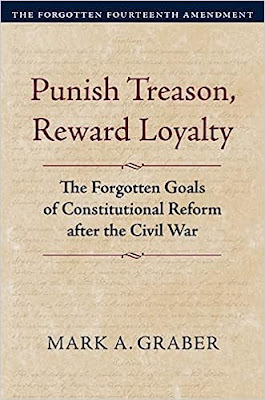
Mark A. Graber, Punish Treason, Reward Loyalty: The Forgotten Goals of Constitutional Reform after the Civil War (University of Kansas Press, 2023)
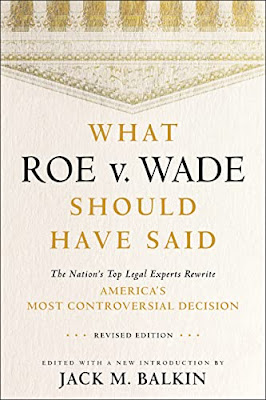
Jack M. Balkin, What Roe v. Wade Should Have Said: The Nation's Top Legal Experts Rewrite America's Most Controversial Decision - Revised Edition (NYU Press, 2023)

Andrew Koppelman, Burning Down the House: How Libertarian Philosophy Was Corrupted by Delusion and Greed (St. Martin’s Press, 2022)

Gerard N. Magliocca, Washington's Heir: The Life of Justice Bushrod Washington (Oxford University Press, 2022)
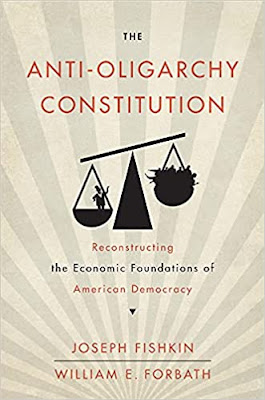
Joseph Fishkin and William E. Forbath, The Anti-Oligarchy Constitution: Reconstructing the Economic Foundations of American Democracy (Harvard University Press, 2022)
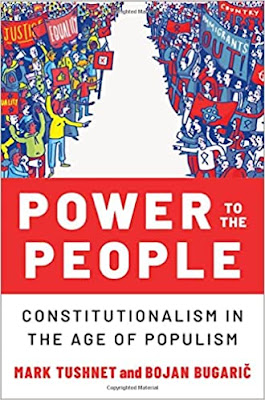
Mark Tushnet and Bojan Bugaric, Power to the People: Constitutionalism in the Age of Populism (Oxford University Press 2021).

Mark Philip Bradley and Mary L. Dudziak, eds., Making the Forever War: Marilyn B. Young on the Culture and Politics of American Militarism Culture and Politics in the Cold War and Beyond (University of Massachusetts Press, 2021).

Jack M. Balkin, What Obergefell v. Hodges Should Have Said: The Nation's Top Legal Experts Rewrite America's Same-Sex Marriage Decision (Yale University Press, 2020)

Frank Pasquale, New Laws of Robotics: Defending Human Expertise in the Age of AI (Belknap Press, 2020)

Jack M. Balkin, The Cycles of Constitutional Time (Oxford University Press, 2020)

Mark Tushnet, Taking Back the Constitution: Activist Judges and the Next Age of American Law (Yale University Press 2020).

Andrew Koppelman, Gay Rights vs. Religious Liberty?: The Unnecessary Conflict (Oxford University Press, 2020)

Ezekiel J Emanuel and Abbe R. Gluck, The Trillion Dollar Revolution: How the Affordable Care Act Transformed Politics, Law, and Health Care in America (PublicAffairs, 2020)

Linda C. McClain, Who's the Bigot?: Learning from Conflicts over Marriage and Civil Rights Law (Oxford University Press, 2020)
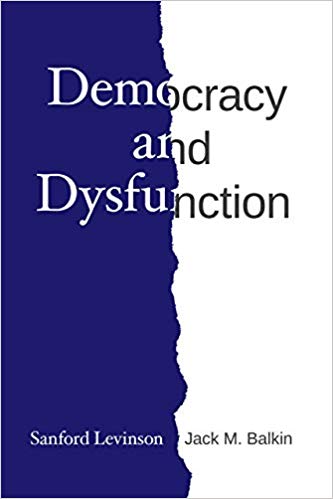
Sanford Levinson and Jack M. Balkin, Democracy and Dysfunction (University of Chicago Press, 2019)

Sanford Levinson, Written in Stone: Public Monuments in Changing Societies (Duke University Press 2018)

Mark A. Graber, Sanford Levinson, and Mark Tushnet, eds., Constitutional Democracy in Crisis? (Oxford University Press 2018)

Gerard Magliocca, The Heart of the Constitution: How the Bill of Rights became the Bill of Rights (Oxford University Press, 2018)

Cynthia Levinson and Sanford Levinson, Fault Lines in the Constitution: The Framers, Their Fights, and the Flaws that Affect Us Today (Peachtree Publishers, 2017)

Brian Z. Tamanaha, A Realistic Theory of Law (Cambridge University Press 2017)

Sanford Levinson, Nullification and Secession in Modern Constitutional Thought (University Press of Kansas 2016)

Sanford Levinson, An Argument Open to All: Reading The Federalist in the 21st Century (Yale University Press 2015)

Stephen M. Griffin, Broken Trust: Dysfunctional Government and Constitutional Reform (University Press of Kansas, 2015)

Frank Pasquale, The Black Box Society: The Secret Algorithms That Control Money and Information (Harvard University Press, 2015)

Bruce Ackerman, We the People, Volume 3: The Civil Rights Revolution (Harvard University Press, 2014)
Balkinization Symposium on We the People, Volume 3: The Civil Rights Revolution

Joseph Fishkin, Bottlenecks: A New Theory of Equal Opportunity (Oxford University Press, 2014)

Mark A. Graber, A New Introduction to American Constitutionalism (Oxford University Press, 2013)

John Mikhail, Elements of Moral Cognition: Rawls' Linguistic Analogy and the Cognitive Science of Moral and Legal Judgment (Cambridge University Press, 2013)

Gerard N. Magliocca, American Founding Son: John Bingham and the Invention of the Fourteenth Amendment (New York University Press, 2013)

Stephen M. Griffin, Long Wars and the Constitution (Harvard University Press, 2013)

Andrew Koppelman, The Tough Luck Constitution and the Assault on Health Care Reform (Oxford University Press, 2013)

James E. Fleming and Linda C. McClain, Ordered Liberty: Rights, Responsibilities, and Virtues (Harvard University Press, 2013)
Balkinization Symposium on Ordered Liberty: Rights, Responsibilities, and Virtues

Andrew Koppelman, Defending American Religious Neutrality (Harvard University Press, 2013)

Brian Z. Tamanaha, Failing Law Schools (University of Chicago Press, 2012)

Sanford Levinson, Framed: America's 51 Constitutions and the Crisis of Governance (Oxford University Press, 2012)

Linda C. McClain and Joanna L. Grossman, Gender Equality: Dimensions of Women's Equal Citizenship (Cambridge University Press, 2012)

Mary Dudziak, War Time: An Idea, Its History, Its Consequences (Oxford University Press, 2012)

Jack M. Balkin, Living Originalism (Harvard University Press, 2011)

Jason Mazzone, Copyfraud and Other Abuses of Intellectual Property Law (Stanford University Press, 2011)

Richard W. Garnett and Andrew Koppelman, First Amendment Stories, (Foundation Press 2011)

Jack M. Balkin, Constitutional Redemption: Political Faith in an Unjust World (Harvard University Press, 2011)

Gerard Magliocca, The Tragedy of William Jennings Bryan: Constitutional Law and the Politics of Backlash (Yale University Press, 2011)

Bernard Harcourt, The Illusion of Free Markets: Punishment and the Myth of Natural Order (Harvard University Press, 2010)

Bruce Ackerman, The Decline and Fall of the American Republic (Harvard University Press, 2010)
Balkinization Symposium on The Decline and Fall of the American Republic

Ian Ayres. Carrots and Sticks: Unlock the Power of Incentives to Get Things Done (Bantam Books, 2010)

Mark Tushnet, Why the Constitution Matters (Yale University Press 2010)

Ian Ayres and Barry Nalebuff: Lifecycle Investing: A New, Safe, and Audacious Way to Improve the Performance of Your Retirement Portfolio (Basic Books, 2010)
.jpg)
Jack M. Balkin, The Laws of Change: I Ching and the Philosophy of Life (2d Edition, Sybil Creek Press 2009)

Brian Z. Tamanaha, Beyond the Formalist-Realist Divide: The Role of Politics in Judging (Princeton University Press 2009)
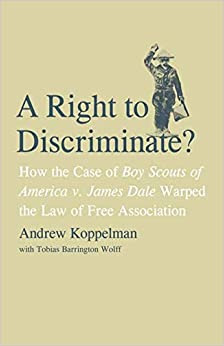
Andrew Koppelman and Tobias Barrington Wolff, A Right to Discriminate?: How the Case of Boy Scouts of America v. James Dale Warped the Law of Free Association (Yale University Press 2009)

Jack M. Balkin and Reva B. Siegel, The Constitution in 2020 (Oxford University Press 2009)

Heather K. Gerken, The Democracy Index: Why Our Election System Is Failing and How to Fix It (Princeton University Press 2009)

Mary Dudziak, Exporting American Dreams: Thurgood Marshall's African Journey (Oxford University Press 2008)

David Luban, Legal Ethics and Human Dignity (Cambridge Univ. Press 2007)

Ian Ayres, Super Crunchers: Why Thinking-By-Numbers is the New Way to be Smart (Bantam 2007)

Jack M. Balkin, James Grimmelmann, Eddan Katz, Nimrod Kozlovski, Shlomit Wagman and Tal Zarsky, eds., Cybercrime: Digital Cops in a Networked Environment (N.Y.U. Press 2007)

Jack M. Balkin and Beth Simone Noveck, The State of Play: Law, Games, and Virtual Worlds (N.Y.U. Press 2006)

Andrew Koppelman, Same Sex, Different States: When Same-Sex Marriages Cross State Lines (Yale University Press 2006)

Brian Tamanaha, Law as a Means to an End (Cambridge University Press 2006)

Sanford Levinson, Our Undemocratic Constitution (Oxford University Press 2006)

Mark Graber, Dred Scott and the Problem of Constitutional Evil (Cambridge University Press 2006)

Jack M. Balkin, ed., What Roe v. Wade Should Have Said (N.Y.U. Press 2005)

Sanford Levinson, ed., Torture: A Collection (Oxford University Press 2004)
Balkin.com homepage
Bibliography
Conlaw.net
Cultural Software
Writings
Opeds
The Information Society Project
BrownvBoard.com
Useful Links
Syllabi and Exams
