![[Powered by Blogger]](https://lh3.googleusercontent.com/blogger_img_proxy/AEn0k_t7__VV9m78Ahk2g5k4_XoIMQbd7sg2urZPKcSCTkPzHVPVfLMoQk8RbSBSoaGocHZcSWkQhjVHuKpKNpdcmZRYKy79SN0rFjdpkbn9Wug_=s0-d)


(iStockphoto)
| Balkinization |
|
Balkinization
Balkinization Symposiums: A Continuing List E-mail: Jack Balkin: jackbalkin at yahoo.com Bruce Ackerman bruce.ackerman at yale.edu Ian Ayres ian.ayres at yale.edu Corey Brettschneider corey_brettschneider at brown.edu Mary Dudziak mary.l.dudziak at emory.edu Joey Fishkin joey.fishkin at gmail.com Heather Gerken heather.gerken at yale.edu Abbe Gluck abbe.gluck at yale.edu Mark Graber mgraber at law.umaryland.edu Stephen Griffin sgriffin at tulane.edu Jonathan Hafetz jonathan.hafetz at shu.edu Jeremy Kessler jkessler at law.columbia.edu Andrew Koppelman akoppelman at law.northwestern.edu Marty Lederman msl46 at law.georgetown.edu Sanford Levinson slevinson at law.utexas.edu David Luban david.luban at gmail.com Gerard Magliocca gmaglioc at iupui.edu Jason Mazzone mazzonej at illinois.edu Linda McClain lmcclain at bu.edu John Mikhail mikhail at law.georgetown.edu Frank Pasquale pasquale.frank at gmail.com Nate Persily npersily at gmail.com Michael Stokes Paulsen michaelstokespaulsen at gmail.com Deborah Pearlstein dpearlst at yu.edu Rick Pildes rick.pildes at nyu.edu David Pozen dpozen at law.columbia.edu Richard Primus raprimus at umich.edu K. Sabeel Rahmansabeel.rahman at brooklaw.edu Alice Ristroph alice.ristroph at shu.edu Neil Siegel siegel at law.duke.edu David Super david.super at law.georgetown.edu Brian Tamanaha btamanaha at wulaw.wustl.edu Nelson Tebbe nelson.tebbe at brooklaw.edu Mark Tushnet mtushnet at law.harvard.edu Adam Winkler winkler at ucla.edu Compendium of posts on Hobby Lobby and related cases The Anti-Torture Memos: Balkinization Posts on Torture, Interrogation, Detention, War Powers, and OLC The Anti-Torture Memos (arranged by topic) Recent Posts The Detainee Provisions of the National Defense Authorization Act How to Think About War Powers, Pt. 3 The Poor Get One Strike; Banks Get Thousands A Holiday Puzzle for Supreme Court Trivia Fans Another way to think about War Powers: Why the Small Wars Matter Hate Speech Prosecutions: Europe and the U.S. The Roberts Court’s Bad Romance How to Think About War Powers, Pt. 2 Gamifying Control of the Scored Self What are the people behind Americans Elect thinking? Sex Equality and Original Meaning: A Response to Jack Balkin Legal Language Explorer The Stop Online Piracy Act's Anticircumvention Provisions The Stop Online Piracy Act How to Think About War Powers, Pt. 1 First Amendment & Stop Online Piracy Act's Manager's Amendment: Some Thoughts Dad-or-Daughter Contest: We Have a Winner 2012: 1936? 1992? Gingers "A Permanent State of Remote War" John Bingham--Moderate or Radical? Resisting Elites’ Resistance to the Rule of Law (Review of Glenn Greenwald’s With Liberty and Justice for Some) Originalism and Sex Discrimination, or, How Thick is Original Public Meaning? Controversial Copyright Bills Would Violate First Amendment--Letters to Congress by Laurence Tribe and Me
|
Saturday, December 31, 2011
The Detainee Provisions of the National Defense Authorization Act
Marty Lederman
As you may have read, the President today signed the NDAA, which contains several controversial provisions concerning detainees, GTMO, etc. The President's signing statement can be found here. Monday, December 26, 2011
How to Think About War Powers, Pt. 3
Stephen Griffin
The last post ended with the promise that I would discuss the special dangers posed by “real” wars. Well, we’re almost there. I need to pursue a sub-topic The Poor Get One Strike; Banks Get Thousands
Frank Pasquale
Most readers of this blog are already familiar with draconian treatment of the poor by various law enforcers and state bureaucracies. Here's yet another example: [A] one-strike clause . . . allows the public housing authority to evict [the tenant] if any member of her household or any guest engages in certain kinds of criminal activity. . . . Stories abound about the one-strike policy being wielded in seemingly egregious ways to evict "innocent tenants," such as a disabled elderly man in California whose caretaker was caught with crack. . . .The Chicago Reporter wrote in September that 86 percent of Chicago's one-strike evictions last year did not arise from criminal activity by the person named on the lease. "These policies, the effect of them on children, families, women, families of color, were not thought through. And I think now a national conversation is beginning to rethink that," said Ariela Migdal, a senior staff attorney with the Women's Rights Project of the American Civil Liberties Union. Migdal pointed to a June 2011 letter from HUD Secretary Shaun Donovan to public housing directors, encouraging the directors to use their "broad discretion" to create a flexible set of standards for who will be admitted to and allowed to stay in public housing. Sunday, December 25, 2011
A Holiday Puzzle for Supreme Court Trivia Fans
Mark Tushnet
There's (at least) one Supreme Court case in which nine justices participated, and the Court announced that it was equally divided. Name the case and explain the outcome. (The case involved multiple issues, but the puzzle doesn't arise, at least directly, from one of the standard paradoxes of aggregation of votes on multiple issues.) Friday, December 23, 2011
Another way to think about War Powers: Why the Small Wars Matter
Mary L. Dudziak
Stephen Griffin has been laying out his ideas about war's impact on the constitutional order in a series of posts. Important to his analysis is the distinction between different kinds of conflicts. For example, Griffin writes: "Wars, 'real' wars, pose unique risks for American constitutionalism. Small-scale presidentially-ordered military strikes in support of rebels do not." While I look forward to the rest of the argument, many historians of war look not to the distinctions between different kinds of conflicts, but instead to the cumulative effect of decision-making in conflicts, large and small, on the politics and culture of contemporary decisions about the use of force. Thursday, December 22, 2011
Hate Speech Prosecutions: Europe and the U.S.
Ken Kersch
The news that John Terry, the (white) captain of the English national soccer team (and of his club team, Chelsea), will be criminally prosecuted under Britain’s Crime and Disorder Act of 1998 for racist comments Terry allegedly made on the pitch to Queens Park Rangers defender Anton Ferdinand (who is black) spotlights the very different ways that European and American law strike the balance between – as the subtitle of an excellent new book on the subject puts it -- “preserv[ing] freedom and combat[ing] racism.” Wednesday, December 21, 2011
The Roberts Court’s Bad Romance
Frank Pasquale
Recently a coalition of Missouri payday lenders implied "that standing up for high-interest-rate lenders is somehow analagous to the acts of the 'poor people who followed Dr. King and walked with him hundreds of miles because they believed in civil rights that much.'" Because we all know that liberty means little if you're not free to take a loan out at 444% APR. Monday, December 19, 2011
How to Think About War Powers, Pt. 2
Stephen Griffin
If we wish to understand how and why presidents have used their war powers in contemporary times, we should inquire into how presidents see their own situation. In my first post, I posited that presidents believe they are advancing the foreign policy and defending the national security of the US. (I will bracket for now the role of domestic party-political considerations). So presidents tend to think about using armed force in the context of foreign policy and national security, not “war.” Mind you, the US has fought a number of major wars since 1945 and no one thinks otherwise. But presidents see war as a means to an end. Perhaps this is unremarkable, but experience shows that it is easy for them to focus so much on foreign policy ends that they lose sight of the terrible nature of the means. This of course suggests one of the purposes of deliberating about war in advance. Gamifying Control of the Scored Self
Frank Pasquale
Social sorting is big business. Bosses and bankers crave "predictive analytics:" ways of deciding who will be the best worker, borrower, or customer. Our economy is less likely to reward someone who "builds a better mousetrap" than it is to fund a startup which will identify those most likely to buy a mousetrap. The critical resource here is data, the fossil fuel of the digital economy. Privacy advocates are digital environmentalists, worried that rapid exploitation of data either violates moral principles or sets in motion destructive processes we only vaguely understand now.* Friday, December 16, 2011
What are the people behind Americans Elect thinking?
Sandy Levinson
The NYTimes reports that Americans Elect is very likely to have a place on all 50 state ballots for the 2012 election and that the organization continues to plan to nominate, via an internet "primary," a "unity ticket" consisting of a presidential candidate and a v.p. candidate not from the same political party. Consider the following paragraph from the Times article: Thursday, December 15, 2011
Sex Equality and Original Meaning: A Response to Jack Balkin
Guest Blogger
Steven G. Calabresi and Julia Rickert Legal Language Explorer
Jason Mazzone
Just launched: the Legal Language Explorer website. The site allows users to search all U.S. Supreme Court cases from 1791-2005 for words or phrases and to generate a frequency plot for the results (as well as a download-able list of cases). The site's developers promise coverage of more courts and other tools in the near future. Having played with the site this morning, I can report it is quite addictive.
The Stop Online Piracy Act's Anticircumvention Provisions
Guest Blogger
Wendy Seltzer The Stop Online Piracy Act
Guest Blogger
Nick Bramble The apparent purpose of section 105 of the Stop Online Piracy Act (SOPA) is to delink access and funding blockage decisions from the presence of a court order, and instead to condition these actions upon the existence of “credible evidence” of infringement and the good faith belief of the provider taking the action. But section 105 suffers from ambiguous references to sections 102 and 103 of SOPA, yields little clarity as to the basic question of when providers may restrict information and financial flows in the absence of a court order and still receive broad legal immunity, and may encourage actions that have little to do with the purpose of the underlying bill. The confusing structure of section 105 is particularly problematic given the possibility for abuse by service providers and others with an interest in labeling competitors as “foreign infringing sites” or “sites dedicated to theft of U.S. property” without judicial oversight. Wednesday, December 14, 2011
How to Think About War Powers, Pt. 1
Stephen Griffin
Having finished a draft of a book on war powers, this is the first of several posts on topics arising from the book. If I had to boil the book down to one claim, it would be that wars, “real” post-1945 wars such as Korea, Vietnam, the 1991 Gulf War, Afghanistan and Iraq, pose extraordinary challenges and risks for our democratic constitutional order that clearly separate them from other types of military conflicts. At the same time, I add covert wars and decisions on nuclear strategy to the usual list of wars fought by the US since 1945 because significant presidential decisions were made in those spheres without the participation of Congress. First Amendment & Stop Online Piracy Act's Manager's Amendment: Some Thoughts
Marvin Ammori
The tech and civil liberties communities are all focused on a pair of bills in Congress aimed at "rogue foreign sites" like All of MP3 and The Pirate Bay, but that actually appear to target Tumblr, Twitter, and YouTube--and commandeer search engines, domain name services, and advertisers to target these legitimate sites. Today, dozens of top tech CEOs have taken out full page ads in major papers across the country. And thousands of Americans are contacting Congress through the amazing effort of AmericanCensorship.org, a joint project of several civil liberties groups.
In reviewing these bills, I produced a memorandum for Congress analyzing their First Amendment problems. Professor Laurence Tribe filed a letter on the same day, he on behalf of the consumer electronics industry and I on behalf of tech companies. We agreed on several, fundamental key points, including that the bills were overbroad and unconstitutional as written. I discussed the pieces on Balkinization.
The House version of the bills--called the Stop Online Piracy Act, or SOPA--will face a Committee vote tomorrow. Two nights ago, the Committee leadership swapped out the original bill for a new bill. The new version, substituted through a procedure known as a Manager's Amendment, is designed to address some objections raised by tech companies, civil liberties groups, and academics. As a result, in the past 36 hours, those interested in Internet freedom and copyright have moved quickly to analyze the new bill. (See here, here, and here.)
Yesterday, I joined in a staff briefing organized by friends at Net Coalition to discuss the new version.
At the briefing, I made three points:
Tuesday, December 13, 2011
Dad-or-Daughter Contest: We Have a Winner
Ian Ayres
2012: 1936? 1992?
Ken Kersch
Adam Liptak’s lead article in today’s New York Times underlines that the Supreme Court’s decision to hear the Arizona immigration case means (as the headline puts it) that the “case is the third accepted in a month on major political issues” (the others involve the 2010 health care law and the future of the Voting Rights Act of 1965). Many Supreme Court decisions can be fairly arcane. But sometimes they line-up with issues that are politically salient in party and social movement politics. Monday, December 12, 2011
Gingers
Jason Mazzone
When I teach Carolene Products, I ask my students to identify who falls within the final category of footnote 4 in which the Court preserves the possibility of close judicial scrutiny of governmental classifications. This produces an interesting discussion because that portion of footnote 4 is rather complex. It says: Thus the footnote is concerned with "minorities" who are both "discrete" and "insular" and also victims of "prejudice"--so that the political process breaks down and those discrete and insular minorities end up disadvantaged. Who meets those conditions, I ask? The point of the exercise is to have students think about what the Court means to achieve in footnote 4 (mid-way in the discussion I draw on Bruce Ackerman’s persuasive showing that anonymous and diffuse minorities, rather than those that are discrete and insular (and as a result better positioned to protect their interests) really deserve the judicial protection the Court is concerned about). Reflecting on the exercise at the end of the equal protection unit of the course also allows students to assess how well the Court has lived up to the footnote 4 promise. Over the years, the lists of discrete and insular minorities my students have supplied have contained some predictable candidates (gays and lesbians; the Amish) and some less predictable (“forest people”). On occasion, I have gotten redheads. Read more »
"A Permanent State of Remote War"
Mary L. Dudziak
William J. Astore, retired lieutenant colonel (USAF), has a post today on the remoteness of American wars from the American people: Saturday, December 10, 2011
John Bingham--Moderate or Radical?
Gerard N. Magliocca
I'm now about half-way through my draft of the Bingham biography, and I wanted to post about an insight into his political profile that I think others have overlooked. Friday, December 09, 2011
Resisting Elites’ Resistance to the Rule of Law (Review of Glenn Greenwald’s With Liberty and Justice for Some)
Frank Pasquale
(Glenn Greenwald is having a fundraiser; link here. I think his work is well worth supporting.) 1) elites who violate laws with impunity, Thursday, December 08, 2011
Originalism and Sex Discrimination, or, How Thick is Original Public Meaning?
JB
Steve Calabresi and Julia Rickert's new article, Originalism and Sex Discrimination, attempts to do for the 1970s sex equality decisions what Michael McConnell's 1995 article, "Originalism and the Desegregation Decisions," did for Brown v. Board of Education. Nonoriginalists argued that originalism was an unworkable or normatively unattractive theory because it could not account for Brown or for the modern sex equality decisions. McConnell responded that Brown was indeed consistent with the 14th amendment’s original meaning. Calabresi and Rickert try to show that properly understood, the original meaning of the 14th amendment-- in conjunction with the original meaning of the 19th amendment--prohibits discrimination on the basis of sex. Controversial Copyright Bills Would Violate First Amendment--Letters to Congress by Laurence Tribe and Me
Marvin Ammori
Today, both Professor Laurence Tribe and I submitted letters and legal memoranda to Congress explaining that proposed copyright legislation would violate the First Amendment and be struck down in court. (His letter is available here, and mine is available here.)
|
Books by Balkinization Bloggers 
Gerard N. Magliocca, The Actual Art of Governing: Justice Robert H. Jackson's Concurring Opinion in the Steel Seizure Case (Oxford University Press, 2025) 
Linda C. McClain and Aziza Ahmed, The Routledge Companion to Gender and COVID-19 (Routledge, 2024) 
David Pozen, The Constitution of the War on Drugs (Oxford University Press, 2024) 
Jack M. Balkin, Memory and Authority: The Uses of History in Constitutional Interpretation (Yale University Press, 2024) 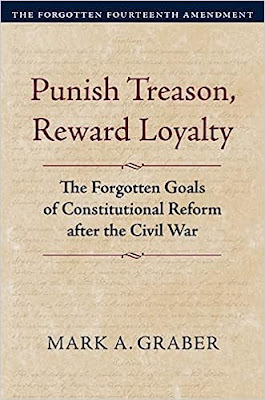
Mark A. Graber, Punish Treason, Reward Loyalty: The Forgotten Goals of Constitutional Reform after the Civil War (University of Kansas Press, 2023) 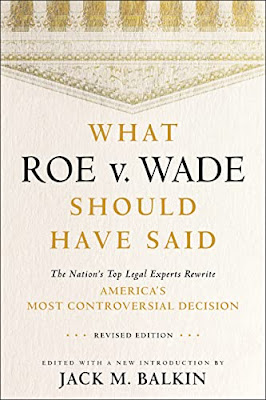
Jack M. Balkin, What Roe v. Wade Should Have Said: The Nation's Top Legal Experts Rewrite America's Most Controversial Decision - Revised Edition (NYU Press, 2023) 
Andrew Koppelman, Burning Down the House: How Libertarian Philosophy Was Corrupted by Delusion and Greed (St. Martin’s Press, 2022) 
Gerard N. Magliocca, Washington's Heir: The Life of Justice Bushrod Washington (Oxford University Press, 2022) 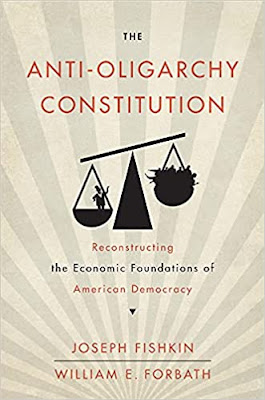
Joseph Fishkin and William E. Forbath, The Anti-Oligarchy Constitution: Reconstructing the Economic Foundations of American Democracy (Harvard University Press, 2022) 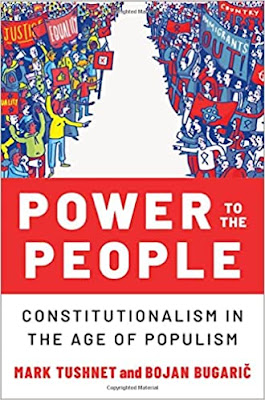
Mark Tushnet and Bojan Bugaric, Power to the People: Constitutionalism in the Age of Populism (Oxford University Press 2021). 
Mark Philip Bradley and Mary L. Dudziak, eds., Making the Forever War: Marilyn B. Young on the Culture and Politics of American Militarism Culture and Politics in the Cold War and Beyond (University of Massachusetts Press, 2021). 
Jack M. Balkin, What Obergefell v. Hodges Should Have Said: The Nation's Top Legal Experts Rewrite America's Same-Sex Marriage Decision (Yale University Press, 2020) 
Frank Pasquale, New Laws of Robotics: Defending Human Expertise in the Age of AI (Belknap Press, 2020) 
Jack M. Balkin, The Cycles of Constitutional Time (Oxford University Press, 2020) 
Mark Tushnet, Taking Back the Constitution: Activist Judges and the Next Age of American Law (Yale University Press 2020). 
Andrew Koppelman, Gay Rights vs. Religious Liberty?: The Unnecessary Conflict (Oxford University Press, 2020) 
Ezekiel J Emanuel and Abbe R. Gluck, The Trillion Dollar Revolution: How the Affordable Care Act Transformed Politics, Law, and Health Care in America (PublicAffairs, 2020) 
Linda C. McClain, Who's the Bigot?: Learning from Conflicts over Marriage and Civil Rights Law (Oxford University Press, 2020) 
Sanford Levinson and Jack M. Balkin, Democracy and Dysfunction (University of Chicago Press, 2019) 
Sanford Levinson, Written in Stone: Public Monuments in Changing Societies (Duke University Press 2018) 
Mark A. Graber, Sanford Levinson, and Mark Tushnet, eds., Constitutional Democracy in Crisis? (Oxford University Press 2018) 
Gerard Magliocca, The Heart of the Constitution: How the Bill of Rights became the Bill of Rights (Oxford University Press, 2018) 
Cynthia Levinson and Sanford Levinson, Fault Lines in the Constitution: The Framers, Their Fights, and the Flaws that Affect Us Today (Peachtree Publishers, 2017) 
Brian Z. Tamanaha, A Realistic Theory of Law (Cambridge University Press 2017) 
Sanford Levinson, Nullification and Secession in Modern Constitutional Thought (University Press of Kansas 2016) 
Sanford Levinson, An Argument Open to All: Reading The Federalist in the 21st Century (Yale University Press 2015) 
Stephen M. Griffin, Broken Trust: Dysfunctional Government and Constitutional Reform (University Press of Kansas, 2015) 
Frank Pasquale, The Black Box Society: The Secret Algorithms That Control Money and Information (Harvard University Press, 2015) 
Bruce Ackerman, We the People, Volume 3: The Civil Rights Revolution (Harvard University Press, 2014) Balkinization Symposium on We the People, Volume 3: The Civil Rights Revolution 
Joseph Fishkin, Bottlenecks: A New Theory of Equal Opportunity (Oxford University Press, 2014) 
Mark A. Graber, A New Introduction to American Constitutionalism (Oxford University Press, 2013) 
John Mikhail, Elements of Moral Cognition: Rawls' Linguistic Analogy and the Cognitive Science of Moral and Legal Judgment (Cambridge University Press, 2013) 
Gerard N. Magliocca, American Founding Son: John Bingham and the Invention of the Fourteenth Amendment (New York University Press, 2013) 
Stephen M. Griffin, Long Wars and the Constitution (Harvard University Press, 2013) 
Andrew Koppelman, The Tough Luck Constitution and the Assault on Health Care Reform (Oxford University Press, 2013) 
James E. Fleming and Linda C. McClain, Ordered Liberty: Rights, Responsibilities, and Virtues (Harvard University Press, 2013) Balkinization Symposium on Ordered Liberty: Rights, Responsibilities, and Virtues 
Andrew Koppelman, Defending American Religious Neutrality (Harvard University Press, 2013) 
Brian Z. Tamanaha, Failing Law Schools (University of Chicago Press, 2012) 
Sanford Levinson, Framed: America's 51 Constitutions and the Crisis of Governance (Oxford University Press, 2012) 
Linda C. McClain and Joanna L. Grossman, Gender Equality: Dimensions of Women's Equal Citizenship (Cambridge University Press, 2012) 
Mary Dudziak, War Time: An Idea, Its History, Its Consequences (Oxford University Press, 2012) 
Jack M. Balkin, Living Originalism (Harvard University Press, 2011) 
Jason Mazzone, Copyfraud and Other Abuses of Intellectual Property Law (Stanford University Press, 2011) 
Richard W. Garnett and Andrew Koppelman, First Amendment Stories, (Foundation Press 2011) 
Jack M. Balkin, Constitutional Redemption: Political Faith in an Unjust World (Harvard University Press, 2011) 
Gerard Magliocca, The Tragedy of William Jennings Bryan: Constitutional Law and the Politics of Backlash (Yale University Press, 2011) 
Bernard Harcourt, The Illusion of Free Markets: Punishment and the Myth of Natural Order (Harvard University Press, 2010) 
Bruce Ackerman, The Decline and Fall of the American Republic (Harvard University Press, 2010) Balkinization Symposium on The Decline and Fall of the American Republic 
Ian Ayres. Carrots and Sticks: Unlock the Power of Incentives to Get Things Done (Bantam Books, 2010) 
Mark Tushnet, Why the Constitution Matters (Yale University Press 2010) 
Ian Ayres and Barry Nalebuff: Lifecycle Investing: A New, Safe, and Audacious Way to Improve the Performance of Your Retirement Portfolio (Basic Books, 2010) .jpg)
Jack M. Balkin, The Laws of Change: I Ching and the Philosophy of Life (2d Edition, Sybil Creek Press 2009) 
Brian Z. Tamanaha, Beyond the Formalist-Realist Divide: The Role of Politics in Judging (Princeton University Press 2009) 
Andrew Koppelman and Tobias Barrington Wolff, A Right to Discriminate?: How the Case of Boy Scouts of America v. James Dale Warped the Law of Free Association (Yale University Press 2009) 
Jack M. Balkin and Reva B. Siegel, The Constitution in 2020 (Oxford University Press 2009) 
Heather K. Gerken, The Democracy Index: Why Our Election System Is Failing and How to Fix It (Princeton University Press 2009) 
Mary Dudziak, Exporting American Dreams: Thurgood Marshall's African Journey (Oxford University Press 2008) 
David Luban, Legal Ethics and Human Dignity (Cambridge Univ. Press 2007) 
Ian Ayres, Super Crunchers: Why Thinking-By-Numbers is the New Way to be Smart (Bantam 2007) 
Jack M. Balkin, James Grimmelmann, Eddan Katz, Nimrod Kozlovski, Shlomit Wagman and Tal Zarsky, eds., Cybercrime: Digital Cops in a Networked Environment (N.Y.U. Press 2007) 
Jack M. Balkin and Beth Simone Noveck, The State of Play: Law, Games, and Virtual Worlds (N.Y.U. Press 2006) 
Andrew Koppelman, Same Sex, Different States: When Same-Sex Marriages Cross State Lines (Yale University Press 2006) 
Brian Tamanaha, Law as a Means to an End (Cambridge University Press 2006) 
Sanford Levinson, Our Undemocratic Constitution (Oxford University Press 2006) 
Mark Graber, Dred Scott and the Problem of Constitutional Evil (Cambridge University Press 2006) 
Jack M. Balkin, ed., What Roe v. Wade Should Have Said (N.Y.U. Press 2005) 
Sanford Levinson, ed., Torture: A Collection (Oxford University Press 2004) Balkin.com homepage Bibliography Conlaw.net Cultural Software Writings Opeds The Information Society Project BrownvBoard.com Useful Links Syllabi and Exams |
