Balkinization
an unanticipated consequence of
Jack M. Balkin
Balkinization Symposiums: A Continuing List
E-mail:
Jack Balkin:
jackbalkin at yahoo.com
Bruce Ackerman
bruce.ackerman at yale.edu
Ian Ayres
ian.ayres at yale.edu
Corey Brettschneider
corey_brettschneider at brown.edu
Mary Dudziak
mary.l.dudziak at emory.edu
Joey Fishkin
joey.fishkin at gmail.com
Heather Gerken heather.gerken at yale.edu
Abbe Gluck abbe.gluck at yale.edu
Mark Graber
mgraber at law.umaryland.edu
Stephen Griffin
sgriffin at tulane.edu
Jonathan Hafetz
jonathan.hafetz at shu.edu
Jeremy Kessler
jkessler at law.columbia.edu
Andrew Koppelman
akoppelman at law.northwestern.edu
Marty Lederman
msl46 at law.georgetown.edu
Sanford Levinson
slevinson at law.utexas.edu
David Luban
david.luban at gmail.com
Gerard Magliocca
gmaglioc at iupui.edu
Jason Mazzone
mazzonej at illinois.edu
Linda McClain
lmcclain at bu.edu
John Mikhail
mikhail at law.georgetown.edu
Frank Pasquale
pasquale.frank at gmail.com
Nate Persily
npersily at gmail.com
Michael Stokes Paulsen
michaelstokespaulsen at gmail.com
Deborah Pearlstein
dpearlst at yu.edu
Rick Pildes
rick.pildes at nyu.edu
David Pozen
dpozen at law.columbia.edu
Richard Primus
raprimus at umich.edu
K. Sabeel Rahmansabeel.rahman at brooklaw.edu
Alice Ristroph
alice.ristroph at shu.edu
Neil Siegel
siegel at law.duke.edu
David Super
david.super at law.georgetown.edu
Brian Tamanaha
btamanaha at wulaw.wustl.edu
Nelson Tebbe
nelson.tebbe at brooklaw.edu
Mark Tushnet
mtushnet at law.harvard.edu
Adam Winkler
winkler at ucla.edu
Compendium of posts on Hobby Lobby and related cases
The Anti-Torture Memos: Balkinization Posts on Torture, Interrogation, Detention, War Powers, and OLC
The Anti-Torture Memos (arranged by topic)
Recent Posts
The Poor Get One Strike; Banks Get Thousands
![[Powered by Blogger]](https://lh3.googleusercontent.com/blogger_img_proxy/AEn0k_sy2cAhS5D1wAfNmgQt7Gz-gLZ9ewmincni4fSb0DCoqbwkyO23z7ljyGd1pMYG3YGcojzpyiLjQpsiyN0fPzMJNh2zIql7h3iLv8NZ4TX0=s0-d)
Just A Few Blogs
ACS Blog
Alas, a Blog
Althouse
Arts and Letters Daily
Atrios (Eschaton)
Bill of Health
Buzzflash.com
Buzz Machine
Cato at Liberty
Juan Cole (Informed Comment)
Concurring Opinions
The Constitution in 2020
Corrente
Crooked Timber
Daily Howler
Daily Kos
Dana Boyd
Brad DeLong
Digby (Hullabaloo)
Discriminations
Daniel Drezner
Kevin Drum (Mother Jones)
Electrolite
En Banc
Eunomia (Daniel Larison)
Fafblog
Michael Froomkin (Discourse.net)
GovLab (Beth Noveck)
Rick Hasen (Election Law)
History News Network
How Appealing
Ignatz (Sam Heldman)
The Importance of (Ernie Miller)
Infolaw
Instapundit
International Economic Law and Policy Blog
IntLawGrrls
Jacob Levy
Jesus' General
Jurisdynamics
The Kitchen Cabinet
Mark Kleiman
Law Blog Central
Larry Lessig
Lawyers, Guns and Money
Liberal Oasis
Brian Leiter's Law School Reports
The Leiter Reports
Marginal Revolution
Megan McArdle
Memeorandum
Metafilter
Mirror of Justice
The New Republic
Newseum
No More Mister Nice Blog
Brendan Nyhan
Opinio Juris
Orcinus
The Originalism Blog
Pandagon
Passport (Foreign Policy)
Overcoming Bias
Political Animal (Washington Monthly)
Political Theory Daily Review
Political Wire (Taegan Goddard)
The Poor Man
Virginia Postrel
Prawfsblawg
Public Reason
Jonathan Rauch
Raw Story
Redstate
ReligiousLeftLaw.com
Reporters Committee For Freedom of the Press
Reproductive Rights Blog
Rothman's Roadmap to the Right of Publicity
SCOTUS Blog
Seeing the Forest
Clay Shirky
The Shifted Librarian
The Situationist
Larry Solum (Legal Theory)
Andrew Sullivan
Talking Points Memo
Talk Left
Tapped
Tbogg
TechPresident
The Paper Chase (Jurist)
Tom Paine
Tom Tomorrow (This Modern World)
Eve Tushnet
Uggabugga
University of Chicago Law School Faculty Blog
Unqualified Offerings
The Volokh Conspiracy
War and Piece (Laura Rozen)
Wampum
Oliver Willis
Wonkette
Written Description
Matthew Yglesias
Yin
Your Choice of Feeds
1. XML
powered by

2. Atom Feed
3. RSS 2.0
The Poor Get One Strike; Banks Get Thousands
Frank Pasquale
Most readers of this blog are already familiar with draconian treatment of the poor by various law enforcers and state bureaucracies. Here's yet another example: [A] one-strike clause . . . allows the public housing authority to evict [the tenant] if any member of her household or any guest engages in certain kinds of criminal activity. . . . Stories abound about the one-strike policy being wielded in seemingly egregious ways to evict "innocent tenants," such as a disabled elderly man in California whose caretaker was caught with crack. . . .The Chicago Reporter wrote in September that 86 percent of Chicago's one-strike evictions last year did not arise from criminal activity by the person named on the lease. "These policies, the effect of them on children, families, women, families of color, were not thought through. And I think now a national conversation is beginning to rethink that," said Ariela Migdal, a senior staff attorney with the Women's Rights Project of the American Civil Liberties Union. Migdal pointed to a June 2011 letter from HUD Secretary Shaun Donovan to public housing directors, encouraging the directors to use their "broad discretion" to create a flexible set of standards for who will be admitted to and allowed to stay in public housing. There have been . . . “tens of thousands of fraudulent documents filed in tens of thousands of cases.” Sworn affidavits have been filed containing false information. This is easily prosecuted perjury. . . . The size and scope of the fraud on the U.S. court system is unprecedented in U.S. history. NY State court judge Arthur Schack, ruled in 2010 that pleadings by the Baum Law Firm— who handle 40% of NY foreclosures — were “so incredible, outrageous, ludicrous and disingenuous that they should have been authorized by the late Rod Serling, creator of the famous science-fiction television series, The Twilight Zone." There has been no fraud prosecution to date. . . . [and banks] have routinely filed falsified mortgage promissory notes — in some cases, six different documents have been filed, all claimed to be the original. At the least 5 must be forgeries — an easy felony to prosecute. The attitude during the go-go days of the housing bubble was “here today, gone tomorrow,” as Joe Nocera and Bethany McLean make clear in their book “All the Devils Are Here.” This was a refinement of the financial deal makers’ code, “IBG-YBG,” meaning “I’ll be gone, you’ll be gone,” described by Jonathan Knee in “The Accidental Investment Banker.” In this environment, why bother getting your paperwork in order when the goal is to put someone into a predatory loan, reap fees and disappear tomorrow? Now that these homes are in foreclosure, however, the lack of paperwork is a serious problem. And, since no one has yet been held accountable for the fraud perpetrated during the housing bubble, the business model of financial institutions is often still predatory. This fraud is now coming back to haunt our courts — for example, in the falsified foreclosure paperwork required to cover up the corner-cutting of the subprime lenders and the banks that funded them. . . .The [Obama] administration is now attempting to quash state-level officials by fiercely lobbying for a 50-state settlement to paper over the foreclosure fraud scandal. Obama may talk about his fealty to the “99 percent,” but his administration is engaged in an aggressive coverup of bank crimes. Cuyahoga County ripped down 1,000 homes this year. And they have 20,000 more to go. That'll cost about $150 million dollars. . . . In theory there shouldn't be this many abandoned houses. When homeowners walk away, the bank is supposed to take responsibility. But one little known feature of the great recession is, that many banks are walking away too, unwilling to maintain a house whose value has crashed. "Very often a bank will take a property to the point of foreclosure, but won't go to the sheriff's sale, 'cause they don't want that property. They don't want the responsibility of the $8-$10,000 bill that comes with tearing this house down" [says Jim Rokakis, a former county treasurer]. When economists boast about America’s great productivity, what they have in mind is exploration – finding ways to do things better, especially through superior processes. But much of this “productivity” has in fact been destructively exploitative. Think of all the corporations that have fired great numbers of people at the drop of a share price, leaving behind underpaid, overworked employees and burned-out managers, while the CEOs escape with their bonuses. To see where this leads, imagine a company that fires all of its workers and then ships its orders from stock. Economic statistics would record this as highly productive – until, of course, the company runs out of stock. American enterprise is running out of stock. Imagine a natural disaster that hit the United States and internally displaced over 5 million families. We’d understand that would require a major policy response. But for the 5 million estimated foreclosures, and the millions more that are going to happen, there’s no response from the administration to match this challenge. Recently, the number of Medicare- and Medicaid-affiliated government contractors charged with detecting fraudulent and abusive practices by enrolled providers has expanded dramatically. The contractors' role has been to monitor and investigate providers rather than simply to administer these programs. [T]he healthcare government contractor landscape continues its transformation with an increased number of contractors actively pursuing the recovery of erroneous payments and the identification of potential patterns of fraud and abuse.
Certainly the Obama administration has ample experience deploying "discretion" and "mercy" in other areas. For example, consider Barry Ritholtz's summary of a shocking Reuters report by Scott Paltrow on foreclosure fraud:
The administration slapped BofA/Countrywide on the wrist for massively discriminatory action. Its OCC has initiated a program where "servicers agree[] to submit foreclosure fraud for review by 'independent' third-party companies" that is not credible. Matt Stoller describes the dynamics that are now wrecking lives and neighborhoods around the country:
But wait, as they say in the infomercials, there's more. It would be bad enough if the wholesale campaign of primitive accumulation via predatory loans and sloppy foreclosures merely contributed to destitution and inequality. But, as CBS's 60 Minutes documents, the same banks evicting families are not exactly putting the empty houses to their "highest and best" use in many cities:
There is no concern for communities, none for struggling families, none for the public treasury. There is simply a Kafkaesque interlinkage of contracts and incentives that keep the foreclosure machine humming (along with Potemkin programs like HAMP), putting families on streets with dubious documentation for the paper gains of banks and servicers. The law enforcement apparatus will hammer a disabled man for inadequately monitoring his caretaker, but moves slowly and ineffectively (if at all) against a wholesale abandonment of legality. Glenn Greenwald's and Bernard Harcourt's books on such discrepancies, already damning, appear to have understated the extent of our 2-tier justice system.
Banks' Economic Impact
This is not simply a problem for lawyers, but for anyone concerned about the overall health of the US economy. The foreclosure disaster is only one particularly pure example of a financial system prone to overcentalization, bubble-blowing, opacity, and disregard for long-term productivity. Henry Mintzberg has warned that the economy will never be "fixed" as long as problematic alliances between business and government consume such a disproportionate share of resources:
There have been a number of recent studies on the productivity of the financial sector (see, e.g., here, here, here, and here). Many have asked whether it increases GDP, but perhaps the more telling question is how it raises GDP. Mike Konczal recently evocatively compared the foreclosure crisis to an earthquake or storm affecting millions:
US GDP probably got some kind of "bump" in 2006 as some homes of Katrina victims were rebuilt. But I've heard few people try to describe hurricanes as a form of "creative destruction," or "information creators." Maybe the hurricane lobby just needs to donate to the right think thanks.
A New Way Forward?
Is there any solution to these problems? The Clinton administration diverted law enforcement resources from financial to health care fraud, and later Bush did the same thing in response to terror fears. Health care fraud detection and deterrence has become extraordinarily sophisticated. For instance, as Wheeler, Fuller, and Broussard have noted (in 4 J. Health & Life Sci. L. 1, 2011):
There is a veritable alphabet soup of entities devoted to this goal, including Program Safeguard Contractors (PSCs) and Zone Program Integrity Contractors (ZPICs). They perform "auditing, data mining, and improper billing and fraud investigation."
In my next post on financial institutions, I will outline some potential lessons for financial fraud prevention from the realm of health care fraud. The critical conceptual issue here is to begin to see the banks as a sector as permanently embedded in a web of state subsidy and support as health care, defense, and energy. Mintzberg convincingly complains about "the energy companies with their cozy tax deals, the defense contractors that live off government budgets, and the pharmaceutical companies that buy their innovations and price what the market will bear, thanks to patents that governments grant, but without policing their holders." I also worry about all these sectors. But it may well be the finance sector that is the most menacing to economic growth, and the least accountable. We cannot simply accept lawlessness in the sector as the status quo. Creative and forceful responses are possible, and have precedents both historically, in other nations, and in other sectors in our own economy.
Simulposted: Concurring Opinions.
Posted
12:27 PM
by Frank Pasquale [link]
Books by Balkinization Bloggers

Mark Tushnet and Bojan Bugaric, Constitutionalism and Its Discontents (University of Chicago Press, 2026)

Gerard N. Magliocca, The Actual Art of Governing: Justice Robert H. Jackson's Concurring Opinion in the Steel Seizure Case (Oxford University Press, 2025)

Linda C. McClain and Aziza Ahmed, The Routledge Companion to Gender and COVID-19 (Routledge, 2024)

David Pozen, The Constitution of the War on Drugs (Oxford University Press, 2024)

Jack M. Balkin, Memory and Authority: The Uses of History in Constitutional Interpretation (Yale University Press, 2024)
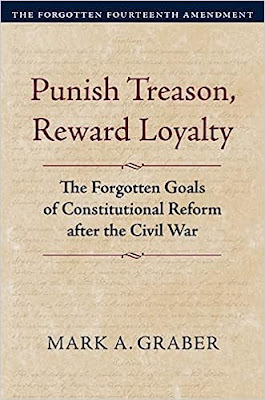
Mark A. Graber, Punish Treason, Reward Loyalty: The Forgotten Goals of Constitutional Reform after the Civil War (University of Kansas Press, 2023)
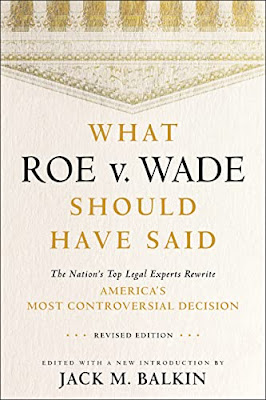
Jack M. Balkin, What Roe v. Wade Should Have Said: The Nation's Top Legal Experts Rewrite America's Most Controversial Decision - Revised Edition (NYU Press, 2023)

Andrew Koppelman, Burning Down the House: How Libertarian Philosophy Was Corrupted by Delusion and Greed (St. Martin’s Press, 2022)

Gerard N. Magliocca, Washington's Heir: The Life of Justice Bushrod Washington (Oxford University Press, 2022)
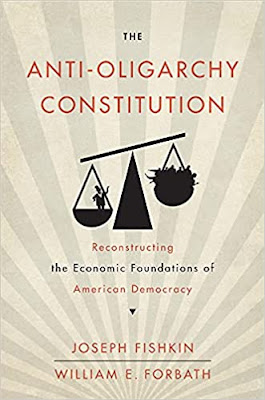
Joseph Fishkin and William E. Forbath, The Anti-Oligarchy Constitution: Reconstructing the Economic Foundations of American Democracy (Harvard University Press, 2022)
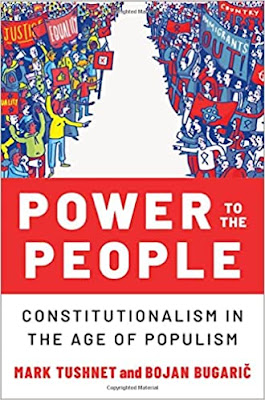
Mark Tushnet and Bojan Bugaric, Power to the People: Constitutionalism in the Age of Populism (Oxford University Press 2021).

Mark Philip Bradley and Mary L. Dudziak, eds., Making the Forever War: Marilyn B. Young on the Culture and Politics of American Militarism Culture and Politics in the Cold War and Beyond (University of Massachusetts Press, 2021).

Jack M. Balkin, What Obergefell v. Hodges Should Have Said: The Nation's Top Legal Experts Rewrite America's Same-Sex Marriage Decision (Yale University Press, 2020)

Frank Pasquale, New Laws of Robotics: Defending Human Expertise in the Age of AI (Belknap Press, 2020)

Jack M. Balkin, The Cycles of Constitutional Time (Oxford University Press, 2020)

Mark Tushnet, Taking Back the Constitution: Activist Judges and the Next Age of American Law (Yale University Press 2020).

Andrew Koppelman, Gay Rights vs. Religious Liberty?: The Unnecessary Conflict (Oxford University Press, 2020)

Ezekiel J Emanuel and Abbe R. Gluck, The Trillion Dollar Revolution: How the Affordable Care Act Transformed Politics, Law, and Health Care in America (PublicAffairs, 2020)

Linda C. McClain, Who's the Bigot?: Learning from Conflicts over Marriage and Civil Rights Law (Oxford University Press, 2020)
Sanford Levinson and Jack M. Balkin, Democracy and Dysfunction (University of Chicago Press, 2019)

Sanford Levinson, Written in Stone: Public Monuments in Changing Societies (Duke University Press 2018)

Mark A. Graber, Sanford Levinson, and Mark Tushnet, eds., Constitutional Democracy in Crisis? (Oxford University Press 2018)

Gerard Magliocca, The Heart of the Constitution: How the Bill of Rights became the Bill of Rights (Oxford University Press, 2018)

Cynthia Levinson and Sanford Levinson, Fault Lines in the Constitution: The Framers, Their Fights, and the Flaws that Affect Us Today (Peachtree Publishers, 2017)

Brian Z. Tamanaha, A Realistic Theory of Law (Cambridge University Press 2017)

Sanford Levinson, Nullification and Secession in Modern Constitutional Thought (University Press of Kansas 2016)

Sanford Levinson, An Argument Open to All: Reading The Federalist in the 21st Century (Yale University Press 2015)

Stephen M. Griffin, Broken Trust: Dysfunctional Government and Constitutional Reform (University Press of Kansas, 2015)

Frank Pasquale, The Black Box Society: The Secret Algorithms That Control Money and Information (Harvard University Press, 2015)

Bruce Ackerman, We the People, Volume 3: The Civil Rights Revolution (Harvard University Press, 2014)
Balkinization Symposium on We the People, Volume 3: The Civil Rights Revolution

Joseph Fishkin, Bottlenecks: A New Theory of Equal Opportunity (Oxford University Press, 2014)

Mark A. Graber, A New Introduction to American Constitutionalism (Oxford University Press, 2013)

John Mikhail, Elements of Moral Cognition: Rawls' Linguistic Analogy and the Cognitive Science of Moral and Legal Judgment (Cambridge University Press, 2013)

Gerard N. Magliocca, American Founding Son: John Bingham and the Invention of the Fourteenth Amendment (New York University Press, 2013)

Stephen M. Griffin, Long Wars and the Constitution (Harvard University Press, 2013)

Andrew Koppelman, The Tough Luck Constitution and the Assault on Health Care Reform (Oxford University Press, 2013)

James E. Fleming and Linda C. McClain, Ordered Liberty: Rights, Responsibilities, and Virtues (Harvard University Press, 2013)
Balkinization Symposium on Ordered Liberty: Rights, Responsibilities, and Virtues

Andrew Koppelman, Defending American Religious Neutrality (Harvard University Press, 2013)

Brian Z. Tamanaha, Failing Law Schools (University of Chicago Press, 2012)

Sanford Levinson, Framed: America's 51 Constitutions and the Crisis of Governance (Oxford University Press, 2012)

Linda C. McClain and Joanna L. Grossman, Gender Equality: Dimensions of Women's Equal Citizenship (Cambridge University Press, 2012)

Mary Dudziak, War Time: An Idea, Its History, Its Consequences (Oxford University Press, 2012)

Jack M. Balkin, Living Originalism (Harvard University Press, 2011)

Jason Mazzone, Copyfraud and Other Abuses of Intellectual Property Law (Stanford University Press, 2011)

Richard W. Garnett and Andrew Koppelman, First Amendment Stories, (Foundation Press 2011)

Jack M. Balkin, Constitutional Redemption: Political Faith in an Unjust World (Harvard University Press, 2011)

Gerard Magliocca, The Tragedy of William Jennings Bryan: Constitutional Law and the Politics of Backlash (Yale University Press, 2011)

Bernard Harcourt, The Illusion of Free Markets: Punishment and the Myth of Natural Order (Harvard University Press, 2010)

Bruce Ackerman, The Decline and Fall of the American Republic (Harvard University Press, 2010)
Balkinization Symposium on The Decline and Fall of the American Republic

Ian Ayres. Carrots and Sticks: Unlock the Power of Incentives to Get Things Done (Bantam Books, 2010)

Mark Tushnet, Why the Constitution Matters (Yale University Press 2010)

Ian Ayres and Barry Nalebuff: Lifecycle Investing: A New, Safe, and Audacious Way to Improve the Performance of Your Retirement Portfolio (Basic Books, 2010)
.jpg)
Jack M. Balkin, The Laws of Change: I Ching and the Philosophy of Life (2d Edition, Sybil Creek Press 2009)

Brian Z. Tamanaha, Beyond the Formalist-Realist Divide: The Role of Politics in Judging (Princeton University Press 2009)
Andrew Koppelman and Tobias Barrington Wolff, A Right to Discriminate?: How the Case of Boy Scouts of America v. James Dale Warped the Law of Free Association (Yale University Press 2009)

Jack M. Balkin and Reva B. Siegel, The Constitution in 2020 (Oxford University Press 2009)

Heather K. Gerken, The Democracy Index: Why Our Election System Is Failing and How to Fix It (Princeton University Press 2009)

Mary Dudziak, Exporting American Dreams: Thurgood Marshall's African Journey (Oxford University Press 2008)

David Luban, Legal Ethics and Human Dignity (Cambridge Univ. Press 2007)

Ian Ayres, Super Crunchers: Why Thinking-By-Numbers is the New Way to be Smart (Bantam 2007)

Jack M. Balkin, James Grimmelmann, Eddan Katz, Nimrod Kozlovski, Shlomit Wagman and Tal Zarsky, eds., Cybercrime: Digital Cops in a Networked Environment (N.Y.U. Press 2007)
Jack M. Balkin and Beth Simone Noveck, The State of Play: Law, Games, and Virtual Worlds (N.Y.U. Press 2006)

Andrew Koppelman, Same Sex, Different States: When Same-Sex Marriages Cross State Lines (Yale University Press 2006)

Brian Tamanaha, Law as a Means to an End (Cambridge University Press 2006)

Sanford Levinson, Our Undemocratic Constitution (Oxford University Press 2006)

Mark Graber, Dred Scott and the Problem of Constitutional Evil (Cambridge University Press 2006)

Jack M. Balkin, ed., What Roe v. Wade Should Have Said (N.Y.U. Press 2005)

Sanford Levinson, ed., Torture: A Collection (Oxford University Press 2004)
Balkin.com homepage
Bibliography
Conlaw.net
Cultural Software
Writings
Opeds
The Information Society Project
BrownvBoard.com
Useful Links
Syllabi and Exams
