E-mail:
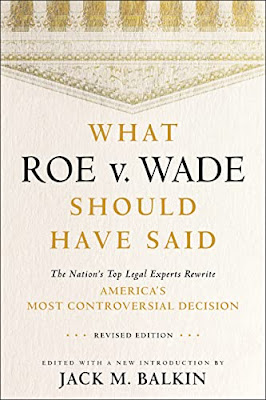
Jack Balkin: jackbalkin at yahoo.com
Bruce Ackerman bruce.ackerman at yale.edu
Ian Ayres ian.ayres at yale.edu
Corey Brettschneider corey_brettschneider at brown.edu
Mary Dudziak mary.l.dudziak at emory.edu
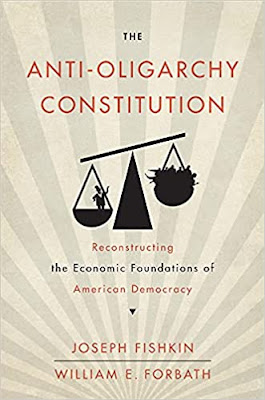
Joey Fishkin joey.fishkin at gmail.com
Heather Gerken heather.gerken at yale.edu
Abbe Gluck abbe.gluck at yale.edu
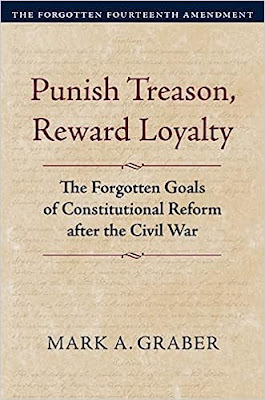
Mark Graber mgraber at law.umaryland.edu
Stephen Griffin sgriffin at tulane.edu
Jonathan Hafetz jonathan.hafetz at shu.edu
Jeremy Kessler jkessler at law.columbia.edu
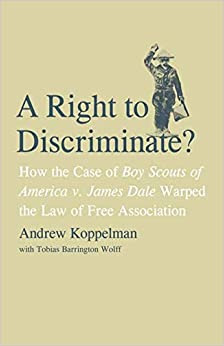
Andrew Koppelman akoppelman at law.northwestern.edu
Marty Lederman msl46 at law.georgetown.edu
Sanford Levinson slevinson at law.utexas.edu
David Luban david.luban at gmail.com
Gerard Magliocca gmaglioc at iupui.edu
Jason Mazzone mazzonej at illinois.edu
Linda McClain lmcclain at bu.edu
John Mikhail mikhail at law.georgetown.edu
Frank Pasquale pasquale.frank at gmail.com
Nate Persily npersily at gmail.com
Michael Stokes Paulsen michaelstokespaulsen at gmail.com
Deborah Pearlstein dpearlst at yu.edu
Rick Pildes rick.pildes at nyu.edu
David Pozen dpozen at law.columbia.edu
Richard Primus raprimus at umich.edu
K. Sabeel Rahmansabeel.rahman at brooklaw.edu
Alice Ristroph alice.ristroph at shu.edu
Neil Siegel siegel at law.duke.edu
David Super david.super at law.georgetown.edu
Brian Tamanaha btamanaha at wulaw.wustl.edu
Nelson Tebbe nelson.tebbe at brooklaw.edu
Mark Tushnet mtushnet at law.harvard.edu
Adam Winkler winkler at ucla.edu
One of my current research projects focuses on Supreme Court review of state court decisions on issues of federal law, especially federal constitutional law. The Roberts Court has shown itself to be extremely deferential to state court rulings on issues of federal constitutional law, thus giving the state courts, as a practical matter, a good deal of autonomy. Compared even to the Rehnquist Court, the Roberts Court grants review of state court decisions on issues of federal constitutional law at a very low rate. When it does grant review, however, it reverses at a very high rate and often with a high level of agreement among the Justices that reversal is warranted. In sum, the Court's current approach to state court decisions is to ignore all but the biggest errors.
Consistent with its deference to state courts, the Roberts Court has reversed a good number of decisions by federal courts overturning convictions or vacating sentences on habeas review. In the first opinion of the 2011 Term, in Cavazos v. Smith, the Court does exactly that, with today's 6-3 per curiam summary reversal of a decision by a panel of the Ninth Circuit granting a writ of habeas corpus to a petitioner convicted in California in the death of her 7-week old granddaughter. The petitioner claimed in her habeas petition, as she had in her appeals in state court, that the evidence was insufficient to support the jury verdict. The Ninth Circuit panel agreed. The Supreme Court had vacated the panel's decision twice before, directing, as the Court put it today, "the panel’s attention to this Court’s opinions highlighting the necessity of deference to state courts" on habeas review. The panel failed to take the hint and today it got an earful. Calling the panel's decision "plainly wrong" and its reasoning "simply false," the Court complained that the Ninth Circuit had failed to do what was required of it when the case was previously remanded: "Each time the panel persisted in its course, reinstating its judgment without seriously confronting the significance of the cases called to its attention. Its refusal to do so necessitates this Court’s action today."
The National Law Journal is hosting a discussion of the state of law schools, with contributions from the current Chair of the ABA Section on Legal Education, John F. O'Brien, the President of AALS, Michael Olivas, Erwin Chemerinski of Irvine, Bill Henderson of Indiana, Lucille Jewel of John Marshall (Atlanta), and Kyle McEntee of Law School Transparency. Here is my initial post:
Many law professors would be disgusted at hearing that culinary institutes—which charge $30,000 annual tuition for two-year Associate degrees—advertise 97% percent employment rates for recent graduates when many of the grads counted as employed are working as fry cooks at fast food restaurants in positions they could have obtained without the degree. What if culinary institutes, to boost their advertised employment rates, hire a bunch of recent graduates in temporary part-time positions to clean up and wash dishes. On top of that, what if culinary institutes routinely claim that recent graduates earn $60,000 or more, although only a fraction get that pay, while most grads earn $30,000.
I don't know whether culinary institutes are guilty of any of this, which would be brazenly unethical. I do know, however, that law schools across the country have done things like this systematically for years. Conduct we would find unacceptable in others has been normal operating procedure for law schools.
To kick off this discussion the National Law Journal asks, "Are law schools in crisis?" We should be clear: law schools are NOT in crisis. Although a number of law schools shrank their entering class in 2011, enrollment at most law schools remains near all time highs, and tuition is sky high, especially at private schools. Law schools have more resources than other university departments. Law professors are paid far more than other professors and earn more than most lawyers.
A Video Discussion about the Constitutionality of the Affordable Care Act
JB
Over at the New England Journal of Medicine website, Ilya Somin of George Mason University Law School and I appear in a video to discuss some basic issues in the constitutional challenge to the Affordable Care Act. Posted
11:50 AM
by JB [link]
Friday, October 28, 2011
Broccoli vs. The Plague
Gerard N. Magliocca
The most powerful argument against upholding the constitutionality of the individual mandate may be that this will open the door to compulsory broccoli purchases. Many people are unfamiliar with the relevant Commerce Clause cases, but everyone seems to know about the broccoli hypothetical.
The hypothetical on the other side of this litigation, though, is just as powerful. Suppose that a dangerous epidemic breaks out that reduces interstate commerce by curtailing travel and other interactions for fear of contagion. A private company develops an effective vaccine that many people refuse to buy. Is Congress prohibited from ordering everyone in the country to buy the vaccine under the proposed activity/inactivity distinction? I've asked this question to folks who are skeptical about the individual mandate and usually get one of four answers:
1. "This is a non-issue because every state would order mandatory vaccination." Maybe, but that sounds a lot like "This is a non-issue because Congress will never order you to buy broccoli." Either both responses are valid or neither is. One can't be adequate and the other not.
2. "Congress can do this under some other Article I power." Really? Like what?
3. "Congress cannot order vaccination purchases. We just have to rely on jawboning and financial incentives." This lack of authority in the face of a terrible disease scares me far more than having to buy broccoli when I don't want to.
4. "In that dire emergency, congressional regulation of inactivity would be lawful." At this point, the activity/inactivity distinction vanishes and is replaced by a balancing test that weighs the state's interest against its intrusion into personal liberty.
Thus, I think that the only way that the activity/inactivity line makes sense is if you answer the disease hypothetical with #3. Otherwise, you need another rationale to strike down the individual mandate.
Occupy Wall Street has continued to hold Liberty Plaza, and has inspired hundreds of other protests. It's usually interpreted as a leftish populist complement to the Tea Party, ala this diagram:
Some have praised OWS and the Tea Party for challenging ossified and corrupt institutions. Others dismiss the two groups as mere "primal screams," uninformed by a realistic sense of policy.
I'd like to step beyond the rival narratives of "what does OWS do for the left" and "how does OWS relate to the Tea Party." These are important questions, but I think they miss a deeper feature of the movement: its conservatism. Sure, Bill O'Reilly and Rush Limbaugh are portraying the protesters as druggies, socialists, and hippies. But millionaire media moguls do not define modern conservatism; principles do. Some of the most appealing ideals of modern conservatism have found a home in the OWS movement. Gregory Djerejian has put it well:
While I will readily confess I find it odd as something of a Burkean that I am sympathetic to these protesters, they are not looking to trot out the guillotines, in the main (although I did spot a "Behead the Fed" sign!), but rather, they have smelled the radicalism of the blows dealt the integrity of a representative democratic system poised by the almost unfettered oligarch-like behavior among too many elites wholly disconnected from, yes, the 99% they speak of. They are acting to secure conservative aims of re-balancing a society that is becoming dangerously unmoored and increasingly bent asunder.
I want to highlight a bill recently introduced in Congress designed to promote entrepreneurship among military veterans.
The bill would enable veterans to use the educational benefits earned under the existing GI Bills to start a new business.
I like the bill for several reasons.
First, the original GI Bills meant to help veterans transition back to civilian life and to succeed as civilians, but college education is no longer the clear path to success for everyone in today's economy. The numbers are almost depressing. Nearly 14% of college graduates from 2006-2010 can't find full-time work. According to the comments posted on We Are the 99 Percent, many of the graduates who do have jobs can't make ends meet and have little job security. Those writing at Balkinization, generally law professors, have discussed not college but legal education. The writers have noted the same problems--it's expensive, many students land loans not legal jobs, and employment numbers are low (and lower than law schools suggest, as Brian Tamanaha has often noted).
Peter Thiel, former CEO of Paypal and Facebook's first outside investor, has called our education system a "bubble" and he pays (some exceptional) young people essentially to drop out of college and do something else meaningful.
You’ve just finished dinner at a nice restaurant and you order a decaf coffee instead of regular so that you won’t have trouble falling asleep. A few minutes later, your server brings you a steaming cup of Joe. You want to drink it, but you’re worried it might have caffeine. At this point, I normally ask something like “Are you sure this is decaffeinated?”
But my friend (and newly tenured colleague) Yair Listokin tells me that Oprah suggests that we ask instead: “Is this regular coffee?” Or, “Are you sure this is regular coffee?”
It’s not fool proof, but asking “is it regular” will let you know whether the waiter is willing to say “yes” to any question. Framing the question doesn’t work if the restaurant follows the “after 8 p.m. or so, all the coffee is decaf” convention.
Perfect Timing for a Conference on Accountable Care Organizations
Frank Pasquale
The biggest news in health care last week was the release of the ACO Final Rule, governing accountable care organizations. With a great sense of timing (and some good luck), our law review at Seton Hall is sponsoring a conference this Friday that will bring together some of the leading legal, academic, and medical experts on ACOs. (We've even invited an information technology expert who can address the vital role of electronic medical records in promoting quality and efficiency.)
Why care about ACOs? Here's Jenny Gold from Kaiser Health News:
Accountable care organizations take up only seven pages of the massive new health law yet have become one of the most talked about provisions. This latest model for delivering services offers doctors and hospitals financial incentives to provide good quality care to Medicare beneficiaries while keeping down costs. A cottage industry of consultants has sprung up to help even ordinary hospitals become the first ACOs on the block.
When the draft ACO regulation was released, there were many naysayers. But as Sarah Kliff reports, the concept is now "getting a much more positive reception." In a familiar Obama Administration pattern, the rule now "marks a victory for hospitals, clinics and large doctors' practices that have lobbied to alter draft regulations they viewed as too burdensome and financially risky."
The Seton Hall Law Review symposium will bring together those who are implementing and studying ACOs. For a good run down of presentation topics, check out our posts on the speakers at the Health Reform Watch blog.
Yesterday, in a landmark decision, the Canadian Supreme Court unanimously ruled that hyperlinking to defamatory content is not inherently defamatory behavior. By limiting the application of Canada’s defamation law, the Court preserved free expression and communication online and, by its own estimation, recognized the dangers of “trying to fit a square archaic peg into the hexagonal hole of modernity.” While this decision is the first of its kind and sets excellent international precedent, the rationale does not provide a comprehensive rebuttal to the attack on hyperlinks.
The Good:
Justice Abella’s majority decision emphasized the importance of ensuring the robust use of hyperlinks on the Internet as means to securing an Internet ecosystem that remains supportive of free speech. Justice Abella writes, “The Internet cannot, in short, provide access to information without hyperlinks. Limiting their usefulness…would have the effect of seriously restricting the flow of information and, as a result, freedom of expression.”
The language the Court uses and the decision reached are precisely what is needed to combat the rise of hyperlink litigation stemming from concerns about trademark infringement, e-trespass, copyright infringement, contributory infringement, and contract violation. Additionally, the Court’s rationale, that a hyperlink alone does not constitute publication of the linked-to content is eminently reasonable and by and large will achieve the broader goals intended by the Court – to promote free expression while without actively facilitating defamation.
The Danger:
However, the Court’s bright line rule -- a link, without any of the linked-to content included with it, would not, in and of itself, be considered defamatory -- leaves open some very important issues. In particular, what the Court fails to recognize (though it is touched upon in the concurring opinion written by Chief Justice McLachlan and Justice Fish) is that there are instances when the publication of a link would very well seem to amount to publishing the linked-to information.
For example, imagine an aggregator website dedicated to kiddie porn. The aggregator would simply include links to websites with kiddie porn. No other content from the linked-to page would be included on the aggregator website. In that instance, under the Court’s rationale, it would seem that the aggregator page would be protected because all it did was publish a link. Nothing more. No kiddie porn from the linked-to pages was included on the aggregator’s page so the aggregator has not committed any kiddie porn related crime.
A Proposed Solution:
To prevent dilemmas such as these, I suggest moving from a bright line rule approach to one that allows judges to protect legitimate uses of hyperlinks while prohibiting illegitimate uses of them.
Such an approach requires that we first recognize hyperlinks as critical to communication not just because they facilitate access to information, but also because they can be communicative in and of themselves. They can signal user preferences, democratize the national dialogue, indicate credibility, function as a signature on a virtual petition and help establish virtual associations. Because of this communicative role, hyperlinks should be granted the ultimate in First Amendment protection -- a constitutional privilege like that given to newspapers in New York Times Co. v. Sullivan. With such a privilege, any limitation on the use of hyperlinks should be reviewed under an exacting strict scrutiny standard.
The exacting “actual malice” standard applied in New York Times Co. v. Sullivan was created to presumptively protect the medium of the newspaper and, more importantly, the purpose of the medium. A newspaper serves its function when it is free to comment and report on issues of public interest, including public figures. To apply a lower standard would have threatened the newspaper’s ability to serve its purpose.
The same sentiment should extend to protect new media as they emerge. The Internet is a powerful medium whose power derives from the robust use of links. Without the hyperlink, navigation would be nearly impossible, and filtering content would be incredibly time-consuming. It is for this reason that hyperlink users must be granted a similar constitutional privilege.
Extending such a constitutional privilege does not mean permitting linking when it clearly intends to facilitate illegal behavior. A standard that requires plaintiffs to show that defendants possessed a requisite mens rea to facilitate illegal behavior provides presumptive protection of hyperlinks while also avoiding the creation of a bright line rule that unintentionally protects “low value” speech.
For those interested, I have explored this argument a bit further in a recently published paper.
Anjali Dalal is a Resident Fellow at the Information Society Project at Yale Law School. You can reach her by e-mail at anjali.dalal at yale.edu Posted
8:59 AM
by Guest Blogger [link]
Thursday, October 20, 2011
On the Guarantee Clause
Jason Mazzone
I appreciate Jack's response to my post and his invitation to expand on my claim that the Guarantee Clause of Article IV is a provision that requires the federal government to guarantee Republican government in the states -- but not to impose a Republican requirement on the federal government itself. As I understand Jack's claim, the language ("The United States shall guarantee to every State in this Union a Republican Form of Government...") means (1) that the United States shall guarantee to the states that it is a Republican government and (2) that the United States shall guarantee Republican governments within each state. I am on the road and so don't have access to the materials that bear on this issue so this response is necessarily incomplete. But I don't think that Jack's dual reading comports with the history behind the adoption of this Clause
The history, I think, suggests strongly that the Guarantee Clause must be read not as a free-standing clause but along with the rest of Article IV, section 4 as a provision that ensures the security of state governments against (among other things) political coups that displace representative government. In full, Article IV, section 4 says:
"The United States shall guarantee to every State in this Union a Republican Form of Government, and shall protect each of them against Invasion; and on Application of the Legislature, or of the Executive (when the Legislature cannot be convened), against domestic Violence."
The inspiration for Article IV, section 4 was Shays's Rebellion on the eve of the constitutional convention--and the inability of the federal government under the Articles of Confederation to intervene to prevent the insurrections in western Massachusetts. The debates at Philadelphia (according to Madison's Notes) that led to the adoption of Article IV, section 4 were all about the risks to state governments from unrepublican forces--especially when state governments would be barred from acting as mini-sovereigns with full military powers. The guarantee of republican government provision was debated in the specific context of federal guarantees to the security of the states and in the context of fears about what sorts of constitutions state governments might adopt (Rhode Island was the problem child). As best I can tell, the guarantee of republican government was never debated as a free-standing provision that could apply also to the federal government itself.
I have reconstructed below the relevant portions of the Philadelphia debates (all from Madison's Notes) so readers can judge for themselves whether there is anything that supports the claim that the Guarantee Clause can be separated out from the rest of Article IV, section 4 to require the federal government to guarantee itself as Republican. (The usual caveats about relying on Madison's reports from Philadelphia apply.)
One further point: Jack cites the Second Amendment as reflecting a concern that the federal government could become unrepublican. I don't disagree with that. But it seems to me that any guarantee of a federal republican government in the Constitution would have been a guarantee to the (arms-bearing) people, rather than to the states, as Article IV, section 4 says. Or, to put things in context, what good would it do OWS to invoke Jack's dual understanding of the Guarantee Clause if the beneficiaries of a suitably Republican federal government are the states?
I am happy to hear from readers who have other evidence (historical or otherwise) that supports a reading of the guarantee requirement of Article IV, section 4 as separate from the state-protection obligation and applicable also to the federal government. I am therefore opening comments. (If needed, I will be in a better position to respond more fully when I return home at the weekend.)
Update: See Tim Zick's argument that OWS's claims are better situated in the Preamble.
The origins of the Guarantee Clause James Madison, in his April 1787 pamphlet, “Vices of the Political System of the United States,” identified as vice number six the “want of Guaranty to the States of their Constitutions & laws against internal violence” and the problem that because “[t]he confederation is silent on this point . . . the hands of the federal authority are tied.” Writing to Edmund Randolph that same month, Madison emphasized the need in the plan for a new government for “[a]n article . . . expressly [guaranteeing] the tranquility of the States [against] internal as well as external dangers,” because “unless the Union be organized efficiently & on Republican Principles, innovations of a much more objectionable form may be [intruded].”
On May 29, 1787, Randolph cited among the defects of the Articles that “the confederation produced no security against foreign invasion” and that “the foederal government could not check the quarrels between states, nor a rebellion in any, not having constitutional power nor means to interpose according to the exigency.” Randolph therefore presented the so-called Virginia Plan. Section 11 of the Plan proposed that “a Republican Government [and] the territory of each State, except in the instance of a voluntary junction of Government [and] territory, ought to be guarantied by the United States to each State.”
On June 11, when the delegates first considered this proposal, they dropped the territory guarantee and changed the remaining language to read “that a republican Constitution [and] its existing laws ought to be guaranteed to each State by the [United] States,” and the provision was included in the June 13 Report of the Committee of the Whole. On July 18, when the delegates debated the guarantee provision, Gouverneur Morris of Pennsylvania objected that it would require the United States to guarantee “such laws as exist in R[hode] Island” (a reference to that state’s severe franchise restrictions). Pennsylvania delegate James Wilson responded that the guarantee’s purpose was “merely to secure the States [against] dangerous commotions, insurrections and rebellions." George Mason of Virginia tied the guarantee to the federal government’s own security: “If the [General Government] should have no right to suppress rebellions [against] particular States, it will be in a bad situation indeed. As Rebellions [against] itself originate in [and against] individual States, it must remain a passive Spectator of its own subversion.”
After Randolph explained that the guarantee provision was meant both to secure republican government and to suppress domestic commotions, Madison moved to amend the provision to read “that the Constitutional authority of the States shall be guarantied to them respectively [against] domestic as well as foreign violence.” Two delegates immediately identified difficulties with the proposal. William C. Houston of New Jersey complained that some of the existing state constitutions should be amended, not guaranteed, and that “[i]t may also be difficult for the [General Government] to decide between contending parties each of which claim the sanction of the Constitution.” Luther Martin of Maryland “was for leaving the States to suppress Rebellions themselves.” Massachusetts delegate Nathaniel Ghorum emphasized the national government’s need for authority to intervene to put down rebellions, even if that meant choosing among competing claims. Responding to concerns that the existing provision did not explicitly condemn monarchical government, Randolph moved (and was seconded by Madison) to insert language that “no State be at liberty to form any other than a Republican [Government].”
Wilson proposed as an alternative that the provision read that “a Republican form of [Government] shall be guarantied to each State [and] that each State shall be protected [against] foreign [and] domestic violence.” The delegates accepted this formulation and it was included in the proposals that went to the Committee of Detail. The Committee of Detail then modified the proposal to provide for a state’s application to trigger the national government’s obligation to intervene to stop domestic violence. As reported on August 6, the provision began to take its familiar form: “The United States shall guaranty to each State a Republican form of Government; and shall protect each State against foreign invasions, and, on the application of its Legislature, against domestic violence.”
When debate resumed on August 17, it centered on the “application of the legislature” component of the provision. Charles Pinckney of South Carolina moved to strike the requirement that states make an application for protection. Gouverneur Morris opposed the motion “as giving a dangerous [and] unnecessary power. The consent of the State ought to precede the introduction of any extraneous force whatever.” When Connecticut delegate Oliver Ellsworth moved to add “or Executive” after the term legislature, Morris responded: “The Executive may possibly be at the head of the Rebellion. The [General Government] should enforce obedience in all cases where it may be necessary.” Ellsworth changed his motion to add to the consent of the legislature requirement, “or without it when the legislature cannot meet.” Referring to Shays’ Rebellion, Massachusetts delegate Elbridge Gerry was “[against] letting loose the myrmidons of the [United] States on a State without its own consent. The States will be the best Judges in such cases. More blood would have been spilt in [Massachusetts] in the late insurrection, if the [General] authority had intermeddled.” Morris thought it strange to “form a strong man to protect us, and at the same time wish to tie his hands behind him.” The national government, he insisted, “may surely be trusted with such a power to preserve the public tranquility.” Ellsworth’s motion passed.
On August 30, the delegates again took up the protection provision and upon motion by Morris, “the word ‘foreign’ was struck out . . . as superfluous, being implied in the term ‘invasion.’” John Dickinson of Delaware also moved to delete the requirement that a state apply for protection against domestic violence: “He thought it of essential importance to the tranquility of the [United States] that they should in all cases suppress domestic violence, which may proceed from the State Legislature itself, or from disputes between the two branches where such exist.” The motion was defeated. Also defeated was a motion to change “domestic violence” to “insurrections.” A separate motion by Dickinson to “insert the words, ‘or Executive’ after the words ‘application of its Legislature’” passed. A motion by Martin to add “in the recess of the Legislature” was defeated. As reported out of the Committee of Style on September 12, the provision therefore read: “The United States shall guarantee to every state in this union a Republican form of government, and shall protect each of them against invasion; and on application of the legislature or executive, against domestic violence.” On September 15, the phrase “when the Legislature can not be convened” was inserted following “executive,” and the final provision was approved and sent to the states for ratification as Section 4 of Article IV of the Constitution. Posted
7:06 PM
by Jason Mazzone [link]
(20) comments
Does the Guarantee Clause Apply to the Federal Government?
JB
Much as I respect Jason Mazzone as a scholar, I think his reading of the Guarantee Clause in the previous post is unduly crabbed. The Guarantee Clause of Article IV places two obligations on the United States. It must guarantee to the states that their governments will remain republican, and it must guarantee to the states that it will remain republican. Otherwise the federal government could cease to be republican, and become a tyranny, which was the central fear of the founding generation. (The Second Amendment is premised on the very same idea-- it is a way of ensuring that the federal government remains republican and does not become tyrannical.)
If Jason believes that the federal government has no constitutional obligation to be republican and representative, and that the framers contemplated that it would be perfectly constitutional if that happened, I would very much like to see the evidence. Perhaps Jason's point is that the obligation of the federal government to be republican comes from some place in the Constitution other than the Guarantee Clause and he would like the opportunity to identify those places. If so, I'd be delighted to add these additional sources of the obligation to the argument in my previous post. Posted
5:30 PM
by JB [link]
OWS: Which Constitution, Which Government?
Jason Mazzone
As somebody who has written extensively about the Guarantee Clause of Article IV, I was struck by Jack Balkin's recent post on the Clause as providing a constitutional hook for the Occupy Wall Street protests. Jack calls for OWS to dust of Article IV and to invoke it as the clause that gives the protestors' grievances about how government is failing a constitutional dimension. I agree that the Guarantee Clause should get more attention than it has until now. But there is a significant problem with respect to OWS making use of this Clause. The Guarantee Clause imposes an obligation on the federal government with respect to state government. It reads: "The United States shall guarantee to every State in this Union, a Republican Form of Government." Jack invokes the Guarantee Clause to confront a "Senate . . . for sale." But the Guarantee Clause does not say that the federal government must be a "Republican form of government." (Perhaps there are other places in the Constitution one might find the basis for such a command.) Thus, to the extent the Guarantee Clause is a useful vehicle for a complaint about government, it is useful only to complain about the shortcomings of state governments (and secondarily the failure of the federal government to correct those shortcomings). Yet OWS, as Jack's post itself suggests, seems focused primarily on failings of the federal governnment: the paralyzed Congress, federal tax rates perceived as unfair, corporate influence in Washington, and so on. Use of the Guarantee Clause, in OWS or elsewhere, however, requires an articulation of why the laws, including perhaps the constitutions, of state governments are not republican. Because the Guarantee Clause is limited to state government, it will be hard for OWS or any other social movement to gain constitutional traction via this Clause. (Is New York State responsible for concentrations of wealth that OWS complain about on Wall Street? Which other states are insufficiently Republican? All of them?) And while OWS agitates against the federal government, use of the Guarantee Clause requires dependence upon the federal government to rectify the perceived shortcomings in the states. A constitutional movement grounded in the Guarantee Clause is thus one that convinces the federal government to address problems within the states. I don't see that to fit too well with how OWS views the federal government and what is presently seeks. Posted
4:14 PM
by Jason Mazzone [link]
Wednesday, October 19, 2011
OWS & the Constitution
Frank Pasquale
A quick note on Jack Balkin's post "Occupy the Constitution:" I agree that problems caused by political and economic inequality have now reached constitutional dimensions. I point to some directions for action in my review of Balkin's latest book, "Material Foundations of Constitutional Redemption."
To make the issue a bit more concrete, consider this recent story on Alabama's immigration law, and concurrent efforts to increase prison labor:
First, the state passes a harsh immigration law. Then, it detains large numbers of immigrants. Third, private prisons (LCS, CCA, GEO) receive fresh inmates. And finally, the artificially created labor shortage is supplied by the new inmates. Does this sound like modern-day slavery to anyone?
Like Plyler v. Doe, OWS's declaration directly addresses a politico-economic system that can render the undocumented immigrant (and indeed, almost anyone who makes a few too many mistakes in life) a pariah. Posted
4:19 PM
by Frank Pasquale [link]
Occupy the Constitution
JB
My friend and colleague Reva Siegel, one of the nation's foremost legal scholars of social movements, recently noted an interesting difference between Occupy Wall Street and the Tea Party. Almost from the movement's inception, Tea Party advocates invoked the Constitution as supporting their political goals for limited government and lower taxes, even though their constitutional claims were, and are, odd from the perspective of contemporary constitutional doctrine. Rather, they sought to move certain constitutional claims from "off the wall" to "on the wall" through their protests. They sought to take back the Constitution by putting themselves on its side and arguing that, rightly interpreted, it supported their goals.
So far, at least, Occupy Wall Street protesters have not made claims about the Constitution central to their mobilization.
A Proposal for Imposing Fiscal Restraint on Law Schools
Brian Tamanaha
Law school tuition has increased at an unrestrained rate in recent years, with a handful of schools now above $50,000 per year, and more poised to follow. As long as students are willing and able to pay what law schools charge, it appears that little can stop this.
Setting aside the question of willingness to pay, in this post I will focus on ability to pay. Ninety percent of law students borrow to finance their legal education. Thus an increase in tuition is directly correlated with an increase in debt. The primary source of loans is the federal government (Stafford and Graduate Plus loans). Previously, the government guaranteed student loans made by private lenders, but now it loans the money directly to students.
When lending the money, the government makes no evaluation of whether the borrower is likely to repay the loan. A private lender would soon go out of business if it operated this way, but in the student loan context this policy is justified as providing "access to the poor." Thus a student who borrows to attend Cooley or Thomas Jefferson gets the same treatment as a student who borrows to attend Harvard Law School, notwithstanding the fact that a far greater proportion of the former will not repay the loan.
It is not obvious that this policy is actually beneficial to the people it purports to help, since many of them end up burdened with massive debt and scant economic opportunities (average law school debt is nearly $100,000). Linking eligibility for loans to likelihood of repayment would close the money spigot to schools that produce questionable results for their students. But it's hard to argue against providing access, especially since law school is increasingly the preserve of the wealthy. (Access could be retained while dealing with the most problematic schools by applying loan eligibility requirements to law schools that the DOE now applies to for-profit vocational schools.)
We must ask whether it makes sense at any level that, for example, the 2010 graduating class of Cooley had a total combined debt of $91.4 million, with the federal government on the hook for nearly all of it. That is only one school (with branches). The total debt of 2010 law graduates was $3.6 billion. And that is just one year. A substantial chunk of this money will not be paid back (I will discuss the implications of Income Based Repayment in a future post.)
One possible way to deal with the situation is to set a cap on how much a given student can borrow from the federal government. That would slow tuition increases. But to get additional revenue law schools can take in more students--as they have already been doing--which would add to the difficulty graduates have of finding jobs, and would increase the aggregate total supplied by the government.
Another possible solution is to set an across-the-board per school cap for federal loans: say $45 million per class for all law schools. That's a generous amount of public money to go into the coffers of law schools. A cap imposes the greatest restraint on large law schools (Georgetown, 678 graduating students, had $71 million total debt for the class of 2010.) Schools above or near the limit will be forced to control enrollment as well as tuition. The smaller schools will not be squeezed by the cap but they cannot charge higher tuition than schools above them in the hierarchy (students wouldn't go), so they will indirectly be restrained, although the best schools might be able to size up without lowering the quality of their class.
Along with the cap, there must be no federal guarantee of private loans to attend law school, and any such private loans must be eligible for discharge in bankruptcy (at least going forward). This would put the risk on lenders, which would not loan money to students who are unlikely to repay (at least not without charging prohibitive interest rates).
The main downside of the cap is that schools will place a premium on letting in rich folks who don't need to borrow, and the rich already have too many advantages in the current system. That aside, a hard cap would seem to be viable way to control tuition and enrollment, while still providing access. Posted
12:05 AM
by Brian Tamanaha [link]
(69) comments
Saturday, October 15, 2011
The best political magazine in America is...
Sandy Levinson
Vanity Fair, at least on the basis of the current issue (with a tatooed Johnny Depp on the cover). It has three superb articles altogether relevant to the current political debates: Michael Lewis's article on the disaster that is California (and, ultimately, the United States) because of the inablity of states to meet their pension-fund obligations; Suzanna Andrews's analysis of "The Woman Who Knew Too Much" (Elizabeth Warren) and the trashing she got from the Obama Administration--I hope that all of you will join me in diverting the contributions you otherwise would have made to rolling-in-dough Obama to Warren's campaign to unseat Scott Brown and, therefore, to instantly become the most important elected woman politician in America going into the 2016 presidential sweepstakes; and, finally, an excellent short essay by Simon Johnson and James Kwak on the modern Republican Party's rejection of Hamiltonian economics, which rested, among other things, on the principle that the United States should be perceived as scrupulously honoring all of its debts, period.
I'm not sure what it says about contemporary journalism that Vanity Fair is becoming essential reading for anyone interested in contemporary politics, but it's true.
UPDATE: For some reason, my computer wouldn't let me post a comment replying to some of the comments below. So, first, thanks for the reference to the Buckley article in The American Spectator. I'm grateful for anyone who is willing to address deficiencies in the U.S. Constitution. So kudos to The American Spectator for publishing the article!
Secondly, although I agree that Michael Lewis is perhaps too generous to former Gov. Schwarzenegger, I think it's unfair to dismiss the article. Even had S. retained the automobile license tax, that still wouldn't have provided sufficient revenue to fund California's obligations, including the costs of its grotesquely enlarged prison system. I am not blaming California's present crisis on public employees unions and calling on them alone to sacrifice for the common good. But it is foolish to deny that unfunded pension liabilities have become a national problem at the state and locallevel (read Lewis on Vajello) and have to be addressed. The lunacy of the contemporary Republican Party, in California and elsewhere, is making a rational conversation impossible inasmuch as their only "policy" appears to be the destruction of all unions and pulling the rug from under retirees and near-retirees who have engaged in highly detrimental reliance on beleving that government will keep its promises (especially given the Contract Clause of Article I, Section 10). Posted
11:29 PM
by Sandy Levinson [link]
(30) comments
Health care logic
Andrew Koppelman
One of the most fundamental problems with the constitutional case against the health care mandate is a persistent uncertainty about the coherence of the major premise. Jason Mazzone’s recent post, for example, seems to be predicated on the notion that the Constitution is violated whenever Congress does anything unprecedented. If this preposterous premise were accepted, it would follow that all of the actions of the First Congress were unconstitutional.
Attacks on the mandate frequently violate basic rules of logic in this way. Another logical difficulty is presented by the very common conjunction of the following arguments – a conjunction that is perhaps the most common constitutional objection:
1. There must be some limit on Congress' powers.
2. In order to provide such a limit, we must adopt the activity/inactivity distinction: Congress cannot regulate inactivity, such as the decision to go without health insurance.
3. United States v. Lopez (1995), which struck down a federal law banning handguns near schools because it exceeded the commerce power, was rightly decided.
If 3 is true, then 2 cannot be. Lopez did not turn on the activity/inactivity distinction. Possession of handguns near schools is an activity. Yet those who make claim 2 often cite claim 3 as supporting evidence. I have not yet encountered a single person who embraces 2 but denies 3.
The problem is not one of differing interpretations of the Constitution, or of precedent, or of history, or of wise policy. It is rather one of arguments whose premises logically contradict each other. (I’ve noticed this before, with specific reference to Judge Vinson’s opinion invalidating the mandate, here.)
Perhaps the idea that there are rules of logic and that arguments must conform to them is also a left-wing idea one must repudiate in order to show that one is a loyal and reliable conservative. Posted
6:15 PM
by Andrew Koppelman [link]
(14) comments
Why the Individual Mandate is Still Unprecedented
Jason Mazzone
Those who contend that the individual mandate provision of the healthcare law exceeds Congress’s powers under the Constitution assert that never before this law has Congress required Americans to enter into a market and purchase a good or service from a private entity. According to these critics, the fact that Congress has never before mandated that people buy something is evidence that Congress lacks the power to force Americans to buy a health insurance policy. If it hasn’t been done, these critics say, Congress cannot now do it.
In response to this argument, supporters of the individual mandate’s constitutionality argue that the law’s opponents have their history wrong. As evidence that Congress has indeed mandated private commercial transactions in the past, supporters offer up as historical precedent the Militia Act of May 8, 1792. Signed into law by none other than President George Washington, this statute enrolled free white men between the ages of 18 and 45 in the militia and required them to provide their own arms and equipment. If Americans could be required to purchase guns in 1792, the argument says, Americans can surely be required to purchase health insurance in 2014. Congress did it once and it can do it again.
The claim that the self-arming provision of the May 8, 1792 Militia Act was an early individual mandate, imposed by the federal government, and of the same general form as the minimum essential coverage provision, has so far gone unchallenged. There has been further debate about whether it is wise to compare militia service to health insurance and distinctions have been offered between Congress’s Commerce Clause power—the basis for the health insurance mandate—and Congress’s enumerated powers over the militia. Nonetheless, everyone seems to have accepted that if the comparison does hold, the supporters of the minimum essential coverage provision have found a piece of historical precedent.
There is, however, one big problem in comparing the self-arming requirement of the May 8, 1792 Militia Act to the individual mandate requirement of the healthcare law.
In a New York Times article detailing the frustration of many senators with the opacity of the new "Supercommittee" that is supposed to cut the budget, one reads the following:
“The American people deserve to know what is happening in this committee,” said Senator Kelly Ayotte, Republican of New Hampshire, noting that the panel’s recommendations would go directly to the floor of the House and the Senate. “These negotiations should be fully open.
“We don’t get a better result for the people of this country when things are done behind closed doors.”
There are many things that might be said about this, but let me make one obvious point: There never would have been a United States Constitution had the Philadelphia Convention not been entirely conducted behind closed doors (with absolutely no leaks). The political theorist Jon Elster has argued that opacity is highly conducive to successful constitutional design (i.e., the achievement of a set of decisions that contending parties in fact agree to accept) and, concomitantly, that transparency is often fatal, precisely because "the base" outside can always accuse their ostensible representatives of selling them out, etc., thus making agreement (also known as "compromise" impossible.
This view obviously has some unattractive implications with regard to the entire democratic process and the general desirability of transparency (and accountability). One might well believe it's worth sacrificing a certain amount of "effectiveness" for the virtues of transparency. But this doesn't change the fact that Sen. Ayotte demonstrates that she literally remembers nothing relevant (assuming she ever knew) about the history of the American Constitution and the actual way that the vaunted "Framers" conducted their work. UNLESS, she actually agrees that the Constitution is indeed highly defective (and was from the very start), so that we would in fact have been better off with a more transparent process. In that case, I apologize for my snarkiness and cheer her willingness to criticize the Framers (and, who knows, to support a new constitutional convention to rectify the mistakes they made behind closed doors).
"Many of our rich men have not been content with equal protection and equal benefits, but have besought us to make them richer by act of Congress. By attempting to gratify their desires we have in the results of our legislation arrayed section against section, interest against interest, and man against man, in a fearful commotion which threatens to shake the foundations of our Union. It is time to pause in our career to review our principles, and if possible revive that devoted patriotism and spirit of compromise which distinguished the sages of the Revolution and the fathers of our Union."
Veto of the Second Bank of the United States, 1832
Nobody seems to like Congress. Indeed, even its members find themselves hard-pressed to defend the institution. While many factors contribute to this increasing frustration with Congress, chief among these causes is the gridlock that defines the legislative process today.
Stalemate, though, is not new to Congress. In the past, legislators turned to a variety of tools to overcome the problem: independent commissions to make policy recommendations (epitomized by the Greenspan Commission to address Social Security in the early 1980s), fast-track procedures that ensured an up-or-down vote for certain types of legislation (most often treaties), or automatic triggers to force policy enactment that would not otherwise occur (the current Super Congress is an example). Each of these mechanisms offered some means to overcome institutional obstacles.
Only in the rarest of circumstances, though, has Congress combined these devices and given an independent commission responsibility for designing public policy,while ensuring that the commission’s pronouncements take effect if Congress does not act. The clearest example of this form of lawmaking was the creation of the military base closure commission in the late 1980s. This manner of lawmaking is atypical because it leaves Congress largely removed from the policymaking process. Once Congress created the base closure commission, legislators had almost no control over which bases wereclosed or consolidated. When Congress does employ this approach, it does so because it recognizes that institutional constraints and electoral pressures prevent legislators from achieving a widely shared objective. In short, just like judges facing a conflict-of-interest, Congress in essence “recuses” itself. Read more » Posted
3:19 PM
by Guest Blogger [link]
Tuesday, October 11, 2011
Lessig's Republic Lost
Marvin Ammori
Last week, Harvard’s Lawrence Lessig released a long-awaited book Republic, Lost: How Money Corrupts Congress—and a Plan to Stop It.
Lessig is the Steve Jobs of law professors. Not only do both have devoted fans for their legendarypublic keynotes, both also present revolutionary, original ideas in simple packages accessible to all. While Steve Jobs used novel and simplifying insights to introduce the personal computer to the masses in 1984, Lessig has taken some of the most arcane and complex legal concepts and turned them into mainstream ideas. He did this with Internet law, privacy, and copyright in his first book in 1999, Code—a book that remains the bible of Internet lawyers. His third book, Free Culture, inspired a movement on college campuses for more balanced copyright policy. And, on a personal note, his second book, The Future of Ideas, helped shape the network neutrality debate and spectrum policy debates, and (on a personal note) was what first inspired me to pursue technology policy over a decade ago. Lessig himself has been involved in activism, starting an organization to change Congress, serving on the board of many activist groups (including one for whom I was the head lawyer).
In 2008, Lessig began work on an important new project affecting something that--like restrictions on Internet speech--affects our ability to solve all of our nation's other problems. That project focuses on corruption, specifically the political corruption that has produced perverse legislative results and has shaken many Americans' faith in our democracy. The timing of Lessig's book seems perfect: just a few weeks into the continuing #OccupyWallstreet protests and a short year after the first election in the shadow of Citizens United, this book set out both what's causing the anger and what to do about it. And he clearly, almost heavy-handedly, frames theses issues for audiences on both the right and the left.
The Depth and Breadth of Misleading Employment Numbers by Law Schools (And How to Solve It)
Brian Tamanaha
It is by now well known that law schools have been posting misleading employment numbers. We get it. Additional reminders of this verge on tiresome redundancy.
But we don't get it. Law professors have no idea how deep and pervasive this practice is (top to bottom). It is still continuing. And the extent of the deception is shocking.
South Texas College of Law, for example, lists in the current US News profile its earnings quartiles for full-time private sector jobs as follows: $75,000 (25th percentile), $92,500 (median), $160,000 (75th percentile). That looks great. However, only 5 percent of the people employed in the private sector provided salary information. What this means is that those numbers represent 18 graduates (at most) out of a class of 376. A savvy prospective student would be able to discern that these salary numbers are extremely unrepresentative (the percent reporting is not indicated in the magazine, but available through subscription). Unsuspecting readers would be fooled into thinking that good money was to be had coming out of this school.
On the Presidential Assassination of American Citizens
Guest Blogger
Bruce Ackerman
It’s important to distinguish between two issues raised by the drone attack that killed Anwar Al Awlaki – the American citizen/ Moslem cleric who gained notoriety by his jihadist sermonizing over the internet. So far, the focus has been on the president’s legal authority to order drone strikes in Yemen and other places far removed from the battlefields of Afghanistan/Pakistan and Iraq. This is the subject of an OLC memo, which President Obama unaccountably refuses to make public (in a suitably redacted form). Instead, the Administration is trying to deflect the pressure for publication by leaking a summary to Charlie Savage who has outlined the memo in a front page story on Sunday’s Times.
From Savage’s account, it seems that the OLC is taking a very extreme position, using a latitudinarian construction of both international law and Congress’ 2001 Resolution Authorizing the Use of Force to defend the virtually unlimited use of drones against “terrorists” in failed states like Yemen or Somalia. But of course, it’s impossible to assess OLC’s position fairly until the Administration actually publishes the memo itself. It is simply unacceptable to force Americans to determine when they can be assassinated by reading rumors about the government’s legal reasoning in the New York Times. Read more » Posted
1:37 PM
by Guest Blogger [link]
Saturday, October 08, 2011
The Moral Authority of Occupy Wall Street
Frank Pasquale
The Occupy Wall Street protests continue to grow, and to gain support from public intellectuals. Joe Stiglitz, Anne Marie Slaughter, and Paul Krugman are the latest luminaries to praise the cause. The movement has also provoked derision. Let's consider the latest Norquist/Limbaugh memes as the protest nears the one-month mark:
1) "They're just spoiled hippies who can't get a job." A quick glance at the "We are the 99%" tumblr could easily dispel this notion. The economic suffering in this country is deep and broad. As one news story put it, "one in three Americans would be unable to make their mortgage or rent payment beyond one month if they lost their job." Even if the most down-and-out people are too poor or busy to get to Wall Street (or the hundreds of other actions now taking place), many think of the OWS crowd as speaking for them.
2) "They should be in Washington, not Wall Street." Never fear, OccupyKStreet is here. More seriously, this criticism misses the entire point of the protest. Wall Street and Washington have fused. Both politicians and the Fed gave enormous subsidies to large Wall Street firms, while asking almost nothing in return. You can read Larry Lessig's Republic, Lost, or Kwak & Johnson's Thirteen Bankers for all the gritty details. For now, let's just say that entities that borrow at close to zero percent, lend at 4.5 to 20+%, and pay top managers billions in salary and bonuses, are not exactly Steve Jobs-level entrepreneurs. Rather, they're part of a corrupt revolving door system that sends a favored group back and forth between government and business. We'd do better simply to pay off this shadow elite directly than to subsidize the trillion dollar schemes that maintain the illusion that our banking system is independent.
This is not a partisan critique. Like the OWS protesters, I have focused on the role of the Democratic party in covertly supporting a system that is openly applauded by establishment GOP figures. As Matt Stoller observes, "Rubinites still dominate Democratic policymaking — Larry Summers, Jason Furman, Treasury Secretary Timothy Geithner, Gene Sperling are all Rubin acolytes. Jack Lew, the current Office of Management and Budget director, is from Citigroup; Peter Orzag, the former OMB director, went to Citigroup. White House chief of staff Bill Daley is a JP Morgan man."
Principled libertarians have also offered Hayekian critiques of the "Government Sachs" nexus. Russ Roberts at the Mercatus Institute has perceptively recognized the close ties between the US state and Wall Street. Amar Bhide has offered a brilliant Hayekian critique of the concentration of power in large financial institutions. From the opposite end of the political spectrum, Michael Hudson pithily observes that “economic planning has passed from government to the financial sector.” Individuals with a wide range of political commitments want to break up megabanks, or engage in more fundamental reform than contemplated in Dodd-Frank. OWS is protesting a form of corporatism that privatizes gains and socializes losses. Anyone who opposes welfare for the poorest should be passionately committed to a program that would cut off the richest from the trough of implicit and explicit subsidy that is at the core of our financial system.
3) "They're breaking the law." Were we back in the 1960s, I could perhaps understand how a claque of law-and-order Archie Bunkers could fulminate against the Yippies trying to levitate the Pentagon. If order is your highest social goal, the spontaneous transformation of a soulless, stone-covered city block in Lower Manhattan into a festive site of music and education may spark a frisson. But what's different today is that the targets of the protest are so clearly lawbreakers themselves. In a 1993 article, economists Akerlof and Romer proposed that “an economic underground can come to life if firms have an incentive to go broke for profit at society's expense (to loot) instead of to go for broke (to gamble on success).” They called this “bankruptcy for profit,” and its main features have a depressingly familiar ring. Read more » Posted
11:13 AM
by Frank Pasquale [link]
Friday, October 07, 2011
Why Law Schools Need External Scrutiny
Brian Tamanaha
Get ready law schools: A Senate hearing on the ABA regulation of law schools might be coming. That is the subtext of Senator Boxer's most recent letter to the ABA. It's overdue.
Law schools have demonstrated time and again that we are incapable of regulating ourselves. It started a century ago, when AALS and ABA wrote accreditation standards to keep out competition from lower cost urban law schools that educated immigrants and working class people. It was on display in 1995, when the Department of Justice filed a civil antitrust suit against the ABA, charging that legal educators had captured the accreditation process and were using it to ratchet up their wages and reduce their teaching loads. And it is happening again now--as highlighted by two recent examples.
The recent disclosure that Illinois law school had submitted false LSAT and GPA medians to the ABA and US News was bad enough (coming on the heels of Villanova's similar disclosure), but that is not the worst of it. The real scandal is that law schools and the ABA have created a bizarre arrangement that appears designed to allow false reporting.
Law School Admissions Council (LSAC) administers the LSAT and maintains records on every single law student at every accredited law school in the United States. The ABA and LSAC jointly publish theABA-LSAC Official Guide to ABA Approved Law Schools. Both the ABA and LSAC put their imprimatur on the validity of the data.
Now here's where the arrangement gets strange. The ABA asks each law school to supply data on the LSAT and GPA of the 1L class, and it publishes in the Official Guidebook whatever information law schools submit. What's weird about this is that the co-publisher of the Official Guidebook, LSAC, has this information in its database (literally). The ABA could simply ask LSAC (rather than law schools) to supply this information (but it doesn't), and LSAC puts its name on a book that contains information that it could easily check (but it doesn't). As a result, law schools can submit false information with impunity.
Rumors have circulated for years that a few law schools have been submitting false information to the ABA (these rumors include prominent law schools as well as lower down schools). Yet the ABA never asked LSAC to verify the numbers, and LSAC never told--despite the fact that both organizations jointly put their name on the "Official Guide" to law schools.
LSAC could blow the lid off this tomorrow by supplying the true LSAT and GPA medians for every law school for the past ten years--but it won't. Why not? LSAC President Daniel Bernstine explains, “That’s just not something we have done historically, and I don’t see why we would. We are not in the reporting business. We don’t distinguish between our [law school] members.”
You see, LSAC is a non-profit organization controlled by law schools (revenue of $70,000,000 last year), with a board of trustees nominated by law schools (and the President, who earned $600,000 in 2010, is a former law school dean). LSAC apparently views its primary loyalty as properly oriented toward law schools--that is--toward protecting its constituent members.
One might wonder why the ABA would go along with such an arrangement, and would put its name on an "Official Guidebook" with an organization that exists to serve the interests of law schools. After all, the ABA is supposed to be regulating law schools.
Well, the thing is, the ABA Section on Legal Education has itself long been dominated by legal educators. That's what got the ABA into trouble with DOJ in 1995, and the intertwining of the ABA and AALS (a lobbying organization for legal educators) goes back more than a century. It's a good old-fashioned story of regulatory capture.
Bell's legacy in the law is long and deep. Bell never trained professionally as a historian; yet his scholarship reflected great historical consciousness and insight. It's fair to say, I think, that every historian of the civil rights era and every scholar of race and the law is indebted to Professor Bell.
He was a person of singular importance in American legal education -- from his own barrier-breaking role as the first African American tenured professor at Harvard Law School, to his public and behind-the-scenes role mentoring so many who followed after him. Bell has left a legacy in his own work, and in the work of so many others who were inspired and encouraged by him. He would sometimes offer words of support to people he did not know -- like a very junior untenured law professor at Iowa who sent him an unpublished paper. His simple and kind letter to me many years ago helped me stand my ground with my first significant article, when some readers did not want to hear that archival records complicated and challenged a "simple justice" narrative of civil rights reform.
Derrick Bell has left an important paper trail so that the next generation can explore social change during his era, and his own role in transforming American legal education. His extraordinary papers have been open for some time at NYU. Here's a post describing what you can find there. Posted
2:32 PM
by Mary L. Dudziak [link]
Monday, October 03, 2011
Cory Maples's Golden Ticket
Jason Mazzone
Tomorrow the Supreme Court will hear oral argument in Maples v. Thomas. I blogged about the case earlier this year.
Petitioner Cory Maples was convicted of murder and sentenced to death in Alabama. Because of a screw-up in the mail room of a major law firm representing Mr. Maples pro bono, he missed the deadline to appeal the denial of his state petition for post-conviction relief. When Mr. Maples subsequently filed a federal habeas petition, the district court dismissed the petition on the ground that it was procedurally defaulted and there was no cause to excuse the default. The 11th Circuit affirmed. Mr. Maples argues that the default should be excused and his federal habeas petition allowed to proceed.
This case is an easy one to call. A mailroom foreclosing federal review in a death penalty case will not sit well with a majority of the Court. The Court is therefore very likely to reverse the 11th Circuit. But this is also a bad case in which to do anything more than to give the petitioner (as the Court sometimes does) a golden ticket. It will be very hard for the Court to craft general standards about when administrative errors in law offices constitute cause for a procedural default. The result, then, will probably be a decision that helps Mr. Maples but virtually nobody else. And if the Court does decide to create general standards, the result won't be pretty: expect an opinion that provides little practical guidance to lower court judges.
The Poor Employment Market for Law Grads Predates the Recession
Brian Tamanaha
Two weeks ago I wrote a post about the remarkably high number of graduates of the class of 2009 who failed to obtain jobs as lawyers. When confronted with data like this, law schools respond that the dismal job placement rate is a recent phenomenon, a product of the current recession, suggesting that things were fine before and all will be well once again when the legal market rebounds. It’s wrong to isolate on and condemn law schools, they say, for results that reflect a historically bad time for jobs across the economy.
The problem with this response is that it is not true.
While it is correct that the recession exacerbated matters, things were not fine before, as demonstrated by the following chart, plotting the year before the recession, 2007 (in red), alongside 2009 (in blue). Notice that at many law schools--including schools ranked in the top 100--twenty percent or more of graduates of the class of 2007 failed to obtain jobs as lawyers (nine months after graduation). Read more » Posted
7:00 AM
by Brian Tamanaha [link]
(29) comments
Sunday, October 02, 2011
Recommended Reading on #OccupyWallStreet
Frank Pasquale
In previous posts, I've worried that a large-scale effort to protest inequality in the US would spark a backlash. But the Occupy Wall Street movement has carefully and skillfully built up a network of alliances (from local community groups and unions). As news outlets and citizens consider how to react to the hundreds of arrests made yesterday, they should be aware of these sources:
Not surprisingly, the mainstream media has been condescending and dismissive. I recommend the alternative sources above because of the people I met on Thursday evening when I went to see the protest for myself. Read more » Posted
12:21 AM
by Frank Pasquale [link]
![[Powered by Blogger]](https://lh3.googleusercontent.com/blogger_img_proxy/AEn0k_t7__VV9m78Ahk2g5k4_XoIMQbd7sg2urZPKcSCTkPzHVPVfLMoQk8RbSBSoaGocHZcSWkQhjVHuKpKNpdcmZRYKy79SN0rFjdpkbn9Wug_=s0-d)








.jpg)