Balkinization
an unanticipated consequence of
Jack M. Balkin
Balkinization Symposiums: A Continuing List
E-mail:
Jack Balkin:
jackbalkin at yahoo.com
Bruce Ackerman
bruce.ackerman at yale.edu
Ian Ayres
ian.ayres at yale.edu
Corey Brettschneider
corey_brettschneider at brown.edu
Mary Dudziak
mary.l.dudziak at emory.edu
Joey Fishkin
joey.fishkin at gmail.com
Heather Gerken heather.gerken at yale.edu
Abbe Gluck abbe.gluck at yale.edu
Mark Graber
mgraber at law.umaryland.edu
Stephen Griffin
sgriffin at tulane.edu
Jonathan Hafetz
jonathan.hafetz at shu.edu
Jeremy Kessler
jkessler at law.columbia.edu
Andrew Koppelman
akoppelman at law.northwestern.edu
Marty Lederman
msl46 at law.georgetown.edu
Sanford Levinson
slevinson at law.utexas.edu
David Luban
david.luban at gmail.com
Gerard Magliocca
gmaglioc at iupui.edu
Jason Mazzone
mazzonej at illinois.edu
Linda McClain
lmcclain at bu.edu
John Mikhail
mikhail at law.georgetown.edu
Frank Pasquale
pasquale.frank at gmail.com
Nate Persily
npersily at gmail.com
Michael Stokes Paulsen
michaelstokespaulsen at gmail.com
Deborah Pearlstein
dpearlst at yu.edu
Rick Pildes
rick.pildes at nyu.edu
David Pozen
dpozen at law.columbia.edu
Richard Primus
raprimus at umich.edu
K. Sabeel Rahmansabeel.rahman at brooklaw.edu
Alice Ristroph
alice.ristroph at shu.edu
Neil Siegel
siegel at law.duke.edu
David Super
david.super at law.georgetown.edu
Brian Tamanaha
btamanaha at wulaw.wustl.edu
Nelson Tebbe
nelson.tebbe at brooklaw.edu
Mark Tushnet
mtushnet at law.harvard.edu
Adam Winkler
winkler at ucla.edu
Compendium of posts on Hobby Lobby and related cases
The Anti-Torture Memos: Balkinization Posts on Torture, Interrogation, Detention, War Powers, and OLC
The Anti-Torture Memos (arranged by topic)
Recent Posts
What's the Rush?
![[Powered by Blogger]](https://lh3.googleusercontent.com/blogger_img_proxy/AEn0k_uhEvdPsaIkuMToOGnvcLmpWlKufxS_nQo-viZHpd9wThOt9hgFr4XTw3eyLAxFJ1mV-AuybGzosbvN-NYdwlx6RFb-RdGeYGJIezgT7Ue0=s0-d)
Just A Few Blogs
ACS Blog
Alas, a Blog
Althouse
Arts and Letters Daily
Atrios (Eschaton)
Bill of Health
Buzzflash.com
Buzz Machine
Cato at Liberty
Juan Cole (Informed Comment)
Concurring Opinions
The Constitution in 2020
Corrente
Crooked Timber
Daily Howler
Daily Kos
Dana Boyd
Brad DeLong
Digby (Hullabaloo)
Discriminations
Daniel Drezner
Kevin Drum (Mother Jones)
Electrolite
En Banc
Eunomia (Daniel Larison)
Fafblog
Michael Froomkin (Discourse.net)
GovLab (Beth Noveck)
Rick Hasen (Election Law)
History News Network
How Appealing
Ignatz (Sam Heldman)
The Importance of (Ernie Miller)
Infolaw
Instapundit
International Economic Law and Policy Blog
IntLawGrrls
Jacob Levy
Jesus' General
Jurisdynamics
The Kitchen Cabinet
Mark Kleiman
Law Blog Central
Larry Lessig
Lawyers, Guns and Money
Liberal Oasis
Brian Leiter's Law School Reports
The Leiter Reports
Marginal Revolution
Megan McArdle
Memeorandum
Metafilter
Mirror of Justice
The New Republic
Newseum
No More Mister Nice Blog
Brendan Nyhan
Opinio Juris
Orcinus
The Originalism Blog
Pandagon
Passport (Foreign Policy)
Overcoming Bias
Political Animal (Washington Monthly)
Political Theory Daily Review
Political Wire (Taegan Goddard)
The Poor Man
Virginia Postrel
Prawfsblawg
Public Reason
Jonathan Rauch
Raw Story
Redstate
ReligiousLeftLaw.com
Reporters Committee For Freedom of the Press
Reproductive Rights Blog
Rothman's Roadmap to the Right of Publicity
SCOTUS Blog
Seeing the Forest
Clay Shirky
The Shifted Librarian
The Situationist
Larry Solum (Legal Theory)
Andrew Sullivan
Talking Points Memo
Talk Left
Tapped
Tbogg
TechPresident
The Paper Chase (Jurist)
Tom Paine
Tom Tomorrow (This Modern World)
Eve Tushnet
Uggabugga
University of Chicago Law School Faculty Blog
Unqualified Offerings
The Volokh Conspiracy
War and Piece (Laura Rozen)
Wampum
Oliver Willis
Wonkette
Written Description
Matthew Yglesias
Yin
Your Choice of Feeds
1. XML
powered by

2. Atom Feed
3. RSS 2.0
What's the Rush?
Marty Lederman
Both before and after the Court's decision yesterday in Boumediene, I wrote that if the GTMO detainees are afforded habeas rights, there would be (and is) little reason to consider any legislative response: "Because the Court holds that such detainees are entitled to habeas, and that the D.C. Circuit scheme is not an adequate substitute, any new replacement regime Congress might legislate would have to effectively recapitulate the protections of habeas -- and why should Congress bother with that, once habeas proceedings have commenced?" (As David Barron and others have noted, Congress could, of course, try to actually suspend the writ as to a category of detainees; but I'm assuming that there would be little political support in Congress for such a law.) There are many prominent voices in the current debate, however, who continue to insist that a new statutory framework for detention policy legislative action is imperative -- see, for example, the ubiquitous calls for creation of a new "national security court." One of the most thoughtful such proponents is my co-blogger at Slate, Ben Wittes, whose forthcoming book is a very well-written, carefully reasoned and impassioned plea for Congress to step up to the plate, especially on the question of long-term detention. Similarly, in today's Washington Post, Ben takes stock of Boumediene and comes away with this reaction: "Congress and the executive branch -- whether the Bush administration or its successor -- desperately need to enact a comprehensive legislative solution to the problem of detentions in the war against terrorism. . . . Congress cannot afford to shirk [its] burden any longer." I must confess (as I have discussed with Ben) that I just don't understand the urgency. It seems to me that, based solely on Ben's own (quite compelling) account of the problems under the Bush detention system of the past six years, Boumediene is a dream come true -- an answer to Ben's prayers, a decision that in one fell swoop provides most (but not quite all) of what Ben would have the legislature do. Let's review check Ben's bill of particulars: 1. "The majority of [GTMO] detainees . . . either deny the allegations against them -- with varying degrees of plausibility -- or choose not to address them in the primitive review mechanisms the government has set up. These detainees often present complex and murky issues of fact that any adjudicatory system has to resolve." The habeas proceedings that the Court has mandated will finally provide the sort of sophisticated and unbiased system to adjudicate those complex and murky issues of fact. 2. "A reasonable system would do as much adjudication as possible in public" -- check 3. "creating for each detainee a rigorous set of factual findings and a record evaluating the decision to detain" -- check 4. "For detainees of the type held at 8. "Detainees themselves need a more detailed summary of the evidence against them" -- check 9. "and a more meaningful opportunity to present evidence of their own" -- double-check (this is the principal point in the Kennedy opinion). 10. "Congress, in short, needs to design a system open enough for the public to know how scary some detainees really are and adversarial enough to credibly separate the wheat from the chaff." That describes habeas to a tee. Ben is channeling Justice Kennedy (or vice verse) here! The coincidences are downright eerie. So what's not to like about Boumediene? Finally, after six long years without any of these legal protections, the Court has now ensured that they will be provided. Why, then, the lament about Congress's sloth -- the cry for legislative internvention? To be fair, the Boumediene decision does not provide everything on Ben's wish list. Ben would actually have the legislature provide the detainees with greater procedural protections, at least two junctures -- one before and one after habeas proceedings: Second, in cases where the habeas court denies a detainee's petition, Ben wishes to put in place a system that guarantees regular reconsideration, by a federal court, of the legality of continued detention: "Judicial supervision of these decisions," he writes, "must persist as long as the detentions persist, ensuring that the detentions are humane and remain necessary." (In Slate: "A reasonable legislative scheme would have the court's jurisdiction persist as long as the detention itself persists—something that habeas review does not do. [T]he government should have an affirmative obligation to argue periodically for continued detention.") Who could argue with that? But again, this would be a legislative provision of greater protections, above and beyond what the Court guaranteed yesterday -- as Ben puts it today, "what I'm advocating would be generous procedurally even compared with the regime Justice Kennedy has demanded." OK, I'm on board. But the Bush Administration won't possibly stand for it; and in the meantime -- while we await an Administration that might be receptive to such a proposal -- it's certainly no reason to cast doubt on the value of the 90% of the loaf that the Boumediene decision provided. * * * * So far, then, no real reason for any precipitous congressional initiative. In fairness, however, I have not yet discussed one other, fairly important, matter -- the substantive standards for detention. Ben would have Congress prescribe such standards by statute, so that habeas courts (and possibly administrative tribunals) will have greater guidance about exactly what question it is that they are supposed to be answering. I am not opposed, in theory, to such a statutory standard. HOWEVER -- Any such standard that would be acceptable to (and thus approved by) President Bush -- whose detention policies are based at least as much on the need for intelligence-gathering (i.e., "coercive" interrogation) as on incapacitation of dangerous combatants -- would almost certainly be much broader than anything I, or Ben, would find acceptable. Thus, this is, at most, a project for the next Administration. Moreover, I am not as convinced as Ben that habeas courts cannot apply proper and meaningful detention standards (as did the Supreme Court in Hamdi, in a more traditional factual setting), based upon the AUMF and Congress's implicit adoption therein of the laws of war -- and upon the assumption that Congress has provided a detention authority that adapts the laws of war to this somewhat novel setting. (Examples of such analysis can be found in Part II of the Boumediene petitioners' brief and in Part V-A of this here article.) I don't want to get deeply into this complex question here, because I know both (i) that Ben agrees with me that many of the cases can be resolved based on the laws of war, and (ii) that there will remain a residuum of hard cases where Ben and I will disagree on whether the laws of war provide any good analogy. I thus concede that, although I don't think the problem is as acute as Ben does, it is an appropriate topic for serious review . . . in the next Administration.
6. "starting with representation by competent counsel" -- check
7. "cleared to see all evidence -- even classified evidence -- against their clients" -- check (or at the very least, the habeas courts could insist on such procedures if the government wishes to rely on such evidence)
I, for one, surely would not complain about that. I could probably even be persuaded to support such a statutory improvement for prospective application -- that is, for future detention decisions. However, (i) it's a nonstarter for the Bush Administration; and (ii) it comes far too late in the day for all the current detainees, most of whom have been incarcerated (at GTMO and elsewhere) for over six years, and for whom the Pentagon detention process could not at this point be repaired in any way that would convince anyone of its fundamental fairness (certainly not in a timely fashion), given what has already transpired.
So this is surely a discrete topic for future legislation consideration -- but not anything that warrants immediate, urgent legislative attention.
Posted
11:24 AM
by Marty Lederman [link]

It's really silly to suggest we need to reinvent the wheel when you look at the posture of the actual cases: all a new system gets you is endless litigation over procedural questions where the courts have hundreds of years of experience and precedent to rely on, while on the other hand it's completely obvious that the Bush administration's judgment is unsound, they are habitual liars, and their motives are facially CRIMINAL.
They are, in fact, committing crimes under US law -- war crimes p. 18 USC 2441 in particular. We now have a Supreme Court decision which makes the administration's guilt evident on their own public record, just as the decisions below did in Hamdan and In re Guantanamo Detainee Cases -- and that's without even reaching the delicate question of torturing people.
i don't think anything will be legislated before the changing of the guard on jan. 20th 2009.
there is .. imo . no legislative imperative among the now democrat-controlled houses of governance..
anything the democrats would assemble would not be acceptable to mr. bush ..and anything acceptable to mr. bush would not pass by a democratic majority.. imo ..
the rush here is the old proverbial "bums' rush"
We have the chance to return our country to the status quo ante the Bush/9-11 delirium in our laws.
Let's take it.
I just saw Walter Dellinger, drop Marty's name as one of a short list of experts that the next administration's DOJ would be well advised to call in for consultation in decision processes.
This was on an ACL panel today on law and justice policy in the next administration...
Congrats Marty.
Bayan porno izleme sitesi.
Bedava ve ücretsiz porno izle size gelsin.
Liseli kızların Bedava Porno ve Türbanlı ateşli hatunların sikiş filmlerini izle.
Siyah karanlık odada porno yapan evli çift.
harika Duvar Kağıtları bunlar
tamamen ithal duvar kağıdı olanlar var

Judi Online
Agen Bola Terpercaya
Taruhan Bola
Це мій перший раз, коли я відвідую тут. Я знайшов так багато розважальних матеріал у вашому блозі, особливо його обговорення. З тонни коментарів до ваших статей, я припускаю, що я не єдиний, що має всі дозвілля тут! Слідкуйте за хорошу роботу. Я давно хотів написати щось подібне на моєму сайті, і ви дали мені ідею.
Taruhan Bola
Judi Bola
Download Mozilla Firefox
Download avast antivirus
Download smadav terbaru
Daftar Harga Smartfren Terlengkap
Daftar Harga Samsung Galaxy
Spesifikasi Xiaomi Redmi s1
Contoh surat izin sekolah
Contoh surat terbaru
Harga hape terbaru
Terbaru Terbaik
Situs Agen Judi Online Bola Casino Togel Poker Terpercaya
Books by Balkinization Bloggers

Mark Tushnet and Bojan Bugaric, Constitutionalism and Its Discontents (University of Chicago Press, 2026)

Gerard N. Magliocca, The Actual Art of Governing: Justice Robert H. Jackson's Concurring Opinion in the Steel Seizure Case (Oxford University Press, 2025)

Linda C. McClain and Aziza Ahmed, The Routledge Companion to Gender and COVID-19 (Routledge, 2024)

David Pozen, The Constitution of the War on Drugs (Oxford University Press, 2024)

Jack M. Balkin, Memory and Authority: The Uses of History in Constitutional Interpretation (Yale University Press, 2024)
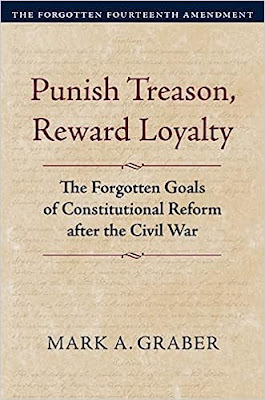
Mark A. Graber, Punish Treason, Reward Loyalty: The Forgotten Goals of Constitutional Reform after the Civil War (University of Kansas Press, 2023)
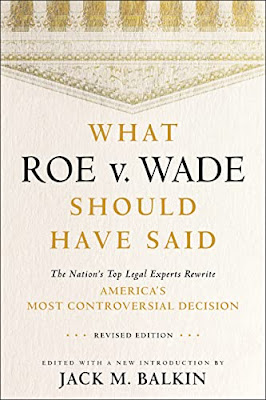
Jack M. Balkin, What Roe v. Wade Should Have Said: The Nation's Top Legal Experts Rewrite America's Most Controversial Decision - Revised Edition (NYU Press, 2023)

Andrew Koppelman, Burning Down the House: How Libertarian Philosophy Was Corrupted by Delusion and Greed (St. Martin’s Press, 2022)

Gerard N. Magliocca, Washington's Heir: The Life of Justice Bushrod Washington (Oxford University Press, 2022)
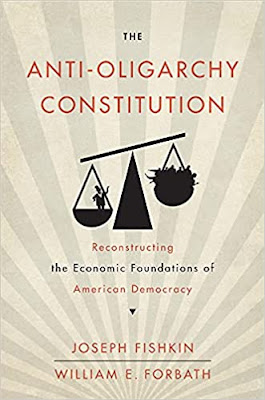
Joseph Fishkin and William E. Forbath, The Anti-Oligarchy Constitution: Reconstructing the Economic Foundations of American Democracy (Harvard University Press, 2022)
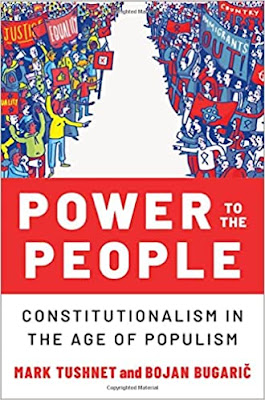
Mark Tushnet and Bojan Bugaric, Power to the People: Constitutionalism in the Age of Populism (Oxford University Press 2021).

Mark Philip Bradley and Mary L. Dudziak, eds., Making the Forever War: Marilyn B. Young on the Culture and Politics of American Militarism Culture and Politics in the Cold War and Beyond (University of Massachusetts Press, 2021).

Jack M. Balkin, What Obergefell v. Hodges Should Have Said: The Nation's Top Legal Experts Rewrite America's Same-Sex Marriage Decision (Yale University Press, 2020)

Frank Pasquale, New Laws of Robotics: Defending Human Expertise in the Age of AI (Belknap Press, 2020)

Jack M. Balkin, The Cycles of Constitutional Time (Oxford University Press, 2020)

Mark Tushnet, Taking Back the Constitution: Activist Judges and the Next Age of American Law (Yale University Press 2020).

Andrew Koppelman, Gay Rights vs. Religious Liberty?: The Unnecessary Conflict (Oxford University Press, 2020)

Ezekiel J Emanuel and Abbe R. Gluck, The Trillion Dollar Revolution: How the Affordable Care Act Transformed Politics, Law, and Health Care in America (PublicAffairs, 2020)

Linda C. McClain, Who's the Bigot?: Learning from Conflicts over Marriage and Civil Rights Law (Oxford University Press, 2020)
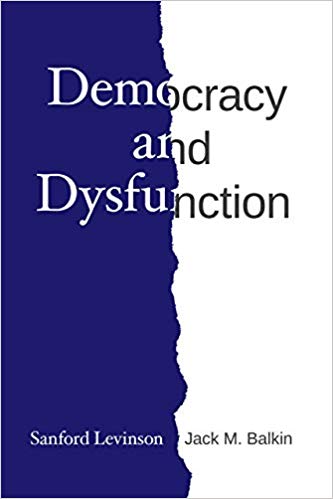
Sanford Levinson and Jack M. Balkin, Democracy and Dysfunction (University of Chicago Press, 2019)

Sanford Levinson, Written in Stone: Public Monuments in Changing Societies (Duke University Press 2018)

Mark A. Graber, Sanford Levinson, and Mark Tushnet, eds., Constitutional Democracy in Crisis? (Oxford University Press 2018)

Gerard Magliocca, The Heart of the Constitution: How the Bill of Rights became the Bill of Rights (Oxford University Press, 2018)

Cynthia Levinson and Sanford Levinson, Fault Lines in the Constitution: The Framers, Their Fights, and the Flaws that Affect Us Today (Peachtree Publishers, 2017)

Brian Z. Tamanaha, A Realistic Theory of Law (Cambridge University Press 2017)

Sanford Levinson, Nullification and Secession in Modern Constitutional Thought (University Press of Kansas 2016)

Sanford Levinson, An Argument Open to All: Reading The Federalist in the 21st Century (Yale University Press 2015)

Stephen M. Griffin, Broken Trust: Dysfunctional Government and Constitutional Reform (University Press of Kansas, 2015)

Frank Pasquale, The Black Box Society: The Secret Algorithms That Control Money and Information (Harvard University Press, 2015)

Bruce Ackerman, We the People, Volume 3: The Civil Rights Revolution (Harvard University Press, 2014)
Balkinization Symposium on We the People, Volume 3: The Civil Rights Revolution

Joseph Fishkin, Bottlenecks: A New Theory of Equal Opportunity (Oxford University Press, 2014)

Mark A. Graber, A New Introduction to American Constitutionalism (Oxford University Press, 2013)

John Mikhail, Elements of Moral Cognition: Rawls' Linguistic Analogy and the Cognitive Science of Moral and Legal Judgment (Cambridge University Press, 2013)

Gerard N. Magliocca, American Founding Son: John Bingham and the Invention of the Fourteenth Amendment (New York University Press, 2013)

Stephen M. Griffin, Long Wars and the Constitution (Harvard University Press, 2013)

Andrew Koppelman, The Tough Luck Constitution and the Assault on Health Care Reform (Oxford University Press, 2013)

James E. Fleming and Linda C. McClain, Ordered Liberty: Rights, Responsibilities, and Virtues (Harvard University Press, 2013)
Balkinization Symposium on Ordered Liberty: Rights, Responsibilities, and Virtues

Andrew Koppelman, Defending American Religious Neutrality (Harvard University Press, 2013)

Brian Z. Tamanaha, Failing Law Schools (University of Chicago Press, 2012)

Sanford Levinson, Framed: America's 51 Constitutions and the Crisis of Governance (Oxford University Press, 2012)

Linda C. McClain and Joanna L. Grossman, Gender Equality: Dimensions of Women's Equal Citizenship (Cambridge University Press, 2012)

Mary Dudziak, War Time: An Idea, Its History, Its Consequences (Oxford University Press, 2012)

Jack M. Balkin, Living Originalism (Harvard University Press, 2011)

Jason Mazzone, Copyfraud and Other Abuses of Intellectual Property Law (Stanford University Press, 2011)

Richard W. Garnett and Andrew Koppelman, First Amendment Stories, (Foundation Press 2011)

Jack M. Balkin, Constitutional Redemption: Political Faith in an Unjust World (Harvard University Press, 2011)

Gerard Magliocca, The Tragedy of William Jennings Bryan: Constitutional Law and the Politics of Backlash (Yale University Press, 2011)

Bernard Harcourt, The Illusion of Free Markets: Punishment and the Myth of Natural Order (Harvard University Press, 2010)

Bruce Ackerman, The Decline and Fall of the American Republic (Harvard University Press, 2010)
Balkinization Symposium on The Decline and Fall of the American Republic

Ian Ayres. Carrots and Sticks: Unlock the Power of Incentives to Get Things Done (Bantam Books, 2010)

Mark Tushnet, Why the Constitution Matters (Yale University Press 2010)

Ian Ayres and Barry Nalebuff: Lifecycle Investing: A New, Safe, and Audacious Way to Improve the Performance of Your Retirement Portfolio (Basic Books, 2010)
.jpg)
Jack M. Balkin, The Laws of Change: I Ching and the Philosophy of Life (2d Edition, Sybil Creek Press 2009)

Brian Z. Tamanaha, Beyond the Formalist-Realist Divide: The Role of Politics in Judging (Princeton University Press 2009)
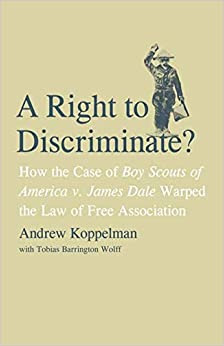
Andrew Koppelman and Tobias Barrington Wolff, A Right to Discriminate?: How the Case of Boy Scouts of America v. James Dale Warped the Law of Free Association (Yale University Press 2009)

Jack M. Balkin and Reva B. Siegel, The Constitution in 2020 (Oxford University Press 2009)

Heather K. Gerken, The Democracy Index: Why Our Election System Is Failing and How to Fix It (Princeton University Press 2009)

Mary Dudziak, Exporting American Dreams: Thurgood Marshall's African Journey (Oxford University Press 2008)

David Luban, Legal Ethics and Human Dignity (Cambridge Univ. Press 2007)

Ian Ayres, Super Crunchers: Why Thinking-By-Numbers is the New Way to be Smart (Bantam 2007)

Jack M. Balkin, James Grimmelmann, Eddan Katz, Nimrod Kozlovski, Shlomit Wagman and Tal Zarsky, eds., Cybercrime: Digital Cops in a Networked Environment (N.Y.U. Press 2007)

Jack M. Balkin and Beth Simone Noveck, The State of Play: Law, Games, and Virtual Worlds (N.Y.U. Press 2006)

Andrew Koppelman, Same Sex, Different States: When Same-Sex Marriages Cross State Lines (Yale University Press 2006)

Brian Tamanaha, Law as a Means to an End (Cambridge University Press 2006)

Sanford Levinson, Our Undemocratic Constitution (Oxford University Press 2006)

Mark Graber, Dred Scott and the Problem of Constitutional Evil (Cambridge University Press 2006)

Jack M. Balkin, ed., What Roe v. Wade Should Have Said (N.Y.U. Press 2005)

Sanford Levinson, ed., Torture: A Collection (Oxford University Press 2004)
Balkin.com homepage
Bibliography
Conlaw.net
Cultural Software
Writings
Opeds
The Information Society Project
BrownvBoard.com
Useful Links
Syllabi and Exams
