Balkinization
an unanticipated consequence of
Jack M. Balkin
Balkinization Symposiums: A Continuing List
E-mail:
Jack Balkin:
jackbalkin at yahoo.com
Bruce Ackerman
bruce.ackerman at yale.edu
Ian Ayres
ian.ayres at yale.edu
Corey Brettschneider
corey_brettschneider at brown.edu
Mary Dudziak
mary.l.dudziak at emory.edu
Joey Fishkin
joey.fishkin at gmail.com
Heather Gerken heather.gerken at yale.edu
Abbe Gluck abbe.gluck at yale.edu
Mark Graber
mgraber at law.umaryland.edu
Stephen Griffin
sgriffin at tulane.edu
Jonathan Hafetz
jonathan.hafetz at shu.edu
Jeremy Kessler
jkessler at law.columbia.edu
Andrew Koppelman
akoppelman at law.northwestern.edu
Marty Lederman
msl46 at law.georgetown.edu
Sanford Levinson
slevinson at law.utexas.edu
David Luban
david.luban at gmail.com
Gerard Magliocca
gmaglioc at iupui.edu
Jason Mazzone
mazzonej at illinois.edu
Linda McClain
lmcclain at bu.edu
John Mikhail
mikhail at law.georgetown.edu
Frank Pasquale
pasquale.frank at gmail.com
Nate Persily
npersily at gmail.com
Michael Stokes Paulsen
michaelstokespaulsen at gmail.com
Deborah Pearlstein
dpearlst at yu.edu
Rick Pildes
rick.pildes at nyu.edu
David Pozen
dpozen at law.columbia.edu
Richard Primus
raprimus at umich.edu
K. Sabeel Rahmansabeel.rahman at brooklaw.edu
Alice Ristroph
alice.ristroph at shu.edu
Neil Siegel
siegel at law.duke.edu
David Super
david.super at law.georgetown.edu
Brian Tamanaha
btamanaha at wulaw.wustl.edu
Nelson Tebbe
nelson.tebbe at brooklaw.edu
Mark Tushnet
mtushnet at law.harvard.edu
Adam Winkler
winkler at ucla.edu
Compendium of posts on Hobby Lobby and related cases
The Anti-Torture Memos: Balkinization Posts on Torture, Interrogation, Detention, War Powers, and OLC
The Anti-Torture Memos (arranged by topic)
Recent Posts
The Mysteries of New FISA Section 105B
![[Powered by Blogger]](https://lh3.googleusercontent.com/blogger_img_proxy/AEn0k_vYQ6mmFS69bkpsZ9PvG6ug84xlRERHiHgB7pyrwMHHNzIhSXmNT3qkOXNTRTh3JfvWu1PYb_-3j53SrlVxMp9uNC-TjjT7Rg_xO8CHvrBc=s0-d)
Just A Few Blogs
ACS Blog
Alas, a Blog
Althouse
Arts and Letters Daily
Atrios (Eschaton)
Bill of Health
Buzzflash.com
Buzz Machine
Cato at Liberty
Juan Cole (Informed Comment)
Concurring Opinions
The Constitution in 2020
Corrente
Crooked Timber
Daily Howler
Daily Kos
Dana Boyd
Brad DeLong
Digby (Hullabaloo)
Discriminations
Daniel Drezner
Kevin Drum (Mother Jones)
Electrolite
En Banc
Eunomia (Daniel Larison)
Fafblog
Michael Froomkin (Discourse.net)
GovLab (Beth Noveck)
Rick Hasen (Election Law)
History News Network
How Appealing
Ignatz (Sam Heldman)
The Importance of (Ernie Miller)
Infolaw
Instapundit
International Economic Law and Policy Blog
IntLawGrrls
Jacob Levy
Jesus' General
Jurisdynamics
The Kitchen Cabinet
Mark Kleiman
Law Blog Central
Larry Lessig
Lawyers, Guns and Money
Liberal Oasis
Brian Leiter's Law School Reports
The Leiter Reports
Marginal Revolution
Megan McArdle
Memeorandum
Metafilter
Mirror of Justice
The New Republic
Newseum
No More Mister Nice Blog
Brendan Nyhan
Opinio Juris
Orcinus
The Originalism Blog
Pandagon
Passport (Foreign Policy)
Overcoming Bias
Political Animal (Washington Monthly)
Political Theory Daily Review
Political Wire (Taegan Goddard)
The Poor Man
Virginia Postrel
Prawfsblawg
Public Reason
Jonathan Rauch
Raw Story
Redstate
ReligiousLeftLaw.com
Reporters Committee For Freedom of the Press
Reproductive Rights Blog
Rothman's Roadmap to the Right of Publicity
SCOTUS Blog
Seeing the Forest
Clay Shirky
The Shifted Librarian
The Situationist
Larry Solum (Legal Theory)
Andrew Sullivan
Talking Points Memo
Talk Left
Tapped
Tbogg
TechPresident
The Paper Chase (Jurist)
Tom Paine
Tom Tomorrow (This Modern World)
Eve Tushnet
Uggabugga
University of Chicago Law School Faculty Blog
Unqualified Offerings
The Volokh Conspiracy
War and Piece (Laura Rozen)
Wampum
Oliver Willis
Wonkette
Written Description
Matthew Yglesias
Yin
Your Choice of Feeds
1. XML
powered by

2. Atom Feed
3. RSS 2.0
The Mysteries of New FISA Section 105B
Marty Lederman
Just a quick head's up to note that there's a very interesting discussion ongoing in our comments section [yes, it can be done!] over at my last post, concerning the possible impact of section 105B.
I've been arguing that the main problem with 105B is that it is touted as a check on the broad scope of section 105A, but in fact its safeguards are toothless. The Washington Post and others have, by contrast, suggested that 105B actually authorizes new forms of NSA searches, over and above those authorized by the very broad new section 105A. I've been doubtful about this because, as I've written previously, in order for a surveillance program to fall within section 105B in the first place, it has to consist purely of acquisitions that are not "electronic surveillance" -- i.e., something that either wasn't covered by FISA already, or that is now not covered by virtue of the new carve-out in section 105A -- in which case section 105B does not provide any additional authorization authority for stuff that would otherwise be FISA-covered.
But as commenters such as Just an Observer, Anonymous Liberal and others have noted, even if I am right, there are at least two other possible important questions raised by 105B:
First, does 105B authorize types of "acquisitions" of information other than "contents" of communications, in a way that would previously have been prohibited by statutes other than FISA, such as the Communications Act, the Stored Communications Act, and the Pen Register Act? Its broad language ("Notwithstanding any other law . . . ") might be read to suggest as much. In other words, perhaps the evisceration of FISA is the least of it.
Second, even if 105B doesn't authorize any activity that was previously prohibited, the compulsory service provisions do appear to vastly increase the ability of the NSA to enlist the service of many private parties to obtain information that once would have been difficult or impossible for NSA to acquire, thereby dramatically increasing the breadth of NSA surveillance as a practical matter. As JaO writes, section 105B might be construed (and probably will be construed by the Executive branch) as "a powerful new government tool for warrantless surveillance directed at a whole new set of platforms where compulsory process is needed. It is vastly easier to issue an administrative 'directive' under 105B than to get a court order. The recipients of such directives can be the legion of ISPs, e-mail hosts such as employers, colleges, etc., and the fragmented Internet hosting industry in general. [On this reading], 105B all by itself is national security letters on steroids, the equivalent of administrative warrants allowing direct-connect, real-time acquisition of a universe of data that never was part of the TSP." If so, then "105A and 105B are independently important and sweeping, although for different reasons. They are not mutually exclusive, and the government can employ either, for distinct sectors and technological platforms, to the government's best advantage."
These are questions well worth careful consideration. More fundamentally, the fact that no one, not even those on the relevant congressional committees, appears to truly understand whether and to what extent 105B does either of these things, and what the exact relationship is between 105A and 105B, is perhaps the biggest problem of all with this legislation: Congress quite simply does not have any sense of what it has authorized -- and therefore, of course, neither does the public. It therefore is incumbent on Congress, at a bare minimum, to make sure that any further statutory amendments are understandable and not subject to creative, unforseen and secret Executive branch interpretations.
Posted
10:09 PM
by Marty Lederman [link]
I appreciate your quotation of my own remarks in a more visible setting. I hope the lack of other comments here does not reflect an utter lack of public interest, but my sense is that there is not much mobilized opinion or intellectual energy focused on this matter. Many comments elsewhere tend to be about the politics rather than the substance of the policy coup.
At least Anonymous Liberal has a good post.

I wish I could be more optimistic, but those interested in politics is a small subset, and the subset of those interested in policy outside of partisan political concern is smaller still.
To really bring an upbeat mood of optimism to the party, I would like to posit that since pervasive encryption is the logical answer to widespread surveillance we should not be surprised by the return of the Clipper chip or some derivative to the legislative landscape. I fully expect this to be addressed before Bush leaves office with no opposition from congress.

I helped A.L. out with a skeptic at Crooks & Liars last night and again tonight. (Comments starting at #120.) http://www.crooksandliars.com/category/fisa/
I added two points not made here. First, I quoted from a FISA provision whose first half is formally the same as 105B but that adds a second clause to close the loop it opens, in contrast to 105B. This brings out the optionality.
Second, I noted that "directed at," when used everywhere else in FISA, always contemplates more than one directee and captures them all under its limitation, again in contrast to 105A.
A.L. made an interesting Youngstown Steel point, also new.
But our words were wasted on the skeptic, who thinks we're imagining things.
There are just a few possibilities to pursue, but they all assume a pooling of our scattered observations into a single list. I'd start if asked, so long as people agree to add to it, since I can guarantee it will need work.
But I think we need much greater transparency in the law governing these matters. As we consider this policy issue, we ought to know what the law actually does. (In the case of the PAA, it would have been better if Congress knew what it was doing before it passed the new law. And it would still be good to know if the administration will sometimes use inherent authority implicit under section 105A as an alternative to the optional 105B procedures.)
In addition, reconstructing FISA's balance in response to new technology means reconsidering both sides of that balance.
On the one hand, Congress in 1978 effectively did exclude from FISA's scope most international communications where a U.S. person was not explicitly targeted. But that was not done very openly. Rather, it was understood by insiders to be the case only because most international traffic then was carried by satellite, and satellite interception reportedly is deemed not to occur within the United States. Technology now has shifted most international traffic to fiber-optic cables, and the best way to intercept it is at digital switches here.
On the other hand, technology itself -- not just the law -- used to make it feasible to initiate surveillance only by starting with some individual target (such as a phone line or analog channel, etc.). It now is feasible for the government effectively to capture everything digitally and then crunch it in massive databases. That is why ambiguous terms such as "directed at" are so important today. And there is a huge, public gray area of what can be done legally, and the principal safeguard is in "minimization" procedures that are not explained to us.
When terms are defined in statute, often they turn out to depend on other terms that are interpreted in secret. For example, what is the meaning of "acquisition?" On that definition depends much of what FISA means by targeting and minimization. If "acquisition" does not occur until a human analyst actually listens to a call or reads a message -- as I have read in unofficial speculation -- that can have a profound effect on where the balance is. In some ways that might protect privacy during minimization; but it would raise other questions about what can be done by automated means before "acquisition" even occurs.
Overall, when Congress considers a permanent "modernization" of FISA without a sunset, it needs to legislate with more sunshine.
I'm not for using a change in the physics of international communication as an excuse to shut down needed intelligence gathering. But as you've said, the Democrats made a proposal to strike a balance and were turned away. And if we were in a fool's paradise since 1978, it's nothing compared to what's in store.
I don't understand the technology and can't conjure a picture for words like "directed at." But I can see that FISA knows how to throw in "solely" when it wants to and that it didn't here. More importantly, I can see indicia of accountability and note their absence, and the House proposal makes it plain that the PAA is designed to turn off lights one by one, and to keep itself in effect for 18 months, through this administration, which I don't trust.
Another question to layer into the debate we won't have: as invaluable as data gathering is, there's the question of how much good it does without more. Tim Weiner's Legacy of Ashes (not read but on my list) is a record of CIA failures to change the world for want of understanding. To take just one point of his, the languages needed for vital foreign intelligence are the ones that pull GPAs down. (Even NYC's first public school to focus on Arabic and Arab culture is meeting with resistance and can't find a home.) He thinks it will take a generation just to make up for the resulting ignorance because being an intelligence professional is really a life's work though it's now treated as a rotation.
Books by Balkinization Bloggers

Mark Tushnet and Bojan Bugaric, Constitutionalism and Its Discontents (University of Chicago Press, 2026)

Gerard N. Magliocca, The Actual Art of Governing: Justice Robert H. Jackson's Concurring Opinion in the Steel Seizure Case (Oxford University Press, 2025)

Linda C. McClain and Aziza Ahmed, The Routledge Companion to Gender and COVID-19 (Routledge, 2024)

David Pozen, The Constitution of the War on Drugs (Oxford University Press, 2024)

Jack M. Balkin, Memory and Authority: The Uses of History in Constitutional Interpretation (Yale University Press, 2024)
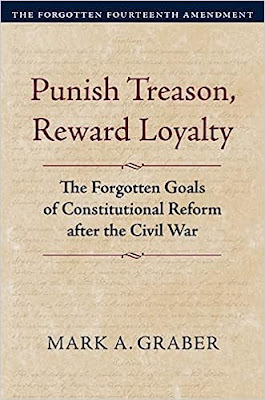
Mark A. Graber, Punish Treason, Reward Loyalty: The Forgotten Goals of Constitutional Reform after the Civil War (University of Kansas Press, 2023)
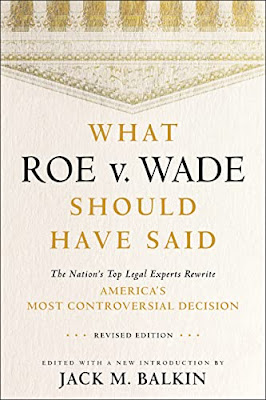
Jack M. Balkin, What Roe v. Wade Should Have Said: The Nation's Top Legal Experts Rewrite America's Most Controversial Decision - Revised Edition (NYU Press, 2023)

Andrew Koppelman, Burning Down the House: How Libertarian Philosophy Was Corrupted by Delusion and Greed (St. Martin’s Press, 2022)

Gerard N. Magliocca, Washington's Heir: The Life of Justice Bushrod Washington (Oxford University Press, 2022)
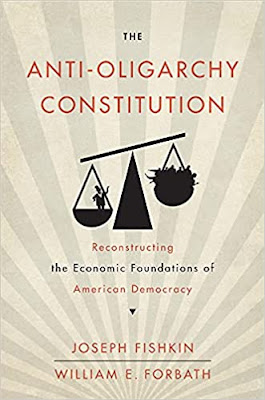
Joseph Fishkin and William E. Forbath, The Anti-Oligarchy Constitution: Reconstructing the Economic Foundations of American Democracy (Harvard University Press, 2022)
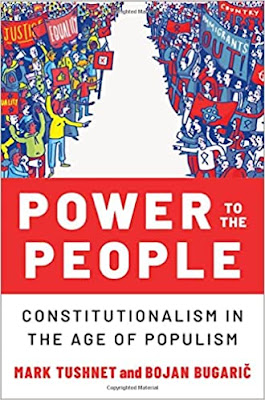
Mark Tushnet and Bojan Bugaric, Power to the People: Constitutionalism in the Age of Populism (Oxford University Press 2021).

Mark Philip Bradley and Mary L. Dudziak, eds., Making the Forever War: Marilyn B. Young on the Culture and Politics of American Militarism Culture and Politics in the Cold War and Beyond (University of Massachusetts Press, 2021).

Jack M. Balkin, What Obergefell v. Hodges Should Have Said: The Nation's Top Legal Experts Rewrite America's Same-Sex Marriage Decision (Yale University Press, 2020)

Frank Pasquale, New Laws of Robotics: Defending Human Expertise in the Age of AI (Belknap Press, 2020)

Jack M. Balkin, The Cycles of Constitutional Time (Oxford University Press, 2020)

Mark Tushnet, Taking Back the Constitution: Activist Judges and the Next Age of American Law (Yale University Press 2020).

Andrew Koppelman, Gay Rights vs. Religious Liberty?: The Unnecessary Conflict (Oxford University Press, 2020)

Ezekiel J Emanuel and Abbe R. Gluck, The Trillion Dollar Revolution: How the Affordable Care Act Transformed Politics, Law, and Health Care in America (PublicAffairs, 2020)

Linda C. McClain, Who's the Bigot?: Learning from Conflicts over Marriage and Civil Rights Law (Oxford University Press, 2020)
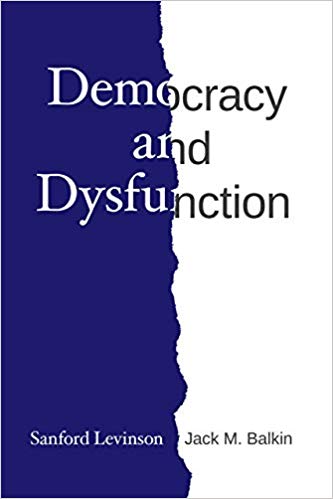
Sanford Levinson and Jack M. Balkin, Democracy and Dysfunction (University of Chicago Press, 2019)

Sanford Levinson, Written in Stone: Public Monuments in Changing Societies (Duke University Press 2018)

Mark A. Graber, Sanford Levinson, and Mark Tushnet, eds., Constitutional Democracy in Crisis? (Oxford University Press 2018)

Gerard Magliocca, The Heart of the Constitution: How the Bill of Rights became the Bill of Rights (Oxford University Press, 2018)

Cynthia Levinson and Sanford Levinson, Fault Lines in the Constitution: The Framers, Their Fights, and the Flaws that Affect Us Today (Peachtree Publishers, 2017)

Brian Z. Tamanaha, A Realistic Theory of Law (Cambridge University Press 2017)

Sanford Levinson, Nullification and Secession in Modern Constitutional Thought (University Press of Kansas 2016)

Sanford Levinson, An Argument Open to All: Reading The Federalist in the 21st Century (Yale University Press 2015)

Stephen M. Griffin, Broken Trust: Dysfunctional Government and Constitutional Reform (University Press of Kansas, 2015)

Frank Pasquale, The Black Box Society: The Secret Algorithms That Control Money and Information (Harvard University Press, 2015)

Bruce Ackerman, We the People, Volume 3: The Civil Rights Revolution (Harvard University Press, 2014)
Balkinization Symposium on We the People, Volume 3: The Civil Rights Revolution

Joseph Fishkin, Bottlenecks: A New Theory of Equal Opportunity (Oxford University Press, 2014)

Mark A. Graber, A New Introduction to American Constitutionalism (Oxford University Press, 2013)

John Mikhail, Elements of Moral Cognition: Rawls' Linguistic Analogy and the Cognitive Science of Moral and Legal Judgment (Cambridge University Press, 2013)

Gerard N. Magliocca, American Founding Son: John Bingham and the Invention of the Fourteenth Amendment (New York University Press, 2013)

Stephen M. Griffin, Long Wars and the Constitution (Harvard University Press, 2013)

Andrew Koppelman, The Tough Luck Constitution and the Assault on Health Care Reform (Oxford University Press, 2013)

James E. Fleming and Linda C. McClain, Ordered Liberty: Rights, Responsibilities, and Virtues (Harvard University Press, 2013)
Balkinization Symposium on Ordered Liberty: Rights, Responsibilities, and Virtues

Andrew Koppelman, Defending American Religious Neutrality (Harvard University Press, 2013)

Brian Z. Tamanaha, Failing Law Schools (University of Chicago Press, 2012)

Sanford Levinson, Framed: America's 51 Constitutions and the Crisis of Governance (Oxford University Press, 2012)

Linda C. McClain and Joanna L. Grossman, Gender Equality: Dimensions of Women's Equal Citizenship (Cambridge University Press, 2012)

Mary Dudziak, War Time: An Idea, Its History, Its Consequences (Oxford University Press, 2012)

Jack M. Balkin, Living Originalism (Harvard University Press, 2011)

Jason Mazzone, Copyfraud and Other Abuses of Intellectual Property Law (Stanford University Press, 2011)

Richard W. Garnett and Andrew Koppelman, First Amendment Stories, (Foundation Press 2011)

Jack M. Balkin, Constitutional Redemption: Political Faith in an Unjust World (Harvard University Press, 2011)

Gerard Magliocca, The Tragedy of William Jennings Bryan: Constitutional Law and the Politics of Backlash (Yale University Press, 2011)

Bernard Harcourt, The Illusion of Free Markets: Punishment and the Myth of Natural Order (Harvard University Press, 2010)

Bruce Ackerman, The Decline and Fall of the American Republic (Harvard University Press, 2010)
Balkinization Symposium on The Decline and Fall of the American Republic

Ian Ayres. Carrots and Sticks: Unlock the Power of Incentives to Get Things Done (Bantam Books, 2010)

Mark Tushnet, Why the Constitution Matters (Yale University Press 2010)

Ian Ayres and Barry Nalebuff: Lifecycle Investing: A New, Safe, and Audacious Way to Improve the Performance of Your Retirement Portfolio (Basic Books, 2010)
.jpg)
Jack M. Balkin, The Laws of Change: I Ching and the Philosophy of Life (2d Edition, Sybil Creek Press 2009)

Brian Z. Tamanaha, Beyond the Formalist-Realist Divide: The Role of Politics in Judging (Princeton University Press 2009)
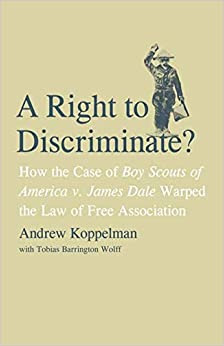
Andrew Koppelman and Tobias Barrington Wolff, A Right to Discriminate?: How the Case of Boy Scouts of America v. James Dale Warped the Law of Free Association (Yale University Press 2009)

Jack M. Balkin and Reva B. Siegel, The Constitution in 2020 (Oxford University Press 2009)

Heather K. Gerken, The Democracy Index: Why Our Election System Is Failing and How to Fix It (Princeton University Press 2009)

Mary Dudziak, Exporting American Dreams: Thurgood Marshall's African Journey (Oxford University Press 2008)

David Luban, Legal Ethics and Human Dignity (Cambridge Univ. Press 2007)

Ian Ayres, Super Crunchers: Why Thinking-By-Numbers is the New Way to be Smart (Bantam 2007)

Jack M. Balkin, James Grimmelmann, Eddan Katz, Nimrod Kozlovski, Shlomit Wagman and Tal Zarsky, eds., Cybercrime: Digital Cops in a Networked Environment (N.Y.U. Press 2007)
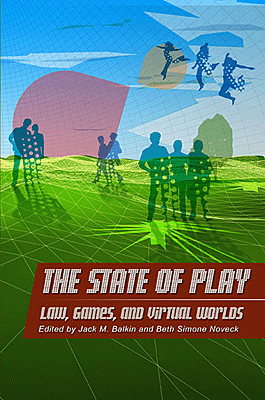
Jack M. Balkin and Beth Simone Noveck, The State of Play: Law, Games, and Virtual Worlds (N.Y.U. Press 2006)

Andrew Koppelman, Same Sex, Different States: When Same-Sex Marriages Cross State Lines (Yale University Press 2006)

Brian Tamanaha, Law as a Means to an End (Cambridge University Press 2006)

Sanford Levinson, Our Undemocratic Constitution (Oxford University Press 2006)

Mark Graber, Dred Scott and the Problem of Constitutional Evil (Cambridge University Press 2006)

Jack M. Balkin, ed., What Roe v. Wade Should Have Said (N.Y.U. Press 2005)

Sanford Levinson, ed., Torture: A Collection (Oxford University Press 2004)
Balkin.com homepage
Bibliography
Conlaw.net
Cultural Software
Writings
Opeds
The Information Society Project
BrownvBoard.com
Useful Links
Syllabi and Exams
