Balkinization
an unanticipated consequence of
Jack M. Balkin
Balkinization Symposiums: A Continuing List
E-mail:
Jack Balkin:
jackbalkin at yahoo.com
Bruce Ackerman
bruce.ackerman at yale.edu
Ian Ayres
ian.ayres at yale.edu
Corey Brettschneider
corey_brettschneider at brown.edu
Mary Dudziak
mary.l.dudziak at emory.edu
Joey Fishkin
joey.fishkin at gmail.com
Heather Gerken heather.gerken at yale.edu
Abbe Gluck abbe.gluck at yale.edu
Mark Graber
mgraber at law.umaryland.edu
Stephen Griffin
sgriffin at tulane.edu
Jonathan Hafetz
jonathan.hafetz at shu.edu
Jeremy Kessler
jkessler at law.columbia.edu
Andrew Koppelman
akoppelman at law.northwestern.edu
Marty Lederman
msl46 at law.georgetown.edu
Sanford Levinson
slevinson at law.utexas.edu
David Luban
david.luban at gmail.com
Gerard Magliocca
gmaglioc at iupui.edu
Jason Mazzone
mazzonej at illinois.edu
Linda McClain
lmcclain at bu.edu
John Mikhail
mikhail at law.georgetown.edu
Frank Pasquale
pasquale.frank at gmail.com
Nate Persily
npersily at gmail.com
Michael Stokes Paulsen
michaelstokespaulsen at gmail.com
Deborah Pearlstein
dpearlst at yu.edu
Rick Pildes
rick.pildes at nyu.edu
David Pozen
dpozen at law.columbia.edu
Richard Primus
raprimus at umich.edu
K. Sabeel Rahmansabeel.rahman at brooklaw.edu
Alice Ristroph
alice.ristroph at shu.edu
Neil Siegel
siegel at law.duke.edu
David Super
david.super at law.georgetown.edu
Brian Tamanaha
btamanaha at wulaw.wustl.edu
Nelson Tebbe
nelson.tebbe at brooklaw.edu
Mark Tushnet
mtushnet at law.harvard.edu
Adam Winkler
winkler at ucla.edu
Compendium of posts on Hobby Lobby and related cases
The Anti-Torture Memos: Balkinization Posts on Torture, Interrogation, Detention, War Powers, and OLC
The Anti-Torture Memos (arranged by topic)
Recent Posts
The Veto Statement -- Not Surprisingly, the President Claims a Constitutional Prerogative
![[Powered by Blogger]](https://lh3.googleusercontent.com/blogger_img_proxy/AEn0k_tPFwXvDkSkZo28pGKLwh0vUntkTUIQkDrf5DMI9mjuilOzAK3wslPHrShsP9b0bML4ovijIuPb19ZPcOUjqHkdpgUx9EIN4HG8kB46l3gN=s0-d)
Just A Few Blogs
ACS Blog
Alas, a Blog
Althouse
Arts and Letters Daily
Atrios (Eschaton)
Bill of Health
Buzzflash.com
Buzz Machine
Cato at Liberty
Juan Cole (Informed Comment)
Concurring Opinions
The Constitution in 2020
Corrente
Crooked Timber
Daily Howler
Daily Kos
Dana Boyd
Brad DeLong
Digby (Hullabaloo)
Discriminations
Daniel Drezner
Kevin Drum (Mother Jones)
Electrolite
En Banc
Eunomia (Daniel Larison)
Fafblog
Michael Froomkin (Discourse.net)
GovLab (Beth Noveck)
Rick Hasen (Election Law)
History News Network
How Appealing
Ignatz (Sam Heldman)
The Importance of (Ernie Miller)
Infolaw
Instapundit
International Economic Law and Policy Blog
IntLawGrrls
Jacob Levy
Jesus' General
Jurisdynamics
The Kitchen Cabinet
Mark Kleiman
Law Blog Central
Larry Lessig
Lawyers, Guns and Money
Liberal Oasis
Brian Leiter's Law School Reports
The Leiter Reports
Marginal Revolution
Megan McArdle
Memeorandum
Metafilter
Mirror of Justice
The New Republic
Newseum
No More Mister Nice Blog
Brendan Nyhan
Opinio Juris
Orcinus
The Originalism Blog
Pandagon
Passport (Foreign Policy)
Overcoming Bias
Political Animal (Washington Monthly)
Political Theory Daily Review
Political Wire (Taegan Goddard)
The Poor Man
Virginia Postrel
Prawfsblawg
Public Reason
Jonathan Rauch
Raw Story
Redstate
ReligiousLeftLaw.com
Reporters Committee For Freedom of the Press
Reproductive Rights Blog
Rothman's Roadmap to the Right of Publicity
SCOTUS Blog
Seeing the Forest
Clay Shirky
The Shifted Librarian
The Situationist
Larry Solum (Legal Theory)
Andrew Sullivan
Talking Points Memo
Talk Left
Tapped
Tbogg
TechPresident
The Paper Chase (Jurist)
Tom Paine
Tom Tomorrow (This Modern World)
Eve Tushnet
Uggabugga
University of Chicago Law School Faculty Blog
Unqualified Offerings
The Volokh Conspiracy
War and Piece (Laura Rozen)
Wampum
Oliver Willis
Wonkette
Written Description
Matthew Yglesias
Yin
Your Choice of Feeds
1. XML
powered by

2. Atom Feed
3. RSS 2.0
The Veto Statement -- Not Surprisingly, the President Claims a Constitutional Prerogative
Marty Lederman
Here is the President's Message to the House returning the Iraq Supplemental appropriatiions bill without his signature. He closes with a constitutional objection that has been conspicuously absent from all of the White House's public statements about the legislation:Finally, this legislation is unconstitutional because it purports to direct the conduct of the operations of the war in a way that infringes upon the powers vested in the Presidency by the Constitution, including as Commander in Chief of the Armed Forces.
[NOTE: This may appear to be something of a subtle shift in the White House's recent posture, returning to the hardline Cheney-Addington view of the Commander-in-Chief Clause. In a press conference four weeks ago, the President said: "The Congress is exercising its legitimate authority as it sees fit right now. I just disagree with their decisions. I think setting an artificial timetable for withdrawal is a significant mistake."]
As for the merits of the constitutional objection: In short, it's dead wrong.
As I explained here, there was no directive in the legislation about how the troops were to be redeployed, the rate at which they had to be redeployed, or by when the troops would have been required to be completely redeployed. The statute would only have required that the Secretary of Defense have the "goal" of completing redeployment within 180 days after it began. And the bill specifically provided that there was to be no funding limit at all for the contemplated "safe and orderly" redeployment.
The reference in the President's statement to the bill "direct[ing] the conduct of the operations of the war" presumably is intended to refer to section 1904(e), which provides that "[a]fter the conclusion of the redeployment specified in subsections (b) and (c)" -- a redepolyment of troops from Iraq that could have been completed on a timetable of the President's own choosing (with merely a "goal" of completion 180 days after its commencement) -- "the Secretary of Defense may not deploy or maintain members of the Armed Forces in Iraq for any purpose other than the following:
(1) Protecting American diplomatic facilities and American citizens, including members of the U.S. armed forces;
(2) Serving in roles consistent with customary diplomatic positions;
(3) Engaging in targeted special actions limited in duration and scope to killing or capturing members of al-Qaeda and other terrorist organizations with global reach; and
(4) Training and equipping members of the Iraqi Security Forces."
In other words, the bill would have provided that once the current armed conflict were effectively ended (with complete redeployment), then the President could use the Armed Forces in Iraq only for the four specified functions. (Another way of putting it is that the redeployment described in the bill would not in the first instance have required redeployment of troops whose conduct were limited to performing those four functions.)
This sort of statutory restriction is nothing new. Throughout our history, beginning with several statutes regulating the terms of the "Quasi-War" with France early in the Nineteenth Century, and continuing through the conflicts in Indochina, Somalia, Bosnia, etc., Congress has specified that the Armed Forces may be used for certain functions but not others in a particular setting. The Marshall Court enforced such a restriction in Little v. Barreme. Section 1904(e) is fully in keeping with this historical pedigree.
Posted
12:16 PM
by Marty Lederman [link]

OK, I'll take one for the team. (Someone has to say it.)
This bill does nothing of the sort. It tells the President when to start (!) withdrawing. It neither tells him when to finish, nor how to do it...
OK, it appears that prof. Lederman has graciously taken the time to reiterate his earlier comments that I tried to summarise as briefly as I could...
Once again, directing the deployment of troops is a command function which clearly falls within the President's general Article II CiC power and is nowhere mentioned among the Congress' specific Article I military and foreign policy powers.
The cases from the quasi war with France in first decade of the 19th Century do not hold that Congress may direct troops through its power of the purse. Rather, these cases determined that the United States was not at war for the purposes of determining whether a naval war prize statute was in effect.
Because Nixon agreed to these withdrawals, the courts never had the chance to determine whether Congress' direction of the troops in Vietnam finding bills was what appears to have been an unconstitutional assumption of Article II powers.
As I explained here, there was no directive in the legislation about how the troops would be redployed, the rate at which they had to be redeployed, or by when the troops would have been required to be completely redeployed.
Ordering deployment of any troops at any time at any rate and directing the missions of the remaining troops are not among the powers granted Congress in Article I.
The Constitution only empowers Congress to decline to fund the war.
One way to read the statement is that Congress can only "do nothing", leaving the troops where they are.
But another way to look at the vetoed bill is that the Congress did defund the war. The war in Iraq. War is not a place, war is a process to obtain a certain objective: military victory. The bill defunded the process which had the goal of military victory, in Iraq, over an ill-defined 'enemy'. They defunded the war in Iraq against an ill-defined enemy because that was not the purpose of the original funding. Congress funded a war against the Iraqi Regime of Saddam Hussein, to disarm his regime of weapons of mass destruction.
But the bill didn't defund the troops, it didn't defund the Afghan War, it didn't defund fighting terrorists in Iraq.
"Finally, this legislation is unconstitutional because it purports to direct the conduct of the operations of the war in a way that infringes upon the powers vested in the Presidency by the Constitution, including as Commander in Chief of the Armed Forces."
[NOTE: This may appear to be something of a subtle shift in the White House's recent posture, returning to the hardline Cheney-Addington view of the Commander-in-Chief Clause. In a press conference four weeks ago, the President said: "The Congress is exercising its legitimate authority as it sees fit right now. I just disagree with their decisions. I think setting an artificial timetable for withdrawal is a significant mistake."]
Not a "subtle shift" at all. This is what Dubya does when he's challenged. He gets defensive, and says, "Oh, Yeah?" It's so juvenile, it's appalling.
But I'd note that "signing statements" on vetoing a bill have even less significance than do such statements attached to bills he does sign into law (which is, in itself, very little ... you know, particularly if you're someone like "Bart" that believes that what's controlling is the plain language of the law):
"Indeed, part of my duty in upholding the [law] is to speak out against attempts to rewrite it by [executive] fiat rather than by the amendment process provided for in the [Constitution]." (minor editing for clarity on my part, see orginal post for the exact text)
As JaO has pointed out so many times, the only time any such sentiment of Dubya's may carry any legal weight is when Dubya has the balls to send his consigliere into court to argue that point. That he won't do.
["Bart" DePalma said]: This is unsurprising and hopefully lays rest to the unfounded argument made by some here that the President recognizes that Congress has the power to direct troops through the power of the purse because he has not raised the constitutional issue during political speeches.
Huh?!?!? Now "Bart"'s arguing that Congress doesn't have the "power of the purse" to defund further war?!?!? But ... but ... but ... "Bart" has argued that this is the power that Congress does have here and here, for instance....
I think that "Bart" will try to split hairs and say that he's talking about "the power to direct troops", and that he's not talking about defunding the war, but rather, Congress's "power of the purse" as a basis for "direct[ing the] troops", which "Bart" seems to think is the only possible basis for Congress to base legislation on. Needless to say, this is just another in a long string of "Bart"'s "straw men". Of course, most Congressional powers do not involve the "power of the purse", at least not directly; my tally shows 6 "PotP" clauses in Article I, Section 8, and 11 "non-PotP" clauses (not counting the "necessary and proper" clause"). It's clear that the "power of the purse" is a big hammer available to Congress, but hardly the only tool in the bucket. For "Bart" to pretend that this is the only "power" Congress has is ... well, just patently disingenuous.
That being said, I'd also note that the bill, as Prof. Lederman points out, doesn't require withdrawal of any troops, but rather only forbids reintrduction of troops in a "combat" role, which is even more defencible as an exercise of Congress's plenary power to declare war.
Cheers,
[Prof. Lederman]: As for the merits of the constitutional objection: In short, it's dead wrong.
Once again, directing the deployment of troops is a command function which clearly falls within the President's general Article II CiC power and is nowhere mentioned among the Congress' specific Article I military and foreign policy powers.
Oh. So, while Dubya can't declare war, he can "direct[] the deployment of troops" to Beijing, and, as Commander-in-Chief, "direct" them to fire on any pesky ChiComs that have the nerve to get in the way. And Congress can't say "boo" about his command and "direct[ion]" because this is a plenary power of the preznit. I see. "Bart" is insane.
I suggest a look at this web page for more on this brand of insanity.
Cheers,
I wonder what "the war" is that Bart says can be defunded? Obviously this is different from defunding the military.
One way to read the statement is that Congress can only "do nothing", leaving the troops where they are.
Not quite.
Congress can provide a limited funding bill which would end in six months with the stated intent that that money be used to withdraw the troops before the funding runs out and the stated intent that there will be no more funding for combat operations in Iraq.
Congress does not have the power to order the troops to retreat from Iraq, but the alternatives they leave the President are to strand them there or withdraw them in defeat.
Bart, you lying, cowardly cheat, again you make with the self-serving false dichotomies. Had Congress the will they could simply repeal the authorizations of use of military force outright both for Iraq and the "war" on terror. But even the less politically difficult act of simply defunding the war doesn't result in the two specious alternatives you proffer. Once aware that his adventures were about to lose their cash flow a competent executive would wind matters down. There's nothing to keep him from calling the troops home right this second, out of there, now, and thereby sidestepping all this hogwash about the dangers of a timetable. Nothing except the same interests that caused him to start these adventures in the first place. And the fear of losing face in the eyes of trolls such as yourself.
Even President Bush acknowledges that Congress is acting within its constitutional authority. He simply disagrees with the policy articulated in the bill.
Of course, the part of that scenario that won't happen is "veto-proof majorities". If it did, though, the Congress would certainly have the power to enforce its edict, whatever Bart DePalma or George Bush thinks is in Article II.
There's nothing to keep him from calling the troops home right this second, out of there, now, and thereby sidestepping all this hogwash about the dangers of a timetable. Nothing except the same interests that caused him to start these adventures in the first place.
Actually, there is. I mentioned it above. Dubya's the kind of guy that -- regardless of the reasons he went to war (which everyone now knows were concocted) -- would continue the war just because people told him he was wrong, and he's just enough of an thin-skinned, insecure bully and thug to do the opposite of what anyone tells him he should do. Reminds me of my niece and nephew when they were younger: "I doan waaaaannnnaaaaa......."
Cheers,
I suspect said President would be impeached and convicted.
Of course, the part of that scenario that won't happen is "veto-proof majorities". If it did, though, the Congress would certainly have the power to enforce its edict, whatever Bart DePalma or George Bush thinks is in Article II.
"You and whose army?" Aye, that's the rub....
Cheers,
I suspect that neither Bart's constitutional objection nor the President's has any practical weight. If the Congress did pass, with veto-proof majorities, a funding bill requiring a troop withdrawal, and if the President disobeyed that directive, I suspect said President would be impeached and convicted.
Of course, the part of that scenario that won't happen is "veto-proof majorities". If it did, though, the Congress would certainly have the power to enforce its edict, whatever Bart DePalma or George Bush thinks is in Article II.
It is certainly true that the text of the Constitution can be effectively rewritten by 5 Justices, 2/3 of Congress or a military coup. None of these options is justifiable or desirable.
I'm here, and I readinly acknowledge this development. I agree with Marty that it does represent a shift in the White House's recent posture. (I am not responsible for inconsistency on the part of the White House.)
Notably, the language buried in the formal veto message is not anything Bush will ever have to defend in court. One way or another, this seems destined to be resolved politically.
And in public, Bush would much rather ignore the constitutional angle because he would rather force congressional Democrats to assume joint ownership of Iraq policy. From his point of view, I think, that is a smart tactic. But it would be ruined if the constitutional "argument" were actually valid.
You DO know Arne that you are the master B.S. spotter and my hero. LOL! Got into a discussion with my mentor, a neo-con Con Law prof, who feels that the Bust administration is really, really tempting us (potentially) into testing the old saw that "it could ultimately come down to which side the generals come down on."
You DO know Arne that you are the master B.S. spotter and my hero. LOL! Got into a discussion with my mentor, a neo-con Con Law prof, who feels that the Bust administration is really, really tempting us (potentially) into testing the old saw that "it could ultimately come down to which side the generals come down on."
Well, it seems to work for Turkiye. Has kept them out of a bit of trouble, even if it does have its downside....
Cheers,
["Bart" DePalma]: Once again, directing the deployment of troops is a command function which clearly falls within the President's general Article II CiC power and is nowhere mentioned among the Congress' specific Article I military and foreign policy powers.
The cases from the quasi war with France in first decade of the 19th Century do not hold that Congress may direct troops through its power of the purse. Rather, these cases determined that the United States was not at war for the purposes of determining whether a naval war prize statute was in effect.
"Bart" thows out the old "straw man" of the "power of the purse". Nonsense refued elsewhere.
But "Bart" evades the point that such cases showed that Congress could set rules for what the military could and could not do. "Bart" misconstrues the holding in these cases.
Because Nixon agreed to these withdrawals, the courts never had the chance to determine whether Congress' direction of the troops in Vietnam finding bills was what appears to have been an unconstitutional assumption of Article II powers.
But seeing as the laws were enacted, and that they were not challenged as unconstitutional and struck down, the prudent assumption would be that they are indeed valid, particularly since such type laws were hardly de minimus so as to counsel ignoring their constitutional infirmity.
Cheers,
Even taking your premise, all Bush has to do is listen to what the American people want and it won't happen.
All of your constitutional theories, Bart, ignore the fact that what we essentially have is a President who refuses to do what the public wants him to do on a major issue. When you have that scenario, all sorts of things that you (or I) might find undesirable may happen.
حلي الاوريو الفطر الهندي صور تورتة حلى قهوه طريقة عمل السينابون طريقة عمل بلح الشام بيتزا هت كيكة الزبادي حلا سهل صور كيك عجينة العشر دقائق طريقة عمل الدونات طريقة عمل البان كيك طريقة عمل الكنافة طريقة عمل البسبوسة طريقة عمل الكيك طريقة عمل عجينة البيتزا فوائد القرفه
obat herpes tradisional yang ampuh
obat herpes terbaik
obat herpes tangan
obat herpes tercepat
obat herpes tipe 2
obat herpes tradisional untuk bayi
obat herpes tenggorokan
obat herpes terbaru
obat herpes tablet
obat herpes tomcat
obat herpes tumbuhan
Kapur sirih untuk obat kutil kelamin
Obat kutil kelamin medis
Obat menghilangkan kutil kelamin
Obat menyembuhkan kutil kelamin
Obat tradisional menyembuhkan kutil kelamin
Obat minum untuk kutil kelamin
Obat medis untuk kutil kelamin
Merek obat kutil kelamin
Obat kutil kelamin de nature
Nama obat kutil kelamin
Obat tradisional buat sipilis
Obat herbal buat sipilis
Obat dokter buat sipilis
obat herbal kanker serviks ampuh
Obat herbal kanker serviks paten
obat herbal kanker serviks manjur
obat herbal kanker serviks mujarab
obat herbal kanker serviks terpercaya
obat herbal kanker servik
obat herbal kanker servik ampuh
obat herbal kanker servik manjur
Obat herbal kanker servik mujarab
obat herbal kanker servik paten
obat herbal kanker servik terpercaya
obat herbal herpes genital klik disini
Obat herbal herpes genital baca sekarang
obat herbal herpes genital manjur
obat herbal herpes genital ampuh
obat herbal herpes genital 2016
obat herpes genital herbal 2015
obat herpes genital herbal 2016
Obat herpes genital herbal bulan ini
obat herpes genital herbal klik sekarang
obat herpes genital herbal 1945
obat herpes genital herbal manjur
obat herbal herpes genital berkhasiat
Obat herbal herpes genital manjuur sembuh 2 hari
Obat herbal herpes genital manjuur sembuh 2 hari
Obat herbal herpes genital manjuur sembuh 2 hari
Obat herbal herpes genital manjuur sembuh 2 hari
Obat herbal herpes genital manjuur sembuh 2 hari
Obat herbal herpes genital manjuur sembuh 2 hari
Obat herbal herpes genital manjuur sembuh 2 hari
Obat herbal herpes genital manjuur sembuh 2 hari
Obat herbal herpes genital manjuur sembuh 2 hari
Obat herbal herpes genital manjuur sembuh 2 hari
Obat herbal herpes genital manjuur sembuh 2 hari
Obat herbal herpes genital manjuur sembuh 2 hari
Obat herbal herpes genital manjuur sembuh 2 hari
Obat herbal herpes genital manjuur sembuh 2 hari
Obat herbal herpes genital manjuur sembuh 2 hari
Obat herbal herpes genital manjuur sembuh 2 hari
obat kanker serviks manjur
obat kanker serviks manjur
obat kanker serviks manjur
obat kanker serviks manjur
Books by Balkinization Bloggers

Gerard N. Magliocca, The Actual Art of Governing: Justice Robert H. Jackson's Concurring Opinion in the Steel Seizure Case (Oxford University Press, 2025)

Linda C. McClain and Aziza Ahmed, The Routledge Companion to Gender and COVID-19 (Routledge, 2024)

David Pozen, The Constitution of the War on Drugs (Oxford University Press, 2024)

Jack M. Balkin, Memory and Authority: The Uses of History in Constitutional Interpretation (Yale University Press, 2024)
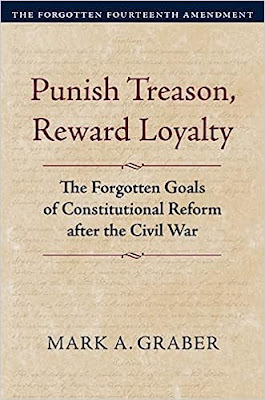
Mark A. Graber, Punish Treason, Reward Loyalty: The Forgotten Goals of Constitutional Reform after the Civil War (University of Kansas Press, 2023)
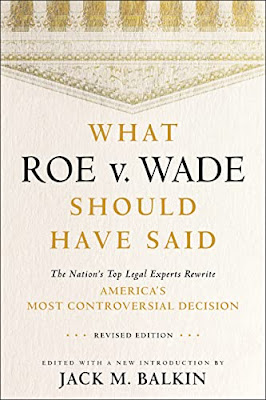
Jack M. Balkin, What Roe v. Wade Should Have Said: The Nation's Top Legal Experts Rewrite America's Most Controversial Decision - Revised Edition (NYU Press, 2023)

Andrew Koppelman, Burning Down the House: How Libertarian Philosophy Was Corrupted by Delusion and Greed (St. Martin’s Press, 2022)

Gerard N. Magliocca, Washington's Heir: The Life of Justice Bushrod Washington (Oxford University Press, 2022)
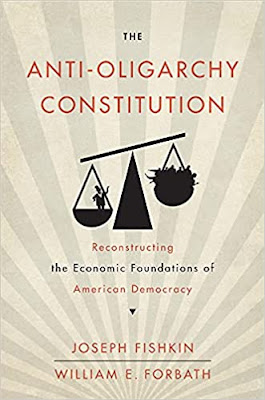
Joseph Fishkin and William E. Forbath, The Anti-Oligarchy Constitution: Reconstructing the Economic Foundations of American Democracy (Harvard University Press, 2022)
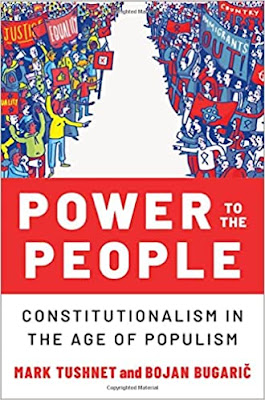
Mark Tushnet and Bojan Bugaric, Power to the People: Constitutionalism in the Age of Populism (Oxford University Press 2021).

Mark Philip Bradley and Mary L. Dudziak, eds., Making the Forever War: Marilyn B. Young on the Culture and Politics of American Militarism Culture and Politics in the Cold War and Beyond (University of Massachusetts Press, 2021).

Jack M. Balkin, What Obergefell v. Hodges Should Have Said: The Nation's Top Legal Experts Rewrite America's Same-Sex Marriage Decision (Yale University Press, 2020)

Frank Pasquale, New Laws of Robotics: Defending Human Expertise in the Age of AI (Belknap Press, 2020)

Jack M. Balkin, The Cycles of Constitutional Time (Oxford University Press, 2020)

Mark Tushnet, Taking Back the Constitution: Activist Judges and the Next Age of American Law (Yale University Press 2020).

Andrew Koppelman, Gay Rights vs. Religious Liberty?: The Unnecessary Conflict (Oxford University Press, 2020)

Ezekiel J Emanuel and Abbe R. Gluck, The Trillion Dollar Revolution: How the Affordable Care Act Transformed Politics, Law, and Health Care in America (PublicAffairs, 2020)

Linda C. McClain, Who's the Bigot?: Learning from Conflicts over Marriage and Civil Rights Law (Oxford University Press, 2020)
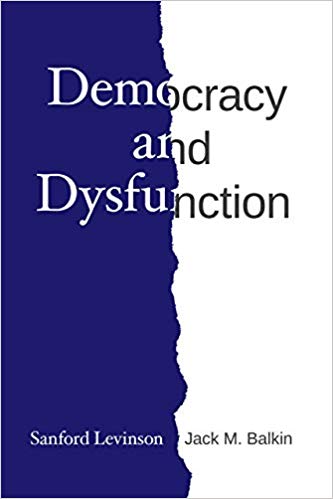
Sanford Levinson and Jack M. Balkin, Democracy and Dysfunction (University of Chicago Press, 2019)

Sanford Levinson, Written in Stone: Public Monuments in Changing Societies (Duke University Press 2018)

Mark A. Graber, Sanford Levinson, and Mark Tushnet, eds., Constitutional Democracy in Crisis? (Oxford University Press 2018)

Gerard Magliocca, The Heart of the Constitution: How the Bill of Rights became the Bill of Rights (Oxford University Press, 2018)

Cynthia Levinson and Sanford Levinson, Fault Lines in the Constitution: The Framers, Their Fights, and the Flaws that Affect Us Today (Peachtree Publishers, 2017)

Brian Z. Tamanaha, A Realistic Theory of Law (Cambridge University Press 2017)

Sanford Levinson, Nullification and Secession in Modern Constitutional Thought (University Press of Kansas 2016)

Sanford Levinson, An Argument Open to All: Reading The Federalist in the 21st Century (Yale University Press 2015)

Stephen M. Griffin, Broken Trust: Dysfunctional Government and Constitutional Reform (University Press of Kansas, 2015)

Frank Pasquale, The Black Box Society: The Secret Algorithms That Control Money and Information (Harvard University Press, 2015)

Bruce Ackerman, We the People, Volume 3: The Civil Rights Revolution (Harvard University Press, 2014)
Balkinization Symposium on We the People, Volume 3: The Civil Rights Revolution

Joseph Fishkin, Bottlenecks: A New Theory of Equal Opportunity (Oxford University Press, 2014)

Mark A. Graber, A New Introduction to American Constitutionalism (Oxford University Press, 2013)

John Mikhail, Elements of Moral Cognition: Rawls' Linguistic Analogy and the Cognitive Science of Moral and Legal Judgment (Cambridge University Press, 2013)

Gerard N. Magliocca, American Founding Son: John Bingham and the Invention of the Fourteenth Amendment (New York University Press, 2013)

Stephen M. Griffin, Long Wars and the Constitution (Harvard University Press, 2013)

Andrew Koppelman, The Tough Luck Constitution and the Assault on Health Care Reform (Oxford University Press, 2013)

James E. Fleming and Linda C. McClain, Ordered Liberty: Rights, Responsibilities, and Virtues (Harvard University Press, 2013)
Balkinization Symposium on Ordered Liberty: Rights, Responsibilities, and Virtues

Andrew Koppelman, Defending American Religious Neutrality (Harvard University Press, 2013)

Brian Z. Tamanaha, Failing Law Schools (University of Chicago Press, 2012)

Sanford Levinson, Framed: America's 51 Constitutions and the Crisis of Governance (Oxford University Press, 2012)

Linda C. McClain and Joanna L. Grossman, Gender Equality: Dimensions of Women's Equal Citizenship (Cambridge University Press, 2012)

Mary Dudziak, War Time: An Idea, Its History, Its Consequences (Oxford University Press, 2012)

Jack M. Balkin, Living Originalism (Harvard University Press, 2011)

Jason Mazzone, Copyfraud and Other Abuses of Intellectual Property Law (Stanford University Press, 2011)

Richard W. Garnett and Andrew Koppelman, First Amendment Stories, (Foundation Press 2011)

Jack M. Balkin, Constitutional Redemption: Political Faith in an Unjust World (Harvard University Press, 2011)

Gerard Magliocca, The Tragedy of William Jennings Bryan: Constitutional Law and the Politics of Backlash (Yale University Press, 2011)

Bernard Harcourt, The Illusion of Free Markets: Punishment and the Myth of Natural Order (Harvard University Press, 2010)

Bruce Ackerman, The Decline and Fall of the American Republic (Harvard University Press, 2010)
Balkinization Symposium on The Decline and Fall of the American Republic

Ian Ayres. Carrots and Sticks: Unlock the Power of Incentives to Get Things Done (Bantam Books, 2010)

Mark Tushnet, Why the Constitution Matters (Yale University Press 2010)

Ian Ayres and Barry Nalebuff: Lifecycle Investing: A New, Safe, and Audacious Way to Improve the Performance of Your Retirement Portfolio (Basic Books, 2010)
.jpg)
Jack M. Balkin, The Laws of Change: I Ching and the Philosophy of Life (2d Edition, Sybil Creek Press 2009)

Brian Z. Tamanaha, Beyond the Formalist-Realist Divide: The Role of Politics in Judging (Princeton University Press 2009)
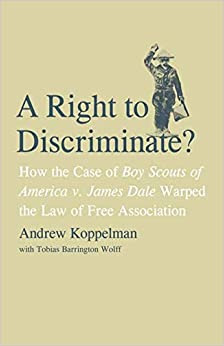
Andrew Koppelman and Tobias Barrington Wolff, A Right to Discriminate?: How the Case of Boy Scouts of America v. James Dale Warped the Law of Free Association (Yale University Press 2009)

Jack M. Balkin and Reva B. Siegel, The Constitution in 2020 (Oxford University Press 2009)

Heather K. Gerken, The Democracy Index: Why Our Election System Is Failing and How to Fix It (Princeton University Press 2009)

Mary Dudziak, Exporting American Dreams: Thurgood Marshall's African Journey (Oxford University Press 2008)

David Luban, Legal Ethics and Human Dignity (Cambridge Univ. Press 2007)

Ian Ayres, Super Crunchers: Why Thinking-By-Numbers is the New Way to be Smart (Bantam 2007)

Jack M. Balkin, James Grimmelmann, Eddan Katz, Nimrod Kozlovski, Shlomit Wagman and Tal Zarsky, eds., Cybercrime: Digital Cops in a Networked Environment (N.Y.U. Press 2007)
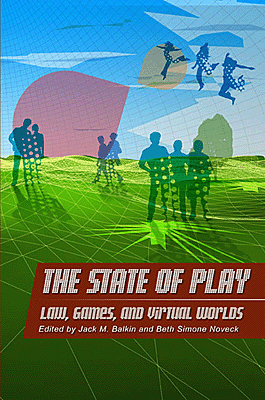
Jack M. Balkin and Beth Simone Noveck, The State of Play: Law, Games, and Virtual Worlds (N.Y.U. Press 2006)

Andrew Koppelman, Same Sex, Different States: When Same-Sex Marriages Cross State Lines (Yale University Press 2006)

Brian Tamanaha, Law as a Means to an End (Cambridge University Press 2006)

Sanford Levinson, Our Undemocratic Constitution (Oxford University Press 2006)

Mark Graber, Dred Scott and the Problem of Constitutional Evil (Cambridge University Press 2006)

Jack M. Balkin, ed., What Roe v. Wade Should Have Said (N.Y.U. Press 2005)

Sanford Levinson, ed., Torture: A Collection (Oxford University Press 2004)
Balkin.com homepage
Bibliography
Conlaw.net
Cultural Software
Writings
Opeds
The Information Society Project
BrownvBoard.com
Useful Links
Syllabi and Exams
