Balkinization
an unanticipated consequence of
Jack M. Balkin
Balkinization Symposiums: A Continuing List
E-mail:
Jack Balkin:
jackbalkin at yahoo.com
Bruce Ackerman
bruce.ackerman at yale.edu
Ian Ayres
ian.ayres at yale.edu
Corey Brettschneider
corey_brettschneider at brown.edu
Mary Dudziak
mary.l.dudziak at emory.edu
Joey Fishkin
joey.fishkin at gmail.com
Heather Gerken heather.gerken at yale.edu
Abbe Gluck abbe.gluck at yale.edu
Mark Graber
mgraber at law.umaryland.edu
Stephen Griffin
sgriffin at tulane.edu
Jonathan Hafetz
jonathan.hafetz at shu.edu
Jeremy Kessler
jkessler at law.columbia.edu
Andrew Koppelman
akoppelman at law.northwestern.edu
Marty Lederman
msl46 at law.georgetown.edu
Sanford Levinson
slevinson at law.utexas.edu
David Luban
david.luban at gmail.com
Gerard Magliocca
gmaglioc at iupui.edu
Jason Mazzone
mazzonej at illinois.edu
Linda McClain
lmcclain at bu.edu
John Mikhail
mikhail at law.georgetown.edu
Frank Pasquale
pasquale.frank at gmail.com
Nate Persily
npersily at gmail.com
Michael Stokes Paulsen
michaelstokespaulsen at gmail.com
Deborah Pearlstein
dpearlst at yu.edu
Rick Pildes
rick.pildes at nyu.edu
David Pozen
dpozen at law.columbia.edu
Richard Primus
raprimus at umich.edu
K. Sabeel Rahmansabeel.rahman at brooklaw.edu
Alice Ristroph
alice.ristroph at shu.edu
Neil Siegel
siegel at law.duke.edu
David Super
david.super at law.georgetown.edu
Brian Tamanaha
btamanaha at wulaw.wustl.edu
Nelson Tebbe
nelson.tebbe at brooklaw.edu
Mark Tushnet
mtushnet at law.harvard.edu
Adam Winkler
winkler at ucla.edu
Compendium of posts on Hobby Lobby and related cases
The Anti-Torture Memos: Balkinization Posts on Torture, Interrogation, Detention, War Powers, and OLC
The Anti-Torture Memos (arranged by topic)
Recent Posts
John Roberts on judicial doctrine
![[Powered by Blogger]](https://lh3.googleusercontent.com/blogger_img_proxy/AEn0k_sWjFfnQtrJuEUSo0emjgeCjhQnk78XRdaLEUDolOJ0ZuVCK1MvtdsyTV2swd1QTJzV5M0spQhAe8JTT0DP-fd2UY6fOaNBXKS9ukFPKZe1=s0-d)
Just A Few Blogs
ACS Blog
Alas, a Blog
Althouse
Arts and Letters Daily
Atrios (Eschaton)
Bill of Health
Buzzflash.com
Buzz Machine
Cato at Liberty
Juan Cole (Informed Comment)
Concurring Opinions
The Constitution in 2020
Corrente
Crooked Timber
Daily Howler
Daily Kos
Dana Boyd
Brad DeLong
Digby (Hullabaloo)
Discriminations
Daniel Drezner
Kevin Drum (Mother Jones)
Electrolite
En Banc
Eunomia (Daniel Larison)
Fafblog
Michael Froomkin (Discourse.net)
GovLab (Beth Noveck)
Rick Hasen (Election Law)
History News Network
How Appealing
Ignatz (Sam Heldman)
The Importance of (Ernie Miller)
Infolaw
Instapundit
International Economic Law and Policy Blog
IntLawGrrls
Jacob Levy
Jesus' General
Jurisdynamics
The Kitchen Cabinet
Mark Kleiman
Law Blog Central
Larry Lessig
Lawyers, Guns and Money
Liberal Oasis
Brian Leiter's Law School Reports
The Leiter Reports
Marginal Revolution
Megan McArdle
Memeorandum
Metafilter
Mirror of Justice
The New Republic
Newseum
No More Mister Nice Blog
Brendan Nyhan
Opinio Juris
Orcinus
The Originalism Blog
Pandagon
Passport (Foreign Policy)
Overcoming Bias
Political Animal (Washington Monthly)
Political Theory Daily Review
Political Wire (Taegan Goddard)
The Poor Man
Virginia Postrel
Prawfsblawg
Public Reason
Jonathan Rauch
Raw Story
Redstate
ReligiousLeftLaw.com
Reporters Committee For Freedom of the Press
Reproductive Rights Blog
Rothman's Roadmap to the Right of Publicity
SCOTUS Blog
Seeing the Forest
Clay Shirky
The Shifted Librarian
The Situationist
Larry Solum (Legal Theory)
Andrew Sullivan
Talking Points Memo
Talk Left
Tapped
Tbogg
TechPresident
The Paper Chase (Jurist)
Tom Paine
Tom Tomorrow (This Modern World)
Eve Tushnet
Uggabugga
University of Chicago Law School Faculty Blog
Unqualified Offerings
The Volokh Conspiracy
War and Piece (Laura Rozen)
Wampum
Oliver Willis
Wonkette
Written Description
Matthew Yglesias
Yin
Your Choice of Feeds
1. XML
powered by

2. Atom Feed
3. RSS 2.0
John Roberts on judicial doctrine
Sandy Levinson
In a sharply worded dissent yesterday in a case overturning the imposition of the death penalty with regard to specific Texas defendants, Chief Justice Roberts wrote, “We give ourselves far too much credit in claiming that our sharply divided, ebbing and flowing decisions in this area gave rise to ‘clearly established’ federal law.” He went on to describe the relevant precedents as “a dog’s breakfast of divided, conflicting, and ever-changing analyses.”
He was, of course, referring only to the tangled capital punishment cases of the Court, which often turn on the more-or-less idiosyncratic views of the fabled "median justice," a role previously occupied by Sandra Day O'Connor and now filled by Anthony Kennedy (who was in the majority in all three of the cases striking down impositions of the death penalty). But one might well apply Chief Justice Roberts acerbic comments to vast areas of contemporary constitutional law, where one can confidently say that a substantial majority of the Court believes that current doctrines make little or no sense, but, of course, they split shaprly on what "sensible" doctrine would be. So we have, in the two affirmative action cases from the University of Michigan, Gratz and Grutter, 7 justices who agree that the policies of the undergraduate and law school admissions should rise or fall together, while Justices O'Connor and Breyer were able to discern constitutionally relevant distinctions that, therefore, controlled the outcomes in the two cases. Another notorious example is the set of Ten Commandements cases from Kentucky and Texas, where only Justice Breyer was able to see a difference in the two cases. And, of course, the abortion decision last week might well fit this model, inasmuch as it's difficult to believe that anyone besides Justice Kennedy could see a genuine distinction between that decision and the one several years ago that struck down a functionally identical law from Nebraska. "Dog's breakfast" seems quite accurate as a description of much, perhaps most, of the Supreme Court's recent handiwork with regard to interpreting the Constitution.
My own view, as a "teacher" of constitutional law to impressionable law students, is that it's basically a waste of time to inflict most of these cases on the young except insofar as they should become aware of the potential for intellectual incoherence generated in any multi-member decisionmaking body that puts a premium on issuing a collective opinion (instead of the old English practice, for example, of "seriatim" opinions delivered by each member of the court). And this also raises extremely interesting questions of "judicial ethics," inasmuch as justices regularly sign opinions with which they could not possibly agree in toto simply to create an "Opinion of the Court" that ostensibly declares the law. The most important example is the willingness of Chief Justice Rehnquist and Justices Sclaia and Thomas to sign the per curiam opinion in Bush v. Gore. As Richard Posner, among others, has noted, it is inconceivable that they agreed with a word of the "equal protection" analysis; they would have rested the decision on their reading of Article II relating to the appointment of electors. The embarrasment is that that reading was rejected by six of the justices, and if they had refused to sign the court's opinion, then the equal protection analysis would have been rejected by five of the justices. So the result would have been Bush wins (by adding the three votes for the Article II analysis to the two votes of Kennedy and O'Connor based on Equal Protection) even though the specific analyses justifying that win would have been rejected by a majority of the Court. So sacrificing intellectual integrity was a small price to pay to create the illusion that "the Court" had genuinely united behind anything other than an outcome (Bush wins).
But the point is that justices of all stripes regularly sacrifice their intellectual integrity in order to reach the all-important "rule of 5," i.e., getting (at least) four of their colleagues to unite behind a single opinion that can be presented to lower courts (and law professors, law students, lawyers, and editorial writers) as "the law" instead of merely personal opinions of the justices. Justice Brennan, for example, signed his share of opinions that he could not possibly have believed because they were effective way-stations on the way to what he hoped, at a later time, would become the final view of the Court.
Along this line, I commend a review by Jeremy Waldron in the current New York Review of books on two recent books, by Jeffrey Rosen and Jan Crawford Greenburg, on the Supreme Court. Waldron is quite critical of both because they present as their models of judicial behavior politically-skillful pragmatists who will not let rigid adherence to legal principles stand in the way of making deals with their colleagues necessary to achieve majority opinions. Thus Rosen invidiously contrasts the rigid Scalia with the more malleable Rehnquist, and both seem to be infatuated with John Roberts as a politically savvy Chief who will ultimately not let his views as to what the Constitution, best interpreted, means stand in the way of achieving some kind of judicial "consensus." Waldon, perhaps the best known systematic critic of the very idea of judicial review, asks why we should put such power in the hands of individuals who are acting more like "politicians" than as stern guardians of legal principles. Interestingly enough, in Greenburg's book, it is Clarence Thomas who comes across as the justice with the greatest degree of Dworkinian "integrity" inasmuch as he rarely seems willing to bend his views on the what the Constitution means simply to make nice with his colleagues. (This makes his vote in Bush v. Gore all the more interesting, therefore, since it cannot possibly be defended under any "integrity" model of judging.)
A final point: The acerbity of Roberts's dissent suggests that he may be giving up on his professed desire to overcome the fragmentation of the current Court. So maybe he is on his way to becoming more like Thomas or Scalia. The "Roberts Court" (which is really, right now, the Stevens-Kennedy Court) is clearly a work in progress, not least because of the consequences of the 2008 presidential and Senate elections for who will succeed the now-87-year-old John Paul Stevens and, possibly, the already septagenerians Scalia, Ginsburg, and Kennedy.
Posted
10:49 AM
by Sandy Levinson [link]
And this also raises extremely interesting questions of "judicial ethics," inasmuch as justices regularly sign opinions with which they could not possibly agree in toto simply to create an "Opinion of the Court" that ostensibly declares the law. The most important example is the willingness of Chief Justice Rehnquist and Justices Sclaia and Thomas to sign the per curiam opinion in Bush v. Gore.
You missed Souter and Breyer. Despite the fact they dissented ("I respectfully dissent"), explained what they thought, and explained what should have happened, the cowardly per curiam signed them on nevertheless to the majority opinion to add weight and "consensus" on their ill-conceived "equal protection" claim. Sadly enough, the media bought on to this nonsense about the decision being a "7-2" decision (and this erroneous "fact" is still paraded around in RW circles and even amongst the laity).
Cheers,

Back to your regularly scheduled comments...
I actually wasn't forgetting Souter and Breyer, since the four justices who believed there was a serious 14th Amendment question were Kennedy, O'Connor, Breyer, and Souter.
As Hertz would say, "Not exactly..."
From Dubya v. Gore:
Justice Breyer:
"And the more fundamental equal protection claim might have been left to the state court to resolve if and when it was discovered to have mattered."
He rocognises that there may be an issue (adn that the majority is asserting that). He has the good sense to say, basically, "it's hard to say that something that hasn't been done yet is being done wrongly....
And for good measure, he chides the majority for their faux 'remedy':
"By halting the manual recount, and thus ensuring that the uncounted legal votes will not be counted under any standard, this Court crafts a remedy out of proportion to the asserted harm. And that remedy harms the very fairness interests the Court is attempting to protect."
Breyer certainly doesn't, contrary to what the majority false claims of him, think that "there are constitutional problems with the recount ordered by the Florida Supreme Court that demand a remedy". This statement is just false. That is to say, a lie.
And Justice Souter is of similar opinion; while he acknowledges that there might conceivably be equal protection issues in elections (hardly a novel concept), he thinks they would be best addresses when they actually show up:
"The Court should not have reviewed either Bush v. Palm Beach County Canvassing Bd., ante, p. ___ (per curiam), or this case, and should not have stopped Florida's attempt to recount all undervote ballots, see ante at ___, by issuing a stay of the Florida Supreme Court's orders during the period of this review, see Bush v. Gore, post at ____ (slip op., at 1). If this Court had allowed the State to follow the course indicated by the opinions of its own Supreme Court, it is entirely possible that there would ultimately have been no issue requiring our review, and political tension could have worked itself out in the Congress following the procedure provided in 3 U. S. C. §15. The case being before us, however, its resolution by the majority is another erroneous decision.
"As will be clear, I am in substantial agreement with
the dissenting opinions of Justice Stevens, Justice Ginsburg and Justice Breyer."
And later:
"It is only on the third issue before us that there is a meritorious argument for relief, as this Court's Per Curiam opinion recognizes. It is an issue that might well have been dealt with adequately by the Florida courts if the state proceedings had not been interrupted, and if not disposed of at the state level it could have been considered by the Congress in any electoral vote dispute."
The majority seizes on "meritorious argument for relief", saying he agreed there was a problem. Not so; he doesn't say the argument, even if meritorious in the abstract is won. And it's hard to "win", seeing as there was no evidence; no factual record for the actions at issue (the subject of the stay). They were all in the future, and he says they might be perfectly OK if just left to run their course, just as Breyer did.
The "facts" supposedly cited by Olson and company had to do with counts already done (and which the court allowed to be included in the official results). The majority did nothing about these counts. This is the fundamental dishonesty of the majority opinion, and both Breyer and Souter excoriated the majority for this. They did not "concur in part and dissent as to the remedy".
Cheers,
If that's how Waldron is taking Greenburg, then he doesn't understand her view. It's not that she doesn't think Roberts will stand up for his convictions. It's that she thinks he'll tend to seek consensus on narrower opinions when possible, rather than being tempted toward more sweeping opinions the way Thomas and Scalia would be. Getting nine justices to agree on an abortion case is no mean feat. That's the kind of example she has in mind. It's not that any justice on that case had to say anything they disagreed with. It's just that they had to refrain from saying further things they would have wanted to say.
Does the subjuctive mood of that statement indicate that they didn't state what that rational is? What is it? Or where can one read about it?
---
I was against Roberts' confirmation and wanted Democrats to vote against him basically because I didn't like the ideological path he would likely take the Court.
His past efforts to promote a certain ideology, including the Reagan years, plus the thought that Bush wouldn't nominate someone who would not help promote Bush ideology factored in here.
I felt his faux "umpire" metapor was rather crafty. For those who took it seriously, his EPA dissent (underlining the importance of the judiciary, his distaste for certain precedents, etc.) is a telling rejoinder.
Roberts also seemed like a nice guy sort, personable and media friendly. Comments like "dog's breakfast" and other snarky remarks (again, the signs were there before, if you cared to look), unline another to him too.
BTW, some said "hey, wait ... we will save our fire for the next one! O'Connor's vote is the one that counts." Not even a filibuster.
Books by Balkinization Bloggers

Mark Tushnet and Bojan Bugaric, Constitutionalism and Its Discontents (University of Chicago Press, 2026)

Gerard N. Magliocca, The Actual Art of Governing: Justice Robert H. Jackson's Concurring Opinion in the Steel Seizure Case (Oxford University Press, 2025)

Linda C. McClain and Aziza Ahmed, The Routledge Companion to Gender and COVID-19 (Routledge, 2024)

David Pozen, The Constitution of the War on Drugs (Oxford University Press, 2024)

Jack M. Balkin, Memory and Authority: The Uses of History in Constitutional Interpretation (Yale University Press, 2024)
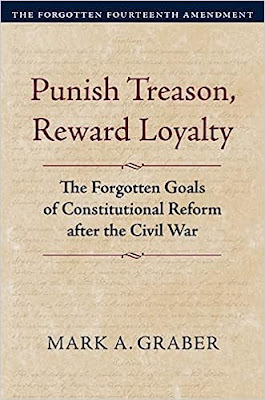
Mark A. Graber, Punish Treason, Reward Loyalty: The Forgotten Goals of Constitutional Reform after the Civil War (University of Kansas Press, 2023)
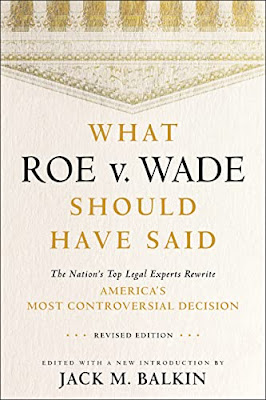
Jack M. Balkin, What Roe v. Wade Should Have Said: The Nation's Top Legal Experts Rewrite America's Most Controversial Decision - Revised Edition (NYU Press, 2023)

Andrew Koppelman, Burning Down the House: How Libertarian Philosophy Was Corrupted by Delusion and Greed (St. Martin’s Press, 2022)

Gerard N. Magliocca, Washington's Heir: The Life of Justice Bushrod Washington (Oxford University Press, 2022)
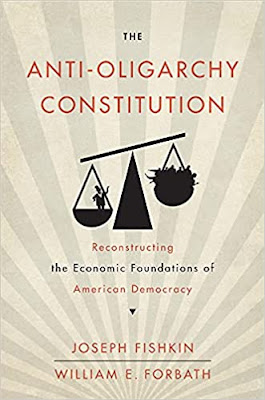
Joseph Fishkin and William E. Forbath, The Anti-Oligarchy Constitution: Reconstructing the Economic Foundations of American Democracy (Harvard University Press, 2022)
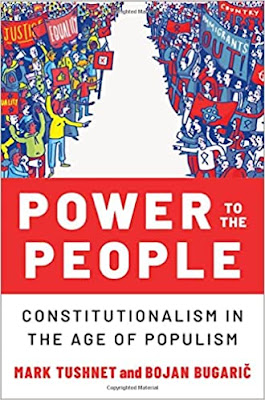
Mark Tushnet and Bojan Bugaric, Power to the People: Constitutionalism in the Age of Populism (Oxford University Press 2021).

Mark Philip Bradley and Mary L. Dudziak, eds., Making the Forever War: Marilyn B. Young on the Culture and Politics of American Militarism Culture and Politics in the Cold War and Beyond (University of Massachusetts Press, 2021).

Jack M. Balkin, What Obergefell v. Hodges Should Have Said: The Nation's Top Legal Experts Rewrite America's Same-Sex Marriage Decision (Yale University Press, 2020)

Frank Pasquale, New Laws of Robotics: Defending Human Expertise in the Age of AI (Belknap Press, 2020)

Jack M. Balkin, The Cycles of Constitutional Time (Oxford University Press, 2020)

Mark Tushnet, Taking Back the Constitution: Activist Judges and the Next Age of American Law (Yale University Press 2020).

Andrew Koppelman, Gay Rights vs. Religious Liberty?: The Unnecessary Conflict (Oxford University Press, 2020)

Ezekiel J Emanuel and Abbe R. Gluck, The Trillion Dollar Revolution: How the Affordable Care Act Transformed Politics, Law, and Health Care in America (PublicAffairs, 2020)

Linda C. McClain, Who's the Bigot?: Learning from Conflicts over Marriage and Civil Rights Law (Oxford University Press, 2020)
Sanford Levinson and Jack M. Balkin, Democracy and Dysfunction (University of Chicago Press, 2019)

Sanford Levinson, Written in Stone: Public Monuments in Changing Societies (Duke University Press 2018)

Mark A. Graber, Sanford Levinson, and Mark Tushnet, eds., Constitutional Democracy in Crisis? (Oxford University Press 2018)

Gerard Magliocca, The Heart of the Constitution: How the Bill of Rights became the Bill of Rights (Oxford University Press, 2018)

Cynthia Levinson and Sanford Levinson, Fault Lines in the Constitution: The Framers, Their Fights, and the Flaws that Affect Us Today (Peachtree Publishers, 2017)

Brian Z. Tamanaha, A Realistic Theory of Law (Cambridge University Press 2017)

Sanford Levinson, Nullification and Secession in Modern Constitutional Thought (University Press of Kansas 2016)

Sanford Levinson, An Argument Open to All: Reading The Federalist in the 21st Century (Yale University Press 2015)

Stephen M. Griffin, Broken Trust: Dysfunctional Government and Constitutional Reform (University Press of Kansas, 2015)

Frank Pasquale, The Black Box Society: The Secret Algorithms That Control Money and Information (Harvard University Press, 2015)

Bruce Ackerman, We the People, Volume 3: The Civil Rights Revolution (Harvard University Press, 2014)
Balkinization Symposium on We the People, Volume 3: The Civil Rights Revolution

Joseph Fishkin, Bottlenecks: A New Theory of Equal Opportunity (Oxford University Press, 2014)

Mark A. Graber, A New Introduction to American Constitutionalism (Oxford University Press, 2013)

John Mikhail, Elements of Moral Cognition: Rawls' Linguistic Analogy and the Cognitive Science of Moral and Legal Judgment (Cambridge University Press, 2013)

Gerard N. Magliocca, American Founding Son: John Bingham and the Invention of the Fourteenth Amendment (New York University Press, 2013)

Stephen M. Griffin, Long Wars and the Constitution (Harvard University Press, 2013)

Andrew Koppelman, The Tough Luck Constitution and the Assault on Health Care Reform (Oxford University Press, 2013)

James E. Fleming and Linda C. McClain, Ordered Liberty: Rights, Responsibilities, and Virtues (Harvard University Press, 2013)
Balkinization Symposium on Ordered Liberty: Rights, Responsibilities, and Virtues

Andrew Koppelman, Defending American Religious Neutrality (Harvard University Press, 2013)

Brian Z. Tamanaha, Failing Law Schools (University of Chicago Press, 2012)

Sanford Levinson, Framed: America's 51 Constitutions and the Crisis of Governance (Oxford University Press, 2012)

Linda C. McClain and Joanna L. Grossman, Gender Equality: Dimensions of Women's Equal Citizenship (Cambridge University Press, 2012)

Mary Dudziak, War Time: An Idea, Its History, Its Consequences (Oxford University Press, 2012)

Jack M. Balkin, Living Originalism (Harvard University Press, 2011)

Jason Mazzone, Copyfraud and Other Abuses of Intellectual Property Law (Stanford University Press, 2011)

Richard W. Garnett and Andrew Koppelman, First Amendment Stories, (Foundation Press 2011)

Jack M. Balkin, Constitutional Redemption: Political Faith in an Unjust World (Harvard University Press, 2011)

Gerard Magliocca, The Tragedy of William Jennings Bryan: Constitutional Law and the Politics of Backlash (Yale University Press, 2011)

Bernard Harcourt, The Illusion of Free Markets: Punishment and the Myth of Natural Order (Harvard University Press, 2010)

Bruce Ackerman, The Decline and Fall of the American Republic (Harvard University Press, 2010)
Balkinization Symposium on The Decline and Fall of the American Republic

Ian Ayres. Carrots and Sticks: Unlock the Power of Incentives to Get Things Done (Bantam Books, 2010)

Mark Tushnet, Why the Constitution Matters (Yale University Press 2010)

Ian Ayres and Barry Nalebuff: Lifecycle Investing: A New, Safe, and Audacious Way to Improve the Performance of Your Retirement Portfolio (Basic Books, 2010)
.jpg)
Jack M. Balkin, The Laws of Change: I Ching and the Philosophy of Life (2d Edition, Sybil Creek Press 2009)

Brian Z. Tamanaha, Beyond the Formalist-Realist Divide: The Role of Politics in Judging (Princeton University Press 2009)
Andrew Koppelman and Tobias Barrington Wolff, A Right to Discriminate?: How the Case of Boy Scouts of America v. James Dale Warped the Law of Free Association (Yale University Press 2009)

Jack M. Balkin and Reva B. Siegel, The Constitution in 2020 (Oxford University Press 2009)

Heather K. Gerken, The Democracy Index: Why Our Election System Is Failing and How to Fix It (Princeton University Press 2009)

Mary Dudziak, Exporting American Dreams: Thurgood Marshall's African Journey (Oxford University Press 2008)

David Luban, Legal Ethics and Human Dignity (Cambridge Univ. Press 2007)

Ian Ayres, Super Crunchers: Why Thinking-By-Numbers is the New Way to be Smart (Bantam 2007)

Jack M. Balkin, James Grimmelmann, Eddan Katz, Nimrod Kozlovski, Shlomit Wagman and Tal Zarsky, eds., Cybercrime: Digital Cops in a Networked Environment (N.Y.U. Press 2007)
Jack M. Balkin and Beth Simone Noveck, The State of Play: Law, Games, and Virtual Worlds (N.Y.U. Press 2006)

Andrew Koppelman, Same Sex, Different States: When Same-Sex Marriages Cross State Lines (Yale University Press 2006)

Brian Tamanaha, Law as a Means to an End (Cambridge University Press 2006)

Sanford Levinson, Our Undemocratic Constitution (Oxford University Press 2006)

Mark Graber, Dred Scott and the Problem of Constitutional Evil (Cambridge University Press 2006)

Jack M. Balkin, ed., What Roe v. Wade Should Have Said (N.Y.U. Press 2005)

Sanford Levinson, ed., Torture: A Collection (Oxford University Press 2004)
Balkin.com homepage
Bibliography
Conlaw.net
Cultural Software
Writings
Opeds
The Information Society Project
BrownvBoard.com
Useful Links
Syllabi and Exams
