Balkinization
an unanticipated consequence of
Jack M. Balkin
Balkinization Symposiums: A Continuing List
E-mail:
Jack Balkin:
jackbalkin at yahoo.com
Bruce Ackerman
bruce.ackerman at yale.edu
Ian Ayres
ian.ayres at yale.edu
Corey Brettschneider
corey_brettschneider at brown.edu
Mary Dudziak
mary.l.dudziak at emory.edu
Joey Fishkin
joey.fishkin at gmail.com
Heather Gerken heather.gerken at yale.edu
Abbe Gluck abbe.gluck at yale.edu
Mark Graber
mgraber at law.umaryland.edu
Stephen Griffin
sgriffin at tulane.edu
Jonathan Hafetz
jonathan.hafetz at shu.edu
Jeremy Kessler
jkessler at law.columbia.edu
Andrew Koppelman
akoppelman at law.northwestern.edu
Marty Lederman
msl46 at law.georgetown.edu
Sanford Levinson
slevinson at law.utexas.edu
David Luban
david.luban at gmail.com
Gerard Magliocca
gmaglioc at iupui.edu
Jason Mazzone
mazzonej at illinois.edu
Linda McClain
lmcclain at bu.edu
John Mikhail
mikhail at law.georgetown.edu
Frank Pasquale
pasquale.frank at gmail.com
Nate Persily
npersily at gmail.com
Michael Stokes Paulsen
michaelstokespaulsen at gmail.com
Deborah Pearlstein
dpearlst at yu.edu
Rick Pildes
rick.pildes at nyu.edu
David Pozen
dpozen at law.columbia.edu
Richard Primus
raprimus at umich.edu
K. Sabeel Rahmansabeel.rahman at brooklaw.edu
Alice Ristroph
alice.ristroph at shu.edu
Neil Siegel
siegel at law.duke.edu
David Super
david.super at law.georgetown.edu
Brian Tamanaha
btamanaha at wulaw.wustl.edu
Nelson Tebbe
nelson.tebbe at brooklaw.edu
Mark Tushnet
mtushnet at law.harvard.edu
Adam Winkler
winkler at ucla.edu
Compendium of posts on Hobby Lobby and related cases
The Anti-Torture Memos: Balkinization Posts on Torture, Interrogation, Detention, War Powers, and OLC
The Anti-Torture Memos (arranged by topic)
Recent Posts
The Mercenary and the Citizen-Soldier
![[Powered by Blogger]](https://lh3.googleusercontent.com/blogger_img_proxy/AEn0k_uRPOzvnSXp9sQE3ONWB6S89TJZq5-GuyiJ7oXkYv6Oc55iMn2R9rpTOUVNc3UPfvTcvO0ipnPaj4VmMxapgeOpmJyAq2ZNeRT0zFIoVw-J=s0-d)
Just A Few Blogs
ACS Blog
Alas, a Blog
Althouse
Arts and Letters Daily
Atrios (Eschaton)
Bill of Health
Buzzflash.com
Buzz Machine
Cato at Liberty
Juan Cole (Informed Comment)
Concurring Opinions
The Constitution in 2020
Corrente
Crooked Timber
Daily Howler
Daily Kos
Dana Boyd
Brad DeLong
Digby (Hullabaloo)
Discriminations
Daniel Drezner
Kevin Drum (Mother Jones)
Electrolite
En Banc
Eunomia (Daniel Larison)
Fafblog
Michael Froomkin (Discourse.net)
GovLab (Beth Noveck)
Rick Hasen (Election Law)
History News Network
How Appealing
Ignatz (Sam Heldman)
The Importance of (Ernie Miller)
Infolaw
Instapundit
International Economic Law and Policy Blog
IntLawGrrls
Jacob Levy
Jesus' General
Jurisdynamics
The Kitchen Cabinet
Mark Kleiman
Law Blog Central
Larry Lessig
Lawyers, Guns and Money
Liberal Oasis
Brian Leiter's Law School Reports
The Leiter Reports
Marginal Revolution
Megan McArdle
Memeorandum
Metafilter
Mirror of Justice
The New Republic
Newseum
No More Mister Nice Blog
Brendan Nyhan
Opinio Juris
Orcinus
The Originalism Blog
Pandagon
Passport (Foreign Policy)
Overcoming Bias
Political Animal (Washington Monthly)
Political Theory Daily Review
Political Wire (Taegan Goddard)
The Poor Man
Virginia Postrel
Prawfsblawg
Public Reason
Jonathan Rauch
Raw Story
Redstate
ReligiousLeftLaw.com
Reporters Committee For Freedom of the Press
Reproductive Rights Blog
Rothman's Roadmap to the Right of Publicity
SCOTUS Blog
Seeing the Forest
Clay Shirky
The Shifted Librarian
The Situationist
Larry Solum (Legal Theory)
Andrew Sullivan
Talking Points Memo
Talk Left
Tapped
Tbogg
TechPresident
The Paper Chase (Jurist)
Tom Paine
Tom Tomorrow (This Modern World)
Eve Tushnet
Uggabugga
University of Chicago Law School Faculty Blog
Unqualified Offerings
The Volokh Conspiracy
War and Piece (Laura Rozen)
Wampum
Oliver Willis
Wonkette
Written Description
Matthew Yglesias
Yin
Your Choice of Feeds
1. XML
powered by

2. Atom Feed
3. RSS 2.0
The Mercenary and the Citizen-Soldier
Scott Horton
"There was a very amusing repartee which Giovanni Acuto [John Hawkwood] made to certain friars minor, who, coming to him at one of his castles where he was, called Montecchio, about a mile from the town of Cortona, presenting themselves before him said, 'Sir, God grant you peace.' And he quickly replied, 'God take from you your alms.' The friars, as men struck with terror, said, 'Sir, why say you so to us?' And Master Giovanni [Sir John] answered, 'Rather should I ask you: Why say you so to me?' Said the friars, 'We thought to say well.' And Master Giovanni [Sir John] replied, 'How think you to say well when you come to me and say to be, "God make you die of hunger?" Know you not that I live by war, so fo you live by alms; so that the reply that I made you was like your greeting. And after doing some other business which they had with him, they took their leave, and returned to the convent of Castiglione, in the Aretino."
- Franco Sacchetti, Il trecentonovelle clxxxi (1399)
The April 2, 2007 issue of The Nation, now accessible on line, contains an extended extract from Jeremy Scahill's fascinating and magnificently documented new book, Blackwater: The Rise of America's Most Powerful Mercenary Army.
One brief excerpt, found near the beginning of the book, is grimly revealing of the mindset that has led simultaneously to the assault on the traditional military values of the nation and to the rise of the new American mercenary. "The topic today is an adversary that poses a threat, a serious threat, to the security of the United States of America," Rumsfeld thundered. "It disrupts the defense of the United States and places the lives of men and women in uniform at risk." He told his new staff, "You may think I'm describing one of the last decrepit dictators of the world.... [But] the adversary's closer to home," he said. "It's the Pentagon bureaucracy." Rumsfeld called for a wholesale shift in the running of the Pentagon, supplanting the old DoD bureaucracy with a new model, one based on the private sector. Announcing this major overhaul, Rumsfeld told his audience, "I have no desire to attack the Pentagon; I want to liberate it. We need to save it from itself."
These remarks were uttered twenty-four hours before jetliners collided with the twin towers of the World Trade Center in New York and the Pentagon, transforming our world. This immense tragedy provided Rumsfeld with a vacuum of silence and shock in which he could quickly act to achieve his objectives. Rumsfeld's solution has been to contract, to outsource, even the most critical military functions. In this process, certain military contractors have been more equal than others. Most frequently, they are contractors, like Blackwater, with tight personal and funding relationships with the Republican party.
Before there was a President, a Congress or a Supreme Court, before any thought had been given to a Constitution, much less a Bill of Rights, America had its first institution: the Army. It was directed by a commander-in-chief - the only one in our history not to serve simultaneously as president. And that Army was the initial repository of national values, particularly of the notion of a citizen-soldier, putting his life at risk for the promise of modest pay and little more, called to duty for altruistic reasons - not for cash or power, prepared to relinquish his soldierly calling and return to civilian life at the end of hostilities. (By and large the Founding Fathers did not think much of a standing army; indeed, much of what they had to say on this subject is so obscene one would have difficulties printing it even today). One of the foundational values of the American Republic is the concept of a citizen-soldier, a concept presented eloquently by George Washington in his farewell address to the troops from November 3, 1783, and preserved at the heart of the nation's defense strategy for more than two centuries. The Commander in chief conceives little is now wanting to enable the Soldiers to change the military character into that of the Citizen, but that steady and decent tenor of behaviour which has generally distinguished, not only the Army under his immediate command, but the different detachments and seperate Armies through the course of the war. From their good sense and prudence he anticipates the happiest consequences; and while he congratulates them on the glorious occasion, which renders their services in the field no longer necessary, he wishes to express the strong obligations he feels himself under for the assistance he has received from every Class, and in every instance... He flatters himself however, they will do him the justice to believe, that whatever could with propriety be attempted by him has been done, and being now to conclude these his last public Orders, to take his ultimate leave in a short time of the military character, and to bid a final adieu to the Armies he has so long had the honor to Command, he can only again offer in their behalf his recommendations to their grateful country, and his prayers to the God of Armies. May ample justice be done them here, and may the choicest of heaven's favours, both here and hereafter, attend those who, under the devine auspices, have secured innumerable blessings for others; with these wishes, and this benediction, the Commander in Chief is about to retire from Service. The Curtain of seperation will soon be drawn, and the military scene to him will be closed for ever.
Washington gives us the vision of the old Roman general Cincinnatus, called to serve in time of crisis, he does so with no expectations of riches or power, and he returns to plow his fields when the fighting is done. It is assuredly a romantic and unrealistic notion. But it is also an essential element of the American idea.
In their late addresses, George Washington and a later general-become-president, Dwight David Eisenhower, warned of the need to guard this ideal with care from the encroachment of a defense industry. Their admonitions were taken carefully for generations. But today, the ultimate threat they warned against has come to pass. We have a defense establishment that dwarfs anything that Washington or Eisenhower could ever have imagined. And rather than influence the Government and its defense policy, this military industrial complex has to all appearances come to exercise de facto control over the defense budgeting process. Multi-billion dollar no-bid contracts with Halliburton and Bechtel are one manifestation of this largely unreported phenomenon. The rise of the new mercenary army which Blackwater symbolizes is another.
With Congress slowly regaining the faculties of speech and sight after what can only be termed a four-year coma, I expect the curtain to be pulled back on some dark and unseemly things – largely unnoticed or if noticed, not understood by the mainstream media. One of the most important issues for the long-term image and self-understanding of our nation and its armed forces is the rise of a new class of contractors consisting of soldiers of fortune. Generals Fay and Jones already noted in their report on the abuses at Abu Ghraib that private military contractors played a major role in wrong doing there and that their presence undermined morale and discipline at the prison. These criticisms sound with regularity from field commanders in Iraq and Afghanistan, and Scahill has collected a number of disturbing episodes.
Blackwater is for many reasons a worthy subject of study: funded and empowered by US tax dollars, promoted by the US government, presided over by a revolving door of functionaries who flow between posts in the Republican party, appointive office in the American national security apparatus and Blackwater. Jeremy Scahill's new book is a brilliant exposé and belongs on the reading list of any conscientious citizen.
What is at stake here is our nation's model of a citizen army, because that model - Washington's vision - can not be easily reconciled with a world in which Blackwater and other contractors thrive, performing an ever growing portion of the functions traditionally handled by the uniformed military. To be clear, the mercenary industry has a long and dark history, and what it portends for society is ominous. The remarks of John Hawkwood, reported by Franco Sacchetti at the end of the 14th century, which I have set out above, are telling. (Sacchetti calls him Giovanni Acuto, or John the sharp-sighted.) Hawkwood was one of the greatest of the late medieval mercenaries, who led a band of Englishmen in the service of the pope and then other Italian states. His interest was simple: lucre. And his interest was achieved by fomenting and perpetuating war. The role played by mercenaries in medieval and early modern history demonstrates how these interests played out. The mercenary thrived in a world of treachery, petty dictatorship and war. Life fit the Hobbesian dictum: "No arts; no letters; no society; and which is worst of all, continual fear and danger of violent death; and the life of man, solitary, poor, nasty, brutish, and short."
For George Washington and his contemporaries, the mercenary was a symbol of a corrupt and enslaving Europe that they sought to avoid. The citizen-soldier, by contrast, was the model for a democracy that places great value on stability and peace, that abjures military adventurism. But today, under the corrupting influence of those potent narcotics, money and power, all these lessons seem forgotten.
Each civilization faces certain tests, and one of them is whether it can remember its own history. The time for remembering has come. Will we elect the world of the mercenary or that of the citizen-soldier? I don't believe they can subsist side-by-side.
Posted
8:54 PM
by Scott Horton [link]
Rumsfeld's solution has been to contract, to outsource, even the most critical military functions.
You are a decade late in this observation. When the Cold War ended and both sides of the aisle cut the military in half, Congress dealt with the resulting manpower shortage by contracting out large swaths of jobs previously performed by soldiers.
In this process, certain military contractors have been more equal than others. Most frequently, they are contractors, like Blackwater, with tight personal and funding relationships with the Republican party.
My friend, ever since the Dems surrendered in Vietnam and opted out of military service, a huge majority of the subsequent volunteer military are conservative and Republican. This is especially true of special operations forces.
Outfits like Blackwater are made up of former military with a heavy emphasis on elite soldiers. So, or course, they are going to be oriented to the GOP.
America had its first institution: the Army. It was directed by a commander-in-chief - the only one in our history not to serve simultaneously as president. And that Army was the initial repository of national values, particularly of the notion of a citizen-soldier, putting his life at risk for the promise of modest pay and little more, called to duty for altruistic reasons...
I assure you that the Army in which I served is still the repository of national values.
Unfortunately, since a large segment of the population has decided to opt out of military service, we are moving away from the ideal of the citizen soldier and are instead developing a military class coming from the many of the same families for 2 generations now.
For example, four generations of my family have served in wars starting in WWI. All of the males in my immediate family have served or are now serving.
To demonstrate the current cultural divide over military service, who here has served, has an immediate family member who has served or even knows someone who has?
This cultural divide profoundly worries me. We cannot have an Army of citizen soldiers who represent the country as a whole when far too much of the citizenry opts out of that duty.
We have a defense establishment that dwarfs anything that Washington or Eisenhower could ever have imagined...The rise of the new mercenary army which Blackwater symbolizes is another.
:::sigh:::
Our military is the smallest it has been since, well, Eisenhower and takes up less of the GDP because we have become a fantastically wealthy country compared to the 50s.
Because our wealth far outnumbers the citizens willing to serve and willing to tolerate even the historically miniscule number of casualties we have suffered in Iraq and Afghanistan, the Government is now paying private soldiers to do some of the serving and dying.
Generals Fay and Jones already noted in their report on the abuses at Abu Ghraib that private military contractors played a major role in wrong doing there and that their presence undermined morale and discipline at the prison.
This is CYA horse hockey.
All the perps were from a reserve MP unit. The ring ring leader was a depraved reservist who was a former prison guard and brought some of his life experiences to Abu Ghraib. The general commanding this unit was guilty of gross dereliction of duty by allowing this zoo to occur under her command. The general should have been courts martialed, not permitted to spin her dereliction of duty.
Blackwater is for many reasons a worthy subject of study: funded and empowered by US tax dollars, promoted by the US government, presided over by a revolving door of functionaries who flow between posts in the Republican party, appointive office in the American national security apparatus and Blackwater.
Political functionaries?
Blackwater was created by two SEAL veterans who saw a business opportunity to provide military and police services.
The Virginian Pilot managed to gain access to Blackwater and their people to write an interesting series of articles entitled Blackwater: Inside America's Private Army
This series is far more balanced than the latest paranoid conspiracy screed produced Mr. Scahill, who has authored such "classics" as Overkill: Feared Blackwater Mercenaries Deploy in New Orleans and parrots lies about our troops by anti American reporters such as the communist Giuliana Sgrena .
What is at stake here is our nation's model of a citizen army, because that model - Washington's vision - can not be easily reconciled with a world in which Blackwater and other contractors thrive, performing an ever growing portion of the functions traditionally handled by the uniformed military.
If you do not like hiring folks like Blackwater to do this nation' heavy lifting, ask your congressional representatives to expand the military halfway back to where it was in 1990 and then volunteer to serve your country. If not, get used to paying others to do the work of citizen soldiers.

"My friend, ever since the Dems surrendered in Vietnam and opted out of military service,"
somewhat ironic, since the Dems did not surrender (the Republican leadership of the time had a plan to get out of Vietnam), and that the majority of the current Republican leadership avoided direct military service when they had the chance to serve, especially those who have pushed for the Iraq war the most.
bart, if you are going to claim cowardice in political parties, I would ask that you take off your blinders and point out the examples on both sides.
Ugh, not again. Such flowery rhetoric on a foundation of match sticks.
Just a few points.
First, as a percentage of GDP, our military spending is, historically speaking, rather low -- particularly compared to Eisenhower's time. http://www.truthandpolitics.org/military-relative-size.php#ref-1
Second, I'd like to reiterate some of Bart's comments. The military is predominantly made up of conservatives/Republicans. They are the ones who maintain your citizen army.
From my own anecdotal experience, some of my best friends from my fraternity in undergrad joined the military. They are some of the best men I have had the pleasure of knowing.
There are two common elements among them. 1. For all of them their fathers and for two of them several generations had served in the military as career officers or enlisted men. 2. They are stalwart conservatives and Republicans.
Also, it is almost comical how you try to paint in conspiratorial language a dark picture of Blackwater. Another of my friends actually worked with them in a rather high profile position on particular security operations. He had mostly praise for them (there are of course bumps and warts in any outfit). Oh, but wait, that's probably just more evidence of conspiracy or dark deeds. That's what they "want" us to think. Clever them.
If you want your citizen army, encourage your friends and family to join the military. Encourage the liberals to join -- they are most welcome! Spearhead efforts to increase the size of our military and to raise pay for our soldiers. Then, maybe people beyond the echo chamber will take positions like yours seriously.
bart depalma said: "My friend, ever since the Dems surrendered in Vietnam and opted out of military service,"
somewhat ironic, since the Dems did not surrender (the Republican leadership of the time had a plan to get out of Vietnam)...
Were you absent from the couple dozen debates discussing the precedent set by the Dem Congress passing bills to compel the President to withdraw the military and then cut off supplies to the ARVN to pave the way for the NVA conquest of South Vietnam?
A Dem President and Congress lost that war by refusing to take offensive actions against the enemy and allowing them a sanctuary in the countries north of South Vietnam. By the time Nixon came along, the Dems in Congress were pushing for surrender.
Do not even attempt to pawn off this defeat onto the GOP. It doesn't pass the laugh test.
...and that the majority of the current Republican leadership avoided direct military service when they had the chance to serve, especially those who have pushed for the Iraq war the most.
This bit of GOP hypocrisy does not change the fact that today's military is filled with Elephants of a more patriotic bent.
bart, if you are going to claim cowardice in political parties, I would ask that you take off your blinders and point out the examples on both sides.
I doubt that either party has a monopoly on personal courage.
Based on the comments I keep seeing from Dem civilians denigrating the motives and intelligence of those who serve, I am more inclined to believe that this is more of a class and cultural phenomenon where many coastal Dems from middle class to wealthy families simply think that military is made up of neanderthals and such grunt work is below them.
In contrast, my father expected that his sons would serve at least one hitch in the military because it was part of our duty to the country and because the experience would be an improvement over civilian life, not a step down. I would contend that this is the concept of a civilian soldier to which Washington was referring.
Recent events suggest this doesn't necessary go hand in hand with how those terms are defined in a political sense. Quite a few members of the military don't agree with "c/r" in power. Of course, quite a few (down to left wing talk show host Randy Rhodes) who served are not in that class.
But, more importantly, if you want more money and resources to be supplied to a citizen army, including those that serve in the professional military not mercenaries (Scott's tone is not his own; see the Declaration of Ind., see the concerns behind the 2A and 4A, etc.), fine. This doesn't run counter to chunks of the piece.
The true solution would include a national push for service from all sides. The fact that some on the left are suspicious of the military policy led by Republicans and conservative ideology for most of the last three decades is not too surprising. Conservatism is not the only way. Ask Dems who served in the military. They are not really a paltry few, even after the draft years.
Finally, was the army really the first American institution? The First Continental Congress met before the war started. The movement toward independence was promoted by committees of correspondence with a 'national' reach.
But, yes, its national flavor was notable. John Marshall, for instance, is said to have obtained his nationalims there.
By that definition it's a mercenary army already. For a citizens' army bring back the draft.
The military is an authoritarian system in service to a republic. I'd like to assume that members of the military are taught to understand the inherent contradictions, but I don't think they are.
The military requirement to follow orders is inculcated as a moral absolute. Such an absolute has no place in the political and the moral life of a republic. The desire to follow orders, almost as instinct, is and needs to be anathema [add in something about Scalia here: ed]
If you want to understand the risks inherent in this sort of dual allegiance, just ask a NYC cop what he thinks of Frank Serpico. Especially if you're in the middle of some stupid "law and order" debate, throw that line out and the conversation will end there. There may be a little sputtering but that's about it.
And humble law student as usual argues from someone else's authority: whether god's, dad's, or big daddy's know one knows, but it's still the queer theory of the willing bitch.
Of course you are right that conservative isn't the same as Republican. I meant to say conservative or Republican.
I agree that there should be a national push for service, but the ones I see from the left are usually scare mongering. For example, when the Dems floated hints that there should be a draft during the last election. It was fairly obvious they didn't care about service per se, but were trying to frighten people into opposing the War with the threat of a draft.
D. Ghirlandaio,
Okay, you really must be Bart pretending to be a lib. You really couldn't be serious in that post.
1. You said, "By that definition it's a mercenary army already. For a citizens' army bring back the draft."
- Umm, not according to any traditional definition/understanding of what a mercenary army is. Pretty loopy.
2. As to your "authoritarian system" point.
- This really is why people such as yourself should educate yourselves on the US military. Your ignorance is astounding. I won't waste my time with a full answer, but here's a hint. To whom/what do members of the military swear their allegiance? A little knowledge would go a long to clearing up your "contradictions"
3. As to your remark about my method of argument...
- What the heck are you talking about? I'm "Arguing from someone else's authority"? Do you even know what that means? I do nothing of the sort. Your comment is nonsense once again.
4. Finally, you said, "but it's still the queer theory of the willing bitch."
- lol, what is that supposed to mean.
To conclude, Bart, you make a terrible liberal, so please stop.
I think, humblely, that you are somewhat stereotyping as to public service. The example you supply really was appropriate -- the state of affairs now does threaten harms the Founding Fathers feared. The key person behind that measure served in the military. It is a 'scare tactic' only because the current alt. played so badly.
Put that aside. Many promote a national service, the military as an option in it (even war, everyone is not needed in the military). Many are center/left leaning. Philip Carter, for instance (who serves in the military, but doesn't sound Republican/conservative to me). The guest blogger on the 2A. Akhil Amar. And many more.
Let me toss something else. The fact that military spending dropped since Ike's day doesn't really help your criticism. The 'go for it cheap' approach that has gotten broad criticism from many quarters can very well exist in the mercenary mentality feared for here. As could the lack of controls.
In fact, ironically, it allows Congress to more easily pigeonhole things, a bigger military budget making this harder to do given the size percentagewise.
Finally, the military can be quite admirable in various ways and still be worrisome. Fearing those with power is not necessarily somehow a slam of the parts who serve well. The cogs of even a dictatorship can be admirable.
I was absent from the debates that led up to the withdrawal from Vietnam. However, I have studied some of what happened in the era.
Getting overinvolved in Vietnam was a mistake of Democratic administrations. However, I do not recall that the US ever surrendered to the Vietnamese. You have argued in previous posts that the Congress does have the right to authorize funds for the military. You then claim that this is "surrendering" with regards to Iraq, and have now extended this concept to Vietnam. Could you admit that in either case it was not surrender, but a change in national priorities? An admission of a mistake, perhaps? In the long term, the "surrender" in Vietnam did not cause the other dominos to fall, and communism did not sweep the world or southeast asia. In fact, Vietnam is now a major trading partner for the US, so perhaps the decision of Congress to get out of Vietnam and withhold funds was actually a wise, long term view.
Also, at the end, Nixon clearly stated that we had achieved "peace with honor" in Vietnam, and stated of Johnson "I know he would join me in asking for those who died and for those who live, let us consecrate this moment by resolving together to make the peace we have achieved a peace that will last." While running for President, he stated "new leadership will end the war and win the peace in the Pacific". I did not mean to pawn off the loss on the GOP, but the ending was accepted and negotiated by Nixon, and he appeared to acknowledge this even when he was running for President.
Your statement that "a Dem President and Congress lost that war by refusing to take offensive actions against the enemy" rings strange against the current war, which will likely be lost by a Rep President and Congress who refused to provide enough troops and supplies to secure the country after the overthrow of the Iraqi government.
Whether today's military has more patriotic Republicans is irrelevant; the fact that those who started, funded, and prosecuted this was were among those who avoided patriotic duty in our last major war is relevant. If you felt that patriotism requires service, then you should have voted for Kerry over Bush, or McCain over Bush in the '00 primaries if you felt that patriotism by service is the most important part of our leadership.
To continue your thought, in addition to neither political party having a monopoly on personal courage, I would also state that neither has a monopoly on the cowards; however, you seem to only want to point out those in the Democrats, never the Republicans.
Also, I know many Democrats who have served in the armed forces, as did my father, father-in-law, brothers-in-law, and other friends. Patriotism is not limited by party, or service. I have known many ex-servicemen who avowed that they would not rejoin, or who opposed the current Iraq war as wrong.
You make many sweeping generalizations in your political assumptions. While statistically there are tendencies that the coasts are more Democratic than the heartland, and that more members of the armed forces are Republicans, these are not absolutes. My father did not expect his sons to join the military, but allowed us to make our own choices. Although I chose not to, I do not denigrate those who serve.
One day or another we will be forced to choose and to define just what "American Interests" really are.
My ancestors fought in all the wars including the Revolutionary War, attested by papers signed by John Hancock before there was a President, but they fought for the Republic and the Constitution in later wars, not for unending agression and private interests.

Getting overinvolved in Vietnam was a mistake of Democratic administrations. However, I do not recall that the US ever surrendered to the Vietnamese.
The Vietnam War was fought over South Vietnam. When we voluntarily retreated from that battlefield and cut off supplies to the ARVN, we surrendered South Vietnam to the enemy.
You have argued in previous posts that the Congress does have the right to [de]authorize funds for the military. You then claim that this is "surrendering" with regards to Iraq, and have now extended this concept to Vietnam.
The fact that Congress has the power to force a surrender does not change the fact of surrender.
Could you admit that in either case it was not surrender, but a change in national priorities?
You could use the euphemism "change in national priorities" instead of "surrender" the same way the Dems are using the euphemism "redeployment" instead of "retreat." In both cases, you are running away and surrendering the battlefield to the enemy.
In the long term, the "surrender" in Vietnam did not cause the other dominos to fall, and communism did not sweep the world or southeast asia.
Really? Only if you are limiting your strategic view to SE Asia. The US avoided any military conflict for nearly a decade as one country after another fell to the communists in the 70s.
In fact, Vietnam is now a major trading partner for the US, so perhaps the decision of Congress to get out of Vietnam and withhold funds was actually a wise, long term view.
Not for the 3 million or so who were murdered in the communist conquest of Cambodia, SV and Laos. To them, it was holocaust far worse than what happened to Europe after the Nazi and then Soviet conquests.
I did not mean to pawn off the loss on the GOP, but the ending was accepted and negotiated by Nixon, and he appeared to acknowledge this even when he was running for President.
Although this is a fine difference, Nixon pursued a strategy of appeasing the enemy through detente while maintaining the status quo by supplying our allies like the SV. The Dems pursued a course of outright surrender of our allies and neighbors.
The US did not go on the offensive to defeat the communists until Reagan.
Your statement that "a Dem President and Congress lost that war by refusing to take offensive actions against the enemy" rings strange against the current war, which will likely be lost by a Rep President and Congress who refused to provide enough troops and supplies to secure the country after the overthrow of the Iraqi government.
What would you do with these extra troops?
What has worked in the past in Anbar and what is working now in Baghdad is going on the offensive to clear and hold population centers. The mistake was hitting the enemy and then going back to our bases so the enemy could retake the territory.
Although you would not know it from our press, things are actually going very well in Iraq.
al Qaeda staged out of Anbar province with Iraqi Sunni allies in 2004. However, in the Summmer / Fall of 2005, the US and Iraqi militaries cleared out most of the province in a series of offensives and convinced many of the Iraqi Sunni to participate in the elections and then go to war with the al Qaeda foreign invaders. The violence in Anbar dropped sharply and the Iraqis took over much of the province.
However, during 2006, our military held back from further offensive actions, probably because of the elections, and the enemy moved into the Baghdad areas and started murdering scores of civilians.
Mr. Bush woke up again in 2007 and started to clear and hold Baghdad. The violence again has dropped sharply and the Iraqis are beginning to see the light at the end of the tunnel, even if our press does not.
1- For a comparitively recent example, look up William Westmoreland's argument with Milton Friedman over the draft; for an absolutely up-to-date one look up William Arkin.
2-Obviously I wasn't talking about to what or whom military men swear their allegiance, but to what or whom they feel their alegience is owed. I was talking about sensibility not paper. My reference to Serpico and the NYPD was clear enough. As to discussion of the contradictions themselves, it's old hat. Ask your favorite teacher, he'll explain to to you.
3- Your arrogance is not posited as yours but as that of others whom you represent. You are humble only because you are their servant. I can't think of another reason, can you? It reminds me of the guy who delivered a pizza to Allan Bloom's place in Hyde Park. The door was opened by a teenage boy with a towel wrapped around his waist.
The pizza delivery man was my roomate at the time, and you remind me of the boy.
2. And my point is that you express such little understanding and knowledge of the military that you have little basis for discussing their sensibilities. Each time you open your mouth, you only deepen the impression.
3. I'm only arrogant when I go up against people like yourself. For example, your utter lack of understanding of the fallacy of argument from authority.
If that wasn't your point, (that I was making that fallacy), then your argument is even more ridiculous. Your argument is basically that I'm sort of slave or servant to some sort of betters.
I read -- a lot. So, I am exposed to evidence of all types and from all sources - as well as many arguments. That I take this in and adopt some of it does not diminish myself. There are very few truly original thinkers, and its obvious you aren't one of them -- so don't try that pathetic argument against me.
Unfortunately, much of the content is ahistorical. There was not an army before there was any thought of a constitution or a bill of rights. The people of the various colonies were debating these things for years before there was an army, and they were busy writing constitutions for the states as well.
More Americans ought to read their own history, and I'm not talking about Zinn's book, either, the only one a lot of people seem to have cracked.
You are also seeing the American citizen soldier, volunteer or not -- the Continental Army was a volunteer force, incidentally -- in the historically unprecedented level of public dissent by both officers and enlisted people.
Gary Sisco
Mr. Bush woke up again in 2007 and started to clear and hold Baghdad. The violence again has dropped sharply....
"Bart" was singing the same song back in the beginning of 2006. Since then.....
What was it?: "Fool me once, shame on you. Fool me twice ... uhhh ... ummm ... doh ... won't get fooled again!"
Cheers,
But let me also say that this is what happens when you don't have enough citizens with "martial vigor" (Roman reference) to do the jobs that need doing. Of course, Iraq was certainly a job that DIDN'T need doing.
But the media/consumer complex has a problem. Once you trained people to be good consumers that's all they have ambition to be.
obat herpes tradisional yang ampuh
obat herpes terbaik
obat herpes tangan
obat herpes tercepat
obat herpes tipe 2
obat herpes tradisional untuk bayi
obat herpes tenggorokan
obat herpes terbaru
obat herpes tablet
obat herpes tomcat
obat herpes tumbuhan
Kapur sirih untuk obat kutil kelamin
Obat kutil kelamin medis
Obat menghilangkan kutil kelamin
Obat menyembuhkan kutil kelamin
Obat tradisional menyembuhkan kutil kelamin
Obat minum untuk kutil kelamin
Obat medis untuk kutil kelamin
Merek obat kutil kelamin
Obat kutil kelamin de nature
Nama obat kutil kelamin
Obat tradisional buat sipilis
Obat herbal buat sipilis
Obat dokter buat sipilis
Obat sipilis dengan bayam duri
Obat sipilis yang bagus
Obat china sipilis
Cara obat sipilis di apotik
Cara obat sipilis pada pria
Cari obat sipilis
Contoh obat sipilis
http://agusus1.blogspot.com/
http://agusyafii.blogspot.com/
http://amateursexxxx.blogspot.co.id/
Obat sipilis Obat kutil kelamin obat wasirhttp://oplosanobatkutilkelamin.blogspot.com/
http://www.smaboy.com/u/obatkutil
http://tinyblogs.net/u/obatkutil/
http://tinyblogs.net/u/obatkutil/
http://obatkutil.blogszino.com/
http://obatkutil.over-blog.com/
http://obatkutilkelamin-tradisional.jimdo.com/
http://www.lautanindonesia.com/blog/obatkutilkelamindanjenggerayam/
http://obatkutilmanjur.weebly.com/
http://obatkutilampuh.livejournal.com/
http://obatkutilkelamintradisional123.blogdetik.com/
http://obatkutil12345.edublogs.org/
http://pengobatankutil.blog.planetbiru.com/
http://obatkutil.freeblog.biz/
http://batkutil.blog.com/
Obat sipilis beli di apotik
Obat sipilis buat wanita
Obat sipilis buatan sendiri
Obat sipilis bagi wanita
Obat buat sipilis
Obat biotik sifilis
Obat antibiotik buat sipilis
Obat tradisional buat sipilis
Obat herbal buat sipilis
Obat dokter buat sipilis
Obat generik buat sipilis
Obat sipilis dengan bayam duri
Obat sipilis yang bagus
Obat buat sifilis
Obat sipilis.com
Obat sipilis ciprofloxacin
Obat china sipilis
obat kutil kelamin dan leher
obat alami menghilangkan kutil kelamin
obat tradisional untuk menghilangkan kutil kelamin
kumpulan obat kutil kelamin
obat tradisional kutil kelamin
obat penyakit kutil kelamin
obat tradisional untuk kutil kelamin
obat alami untuk menghilangkan kutil kelamin
obat alami kutil kelamin
Obat kencing nanah pria
Obat kencing nanah dan darah
Obat kencing nanah apotik
Obat kencing nanah antibiotik
Obat kencing nanah amoxicillin
Obat kencing nanah apa
Obat kencing nanah apa ya
Obat kencing nanah atau gonore
Obat kencing nanah akut
Obat kencing nanah ada di apotik
Obat kencing nanah di apotik umum
Obat kencing nanah paling ampuh
Obat kencing nanah yang ampuh
Obat kencing nanah secara alami
Obat kencing nanah bandung
Obat kencing nanah buatan sendiri
Obat kencing nanah yang bisa dibeli di apotik
Obat herbal untuk mengobati kencing nanah
Obat kencing nanah paling bagus
Obat kencing nanah yang bisa dibeli di apotek
Obat kencing nanah di apotik bebas
Obat kencing nanah yang dijual bebas
Books by Balkinization Bloggers

Mark Tushnet and Bojan Bugaric, Constitutionalism and Its Discontents (University of Chicago Press, 2026)

Gerard N. Magliocca, The Actual Art of Governing: Justice Robert H. Jackson's Concurring Opinion in the Steel Seizure Case (Oxford University Press, 2025)

Linda C. McClain and Aziza Ahmed, The Routledge Companion to Gender and COVID-19 (Routledge, 2024)

David Pozen, The Constitution of the War on Drugs (Oxford University Press, 2024)

Jack M. Balkin, Memory and Authority: The Uses of History in Constitutional Interpretation (Yale University Press, 2024)
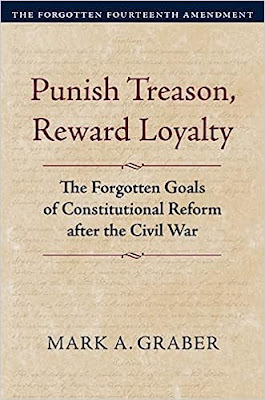
Mark A. Graber, Punish Treason, Reward Loyalty: The Forgotten Goals of Constitutional Reform after the Civil War (University of Kansas Press, 2023)
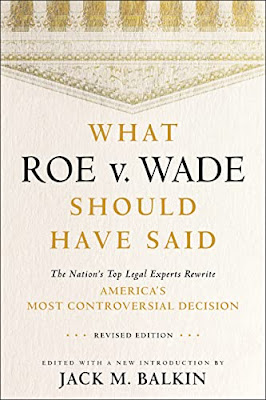
Jack M. Balkin, What Roe v. Wade Should Have Said: The Nation's Top Legal Experts Rewrite America's Most Controversial Decision - Revised Edition (NYU Press, 2023)

Andrew Koppelman, Burning Down the House: How Libertarian Philosophy Was Corrupted by Delusion and Greed (St. Martin’s Press, 2022)

Gerard N. Magliocca, Washington's Heir: The Life of Justice Bushrod Washington (Oxford University Press, 2022)
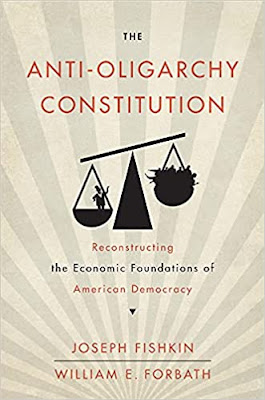
Joseph Fishkin and William E. Forbath, The Anti-Oligarchy Constitution: Reconstructing the Economic Foundations of American Democracy (Harvard University Press, 2022)
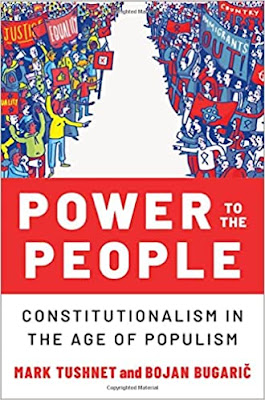
Mark Tushnet and Bojan Bugaric, Power to the People: Constitutionalism in the Age of Populism (Oxford University Press 2021).

Mark Philip Bradley and Mary L. Dudziak, eds., Making the Forever War: Marilyn B. Young on the Culture and Politics of American Militarism Culture and Politics in the Cold War and Beyond (University of Massachusetts Press, 2021).

Jack M. Balkin, What Obergefell v. Hodges Should Have Said: The Nation's Top Legal Experts Rewrite America's Same-Sex Marriage Decision (Yale University Press, 2020)

Frank Pasquale, New Laws of Robotics: Defending Human Expertise in the Age of AI (Belknap Press, 2020)

Jack M. Balkin, The Cycles of Constitutional Time (Oxford University Press, 2020)

Mark Tushnet, Taking Back the Constitution: Activist Judges and the Next Age of American Law (Yale University Press 2020).

Andrew Koppelman, Gay Rights vs. Religious Liberty?: The Unnecessary Conflict (Oxford University Press, 2020)

Ezekiel J Emanuel and Abbe R. Gluck, The Trillion Dollar Revolution: How the Affordable Care Act Transformed Politics, Law, and Health Care in America (PublicAffairs, 2020)

Linda C. McClain, Who's the Bigot?: Learning from Conflicts over Marriage and Civil Rights Law (Oxford University Press, 2020)
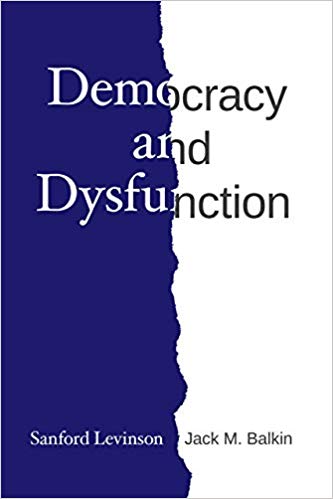
Sanford Levinson and Jack M. Balkin, Democracy and Dysfunction (University of Chicago Press, 2019)

Sanford Levinson, Written in Stone: Public Monuments in Changing Societies (Duke University Press 2018)

Mark A. Graber, Sanford Levinson, and Mark Tushnet, eds., Constitutional Democracy in Crisis? (Oxford University Press 2018)

Gerard Magliocca, The Heart of the Constitution: How the Bill of Rights became the Bill of Rights (Oxford University Press, 2018)

Cynthia Levinson and Sanford Levinson, Fault Lines in the Constitution: The Framers, Their Fights, and the Flaws that Affect Us Today (Peachtree Publishers, 2017)

Brian Z. Tamanaha, A Realistic Theory of Law (Cambridge University Press 2017)

Sanford Levinson, Nullification and Secession in Modern Constitutional Thought (University Press of Kansas 2016)

Sanford Levinson, An Argument Open to All: Reading The Federalist in the 21st Century (Yale University Press 2015)

Stephen M. Griffin, Broken Trust: Dysfunctional Government and Constitutional Reform (University Press of Kansas, 2015)

Frank Pasquale, The Black Box Society: The Secret Algorithms That Control Money and Information (Harvard University Press, 2015)

Bruce Ackerman, We the People, Volume 3: The Civil Rights Revolution (Harvard University Press, 2014)
Balkinization Symposium on We the People, Volume 3: The Civil Rights Revolution

Joseph Fishkin, Bottlenecks: A New Theory of Equal Opportunity (Oxford University Press, 2014)

Mark A. Graber, A New Introduction to American Constitutionalism (Oxford University Press, 2013)

John Mikhail, Elements of Moral Cognition: Rawls' Linguistic Analogy and the Cognitive Science of Moral and Legal Judgment (Cambridge University Press, 2013)

Gerard N. Magliocca, American Founding Son: John Bingham and the Invention of the Fourteenth Amendment (New York University Press, 2013)

Stephen M. Griffin, Long Wars and the Constitution (Harvard University Press, 2013)

Andrew Koppelman, The Tough Luck Constitution and the Assault on Health Care Reform (Oxford University Press, 2013)

James E. Fleming and Linda C. McClain, Ordered Liberty: Rights, Responsibilities, and Virtues (Harvard University Press, 2013)
Balkinization Symposium on Ordered Liberty: Rights, Responsibilities, and Virtues

Andrew Koppelman, Defending American Religious Neutrality (Harvard University Press, 2013)

Brian Z. Tamanaha, Failing Law Schools (University of Chicago Press, 2012)

Sanford Levinson, Framed: America's 51 Constitutions and the Crisis of Governance (Oxford University Press, 2012)

Linda C. McClain and Joanna L. Grossman, Gender Equality: Dimensions of Women's Equal Citizenship (Cambridge University Press, 2012)

Mary Dudziak, War Time: An Idea, Its History, Its Consequences (Oxford University Press, 2012)

Jack M. Balkin, Living Originalism (Harvard University Press, 2011)

Jason Mazzone, Copyfraud and Other Abuses of Intellectual Property Law (Stanford University Press, 2011)

Richard W. Garnett and Andrew Koppelman, First Amendment Stories, (Foundation Press 2011)

Jack M. Balkin, Constitutional Redemption: Political Faith in an Unjust World (Harvard University Press, 2011)

Gerard Magliocca, The Tragedy of William Jennings Bryan: Constitutional Law and the Politics of Backlash (Yale University Press, 2011)

Bernard Harcourt, The Illusion of Free Markets: Punishment and the Myth of Natural Order (Harvard University Press, 2010)

Bruce Ackerman, The Decline and Fall of the American Republic (Harvard University Press, 2010)
Balkinization Symposium on The Decline and Fall of the American Republic

Ian Ayres. Carrots and Sticks: Unlock the Power of Incentives to Get Things Done (Bantam Books, 2010)

Mark Tushnet, Why the Constitution Matters (Yale University Press 2010)

Ian Ayres and Barry Nalebuff: Lifecycle Investing: A New, Safe, and Audacious Way to Improve the Performance of Your Retirement Portfolio (Basic Books, 2010)
.jpg)
Jack M. Balkin, The Laws of Change: I Ching and the Philosophy of Life (2d Edition, Sybil Creek Press 2009)

Brian Z. Tamanaha, Beyond the Formalist-Realist Divide: The Role of Politics in Judging (Princeton University Press 2009)

Andrew Koppelman and Tobias Barrington Wolff, A Right to Discriminate?: How the Case of Boy Scouts of America v. James Dale Warped the Law of Free Association (Yale University Press 2009)

Jack M. Balkin and Reva B. Siegel, The Constitution in 2020 (Oxford University Press 2009)

Heather K. Gerken, The Democracy Index: Why Our Election System Is Failing and How to Fix It (Princeton University Press 2009)

Mary Dudziak, Exporting American Dreams: Thurgood Marshall's African Journey (Oxford University Press 2008)

David Luban, Legal Ethics and Human Dignity (Cambridge Univ. Press 2007)

Ian Ayres, Super Crunchers: Why Thinking-By-Numbers is the New Way to be Smart (Bantam 2007)

Jack M. Balkin, James Grimmelmann, Eddan Katz, Nimrod Kozlovski, Shlomit Wagman and Tal Zarsky, eds., Cybercrime: Digital Cops in a Networked Environment (N.Y.U. Press 2007)

Jack M. Balkin and Beth Simone Noveck, The State of Play: Law, Games, and Virtual Worlds (N.Y.U. Press 2006)

Andrew Koppelman, Same Sex, Different States: When Same-Sex Marriages Cross State Lines (Yale University Press 2006)

Brian Tamanaha, Law as a Means to an End (Cambridge University Press 2006)

Sanford Levinson, Our Undemocratic Constitution (Oxford University Press 2006)

Mark Graber, Dred Scott and the Problem of Constitutional Evil (Cambridge University Press 2006)

Jack M. Balkin, ed., What Roe v. Wade Should Have Said (N.Y.U. Press 2005)

Sanford Levinson, ed., Torture: A Collection (Oxford University Press 2004)
Balkin.com homepage
Bibliography
Conlaw.net
Cultural Software
Writings
Opeds
The Information Society Project
BrownvBoard.com
Useful Links
Syllabi and Exams
