Balkinization
an unanticipated consequence of
Jack M. Balkin
Balkinization Symposiums: A Continuing List
E-mail:
Jack Balkin:
jackbalkin at yahoo.com
Bruce Ackerman
bruce.ackerman at yale.edu
Ian Ayres
ian.ayres at yale.edu
Corey Brettschneider
corey_brettschneider at brown.edu
Mary Dudziak
mary.l.dudziak at emory.edu
Joey Fishkin
joey.fishkin at gmail.com
Heather Gerken heather.gerken at yale.edu
Abbe Gluck abbe.gluck at yale.edu
Mark Graber
mgraber at law.umaryland.edu
Stephen Griffin
sgriffin at tulane.edu
Jonathan Hafetz
jonathan.hafetz at shu.edu
Jeremy Kessler
jkessler at law.columbia.edu
Andrew Koppelman
akoppelman at law.northwestern.edu
Marty Lederman
msl46 at law.georgetown.edu
Sanford Levinson
slevinson at law.utexas.edu
David Luban
david.luban at gmail.com
Gerard Magliocca
gmaglioc at iupui.edu
Jason Mazzone
mazzonej at illinois.edu
Linda McClain
lmcclain at bu.edu
John Mikhail
mikhail at law.georgetown.edu
Frank Pasquale
pasquale.frank at gmail.com
Nate Persily
npersily at gmail.com
Michael Stokes Paulsen
michaelstokespaulsen at gmail.com
Deborah Pearlstein
dpearlst at yu.edu
Rick Pildes
rick.pildes at nyu.edu
David Pozen
dpozen at law.columbia.edu
Richard Primus
raprimus at umich.edu
K. Sabeel Rahmansabeel.rahman at brooklaw.edu
Alice Ristroph
alice.ristroph at shu.edu
Neil Siegel
siegel at law.duke.edu
David Super
david.super at law.georgetown.edu
Brian Tamanaha
btamanaha at wulaw.wustl.edu
Nelson Tebbe
nelson.tebbe at brooklaw.edu
Mark Tushnet
mtushnet at law.harvard.edu
Adam Winkler
winkler at ucla.edu
Compendium of posts on Hobby Lobby and related cases
The Anti-Torture Memos: Balkinization Posts on Torture, Interrogation, Detention, War Powers, and OLC
The Anti-Torture Memos (arranged by topic)
Recent Posts
Stimson's Attack on the Gitmo Lawyers
![[Powered by Blogger]](https://lh3.googleusercontent.com/blogger_img_proxy/AEn0k_sxw4ZcnN7h5djPawMgx9GRRQyO-BTDeYOnI-1r_Sf1X8V0t6XBsRBU1YH-Te8Q48BN8uCvCUwnZJtZHJqcpkMYkzWRVq5m4Xubplu8fJ_p=s0-d)
Just A Few Blogs
ACS Blog
Alas, a Blog
Althouse
Arts and Letters Daily
Atrios (Eschaton)
Bill of Health
Buzzflash.com
Buzz Machine
Cato at Liberty
Juan Cole (Informed Comment)
Concurring Opinions
The Constitution in 2020
Corrente
Crooked Timber
Daily Howler
Daily Kos
Dana Boyd
Brad DeLong
Digby (Hullabaloo)
Discriminations
Daniel Drezner
Kevin Drum (Mother Jones)
Electrolite
En Banc
Eunomia (Daniel Larison)
Fafblog
Michael Froomkin (Discourse.net)
GovLab (Beth Noveck)
Rick Hasen (Election Law)
History News Network
How Appealing
Ignatz (Sam Heldman)
The Importance of (Ernie Miller)
Infolaw
Instapundit
International Economic Law and Policy Blog
IntLawGrrls
Jacob Levy
Jesus' General
Jurisdynamics
The Kitchen Cabinet
Mark Kleiman
Law Blog Central
Larry Lessig
Lawyers, Guns and Money
Liberal Oasis
Brian Leiter's Law School Reports
The Leiter Reports
Marginal Revolution
Megan McArdle
Memeorandum
Metafilter
Mirror of Justice
The New Republic
Newseum
No More Mister Nice Blog
Brendan Nyhan
Opinio Juris
Orcinus
The Originalism Blog
Pandagon
Passport (Foreign Policy)
Overcoming Bias
Political Animal (Washington Monthly)
Political Theory Daily Review
Political Wire (Taegan Goddard)
The Poor Man
Virginia Postrel
Prawfsblawg
Public Reason
Jonathan Rauch
Raw Story
Redstate
ReligiousLeftLaw.com
Reporters Committee For Freedom of the Press
Reproductive Rights Blog
Rothman's Roadmap to the Right of Publicity
SCOTUS Blog
Seeing the Forest
Clay Shirky
The Shifted Librarian
The Situationist
Larry Solum (Legal Theory)
Andrew Sullivan
Talking Points Memo
Talk Left
Tapped
Tbogg
TechPresident
The Paper Chase (Jurist)
Tom Paine
Tom Tomorrow (This Modern World)
Eve Tushnet
Uggabugga
University of Chicago Law School Faculty Blog
Unqualified Offerings
The Volokh Conspiracy
War and Piece (Laura Rozen)
Wampum
Oliver Willis
Wonkette
Written Description
Matthew Yglesias
Yin
Your Choice of Feeds
1. XML
powered by

2. Atom Feed
3. RSS 2.0
Stimson's Attack on the Gitmo Lawyers
David Luban
No one ever accused Bush administration officials of lacking a heavy hand.
Now comes before you Mr. Cully Stimson, deputy assistant secretary of defense for detainee affairs. In an interview with conservative radio broadcasters on a local A.M. station, Mr. Stimson remarks that an interesting, breaking story is the list of blue-chip law firms representing Guantanamo detainees – a list that he says was unearthed by a FOIA request (although, as Stimson knows quite well, the information was never a secret). (The audio is here. Scroll down to Guantanamo Bay: Five Years Later.) Stimson finds it “shocking, really” that prominent law firms would do any such thing. As he rattles off the list of law firms, it becomes clear that he has it on paper in front of him: it’s too lengthy to come off the top of his head. Asked who is paying the law firms, Stimson magnanimously admits that some of these lawyers are working pro bono, but then he hints darkly that others may have nefarious, secret funding sources. Enemies within! More terrorist lawfare!
He adds, “I think, quite honestly, when corporate CEOs see that those firms are representing the very terrorists who hit their bottom line back in 2001, those CEOs are going to make those law firms choose between representing terrorists or representing reputable firms, and I think that is going to have major play in the next few weeks. It will be fun to watch that play out.”
A couple of days after Stimson’s interview, Robert Pollock, in a Wall Street Journal op-ed, echoed the idea that corporate clients should be or would be pressuring their law firms to drop the Gitmo detainees.
The response was predictable, and gratifying. The ABA’s president, and defense-bar spokesman Neal Sonnett leaped to the law firms’ defense, as did Senator Leahy. After outraged editorials in both the New York Times and the Washington Post publicized Stimson’s obscurely-situated interview, the Defense Department disavowed his remarks in strong terms, and made all the right noises about how important it is for the legal process to have excellent counsel for detainees.
How’s that again? For five years, the government (not least Defense) has fought in every way possible to avoid access to legal process for the detainees, a campaign that culminated in the habeas-stripping provisions in the Military Commissions Act. Why would they want excellent representation for the detainees, given that they don’t want the detainees ever to find a forum to be represented in? The hypocrisy boggles the mind. I assume that what bothered Defense about Stimson’s remarks is not their content but their candor.
Let’s be clear, however, that what Stimson recommends is nothing unusual. On the contrary, it’s business as usual for conservative activists, who for years have used the strategy of trying to defund lawyers on the left. I analyzed this strategy four years ago in Taking Out the Adversary: The Assault on Progressive Public-Interest Lawyers, 91 Calif. L. Rev. 209 (2003), and a shorter version of my argument appeared here in Legal Affairs.
The prime example, of course, is the decades-long attack on the Legal Services Corporation. The Reagan Administration tried unsuccessfully to zero the LSC out of the federal budget. They failed, but in 1996 the Republican Revolution Congress succeeded in partially neutering LSC with burdensome and unfair restrictions on LSC-funded lawyers. (One of these restrictions, forbidding legal services lawyers from making legal arguments against welfare “reform,” was subsequently found unconstitutional (Legal Services Corp. v. Velazquez, 531 U.S. 533 (2001)) – an important precedent when it comes to detainee issues, because it suggests that Military Commissions Act provisions forbidding detainees from making Geneva Convention arguments should likewise be found unconstitutional.)
But the attack on LSC is by no means the only effort by the right to win fights by making it hard for opponents to get a lawyer. For years, conservative public-interest firms attacked IOLTA programs, which fund legal aid lawyers through interest on client trust accounts that can’t be returned to the clients. They gave up only after the Supreme Court shot them down in 2003 in Brown v. Legal Foundation of Washington, 538 U.S. 216. Then there were attacks on law school clinics, like the successful lobbying campaign by Louisiana business interests and conservative groups to get the Louisiana Supreme Court to forbid law-student practice by Tulane’s environmental law clinic. And let’s not forget the shameful Supreme Court decisions Evans v. Jeff D. (475 U.S. 717 (1986)) and Buckhannon (532 U.S. 598), which allow targets of civil-rights suits to string cases along for years, and then grant relief to plaintiffs at the last minute while denying statutory attorney’s fees to their lawyers. Jeff D. "sacrifice offers" - sure, we'll give you what you want, but only if you agree that your lawyers don't get paid - provide a powerful tool for starving funds out of public interest law firms.
Stimson’s suggestion that businesses muscle their law firms into dropping detainee clients is also a time-tested tactic. Lawyers use the term “business conflicts” to describe representations they avoid because they would antagonize their bread-and-butter clients, and it’s long been recognized that business conflicts are a major obstacle to pro bono work. (In a New Yorker cartoon, one lawyer reminds another that the only thing that makes pro bono possible is all the anti-bono they do.) Sometimes, firms argue that bar rules make it unethical to take on a “positional” conflict of interest – a more antiseptic term than “business conflict” – but in the case of mere business conflicts, that is untrue. It’s an excuse lawyers offer for caving in to client pressure. Genuine positional conflicts of interest arise when a position a law firm is taking on one issue will damage another client on an unrelated issue – but merely annoying a client isn’t a positional conflict, and the ABA’s Model Rules of Professional Conduct make it clear that lawyers have absolute freedom to do public interest work even if it angers their paying clients.
Business conflicts are a powerful way that big corporations can discipline their lawyers into toeing the line in their extracurricular activities. I recall a few years ago when I participated in an academic conference on punitive damages. The conference program had speakers on all sides of the issue – until the morning the conference was scheduled to begin. Suddenly, all the pro-business, anti-punitive-damages speakers pulled out, almost simultaneously. It seems that a powerful insurance-company general counsel decided that it would be a tactical error to legitimize the conference by participating in it, because several speakers on the other side were presenting solid data that punitive damages cause no discernible damage to the U.S. economy or legal system. She phoned major business clients of the pro-business lawyers who were scheduled to speak at the conference, and they ordered their lawyer-speakers to bail out. Only one refused to do so. Client muscle is real.
Of course, the lawyers who dropped out were on the same side as their clients on the issue of punitive damages. Matters might be different if clients try to muscle lawyers into dropping their detainee clients: the law-firm lawyers representing them are proud of the work they're doing, and lots of lawyers find their pro bono work a personally necessary counterweight, even a professional redemption, to the anti-bono that pays the bills.
The fact that the Pentagon disowned Stimson’s fatuous interview doesn’t mean big businesses won’t take up his invitation, although it’s a bit hard to see why business clients would care enough to oppose good representation for Guantanamo detainees. Hopefully, business clients of major law firms will be smart enough to realize that if they do pressure the firms to drop detainee clients, the story is bound to leak. But let’s not forget that even if DoD’s disavowal of Stimson is the end of that story, it is by no means the end of the bigger story: winning cases by taking out your adversary’s lawyer remains business as usual.
Posted
11:43 AM
by David Luban [link]
Left leaning law firms have no right to the business of their clients in order to finance their extra circular legal activities. Law firms constantly modify their behaviors in order to maintain large clients and to woo others. If a law firm embarrasses its business client, then there are plenty of other lawyers for that client to choose from.
If working to invent new law in the courts to release terrorist detainees so they can go back to their previous occupations is truly a noble cause, then I am sure that businesses will be pleased to be associated with law firms which pursue such endeavors.
However, if risk adverse business clients for some reason frown upon such activities, some firms may have to choose between continuing to finance seven figure salaries for its partners or going into the much less lucrative field of public interest law.
Life sometimes requires choices.

As well they should be. And the answer to nonsense such as Stimson's, "...representing the very terrorists who hit their bottom line back in 2001..., is "firms cannot have a bottom line without rule of law."
I'm only a student, and certainly haven't studied Coase's or Posner's work in-depth. But generally it seems to me that the ascendancy of their theories comes at the cost of accepting a truly amazing fallacy: that there can be a market without government, or vice-versa. Firms that took a direct financial hit on nine-one-one are still reliant on maintaining the society of liberty and justice in which their profits were originally earned.
As for the lawyers doing the work, well, there's no such thing as bad press, just make sure you spell the name right, right? High profile pro-bono cases can attract business from the kinds of firms one would prefer to work with. One can hope.
Reading recent accounts of the topic of the original discussion, I found parallels in labor law in the 1950s; it seems egregiously mistaken for government official Stimson to use his public employee bullypulpit to encourage secondary boycotts of political oponent affiliated lawfirms. Maybe Sen. Leahy could visit this topic as well, perhaps with his esteemed colleague Sen. Specter, and make a new, more explicit law to reinforce the firewall between public office and political organizing.
The discussion of the allied topic, undermining funding for public interest law work, is well worth documenting expansively. I appreciate the links to case precedents provided, as well.
De Palma... Left leaning law firms
Please name one.
Let us start with the firms who are providing the support and staffing for the attorneys attempting to extend constitutional criminal defendant rights including habeas corpus to foreign enemy combatants for the first time in history. This is not a conservative or even moderate position. A law firm is not going to provide support, including allowing its attorneys to take considerable non billable time, unless they support the objective.
In general, the legal profession is disproportionately left of the nation at large.
The legal academy is dominated by democrats.
http://www.frontpagemag.com/media/pdf/
journalismandlawschoolstudytwo.pdf
My law school had one conservative professor who was the sponsor for every student conservative group. I dare say there is not a single conservative among the professors who post here.
The ABA has a significant bias to the left. The conservative/libertarian Federalist Society has great fun detailing the various leftist positions taken by the ABA on various issues:
http://www.fed-soc.org/Publications/ABAwatch/
abawatch.htm
A recent study on the ABA judicial rating process showed a pretty pronounced favoritism toward Clinton nominees over Bush Nominees with similar professional backgrounds.
http://law.bepress.com/nwwps/plltp/art37/
Law firms make contributions to Democrats at a rate 2-3 times higher than to the GOP.
http://www.opensecrets.org/industries/i
ndus.asp?Ind=K01
Its not like there is an enormous secret conspiracy afoot. Liberals just tend to work in academia, law, media and government the same way conservatives tend to work in business and the military.
Using political and economic pressure on private business to compel them to cut economic support for disfavored causes is hardly restricted to the political right. The left in the civil rights and labor communities have used this tactic for far longer.
"Proof by assertion". Let's see some evidence. "Bart" is of the habit of ignoring requests for such ... particularly when the assertion he makes is false, which makes his behaviour understandable (although not honourable).
Left leaning law firms have no right to the business of their clients in order to finance their extra circular legal activities....
Cay you say "straw man"?
... Law firms constantly modify their behaviors in order to maintain large clients and to woo others. If a law firm embarrasses its business client, then there are plenty of other lawyers for that client to choose from.
True, but what does that have to do with the price of tea in Sri Lanka?
If working to invent new law in the courts to release terrorist detainees so they can go back to their previous occupations is truly a noble cause, then I am sure that businesses will be pleased to be associated with law firms which pursue such endeavors.
Another "reframing" of the issues by "Bart" (or petitio principi). Not to mention a bit of "poinsoning the well". Standard "Bart" 'rhetoric'....
However, if risk adverse business clients for some reason frown upon such activities, some firms may have to choose between continuing to finance seven figure salaries for its partners or going into the much less lucrative field of public interest law.
Perhaps. It's a persistent problem, as Prof. Luban points out. There are some that are of the opinion that legal issues ought to be settled on the merits, rather than on the basis of who's got the most money for lawyers (the sad plight of Ms. McCaughey, who was pressured by Macky Dee™ into dropping the name "McCoffee's" for her coffee shop comes to mind; Macky Dee seems to think that they've got the friggin' patent on the Scottish surname prefix "Mc" ... but the unarguable facts is that they do have a huge staff of hot'n'heavy lawyers).
Life sometimes requires choices.
"Bart" seems to be of the opinion that it is how much money you're offered to kill someone that is the measure of the rightness of the decision. A rather pathetic "moral framework", IMNSHO.... "Bart" may accuse me of "misrepresenting" his actual position here, but I'm just reporting my take, my understanding, on the values he exhibits. He's free to explain in more detail his thoughts on the moral aspects of "money talks".
Cheers,

Let us start with the firms who are providing the support and staffing for the attorneys attempting to extend constitutional criminal defendant rights including habeas corpus to foreign enemy combatants for the first time in history. This is not a conservative or even moderate position. A law firm is not going to provide support, including allowing its attorneys to take considerable non billable time, unless they support the objective.
Of course! Law firms won't take on capital murder cases where the trial and/or sentence was tainted (even though the client may in fact be guilty) unless they're objectively pro-murder.
Just as a FWIW, it's aleady been pointed out that the U.S. Supreme Court did consider the petition for writ of habeas corpus to the Ex Parte Quirin petitioners; they just rejected the granting of the writ on the merits. Had they been of the opinion that no such writ should issue simply because the petitioners were (undisputed) "enemy combatants" and per se had no rights to such a petition due to that status, the decision would have been a no-brainer and there would have been no such Ex Parte Quirin case. "Bart", never one to let facts get in the way of Truthiness™, ignores this....
Cheers,
Let us start with the firms who are providing the support and staffing for the attorneys attempting to extend constitutional criminal defendant rights including habeas corpus to foreign enemy combatants for the first time in history. This is not a conservative or even moderate position. A law firm is not going to provide support, including allowing its attorneys to take considerable non billable time, unless they support the objective.
Of course! Law firms won't take on capital murder cases where the trial and/or sentence was tainted (even though the client may in fact be guilty) unless they're objectively pro-murder.
Just as a FWIW, it's aleady been pointed out that the U.S. Supreme Court did consider the petition for writ of habeas corpus to the Ex Parte Quirin petitioners; they just rejected the granting of the writ on the merits. Had they been of the opinion that no such writ should issue simply because the petitioners were (undisputed) "enemy combatants" and per se had no rights to such a petition due to that status, the decision would have been a no-brainer and there would have been no such Ex Parte Quirin case. "Bart", never one to let facts get in the way of Truthiness™, ignores this....
Cheers,
With respect, I don’t agree. Section 5(a) of the MCA states: “No person may invoke the Geneva Conventions or any protocols thereto in any habeas corpus or civil action or proceeding to which the United States, or a current or former officer, employee, member of the Armed Forces, or other agent of the United States is a party as a source of rights in any court of the United States or its States or territories.” This does NOT state that the GCs “do not provide a source of individually enforceable rights in the courts of the United States.” Nor does it state that GC arguments “no longer have legal merit.” The plain meaning of the text is that litigants are forbidden from invoking the GCs. Period. Whether the GCs do or do not provide a source of individually enforceable rights, and whether GC-based arguments have legal merit, are questions which Section 5(a) does not address. Contrary to Madisonian, there are good reasons for answering both questions yes: most fundamentally, that the Supremacy Clause of the Constitution states that treaties are “supreme law of the land,” and Geneva is a treaty. Furthermore, the MCA doesn't forbid raising Geneva claims in a criminal case, or raising them defensively; that's a good reason for thinking that the MCA wasn't changing the underlying substantive law.
Of course, Congress could, via a later-in-time statute, repeal the GCs. Conspicuously, however, Congress didn’t do so in the MCA. On the contrary, in Section 6 of the MCA, Congress stated that the new legislation implements Geneva.
So section 5(a) appears to be a speech restriction, as in Velazquez, not a change in substantive law. It tells lawyers and clients that they are not permitted to raise GC arguments as a source of rights in a habeas case, regardless of whether Geneva, as supreme law of the land, creates such rights. Section 5(a) should fall under Velazquez.
Cara mengobati kanker dengan herbal, Cara mengobati kanker dengan tradisional, Cara mengobati kanker dengan alami, Cara mengobati kanker dengan cepat, Cara mengobati kanker stadium 3, Cara mengobati kanker stadium 4, Cara mengobati kanker stadium awal, Cara mengobati kanker stadium 2, Cara mengobati kanker stadium akhir, Cara mengobati kanker tanpa ke dokter, Gambar obat kanker yang ampuh, Gambar obat kanker yang ampuh, Obat kanker ampuh dengan singkong, Cara mengobati kanker stadium awal tanpa operasi, Obat kanker manjur dari tumbuhan, Cara mengobati kanker stadium 1 tanpa operasi, Obat kanker ampuh dengan daun sirsak, Cara mengobati kanker stadium 2 tanpa operasi, Obat kanker paling mujarab yang efektif, Cara mengobati kanker stadium 3 tanpa operasi, Cara mengobati kanker stadium 3, Cara mengobati kanker stadium 4 tanpa operasi, Obat kanker paling manjur 2016, Cara mengobati kanker stadium akhir tanpa operasi, Pengobatan kanker mujarab tanpa operasi, Cara pengobatan kanker yang manjur, Pengobatan kanker manjur dan aman, Cara pengobatan kanker yang mujarab, Cara pengobatan kanker tanpa operasi, Cara pengobatan kanker yang ampuh, Obat kanker mujarab tanpa operasi, Obat kanker manjur tanpa operasi, Obat De Nature
obat alami untuk mencegah kanker serviks
obat medis untuk kanker serviks
wwwobat kanker serviks
obat vaksin kanker serviks
obat untuk mengatasi kanker serviks
Tumbuhan untuk obat kanker serviks
Obat untuk menyembuhkan kanker serviks
obat untuk penderita kanker serviks
obat tradisional untuk kanker serviks
obat utk kanker serviks
obat untuk kanker serviks
obat tradisional utk kanker serviks
sirsak obat kanker serviks
obat sakit kanker serviks
hello world obat untuk kanker rahim stadium 3
obat herbal kanker rahim stadium 4
obat kanker rahim stadium 1 1
Obat kanker rahim stadium 2
Obat penyakit herpes kelamin pria
obat herpes tradisional yang ampuh
obat herpes terbaik
obat herpes tangan
obat herpes tercepat
obat herpes tipe 2
obat herpes tradisional untuk bayi
obat herpes tenggorokan
obat herpes terbaru
obat herpes tablet
obat herpes tomcat
obat herpes tumbuhan
Kapur sirih untuk obat kutil kelamin
Obat kutil kelamin medis
Obat menghilangkan kutil kelamin
Obat menyembuhkan kutil kelamin
Obat tradisional menyembuhkan kutil kelamin
Obat minum untuk kutil kelamin
Obat medis untuk kutil kelamin
Merek obat kutil kelamin
Obat kutil kelamin de nature
Nama obat kutil kelamin
Obat tradisional buat sipilis
Obat herbal buat sipilis
Obat dokter buat sipilis
obat herbal kanker serviks ampuh
Obat herbal kanker serviks paten
obat herbal kanker serviks manjur
obat herbal kanker serviks mujarab
obat herbal kanker serviks terpercaya
obat herbal kanker servik
obat herbal kanker servik ampuh
obat herbal kanker servik manjur
Obat herbal kanker servik mujarab
obat herbal kanker servik paten
obat herbal kanker servik terpercaya
obat herbal herpes genital klik disini
Obat herbal herpes genital baca sekarang
obat herbal herpes genital manjur
obat herbal herpes genital ampuh
obat herbal herpes genital 2016
obat herpes genital herbal 2015
obat herpes genital herbal 2016
Obat herpes genital herbal bulan ini
obat herpes genital herbal klik sekarang
obat herpes genital herbal 1945
obat herpes genital herbal manjur
obat herbal herpes genital berkhasiat
Obat herbal herpes genital manjuur sembuh 2 hari
Obat herbal herpes genital manjuur sembuh 2 hari
Obat herbal herpes genital manjuur sembuh 2 hari
Obat herbal herpes genital manjuur sembuh 2 hari
Obat herbal herpes genital manjuur sembuh 2 hari
Obat herbal herpes genital manjuur sembuh 2 hari
Obat herbal herpes genital manjuur sembuh 2 hari
Obat herbal herpes genital manjuur sembuh 2 hari
Obat herbal herpes genital manjuur sembuh 2 hari
Obat herbal herpes genital manjuur sembuh 2 hari
Obat herbal herpes genital manjuur sembuh 2 hari
Obat herbal herpes genital manjuur sembuh 2 hari
Obat herbal herpes genital manjuur sembuh 2 hari
Obat herbal herpes genital manjuur sembuh 2 hari
Obat herbal herpes genital manjuur sembuh 2 hari
Obat herbal herpes genital manjuur sembuh 2 hari
obat kanker serviks manjur
obat kanker serviks manjur
obat kanker serviks manjur
obat kanker serviks manjur
obat kanker serviks manjur facebook
obat herpes genital manjur
obat herpes genital manjur
obat herpes genital manjur
obat herpes genital manjur
obat herpes genital manjur
obat herpes genital manjur
obat herpes genital manjur
obat herpes genital manjur
obat herpes genital manjur
obat herpes genital manjur
obat herpes genital manjur
obat herpes genital manjur
obat herpes genital manjur
obat herpes genital manjur
obat herpes genital manjur
obat herpes genital manjur
obat herpes genital manjur
obat herpes genital manjur
obat herpes genital manju
Obat herpes genital manjur
Obat herpes genital manujur di youtube
Obat kanker dan herpes di twitter
obat herpes genital manjur facebook
obat kanker serviks tradisional jawa sumatera
Obat kanker serviks tradisional sumatera
Obat kanker serviks tradisional kalimantan
obat kanker serviks tradisional herbal jawa
obat kanker serviks tradisional herbal jawa sumatera
obat kanker serviks tradisional herbal sumatera
obat kanker serviks tradisional herbal suku pedalaman
obat kanker serviks tradisional herbal suku pedalaman sumatra
Obat kanker serviks tradisional herbal suku jawa
obat kanker serviks tradisional herbal s
obat kanker serviks tradisional herbal suku minang
obat kanker serviks tradisional herbal suku sunda
Obat kanker serviks tradisional herbal suku irian
obat kanker serviks tradisional herbal suku dayak
obat kanker serviks tradisional herbal suku kubu
obat tradisional kanker serviks suku
obat kanker serviks tradisional herbal suku bugis
obat herbal herpes genital dompo
obat herbal herpes genital dompo simplex
Obat tradisional menyembuhkan kutil kelamin
Obat minum untuk kutil kelamin
Obat medis untuk kutil kelamin
Obat kutil kelamin DE NATURE
Merek obat kutil kelamin
Obat kutil kelamin de nature
Nama obat kutil kelamin
Nama salep obat kutil kelamin
Obat kutil kelamin tanpa operasi
Obat oles untuk kutil kelamin
Obat kutil di alat kelamin pria
Obat untuk kutil pada kelamin
Obat tradisional kutil pada kelamin
Obat penyakit kutil kelamin
Obat penghilang kutil kelamin
Obat perontok kutil kelamin
Obat tradisional kutil kelamin pada pria
Obat untuk penyakit kutil kelamin
Propolis untuk obat kutil kelamin
Obat alami untuk penyakit kutil kelamin
Obat kutil pd kelamin
Resep obat kutil kelamin
Obat anti sifilis
Obat sipilis dijual di apotik
Obat sipilis murah di apotik
Obat alami sipilis pada pria
Obat sifilis ampuh
obat alami untuk menghilangkan kutil kelamin
obat alami kutil kelamin
Obat kencing nanah pria
Obat kencing nanah dan darah
Obat kencing nanah apotik
Obat kencing nanah antibiotik
Obat kencing nanah amoxicillin
Obat kencing nanah apa
Obat kencing nanah apa ya
Obat kencing nanah atau gonore
Obat kencing nanah akut
Obat kencing nanah ada di apotik
Obat kencing nanah di apotik umum
Obat kencing nanah paling ampuh
Obat kencing nanah yang ampuh
Obat kencing nanah secara alami
Obat kencing nanah bandung
Obat kencing nanah buatan sendiri
Obat kencing nanah yang bisa dibeli di apotik
Obat herbal untuk mengobati kencing nanah
Obat kencing nanah paling bagus
Obat kencing nanah yang bisa dibeli di apotek
Obat kencing nanah di apotik bebas
Obat kencing nanah yang dijual bebas
Books by Balkinization Bloggers

Gerard N. Magliocca, The Actual Art of Governing: Justice Robert H. Jackson's Concurring Opinion in the Steel Seizure Case (Oxford University Press, 2025)

Linda C. McClain and Aziza Ahmed, The Routledge Companion to Gender and COVID-19 (Routledge, 2024)

David Pozen, The Constitution of the War on Drugs (Oxford University Press, 2024)

Jack M. Balkin, Memory and Authority: The Uses of History in Constitutional Interpretation (Yale University Press, 2024)
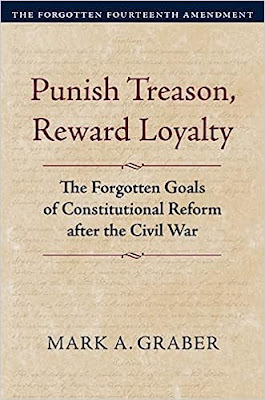
Mark A. Graber, Punish Treason, Reward Loyalty: The Forgotten Goals of Constitutional Reform after the Civil War (University of Kansas Press, 2023)
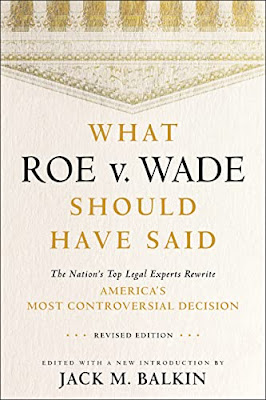
Jack M. Balkin, What Roe v. Wade Should Have Said: The Nation's Top Legal Experts Rewrite America's Most Controversial Decision - Revised Edition (NYU Press, 2023)

Andrew Koppelman, Burning Down the House: How Libertarian Philosophy Was Corrupted by Delusion and Greed (St. Martin’s Press, 2022)

Gerard N. Magliocca, Washington's Heir: The Life of Justice Bushrod Washington (Oxford University Press, 2022)
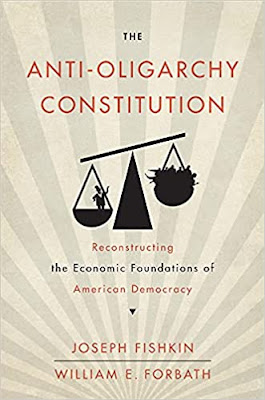
Joseph Fishkin and William E. Forbath, The Anti-Oligarchy Constitution: Reconstructing the Economic Foundations of American Democracy (Harvard University Press, 2022)
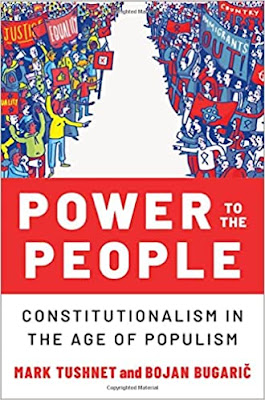
Mark Tushnet and Bojan Bugaric, Power to the People: Constitutionalism in the Age of Populism (Oxford University Press 2021).

Mark Philip Bradley and Mary L. Dudziak, eds., Making the Forever War: Marilyn B. Young on the Culture and Politics of American Militarism Culture and Politics in the Cold War and Beyond (University of Massachusetts Press, 2021).

Jack M. Balkin, What Obergefell v. Hodges Should Have Said: The Nation's Top Legal Experts Rewrite America's Same-Sex Marriage Decision (Yale University Press, 2020)

Frank Pasquale, New Laws of Robotics: Defending Human Expertise in the Age of AI (Belknap Press, 2020)

Jack M. Balkin, The Cycles of Constitutional Time (Oxford University Press, 2020)

Mark Tushnet, Taking Back the Constitution: Activist Judges and the Next Age of American Law (Yale University Press 2020).

Andrew Koppelman, Gay Rights vs. Religious Liberty?: The Unnecessary Conflict (Oxford University Press, 2020)

Ezekiel J Emanuel and Abbe R. Gluck, The Trillion Dollar Revolution: How the Affordable Care Act Transformed Politics, Law, and Health Care in America (PublicAffairs, 2020)

Linda C. McClain, Who's the Bigot?: Learning from Conflicts over Marriage and Civil Rights Law (Oxford University Press, 2020)
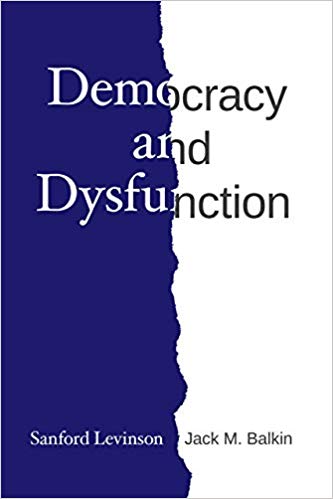
Sanford Levinson and Jack M. Balkin, Democracy and Dysfunction (University of Chicago Press, 2019)

Sanford Levinson, Written in Stone: Public Monuments in Changing Societies (Duke University Press 2018)

Mark A. Graber, Sanford Levinson, and Mark Tushnet, eds., Constitutional Democracy in Crisis? (Oxford University Press 2018)

Gerard Magliocca, The Heart of the Constitution: How the Bill of Rights became the Bill of Rights (Oxford University Press, 2018)

Cynthia Levinson and Sanford Levinson, Fault Lines in the Constitution: The Framers, Their Fights, and the Flaws that Affect Us Today (Peachtree Publishers, 2017)

Brian Z. Tamanaha, A Realistic Theory of Law (Cambridge University Press 2017)

Sanford Levinson, Nullification and Secession in Modern Constitutional Thought (University Press of Kansas 2016)

Sanford Levinson, An Argument Open to All: Reading The Federalist in the 21st Century (Yale University Press 2015)

Stephen M. Griffin, Broken Trust: Dysfunctional Government and Constitutional Reform (University Press of Kansas, 2015)

Frank Pasquale, The Black Box Society: The Secret Algorithms That Control Money and Information (Harvard University Press, 2015)

Bruce Ackerman, We the People, Volume 3: The Civil Rights Revolution (Harvard University Press, 2014)
Balkinization Symposium on We the People, Volume 3: The Civil Rights Revolution

Joseph Fishkin, Bottlenecks: A New Theory of Equal Opportunity (Oxford University Press, 2014)

Mark A. Graber, A New Introduction to American Constitutionalism (Oxford University Press, 2013)

John Mikhail, Elements of Moral Cognition: Rawls' Linguistic Analogy and the Cognitive Science of Moral and Legal Judgment (Cambridge University Press, 2013)

Gerard N. Magliocca, American Founding Son: John Bingham and the Invention of the Fourteenth Amendment (New York University Press, 2013)

Stephen M. Griffin, Long Wars and the Constitution (Harvard University Press, 2013)

Andrew Koppelman, The Tough Luck Constitution and the Assault on Health Care Reform (Oxford University Press, 2013)

James E. Fleming and Linda C. McClain, Ordered Liberty: Rights, Responsibilities, and Virtues (Harvard University Press, 2013)
Balkinization Symposium on Ordered Liberty: Rights, Responsibilities, and Virtues

Andrew Koppelman, Defending American Religious Neutrality (Harvard University Press, 2013)

Brian Z. Tamanaha, Failing Law Schools (University of Chicago Press, 2012)

Sanford Levinson, Framed: America's 51 Constitutions and the Crisis of Governance (Oxford University Press, 2012)

Linda C. McClain and Joanna L. Grossman, Gender Equality: Dimensions of Women's Equal Citizenship (Cambridge University Press, 2012)

Mary Dudziak, War Time: An Idea, Its History, Its Consequences (Oxford University Press, 2012)

Jack M. Balkin, Living Originalism (Harvard University Press, 2011)

Jason Mazzone, Copyfraud and Other Abuses of Intellectual Property Law (Stanford University Press, 2011)

Richard W. Garnett and Andrew Koppelman, First Amendment Stories, (Foundation Press 2011)

Jack M. Balkin, Constitutional Redemption: Political Faith in an Unjust World (Harvard University Press, 2011)

Gerard Magliocca, The Tragedy of William Jennings Bryan: Constitutional Law and the Politics of Backlash (Yale University Press, 2011)

Bernard Harcourt, The Illusion of Free Markets: Punishment and the Myth of Natural Order (Harvard University Press, 2010)

Bruce Ackerman, The Decline and Fall of the American Republic (Harvard University Press, 2010)
Balkinization Symposium on The Decline and Fall of the American Republic

Ian Ayres. Carrots and Sticks: Unlock the Power of Incentives to Get Things Done (Bantam Books, 2010)

Mark Tushnet, Why the Constitution Matters (Yale University Press 2010)

Ian Ayres and Barry Nalebuff: Lifecycle Investing: A New, Safe, and Audacious Way to Improve the Performance of Your Retirement Portfolio (Basic Books, 2010)
.jpg)
Jack M. Balkin, The Laws of Change: I Ching and the Philosophy of Life (2d Edition, Sybil Creek Press 2009)

Brian Z. Tamanaha, Beyond the Formalist-Realist Divide: The Role of Politics in Judging (Princeton University Press 2009)

Andrew Koppelman and Tobias Barrington Wolff, A Right to Discriminate?: How the Case of Boy Scouts of America v. James Dale Warped the Law of Free Association (Yale University Press 2009)

Jack M. Balkin and Reva B. Siegel, The Constitution in 2020 (Oxford University Press 2009)

Heather K. Gerken, The Democracy Index: Why Our Election System Is Failing and How to Fix It (Princeton University Press 2009)

Mary Dudziak, Exporting American Dreams: Thurgood Marshall's African Journey (Oxford University Press 2008)

David Luban, Legal Ethics and Human Dignity (Cambridge Univ. Press 2007)

Ian Ayres, Super Crunchers: Why Thinking-By-Numbers is the New Way to be Smart (Bantam 2007)

Jack M. Balkin, James Grimmelmann, Eddan Katz, Nimrod Kozlovski, Shlomit Wagman and Tal Zarsky, eds., Cybercrime: Digital Cops in a Networked Environment (N.Y.U. Press 2007)

Jack M. Balkin and Beth Simone Noveck, The State of Play: Law, Games, and Virtual Worlds (N.Y.U. Press 2006)

Andrew Koppelman, Same Sex, Different States: When Same-Sex Marriages Cross State Lines (Yale University Press 2006)

Brian Tamanaha, Law as a Means to an End (Cambridge University Press 2006)

Sanford Levinson, Our Undemocratic Constitution (Oxford University Press 2006)

Mark Graber, Dred Scott and the Problem of Constitutional Evil (Cambridge University Press 2006)

Jack M. Balkin, ed., What Roe v. Wade Should Have Said (N.Y.U. Press 2005)

Sanford Levinson, ed., Torture: A Collection (Oxford University Press 2004)
Balkin.com homepage
Bibliography
Conlaw.net
Cultural Software
Writings
Opeds
The Information Society Project
BrownvBoard.com
Useful Links
Syllabi and Exams
