Balkinization
an unanticipated consequence of
Jack M. Balkin
Balkinization Symposiums: A Continuing List
E-mail:
Jack Balkin:
jackbalkin at yahoo.com
Bruce Ackerman
bruce.ackerman at yale.edu
Ian Ayres
ian.ayres at yale.edu
Corey Brettschneider
corey_brettschneider at brown.edu
Mary Dudziak
mary.l.dudziak at emory.edu
Joey Fishkin
joey.fishkin at gmail.com
Heather Gerken heather.gerken at yale.edu
Abbe Gluck abbe.gluck at yale.edu
Mark Graber
mgraber at law.umaryland.edu
Stephen Griffin
sgriffin at tulane.edu
Jonathan Hafetz
jonathan.hafetz at shu.edu
Jeremy Kessler
jkessler at law.columbia.edu
Andrew Koppelman
akoppelman at law.northwestern.edu
Marty Lederman
msl46 at law.georgetown.edu
Sanford Levinson
slevinson at law.utexas.edu
David Luban
david.luban at gmail.com
Gerard Magliocca
gmaglioc at iupui.edu
Jason Mazzone
mazzonej at illinois.edu
Linda McClain
lmcclain at bu.edu
John Mikhail
mikhail at law.georgetown.edu
Frank Pasquale
pasquale.frank at gmail.com
Nate Persily
npersily at gmail.com
Michael Stokes Paulsen
michaelstokespaulsen at gmail.com
Deborah Pearlstein
dpearlst at yu.edu
Rick Pildes
rick.pildes at nyu.edu
David Pozen
dpozen at law.columbia.edu
Richard Primus
raprimus at umich.edu
K. Sabeel Rahmansabeel.rahman at brooklaw.edu
Alice Ristroph
alice.ristroph at shu.edu
Neil Siegel
siegel at law.duke.edu
David Super
david.super at law.georgetown.edu
Brian Tamanaha
btamanaha at wulaw.wustl.edu
Nelson Tebbe
nelson.tebbe at brooklaw.edu
Mark Tushnet
mtushnet at law.harvard.edu
Adam Winkler
winkler at ucla.edu
Compendium of posts on Hobby Lobby and related cases
The Anti-Torture Memos: Balkinization Posts on Torture, Interrogation, Detention, War Powers, and OLC
The Anti-Torture Memos (arranged by topic)
Recent Posts
The CIA Cruelty Authorization Act of 2006
![[Powered by Blogger]](https://lh3.googleusercontent.com/blogger_img_proxy/AEn0k_sRQPENXIUHKdOMmygMlf8IVd8fyvMCv_hfPb3NqqMBy81hhn78Ljx7FlqHJsQ7iEecUOfvFOO0bxM9Yd-AZtQ3gi4DGfnZZFNFb0yS9Ma9=s0-d)
Just A Few Blogs
ACS Blog
Alas, a Blog
Althouse
Arts and Letters Daily
Atrios (Eschaton)
Bill of Health
Buzzflash.com
Buzz Machine
Cato at Liberty
Juan Cole (Informed Comment)
Concurring Opinions
The Constitution in 2020
Corrente
Crooked Timber
Daily Howler
Daily Kos
Dana Boyd
Brad DeLong
Digby (Hullabaloo)
Discriminations
Daniel Drezner
Kevin Drum (Mother Jones)
Electrolite
En Banc
Eunomia (Daniel Larison)
Fafblog
Michael Froomkin (Discourse.net)
GovLab (Beth Noveck)
Rick Hasen (Election Law)
History News Network
How Appealing
Ignatz (Sam Heldman)
The Importance of (Ernie Miller)
Infolaw
Instapundit
International Economic Law and Policy Blog
IntLawGrrls
Jacob Levy
Jesus' General
Jurisdynamics
The Kitchen Cabinet
Mark Kleiman
Law Blog Central
Larry Lessig
Lawyers, Guns and Money
Liberal Oasis
Brian Leiter's Law School Reports
The Leiter Reports
Marginal Revolution
Megan McArdle
Memeorandum
Metafilter
Mirror of Justice
The New Republic
Newseum
No More Mister Nice Blog
Brendan Nyhan
Opinio Juris
Orcinus
The Originalism Blog
Pandagon
Passport (Foreign Policy)
Overcoming Bias
Political Animal (Washington Monthly)
Political Theory Daily Review
Political Wire (Taegan Goddard)
The Poor Man
Virginia Postrel
Prawfsblawg
Public Reason
Jonathan Rauch
Raw Story
Redstate
ReligiousLeftLaw.com
Reporters Committee For Freedom of the Press
Reproductive Rights Blog
Rothman's Roadmap to the Right of Publicity
SCOTUS Blog
Seeing the Forest
Clay Shirky
The Shifted Librarian
The Situationist
Larry Solum (Legal Theory)
Andrew Sullivan
Talking Points Memo
Talk Left
Tapped
Tbogg
TechPresident
The Paper Chase (Jurist)
Tom Paine
Tom Tomorrow (This Modern World)
Eve Tushnet
Uggabugga
University of Chicago Law School Faculty Blog
Unqualified Offerings
The Volokh Conspiracy
War and Piece (Laura Rozen)
Wampum
Oliver Willis
Wonkette
Written Description
Matthew Yglesias
Yin
Your Choice of Feeds
1. XML
powered by

2. Atom Feed
3. RSS 2.0
The CIA Cruelty Authorization Act of 2006
Marty Lederman
There have been several reports in recent days about drafts of the Bush Administration’s proposed amendments to the War Crimes Act. Now, Slate has published a version of those amendments that reportedly was "sent to Congress" last week. I'm informed that this proposal was, at most, shared with a few Republicans on the Hill, and that it is not the final version. Assuming, however, that this amendment is fairly close to what we will eventually see from the Administration, it is, indeed, a very big deal—but not quite for the reasons that have thus far been stressed in most accounts.
Currently, the federal War Crimes Act provides for criminal sanctions (up to life imprisonment, or even death in extreme cases) for all violations of Common Article 3 of the Geneva Conventions. Until the Supreme Court's decision in June in Hamdan v. Rumsfeld, this provision of the War Crimes Act was, for all practical purposes, inapposite to the conflict with Al Qaeda, because the President had determined that Common Article 3 categorically did not apply to that conflict. As we have explained several times in this space, however, the most important practical aspect of the Hamdan decision was the Court's holding that Common Article 3 does apply to the armed conflict with Al Qaeda.
Naturally, this created a big problem for the CIA, because several of the “enhanced” interrogation techniques that the Agency is reported to have been using are almost certainly prohibited by Common Article 3—and thus such techniques are now war crimes, punishable by severe sanctions.
Hence, the Administration's proposal to amend the War Crimes Act. The proposal (set out below) would limit the War Crimes Act to certain, identified subclasses of CA3 violations.
Most reports of the Administration's proposal have focused on one or more of three things:
1. Its defenders say that such an amendment is necessary to provide clarification to the Armed Services as to where the legal line is to be drawn in their treatment of detainees.
2. Several observers, including John Sifton in Slate, and others quoted in this Washington Post article, suggest that the Administration proposal is designed to immunize government officials for possible war crimes violations that occurred before the decision in Hamdan. [Clarification: John Sifton's fine, comprehensive essay is not only about backward-looking culpability; he also emphasizes, as I do, the immunizing of cruel treatment going forward.]
3. And most accounts of the proposal have focused on the fact that it would eliminate from the War Crimes Act all CA3 violations based upon "outrages upon personal dignity" and "humiliating and degrading treatment." Defenders of the Administration suggest that "mere" degrading treatment should not be treated as a severe "war crime," and that in any event that standard is too vague and variable (what's degrading to some might not be to others, etc.). Critics, by contrast, complain that eliminating "humiliating and degrading" treatment from the War Crimes Act will give a green light to the sorts of degradation and humiliation we saw at GTMO and at Abu Ghraib.
In my view, all three of these reactions misses the mark in important ways. The real importance of the amendment has little or nothing to do with the military, or with past conduct, and very little to do with "humiliating and degrading treatment." It is, instead, that this amendment is part of an effort to authorize the CIA to continue to use interrogation techniques that violate Common Article 3's prohibition on "cruel treatment and torture" -- including hypothermia, threats of violence to the detainee and his family, stress positions, "long-time standing," prolonged sleep deprivation, and possibly even waterboarding.
I'll explain briefly below why the initial responses are slightly off-the-mark in their emphases. But the important action -- the place everyone should be looking -- is in the first paragraph of the Administration's draft. That paragraph is entitled "Torture, inhuman treatment, or cruel treatment." This presumably is intended to give the impression that Paragraph (1) covers all violations of the latter half of subsection (1)(a) of Common Article 3, which flatly prohibits all "cruel treatment and torture." But paragraph (1) of the Administration draft does not come close to covering all of the cruel treatment and torture that Common Article 3 prohibits. That paragraph instead encompasses only conduct defined as "torture" under the federal torture statute, 18 USC 2340-2340A. Indeed, it incorporates directly the definition of torture from that federal statute.
The Administration has determined that the "enhanced" CIA techniques are not torture under the federal torture law. And, at least as to some of those techniques, they're probably right (although not as to others, such as waterboarding, which is intended to create severe physical suffering and thus is torture, contrary to what OLC apparently has concluded). Accordingly, those techniques -- again, that would be hypothermia, threats of violence to the detainee and his family, stress positions, "long-time standing," prolonged sleep deprivation, and possibly waterboarding -- would not be covered by the new War Crimes Act, even though they almost certainly are prohibited "cruel treatment" (or "torture") under Geneva Common Article 3.
Notice this: The Administration proposal identifies numerous specific categories of conduct that would violate the War Crimes Act. But it's no coincidence that none of those categories covers the CIA techniques -- not even threats. [UPDATE: Thanks to Jamie M. for pointing out that although paragraph 5 of the Administration proposal is entitled "Intentionally causing great suffering or serious injury," the text of that paragraph does not, in fact, prohibit "intentionally causing great suffering" -- again, because if it did, the CIA's techniques, many of which are specifically designed to cause great suffering (the better to elicit information), would be war crimes.]
Eliminating coverage of these techniques under the War Crimes Act would not be sufficient to authorize the CIA to continue using these techniques, because Common Article 3 itself would still prohibit them. That's why the Administration needs another couple of statutory amendments, too: One would adopt the "shock the conscience" standard of the McCain Amendment as the governing standard for all CIA interrogations (a tactic that I discuss here); and the other would cut off all judicial review of questions relating to the Geneva Conventions.
But make no mistake: The biggest part of the puzzle for the CIA is to eliminate the most serious deterrent to the use of these techniques -- possible war-crimes culpability.
Now, as to why the other reactions are not quite on-point:
1. The Proposal is Designed to Give Guidance to Military Personnel.
This is transparent nonsense. As I've previously written, the armed services are subject to standards far more restrictive than those found in Common Article 3 -- under the Uniform Code of Military Justice and the Army Field Manual (which they must apply, as a matter of statutory law). Moreover, they are trained to comply with the even higher standards of the protections for POWs in the Geneva Conventions. Why, then, would they need further legal clarification or modification of Common Article 3 or the War Crimes Act, which are much less restrictive than the standards that otherwise govern the armed forces? Answer: They don't. This amendment has nothing whatsoever to do with the military. It's about the CIA.
2. The Proposal is Designed to Provide Immunity for Past Misconduct.
I don't think so. To the extent officials violated the standards of Common Article 3 with respect to Al Qaeda prior to June 29, 2006 (the date of Hamdan), they could not be prosecuted for such violations of CA3 (as incorporated in the War Crimes Act), even without the Administration's amendment, because the President had determined that CA3 does not apply to the conflict with Al Qaeda, and due process would prevent any prosecutions for conduct undertaken in reasonable reliance on that presidential determination. (Regardless of what one thinks of the merits of the Common Article 3 question, the reliance would be deemed reasonable, since the legal conclusion was adopted by the President and affirmed by four Supreme Court Justices [Correction -- That should be three Justices: Justice Alito did not join that part of Justice Thomas's dissenting opinion.] And even if you disagree with me on that due process question, trust me: No Justice Department, not even in the most anti-Bush Administration imaginable, would ever prosecute someone for violation of a law that the President had determined was inapplicable.)
This is not to say that such persons could not be prosecuted under some other law -- say, for violation of the UCMJ, or the assault or torture statutes, or even other parts of the War Crimes Act. But the Administration's proposal (at least the version we've seen so far) would not affect those other statutes or provide immunity for past violations of them. It would only affect Common Article 3 violations of the War Crimes Act -- and prosecution for those violations would be impossible and inconceivable, anyway.
So, it's not really (or primarily) about "immunity" for past conduct; it is, instead, about immunity for future cruel treatment and torture.
3. The Proposal is Designed to Deal with "Humiliating and Degrading Treatment."
Well, perhaps in small part, it is. But that's really a sideshow. The Administration's preferred focus on humiliating and degrading treatment diverts attention from the real heart of the matter, which will be how they define "cruel treatment and torture," and, in particular, whether the CIA enhanced interrogation techniques are covered.
The Administration and its backers (e.g., Senators Cornyn, Thune, Roberts, etc.) are getting a lot of mileage out of the notion that what is "degrading" to some cultures might not be "degrading" to others, that "dignity" is a fluid and vague concept, and that, at the very least, these standards are inappropriate for imposition of criminal sanctions. Putting underwear on someone's head, or mocking the Koran, might be stupid, and odious, and even illegal -- but it seems odd if not perverse to most folks to call it a "war crime."
I happen to think it would be a mistake to exclude humiliating and degrading treatment from the WCA. But many will disagree with me. What's important is to realize that this dispute about how "degrading" treatment should be handled is not why the Administration is proposing an amendment to the WCA. Their public focus on subsection (1)(c) of CA3 -- the provision dealing with humiliating and degarding treatment -- is a feint to throw everyone off the scent. The real issue is the CIA. And that agency is not so interested in making use of the stupid and offensive techniques that were used on Al-Qahtani at GTMO -- religious degradation, underwear on the head, etc.
What they are interested in are the "enhanced" techniques that they've been authorized to use -- including hypothermia, threats of violence to the detainee's family, stress positions, "long-time standing," prolonged sleep deprivation, and possibly even waterboarding. With respect to these techniques, the issue isn't the ban on humiliation or degradation -- it's that they are "cruel treatment," perhaps even "torture," under subsection (1)(a) of Common Article 3.
I'm fairly confident that when we see the Administration's proposed amendment to the War Crimes Act, it will not cover these enhanced techniques. And therefore the proposal will, in effect, authorize these violations of CA3, which are much easier to understand as war crimes than "mere" humiliation and degradation. There might be debate, and confusion, about humiliation and degradation. But there ought to be a consensus in the Congress and the public that "cruel treatment," as such, and as understood under Common Article 3, is a war crime and should be treated as such.
So that's where the focus should be. Senators should be prepared to offer amendments to the Administration proposal that would specifically cover these techniques under the category of "cruel treatment and torture." If the Administration resists such an amendment, as it is likely to do, the burden will be on the Department of Justice to explain either why hypothermia and threats, etc., are not "cruel treatment" under Geneva Common Article 3, or, alternatively, why the United States Congress should authorize the CIA to engage in cruel treatment that violates our treaty obligations.
In sum, we should stop talking about humiliation and outrage, and start talking about cruelty (and torture) -- and about whether our national legislature should authorize the CIA to engage in such cruelty, notwithstanding the fact that it would violate the Geneva Conventions.
[UPDATE: In the comments below, Prof. Geoffrey Corn has some important thoughts about the ramifications -- including in the military -- of eliminating the prohibition on humiliating and degrading treatment. Prof. Corn's comments confirm why that would be a very significant mistake, even if I continue to think that the principal action is w/r/t "cruel treatment and torture."]
Here's the amendment proposed by the Bush Administration to the War Crimes Act:Section 2441 of title 18, United States Code, is amended by replacing subsection (c)(3) with the following:
"which constitutes any of the following offenses, when committed in the context of and in association with an armed conflict not of an international character under common Article 3 of the international conventions signed at Geneva 12 August 1949:
1. Torture, inhuman treatment, or cruel treatment. -- Any person who commits, or attempts to commit, an act specifically intended to inflict severe physical or mental pain or suffering (other than pain or suffering incidental to lawful sanctions) upon another person within his custody or physical control shall be guilty of a violation of this subsection. "Severe mental pain or suffering" has the meaning provided in 18 USC 2340(2).
2. Performing biological experiments. -- Any person who subjects one or more persons to biological experiments without a legitimate medical purpose and in so doing seriously endangers the body or health or such person or persons shall be guilty of a violation of this subsection.
3. Intentionally killing any person taking no active part in the hostilities. -- Any person who intentionally kills, or attempts to kill, one or more persons who were taking no active part in the hostilities, including those placed hors de combat by sickness, wounds, detention, or any other cause, shall be guilty of a violation of this subsection. The intent required for this offense precludes its applicability with regard to collateral damage or to death, damage, or injury incident to a lawful attack.
4. Mutilating or maiming any person taking no active part in the hostilities. -- Any person who intentionally injures, or attempts to injure, one or more persons who were taking no active part [in hostilities], including those placed hors de combat by sickness, wounds, detention, or any other cause, by disfiguring the person or persons by any mutilation thereof or by permanently disabling any member, limb, or organ of his body, without any legitimate medical or dental purpose, shall be guilty of a violation of this subsection. The intent required for this offense precludes its applicability with regard to collateral damage or to death, damage, or injury incident to a lawful attack.
5. Intentionally causing great suffering or serious injury. -- Any person who intentionally causes, or attempts to cause, serious bodily injury to one or more persons who were taking no active part in the hostilities, including those placed hors de combat by sickness, wounds, detention, or any other cause, or intentionally engages in conduct that places such a person at significant risk of serious bodily injury, shall be guilty of a violation of this subsection. The intent required for this offense precludes its applicability with regard to collateral damage or to death, damage, or injury incident to a lawful attack. "Serious bodily injury" has the meaning provided in 18 USC 1365(h)(3).
6. Rape -- Any person who forcibly or with coercion or threat of force wrongfully invades, or attempts to invade, the body of a person by penetrating, however slightly, the anal or genital opening of the victim with any part of the body of the accused or with any foreign object shall be guilty of a violation of this subsection.
7. Sexual assault or abuse. -- Any person who forcibly or with coercion or threat of force engages in sexual contact with one or more persons, or causes one of more persons to engage in sexual contact shall be guilty of a violation of this subsection. For purpose of this offense, "sexual contact" has the meaning provided in 18 USC 2246(3).
8. Taking hostages. -- Any person who, having knowingly seized or detained one or more persons in violation of the laws of armed conflict, threatens to kill, injure, or continue to detain such person or persons with the intent of compelling any nation, person other than the hostage, or group of persons to act or refrain from acting as an explicit or implicit condition for the safety or release of such person or persons, shall be guilty of a violation of this amendment."
Posted
3:11 PM
by Marty Lederman [link]
This is about exactly what the Supreme Court said it was about: the rule of law -- and a government which will not obey its own laws is no government at all.
What is at stake here is nothing less than the legitimacy of our Republic, and the United States is NOT Nazi Germany.
At least NOT YET, despite the crimes of the Bush adminsitration.
And I don't care if it takes us 20 years or more to bring these gangsters to justice.

Their current efforts to modify the laws, starting with the DTA, are in fact just more evidence of the crimes. They were never concerned with actually obeying the law, but with subverting the laws to criminal purposes.
Isn't this just a simple matter of criminal elements?
The President's various "findings" facilitated and encouraged the crimes. How can that provide a defense?
And how can anyone suppose that those findings were made in good faith?
They were plainly fraudulent, and it's very clear that these people are just propagating sophistry to justify their policies without any regard for what the law actually says.
Indeed: the attmept to produce legislation that would authorize these crimes is itself criminal.
This is not the Soviet Union: the law isn't just a cattle prod for DOJ to use on the people to enforce the will of the Politburo.
I absolutely agree re: the intended future use of the legislation and it should have the most focus. While I don't have any component of legislative or govt or criminal justice background, I think you dismiss the immunization aspects too lightly. You also seem to negate that the legislation impact on the UCMJ aspects, and I do not have nearly that same certainty.
I also have to say - I don't think it is completely clear that four Justices agreed with respect to Geneva Conventions not applying to detainees (Didn't Roberts, who recused, on the panel below relied primarily on the comity issue?). I think, more narrowly, that there were Justices who thought that on the issue of the tribunals, Congress had divested jurisdiction on pending cases in favor of a different format and appellate process and that there was a willingness to "wait and see" if the tribunals could be claimed to have been, as ACTUALLY conducted, within the parameters of the Conventions and UCMJ, as opposed to determining that the guidelines as proposed were so out of kilter that they would not allow for tribunals that conformed. Thomas did go further and Scalia/Alito joined with him in parts - still all relating to the commission, however, and not treatment, but the heart of each of the three dissents was different and Scalia and Alito focused on particular mechanics of statute and forebearance of decision while waiting for the process to actually unfold, IMO, FWIW.
Still, on immunization I think you miss a fairly important point. Because of the manner in which the US proceeded, without requiring criminal evidentiary basis for actions, there were people who were taken, tortured, etc. who can not be claimed to be "enemy combatants." El-Masri comes to mind in particular. The Chinese Uighar detainees. The two detainees who were being held by the Taliban bc they were anti-Bin Laden, but were scooped up in our net, family members of suspects who were also taken into custody, and possibly even journalists and civilians etc.
It is one thing to claim that the "enemy combatants" labelling created by for the President provides a good faith basis (I disagree, for several reasons, but also sadly agree with your assessment that there still would be no prosecution) to escape application of 2441; it is another thing to say that someone who is not in any conceivable manner an "enemy combatant" somehow jumps category to nonetheless become one, solely because the category is created.
As a result, I do believe that immunization for prior crimes is a significant factor. The decision to dispense with even evidence of the applicablity of the category took us into a pretty reckless territory and the result is war crimes that even the good faith belief in "enemy combatants aren't protected by common Article 3" doesn't impact.
I also think that this will have an effect with respect to the UCMJ. One aspect of Hamdan is that it also shot lots of holes in the Beaver memo's concept that violations of the UCMJ were fine as long as a superior officer authorized them (the presumption being that the uppermost echelons of the Chain would implicitly be involved in that authorization). Hamdan indicates that the CIC does not have an inherent ability to go outside both the UCMJ and the common law of war, which for the US incorporates the GConvs, to create authorization to violate either or both. OTOH, it leaves open the possiblity that Congress may. The changes to the War Crimes act, impacting, as they will, the interpretation fo the GC-s for the US, will thereby impact the interpretation of the US standards under the common law of war and under the UCMJ as it incorporates the standards of the common law of war and the GCs. IMO.
Lastly, though I am sure you are correct that, "No Justice Department, not even in the most anti-Bush Administration imaginable, would ever prosecute someone for violation of a law that the President had determined was inapplicable" I don't agree with you with respect to good faith basis.
Really, what would have been the grounds for any convictions at Nuremberg if everyone could agree that as long as a superior, or the ultimate superior, said it was ok -- it became ok?
Even so, my reaction goes deeper. The Jan 2002 memo prepared by Gonzales for the President, after the STRONG objections of Powell, seems to destroy any claim of good faith basis. The memo is an acknowledgment of the intent to commit war crimes, IMO, and an exploration of "how best to get off if we are caught." That approach to legal reasoning runs contrary to the inherent requirements of a good faith basis.
http://msnbc.com/modules/newsweek/pdf/gonzales_memo.pdf
Gonzales specifically says that a reason for the label is to try to use it as a dodge around War Crimes violations. A strategic argument, not a legal one.
Long quote (probably with typos) from the memo, as to the "pros" of using the label:
_____________________________
Substantially reduces the threat of criminal prosecution under the War Crimes Act (18 U.S.C. 2441)
-The statute, enacted in 1996, prohibits the commission of a “war crime” by or against a U.S. person, including U.S. officials. “War crime” for these purposes is defined to include any grave breach of GPW or any violation of common Article 3 thereof, (such as “outrages against personal dignity”). Some of these provision apply (if the GPW applies) regardless of whether the individual being detained qualifies as a POW. Punishments for violations of Section 2441 include the death penalty. A determination that GPW is not applicable to the Taliban means that Section 2441 would not apply to actions taken with respect to the Taliban.
-Adhering to your determination that GPW does not apply would guard effectively against misconstruction or misapplication of Section 2441 for several reasons.
--First, some of the language of the GPW is undefined (it prohibits, for example “outrages upon personal dignity” and “inhumane treatment”), and it is difficult to predict with confidence what actions might be deemed to constitute violations of the relevant provisions of GPW.
--Second, it is difficult to predict the needs and circumstances that could arise in the course of the war on terrorism.
--Third, it is difficult to predict the motives of prosecutors and independent counsels who may in the future decide to pursue unwarranted charges based on Section 2441. Your determination would create a reasonable basis in law that Section 2441 does not apply, which would provide a solid defense to future prosecution.
___________________
OK - let's look at those "reasons" 1, 2 & 3.
First -the GPW has some undefined terms. If this were a valid argument, it would apply with respect to every category of anyone we ever engage, including absolutely, unequivocal POWs. It is a non-argument.
Second - it is "difficult to predict" what the US may want to do. Again, how is that an "argument" that the US should not be constrained by law if it decides it "wants" to no have such constraints? Lord of the Flies as legal theory? That would be the same argument in any conflict of any nature - a war on drugs, on poverty, on bunions - i.e., that you might want to do something later that would be limited by your already existing legal obligations. I've never hear "we might not wanna do that" as a legal theory for not being bound by existing law.
Third - it is "difficult to predict" the "motives" of prosecutors who might bring "unwarranted" charges. (If they are unwarranted that seems conclusive without additional labelling). This is the ultimate in circular arguments -- if we commit a crime, and someone charges us with a crime, it won't be a crime, if you say now that they can't charge us ...
IMO, no fair reading of the 2002 memo allows for any bootstrapping of good faith and to the contrary, it shows very clearly that they knew the actions they were (likely already taking) going to continue to take were squarely within the definition of War Crimes and they were seeking euphemism on which they could craft a strategic, but not legal, defense.
But you're right about DOJ prosecutions I believe. It really is no longer, in many aspects, the United States Department of Justice. It is the law firm for President Bush and it has been diminished beyond recognition as an institution.
How they made normal rules of respecting executive judgment moot, since they didn't honor their underlining principle -- some sort of reasonableness when acting.
And Mary is right. Looking at things now, this seems hard to imagine. But, it's possible. If the people we put in power have the will and are pushed there by public demand.
I think the post does go a bit too quickly over the issue of the Presidential determination. One aspect of the Presidential determination is the type of analysis done (Gonzalez memo) that basically says "do this and you immunize people from War Crimes liability" to get the determination. I would like to call this the "wink wink" determination. Such a determination might possibly not be seen as faithful execution of the laws and not be given as much weight as is suggested.
As to the prosecutorial discretion, that is the more global issue no matter what the War Crimes Act says - we do not prosecute high level civilian authority.
On the UCMJ, Geoffrey is right. However, I would go farther and add that my concern would be with the reciprocity consequences of that relaxing of the UCMJ approaches on the treatment of American detainees by our enemies.
Best,
Ben
Obat sipilis raja singa paling ampuh
obat sipilis amoxicillin
obat sipilis adalah
obat sipilis atau raja singa
obat sipilis apa
obat sipilis anjuran dokter
obat sipilis apa ya
obat sifilis akut
obat sipilis apa namanya
obat alami sipilis pada pria
obat antibiotik sipilis di apotik
obat sifilis ampuh
apa obat sipilis
obat sifilis apotek
obat sifilis adalah
obat sifilis atau raja singa
Cara paling ampuh mengobati kutil kelamin
pengobatan ampuh kutil kelamin pada wanita
obat kutil kelamin yang ada di apotik
obat kutil kelamin yg dijual di apotik
obat kutil di kemaluan wanita
pengobatan kutil kelamin pada pria
pengobatan penyakit kutil kelamin pada pria
obat penyakit kutil pada kelamin pria
Pengobatan kutil kelamin aman dan tanpa operasi
obat kutil pada alat kelamin pria
pengobatan kutil kelamin
Obat herpes zoster tradisional
Obat herpes untuk ibu hamil
Obat herpes ampuh
Obat herpes untuk anak
Obat herpes mulut
Obat herpes tradisional yang ampuh
Obat herpes selain acyclovir
Obat herpes di wajah
Obat herpes alami
Obat herpes di leher
Obat salep buat kutil kelamin
Obat cina kutil kelamin
Cuka obat kutil kelamin
Obat cina untuk kutil kelamin
Obat cina penghilang kutil kelamin
Obat china untuk kutil kelamin
Obat kutil di kelamin pria
Obat tradisional kutil di kelamin
Obat kutil di daerah kelamin
Obat untuk menghilangkan kutil di kelamin
Obat sipilis
Obat sipilis Yang manjur
obat sipilis denature indonesia
Obat sipilis resep dokter
Obat sipilis paling manjur
Obat sipilis pada wanita
Obat sipilis paling ampuh
Obat sipilis manjur
Obat sipilis ampuh
Obat sipilis atau raja singa
Obat sipilis herbal
Obat sipilis murah
Obat sipilis anjuran dokter
Obat sipilis apa namanya
Obat sipilis dijual di apotik
Obat alami sipilis pada pria
Obat sifilis ampuh
Obat sipilis buat wanita
Obat sipilis bagi wanita
Obat buat sipilis
Obat kutil di sekitar kelamin
Obat farmasi untuk kutil kelamin
Obat generik untuk kutil kelamin
Obat kutil kelamin imiquimod
Jual obat kutil kelamin
Jual obat kutil kelamin murah
Obat kutil kelamin yg di jual di apotik
Jual obat penghilang kutil kelamin
Obat kimia kutil kelamin
Obat kutil kelamin/jengger ayam
Obat kutil kelamin paling murah
Obat kutil kelamin dari dalam
Obat antibiotik kutil kelamin
Obat kutil kelamin yang dijual di apotik
Beli obat kutil kelamin di apotik
Nama obat kutil kelamin di apotek
Obat kutil kelamin yang tersedia di apotik
Obat kutil kelamin tradisional
Obat kutil kelamin
Obat kutil kelamin wanita
Obat kutil kelamin di apotik
Obat kutil kelamin mujarab
http://oplosanobatkutilkelamin.blogspot.com/
http://www.smaboy.com/u/obatkutil
http://tinyblogs.net/u/obatkutil/
http://tinyblogs.net/u/obatkutil/
http://obatkutil.over-blog.com/
http://obatkutilkelamin-tradisional.jimdo.com/
http://www.lautanindonesia.com/blog/obatkutilkelamindanjenggerayam/
http://obatkutilmanjur.weebly.com/
http://obatkutilampuh.livejournal.com/
http://obatkutilkelamintradisional123.blogdetik.com/
http://obatkutil12345.edublogs.org/
http://pengobatankutil.blog.planetbiru.com/
http://obatkutil.freeblog.biz/
http://batkutil.blog.com/
Pengobatan kencing nanah atau gonore manjur
Obat kencing nanah pada pria
Obat kencing nanah pada pria di apotik
Obat kencing nanah di apotik
Obat kencing nanah di apotek
Obat kencing nanah herbal
Obat kencing nanah yang ada di apotik
Obat kencing nanah di apotik kimia farma
Obat kencing nanah yang di jual di apotik
Obat kencing nanah dari dokter
Obat kencing nanah ampuh
Obat kencing nanah kaskus
Obat kencing nanah surabaya
Obat kencing nanah jogja
Obat kencing nanah yang tersedia di apotik
Obat kencing nanah apotek
Obat kencing nanah yang ada di apotek
Cara mengobati sipilis atau gonore (GO)
Cara pengobatan kencing nanah dan sipilis
obat kutil kelamin untuk ibu hamil
obat kutil kelamin tanpa operasi
obat kutil kelamin kaskus
obat kutil kelamin dokter
obat kutil kelamin mujarab
obat kutil kelamin di jakarta
obat kutil kelamin untuk wanita
obat kutil kelamin/jengger ayam
obat kutil kelamin surabaya
obat kutil kelamin yang ada di apotik
obat kutil kelamin bandung
Kapur sirih untuk obat kutil kelamin
Obat kutil kelamin medis
Obat menghilangkan kutil kelamin
Obat menyembuhkan kutil kelamin
Obat tradisional menyembuhkan kutil kelamin
Obat minum untuk kutil kelamin
Obat medis untuk kutil kelamin
Merek obat kutil kelamin
Obat kutil kelamin de nature
Nama obat kutil kelamin
Obat tradisional buat sipilis
Obat herbal buat sipilis
Obat dokter buat sipilis
Obat generik buat sipilis
Obat sipilis dengan bayam duri
Obat sipilis yang bagus
Obat china sipilis
Cara obat sipilis di apotik
Cari obat sipilis
Contoh obat sipilis
http://agusus1.blogspot.com/
http://agusyafii.blogspot.com/
http://amateursexxxx.blogspot.co.id/
Obat jengger ayam
obat jengger ayam pada wanita
obat jengger ayam pada anus
obat jengger ayam di anus
obat jengger ayam hitam
obat sakit jengger ayam
obat penyakit jengger ayam pada pria
obat penghilang jengger ayam
harga obat jengger ayam
obat apotik jengger ayam
obat dokter jengger ayam
obat herbal untuk jengger ayam
obat penyakit kulit jengger ayam
Cara mengobati jengger ayam ampuh
Cara paling ampuh mengobati gonore atau kencing nanah
nama obat gonore di apotek
obat oral gonore
obat gonore propolis
obat gonore pdf
obat penyakit gonore
obat paten gonore
obat penderita gonore
resep obat penyakit gonore
obat cina penyakit gonore
obat dari penyakit gonore
obat kutil kelamin untuk ibu hamil
obat kutil kelamin tanpa operasi
obat kutil kelamin kaskus
obat kutil kelamin dokter
obat kutil kelamin mujarab
obat kutil kelamin di jakarta
obat kutil kelamin untuk wanita
obat kutil kelamin/jengger ayam
obat kutil kelamin surabaya
obat kutil kelamin yang ada di apotik
obat kutil kelamin bandung
Kapur sirih untuk obat kutil kelamin
Obat kutil kelamin medis
Obat menghilangkan kutil kelamin
Obat menyembuhkan kutil kelamin
Obat tradisional menyembuhkan kutil kelamin
Obat minum untuk kutil kelamin
Obat medis untuk kutil kelamin
Merek obat kutil kelamin
Obat kutil kelamin de nature
Nama obat kutil kelamin
Obat tradisional buat sipilis
Obat herbal buat sipilis
Obat dokter buat sipilis
Obat generik buat sipilis
Obat sipilis dengan bayam duri
Obat sipilis yang bagus
Obat china sipilis
Cara obat sipilis di apotik
Cari obat sipilis
Contoh obat sipilis
http://agusus1.blogspot.com/
http://agusyafii.blogspot.com/
http://amateursexxxx.blogspot.co.id/
Obat jengger ayam
obat jengger ayam pada wanita
obat jengger ayam pada anus
obat jengger ayam di anus
obat jengger ayam hitam
obat sakit jengger ayam
obat penyakit jengger ayam pada pria
obat penghilang jengger ayam
harga obat jengger ayam
obat apotik jengger ayam
obat dokter jengger ayam
obat herbal untuk jengger ayam
obat penyakit kulit jengger ayam
Cara mengobati jengger ayam ampuh
Cara paling ampuh mengobati gonore atau kencing nanah
nama obat gonore di apotek
obat oral gonore
obat gonore propolis
obat gonore pdf
obat penyakit gonore
obat paten gonore
obat penderita gonore
resep obat penyakit gonore
obat cina penyakit gonore
obat dari penyakit gonore
Agen Judi Online Terpercaya
Books by Balkinization Bloggers

Gerard N. Magliocca, The Actual Art of Governing: Justice Robert H. Jackson's Concurring Opinion in the Steel Seizure Case (Oxford University Press, 2025)

Linda C. McClain and Aziza Ahmed, The Routledge Companion to Gender and COVID-19 (Routledge, 2024)

David Pozen, The Constitution of the War on Drugs (Oxford University Press, 2024)

Jack M. Balkin, Memory and Authority: The Uses of History in Constitutional Interpretation (Yale University Press, 2024)
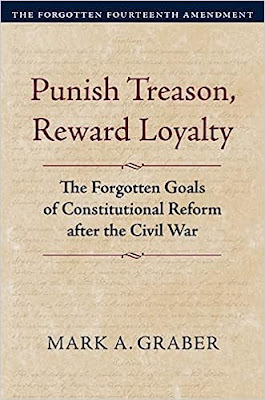
Mark A. Graber, Punish Treason, Reward Loyalty: The Forgotten Goals of Constitutional Reform after the Civil War (University of Kansas Press, 2023)
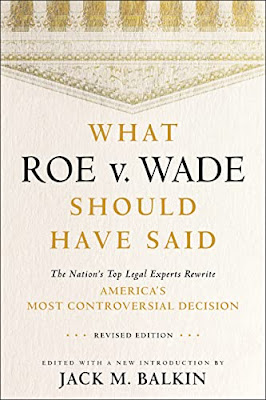
Jack M. Balkin, What Roe v. Wade Should Have Said: The Nation's Top Legal Experts Rewrite America's Most Controversial Decision - Revised Edition (NYU Press, 2023)

Andrew Koppelman, Burning Down the House: How Libertarian Philosophy Was Corrupted by Delusion and Greed (St. Martin’s Press, 2022)

Gerard N. Magliocca, Washington's Heir: The Life of Justice Bushrod Washington (Oxford University Press, 2022)
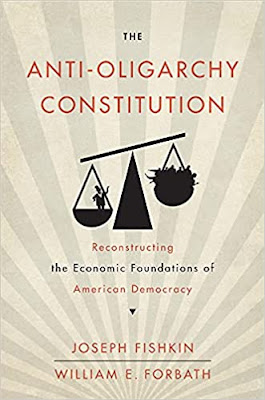
Joseph Fishkin and William E. Forbath, The Anti-Oligarchy Constitution: Reconstructing the Economic Foundations of American Democracy (Harvard University Press, 2022)
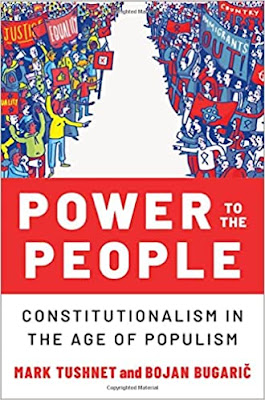
Mark Tushnet and Bojan Bugaric, Power to the People: Constitutionalism in the Age of Populism (Oxford University Press 2021).

Mark Philip Bradley and Mary L. Dudziak, eds., Making the Forever War: Marilyn B. Young on the Culture and Politics of American Militarism Culture and Politics in the Cold War and Beyond (University of Massachusetts Press, 2021).

Jack M. Balkin, What Obergefell v. Hodges Should Have Said: The Nation's Top Legal Experts Rewrite America's Same-Sex Marriage Decision (Yale University Press, 2020)

Frank Pasquale, New Laws of Robotics: Defending Human Expertise in the Age of AI (Belknap Press, 2020)

Jack M. Balkin, The Cycles of Constitutional Time (Oxford University Press, 2020)

Mark Tushnet, Taking Back the Constitution: Activist Judges and the Next Age of American Law (Yale University Press 2020).

Andrew Koppelman, Gay Rights vs. Religious Liberty?: The Unnecessary Conflict (Oxford University Press, 2020)

Ezekiel J Emanuel and Abbe R. Gluck, The Trillion Dollar Revolution: How the Affordable Care Act Transformed Politics, Law, and Health Care in America (PublicAffairs, 2020)

Linda C. McClain, Who's the Bigot?: Learning from Conflicts over Marriage and Civil Rights Law (Oxford University Press, 2020)
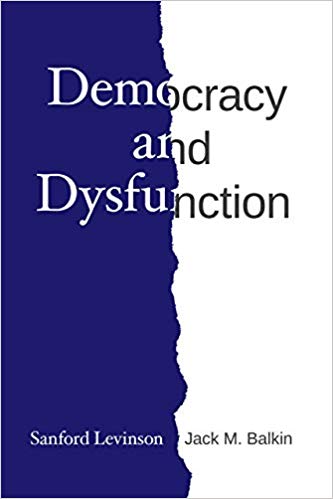
Sanford Levinson and Jack M. Balkin, Democracy and Dysfunction (University of Chicago Press, 2019)

Sanford Levinson, Written in Stone: Public Monuments in Changing Societies (Duke University Press 2018)

Mark A. Graber, Sanford Levinson, and Mark Tushnet, eds., Constitutional Democracy in Crisis? (Oxford University Press 2018)

Gerard Magliocca, The Heart of the Constitution: How the Bill of Rights became the Bill of Rights (Oxford University Press, 2018)

Cynthia Levinson and Sanford Levinson, Fault Lines in the Constitution: The Framers, Their Fights, and the Flaws that Affect Us Today (Peachtree Publishers, 2017)

Brian Z. Tamanaha, A Realistic Theory of Law (Cambridge University Press 2017)

Sanford Levinson, Nullification and Secession in Modern Constitutional Thought (University Press of Kansas 2016)

Sanford Levinson, An Argument Open to All: Reading The Federalist in the 21st Century (Yale University Press 2015)

Stephen M. Griffin, Broken Trust: Dysfunctional Government and Constitutional Reform (University Press of Kansas, 2015)

Frank Pasquale, The Black Box Society: The Secret Algorithms That Control Money and Information (Harvard University Press, 2015)

Bruce Ackerman, We the People, Volume 3: The Civil Rights Revolution (Harvard University Press, 2014)
Balkinization Symposium on We the People, Volume 3: The Civil Rights Revolution

Joseph Fishkin, Bottlenecks: A New Theory of Equal Opportunity (Oxford University Press, 2014)

Mark A. Graber, A New Introduction to American Constitutionalism (Oxford University Press, 2013)

John Mikhail, Elements of Moral Cognition: Rawls' Linguistic Analogy and the Cognitive Science of Moral and Legal Judgment (Cambridge University Press, 2013)

Gerard N. Magliocca, American Founding Son: John Bingham and the Invention of the Fourteenth Amendment (New York University Press, 2013)

Stephen M. Griffin, Long Wars and the Constitution (Harvard University Press, 2013)

Andrew Koppelman, The Tough Luck Constitution and the Assault on Health Care Reform (Oxford University Press, 2013)

James E. Fleming and Linda C. McClain, Ordered Liberty: Rights, Responsibilities, and Virtues (Harvard University Press, 2013)
Balkinization Symposium on Ordered Liberty: Rights, Responsibilities, and Virtues

Andrew Koppelman, Defending American Religious Neutrality (Harvard University Press, 2013)

Brian Z. Tamanaha, Failing Law Schools (University of Chicago Press, 2012)

Sanford Levinson, Framed: America's 51 Constitutions and the Crisis of Governance (Oxford University Press, 2012)

Linda C. McClain and Joanna L. Grossman, Gender Equality: Dimensions of Women's Equal Citizenship (Cambridge University Press, 2012)

Mary Dudziak, War Time: An Idea, Its History, Its Consequences (Oxford University Press, 2012)

Jack M. Balkin, Living Originalism (Harvard University Press, 2011)

Jason Mazzone, Copyfraud and Other Abuses of Intellectual Property Law (Stanford University Press, 2011)

Richard W. Garnett and Andrew Koppelman, First Amendment Stories, (Foundation Press 2011)

Jack M. Balkin, Constitutional Redemption: Political Faith in an Unjust World (Harvard University Press, 2011)

Gerard Magliocca, The Tragedy of William Jennings Bryan: Constitutional Law and the Politics of Backlash (Yale University Press, 2011)

Bernard Harcourt, The Illusion of Free Markets: Punishment and the Myth of Natural Order (Harvard University Press, 2010)

Bruce Ackerman, The Decline and Fall of the American Republic (Harvard University Press, 2010)
Balkinization Symposium on The Decline and Fall of the American Republic

Ian Ayres. Carrots and Sticks: Unlock the Power of Incentives to Get Things Done (Bantam Books, 2010)

Mark Tushnet, Why the Constitution Matters (Yale University Press 2010)

Ian Ayres and Barry Nalebuff: Lifecycle Investing: A New, Safe, and Audacious Way to Improve the Performance of Your Retirement Portfolio (Basic Books, 2010)
.jpg)
Jack M. Balkin, The Laws of Change: I Ching and the Philosophy of Life (2d Edition, Sybil Creek Press 2009)

Brian Z. Tamanaha, Beyond the Formalist-Realist Divide: The Role of Politics in Judging (Princeton University Press 2009)
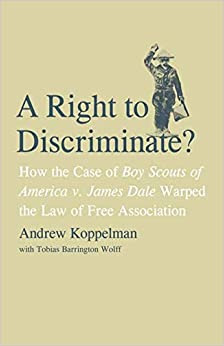
Andrew Koppelman and Tobias Barrington Wolff, A Right to Discriminate?: How the Case of Boy Scouts of America v. James Dale Warped the Law of Free Association (Yale University Press 2009)

Jack M. Balkin and Reva B. Siegel, The Constitution in 2020 (Oxford University Press 2009)

Heather K. Gerken, The Democracy Index: Why Our Election System Is Failing and How to Fix It (Princeton University Press 2009)

Mary Dudziak, Exporting American Dreams: Thurgood Marshall's African Journey (Oxford University Press 2008)

David Luban, Legal Ethics and Human Dignity (Cambridge Univ. Press 2007)

Ian Ayres, Super Crunchers: Why Thinking-By-Numbers is the New Way to be Smart (Bantam 2007)

Jack M. Balkin, James Grimmelmann, Eddan Katz, Nimrod Kozlovski, Shlomit Wagman and Tal Zarsky, eds., Cybercrime: Digital Cops in a Networked Environment (N.Y.U. Press 2007)
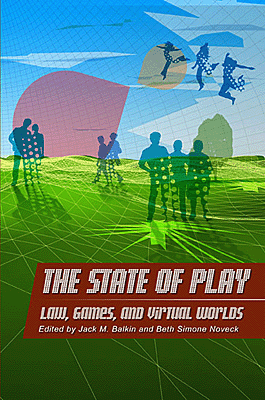
Jack M. Balkin and Beth Simone Noveck, The State of Play: Law, Games, and Virtual Worlds (N.Y.U. Press 2006)

Andrew Koppelman, Same Sex, Different States: When Same-Sex Marriages Cross State Lines (Yale University Press 2006)

Brian Tamanaha, Law as a Means to an End (Cambridge University Press 2006)

Sanford Levinson, Our Undemocratic Constitution (Oxford University Press 2006)

Mark Graber, Dred Scott and the Problem of Constitutional Evil (Cambridge University Press 2006)

Jack M. Balkin, ed., What Roe v. Wade Should Have Said (N.Y.U. Press 2005)

Sanford Levinson, ed., Torture: A Collection (Oxford University Press 2004)
Balkin.com homepage
Bibliography
Conlaw.net
Cultural Software
Writings
Opeds
The Information Society Project
BrownvBoard.com
Useful Links
Syllabi and Exams
