Balkinization
an unanticipated consequence of
Jack M. Balkin
Balkinization Symposiums: A Continuing List
E-mail:
Jack Balkin:
jackbalkin at yahoo.com
Bruce Ackerman
bruce.ackerman at yale.edu
Ian Ayres
ian.ayres at yale.edu
Corey Brettschneider
corey_brettschneider at brown.edu
Mary Dudziak
mary.l.dudziak at emory.edu
Joey Fishkin
joey.fishkin at gmail.com
Heather Gerken heather.gerken at yale.edu
Abbe Gluck abbe.gluck at yale.edu
Mark Graber
mgraber at law.umaryland.edu
Stephen Griffin
sgriffin at tulane.edu
Jonathan Hafetz
jonathan.hafetz at shu.edu
Jeremy Kessler
jkessler at law.columbia.edu
Andrew Koppelman
akoppelman at law.northwestern.edu
Marty Lederman
msl46 at law.georgetown.edu
Sanford Levinson
slevinson at law.utexas.edu
David Luban
david.luban at gmail.com
Gerard Magliocca
gmaglioc at iupui.edu
Jason Mazzone
mazzonej at illinois.edu
Linda McClain
lmcclain at bu.edu
John Mikhail
mikhail at law.georgetown.edu
Frank Pasquale
pasquale.frank at gmail.com
Nate Persily
npersily at gmail.com
Michael Stokes Paulsen
michaelstokespaulsen at gmail.com
Deborah Pearlstein
dpearlst at yu.edu
Rick Pildes
rick.pildes at nyu.edu
David Pozen
dpozen at law.columbia.edu
Richard Primus
raprimus at umich.edu
K. Sabeel Rahmansabeel.rahman at brooklaw.edu
Alice Ristroph
alice.ristroph at shu.edu
Neil Siegel
siegel at law.duke.edu
David Super
david.super at law.georgetown.edu
Brian Tamanaha
btamanaha at wulaw.wustl.edu
Nelson Tebbe
nelson.tebbe at brooklaw.edu
Mark Tushnet
mtushnet at law.harvard.edu
Adam Winkler
winkler at ucla.edu
Compendium of posts on Hobby Lobby and related cases
The Anti-Torture Memos: Balkinization Posts on Torture, Interrogation, Detention, War Powers, and OLC
The Anti-Torture Memos (arranged by topic)
Recent Posts
More Fiscal Mismanagement
Drakeman’s Faint-hearted Originalism
The Thirty-Ninth Congress Included Persons Illegally Present in the United States in the Basis of Representation
Constitution Day Talk at Stanford: Technology and Constitutional Rot
Call for Papers -- Conference at the University of Illinois on Comparative Constitutional Moments
The Looming 14/4 Crisis
Balkinization Symposium on Mark Tushnet and Bojan Bugaric, Constitutionalism and Its Discontents-- Collected Posts
Balkinization Symposium on The Global Political Economy of Artificial Intelligence-- Collected Posts
Are we Experiencing a Constitutional Revolution?
Response to Our Readers
Taming the 1960s
Stuck in the Middle With You: The Constitution Between Regimes
Constitutional Law and “Common Sense” Gun and Drug Regulation
Constitutionalism and Its Contents
Letting Go of Faith in Constitutionalism
Our Unconstitutional Reapportionment Process
Discontent with Constitutionalism and Its Discontents
Constitutionalism's Contemporary Critics
The Lost Art of the Deal
The Enduring Significance of Peggy Sue Got Married (and Constitutionalism and its Discontents)
Constitutionalism and the Discontents of Judicial Power
Democratic constitutionalism and the end of class-based societies
The (not so) Secret Life of Constitutionalism and Its Discontents
![[Powered by Blogger]](https://lh3.googleusercontent.com/blogger_img_proxy/AEn0k_uz2e4iYCONwl_mOICcPY2OIywaEh_P17C866gvcmugPyNEuGb5ndJV1-Xaf2b4GuG0y9WD14mFiV3Zyk8P2m2gwNEZWpppok2__IqmTGqV=s0-d)
Just A Few Blogs
ACS Blog
Alas, a Blog
Althouse
Arts and Letters Daily
Atrios (Eschaton)
Bill of Health
Buzzflash.com
Buzz Machine
Cato at Liberty
Juan Cole (Informed Comment)
Concurring Opinions
The Constitution in 2020
Corrente
Crooked Timber
Daily Howler
Daily Kos
Dana Boyd
Brad DeLong
Digby (Hullabaloo)
Discriminations
Daniel Drezner
Kevin Drum (Mother Jones)
Electrolite
En Banc
Eunomia (Daniel Larison)
Fafblog
Michael Froomkin (Discourse.net)
GovLab (Beth Noveck)
Rick Hasen (Election Law)
History News Network
How Appealing
Ignatz (Sam Heldman)
The Importance of (Ernie Miller)
Infolaw
Instapundit
International Economic Law and Policy Blog
IntLawGrrls
Jacob Levy
Jesus' General
Jurisdynamics
The Kitchen Cabinet
Mark Kleiman
Law Blog Central
Larry Lessig
Lawyers, Guns and Money
Liberal Oasis
Brian Leiter's Law School Reports
The Leiter Reports
Marginal Revolution
Megan McArdle
Memeorandum
Metafilter
Mirror of Justice
The New Republic
Newseum
No More Mister Nice Blog
Brendan Nyhan
Opinio Juris
Orcinus
The Originalism Blog
Pandagon
Passport (Foreign Policy)
Overcoming Bias
Political Animal (Washington Monthly)
Political Theory Daily Review
Political Wire (Taegan Goddard)
The Poor Man
Virginia Postrel
Prawfsblawg
Public Reason
Jonathan Rauch
Raw Story
Redstate
ReligiousLeftLaw.com
Reporters Committee For Freedom of the Press
Reproductive Rights Blog
Rothman's Roadmap to the Right of Publicity
SCOTUS Blog
Seeing the Forest
Clay Shirky
The Shifted Librarian
The Situationist
Larry Solum (Legal Theory)
Andrew Sullivan
Talking Points Memo
Talk Left
Tapped
Tbogg
TechPresident
The Paper Chase (Jurist)
Tom Paine
Tom Tomorrow (This Modern World)
Eve Tushnet
Uggabugga
University of Chicago Law School Faculty Blog
Unqualified Offerings
The Volokh Conspiracy
War and Piece (Laura Rozen)
Wampum
Oliver Willis
Wonkette
Written Description
Matthew Yglesias
Yin
Your Choice of Feeds
1. XML
powered by

2. Atom Feed
3. RSS 2.0
More Fiscal Mismanagement
David Super
Happy New
Year! I wish you all a joyous,
fulfilling, and constitutionally compliant new federal fiscal year. Hey, a
guy can hope, right? The dawn of a new
federal fiscal year seems a good time to survey the Trump Administration’s
latest maneuvering to wrestle the power of the purse out of the hands of a
rather snoozy Congress. And the news is
not good. On the
last Friday of fiscal year 2026, the Administration announced
the “pocket rescission” of $810 million of appropriated funds for a variety of
programs it dislikes. A “pocket
rescission” is a scheme concocted by OMB Director Russell Vought under which
the President submits a “special message” to Congress under the Impoundment
Control Act of 1974 requesting rescission of the funds but does so too late in
the fiscal year for Congress to act before the funds subject to the request
expire. Under Director Vought’s theory,
the submission of the request authorizes the Administration to withhold these
funds (although he is unable to identify any provision of the Act that grants
this permission) and then the funds expire by the terms of their original
appropriation without further action by Congress. This is legally
unfounded,
as the Government Accountability Office (GAO) has repeatedly
noted. Even Senator Susan Collins declared
it “illegal” (not just “concerning”). Director
Vought clearly has not “learned his lesson.”
The
Administration reportedly is telling reporters that the Supreme Court upheld
“pocket rescissions” last year. That is
false. The Administration impounded
roughly $10 billion in foreign aid funds, about half of which it included in a
late-year “pocket rescission” request. A
district court found the entire impoundment unlawful and ordered all the
Administration to spend all the funds, whether or not they were included in the
“pocket rescission”. The Administration
sought a stay only for the funds covered by the “pocket recission”, arguing
that the Impoundment Control Act precluded suit under the Administrative
Procedure Act. On its shadow docket, the
Supreme Court granted
the requested stay, emphasizing that the litigation was “at [an] early stage”,
that its “order should not be read as a final determination on the merits”, and
that its stay only “reflects our preliminary view, consistent with the
standards for interim relief.” The Court
found that the Administration’s jurisdictional arguments were sufficiently
substantial that, combined with “the asserted harms to the Executive’s conduct
of foreign affairs”, a stay was warranted.
This action should be read in the context of the Court’s previously stated
strong resistance to granting preliminary relief against the government in
spending cases because “the funds cannot be recouped and are thus irrevocably
expended.” Nothing in the Court’s short,
unsigned order suggests that “pocket rescissions” are lawful: it exclusively discusses procedural concerns.
The furor
over the “pocket rescission” risks obscuring the broader pattern of the
Administration’s impoundments of appropriated funds. The Administration did not begin impounding
the $810 million on September 26: the
only reason the funds were still there to be impounded on that date is because
the Administration had been refusing to spend them throughout the fiscal
year. Whenever it decided to withhold
the funds – likely at the very beginning of the fiscal year – the Impoundment
Control Act required
the Administration to send a “special message” to Congress proposing rescission
and to abide by Congress’s response. Moreover, the Administration has
withheld a great deal of appropriated funds without public announcement. Some of this results from the actions of
ideologues running particular agencies.
Some results from a variety of actions OMB has taken to make it illegal
for agencies to spend moneys Congress appropriated. In particular, OMB is exploiting its largely
ministerial power to “apportion” appropriated funds to agencies before they are
spent. Early in the 20th
Century, Congress required
“apportionments” to
prevent agencies from blowing through their entire annual appropriation in a few
months and then returning to Congress for more.
In many
cases, OMB has been attaching unmeetable conditions to its apportionments or
effectively apportioning
far less than Congress provided. Some of
this has triggered
litigation,
but the procedural minefields the Supreme Court has constructed have slowed
these cases’ progress. One
puzzle in the Administration’s announced “pocket rescission” is that it purports
to be pulling back far more money from some accounts than its previous reports
had shown remaining in those accounts.
This could mean it is breaching contracts with grantees en masse
again. Victims of such breaches last
year sued but soon found themselves smothered in procedural obstacles
preventing them from receiving a prompt decision on the legality of the
Administration’s actions. Another
possibility is even more devious. The
accounts in question provide funds for multiple fiscal years. In these programs, Congress departs from its
usual pattern of appropriating funds only for a single year at a time so that the
Administration will have flexibility to respond to irregular need. Thus, if a surge in need causes the
Administration to exhaust the funds expiring in a given year, it can spend
funds expiring a year or two later. The Trump
Administration apparently is reversing this pattern. It seems to be reattributing obligations made
against funds expiring this year to appropriations for future years. That increases the amount of funds that will
lapse without being spent this year while depleting the resources available in
future years. The next administration
may take office in 2029 and discover that it lacks the funds to meet that year’s
needs because the Trump Administration gratuitously spent those funds in
earlier years to allow more appropriations expire in those years. Like so many of this Administration’s abuses
of discretion, this is likely to result in Congress writing more prescriptive
laws giving future administrations less authority to adapt to unanticipated
events. It is enough to make one Against
Flexibility. To be
clear, many of the Administration’s actions are not mere jockeying for policy
advantage: they are lawless. The last several years’ appropriations acts,
including the one
President Trump signed in February, have included prohibitions on spending any
government funds to implement any funding cuts that the President proposed and
Congress rejected. (This year, it was
section 739 of Division E of Public Law 119-75.) Obviously OMB, and likely other executive
agencies, have been doing just that. Spending federal money in violation of the
requirements of appropriations acts violates the Anti-Deficiency Act, which carries criminal and other penalties. We should
not leave the subject of withholding funds before considering what may be the
Administration’s most bizarre impoundment of all. Section 10065(a) of the One Big
Beautiful Bill Act, President Trump’s 2025 mega-bill written entirely by
Republicans and passed entirely with Republican votes, “appropriate[s] for
fiscal year 2025 … $256,657,000, to remain available until September 30, 2029,
for necessary expenses for capital repair, restoration, maintenance backlog,
and security structures of the building and site of the John F. Kennedy Center
for the Performing Arts.” To date, the Kennedy Center’s
board, chaired by one Donald J. Trump, Sr., apparently has spent none of these
funds. One would think there is plenty
of time as the funds remain available for almost three more years. The Administration, however, has been
encouraging speculation that it might tear down the Kennedy Center for supposedly
being structurally unsafe. Neither the
Administration nor the Kennedy Center’s board has released any comprehensive itemization
of the hazards it perceives in the Kennedy Center, much less an explanation of
why those problems cannot be fixed with more than a quarter billion dollars of
public funds. The permanent authorizing statute
for the Kennedy Center requires
that “The Board
shall (A) present classical and contemporary music, opera,
drama, dance, and other performing arts from the United States and other
countries; (B) promote and maintain the John F. Kennedy
Center for the Performing Arts as the National Center for the Performing Arts…;
(D) provide facilities for other civic activities at the John F. Kennedy Center
for the Performing Arts; (E) provide within the John F.
Kennedy Center for the Performing Arts a suitable memorial in honor of the late
President…[and] (G) with respect to the building and site of the John F.
Kennedy Center for the Performing Arts, plan, design, and construct each
capital repair, replacement, improvement, rehabilitation, alteration, or
modification necessary to maintain the functionality of the building and site
at current standards of life, safety, security, and accessibility...”. Failure to perform these functions
might be excused if Congress had made it impossible by failing to appropriate
sufficient funds. But Chairman Trump and
his colleagues (almost all of whom he appointed) would have no defense for blatantly
neglecting these duties by destroying the Kennedy Center as long as vast sums are
sitting unused in the Treasury after being appropriated for just this purpose. The Kennedy Center provides a
useful illustration of the pattern in most impoundment cases. The principal illegality is not a violation of
the Impoundment Control Act, which is primarily a set of rules of congressional
procedure. Nor is the illegality always a
violation of the appropriations act:
some do mandate spending the full amounts provided, but many do not if
the Administration can fully accomplish the appropriation’s specified purposes
with less. Impoundments most commonly
are illegal because they lead to violations of the permanent statutes
establishing the program in question.
Nothing in the Impoundment Control Act or anywhere else provides a
sweeping exemption for violating the Kennedy Center’s authorizing statute or
other analogous laws. @DavidASuper.bsky.social @DavidASuper1
Posted
11:55 AM
by David Super [link]
Drakeman’s Faint-hearted Originalism
Andrew Koppelman
Donald Drakeman’s impressive historical research in his new book, The Free Exercise Clause and the Rights of
Conscience, poses
a formidable challenge to the idea that the original meaning of the Free
Exercise Clause mandates religious exemptions from generally applicable laws. He has uncovered important and surprising new
evidence of that meaning. This book will
pose a sharp test of whether the Supreme Court’s self-styled originalists, who
favor such exemptions, actually care about evidence. I’m not a historian and can’t judge Drakeman’s historical
account. But I can say something about
what courts should do about them, if he is right. They are not sufficient reason to
revolutionize our constitutional rules. Drakeman
himself shrinks from some of his own conclusions, which give religion even
narrower protection than he thinks his research entails. Justice Antonin Scalia famously wrote
that “in a crunch I may prove a faint-hearted originalist,” because “[i]n its
undiluted form” originalism “is medicine that seems too strong to swallow.” Drakeman doesn’t admit it, but he too is a
faint-hearted originalist, and the point at which he faints is idiosyncratic
and driven by his presentist political judgments. His idiosyncrasy shows the limits of
originalism: does it ever make sense for us to radically change our law because
of new historical research? I elaborate in a new piece at Canopy Forum.
Posted
2:54 PM
by Andrew Koppelman [link]
The Thirty-Ninth Congress Included Persons Illegally Present in the United States in the Basis of Representation
Guest Blogger
Michael L. Rosin You need to know only one number from the 1860 census
in order to understand why Northern Republicans in the Thirty-Ninth Congress so
expansively embraced aliens in the basis of representation they were reshaping for the
apportionment of seats in the House of Representatives. The 1860 census counted only 6% of the foreign born
residing in the eleven states that would rise in rebellion. The remaining 94%
of the foreign born resided in the states that did not. (See p. xxix. For further details see pp. 85–87.) Any proposal to exclude
significant numbers of the foreign born from the basis of representation would
shift power away from the loyal states to the states that had risen in
rebellion. There was, however, one segment of the foreign born
who resided almost entirely in the states that had risen in rebellion: enslaved
persons of color brought into the United States in contravention of the 1807 Slave Trade Act. The 1819 Slave Trade Act “authorized”
the President of the United States was “to
make such regulations and arrangements as he may deem expedient for the safe
keeping, support, and removal beyond the limits of the United States, of
all such negroes, mulattoes, or persons of colour[.]” Such persons who had been illegally imported into the
United States were, nevertheless, not legally present in the United States.
Excluding them from the basis of representation would not shift power to the
states that had risen in rebellion. In fact, it might even shift power away
from those states and that would have been politically advantageous to Northern
Republicans.[*] Of
course, no one in the Thirty-Ninth Congress even suggested that these formerly
enslaved persons – who had been illegally imported into the United States – be excluded
from the basis of representation. The Census Bureau’s recent Proposed
Residence Criteria for apportionment of
House seats among the states based on the 2030 census states Given
the historical meaning of “usual residence” as tied to allegiance, durable
permission from the sovereign to settle within the United States, and
establishment of domicile within the United States, the Census Bureau proposes to include lawful permanent
residents within the apportionment base, while excluding from the apportionment
base illegal aliens and aliens whose legal status is less durable and
indefinite in length than lawful permanent resident status. (See p.
57526. Emphasis added) Chin and Finkelman have demonstrated the
Thirty-Ninth Congress was aware that there were
formerly enslaved persons who had been brought into the United States in
violation of the Slave Trade Acts and were still not legally present in the
United States. (See pp. 2243, 2259–60.) That Congress could
hardly have meant to exclude them from the basis of representation. Yet that is
exactly what would have happened under the terms of the Census Bureau’s recent Proposed Residence Criteria.
Posted
9:00 AM
by Guest Blogger [link]
Constitution Day Talk at Stanford: Technology and Constitutional Rot
JB
On September 17th, I gave a talk at Stanford Law School based on my article, Technology and Constitutional Rot. My thanks to Michael McConnell, Jud Campbell, and Duncan Hosie at Stanford's Constitutional Law Center for the opportunity. Here is the video:
Posted
9:30 AM
by JB [link]
Call for Papers -- Conference at the University of Illinois on Comparative Constitutional Moments
Jason Mazzone
The University of Illinois, the University of Bologna, and Johns Hopkins SAIS regularly sponsor a conference series on Constitutional History: Comparative Perspectives. The next conference will be held in Champaign, IL on March 8-9, 2027. The theme of this conference is Constitutional Moments. The goal is to draw on experiences from around the globe to shed light on the theory of constitutional change famously articulated by Professor Bruce Ackerman. The conference keynote speaker will be Manuel José Cepeda Espinosa, former President of the Constitutional Court of Colombia. We invite scholars to submit proposals for papers to be presented at the conference. Accepted papers will be published in an edited volume. Details about the conference and the submission procedures are available here. The submission deadline is October 20, 2026.
Posted
12:39 PM
by Jason Mazzone [link]
The Looming 14/4 Crisis
Gerard N. Magliocca
It appears likely that Democrats will control at least part of Congress next year. It is also likely that we will hit the debt ceiling again during the next Congress. What will happen then? There is a lively discussion about whether the President has some power to prevent a debt default under Section 4 of the Fourteenth Amendment. No President has ever tested that theory. But this President might. It would just be another in a long series of unilateral executive actions to deal with an emergency. If he does, there is almost no precedent to guide the courts or the financial markets. I've written about 14/4 before when the issue was discussed during the Obama and Biden Administrations. My position will be the same under this Administration. The upshot, however, is that people better start taking a hard look at this question now before a showdown occurs.
Posted
8:55 AM
by Gerard N. Magliocca [link]
Balkinization Symposium on Mark Tushnet and Bojan Bugaric, Constitutionalism and Its Discontents-- Collected Posts
JB
Here are the collected posts for our Balkinization symposium on Mark Tushnet and Bojan Bugaric's new book, Constitutionalism and Its Discontents (University of Chicago Press, 2026). 1. Jack Balkin, Introduction to the Symposium 2. Sabrina Ragone, Constitutionalism and Its Discontents: A Comparativist’s Take 3. Laura Gamboa, Constitutionalism in Times of Democratic Backsliding 4. Jedediah Britton-Purdy, The (not so) Secret Life of Constitutionalism and Its Discontents 5. Roberto Gargarella, Democratic constitutionalism and the end of class-based societies 6. Fernanda G. Nicola, Constitutionalism and the Discontents of Judicial Power 7. Mark Graber, The Enduring Significance of Peggy Sue Got Married (and Constitutionalism and its Discontents) 8. Sandy Levinson, Constitutionalism's Contemporary Critics 9. Martin Loughlin, Discontent with Constitutionalism and Its Discontents 10. Colm O’Cinneide, Letting Go of Faith in Constitutionalism 11. Madhav Khosla, Constitutionalism and Its Contents 12. Mark Tushnet and Bojan Bugaric, Response to Our Readers

Posted
9:30 AM
by JB [link]
Balkinization Symposium on The Global Political Economy of Artificial Intelligence-- Collected Posts
JB
Here are the collected posts on our Balkinization Symposium on The Global Political Economy of Artificial Intelligence 1. Jack Balkin, Introduction to the Symposium 2. Valérie Bélair-Gagnon, The Fragmentation of Truth 3. Ignacio Cofone, Public Institutions Can’t Outsource Their Reasoning 4. Amy L. Stein, The Tech Energy Transition 5. Ava Liu, Defining Predistribution 6. Claudia E. Haupt, Professional AI’s Dual Trust Problem
Posted
9:30 AM
by JB [link]
Are we Experiencing a Constitutional Revolution?
Mark Graber
Some thoughts on constitutional revolutions in American history, whether Americans are experiencing a constitutional revolution at present, and what would have to happen for the attempted Trump constitutional revolution to become entrenched. https://papers.ssrn.com/sol3/papers.cfm?abstract_id=7461620
Posted
2:24 PM
by Mark Graber [link]
Response to Our Readers
Guest Blogger
For the Balkinization symposium on Mark Tushnet and Bojan Bugaric, Constitutionalism and Its Discontents (University of Chicago Press, 2026). Mark Tushnet and Bojan Bugaric As several contributors to this book review symposium emphasize, conventions are important elements in institutional designs that contribute to social and political stability. With that in mind we follow the convention of thanking all the contributors for the attention and seriousness they devoted to our book. We add one thing: a recognition that review symposia like this one are especially well-suited to the blog format even as the long-form blog has gone into serious decline. Coordinating a symposium via Substack would be difficult, even putting aside questions about paywalls and the like; doing so on Bluesky would be impossible; and maintaining a podcast or newsletter, whether paid or not, would require a different level of commitment than does maintaining a blog. So our thanks go to Jack Balkin as well for his continuing support for the long-form blog. We begin by noting that many contributors (alphabetically, Gamboa, Levinson, Nicola, Ragone, O’Cinneide) correctly pick up on something we think lies at the base of our analysis—an insistence that context matters. So, for example, our expressed preference for a “thin” constitution (however defined) can be displaced by thicker ones when circumstances require: an empowered constitutional court—one of Loughlin’s bugbears in the context with which he is concerned—might be appropriate when a nation is in the incipient stages of democratic decline, though as Levinson notes, we are skeptical about the proposition that institution designers will be able to create such a court that will be effective when needed (rather than captured too quickly) and will retreat when the exigency has passed. Here, too, though, context matters. Gamboa and Graber in different ways ask us—the community of scholars to whom our book is addressed—to consider the politics that might produce the Goldilocks solution. We have almost nothing to say about that in our book, apart from the fact that we advocate a greater role for politics, not law, aiming to provide solutions to accumulated problems of neoliberal politics of the last four decades, which make various populist responses thrive, and welcome further scholarly attention to that question, already addressed in other disciplines like political economy, sociology and political science. Read more »
Posted
9:30 AM
by Guest Blogger [link]
Taming the 1960s
Gerard N. Magliocca
My draft paper on the Senate Subcommittee on Constitutional Amendments (aka the Bayh Subcommittee) is now available. Comments are most welcome.
Posted
12:26 PM
by Gerard N. Magliocca [link]
Stuck in the Middle With You: The Constitution Between Regimes
JB
I have uploaded my latest essay, Stuck in the Middle With You: The Constitution Between Regimes, to SSRN. Here is the abstract: This essay uses the theories developed in my my 2020 book, The Cycles of Constitutional Time, to explain the current moment in American democracy (the fall of 2026). The United States is living through a constitutional interregnum: the Reagan regime has exhausted itself, but no successor has yet emerged. The country is experiencing “regime suspension,” in which the two major parties possess different but incomplete resources for political reconstruction. Republicans have a powerful movement infrastructure but no demonstrated durable national majority. Democrats remain electorally competitive but are still primarily a coalition of interest groups and lack a comparably coherent social movement capable of organizing a new constitutional regime. The situation is made worse by severe polarization and constitutional rot—the process by which a republic becomes less democratic, less responsive to popular will, and less oriented toward the public good. Donald Trump has attempted to compensate for the political resources he lacks through a strategy of “reconstruction through corruption”: expanding presidential power, installing loyalists and sycophants, weakening institutions, selectively enforcing the law, intimidating opponents, rewarding cronies, and converting public authority into an instrument of personal and oligarchical power. The Roberts Court has repeatedly facilitated Trump’s efforts. That is not because the Court actively supports Trump, but because the Court’s conservative majority is realizing long-standing conservative legal commitments to increasing presidential power, deregulating campaign finance, weakening voting-rights protections, narrowing anti-corruption laws, and defanging the administrative state. These ideological projects, combined with the Court’s desire to avoid direct confrontation with Trump, have created an opportunity structure for executive aggrandizement. Constitutional rot creates a widening gap between constitutional institutions and the constitutional values these institutions were designed to serve. The essay explains how polarization makes rot difficult to remedy, and why advanced rot makes constitutional crises more thinkable and more likely. The essay identifies several possible directions the constitutional system could take: a new Republican or Democratic led regime, a prolonged period of preemptive politics, competitive authoritarianism, constitutional breakdown, or the development of anti-corruption reform movements in both parties, as occurred during the Progressive Era. The most plausible democratic path resembles the Progressive Era: state and local experimentation, cross-party reform coalitions, institutional rebuilding, and a shift from culture-war issues toward questions of affordability, wealth inequality, concentrated economic power, industrial policy, and class. Renewal remains possible, but it is neither guaranteed nor imminent; it requires sustained mobilization, constitutional and institutional reform, protection of vulnerable groups, and a long time horizon. It took many decades for constitutional rot to develop in the United States. Freeing ourselves from it may take many more.
Posted
9:00 AM
by JB [link]
Constitutional Law and “Common Sense” Gun and Drug Regulation
David Pozen
For the Supreme
Court Review, Joseph Blocher and I have a new paper that diagnoses a mismatch
between the growing scholarly consensus on gun and drug regulation (generally
favoring pragmatic approaches focused on reducing harms)
and the constitutional rights doctrine on these subjects (generally either
maximalist or minimalist). The Court’s most recent Second Amendment decisions
are the point of departure. Here is the abstract for The Excluded Middle of
Law: Constitutional Drivers of Extremism in Gun and Drug Policy, a draft of
which is now up on SSRN: American drug and gun
regulation is difficult to defend from almost any perspective. Federal and
state laws heap criminal penalties on a small subset of users, burden many
others whose possession poses no direct threat to third parties, and yet fail
to prevent staggering social harms. To address these pathologies, a long line
of scholars and advocates has called for something in between punitive
prohibitionism and laissez-faire capitalism: grudging toleration, harm
reduction, liberty balancing, community-based alternatives, and so on. Among
the forces pushing policy away from these pragmatic approaches, however, is
U.S. constitutional doctrine. Using the Supreme
Court’s decisions in United States v. Hemani and Wolford v. Lopez
as a jumping-off point, this Article explores the role of constitutional law in
driving drug and gun policy to the extremes. Hemani holds out hope for
limited forms of pragmatism to sneak into Second Amendment analysis through the
side door. But in nearly inverse ways, the Article argues, the Court’s
jurisprudence has complicated efforts in both fields to reach a more effective
and humane regulatory middle ground.
Posted
10:26 AM
by David Pozen [link]
Constitutionalism and Its Contents
Guest Blogger
Posted
9:30 AM
by Guest Blogger [link]
Letting Go of Faith in Constitutionalism
Guest Blogger
For the Balkinization symposium on Mark Tushnet and Bojan Bugaric, Constitutionalism and Its Discontents (University of Chicago Press, 2026). Colm O’Cinneide Introduction - Keeping the
Constitutional Flame? On the very first page of Constitutionalism
and its Discontents, Mark Tushnet and Bojan Bugaric provide a wonderfully
succinct summary of constitutionalism’s current ‘discontents’. Across the
democratic world, constitutional controls are crumbling, exposed as lacking in
effectiveness, and/or becoming the focus of sustained and divisive political
controversy. As Mark and Bojan point this, the latter is a particularly corrosive
problem: ‘it runs up against one of the hopes held out by constitutionalism’s
proponents, that it provides a neutral framework for the resolution of partisan
conflicts’ (p. 1). In general, the constitutionalist cart seems to be
overloaded: courts and other guarantor institutions are constantly accused of
both over- and under-reaching, even as their authority is increasingly
contested. And yet faith in constitutionalism
persists. If anything, it tends to be professed with extra vigour and devotion.
We hear calls all the time for renewed fidelity to rule of law, separation of
powers and other core constitutional principles - and for associated mechanisms
such as judicial review to be reinforced and strengthened in the face of
Trumpism, Orbanism etc. (The USA is perhaps something of an outlier here: looking
in from the outside, the Supreme Court’s legitimacy
crisis seems to have dampened faith in constitutionalism to a degree that
is (yet?) to be matched elsewhere in the democratic world.) Is this devotion justified? Is the solution
to the crisis of constitutionalism really to double down on constitutionalism? Mark
and Bojan say no. They have come to cast cold water on the fervour of the
constitutionally devout; to demonstrate the hollowness of constitutional
doctrine and the infeasibility of the hopes invested in it; and to disenchant
the true believers. Revivalism, like that offered up in recent work by Fishkin
and Forbath, does not interest them. Instead, they argue that we should abandon
belief in the virtues of embedded constitutionalism - and liberate political
contestation from the dead hand of democracy-constraining constitutionalist
legalism. Read more »
Posted
9:30 AM
by Guest Blogger [link]
Our Unconstitutional Reapportionment Process
Gerard N. Magliocca
One irony about the new proposed list of census questions for 2030 is that the only question that may be constitutionally required as an original matter is not included. That question would ask Americans for information pertaining to Section 2 of the Fourteenth Amendment. As I laid in out in a paper published before the 2020 census, our current apportionment process is unconstitutional. Maybe this time around one or more states will raise that claim at the census stage or following the next reapportionment.
Posted
7:42 AM
by Gerard N. Magliocca [link]
Discontent with Constitutionalism and Its Discontents
Guest Blogger
For the Balkinization symposium on Mark Tushnet and Bojan Bugaric, Constitutionalism and Its Discontents (University of Chicago Press, 2026). Martin Loughlin My thoughts on Constitutionalism and Its Discontents,
the latest publication from Professors Tushnet and Bugaric, must be situated in
the context of their earlier book, Power
to the People. That book, I argued in Balkinization,
had failed to give a cogent answer to the basic question it sought to address,
namely, whether populism is inconsistent with constitutionalism. And the reason
was that the authors had not provided a clear statement of what those two key terms
mean. With respect to constitutionalism, they sought to avoid controversy by
presenting what they called a ‘thin’ account which could operate as ‘a least
common denominator’. But this account, I suggested, was not only as contentious
as so-called ‘thick’ accounts; it was also skewed in such a way that it would
not be accepted by constitutionalism’s most fervent advocates. Their thin
account could not differentiate between those who adhere to constitutionalism,
those who reject constitutionalism but uphold constitutional democracy, and
those who merely acknowledge the value of constitutional government. In their
response, the authors failed to engage with this issue other than indicating that
my understanding of constitutionalism was not suitable for their purpose. Since
the point I was making preceded the publication of my book, Against Constitutionalism, that seemed fair enough, because only
in that book was I able to make out the case that throughout the modern era constitutionalism
has carried a clear and widely understood meaning. It is, I argued, a liberal theory advocating
the need for the written constitution to include a particular set of
institutional arrangements that could restrain the power of majorities and set
in place a scheme of limited government so
that individual liberty might flourish. Distilling its elements, I proposed that
the theory asserted that the written constitution should accord with six basic
precepts: it establishes (1) a comprehensive scheme of (2) representative
government and (3) differentiated powers, which is
conceived (4) as having established a permanent framework that
takes effect (5) as fundamental law, and which ultimately leads to the
constitution being treated as the expression of a regime’s (6) collective
political identity.
Read more »
Posted
9:30 AM
by Guest Blogger [link]
Constitutionalism's Contemporary Critics
Sandy Levinson
For the Balkinization symposium on Mark Tushnet and Bojan Bugaric, Constitutionalism and Its Discontents (University of Chicago Press, 2026). For some years, the American legal academy has shared
two basic presuppositions. The first is
that the United States Constitution basically constitutes American identity as
well as establishing a particular political system. This means, among other
things, that is that their most important task is to search for the uniquely
correct theory of interpreting the national Constitution (and therefore, what
it means to be “an American”). I have praised Jack Balkin's Living
Originalism as not only the best book written on American
"constitutional interpretation," but also, I hoped, the last book
that would in fact be published on the subject. Alas, that has not been
the case. If anything, the “interpretation wars” have only become more intense,
given the insistence of a majority of the Supreme Court, in good faith or not,
on “originalism” as the royal road to understanding the Constitution.is that
their most important task is to search for the uniquely correct theory of
interpreting the national Constitution. But a second presupposition, is that the
Constitution is worthy of great praise, indeed, an empirical cause for much of
what has gone right for the United States over the past 239 years. The Founders are often praised as brilliant
architects of an effective system. This
entails for many the belief that “constitutional design” is itself a crucial
topic, especially in the post-World War II era when most countries, with the
glaring exception of the United States, were engaged in significant efforts at
what might be called “transformations” of their foundational documents or, in
the case of “post-colonial” countries, drafting brand new constitutions. Read more »
Posted
9:30 AM
by Sandy Levinson [link]
The Lost Art of the Deal
David Super
If Vice President Vance was sincere this
Spring when he reported that negotiations had failed because the Iranians did
not accept the U.S. proposal, I have grave doubts about whether he understands
even the rudiments of negotiations. The
news media’s credulous statement that “marathon negotiations” had failed after
only twenty hours on a single day raised similar questions about the reporters
and editors involved. And the widespread
tendency of progressives to insist that all bad outcomes could have been
avoided if Democratic leaders would only “just say ‘no’” suggests a level of
naivete that will pose a serious obstacle to maintaining the movement’s unity
and effectiveness. Although I am not a
scholar of Negotiation, I have participated in, or been close to, a lot of
high-stakes legislative (and litigation) deal-making, both successful and
failed. The pervasive misunderstanding
of what public policy negotiations involve prompt me to want to survey some of
the most egregious errors. Two widespread fallacies are actually the
opposites of one another: negotiation as
magic and negotiation as farce. Diplomacy
is no magic elixir that can bridge any gap; many differences are too
fundamental, and many parties believe the consequences of refusing a deal are
entirely manageable. Putin has
repeatedly insisted that Ukraine cease to exist as an independent country;
Ukrainians do not wish to be annihilated and absorbed into a corrupt
dictatorship. No deal is possible. Most lapses in appropriations result from
both parties’ leaders’ beliefs that their adversaries would suffer greater political
damage from a partial government shutdown; no sliver-tongued negotiator would
get those leaders to accept a deal until actual experience caused their
political expectations to converge. A
skilled negotiator can develop rapport with a great many counterparts, but a
deal still needs approval by their respective principals. Read more »
Posted
8:03 AM
by David Super [link]
The Enduring Significance of Peggy Sue Got Married (and Constitutionalism and its Discontents)
Mark Graber
For the Balkinization symposium on Mark Tushnet and Bojan Bugaric, Constitutionalism and Its Discontents (University of Chicago Press, 2026). The movies “Back
to the Future” and “Peggy Sue Got Married” offer different perspectives on the
possibility that human beings through reflection and choice can fundamentally
alter their condition. In “Back to the
Future,” the protagonist enables his father to change his fortunes in the
present by changing his father’s actions in the past. In “Peggy Sue Got Married,”
a different time traveler changes her actions in the past, but the result is
merely a different path to a similar present.
Michael J. Fox’s fate is determined by his actions, while deeper
structures are responsible for the fate of Kathleen Turner. Mark
Tushnet and Bojan Bugaric in their acclaimed Constitutionalism and its
Discontents take no clear position on the debate between “Back to the
Future” and “Peggy Sue Got Married.” They have other, more important fish to
fry. Tushnet and Bugaric’s discussion of
a world without rules about ruling implies that entrenchment is a human choice,
that populations can decide whether to have a constitutional regime. Their
admission that “discontents may be so bult into modern constitutions that they
will persist even if [their proposed] changes are adopted” (3) suggests that
entrenchment is a basic enduring structure of contemporary political life. Perhaps one day one or both will write a book
on the role of human choice and deep structures in constitutional
development. Constitutionalism and
its Discontents is not that book and, to be clear, makes no pretense of
being that book. Read more »
Posted
9:30 AM
by Mark Graber [link]
Constitutionalism and the Discontents of Judicial Power
Guest Blogger
Fernanda G. Nicola
Posted
9:30 AM
by Guest Blogger [link]
Democratic constitutionalism and the end of class-based societies
Guest Blogger
For the Balkinization symposium on Mark Tushnet and Bojan Bugaric, Constitutionalism and Its Discontents (University of Chicago Press, 2026). Roberto Gargarella For many years, I have followed the work of Mark
Tushnet with admiration. Lately, his contributions have been strengthened through
his collaboration with Bojan Bugaric. They have been offering us constitutional
studies that are informed by contemporary doctrine, marked by a strong
attention to comparative law, a consistently critical eye, and a progressive
perspective. Characterized by these traits, the new book that Tushnet and
Bugaric have just published, Constitutionalism and its Discontents,
represents a very good continuation of their previous book, Power to the
People (Oxford UP). Regarding Constitutionalism…, the first thing I
want to say is that I share many of the main lines of analysis that are here
presented. This is relatively obvious, on the one hand, given that the approach
to constitutional law that I propose in my own studies—that of the "law as
a conversation among equals"—is taken up and analyzed in some detail in
this book. Beyond that convergence, and on the other hand, I have long been
drawn to a "thin" reading of constitutionalism, such as the one they
propose: an approach that is modest in its ambitions; aware of the inherent
limitations of institutional reforms; critical of traditional modes of judicial
review; skeptical of resorting to the "old toolbox" of
constitutionalism (i.e., more rights, more courts) to solve the new problems we
face; and radically more democratic in its spirit. Read more »
Posted
9:30 AM
by Guest Blogger [link]
The (not so) Secret Life of Constitutionalism and Its Discontents
Guest Blogger
Jedediah Britton-Purdy I
admire and enjoy Constitutionalism and Its Discontents. The authors’
careful parsing of exaggerated or one-sided hopes for constitutional salvation
is always worth following. I tend to see it as a series of follow-ups to the
authors’ important previous book, Power to the People. There they argue
that populism is not necessarily anti-democratic but is often an expression of
democratic power and aspiration.
Constitutional limitations on popular power, and in particular on majority
rule, can be anti-democratic (normatively) and can (in fact) inspire exactly
the kind of insurgent and system-revising politics that they are often wrongly
imagined as tamping down. I largely agree with this overall view and have given
my own version of it in various places, including The Nation (on populism), the Times (on majoritarianism), and The Atlantic (on constitutional entrenchment), and at book length. Because neither loud
agreement nor minor quibbling is very interesting, I’ll instead approach the
book from a few odd angles.
Posted
9:30 AM
by Guest Blogger [link]
Books by Balkinization Bloggers
Mark Tushnet and Bojan Bugaric, Constitutionalism and Its Discontents (University of Chicago Press, 2026)

Gerard N. Magliocca, The Actual Art of Governing: Justice Robert H. Jackson's Concurring Opinion in the Steel Seizure Case (Oxford University Press, 2025)

Linda C. McClain and Aziza Ahmed, The Routledge Companion to Gender and COVID-19 (Routledge, 2024)

David Pozen, The Constitution of the War on Drugs (Oxford University Press, 2024)

Jack M. Balkin, Memory and Authority: The Uses of History in Constitutional Interpretation (Yale University Press, 2024)
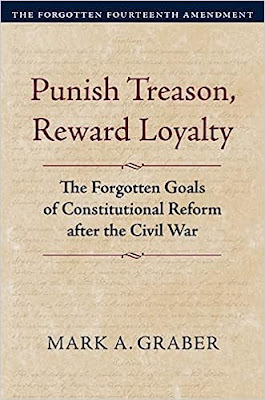
Mark A. Graber, Punish Treason, Reward Loyalty: The Forgotten Goals of Constitutional Reform after the Civil War (University of Kansas Press, 2023)
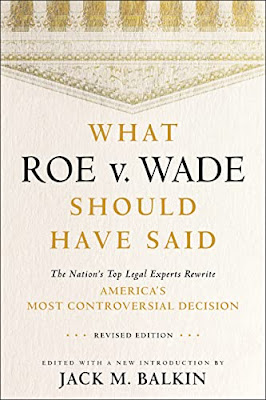
Jack M. Balkin, What Roe v. Wade Should Have Said: The Nation's Top Legal Experts Rewrite America's Most Controversial Decision - Revised Edition (NYU Press, 2023)

Andrew Koppelman, Burning Down the House: How Libertarian Philosophy Was Corrupted by Delusion and Greed (St. Martin’s Press, 2022)

Gerard N. Magliocca, Washington's Heir: The Life of Justice Bushrod Washington (Oxford University Press, 2022)
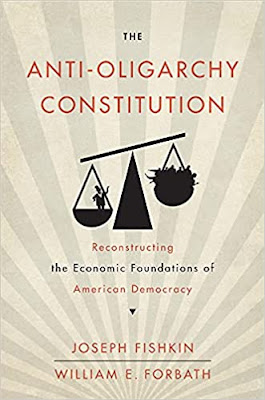
Joseph Fishkin and William E. Forbath, The Anti-Oligarchy Constitution: Reconstructing the Economic Foundations of American Democracy (Harvard University Press, 2022)
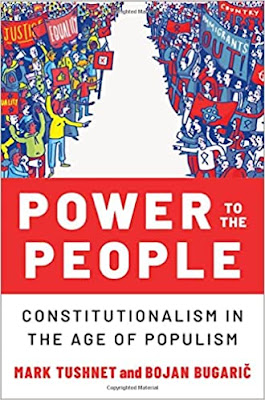
Mark Tushnet and Bojan Bugaric, Power to the People: Constitutionalism in the Age of Populism (Oxford University Press 2021).

Mark Philip Bradley and Mary L. Dudziak, eds., Making the Forever War: Marilyn B. Young on the Culture and Politics of American Militarism Culture and Politics in the Cold War and Beyond (University of Massachusetts Press, 2021).

Jack M. Balkin, What Obergefell v. Hodges Should Have Said: The Nation's Top Legal Experts Rewrite America's Same-Sex Marriage Decision (Yale University Press, 2020)

Frank Pasquale, New Laws of Robotics: Defending Human Expertise in the Age of AI (Belknap Press, 2020)

Jack M. Balkin, The Cycles of Constitutional Time (Oxford University Press, 2020)

Mark Tushnet, Taking Back the Constitution: Activist Judges and the Next Age of American Law (Yale University Press 2020).

Andrew Koppelman, Gay Rights vs. Religious Liberty?: The Unnecessary Conflict (Oxford University Press, 2020)

Ezekiel J Emanuel and Abbe R. Gluck, The Trillion Dollar Revolution: How the Affordable Care Act Transformed Politics, Law, and Health Care in America (PublicAffairs, 2020)

Linda C. McClain, Who's the Bigot?: Learning from Conflicts over Marriage and Civil Rights Law (Oxford University Press, 2020)
Sanford Levinson and Jack M. Balkin, Democracy and Dysfunction (University of Chicago Press, 2019)

Sanford Levinson, Written in Stone: Public Monuments in Changing Societies (Duke University Press 2018)

Mark A. Graber, Sanford Levinson, and Mark Tushnet, eds., Constitutional Democracy in Crisis? (Oxford University Press 2018)

Gerard Magliocca, The Heart of the Constitution: How the Bill of Rights became the Bill of Rights (Oxford University Press, 2018)

Cynthia Levinson and Sanford Levinson, Fault Lines in the Constitution: The Framers, Their Fights, and the Flaws that Affect Us Today (Peachtree Publishers, 2017)

Brian Z. Tamanaha, A Realistic Theory of Law (Cambridge University Press 2017)

Sanford Levinson, Nullification and Secession in Modern Constitutional Thought (University Press of Kansas 2016)

Sanford Levinson, An Argument Open to All: Reading The Federalist in the 21st Century (Yale University Press 2015)

Stephen M. Griffin, Broken Trust: Dysfunctional Government and Constitutional Reform (University Press of Kansas, 2015)

Frank Pasquale, The Black Box Society: The Secret Algorithms That Control Money and Information (Harvard University Press, 2015)

Bruce Ackerman, We the People, Volume 3: The Civil Rights Revolution (Harvard University Press, 2014)
Balkinization Symposium on We the People, Volume 3: The Civil Rights Revolution

Joseph Fishkin, Bottlenecks: A New Theory of Equal Opportunity (Oxford University Press, 2014)

Mark A. Graber, A New Introduction to American Constitutionalism (Oxford University Press, 2013)

John Mikhail, Elements of Moral Cognition: Rawls' Linguistic Analogy and the Cognitive Science of Moral and Legal Judgment (Cambridge University Press, 2013)

Gerard N. Magliocca, American Founding Son: John Bingham and the Invention of the Fourteenth Amendment (New York University Press, 2013)

Stephen M. Griffin, Long Wars and the Constitution (Harvard University Press, 2013)

Andrew Koppelman, The Tough Luck Constitution and the Assault on Health Care Reform (Oxford University Press, 2013)

James E. Fleming and Linda C. McClain, Ordered Liberty: Rights, Responsibilities, and Virtues (Harvard University Press, 2013)
Balkinization Symposium on Ordered Liberty: Rights, Responsibilities, and Virtues

Andrew Koppelman, Defending American Religious Neutrality (Harvard University Press, 2013)

Brian Z. Tamanaha, Failing Law Schools (University of Chicago Press, 2012)

Sanford Levinson, Framed: America's 51 Constitutions and the Crisis of Governance (Oxford University Press, 2012)

Linda C. McClain and Joanna L. Grossman, Gender Equality: Dimensions of Women's Equal Citizenship (Cambridge University Press, 2012)

Mary Dudziak, War Time: An Idea, Its History, Its Consequences (Oxford University Press, 2012)

Jack M. Balkin, Living Originalism (Harvard University Press, 2011)

Jason Mazzone, Copyfraud and Other Abuses of Intellectual Property Law (Stanford University Press, 2011)

Richard W. Garnett and Andrew Koppelman, First Amendment Stories, (Foundation Press 2011)

Jack M. Balkin, Constitutional Redemption: Political Faith in an Unjust World (Harvard University Press, 2011)

Gerard Magliocca, The Tragedy of William Jennings Bryan: Constitutional Law and the Politics of Backlash (Yale University Press, 2011)

Bernard Harcourt, The Illusion of Free Markets: Punishment and the Myth of Natural Order (Harvard University Press, 2010)

Bruce Ackerman, The Decline and Fall of the American Republic (Harvard University Press, 2010)
Balkinization Symposium on The Decline and Fall of the American Republic

Ian Ayres. Carrots and Sticks: Unlock the Power of Incentives to Get Things Done (Bantam Books, 2010)

Mark Tushnet, Why the Constitution Matters (Yale University Press 2010)

Ian Ayres and Barry Nalebuff: Lifecycle Investing: A New, Safe, and Audacious Way to Improve the Performance of Your Retirement Portfolio (Basic Books, 2010)
.jpg)
Jack M. Balkin, The Laws of Change: I Ching and the Philosophy of Life (2d Edition, Sybil Creek Press 2009)

Brian Z. Tamanaha, Beyond the Formalist-Realist Divide: The Role of Politics in Judging (Princeton University Press 2009)
Andrew Koppelman and Tobias Barrington Wolff, A Right to Discriminate?: How the Case of Boy Scouts of America v. James Dale Warped the Law of Free Association (Yale University Press 2009)

Jack M. Balkin and Reva B. Siegel, The Constitution in 2020 (Oxford University Press 2009)

Heather K. Gerken, The Democracy Index: Why Our Election System Is Failing and How to Fix It (Princeton University Press 2009)

Mary Dudziak, Exporting American Dreams: Thurgood Marshall's African Journey (Oxford University Press 2008)

David Luban, Legal Ethics and Human Dignity (Cambridge Univ. Press 2007)

Ian Ayres, Super Crunchers: Why Thinking-By-Numbers is the New Way to be Smart (Bantam 2007)

Jack M. Balkin, James Grimmelmann, Eddan Katz, Nimrod Kozlovski, Shlomit Wagman and Tal Zarsky, eds., Cybercrime: Digital Cops in a Networked Environment (N.Y.U. Press 2007)
Jack M. Balkin and Beth Simone Noveck, The State of Play: Law, Games, and Virtual Worlds (N.Y.U. Press 2006)

Andrew Koppelman, Same Sex, Different States: When Same-Sex Marriages Cross State Lines (Yale University Press 2006)

Brian Tamanaha, Law as a Means to an End (Cambridge University Press 2006)

Sanford Levinson, Our Undemocratic Constitution (Oxford University Press 2006)

Mark Graber, Dred Scott and the Problem of Constitutional Evil (Cambridge University Press 2006)

Jack M. Balkin, ed., What Roe v. Wade Should Have Said (N.Y.U. Press 2005)

Sanford Levinson, ed., Torture: A Collection (Oxford University Press 2004)
Balkin.com homepage
Bibliography
Conlaw.net
Cultural Software
Writings
Opeds
The Information Society Project
BrownvBoard.com
Useful Links
Syllabi and Exams
