Balkinization
an unanticipated consequence of
Jack M. Balkin
Balkinization Symposiums: A Continuing List
E-mail:
Jack Balkin:
jackbalkin at yahoo.com
Bruce Ackerman
bruce.ackerman at yale.edu
Ian Ayres
ian.ayres at yale.edu
Corey Brettschneider
corey_brettschneider at brown.edu
Mary Dudziak
mary.l.dudziak at emory.edu
Joey Fishkin
joey.fishkin at gmail.com
Heather Gerken heather.gerken at yale.edu
Abbe Gluck abbe.gluck at yale.edu
Mark Graber
mgraber at law.umaryland.edu
Stephen Griffin
sgriffin at tulane.edu
Jonathan Hafetz
jonathan.hafetz at shu.edu
Jeremy Kessler
jkessler at law.columbia.edu
Andrew Koppelman
akoppelman at law.northwestern.edu
Marty Lederman
msl46 at law.georgetown.edu
Sanford Levinson
slevinson at law.utexas.edu
David Luban
david.luban at gmail.com
Gerard Magliocca
gmaglioc at iupui.edu
Jason Mazzone
mazzonej at illinois.edu
Linda McClain
lmcclain at bu.edu
John Mikhail
mikhail at law.georgetown.edu
Frank Pasquale
pasquale.frank at gmail.com
Nate Persily
npersily at gmail.com
Michael Stokes Paulsen
michaelstokespaulsen at gmail.com
Deborah Pearlstein
dpearlst at yu.edu
Rick Pildes
rick.pildes at nyu.edu
David Pozen
dpozen at law.columbia.edu
Richard Primus
raprimus at umich.edu
K. Sabeel Rahmansabeel.rahman at brooklaw.edu
Alice Ristroph
alice.ristroph at shu.edu
Neil Siegel
siegel at law.duke.edu
David Super
david.super at law.georgetown.edu
Brian Tamanaha
btamanaha at wulaw.wustl.edu
Nelson Tebbe
nelson.tebbe at brooklaw.edu
Mark Tushnet
mtushnet at law.harvard.edu
Adam Winkler
winkler at ucla.edu
Compendium of posts on Hobby Lobby and related cases
The Anti-Torture Memos: Balkinization Posts on Torture, Interrogation, Detention, War Powers, and OLC
The Anti-Torture Memos (arranged by topic)
Recent Posts
The Common-Use Test Gets History Backwards

Just A Few Blogs
ACS Blog
Alas, a Blog
Althouse
Arts and Letters Daily
Atrios (Eschaton)
Bill of Health
Buzzflash.com
Buzz Machine
Cato at Liberty
Juan Cole (Informed Comment)
Concurring Opinions
The Constitution in 2020
Corrente
Crooked Timber
Daily Howler
Daily Kos
Dana Boyd
Brad DeLong
Digby (Hullabaloo)
Discriminations
Daniel Drezner
Kevin Drum (Mother Jones)
Electrolite
En Banc
Eunomia (Daniel Larison)
Fafblog
Michael Froomkin (Discourse.net)
GovLab (Beth Noveck)
Rick Hasen (Election Law)
History News Network
How Appealing
Ignatz (Sam Heldman)
The Importance of (Ernie Miller)
Infolaw
Instapundit
International Economic Law and Policy Blog
IntLawGrrls
Jacob Levy
Jesus' General
Jurisdynamics
The Kitchen Cabinet
Mark Kleiman
Law Blog Central
Larry Lessig
Lawyers, Guns and Money
Liberal Oasis
Brian Leiter's Law School Reports
The Leiter Reports
Marginal Revolution
Megan McArdle
Memeorandum
Metafilter
Mirror of Justice
The New Republic
Newseum
No More Mister Nice Blog
Brendan Nyhan
Opinio Juris
Orcinus
The Originalism Blog
Pandagon
Passport (Foreign Policy)
Overcoming Bias
Political Animal (Washington Monthly)
Political Theory Daily Review
Political Wire (Taegan Goddard)
The Poor Man
Virginia Postrel
Prawfsblawg
Public Reason
Jonathan Rauch
Raw Story
Redstate
ReligiousLeftLaw.com
Reporters Committee For Freedom of the Press
Reproductive Rights Blog
Rothman's Roadmap to the Right of Publicity
SCOTUS Blog
Seeing the Forest
Clay Shirky
The Shifted Librarian
The Situationist
Larry Solum (Legal Theory)
Andrew Sullivan
Talking Points Memo
Talk Left
Tapped
Tbogg
TechPresident
The Paper Chase (Jurist)
Tom Paine
Tom Tomorrow (This Modern World)
Eve Tushnet
Uggabugga
University of Chicago Law School Faculty Blog
Unqualified Offerings
The Volokh Conspiracy
War and Piece (Laura Rozen)
Wampum
Oliver Willis
Wonkette
Written Description
Matthew Yglesias
Yin
Your Choice of Feeds
1. XML
powered by

2. Atom Feed
3. RSS 2.0
The Common-Use Test Gets History Backwards
Guest Blogger
Saul Cornell On December 2 the Supreme Court will hear argument in Viramontes
v. Cook County and its Connecticut companion, Grant v. Higgins. The
petitioners and their supporters, including the Trump administration through the
solicitor general, rest their case on a single claim: AR-15-platform rifles are
constitutionally protected because they are “in common use.” On this view,
consumer preference creates a constitutional right. The history the Court
claims to follow points the other way. The common-use test is a modern invention, not a rule of
Founding-era law. The Court announced it in District of
Columbia v. Heller (2008), lifting it almost verbatim from United States v.
Miller (1939), a decision that, Justice Scalia conceded, “did not even
purport to be a thorough examination of the Second Amendment.” Heller
revived Miller’s central assumption: that militiamen were expected to
appear with arms “of the kind in common use at the time.” Founding-era
militia laws did not leave that choice to militiamen. The chief problem
those laws addressed was Americans’ habit of mustering with the guns they
actually owned: squirrel guns and fowling pieces that suited farmers but were
of limited value on an eighteenth-century battlefield, where a weapon had to
take a bayonet and serve as a club in close-quarters combat. Samuel Elbert, who
commanded Georgia troops during the Revolution, dismissed his men’s guns as
“sorry trash” and pleaded for “good Muskets and Bayonets.” Once independence was
won, Congress wrote the lesson into law. The Militia Act of 1792 required every
enrolled citizen to provide himself with “a good musket or firelock, a
sufficient bayonet and belt.” Under state militia laws, militiamen could be
fined for appearing without the prescribed arms. The Founders’ arms policy did not defer to popular choice;
it worked against it. Citizens were required to buy the weapons the government
wanted them to own and to use them for purposes the government mandated. A test
keyed to what Americans commonly owned inverts that history. Heller also affirmed a tradition of prohibiting
“dangerous and unusual weapons,” citing Blackstone. Blackstone wrote “dangerous
or unusual.” William Hawkins, another leading common-law authority,
wrote “dangerous and unusual.” Contemporaries treated the two formulations
interchangeably. Both named a single category, unusually dangerous weapons,
whose boundaries moved as new weapons created new dangers. Neither set out a
two-part test that determined whether a weapon could be regulated. All weapons
were subject to regulation. The only question was whether a regulation exceeded
the legitimate scope of the legislature’s regulatory authority. The Founders had little reason to legislate against pistols
and knives, because the problems those weapons later created were marginal in
1791. Firearms of the era were slow to load and prone to misfire, poorly suited
to impulsive violence. In the decades after ratification, the market revolution
flooded the country with cheap, reliable pistols and an assortment of knives,
including the notorious Bowie knife. Americans responded with the first
modern-style weapons laws. Legislatures regulated these weapons because
they were common and dangerous, and courts upheld most of the laws. The Bowie
knife was among the most popular self-defense weapons of the antebellum era and
among the most heavily regulated. The dominant antebellum tradition was a pro-regulation
tradition rooted in the common law, first codified in Massachusetts and widely
copied in other states. Its legal foundation was the police power. Outside the
slave South, no court or legislature doubted that the police power reached
weapons. It is ironic that a Court so committed to tradition has ignored the
tradition that actually governed weapons regulation. The few decisions that struck down weapons laws, such as Bliss
v. Commonwealth (Ky. 1822) and Nunn v. State (Ga. 1846), the latter
praised in Heller, came from courts
in slave states. Their society enforced slavery with the pistol and the
whip, pairing permissive weapons laws for whites with restrictive ones for
everyone else. Last term, in Wolford v. Lopez, the Court dismissed
historical analogues it deemed tainted by racial bias, a standard that, as Justice
Jackson warned in dissent, lets the Court “pick and choose which parts of
the historical record count.” By that logic, these decisions deserve no weight.
If the postwar Black Codes cannot guide constitutional meaning, neither can the
antebellum case law of the same slave society. The same logic applies to the
right itself. The English right that Heller treated as the Second
Amendment’s ancestor, in the Bill of Rights of 1689, belonged only to Protestants,
extended only “as allowed by law,” and was suffused with the anti-Catholicism
of the age. The Court seems to think that a tainted right is permissible but a
tainted regulation is not. Even New
York State Rifle & Pistol Association v. Bruen (2022) acknowledges
that “dramatic technological changes may require a more nuanced approach.” The
legislative response to the AR-15 is the product of exactly such a change. In
1791, the danger the law worried about most was not the lone armed individual
but the armed group. Killing on a mass scale required many hands acting in
concert, and both the common law and early statutes responded by prohibiting
armed groups. At Sandy Hook, a single gunman with a Bushmaster XM15, an
AR-15-platform rifle, fired roughly 150 rounds in under five minutes, firepower
that once required an armed body of men. Weapons like the AR-15 allow one
person to inflict the kind of mass violence the Founders associated with armed
groups. Connecticut responded by strengthening its assault weapons ban, meeting
an old mischief in a new form with exactly the kind of new remedy the common
law expected legislatures to devise. That is how common-law lawyers reasoned. Early American
judges did not search old statute books for historical analogues to new laws.
They asked what
mischief the existing law had failed to reach and read statutes to advance
the remedy the legislature had devised. The method looked forward, and it was
deferential: so long as a remedy did not effectively destroy the right of
self-defense, most laws passed constitutional muster. Bruen, by
contrast, asks courts to find “a well-established and representative historical
analogue,” while insisting that it does not demand “a historical twin.” In
practice, courts hostile to gun regulation have often demanded something very
close to a twin. Edmund Plowden, the Elizabethan law reporter whose volumes
filled colonial law libraries, advised judges facing a case the lawmakers had
not foreseen to “suppose that the law-maker is present” and ask how he would
understand the mischief and the remedy. The question for the Court is not how
many AR-15s are in circulation. It is what mischief these laws address and
whether their remedy falls within the police power. The Founders would not have
let a popularity contest decide a question of public safety. The common-use test invokes a past that never existed. The
Court has a chance to show that its turn to history is genuine. Striking down these
laws on the basis of an invented past would further erode its credibility at a
moment when it can least afford it. Saul Cornell is the Paul and Diane Guenther Chair in
American History at Fordham University. He has served as an expert witness for
the governments defending the laws in Viramontes and Grant. You can reach him by e-mail at A test borrowed from a case Heller distrusted
Unusually dangerous weapons
Common weapons, heavily regulated
New mischiefs, new remedies
Posted
4:35 PM
by Guest Blogger [link]
Books by Balkinization Bloggers

Mark Tushnet and Bojan Bugaric, Constitutionalism and Its Discontents (University of Chicago Press, 2026)

Gerard N. Magliocca, The Actual Art of Governing: Justice Robert H. Jackson's Concurring Opinion in the Steel Seizure Case (Oxford University Press, 2025)

Linda C. McClain and Aziza Ahmed, The Routledge Companion to Gender and COVID-19 (Routledge, 2024)

David Pozen, The Constitution of the War on Drugs (Oxford University Press, 2024)

Jack M. Balkin, Memory and Authority: The Uses of History in Constitutional Interpretation (Yale University Press, 2024)
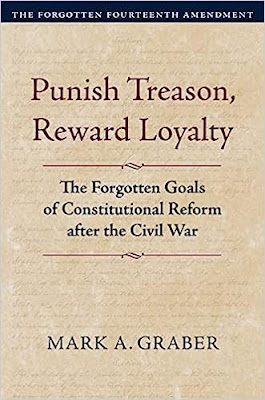
Mark A. Graber, Punish Treason, Reward Loyalty: The Forgotten Goals of Constitutional Reform after the Civil War (University of Kansas Press, 2023)
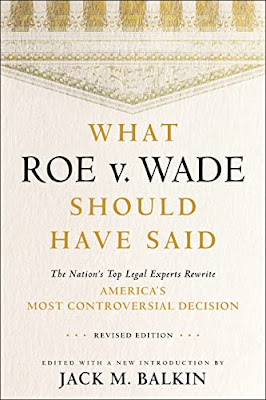
Jack M. Balkin, What Roe v. Wade Should Have Said: The Nation's Top Legal Experts Rewrite America's Most Controversial Decision - Revised Edition (NYU Press, 2023)

Andrew Koppelman, Burning Down the House: How Libertarian Philosophy Was Corrupted by Delusion and Greed (St. Martin’s Press, 2022)

Gerard N. Magliocca, Washington's Heir: The Life of Justice Bushrod Washington (Oxford University Press, 2022)
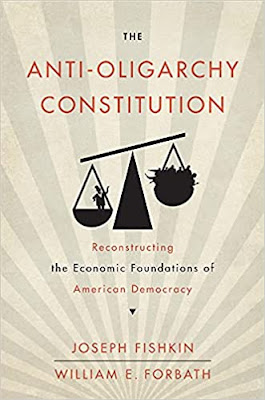
Joseph Fishkin and William E. Forbath, The Anti-Oligarchy Constitution: Reconstructing the Economic Foundations of American Democracy (Harvard University Press, 2022)
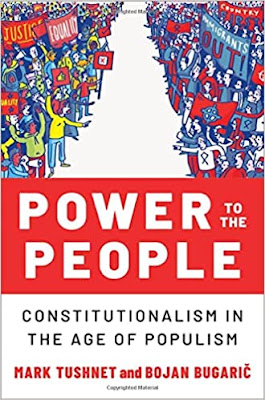
Mark Tushnet and Bojan Bugaric, Power to the People: Constitutionalism in the Age of Populism (Oxford University Press 2021).

Mark Philip Bradley and Mary L. Dudziak, eds., Making the Forever War: Marilyn B. Young on the Culture and Politics of American Militarism Culture and Politics in the Cold War and Beyond (University of Massachusetts Press, 2021).

Jack M. Balkin, What Obergefell v. Hodges Should Have Said: The Nation's Top Legal Experts Rewrite America's Same-Sex Marriage Decision (Yale University Press, 2020)

Frank Pasquale, New Laws of Robotics: Defending Human Expertise in the Age of AI (Belknap Press, 2020)

Jack M. Balkin, The Cycles of Constitutional Time (Oxford University Press, 2020)

Mark Tushnet, Taking Back the Constitution: Activist Judges and the Next Age of American Law (Yale University Press 2020).

Andrew Koppelman, Gay Rights vs. Religious Liberty?: The Unnecessary Conflict (Oxford University Press, 2020)

Ezekiel J Emanuel and Abbe R. Gluck, The Trillion Dollar Revolution: How the Affordable Care Act Transformed Politics, Law, and Health Care in America (PublicAffairs, 2020)

Linda C. McClain, Who's the Bigot?: Learning from Conflicts over Marriage and Civil Rights Law (Oxford University Press, 2020)
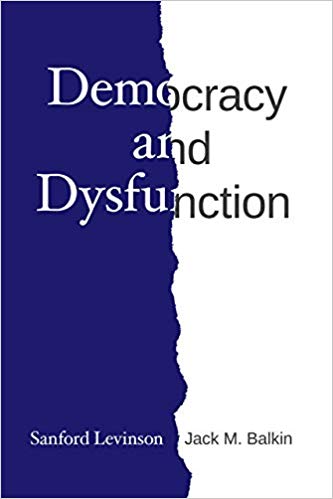
Sanford Levinson and Jack M. Balkin, Democracy and Dysfunction (University of Chicago Press, 2019)

Sanford Levinson, Written in Stone: Public Monuments in Changing Societies (Duke University Press 2018)

Mark A. Graber, Sanford Levinson, and Mark Tushnet, eds., Constitutional Democracy in Crisis? (Oxford University Press 2018)

Gerard Magliocca, The Heart of the Constitution: How the Bill of Rights became the Bill of Rights (Oxford University Press, 2018)

Cynthia Levinson and Sanford Levinson, Fault Lines in the Constitution: The Framers, Their Fights, and the Flaws that Affect Us Today (Peachtree Publishers, 2017)

Brian Z. Tamanaha, A Realistic Theory of Law (Cambridge University Press 2017)

Sanford Levinson, Nullification and Secession in Modern Constitutional Thought (University Press of Kansas 2016)

Sanford Levinson, An Argument Open to All: Reading The Federalist in the 21st Century (Yale University Press 2015)

Stephen M. Griffin, Broken Trust: Dysfunctional Government and Constitutional Reform (University Press of Kansas, 2015)

Frank Pasquale, The Black Box Society: The Secret Algorithms That Control Money and Information (Harvard University Press, 2015)

Bruce Ackerman, We the People, Volume 3: The Civil Rights Revolution (Harvard University Press, 2014)
Balkinization Symposium on We the People, Volume 3: The Civil Rights Revolution

Joseph Fishkin, Bottlenecks: A New Theory of Equal Opportunity (Oxford University Press, 2014)

Mark A. Graber, A New Introduction to American Constitutionalism (Oxford University Press, 2013)

John Mikhail, Elements of Moral Cognition: Rawls' Linguistic Analogy and the Cognitive Science of Moral and Legal Judgment (Cambridge University Press, 2013)

Gerard N. Magliocca, American Founding Son: John Bingham and the Invention of the Fourteenth Amendment (New York University Press, 2013)

Stephen M. Griffin, Long Wars and the Constitution (Harvard University Press, 2013)

Andrew Koppelman, The Tough Luck Constitution and the Assault on Health Care Reform (Oxford University Press, 2013)

James E. Fleming and Linda C. McClain, Ordered Liberty: Rights, Responsibilities, and Virtues (Harvard University Press, 2013)
Balkinization Symposium on Ordered Liberty: Rights, Responsibilities, and Virtues

Andrew Koppelman, Defending American Religious Neutrality (Harvard University Press, 2013)

Brian Z. Tamanaha, Failing Law Schools (University of Chicago Press, 2012)

Sanford Levinson, Framed: America's 51 Constitutions and the Crisis of Governance (Oxford University Press, 2012)

Linda C. McClain and Joanna L. Grossman, Gender Equality: Dimensions of Women's Equal Citizenship (Cambridge University Press, 2012)

Mary Dudziak, War Time: An Idea, Its History, Its Consequences (Oxford University Press, 2012)

Jack M. Balkin, Living Originalism (Harvard University Press, 2011)

Jason Mazzone, Copyfraud and Other Abuses of Intellectual Property Law (Stanford University Press, 2011)

Richard W. Garnett and Andrew Koppelman, First Amendment Stories, (Foundation Press 2011)

Jack M. Balkin, Constitutional Redemption: Political Faith in an Unjust World (Harvard University Press, 2011)

Gerard Magliocca, The Tragedy of William Jennings Bryan: Constitutional Law and the Politics of Backlash (Yale University Press, 2011)

Bernard Harcourt, The Illusion of Free Markets: Punishment and the Myth of Natural Order (Harvard University Press, 2010)

Bruce Ackerman, The Decline and Fall of the American Republic (Harvard University Press, 2010)
Balkinization Symposium on The Decline and Fall of the American Republic

Ian Ayres. Carrots and Sticks: Unlock the Power of Incentives to Get Things Done (Bantam Books, 2010)

Mark Tushnet, Why the Constitution Matters (Yale University Press 2010)

Ian Ayres and Barry Nalebuff: Lifecycle Investing: A New, Safe, and Audacious Way to Improve the Performance of Your Retirement Portfolio (Basic Books, 2010)
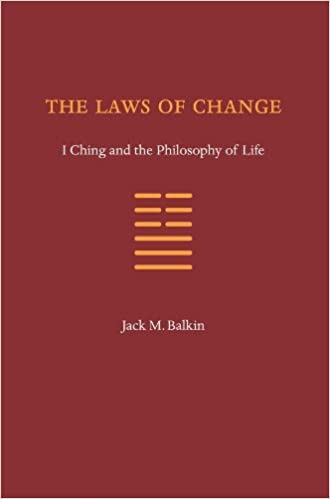
Jack M. Balkin, The Laws of Change: I Ching and the Philosophy of Life (2d Edition, Sybil Creek Press 2009)

Brian Z. Tamanaha, Beyond the Formalist-Realist Divide: The Role of Politics in Judging (Princeton University Press 2009)
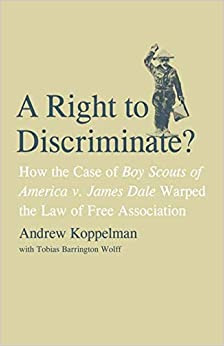
Andrew Koppelman and Tobias Barrington Wolff, A Right to Discriminate?: How the Case of Boy Scouts of America v. James Dale Warped the Law of Free Association (Yale University Press 2009)

Jack M. Balkin and Reva B. Siegel, The Constitution in 2020 (Oxford University Press 2009)

Heather K. Gerken, The Democracy Index: Why Our Election System Is Failing and How to Fix It (Princeton University Press 2009)

Mary Dudziak, Exporting American Dreams: Thurgood Marshall's African Journey (Oxford University Press 2008)

David Luban, Legal Ethics and Human Dignity (Cambridge Univ. Press 2007)

Ian Ayres, Super Crunchers: Why Thinking-By-Numbers is the New Way to be Smart (Bantam 2007)

Jack M. Balkin, James Grimmelmann, Eddan Katz, Nimrod Kozlovski, Shlomit Wagman and Tal Zarsky, eds., Cybercrime: Digital Cops in a Networked Environment (N.Y.U. Press 2007)
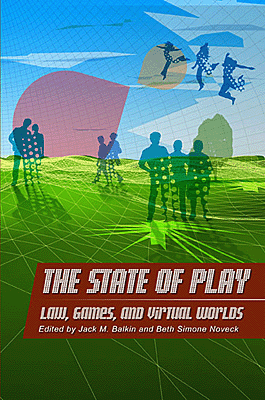
Jack M. Balkin and Beth Simone Noveck, The State of Play: Law, Games, and Virtual Worlds (N.Y.U. Press 2006)

Andrew Koppelman, Same Sex, Different States: When Same-Sex Marriages Cross State Lines (Yale University Press 2006)

Brian Tamanaha, Law as a Means to an End (Cambridge University Press 2006)

Sanford Levinson, Our Undemocratic Constitution (Oxford University Press 2006)

Mark Graber, Dred Scott and the Problem of Constitutional Evil (Cambridge University Press 2006)

Jack M. Balkin, ed., What Roe v. Wade Should Have Said (N.Y.U. Press 2005)

Sanford Levinson, ed., Torture: A Collection (Oxford University Press 2004)
Balkin.com homepage
Bibliography
Conlaw.net
Cultural Software
Writings
Opeds
The Information Society Project
BrownvBoard.com
Useful Links
Syllabi and Exams
