Balkinization
an unanticipated consequence of
Jack M. Balkin
Balkinization Symposiums: A Continuing List
E-mail:
Jack Balkin:
jackbalkin at yahoo.com
Bruce Ackerman
bruce.ackerman at yale.edu
Ian Ayres
ian.ayres at yale.edu
Corey Brettschneider
corey_brettschneider at brown.edu
Mary Dudziak
mary.l.dudziak at emory.edu
Joey Fishkin
joey.fishkin at gmail.com
Heather Gerken heather.gerken at yale.edu
Abbe Gluck abbe.gluck at yale.edu
Mark Graber
mgraber at law.umaryland.edu
Stephen Griffin
sgriffin at tulane.edu
Jonathan Hafetz
jonathan.hafetz at shu.edu
Jeremy Kessler
jkessler at law.columbia.edu
Andrew Koppelman
akoppelman at law.northwestern.edu
Marty Lederman
msl46 at law.georgetown.edu
Sanford Levinson
slevinson at law.utexas.edu
David Luban
david.luban at gmail.com
Gerard Magliocca
gmaglioc at iupui.edu
Jason Mazzone
mazzonej at illinois.edu
Linda McClain
lmcclain at bu.edu
John Mikhail
mikhail at law.georgetown.edu
Frank Pasquale
pasquale.frank at gmail.com
Nate Persily
npersily at gmail.com
Michael Stokes Paulsen
michaelstokespaulsen at gmail.com
Deborah Pearlstein
dpearlst at yu.edu
Rick Pildes
rick.pildes at nyu.edu
David Pozen
dpozen at law.columbia.edu
Richard Primus
raprimus at umich.edu
K. Sabeel Rahmansabeel.rahman at brooklaw.edu
Alice Ristroph
alice.ristroph at shu.edu
Neil Siegel
siegel at law.duke.edu
David Super
david.super at law.georgetown.edu
Brian Tamanaha
btamanaha at wulaw.wustl.edu
Nelson Tebbe
nelson.tebbe at brooklaw.edu
Mark Tushnet
mtushnet at law.harvard.edu
Adam Winkler
winkler at ucla.edu
Compendium of posts on Hobby Lobby and related cases
The Anti-Torture Memos: Balkinization Posts on Torture, Interrogation, Detention, War Powers, and OLC
The Anti-Torture Memos (arranged by topic)
Recent Posts
The Constitution Against the People: Rethinking Law, Markets, and Democracy
![[Powered by Blogger]](https://lh3.googleusercontent.com/blogger_img_proxy/AEn0k_sSbYopEjwl7UR8tSO4Iav94DkEmhvOOBMFgvh3QPqeDi1x3eyXW49uHeT8DrKcP-jzxP0g30VJcn_Hg59lntiFGfAd-7Dpzp0l66CcjqMg=s0-d)
Just A Few Blogs
ACS Blog
Alas, a Blog
Althouse
Arts and Letters Daily
Atrios (Eschaton)
Bill of Health
Buzzflash.com
Buzz Machine
Cato at Liberty
Juan Cole (Informed Comment)
Concurring Opinions
The Constitution in 2020
Corrente
Crooked Timber
Daily Howler
Daily Kos
Dana Boyd
Brad DeLong
Digby (Hullabaloo)
Discriminations
Daniel Drezner
Kevin Drum (Mother Jones)
Electrolite
En Banc
Eunomia (Daniel Larison)
Fafblog
Michael Froomkin (Discourse.net)
GovLab (Beth Noveck)
Rick Hasen (Election Law)
History News Network
How Appealing
Ignatz (Sam Heldman)
The Importance of (Ernie Miller)
Infolaw
Instapundit
International Economic Law and Policy Blog
IntLawGrrls
Jacob Levy
Jesus' General
Jurisdynamics
The Kitchen Cabinet
Mark Kleiman
Law Blog Central
Larry Lessig
Lawyers, Guns and Money
Liberal Oasis
Brian Leiter's Law School Reports
The Leiter Reports
Marginal Revolution
Megan McArdle
Memeorandum
Metafilter
Mirror of Justice
The New Republic
Newseum
No More Mister Nice Blog
Brendan Nyhan
Opinio Juris
Orcinus
The Originalism Blog
Pandagon
Passport (Foreign Policy)
Overcoming Bias
Political Animal (Washington Monthly)
Political Theory Daily Review
Political Wire (Taegan Goddard)
The Poor Man
Virginia Postrel
Prawfsblawg
Public Reason
Jonathan Rauch
Raw Story
Redstate
ReligiousLeftLaw.com
Reporters Committee For Freedom of the Press
Reproductive Rights Blog
Rothman's Roadmap to the Right of Publicity
SCOTUS Blog
Seeing the Forest
Clay Shirky
The Shifted Librarian
The Situationist
Larry Solum (Legal Theory)
Andrew Sullivan
Talking Points Memo
Talk Left
Tapped
Tbogg
TechPresident
The Paper Chase (Jurist)
Tom Paine
Tom Tomorrow (This Modern World)
Eve Tushnet
Uggabugga
University of Chicago Law School Faculty Blog
Unqualified Offerings
The Volokh Conspiracy
War and Piece (Laura Rozen)
Wampum
Oliver Willis
Wonkette
Written Description
Matthew Yglesias
Yin
Your Choice of Feeds
1. XML
powered by

2. Atom Feed
3. RSS 2.0
The Constitution Against the People: Rethinking Law, Markets, and Democracy
Guest Blogger
Bojan
Bugaric Contemporary
debates about populism in constitutional theory are often framed from a
centrist perspective that treats populism primarily as a democratic pathology. In
this account, populism—whether of the left or the right—is inherently hostile
to constitutionalism. By attacking independent courts, free media, minority
rights, and fair electoral rules, populist movements are said to inevitably
degenerate into illiberal or authoritarian rule. This
diagnosis, however, is historically incomplete and normatively misleading. A
cursory look at twentieth-century history reveals forms of populism that did
not undermine constitutional democracy but instead helped preserve and renew
it. The New Deal in the United States remains the paradigmatic example: a mass
democratic response to economic crisis that dramatically expanded state
capacity and social rights while remaining broadly faithful to constitutional
structures. Populism, in other words, has not always been the enemy of
constitutionalism. What we
are witnessing today is therefore not simply the rise of anti-constitutional
populism. Rather, it is a crisis of a specific model of constitutional
democracy—one that has dominated much of the world since the 1990s. This model
is best understood as neoliberal constitutionalism. Neoliberalism
as a Constitutional Project Neoliberalism
is often understood narrowly as a set of economic policies favoring
deregulation, privatization, and free markets. But neoliberalism is also a
political and constitutional ideology. At its core lies a belief that markets
are morally and practically superior to democratic politics in organizing
economic life. From this perspective, the primary function of constitutional
law is not to facilitate collective self-government, but to shield markets from
democratic interference. This
vision requires more than policy change; it demands institutional insulation.
Independent central banks, constitutional courts enforcing strong property and
contract rights, autonomous regulatory agencies, and international legal
regimes that constrain domestic political choice all serve to remove key
economic decisions from majoritarian politics. Law plays a crucial role in
depoliticizing economic governance and rendering it technocratic. In this
sense, neoliberalism is as much a theory of democracy and the state as it is a
theory of markets. The
practical expression of this ideology emerged most clearly in the Washington
Consensus of the 1980s and 1990s. Initially formulated by the IMF, the World
Bank, and the U.S. Treasury in response to Latin American debt crises, this
policy package—liberalization, privatization, deregulation, and fiscal
austerity—was later exported globally, including to post-socialist Europe. Over
time, its principles became embedded not only in ordinary legislation, but also
in constitutional doctrine and supranational legal frameworks. As
neoliberalism consolidated its dominance, constitutional democracy acquired a
dual character. Electoral competition remained formally intact, but the range
of choices available to voters narrowed dramatically. Key economic decisions
were constitutionally or institutionally locked in, insulated from political
contestation. Peter Mair famously described this arrangement as a “hollowed-out
democracy”: a system in which democratic procedures persist while meaningful
popular control steadily erodes. From
Embedded Liberalism to Hyper-Globalization Neoliberal
constitutionalism replaced the postwar model of embedded liberalism, which had
sought to reconcile international economic openness with domestic social
protection. Under embedded liberalism, globalization was politically managed so
that national welfare states could coexist with international trade and capital
flows. Beginning
in the late 1970s, this compromise unraveled. It gave way to a period of
hyper-globalization, particularly from the 1990s through the late 2000s, marked
by unprecedented capital mobility, deep trade liberalization, and shrinking
national policy space. Economic integration increasingly outpaced democratic
control, while constitutional and international legal constraints made
political reversal difficult. The social
consequences were profound and uneven. Hyper-globalization contributed to
deindustrialization across much of the West, the erosion of stable employment,
wage stagnation, rising inequality, weakened labor protections, and heightened
economic insecurity. While neoliberal constitutionalism produced aggregate
economic gains, it also generated widespread social dislocation and political
resentment. Neoliberalism
and globalization reinforced one another. Neoliberal reforms accelerated global
integration, while globalization entrenched neoliberal norms by making
deviation appear economically reckless or legally impossible. Constitutional
law became a central mechanism for enforcing this settlement, transforming
political choices into matters of legal necessity. The
Populist Revolt By the
2010s, the contradictions of neoliberal constitutionalism had produced a global
political backlash. Populist movements—on both the left and the right—emerged
in response to elite dominance, economic exclusion, and the perceived loss of
national sovereignty. Their shared demand was the restoration of popular voice
in political and economic decision-making. Populism’s
relationship to constitutionalism, however, is deeply ambivalent. While
populist movements often articulate powerful critiques of neoliberal
governance, they are far less successful at articulating coherent institutional
alternatives. Many remain trapped within the assumptions they reject. Demands
for renationalization, border control, or economic protection frequently slide
into exclusionary nationalism rather than structural reform. In their
more authoritarian variants, populist movements echo troubling aspects of
interwar politics. Attacks on courts, the media, and minority rights raise
legitimate concerns about democratic backsliding. Yet to treat populism simply
as a constitutional pathology is to miss the deeper point. Populism is better
understood as a symptom of the failure of neoliberal constitutionalism, not its
primary cause. The Future
of Constitutional Democracy Where,
then, might constitutional democracy be heading after the erosion of the
neoliberal settlement? Contemporary scholarship offers sharply divergent
diagnoses. Jack
Balkin suggests that we are witnessing the exhaustion of a constitutional
regime and the early stages of a new constitutional cycle. On this view,
today’s turbulence reflects not democratic decay as such, but the predictable
breakdown of an aging political–economic order. Just as earlier constitutional
regimes collapsed under social and economic pressure, neoliberal
constitutionalism may be nearing the end of its lifespan. If so, the present
crisis could open space for constitutional reconstruction—potentially involving
renewed public regulation, expanded social rights, and a rebalancing of
democratic control and economic power. A darker
diagnosis is offered by British political scientists Matt Goodwin, who
emphasizes the depth and durability of the populist revolt. From this
perspective, we are not witnessing a transitional moment, but a long-term
realignment driven by cultural backlash, identity politics, and declining trust
in liberal institutions. The postwar liberal-democratic consensus, already
weakened by neoliberal globalization, may not be recoverable. Instead,
constitutional democracy faces sustained pressure from movements willing to
sacrifice liberal constraints in favor of majoritarian and nationalist
conceptions of democracy. Between
these two readings—Balkin’s cautious optimism and Goodwin’s pessimism—lies
profound uncertainty. What is clear, however, is that the neoliberal constitutional
order has lost much of its legitimacy and governing capacity. Constitutional
Institutions in the Interregnum The
present moment closely resembles what Antonio Gramsci famously described as an
interregnum: a period in which “the old is dying and the new cannot be born.”
In such moments, constitutional norms weaken, political experimentation
proliferates, and a range of “morbid symptoms” emerge. Populism, technocratic
overreach, democratic erosion, and institutional paralysis are not anomalies, but
characteristic features of this transitional phase. Institutions
designed to stabilize neoliberal constitutionalism—constitutional courts,
independent central banks, regulatory agencies, and supranational legal orders
such as the European Union—now find themselves at the center of political
conflict. Courts are increasingly accused of elitism and overreach; central
banks face pressure to abandon technocratic neutrality; EU law is challenged
for constraining democratic choice without sufficient democratic legitimacy of
its own. These
institutions are no longer merely guardians of constitutional stability. They
are arenas in which the unresolved tensions of the interregnum are played out.
Whether they become instruments of democratic reconstruction, mechanisms of
technocratic entrenchment, or targets of populist dismantling remains
uncertain. What is
increasingly untenable, however, is the belief that the neoliberal
constitutional settlement can simply be restored. The challenge ahead is not
how to defend constitutionalism against the people, but how to reimagine
constitutional arrangements capable of reconciling democracy, economic justice,
and interdependence. A growing cohort of younger scholars—figures such as Ryan
Doerfler, Niko Bowie, and Sam Moyn—express deep skepticism toward traditional
constitutionalism, particularly its faith in entrenched rights and judicial
supremacy. Their attraction to a more minimal, procedural constitution reflects
a broader unease with the ways constitutional law has been used to freeze
contested political choices. The
decisive question of the interregnum is therefore not whether constitutionalism
will survive, but what kind of constitutionalism will emerge. If constitutional
law continues to function primarily as a shield against democratic demands,
populist revolt will persist—and likely intensify. Only a constitutional order
that restores democratic agency over economic life can hope to regain
legitimacy. The alternative is a future in which constitutionalism is
increasingly perceived not as a common framework of self-government, but as an
obstacle to it—a constitution against the people. Bojan Bugaric is Professor of Law, University
of Sheffield Department of Law. You can reach him by e-mail at b.bugaric@sheffield.ac.uk.
Posted
9:30 AM
by Guest Blogger [link]
Books by Balkinization Bloggers

Gerard N. Magliocca, The Actual Art of Governing: Justice Robert H. Jackson's Concurring Opinion in the Steel Seizure Case (Oxford University Press, 2025)

Linda C. McClain and Aziza Ahmed, The Routledge Companion to Gender and COVID-19 (Routledge, 2024)

David Pozen, The Constitution of the War on Drugs (Oxford University Press, 2024)

Jack M. Balkin, Memory and Authority: The Uses of History in Constitutional Interpretation (Yale University Press, 2024)
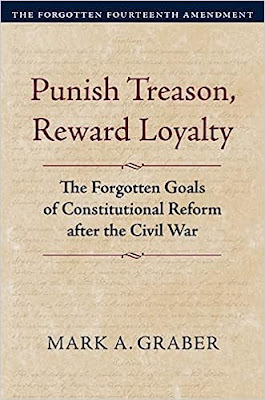
Mark A. Graber, Punish Treason, Reward Loyalty: The Forgotten Goals of Constitutional Reform after the Civil War (University of Kansas Press, 2023)
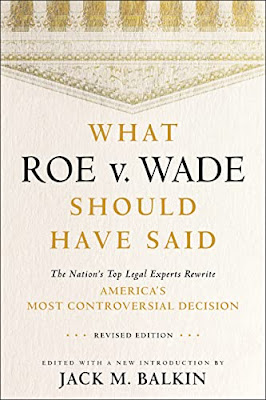
Jack M. Balkin, What Roe v. Wade Should Have Said: The Nation's Top Legal Experts Rewrite America's Most Controversial Decision - Revised Edition (NYU Press, 2023)

Andrew Koppelman, Burning Down the House: How Libertarian Philosophy Was Corrupted by Delusion and Greed (St. Martin’s Press, 2022)

Gerard N. Magliocca, Washington's Heir: The Life of Justice Bushrod Washington (Oxford University Press, 2022)
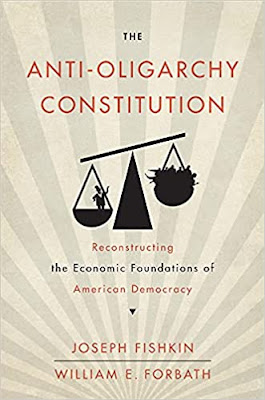
Joseph Fishkin and William E. Forbath, The Anti-Oligarchy Constitution: Reconstructing the Economic Foundations of American Democracy (Harvard University Press, 2022)
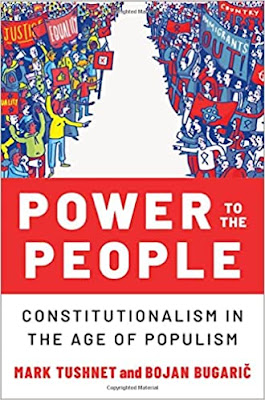
Mark Tushnet and Bojan Bugaric, Power to the People: Constitutionalism in the Age of Populism (Oxford University Press 2021).

Mark Philip Bradley and Mary L. Dudziak, eds., Making the Forever War: Marilyn B. Young on the Culture and Politics of American Militarism Culture and Politics in the Cold War and Beyond (University of Massachusetts Press, 2021).

Jack M. Balkin, What Obergefell v. Hodges Should Have Said: The Nation's Top Legal Experts Rewrite America's Same-Sex Marriage Decision (Yale University Press, 2020)

Frank Pasquale, New Laws of Robotics: Defending Human Expertise in the Age of AI (Belknap Press, 2020)

Jack M. Balkin, The Cycles of Constitutional Time (Oxford University Press, 2020)

Mark Tushnet, Taking Back the Constitution: Activist Judges and the Next Age of American Law (Yale University Press 2020).

Andrew Koppelman, Gay Rights vs. Religious Liberty?: The Unnecessary Conflict (Oxford University Press, 2020)

Ezekiel J Emanuel and Abbe R. Gluck, The Trillion Dollar Revolution: How the Affordable Care Act Transformed Politics, Law, and Health Care in America (PublicAffairs, 2020)

Linda C. McClain, Who's the Bigot?: Learning from Conflicts over Marriage and Civil Rights Law (Oxford University Press, 2020)
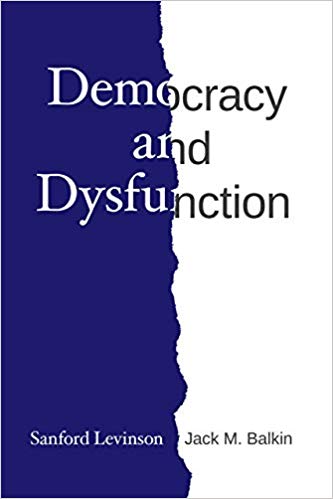
Sanford Levinson and Jack M. Balkin, Democracy and Dysfunction (University of Chicago Press, 2019)

Sanford Levinson, Written in Stone: Public Monuments in Changing Societies (Duke University Press 2018)

Mark A. Graber, Sanford Levinson, and Mark Tushnet, eds., Constitutional Democracy in Crisis? (Oxford University Press 2018)

Gerard Magliocca, The Heart of the Constitution: How the Bill of Rights became the Bill of Rights (Oxford University Press, 2018)

Cynthia Levinson and Sanford Levinson, Fault Lines in the Constitution: The Framers, Their Fights, and the Flaws that Affect Us Today (Peachtree Publishers, 2017)

Brian Z. Tamanaha, A Realistic Theory of Law (Cambridge University Press 2017)

Sanford Levinson, Nullification and Secession in Modern Constitutional Thought (University Press of Kansas 2016)

Sanford Levinson, An Argument Open to All: Reading The Federalist in the 21st Century (Yale University Press 2015)

Stephen M. Griffin, Broken Trust: Dysfunctional Government and Constitutional Reform (University Press of Kansas, 2015)

Frank Pasquale, The Black Box Society: The Secret Algorithms That Control Money and Information (Harvard University Press, 2015)

Bruce Ackerman, We the People, Volume 3: The Civil Rights Revolution (Harvard University Press, 2014)
Balkinization Symposium on We the People, Volume 3: The Civil Rights Revolution

Joseph Fishkin, Bottlenecks: A New Theory of Equal Opportunity (Oxford University Press, 2014)

Mark A. Graber, A New Introduction to American Constitutionalism (Oxford University Press, 2013)

John Mikhail, Elements of Moral Cognition: Rawls' Linguistic Analogy and the Cognitive Science of Moral and Legal Judgment (Cambridge University Press, 2013)

Gerard N. Magliocca, American Founding Son: John Bingham and the Invention of the Fourteenth Amendment (New York University Press, 2013)

Stephen M. Griffin, Long Wars and the Constitution (Harvard University Press, 2013)

Andrew Koppelman, The Tough Luck Constitution and the Assault on Health Care Reform (Oxford University Press, 2013)

James E. Fleming and Linda C. McClain, Ordered Liberty: Rights, Responsibilities, and Virtues (Harvard University Press, 2013)
Balkinization Symposium on Ordered Liberty: Rights, Responsibilities, and Virtues

Andrew Koppelman, Defending American Religious Neutrality (Harvard University Press, 2013)

Brian Z. Tamanaha, Failing Law Schools (University of Chicago Press, 2012)

Sanford Levinson, Framed: America's 51 Constitutions and the Crisis of Governance (Oxford University Press, 2012)

Linda C. McClain and Joanna L. Grossman, Gender Equality: Dimensions of Women's Equal Citizenship (Cambridge University Press, 2012)

Mary Dudziak, War Time: An Idea, Its History, Its Consequences (Oxford University Press, 2012)

Jack M. Balkin, Living Originalism (Harvard University Press, 2011)

Jason Mazzone, Copyfraud and Other Abuses of Intellectual Property Law (Stanford University Press, 2011)

Richard W. Garnett and Andrew Koppelman, First Amendment Stories, (Foundation Press 2011)

Jack M. Balkin, Constitutional Redemption: Political Faith in an Unjust World (Harvard University Press, 2011)

Gerard Magliocca, The Tragedy of William Jennings Bryan: Constitutional Law and the Politics of Backlash (Yale University Press, 2011)

Bernard Harcourt, The Illusion of Free Markets: Punishment and the Myth of Natural Order (Harvard University Press, 2010)

Bruce Ackerman, The Decline and Fall of the American Republic (Harvard University Press, 2010)
Balkinization Symposium on The Decline and Fall of the American Republic

Ian Ayres. Carrots and Sticks: Unlock the Power of Incentives to Get Things Done (Bantam Books, 2010)

Mark Tushnet, Why the Constitution Matters (Yale University Press 2010)

Ian Ayres and Barry Nalebuff: Lifecycle Investing: A New, Safe, and Audacious Way to Improve the Performance of Your Retirement Portfolio (Basic Books, 2010)
.jpg)
Jack M. Balkin, The Laws of Change: I Ching and the Philosophy of Life (2d Edition, Sybil Creek Press 2009)

Brian Z. Tamanaha, Beyond the Formalist-Realist Divide: The Role of Politics in Judging (Princeton University Press 2009)
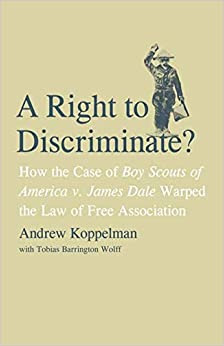
Andrew Koppelman and Tobias Barrington Wolff, A Right to Discriminate?: How the Case of Boy Scouts of America v. James Dale Warped the Law of Free Association (Yale University Press 2009)

Jack M. Balkin and Reva B. Siegel, The Constitution in 2020 (Oxford University Press 2009)

Heather K. Gerken, The Democracy Index: Why Our Election System Is Failing and How to Fix It (Princeton University Press 2009)

Mary Dudziak, Exporting American Dreams: Thurgood Marshall's African Journey (Oxford University Press 2008)

David Luban, Legal Ethics and Human Dignity (Cambridge Univ. Press 2007)

Ian Ayres, Super Crunchers: Why Thinking-By-Numbers is the New Way to be Smart (Bantam 2007)

Jack M. Balkin, James Grimmelmann, Eddan Katz, Nimrod Kozlovski, Shlomit Wagman and Tal Zarsky, eds., Cybercrime: Digital Cops in a Networked Environment (N.Y.U. Press 2007)
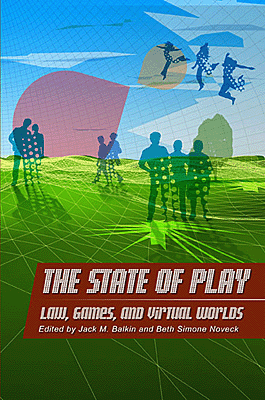
Jack M. Balkin and Beth Simone Noveck, The State of Play: Law, Games, and Virtual Worlds (N.Y.U. Press 2006)

Andrew Koppelman, Same Sex, Different States: When Same-Sex Marriages Cross State Lines (Yale University Press 2006)

Brian Tamanaha, Law as a Means to an End (Cambridge University Press 2006)

Sanford Levinson, Our Undemocratic Constitution (Oxford University Press 2006)

Mark Graber, Dred Scott and the Problem of Constitutional Evil (Cambridge University Press 2006)

Jack M. Balkin, ed., What Roe v. Wade Should Have Said (N.Y.U. Press 2005)

Sanford Levinson, ed., Torture: A Collection (Oxford University Press 2004)
Balkin.com homepage
Bibliography
Conlaw.net
Cultural Software
Writings
Opeds
The Information Society Project
BrownvBoard.com
Useful Links
Syllabi and Exams
