Balkinization
an unanticipated consequence of
Jack M. Balkin
Balkinization Symposiums: A Continuing List
E-mail:
Jack Balkin:
jackbalkin at yahoo.com
Bruce Ackerman
bruce.ackerman at yale.edu
Ian Ayres
ian.ayres at yale.edu
Corey Brettschneider
corey_brettschneider at brown.edu
Mary Dudziak
mary.l.dudziak at emory.edu
Joey Fishkin
joey.fishkin at gmail.com
Heather Gerken heather.gerken at yale.edu
Abbe Gluck abbe.gluck at yale.edu
Mark Graber
mgraber at law.umaryland.edu
Stephen Griffin
sgriffin at tulane.edu
Jonathan Hafetz
jonathan.hafetz at shu.edu
Jeremy Kessler
jkessler at law.columbia.edu
Andrew Koppelman
akoppelman at law.northwestern.edu
Marty Lederman
msl46 at law.georgetown.edu
Sanford Levinson
slevinson at law.utexas.edu
David Luban
david.luban at gmail.com
Gerard Magliocca
gmaglioc at iupui.edu
Jason Mazzone
mazzonej at illinois.edu
Linda McClain
lmcclain at bu.edu
John Mikhail
mikhail at law.georgetown.edu
Frank Pasquale
pasquale.frank at gmail.com
Nate Persily
npersily at gmail.com
Michael Stokes Paulsen
michaelstokespaulsen at gmail.com
Deborah Pearlstein
dpearlst at yu.edu
Rick Pildes
rick.pildes at nyu.edu
David Pozen
dpozen at law.columbia.edu
Richard Primus
raprimus at umich.edu
K. Sabeel Rahmansabeel.rahman at brooklaw.edu
Alice Ristroph
alice.ristroph at shu.edu
Neil Siegel
siegel at law.duke.edu
David Super
david.super at law.georgetown.edu
Brian Tamanaha
btamanaha at wulaw.wustl.edu
Nelson Tebbe
nelson.tebbe at brooklaw.edu
Mark Tushnet
mtushnet at law.harvard.edu
Adam Winkler
winkler at ucla.edu
Compendium of posts on Hobby Lobby and related cases
The Anti-Torture Memos: Balkinization Posts on Torture, Interrogation, Detention, War Powers, and OLC
The Anti-Torture Memos (arranged by topic)
Recent Posts
The Normal Politics of Abnormal Presidents
Judge Posner on Syrian Refugees
Trump's Refugee Order and The Initial Judicial Resistance
Foreign Policy Chaos
Symposium on Law's Abnegation: Collected Posts
Sir Humphrey Appleby Lives
Law's Abnegation: A Reply to the Symposiasts
The Political Construction of Administrative Law
US to rest of world: Don't even think of having any international events in the US
A Valentine to Jennifer Rubin, the most courageous commentator on our present reality
Other uses of "emolument" in The Federalist (and the fallacy of affirming the consequent)
Abnegation?
Administrative Law Working Itself (Im)Pure
Stumbling into Obamacare Federalism
![[Powered by Blogger]](https://lh3.googleusercontent.com/blogger_img_proxy/AEn0k_s4m1VyhueSP5yKS1zGz2INw5FfUX9vLn9TMzr2fb7RIoCfi-3BPPnsZ6u0kDmwbY7-Zt9kd1IrkfQdIxzw0I6NL_7nZCjL3AeKxblQfbYB=s0-d)
Just A Few Blogs
ACS Blog
Alas, a Blog
Althouse
Arts and Letters Daily
Atrios (Eschaton)
Bill of Health
Buzzflash.com
Buzz Machine
Cato at Liberty
Juan Cole (Informed Comment)
Concurring Opinions
The Constitution in 2020
Corrente
Crooked Timber
Daily Howler
Daily Kos
Dana Boyd
Brad DeLong
Digby (Hullabaloo)
Discriminations
Daniel Drezner
Kevin Drum (Mother Jones)
Electrolite
En Banc
Eunomia (Daniel Larison)
Fafblog
Michael Froomkin (Discourse.net)
GovLab (Beth Noveck)
Rick Hasen (Election Law)
History News Network
How Appealing
Ignatz (Sam Heldman)
The Importance of (Ernie Miller)
Infolaw
Instapundit
International Economic Law and Policy Blog
IntLawGrrls
Jacob Levy
Jesus' General
Jurisdynamics
The Kitchen Cabinet
Mark Kleiman
Law Blog Central
Larry Lessig
Lawyers, Guns and Money
Liberal Oasis
Brian Leiter's Law School Reports
The Leiter Reports
Marginal Revolution
Megan McArdle
Memeorandum
Metafilter
Mirror of Justice
The New Republic
Newseum
No More Mister Nice Blog
Brendan Nyhan
Opinio Juris
Orcinus
The Originalism Blog
Pandagon
Passport (Foreign Policy)
Overcoming Bias
Political Animal (Washington Monthly)
Political Theory Daily Review
Political Wire (Taegan Goddard)
The Poor Man
Virginia Postrel
Prawfsblawg
Public Reason
Jonathan Rauch
Raw Story
Redstate
ReligiousLeftLaw.com
Reporters Committee For Freedom of the Press
Reproductive Rights Blog
Rothman's Roadmap to the Right of Publicity
SCOTUS Blog
Seeing the Forest
Clay Shirky
The Shifted Librarian
The Situationist
Larry Solum (Legal Theory)
Andrew Sullivan
Talking Points Memo
Talk Left
Tapped
Tbogg
TechPresident
The Paper Chase (Jurist)
Tom Paine
Tom Tomorrow (This Modern World)
Eve Tushnet
Uggabugga
University of Chicago Law School Faculty Blog
Unqualified Offerings
The Volokh Conspiracy
War and Piece (Laura Rozen)
Wampum
Oliver Willis
Wonkette
Written Description
Matthew Yglesias
Yin
Your Choice of Feeds
1. XML
powered by

2. Atom Feed
3. RSS 2.0
The Normal Politics of Abnormal Presidents
Mark Graber
Posted
1:14 PM
by Mark Graber [link]
Judge Posner on Syrian Refugees
Gerard N. Magliocca
Last fall, a panel of the Seventh Circuit handed down Exodus Refugee Immigration, Inc. v. Pence, which held that the State of Indiana (led then by the current Vice-President) could not lawfully exclude Syrian refugees from the state because that was inconsistent with the federal refugee policy in place at that time. Without commenting on the legality of the President's current executive order, let me quote some excerpts from Judge Posner's opinion about the facts of the case.
Because of fear of terrorist infiltration--apart from the massive 9/11 terrorist attacks, Boston, New York and San Bernadino (California) have been targets of terrorist attacks since 2001 by persons not born in the United States--all persons seeking to enter the United States as refugees are required to undergo multiple layers of screening by the federal government, following screening by the United Nations High Commissioner for Refugees, before they can be admitted to the United States. The process can take up to two years. Of course, there can be no certainty that no terrorist will ever slip through the screen, elaborate though it is; for there has been terrorist infiltration of this country since 9/11 and there is a specific concern about Syrian refugees: many of them were born elsewhere, moved at some point to Syria, became caught up in the civil war there, sought to escape from that embattled nation in which hundreds of thousands of civilians have been killed, and are difficult to screen because little may be known about their life either in Syria or in their country of origin if different from Syria . . .
The governor of Indiana believes, though without evidence, that some of these persons were sent to Syria by ISIS to engage in terrorism and now wish to infiltrate the United States in order to commit terrorist acts here. No evidence of this belief has been presented; it is nightmare speculation . . .
The governor's brief asserts 'the State's compelling interest in protecting its residents from the well-documented threat of terrorists posing as refugees to gain entry into Western countries." But the brief provides no evidence that Syrian terrorists are posing as refugees or that Syrian refugees have ever committed acts of terrorism in the United States. Indeed, as far as can be determined from public sources, no Syrian refugees have been arrested or prosecuted for terrorist acts or attempts in the United States.
More than seventy years ago, Justice Robert Jackson explained that "oversimplification, so handy in political debate, often lacks the precision necessary to postulates of judicial reasoning." The President is soon going to find that out, and he's going to get tired of all the losing.
Posted
11:27 AM
by Gerard N. Magliocca [link]
(72) comments
Trump's Refugee Order and The Initial Judicial Resistance
Jonathan Hafetz
Last night’s ruling by a federal district judge in Brooklyn, temporarily blocking enforcement of key portions of President Trump’s order on refugees and other immigrants, is important in several respects. Trump’s order seeks to suspend entry of all refugees to the United States, bar Syrian refugees indefinitely, and block entry into the U.S. of citizens of seven predominantly Muslim countries (based on those countries' purported associations with terrorism). The order’s implementation produced immediate chaos and suffering—with refugees from war torn countries and legal permanent residents returning home trapped in America’s airports—and sparked protests across the country. Judges in other jurisdictions have also issued rulings blocking parts of Trump's order. (See the E.D. Va. order here, blocking removal of legal permanent residents). While it is too early to draw firm conclusions, here are a few preliminary thoughts on what these important developments could portend.
In entering the stay, Judge Donnelly found that the petitioners had demonstrated a likelihood of success on their procedural due process and equal protection challenges and faced irreparable harm. (Petitioners also raised statutory and international law arguments). The order, entered after an emergency hearing on Saturday night to forestall imminent deportations, did not flesh out the court's analysis. But its issuance suggests that the judge was moved at least in part—and properly so—by the discriminatory animus underlying the order. (David Cole has argued why, for this reason, the order also violates the Establishment Clause). This animus appears not only in the order’s text (note its pledge to keep “radical Islamic terrorists” out of the U.S., while never mentioning other terrorists), but also by Trump’s repeated anti-Muslim statements both during the campaign and since taking office, including his express preference for “Christians” seeking asylum over “Muslims.”
The decision provides a few tea leaves for predicting judicial review in a Trump administration. First, Trump’s overreaching—and his refugee order is almost certainly one example of more to come—could provide an impetus for judges to curb doctrinal anomoloies. In this case, it may embolden otherwise sympathetic judges to chip away at the plenary power doctrine, long criticized as an aberration to prevailing anti-discrimination norms in constitutional jurisprudence. (See Ruthann Robson’s post discussing recent cases where the Supreme Court has suggested it may cast a more critical eye at the doctrine). The refugee order’s combination of manifest bias and arbitrariness—note its senseless targeting of some countries to the exclusion of others (including countries from which the 9/11 attackers came) and its blatant disregard of evidence on the lack of a security risk posed by refugees (see Alex Aleinikoff's post here)—may give judges ground to strengthen those anti-discrimination norms, under whatever standard of scrutiny they ultimately apply. The same goes for the government’s continued assertion of categorical territorial limitations on the Due Process Clause to preclude its application to those stopped at the border-- should, for example, the government continue to detain refugees and others denied entry under Trump’s order without a hearing.
Second, and relatedly, ordinary doctrines of judicial deference will prove vulnerable in the face intemperate and irresponsible action by the executive. Ben Wittes has catalogued the chaos and confusion surrounding the order, which excluded lawyers and other officials in the executive branch with relevant expertise. For a parallel, look at the trio of Supreme Court defeats suffered by the Bush administration after 9/11 on the detention and treatment of terrorism suspects, which resulted from a disregard for legal rules and which was pushed by an ideological cabal within the administration and excluded top military officials. Put simply, judges will be less likely to defer to knee-jerk extremism from a White House in which Steve Bannon is calling the shots or exercising influence. The Trump administration has already appeared to retreat from one key part of the order--the provision affecting legal permanent residents--but the damage to the administration's credibility has been done.
Third, federal courts will continue to provide a crucial check, not only because of their structural independence, but also because they remain insulated from Trump’s non-fact based world. Unlike in the media, where Trump continues to peddle lies (like the falsehood that millions of undocumented immigrants voted illegally during the presidential election) and muddy the water before the American public, courts still operate in a world of law and facts. That is not to say some judges will not view some issues in a manner favorable to the Trump administration. But it does mean that, at least unless and until Trump launches a direct assault on the judiciary, there is still one place where Trump will have to provide answers to the reality based world and will be held accountable on that basis.
Posted
1:24 PM
by Jonathan Hafetz [link]
Foreign Policy Chaos
Stephen Griffin
Posted
10:00 AM
by Stephen Griffin [link]
Symposium on Law's Abnegation: Collected Posts
JB

Jack Balkin, Introduction: Symposium on Adrian Vermeule's Law's Abnegation
Sanford Levinson, On Adrian Vermeule's Law's Abnegation
Jeffrey Pojanowski, The Constitution of Abnegation
David Dyzenhaus, Legality's Affirmation
Gillian Metzger, A Long Arc of Deference or an Endless Cycle? Adding Internal Law and Politics to Adrian Vermeule’s Law’s Abnegation
Jack Balkin, Administrative Law Working itself (Im)Pure
Andrew Koppelman, Abnegation?
Mark Graber, The Political Construction of Administrative Law
Adrian Vermeule, Law's Abnegation: A Reply to the Symposiasts
Posted
9:00 AM
by JB [link]
Sir Humphrey Appleby Lives
Gerard N. Magliocca
My favorite television series are "Yes, Minister" and "Yes, Prime Minister," the BBC programs that aired in the 1980s. They primarily depict the relationship between Jim Hacker, a politician, and Sir Humphrey Appleby, the head civil servant who advises Hacker. In simple terms, some of the plots revolve around Hacker's attempts to get things done over civil service opposition, and some of them are about Appleby's attempts to block ideas that he views as bad policy. It's very funny (in a British way) and still highly relevant.
One of Hacker's telling comments is that the opposition party in Parliament is the opposition in exile, but the civil service is the opposition in residence. I mention this because that may be an accurate description of the current political situation. The trend in administrative law scholarship, dating back to then-Professor Kagan's article on "Presidential Administration in 2001, emphasizes the degree to which presidents have successfully exerted their authority over the administrative agencies even though they also answer to Congress. Less attention, it seems to me, has been given to how civil servants can frustrate presidential policy if they choose to.
In the first week of the new Administration, I've been struck by the extraordinary number of leaks coming from the various agencies. Perhaps I'm wrong, but I think it's unusual to see draft executive orders leaked to the press, or conversations between the President and the head of the National Park Service that just occurred. There is also the new phenomenon of agencies using social media to put out messages that are contrary to the Administration's stated goals.
Won't the President's political appointees get this under control once they are in place? Partially, but how much can they do in the face of determined opposition? You can't just fire civil servants at will, and you can't easily replace the ones with the technical know-how necessary to carry out policy. And (as any devoted watcher of "Yes, Minister" can attest), there are a million complicated strategies that civil servants can use to delay policies if they are so inclined.
This is not to say that the civil service in America is a check-and-balance equivalent to the courts and Congress. But we may find out in the next few years just how much they can do.
Posted
11:02 AM
by Gerard N. Magliocca [link]
(40) comments
Law's Abnegation: A Reply to the Symposiasts
Guest Blogger
Adrian
Vermeule
For the Symposium on Adrian Vermeule, Law's Abnegation.
Posted
9:00 AM
by Guest Blogger [link]
The Political Construction of Administrative Law
Mark Graber
Judicial review and administrative law are politically
constructed. A generation of historical
institutionalists (Keith Whittington, Howard Gillman, Leslie Goldstein, Scott
Lemieux, Paul Frymer, Kevin McMahon, Ran Hirschl, etc.) demonstrated that the judicial
power to declare laws unconstitutional thrives in the United States and
throughout the world because elected officials from the First Congress of the
United States to the Israeli Knesset at the turn of the twenty-first century empowered
courts to declare laws unconstitutional.
Adrian Vermeule in Law’s
Abnegation: From Law’s Empire to the Administrative State brilliantly
documents how both elected officials and federal judges have similar ceded
substantial policy making power to the administrative agencies.
Posted
9:00 AM
by Mark Graber [link]
US to rest of world: Don't even think of having any international events in the US
Sandy Levinson
GIven the actions of the individual who currently occupies the White House, why would any international organization, ranging from scholarly groups to the International Olympics Committee or World Cut, conceivably wish to hold an event in the US. One presumes that it will become ever harder for anyone to get a visa to enter the US. Can anyone possibly believe, for example, that we will effectively protect ourselves against the possibility of a terorrist entering the US simply by denying entry to anyone from, say, Syria or Libya? As we get more paranoid, don't we have to worry about anyone coming from, say, Belgium, France, Germany, and the United Kingdom, as well. Shouldn't we expect anyone and everyone from those countries (and many others as well, including, say, Israel, which has generated its share of Jewish terrorists to complement the better known Arab variety) before we let them through the literal and metaphorical "walls" the present occupant is so eager to build? Perhaps we won't miss the foreign visitors. I'm no fan of the Olympics and was very happy when my sometime-quasi-home city of Boston rejected the opportunity to apply for the 2024 games. But, no doubt, others disagree and wold like to see more such international events. And, as as someone interestd in comparative constitutional law, who is planning to go to Copenhagen in July for the annual conference of such scholars, I would appreciate the 2018 conference's being held in a more convenient (for me) venue, just as the 2015 gathering was in New York. But I suspect I should get used to traveling abroad and simply hoping that none of the countries whose nationals we're going to disrespect and mistreat in the very near future will feel like reciprocating. (In this context, I recall paying handsome feels for visas to visit Brazil and Argentina solely as reciprocal responses to the extortion visited by the US on nationals of those countries who wish to visit the US, unlike (at least currently) visitors from, say, the UK.)
Posted
3:48 PM
by Sandy Levinson [link]
(64) comments
A Valentine to Jennifer Rubin, the most courageous commentator on our present reality
Sandy Levinson
I've suggested this before, but it's worth repeating that the two most truly admirable columnists in the country may well be Michael Gerson and Jennifer Rubin, both of them part of the ostensibly "conservative" cohort of columnists at the Washington Post. They have been consistently and eloquently critical of our newly inaugurated president (who may or may not be a "sociopath," but is almost universally agreed to be otherwise unfit to be our president under any standard criteria, including previous experience, knowledge of relevant policy, and emotional maturality). They have both become genuine heroes of mine, which means, among other things, that I will now read and take seriously even columns of theirs when I disagree with them (as when, say, Ms. Rubin attacks the Iran deal or expresses more support for the current Israeli position than I believe is merited). They are both truly serious and commendable people, who are clearly willing to burn bridges to traditional friends and allies because of their own intellectual and moral integrity. I've never met either, but it would be an honor to do so..Both deserve the award that the JFK library gives each year to those who are "profiles in courage" (an award, incidentally, that JFK would certainly never have won as a practicing politician).
The gist of her column, provocatively titled "Maybe Trump is not lying," is that in fact he may not be "lying" in the sense of actually realizing that he is stating falsehoods. Instead, he is truly delusionary, believing that what he is saying is "in fact" true, just in the way (my analogy, not hers) that a certain kind of schizophrenic claiming to hear voices from aliens contacting him/her from spaceships hovering above us in the ether may in fact be accurately conveying his/her perception of reality. So who is worse, a mendacious clear-cut liar (think of Kelly Anne Conway, perhaps the single most loathesome person to emerge from the Trump entourage, even moreso than Steve Bannon, who probably does in fact believe some of his near-neo-Nazi pernicious nonsense) or a delusionary? One might analyze this either as moral question or a policy question. The former allows us to let the "sincere" schizophrenic off the hook for the reasons that we allow people to be acquitted on grounds of mental illness even as we immediately commit them to facilities not called "prisons" because they are in fact dangers to themselves or, more importantly, others. The latter, on the other hand, requires us to ask which is in fact more of a truly danger as a would-be "leader." (The answer, of course, may be that both are equal menaces.) In any event, she concludes as follows:
We are not calling — yet — for invocation of Section 4 of the
25th Amendment. (“Whenever the Vice President and a majority of either
the principal officers of the executive departments or of such other
body as Congress may by law provide, transmit to the President pro
tempore of the Senate and the Speaker of the House of Representatives
their written declaration that the President is unable to discharge the
powers and duties of his office, the Vice President shall immediately
assume the powers and duties of the office as Acting President.”)
We are calling
for someone, perhaps his children, to see if they can prevail upon him
to stop behaving in this way, for if not, legitimate worries will mount
about whether he is able to carry out his duties. We also are saying that Republicans need to be pressed to state their view: Is he lying or is he unable to separate what he wants to believe and what exists, literally, in front of his eyes?
The first makes him morally unfit, and was the basis upon which many
#NeverTrumpers refused to vote for him. If the latter, they — and we all
— have a constitutional crisis the likes of which we have never seen.
With Trump, however, we have learned the past provides no guarantees
So she is willing to suggest what others have been too tactful (or gutless) to note: That we don't have to talk about impeachment, which requires wading into the swamp of legalistic arguments about what constitutes a "high crime and misdemeanor." We're already beginning to be subjected to endless debate about the one true meaning of the Emoluments Clause, which, frankly, I regard as exemplifying the kind of bubble of abstracted legalism that smart and well-trained lawyers live in. Within a seminar room, it may be worth arguing whether the Emoluments Clause does or does not apply to the President because he is not an "officer" under a certain tendentious reading of 18th century literature. Among other things, of course, this requires putting to one side that it is almost literally bizarre to assume that those who cared enough about foreign influence to put the Emoluments Clause in the Constitution in the first place would have thought that it should be perfectly all right for foreigners in effect to try to bribe a sitting president. But I truly digress, for what makes Donald Trump so truly scary to almost any thoughtful individual (including, I have discovered, at least one of my colleagues at the University of Texas who in fact voted for him) is his emotional volatility. (I should note, incidentally, that another colleague of mine, a trained physician, has suggested that Mr. Trump is exhibiting some symptions of early-onset dementia--which wouldn't be all that early given that he is, after all, 70.
The 25th Amendment, if one in fact takes it seriously as part of the Constitution, does offer a way to get rid of Mr. Trump tomorrow without having to submit to Talmudic debates about the particular extent to which he has committed "high crimes or misdemeanors." To be sure, other kinds of debates are generated by the 25th Amendment, but, blessedly, none of them require getting into the swamp of originalism and the like. One "merely" has to figure out how to discern whether or not a President has become unfit to carry out the responsibilities of his/her office.
Even if, as a practical matter, it is unimaginable that the 25th Amendment will in fact be invoked (any more than it was invoked in Reagan's second term, when one suspects that some of the inner circle were aware that Alzheimer's has set in), we we should ask ourselves exactly why it is unimaginable. As she suggests, there is a perfectly good argument that he lacks the emotional stability to carry out the solemn duties of his office. Is this proof that the 25th Amendment, added to the Constitution only after John F. Kennedy's assassination and the realization that we would have been far worse off had he lived and lingered as a severely injured President, perhaps like Woodrow Wilson, is exactly what James Madison thought was true about lots of the Constitution--that is, that the relevant clauses were simply "parchment barriers," not to be taken really seriously.
It would be a very good thing if the press, every time it interrogated Vice President Pence and other members of the Cabinet, asked if they were aware of the Amendment and if they had any personal concerns about Mr. Trump's actual abilities carry out his office. Do they really believe it is irrelevant what a President believes to be the case about the world, whether it's space aliens from Venus, the non-existence of global warming, the presence or electoral fraud, or whatever? I assume that they do not share the same delusions that Mr. Trump does, which means they are, like Ms.Conway, only mendacious enablers who deserve the unalloyed contempt of the country in a way that a pathetically deluded schizophrenic does not. Perhaps Donald Trump indeed has the excuse of being seriously mentally ill. There is no excuse for his entourage of enablement, including people like Paul Ryan and Mitch McConnell. .
Posted
3:38 PM
by Sandy Levinson [link]
(46) comments
Other uses of "emolument" in The Federalist (and the fallacy of affirming the consequent)
John Mikhail
Posted
12:15 PM
by John Mikhail [link]
Abnegation?
Andrew Koppelman
For the Symposium on Adrian Vermeule, Law's Abnegation.
Posted
9:00 AM
by Andrew Koppelman [link]
Administrative Law Working Itself (Im)Pure
JB
For the Symposium on Adrian Vermeule, Law's Abnegation.
Posted
9:00 AM
by JB [link]
Stumbling into Obamacare Federalism
Joseph Fishkin
Federalism has various functions in our constitutional system. But the picture of which functions matter most changes during periods of intense political polarization, intense federal government dysfunction, or both (and our current political era, both pre- and post-Trump, is a cocktail with a whole lot of both).
For example: Heather Gerken has argued that one central function of federalism, and indeed sub-federalism potentially “all the way down,” is to allow people who are in the minority in national policy disagreements to have some jurisdictions where they actually decide—govern—rather than merely voicing their dissent. This particular function of federalism takes on greater significance at times of intense polarization, even as that same polarization tends to tax the willingness of those in power at the national level to countenance dissent from the states below.
I’ve blogged here before about another, less laudable item in the list of functions of federalism (and especially of “cooperative federalism”): to obscure the role of the federal government in major national policy measures, disguising federal policy as state policy and federal dollars as state dollars. This is one of the reasons why you so often see polling results that show, for example, that state insurance exchanges created by the Affordable Care Act (such as KYNECT, the Kentucky-branded exchange), as well as the state-administered Medicaid programs the ACA dramatically expanded, are far more popular than the ACA itself. To be sure, even the ACA itself—the unambiguously national brand—is more popular than Beltway Republicans think. But its state-branded components are often considerably more popular. As is often the case, states get undue credit for the good stuff. The individual mandate—collected by the IRS via your 1040—looks like the federal policy it is, while KYNECT looks like the state of Kentucky. Here as elsewhere, citizens have every reason not to understand that the bulk of the money for many popular state programs comes from the federal government. We have deliberately fuzzed it up.
The current debacle unfolding in Congress and the Executive Branch, as Republicans flounder to formulate a plan to “replace” the ACA, amid radical disagreement within their own ranks over exactly what the goals and scope of any such replacement ought to be, has me thinking about a third and much simpler function of federalism. Federalism can be a way to punt. Sometimes, the federal government simply has reason to decide not to decide an issue. Maybe the tradeoffs are too hard. Maybe there is no solution that can garner a majority in Congress. So, the federal government punts, leaving it to the states.
There is plenty of overlap among the functions of federalism I’ve just mentioned (and others I have not). For instance, sometimes people advocate what sounds like a punt to the states of a hard issue, but really what they have in mind is more Gerkenian: One side is nationally in the minority, and they argue that something should be “left to the states” precisely because that way they’ll win somewhere rather than losing everywhere; and perhaps by winning somewhere, they’ll advance their overall argument in the national public sphere in the long run. This is why “leave [same-sex] marriage to the states” was at one time, briefly, the liberal position (when liberals were nationally in the minority on the issue) and then later became the conservative position (when conservatives found themselves in the minority).
So that brings us to our current political moment. Republicans have a problem. Their general problem is that now they have to govern. Their specific problem is that they have pledged to “repeal and replace” the ACA and they have no idea how to translate this into national policy that can (a) garner 60 votes in the Senate and a majority in the House, (b) not mangle the national health insurance system so badly that it creates political blowback on an epic scale (I am deliberately setting the bar very low), and (c) satisfy their core supporters that they have followed through on their promise to slay their white whale, Obamacare. Indeed it would be a challenge to satisfy any two of these! And they do need all three.
Many but not all Republicans would set the bar higher, with a stronger version of (b) that we could call the “nonretrogression” principle in health insurance: The millions of people who now have coverage through either expanded-Medicaid or the exchanges should not be made substantially, visibly worse off (such as by losing health insurance outright, or seeing their current insurance replaced with something that is obviously flimsy in comparison). President Trump, for his part, has repeatedly and forcefully endorsed this stronger version of (b).
The result is a moment of serious peril for the new Republican governing majority, and I’m not sure they yet appreciate the scope of the peril. Any major, high-profile changes to Obamacare will begin to trigger the Pottery Barn rule: the chaos and broken mess of the health insurance system will begin to be blamed on Republicans. Even without such major, high-profile changes, after a while people will tend to blame the President for national policies that are going badly.
So, what to do? The answer is Obamacare federalism.
That should be where this debate ends up. And—each of the major sides in that debate in Washington should endorse some version of it, for different reasons that track the functions of federalism outlined at the start of this post. This afternoon I saw an early indication that a few key Republican Senators are thinking along these very lines.*
Read more »
Posted
8:53 PM
by Joseph Fishkin [link]
Books by Balkinization Bloggers

Gerard N. Magliocca, The Actual Art of Governing: Justice Robert H. Jackson's Concurring Opinion in the Steel Seizure Case (Oxford University Press, 2025)

Linda C. McClain and Aziza Ahmed, The Routledge Companion to Gender and COVID-19 (Routledge, 2024)

David Pozen, The Constitution of the War on Drugs (Oxford University Press, 2024)

Jack M. Balkin, Memory and Authority: The Uses of History in Constitutional Interpretation (Yale University Press, 2024)
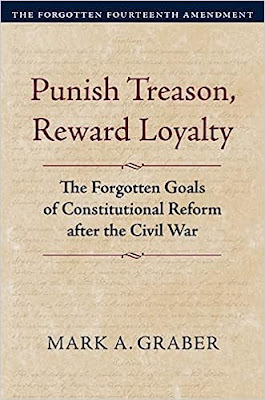
Mark A. Graber, Punish Treason, Reward Loyalty: The Forgotten Goals of Constitutional Reform after the Civil War (University of Kansas Press, 2023)
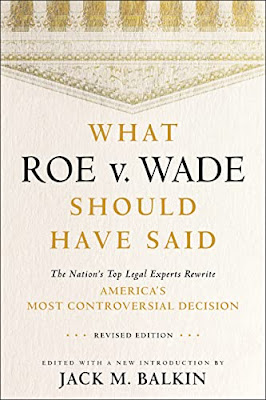
Jack M. Balkin, What Roe v. Wade Should Have Said: The Nation's Top Legal Experts Rewrite America's Most Controversial Decision - Revised Edition (NYU Press, 2023)

Andrew Koppelman, Burning Down the House: How Libertarian Philosophy Was Corrupted by Delusion and Greed (St. Martin’s Press, 2022)

Gerard N. Magliocca, Washington's Heir: The Life of Justice Bushrod Washington (Oxford University Press, 2022)
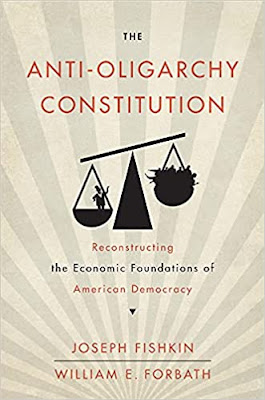
Joseph Fishkin and William E. Forbath, The Anti-Oligarchy Constitution: Reconstructing the Economic Foundations of American Democracy (Harvard University Press, 2022)
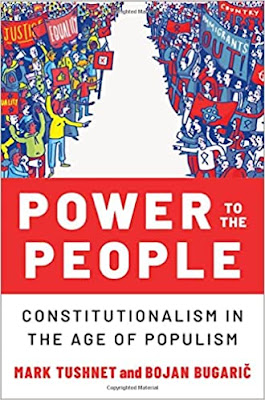
Mark Tushnet and Bojan Bugaric, Power to the People: Constitutionalism in the Age of Populism (Oxford University Press 2021).

Mark Philip Bradley and Mary L. Dudziak, eds., Making the Forever War: Marilyn B. Young on the Culture and Politics of American Militarism Culture and Politics in the Cold War and Beyond (University of Massachusetts Press, 2021).

Jack M. Balkin, What Obergefell v. Hodges Should Have Said: The Nation's Top Legal Experts Rewrite America's Same-Sex Marriage Decision (Yale University Press, 2020)

Frank Pasquale, New Laws of Robotics: Defending Human Expertise in the Age of AI (Belknap Press, 2020)

Jack M. Balkin, The Cycles of Constitutional Time (Oxford University Press, 2020)

Mark Tushnet, Taking Back the Constitution: Activist Judges and the Next Age of American Law (Yale University Press 2020).

Andrew Koppelman, Gay Rights vs. Religious Liberty?: The Unnecessary Conflict (Oxford University Press, 2020)

Ezekiel J Emanuel and Abbe R. Gluck, The Trillion Dollar Revolution: How the Affordable Care Act Transformed Politics, Law, and Health Care in America (PublicAffairs, 2020)

Linda C. McClain, Who's the Bigot?: Learning from Conflicts over Marriage and Civil Rights Law (Oxford University Press, 2020)
Sanford Levinson and Jack M. Balkin, Democracy and Dysfunction (University of Chicago Press, 2019)

Sanford Levinson, Written in Stone: Public Monuments in Changing Societies (Duke University Press 2018)

Mark A. Graber, Sanford Levinson, and Mark Tushnet, eds., Constitutional Democracy in Crisis? (Oxford University Press 2018)

Gerard Magliocca, The Heart of the Constitution: How the Bill of Rights became the Bill of Rights (Oxford University Press, 2018)

Cynthia Levinson and Sanford Levinson, Fault Lines in the Constitution: The Framers, Their Fights, and the Flaws that Affect Us Today (Peachtree Publishers, 2017)

Brian Z. Tamanaha, A Realistic Theory of Law (Cambridge University Press 2017)

Sanford Levinson, Nullification and Secession in Modern Constitutional Thought (University Press of Kansas 2016)

Sanford Levinson, An Argument Open to All: Reading The Federalist in the 21st Century (Yale University Press 2015)

Stephen M. Griffin, Broken Trust: Dysfunctional Government and Constitutional Reform (University Press of Kansas, 2015)

Frank Pasquale, The Black Box Society: The Secret Algorithms That Control Money and Information (Harvard University Press, 2015)

Bruce Ackerman, We the People, Volume 3: The Civil Rights Revolution (Harvard University Press, 2014)
Balkinization Symposium on We the People, Volume 3: The Civil Rights Revolution

Joseph Fishkin, Bottlenecks: A New Theory of Equal Opportunity (Oxford University Press, 2014)

Mark A. Graber, A New Introduction to American Constitutionalism (Oxford University Press, 2013)

John Mikhail, Elements of Moral Cognition: Rawls' Linguistic Analogy and the Cognitive Science of Moral and Legal Judgment (Cambridge University Press, 2013)

Gerard N. Magliocca, American Founding Son: John Bingham and the Invention of the Fourteenth Amendment (New York University Press, 2013)

Stephen M. Griffin, Long Wars and the Constitution (Harvard University Press, 2013)

Andrew Koppelman, The Tough Luck Constitution and the Assault on Health Care Reform (Oxford University Press, 2013)

James E. Fleming and Linda C. McClain, Ordered Liberty: Rights, Responsibilities, and Virtues (Harvard University Press, 2013)
Balkinization Symposium on Ordered Liberty: Rights, Responsibilities, and Virtues

Andrew Koppelman, Defending American Religious Neutrality (Harvard University Press, 2013)

Brian Z. Tamanaha, Failing Law Schools (University of Chicago Press, 2012)

Sanford Levinson, Framed: America's 51 Constitutions and the Crisis of Governance (Oxford University Press, 2012)

Linda C. McClain and Joanna L. Grossman, Gender Equality: Dimensions of Women's Equal Citizenship (Cambridge University Press, 2012)

Mary Dudziak, War Time: An Idea, Its History, Its Consequences (Oxford University Press, 2012)

Jack M. Balkin, Living Originalism (Harvard University Press, 2011)

Jason Mazzone, Copyfraud and Other Abuses of Intellectual Property Law (Stanford University Press, 2011)

Richard W. Garnett and Andrew Koppelman, First Amendment Stories, (Foundation Press 2011)

Jack M. Balkin, Constitutional Redemption: Political Faith in an Unjust World (Harvard University Press, 2011)

Gerard Magliocca, The Tragedy of William Jennings Bryan: Constitutional Law and the Politics of Backlash (Yale University Press, 2011)

Bernard Harcourt, The Illusion of Free Markets: Punishment and the Myth of Natural Order (Harvard University Press, 2010)

Bruce Ackerman, The Decline and Fall of the American Republic (Harvard University Press, 2010)
Balkinization Symposium on The Decline and Fall of the American Republic

Ian Ayres. Carrots and Sticks: Unlock the Power of Incentives to Get Things Done (Bantam Books, 2010)

Mark Tushnet, Why the Constitution Matters (Yale University Press 2010)

Ian Ayres and Barry Nalebuff: Lifecycle Investing: A New, Safe, and Audacious Way to Improve the Performance of Your Retirement Portfolio (Basic Books, 2010)
.jpg)
Jack M. Balkin, The Laws of Change: I Ching and the Philosophy of Life (2d Edition, Sybil Creek Press 2009)

Brian Z. Tamanaha, Beyond the Formalist-Realist Divide: The Role of Politics in Judging (Princeton University Press 2009)
Andrew Koppelman and Tobias Barrington Wolff, A Right to Discriminate?: How the Case of Boy Scouts of America v. James Dale Warped the Law of Free Association (Yale University Press 2009)

Jack M. Balkin and Reva B. Siegel, The Constitution in 2020 (Oxford University Press 2009)

Heather K. Gerken, The Democracy Index: Why Our Election System Is Failing and How to Fix It (Princeton University Press 2009)

Mary Dudziak, Exporting American Dreams: Thurgood Marshall's African Journey (Oxford University Press 2008)

David Luban, Legal Ethics and Human Dignity (Cambridge Univ. Press 2007)

Ian Ayres, Super Crunchers: Why Thinking-By-Numbers is the New Way to be Smart (Bantam 2007)

Jack M. Balkin, James Grimmelmann, Eddan Katz, Nimrod Kozlovski, Shlomit Wagman and Tal Zarsky, eds., Cybercrime: Digital Cops in a Networked Environment (N.Y.U. Press 2007)
Jack M. Balkin and Beth Simone Noveck, The State of Play: Law, Games, and Virtual Worlds (N.Y.U. Press 2006)

Andrew Koppelman, Same Sex, Different States: When Same-Sex Marriages Cross State Lines (Yale University Press 2006)

Brian Tamanaha, Law as a Means to an End (Cambridge University Press 2006)

Sanford Levinson, Our Undemocratic Constitution (Oxford University Press 2006)

Mark Graber, Dred Scott and the Problem of Constitutional Evil (Cambridge University Press 2006)

Jack M. Balkin, ed., What Roe v. Wade Should Have Said (N.Y.U. Press 2005)

Sanford Levinson, ed., Torture: A Collection (Oxford University Press 2004)
Balkin.com homepage
Bibliography
Conlaw.net
Cultural Software
Writings
Opeds
The Information Society Project
BrownvBoard.com
Useful Links
Syllabi and Exams
