Balkinization
an unanticipated consequence of
Jack M. Balkin
Balkinization Symposiums: A Continuing List
E-mail:
Jack Balkin:
jackbalkin at yahoo.com
Bruce Ackerman
bruce.ackerman at yale.edu
Ian Ayres
ian.ayres at yale.edu
Corey Brettschneider
corey_brettschneider at brown.edu
Mary Dudziak
mary.l.dudziak at emory.edu
Joey Fishkin
joey.fishkin at gmail.com
Heather Gerken heather.gerken at yale.edu
Abbe Gluck abbe.gluck at yale.edu
Mark Graber
mgraber at law.umaryland.edu
Stephen Griffin
sgriffin at tulane.edu
Jonathan Hafetz
jonathan.hafetz at shu.edu
Jeremy Kessler
jkessler at law.columbia.edu
Andrew Koppelman
akoppelman at law.northwestern.edu
Marty Lederman
msl46 at law.georgetown.edu
Sanford Levinson
slevinson at law.utexas.edu
David Luban
david.luban at gmail.com
Gerard Magliocca
gmaglioc at iupui.edu
Jason Mazzone
mazzonej at illinois.edu
Linda McClain
lmcclain at bu.edu
John Mikhail
mikhail at law.georgetown.edu
Frank Pasquale
pasquale.frank at gmail.com
Nate Persily
npersily at gmail.com
Michael Stokes Paulsen
michaelstokespaulsen at gmail.com
Deborah Pearlstein
dpearlst at yu.edu
Rick Pildes
rick.pildes at nyu.edu
David Pozen
dpozen at law.columbia.edu
Richard Primus
raprimus at umich.edu
K. Sabeel Rahmansabeel.rahman at brooklaw.edu
Alice Ristroph
alice.ristroph at shu.edu
Neil Siegel
siegel at law.duke.edu
David Super
david.super at law.georgetown.edu
Brian Tamanaha
btamanaha at wulaw.wustl.edu
Nelson Tebbe
nelson.tebbe at brooklaw.edu
Mark Tushnet
mtushnet at law.harvard.edu
Adam Winkler
winkler at ucla.edu
Compendium of posts on Hobby Lobby and related cases
The Anti-Torture Memos: Balkinization Posts on Torture, Interrogation, Detention, War Powers, and OLC
The Anti-Torture Memos (arranged by topic)
Recent Posts
Is Hillary Clinton Unconstitutional?
![[Powered by Blogger]](https://lh3.googleusercontent.com/blogger_img_proxy/AEn0k_sRl9sk2SNyqn__OW0wri17V3TQSCbsM9wW7dDVc1-ki59YvM6vZJ-gKK-ExQSZcuckTWoGvoU8p7cAJHUeLq2-PwTkkitlJlgFa2SdmnBD=s0-d)
Just A Few Blogs
ACS Blog
Alas, a Blog
Althouse
Arts and Letters Daily
Atrios (Eschaton)
Bill of Health
Buzzflash.com
Buzz Machine
Cato at Liberty
Juan Cole (Informed Comment)
Concurring Opinions
The Constitution in 2020
Corrente
Crooked Timber
Daily Howler
Daily Kos
Dana Boyd
Brad DeLong
Digby (Hullabaloo)
Discriminations
Daniel Drezner
Kevin Drum (Mother Jones)
Electrolite
En Banc
Eunomia (Daniel Larison)
Fafblog
Michael Froomkin (Discourse.net)
GovLab (Beth Noveck)
Rick Hasen (Election Law)
History News Network
How Appealing
Ignatz (Sam Heldman)
The Importance of (Ernie Miller)
Infolaw
Instapundit
International Economic Law and Policy Blog
IntLawGrrls
Jacob Levy
Jesus' General
Jurisdynamics
The Kitchen Cabinet
Mark Kleiman
Law Blog Central
Larry Lessig
Lawyers, Guns and Money
Liberal Oasis
Brian Leiter's Law School Reports
The Leiter Reports
Marginal Revolution
Megan McArdle
Memeorandum
Metafilter
Mirror of Justice
The New Republic
Newseum
No More Mister Nice Blog
Brendan Nyhan
Opinio Juris
Orcinus
The Originalism Blog
Pandagon
Passport (Foreign Policy)
Overcoming Bias
Political Animal (Washington Monthly)
Political Theory Daily Review
Political Wire (Taegan Goddard)
The Poor Man
Virginia Postrel
Prawfsblawg
Public Reason
Jonathan Rauch
Raw Story
Redstate
ReligiousLeftLaw.com
Reporters Committee For Freedom of the Press
Reproductive Rights Blog
Rothman's Roadmap to the Right of Publicity
SCOTUS Blog
Seeing the Forest
Clay Shirky
The Shifted Librarian
The Situationist
Larry Solum (Legal Theory)
Andrew Sullivan
Talking Points Memo
Talk Left
Tapped
Tbogg
TechPresident
The Paper Chase (Jurist)
Tom Paine
Tom Tomorrow (This Modern World)
Eve Tushnet
Uggabugga
University of Chicago Law School Faculty Blog
Unqualified Offerings
The Volokh Conspiracy
War and Piece (Laura Rozen)
Wampum
Oliver Willis
Wonkette
Written Description
Matthew Yglesias
Yin
Your Choice of Feeds
1. XML
powered by

2. Atom Feed
3. RSS 2.0
Is Hillary Clinton Unconstitutional?
Larry Tribe
Past Presidents have confronted this very problem on numerous occasions, as with the appointment of Senator Philander Knox as Secretary of State by President Taft in 1909, the appointment of Senator William Saxbe as Attorney General by President Nixon in 1973, the appointment of Senator Edmund Muskie as Secretary of State by President Carter in 1980, and the appointment of Senator Lloyd Bentsen as Secretary of the Treasury by President Clinton in 1993. In each instance, the constitutional "fix" for what would otherwise have been an insurmountable Emoluments Clause obstacle took the form of a congressional repeal of the pay raise for the Cabinet office in question, restoring the "emoluments" for that office to the level that had obtained prior to the election of the relevant Senator. The technique has unfortunately come to be known as the "Saxbe fix" by virtue of its hotly-debated use by President Richard M. Nixon to put his friend William Saxbe of Ohio in the Attorney General's seat during the Watergate scandal. I say "unfortunately" because the cultural and political hangover of that scandal can all too easily rub off on the mechanism identified by this name. Even the word "fix" carries a needlessly pejorative taint. Nor does the provenance of this device avoid casting a shadow over its validity. Robert Bork, an otherwise distinguished former Yale Law School professor and D.C. Circuit Court judge and a Supreme Court nominee whose path to that post was obstructed in no small part by his role in the infamous Saturday Night Massacre, was serving as Acting Attorney General at the time of the Saxbe nomination. He defended the proposed "Saxbe fix" by invoking historical precedent and focusing on the anti-self-dealing aims of the constitutional prohibition in question, aims that he argued were amply satisfied once the salary of the relevant office had been rolled back by statute. The principal opponents of Judge Bork's constitutional position were Senator Robert Byrd, New York Times editorialist Anthony Lewis, and then-professor Stephen G. Breyer. As matters unfolded, the legislation reducing the salary of the Attorney General's office to which Saxbe aspired passed with but ten dissenting votes, the dissenters resting entirely on the Constitution. Although the statute Congress enacted contained an expedited judicial review provision, it was never challenged in court; indeed, no such challenge has ever been launched, and none is likely to be. It appears that every presidential administration after that of Richard Nixon has deemed the Saxbe fix sufficient with the sole exception of the Reagan administration. President Reagan's Department of Justice, in a still-unreleased OLC opinion, concluded that nominating Senator Orin Hatch to the Supreme Court vacancy created by Justice Powell's resignation would be unconstitutional even if the salary of the office were to be reduced. The seat that might otherwise have gone to Senator Hatch instead went to Justice Anthony M. Kennedy, and the rest, as they say, is history. I find myself in the curious position of agreeing, at least in result, with the opinion of then Acting Attorney General Robert Bork on this matter and disagreeing with the opinion of my then colleague and friend (and now Justice) Stephen G. Breyer and my friend Tony Lewis . The reason, quite simply, is that the text of the Emoluments Clause, while capable of a reading that would make salary increases incurable by rollbacks of the sort historically employed to address the difficulty, does not demand that reading either as a linguistic matter or as an historical matter, much less as a functional matter. Linguistically, the reference to any civil office "the Emoluments whereof shall have been encreased" during the time for which the appointed lawmaker was elected need not be understood as encompassing every office for which the statutory salary had at one time been increased even though a subsequent enactment, signed into law before the contested appointment takes effect, has negated that increase. The fact that the clause uses the past participle, "have been encreased," hardly means that its backward-looking focus cannot take into account downward salary movements that fully negate earlier increases. Then-Professor Stephen Breyer, in his Nov. 28, 1973 letter to Senator Robert Byrd, conceded that he was not offering "an expert opinion" and had "not researched the question" but, with that proviso, nonetheless opined that any pay raise enacted for a given office by Congress would automatically signal an augmentation of the status and prestige attached to the office in question -- an augmentation that undoing the pay raise could not negate, given the odds that a future Congress would restore the increased salary of the office once the new appointee had departed. Because "there seems no way that the present Congress could disable the future Congress from voting the pay increase," Breyer argued in his letter, rescinding a prior pay increase cannot suffice. The analysis has an ingenuity characteristic of Justice Breyer, but it seems to me to have more ingenuity than force. The focus of the Clause is on tangible emoluments, not on intangible prestige. To reason as Breyer did in his letter is to make salary increases irreversible for purposes of appointing members of Congress to positions in the Executive Branch even when an office for which the salary has at one point been increased is later demoted in significance and compensation for reasons wholly unrelated to the desire to appoint a particular Senator or Representative -- a consequence that seems to me to transmute time's arrow from a principle of thermodynamics into an iron rule of politics. Omar Khayam's "moving finger" that "writes and, having writ, moves on," need not control our reading of what I continue to regard as genuinely ambiguous constitutional text. The contrary argument, most fully developed in John O'Connor, The Emoluments Clause: An Anti-Federalist Intruder in a Federalist Constitution, 24 Hofstra L. Rev. 89 (1995), makes a perfectly decent grammatical case for its position but is anything but dispositive. Nor is O'Connor's further argument -- to the effect that the Saxbe fix undermines a secondary purpose of the Emoluments Clause (to wit: its purpose to "limit[] the size, importance, and reach of the federal bureaucracy") -- at all persuasive, although it certainly merits consideration. Where, as in this instance, the indisputably primary purpose of the Clause (to wit: its anti-corruption, anti-self-dealing purpose) points to what has become the historically conventional reading, only constitutional perversity would be advanced by treating the Emoluments Clause as an insurmountable bar to the Clinton appointment. To be sure, early practice under the Constitution was less forgiving on this score. President George Washington withdrew the nomination of William Patterson of New Jersey to be an associate justice of the Supreme Court because Patterson had been a Senator at the time the office was created. And an 1882 Attorney General opinion held that former Senator Kirkwood could not be appointed to a tariff commission established during the term for which he had been elected to the Senate. Attorney General Brewster wrote: "It is unnecessary to consider the question of the policy which occasioned this constitutional prohibition. I must be controlled exclusively by the positive terms of the provision of the Constitution." He deemed the language to be "precise and clear," making the "rule . . . absolute, as expressed in the terms of the Constitution." But that approach to constitutional exegesis, which proceeds on the premise that language may be ripped from its purposes even in a transparently purposive document and which treats as "clear" that which a bit of worry readily exposes as anything but, seems to me profoundly antithetical to the hoary maxim that it is, after all, "a constitution we are expounding." That maxim, I hasten to add, is no less applicable to the visible constitutional text than it is to what I have called the "invisible" Constitution, the Constitution about which we may reason but whose words we cannot find in the document. Somewhat troublesome for the point of view I espouse here is the absence of any constitutional proviso for annulling what would otherwise be a violation of the Emoluments Clause by decreasing a salary hike at some later time. Not all constitutional silences speak loudly, but this one at least whispers a word of caution, given other constitutional provisions that expressly allow waivers or fixes for limits on office-holding. For example, Article I, Sec.9, Cl.8, providing that "no Person holding any Office of Profit or Trust under [the United States] shall, without the Consent of the Congress, accept of any present, Emolument, Office, or Title, of any kind whatever, from any King, Prince, or foreign State," includes within its text the escape clause referring to congressional consent. And the Fourteenth Amendment, Sec.3, prohibiting officeholding by anyone who ever "engaged in insurrection or rebellion" against the United States or gave "aid or comfort to the enemies thereof," concludes with its own escape clause: "But Congress may by a vote of two-thirds of each House, remove such disability." One could certainly argue that the absence of any similar escape clause renders the "Saxbe fix" extra-constitutional. But the central aim of the Emoluments Clause -- to limit opportunities for self-dealing -- would make the kind of escape clause required here singularly peculiar. Such a clause would presumably have taken the form of language adding to the words "shall have been encreased during such time" the words "unless said Emoluments shall subsequently have been decreased by at least an equivalent amount," a proviso quite different in structure and purpose from those referenced above. Thus this is not one of those instances in which the sounds of silence speak with sufficient clarity to overcome the thrust of a purposive analysis. I am, finally, influenced by the fact that the salary increase at issue here was created not by any enactment for which Senator Clinton voted or on which she had any opportunity to vote. Rather, that increase was created by a statute enacted well before Hillary Clinton was elected to the Senate. My understanding is that the 1990s cost-of-living statute in question, 5 U.S.C. Sec. 5303, automatically increases the salaries for a number of federal offices, including that of Secretary of State, provided the President does not certify that the increase would be inappropriate. That an Executive Order issued in January 2008 failed to make a finding of inappropriateness hardly makes it the case that the Secretary of State's salary was "encreased" this year -- only that an all-but-automatic increase put in place before Senator Clinton arrived on the scene was permitted to go into effect. The focus of the Emoluments Clause, as indicated by its parallel reference to "any civil Office . . . which shall have been created," is to the creative exercise of affirmative governmental authority during the period in question. The absence of any reference in the Clause to which particular agent acted to cause the increase may well mean that it would be no defense to an otherwise good Emoluments Clause objection that the Senator in question had not voted on, or had even voted against, the measure that operated to increase the salary of the office to which that Senator aspired. But that absence of a reference to agency should not, I submit, be construed to make it a matter of indifference that the relevant decision was plainly taken before the "Time for which [Senator Clinton] was elected" and not "during [that] Time." My conclusion is, therefore, that Secretary of State Hillary Clinton would not be unconstitutional. Cf. Michael Stokes Paulsen, Is Lloyd Bentsen Unconstitutional?, 46 Stan. L. Rev. 907 (1994). Laurence H. Tribe
Labels: Is Hillary Clinton Unconstitutional?
Posted 3:33 PM by Larry Tribe [link] (56) comments
Books by Balkinization Bloggers

Mark Tushnet and Bojan Bugaric, Constitutionalism and Its Discontents (University of Chicago Press, 2026)

Gerard N. Magliocca, The Actual Art of Governing: Justice Robert H. Jackson's Concurring Opinion in the Steel Seizure Case (Oxford University Press, 2025)

Linda C. McClain and Aziza Ahmed, The Routledge Companion to Gender and COVID-19 (Routledge, 2024)

David Pozen, The Constitution of the War on Drugs (Oxford University Press, 2024)

Jack M. Balkin, Memory and Authority: The Uses of History in Constitutional Interpretation (Yale University Press, 2024)
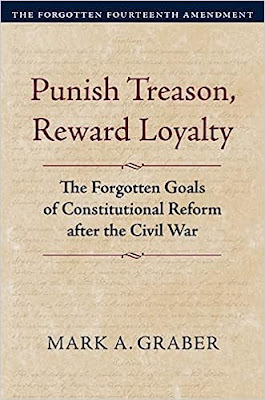
Mark A. Graber, Punish Treason, Reward Loyalty: The Forgotten Goals of Constitutional Reform after the Civil War (University of Kansas Press, 2023)
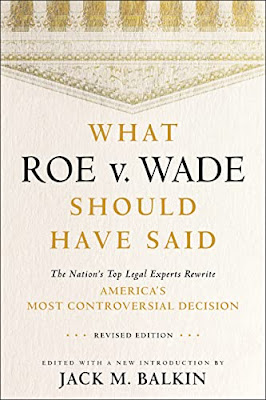
Jack M. Balkin, What Roe v. Wade Should Have Said: The Nation's Top Legal Experts Rewrite America's Most Controversial Decision - Revised Edition (NYU Press, 2023)

Andrew Koppelman, Burning Down the House: How Libertarian Philosophy Was Corrupted by Delusion and Greed (St. Martin’s Press, 2022)

Gerard N. Magliocca, Washington's Heir: The Life of Justice Bushrod Washington (Oxford University Press, 2022)
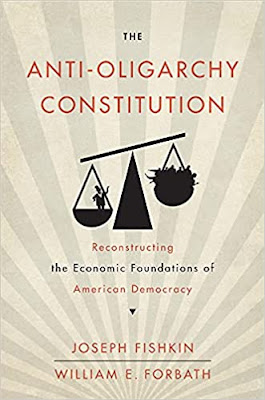
Joseph Fishkin and William E. Forbath, The Anti-Oligarchy Constitution: Reconstructing the Economic Foundations of American Democracy (Harvard University Press, 2022)
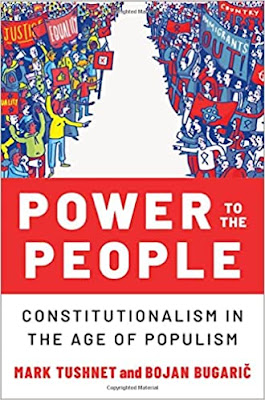
Mark Tushnet and Bojan Bugaric, Power to the People: Constitutionalism in the Age of Populism (Oxford University Press 2021).

Mark Philip Bradley and Mary L. Dudziak, eds., Making the Forever War: Marilyn B. Young on the Culture and Politics of American Militarism Culture and Politics in the Cold War and Beyond (University of Massachusetts Press, 2021).

Jack M. Balkin, What Obergefell v. Hodges Should Have Said: The Nation's Top Legal Experts Rewrite America's Same-Sex Marriage Decision (Yale University Press, 2020)

Frank Pasquale, New Laws of Robotics: Defending Human Expertise in the Age of AI (Belknap Press, 2020)

Jack M. Balkin, The Cycles of Constitutional Time (Oxford University Press, 2020)

Mark Tushnet, Taking Back the Constitution: Activist Judges and the Next Age of American Law (Yale University Press 2020).

Andrew Koppelman, Gay Rights vs. Religious Liberty?: The Unnecessary Conflict (Oxford University Press, 2020)

Ezekiel J Emanuel and Abbe R. Gluck, The Trillion Dollar Revolution: How the Affordable Care Act Transformed Politics, Law, and Health Care in America (PublicAffairs, 2020)

Linda C. McClain, Who's the Bigot?: Learning from Conflicts over Marriage and Civil Rights Law (Oxford University Press, 2020)
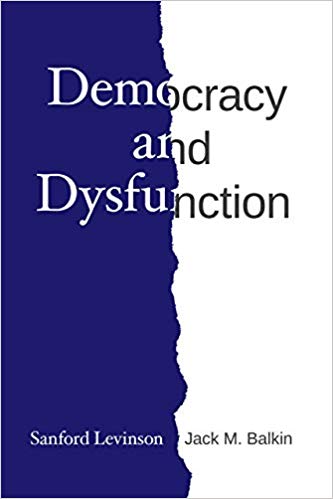
Sanford Levinson and Jack M. Balkin, Democracy and Dysfunction (University of Chicago Press, 2019)

Sanford Levinson, Written in Stone: Public Monuments in Changing Societies (Duke University Press 2018)

Mark A. Graber, Sanford Levinson, and Mark Tushnet, eds., Constitutional Democracy in Crisis? (Oxford University Press 2018)

Gerard Magliocca, The Heart of the Constitution: How the Bill of Rights became the Bill of Rights (Oxford University Press, 2018)

Cynthia Levinson and Sanford Levinson, Fault Lines in the Constitution: The Framers, Their Fights, and the Flaws that Affect Us Today (Peachtree Publishers, 2017)

Brian Z. Tamanaha, A Realistic Theory of Law (Cambridge University Press 2017)

Sanford Levinson, Nullification and Secession in Modern Constitutional Thought (University Press of Kansas 2016)

Sanford Levinson, An Argument Open to All: Reading The Federalist in the 21st Century (Yale University Press 2015)

Stephen M. Griffin, Broken Trust: Dysfunctional Government and Constitutional Reform (University Press of Kansas, 2015)

Frank Pasquale, The Black Box Society: The Secret Algorithms That Control Money and Information (Harvard University Press, 2015)

Bruce Ackerman, We the People, Volume 3: The Civil Rights Revolution (Harvard University Press, 2014)
Balkinization Symposium on We the People, Volume 3: The Civil Rights Revolution

Joseph Fishkin, Bottlenecks: A New Theory of Equal Opportunity (Oxford University Press, 2014)

Mark A. Graber, A New Introduction to American Constitutionalism (Oxford University Press, 2013)

John Mikhail, Elements of Moral Cognition: Rawls' Linguistic Analogy and the Cognitive Science of Moral and Legal Judgment (Cambridge University Press, 2013)

Gerard N. Magliocca, American Founding Son: John Bingham and the Invention of the Fourteenth Amendment (New York University Press, 2013)

Stephen M. Griffin, Long Wars and the Constitution (Harvard University Press, 2013)

Andrew Koppelman, The Tough Luck Constitution and the Assault on Health Care Reform (Oxford University Press, 2013)

James E. Fleming and Linda C. McClain, Ordered Liberty: Rights, Responsibilities, and Virtues (Harvard University Press, 2013)
Balkinization Symposium on Ordered Liberty: Rights, Responsibilities, and Virtues

Andrew Koppelman, Defending American Religious Neutrality (Harvard University Press, 2013)

Brian Z. Tamanaha, Failing Law Schools (University of Chicago Press, 2012)

Sanford Levinson, Framed: America's 51 Constitutions and the Crisis of Governance (Oxford University Press, 2012)

Linda C. McClain and Joanna L. Grossman, Gender Equality: Dimensions of Women's Equal Citizenship (Cambridge University Press, 2012)

Mary Dudziak, War Time: An Idea, Its History, Its Consequences (Oxford University Press, 2012)

Jack M. Balkin, Living Originalism (Harvard University Press, 2011)

Jason Mazzone, Copyfraud and Other Abuses of Intellectual Property Law (Stanford University Press, 2011)

Richard W. Garnett and Andrew Koppelman, First Amendment Stories, (Foundation Press 2011)

Jack M. Balkin, Constitutional Redemption: Political Faith in an Unjust World (Harvard University Press, 2011)

Gerard Magliocca, The Tragedy of William Jennings Bryan: Constitutional Law and the Politics of Backlash (Yale University Press, 2011)

Bernard Harcourt, The Illusion of Free Markets: Punishment and the Myth of Natural Order (Harvard University Press, 2010)

Bruce Ackerman, The Decline and Fall of the American Republic (Harvard University Press, 2010)
Balkinization Symposium on The Decline and Fall of the American Republic

Ian Ayres. Carrots and Sticks: Unlock the Power of Incentives to Get Things Done (Bantam Books, 2010)

Mark Tushnet, Why the Constitution Matters (Yale University Press 2010)

Ian Ayres and Barry Nalebuff: Lifecycle Investing: A New, Safe, and Audacious Way to Improve the Performance of Your Retirement Portfolio (Basic Books, 2010)
.jpg)
Jack M. Balkin, The Laws of Change: I Ching and the Philosophy of Life (2d Edition, Sybil Creek Press 2009)

Brian Z. Tamanaha, Beyond the Formalist-Realist Divide: The Role of Politics in Judging (Princeton University Press 2009)
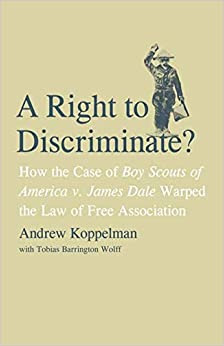
Andrew Koppelman and Tobias Barrington Wolff, A Right to Discriminate?: How the Case of Boy Scouts of America v. James Dale Warped the Law of Free Association (Yale University Press 2009)

Jack M. Balkin and Reva B. Siegel, The Constitution in 2020 (Oxford University Press 2009)

Heather K. Gerken, The Democracy Index: Why Our Election System Is Failing and How to Fix It (Princeton University Press 2009)

Mary Dudziak, Exporting American Dreams: Thurgood Marshall's African Journey (Oxford University Press 2008)

David Luban, Legal Ethics and Human Dignity (Cambridge Univ. Press 2007)

Ian Ayres, Super Crunchers: Why Thinking-By-Numbers is the New Way to be Smart (Bantam 2007)

Jack M. Balkin, James Grimmelmann, Eddan Katz, Nimrod Kozlovski, Shlomit Wagman and Tal Zarsky, eds., Cybercrime: Digital Cops in a Networked Environment (N.Y.U. Press 2007)
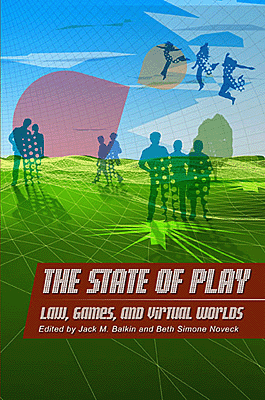
Jack M. Balkin and Beth Simone Noveck, The State of Play: Law, Games, and Virtual Worlds (N.Y.U. Press 2006)

Andrew Koppelman, Same Sex, Different States: When Same-Sex Marriages Cross State Lines (Yale University Press 2006)

Brian Tamanaha, Law as a Means to an End (Cambridge University Press 2006)

Sanford Levinson, Our Undemocratic Constitution (Oxford University Press 2006)

Mark Graber, Dred Scott and the Problem of Constitutional Evil (Cambridge University Press 2006)

Jack M. Balkin, ed., What Roe v. Wade Should Have Said (N.Y.U. Press 2005)

Sanford Levinson, ed., Torture: A Collection (Oxford University Press 2004)
Balkin.com homepage
Bibliography
Conlaw.net
Cultural Software
Writings
Opeds
The Information Society Project
BrownvBoard.com
Useful Links
Syllabi and Exams
