Balkinization
an unanticipated consequence of
Jack M. Balkin
Balkinization Symposiums: A Continuing List
E-mail:
Jack Balkin:
jackbalkin at yahoo.com
Bruce Ackerman
bruce.ackerman at yale.edu
Ian Ayres
ian.ayres at yale.edu
Corey Brettschneider
corey_brettschneider at brown.edu
Mary Dudziak
mary.l.dudziak at emory.edu
Joey Fishkin
joey.fishkin at gmail.com
Heather Gerken heather.gerken at yale.edu
Abbe Gluck abbe.gluck at yale.edu
Mark Graber
mgraber at law.umaryland.edu
Stephen Griffin
sgriffin at tulane.edu
Jonathan Hafetz
jonathan.hafetz at shu.edu
Jeremy Kessler
jkessler at law.columbia.edu
Andrew Koppelman
akoppelman at law.northwestern.edu
Marty Lederman
msl46 at law.georgetown.edu
Sanford Levinson
slevinson at law.utexas.edu
David Luban
david.luban at gmail.com
Gerard Magliocca
gmaglioc at iupui.edu
Jason Mazzone
mazzonej at illinois.edu
Linda McClain
lmcclain at bu.edu
John Mikhail
mikhail at law.georgetown.edu
Frank Pasquale
pasquale.frank at gmail.com
Nate Persily
npersily at gmail.com
Michael Stokes Paulsen
michaelstokespaulsen at gmail.com
Deborah Pearlstein
dpearlst at yu.edu
Rick Pildes
rick.pildes at nyu.edu
David Pozen
dpozen at law.columbia.edu
Richard Primus
raprimus at umich.edu
K. Sabeel Rahmansabeel.rahman at brooklaw.edu
Alice Ristroph
alice.ristroph at shu.edu
Neil Siegel
siegel at law.duke.edu
David Super
david.super at law.georgetown.edu
Brian Tamanaha
btamanaha at wulaw.wustl.edu
Nelson Tebbe
nelson.tebbe at brooklaw.edu
Mark Tushnet
mtushnet at law.harvard.edu
Adam Winkler
winkler at ucla.edu
Compendium of posts on Hobby Lobby and related cases
The Anti-Torture Memos: Balkinization Posts on Torture, Interrogation, Detention, War Powers, and OLC
The Anti-Torture Memos (arranged by topic)
Recent Posts
Principled Resignation: The Lawyers’ Dilemma
![[Powered by Blogger]](https://lh3.googleusercontent.com/blogger_img_proxy/AEn0k_vZqdyY7OO2vMZY0y_kJ4pCr7ZPeP0rKKiV66_NLivO7mTTMtpNjqaMQq2suR3QJZkgoOHhngkIh7OIr6wut_uJaBuCT2JwQZpASRaJCI2-=s0-d)
Just A Few Blogs
ACS Blog
Alas, a Blog
Althouse
Arts and Letters Daily
Atrios (Eschaton)
Bill of Health
Buzzflash.com
Buzz Machine
Cato at Liberty
Juan Cole (Informed Comment)
Concurring Opinions
The Constitution in 2020
Corrente
Crooked Timber
Daily Howler
Daily Kos
Dana Boyd
Brad DeLong
Digby (Hullabaloo)
Discriminations
Daniel Drezner
Kevin Drum (Mother Jones)
Electrolite
En Banc
Eunomia (Daniel Larison)
Fafblog
Michael Froomkin (Discourse.net)
GovLab (Beth Noveck)
Rick Hasen (Election Law)
History News Network
How Appealing
Ignatz (Sam Heldman)
The Importance of (Ernie Miller)
Infolaw
Instapundit
International Economic Law and Policy Blog
IntLawGrrls
Jacob Levy
Jesus' General
Jurisdynamics
The Kitchen Cabinet
Mark Kleiman
Law Blog Central
Larry Lessig
Lawyers, Guns and Money
Liberal Oasis
Brian Leiter's Law School Reports
The Leiter Reports
Marginal Revolution
Megan McArdle
Memeorandum
Metafilter
Mirror of Justice
The New Republic
Newseum
No More Mister Nice Blog
Brendan Nyhan
Opinio Juris
Orcinus
The Originalism Blog
Pandagon
Passport (Foreign Policy)
Overcoming Bias
Political Animal (Washington Monthly)
Political Theory Daily Review
Political Wire (Taegan Goddard)
The Poor Man
Virginia Postrel
Prawfsblawg
Public Reason
Jonathan Rauch
Raw Story
Redstate
ReligiousLeftLaw.com
Reporters Committee For Freedom of the Press
Reproductive Rights Blog
Rothman's Roadmap to the Right of Publicity
SCOTUS Blog
Seeing the Forest
Clay Shirky
The Shifted Librarian
The Situationist
Larry Solum (Legal Theory)
Andrew Sullivan
Talking Points Memo
Talk Left
Tapped
Tbogg
TechPresident
The Paper Chase (Jurist)
Tom Paine
Tom Tomorrow (This Modern World)
Eve Tushnet
Uggabugga
University of Chicago Law School Faculty Blog
Unqualified Offerings
The Volokh Conspiracy
War and Piece (Laura Rozen)
Wampum
Oliver Willis
Wonkette
Written Description
Matthew Yglesias
Yin
Your Choice of Feeds
1. XML
powered by

2. Atom Feed
3. RSS 2.0
Principled Resignation: The Lawyers’ Dilemma
Guest Blogger
Steven Lubet In 2004, The
Clash’s iconic “Should I Stay or Should I Go” (with no question mark in the
title) was ranked 228 on Rolling Stone’s 500 Greatest
Songs of All Time.” Beginning with Pres. Donald Trump’s second inauguration on
January 20, 2025, federal prosecutors have increasingly had to ask themselves
the same question, with the appropriate punctuation mark. Faced with
increasingly unethical demands from higher ups, should they stay or should they
go? The
resignation conundrum is not new, but it arises most sharply in times of
extreme national disruption. It was perhaps first articulated by a federal
official during the fraught era before the Civil War, and it has lately confronted
lawyers in the Trump administration’s Department of Justice. Trump’s Vendetta Attorney
General Pam Bondi was confirmed on Feb. 4, 2025. Principled departures from the
Department of Justice began almost immediately. Seven prosecutors very publicly quit their jobs in
protest of an order to drop bribery and fraud charges against then New York
City Mayor Eric Adams, which was perceived as a bargain in exchange for assistance
with Trump’s immigration policies. The indictment was to be dismissed without
prejudice, meaning that it could potentially be reinstated in the event that
Adams was insufficiently cooperative with Trump’s agenda. On Feb. 12, Danielle
Sassoon, the Acting United States Attorney for the Southern District of New
York, announced that the instruction to dismiss the
Adams case, delivered by Bondi’s deputy Emil Bove (Trump’s former defense
counsel and now a judge of the Third Circuit Court of Appeals), was “inconsistent
with my ability and duty to prosecute federal crimes without fear or favor.” Other
experienced prosecutors quickly followed suit. The most expressive resignation
came from Hagan Scotten, an army special forces combat veteran and former clerk
for Chief Justice John Roberts. In a publicly available communication to Bove, Scotten explained his
refusal to participate in a “dismissal-with-leverage” deal for Adams. “I expect
you will eventually find someone who is enough of a fool, or enough of a
coward, to file your motion” he wrote. “But it was never going to be me.” Five other
lawyers in the Justice Department’s Public Integrity Section also resigned in protest of the deal
with Adams. The corruption
charges against Adams were nonetheless dismissed pursuant to a motion
personally signed by Deputy Attorney General Bove. But
in a sharp rebuke to the Department of Justice, Judge Dale Ho refused the
request to dismiss the case without prejudice. Essentially
agreeing with the now-absent lawyers, Ho stated that “dismissing the case without
prejudice would create the unavoidable perception that the Mayor’s freedom
depends on his ability to carry out the immigration enforcement priorities of
the administration, and that he might be more beholden to the demands of the
federal government than to the wishes of his own constituents.” Recognizing
that he had “no way to compel the government to prosecute a case,” Ho instead
dismissed the indictment with prejudice, prohibiting any future prosecution of
those charges. Not long
afterward, Eric Siebert, the Acting United States Attorney for the Eastern
District of Virginia, resigned rather than pursue an indictment
against New York Attorney General Letitia James, who had obtained a massive civil
fraud verdict against Trump. Although Siebert made no mention of the James
prosecution in his resignation letter, Trump himself had complained about the
non-indictment of James, telling reporters that he wanted Siebert
“out” of office. Another top prosecutor in the Eastern District of Virginia was
fired after he refused to reinstate previously dismissed charges against former
FBI director James Comey, a long-time target of Trump’s ire. And at least four other career prosecutors were terminated in the Eastern
District of Virginia, reportedly over their resistance to bringing charges
against James or Comey. Most
recently, six federal prosecutors in Minnesota resigned rather that
comply with a directive to launch a criminal investigation into Becca Good, the widow of Renee Good, the who was shot to death by an ICE
agent on January 7, 2026. Most notable
of the six was Joseph Thompson, second in command of the Minnesota office, who
had overseen a statewide investigation into widespread
social services fraud. According to the Minneapolis police chief, Thompson’s
resignation dealt a profound blow to the fraud cases, which were the reason given
for the Trump administration’s immigration crackdown in Minnesota. “When you
lose the leader responsible for making the fraud cases,” he said, “it tells you [the ICE
intervention] isn’t really about prosecuting fraud.” And therein
lies the problem. Thompson and
other attorneys faced an intractable dilemma. Should they comply with an
objectionable, and perhaps unethical, order from higher-ups, which would allow
them to continue their important work on other cases? Or should
they resign in protest, recognizing that they are leaving behind a diminished staff
that will have difficulty prosecuting serious cases? Perhaps even more vexing, resignation
might protect the individual attorney’s own integrity, with no effect at all on
the progress of the troubling case, which may sometimes proceed along the same
dishonorable path in the hands of lawyers with fewer scruples. It is a
challenge that has been faced before in U.S. history, with mixed results. The Fugitive Slave Act of 1850 In the late
spring of 1854, Edward Loring was one of the most important legal figures in
Boston. A relative of the venerable Curtis family – which had produced
generations of lawyers, merchants, judges, politicians, and eventually a
Supreme Court justice – Loring served as a judge of the Massachusetts Probate
Court, a professor at Harvard Law School, and a federal commissioner. It was
the last position that created his dilemma. The infamous
Fugitive Slave Act of 1850 had created a class of federal commissioners charged
with adjudicating slaveholders’ claims for alleged runaways. Because the
positions were part-time, they were typically filled by local judges or
lawyers. Thus, it was not unusual for Loring to sit as both a probate judge and
fugitive slave commissioner. The Fugitive Slave Act had been included in the Compromise
of 1850, as a concession to the southern states in one of many efforts to
prevent the union from splintering over the issue of slavery. It was purposely
designed to speed the “rendition” of alleged fugitives by superseding the “personal liberty laws,” which
guaranteed jury trials among other protections, enacted in many northern
states. The federal
statute was heavily weighted in favor of enslavers. A warrant could be issued
on nothing more than the say-so of a purported slaveholder, accompanied by a
vague physical description of the alleged runaway. In addition to precluding jury trials, the Act
denied essential due process provisions such as habeas corpus, or appeal, and
even the right to speak in one’s own defense. Perhaps most glaringly, the Act provided
for a $10 payment for commissioners who granted a “Certificate of Removal,” ordering
the return of an individual to enslavement, but only $5 if the defendant was
found to be free. The Act was
greeted with protests in the North, objecting to the elimination of due process,
as well as the requirement, enforced by fine or imprisonment, that “all good
citizens . . . aid and assist in the prompt and efficient” enforcement of the noxious
law. Nonetheless, nominally anti-slavery political figures, such as Daniel
Webster, supported the Act and lectured the northern public
on their duty to follow the law. Anthony Burns Against that
backdrop, on May 24, 1854, a Black clothing store clerk named Anthony Burns was
arrested in Boston as an alleged fugitive from Virginia and brought before
Judge Loring for a determination under the Fugitive Slave Act. Although the Act
itself did not provide for counsel, Richard Henry Dana, among the most
prominent attorneys in Massachusetts, learned of the arrest and stepped forward
as Burns’s lawyer. A thoughtful
man and a diligent jurist, Loring had his own misgivings about the Fugitive
Slave Act. Recognizing the inherent tension between the demands of justice and
the provisions of the statute, he chose to allow Dana considerable latitude in
mounting a defense. The subsequent hearing stretched over four days. Meanwhile, Burns’s
arrest sparked mass protests in Boston, where anti-slavery sentiment was
strong. Many Bostonians, citizens and members of the clergy, called upon Loring
to abort the hearing by resigning from the federal commissioner’s
position. As probate judge, he administered the estates of widows and
orphans, which required empathy and compassion, and many found it inexcusable
for him to participate, even as a judge, in the brutal process of
slave-hunting. Loring was
not unmoved by the criticism. Taking it to heart, he issued a statement in
response: “It is said
that the statute is so cruel and wicked that it should not be executed by good
men,” he wrote. But that would lead to a troubling paradox. If compassionate
judges were to resign rather than preside, “then into what hands should its
administration fall? Will those who call the statute merciless commit it to a
merciless judge?” Despite his
qualms, Loring believed he had a duty to remain on the bench. Otherwise,
judging would “be confined to those who are reckless of that right in others,
or ignorant or careless of the means given for its legal defense, or dishonest
in their use.” “If any men
wish this,” Loring continued, “they are more cruel and wicked than the statute,
for they would strip from the fugitive the best security and every alleviation
the statute leaves them.” It was all
talk. Despite his protestations of mercy and humanity, Loring ultimately
granted a Certificate of Removal to the slaveholder, ruling that he had no
choice under the law. President
Franklin Pierce, a “northern man with southern principles” put the full weight
of his authority behind The Fugitive Slave Act. Recognizing the possibility of
mass resistance, he authorized the use of 120 federal troops, each man armed with
“a short Roman sword & one revolver” to enforce Loring’s judgment. As one
observer noted, “It was the first time that the armed power of the United
States had ever been arrayed against the people of Massachusetts.” Burns was
returned in chains to Virginia, where he was starved and abused. For their
part, Burns’s foiled supporters exemplified the meaning of humanity that had
eluded Loring. They raised sufficient funds to obtain his freedom, although it
required a Black clergyman to risk his own freedom by traveling into the slave
state of Maryland to complete the transaction. Burns
returned to Boston and later studied theology at Oberlin College, no thanks to
Loring. Loring
continued to believe himself a “good judge,” but the people of Massachusetts did
not agree. He had dishonored himself by enforcing a pitiless law in a racist
regime. He was soon dismissed from the Harvard Law School faculty, and the
Massachusetts legislature later removed him from the Probate Court. Loring is
remembered today, if at all, as an enabler of slavery. Conclusion Loring
presided over the Burns case in an era when there were no written ethics rules
for lawyers or judges. Coincidentally, the first set of legal ethics principles
appeared later in 1854, when University of Pennsylvania Professor George
Sharswood published A Compend of Lectures on the Aims and
Duties of the Profession of Law.
It did not include a discussion of judicial ethics. Today’s
Massachusetts judges are governed by state and federal versions of the Code of Judicial
Conduct. Both provide that judges must “hear and decide matters assigned,”
unless disqualified for lack of impartiality. The code does not address the
enforcement of an unconscionable law. Contemporary
lawyers in New York, Virginia, and Minnesota are bound by nearly identical
iterations of the Rules of Professional Conduct. A “subordinate” lawyer, such
as a Department of Justice attorney, may act “in accordance with a supervisory
lawyer's reasonable resolution of an arguable question of professional duty.” Even
so, an individual prosecutor, notwithstanding orders from above, must “refrain
from prosecuting a charge that the prosecutor knows is not supported by
probable cause.” (Italics added.) The rules do
not specifically address the predicament created by an improper or unethical
directive to dismiss a case. Nonetheless, a lawyer may always withdraw or
resign from “representation will result in violation of the Rules of
Professional Conduct” or for other “good cause.” Given that
latitude, it is not hard to imagine a prosecutor reflecting on Loring’s
rationale: “If I resign, even for the best of reasons, cases in this office
will be left in the hands of lawyers who may be less experienced or more
overburdened than I, and perhaps without my willingness to resist unethical
orders.” That can be
a compelling argument. The Department of Justice will continue to pursue
Trump’s agenda, with or without any particular prosecutors. Trump has shown
time and again that he does not care about resignations, as is Bondi, and both
have been more than willing to fire non-sycophants. On the other
hand, as Loring learned, complicity is complicity. Likewise, conscience is
conscience. [Source
note: Material on the Fugitive Slave Act and the Anthony Burns case is found in
Steven Lubet, Fugitive Justice: Runaways, Rescuers, and Slavery on Trial.] Steven Lubet is Williams
Memorial Professor Emeritus, Northwestern University Pritzker School of Law. You
can reach him by e-mail at slubet@law.northwestern.edu.
Posted
8:30 AM
by Guest Blogger [link]
Books by Balkinization Bloggers

Mark Tushnet and Bojan Bugaric, Constitutionalism and Its Discontents (University of Chicago Press, 2026)

Gerard N. Magliocca, The Actual Art of Governing: Justice Robert H. Jackson's Concurring Opinion in the Steel Seizure Case (Oxford University Press, 2025)

Linda C. McClain and Aziza Ahmed, The Routledge Companion to Gender and COVID-19 (Routledge, 2024)

David Pozen, The Constitution of the War on Drugs (Oxford University Press, 2024)

Jack M. Balkin, Memory and Authority: The Uses of History in Constitutional Interpretation (Yale University Press, 2024)
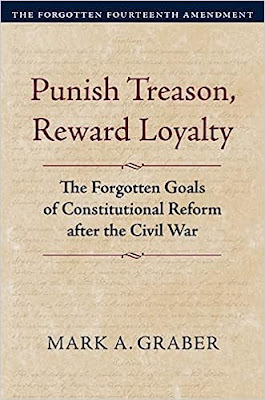
Mark A. Graber, Punish Treason, Reward Loyalty: The Forgotten Goals of Constitutional Reform after the Civil War (University of Kansas Press, 2023)
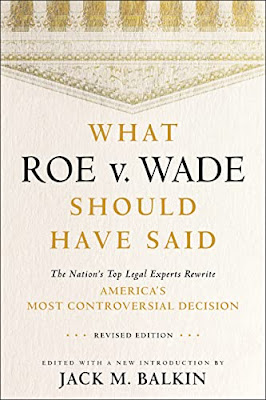
Jack M. Balkin, What Roe v. Wade Should Have Said: The Nation's Top Legal Experts Rewrite America's Most Controversial Decision - Revised Edition (NYU Press, 2023)

Andrew Koppelman, Burning Down the House: How Libertarian Philosophy Was Corrupted by Delusion and Greed (St. Martin’s Press, 2022)

Gerard N. Magliocca, Washington's Heir: The Life of Justice Bushrod Washington (Oxford University Press, 2022)
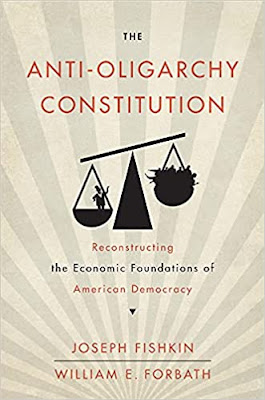
Joseph Fishkin and William E. Forbath, The Anti-Oligarchy Constitution: Reconstructing the Economic Foundations of American Democracy (Harvard University Press, 2022)
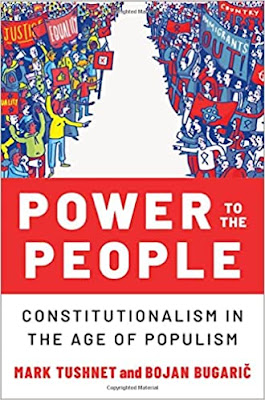
Mark Tushnet and Bojan Bugaric, Power to the People: Constitutionalism in the Age of Populism (Oxford University Press 2021).

Mark Philip Bradley and Mary L. Dudziak, eds., Making the Forever War: Marilyn B. Young on the Culture and Politics of American Militarism Culture and Politics in the Cold War and Beyond (University of Massachusetts Press, 2021).

Jack M. Balkin, What Obergefell v. Hodges Should Have Said: The Nation's Top Legal Experts Rewrite America's Same-Sex Marriage Decision (Yale University Press, 2020)

Frank Pasquale, New Laws of Robotics: Defending Human Expertise in the Age of AI (Belknap Press, 2020)

Jack M. Balkin, The Cycles of Constitutional Time (Oxford University Press, 2020)

Mark Tushnet, Taking Back the Constitution: Activist Judges and the Next Age of American Law (Yale University Press 2020).

Andrew Koppelman, Gay Rights vs. Religious Liberty?: The Unnecessary Conflict (Oxford University Press, 2020)

Ezekiel J Emanuel and Abbe R. Gluck, The Trillion Dollar Revolution: How the Affordable Care Act Transformed Politics, Law, and Health Care in America (PublicAffairs, 2020)

Linda C. McClain, Who's the Bigot?: Learning from Conflicts over Marriage and Civil Rights Law (Oxford University Press, 2020)
Sanford Levinson and Jack M. Balkin, Democracy and Dysfunction (University of Chicago Press, 2019)

Sanford Levinson, Written in Stone: Public Monuments in Changing Societies (Duke University Press 2018)

Mark A. Graber, Sanford Levinson, and Mark Tushnet, eds., Constitutional Democracy in Crisis? (Oxford University Press 2018)

Gerard Magliocca, The Heart of the Constitution: How the Bill of Rights became the Bill of Rights (Oxford University Press, 2018)

Cynthia Levinson and Sanford Levinson, Fault Lines in the Constitution: The Framers, Their Fights, and the Flaws that Affect Us Today (Peachtree Publishers, 2017)

Brian Z. Tamanaha, A Realistic Theory of Law (Cambridge University Press 2017)

Sanford Levinson, Nullification and Secession in Modern Constitutional Thought (University Press of Kansas 2016)

Sanford Levinson, An Argument Open to All: Reading The Federalist in the 21st Century (Yale University Press 2015)

Stephen M. Griffin, Broken Trust: Dysfunctional Government and Constitutional Reform (University Press of Kansas, 2015)

Frank Pasquale, The Black Box Society: The Secret Algorithms That Control Money and Information (Harvard University Press, 2015)

Bruce Ackerman, We the People, Volume 3: The Civil Rights Revolution (Harvard University Press, 2014)
Balkinization Symposium on We the People, Volume 3: The Civil Rights Revolution

Joseph Fishkin, Bottlenecks: A New Theory of Equal Opportunity (Oxford University Press, 2014)

Mark A. Graber, A New Introduction to American Constitutionalism (Oxford University Press, 2013)

John Mikhail, Elements of Moral Cognition: Rawls' Linguistic Analogy and the Cognitive Science of Moral and Legal Judgment (Cambridge University Press, 2013)

Gerard N. Magliocca, American Founding Son: John Bingham and the Invention of the Fourteenth Amendment (New York University Press, 2013)

Stephen M. Griffin, Long Wars and the Constitution (Harvard University Press, 2013)

Andrew Koppelman, The Tough Luck Constitution and the Assault on Health Care Reform (Oxford University Press, 2013)

James E. Fleming and Linda C. McClain, Ordered Liberty: Rights, Responsibilities, and Virtues (Harvard University Press, 2013)
Balkinization Symposium on Ordered Liberty: Rights, Responsibilities, and Virtues

Andrew Koppelman, Defending American Religious Neutrality (Harvard University Press, 2013)

Brian Z. Tamanaha, Failing Law Schools (University of Chicago Press, 2012)

Sanford Levinson, Framed: America's 51 Constitutions and the Crisis of Governance (Oxford University Press, 2012)

Linda C. McClain and Joanna L. Grossman, Gender Equality: Dimensions of Women's Equal Citizenship (Cambridge University Press, 2012)

Mary Dudziak, War Time: An Idea, Its History, Its Consequences (Oxford University Press, 2012)

Jack M. Balkin, Living Originalism (Harvard University Press, 2011)

Jason Mazzone, Copyfraud and Other Abuses of Intellectual Property Law (Stanford University Press, 2011)

Richard W. Garnett and Andrew Koppelman, First Amendment Stories, (Foundation Press 2011)

Jack M. Balkin, Constitutional Redemption: Political Faith in an Unjust World (Harvard University Press, 2011)

Gerard Magliocca, The Tragedy of William Jennings Bryan: Constitutional Law and the Politics of Backlash (Yale University Press, 2011)

Bernard Harcourt, The Illusion of Free Markets: Punishment and the Myth of Natural Order (Harvard University Press, 2010)

Bruce Ackerman, The Decline and Fall of the American Republic (Harvard University Press, 2010)
Balkinization Symposium on The Decline and Fall of the American Republic

Ian Ayres. Carrots and Sticks: Unlock the Power of Incentives to Get Things Done (Bantam Books, 2010)

Mark Tushnet, Why the Constitution Matters (Yale University Press 2010)

Ian Ayres and Barry Nalebuff: Lifecycle Investing: A New, Safe, and Audacious Way to Improve the Performance of Your Retirement Portfolio (Basic Books, 2010)
.jpg)
Jack M. Balkin, The Laws of Change: I Ching and the Philosophy of Life (2d Edition, Sybil Creek Press 2009)

Brian Z. Tamanaha, Beyond the Formalist-Realist Divide: The Role of Politics in Judging (Princeton University Press 2009)
Andrew Koppelman and Tobias Barrington Wolff, A Right to Discriminate?: How the Case of Boy Scouts of America v. James Dale Warped the Law of Free Association (Yale University Press 2009)

Jack M. Balkin and Reva B. Siegel, The Constitution in 2020 (Oxford University Press 2009)

Heather K. Gerken, The Democracy Index: Why Our Election System Is Failing and How to Fix It (Princeton University Press 2009)

Mary Dudziak, Exporting American Dreams: Thurgood Marshall's African Journey (Oxford University Press 2008)

David Luban, Legal Ethics and Human Dignity (Cambridge Univ. Press 2007)

Ian Ayres, Super Crunchers: Why Thinking-By-Numbers is the New Way to be Smart (Bantam 2007)

Jack M. Balkin, James Grimmelmann, Eddan Katz, Nimrod Kozlovski, Shlomit Wagman and Tal Zarsky, eds., Cybercrime: Digital Cops in a Networked Environment (N.Y.U. Press 2007)
Jack M. Balkin and Beth Simone Noveck, The State of Play: Law, Games, and Virtual Worlds (N.Y.U. Press 2006)

Andrew Koppelman, Same Sex, Different States: When Same-Sex Marriages Cross State Lines (Yale University Press 2006)

Brian Tamanaha, Law as a Means to an End (Cambridge University Press 2006)

Sanford Levinson, Our Undemocratic Constitution (Oxford University Press 2006)

Mark Graber, Dred Scott and the Problem of Constitutional Evil (Cambridge University Press 2006)

Jack M. Balkin, ed., What Roe v. Wade Should Have Said (N.Y.U. Press 2005)

Sanford Levinson, ed., Torture: A Collection (Oxford University Press 2004)
Balkin.com homepage
Bibliography
Conlaw.net
Cultural Software
Writings
Opeds
The Information Society Project
BrownvBoard.com
Useful Links
Syllabi and Exams
