Balkinization
an unanticipated consequence of
Jack M. Balkin
Balkinization Symposiums: A Continuing List
E-mail:
Jack Balkin:
jackbalkin at yahoo.com
Bruce Ackerman
bruce.ackerman at yale.edu
Ian Ayres
ian.ayres at yale.edu
Corey Brettschneider
corey_brettschneider at brown.edu
Mary Dudziak
mary.l.dudziak at emory.edu
Joey Fishkin
joey.fishkin at gmail.com
Heather Gerken heather.gerken at yale.edu
Abbe Gluck abbe.gluck at yale.edu
Mark Graber
mgraber at law.umaryland.edu
Stephen Griffin
sgriffin at tulane.edu
Jonathan Hafetz
jonathan.hafetz at shu.edu
Jeremy Kessler
jkessler at law.columbia.edu
Andrew Koppelman
akoppelman at law.northwestern.edu
Marty Lederman
msl46 at law.georgetown.edu
Sanford Levinson
slevinson at law.utexas.edu
David Luban
david.luban at gmail.com
Gerard Magliocca
gmaglioc at iupui.edu
Jason Mazzone
mazzonej at illinois.edu
Linda McClain
lmcclain at bu.edu
John Mikhail
mikhail at law.georgetown.edu
Frank Pasquale
pasquale.frank at gmail.com
Nate Persily
npersily at gmail.com
Michael Stokes Paulsen
michaelstokespaulsen at gmail.com
Deborah Pearlstein
dpearlst at yu.edu
Rick Pildes
rick.pildes at nyu.edu
David Pozen
dpozen at law.columbia.edu
Richard Primus
raprimus at umich.edu
K. Sabeel Rahmansabeel.rahman at brooklaw.edu
Alice Ristroph
alice.ristroph at shu.edu
Neil Siegel
siegel at law.duke.edu
David Super
david.super at law.georgetown.edu
Brian Tamanaha
btamanaha at wulaw.wustl.edu
Nelson Tebbe
nelson.tebbe at brooklaw.edu
Mark Tushnet
mtushnet at law.harvard.edu
Adam Winkler
winkler at ucla.edu
Compendium of posts on Hobby Lobby and related cases
The Anti-Torture Memos: Balkinization Posts on Torture, Interrogation, Detention, War Powers, and OLC
The Anti-Torture Memos (arranged by topic)
Recent Posts
Is America Governable? (II)
![[Powered by Blogger]](https://lh3.googleusercontent.com/blogger_img_proxy/AEn0k_u84LImYHZPUuWQOo1-dnNryIoWvyjt4_n_4FEwhnMvUDdfNaBsCHnFqw4-CVegzP0j2NYVtIs-1XyLYWBmGQ3kSiRYg52IGxGJj_4uX4Nw=s0-d)
Just A Few Blogs
ACS Blog
Alas, a Blog
Althouse
Arts and Letters Daily
Atrios (Eschaton)
Bill of Health
Buzzflash.com
Buzz Machine
Cato at Liberty
Juan Cole (Informed Comment)
Concurring Opinions
The Constitution in 2020
Corrente
Crooked Timber
Daily Howler
Daily Kos
Dana Boyd
Brad DeLong
Digby (Hullabaloo)
Discriminations
Daniel Drezner
Kevin Drum (Mother Jones)
Electrolite
En Banc
Eunomia (Daniel Larison)
Fafblog
Michael Froomkin (Discourse.net)
GovLab (Beth Noveck)
Rick Hasen (Election Law)
History News Network
How Appealing
Ignatz (Sam Heldman)
The Importance of (Ernie Miller)
Infolaw
Instapundit
International Economic Law and Policy Blog
IntLawGrrls
Jacob Levy
Jesus' General
Jurisdynamics
The Kitchen Cabinet
Mark Kleiman
Law Blog Central
Larry Lessig
Lawyers, Guns and Money
Liberal Oasis
Brian Leiter's Law School Reports
The Leiter Reports
Marginal Revolution
Megan McArdle
Memeorandum
Metafilter
Mirror of Justice
The New Republic
Newseum
No More Mister Nice Blog
Brendan Nyhan
Opinio Juris
Orcinus
The Originalism Blog
Pandagon
Passport (Foreign Policy)
Overcoming Bias
Political Animal (Washington Monthly)
Political Theory Daily Review
Political Wire (Taegan Goddard)
The Poor Man
Virginia Postrel
Prawfsblawg
Public Reason
Jonathan Rauch
Raw Story
Redstate
ReligiousLeftLaw.com
Reporters Committee For Freedom of the Press
Reproductive Rights Blog
Rothman's Roadmap to the Right of Publicity
SCOTUS Blog
Seeing the Forest
Clay Shirky
The Shifted Librarian
The Situationist
Larry Solum (Legal Theory)
Andrew Sullivan
Talking Points Memo
Talk Left
Tapped
Tbogg
TechPresident
The Paper Chase (Jurist)
Tom Paine
Tom Tomorrow (This Modern World)
Eve Tushnet
Uggabugga
University of Chicago Law School Faculty Blog
Unqualified Offerings
The Volokh Conspiracy
War and Piece (Laura Rozen)
Wampum
Oliver Willis
Wonkette
Written Description
Matthew Yglesias
Yin
Your Choice of Feeds
1. XML
powered by

2. Atom Feed
3. RSS 2.0
Saturday, December 22, 2012
Is America Governable? (II)
Sandy Levinson
I note two quotes from today's story in the NYTimes on continuing gridlock in Washington. The first is from Peter Wehner, described as a "former top White House aide to President George W. Bush." “The stars are all aligning the wrong way in terms of working together. Right now, the political system is not up to the moment and the
challenges that we face.” The second involves Tom Daschle, the former Democratic majority leader in the Senate, who is described as fearing that "Washington would remain paralyzed on taxes and other issues until
the country truly faces a crisis. 'I worry that it’s going to take that kind of a condition to bring
people to the reality that they can’t mess around here anymore,” Mr.
Daschle said."
Both are telling--and ominous. We don't know, of course, what Mr. Wenher means by "the political system" that is inadequate to our challenges. Perhaps he means "only" the crazed Right Wing in the House who despise his old boss (for all of the wrong reasons) and whatever failures he wishes to assign to President Obama or the Senate Democrats. I, of course, have my own definition of "political system" that links it to the Constitution, and I won't repeat those arguments. Mr. Daschle may be aware that most defective constitutional orders change only after a "true crisis" (or, at the least, the perception of being faced with such a crisis, as was the case in 1787 and explains the calling of the Philadelphia Convention).
Alexander Hamilton wrote memorably in Federalist 1 that the true challenge/model posed to and by Americans was whether we, or any political order, was capable of engaging in "reflection and choice" about the most basic political propositions. My new "project" is to write 85 short essays on each of the Federalist essays, and the them of the first one is to ask whether "reflection and choice" was a one-time event, that we are incapable of repeating either because (pick one): a) we lack a Washington; b) we lack Madison and Hamilton, and we couldn't safely exile Jefferson- and Adams-like figures to places far away where they couldn't participate in the deliberations; c) we were blessed by elite governance in 1787-88 and today, alas, we are governed by the democratic mob in whom we have no faith; or d) we are just too large and diverse to engage in meaningful self-governance, so better to stick with the devil we know than to embark on a dangerous national project of "reflection and choice" that would almost certainly fail and leave things even worse than they are now.
Posted
12:59 PM
by Sandy Levinson [link]
Comments:
Even though we speak the same language, talking over each other may resemble a Tower of Babel. So for the time being, I pick d), with the hope that we can listen to each other. We owe it to our children, grandchildren, etc, to demonstrate that the Mayans were decades, centuries, at least, off the mark. I plan to enjoy the holidays with my family and wish for Peace on Earth, Good Will Towards Mankind, in secular terms.

I'm not sure that the question, "Is America governable?" is one which can properly be answered in isolation from what the governors are attempting to do. Democracies, especially constitutional democracies, are supposed to limit the degree to which a people can be governed contrary to their will. If what you want is unqualified governability, the ideal form of government is a police state.
As I interpret Prof. Levinson's question, he's not asking if America can be governed contrary to the will of the people, he's asking if America's government can actually effectuate the will of the majority.
No, I don't recall the Prof complaining about the failure of Congress to accomplish a balanced budget or term limits amendment, or to secure the borders against illegal immigration. All subjects where the government has, conspicuously, failed to effectuate a sustained and significant majority will.
Mostly he seems to be concerned about the failure of the government to accomplish things which conspicuously are NOT the subject of a sustained majority will. Gun control, for instance.
But the point I was making is that you really have to identify what you're trying to accomplish, and how it compares to public opinion, before you can declare the nation "ungovernable". In some respects, to be ungovernable is the essence of being free.
Mostly he seems to be concerned about the failure of the government to accomplish things which conspicuously are NOT the subject of a sustained majority will. Gun control, for instance.
But the point I was making is that you really have to identify what you're trying to accomplish, and how it compares to public opinion, before you can declare the nation "ungovernable". In some respects, to be ungovernable is the essence of being free.
Brett's second comment, that includes this:
"In some respects, to be ungovernable is the essence of being free."
raises the question of "in what respects?" with the current situation that Sandy is addressing, not when there were a handful of persons, in isolation in the expanse of what is now America. Is this a libertarian response or just another inane observation from Brett? Is this the essence that Brett feels is being free? Is this anarchy?
Going back to Brett's earlier comment:
"If what you want is unqualified governability, the ideal form of government is a police state."
this also demonstrates Brett's inanity. Is Sandy's post focused on "unqualified governability," whatever that means?
Apparently Brett doesn't like Sandy's question. Perhaps Brett should spell out his own question. Brett further demonstrates that he is indeed a one issue person: the Second Amendment Uber Alles.
"In some respects, to be ungovernable is the essence of being free."
raises the question of "in what respects?" with the current situation that Sandy is addressing, not when there were a handful of persons, in isolation in the expanse of what is now America. Is this a libertarian response or just another inane observation from Brett? Is this the essence that Brett feels is being free? Is this anarchy?
Going back to Brett's earlier comment:
"If what you want is unqualified governability, the ideal form of government is a police state."
this also demonstrates Brett's inanity. Is Sandy's post focused on "unqualified governability," whatever that means?
Apparently Brett doesn't like Sandy's question. Perhaps Brett should spell out his own question. Brett further demonstrates that he is indeed a one issue person: the Second Amendment Uber Alles.
Unless he specifies what kind of ungovernable troubles him, yeah, I have to assume it's a general complaint.
Sandy is free to clarify what aspects of being ungovernable do and do not trouble him. In fact, I'd like him to be specific.
Sandy is free to clarify what aspects of being ungovernable do and do not trouble him. In fact, I'd like him to be specific.
Is America Governable?
It would help if our (self-appointed) enlightened spent less time talking among themselves and more time engaged in real politics. Most of those who publish useless variants of political philosophy would serve the republic better teaching high school civics. Sandy Levinson is a moralist as literary critic.
Literary criticism's not enough.
More than a better constitution we need a better people. Tamanaha wouldn't be so blunt, but I don't think he'd disagree, and I'd like to think Graber would be left trying to hide a smile.
It would help if our (self-appointed) enlightened spent less time talking among themselves and more time engaged in real politics. Most of those who publish useless variants of political philosophy would serve the republic better teaching high school civics. Sandy Levinson is a moralist as literary critic.
Literary criticism's not enough.
More than a better constitution we need a better people. Tamanaha wouldn't be so blunt, but I don't think he'd disagree, and I'd like to think Graber would be left trying to hide a smile.
A diverse continental country, America has always been borderline ungovernable, which is why our prior laissez faire, federalist system worked so well for so long. If the government is limiting itself to generally accepted functions, you get very little gridlock.
Our problem is not with our democratic system, but rather that the modern progressive welfare and regulatory states act outside of democratic accountability and are unsustainable.
While the "fiscal cliff" game of chicken is dominating the news, the welfare state is en route to sovereign insolvency by decade's end and the regulatory state is hamstringing an economy in economic depression.
Our problem is not with our democratic system, but rather that the modern progressive welfare and regulatory states act outside of democratic accountability and are unsustainable.
While the "fiscal cliff" game of chicken is dominating the news, the welfare state is en route to sovereign insolvency by decade's end and the regulatory state is hamstringing an economy in economic depression.
"More than a better constitution we need a better people."
Somewhat, yes. More, we need a better political class. Ours has managed to game the system to the point where they're a self-perpetuating elite, growing more and more disconnected from the general populace. Democracy can't work when essentially all the available candidates disagree with the public on major issues.
That's long been my point of disagreement with Sandy: He's always blaming on the Constitution a problem which is due to the people charged with implementing it. Our government managed to work at one time, with the exact same Constitution, it's the people not the text.
Somewhat, yes. More, we need a better political class. Ours has managed to game the system to the point where they're a self-perpetuating elite, growing more and more disconnected from the general populace. Democracy can't work when essentially all the available candidates disagree with the public on major issues.
That's long been my point of disagreement with Sandy: He's always blaming on the Constitution a problem which is due to the people charged with implementing it. Our government managed to work at one time, with the exact same Constitution, it's the people not the text.
Our yodeler's:
" ... which is why our prior laissez faire, federalist system worked so well for so long."
is a repetition in a comment of his on another thread at this Blog. [I'll look through the archives for it.] He was challenged as to the time, datelines, of that prior laissez faire, federalist system that he claims worked so well. It seems, according to our yodeler, that all this was before he was born (or reached the age of reason, which may yet be questionable). Oh for the good old days of Plessy, the Gilded Age and its successor the Lochner Era. Of course, during his lifetime, our yodeler was in awe of the Bush/Cheney 8 years that ended with the 2008 Great Recession. As a historian, as well as an economist, our yodeler is dwelling in the past with bad history and bad economics.
" ... which is why our prior laissez faire, federalist system worked so well for so long."
is a repetition in a comment of his on another thread at this Blog. [I'll look through the archives for it.] He was challenged as to the time, datelines, of that prior laissez faire, federalist system that he claims worked so well. It seems, according to our yodeler, that all this was before he was born (or reached the age of reason, which may yet be questionable). Oh for the good old days of Plessy, the Gilded Age and its successor the Lochner Era. Of course, during his lifetime, our yodeler was in awe of the Bush/Cheney 8 years that ended with the 2008 Great Recession. As a historian, as well as an economist, our yodeler is dwelling in the past with bad history and bad economics.
"America has always been borderline ungovernable, which is why our prior laissez faire, federalist system worked so well for so long. If the government is limiting itself to generally accepted functions, you get very little gridlock"
What do you mean it "worked so well?" During that laissez-faire period the nation nearly tore itself apart...
What do you mean it "worked so well?" During that laissez-faire period the nation nearly tore itself apart...

Mr. W:
During the laissez faire period of the first century and a half of our history, the United States rose from a sparsely populated backwater to a world power.
Our Civil War was over slavery, quite the antithesis of laissez faire.
Shag:
Plessy was a perfect example of the Progressive living Constitution in action and had nothing to do with laissez faire.
The so called Lochner era is largely a myth and a convenient strawman for Progressives to advance their agenda of erasing the Constitution's checks and balances. Go read Rehabilitating Lochner.
Finally, the Bushes represent the Progressive wing of the GOP and are the anti-thesis of laissez faire, with predictably bad consequences.
Bad history and bad economics, indeed.
During the laissez faire period of the first century and a half of our history, the United States rose from a sparsely populated backwater to a world power.
Our Civil War was over slavery, quite the antithesis of laissez faire.
Shag:
Plessy was a perfect example of the Progressive living Constitution in action and had nothing to do with laissez faire.
The so called Lochner era is largely a myth and a convenient strawman for Progressives to advance their agenda of erasing the Constitution's checks and balances. Go read Rehabilitating Lochner.
Finally, the Bushes represent the Progressive wing of the GOP and are the anti-thesis of laissez faire, with predictably bad consequences.
Bad history and bad economics, indeed.
"Plessy was a perfect example of the Progressive living Constitution in action and had nothing to do with laissez faire."
That's an odd view considering there was no judge on the bench in that decision which could be described as a Progressive (save perhaps Harlan, the lone dissenter) and that the counter-view overruling it came from a court and opinion widely agreed on as a Progressive and 'Living Constitutional' one.
"During the laissez faire period of the first century and a half of our history, the United States rose from a sparsely populated backwater to a world power.
Our Civil War was over slavery, quite the antithesis of laissez faire"
It's interesting you don't see the contradiction and irony in those two sentences being that close together...During your vaunted 'laissez faire period of the first century and a half of our history' the government sanctioned and actively supported ACTUAL human slavery (as opposed to 'I have to participate in social security but don't want to and can't contract for labor below the minimum wage' 'slavery!' So our slave period becomes for you our lauded 'laissez faire period.'
Wow.
That's an odd view considering there was no judge on the bench in that decision which could be described as a Progressive (save perhaps Harlan, the lone dissenter) and that the counter-view overruling it came from a court and opinion widely agreed on as a Progressive and 'Living Constitutional' one.
"During the laissez faire period of the first century and a half of our history, the United States rose from a sparsely populated backwater to a world power.
Our Civil War was over slavery, quite the antithesis of laissez faire"
It's interesting you don't see the contradiction and irony in those two sentences being that close together...During your vaunted 'laissez faire period of the first century and a half of our history' the government sanctioned and actively supported ACTUAL human slavery (as opposed to 'I have to participate in social security but don't want to and can't contract for labor below the minimum wage' 'slavery!' So our slave period becomes for you our lauded 'laissez faire period.'
Wow.
Note that our yodeler fails to provide even approximate dates, timeframes, for his:
" ..... which is why our prior laissez faire, federalist system worked so well for so long."
that he seems so fond of. Let's see how his knowledge of history compares with actual history.
Note that our yodeler beats around the Bushes. Perhaps some youngsters with Internet savvy in his own idyllic mountain community might search the archives of this Blog during the Bush/Cheney 8 years to see for themselves how our yodeler was jointed at the hip (to put it kindly) with Bush/Cheney until the very end, the time when the rats abandon ship.
" ..... which is why our prior laissez faire, federalist system worked so well for so long."
that he seems so fond of. Let's see how his knowledge of history compares with actual history.
Note that our yodeler beats around the Bushes. Perhaps some youngsters with Internet savvy in his own idyllic mountain community might search the archives of this Blog during the Bush/Cheney 8 years to see for themselves how our yodeler was jointed at the hip (to put it kindly) with Bush/Cheney until the very end, the time when the rats abandon ship.
BD: "Plessy was a perfect example of the Progressive living Constitution in action and had nothing to do with laissez faire."
Mr. W: That's an odd view considering there was no judge on the bench in that decision which could be described as a Progressive...
The Progressive living constitution theory is that the courts should rewrite the Constitution to conform with social changes. Plessy was a rewrite of the EPC for a racist era.
BTW, the Progressive movement was riddled with racists such as Woodrow Wilson. They were perfectly comfortable with Plessy.
BD: "During the laissez faire period of the first century and a half of our history, the United States rose from a sparsely populated backwater to a world power...Our Civil War was over slavery, quite the antithesis of laissez faire"
Mr. W: It's interesting you don't see the contradiction and irony in those two sentences being that close together...During your vaunted 'laissez faire period of the first century and a half of our history' the government sanctioned and actively supported ACTUAL human slavery...
Point taken. Laissez faire did not extend to slaves and thus we did not enjoy a complete laissez faire political economy so long as the law allowed slavery.
Mr. W: That's an odd view considering there was no judge on the bench in that decision which could be described as a Progressive...
The Progressive living constitution theory is that the courts should rewrite the Constitution to conform with social changes. Plessy was a rewrite of the EPC for a racist era.
BTW, the Progressive movement was riddled with racists such as Woodrow Wilson. They were perfectly comfortable with Plessy.
BD: "During the laissez faire period of the first century and a half of our history, the United States rose from a sparsely populated backwater to a world power...Our Civil War was over slavery, quite the antithesis of laissez faire"
Mr. W: It's interesting you don't see the contradiction and irony in those two sentences being that close together...During your vaunted 'laissez faire period of the first century and a half of our history' the government sanctioned and actively supported ACTUAL human slavery...
Point taken. Laissez faire did not extend to slaves and thus we did not enjoy a complete laissez faire political economy so long as the law allowed slavery.
Shag:
The laissez faire period extended from the founding though the 19th Century and then gave way to Progressivism over the first two decades of the 20th Century.
Like most political economies. laissez faire ebbed and flowed during this period, with corrupt internal improvements period prior to Jackson and the Civil War being obvious ebbs.
The laissez faire period extended from the founding though the 19th Century and then gave way to Progressivism over the first two decades of the 20th Century.
Like most political economies. laissez faire ebbed and flowed during this period, with corrupt internal improvements period prior to Jackson and the Civil War being obvious ebbs.
So our yodeler identifies the period from the founding through the 19th century as the good years he referred to with his:
" ..... which is why our prior laissez faire, federalist system worked so well for so long."
So it's been downhill since then. What about the 20th Century as the "American Century"? Our yodeler did not exist in those good years. Perhaps some of the children with computer skills in his idyllic mountain community who have a better sense of history are laughing out loud. Consider the events of those good years in which slavery occupied more than half of the time and during its entirely women did not have the vote. Those were the good years for our yodeler. Too bad we don't have a time machine to send him back to see how really, really good they were. If those were the good years, imagine how miserable our yodeler's life has been in the latter half of the 20th Century to the present. Perhaps he wants to restore laissez-faire with guns, guns, guns. What a Maroon!
" ..... which is why our prior laissez faire, federalist system worked so well for so long."
So it's been downhill since then. What about the 20th Century as the "American Century"? Our yodeler did not exist in those good years. Perhaps some of the children with computer skills in his idyllic mountain community who have a better sense of history are laughing out loud. Consider the events of those good years in which slavery occupied more than half of the time and during its entirely women did not have the vote. Those were the good years for our yodeler. Too bad we don't have a time machine to send him back to see how really, really good they were. If those were the good years, imagine how miserable our yodeler's life has been in the latter half of the 20th Century to the present. Perhaps he wants to restore laissez-faire with guns, guns, guns. What a Maroon!
"The Progressive living constitution theory is that the courts should rewrite the Constitution to conform with social changes. Plessy was a rewrite of the EPC for a racist era"
Well, for one thing, this demonstrates that this living constitution theory is not the sole province of progressives, because there was nary a Progressive on that court. But more fundamentally, the opposite is true about Plessy: the 14th Amendment was debated and passed in a Congress where the public seating sections were segregated. It was the Brown court which recast the EPC via Living Constitutionalist lines, as the conservative (and liberal) critics of that opinion have often noted.
"the Progressive movement was riddled with racists such as Woodrow Wilson"
This was true for nearly every movement at the time; note again that the Court in Plessy had no progressives on it but was full of old style laissez-faire styled conservatives.
"we did not enjoy a complete laissez faire political economy so long as the law allowed slavery"
Indeed, it is hard to call a society in which 10-20% of its citizens were subject to chattel slavery 'laisez-faire' (note to the rather intrusive and byzantine slave codes that existed side by side the institution, again, hardly 'hands off government' there). Let's also remember laws that forbade or prevented women from exercising basic economic and political rights, or the restrictions on the Chinese, and those on homosexuality...
Well, for one thing, this demonstrates that this living constitution theory is not the sole province of progressives, because there was nary a Progressive on that court. But more fundamentally, the opposite is true about Plessy: the 14th Amendment was debated and passed in a Congress where the public seating sections were segregated. It was the Brown court which recast the EPC via Living Constitutionalist lines, as the conservative (and liberal) critics of that opinion have often noted.
"the Progressive movement was riddled with racists such as Woodrow Wilson"
This was true for nearly every movement at the time; note again that the Court in Plessy had no progressives on it but was full of old style laissez-faire styled conservatives.
"we did not enjoy a complete laissez faire political economy so long as the law allowed slavery"
Indeed, it is hard to call a society in which 10-20% of its citizens were subject to chattel slavery 'laisez-faire' (note to the rather intrusive and byzantine slave codes that existed side by side the institution, again, hardly 'hands off government' there). Let's also remember laws that forbade or prevented women from exercising basic economic and political rights, or the restrictions on the Chinese, and those on homosexuality...
great and able to appreciate, i am really impressed to read Is America Governable article, thank you Sandy Levinson and i hope that you will keep it up and will share article as you shared with us,
Result
Result
Well, for one thing, this demonstrates that this living constitution theory is not the sole province of progressives, because there was nary a Progressive on that court. But more fundamentally, the opposite is true about Plessy: the 14th Amendment was debated and passed in a Congress where the public seating sections were segregated.LOL排位赛代练 cheap lol boosting Cheap Fifa 15 Coins Elo boost
những hạ tầng đã có sẵn Giá Bán Chung cư Goldsilk Complex rộng 17,6ha | Chung cu park view residence Gồm khu nhà liền kề, biệt thự và chung cư | Vinhomes Cao Xà Lá Với Thiết Kế Hiện Đại | Bạn có muon mua nhà rẻGiá bán Vinhomes Starcity Center Sang Trọng Bậc Nhất | Chi tiết Giá bán Vinhomes Trần Duy Hưng 1 Không Gian Trong Lành | Giá bán Vinhomes Liễu Giai Kiểu Dáng Thiết Kế Châu Âu | THông báo Chung cư Goldseason tọa lạc tại Số 360 đường Giải Phóng | Chủ đầu tư của Chung cư Ecolife Capitol Lê văn Lương là Tập đoàn Đầu tư & Thương mại Thăng Long | nhà ở Biệt thự Liền kề Starlake rộng tới 11666 m2 | Chung cư Imperial Plaza 360 Giải Phóng Diện tích xây dựng dự án: 3800 m2 | Giá bán Chung cư 282 Nguyễn Huy Tưởng có khu tầng hầm rộng 9800 m2 | Giá bán FLC Twin Towres 265 Cầy giấy xây tầng 1: sảnh chính của tòa nhà + khu dịch vụ | nhà ở Chung cư Star Tower 283 Khương Trung | Giá bán Vincom Shophouse xây tầng 2: Phòng hoạt động cộng đồng | FLC Star Tower xây tầng 3: Khu thể thao + Spa | Giá bán Chung cư Taseco Complex xây tầng 4: Rạp chiếu phim Cinema | Giá bán Chung cư Gemek Premium xây tầng 5 – 7 : Khu vực văn phòng | Chung cư Tây Hồ Residence Tặng 4 điều hòa khi mua nhà | Chung cư Viwaseen Tower Căn góc 4 phòng ngủ siêu đẹp | Chung cư Hanoi Center Point nằm trong khu đô thị Thanh Xuân | dự án Westpoint Nam xây tầng 8 – 29: Khu chung cư cao cấp | FLC Garden City bố trí 1: sảnh chính + Lễ tân + Dịch vụ | Chung cư cao cấp Mandarin Garden bố trí 2 – 3: Phòng hoạt động cộng đồng + khu dịch vụ | Dự án Chung cư Oriental Garden bố trí tầng 4 – 29: Khu chung cư | Chung cư Oriental Westlake Lạc Long Quân bàn giao nhà: Sở hữu lâu dài | Liền kề 108 Nguyễn Trãi rộng 200m2 | Dự án Chung cư Vinata Tower là chung cư cao cấp | Xây dựng Vinhomes Giảng Võ cao cấp nhất Hà nội | tiện ích hoàn hảo ở Vinhomes Đại Mỗ | Dự án Chung cư Booyoung có liền kề, biệt thự và chung cư | Chung cư Gemek 2 là chung cư | Thi Công FHome Đà Nẵng |
Post a Comment
Books by Balkinization Bloggers

Gerard N. Magliocca, The Actual Art of Governing: Justice Robert H. Jackson's Concurring Opinion in the Steel Seizure Case (Oxford University Press, 2025)

Linda C. McClain and Aziza Ahmed, The Routledge Companion to Gender and COVID-19 (Routledge, 2024)

David Pozen, The Constitution of the War on Drugs (Oxford University Press, 2024)

Jack M. Balkin, Memory and Authority: The Uses of History in Constitutional Interpretation (Yale University Press, 2024)
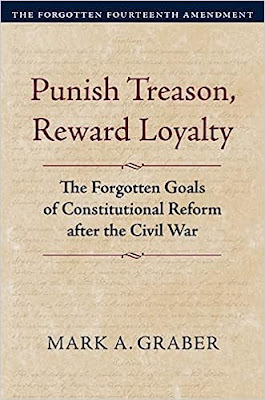
Mark A. Graber, Punish Treason, Reward Loyalty: The Forgotten Goals of Constitutional Reform after the Civil War (University of Kansas Press, 2023)
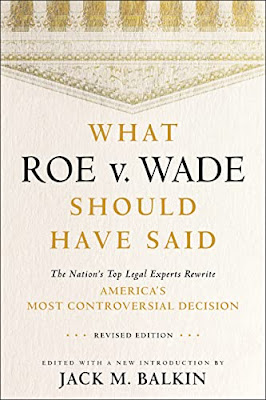
Jack M. Balkin, What Roe v. Wade Should Have Said: The Nation's Top Legal Experts Rewrite America's Most Controversial Decision - Revised Edition (NYU Press, 2023)

Andrew Koppelman, Burning Down the House: How Libertarian Philosophy Was Corrupted by Delusion and Greed (St. Martin’s Press, 2022)

Gerard N. Magliocca, Washington's Heir: The Life of Justice Bushrod Washington (Oxford University Press, 2022)
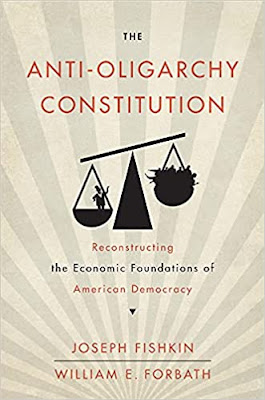
Joseph Fishkin and William E. Forbath, The Anti-Oligarchy Constitution: Reconstructing the Economic Foundations of American Democracy (Harvard University Press, 2022)
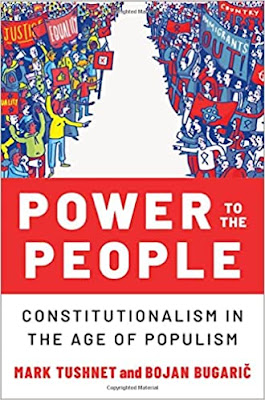
Mark Tushnet and Bojan Bugaric, Power to the People: Constitutionalism in the Age of Populism (Oxford University Press 2021).

Mark Philip Bradley and Mary L. Dudziak, eds., Making the Forever War: Marilyn B. Young on the Culture and Politics of American Militarism Culture and Politics in the Cold War and Beyond (University of Massachusetts Press, 2021).

Jack M. Balkin, What Obergefell v. Hodges Should Have Said: The Nation's Top Legal Experts Rewrite America's Same-Sex Marriage Decision (Yale University Press, 2020)

Frank Pasquale, New Laws of Robotics: Defending Human Expertise in the Age of AI (Belknap Press, 2020)

Jack M. Balkin, The Cycles of Constitutional Time (Oxford University Press, 2020)

Mark Tushnet, Taking Back the Constitution: Activist Judges and the Next Age of American Law (Yale University Press 2020).

Andrew Koppelman, Gay Rights vs. Religious Liberty?: The Unnecessary Conflict (Oxford University Press, 2020)

Ezekiel J Emanuel and Abbe R. Gluck, The Trillion Dollar Revolution: How the Affordable Care Act Transformed Politics, Law, and Health Care in America (PublicAffairs, 2020)

Linda C. McClain, Who's the Bigot?: Learning from Conflicts over Marriage and Civil Rights Law (Oxford University Press, 2020)
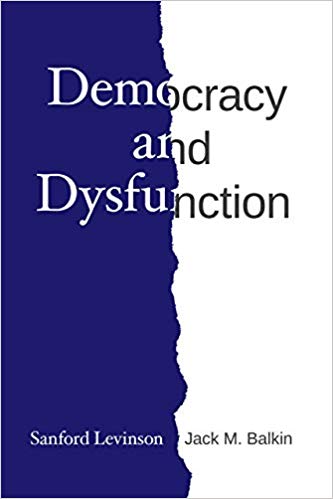
Sanford Levinson and Jack M. Balkin, Democracy and Dysfunction (University of Chicago Press, 2019)

Sanford Levinson, Written in Stone: Public Monuments in Changing Societies (Duke University Press 2018)

Mark A. Graber, Sanford Levinson, and Mark Tushnet, eds., Constitutional Democracy in Crisis? (Oxford University Press 2018)

Gerard Magliocca, The Heart of the Constitution: How the Bill of Rights became the Bill of Rights (Oxford University Press, 2018)

Cynthia Levinson and Sanford Levinson, Fault Lines in the Constitution: The Framers, Their Fights, and the Flaws that Affect Us Today (Peachtree Publishers, 2017)

Brian Z. Tamanaha, A Realistic Theory of Law (Cambridge University Press 2017)

Sanford Levinson, Nullification and Secession in Modern Constitutional Thought (University Press of Kansas 2016)

Sanford Levinson, An Argument Open to All: Reading The Federalist in the 21st Century (Yale University Press 2015)

Stephen M. Griffin, Broken Trust: Dysfunctional Government and Constitutional Reform (University Press of Kansas, 2015)

Frank Pasquale, The Black Box Society: The Secret Algorithms That Control Money and Information (Harvard University Press, 2015)

Bruce Ackerman, We the People, Volume 3: The Civil Rights Revolution (Harvard University Press, 2014)
Balkinization Symposium on We the People, Volume 3: The Civil Rights Revolution

Joseph Fishkin, Bottlenecks: A New Theory of Equal Opportunity (Oxford University Press, 2014)

Mark A. Graber, A New Introduction to American Constitutionalism (Oxford University Press, 2013)

John Mikhail, Elements of Moral Cognition: Rawls' Linguistic Analogy and the Cognitive Science of Moral and Legal Judgment (Cambridge University Press, 2013)

Gerard N. Magliocca, American Founding Son: John Bingham and the Invention of the Fourteenth Amendment (New York University Press, 2013)

Stephen M. Griffin, Long Wars and the Constitution (Harvard University Press, 2013)

Andrew Koppelman, The Tough Luck Constitution and the Assault on Health Care Reform (Oxford University Press, 2013)

James E. Fleming and Linda C. McClain, Ordered Liberty: Rights, Responsibilities, and Virtues (Harvard University Press, 2013)
Balkinization Symposium on Ordered Liberty: Rights, Responsibilities, and Virtues

Andrew Koppelman, Defending American Religious Neutrality (Harvard University Press, 2013)

Brian Z. Tamanaha, Failing Law Schools (University of Chicago Press, 2012)

Sanford Levinson, Framed: America's 51 Constitutions and the Crisis of Governance (Oxford University Press, 2012)

Linda C. McClain and Joanna L. Grossman, Gender Equality: Dimensions of Women's Equal Citizenship (Cambridge University Press, 2012)

Mary Dudziak, War Time: An Idea, Its History, Its Consequences (Oxford University Press, 2012)

Jack M. Balkin, Living Originalism (Harvard University Press, 2011)

Jason Mazzone, Copyfraud and Other Abuses of Intellectual Property Law (Stanford University Press, 2011)

Richard W. Garnett and Andrew Koppelman, First Amendment Stories, (Foundation Press 2011)

Jack M. Balkin, Constitutional Redemption: Political Faith in an Unjust World (Harvard University Press, 2011)

Gerard Magliocca, The Tragedy of William Jennings Bryan: Constitutional Law and the Politics of Backlash (Yale University Press, 2011)

Bernard Harcourt, The Illusion of Free Markets: Punishment and the Myth of Natural Order (Harvard University Press, 2010)

Bruce Ackerman, The Decline and Fall of the American Republic (Harvard University Press, 2010)
Balkinization Symposium on The Decline and Fall of the American Republic

Ian Ayres. Carrots and Sticks: Unlock the Power of Incentives to Get Things Done (Bantam Books, 2010)

Mark Tushnet, Why the Constitution Matters (Yale University Press 2010)

Ian Ayres and Barry Nalebuff: Lifecycle Investing: A New, Safe, and Audacious Way to Improve the Performance of Your Retirement Portfolio (Basic Books, 2010)
.jpg)
Jack M. Balkin, The Laws of Change: I Ching and the Philosophy of Life (2d Edition, Sybil Creek Press 2009)

Brian Z. Tamanaha, Beyond the Formalist-Realist Divide: The Role of Politics in Judging (Princeton University Press 2009)
Andrew Koppelman and Tobias Barrington Wolff, A Right to Discriminate?: How the Case of Boy Scouts of America v. James Dale Warped the Law of Free Association (Yale University Press 2009)

Jack M. Balkin and Reva B. Siegel, The Constitution in 2020 (Oxford University Press 2009)

Heather K. Gerken, The Democracy Index: Why Our Election System Is Failing and How to Fix It (Princeton University Press 2009)

Mary Dudziak, Exporting American Dreams: Thurgood Marshall's African Journey (Oxford University Press 2008)

David Luban, Legal Ethics and Human Dignity (Cambridge Univ. Press 2007)

Ian Ayres, Super Crunchers: Why Thinking-By-Numbers is the New Way to be Smart (Bantam 2007)

Jack M. Balkin, James Grimmelmann, Eddan Katz, Nimrod Kozlovski, Shlomit Wagman and Tal Zarsky, eds., Cybercrime: Digital Cops in a Networked Environment (N.Y.U. Press 2007)
Jack M. Balkin and Beth Simone Noveck, The State of Play: Law, Games, and Virtual Worlds (N.Y.U. Press 2006)

Andrew Koppelman, Same Sex, Different States: When Same-Sex Marriages Cross State Lines (Yale University Press 2006)

Brian Tamanaha, Law as a Means to an End (Cambridge University Press 2006)

Sanford Levinson, Our Undemocratic Constitution (Oxford University Press 2006)

Mark Graber, Dred Scott and the Problem of Constitutional Evil (Cambridge University Press 2006)

Jack M. Balkin, ed., What Roe v. Wade Should Have Said (N.Y.U. Press 2005)

Sanford Levinson, ed., Torture: A Collection (Oxford University Press 2004)
Balkin.com homepage
Bibliography
Conlaw.net
Cultural Software
Writings
Opeds
The Information Society Project
BrownvBoard.com
Useful Links
Syllabi and Exams
