Balkinization
an unanticipated consequence of
Jack M. Balkin
Balkinization Symposiums: A Continuing List
E-mail:
Jack Balkin:
jackbalkin at yahoo.com
Bruce Ackerman
bruce.ackerman at yale.edu
Ian Ayres
ian.ayres at yale.edu
Corey Brettschneider
corey_brettschneider at brown.edu
Mary Dudziak
mary.l.dudziak at emory.edu
Joey Fishkin
joey.fishkin at gmail.com
Heather Gerken heather.gerken at yale.edu
Abbe Gluck abbe.gluck at yale.edu
Mark Graber
mgraber at law.umaryland.edu
Stephen Griffin
sgriffin at tulane.edu
Jonathan Hafetz
jonathan.hafetz at shu.edu
Jeremy Kessler
jkessler at law.columbia.edu
Andrew Koppelman
akoppelman at law.northwestern.edu
Marty Lederman
msl46 at law.georgetown.edu
Sanford Levinson
slevinson at law.utexas.edu
David Luban
david.luban at gmail.com
Gerard Magliocca
gmaglioc at iupui.edu
Jason Mazzone
mazzonej at illinois.edu
Linda McClain
lmcclain at bu.edu
John Mikhail
mikhail at law.georgetown.edu
Frank Pasquale
pasquale.frank at gmail.com
Nate Persily
npersily at gmail.com
Michael Stokes Paulsen
michaelstokespaulsen at gmail.com
Deborah Pearlstein
dpearlst at yu.edu
Rick Pildes
rick.pildes at nyu.edu
David Pozen
dpozen at law.columbia.edu
Richard Primus
raprimus at umich.edu
K. Sabeel Rahmansabeel.rahman at brooklaw.edu
Alice Ristroph
alice.ristroph at shu.edu
Neil Siegel
siegel at law.duke.edu
David Super
david.super at law.georgetown.edu
Brian Tamanaha
btamanaha at wulaw.wustl.edu
Nelson Tebbe
nelson.tebbe at brooklaw.edu
Mark Tushnet
mtushnet at law.harvard.edu
Adam Winkler
winkler at ucla.edu
Compendium of posts on Hobby Lobby and related cases
The Anti-Torture Memos: Balkinization Posts on Torture, Interrogation, Detention, War Powers, and OLC
The Anti-Torture Memos (arranged by topic)
Recent Posts
Who Won the New Deal Confrontation Between FDR and the Court: The Presidency or the Court?
![[Powered by Blogger]](https://lh3.googleusercontent.com/blogger_img_proxy/AEn0k_vAY3BbOHIgPO9n_jIXxZLlmypcPT5C-5a246MblRVvhq5oT9k08icZlikqa77QZWqzMo9nS62wO_rp5UvMlFtuzgHf8NKKTGOsV-PhayTk=s0-d)
Just A Few Blogs
ACS Blog
Alas, a Blog
Althouse
Arts and Letters Daily
Atrios (Eschaton)
Bill of Health
Buzzflash.com
Buzz Machine
Cato at Liberty
Juan Cole (Informed Comment)
Concurring Opinions
The Constitution in 2020
Corrente
Crooked Timber
Daily Howler
Daily Kos
Dana Boyd
Brad DeLong
Digby (Hullabaloo)
Discriminations
Daniel Drezner
Kevin Drum (Mother Jones)
Electrolite
En Banc
Eunomia (Daniel Larison)
Fafblog
Michael Froomkin (Discourse.net)
GovLab (Beth Noveck)
Rick Hasen (Election Law)
History News Network
How Appealing
Ignatz (Sam Heldman)
The Importance of (Ernie Miller)
Infolaw
Instapundit
International Economic Law and Policy Blog
IntLawGrrls
Jacob Levy
Jesus' General
Jurisdynamics
The Kitchen Cabinet
Mark Kleiman
Law Blog Central
Larry Lessig
Lawyers, Guns and Money
Liberal Oasis
Brian Leiter's Law School Reports
The Leiter Reports
Marginal Revolution
Megan McArdle
Memeorandum
Metafilter
Mirror of Justice
The New Republic
Newseum
No More Mister Nice Blog
Brendan Nyhan
Opinio Juris
Orcinus
The Originalism Blog
Pandagon
Passport (Foreign Policy)
Overcoming Bias
Political Animal (Washington Monthly)
Political Theory Daily Review
Political Wire (Taegan Goddard)
The Poor Man
Virginia Postrel
Prawfsblawg
Public Reason
Jonathan Rauch
Raw Story
Redstate
ReligiousLeftLaw.com
Reporters Committee For Freedom of the Press
Reproductive Rights Blog
Rothman's Roadmap to the Right of Publicity
SCOTUS Blog
Seeing the Forest
Clay Shirky
The Shifted Librarian
The Situationist
Larry Solum (Legal Theory)
Andrew Sullivan
Talking Points Memo
Talk Left
Tapped
Tbogg
TechPresident
The Paper Chase (Jurist)
Tom Paine
Tom Tomorrow (This Modern World)
Eve Tushnet
Uggabugga
University of Chicago Law School Faculty Blog
Unqualified Offerings
The Volokh Conspiracy
War and Piece (Laura Rozen)
Wampum
Oliver Willis
Wonkette
Written Description
Matthew Yglesias
Yin
Your Choice of Feeds
1. XML
powered by

2. Atom Feed
3. RSS 2.0
Who Won the New Deal Confrontation Between FDR and the Court: The Presidency or the Court?
Rick Pildes
As supporters of President Obama in the aftermath of the health-care arguments continue to urge him to confront the Supreme Court more aggressively (see E.J. Dionne, here, and lawyer Marvin Ammori, here) , and as analogies to FDR's confrontation with the Court continue to mount, I want to continue to provide more of a revisionist historical perspective on the New Deal confrontation. In an earlier post, I noted that this confrontation occurred at a moment at which FDR was perhaps the most popular President in modern history and the Court was striking down a staggering array of federal statutes and presidential actions. Yet FDR nonetheless lost the confrontation, at least in the sense that his Court-packing legislation was defeated. I now want to turn to the aftermath of the confrontation and ask: which institution actually won the Court-packing fight? The conventional wisdom among constitutional academics, focused narrowly on the Court itself, is that FDR lost the battle, but won the war, since the Court soon acceded to the New Deal’s constitutionality. On this standard law-school narrative, FDR won the war because his attacks on the Court forced the Court to back down and change constitutional direction. Here is a different perspective that I provide in my article, Is The Supreme Court A "Majoritarian" Institution?: For those inclined to think the Court backed down because of the political pressure FDR brought to bear, it is important to keep in mind that FDR was able to make seven appointments to the Court between 1937 and 1943. Thus, we cannot know whether the Court acceded to the New Deal due to the pressure of public opinion and presidential attacks or simply the fortuity that FDR made so many appointments in such a short period. Of course, President Obama is not proposing legislation challenging the Court, let alone any measure as confrontational as the Court-packing plan. And public criticism of the Court's decisions, by the President or anyone else, is legitimate in a democracy. But while it's common wisdom to believe FDR defeated the Court, it might well be that the right perspective is that the Court defeated FDR -- and there is no doubt that the Court's independence and public support was enhanced as a result of this fight. As a political matter, then, when Presidents take on the Court, even in the mild form of criticizing the Court's decisions, Presidents walk a delicate line. For better or worse, even among those who disagree with the Court's decisions, there is a surprisingly deep reservoir of support for the Court as an institution (I will look at some of the data in another post). That doesn't mean Presidents shouldn't take on the Court; it does mean they should do so with adequate historical appreciation for the nature of the battle they are joining.But FDR’s legislative assault on the Court destroyed his political coalition, in Congress and nationally, and ended his ability to enact major domestic policy legislation, despite his huge electoral triumph in 1936. As a Fortune magazine poll in July 1937 put it: “The Supreme Court struggle had cut into the President’s popularity as no other issue ever had.” National health care, the next major item on FDR’s agenda, faded away. The progressive domestic policy agenda did not recover until 1964. Reflecting back, FDR’s second vice president, Henry Wallace, observed: “The whole New Deal really went up in smoke as a result of the Supreme Court fight.”
No rational politician, looking back at FDR’s attempt to bring the Court into line, other than through the ordinary appointments process, is likely to repeat FDR’s efforts. Thus, one can read the 1937 experience as suggesting that, for better or worse, judicial independence and the authority of the Court have become so entrenched in America that even the most popular politicians play with fire if they seek too directly to take on the power of the Court.
. . . FDR’s Court-packing plan was in dire shape politically long before the Court’s “switch in time” took the last wind out of that effort – despite the fact, as well, that the plan was the first piece of legislation FDR put forward after having just won the biggest landslide in American history. Two-thirds of the newspapers that had endorsed FDR came out immediately and vociferously against the plan. The most common charge was that FDR was seeking “dictatorial powers,” a particularly resonant charge. Telegrams to Congress, a leading gauge of public opinion at the time, flowed overwhelmingly, and with passionate intensity, against the plan. Some leading Progressive Democrats in the Senate, like Hiram Johnson and George Norris, quickly bolted from FDR and defended the Court’s independence; conservative Democrats wanted no part of the plan; a leading Western Democrat, Senator Burton Wheeler, announced he would lead the fight against the plan; FDR’s Vice President did little to conceal his disdain for Court packing; Republicans sat silently and let the Democratic Party tear itself apart. And the Court, too, has tools to fight back: Chief Justice Hughes sent a letter, with devastating effect, to the Senate Judiciary committee that took apart FDR’s justifications for Court packing.
Posted
6:40 PM
by Rick Pildes [link]

The problem with FDR was not his comments criticizing the rulings (closer to the issue here) but his attempt to go a step further. Obama is not doing this. He is not, e.g., trying to strongly end the filibuster to get more of his nominees on the bench (itself much less than FDR's move).
Presidents have criticized the SC's rulings for years. It is a major theme for Republicans. Reagan personnel continuously pushed the SC to overturn Roe v. Wade, even when the cases involved minor points. What exactly is Obama doing as compared to that?
"Alas, Prof. Pildes' current post on this topic does not provide for comments. I'm not suggesting that he open that post to comments. Rather, perhaps Prof. Gerard Magliocca might consider posting on this topic, as he has done some serious research on the subject, including his 'Court-Packing and the Child Labor Amendment' in 27 Constitutional Commentary No. 2, Fall 2011, beginning at page 455."
at his earlier post was premature. But I repeat it here for the reference to Gerard's article with respect to Sandy's comment that he " ... would love to see a mainstream authority figure go not only after the Court, but also our radically defective Constitution." Gerard's article has an interesting discussion on the pre-New Deal relative ease in passing amendments to the Constitution that tightened up during the New Deal with the proposed Child Labor Amendment, triggering FDR's concern with the difficulties under Article V. perhaps FDR's reason for the Article III route proposed in his famous 1937 Fireside Chat. According to Gerard: "In that speech, FDR said that '[n]o amendment which any powerful economic interests or the leaders of any powerful political party have had reason to oppose has ever been ratified within anything like a reasonable time' and he observed that thirteen states with just five percent of the population could veto any proposal." [page 481]
I don't know if Obama plans to propose an amendment to address Citizens United or any other amendment during the upcoming campaign. But just why shouldn't Obama be critical of the 5-4 Citizens United decision and of what may possibly be a similar result for the ACA appeals? Obama's critiques/challenges differ from FDR's situation. Joe makes the point of Reagan's issues with the Court for Roe v. Wade. E. J. Dionne, Jr. made the point in his recent column that Obama is not, should not be, a wimp in going after the Court, which is what Republican incumbent/challengers for the presidency have been doing for years in the attacking the Warren and Burger Courts.
If the objective is to intimidate the Supreme Court into finding Obamacare constitutional, then as Rick's post shows, there is little New Deal precedent that such a war works.
On the other hand, if the objective is to reelect the President, the 1936 election suggests this approach might work if the President and his policies are popular.
In this case, voter approval of Mr. Obama is still sub-50% and voter disapproval of Obamacare is a plurality. Indeed, in the Rasmussen poll, voter approval of the Supreme Court nearly doubled after the Court suggested in oral arguments that it might find Obamacare unconstitutional.
This does not appear to be a war the President wants to wage.
"This does not appear to be a war the President wants to wage."
to wage such a "war," as our yodeler describes? Were Republican incumbent/challenger presidents waging "war" against the Court in challenging the Warren and Burger Courts? Or is our yodeler fearful that real citizens will unite despite the deep pockets of corporate "citizens"?
They sure did and it worked electorally on issues like prayer, abortion, racial preferences, busing and the right to keep and bear arms.
When the judiciary is advancing an unpopular agenda, it can be politically advantageous for a party to attack that agenda and campaign on appointing judges who will not advance their own agenda.

If you want more I recommend this paper
http://seweb.ucsd.edu/~savage/papers/Oakland11.pdf
Cajas Registradoras
audifonos
Books by Balkinization Bloggers

Mark Tushnet and Bojan Bugaric, Constitutionalism and Its Discontents (University of Chicago Press, 2026)

Gerard N. Magliocca, The Actual Art of Governing: Justice Robert H. Jackson's Concurring Opinion in the Steel Seizure Case (Oxford University Press, 2025)

Linda C. McClain and Aziza Ahmed, The Routledge Companion to Gender and COVID-19 (Routledge, 2024)

David Pozen, The Constitution of the War on Drugs (Oxford University Press, 2024)

Jack M. Balkin, Memory and Authority: The Uses of History in Constitutional Interpretation (Yale University Press, 2024)
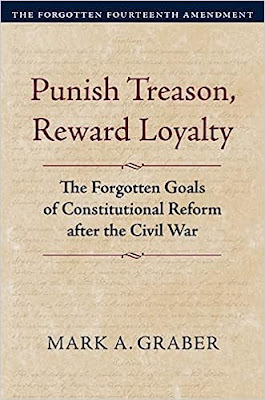
Mark A. Graber, Punish Treason, Reward Loyalty: The Forgotten Goals of Constitutional Reform after the Civil War (University of Kansas Press, 2023)
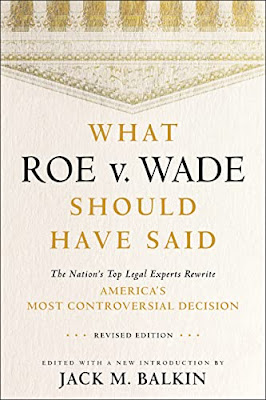
Jack M. Balkin, What Roe v. Wade Should Have Said: The Nation's Top Legal Experts Rewrite America's Most Controversial Decision - Revised Edition (NYU Press, 2023)

Andrew Koppelman, Burning Down the House: How Libertarian Philosophy Was Corrupted by Delusion and Greed (St. Martin’s Press, 2022)

Gerard N. Magliocca, Washington's Heir: The Life of Justice Bushrod Washington (Oxford University Press, 2022)
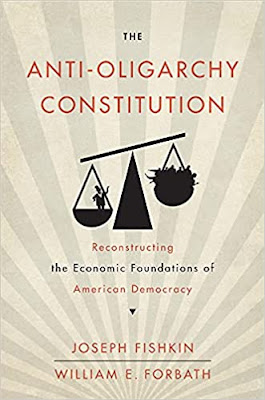
Joseph Fishkin and William E. Forbath, The Anti-Oligarchy Constitution: Reconstructing the Economic Foundations of American Democracy (Harvard University Press, 2022)
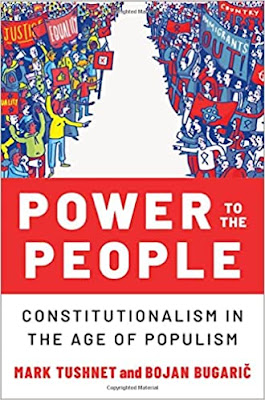
Mark Tushnet and Bojan Bugaric, Power to the People: Constitutionalism in the Age of Populism (Oxford University Press 2021).

Mark Philip Bradley and Mary L. Dudziak, eds., Making the Forever War: Marilyn B. Young on the Culture and Politics of American Militarism Culture and Politics in the Cold War and Beyond (University of Massachusetts Press, 2021).

Jack M. Balkin, What Obergefell v. Hodges Should Have Said: The Nation's Top Legal Experts Rewrite America's Same-Sex Marriage Decision (Yale University Press, 2020)

Frank Pasquale, New Laws of Robotics: Defending Human Expertise in the Age of AI (Belknap Press, 2020)

Jack M. Balkin, The Cycles of Constitutional Time (Oxford University Press, 2020)

Mark Tushnet, Taking Back the Constitution: Activist Judges and the Next Age of American Law (Yale University Press 2020).

Andrew Koppelman, Gay Rights vs. Religious Liberty?: The Unnecessary Conflict (Oxford University Press, 2020)

Ezekiel J Emanuel and Abbe R. Gluck, The Trillion Dollar Revolution: How the Affordable Care Act Transformed Politics, Law, and Health Care in America (PublicAffairs, 2020)

Linda C. McClain, Who's the Bigot?: Learning from Conflicts over Marriage and Civil Rights Law (Oxford University Press, 2020)
Sanford Levinson and Jack M. Balkin, Democracy and Dysfunction (University of Chicago Press, 2019)

Sanford Levinson, Written in Stone: Public Monuments in Changing Societies (Duke University Press 2018)

Mark A. Graber, Sanford Levinson, and Mark Tushnet, eds., Constitutional Democracy in Crisis? (Oxford University Press 2018)

Gerard Magliocca, The Heart of the Constitution: How the Bill of Rights became the Bill of Rights (Oxford University Press, 2018)

Cynthia Levinson and Sanford Levinson, Fault Lines in the Constitution: The Framers, Their Fights, and the Flaws that Affect Us Today (Peachtree Publishers, 2017)

Brian Z. Tamanaha, A Realistic Theory of Law (Cambridge University Press 2017)

Sanford Levinson, Nullification and Secession in Modern Constitutional Thought (University Press of Kansas 2016)

Sanford Levinson, An Argument Open to All: Reading The Federalist in the 21st Century (Yale University Press 2015)

Stephen M. Griffin, Broken Trust: Dysfunctional Government and Constitutional Reform (University Press of Kansas, 2015)

Frank Pasquale, The Black Box Society: The Secret Algorithms That Control Money and Information (Harvard University Press, 2015)

Bruce Ackerman, We the People, Volume 3: The Civil Rights Revolution (Harvard University Press, 2014)
Balkinization Symposium on We the People, Volume 3: The Civil Rights Revolution

Joseph Fishkin, Bottlenecks: A New Theory of Equal Opportunity (Oxford University Press, 2014)

Mark A. Graber, A New Introduction to American Constitutionalism (Oxford University Press, 2013)

John Mikhail, Elements of Moral Cognition: Rawls' Linguistic Analogy and the Cognitive Science of Moral and Legal Judgment (Cambridge University Press, 2013)

Gerard N. Magliocca, American Founding Son: John Bingham and the Invention of the Fourteenth Amendment (New York University Press, 2013)

Stephen M. Griffin, Long Wars and the Constitution (Harvard University Press, 2013)

Andrew Koppelman, The Tough Luck Constitution and the Assault on Health Care Reform (Oxford University Press, 2013)

James E. Fleming and Linda C. McClain, Ordered Liberty: Rights, Responsibilities, and Virtues (Harvard University Press, 2013)
Balkinization Symposium on Ordered Liberty: Rights, Responsibilities, and Virtues

Andrew Koppelman, Defending American Religious Neutrality (Harvard University Press, 2013)

Brian Z. Tamanaha, Failing Law Schools (University of Chicago Press, 2012)

Sanford Levinson, Framed: America's 51 Constitutions and the Crisis of Governance (Oxford University Press, 2012)

Linda C. McClain and Joanna L. Grossman, Gender Equality: Dimensions of Women's Equal Citizenship (Cambridge University Press, 2012)

Mary Dudziak, War Time: An Idea, Its History, Its Consequences (Oxford University Press, 2012)

Jack M. Balkin, Living Originalism (Harvard University Press, 2011)

Jason Mazzone, Copyfraud and Other Abuses of Intellectual Property Law (Stanford University Press, 2011)

Richard W. Garnett and Andrew Koppelman, First Amendment Stories, (Foundation Press 2011)

Jack M. Balkin, Constitutional Redemption: Political Faith in an Unjust World (Harvard University Press, 2011)

Gerard Magliocca, The Tragedy of William Jennings Bryan: Constitutional Law and the Politics of Backlash (Yale University Press, 2011)

Bernard Harcourt, The Illusion of Free Markets: Punishment and the Myth of Natural Order (Harvard University Press, 2010)

Bruce Ackerman, The Decline and Fall of the American Republic (Harvard University Press, 2010)
Balkinization Symposium on The Decline and Fall of the American Republic

Ian Ayres. Carrots and Sticks: Unlock the Power of Incentives to Get Things Done (Bantam Books, 2010)

Mark Tushnet, Why the Constitution Matters (Yale University Press 2010)

Ian Ayres and Barry Nalebuff: Lifecycle Investing: A New, Safe, and Audacious Way to Improve the Performance of Your Retirement Portfolio (Basic Books, 2010)
.jpg)
Jack M. Balkin, The Laws of Change: I Ching and the Philosophy of Life (2d Edition, Sybil Creek Press 2009)

Brian Z. Tamanaha, Beyond the Formalist-Realist Divide: The Role of Politics in Judging (Princeton University Press 2009)
Andrew Koppelman and Tobias Barrington Wolff, A Right to Discriminate?: How the Case of Boy Scouts of America v. James Dale Warped the Law of Free Association (Yale University Press 2009)

Jack M. Balkin and Reva B. Siegel, The Constitution in 2020 (Oxford University Press 2009)

Heather K. Gerken, The Democracy Index: Why Our Election System Is Failing and How to Fix It (Princeton University Press 2009)

Mary Dudziak, Exporting American Dreams: Thurgood Marshall's African Journey (Oxford University Press 2008)

David Luban, Legal Ethics and Human Dignity (Cambridge Univ. Press 2007)

Ian Ayres, Super Crunchers: Why Thinking-By-Numbers is the New Way to be Smart (Bantam 2007)

Jack M. Balkin, James Grimmelmann, Eddan Katz, Nimrod Kozlovski, Shlomit Wagman and Tal Zarsky, eds., Cybercrime: Digital Cops in a Networked Environment (N.Y.U. Press 2007)
Jack M. Balkin and Beth Simone Noveck, The State of Play: Law, Games, and Virtual Worlds (N.Y.U. Press 2006)

Andrew Koppelman, Same Sex, Different States: When Same-Sex Marriages Cross State Lines (Yale University Press 2006)

Brian Tamanaha, Law as a Means to an End (Cambridge University Press 2006)

Sanford Levinson, Our Undemocratic Constitution (Oxford University Press 2006)

Mark Graber, Dred Scott and the Problem of Constitutional Evil (Cambridge University Press 2006)

Jack M. Balkin, ed., What Roe v. Wade Should Have Said (N.Y.U. Press 2005)

Sanford Levinson, ed., Torture: A Collection (Oxford University Press 2004)
Balkin.com homepage
Bibliography
Conlaw.net
Cultural Software
Writings
Opeds
The Information Society Project
BrownvBoard.com
Useful Links
Syllabi and Exams
