Balkinization
an unanticipated consequence of
Jack M. Balkin
Balkinization Symposiums: A Continuing List
E-mail:
Jack Balkin:
jackbalkin at yahoo.com
Bruce Ackerman
bruce.ackerman at yale.edu
Ian Ayres
ian.ayres at yale.edu
Corey Brettschneider
corey_brettschneider at brown.edu
Mary Dudziak
mary.l.dudziak at emory.edu
Joey Fishkin
joey.fishkin at gmail.com
Heather Gerken heather.gerken at yale.edu
Abbe Gluck abbe.gluck at yale.edu
Mark Graber
mgraber at law.umaryland.edu
Stephen Griffin
sgriffin at tulane.edu
Jonathan Hafetz
jonathan.hafetz at shu.edu
Jeremy Kessler
jkessler at law.columbia.edu
Andrew Koppelman
akoppelman at law.northwestern.edu
Marty Lederman
msl46 at law.georgetown.edu
Sanford Levinson
slevinson at law.utexas.edu
David Luban
david.luban at gmail.com
Gerard Magliocca
gmaglioc at iupui.edu
Jason Mazzone
mazzonej at illinois.edu
Linda McClain
lmcclain at bu.edu
John Mikhail
mikhail at law.georgetown.edu
Frank Pasquale
pasquale.frank at gmail.com
Nate Persily
npersily at gmail.com
Michael Stokes Paulsen
michaelstokespaulsen at gmail.com
Deborah Pearlstein
dpearlst at yu.edu
Rick Pildes
rick.pildes at nyu.edu
David Pozen
dpozen at law.columbia.edu
Richard Primus
raprimus at umich.edu
K. Sabeel Rahmansabeel.rahman at brooklaw.edu
Alice Ristroph
alice.ristroph at shu.edu
Neil Siegel
siegel at law.duke.edu
David Super
david.super at law.georgetown.edu
Brian Tamanaha
btamanaha at wulaw.wustl.edu
Nelson Tebbe
nelson.tebbe at brooklaw.edu
Mark Tushnet
mtushnet at law.harvard.edu
Adam Winkler
winkler at ucla.edu
Compendium of posts on Hobby Lobby and related cases
The Anti-Torture Memos: Balkinization Posts on Torture, Interrogation, Detention, War Powers, and OLC
The Anti-Torture Memos (arranged by topic)
Recent Posts
The Quickly Exploding Law Graduate Debt Disaster
![[Powered by Blogger]](https://lh3.googleusercontent.com/blogger_img_proxy/AEn0k_sBdIrGqSDOEDF-6OshxjClapg-5hi-8g3n9adEh1riI7mkP1Nb38QJOYP6J_YAERlyS0Z98mI0zpb7gC9s3if4BIMxVtqha0JGO4mG3Xe9=s0-d)
Just A Few Blogs
ACS Blog
Alas, a Blog
Althouse
Arts and Letters Daily
Atrios (Eschaton)
Bill of Health
Buzzflash.com
Buzz Machine
Cato at Liberty
Juan Cole (Informed Comment)
Concurring Opinions
The Constitution in 2020
Corrente
Crooked Timber
Daily Howler
Daily Kos
Dana Boyd
Brad DeLong
Digby (Hullabaloo)
Discriminations
Daniel Drezner
Kevin Drum (Mother Jones)
Electrolite
En Banc
Eunomia (Daniel Larison)
Fafblog
Michael Froomkin (Discourse.net)
GovLab (Beth Noveck)
Rick Hasen (Election Law)
History News Network
How Appealing
Ignatz (Sam Heldman)
The Importance of (Ernie Miller)
Infolaw
Instapundit
International Economic Law and Policy Blog
IntLawGrrls
Jacob Levy
Jesus' General
Jurisdynamics
The Kitchen Cabinet
Mark Kleiman
Law Blog Central
Larry Lessig
Lawyers, Guns and Money
Liberal Oasis
Brian Leiter's Law School Reports
The Leiter Reports
Marginal Revolution
Megan McArdle
Memeorandum
Metafilter
Mirror of Justice
The New Republic
Newseum
No More Mister Nice Blog
Brendan Nyhan
Opinio Juris
Orcinus
The Originalism Blog
Pandagon
Passport (Foreign Policy)
Overcoming Bias
Political Animal (Washington Monthly)
Political Theory Daily Review
Political Wire (Taegan Goddard)
The Poor Man
Virginia Postrel
Prawfsblawg
Public Reason
Jonathan Rauch
Raw Story
Redstate
ReligiousLeftLaw.com
Reporters Committee For Freedom of the Press
Reproductive Rights Blog
Rothman's Roadmap to the Right of Publicity
SCOTUS Blog
Seeing the Forest
Clay Shirky
The Shifted Librarian
The Situationist
Larry Solum (Legal Theory)
Andrew Sullivan
Talking Points Memo
Talk Left
Tapped
Tbogg
TechPresident
The Paper Chase (Jurist)
Tom Paine
Tom Tomorrow (This Modern World)
Eve Tushnet
Uggabugga
University of Chicago Law School Faculty Blog
Unqualified Offerings
The Volokh Conspiracy
War and Piece (Laura Rozen)
Wampum
Oliver Willis
Wonkette
Written Description
Matthew Yglesias
Yin
Your Choice of Feeds
1. XML
powered by

2. Atom Feed
3. RSS 2.0
The Quickly Exploding Law Graduate Debt Disaster
Brian Tamanaha
The average indebtedness figures for 2011 law graduates are stunning. Last year, 4 law schools had graduates with average debt exceeding $135,000. This year 17 law schools are above $135,000. Last year the highest average debt among graduates was $145,621 (Cal. Western); this year the highest average debt is $165,178 (John Marshall). Below are the 20 schools with the highest average law school debt among graduates (these figures do not include undergraduate debt).
California Western $153,145
Thomas Jefferson $153,006
American $151,318
New York Law School $146,230
Phoenix $145,357
Southwestern $142,606
Catholic (DC) $142,222
Northwestern $139,101
Pace University $139,007
Whittier $138,961
Atlanta's John Marshall $138,819
Pacific (McGeorge) $138,267
St. Thomas (FL) $137,721
Univ. San Francisco $137,234
Vermont Law School $136,089
Golden Gate $135,645
Florida Coastal $134,355
Stetson $133,082
Syracuse $132,993
What's remarkable is that the majority of graduates from these law schools--with the exception of Northwestern--do not obtain jobs with salaries sufficient to make the monthly loan payments due on the average debt. At some of these schools 90% or more of graduates with debt do not earn enough to make the loan payments on this level of debt (not all indebted students will carry the average debt).
Consider Thomas Jefferson, with average law graduate debt of $153,000. According to statistics provided by the school, only 33% of graduates landed jobs as lawyers in 2010. Most of the graduates who obtained lawyer jobs earned around $60,000 or less. (This estimate is based on the fact that the bulk who landed these jobs worked in firms of 2 to 10 lawyers; the salary figures supplied by TJ are based upon 16% reporting, and consequently are unreliable.) The placement numbers for the class of 2011 will be the same or worse (only 33% of Thomas Jefferson's 2011 graduates passed the California bar).
A simple calculation shows that many TJ graduates are in severe financial straits. Let's assume that taxes will take 30% of the graduate's $60,000 pay, leaving net monthly income of $3,500. The monthly loan payment due on $153,000 debt is $1,800; rent for a modest one bedroom apartment in San Diego is $1,200--totaling a combined outlay of $3,000. This leaves the graduate with $500 a month to spend after making rent and loan payments. It is not doable. Graduates in this position will be forced to enter Income Based Repayment, a reduced payment program that helps graduates in financial hardship avoid default, but which has significant negative consequences of its own (in particular, the loan balance will quickly balloon and will negatively affect the graduate's FICO score).
This is not just about Thomas Jefferson, of course. Eight of the law schools on the above list are in the bottom tier of US News, and 16 of the 20 schools are outside the top 100. At a number of these schools only half or fewer of the graduates will have obtained full time jobs as lawyers (these statistics should be available soon), and most of those who land lawyer jobs will earn $65,000 or less. At these debt levels, only graduates who obtain NLJ 250 jobs can manage the monthly loan payments--and on the above list only Northwestern places a significant percentage of graduates in these jobs.
Thousands of 2011 law graduates across the country will not earn enough to manage the debt they incurred to obtain their law degree.
When will law schools decide that they cannot continue to inflict ever increasing levels of unmanageable debt on their students? At the very least, the admissions offices at law schools across the country should explicitly warn students that anyone who expects to incur law school debt above $100,000 will likely suffer financial distress upon graduation unless they land a NLJ 250 job or a public service job that qualifies for reduced loan payments--and admitted students should be told that relatively few graduates get these jobs. Unfortunately, we cannot count on law schools to provide this message--which, if effective, would result in some schools closing their doors for lack of enough paying students.
This financial insanity will not stop until significant changes are made to the federal student loan program.
Posted
1:00 PM
by Brian Tamanaha [link]
After the 08 crisis credit demand and supply collapsed, except for governments. In the case of government it stepped up to the plate to borrow and lenders were eager to lend at super low rates. This still applies as of the last quarter of 11 the Treasury was still responsible for 70% of all non financial credit.
So back to education loans. Because they often have implicit government guarantees, like the GSE's, the supply of credit for education loans has continued to expand. So in a way colleges and universities, public and private have been in a bubble akin to the housing bubble. The benefits to the institutions are irresistible and so there is no way they will try to reign in costs and thus tuiton. Not as long as students are willing and able to borrow.

I question the John Marshall listing though--it's a bigger increase from last year than I would have expected, and I don't believe that only 50% of its graduates have loans. Even if they were giving generous scholarships to applicants with an above-median LSAT, you'd think that more students would be taking on some debt for living expenses. Cal Western and TJ seem right, though.
Also, IBR (even without public service) will lessen the immediate repayment burden for most students, but at significant cost to the taxpayer.
If you want lower tuitions costs, drop the subsidies significantly. Of course, is will me less compensation and more classroom work for professors.
Do you have any thoughts as to why students have kept flocking to these schools even though there are almost always less expensive alternatives that would require students to assume less debt?
You are right that the 50% in debt for JM is odd and might be an error.
Milan,
I can only think of one answer to your question. These students were bent on going to law school no matter what, and these schools were the best ones they got into in the cities they hoped to work in. They did not take a close look at the economics of the situation, and law schools have been posting misleading employment numbers.
Keep in mind that 2011 graduates entered law school in 2008, well before the drumbeat of bad publicity about law schools. Prospective students today will be better informed about the financial risks. But I suspect they will continue to enroll no matter how poor the odds of success.
And now law schools are using IBR to tell students they won't have to pay back the scary loan numbers in the end if their high-risk gamble does not pay off.
Brian
I've argued that the prestige hierarchy will change dramatically if (when?) loan limits are put into place: http://www.legalethicsforum.com/blog/2012/02/after-the-student-loan-arms-race-the-disruption-of-hierarchy.html
Cuurent law school loans are overwhelmingly not just gurenteed by the federal government but actually provisioned directly by the department of education under the Stafford and PLUS Grad loan programs.
It is a lose-lose situation. The students are saddled with crushing debt burdens and the federal government is left owning debt with high non-payment rates much of which will have to be written off altogether in 20 years under IBR.
The only people who come out ahead are those that work for these law schools.
I agree with the analysis - with these additional points.
1. Even if students could pay their loans by obtaining high-paying jobs, the rising expense of legal education could weaken the provision of services to indigent and less fortunate clients (and other vital settings with lower salaries).
2. Even if students could pay their loans by obtaining high-paying jobs, the enormous costs of legal education would still have differential effects for students whose families have relatively less wealth (not just income).
Poor students often leave law school with demands for assistance from friends and families. Higher salaries do not always translate into more personal gain.
So even those grads who wanted to do some good in the world, can't afford to.

It's high time the law schools got a good hard taste of what the rest of us have suffered at the hands of the rapacious ambulance-chasing filth they excrete. There is nothing so heartwarming as seeing lawyer scum in misery.
I suspect my solution would be different than his, but here goes-- I think we should eliminate all subsidies from PRIVATE schools and make PUBLIC schools free (and use the money saved by not subsidizing private schools to build more of them).
This would force private schools to cut costs substantially, but it would also force textbook printers, producers of educational materials, computer services that sell to the educational market, etc., to price closer to marginal cost as well. And at the same time, we'd get a lot more bang for our buck by funding public education.
http://online.wsj.com/article/SB10001424052702303812904577295930047604846.html?mod=googlenews_wsj
It is reportedly growing at $40 billion a month.
Of the loans that are now in the repayment period as much as 27% is now 30 days past due, or more of course.
http://www.fitchratings.com/web/en/dynamic/articles/U.S.-Student-Loan-ABS-Resistant-to-Default-Rates.jsp?cm_sp=homepage-_-FitchWire-_-U.S.%20Student%20Loan%20ABS%20Resistant%20to%20Default%20Rates
Not to worry there of course, for the lenders, the government has their back.
So students will be long term debt slaves, or deadbeats, and taxpayers will bail out the lenders.
I hope this all sounds familiar. Of course I am not talking about macro economic issues, not educational ones per say. But all the forces which encouraged the housing bubble are on board with this education bubble. Remember we are talking $40 billion a month into post secondary schools that may not otherwise be going there. Thus a bubble has been created.
This will end badly.
http://abovethelaw.com/2011/01/character-fitness-fail-for-graduate-with-no-plan-to-pay-off-his-debts/
حلي الاوريو الفطر الهندي صور تورتة حلى قهوه طريقة عمل السينابون طريقة عمل بلح الشام بيتزا هت كيكة الزبادي حلا سهل صور كيك عجينة العشر دقائق طريقة عمل الدونات طريقة عمل البان كيك طريقة عمل الكنافة طريقة عمل البسبوسة طريقة عمل الكيك طريقة عمل عجينة البيتزا فوائد القرفه
karimunjawa island beauty |
puisi karimunjawa |
pulau gosong karimunjawa |
sunset ungu karimunjawa |
kapal nazi karimunjawa |
keindahan wisata karimunjawa |
pesona laut karimunjawa |
indahnya tanjung gelam karimunjawa |
wisata pulau karimunjawa |
liburan ke karimunjawa |
surga pantai karimunjawa |
hiu karimunjawa |
sunset cantik karimunjawa |
karimunjawa menakjubkan |
snorkling di karimunjawa |
agenda wisata karimunjawa
boking paket karimunjawa
tempat wisata di jepara
pantai karimunjawa
indahnya pantai karimunjawa
paket bulan puasa karimunjawa |
taman nasional karimunjawa |
pulau karimunjawa |
cara ke karimunjawa |
jadwal trip karimunjawa |
hotel di karimunjawa |
penginapan di karimunjawa |
resort karimunjawa |
hotel di jepara |
panorama karimunjawa |
situs bawah air karimunjawa |
homestay karimunjawa |
hoemestay karimunjawa |
paket homestay karimunjawa |
homestay karimunjawa |
homestay karimunjawa |
paket diving karimunjawa |
penduduk karimunjawa |
tracking mangrov karimunjawa |
wisata di karimunjawa |
keindahan pulau karimunjawa |
place of karimunjawa |
tips berlibur karimunjawa |
indahnya karimunjawa |
pesona karimunjawa |
paket karimunjawa januari |
paket karimunjawa februari |
paket karimunjawa maret |
paket karimunjawa april |
paket karimunjawa mei |
paket karimunjawa juni |
paket karimunjawa juli |
paket karimunjawa agustus |
paket karimunjawa september |
paket karimunjawa oktober |
paket karimunjawa november |
paket karimunjawa desember |
paket karimunjawa 2 hari 1 malam |
paket karimunjawa 3 hari 2 malam |
paket karimunjawa 4 hari 3 malam |
Homestay karimunjawa |
homestay karimunjawa |
homestay karimunjawa |
hotel karimunjawa |
paket hotel karimunjawa |
karimunjawa hotel |
KAMI SEKELUARGA MENGUCAPKAN BANYAK TERIMA KASIH ATAS BANTUANNYA MBAH , NOMOR YANG MBAH BERIKAN/ 4D SGP& HK SAYA DAPAT (350) JUTA ALHAMDULILLAH TEMBUS, SELURUH HUTANG2 SAYA SUDAH SAYA LUNAS DAN KAMI BISAH USAHA LAGI. JIKA ANDA INGIN SEPERTI SAYA HUB MBAH_PURO _085_342_734_904_ terima kasih.الالله صلى الله عليه وسلموعليكوتهله صلى الل
KAMI SEKELUARGA MENGUCAPKAN BANYAK TERIMA KASIH ATAS BANTUANNYA MBAH , NOMOR YANG MBAH BERIKAN/ 4D SGP& HK SAYA DAPAT (350) JUTA ALHAMDULILLAH TEMBUS, SELURUH HUTANG2 SAYA SUDAH SAYA LUNAS DAN KAMI BISAH USAHA LAGI. JIKA ANDA INGIN SEPERTI SAYA HUB MBAH_PURO _085_342_734_904_ terima kasih.الالله صلى الله عليه وسلموعليكوتهله صلى الل
mbt canada
fitflops sandals
fitflops shoes
Huaraches Nike
Nike Air Huaraches
christian louboutin shoes
christian louboutin outlet
cheap jordans for sale
jordan 11 legend blue
jordans 2016
new jordan shoes
online outlet stores
coach outlet stores
kate spade sale
kate spade outlet
Michael Kors Cheap
Michael Kors Store
Cheap Michael Kors
michael kors handbags outlet
michael kors tote
michael kors bracelet
michael kors outlet
michael kors Chicago Premium Outlets
michael kors hamilton
michael kors sale
jordan retro 7
air jordan
jordans 11
Nike Basketball Shoes
nike air max 90
nike air max thea
Books by Balkinization Bloggers

Gerard N. Magliocca, The Actual Art of Governing: Justice Robert H. Jackson's Concurring Opinion in the Steel Seizure Case (Oxford University Press, 2025)

Linda C. McClain and Aziza Ahmed, The Routledge Companion to Gender and COVID-19 (Routledge, 2024)

David Pozen, The Constitution of the War on Drugs (Oxford University Press, 2024)

Jack M. Balkin, Memory and Authority: The Uses of History in Constitutional Interpretation (Yale University Press, 2024)
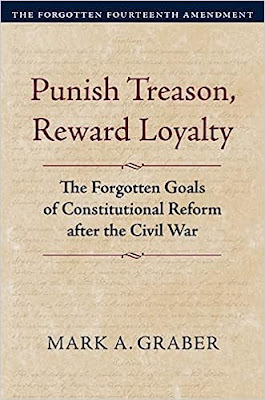
Mark A. Graber, Punish Treason, Reward Loyalty: The Forgotten Goals of Constitutional Reform after the Civil War (University of Kansas Press, 2023)
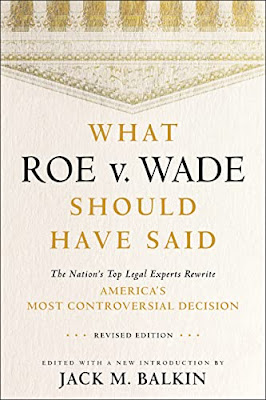
Jack M. Balkin, What Roe v. Wade Should Have Said: The Nation's Top Legal Experts Rewrite America's Most Controversial Decision - Revised Edition (NYU Press, 2023)

Andrew Koppelman, Burning Down the House: How Libertarian Philosophy Was Corrupted by Delusion and Greed (St. Martin’s Press, 2022)

Gerard N. Magliocca, Washington's Heir: The Life of Justice Bushrod Washington (Oxford University Press, 2022)
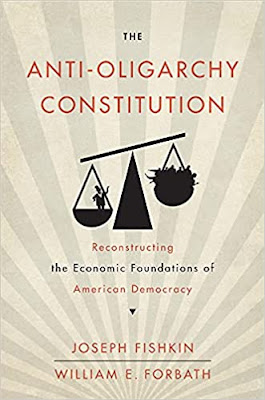
Joseph Fishkin and William E. Forbath, The Anti-Oligarchy Constitution: Reconstructing the Economic Foundations of American Democracy (Harvard University Press, 2022)
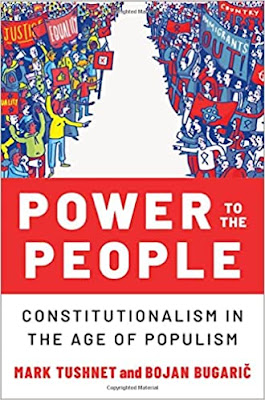
Mark Tushnet and Bojan Bugaric, Power to the People: Constitutionalism in the Age of Populism (Oxford University Press 2021).

Mark Philip Bradley and Mary L. Dudziak, eds., Making the Forever War: Marilyn B. Young on the Culture and Politics of American Militarism Culture and Politics in the Cold War and Beyond (University of Massachusetts Press, 2021).

Jack M. Balkin, What Obergefell v. Hodges Should Have Said: The Nation's Top Legal Experts Rewrite America's Same-Sex Marriage Decision (Yale University Press, 2020)

Frank Pasquale, New Laws of Robotics: Defending Human Expertise in the Age of AI (Belknap Press, 2020)

Jack M. Balkin, The Cycles of Constitutional Time (Oxford University Press, 2020)

Mark Tushnet, Taking Back the Constitution: Activist Judges and the Next Age of American Law (Yale University Press 2020).

Andrew Koppelman, Gay Rights vs. Religious Liberty?: The Unnecessary Conflict (Oxford University Press, 2020)

Ezekiel J Emanuel and Abbe R. Gluck, The Trillion Dollar Revolution: How the Affordable Care Act Transformed Politics, Law, and Health Care in America (PublicAffairs, 2020)

Linda C. McClain, Who's the Bigot?: Learning from Conflicts over Marriage and Civil Rights Law (Oxford University Press, 2020)
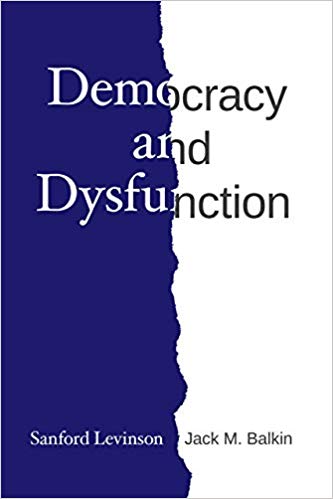
Sanford Levinson and Jack M. Balkin, Democracy and Dysfunction (University of Chicago Press, 2019)

Sanford Levinson, Written in Stone: Public Monuments in Changing Societies (Duke University Press 2018)

Mark A. Graber, Sanford Levinson, and Mark Tushnet, eds., Constitutional Democracy in Crisis? (Oxford University Press 2018)

Gerard Magliocca, The Heart of the Constitution: How the Bill of Rights became the Bill of Rights (Oxford University Press, 2018)

Cynthia Levinson and Sanford Levinson, Fault Lines in the Constitution: The Framers, Their Fights, and the Flaws that Affect Us Today (Peachtree Publishers, 2017)

Brian Z. Tamanaha, A Realistic Theory of Law (Cambridge University Press 2017)

Sanford Levinson, Nullification and Secession in Modern Constitutional Thought (University Press of Kansas 2016)

Sanford Levinson, An Argument Open to All: Reading The Federalist in the 21st Century (Yale University Press 2015)

Stephen M. Griffin, Broken Trust: Dysfunctional Government and Constitutional Reform (University Press of Kansas, 2015)

Frank Pasquale, The Black Box Society: The Secret Algorithms That Control Money and Information (Harvard University Press, 2015)

Bruce Ackerman, We the People, Volume 3: The Civil Rights Revolution (Harvard University Press, 2014)
Balkinization Symposium on We the People, Volume 3: The Civil Rights Revolution

Joseph Fishkin, Bottlenecks: A New Theory of Equal Opportunity (Oxford University Press, 2014)

Mark A. Graber, A New Introduction to American Constitutionalism (Oxford University Press, 2013)

John Mikhail, Elements of Moral Cognition: Rawls' Linguistic Analogy and the Cognitive Science of Moral and Legal Judgment (Cambridge University Press, 2013)

Gerard N. Magliocca, American Founding Son: John Bingham and the Invention of the Fourteenth Amendment (New York University Press, 2013)

Stephen M. Griffin, Long Wars and the Constitution (Harvard University Press, 2013)

Andrew Koppelman, The Tough Luck Constitution and the Assault on Health Care Reform (Oxford University Press, 2013)

James E. Fleming and Linda C. McClain, Ordered Liberty: Rights, Responsibilities, and Virtues (Harvard University Press, 2013)
Balkinization Symposium on Ordered Liberty: Rights, Responsibilities, and Virtues

Andrew Koppelman, Defending American Religious Neutrality (Harvard University Press, 2013)

Brian Z. Tamanaha, Failing Law Schools (University of Chicago Press, 2012)

Sanford Levinson, Framed: America's 51 Constitutions and the Crisis of Governance (Oxford University Press, 2012)

Linda C. McClain and Joanna L. Grossman, Gender Equality: Dimensions of Women's Equal Citizenship (Cambridge University Press, 2012)

Mary Dudziak, War Time: An Idea, Its History, Its Consequences (Oxford University Press, 2012)

Jack M. Balkin, Living Originalism (Harvard University Press, 2011)

Jason Mazzone, Copyfraud and Other Abuses of Intellectual Property Law (Stanford University Press, 2011)

Richard W. Garnett and Andrew Koppelman, First Amendment Stories, (Foundation Press 2011)

Jack M. Balkin, Constitutional Redemption: Political Faith in an Unjust World (Harvard University Press, 2011)

Gerard Magliocca, The Tragedy of William Jennings Bryan: Constitutional Law and the Politics of Backlash (Yale University Press, 2011)

Bernard Harcourt, The Illusion of Free Markets: Punishment and the Myth of Natural Order (Harvard University Press, 2010)

Bruce Ackerman, The Decline and Fall of the American Republic (Harvard University Press, 2010)
Balkinization Symposium on The Decline and Fall of the American Republic

Ian Ayres. Carrots and Sticks: Unlock the Power of Incentives to Get Things Done (Bantam Books, 2010)

Mark Tushnet, Why the Constitution Matters (Yale University Press 2010)

Ian Ayres and Barry Nalebuff: Lifecycle Investing: A New, Safe, and Audacious Way to Improve the Performance of Your Retirement Portfolio (Basic Books, 2010)
.jpg)
Jack M. Balkin, The Laws of Change: I Ching and the Philosophy of Life (2d Edition, Sybil Creek Press 2009)

Brian Z. Tamanaha, Beyond the Formalist-Realist Divide: The Role of Politics in Judging (Princeton University Press 2009)
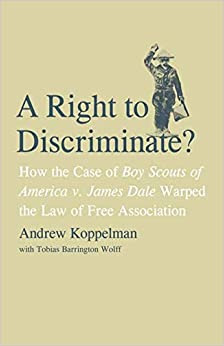
Andrew Koppelman and Tobias Barrington Wolff, A Right to Discriminate?: How the Case of Boy Scouts of America v. James Dale Warped the Law of Free Association (Yale University Press 2009)

Jack M. Balkin and Reva B. Siegel, The Constitution in 2020 (Oxford University Press 2009)

Heather K. Gerken, The Democracy Index: Why Our Election System Is Failing and How to Fix It (Princeton University Press 2009)

Mary Dudziak, Exporting American Dreams: Thurgood Marshall's African Journey (Oxford University Press 2008)

David Luban, Legal Ethics and Human Dignity (Cambridge Univ. Press 2007)

Ian Ayres, Super Crunchers: Why Thinking-By-Numbers is the New Way to be Smart (Bantam 2007)

Jack M. Balkin, James Grimmelmann, Eddan Katz, Nimrod Kozlovski, Shlomit Wagman and Tal Zarsky, eds., Cybercrime: Digital Cops in a Networked Environment (N.Y.U. Press 2007)
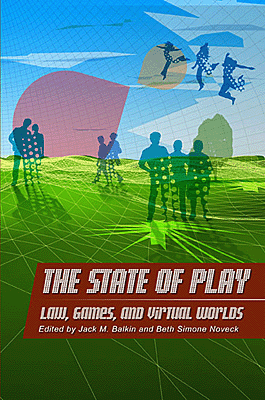
Jack M. Balkin and Beth Simone Noveck, The State of Play: Law, Games, and Virtual Worlds (N.Y.U. Press 2006)

Andrew Koppelman, Same Sex, Different States: When Same-Sex Marriages Cross State Lines (Yale University Press 2006)

Brian Tamanaha, Law as a Means to an End (Cambridge University Press 2006)

Sanford Levinson, Our Undemocratic Constitution (Oxford University Press 2006)

Mark Graber, Dred Scott and the Problem of Constitutional Evil (Cambridge University Press 2006)

Jack M. Balkin, ed., What Roe v. Wade Should Have Said (N.Y.U. Press 2005)

Sanford Levinson, ed., Torture: A Collection (Oxford University Press 2004)
Balkin.com homepage
Bibliography
Conlaw.net
Cultural Software
Writings
Opeds
The Information Society Project
BrownvBoard.com
Useful Links
Syllabi and Exams
