Balkinization
an unanticipated consequence of
Jack M. Balkin
Balkinization Symposiums: A Continuing List
E-mail:
Jack Balkin:
jackbalkin at yahoo.com
Bruce Ackerman
bruce.ackerman at yale.edu
Ian Ayres
ian.ayres at yale.edu
Corey Brettschneider
corey_brettschneider at brown.edu
Mary Dudziak
mary.l.dudziak at emory.edu
Joey Fishkin
joey.fishkin at gmail.com
Heather Gerken heather.gerken at yale.edu
Abbe Gluck abbe.gluck at yale.edu
Mark Graber
mgraber at law.umaryland.edu
Stephen Griffin
sgriffin at tulane.edu
Jonathan Hafetz
jonathan.hafetz at shu.edu
Jeremy Kessler
jkessler at law.columbia.edu
Andrew Koppelman
akoppelman at law.northwestern.edu
Marty Lederman
msl46 at law.georgetown.edu
Sanford Levinson
slevinson at law.utexas.edu
David Luban
david.luban at gmail.com
Gerard Magliocca
gmaglioc at iupui.edu
Jason Mazzone
mazzonej at illinois.edu
Linda McClain
lmcclain at bu.edu
John Mikhail
mikhail at law.georgetown.edu
Frank Pasquale
pasquale.frank at gmail.com
Nate Persily
npersily at gmail.com
Michael Stokes Paulsen
michaelstokespaulsen at gmail.com
Deborah Pearlstein
dpearlst at yu.edu
Rick Pildes
rick.pildes at nyu.edu
David Pozen
dpozen at law.columbia.edu
Richard Primus
raprimus at umich.edu
K. Sabeel Rahmansabeel.rahman at brooklaw.edu
Alice Ristroph
alice.ristroph at shu.edu
Neil Siegel
siegel at law.duke.edu
David Super
david.super at law.georgetown.edu
Brian Tamanaha
btamanaha at wulaw.wustl.edu
Nelson Tebbe
nelson.tebbe at brooklaw.edu
Mark Tushnet
mtushnet at law.harvard.edu
Adam Winkler
winkler at ucla.edu
Compendium of posts on Hobby Lobby and related cases
The Anti-Torture Memos: Balkinization Posts on Torture, Interrogation, Detention, War Powers, and OLC
The Anti-Torture Memos (arranged by topic)
Recent Posts
Al Qaeda on the Speed-Dial
![[Powered by Blogger]](https://lh3.googleusercontent.com/blogger_img_proxy/AEn0k_sn3JzrP_Nkf6Rp0BLiJ3AmnaSlxYYMjtuP-BxEMeKPSdYvEa6A48jqDjxHUSlX31DTlpNxJHWgEWLVkwWfTAVojrOnNkXY6sNT7JpY09do=s0-d)
Just A Few Blogs
ACS Blog
Alas, a Blog
Althouse
Arts and Letters Daily
Atrios (Eschaton)
Bill of Health
Buzzflash.com
Buzz Machine
Cato at Liberty
Juan Cole (Informed Comment)
Concurring Opinions
The Constitution in 2020
Corrente
Crooked Timber
Daily Howler
Daily Kos
Dana Boyd
Brad DeLong
Digby (Hullabaloo)
Discriminations
Daniel Drezner
Kevin Drum (Mother Jones)
Electrolite
En Banc
Eunomia (Daniel Larison)
Fafblog
Michael Froomkin (Discourse.net)
GovLab (Beth Noveck)
Rick Hasen (Election Law)
History News Network
How Appealing
Ignatz (Sam Heldman)
The Importance of (Ernie Miller)
Infolaw
Instapundit
International Economic Law and Policy Blog
IntLawGrrls
Jacob Levy
Jesus' General
Jurisdynamics
The Kitchen Cabinet
Mark Kleiman
Law Blog Central
Larry Lessig
Lawyers, Guns and Money
Liberal Oasis
Brian Leiter's Law School Reports
The Leiter Reports
Marginal Revolution
Megan McArdle
Memeorandum
Metafilter
Mirror of Justice
The New Republic
Newseum
No More Mister Nice Blog
Brendan Nyhan
Opinio Juris
Orcinus
The Originalism Blog
Pandagon
Passport (Foreign Policy)
Overcoming Bias
Political Animal (Washington Monthly)
Political Theory Daily Review
Political Wire (Taegan Goddard)
The Poor Man
Virginia Postrel
Prawfsblawg
Public Reason
Jonathan Rauch
Raw Story
Redstate
ReligiousLeftLaw.com
Reporters Committee For Freedom of the Press
Reproductive Rights Blog
Rothman's Roadmap to the Right of Publicity
SCOTUS Blog
Seeing the Forest
Clay Shirky
The Shifted Librarian
The Situationist
Larry Solum (Legal Theory)
Andrew Sullivan
Talking Points Memo
Talk Left
Tapped
Tbogg
TechPresident
The Paper Chase (Jurist)
Tom Paine
Tom Tomorrow (This Modern World)
Eve Tushnet
Uggabugga
University of Chicago Law School Faculty Blog
Unqualified Offerings
The Volokh Conspiracy
War and Piece (Laura Rozen)
Wampum
Oliver Willis
Wonkette
Written Description
Matthew Yglesias
Yin
Your Choice of Feeds
1. XML
powered by

2. Atom Feed
3. RSS 2.0
Al Qaeda on the Speed-Dial
Marty Lederman
"There is nothing to fear in the [new FISA] bill," says lead sponsor Senator Kit Bond, "unless you have Al Qaeda on your speed dial."
Glenn Greenwald catches an eerie historical "coincidence": Back in the late 1960's Congress similarly enacted a bill that gave the President virtually unfettered discretion to engage in electronic surveillance for national security purposes. Responding to anxieties about possible abuses of this authority, Attorney General John Mitchell assured Americans that "Any citizen of this United States who is not involved in some illegal activity has nothing to fear." Of course, that promise was empty, and the ensuing gross abuses are what prompted Congress to enact FISA nine years later, thereby providing some judicial oversight to prevent such intrusions on the privacy of U.S. persons.
I'd like to focus, however, on a much more fundamental problem with Senator Bond's statement: It's simply not true, even if the government does not abuse the new statutory authorities.
The new statute permits the NSA to intercept phone calls and e-mails between the U.S. and a foreign location, without making any showing to a court and without judicial oversight, whether or not the communication has anything to do with al Qaeda -- indeed, even if there is no evidence that the communication has anything to do with terrorism, or any threat to national security.
As I've previously explained, the NSA's objective here is not simply to surveil foreigners who it already suspects as being part of al Qaeda -- it can easily obtain a FISA order as to those folks. Nor is the purpose of the new law to allow warrantless surveillance of international-to-international calls -- that's already legal, too. As is the warrantless overseas interception of calls between foreigners and U.S. persons.
What the agency is seeking, instead, is to be able to intercept foreign communications (i) coming across domestic wires where (ii) NSA does not have probable cause to believe that any of the parties is a terrorist or agent of a foreign power; and (iii) there is a chance that some of the intercepted communications will be with persons in the U.S.
The new law allows the NSA to do this, by permitting what David Kris has called a form of "vacuum-cleaner" surveillance that (in the words of the new law) "target[s] . . . persons reasonably believed to be located outside the United States to acquire foreign intelligence information."
Under this new standard, there's no need that the surveillance have any connection to al Qaeda, or terrorism, or even to national security. The only substantial requirements are that someone overseas be a "target" and that one "significant purpose" of the surveillance be to acquire "foreign intelligence information" -- which is very broadly defined to include most anything that occurs overseas and in which the federal government might have an interest (including information necessary to protect against the full range of foreign threats to national security, and information with respect to a foreign power that is necessary to the national defense or foreign affairs).
In the course of this vast interception of foreign-to-domestic communications, the NSA will inevitably obtain extensive information about U.S. persons having no connection whatsoever to al Qaeda or terrorism. The bill does require a modest type of "minimization" procedures designed to "minimize the acquisition and retention, and prohibit the dissemination, of nonpublicly available information concerning unconsenting United States persons." Which sounds reassuring. However, such minimization would be required only "consistent with the need of the United States to obtain, produce, and disseminate foreign intelligence information." (And recall how broadly "foreign intelligence information" is defined.) Moreover, even where the information is not foreign intelligence information, the law permits "the retention and dissemination of information that is evidence of a crime which has been, is being, or is about to be committed and that is to be retained or disseminated for law enforcement purposes."
That is to say, even if you were not the original target of the surveillance, the government can make use of and disseminate information about you if your international phone calls or e-mails reveal evidence of any crime. And, of course, if those same communications provide evidence that you are an agent of a foreign power, that evidence can then be used to obtain an order for surveillance of your own phone and/or computer more broadly, under FISA itself.
Accordingly, Kit Bond's statement should be revised to read:
"There is nothing to fear in the new FISA bill unless you make international phone calls or e-mails that arguably implicate the federal government's national security, foreign affairs or law enforcement interests."
Posted
12:27 PM
by Marty Lederman [link]
The purpose of the surveillance is to determine whether other enemy agents are in fact using these numbers. This was impossible under he old individualized FISA probable cause standards.
The new standards will allow this common sense surveillance with congressionally and judicially reviewed minimization rules in case innocent US persons are using these numbers or addresses.
However, if another enemy agent is identified, then he or she may be properly targeted and one would indeed have to be conversing with the enemy to be included in this surveillance.

To take just one example, George W. Bush April 2004: "...any time you hear the United States government talking about wiretap, it requires -- a wiretap requires a court order. Nothing has changed, by the way. When we're talking about chasing down terrorists, we're talking about getting a court order before we do so."
Of course, as he spoke those lying words, he knew his executive order authorizing warrantless wiretapping had been in place for years at that time.
The usual defense of those lies is oh gosh, we don't want al Qaeda to know what we're doing.
Of course when policy is being framed and legislators and the public asked to sign on, lying is inexcusable.
Of course, all will say this is keeping us safe. But, as with most things, I think it is more about somebody getting on a gravy train from the government for years to come. National Security Welfare.
Best,
Ben
indeed .. fey
Everybody is talking about how individuals can be listened in on. But the surveillance also apply to companies. Imaging the US government using this new found tool to sell its secretly acquired knowledge to American companies.
Stealing patents, trade secrets, etc.
.
More reliable method - call a serviceman in Iraq or Afghanistan and register the same complaint, then talk about a wedding and a big cake.
National security, you know.
.
"We?" You gotta mouse in your pocket, kimosabe? ;-)
.
Article II power is useful to gather "foreign intelligence information," which is a clinically defined subset of "national security." See the Keith case. And so, one is prompted to wonder what sort of information the words "foreign intelligence" encompass.
.
The short answer is "foreign intelligence" is information that is used to negotiate foreign affairs (a generally separate action from mounting criminal prosecution - foreign affairs is war by diplomacy and military force).
.
But 50 USC 1801 broadens that short answer. I presume this is derived from Court rulings, and is not a construct of the administration or Congress.
.
(e) “Foreign intelligence information” means—
(1) information that relates to, and if concerning a United States person is necessary to, the ability of the United States to protect against—
(A) actual or potential attack or other grave hostile acts of a foreign power or an agent of a foreign power;
(B) sabotage or international terrorism by a foreign power or an agent of a foreign power; or
(C) clandestine intelligence activities by an intelligence service or network of a foreign power or by an agent of a foreign power; or
(2) information with respect to a foreign power or foreign territory that relates to, and if concerning a United States person is necessary to—
(A) the national defense or the security of the United States; or
(B) the conduct of the foreign affairs of the United States.
.
Senator Bond didn't include the limitation "international."
Moreover, even where the information is not foreign intelligence information, the law permits "the retention and dissemination of information that is evidence of a crime which has been, is being, or is about to be committed and that is to be retained or disseminated for law enforcement purposes."
________
Where in HR 6304 does it say that? I cannot find that statement.
.
(3) FOREIGN INTELLIGENCE INFORMATION- Subsection (e)(1)(B) of such section 101 is amended by striking 'sabotage or international terrorism' and inserting 'sabotage, international terrorism, or the international proliferation of weapons of mass destruction'.
(4) WEAPON OF MASS DESTRUCTION- Such section 101 is amended by adding at the end the following new subsection:
p) 'weapon of mass destruction' means--
1) any explosive, incendiary, or poison gas device that is designed, intended, or has the capability to cause a mass casualty incident;
2) any weapon that is designed, intended, or has the capability to cause death or serious bodily injury to a significant number of persons through the release, dissemination, or impact of toxic or poisonous chemicals or their precursors;
3) any weapon involving a biological agent, toxin, or vector (as such terms are defined in section 178 of title 18, United States Code) that is designed, intended, or has the capability to cause death, illness, or serious bodily injury to a significant number of persons; or
4) any weapon that is designed, intended, or has the capability to release radiation or radioactivity causing death, illness, or serious bodily injury to a significant number of persons.'.
"There is nothing to fear in the new FISA bill unless you make or receive international phone calls or e-mails ...."
As I read it (amateur division) US residents are most likely to be caught up in dragnet surveillance when they receive> messages from any of an unknown number of foreign targets.
Neither Marty nor Senator Bond nor any other US resident has any control of the speed dial list of OSL or the tens of thousands of Islamists in his Oort cloud. BTW, a typical cellphone can now store 200 numbers, and email lists are effectively unlimited.
Osama stopped using cell-phones back in 2001 because he became aware that the U.S. was using intelligence intercepts to try and locate him.
He now passes hand-written messages to trusted aides who convey them personally to their recipients.
Senior Al Qaeda operate similarly which is why intelligence about them has dried up.
This probably makes it harder to control cells in other countries, but he's not doing that anyway. Al Qaeda Iraq was wholly separate from Osama in Pakistan for instance.
Perhaps some untrained Jihadis might be caught using these techinques but reliance on these "hi-tech" surveillance techniques is unlikely to work.
Probably the only people swept up in this surveillance net are pollitical opponents of the Bush administration.
That's really why Bush fought so hard to keep all this secret. Revealing exactly WHO was surveilled on would disclose intense scrutiny of anti-war activists, environmentalists, Democratic legislators and governors around the country, and other "enemies list" people whose only crime was being political enemies of Bush.
.
He stopped using a satellite phone shortly after Senator Hatch announced to the world that satellite phone physical locations could be triangulated from space.
He stopped using a satellite phone shortly after Senator Hatch announced to the world that satellite phone physical locations could be triangulated from space.
While it wasn't particularly helpful of Hatch to point this out, this wasn't classified information. It's inherent in the operation of satellite (at least LEOS) phones, where physical location is needed for proper handoff between satellites (and to facilitate uplink and downlink).
But more that this, I think Hatch said that such satellite location-reporting had been previously used to locate/target al-Qaeda....
Cheers,
شركة عزل خزانات
عزل مائي
جلى بلاط
تنظيف بيوت
افضل شركة تنظيف شقق بالرياض
شركات التنظيف
شركة غسيل الموكيت
نقل عفش
نقل اثاث
نقل اثاث بالرياض
نقل عفش بالرياض
شركة تنظيف بيوت بالرياض
شركة تخزين اثاث بالرياض
نقل اثاث الرياض
شركات نقل في الرياض
شركة تخزين عفش
شركات مكافحة الحشرات جدة
شركات رش المبيدات الحشرية بجدة
شركة تنظيف بجدة
شركات تنظيف المنازل في جدة
شركة تنظيف خزانات بجدة
شركة تنظيف فلل بجدة
<a
شركة عزل مائي للأسطح والخزان
شركة لتنظيف القصور والفلل والبيوت
شركة تنظيف الأسطح والخزانات بالرياض
شركة كشف تسربات وعزل مائي
شركة عزل الخزانات والأسطح
شركة نقل العفش بأسعار رخيصة
خدمة مكافحة النمل
شركة عوازل بالرياض
دكتور عملية منظار المعدة
شركة عزل مائي وكشف تسربات
شركة وش مبيد ومكافحة فئران بجدة
شركة مكافحة النمل الأبيض والبق
antalya escort
escort antalya
http://eskisehirescortilan.com/eskisehir-escort-ucretleri/
http://eskisehirescortilan.com/eskisehir-genc-escort/
http://eskisehirescortilan.com/eskisehir-escortlari/
http://eskisehirescortilan.com/eskisehir-elit-escort/
http://eskisehirescortilan.com/eskisehir-yeni-escort-tutku/
http://eskisehirescortilan.com/eskisehir-escort-gamze/
eskişehir escort ücretleri
eskişehir genç escort
eskişehir yeni escort buse
eskişehir otele gelen escort
eskişehir eve gelen escort
eskişehir escort partner
eskişehir masöz escort
eskişehir vip escort
eskişehir kaliteli escort
eskişehir ucuz escort
eskişehir gecelik escort
eskişehir anal escort
eskişehir sınırsız escort
eskişehir öğrenci escort
eskişehir üniversiteli escort
eskişehir rus escort
فيلا للبيع مصر الجديدة
مرسى مطروح
مرسي مطروح شاليهات
المهندسين القاهرة
شقة مفروشة للايجار في القاهرة
شقة مفروشة للايجار بالقاهرة
قري العين السخنة
العين السخنة قرى سياحية
الربوة الشيخ زايد
شقق فى الشيخ زايد
كمبوند الشيخ زايد
شاليهات الساحل الشمالي بمصر
شاليهات بالساحل الشمالى

شركة تنظيف فلل بالرياض
شركة تنظيف بالرياض
شركة تنظيف خزانات بالرياض
شركة مكافحة حشرات بالرياض
[url=http://al-safaa.com/?p=59] شركة تنظيف بالرياض [/url]
[url=http://al-safaa.com/?p=70] شركة تنظيف فلل بالرياض [/url]
شركة تنظيف فلل بالدمام
شركة تنظيف شقق بالدمام
شركة تنظيف منازل بالدمام
شركة تنظيف بالدمام
Cara mengobati kanker dengan herbal, Cara mengobati kanker dengan tradisional, Cara mengobati kanker dengan alami, Cara mengobati kanker dengan cepat, Cara mengobati kanker stadium 3, Cara mengobati kanker stadium 4, Cara mengobati kanker stadium awal, Cara mengobati kanker stadium 2, Cara mengobati kanker stadium akhir, Cara mengobati kanker tanpa ke dokter, Gambar obat kanker yang ampuh, Gambar obat kanker yang ampuh, Obat kanker ampuh dengan singkong, Cara mengobati kanker stadium awal tanpa operasi, Obat kanker manjur dari tumbuhan, Cara mengobati kanker stadium 1 tanpa operasi, Obat kanker ampuh dengan daun sirsak, Cara mengobati kanker stadium 2 tanpa operasi, Obat kanker paling mujarab yang efektif, Cara mengobati kanker stadium 3 tanpa operasi, Cara mengobati kanker stadium 3, Cara mengobati kanker stadium 4 tanpa operasi, Obat kanker paling manjur 2016, Cara mengobati kanker stadium akhir tanpa operasi, Pengobatan kanker mujarab tanpa operasi, Cara pengobatan kanker yang manjur, Pengobatan kanker manjur dan aman, Cara pengobatan kanker yang mujarab, Cara pengobatan kanker tanpa operasi, Cara pengobatan kanker yang ampuh, Obat kanker mujarab tanpa operasi, Obat kanker manjur tanpa operasi, Obat De Nature
obat alami untuk mencegah kanker serviks
obat medis untuk kanker serviks
wwwobat kanker serviks
obat vaksin kanker serviks
obat untuk mengatasi kanker serviks
Tumbuhan untuk obat kanker serviks
Obat untuk menyembuhkan kanker serviks
obat untuk penderita kanker serviks
obat tradisional untuk kanker serviks
obat utk kanker serviks
obat untuk kanker serviks
obat tradisional utk kanker serviks
sirsak obat kanker serviks
obat sakit kanker serviks
hello world obat untuk kanker rahim stadium 3
obat herbal kanker rahim stadium 4
obat kanker rahim stadium 1 1
Obat kanker rahim stadium 2
Obat penyakit herpes kelamin pria
obat kanker serviks tradisional jawa sumatera
Obat kanker serviks tradisional sumatera
Obat kanker serviks tradisional kalimantan
obat kanker serviks tradisional herbal jawa
obat kanker serviks tradisional herbal jawa sumatera
obat kanker serviks tradisional herbal sumatera
obat kanker serviks tradisional herbal suku pedalaman
obat kanker serviks tradisional herbal suku pedalaman sumatra
Obat kanker serviks tradisional herbal suku jawa
obat kanker serviks tradisional herbal s
obat kanker serviks tradisional herbal suku minang
obat kanker serviks tradisional herbal suku sunda
Obat kanker serviks tradisional herbal suku irian
obat kanker serviks tradisional herbal suku dayak
obat kanker serviks tradisional herbal suku kubu
obat tradisional kanker serviks suku
obat kanker serviks tradisional herbal suku bugis
obat herbal herpes genital dompo
obat herbal herpes genital dompo simplex
شركة الصفرات للتنظيف بالرياض
شركة الصفرات لتنظيف الفلل بالرياض
شركة الصفرات لتنظيف المجالس بالرياض
شركة الصفرات لتنظيف الشقق بالرياض
شركة الصفرات لمكافحة الحشرات بالرياض
شركة الصفرات لنقل الاثاث بالرياض
شركة الصفرات لكشف تسربات المياة بالرياض
شركة الصفرات لتسليك المجارى بالرياض
شركة الصفرات لرش المبيدات بالرياض
نقدم لكم خدماتنا المميزة بطبعها فقط في شركة تسليك مجارى بالدمام الخدمة الاكثر جودة و الاقل ثمنا الان و لاول مرة احصل على مجاري نظيفة و ليست بها اية روائح كريهة فنحن عبارة عن فريق دو خبرة سنوات في تسليك المجاري بالدمام باحدث الطرق و التقنيات التي لم يسبق لاحد تجربتها كما لدينا فرع افضل شركة كشف تسربات المياه بالدمام فهى تمتلك احدث اجهزة كشف التسربات الالكترونية العالية الدقة وتعتبر شركة نقل اثاث بالدمام من ارخص الشركات التى تقوم باعمال النقل فلا داعى للقلق من شان نقل اثاثكم , لدينا شركة مكافحة حشرات بالدمام تقدم افضل مكافحة للحشرات باستخدام افضل المبيدات الحشرية القوية والقادرة على مكافحة كافة انواع الحشرات
Books by Balkinization Bloggers

Gerard N. Magliocca, The Actual Art of Governing: Justice Robert H. Jackson's Concurring Opinion in the Steel Seizure Case (Oxford University Press, 2025)

Linda C. McClain and Aziza Ahmed, The Routledge Companion to Gender and COVID-19 (Routledge, 2024)

David Pozen, The Constitution of the War on Drugs (Oxford University Press, 2024)

Jack M. Balkin, Memory and Authority: The Uses of History in Constitutional Interpretation (Yale University Press, 2024)
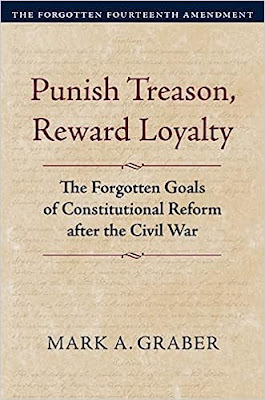
Mark A. Graber, Punish Treason, Reward Loyalty: The Forgotten Goals of Constitutional Reform after the Civil War (University of Kansas Press, 2023)
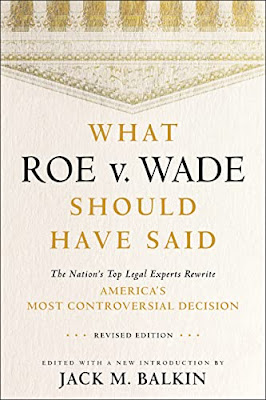
Jack M. Balkin, What Roe v. Wade Should Have Said: The Nation's Top Legal Experts Rewrite America's Most Controversial Decision - Revised Edition (NYU Press, 2023)

Andrew Koppelman, Burning Down the House: How Libertarian Philosophy Was Corrupted by Delusion and Greed (St. Martin’s Press, 2022)

Gerard N. Magliocca, Washington's Heir: The Life of Justice Bushrod Washington (Oxford University Press, 2022)
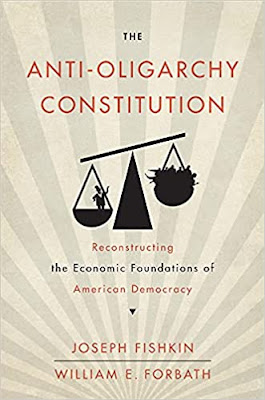
Joseph Fishkin and William E. Forbath, The Anti-Oligarchy Constitution: Reconstructing the Economic Foundations of American Democracy (Harvard University Press, 2022)
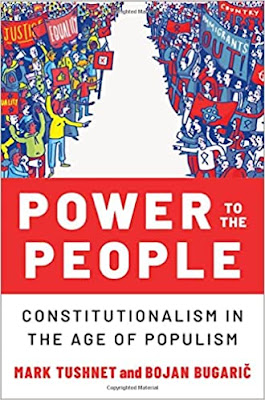
Mark Tushnet and Bojan Bugaric, Power to the People: Constitutionalism in the Age of Populism (Oxford University Press 2021).

Mark Philip Bradley and Mary L. Dudziak, eds., Making the Forever War: Marilyn B. Young on the Culture and Politics of American Militarism Culture and Politics in the Cold War and Beyond (University of Massachusetts Press, 2021).

Jack M. Balkin, What Obergefell v. Hodges Should Have Said: The Nation's Top Legal Experts Rewrite America's Same-Sex Marriage Decision (Yale University Press, 2020)

Frank Pasquale, New Laws of Robotics: Defending Human Expertise in the Age of AI (Belknap Press, 2020)

Jack M. Balkin, The Cycles of Constitutional Time (Oxford University Press, 2020)

Mark Tushnet, Taking Back the Constitution: Activist Judges and the Next Age of American Law (Yale University Press 2020).

Andrew Koppelman, Gay Rights vs. Religious Liberty?: The Unnecessary Conflict (Oxford University Press, 2020)

Ezekiel J Emanuel and Abbe R. Gluck, The Trillion Dollar Revolution: How the Affordable Care Act Transformed Politics, Law, and Health Care in America (PublicAffairs, 2020)

Linda C. McClain, Who's the Bigot?: Learning from Conflicts over Marriage and Civil Rights Law (Oxford University Press, 2020)
Sanford Levinson and Jack M. Balkin, Democracy and Dysfunction (University of Chicago Press, 2019)

Sanford Levinson, Written in Stone: Public Monuments in Changing Societies (Duke University Press 2018)

Mark A. Graber, Sanford Levinson, and Mark Tushnet, eds., Constitutional Democracy in Crisis? (Oxford University Press 2018)

Gerard Magliocca, The Heart of the Constitution: How the Bill of Rights became the Bill of Rights (Oxford University Press, 2018)

Cynthia Levinson and Sanford Levinson, Fault Lines in the Constitution: The Framers, Their Fights, and the Flaws that Affect Us Today (Peachtree Publishers, 2017)

Brian Z. Tamanaha, A Realistic Theory of Law (Cambridge University Press 2017)

Sanford Levinson, Nullification and Secession in Modern Constitutional Thought (University Press of Kansas 2016)

Sanford Levinson, An Argument Open to All: Reading The Federalist in the 21st Century (Yale University Press 2015)

Stephen M. Griffin, Broken Trust: Dysfunctional Government and Constitutional Reform (University Press of Kansas, 2015)

Frank Pasquale, The Black Box Society: The Secret Algorithms That Control Money and Information (Harvard University Press, 2015)

Bruce Ackerman, We the People, Volume 3: The Civil Rights Revolution (Harvard University Press, 2014)
Balkinization Symposium on We the People, Volume 3: The Civil Rights Revolution

Joseph Fishkin, Bottlenecks: A New Theory of Equal Opportunity (Oxford University Press, 2014)

Mark A. Graber, A New Introduction to American Constitutionalism (Oxford University Press, 2013)

John Mikhail, Elements of Moral Cognition: Rawls' Linguistic Analogy and the Cognitive Science of Moral and Legal Judgment (Cambridge University Press, 2013)

Gerard N. Magliocca, American Founding Son: John Bingham and the Invention of the Fourteenth Amendment (New York University Press, 2013)

Stephen M. Griffin, Long Wars and the Constitution (Harvard University Press, 2013)

Andrew Koppelman, The Tough Luck Constitution and the Assault on Health Care Reform (Oxford University Press, 2013)

James E. Fleming and Linda C. McClain, Ordered Liberty: Rights, Responsibilities, and Virtues (Harvard University Press, 2013)
Balkinization Symposium on Ordered Liberty: Rights, Responsibilities, and Virtues

Andrew Koppelman, Defending American Religious Neutrality (Harvard University Press, 2013)

Brian Z. Tamanaha, Failing Law Schools (University of Chicago Press, 2012)

Sanford Levinson, Framed: America's 51 Constitutions and the Crisis of Governance (Oxford University Press, 2012)

Linda C. McClain and Joanna L. Grossman, Gender Equality: Dimensions of Women's Equal Citizenship (Cambridge University Press, 2012)

Mary Dudziak, War Time: An Idea, Its History, Its Consequences (Oxford University Press, 2012)

Jack M. Balkin, Living Originalism (Harvard University Press, 2011)

Jason Mazzone, Copyfraud and Other Abuses of Intellectual Property Law (Stanford University Press, 2011)

Richard W. Garnett and Andrew Koppelman, First Amendment Stories, (Foundation Press 2011)

Jack M. Balkin, Constitutional Redemption: Political Faith in an Unjust World (Harvard University Press, 2011)

Gerard Magliocca, The Tragedy of William Jennings Bryan: Constitutional Law and the Politics of Backlash (Yale University Press, 2011)

Bernard Harcourt, The Illusion of Free Markets: Punishment and the Myth of Natural Order (Harvard University Press, 2010)

Bruce Ackerman, The Decline and Fall of the American Republic (Harvard University Press, 2010)
Balkinization Symposium on The Decline and Fall of the American Republic

Ian Ayres. Carrots and Sticks: Unlock the Power of Incentives to Get Things Done (Bantam Books, 2010)

Mark Tushnet, Why the Constitution Matters (Yale University Press 2010)

Ian Ayres and Barry Nalebuff: Lifecycle Investing: A New, Safe, and Audacious Way to Improve the Performance of Your Retirement Portfolio (Basic Books, 2010)
.jpg)
Jack M. Balkin, The Laws of Change: I Ching and the Philosophy of Life (2d Edition, Sybil Creek Press 2009)

Brian Z. Tamanaha, Beyond the Formalist-Realist Divide: The Role of Politics in Judging (Princeton University Press 2009)
Andrew Koppelman and Tobias Barrington Wolff, A Right to Discriminate?: How the Case of Boy Scouts of America v. James Dale Warped the Law of Free Association (Yale University Press 2009)

Jack M. Balkin and Reva B. Siegel, The Constitution in 2020 (Oxford University Press 2009)

Heather K. Gerken, The Democracy Index: Why Our Election System Is Failing and How to Fix It (Princeton University Press 2009)

Mary Dudziak, Exporting American Dreams: Thurgood Marshall's African Journey (Oxford University Press 2008)

David Luban, Legal Ethics and Human Dignity (Cambridge Univ. Press 2007)

Ian Ayres, Super Crunchers: Why Thinking-By-Numbers is the New Way to be Smart (Bantam 2007)

Jack M. Balkin, James Grimmelmann, Eddan Katz, Nimrod Kozlovski, Shlomit Wagman and Tal Zarsky, eds., Cybercrime: Digital Cops in a Networked Environment (N.Y.U. Press 2007)
Jack M. Balkin and Beth Simone Noveck, The State of Play: Law, Games, and Virtual Worlds (N.Y.U. Press 2006)

Andrew Koppelman, Same Sex, Different States: When Same-Sex Marriages Cross State Lines (Yale University Press 2006)

Brian Tamanaha, Law as a Means to an End (Cambridge University Press 2006)

Sanford Levinson, Our Undemocratic Constitution (Oxford University Press 2006)

Mark Graber, Dred Scott and the Problem of Constitutional Evil (Cambridge University Press 2006)

Jack M. Balkin, ed., What Roe v. Wade Should Have Said (N.Y.U. Press 2005)

Sanford Levinson, ed., Torture: A Collection (Oxford University Press 2004)
Balkin.com homepage
Bibliography
Conlaw.net
Cultural Software
Writings
Opeds
The Information Society Project
BrownvBoard.com
Useful Links
Syllabi and Exams
