Balkinization
an unanticipated consequence of
Jack M. Balkin
Balkinization Symposiums: A Continuing List
E-mail:
Jack Balkin:
jackbalkin at yahoo.com
Bruce Ackerman
bruce.ackerman at yale.edu
Ian Ayres
ian.ayres at yale.edu
Corey Brettschneider
corey_brettschneider at brown.edu
Mary Dudziak
mary.l.dudziak at emory.edu
Joey Fishkin
joey.fishkin at gmail.com
Heather Gerken heather.gerken at yale.edu
Abbe Gluck abbe.gluck at yale.edu
Mark Graber
mgraber at law.umaryland.edu
Stephen Griffin
sgriffin at tulane.edu
Jonathan Hafetz
jonathan.hafetz at shu.edu
Jeremy Kessler
jkessler at law.columbia.edu
Andrew Koppelman
akoppelman at law.northwestern.edu
Marty Lederman
msl46 at law.georgetown.edu
Sanford Levinson
slevinson at law.utexas.edu
David Luban
david.luban at gmail.com
Gerard Magliocca
gmaglioc at iupui.edu
Jason Mazzone
mazzonej at illinois.edu
Linda McClain
lmcclain at bu.edu
John Mikhail
mikhail at law.georgetown.edu
Frank Pasquale
pasquale.frank at gmail.com
Nate Persily
npersily at gmail.com
Michael Stokes Paulsen
michaelstokespaulsen at gmail.com
Deborah Pearlstein
dpearlst at yu.edu
Rick Pildes
rick.pildes at nyu.edu
David Pozen
dpozen at law.columbia.edu
Richard Primus
raprimus at umich.edu
K. Sabeel Rahmansabeel.rahman at brooklaw.edu
Alice Ristroph
alice.ristroph at shu.edu
Neil Siegel
siegel at law.duke.edu
David Super
david.super at law.georgetown.edu
Brian Tamanaha
btamanaha at wulaw.wustl.edu
Nelson Tebbe
nelson.tebbe at brooklaw.edu
Mark Tushnet
mtushnet at law.harvard.edu
Adam Winkler
winkler at ucla.edu
Compendium of posts on Hobby Lobby and related cases
The Anti-Torture Memos: Balkinization Posts on Torture, Interrogation, Detention, War Powers, and OLC
The Anti-Torture Memos (arranged by topic)
Recent Posts
Did Yoo and Bybee Violate Canons of Professional Ethics?
![[Powered by Blogger]](https://lh3.googleusercontent.com/blogger_img_proxy/AEn0k_uHNCsLqZ77Q2e81EdgcxiOL41EpFJ7-W7RqpjZqpInRRJVLTx0zBP8AZr5qEL2iKm2ULy7F5Me_-j-e1i-0Mij0E2LEbSMGUh8iSvqhpua=s0-d)
Just A Few Blogs
ACS Blog
Alas, a Blog
Althouse
Arts and Letters Daily
Atrios (Eschaton)
Bill of Health
Buzzflash.com
Buzz Machine
Cato at Liberty
Juan Cole (Informed Comment)
Concurring Opinions
The Constitution in 2020
Corrente
Crooked Timber
Daily Howler
Daily Kos
Dana Boyd
Brad DeLong
Digby (Hullabaloo)
Discriminations
Daniel Drezner
Kevin Drum (Mother Jones)
Electrolite
En Banc
Eunomia (Daniel Larison)
Fafblog
Michael Froomkin (Discourse.net)
GovLab (Beth Noveck)
Rick Hasen (Election Law)
History News Network
How Appealing
Ignatz (Sam Heldman)
The Importance of (Ernie Miller)
Infolaw
Instapundit
International Economic Law and Policy Blog
IntLawGrrls
Jacob Levy
Jesus' General
Jurisdynamics
The Kitchen Cabinet
Mark Kleiman
Law Blog Central
Larry Lessig
Lawyers, Guns and Money
Liberal Oasis
Brian Leiter's Law School Reports
The Leiter Reports
Marginal Revolution
Megan McArdle
Memeorandum
Metafilter
Mirror of Justice
The New Republic
Newseum
No More Mister Nice Blog
Brendan Nyhan
Opinio Juris
Orcinus
The Originalism Blog
Pandagon
Passport (Foreign Policy)
Overcoming Bias
Political Animal (Washington Monthly)
Political Theory Daily Review
Political Wire (Taegan Goddard)
The Poor Man
Virginia Postrel
Prawfsblawg
Public Reason
Jonathan Rauch
Raw Story
Redstate
ReligiousLeftLaw.com
Reporters Committee For Freedom of the Press
Reproductive Rights Blog
Rothman's Roadmap to the Right of Publicity
SCOTUS Blog
Seeing the Forest
Clay Shirky
The Shifted Librarian
The Situationist
Larry Solum (Legal Theory)
Andrew Sullivan
Talking Points Memo
Talk Left
Tapped
Tbogg
TechPresident
The Paper Chase (Jurist)
Tom Paine
Tom Tomorrow (This Modern World)
Eve Tushnet
Uggabugga
University of Chicago Law School Faculty Blog
Unqualified Offerings
The Volokh Conspiracy
War and Piece (Laura Rozen)
Wampum
Oliver Willis
Wonkette
Written Description
Matthew Yglesias
Yin
Your Choice of Feeds
1. XML
powered by

2. Atom Feed
3. RSS 2.0
Did Yoo and Bybee Violate Canons of Professional Ethics?
JB
Over at the Nation, Stephen Gillers argues that the Yoo-Bybee torture memos violated canons of professional ethics, in part because Yoo and Bybee were confused about who their client was:How could two really smart guys authorize torture using "one-sided legal arguments" that have "o foundation" in law? How could they be guilty of a "stunning failure of lawyerly craft"? The sad answer seems to be that they knew what the President wanted and delivered: torture is OK if you call it something else. Detainees are outside the protection of due process and civilized law. The President's authority is close to absolute. Anyway, no court can review him. (On this last point, the Supreme Court disagreed.)
This incompetence is especially serious because of the conduct it enabled. If a private lawyer gave such a lopsided and wrongheaded analysis to a business client, he'd be history. Lawyers advising private clients about to make important decisions (a "bet the company" kind of decision) meticulously analyze all sides of a question so the clients can assess risk and choose wisely.
The client deserved better, and that raises another issue, the most troubling. Who was the client? The lawyers told the President what he wanted to hear, but the nation was their client, and its sole interest was in thorough and independent legal analysis. Neither the President's political agenda nor the authors' views of what the law should say can be allowed to slant the OLC's work. So maybe the best and brightest lawyers got it so wrong because they forgot whom they served. Maybe they acted politically, not professionally. If so, we are dealing with a perversion of law and legal duty, a betrayal of the client and professional norms, not mere incompetence, which would be bad enough. Whatever the reason, Jarrett should find that this work is not "consistent with the professional standards that apply to Department of Justice attorneys." Jarrett must hold the lawyers accountable if he means to restore OLC's reputation and vindicate the rule of law.
It's not enough, I think, to say that the client was not the President but the country. It was both the President and the country, or rather, it was the President as a constitutional officer of the country, who is sworn to take care that the laws be faithfully executed. But Gillers' response is that the advice Yoo and Bybee gave was so off the wall, so inconsistent with professional standards, that it failed both clients -- the country and the President-- even if it was precisely what the President wanted to hear, and indeed, even if Yoo and Bybee were set this task precisely to arrive at this foreordained conclusion.
Yet Sandy's point is well is worth noting: The lawyers in FDR's Justice Department also stretched the law to the breaking point to get around an isolationist Congress, because they believed that the threat from Nazi Germany was dire. If Yoo and Bybee believed that the United States was under a serious threat of future terrorist attacks that only torture might prevent, why should we not excuse their twisting of law just as we today excuse the Roosevelt Justice Department?
Is the difference that the previous twisting of the law was somehow less outrageous? Is it that Yoo and Bybee's judgments about the danger of a future attack were greatly overblown, or that their judgments about the necessity of torture to prevent such attacks were simply unreasonable? Is the difference that Roosevelt did not seek to authorize something evil in itself-- torture-- but only sought to help Great Britain resist Nazi aggression, and to push America closer to war, a war that was ultimately justified by history? But if so, does our conclusion that that Yoo and Bybee acted unethically ultimately depend on our assessment of the good or evil that President Bush's detention policies have had for the world? Or can we answer the question of their ethical conduct in isolation from that question, since, of course, we do not yet know what history's judgment will be?
Is the difference that Yoo and Bybee offered a general theory of presidential dictatorship and proclaimed a right to ignore Congressional laws when the President acted as Commander-in-Chief, whereas Roosevelt's lawyers made no such general claims? If so, the ethical problem is not the apology for torture but rather Yoo and Bybee's flagrant infidelity to the basic principles of our constitutional system of checks and balances. But in 1939 and 1940, could no one have leveled a similar charge at Franklin D. Roosevelt?
Finally, following along the lines suggested by Scott Horton, is the difference that Yoo and Bybee conspired to help the President and his aides commit war crimes, including violations of the Geneva Conventions; so that one who commits (or conspires to commit) war crimes necessarily violates professional ethical obligations? Did the lawyers in Roosevelt's Justice Department (or the lawyers who advised Bill Clinton that it was permissible to invade Kosovo) not equally conspire to violate international law? Is the difference then that the nature of the violations are different, that one is a grave breach of international human rights and the others are not?
Perhaps ultimately this may be where the difference must rest, for as Eric Posner and Oona Hathaway would remind us, presidents do not attend to every aspect of international law with equal scrupulousness; if we thought that advising presidents to twist or even ignore international legal doctrines was grounds for an attorney's discipline or disbarment, the line for sanctions and investigations would be very long indeed.
My own conclusion is that Yoo and Bybee did violate their professional obligations to the President as constitutional actor, and to the country as a whole. The reason is a combination of their outrageous theory of presidential dictatorship and their all too eager assistance in what appears to be a conspiracy to commit war crimes. But I do not pretend that the question is at all an easy one.
Note that even if I am right that Yoo violated the canons of professional ethics, he has not been sanctioned by any court or professional organization, much less convicted of any crime by a domestic court or international tribunal. This is important to keep in mind in the debate over whether the University of California should discipline or investigate him.
Posted
6:15 PM
by JB [link]

-- Charles Rembar, The Law of the Land (NY 1980), page 299.
Yoo and Bybee conspired to help the President and his aides commit war crimes, including violations of the Geneva Conventions
is analogous to:
the lawyers in Roosevelt's Justice Department (or the lawyers who advised Bill Clinton that it was permissible to invade Kosovo) not equally conspire to violate international law?
Treaties (such as the Geneva Conventions) that have been ratified by the Senate are "the Supreme Law of the Land", as supreme as the constitution itself. "International law" is not. If FDR's or Clinton's lawyers advised violating a ratified treaty, then the analogy hold. What treaties do you believe could have been violated by the actions of FDR (or contemplated actions of Clinton).
Yoo should be fired not for making legal arguments for partisan political reasons, but for conspiring in torture and homicide (i.e., homicide by means of torture). How can students be asked to sit and listen to Yoo, let alone respect him as their teacher?
Doesn't really seem to be the driving factor of comments on this blog. But, maybe somewhere else.
Still, I don't think that an acceptable legal, logical, or academic position is that mass murder is OK as long as you leave nobody alive to complain.
Lots of people debate the hypothetical "ticking time bomb" and the power of the President to order or condone torture, but I don't know how they can ignore the hypothetical "strategic nuclear exchange." Torture of one person is terrible, but what about the murder of a hundred million people? Yet that was, and still is, the basis for our entire strategic nuclear defense system.
It would seem the President does have some unpleasant powers that go beyond anything allowed by treaty or convention. I don't claim to know where they begin and end, but if you want to raise the issue formally, by raising formal charges against someone who took a position on the issue, then you have to be prepared to deal with the whole question and not just one piece.
Herman Kahn may have gotten the sense of the problem when he titled his book on nuclear strategy Thinking about the Unthinkable. This type of issue does not go away if you don't write anything about it, but on the other hand if any lawyer tried to justify the last 60 years of US defense strategy, he would probably end up with the same problems of Yoo. Except that nobody has died in a nuclear exchange yet.
Remember, we are not talking about our eventual entry into World War II, which was perfectly legal, but rather possibly illegal things that FDR was doing before entering the war. And whatever one's opinion is of things like lend-lease, it doesn't seem to me that it had any real effect on the outcome of the European theater of the war, which was won by the combination of US and Soviet force on two fronts.
Given that fact, why is there a great need to defend Roosevelt-- especially given that Reagan did the same thing in Iran-Contra and it sure doesn't look justified to me.
Note that even if I am right that Yoo violated the canons of professional ethics, he has not been sanctioned by any court or professional organization, much less convicted of any crime by a domestic court or international tribunal. This is important to keep in mind in the debate over whether the University of California should discipline or investigate him.
Yoo delivered bogus research; no analysis of presidential powers in wartime can ignore Youngstown.
Signing off on bogus scholarship is "unprofessional conduct." In this case the unprofessional conduct is exacerbated by the fact that it was performed to further the obvious aims and agenda of someone from whom the scholar was accepting payment, which makes him a hired gun or academic whore. Biochemists are paid handsomely to vouch for the efficacy/safety of drugs. And, uiversities fire them for doing so bogusly.
But an Attorney-General is in a different position to other members of the executive. While he may properly reflect executive policy on matters of discretion, when it comes to advice to departments of state, the political considerations must be subordinated to the need to give correct legal advice.
Otherwise how can the Courts continue to give to the AG the considerable degree of deference which is customary.
Government lawyers are also in a very different position to private client lawyers in one respect. When advising a private client, the advice will be privileged. But when there is judicial review of the legality of government action, the advice received is often relevant. So government lawyers have to write mindful of the fact that there is a much higher risk that their advice may be considered by a Court.
So, apart from the stupidity of assuming that these memoranda would remain classified, it does seem that there was a gross failure to comply with the duty to warn of the illegality of the proposed acts and there is a case to answer that the line was crossed and the writers became accessories.
The position is akin to that of the Reich Justice Ministry officials tried and convicted after WW2.
Bagram, Guantanamo and extraordinary rendition differ from the rounding up of Jews and resistants and shipping them to Belsen, only in that the transport was by CIA air rather than by rail and in that the numbers of victims were far greater.
"I was only following orders" is not a defence.
Yoo and Bybee could not be convicted for participating in a "conspiracy to commit war crimes." No such crime exists in international law (see Hamdan), and the Military Commissions Act of 2006 -- which does include conspiracy -- does not apply to U.S. citizens. The appropriate charge would be "joint criminal enterprise."
"On 23 August 1628 George Villiers, Duke of Buckingham and Lord High Admiral of England, was stabbed to death by John Felton, a naval officer, in a house in Portsmouth. 35-year-old Duke had been the favourite of King James I and was the intimate friend of the new King Charles I, who asked the judges whether Felton could be put to the rack to discover his accomplices. All the judges met in Serjeants' Inn. Many years later Blackstone recorded their historic decision:
'The judges, being consulted, declared unanimously, to their own honour and the honour of the English law, that no such proceeding was allowable by the laws of England'.
That word honour, the deep note which Blackstone strikes twice in one sentence, is what underlies the legal technicalities of this appeal. The use of torture is dishonourable. It corrupts and degrades the state which uses it and the legal system which accepts it....
[Why the exclusionary rule ?
Is it to discipline the executive agents of the state by demonstrating that no advantage will come from torturing witnesses, or is it to preserve the integrity of the judicial process and the honour of English law? If it is the former, then of course we cannot aspire to discipline the agents of foreign governments. Their torturers would probably accept with indifference the possibility that the work of their hands might be rejected by an English court. If it is the latter, then the rule must exclude statements obtained by torture anywhere, since the stain attaching to such evidence will defile an English court whatever the nationality of the torturer. I have no doubt that the purpose of the rule is not to discipline the executive, although this may be an incidental consequence. It is to uphold the integrity of the administration of justice....
It appears to be the practice of the Security Services, in their dealings with those countries in which torture is most likely to have been used, to refrain, as a matter of diplomatic tact or a preference for not learning the truth, from inquiring into whether this was the case. It may be that in such a case the Secretary of State can say that he has no knowledge or belief that torture has taken place. But a court of law would not regard this as sufficient to rebut real suspicion and in my opinion SIAC should not do so."
So now the English Courts have to regard with suspicion evidence in terrorism cases emanating from the US Government - that's Yoo's contribution to the honour of the USA.
# posted by Mourad
That's one of the most infuriating and painful facts of this case. And it's certain we've yet to see the full extent of the consequences for my country flowing from that memo, and the gov't that requested it, and provided it. And from the damage done to human beings who were not adjudicated guilty of anything defined in law as a crime.
What we more and more see is an accurate portrait of the vengeful, vindictive little pr*ick that is G. W. Bushit, and his gleeful preference for going after those who can't fight back.
The entities with primary responsibility to determine whether Yoo committed malfeasance and/or misfeasance (two of the three age-old justifications for revocation of tenure) are the Dean of UC Berkeley and the Faculty Senate thereof. There is no reason for them not to investigate, unless they feel the matter is not yet ripe (because they expect more evidence to come out soon).
Apparently he's still confused on who the client was.
So, this is who teaches law at Cal?
Books by Balkinization Bloggers

Gerard N. Magliocca, The Actual Art of Governing: Justice Robert H. Jackson's Concurring Opinion in the Steel Seizure Case (Oxford University Press, 2025)

Linda C. McClain and Aziza Ahmed, The Routledge Companion to Gender and COVID-19 (Routledge, 2024)

David Pozen, The Constitution of the War on Drugs (Oxford University Press, 2024)

Jack M. Balkin, Memory and Authority: The Uses of History in Constitutional Interpretation (Yale University Press, 2024)
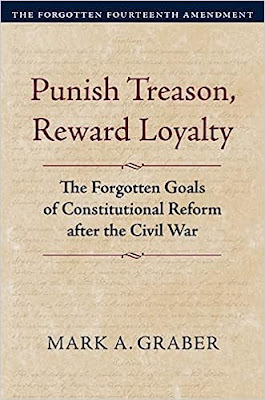
Mark A. Graber, Punish Treason, Reward Loyalty: The Forgotten Goals of Constitutional Reform after the Civil War (University of Kansas Press, 2023)
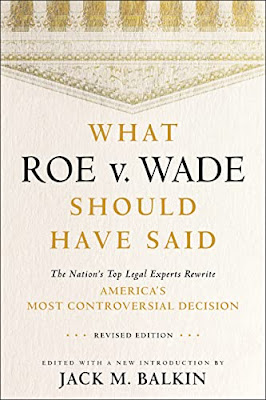
Jack M. Balkin, What Roe v. Wade Should Have Said: The Nation's Top Legal Experts Rewrite America's Most Controversial Decision - Revised Edition (NYU Press, 2023)

Andrew Koppelman, Burning Down the House: How Libertarian Philosophy Was Corrupted by Delusion and Greed (St. Martin’s Press, 2022)

Gerard N. Magliocca, Washington's Heir: The Life of Justice Bushrod Washington (Oxford University Press, 2022)
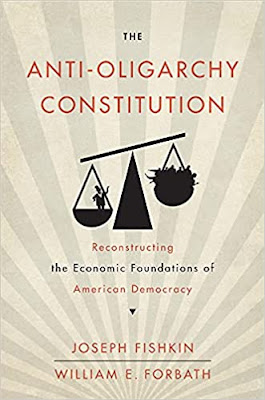
Joseph Fishkin and William E. Forbath, The Anti-Oligarchy Constitution: Reconstructing the Economic Foundations of American Democracy (Harvard University Press, 2022)
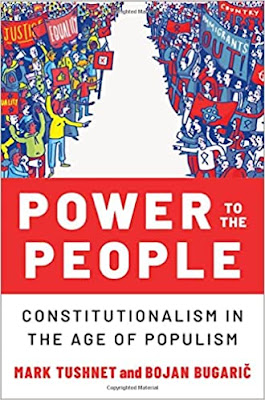
Mark Tushnet and Bojan Bugaric, Power to the People: Constitutionalism in the Age of Populism (Oxford University Press 2021).

Mark Philip Bradley and Mary L. Dudziak, eds., Making the Forever War: Marilyn B. Young on the Culture and Politics of American Militarism Culture and Politics in the Cold War and Beyond (University of Massachusetts Press, 2021).

Jack M. Balkin, What Obergefell v. Hodges Should Have Said: The Nation's Top Legal Experts Rewrite America's Same-Sex Marriage Decision (Yale University Press, 2020)

Frank Pasquale, New Laws of Robotics: Defending Human Expertise in the Age of AI (Belknap Press, 2020)

Jack M. Balkin, The Cycles of Constitutional Time (Oxford University Press, 2020)

Mark Tushnet, Taking Back the Constitution: Activist Judges and the Next Age of American Law (Yale University Press 2020).

Andrew Koppelman, Gay Rights vs. Religious Liberty?: The Unnecessary Conflict (Oxford University Press, 2020)

Ezekiel J Emanuel and Abbe R. Gluck, The Trillion Dollar Revolution: How the Affordable Care Act Transformed Politics, Law, and Health Care in America (PublicAffairs, 2020)

Linda C. McClain, Who's the Bigot?: Learning from Conflicts over Marriage and Civil Rights Law (Oxford University Press, 2020)
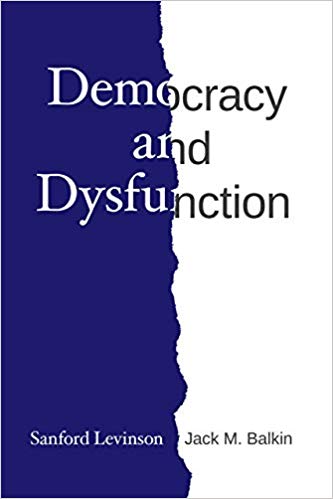
Sanford Levinson and Jack M. Balkin, Democracy and Dysfunction (University of Chicago Press, 2019)

Sanford Levinson, Written in Stone: Public Monuments in Changing Societies (Duke University Press 2018)

Mark A. Graber, Sanford Levinson, and Mark Tushnet, eds., Constitutional Democracy in Crisis? (Oxford University Press 2018)

Gerard Magliocca, The Heart of the Constitution: How the Bill of Rights became the Bill of Rights (Oxford University Press, 2018)

Cynthia Levinson and Sanford Levinson, Fault Lines in the Constitution: The Framers, Their Fights, and the Flaws that Affect Us Today (Peachtree Publishers, 2017)

Brian Z. Tamanaha, A Realistic Theory of Law (Cambridge University Press 2017)

Sanford Levinson, Nullification and Secession in Modern Constitutional Thought (University Press of Kansas 2016)

Sanford Levinson, An Argument Open to All: Reading The Federalist in the 21st Century (Yale University Press 2015)

Stephen M. Griffin, Broken Trust: Dysfunctional Government and Constitutional Reform (University Press of Kansas, 2015)

Frank Pasquale, The Black Box Society: The Secret Algorithms That Control Money and Information (Harvard University Press, 2015)

Bruce Ackerman, We the People, Volume 3: The Civil Rights Revolution (Harvard University Press, 2014)
Balkinization Symposium on We the People, Volume 3: The Civil Rights Revolution

Joseph Fishkin, Bottlenecks: A New Theory of Equal Opportunity (Oxford University Press, 2014)

Mark A. Graber, A New Introduction to American Constitutionalism (Oxford University Press, 2013)

John Mikhail, Elements of Moral Cognition: Rawls' Linguistic Analogy and the Cognitive Science of Moral and Legal Judgment (Cambridge University Press, 2013)

Gerard N. Magliocca, American Founding Son: John Bingham and the Invention of the Fourteenth Amendment (New York University Press, 2013)

Stephen M. Griffin, Long Wars and the Constitution (Harvard University Press, 2013)

Andrew Koppelman, The Tough Luck Constitution and the Assault on Health Care Reform (Oxford University Press, 2013)

James E. Fleming and Linda C. McClain, Ordered Liberty: Rights, Responsibilities, and Virtues (Harvard University Press, 2013)
Balkinization Symposium on Ordered Liberty: Rights, Responsibilities, and Virtues

Andrew Koppelman, Defending American Religious Neutrality (Harvard University Press, 2013)

Brian Z. Tamanaha, Failing Law Schools (University of Chicago Press, 2012)

Sanford Levinson, Framed: America's 51 Constitutions and the Crisis of Governance (Oxford University Press, 2012)

Linda C. McClain and Joanna L. Grossman, Gender Equality: Dimensions of Women's Equal Citizenship (Cambridge University Press, 2012)

Mary Dudziak, War Time: An Idea, Its History, Its Consequences (Oxford University Press, 2012)

Jack M. Balkin, Living Originalism (Harvard University Press, 2011)

Jason Mazzone, Copyfraud and Other Abuses of Intellectual Property Law (Stanford University Press, 2011)

Richard W. Garnett and Andrew Koppelman, First Amendment Stories, (Foundation Press 2011)

Jack M. Balkin, Constitutional Redemption: Political Faith in an Unjust World (Harvard University Press, 2011)

Gerard Magliocca, The Tragedy of William Jennings Bryan: Constitutional Law and the Politics of Backlash (Yale University Press, 2011)

Bernard Harcourt, The Illusion of Free Markets: Punishment and the Myth of Natural Order (Harvard University Press, 2010)

Bruce Ackerman, The Decline and Fall of the American Republic (Harvard University Press, 2010)
Balkinization Symposium on The Decline and Fall of the American Republic

Ian Ayres. Carrots and Sticks: Unlock the Power of Incentives to Get Things Done (Bantam Books, 2010)

Mark Tushnet, Why the Constitution Matters (Yale University Press 2010)

Ian Ayres and Barry Nalebuff: Lifecycle Investing: A New, Safe, and Audacious Way to Improve the Performance of Your Retirement Portfolio (Basic Books, 2010)
.jpg)
Jack M. Balkin, The Laws of Change: I Ching and the Philosophy of Life (2d Edition, Sybil Creek Press 2009)

Brian Z. Tamanaha, Beyond the Formalist-Realist Divide: The Role of Politics in Judging (Princeton University Press 2009)
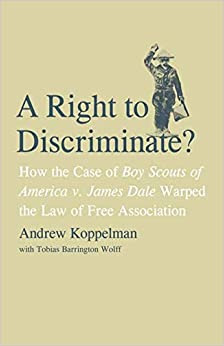
Andrew Koppelman and Tobias Barrington Wolff, A Right to Discriminate?: How the Case of Boy Scouts of America v. James Dale Warped the Law of Free Association (Yale University Press 2009)

Jack M. Balkin and Reva B. Siegel, The Constitution in 2020 (Oxford University Press 2009)

Heather K. Gerken, The Democracy Index: Why Our Election System Is Failing and How to Fix It (Princeton University Press 2009)

Mary Dudziak, Exporting American Dreams: Thurgood Marshall's African Journey (Oxford University Press 2008)

David Luban, Legal Ethics and Human Dignity (Cambridge Univ. Press 2007)

Ian Ayres, Super Crunchers: Why Thinking-By-Numbers is the New Way to be Smart (Bantam 2007)

Jack M. Balkin, James Grimmelmann, Eddan Katz, Nimrod Kozlovski, Shlomit Wagman and Tal Zarsky, eds., Cybercrime: Digital Cops in a Networked Environment (N.Y.U. Press 2007)
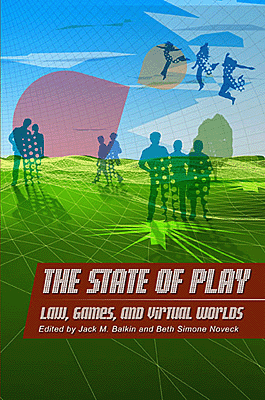
Jack M. Balkin and Beth Simone Noveck, The State of Play: Law, Games, and Virtual Worlds (N.Y.U. Press 2006)

Andrew Koppelman, Same Sex, Different States: When Same-Sex Marriages Cross State Lines (Yale University Press 2006)

Brian Tamanaha, Law as a Means to an End (Cambridge University Press 2006)

Sanford Levinson, Our Undemocratic Constitution (Oxford University Press 2006)

Mark Graber, Dred Scott and the Problem of Constitutional Evil (Cambridge University Press 2006)

Jack M. Balkin, ed., What Roe v. Wade Should Have Said (N.Y.U. Press 2005)

Sanford Levinson, ed., Torture: A Collection (Oxford University Press 2004)
Balkin.com homepage
Bibliography
Conlaw.net
Cultural Software
Writings
Opeds
The Information Society Project
BrownvBoard.com
Useful Links
Syllabi and Exams
