Balkinization
an unanticipated consequence of
Jack M. Balkin
Balkinization Symposiums: A Continuing List
E-mail:
Jack Balkin:
jackbalkin at yahoo.com
Bruce Ackerman
bruce.ackerman at yale.edu
Ian Ayres
ian.ayres at yale.edu
Corey Brettschneider
corey_brettschneider at brown.edu
Mary Dudziak
mary.l.dudziak at emory.edu
Joey Fishkin
joey.fishkin at gmail.com
Heather Gerken heather.gerken at yale.edu
Abbe Gluck abbe.gluck at yale.edu
Mark Graber
mgraber at law.umaryland.edu
Stephen Griffin
sgriffin at tulane.edu
Jonathan Hafetz
jonathan.hafetz at shu.edu
Jeremy Kessler
jkessler at law.columbia.edu
Andrew Koppelman
akoppelman at law.northwestern.edu
Marty Lederman
msl46 at law.georgetown.edu
Sanford Levinson
slevinson at law.utexas.edu
David Luban
david.luban at gmail.com
Gerard Magliocca
gmaglioc at iupui.edu
Jason Mazzone
mazzonej at illinois.edu
Linda McClain
lmcclain at bu.edu
John Mikhail
mikhail at law.georgetown.edu
Frank Pasquale
pasquale.frank at gmail.com
Nate Persily
npersily at gmail.com
Michael Stokes Paulsen
michaelstokespaulsen at gmail.com
Deborah Pearlstein
dpearlst at yu.edu
Rick Pildes
rick.pildes at nyu.edu
David Pozen
dpozen at law.columbia.edu
Richard Primus
raprimus at umich.edu
K. Sabeel Rahmansabeel.rahman at brooklaw.edu
Alice Ristroph
alice.ristroph at shu.edu
Neil Siegel
siegel at law.duke.edu
David Super
david.super at law.georgetown.edu
Brian Tamanaha
btamanaha at wulaw.wustl.edu
Nelson Tebbe
nelson.tebbe at brooklaw.edu
Mark Tushnet
mtushnet at law.harvard.edu
Adam Winkler
winkler at ucla.edu
Compendium of posts on Hobby Lobby and related cases
The Anti-Torture Memos: Balkinization Posts on Torture, Interrogation, Detention, War Powers, and OLC
The Anti-Torture Memos (arranged by topic)
Recent Posts
Supreme Court Backs Business Interests; Dog Bites Man
![[Powered by Blogger]](https://lh3.googleusercontent.com/blogger_img_proxy/AEn0k_tzxBM00AQkcDDsajhoY5Ce2UkEgNUfJ0iJgfmQpyddUD7OW0ndTaEOHam7z9flev9B8s4wizcvNVuU_aY3ZK09r1oojmWvhNBQpYqaxguC=s0-d)
Just A Few Blogs
ACS Blog
Alas, a Blog
Althouse
Arts and Letters Daily
Atrios (Eschaton)
Bill of Health
Buzzflash.com
Buzz Machine
Cato at Liberty
Juan Cole (Informed Comment)
Concurring Opinions
The Constitution in 2020
Corrente
Crooked Timber
Daily Howler
Daily Kos
Dana Boyd
Brad DeLong
Digby (Hullabaloo)
Discriminations
Daniel Drezner
Kevin Drum (Mother Jones)
Electrolite
En Banc
Eunomia (Daniel Larison)
Fafblog
Michael Froomkin (Discourse.net)
GovLab (Beth Noveck)
Rick Hasen (Election Law)
History News Network
How Appealing
Ignatz (Sam Heldman)
The Importance of (Ernie Miller)
Infolaw
Instapundit
International Economic Law and Policy Blog
IntLawGrrls
Jacob Levy
Jesus' General
Jurisdynamics
The Kitchen Cabinet
Mark Kleiman
Law Blog Central
Larry Lessig
Lawyers, Guns and Money
Liberal Oasis
Brian Leiter's Law School Reports
The Leiter Reports
Marginal Revolution
Megan McArdle
Memeorandum
Metafilter
Mirror of Justice
The New Republic
Newseum
No More Mister Nice Blog
Brendan Nyhan
Opinio Juris
Orcinus
The Originalism Blog
Pandagon
Passport (Foreign Policy)
Overcoming Bias
Political Animal (Washington Monthly)
Political Theory Daily Review
Political Wire (Taegan Goddard)
The Poor Man
Virginia Postrel
Prawfsblawg
Public Reason
Jonathan Rauch
Raw Story
Redstate
ReligiousLeftLaw.com
Reporters Committee For Freedom of the Press
Reproductive Rights Blog
Rothman's Roadmap to the Right of Publicity
SCOTUS Blog
Seeing the Forest
Clay Shirky
The Shifted Librarian
The Situationist
Larry Solum (Legal Theory)
Andrew Sullivan
Talking Points Memo
Talk Left
Tapped
Tbogg
TechPresident
The Paper Chase (Jurist)
Tom Paine
Tom Tomorrow (This Modern World)
Eve Tushnet
Uggabugga
University of Chicago Law School Faculty Blog
Unqualified Offerings
The Volokh Conspiracy
War and Piece (Laura Rozen)
Wampum
Oliver Willis
Wonkette
Written Description
Matthew Yglesias
Yin
Your Choice of Feeds
1. XML
powered by

2. Atom Feed
3. RSS 2.0
Supreme Court Backs Business Interests; Dog Bites Man
JB
Jeffrey Rosen reminds us that the contemporary Supreme Court has been remarkably friendly to business interests. It is good to have an account of this in the popular press every now and then, and no one is more deft than Rosen in telling the story. But the story itself should hardly surprise anyone.
From the standpoint of political science it is unremarkable that the modern Supreme Court has tended to side with business interests. First, as a preliminary matter, it is rare that someone gets appointed to the Supreme Court unless they are simultaneously acceptable to the mainstream of American politics, to political elites, and to elites in the organized bar. The same is true of the lower federal courts as well, although to a lesser extent. Candidates drawn from this pool are unlikely to be very hostile to business interests, and there is a good chance that they will be sympathetic. These tendencies mean that, in the long run, federal judges sympathetic to or supportive of the claims of business litigants will be more numerous than judges hostile to those claims.
Second, we are currently living in the late stages of a period of Republican dominance in American electoral politics. Since Reconstruction, the Republican Party has been allied with business interests. From 1968 to 1992 the Republican Party made every single Supreme Court appointment. The Republican Party has changed during the past three decades, particularly on social issues, where it became far more reliably conservative. But the party never lost its strongly pro-business orientation: although there are some exceptions, both social and religious conservatives and moderate and "country club" Republicans tended to converge on a pro-business agenda.
The only Democratic President who appointed any Supreme Court Justices since 1968 was Bill Clinton. Viewed from the standpoint of the 1960's, Bill Clinton was pretty much a liberal Republican, fiscally conservative (by liberal Democratic standards) and socially liberal. Therefore it is hardly surprising that Clinton's judicial nominees were unlikely to be very hostile to business interests, and some of them, like Stephen Breyer, were quite sympathetic. Thus, the contemporary Supreme Court consists of a liberal wing mostly sympathetic to business interests and a conservative wing decidedly sympathetic to business interests. Get those two wings flapping together, and we have liftoff.
Third, as Charles Epp pointed out, whatever the ideological content of the judiciary, the judiciary is more likely to recognize rights claims when they are presented by a consistent and coherent litigation strategy that repeatedly brings those claims before the courts. Rosen's article shows how the U.S. Chamber of Commerce and other business interests made the wise decision to create such a comprehensive litigation strategy, accompanied by lobbying efforts directed at the political branches. This same period also saw the rise of conservative public interest litigation groups and conservative think thanks that promoted conservative positions in litigation and conservative ideas, including pro-business ideas.
When you combine the background constraints on the appointments process, the effects of partisan entrenchment in the judiciary, and the coordinated litigation and lobbying strategy of business interests, the effect is likely to be very strong indeed.
Although Rosen's description of the past makes it sound as if the Supreme Court was once hostile to business interests, this is really only a matter of degree. Throughout its history, the Supreme Court of the United States has been remarkably friendly to the interests of capital and to the particular claims of dominant business interests. There have been periods, like the late nineteenth and early 20th centuries where the Court has been decidedly pro-business, but the baseline of variation has always been pro-business, and that is unlikely to change unless we significantly changed the pool of elite lawyers, judges, and politicians who might be considered for Supreme Court appointments. (There was a time during the late 19th century when almost everyone appointed to the Supreme Court had been a railroad lawyer or had significant connections to the railroads). That is true whether the Democrats or the Republicans are in charge. There is little reason to think that Clinton and Obama appointees will be openly hostile to business interests, even if their politics are more liberal then their Republican counterparts. Instead, Clinton and Obama appointees will probably be drawn from the ranks of liberal thinkers who are schooled in law and economics and cost-benefit approaches and have an appreciation for business concerns. Put in the language of a different time, they are more likely to be progressive than populist.
Posted
11:40 AM
by JB [link]
I lay undue corporate dominance of our political process at Powell's doorstep. His opinion in Bank of Boston v. Bellotti, overlooked by liberals as an object of shame in favor of Buckley v. Valeo, laid the plutocratic groundwork for Buckley by setting the principle that money needs to be set free. It invalidated a state law limiting a corporation's participation in political campaigns to matters relating to its particular business. After Bellotti, corporations were free to unite under a class rubric, just as the Powell memo urged them to.
Powell knew exactly what he was doing in this opinion, and one would have to read Bush v. Gore to find a more cynical statement than his remark in Bellotti that there was no showing of a risk of undue corporate influence.
Ya think?
There was no showing, all right -- if you ignore everything that Powell prescribed in his 1971 memo. You would think recusal might have been in order. Instead, he wrote for the Court.
Again proving Rosen's point about conservatives such as Scalia and Thomas, a dissenter in Bellotti, alongside the liberals, was Rehnquist, citing the long tradition of state limits on what are after all creatures of the state, not human beings.
So much for the good old days.

At this point the judiciary and the business sector are just entering a deeper relationship-one past the initial courtship phase.
The industry paid judicial junkets, the targeting of non-business friendly judges in elections, and the active promotion of business friendly judges at the state level all trend toward a long-term relationship. There won't be any divorce soon.
Meanwhile at the Article III level, we are seeing a move toward federal pre-emption of state tort always in favor of industry, and progressively higher standing requirement hurdles imposed on the citizenry. The USCOC has been working against the trial lawyers for several decades now in the "working the refs" fashion they have. And of course its working.
This judicial culture isn't going away anytime soon, I'm afraid.
The citation of Bellotti (btw Brennan supported Buckley and might have written chunks of it) is rather fascinating too. Rehnquist wrote a remarkable dissent that (aside perhaps from its views on incorporation) could have been written by a labor progressive.
White's dissent is also interesting, including its acceptance of some rights of corporation speech. Its nuanced views underlines the excesses of formalism and perhaps the value of his turn on the Court.
Honestly, I'm sympathetic to the majority opinion here, but respect the dissents. It is notable btw that Stevens is a fiscal libertarian in various ways (he has voiced personal opposition to the minimum wage) and when Breyer's nomination was up, Naderites opposed him as too pro-business.
This issue underlines that on various issues we simply don't have a consistent liberal of the Douglas/Brennan/Marshall strand (or populist of Black) though I am not sure how Ginsburg places on this issue.
Anyway, thanks for the heads up ... I have read about the efforts of the business community in the nomination process in recent years, but with focus on hot button issues like abortion, it bears repeating.
hopefully one in their mere teens ;)
Where the Courts abused its power to interpret the Constitution was when it rewrote the commerce clause to empower Congress to do enact nearly any restriction on business and then allowed Congress to unconstitutionally delegate to the Executive the power to legislate and adjudicate regulations. I hardly see how these acts were pro business.
(Disclosure: I wrote a law review note while Jones was pending that found its way into chambers and, when the opinions issued forth, saw what was obvious: the dissenting opinion, by Brennan on behalf of himself and three others, was reasoned in the way an Opinion of the Court should be but wound up the minority view by dint of a last-minute switch. By contrast, Powell's majority opinion was an off the cuff, know-nothing screed, despicable in the way that Lawrence is. Further disclosure: I'm neither gay nor insane.)
Let's concede that Powell wrote his 1971 memo into unnerving times. That said, he was just a pendulum rider for hire, ushering in a corporatist state that rallied the nation to nothing more than the need to reverse course, damning any and all limits to the counterrevolution. There were many ways in which a more judicious Justice might have tempered his thinking so as to lay the foundations for a midcourse correction. Thomas Hobbes wrote into far worse times for England – people were killing each other, divine right was in the air – and yet he planted the seed of social contract theory, governance by consent, an idea to which "nicer" political philosophers such as John Lock would later gravitate, giving us our liberalism.
American history gave Powell all the clues he needed regarding the threat of corporatism, yet he drew on none of them. Give him is due for his regaled idea in Bakke that, hey, it's okay to actually see them every so often in a becalmed university setting. No one is total evil. Yet at bottom he was a well-heeled corporatist in robes, with far greater power than Hobbes ever had in a situation far more perilous for the world as a whole. We live today in his legacy, which Rosen nicely catalogs. It deserves a shiver.
It is true that on the surface these acts are not pro-business, and indeed if the federal government is so inclined, they can be used to regulate business, but they serve the interests of business when you combine them with pre-emption of state regulation and a pro-business executive. In that case, the effect is to prevent regulation beyond the minimal level that the executive chooses to impose.
The GOP is most definitely the party of business the way the Dems are the party of government.
However, even the most pro business GOP President can only hope to slow the bureaucratic regulation of business through political appointments. It is nearly impossible to reverse most regulations once they are in place.
Any decisions the Courts make in favor of business are dwarfed by the harm caused by the bureaucratic leviathan they unleashed back during the New Deal.
# posted by Bart DePalma : 11:00 AM
Maybe you'd care to detail some of that "harm"?
Center for the Study of American Business
Regulatory Budget Report No. 22
August 1999
The average annual cost of regulation, paperwork, and tax compliance for firms with fewer than 500 employees is about $5,000 per employee. Firms with 20 to 49 employees spend, on average, 19 cents out of every revenue dollar on regulatory costs.
U.S. Small Business Administration
Federal regulations cause $1.5 trillion (in 1999 dollars) in economic output to be lost each year. This is roughly equivalent to the entire economic output of the Mid-Atlantic region: Delaware, the District of Columbia, Maryland, New Jersey, New York, and Pennsylvania.
Richard Vedder
John M. Olin Visiting Professor of Labor Economics and Public Policy
Center for the Study of American Business
Want to count the ways? Abortion. The Eighth Amendment (supported proportionality review). The Fourth Amendment (a swing vote, sometimes supporting liberal dissents). Yes, Bakke. Religious cases. etc.
The idea some 70 something guy didn't understand homosexuality in the early 1980s is also far from shocking. A majority NOW are wary in some ways. He opposed criminalization in his separate opinion and yes changed his mind. More than many would, including those less conservative than he.
This does not mean the guy was some ideal justice. He clearly was conservative on business issues etc. Truth be told, even the "liberals" on the Court now have various problems.
This is Nice Blog!
We are located in Chennai India Offering a wide range of back office and I.T Enabled Services namely data entry, litigation data processing and data conversion that match the high global standards in terms of efficiency and accuracy.
We offers innovative and effective outsourcing solutions for clients around the world. We deliver higher quality, increased productivity, and lower costs. Can we do that for you? Sure we can

Books by Balkinization Bloggers

Gerard N. Magliocca, The Actual Art of Governing: Justice Robert H. Jackson's Concurring Opinion in the Steel Seizure Case (Oxford University Press, 2025)

Linda C. McClain and Aziza Ahmed, The Routledge Companion to Gender and COVID-19 (Routledge, 2024)

David Pozen, The Constitution of the War on Drugs (Oxford University Press, 2024)

Jack M. Balkin, Memory and Authority: The Uses of History in Constitutional Interpretation (Yale University Press, 2024)
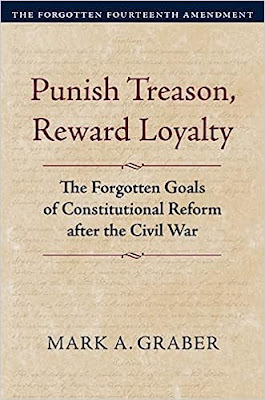
Mark A. Graber, Punish Treason, Reward Loyalty: The Forgotten Goals of Constitutional Reform after the Civil War (University of Kansas Press, 2023)
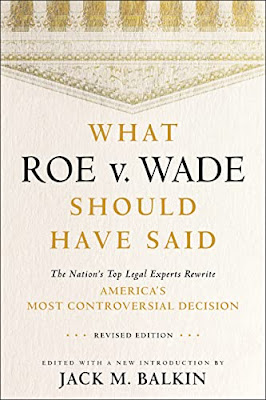
Jack M. Balkin, What Roe v. Wade Should Have Said: The Nation's Top Legal Experts Rewrite America's Most Controversial Decision - Revised Edition (NYU Press, 2023)

Andrew Koppelman, Burning Down the House: How Libertarian Philosophy Was Corrupted by Delusion and Greed (St. Martin’s Press, 2022)

Gerard N. Magliocca, Washington's Heir: The Life of Justice Bushrod Washington (Oxford University Press, 2022)
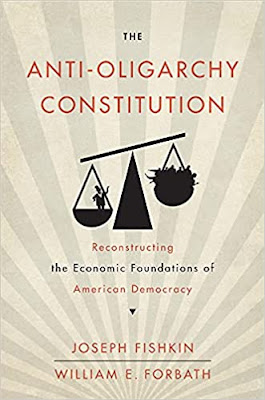
Joseph Fishkin and William E. Forbath, The Anti-Oligarchy Constitution: Reconstructing the Economic Foundations of American Democracy (Harvard University Press, 2022)
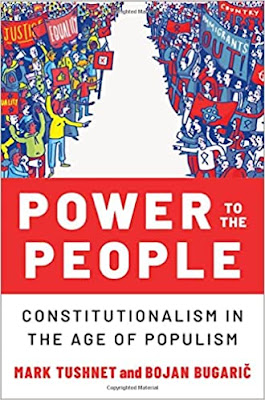
Mark Tushnet and Bojan Bugaric, Power to the People: Constitutionalism in the Age of Populism (Oxford University Press 2021).

Mark Philip Bradley and Mary L. Dudziak, eds., Making the Forever War: Marilyn B. Young on the Culture and Politics of American Militarism Culture and Politics in the Cold War and Beyond (University of Massachusetts Press, 2021).

Jack M. Balkin, What Obergefell v. Hodges Should Have Said: The Nation's Top Legal Experts Rewrite America's Same-Sex Marriage Decision (Yale University Press, 2020)

Frank Pasquale, New Laws of Robotics: Defending Human Expertise in the Age of AI (Belknap Press, 2020)

Jack M. Balkin, The Cycles of Constitutional Time (Oxford University Press, 2020)

Mark Tushnet, Taking Back the Constitution: Activist Judges and the Next Age of American Law (Yale University Press 2020).

Andrew Koppelman, Gay Rights vs. Religious Liberty?: The Unnecessary Conflict (Oxford University Press, 2020)

Ezekiel J Emanuel and Abbe R. Gluck, The Trillion Dollar Revolution: How the Affordable Care Act Transformed Politics, Law, and Health Care in America (PublicAffairs, 2020)

Linda C. McClain, Who's the Bigot?: Learning from Conflicts over Marriage and Civil Rights Law (Oxford University Press, 2020)
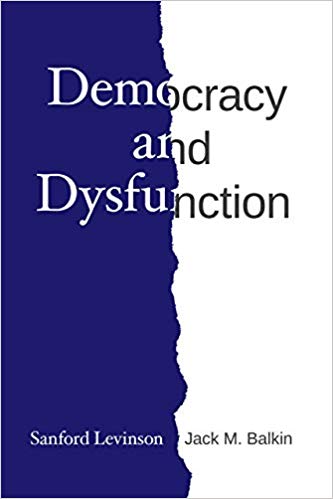
Sanford Levinson and Jack M. Balkin, Democracy and Dysfunction (University of Chicago Press, 2019)

Sanford Levinson, Written in Stone: Public Monuments in Changing Societies (Duke University Press 2018)

Mark A. Graber, Sanford Levinson, and Mark Tushnet, eds., Constitutional Democracy in Crisis? (Oxford University Press 2018)

Gerard Magliocca, The Heart of the Constitution: How the Bill of Rights became the Bill of Rights (Oxford University Press, 2018)

Cynthia Levinson and Sanford Levinson, Fault Lines in the Constitution: The Framers, Their Fights, and the Flaws that Affect Us Today (Peachtree Publishers, 2017)

Brian Z. Tamanaha, A Realistic Theory of Law (Cambridge University Press 2017)

Sanford Levinson, Nullification and Secession in Modern Constitutional Thought (University Press of Kansas 2016)

Sanford Levinson, An Argument Open to All: Reading The Federalist in the 21st Century (Yale University Press 2015)

Stephen M. Griffin, Broken Trust: Dysfunctional Government and Constitutional Reform (University Press of Kansas, 2015)

Frank Pasquale, The Black Box Society: The Secret Algorithms That Control Money and Information (Harvard University Press, 2015)

Bruce Ackerman, We the People, Volume 3: The Civil Rights Revolution (Harvard University Press, 2014)
Balkinization Symposium on We the People, Volume 3: The Civil Rights Revolution

Joseph Fishkin, Bottlenecks: A New Theory of Equal Opportunity (Oxford University Press, 2014)

Mark A. Graber, A New Introduction to American Constitutionalism (Oxford University Press, 2013)

John Mikhail, Elements of Moral Cognition: Rawls' Linguistic Analogy and the Cognitive Science of Moral and Legal Judgment (Cambridge University Press, 2013)

Gerard N. Magliocca, American Founding Son: John Bingham and the Invention of the Fourteenth Amendment (New York University Press, 2013)

Stephen M. Griffin, Long Wars and the Constitution (Harvard University Press, 2013)

Andrew Koppelman, The Tough Luck Constitution and the Assault on Health Care Reform (Oxford University Press, 2013)

James E. Fleming and Linda C. McClain, Ordered Liberty: Rights, Responsibilities, and Virtues (Harvard University Press, 2013)
Balkinization Symposium on Ordered Liberty: Rights, Responsibilities, and Virtues

Andrew Koppelman, Defending American Religious Neutrality (Harvard University Press, 2013)

Brian Z. Tamanaha, Failing Law Schools (University of Chicago Press, 2012)

Sanford Levinson, Framed: America's 51 Constitutions and the Crisis of Governance (Oxford University Press, 2012)

Linda C. McClain and Joanna L. Grossman, Gender Equality: Dimensions of Women's Equal Citizenship (Cambridge University Press, 2012)

Mary Dudziak, War Time: An Idea, Its History, Its Consequences (Oxford University Press, 2012)

Jack M. Balkin, Living Originalism (Harvard University Press, 2011)

Jason Mazzone, Copyfraud and Other Abuses of Intellectual Property Law (Stanford University Press, 2011)

Richard W. Garnett and Andrew Koppelman, First Amendment Stories, (Foundation Press 2011)

Jack M. Balkin, Constitutional Redemption: Political Faith in an Unjust World (Harvard University Press, 2011)

Gerard Magliocca, The Tragedy of William Jennings Bryan: Constitutional Law and the Politics of Backlash (Yale University Press, 2011)

Bernard Harcourt, The Illusion of Free Markets: Punishment and the Myth of Natural Order (Harvard University Press, 2010)

Bruce Ackerman, The Decline and Fall of the American Republic (Harvard University Press, 2010)
Balkinization Symposium on The Decline and Fall of the American Republic

Ian Ayres. Carrots and Sticks: Unlock the Power of Incentives to Get Things Done (Bantam Books, 2010)

Mark Tushnet, Why the Constitution Matters (Yale University Press 2010)

Ian Ayres and Barry Nalebuff: Lifecycle Investing: A New, Safe, and Audacious Way to Improve the Performance of Your Retirement Portfolio (Basic Books, 2010)
.jpg)
Jack M. Balkin, The Laws of Change: I Ching and the Philosophy of Life (2d Edition, Sybil Creek Press 2009)

Brian Z. Tamanaha, Beyond the Formalist-Realist Divide: The Role of Politics in Judging (Princeton University Press 2009)
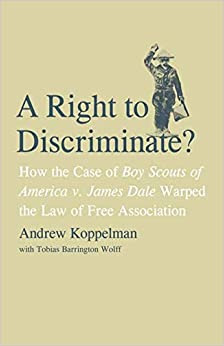
Andrew Koppelman and Tobias Barrington Wolff, A Right to Discriminate?: How the Case of Boy Scouts of America v. James Dale Warped the Law of Free Association (Yale University Press 2009)

Jack M. Balkin and Reva B. Siegel, The Constitution in 2020 (Oxford University Press 2009)

Heather K. Gerken, The Democracy Index: Why Our Election System Is Failing and How to Fix It (Princeton University Press 2009)

Mary Dudziak, Exporting American Dreams: Thurgood Marshall's African Journey (Oxford University Press 2008)

David Luban, Legal Ethics and Human Dignity (Cambridge Univ. Press 2007)

Ian Ayres, Super Crunchers: Why Thinking-By-Numbers is the New Way to be Smart (Bantam 2007)

Jack M. Balkin, James Grimmelmann, Eddan Katz, Nimrod Kozlovski, Shlomit Wagman and Tal Zarsky, eds., Cybercrime: Digital Cops in a Networked Environment (N.Y.U. Press 2007)
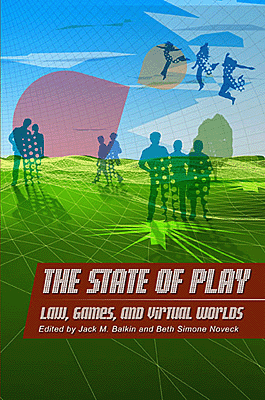
Jack M. Balkin and Beth Simone Noveck, The State of Play: Law, Games, and Virtual Worlds (N.Y.U. Press 2006)

Andrew Koppelman, Same Sex, Different States: When Same-Sex Marriages Cross State Lines (Yale University Press 2006)

Brian Tamanaha, Law as a Means to an End (Cambridge University Press 2006)

Sanford Levinson, Our Undemocratic Constitution (Oxford University Press 2006)

Mark Graber, Dred Scott and the Problem of Constitutional Evil (Cambridge University Press 2006)

Jack M. Balkin, ed., What Roe v. Wade Should Have Said (N.Y.U. Press 2005)

Sanford Levinson, ed., Torture: A Collection (Oxford University Press 2004)
Balkin.com homepage
Bibliography
Conlaw.net
Cultural Software
Writings
Opeds
The Information Society Project
BrownvBoard.com
Useful Links
Syllabi and Exams
