Balkinization
an unanticipated consequence of
Jack M. Balkin
Balkinization Symposiums: A Continuing List
E-mail:
Jack Balkin:
jackbalkin at yahoo.com
Bruce Ackerman
bruce.ackerman at yale.edu
Ian Ayres
ian.ayres at yale.edu
Corey Brettschneider
corey_brettschneider at brown.edu
Mary Dudziak
mary.l.dudziak at emory.edu
Joey Fishkin
joey.fishkin at gmail.com
Heather Gerken heather.gerken at yale.edu
Abbe Gluck abbe.gluck at yale.edu
Mark Graber
mgraber at law.umaryland.edu
Stephen Griffin
sgriffin at tulane.edu
Jonathan Hafetz
jonathan.hafetz at shu.edu
Jeremy Kessler
jkessler at law.columbia.edu
Andrew Koppelman
akoppelman at law.northwestern.edu
Marty Lederman
msl46 at law.georgetown.edu
Sanford Levinson
slevinson at law.utexas.edu
David Luban
david.luban at gmail.com
Gerard Magliocca
gmaglioc at iupui.edu
Jason Mazzone
mazzonej at illinois.edu
Linda McClain
lmcclain at bu.edu
John Mikhail
mikhail at law.georgetown.edu
Frank Pasquale
pasquale.frank at gmail.com
Nate Persily
npersily at gmail.com
Michael Stokes Paulsen
michaelstokespaulsen at gmail.com
Deborah Pearlstein
dpearlst at yu.edu
Rick Pildes
rick.pildes at nyu.edu
David Pozen
dpozen at law.columbia.edu
Richard Primus
raprimus at umich.edu
K. Sabeel Rahmansabeel.rahman at brooklaw.edu
Alice Ristroph
alice.ristroph at shu.edu
Neil Siegel
siegel at law.duke.edu
David Super
david.super at law.georgetown.edu
Brian Tamanaha
btamanaha at wulaw.wustl.edu
Nelson Tebbe
nelson.tebbe at brooklaw.edu
Mark Tushnet
mtushnet at law.harvard.edu
Adam Winkler
winkler at ucla.edu
Compendium of posts on Hobby Lobby and related cases
The Anti-Torture Memos: Balkinization Posts on Torture, Interrogation, Detention, War Powers, and OLC
The Anti-Torture Memos (arranged by topic)
Recent Posts
The Normalization of Torture
![[Powered by Blogger]](https://lh3.googleusercontent.com/blogger_img_proxy/AEn0k_v7sEVykeiN7TY2M1fz9-YU9cRBXndIeFGOBqWbhWosWEyYpzwBhT7B8dwHTMcIZI7O8_x9OpQoJY2hrqFB6BShrf1W5PVEQ0V3I_KNa-qc=s0-d)
Just A Few Blogs
ACS Blog
Alas, a Blog
Althouse
Arts and Letters Daily
Atrios (Eschaton)
Bill of Health
Buzzflash.com
Buzz Machine
Cato at Liberty
Juan Cole (Informed Comment)
Concurring Opinions
The Constitution in 2020
Corrente
Crooked Timber
Daily Howler
Daily Kos
Dana Boyd
Brad DeLong
Digby (Hullabaloo)
Discriminations
Daniel Drezner
Kevin Drum (Mother Jones)
Electrolite
En Banc
Eunomia (Daniel Larison)
Fafblog
Michael Froomkin (Discourse.net)
GovLab (Beth Noveck)
Rick Hasen (Election Law)
History News Network
How Appealing
Ignatz (Sam Heldman)
The Importance of (Ernie Miller)
Infolaw
Instapundit
International Economic Law and Policy Blog
IntLawGrrls
Jacob Levy
Jesus' General
Jurisdynamics
The Kitchen Cabinet
Mark Kleiman
Law Blog Central
Larry Lessig
Lawyers, Guns and Money
Liberal Oasis
Brian Leiter's Law School Reports
The Leiter Reports
Marginal Revolution
Megan McArdle
Memeorandum
Metafilter
Mirror of Justice
The New Republic
Newseum
No More Mister Nice Blog
Brendan Nyhan
Opinio Juris
Orcinus
The Originalism Blog
Pandagon
Passport (Foreign Policy)
Overcoming Bias
Political Animal (Washington Monthly)
Political Theory Daily Review
Political Wire (Taegan Goddard)
The Poor Man
Virginia Postrel
Prawfsblawg
Public Reason
Jonathan Rauch
Raw Story
Redstate
ReligiousLeftLaw.com
Reporters Committee For Freedom of the Press
Reproductive Rights Blog
Rothman's Roadmap to the Right of Publicity
SCOTUS Blog
Seeing the Forest
Clay Shirky
The Shifted Librarian
The Situationist
Larry Solum (Legal Theory)
Andrew Sullivan
Talking Points Memo
Talk Left
Tapped
Tbogg
TechPresident
The Paper Chase (Jurist)
Tom Paine
Tom Tomorrow (This Modern World)
Eve Tushnet
Uggabugga
University of Chicago Law School Faculty Blog
Unqualified Offerings
The Volokh Conspiracy
War and Piece (Laura Rozen)
Wampum
Oliver Willis
Wonkette
Written Description
Matthew Yglesias
Yin
Your Choice of Feeds
1. XML
powered by

2. Atom Feed
3. RSS 2.0
The Normalization of Torture
Marty Lederman
Our President today vetoed a bill that -- once again, for the umpteenth time -- would have rendered even more unlawful some or all of the CIA's "enhanced interrogation techniques." Not much new in the President's veto statement -- the CIA techniques are not "torture"; they are not "cruel treatment" prohibited by Common Article 3; and whadda ya know? -- they're even "humane."
The President also raised a constitutional objection to section 326, which would have required the Administration to issue a report to the congressional intelligence committees -- a classified report -- explaining how the Administration has purported to be complying with section 1003 of the Detainee Treatment Act of 2005 (the "McCain Amendment"), which prohibits the use of cruel, inhuman and degrading treatment, and with section 6 of the Military Commissions Act of 2006, which gives the President certain authority to interpret Common Article 3 of the Geneva Conventions (including its prohibitions on torture and cruel treatment). Imagine that -- the Administration actually being compelled to explain to the legislature how it is implementing federal statutory and treaty requirements. Outrageous, right? That must be unconstitutional!
To make matters worse, this week we have a serious legal commentator, Stuart Taylor, publishing a column criticizing the Congress for "lurching" to an "extreme" by trying to require the CIA to use those techniques that have been proven tried and true -- and sufficient -- by the military and the FBI. What's Stuart's main concern? That the bill would have prohibited the CIA from "bluffing to scare a prisoner into thinking that he might be physically abused." That's right -- because the CIA should be permitted to threaten detainees with unlawful physical abuse, the Democratic bill was "lurching" to an "extreme" and the President was right to veto it.
More absurd, even, is Taylor's exoneration of the lawyers in the Bush Administration. Stuart argues that, now that he thinks about it, it really is a hard legal question whether waterboarding is torture or cruel treatment -- and therefore currently unlawful -- after all. Stuart doesn't ever explain in what sense waterboarding might not be "cruel." His attention is devoted to the torture statute. "The 1994 law's extraordinarily narrow definition of 'torture,'" he writes, "is critical to understanding why a reasonable lawyer could declare waterboarding personally 'repugnant,' as did Mukasey during his confirmation hearing, while at the same time believing that if it is short in duration and carefully controlled, it is not necessarily 'torture.'"
Now, I would be the first to complain -- and I have -- about Congress's narrowed statutory definition of torture, which in some respects guts our obligations under the Convention Against Torture. Nonetheless, the law does categorically prohibit the intentional infliction of severe physical suffering on a detainee overseas. And as I've written here several times before, if anything in the law can be said with certainty, it is that waterboarding, a form of drowning, is designed precisely to inflict severe, acute physical suffering.
So how can Stuart Taylor conclude that reasonable minds might disagree? Here's what he writes: Does waterboarding inflict severe physical pain or suffering? That depends on the inherently elastic meaning of "severe." Waterboarding is clearly more severe than (say) a single face slap. But it is clearly less severe than (say) yanking out a prisoner's fingernails. The fact that the military has long waterboarded its own soldiers in training to teach interrogation-resistance techniques cuts against the idea that it inflicts severe physical suffering. I also suspect that many a lawyer's interpretation of "severe" might turn on how close in time his decision was to a terrorist mass murder that he fears could soon be repeated. Just as gravity bends light, the need to prevent a catastrophe bends judgment on such subjective questions. And it should.
Let's briefly take these "arguments" one at a time, not that they actually warrant any serious consideration.
First: Stuart can think of some techniques that result in more severe physical suffering than waterboarding, such as, supposedly, yanking out fingernails. He might be wrong about the fingernails -- as one person who has endured waterboarding explained: "If I had the choice of being waterboarded by a third party or having my fingers smashed one at a time by a sledgehammer, I'd take the fingers, no question. It's horrible, terrible, inhuman torture. I can hardly imagine worse. I'd prefer permanent damage and disability to experiencing it again. I'd give up anything, say anything, do anything." But even so, Taylor is of course correct that we can all think of some techniques that would result in more severe suffering than waterboarding. And what, exactly, does that prove? Suffice it to say that "We're not quite as sadistic as the Spanish Inquisition" is not a defense, nor a valid form of statutory construction.
Second, Stuart writes that "the fact that the military has long waterboarded its own soldiers in training to teach interrogation-resistance techniques cuts against the idea that it inflicts severe physical suffering." This is simply a non-sequitur.
Of course waterboarding does, and is specifically intended to, result in severe physical suffering. That's the whole point of it: The suffering is so severe that no detainee can resist it for more than a few seconds. The only way to deny this conclusion is to engage in willful blindness -- to studiously resist actually reading any part of the vast historical literature on water tortures. (This is, alas, not an uncommon problem: As Alice Ristroph explains in a terrific recent piece:If we actually seek a serious, realistic evaluation of torture, . . . it is not as if we lack empirical information about torture. The unfortunate truth is that torture is a practice with which the human race has extensive historical experience. Admittedly, I have no expertise as a historian. But I can read, and for others with expertise in reading, there are several historical studies of torture available, most undertaken before September 11, 2001, at a time when our interest in the subject was somewhat less selfishly partisan. The studies are rich in detail, and often depressing, but they . . . should be the starting point for discussions of torture today.)
Which brings us to Stuart Taylor's third and final "argument": "Many a lawyer's interpretation of 'severe' might turn on how close in time his decision was to a terrorist mass murder that he fears could soon be repeated. Just as gravity bends light, the need to prevent a catastrophe bends judgment on such subjective questions."
This is very revealing, and I think it is really what's underlying Taylor's (and Mukasey's, and Bradbury's, and Bush's) insistence that the statutory question is "difficult": Basically, that we should not take the statutory restriction seriously at all if our motives are pure enough. If the interrogator, and his apologist lawyers and doctors and officials, are genuinely fearful of terrorist mass murder (and who wouldn't be?), and if they sincerely conclude (albeit without the aid of any actual empirical evidence) that torture is necessary to prevent such "catastrophe," well, then, the physical suffering of their victims just magically becomes less "severe," doesn't it?
Bent judgment, indeed.
Posted
6:40 PM
by Marty Lederman [link]
Proven and sufficient?
The FBI tried for weeks and failed to get any useful intelligence out of Abu Zabudayah, the first of three al Qaeda leaders whom the CIA waterboarded and obtained the information to capture KSM.
If one has enough time, the Army Interrogation Manual is adequate for the vast majority of interrogations. However, no one claims that these techniques are always effective.
The issue before us is what to do with a high value target who is not providing timely actionable intelligence under the Army Interrogation Manual techniques.
[Stuart's] attention is devoted to the torture statute. "The 1994 law's extraordinarily narrow definition of 'torture,'" he writes, "is critical to understanding why a reasonable lawyer could declare waterboarding personally 'repugnant,' as did Mukasey during his confirmation hearing, while at the same time believing that if it is short in duration and carefully controlled, it is not necessarily 'torture.'"
Taylor's argument is more than a little familiar. I guess he is yet another "unethical" attorney like myself, Mukasey and all the lawyers at DOJ. Because we share basically the same analysis, I will offer a defense of this defense.
So how can Stuart Taylor conclude that reasonable minds might disagree? Here's his "reasoning":
Does waterboarding inflict severe physical pain or suffering? That depends on the inherently elastic meaning of "severe." Waterboarding is clearly more severe than (say) a single face slap. But it is clearly less severe than (say) yanking out a prisoner's fingernails...
Actually, Taylor is being generous calling the term "severe pain" to be elastic. Any medical professional will tell you that pain cannot be objectively measured. Indeed, DOJ made this observation in a footnote of their memorandum of law. While the subjective philosophical arguments apparently will continue ad infinitum, the legal argument really ends here.
First: Stuart can think of some techniques that result in more severe physical suffering than waterboarding, such as, supposedly, yanking out fingernails. He might be wrong about the fingernails -- as one person who has endured waterboarding explained: "If I had the choice of being waterboarded by a third party or having my fingers smashed one at a time by a sledgehammer, I'd take the fingers, no question. It's horrible, terrible, inhuman torture.
I see we are offering the anonymous internet poster as an expert witness again. As soon as "scylla" has his fingers smashed one at a time with a sledgehammer to compare the sensation to his alleged waterboarding, I might take him seriously.
You need a better expert witness. It would take me about five minutes to get him excluded as a witness from your prosecution.
Taylor is of course correct that we can all think of some techniques that would result in more severe suffering than waterboarding. And what, exactly, does that prove? Suffice it to say that "We're not quite as sadistic as the Spanish Inquisition" is not a defense, nor a valid form of statutory construction.
Taylor would be better advised to simply observe that the CIA's waterboarding technique (water run over cellophane over the nose and mouth) causes no pain at all.
Second, Stuart writes that "the fact that the military has long waterboarded its own soldiers in training to teach interrogation-resistance techniques cuts against the idea that it inflicts severe physical suffering." This is simply a non-sequitur.
Of course waterboarding does, and is specifically intended to, result in severe physical suffering. That's the whole point of it: The suffering is so severe that no detainee can resist it for more than a few seconds.
Speaking of non sequiturs, your argument erroneously assumes that an interrogator must inflict severe physical suffering to obtain an answer within a moment or two.
In fact, physical suffering is merely the state of undergoing physical pain. Because the CIA waterboarding technique does not involve physical pain, it cannot cause physical suffering.
Taylor's argument comparing military life with
The SERE training Nance inflicted on this SEALs involving forcing water into their stomachs and lungs does inflict actual pain. In comparison, the CIA waterboarding technique is a walk in the park compared to what our SEALs undergo.
Additionally, as I have noted before, your average infantry grunt stands for long periods of time, sits in uncomfortable contortions, eats at irregular intervals, undergoes constant changes of temperature and endures sleep deprivation as a matter of everyday life. It is a complete mystery to this ex grunt why I ought to think what CIA does to terrorists is somehow criminal.
Perhaps the only way to resist this conclusion is to engage in willful blindness -- to studiously resist actually reading any part of the vast historical literature on water tortures.
You admitted above that the CIA waterboarding techinique, which does not cause physical pain, is not the same as those historical tortures used by the likes of the Spanish Inquisition, which are designed to inflict intense physical pain and injury. Thus, this literature is irrelevant.
Which brings us to Stuart Taylor's third and final "argument": "Many a lawyer's interpretation of 'severe' might turn on how close in time his decision was to a terrorist mass murder that he fears could soon be repeated. Just as gravity bends light, the need to prevent a catastrophe bends judgment on such subjective questions."
Taylor would have been better advised simply to point out that the term "severe pain" is completely and utterly subjective and thus too vague to enforce in a criminal statute.
Instead, Taylor is wandering off into the land of subjective philosophical assertions which are the currency of those who claim that the CIA coercive interrogation techniques are "obviously" torture in violation of the law.

Now who was it that reminded me? Every time his name surfaces I'll be reminded again and again. Fortunately the tune swings and I just might keep a Bombay Bloody Mary handy for company.
A very good critique of Mr Taylor. I'd just like to add that it is possible to find arguments to justify doing what you want to do. The problem is coming up with a reasonable and rational argument. I agree with you that Mr. Tayor's arguments are not very reasonable and hardly rational.I would like to state for the record that I appose the use of any 'torture' (by any name you care to give it) on three grounds.
First it is both immoral, unethical, and fundamentally wrong. I feel this way because the use of 'torture' violates a fundamental principle of my religion. I shan't say any more as this is sufficient unto itself.
Secondly, I hold to the position that 'torture' doesn't work when you are attempting to get to the truth. Given the poor record of the Bush II administration on telling the true I reserve judgment on any "proof" of the successful use of 'torture' in preventing any terrorist attacks until a full report is made public.
Finally, the use of 'torture' by any American for any reason takes us back to the bad old days of the 19th Cent. when we rationalized away the holding of slaves and the practice of genocide. This country has paid too high a price in blood and honor for those 'bad old days' to go back now. The US is more than just land and people, it is a set of ideals and one of those ideals is a very high moral standard of behavior.
Once again, very good critique. Keep up the good work.
It would be one thing if evidence contradicting him were not in, but it is. There's never been a ticking time bomb, and no administration official has issued a credible report to the contrary. The scenario arose in French literature to ease qualms about the war against Algeria. Alan Dershowitz's parade example ran for (if memory serves) 67 days. What is most impressive about it is the bomb's implied battery life. A skilled interrogator would expect to learn more, and more reliably, within the true time frame.
Even in the fantastic world of "24" in which the scenario exists it takes little imagination – though pity the scriptwriter who comes up with the idea – for a detainee to give false information sending bomb squads on a series of wild goose chases.
Failing that, he'd likely take a licking while the bomb kept ticking. Better to bend our hysteria toward the image of a ticking Timex and break out in hysterical laughter.
Anyway, this ends justify the means stuff doesn't cut it for me. A sound response is that (1) practicably, the means doesn't really work or (2) overall, pragmatically it is a bad idea, including strategically. You can think the targets are scum btw and still see the point of the latter argument.
But, this only goes so far for me. Put aside the claim that only a handful were actually waterboarded, leading one to wonder why soooo much apparently is at stake here.
No, the bottom line is some things shouldn't be authorized by law. Heck, this doesn't even mean you never do them. (Though we shouldn't). But, authorization, legitimization is much worse. See also, Justice Jackson's dissent in Koresmatsu.
'Inhumane' means something. It means we are not acting like humans, but like animals. The fact acting like animals might result in some sort of gain (and simply put, it is limited at best in the real world, making it a very risky proposition) is not a justification. It still is acting like animals, not like the humanity we are supposed to be.
To be 'safe' we have to act like animals. No thanks. Safety to be an animal, though this is a dis to most animals, is not any sort of safety I want part of. So that line doesn't cut it.
One of the problems with humans is that animals normally have some weapon like claws or really powerful teeth, so animals develop instincts to keep their competition non-fatal. Humans don't have any fatal equipage like the X-Man Wolverine's claws, so we've never developed the "non-killer instinct." We've got the territorial instinct from our competition, but not the restraining instinct of having fatal appendages.
Taylor would have been better advised simply to point out that the term "severe pain" is completely and utterly subjective and thus too vague to enforce in a criminal statute.
Yes, you keep coming back to this point. "Severe pain" is too subjective to have any legal meaning since everyone's pain tolerance is different. Yet you have no difficulty concluding that the sexual abuse that took place at Abu Graib violated GC3, Article 3(1)(c) against humiliating and degrading treatment.
Surely "humiliating and degrading" is even more subjective than "severe pain." After all, I trust everyone will agree on what is or is not painful; the only subjective element is "severity." But how can anyone foresee what any one person will or will not find "humiliating and degrading"?
So I appreciate the follow-up comments on that point.
Take a look at Mark Twain's "The Damned Human Race" at
http://www.skeptically.org/literary/id9.html
To my knowledge the non-human animal kingdom (empire?) does not have a
"National Security Strategy."
When Gov. Tarkin threatens to blow up Leia's entire planet, what's she tell him? "Dantooine ... they're on Dantooine." A lie, of course. Knowing it will take him time to check it out.
Any terrorist who knows there's a "ticking bomb" can do the same thing; he just has to pick something that will take a while to check out ... long enough for the bomb to go off.
But of course, torture is not about hearing the truth; it's about hearing what the torturer wants to hear. Hence its use in the Inquisition, in the witch-craze, etc.
When Frederick the Great forbade torture by his courts, they had a fit. How else, they asked, are we to convict anyone? The notion of investigating a case and discovering the truth was too far-out for them.
Doubtless some spiritual ancestor of Mr. DePalma was there to explain why it would never work, and why the king was endangering the lives of Prussians. Such apologists are always to be found.
In Prussia, they were opposed to the government; in America, they are apologists *for* the government.
from the U.S. Dept of State Initial Report to UNCAT, Oct 15, 1999.
http://www.state.gov/www/global/human_rights/torture_intro.html
Please note the provisos on exigent circumstances and by passing the judiciary.
This is very revealing, and I think it is really what's underlying Taylor's (and Mukasey's, and Bradbury's, and Bush's) insistence that the statutory question is "difficult": Basically, that we should not take the statutory restriction seriously at all if our motives are pure enough. If the interrogator, and his apologist lawyers and doctors and officials, are genuinely fearful of terrorist mass murder (and who wouldn't be?), and if they sincerely conclude (albeit without the aid of any actual empirical evidence) that torture is necessary to prevent such "catastrophe," well, then, the physical suffering of their victims just magically becomes less "severe," doesn't it?
Pardon me for pointing it out once again, but the question of whether you should do something is a different question from whether it should be legal (particularly since the determination of whether something is legal seldom if ever is conditioned on the "necessity" of doing it).
Not to mention, the RWA types that are all gung-ho for torture to save a "million" potential lives are not in favour of hacking a person to pieces so we can harvest their organs and assuredly save ten lives or so. The "moral calculus" there clearly is in favour of the extirpation of the various organs to save a dozen lives, even at the price of one life. Why not?
Cheers,
"Bart", what's your price?:
"A professor walks up to a lady at a party and asks her if she'd sleep with him for a million dollars. She says, 'Sure! Your place or mine?' He says, 'Would you sleep with me for $100?' She gets all huffy and says, 'What do you think I am, some kind of whore?' He replies, 'We've already determined that. I'm just trying to find out the price....'"
Should we torture a kidnapper to find out where he's hidden a child? If not, why not?
And FWIW, your assumptions above are showing: 1). That the information was necessary to the capture of KSM and in fact led to it, and 2). That there was no other way of getting it.
Regardless, capturing KSM is hardly the same as foiling a Terra-ist attack that would have killed millions. While it's nice to capture terrorists and bring them to justice (if a MCA 'show trial' can be considered that), that's not the same as preventing the TTB....
Cheers,
Any medical professional will tell you that pain cannot be objectively measured.
OK, I'll bite. Cite one. Peer-reviewed papers would be a plus.
Cheers,
Additionally, as I have noted before, your average infantry grunt stands for long periods of time, sits in uncomfortable contortions, eats at irregular intervals, undergoes constant changes of temperature and endures sleep deprivation as a matter of everyday life. It is a complete mystery to this ex grunt why I ought to think what CIA does to terrorists is somehow criminal.
"Objection, your Honour, asked and answered."
Cheers,
With all due deference to Joe, I don’t (does anyone?) know of any report describing intentional or prolonged cruelty in animal behavior.
Interesting nom de plume. Have you ever watched a cat "playing" with a mouse or bird or such? Now I'm not going to go so far as to call that "intentional cruelty", but it's hardly "humane".
Cheers,
If Kalid Sheik Mohammed were subjected to very
harsh interrogation, could he be induced to confess to
an act of which he was not actually guilty?
FarrisW
You touched upon a fundamental distinction here.
Coercive interrogation can result in false statements.
However, CIA was not seeking confessions with which to prosecute KSM nor is the military commission using them to prosecute KSM
Instead, CIA sought and received actionable intelligence on the identity. locations and plans of the al Qaeda cells KSM was supervising and rolled them up. If KSM gave false information about those cells, it would have been easy enough to check his information on the scene or with other captured al Qaeda.
As an aside, the problem with false confessions in the prosecution of KSM did not arise as a result to coercive interrogation, but rather KSM taking credit for murders which he most likely did not commit like the beheading of Danny Pearl.
Says the torturers?
And once we started torturing this person, it becomes impossible to use anything he says in court.
Instead, CIA sought and received actionable intelligence on the identity. locations and plans of the al Qaeda cells KSM was supervising and rolled them up.
Of which you have provided exactly ZERO evidence.
If KSM gave false information about those cells, it would have been easy enough to check his information on the scene or with other captured al Qaeda.
And do what? At that point the prisoner has already got what they wanted, a rest from the torture.
Heck, I think you were probably a key player in the 9/11 attack. Do you think I could waterboard you into providing details of your involvement?
After all, they were just looking for actionable intelligence...
And once we started torturing this person, it becomes impossible to use anything he says in court.
Even if KSM had constitutional rights such as those discussed in the Miranda warning, under the Elstad rule, law enforcement can remedy a previous interrogation violation with a later proper interrogation, even if the questions in the later interrogation are derived from information provided in the prior improper interrogation.
Under this reasoning, the military had the FBI re-interview KSM and the other five terrorists to obtain the statements which will be used at trial.
# posted by Bart DePalma : 11:32 AM
Only if you can find a talking marsupial to serve as the judge for this travesty.
Once you start torturing someone, there is no way you can rely on anything they say. They will just say what they think you want to hear.
That is why I'm completely confident I could waterboard you into admitting to being a key player in the 9/11 attack.
"it would have been easy enough to check his information on the
scene or with other captured al Qaeda."
We already have the information from another guy but we still have to
torture somebody?
"KSM taking credit for murders he most likely did not commit"
If I understand you correctly, you are saying that we have to torture
someone so he will 'take credit' ???
FarrisW
You have to understand. It's not the information (or quality or usefulness of such) that's important, it's the torture.
And when we do torture, you can be sure that the people that take such pride in it will reveal a treasure trove of "plots thwarted" and "lives saved", all without substantiation. Because such claims are so inherently good that they need no backing in fact....
I hope you understand....
Cheers,
The best reporting on the interrogation of Zabudayah, that of Katherine Eban in Vanity Fair online ["Rorschach and Awe"] concludes exactly the opposite. Eban reports that all the information on the 9-11 planning was derived by the FBI before the CIA torturers got there: http://www.vanityfair.com/politics/features/2007/07/torture200707?printable=true¤tPage=all
As to the claim that the CIAs interrogation of Zubaydah was necessary for the capture of KSM, I am unaware of anyone who has first hand knowledge of the facts who makes that claim. Rather the assertion (whihc iI recall) is that Zubaydah confirmed that KSM was using a suspected alias. I do not recall any assertion that he said this only after being waterboarded.
Click my link. You will find that the CIA claimed gains from interrogating Abu Abu Zubaydah are very generic and clearly consistent with the interpretation that not quite exactly everything which he told them and did not tell the FBI was a lie.
I note that Bart DePalma provides no evidence for his claim of fact. If there is an official source for the claim (that is not some blog somewhere but the quote of someone who was there even someone who demands anonymity) I would like to know about it.
Books by Balkinization Bloggers

Gerard N. Magliocca, The Actual Art of Governing: Justice Robert H. Jackson's Concurring Opinion in the Steel Seizure Case (Oxford University Press, 2025)

Linda C. McClain and Aziza Ahmed, The Routledge Companion to Gender and COVID-19 (Routledge, 2024)

David Pozen, The Constitution of the War on Drugs (Oxford University Press, 2024)

Jack M. Balkin, Memory and Authority: The Uses of History in Constitutional Interpretation (Yale University Press, 2024)
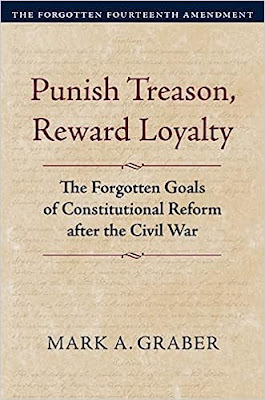
Mark A. Graber, Punish Treason, Reward Loyalty: The Forgotten Goals of Constitutional Reform after the Civil War (University of Kansas Press, 2023)
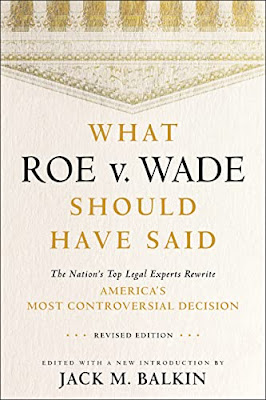
Jack M. Balkin, What Roe v. Wade Should Have Said: The Nation's Top Legal Experts Rewrite America's Most Controversial Decision - Revised Edition (NYU Press, 2023)

Andrew Koppelman, Burning Down the House: How Libertarian Philosophy Was Corrupted by Delusion and Greed (St. Martin’s Press, 2022)

Gerard N. Magliocca, Washington's Heir: The Life of Justice Bushrod Washington (Oxford University Press, 2022)
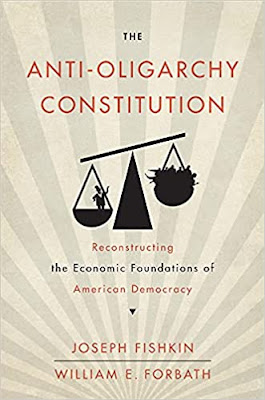
Joseph Fishkin and William E. Forbath, The Anti-Oligarchy Constitution: Reconstructing the Economic Foundations of American Democracy (Harvard University Press, 2022)
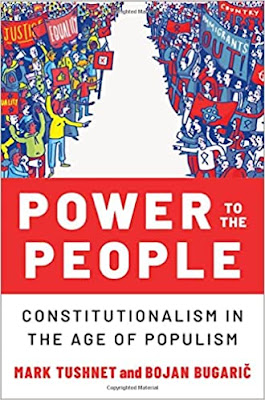
Mark Tushnet and Bojan Bugaric, Power to the People: Constitutionalism in the Age of Populism (Oxford University Press 2021).

Mark Philip Bradley and Mary L. Dudziak, eds., Making the Forever War: Marilyn B. Young on the Culture and Politics of American Militarism Culture and Politics in the Cold War and Beyond (University of Massachusetts Press, 2021).

Jack M. Balkin, What Obergefell v. Hodges Should Have Said: The Nation's Top Legal Experts Rewrite America's Same-Sex Marriage Decision (Yale University Press, 2020)

Frank Pasquale, New Laws of Robotics: Defending Human Expertise in the Age of AI (Belknap Press, 2020)

Jack M. Balkin, The Cycles of Constitutional Time (Oxford University Press, 2020)

Mark Tushnet, Taking Back the Constitution: Activist Judges and the Next Age of American Law (Yale University Press 2020).

Andrew Koppelman, Gay Rights vs. Religious Liberty?: The Unnecessary Conflict (Oxford University Press, 2020)

Ezekiel J Emanuel and Abbe R. Gluck, The Trillion Dollar Revolution: How the Affordable Care Act Transformed Politics, Law, and Health Care in America (PublicAffairs, 2020)

Linda C. McClain, Who's the Bigot?: Learning from Conflicts over Marriage and Civil Rights Law (Oxford University Press, 2020)
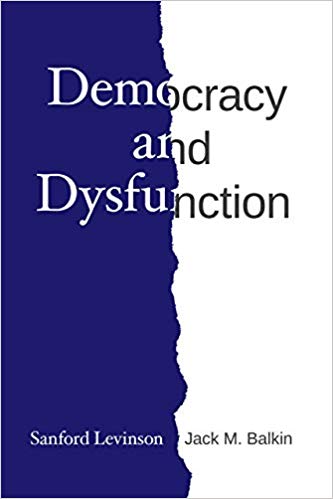
Sanford Levinson and Jack M. Balkin, Democracy and Dysfunction (University of Chicago Press, 2019)

Sanford Levinson, Written in Stone: Public Monuments in Changing Societies (Duke University Press 2018)

Mark A. Graber, Sanford Levinson, and Mark Tushnet, eds., Constitutional Democracy in Crisis? (Oxford University Press 2018)

Gerard Magliocca, The Heart of the Constitution: How the Bill of Rights became the Bill of Rights (Oxford University Press, 2018)

Cynthia Levinson and Sanford Levinson, Fault Lines in the Constitution: The Framers, Their Fights, and the Flaws that Affect Us Today (Peachtree Publishers, 2017)

Brian Z. Tamanaha, A Realistic Theory of Law (Cambridge University Press 2017)

Sanford Levinson, Nullification and Secession in Modern Constitutional Thought (University Press of Kansas 2016)

Sanford Levinson, An Argument Open to All: Reading The Federalist in the 21st Century (Yale University Press 2015)

Stephen M. Griffin, Broken Trust: Dysfunctional Government and Constitutional Reform (University Press of Kansas, 2015)

Frank Pasquale, The Black Box Society: The Secret Algorithms That Control Money and Information (Harvard University Press, 2015)

Bruce Ackerman, We the People, Volume 3: The Civil Rights Revolution (Harvard University Press, 2014)
Balkinization Symposium on We the People, Volume 3: The Civil Rights Revolution

Joseph Fishkin, Bottlenecks: A New Theory of Equal Opportunity (Oxford University Press, 2014)

Mark A. Graber, A New Introduction to American Constitutionalism (Oxford University Press, 2013)

John Mikhail, Elements of Moral Cognition: Rawls' Linguistic Analogy and the Cognitive Science of Moral and Legal Judgment (Cambridge University Press, 2013)

Gerard N. Magliocca, American Founding Son: John Bingham and the Invention of the Fourteenth Amendment (New York University Press, 2013)

Stephen M. Griffin, Long Wars and the Constitution (Harvard University Press, 2013)

Andrew Koppelman, The Tough Luck Constitution and the Assault on Health Care Reform (Oxford University Press, 2013)

James E. Fleming and Linda C. McClain, Ordered Liberty: Rights, Responsibilities, and Virtues (Harvard University Press, 2013)
Balkinization Symposium on Ordered Liberty: Rights, Responsibilities, and Virtues

Andrew Koppelman, Defending American Religious Neutrality (Harvard University Press, 2013)

Brian Z. Tamanaha, Failing Law Schools (University of Chicago Press, 2012)

Sanford Levinson, Framed: America's 51 Constitutions and the Crisis of Governance (Oxford University Press, 2012)

Linda C. McClain and Joanna L. Grossman, Gender Equality: Dimensions of Women's Equal Citizenship (Cambridge University Press, 2012)

Mary Dudziak, War Time: An Idea, Its History, Its Consequences (Oxford University Press, 2012)

Jack M. Balkin, Living Originalism (Harvard University Press, 2011)

Jason Mazzone, Copyfraud and Other Abuses of Intellectual Property Law (Stanford University Press, 2011)

Richard W. Garnett and Andrew Koppelman, First Amendment Stories, (Foundation Press 2011)

Jack M. Balkin, Constitutional Redemption: Political Faith in an Unjust World (Harvard University Press, 2011)

Gerard Magliocca, The Tragedy of William Jennings Bryan: Constitutional Law and the Politics of Backlash (Yale University Press, 2011)

Bernard Harcourt, The Illusion of Free Markets: Punishment and the Myth of Natural Order (Harvard University Press, 2010)

Bruce Ackerman, The Decline and Fall of the American Republic (Harvard University Press, 2010)
Balkinization Symposium on The Decline and Fall of the American Republic

Ian Ayres. Carrots and Sticks: Unlock the Power of Incentives to Get Things Done (Bantam Books, 2010)

Mark Tushnet, Why the Constitution Matters (Yale University Press 2010)

Ian Ayres and Barry Nalebuff: Lifecycle Investing: A New, Safe, and Audacious Way to Improve the Performance of Your Retirement Portfolio (Basic Books, 2010)
.jpg)
Jack M. Balkin, The Laws of Change: I Ching and the Philosophy of Life (2d Edition, Sybil Creek Press 2009)

Brian Z. Tamanaha, Beyond the Formalist-Realist Divide: The Role of Politics in Judging (Princeton University Press 2009)
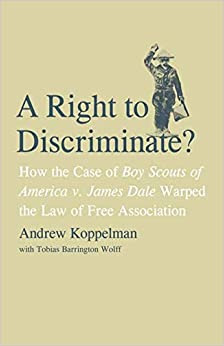
Andrew Koppelman and Tobias Barrington Wolff, A Right to Discriminate?: How the Case of Boy Scouts of America v. James Dale Warped the Law of Free Association (Yale University Press 2009)

Jack M. Balkin and Reva B. Siegel, The Constitution in 2020 (Oxford University Press 2009)

Heather K. Gerken, The Democracy Index: Why Our Election System Is Failing and How to Fix It (Princeton University Press 2009)

Mary Dudziak, Exporting American Dreams: Thurgood Marshall's African Journey (Oxford University Press 2008)

David Luban, Legal Ethics and Human Dignity (Cambridge Univ. Press 2007)

Ian Ayres, Super Crunchers: Why Thinking-By-Numbers is the New Way to be Smart (Bantam 2007)

Jack M. Balkin, James Grimmelmann, Eddan Katz, Nimrod Kozlovski, Shlomit Wagman and Tal Zarsky, eds., Cybercrime: Digital Cops in a Networked Environment (N.Y.U. Press 2007)
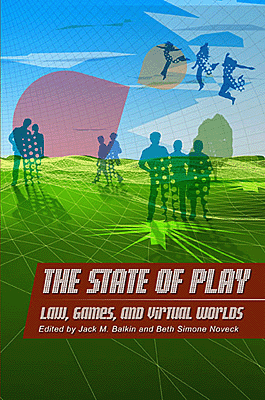
Jack M. Balkin and Beth Simone Noveck, The State of Play: Law, Games, and Virtual Worlds (N.Y.U. Press 2006)

Andrew Koppelman, Same Sex, Different States: When Same-Sex Marriages Cross State Lines (Yale University Press 2006)

Brian Tamanaha, Law as a Means to an End (Cambridge University Press 2006)

Sanford Levinson, Our Undemocratic Constitution (Oxford University Press 2006)

Mark Graber, Dred Scott and the Problem of Constitutional Evil (Cambridge University Press 2006)

Jack M. Balkin, ed., What Roe v. Wade Should Have Said (N.Y.U. Press 2005)

Sanford Levinson, ed., Torture: A Collection (Oxford University Press 2004)
Balkin.com homepage
Bibliography
Conlaw.net
Cultural Software
Writings
Opeds
The Information Society Project
BrownvBoard.com
Useful Links
Syllabi and Exams
