Balkinization
an unanticipated consequence of
Jack M. Balkin
Balkinization Symposiums: A Continuing List
E-mail:
Jack Balkin:
jackbalkin at yahoo.com
Bruce Ackerman
bruce.ackerman at yale.edu
Ian Ayres
ian.ayres at yale.edu
Corey Brettschneider
corey_brettschneider at brown.edu
Mary Dudziak
mary.l.dudziak at emory.edu
Joey Fishkin
joey.fishkin at gmail.com
Heather Gerken heather.gerken at yale.edu
Abbe Gluck abbe.gluck at yale.edu
Mark Graber
mgraber at law.umaryland.edu
Stephen Griffin
sgriffin at tulane.edu
Jonathan Hafetz
jonathan.hafetz at shu.edu
Jeremy Kessler
jkessler at law.columbia.edu
Andrew Koppelman
akoppelman at law.northwestern.edu
Marty Lederman
msl46 at law.georgetown.edu
Sanford Levinson
slevinson at law.utexas.edu
David Luban
david.luban at gmail.com
Gerard Magliocca
gmaglioc at iupui.edu
Jason Mazzone
mazzonej at illinois.edu
Linda McClain
lmcclain at bu.edu
John Mikhail
mikhail at law.georgetown.edu
Frank Pasquale
pasquale.frank at gmail.com
Nate Persily
npersily at gmail.com
Michael Stokes Paulsen
michaelstokespaulsen at gmail.com
Deborah Pearlstein
dpearlst at yu.edu
Rick Pildes
rick.pildes at nyu.edu
David Pozen
dpozen at law.columbia.edu
Richard Primus
raprimus at umich.edu
K. Sabeel Rahmansabeel.rahman at brooklaw.edu
Alice Ristroph
alice.ristroph at shu.edu
Neil Siegel
siegel at law.duke.edu
David Super
david.super at law.georgetown.edu
Brian Tamanaha
btamanaha at wulaw.wustl.edu
Nelson Tebbe
nelson.tebbe at brooklaw.edu
Mark Tushnet
mtushnet at law.harvard.edu
Adam Winkler
winkler at ucla.edu
Compendium of posts on Hobby Lobby and related cases
The Anti-Torture Memos: Balkinization Posts on Torture, Interrogation, Detention, War Powers, and OLC
The Anti-Torture Memos (arranged by topic)
Recent Posts
Fair-Weather Unitarians
![[Powered by Blogger]](https://lh3.googleusercontent.com/blogger_img_proxy/AEn0k_sCR7h_HWJdFKzVNnHgI5mNzdtfBU1PQHETZwej83Rv6yDaHWUpeCjzD8P9sbPNT-vxXeR2dIMEe1FtB2Crf01Oq-X7qPn_tijWIU1mP30y=s0-d)
Just A Few Blogs
ACS Blog
Alas, a Blog
Althouse
Arts and Letters Daily
Atrios (Eschaton)
Bill of Health
Buzzflash.com
Buzz Machine
Cato at Liberty
Juan Cole (Informed Comment)
Concurring Opinions
The Constitution in 2020
Corrente
Crooked Timber
Daily Howler
Daily Kos
Dana Boyd
Brad DeLong
Digby (Hullabaloo)
Discriminations
Daniel Drezner
Kevin Drum (Mother Jones)
Electrolite
En Banc
Eunomia (Daniel Larison)
Fafblog
Michael Froomkin (Discourse.net)
GovLab (Beth Noveck)
Rick Hasen (Election Law)
History News Network
How Appealing
Ignatz (Sam Heldman)
The Importance of (Ernie Miller)
Infolaw
Instapundit
International Economic Law and Policy Blog
IntLawGrrls
Jacob Levy
Jesus' General
Jurisdynamics
The Kitchen Cabinet
Mark Kleiman
Law Blog Central
Larry Lessig
Lawyers, Guns and Money
Liberal Oasis
Brian Leiter's Law School Reports
The Leiter Reports
Marginal Revolution
Megan McArdle
Memeorandum
Metafilter
Mirror of Justice
The New Republic
Newseum
No More Mister Nice Blog
Brendan Nyhan
Opinio Juris
Orcinus
The Originalism Blog
Pandagon
Passport (Foreign Policy)
Overcoming Bias
Political Animal (Washington Monthly)
Political Theory Daily Review
Political Wire (Taegan Goddard)
The Poor Man
Virginia Postrel
Prawfsblawg
Public Reason
Jonathan Rauch
Raw Story
Redstate
ReligiousLeftLaw.com
Reporters Committee For Freedom of the Press
Reproductive Rights Blog
Rothman's Roadmap to the Right of Publicity
SCOTUS Blog
Seeing the Forest
Clay Shirky
The Shifted Librarian
The Situationist
Larry Solum (Legal Theory)
Andrew Sullivan
Talking Points Memo
Talk Left
Tapped
Tbogg
TechPresident
The Paper Chase (Jurist)
Tom Paine
Tom Tomorrow (This Modern World)
Eve Tushnet
Uggabugga
University of Chicago Law School Faculty Blog
Unqualified Offerings
The Volokh Conspiracy
War and Piece (Laura Rozen)
Wampum
Oliver Willis
Wonkette
Written Description
Matthew Yglesias
Yin
Your Choice of Feeds
1. XML
powered by

2. Atom Feed
3. RSS 2.0
Fair-Weather Unitarians
Marty Lederman
As Jack has recently observed, apart from Katrina, the Iraq War and the conflict with al Qaeda, there has hardly been a government challenge of greater enormity this decade than the economic crisis we are now facing. Yet someone who is neither elected nor politically accountable, Ben Bernanke, is making virtually all of the nation's most momentous monetary decisions . . . and there is little the President can do about it. (The President may not remove members of the Board of the Federal Reserve except "for cause," 12 U.S.C. 242, which has long been understood to reflect congressional intent that the President may not remove such officers merely because of a substantive disagreement with their particular monetary decisions.) What's more, virtually everyone in the Nation now accepts this as the Way Things Ought to Be and, truth be told, is grateful and relieved that the President is not "the Decider" when it comes to the fate of our economy. And ever since then, unitary executivists have wisely avoided any mention of how their theories would affect the constitutionality of the Federal Reserve. The Bush Administration's proposal to greatly expand the authority of that independent agency merely confirms that when it comes to theories of the unitary executive, the Fed is the third rail. Touch it at your peril. As Jack wrote: Within the halls of the Bush Administration, nobody seems to be thumping the pulpit, arguing about the framers and demanding the sacred prerogatives of the Unitary Executive. Messrs. Cheney and Addington are nowhere to be heard from defending the President's powers to take responsibility for the money supply and for the financial crisis we are now in. President Bush doesn't want the buck to stop in his office. He likes the dictatorship of the Fed just fine. Of course, if the Fed were charged with interrogating prisoners, it would be a different matter entirely. . . .
And what does the Bush Administration have to say about this profound threat to the "unitary executive"? After all, even with respect to the much-less-powerful Consumer Product Safety Commission, the Bush OLC (per John Yoo), wrote that a similar for-cause removal condition for CPSC Commissioners "could prove to be unconstitutional."
Well, on Monday, the Administration's Department of Treasury will "propose a far-reaching overhaul of the nation's financial regulatory structure that would reshape the relationship between Wall Street and Washington and redefine the responsibilities of some of the federal government's most powerful agencies." In particular, and most strikingly, the powers of the Federal Reserve would be dramatically expanded: the Fed "would gain the power to investigate any aspect of financial institutions that threatens the stability of the entire system, gathering information and taking action to combat risks to the financial system as a whole." In the words of one Treasury official, the Fed "would act as a 'free safety,' . . . with broad but somewhat undefined powers to roam the entire playing field of Wall Street's activities."
The Executive Summary of the Administration's statutory proposal, the "Blueprint for Financial Regulatory Reform," summarizes that "[t]he Federal Reserve's responsibilities would be broad, important, and difficult to undertake." The Fed would retain its current authority to implement the Nation's monetary policy and provide liquidity to the financial system. "In addition, the Federal Reserve [w]ould be provided with a different, yet critically important regulatory role and broad powers focusing on the overall financial system and the three types of federally chartered institutions (i.e., FIIs, FIDIs, or FFSPs). . . . In terms of its recast regulatory role focusing on systemic risk, the Federal Reserve [w]ould have the responsibility and authority to gather appropriate information, disclose information, collaborate with the other regulators on rule writing, and take corrective actions when necessary in the interest of overall financial market stability." For example, "the Fed would be given the authority to order investment firms to improve their systems for monitoring risk." If the Fed determined that certain risk exposures pose an overall risk to the financial system or the broader economy, it would "have authority to require corrective actions to address current risks or to constrain future risk-taking." The Fed could use this corrective action authority "to require financial institutions to limit or more carefully monitor risk exposures to certain asset classes or to certain types of counterparties or address liquidity and funding issues." The plan states that such Fed actions "should be coordinated and implemented with the appropriate regulatory agency to the fullest extent possible." However, "the Federal Reserve would have residual authority to enforce compliance with its requirements under this authority." The Fed would also have primary oversight responsibilities for payment and settlement systems -- "the mechanisms used to transfer funds and financial instruments between financial institutions and between financial institutions and their customers," which "play a fundamental and important role in the economy by providing a range of mechanisms through which financial institutions can easily settle transactions." The Fed would, under the Administration plan, "have discretion to designate a payment and settlement system as systemically important, and . . . have a full range of authority to establish regulatory standards." And the Fed would be given the ability "to undertake market stability discount window lending," which would "expand the Federal Reserve's lender of last resort function." (Recently, the Fed used its authority for the first time since the 1930s to provide access to the discount window to non-depository institutions.)
This is an Administration that has famously advocated for ever-increasing centralization of power in the presidency, and that has strenuously advocated for the "unitary executive" theory, under which the President should have effective control of the entirety of the "executive power" of the United States. Taken seriously, this would be a fundamental challenge to the post-New-Deal order, under which many important functions are assigned to actors who are for all practical purposes immune from meaningful presidential control.
And yet under the Administration's new statutory proposal, the "independent" Fed would be given much broader authority than it already enjoys to regulate the nation's economy. Needless to say, the Administration has not -- thus far -- added that tis bold new proposal "could prove to be unconstitutional." The Blueprint for Monday's statutory proposal does not even mention the apparent constitutional anomaly that these important functions would be transferred away from the control of the elected President and other politically accountable officials.
Many moons ago, in my very first semester in law school, the great Charles Black regaled my ConLaw class with a reminiscence of one day in the mid-1970s when he was waiting out a plane delay in an airport. Black happened to look up and spot Arthur Burns quietly sitting by himself across the way. The apparent absurdity of the fact that he was gazing upon one of the most powerful men in the world suddenly dawned on Black, and he asked himself: "Now who, exactly, elected him to run the nation's economy?; and where in the Constitution . . . .?"
But where are the unitary executive proponents -- in the Administration and among the academic and other champions of Justice Scalia's dissent in Morrison v. Olson -- when it comes to the most important and powerful "independent" agency of them all, the Federal Reserve? Nowhere to be found, far as I can tell. Indeed, apparently they see no problem in expanding the purview of the Fed even further, to give it virtually unreviewable regulatory authority over additional sectors of the economy.
To be fair, in a footnote in an Arkansas Law Review article in 1994, Steve Calabresi, one of the leading proponents of the unitary executive theory, conceded that under his view the statutory independence of the Fed is unconstitutional. (Calabresi also argued that such legal independence is unnecessary, because even without statutory insulation from the President, a "practical independence can always be achieved within our formal constitutional structure if public opinion thinks it desirable that it should exist" -- a conclusion that does not contend with the distinct possibility that the public expectation of Fed independence is largely a function of the fact that the Fed has been legally immune from executive control for so many decades: Before Congress limited the President's removal power in 1935, there was no expectation of independence -- the Fed included the Secretary of Treasury and Comptroller of the Currency as ex officio members so as to preserve executive control specifically to insure that the executive branch would be able to exert an appropriate degree of control over monetary policy, and President Wilson used the threat of removal to influence monetary policy.)
But there's a reason that concession is buried in a footnote. If Calabresi's is truly the view of the unitary executive proponents, they don't speak about it much in mixed company -- because to do so would reveal the radical nature of their otherwise reasonable-sounding theory: Taken seriously, Justice Scalia's widely admired arguments in Morrison would call into question the independence of the Fed and many other agencies that the public now assumes will and should act independently of White House control. And to question the constitutionality of these agencies at this late date would be to sound the death-knell for the unitary executive theory . . .
. . . which might explain why Justice Scalia wrote only for himself in Morrison (with Chief Justice Rehnquist writing for the Court in an opinion rejecting most of the UE theory).
The one-sided vote in Morrison might be explained, in part, by an case that was argued two years previously: President Reagan's Solicitor General, Charles Fried, had aggressively pushed a unitary executive argument to the Court in Bowsher v. Synar, claiming that one reason the Comptroller General could not be given important budget-reducing authority was because he was not subject to plenary presidential removal authority. (Fried won the case, but on the narrower ground that such functions could not be performed by an official subject to congressional control.)
At oral argument, the Comptroller General's lawyer, Lloyd Cutler, told the Court that if they accepted Fried's argument about the need for presidential removal authority, they would "take over the side with you the Federal Reserve Board which itself makes broad, predictive findings of fact and sets policy, the Federal Communications Commission which you have held determines the course of future public policy when it is issuing licenses and deregulating common carriers, and many other commissions."
In response, the very first thing Fried did at the beginning of his presentation was to try to assure the Court that his removal argument did not lead down that slippery slope to the unconstitutionality of the Fed: "I would like to say at the outset that this second argument does not in our view in any way cast any doubt on the validity of agencies such as the Federal Reserve Board, the Federal Trade Commission, or any such agencies, and that the notion that the second argument in some sense endangers those agencies or would embark this Court on some constitutional adventure is simply a scare which we don't intend to throw into the Court and I don't think need be thrown there."
To which Justice O'Connor famously responded, to laughter from the audience: "Well, Mr. Fried, I'll confess you scared me with it."
Posted
10:10 PM
by Marty Lederman [link]
The former particularly seems to be the concern of "unitarians" though Morrison (and claims of politicization of the Justice Dept.) also brings in the latter.
Clearly, the executive also executes the law as a general matter, but the public at large also seems to consider it to have a special role (more powerful than probably constitutionally etc. advisable) in those two roles too, especially the first one.
This is not to erase ML's point here, which underlines in practice the overblown rhetoric is more um nuanced in practice. I say tomato, you imply inconsistent hypocrisy.

Now we have Secretary Paulson, a scion of Wall Street who most likely will return there next January (or sooner?), proposing to strengthen the Fed. Is Paulson the fox in the chicken coop making sure of his future feeding in the private sector? Shouldn't Congress consider the regulations needed to address the problems that have caused the current situation in our economy? Perhaps Wall Street fears Congress and has greater confidence in the Fed to maintain the high compensation of Wall Street's investment bankers. So Bush will not only burden the next President on the Iraq War but also with the economy IF Paulson gets his way. Where will the accountability be? Where will the checks and balances be? The SEC has been reluctant when it comes to regulation. It is time for Congress to get back in the game.
Cheers,
The GOP is the party of business. Therefore, it is unsurprising that they will suck up to their banking constituency by supporting putting bankers in charge of the nation's money supply.
However, I do not understand why leftists think this is a good idea given that the Fed bankers have caused two of the last three recessions to keep inflation of their money holdings in check.
(Scalia discusses this issue directly in Morrison, pointing out that the Court, in Humphrey's Executor, tried to create a distinction between agencies which were "quasi-legislative" and ones which were purely executive. A distinction which, rather than saving these provisions, simply highlights their unconstitutionality; there are only three branches of government, and no quasi-branches.)
And it is one of the last issues that can have serious repercussions for politicians.
And of course, the most important thing to Bush and Cheney - their rich friends are also very angry about the economy.
There's no other option for them, but of course they're screwing it up anyway by creating another layer of bureaucracy without any thoughtful regulation.
Congratulations, Bart. You just proved that you know just as little about economics as you do about law. And that's saying something.
I'd explain it to you, but it's not worth it.
Agreed. Mr. Cheney may disagree, however.
Call me naive, but I don't think it is impossible to accept that those who draw this line have no ability to think up some practical fiscal regulations of this sort ... even if, per Bart, they do so for cynical reasons.
Credible cynical realists are somewhat in short supply these days, but they are fairly common overall. On some level, thankfully.
This is so even if Bart's final comment is wrong (per Dilan) and his dig at "leftists" curious given more than one post here (I assume he thinks written by leftists) concerned about the level of such control.
"Just the limitation on the power of the president to fire the chairman of the fed."
Where is the stopping point here? Are civil service laws unconstitutional too? Are laws that give executives more power to fire assistants secretaries of state (or some related entity) than postal inspectors also? ala one for partisan reasons alone, others "for cause?"
and this from a so-called conservative gub'mint at that.. it's nothing less than bizarre.
i think if investment banks and hedge funds are going to expect bail outs ..like banks .. then they should be regulated like banks .. or .. if their activities are such that the risk is so great that allowing them to collapse would implode the whole banking system ..necessitating a gub'mental intervention to "save the world as we know it" .. that regulation is very necessary ..
also .. i think they should have to pay a per-unit transaction fee to establish a fund like FDIC .. and the money from this should get parked in the SS fund .. not the FED.
it's the taxpayers who ended up 250billion deep in one week-end with all the risk.. and it's the taxpayers who should receive something for their underwriting ..
underwriters in the real world are fairly compensated for assuming risk .. so then should we be compensated as well...
and the controlling party and rule writing should come from the US House .. not the FED.
imo .. the FED is operating past it's defined lines of authority ..
The Fed solves a real problem, which is that we DON'T want the political branches in charge of monetary policy. If we put them in charge of monetary policy, they will overstimulate the economy for political reasons, causing inflation and sharper downturns in the long term.
Rather, you want someone independent of the political branches because that allows us to do countercyclical monetary policy, which is the reason why we have had the shallowest and most infrequent recessions in history over the last 27 years.
Now, I do find it plausible that the more the Fed gets away from this unique thing that only an independent agency can do well and gets into garden variety banking regulation that should be in the control of the political branches and subject to the democratic process, the more justified it would be to find that the Fed overstepped its bounds.
But if the Constitution prohibits an independent central bank which can control banking reserve ratios, discount and federal funds rates, and open market operations, then it really is a suicide pact, because such an organ is indespensible for running a modern economy.
Books by Balkinization Bloggers

Mark Tushnet and Bojan Bugaric, Constitutionalism and Its Discontents (University of Chicago Press, 2026)

Gerard N. Magliocca, The Actual Art of Governing: Justice Robert H. Jackson's Concurring Opinion in the Steel Seizure Case (Oxford University Press, 2025)

Linda C. McClain and Aziza Ahmed, The Routledge Companion to Gender and COVID-19 (Routledge, 2024)

David Pozen, The Constitution of the War on Drugs (Oxford University Press, 2024)

Jack M. Balkin, Memory and Authority: The Uses of History in Constitutional Interpretation (Yale University Press, 2024)
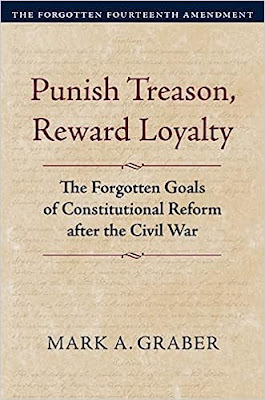
Mark A. Graber, Punish Treason, Reward Loyalty: The Forgotten Goals of Constitutional Reform after the Civil War (University of Kansas Press, 2023)
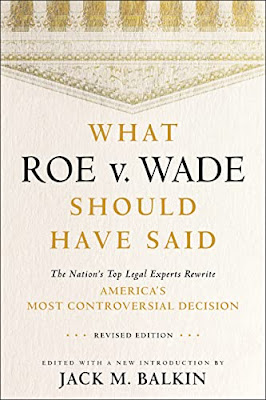
Jack M. Balkin, What Roe v. Wade Should Have Said: The Nation's Top Legal Experts Rewrite America's Most Controversial Decision - Revised Edition (NYU Press, 2023)

Andrew Koppelman, Burning Down the House: How Libertarian Philosophy Was Corrupted by Delusion and Greed (St. Martin’s Press, 2022)

Gerard N. Magliocca, Washington's Heir: The Life of Justice Bushrod Washington (Oxford University Press, 2022)
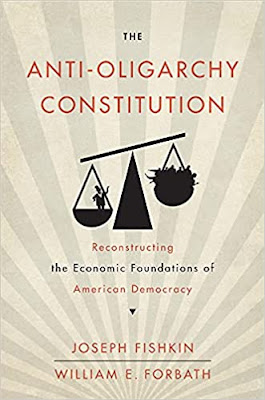
Joseph Fishkin and William E. Forbath, The Anti-Oligarchy Constitution: Reconstructing the Economic Foundations of American Democracy (Harvard University Press, 2022)
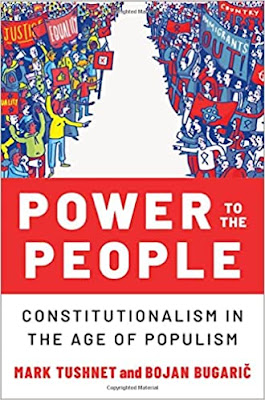
Mark Tushnet and Bojan Bugaric, Power to the People: Constitutionalism in the Age of Populism (Oxford University Press 2021).

Mark Philip Bradley and Mary L. Dudziak, eds., Making the Forever War: Marilyn B. Young on the Culture and Politics of American Militarism Culture and Politics in the Cold War and Beyond (University of Massachusetts Press, 2021).

Jack M. Balkin, What Obergefell v. Hodges Should Have Said: The Nation's Top Legal Experts Rewrite America's Same-Sex Marriage Decision (Yale University Press, 2020)

Frank Pasquale, New Laws of Robotics: Defending Human Expertise in the Age of AI (Belknap Press, 2020)

Jack M. Balkin, The Cycles of Constitutional Time (Oxford University Press, 2020)

Mark Tushnet, Taking Back the Constitution: Activist Judges and the Next Age of American Law (Yale University Press 2020).

Andrew Koppelman, Gay Rights vs. Religious Liberty?: The Unnecessary Conflict (Oxford University Press, 2020)

Ezekiel J Emanuel and Abbe R. Gluck, The Trillion Dollar Revolution: How the Affordable Care Act Transformed Politics, Law, and Health Care in America (PublicAffairs, 2020)

Linda C. McClain, Who's the Bigot?: Learning from Conflicts over Marriage and Civil Rights Law (Oxford University Press, 2020)
Sanford Levinson and Jack M. Balkin, Democracy and Dysfunction (University of Chicago Press, 2019)

Sanford Levinson, Written in Stone: Public Monuments in Changing Societies (Duke University Press 2018)

Mark A. Graber, Sanford Levinson, and Mark Tushnet, eds., Constitutional Democracy in Crisis? (Oxford University Press 2018)

Gerard Magliocca, The Heart of the Constitution: How the Bill of Rights became the Bill of Rights (Oxford University Press, 2018)

Cynthia Levinson and Sanford Levinson, Fault Lines in the Constitution: The Framers, Their Fights, and the Flaws that Affect Us Today (Peachtree Publishers, 2017)

Brian Z. Tamanaha, A Realistic Theory of Law (Cambridge University Press 2017)

Sanford Levinson, Nullification and Secession in Modern Constitutional Thought (University Press of Kansas 2016)

Sanford Levinson, An Argument Open to All: Reading The Federalist in the 21st Century (Yale University Press 2015)

Stephen M. Griffin, Broken Trust: Dysfunctional Government and Constitutional Reform (University Press of Kansas, 2015)

Frank Pasquale, The Black Box Society: The Secret Algorithms That Control Money and Information (Harvard University Press, 2015)

Bruce Ackerman, We the People, Volume 3: The Civil Rights Revolution (Harvard University Press, 2014)
Balkinization Symposium on We the People, Volume 3: The Civil Rights Revolution

Joseph Fishkin, Bottlenecks: A New Theory of Equal Opportunity (Oxford University Press, 2014)

Mark A. Graber, A New Introduction to American Constitutionalism (Oxford University Press, 2013)

John Mikhail, Elements of Moral Cognition: Rawls' Linguistic Analogy and the Cognitive Science of Moral and Legal Judgment (Cambridge University Press, 2013)

Gerard N. Magliocca, American Founding Son: John Bingham and the Invention of the Fourteenth Amendment (New York University Press, 2013)

Stephen M. Griffin, Long Wars and the Constitution (Harvard University Press, 2013)

Andrew Koppelman, The Tough Luck Constitution and the Assault on Health Care Reform (Oxford University Press, 2013)

James E. Fleming and Linda C. McClain, Ordered Liberty: Rights, Responsibilities, and Virtues (Harvard University Press, 2013)
Balkinization Symposium on Ordered Liberty: Rights, Responsibilities, and Virtues

Andrew Koppelman, Defending American Religious Neutrality (Harvard University Press, 2013)

Brian Z. Tamanaha, Failing Law Schools (University of Chicago Press, 2012)

Sanford Levinson, Framed: America's 51 Constitutions and the Crisis of Governance (Oxford University Press, 2012)

Linda C. McClain and Joanna L. Grossman, Gender Equality: Dimensions of Women's Equal Citizenship (Cambridge University Press, 2012)

Mary Dudziak, War Time: An Idea, Its History, Its Consequences (Oxford University Press, 2012)

Jack M. Balkin, Living Originalism (Harvard University Press, 2011)

Jason Mazzone, Copyfraud and Other Abuses of Intellectual Property Law (Stanford University Press, 2011)

Richard W. Garnett and Andrew Koppelman, First Amendment Stories, (Foundation Press 2011)

Jack M. Balkin, Constitutional Redemption: Political Faith in an Unjust World (Harvard University Press, 2011)

Gerard Magliocca, The Tragedy of William Jennings Bryan: Constitutional Law and the Politics of Backlash (Yale University Press, 2011)

Bernard Harcourt, The Illusion of Free Markets: Punishment and the Myth of Natural Order (Harvard University Press, 2010)

Bruce Ackerman, The Decline and Fall of the American Republic (Harvard University Press, 2010)
Balkinization Symposium on The Decline and Fall of the American Republic

Ian Ayres. Carrots and Sticks: Unlock the Power of Incentives to Get Things Done (Bantam Books, 2010)

Mark Tushnet, Why the Constitution Matters (Yale University Press 2010)

Ian Ayres and Barry Nalebuff: Lifecycle Investing: A New, Safe, and Audacious Way to Improve the Performance of Your Retirement Portfolio (Basic Books, 2010)
.jpg)
Jack M. Balkin, The Laws of Change: I Ching and the Philosophy of Life (2d Edition, Sybil Creek Press 2009)

Brian Z. Tamanaha, Beyond the Formalist-Realist Divide: The Role of Politics in Judging (Princeton University Press 2009)
Andrew Koppelman and Tobias Barrington Wolff, A Right to Discriminate?: How the Case of Boy Scouts of America v. James Dale Warped the Law of Free Association (Yale University Press 2009)

Jack M. Balkin and Reva B. Siegel, The Constitution in 2020 (Oxford University Press 2009)

Heather K. Gerken, The Democracy Index: Why Our Election System Is Failing and How to Fix It (Princeton University Press 2009)

Mary Dudziak, Exporting American Dreams: Thurgood Marshall's African Journey (Oxford University Press 2008)

David Luban, Legal Ethics and Human Dignity (Cambridge Univ. Press 2007)

Ian Ayres, Super Crunchers: Why Thinking-By-Numbers is the New Way to be Smart (Bantam 2007)

Jack M. Balkin, James Grimmelmann, Eddan Katz, Nimrod Kozlovski, Shlomit Wagman and Tal Zarsky, eds., Cybercrime: Digital Cops in a Networked Environment (N.Y.U. Press 2007)
Jack M. Balkin and Beth Simone Noveck, The State of Play: Law, Games, and Virtual Worlds (N.Y.U. Press 2006)

Andrew Koppelman, Same Sex, Different States: When Same-Sex Marriages Cross State Lines (Yale University Press 2006)

Brian Tamanaha, Law as a Means to an End (Cambridge University Press 2006)

Sanford Levinson, Our Undemocratic Constitution (Oxford University Press 2006)

Mark Graber, Dred Scott and the Problem of Constitutional Evil (Cambridge University Press 2006)

Jack M. Balkin, ed., What Roe v. Wade Should Have Said (N.Y.U. Press 2005)

Sanford Levinson, ed., Torture: A Collection (Oxford University Press 2004)
Balkin.com homepage
Bibliography
Conlaw.net
Cultural Software
Writings
Opeds
The Information Society Project
BrownvBoard.com
Useful Links
Syllabi and Exams
