Balkinization
an unanticipated consequence of
Jack M. Balkin
Balkinization Symposiums: A Continuing List
E-mail:
Jack Balkin:
jackbalkin at yahoo.com
Bruce Ackerman
bruce.ackerman at yale.edu
Ian Ayres
ian.ayres at yale.edu
Corey Brettschneider
corey_brettschneider at brown.edu
Mary Dudziak
mary.l.dudziak at emory.edu
Joey Fishkin
joey.fishkin at gmail.com
Heather Gerken heather.gerken at yale.edu
Abbe Gluck abbe.gluck at yale.edu
Mark Graber
mgraber at law.umaryland.edu
Stephen Griffin
sgriffin at tulane.edu
Jonathan Hafetz
jonathan.hafetz at shu.edu
Jeremy Kessler
jkessler at law.columbia.edu
Andrew Koppelman
akoppelman at law.northwestern.edu
Marty Lederman
msl46 at law.georgetown.edu
Sanford Levinson
slevinson at law.utexas.edu
David Luban
david.luban at gmail.com
Gerard Magliocca
gmaglioc at iupui.edu
Jason Mazzone
mazzonej at illinois.edu
Linda McClain
lmcclain at bu.edu
John Mikhail
mikhail at law.georgetown.edu
Frank Pasquale
pasquale.frank at gmail.com
Nate Persily
npersily at gmail.com
Michael Stokes Paulsen
michaelstokespaulsen at gmail.com
Deborah Pearlstein
dpearlst at yu.edu
Rick Pildes
rick.pildes at nyu.edu
David Pozen
dpozen at law.columbia.edu
Richard Primus
raprimus at umich.edu
K. Sabeel Rahmansabeel.rahman at brooklaw.edu
Alice Ristroph
alice.ristroph at shu.edu
Neil Siegel
siegel at law.duke.edu
David Super
david.super at law.georgetown.edu
Brian Tamanaha
btamanaha at wulaw.wustl.edu
Nelson Tebbe
nelson.tebbe at brooklaw.edu
Mark Tushnet
mtushnet at law.harvard.edu
Adam Winkler
winkler at ucla.edu
Compendium of posts on Hobby Lobby and related cases
The Anti-Torture Memos: Balkinization Posts on Torture, Interrogation, Detention, War Powers, and OLC
The Anti-Torture Memos (arranged by topic)
Recent Posts
Bad same-sex marriage strategy in California
![[Powered by Blogger]](https://lh3.googleusercontent.com/blogger_img_proxy/AEn0k_uQajnK-BO9WGPapbG6ea6Q9X3m9TdKx3M1lfyMni6TTZ_Nv488mDE4oPX5zr_AsDX8VqBOXvgpOTEDYQ_Fx9_gj74POsD5jFEATg9WzokR=s0-d)
Just A Few Blogs
ACS Blog
Alas, a Blog
Althouse
Arts and Letters Daily
Atrios (Eschaton)
Bill of Health
Buzzflash.com
Buzz Machine
Cato at Liberty
Juan Cole (Informed Comment)
Concurring Opinions
The Constitution in 2020
Corrente
Crooked Timber
Daily Howler
Daily Kos
Dana Boyd
Brad DeLong
Digby (Hullabaloo)
Discriminations
Daniel Drezner
Kevin Drum (Mother Jones)
Electrolite
En Banc
Eunomia (Daniel Larison)
Fafblog
Michael Froomkin (Discourse.net)
GovLab (Beth Noveck)
Rick Hasen (Election Law)
History News Network
How Appealing
Ignatz (Sam Heldman)
The Importance of (Ernie Miller)
Infolaw
Instapundit
International Economic Law and Policy Blog
IntLawGrrls
Jacob Levy
Jesus' General
Jurisdynamics
The Kitchen Cabinet
Mark Kleiman
Law Blog Central
Larry Lessig
Lawyers, Guns and Money
Liberal Oasis
Brian Leiter's Law School Reports
The Leiter Reports
Marginal Revolution
Megan McArdle
Memeorandum
Metafilter
Mirror of Justice
The New Republic
Newseum
No More Mister Nice Blog
Brendan Nyhan
Opinio Juris
Orcinus
The Originalism Blog
Pandagon
Passport (Foreign Policy)
Overcoming Bias
Political Animal (Washington Monthly)
Political Theory Daily Review
Political Wire (Taegan Goddard)
The Poor Man
Virginia Postrel
Prawfsblawg
Public Reason
Jonathan Rauch
Raw Story
Redstate
ReligiousLeftLaw.com
Reporters Committee For Freedom of the Press
Reproductive Rights Blog
Rothman's Roadmap to the Right of Publicity
SCOTUS Blog
Seeing the Forest
Clay Shirky
The Shifted Librarian
The Situationist
Larry Solum (Legal Theory)
Andrew Sullivan
Talking Points Memo
Talk Left
Tapped
Tbogg
TechPresident
The Paper Chase (Jurist)
Tom Paine
Tom Tomorrow (This Modern World)
Eve Tushnet
Uggabugga
University of Chicago Law School Faculty Blog
Unqualified Offerings
The Volokh Conspiracy
War and Piece (Laura Rozen)
Wampum
Oliver Willis
Wonkette
Written Description
Matthew Yglesias
Yin
Your Choice of Feeds
1. XML
powered by

2. Atom Feed
3. RSS 2.0
Bad same-sex marriage strategy in California
Andrew Koppelman
I just spoke on a panel in Last month, the legislature for the second time passed a bill legalizing same-sex marriage in Same-sex marriage proponents are now pinning their hopes on a lawsuit, now pending before the California Supreme Court, arguing that the initiative law is unconstitutional and that same-sex marriage is required by the state constitution. All of the proponents with whom I spoke, including Assemblyman Mark Leno, the author of the marriage bill, acknowledged that if they win in court, it will certainly energize the other side and lead to a new ballot initiative that would outlaw all legal recognition of same-sex relationships in So why overturn Proposition 22 and provoke this fight, which could wipe away one of the most progressive laws in the nation? I asked this again and again, and always got the same answer: discrimination against same-sex couples is really nasty. It’s insulting every day it goes on. We have to act against it. I agree with them. I’m as disgusted with this discrimination as they are. But I think that, strategically, it is insane to force a judicial decision now. Public opinion on same-sex marriage has shifted and is continuing to do so, albeit at a glacial pace. At this point, it’s opponents of same-sex marriage who want statewide initiatives to happen sooner rather than later; proponents of same-sex marriage should want to delay those votes for as long as possible. Yes, the status quo is bad. But it doesn’t follow that we need to act without thinking. In 1942, General George Marshall rashly wanted to invade So one can only hope that the California Supreme There is, of course, no way to know for sure what will happen in For years now, gay rights litigators have worked to keep individuals from filing ill-advised suits that would lose and set back the cause. Why, then, are they pushing this case now?
Court declines the poisoned cup that is being offered them. They may have to torture the law to get there, but bad judicial opinions are better than bad law. (I defend the practice, which is controversial in some quarters, of judges worrying about the political consequences of their decisions in the last chapter of this book.)
Posted
10:59 AM
by Andrew Koppelman [link]

Jon W. Davidson
Legal Director
Lambda Legal
And how do you think that shift started? Will & Grace?
Of course not -- it was Goodridge. Yes it sparked a backlash, but it also sparked the debate which you are now telling SSM advocates to "wait for."
Your analysis is exactly backwards. We get to take the sweet with the bitter: It was litigation that got us where we are today; it will be litigation that will carry the rest of the way.
The best they can do is an initiative to ban only same sex marriage, which could pass. But, of course, for many on the right (as opposed to mainstream gay marriage opponents who are just freaked out at using the term "marriage" for same sex unions), the whole point of this debate is to use the force of the state to discourage people from being gay, and a law that just bans gay marriage and nothing else won't get them there.
Accordingly, this may not be a dumb strategy at all.
During Reconstruction the South had numerous unpopular laws and officials foisted upon them, and that probably exacerbated the situation for African-Americans once the coercion was over.
You mean those terrible conditions which ensued when black men actually were able to vote? When, for the only time prior to my lifetime, some semblance of democracy existed in the South?
And I'm sure blacks really regretted Reconstruction once they realized that they'd pissed off those nice men who'd treated them so well under slavery and the Black Codes.
The gay rights movement will only succeed once (enough) political elites sign on to the cause. This is starting to happen. What happened in the House last week should be extremely encouraging. Instead, some activists were angry that the bill didn't have a provision making the law applicable to trans-gendered individuals. I'm incredulous.
The gay marriage movement would do well to remember the old adage about cutting off your nose to spite your face.
There was a fairly interesting exchange on Obsidian Wings on this topic a way back. At first blush, I might agree with your position (something is better than nothing), but I tend to agree with those who say that transgenders are going to have a much more difficult time petitioning for rights separately from other queer groups. Since the underlying bias has the same basis--beliefs about proper gender roles--I don't see what was gained by allowing transgenders to be excluded from employment protections.
Um, how about moderate GOP votes for a start . . .
Dilan writes that “there is no way in hell that California voters will pass any initiative that invalidates domestic partnerships.” I hope Dilan is right. But almost every referendum to ban domestic partnerships thus far has passed, even though polls show that voters generally don’t care much about domestic partnerships. There is still something about the words “same-sex marriage” that shuts down the brains of voters, so that they will vote to ban it without much regard to what else is in the language. I see no reason to think that California voters are appreciably more rational in this regard.
Right, and I acknowledged that it's compelling to have something rather than nothing. However, the other anti-discrimination efforts, particularly in terms of race, have made an effort to be inclusive on the basis of the underlying principle.
If we were talking about anti-discrimination laws that only protected black people, would we be applauding accomplishing something rather than nothing? Maybe. But if "some activists" were still pissed that the GOP wouldn't vote for the bill if Latinos were included, would you still be incredulous?
This strategy is probably the only winning one in Washington, which has a quick and dirty initiative process that can destroy legislative gains overnight. Even had the state Supreme Court held that the state constitution requires marriage equality in last year's ruling, the quick amendment process would probably have locked in the anti-gay sentiments of the moment for many years to come, and may have also barred the domestic partnerships that we're now getting.
In Massachusetts, where a constitutional amendment requires 2 consecutive years of legislative votes followed by a public vote, the lag time was long enough that the sudden win in the courts did not become a Pyrrhic victory. Marriages took place, the sky did not fall, the consciences of legislators were appealed to, and the victory was cemented.
Now I'm not familiar enough with California law or politics to judge which strategy is more likely to win full equality sooner. But given that California, unlike Massachusetts, has the initiative process available to marriage opponents, it seems that the risk of backlash may be greater in CA than in MA. Marriage supporters need to pick their battles, hold on to gains, and prevent the prejudices of an older generation from being made binding on a younger, pro-equality populace.
Of course not (I would not be incredulous). But your analogy is severely flawed.
The fact is that to people who just now shedding the cocoon of homophobia (or some lesser version of the same) are still, to put it colloquially, "weirded out" by TGs. To them, it is a whole different animal than your "vanilla" gay man or lesbian woman who they have probably interacted with enough by this point in their lives to understand that they aren't all that different from heterosexuals.
OTOH, there was no reason, for example, Southern Dems (Civil Rights Act of 1964) to be look more warily at Hispanics as opposed to blacks or vice-versa. The same distinction that can be made w/ TGs would have been nonsensical in racial context.
Therefore, while I agree that the underlying principle is the same w/ regard to TGs and GLs, in practice it is not. Just ask the moderate GOP MCs who agreed to sign onto a bill sans protection for TGs.
Obviously, I agree. My point was merely that those people who labor hard to create change from the position of principle, rather than practice, have a right to be upset when the latter interferes with the full satisfaction of the former. Leaving open the door to discriminate against a certain class on the basis of the same principle used to protect other classes is always unsatisfactory.
http://www.domawatch.org/stateissues/index.html
It didn't get this way by accident you know... it got this way in response to judicial activism.
Your optimism is heartwarming, Kip Esquire. But your oppnents only need 13 more states to rafity a federal ammendment...
I’m not as cavalier as Dilan about the electorate’s refusal to do away with our existing Domestic Partnership scheme. But, the odds are stacked against such draconian amendment in California.
Perhaps more importantly, the California Supremes have been dragging their feet on this case (or… carefully considering every aspect of the case). Whatever the Supremes may do, it won’t happen until spring of 2008. I won’t bet on the outcome of the case, but I’d be surprised if an opinion issued much before June of 2008. We’ll know the timeline soon enough (once the court calendars argument).
If the court finds the marriage statutes unconstitutional (big “if” there), the soonest California would vote on an amendment would be the spring of 2010 (assuming Schwarzenegger doesn’t call another special election; his last one didn’t work out so well). That’s almost two years worth of chatter and campaigning and what not about this issue. And presumably quite a few weddings will occur in the interim.
After all that, perhaps California’s would vote to enshrine the opposite-gender requirements into the Constitution (undoing some marriages in the process?), but undoing the Domestic Partnership scheme strikes me as remote.

I've had some discussions with people in the comments before, but I'm hoping for someone serious to take a look at the issue.
Should people have a right to conceive with someone of their own sex? My blog is www.eggandsperm.org if you haven't heard of this research.
Obat Kanker Payudara
Obat Kanker Serviks
Obat Wasir
Obat De Nature
Obat Penyakit Kelamin
Cara Mengobati Kutil Kelamin
Kutil Kelamin
Mengobati Kutil Kelamin
Cara Mengobati Kutil Di Kelamin
Books by Balkinization Bloggers

Mark Tushnet and Bojan Bugaric, Constitutionalism and Its Discontents (University of Chicago Press, 2026)

Gerard N. Magliocca, The Actual Art of Governing: Justice Robert H. Jackson's Concurring Opinion in the Steel Seizure Case (Oxford University Press, 2025)

Linda C. McClain and Aziza Ahmed, The Routledge Companion to Gender and COVID-19 (Routledge, 2024)

David Pozen, The Constitution of the War on Drugs (Oxford University Press, 2024)

Jack M. Balkin, Memory and Authority: The Uses of History in Constitutional Interpretation (Yale University Press, 2024)
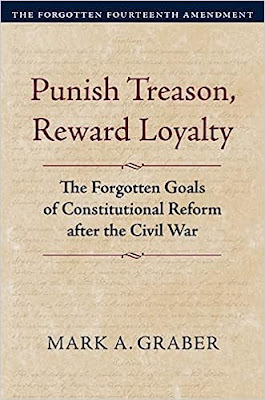
Mark A. Graber, Punish Treason, Reward Loyalty: The Forgotten Goals of Constitutional Reform after the Civil War (University of Kansas Press, 2023)
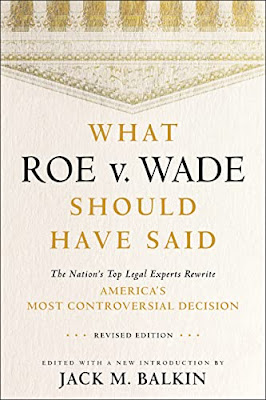
Jack M. Balkin, What Roe v. Wade Should Have Said: The Nation's Top Legal Experts Rewrite America's Most Controversial Decision - Revised Edition (NYU Press, 2023)

Andrew Koppelman, Burning Down the House: How Libertarian Philosophy Was Corrupted by Delusion and Greed (St. Martin’s Press, 2022)

Gerard N. Magliocca, Washington's Heir: The Life of Justice Bushrod Washington (Oxford University Press, 2022)
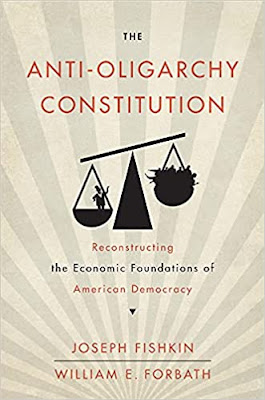
Joseph Fishkin and William E. Forbath, The Anti-Oligarchy Constitution: Reconstructing the Economic Foundations of American Democracy (Harvard University Press, 2022)
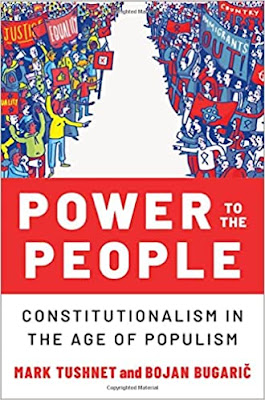
Mark Tushnet and Bojan Bugaric, Power to the People: Constitutionalism in the Age of Populism (Oxford University Press 2021).

Mark Philip Bradley and Mary L. Dudziak, eds., Making the Forever War: Marilyn B. Young on the Culture and Politics of American Militarism Culture and Politics in the Cold War and Beyond (University of Massachusetts Press, 2021).

Jack M. Balkin, What Obergefell v. Hodges Should Have Said: The Nation's Top Legal Experts Rewrite America's Same-Sex Marriage Decision (Yale University Press, 2020)

Frank Pasquale, New Laws of Robotics: Defending Human Expertise in the Age of AI (Belknap Press, 2020)

Jack M. Balkin, The Cycles of Constitutional Time (Oxford University Press, 2020)

Mark Tushnet, Taking Back the Constitution: Activist Judges and the Next Age of American Law (Yale University Press 2020).

Andrew Koppelman, Gay Rights vs. Religious Liberty?: The Unnecessary Conflict (Oxford University Press, 2020)

Ezekiel J Emanuel and Abbe R. Gluck, The Trillion Dollar Revolution: How the Affordable Care Act Transformed Politics, Law, and Health Care in America (PublicAffairs, 2020)

Linda C. McClain, Who's the Bigot?: Learning from Conflicts over Marriage and Civil Rights Law (Oxford University Press, 2020)
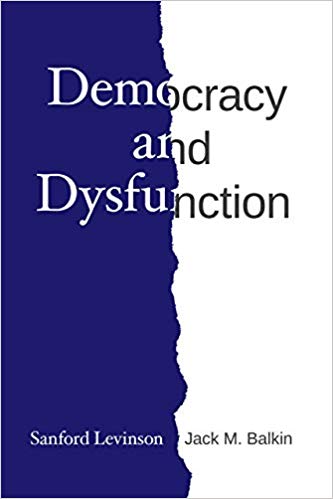
Sanford Levinson and Jack M. Balkin, Democracy and Dysfunction (University of Chicago Press, 2019)

Sanford Levinson, Written in Stone: Public Monuments in Changing Societies (Duke University Press 2018)

Mark A. Graber, Sanford Levinson, and Mark Tushnet, eds., Constitutional Democracy in Crisis? (Oxford University Press 2018)

Gerard Magliocca, The Heart of the Constitution: How the Bill of Rights became the Bill of Rights (Oxford University Press, 2018)

Cynthia Levinson and Sanford Levinson, Fault Lines in the Constitution: The Framers, Their Fights, and the Flaws that Affect Us Today (Peachtree Publishers, 2017)

Brian Z. Tamanaha, A Realistic Theory of Law (Cambridge University Press 2017)

Sanford Levinson, Nullification and Secession in Modern Constitutional Thought (University Press of Kansas 2016)

Sanford Levinson, An Argument Open to All: Reading The Federalist in the 21st Century (Yale University Press 2015)

Stephen M. Griffin, Broken Trust: Dysfunctional Government and Constitutional Reform (University Press of Kansas, 2015)

Frank Pasquale, The Black Box Society: The Secret Algorithms That Control Money and Information (Harvard University Press, 2015)

Bruce Ackerman, We the People, Volume 3: The Civil Rights Revolution (Harvard University Press, 2014)
Balkinization Symposium on We the People, Volume 3: The Civil Rights Revolution

Joseph Fishkin, Bottlenecks: A New Theory of Equal Opportunity (Oxford University Press, 2014)

Mark A. Graber, A New Introduction to American Constitutionalism (Oxford University Press, 2013)

John Mikhail, Elements of Moral Cognition: Rawls' Linguistic Analogy and the Cognitive Science of Moral and Legal Judgment (Cambridge University Press, 2013)

Gerard N. Magliocca, American Founding Son: John Bingham and the Invention of the Fourteenth Amendment (New York University Press, 2013)

Stephen M. Griffin, Long Wars and the Constitution (Harvard University Press, 2013)

Andrew Koppelman, The Tough Luck Constitution and the Assault on Health Care Reform (Oxford University Press, 2013)

James E. Fleming and Linda C. McClain, Ordered Liberty: Rights, Responsibilities, and Virtues (Harvard University Press, 2013)
Balkinization Symposium on Ordered Liberty: Rights, Responsibilities, and Virtues

Andrew Koppelman, Defending American Religious Neutrality (Harvard University Press, 2013)

Brian Z. Tamanaha, Failing Law Schools (University of Chicago Press, 2012)

Sanford Levinson, Framed: America's 51 Constitutions and the Crisis of Governance (Oxford University Press, 2012)

Linda C. McClain and Joanna L. Grossman, Gender Equality: Dimensions of Women's Equal Citizenship (Cambridge University Press, 2012)

Mary Dudziak, War Time: An Idea, Its History, Its Consequences (Oxford University Press, 2012)

Jack M. Balkin, Living Originalism (Harvard University Press, 2011)

Jason Mazzone, Copyfraud and Other Abuses of Intellectual Property Law (Stanford University Press, 2011)

Richard W. Garnett and Andrew Koppelman, First Amendment Stories, (Foundation Press 2011)

Jack M. Balkin, Constitutional Redemption: Political Faith in an Unjust World (Harvard University Press, 2011)

Gerard Magliocca, The Tragedy of William Jennings Bryan: Constitutional Law and the Politics of Backlash (Yale University Press, 2011)

Bernard Harcourt, The Illusion of Free Markets: Punishment and the Myth of Natural Order (Harvard University Press, 2010)

Bruce Ackerman, The Decline and Fall of the American Republic (Harvard University Press, 2010)
Balkinization Symposium on The Decline and Fall of the American Republic

Ian Ayres. Carrots and Sticks: Unlock the Power of Incentives to Get Things Done (Bantam Books, 2010)

Mark Tushnet, Why the Constitution Matters (Yale University Press 2010)

Ian Ayres and Barry Nalebuff: Lifecycle Investing: A New, Safe, and Audacious Way to Improve the Performance of Your Retirement Portfolio (Basic Books, 2010)
.jpg)
Jack M. Balkin, The Laws of Change: I Ching and the Philosophy of Life (2d Edition, Sybil Creek Press 2009)

Brian Z. Tamanaha, Beyond the Formalist-Realist Divide: The Role of Politics in Judging (Princeton University Press 2009)
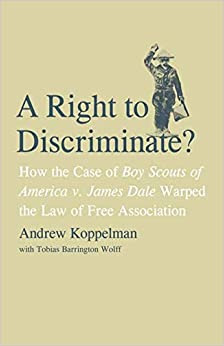
Andrew Koppelman and Tobias Barrington Wolff, A Right to Discriminate?: How the Case of Boy Scouts of America v. James Dale Warped the Law of Free Association (Yale University Press 2009)

Jack M. Balkin and Reva B. Siegel, The Constitution in 2020 (Oxford University Press 2009)

Heather K. Gerken, The Democracy Index: Why Our Election System Is Failing and How to Fix It (Princeton University Press 2009)

Mary Dudziak, Exporting American Dreams: Thurgood Marshall's African Journey (Oxford University Press 2008)

David Luban, Legal Ethics and Human Dignity (Cambridge Univ. Press 2007)

Ian Ayres, Super Crunchers: Why Thinking-By-Numbers is the New Way to be Smart (Bantam 2007)

Jack M. Balkin, James Grimmelmann, Eddan Katz, Nimrod Kozlovski, Shlomit Wagman and Tal Zarsky, eds., Cybercrime: Digital Cops in a Networked Environment (N.Y.U. Press 2007)
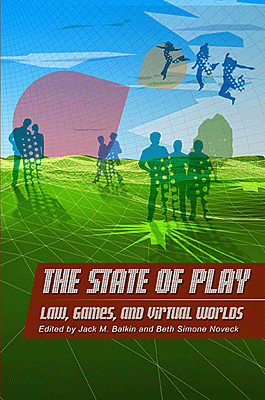
Jack M. Balkin and Beth Simone Noveck, The State of Play: Law, Games, and Virtual Worlds (N.Y.U. Press 2006)

Andrew Koppelman, Same Sex, Different States: When Same-Sex Marriages Cross State Lines (Yale University Press 2006)

Brian Tamanaha, Law as a Means to an End (Cambridge University Press 2006)

Sanford Levinson, Our Undemocratic Constitution (Oxford University Press 2006)

Mark Graber, Dred Scott and the Problem of Constitutional Evil (Cambridge University Press 2006)

Jack M. Balkin, ed., What Roe v. Wade Should Have Said (N.Y.U. Press 2005)

Sanford Levinson, ed., Torture: A Collection (Oxford University Press 2004)
Balkin.com homepage
Bibliography
Conlaw.net
Cultural Software
Writings
Opeds
The Information Society Project
BrownvBoard.com
Useful Links
Syllabi and Exams
