Balkinization
an unanticipated consequence of
Jack M. Balkin
Balkinization Symposiums: A Continuing List
E-mail:
Jack Balkin:
jackbalkin at yahoo.com
Bruce Ackerman
bruce.ackerman at yale.edu
Ian Ayres
ian.ayres at yale.edu
Corey Brettschneider
corey_brettschneider at brown.edu
Mary Dudziak
mary.l.dudziak at emory.edu
Joey Fishkin
joey.fishkin at gmail.com
Heather Gerken heather.gerken at yale.edu
Abbe Gluck abbe.gluck at yale.edu
Mark Graber
mgraber at law.umaryland.edu
Stephen Griffin
sgriffin at tulane.edu
Jonathan Hafetz
jonathan.hafetz at shu.edu
Jeremy Kessler
jkessler at law.columbia.edu
Andrew Koppelman
akoppelman at law.northwestern.edu
Marty Lederman
msl46 at law.georgetown.edu
Sanford Levinson
slevinson at law.utexas.edu
David Luban
david.luban at gmail.com
Gerard Magliocca
gmaglioc at iupui.edu
Jason Mazzone
mazzonej at illinois.edu
Linda McClain
lmcclain at bu.edu
John Mikhail
mikhail at law.georgetown.edu
Frank Pasquale
pasquale.frank at gmail.com
Nate Persily
npersily at gmail.com
Michael Stokes Paulsen
michaelstokespaulsen at gmail.com
Deborah Pearlstein
dpearlst at yu.edu
Rick Pildes
rick.pildes at nyu.edu
David Pozen
dpozen at law.columbia.edu
Richard Primus
raprimus at umich.edu
K. Sabeel Rahmansabeel.rahman at brooklaw.edu
Alice Ristroph
alice.ristroph at shu.edu
Neil Siegel
siegel at law.duke.edu
David Super
david.super at law.georgetown.edu
Brian Tamanaha
btamanaha at wulaw.wustl.edu
Nelson Tebbe
nelson.tebbe at brooklaw.edu
Mark Tushnet
mtushnet at law.harvard.edu
Adam Winkler
winkler at ucla.edu
Compendium of posts on Hobby Lobby and related cases
The Anti-Torture Memos: Balkinization Posts on Torture, Interrogation, Detention, War Powers, and OLC
The Anti-Torture Memos (arranged by topic)
Recent Posts
The Sixth Circuit Opinions in the TSP/FISA Case
![[Powered by Blogger]](https://lh3.googleusercontent.com/blogger_img_proxy/AEn0k_tRfTXz91LA9ymhTLrv_FUXs7W_aIr5iCiLR7-UNX5Gvg8mUjCtV_g9cxRiMlq3VviYm9lti3hwybKgP7O3rP_EKIgk9xzsDj9DEn_HL0C3=s0-d)
Just A Few Blogs
ACS Blog
Alas, a Blog
Althouse
Arts and Letters Daily
Atrios (Eschaton)
Bill of Health
Buzzflash.com
Buzz Machine
Cato at Liberty
Juan Cole (Informed Comment)
Concurring Opinions
The Constitution in 2020
Corrente
Crooked Timber
Daily Howler
Daily Kos
Dana Boyd
Brad DeLong
Digby (Hullabaloo)
Discriminations
Daniel Drezner
Kevin Drum (Mother Jones)
Electrolite
En Banc
Eunomia (Daniel Larison)
Fafblog
Michael Froomkin (Discourse.net)
GovLab (Beth Noveck)
Rick Hasen (Election Law)
History News Network
How Appealing
Ignatz (Sam Heldman)
The Importance of (Ernie Miller)
Infolaw
Instapundit
International Economic Law and Policy Blog
IntLawGrrls
Jacob Levy
Jesus' General
Jurisdynamics
The Kitchen Cabinet
Mark Kleiman
Law Blog Central
Larry Lessig
Lawyers, Guns and Money
Liberal Oasis
Brian Leiter's Law School Reports
The Leiter Reports
Marginal Revolution
Megan McArdle
Memeorandum
Metafilter
Mirror of Justice
The New Republic
Newseum
No More Mister Nice Blog
Brendan Nyhan
Opinio Juris
Orcinus
The Originalism Blog
Pandagon
Passport (Foreign Policy)
Overcoming Bias
Political Animal (Washington Monthly)
Political Theory Daily Review
Political Wire (Taegan Goddard)
The Poor Man
Virginia Postrel
Prawfsblawg
Public Reason
Jonathan Rauch
Raw Story
Redstate
ReligiousLeftLaw.com
Reporters Committee For Freedom of the Press
Reproductive Rights Blog
Rothman's Roadmap to the Right of Publicity
SCOTUS Blog
Seeing the Forest
Clay Shirky
The Shifted Librarian
The Situationist
Larry Solum (Legal Theory)
Andrew Sullivan
Talking Points Memo
Talk Left
Tapped
Tbogg
TechPresident
The Paper Chase (Jurist)
Tom Paine
Tom Tomorrow (This Modern World)
Eve Tushnet
Uggabugga
University of Chicago Law School Faculty Blog
Unqualified Offerings
The Volokh Conspiracy
War and Piece (Laura Rozen)
Wampum
Oliver Willis
Wonkette
Written Description
Matthew Yglesias
Yin
Your Choice of Feeds
1. XML
powered by

2. Atom Feed
3. RSS 2.0
The Sixth Circuit Opinions in the TSP/FISA Case
Marty Lederman
As most of you know by now, the U.S. Court of Appeals for the Sixth Circuit today vacated the order of Judge Taylor in ACLU v. NSA, and ordered that the case be dismissed because, in the view of two of the three judges, the plaintiffs lacked standing to sue. No judge agreed with any other judge's analysis of the standing question.
Judge Gilman was the only judge to reach the merits. He did the right thing -- he ruled on the FISA question without reaching the First and Fourth Amendment questions. And he held, correctly, that the TSP program violates FISA, and that enactment of the AUMF does not alter that result. His analysis of the statutory question (pages 58-61) is excellent. He also holds that FISA is constitutional as applied to this program, i.e., that the President does not have an Article II power to disregard the statute (pp. 62-63). I think this conclusion is correct, too; unfortunately, Judge Gilman could have done more to defend it -- he merely holds (quoting the Jackson concurrence in Youngstown) that the President's Commander-in-Chief authority is at its "lowest ebb" here, without fully explaining why the President loses at the lowest ebb in this case.
The standing analyses of the three judges are complicated -- real FedCourts inside baseball. I think it will be difficult to explain to laypeople what constitutional value is served by not allowing the courts to reach the merits -- but that's largely a function of the Supreme Court's modern standing doctrines, which require dismissal of many cases where there is incontrovertable adversariness and where the issues are fully and expertly joined. (I don't mean to suggest that this case should be dismissed under governing precedents -- only that the Court's standing doctrine is a mess, and does not especially well serve any constitutional value underlying the Article III requirement that there be a "case or controversy.")
[UPDATE: Let's put it this way: This is not a case in which the govenment's alleged unlawful conduct did not harm anyone and in which the judiciary is therefore merely being asked to sit in judgment of a coordinate branch's lawfulness -- something that arguably is better suited for the political branches. There is no doubt that many, many U.S. persons were legally injured by the TSP program (at least to the effect their statutory rights under FISA were violated). Indeed, it is almost certain that some of the plaintiffs and/or their clients were surveilled under TSP (and would not have been surveilled, certainly not to the same extent, if the NSA had complied with FISA -- see below). Therefore, even if one accepts the modern Supreme Court standing doctrine, there are some plaintiffs out there with standing to sue -- at worst, we simply can't tell who those persons are. (Moreover, such indeterminacy and uncertainty about the scope of the program actually increases the number of persons who fear such surveillance and whose speech is therefore chilled.) And it is highly likely that there are persons with standing among the plaintiffs themselves.
Where that is the case, and where the only reason we cannot identify for certain which plaintiffs were surveilled is because of the wrongdoer's own secrecy, wouldn't that argue for at least a rebuttable presumption that there are some in the plaintiff class with standing? Indeed, isn't that presumption even stronger here because the NSA is unwilling even to claim, let alone to prove, that it did not surveille any of the plaintiffs or their clients in the TSP program? (If the NSA did not, in fact, surveille any of them, I can think of no good reason -- certainly not a so-called state secrets privilege -- why the agency could not inform the court of that fact.)
To be sure, we don't know for certain which plaintiffs, or which clients, were surveilled. But why should that fact change the Article III analysis? What constitutional value is served by allowing that type of uncertainty -- wholly a function of the government's own refusal to identify the victims -- to be grounds for avoiding a resolution on the merits? As the Court explained just three months ago, "Article III of the Constitution limits federal-court jurisdiction to 'Cases' and 'Controversies.' Those two words confine 'the business of federal courts to questions presented in an adversary context and in a form historically viewed as capable of resolution through the judicial process.'" Massachusetts v. EPA, 127 S. Ct. at 1452 (quoting Flast v. Cohen, 392 U.S. at 95).
Surely this litigation, as much as any in memory, is being litigated in an adversary context and in a form capable of resolution through a judicial process -- or it would be, anyway, except that the government refuses to act as an ordinary adversary (offering the strongest possible defenses, etc.), because it invokes the state secrets privilege (which raises a whole other set of questions entirely). There is no doubt whatsoever that the ACLU will provide the courts with as strong and complete a case against the legality of the TSP as virtually any other imaginable plaintiff. The legal questions, therefore, would not be resolved "'in the rarified atmosphere of a debating society, but in a concrete factual context conducive to a realistic appreciation of the consequences of judicial action.'" Id. at 1453, quoting Kennedy's concurrence in Lujan, 504 U.S. at 581.
Accordingly, it is very difficult to see any justification based in Article III principles for denying standing here.
See also Dan Solove's excellent post about First Amendment "chilling effects."]
One other small but potentially important point on standing: Judge Batchelder reasons (pp. 19, 21-22) that the injunction would not provide any relief to the plaintiffs and their overseas clients -- would not reasonably be thought to change their behavior -- because, in her view, even if the NSA were required to comply with FISA, it would undertake the same surveillance, only pursuant to a court order, even if the TSP program were enjoined.
There is good reason to think this is mistaken. From all that appears, it seems that the NSA program involved surveillance that would not be approved under FISA if the administration were to seek authorization by a FISA Court under the statute. According to the Administration, under the program the NSA must only find "reasonable grounds to believe" that at least one party to the communication is a member or agent of al Qaeda or an "affiliated terrorist organization"—a standard that could permit wiretaps of the phones of targeted U.S. persons in the United States who are not themselves al Qaeda agents. Thus, it appears that under the TSP program the NSA did not (and could not) demonstrate in every case that there was probable cause to believe that the target of the electronic surveillance is a foreign power or an agent of a foreign power, nor that "each of the facilities or places at which the electronic surveillance is directed is being used, or is about to be used, by a foreign power or an agent of a foreign power." And without such showings, a FISA court order must be denied. 50 U.S.C. 1805(a)(3). Indeed, it appears that the NSA program was designed precisely to get around the fact that such FISA-compliant showings could not be made in many cases.
Thus, the odds are much higher that the plaintiffs and their clients would be surveilled under the TSP than under a FISA-compliant regime. And that increased likelihood of government surveillance might well affect the willingness of such persons to communicate with one another. That does not in and of itself settle the standing question; but it calls into question one component of Judge Batchelder's analysis (which neither of the other judges joined).
[UPDATE: Ann Althouse -- yes, she still law-blogs on occasion! -- has some helpful and detailed analysis on the standing question. For reasons I explain above, I think the redressability and relief hurdles are not as imposing as she suggests. And I strongly disagree with her assertion that the FISA and Article II merits questions are "difficult." But it's her analysis of the injury question that is most valuable:What Lyons, Laird, and Laidlaw really show, I think, is that the Supreme Court has wavered in how stringently it applies its own test. . . . I would expect the Supreme Court to agree with Batchelder and Gibbons.
But this doesn't mean that the dissenting judge is obviously wrong. Gilman thought fear was enough as long as it was reasonable and well-grounded. Focusing on the lawyers and relying on Laidlaw, he thought they'd done enough to make their fear sufficiently concrete: They showed that they are the sort of persons that the program seems designed to apply to. Isn't that enough like living near the river?
If we concede that there can be flexibility in the constitutional standing test -- and not everyone does -- we might want to use that flexibility and side with Gilman, so that it isn't impossible to challenge a secret program. The plaintiffs couldn't go any further than they did. The government will not let them see the evidence of whether the program was in fact applied to them, because it relies on the state secrets privilege. This is a frustrating bind, but why not resolve it in favor of empowering the court to address the merits of the case?
Do Batchelder and Gibbons convince us to resolve the bind in favor of the government that asserts the privilege? Batchelder arranges things so that the evidence behind the privilege supposedly doesn't matter. Apparently, what the plaintiffs don't know doesn't hurt them: The only injury they have – whether they are being spied on or not – is their fear that they are being spied on. Then -- how neat -- secretiveness avoids the injury.
Gibbons thinks it's important to admit the effect the privilege is having on the standing issue. But then she simply abides by the privilege. It excludes what it excludes, and the plaintiffs are stuck with the consequences. Then -- also neat -- their injury is insufficient because they didn't -- they couldn't! -- show that the program had been applied to them.
Naturally, Batchelder and Gibbons don't acknowledge that they feel a pull in the opposite direction from Gilman. Their context-sensitive response has to do -- I'm guessing -- with sympathy toward the interest in preserving the secrecy of the program and worry that the court's intrusion into this matter would have unpredictable negative consequences. I'd explain Laird and Lyons that way too. You may not like this sort of pragmatism in constitutional analysis, but you can't easily harmonize the case law without it.
Posted
5:11 PM
by Marty Lederman [link]
Therefore, the nature of the injury hinges on the disregard for the warrant requirement, not the act of spying itself. The argument is that if the warrant requirement is followed, those engaged in innocent conversations need not be overly worried about having their communications intercepted. And conversely, when the NSA doesn't comply with the warrant requirement, even the innocent may reasonably fear that they will be ensnared in the NSA's net.

My guess is that it won't affect it very much. Here, the plaintiffs are suing the NSA directly, whereas the plaintiffs in Hepting are suing AT&T. Because they're suing AT&T, they only need to show that AT&T is collecting information about all its customers (that's the injury in fact). It's much easier to show that than to show that the NSA is spying on them specifically (i.e., that the NSA is using particular packets of information out of the general mass of data that AT&T has collected).
Also, I should know this, but because the judges didn't seem to agree on anything, does the opinion have any precedential value?
WASHINGTON (CNN) -- A federal appeals court Friday ordered the dismissal of an ACLU lawsuit challenging President Bush's domestic surveillance program.
The plaintiffs -- a group of journalists, scholars and legal advocates -- had no legal standing to pursue their claims because they could not show they were targeted by the National Security Agency's warrantless spying program, the court decided in a 2-1 vote.
To me this is saying that since the plaintiffs can't prove they were injured since the government is keeping details of the program secret, they have no standing. This seems to indicate that as long as the government can keep no records of illegal activities or keep those records secret they can get away with any illegal activity. Seems a shame that our legal system has come to this.
As to standing, it underlines that they probably could have accepted the case and tried it on the merits. The SC probably wouldn't have taken the case given that the program allegedly changed and by the time it was decided, it would be mid-2008. I share the third comment as to the shameful message sent.
Finally, the point of FISA is to protect 4A values as well as control presidential overreaching ... overreaching threatening privacy (and some 1A ends). So, why not underline the point?
The ruling is in the spirit of the Roberts/Alito Court though ... more rulings where the judiciary opts out from doing its job when it clearly can if it wanted to. Since I don't see this as unreasonable "activism," and even many conserv. leaning judges do that job right in many cases, I find this a sad trend.
The dissent btw spoke of the harm to attorneys. Sounds like 5/6A issue too! To have standing, you need harm. The harm can be to a statutory right, but again, I think referencing constitutional BOR harms makes sense too.
There is very little that is persuasive in Judge Gilmore's cursory and generally erroneous analysis of the the exercise of foreign intelligence gathering powers under the Constitution.
Judge Gilman's cites Article I, Sec. 8 generally for the proposition that "the Constitution expressly grants Congress to make laws in the context of national defense" while studiously neglecting to identify exactly which power enumerated in Section 8 grants Congress the power to direct which targets may not be the subject of intelligence gathering through FISA. Instead, Judge Gilman (and most proponents of this position) merely assume that Congress can make laws concerning any aspect of the military or foreign policy. If you take Judge Gilmore's assumption that Congress can enact laws in any area of the military or foreign policy, then Article II is largely moot. Such an assumption has no basis in the actual text of the Constitution.
Judge Gilman's dismisses the FISA Court of Review's recognition that the President has the Article II authority to conduct warrantless foreign intelligence gathering by claiming the FISA Court of Review, whose job it is to review rulings applying FISA, was somehow unaware of the enactment of FISA since the Truong case. This is a ridiculous claim.
Judge Gilman then cites to cases which found FISA to be constitutional as authority that Congress has the power to direct which targets may not be the subject of intelligence gathering when none of these cases in fact dealt with that issue.
Judge Gilman was not the only member of this panel to address the substantive issues. Judge Batchelder writing for the panel, dismissed a number of Judge Taylor's unprecedented substantive findings under the guise of a detailed point by point standing analysis.
I write only to correct the following falsehoods only because it's important to not let deliberate misrepresentations go unresisted.
Claim #1:
Judge Gilman's dismisses the FISA Court of Review's recognition that the President has the Article II authority to conduct warrantless foreign intelligence gathering by claiming the FISA Court of Review, whose job it is to review rulings applying FISA, was somehow unaware of the enactment of FISA since the Truong case. This is a ridiculous claim.
Here's the text from the opinion at p.63:
The Sealed Case court discussed Truong for the purpose of determining whether the Fourth Circuit had articulated the proper constitutional standard for evaluating a Fourth Amendment challlenge to FISA. Id. at 742-44. Finding that Truong did set forth the proper standard, the Sealed Case court applied the same standard to uphold the post-PATRIOT Act version of FISA against a Fourth Amendment challenge. Id. at 742.
Emphasis mine.
Claim #2:
Judge Batchelder writing for the panel, dismissed a number of Judge Taylor's unprecedented substantive findings under the guise of a detailed point by point standing analysis.
On p.24, Bachelder, writing for herself, not the panel, since the concurrence agreed only as to the judgment (see p.36), "ignor[es] the first two steps in the analysis," which she characterized above as "the President allegedly exceeded his alloted authority by authorizing the NSA to conduct warrantless wiretapping...(2) the NSA to institute its practice of warrantless wiretapping under the TSP...."
Bachelder, again, at p.26:
The plaintiffs allege that the President, as an actor in our tripartite system of government, exceeds his constitutional authority by authorizing the NSA to engage in warrantless wiretaps of overseas communication under the TSP. But this court, not unlike the President, has constitutional limits of its own and, despite the important national interests at stake, cannot exceed its alloted authority. [Citations and quotations omitted.] It would ill behoove us to exceed our authority in order to condemn the President or Congress for exceeding theirs.
Emphasis mine.
Draw your own conclusions.
I presumed that you read the opinion from which you took the above misleading cut and pastes. Therefore, you either did not understand what you read or are being deliberately deceitful to falsely accuse me of falsehoods.
BD:Judge Gilman's dismisses the FISA Court of Review's recognition that the President has the Article II authority to conduct warrantless foreign intelligence gathering by claiming the FISA Court of Review, whose job it is to review rulings applying FISA, was somehow unaware of the enactment of FISA since the Truong case. This is a ridiculous claim.
Sparky: Here's the text from the opinion at p.63:
The Sealed Case court discussed Truong for the purpose of determining whether the Fourth Circuit had articulated the proper constitutional standard for evaluating a Fourth Amendment challlenge to FISA. Id. at 742-44. Finding that Truong did set forth the proper standard, the Sealed Case court applied the same standard to uphold the post-PATRIOT Act version of FISA against a Fourth Amendment challenge. Id. at 742.
Since it was right before the paragraph which you cut and pasted, so I am unsure how you could have honestly missed the following paragraph to which I was referring:
The government, however, turns to a case from the Foreign Intelligence Surveillance Court of Review as support for its argument that the President has “inherent constitutional authority to conduct warrantless foreign intelligence surveillance.” See In re Sealed Case, 310 F.3d 717, 746 (For. Intel. Surv. Ct. Rev. 2002) (per curiam). To be sure, the Sealed Case court stated in dicta that “[w]e take for granted that the President does have” the “inherent authority to conduct warrantless searches to obtain foreign intelligence information.” Id. at 742. This dicta, however, is unpersuasive because the Sealed Case court relied on a Fourth Circuit decision from 1980 that dealt with a challenge to pre-FISA surveillance. Id.(discussing United States v. Truong Dinh Hung, 629 F.2d 908, 914 n.4 (4th Cir. 1980)).
BD: Judge Batchelder writing for the panel, dismissed a number of Judge Taylor's unprecedented substantive findings under the guise of a detailed point by point standing analysis.
Sparky: On p.24, Bachelder, writing for herself, not the panel, since the concurrence agreed only as to the judgment (see p.36)...
Judge Batchelder wrote the opinion for the panel. While this opinion is effectively only her own because the other panel members wrote a concurrence and a dissent, one of them had to write for the Court.
The rest of your cut and pastes do not refer to the multiple times in which Judge Batchelder criticized Judge Taylor's rulings on the substantive claims brought by ACLU under the guise of providing a detailed claim by claim review of standing.
Books by Balkinization Bloggers

Mark Tushnet and Bojan Bugaric, Constitutionalism and Its Discontents (University of Chicago Press, 2026)

Gerard N. Magliocca, The Actual Art of Governing: Justice Robert H. Jackson's Concurring Opinion in the Steel Seizure Case (Oxford University Press, 2025)

Linda C. McClain and Aziza Ahmed, The Routledge Companion to Gender and COVID-19 (Routledge, 2024)

David Pozen, The Constitution of the War on Drugs (Oxford University Press, 2024)

Jack M. Balkin, Memory and Authority: The Uses of History in Constitutional Interpretation (Yale University Press, 2024)
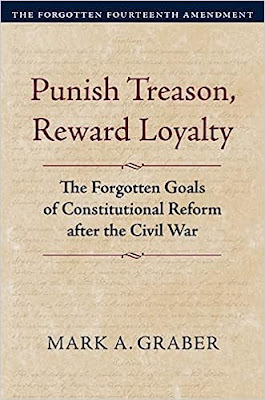
Mark A. Graber, Punish Treason, Reward Loyalty: The Forgotten Goals of Constitutional Reform after the Civil War (University of Kansas Press, 2023)
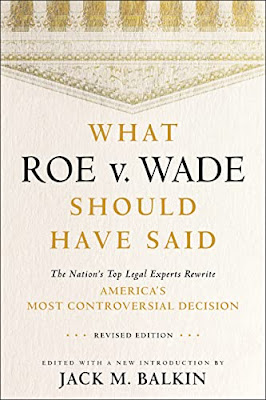
Jack M. Balkin, What Roe v. Wade Should Have Said: The Nation's Top Legal Experts Rewrite America's Most Controversial Decision - Revised Edition (NYU Press, 2023)

Andrew Koppelman, Burning Down the House: How Libertarian Philosophy Was Corrupted by Delusion and Greed (St. Martin’s Press, 2022)

Gerard N. Magliocca, Washington's Heir: The Life of Justice Bushrod Washington (Oxford University Press, 2022)
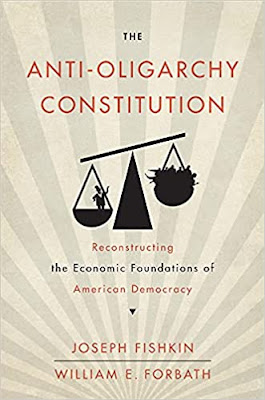
Joseph Fishkin and William E. Forbath, The Anti-Oligarchy Constitution: Reconstructing the Economic Foundations of American Democracy (Harvard University Press, 2022)
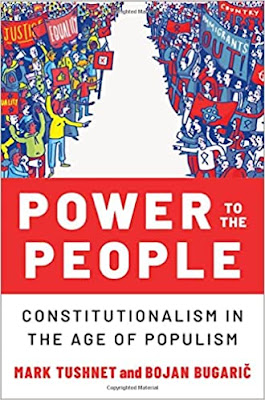
Mark Tushnet and Bojan Bugaric, Power to the People: Constitutionalism in the Age of Populism (Oxford University Press 2021).

Mark Philip Bradley and Mary L. Dudziak, eds., Making the Forever War: Marilyn B. Young on the Culture and Politics of American Militarism Culture and Politics in the Cold War and Beyond (University of Massachusetts Press, 2021).

Jack M. Balkin, What Obergefell v. Hodges Should Have Said: The Nation's Top Legal Experts Rewrite America's Same-Sex Marriage Decision (Yale University Press, 2020)

Frank Pasquale, New Laws of Robotics: Defending Human Expertise in the Age of AI (Belknap Press, 2020)

Jack M. Balkin, The Cycles of Constitutional Time (Oxford University Press, 2020)

Mark Tushnet, Taking Back the Constitution: Activist Judges and the Next Age of American Law (Yale University Press 2020).

Andrew Koppelman, Gay Rights vs. Religious Liberty?: The Unnecessary Conflict (Oxford University Press, 2020)

Ezekiel J Emanuel and Abbe R. Gluck, The Trillion Dollar Revolution: How the Affordable Care Act Transformed Politics, Law, and Health Care in America (PublicAffairs, 2020)

Linda C. McClain, Who's the Bigot?: Learning from Conflicts over Marriage and Civil Rights Law (Oxford University Press, 2020)
Sanford Levinson and Jack M. Balkin, Democracy and Dysfunction (University of Chicago Press, 2019)

Sanford Levinson, Written in Stone: Public Monuments in Changing Societies (Duke University Press 2018)

Mark A. Graber, Sanford Levinson, and Mark Tushnet, eds., Constitutional Democracy in Crisis? (Oxford University Press 2018)

Gerard Magliocca, The Heart of the Constitution: How the Bill of Rights became the Bill of Rights (Oxford University Press, 2018)

Cynthia Levinson and Sanford Levinson, Fault Lines in the Constitution: The Framers, Their Fights, and the Flaws that Affect Us Today (Peachtree Publishers, 2017)

Brian Z. Tamanaha, A Realistic Theory of Law (Cambridge University Press 2017)

Sanford Levinson, Nullification and Secession in Modern Constitutional Thought (University Press of Kansas 2016)

Sanford Levinson, An Argument Open to All: Reading The Federalist in the 21st Century (Yale University Press 2015)

Stephen M. Griffin, Broken Trust: Dysfunctional Government and Constitutional Reform (University Press of Kansas, 2015)

Frank Pasquale, The Black Box Society: The Secret Algorithms That Control Money and Information (Harvard University Press, 2015)

Bruce Ackerman, We the People, Volume 3: The Civil Rights Revolution (Harvard University Press, 2014)
Balkinization Symposium on We the People, Volume 3: The Civil Rights Revolution

Joseph Fishkin, Bottlenecks: A New Theory of Equal Opportunity (Oxford University Press, 2014)

Mark A. Graber, A New Introduction to American Constitutionalism (Oxford University Press, 2013)

John Mikhail, Elements of Moral Cognition: Rawls' Linguistic Analogy and the Cognitive Science of Moral and Legal Judgment (Cambridge University Press, 2013)

Gerard N. Magliocca, American Founding Son: John Bingham and the Invention of the Fourteenth Amendment (New York University Press, 2013)

Stephen M. Griffin, Long Wars and the Constitution (Harvard University Press, 2013)

Andrew Koppelman, The Tough Luck Constitution and the Assault on Health Care Reform (Oxford University Press, 2013)

James E. Fleming and Linda C. McClain, Ordered Liberty: Rights, Responsibilities, and Virtues (Harvard University Press, 2013)
Balkinization Symposium on Ordered Liberty: Rights, Responsibilities, and Virtues

Andrew Koppelman, Defending American Religious Neutrality (Harvard University Press, 2013)

Brian Z. Tamanaha, Failing Law Schools (University of Chicago Press, 2012)

Sanford Levinson, Framed: America's 51 Constitutions and the Crisis of Governance (Oxford University Press, 2012)

Linda C. McClain and Joanna L. Grossman, Gender Equality: Dimensions of Women's Equal Citizenship (Cambridge University Press, 2012)

Mary Dudziak, War Time: An Idea, Its History, Its Consequences (Oxford University Press, 2012)

Jack M. Balkin, Living Originalism (Harvard University Press, 2011)

Jason Mazzone, Copyfraud and Other Abuses of Intellectual Property Law (Stanford University Press, 2011)

Richard W. Garnett and Andrew Koppelman, First Amendment Stories, (Foundation Press 2011)

Jack M. Balkin, Constitutional Redemption: Political Faith in an Unjust World (Harvard University Press, 2011)

Gerard Magliocca, The Tragedy of William Jennings Bryan: Constitutional Law and the Politics of Backlash (Yale University Press, 2011)

Bernard Harcourt, The Illusion of Free Markets: Punishment and the Myth of Natural Order (Harvard University Press, 2010)

Bruce Ackerman, The Decline and Fall of the American Republic (Harvard University Press, 2010)
Balkinization Symposium on The Decline and Fall of the American Republic

Ian Ayres. Carrots and Sticks: Unlock the Power of Incentives to Get Things Done (Bantam Books, 2010)

Mark Tushnet, Why the Constitution Matters (Yale University Press 2010)

Ian Ayres and Barry Nalebuff: Lifecycle Investing: A New, Safe, and Audacious Way to Improve the Performance of Your Retirement Portfolio (Basic Books, 2010)
.jpg)
Jack M. Balkin, The Laws of Change: I Ching and the Philosophy of Life (2d Edition, Sybil Creek Press 2009)

Brian Z. Tamanaha, Beyond the Formalist-Realist Divide: The Role of Politics in Judging (Princeton University Press 2009)
Andrew Koppelman and Tobias Barrington Wolff, A Right to Discriminate?: How the Case of Boy Scouts of America v. James Dale Warped the Law of Free Association (Yale University Press 2009)

Jack M. Balkin and Reva B. Siegel, The Constitution in 2020 (Oxford University Press 2009)

Heather K. Gerken, The Democracy Index: Why Our Election System Is Failing and How to Fix It (Princeton University Press 2009)

Mary Dudziak, Exporting American Dreams: Thurgood Marshall's African Journey (Oxford University Press 2008)

David Luban, Legal Ethics and Human Dignity (Cambridge Univ. Press 2007)

Ian Ayres, Super Crunchers: Why Thinking-By-Numbers is the New Way to be Smart (Bantam 2007)

Jack M. Balkin, James Grimmelmann, Eddan Katz, Nimrod Kozlovski, Shlomit Wagman and Tal Zarsky, eds., Cybercrime: Digital Cops in a Networked Environment (N.Y.U. Press 2007)
Jack M. Balkin and Beth Simone Noveck, The State of Play: Law, Games, and Virtual Worlds (N.Y.U. Press 2006)

Andrew Koppelman, Same Sex, Different States: When Same-Sex Marriages Cross State Lines (Yale University Press 2006)

Brian Tamanaha, Law as a Means to an End (Cambridge University Press 2006)

Sanford Levinson, Our Undemocratic Constitution (Oxford University Press 2006)

Mark Graber, Dred Scott and the Problem of Constitutional Evil (Cambridge University Press 2006)

Jack M. Balkin, ed., What Roe v. Wade Should Have Said (N.Y.U. Press 2005)

Sanford Levinson, ed., Torture: A Collection (Oxford University Press 2004)
Balkin.com homepage
Bibliography
Conlaw.net
Cultural Software
Writings
Opeds
The Information Society Project
BrownvBoard.com
Useful Links
Syllabi and Exams
