Balkinization
an unanticipated consequence of
Jack M. Balkin
Balkinization Symposiums: A Continuing List
E-mail:
Jack Balkin:
jackbalkin at yahoo.com
Bruce Ackerman
bruce.ackerman at yale.edu
Ian Ayres
ian.ayres at yale.edu
Corey Brettschneider
corey_brettschneider at brown.edu
Mary Dudziak
mary.l.dudziak at emory.edu
Joey Fishkin
joey.fishkin at gmail.com
Heather Gerken heather.gerken at yale.edu
Abbe Gluck abbe.gluck at yale.edu
Mark Graber
mgraber at law.umaryland.edu
Stephen Griffin
sgriffin at tulane.edu
Jonathan Hafetz
jonathan.hafetz at shu.edu
Jeremy Kessler
jkessler at law.columbia.edu
Andrew Koppelman
akoppelman at law.northwestern.edu
Marty Lederman
msl46 at law.georgetown.edu
Sanford Levinson
slevinson at law.utexas.edu
David Luban
david.luban at gmail.com
Gerard Magliocca
gmaglioc at iupui.edu
Jason Mazzone
mazzonej at illinois.edu
Linda McClain
lmcclain at bu.edu
John Mikhail
mikhail at law.georgetown.edu
Frank Pasquale
pasquale.frank at gmail.com
Nate Persily
npersily at gmail.com
Michael Stokes Paulsen
michaelstokespaulsen at gmail.com
Deborah Pearlstein
dpearlst at yu.edu
Rick Pildes
rick.pildes at nyu.edu
David Pozen
dpozen at law.columbia.edu
Richard Primus
raprimus at umich.edu
K. Sabeel Rahmansabeel.rahman at brooklaw.edu
Alice Ristroph
alice.ristroph at shu.edu
Neil Siegel
siegel at law.duke.edu
David Super
david.super at law.georgetown.edu
Brian Tamanaha
btamanaha at wulaw.wustl.edu
Nelson Tebbe
nelson.tebbe at brooklaw.edu
Mark Tushnet
mtushnet at law.harvard.edu
Adam Winkler
winkler at ucla.edu
Compendium of posts on Hobby Lobby and related cases
The Anti-Torture Memos: Balkinization Posts on Torture, Interrogation, Detention, War Powers, and OLC
The Anti-Torture Memos (arranged by topic)
Recent Posts
Basic Law, Higher Law, Our Law-- An Essay on Constitutional Redemption
![[Powered by Blogger]](https://lh3.googleusercontent.com/blogger_img_proxy/AEn0k_t7wNEiMwQbRyZPWqYghTF8noGqzY0YFmf9Wt-LF-IVdsZB4_vrSi9p0SnDeLNVujCWvBTuF1aExp1iRcwH8sPRhwSdFCNOrQzazHuXyjcB=s0-d)
Just A Few Blogs
ACS Blog
Alas, a Blog
Althouse
Arts and Letters Daily
Atrios (Eschaton)
Bill of Health
Buzzflash.com
Buzz Machine
Cato at Liberty
Juan Cole (Informed Comment)
Concurring Opinions
The Constitution in 2020
Corrente
Crooked Timber
Daily Howler
Daily Kos
Dana Boyd
Brad DeLong
Digby (Hullabaloo)
Discriminations
Daniel Drezner
Kevin Drum (Mother Jones)
Electrolite
En Banc
Eunomia (Daniel Larison)
Fafblog
Michael Froomkin (Discourse.net)
GovLab (Beth Noveck)
Rick Hasen (Election Law)
History News Network
How Appealing
Ignatz (Sam Heldman)
The Importance of (Ernie Miller)
Infolaw
Instapundit
International Economic Law and Policy Blog
IntLawGrrls
Jacob Levy
Jesus' General
Jurisdynamics
The Kitchen Cabinet
Mark Kleiman
Law Blog Central
Larry Lessig
Lawyers, Guns and Money
Liberal Oasis
Brian Leiter's Law School Reports
The Leiter Reports
Marginal Revolution
Megan McArdle
Memeorandum
Metafilter
Mirror of Justice
The New Republic
Newseum
No More Mister Nice Blog
Brendan Nyhan
Opinio Juris
Orcinus
The Originalism Blog
Pandagon
Passport (Foreign Policy)
Overcoming Bias
Political Animal (Washington Monthly)
Political Theory Daily Review
Political Wire (Taegan Goddard)
The Poor Man
Virginia Postrel
Prawfsblawg
Public Reason
Jonathan Rauch
Raw Story
Redstate
ReligiousLeftLaw.com
Reporters Committee For Freedom of the Press
Reproductive Rights Blog
Rothman's Roadmap to the Right of Publicity
SCOTUS Blog
Seeing the Forest
Clay Shirky
The Shifted Librarian
The Situationist
Larry Solum (Legal Theory)
Andrew Sullivan
Talking Points Memo
Talk Left
Tapped
Tbogg
TechPresident
The Paper Chase (Jurist)
Tom Paine
Tom Tomorrow (This Modern World)
Eve Tushnet
Uggabugga
University of Chicago Law School Faculty Blog
Unqualified Offerings
The Volokh Conspiracy
War and Piece (Laura Rozen)
Wampum
Oliver Willis
Wonkette
Written Description
Matthew Yglesias
Yin
Your Choice of Feeds
1. XML
powered by

2. Atom Feed
3. RSS 2.0
Basic Law, Higher Law, Our Law-- An Essay on Constitutional Redemption
JB
I'm spending this weekend at the American Constitution Society Conference in Washington, D.C. To mark the occasion, here's a little essay on constitutional interpretation, taken from my latest piece on original meaning and constitutional redemption. It's about the key purposes that constitutions like America's serve, and the idea of a redemptive constitutionalism.
Basic Law, Higher Law, Our Law
A successful constitution like America’s must serve many different and overlapping functions. For convenience, I divide them into three categories: A constitution like America’s must simultaneously work as basic law, as higher law, and as our law.
By basic law I mean that the Constitution sets up a basic framework of government that promotes political stability and allocates rights, duties, powers and responsibilities. A constitution also serves as basic law in the sense that it is foundational law (or supreme law) that trumps other law to the contrary. To operate effectively as basic law, a constitution does not have to be just. But it must preserve political stability and channel political and legal decisionmaking so that the governmental system can sustain itself over time.
The American Constitution is far more than basic law in this sense. Americans also view their Constitution as a source of important values, including justice, equality, democracy, and human rights. They view the Constitution’s guarantees as objects of aspiration; the Constitution either offers or refers to a standard that stands above ordinary law, criticizes it, restrains it, and holds it to account. Fidelity to the Constitution requires that we aspire to something better and more just than the political, social and legal arrangements we currently maintain. Hence the Constitution trumps ordinary law not simply because it is legally or procedurally prior to it, but because it represents important values that should trump ordinary law, supervise quotidian acts of governmental power, and hold both law and power to account. Thus, we say that the Constitution is not merely basic law, it is also higher law; that is, it is a source of inspiration and aspiration, a repository of values and principles. People sometimes use the terms "basic law" and "higher law" interchangeably; for example, the German Basic Law strongly protects human dignity, and Bruce Ackerman has famously argued that constitutional amendment outside of Article V is an example of "higher lawmaking." I want to separate the two expressions because they point at different constitutional functions. The German Basic Law is both basic law and higher law in my sense, and constitutional amendments– whether inside or outside of Article V-- might involve the creation of both new basic law and new higher law.
Finally, it is not enough that the Constitution serve as basic law– a framework for governance, or as higher law– a source of aspirational standards and values. It must also be our law. The people who live under it– the American people– must understand the Constitution as their law– not the law of Turkey, or the law of France or the law of South Africa. The South African Constitution may be widely admired as an example of contemporary constitution-making; but it is not our law. The Constitution works as our law when we identify with it and are attached to it, whether or not we consent to it in any official or legal sense. The Constitution works as our law when we view it as our achievement and the product of our efforts as a people, which simultaneously involves a collective identification with those who came before us and those who will come after us.
Viewing the Constitution as "our law" has a curious consequence: it helps us imagine ourselves as part of a collective subject persisting over time, the collective subject– We the People– whose law the Constitution is and to whom the Constitution belongs. Many features of a political culture can cause people to think of themselves as a collective subject that persists over time; but, at least in the United States, our Constitution also performs this function. Thinking of the Constitution as our law– the law of We the American people-- involves a narrative conception that appeals to collective memory-- to a stock of stories, symbols and understandings that bind people together and make them a people. Put another way, viewing the Constitution as "our constitution" is a constitutional story– a constitutive narrative through which people imagine themselves as a people, with shared memories, goals, aspirations, values, duties, and ambitions.
Viewing the Constitution as the Constitution of We the People is a constitution of the People. It accepts and endorses a constitutional story about who Americans are and what America is– we are the people who broke away from Great Britain and who created and ratified the Constitution to secure our liberty, and so too will be our successors. Viewing the Constitution as our Constitution constructs a collective subject with a collective destiny that engages in collective activities. It binds together people living in different times and different places as a single people. It allows us to see the hopes, desires, actions, ambitions, and achievements of people who lived long ago as our hopes, desires, actions, ambitions and achievements.
The success of this constitutional story is central to the present generation’s attachment to the Constitution as their Constitution– even though they never consented to it or voted for it– and therefore to the Constitution’s sociological legitimacy. Attachment is a different attitude than consent. We consent to something we have a choice in; but we can become attached to something that we live with or live in over time.
The method of text and principle, I believe, serves the multiple functions of a constitution – as basic law, higher law, and our law– far better than other forms of originalism. An originalism that strongly distrusts delegation to future generations and demands that open-ended provisions must be closely connected to original expected application is defective in all three respects. That kind of originalism makes the most sense if we think of the Constitution only as basic law. It tries to turn open-ended principles and standards into something more concrete and rule-like, something whose effects will hopefully be more predictable and (in many cases) more constraining. But that is not the only way that constitutions could serve as basic law. Constitutions can also channel and give incentives for political stability and adaptation rather than merely block and constrain decisionmaking. In fact, the former is a far better way to understand the basic law function of a constitution.
Even if tying constitutional principles closely to original expected application works tolerably well as basic law, it fails utterly as higher law and as "our law." The idea of higher law views the Constitution as a repository of ideals morally superior to ordinary law and toward which ordinary law should aspire. It makes the Constitution an object of political and moral aspiration and offers a potential for redemption. Thus the higher law function of constitutionalism has a temporal dimension: the higher law is a set of principles that critiques present political arrangements and that we must try to realize over time.
Justice Scalia has argued, by contrast, that a constitution’s "whole purpose is to prevent change– to embed certain rights in such a manner that future generations cannot readily take them away," because societies may not progress, or mature, but rather "rot." His vision is not aspirational. It is a narrative of decline from a wiser, more just time. Things always threaten to get worse than they were at the founding, so we need guarantees to keep people as just as they were in 1787. If he is right, then it would be puzzling why so many constitutions– not only the U.S. Constitution, but also most post-World War II constitutions-- would contain abstract and relatively open-ended rights guarantees.
The very notion of constitutional aspiration presumes the opposite of Scalia’s narrative of decline. It presupposes that each generation should strive to do better than the previous ones did. The idea of redemption assumes that the political arrangements of the past have features that must be redeemed.
Aspirationalism is Janus-faced. It recognizes that a constitution always exists in a fallen condition, that it inevitably contains compromises with evil and injustice. At the same time, it maintains that the constitution and the constitutional tradition contain elements and resources that can assist in their eventual redemption. Implicit in this notion of aspiration is the willingness to gamble on the future. It requires faith in future generations entrusted with working out and developing the Constitution’s guarantees over time. Constitutional redemption requires faith in the constitutional tradition’s ability to grow and improve, without any guarantees of success. Far from a fear that future guarantees will rot, an aspirational Constitution requires a steadfast belief that the evils of the present can and will be recognized and remedied, if not in our day then in the days to come.
Finally, a constitutional theory that distrusts delegation to the future fails as "our law." The Constitution is our law when we feel attachment to it and when we feel that we have a stake in it even if we did not consent to it officially. The Constitution is our law when we feel that it reflect our values sufficiently well that we can identify with it as ours; or, because we feel have a say in what the Constitution means, we have faith that it could and will come to reflect our values better over time. Thus, the idea of constitution as our law also has a temporal dimension. It requires an identification between ourselves, those who lived in the past and those who will live in the future. And it requires faith that the Constitution is either good enough as it is to deserve our respect and attachment or that it eventually will be redeemed.
For the Constitution to be "our law" it must do two things simultaneously. First, it must connect past generations to present ones through a process of narrative identification. It must allow us to see ourselves as part of a larger political project that stretches back to the present and forward to the future. The Constitution succeeds as our law when we can identify ourselves with those who framed and adopted it– we when are able to see ourselves as part of them and them as part of us. Second, the Constitution must allow us to identify our present principles and commitments with the principles of those who lived before us. Constitutional traditions achieve this by encouraging people in the present to call upon the past– and the struggles and commitments of the past– as their past and as their struggles and commitments. The understanding of the past frames our present situation and explains how we should go forward into the future. This identification between past and present allows us to say that we are continuing the work of those who came before us when we apply the Constitution’s text and principles in light of our current circumstances.
Doing this necessarily requires delegation to the future, because each generation must see itself as given the task of applying constitutional principles in its own time. We understand our present situation and the possibilities and needs of the future through the trajectory of our interpretation of the meaning of the past– both the principles we committed ourselves to achieving and the evils we promised ourselves we would not permit again. When we in the present perform this task, we carry forward the imagined political project that metaphorically connects us to those who came before us. Their principles are our principles, and, the Constitution they left us is our Constitution, reflecting not only their past commitments but also our present ones.
A theory of interpretation that refuses to allow this delegation does not allow the Constitution to be ours because it does not allow us to see our present day values in the Constitution as the application or fulfillment of past principles and commitments. If people feel that the Constitution’s principles are not their principles, but simply imposed on them as a straitjacket from an alien past, the Constitution is not theirs, and it offers them little hope that it will come to be theirs in the future.
Posted
11:19 AM
by JB [link]
If people feel that the Constitution’s principles are not their principles, but simply imposed on them as a straitjacket from an alien past, the Constitution is not theirs, and it offers them little hope that it will come to be theirs in the future.
Or ignore it in favor of other values, if they so choose.

I always love the story of why the German constitution is called a "Grundgesetz" or basic law even though there is a perfectly good German word for Constitution, i.e. Verfassung.
The explanation is in the very last article, art. 146:
"Dieses Grundgesetz, das nach Vollendung der Einheit und Freiheit Deutschlands für das gesamte deutsche Volk gilt, verliert seine Gültigkeit an dem Tage, an dem eine Verfassung in Kraft tritt, die von dem deutschen Volke in freier Entscheidung beschlossen worden ist."
My translation:
This Basic Law, which will apply to all of the German people after its reunification and liberation have been completed, loses its force on the day that a Constitution comes into force that has been decided on by the German people in free contemplation.
(Where the translation is a little bit ugly, that's my attempt to translate as literally as possible.)
Point is, they didn't want to write a constitution as long as a large part of Germany suffered under communist tyrranny.
This refers to Bruce Ackerman's theory of constitutional transformation. See here and here.
Would anyone like to suggest a book on constitutional law, that's not completely dense? I'm not a law student, just an interested citizen! I read "America's Constitution - A Biography" by Akhil Reed Amar last year, and that led me to this site.
Amar's is, for my money, the best one. You might also read his book on the Bill of Rights. Also try Miller, The Business of May Next and Madison's Notes of the Federal Convention (much less formal than the Federalist and gives you a better sense of the political struggles).
Less directly on the Constitution, but very informative about it nevertheless, are Sharp, American Politics in the Early Republic; Read, Power v. Liberty; and Newmyer, John Marshall and the Heroic Age of the Supreme Court.
Doing this necessarily requires delegation to the future, because each generation must see itself as given the task of applying constitutional principles in its own time. We understand our present situation and the possibilities and needs of the future through the trajectory of our interpretation of the meaning of the past– both the principles we committed ourselves to achieving and the evils we promised ourselves we would not permit again. When we in the present perform this task, we carry forward the imagined political project that metaphorically connects us to those who came before us. Their principles are our principles, and, the Constitution they left us is our Constitution, reflecting not only their past commitments but also our present ones.
A theory of interpretation that refuses to allow this delegation does not allow the Constitution to be ours because it does not allow us to see our present day values in the Constitution as the application or fulfillment of past principles and commitments. If people feel that the Constitution’s principles are not their principles, but simply imposed on them as a straitjacket from an alien past, the Constitution is not theirs, and it offers them little hope that it will come to be theirs in the future.
A Constitution was intended to be an enduring basic law "straight jacket." Even so, the Constitution is forward looking in that it provides for amendment by super majority consensus. Only through a super majority consensus can the vast majority of the People feel that the Constitution is truly their law.
The alternative which would allow each generation to modify the law to establish its present day values is not our constitutional republic, but rather something closer to a pure democracy without the restraint of a constitution.
Your alternative of a general principle based theory of interpretation of the Constitution is in reality the establishment of an unelected plutocracy of judges. The People have no part in modifying the law to establish their "present day values." Rather, an exceeding tiny unelected aristocracy of judges and lawyers will be establishing their own policy preferences into the People's basic law. If the past couple generations are any guide, the present day values of this tiny judicial plutocracy is very often far different than the values of the People.
I have noted that many of those who advocate your approach are frustrated that their minority values and policy preferences are not shared by a democratically elected majority and they seek to impose their policy preferences by fiat through the Courts.
This is the antithesis of allowing each generation of the People to enact its own values into law.
IIRC, one of the Supremes was just complaining that judges were not paid enough, based on where they lived (and compared to big firm attorneys in the same locations). That hardly sounds like a plutocracy. Maybe a jurisprudocracy?
If the past couple generations are any guide, the present day values of this tiny judicial plutocracy is very often far different than the values of the People.
Now if you want to talk about a real plutocracy, I think we can start looking at the net worth of most of our elected and appointed/confirmed government representatives. Now that's some serious lucre, and it's hard to see how they are "representative" of We the People. Especially when they are mainly advised by the lobbyists (K street, anyone?) who mainly support corporations, and think tanks funded by major corporations. Nope, definitely not of the People there. Well, at least not of the little people; you know, the voters.
Similarly, the Fourth Amendment's guarantee that searches and seizures not be "unreasonable" is forward looking-- not only do notions of reasonableness change over time, but technological progress requires us to ask how the standard should be applied to fact patterns that the framers could never dream of. By the way, even Robert Bork, who is a pretty strong originalist, agrees with that.
On the other hand, there are clearly parts of the Constitution that should be given a fixed meaning. For instance, the jury trial guarantee shouldn't change over time-- a point that Scalia has made quite persuasively in the Apprendi line of cases.
Then, there are hard cases. I tend to be persuaded by Thomas' position that the commerce clause shouldn't expand over time, lest the federal government turn into a government of unlimited powers (which has happened), a result inconsistent with the language and framework of the Constitution. But I must concede that the opposing viewpoint is not without some persuasiveness-- we have become a more interconnected society over time, the federal interests in regulating a national economy have increased, etc.
What I reject is adopting one theory of interpretation, as if the Constitution is a one-size-fits-all document. Different provisions were drafted by different people at different times with different intentions.
You and I are actually pretty close one one issue of constitutional interpretation. When the Constitution uses subjective terms like "due process," "unreasonable" and "cruel and unusual," it is essentially inviting the courts to establish a constitutional common law for these essentially judicial matters.
However, most of the other substantive provisions of the Constitution are pretty objective and should be applied as written. For example, the Commerce Cause, 2d Amendment and Takings Clause mean what they say.
These things require a majority, however, and therefore I suppose they are to be met with high-minded hostility here, since we stuffy intellectuals who "know more" about the state of man or the state of the nation cannot alter the Constitution to our liking.
Now let me wait for somebody to find my statement "ponderous".
For example, staying with the German case, one could argue that German constitutional development saw a three-tiered process, through which the Basic Law became “their law,” via the German Constitutional Court’s jurisprudence, which established the basic law as “higher law.” Germany wound up with Habermasian Verfassungspatriotismus, which seems to me to be similar to what you are calling “our law.”
The Basic Law carved tremendously interesting structures (such as the positive vote of no confidence, and the individual complaint method of constitutional court access) into the polity, which helped stabilize post-war politics. The Federal Constitutional Court’s jurisprudence, which often engaged Article 1 - human dignity - then helped establish the Basic Law as higher law. A combination of these (successful) developments helped Germans take pride in their constitutional transformation post ’49, thereby helping “complete” the stages. I’m skipping many nuances, clearly, but this seems to be the basic evolution.
One might then wonder whether we might be able to tell, ex ante, when a constitution has potential to pass through these stages. The fact that the word Grundgesetz (rather than Verfassung) was deliberately chosen, as Martin points out, speaks to the point: the crafters of the Federal Republic, in choosing this term, at once distanced themselves not only from their own history and the “Third Reich,” but also, from the politics of the East. This double distancing facilitated the process of constitutional patriotism – it allowed the West Germans to see this document (its administrative structures and allocation of rights) as specifically theirs. But what is interesting now in 2007 is to note how the preamble of the Basic Law in ’49 almost foreshadowed its own development. Its last (aspirational) sentences emphasize:
“[The German People (das Deutsche Volk)] have also acted on behalf of those Germans who were denied participation. All German People (das gesamte Deutsche Volk) remain invited, via self determination, to complete the unity and freedom of Germany.”
Ok, I waited several days just to see if anyone else would respond....
You have a peculiar notion of what it takes to make a "people's constitution". The Constitution was ratified by a VERY small subset of "the people": women, blacks, those under 21, and those who didn't own enough property were just most of those excluded.
Your view of what qualifies as a "change" makes matters even worse. Ratification of an amendment requires a 3/4 vote of the states. In the worst case scenario, 2.5% of the nation's population could block an amendment. If that's a "people's constitution", give me an oligarchy any old day. Same result, less hypocrisy.
Sounds like spilled milk to me. Yes, if Rhode Island, Jersey, Wyoming, etc. blocked an amendment, then it would not pass..and? That's the process we have, and I tend to believe it's in place so that the will of the elite in the more populous states would not become law over the objections of the minority. I'm sorry if you can't see that as being the ultimate people's constitution. It is, though perhaps it isn't the academic elite's.
The law of the excluded middle seems to play an unusually large role in your political theory. Both logically and in practical effect.
Yes, if Rhode Island, Jersey, Wyoming, etc. blocked an amendment, then it would not pass..and? That's the process we have, and I tend to believe it's in place so that the will of the elite in the more populous states would not become law over the objections of the minority. I'm sorry if you can't see that as being the ultimate people's constitution.
Ipse dixit isn't very persuasive. What you advocate sounds like the "ultimate some-people-who-live-in-a-few-favored-states constitution." It's very pretty Mr. Pope, but you musn't call it Homer.
You may call me Pope, though it would seem what I'm advocating is that which is directly from the source and is substituting very little of my own opinion or words. What many here advocate is a Constitution that changes with the wind. There are procedures for change, though they need not come from the smallest possible minority --SCOTUS justices in this case.
I wait for the snide comments to ensue, as it's much more of a compliment to my argument than an actual rebuttal.
You can certainly argue that in concept, though the exact details can be subject to dispute. What you canNOT do is claim that the amendment process through state ratification, standing alone -- that was the subject of my response -- is "democratic" or "gives people a say in the Constitution".
Should people send in letters to Washington with their proposed amendment and the most of those would become law? Should we convene more Continental Congresses to change the Constitution every few decades? Or, as seems to me the favored method here, should it be at the discretion of the judges?
None of these can stand. We have a Constitution so that an intense wave of political or social thought cannot alone be the catalyst for change. If a majority feels strongly enough, it may amend the Constitution, and in that sense, it is a people's constitution, and very much democratic.
With full respect, I cannot understand a theory which would thrust judges into the role of legislator, social scientist, executive and reformer as more democratic.
Therefore, I can most certainly say that the amendment process is alone grounds for changing the Constitution. What is also true is that the Supreme Court has a duty to interpret that document, and in doing so will inevitably clarify and tweak the words, else there is no need for a post-Marbury Court, but that is no grounds for expanding the role into one that changes the document itself, for if that were the case, a written Constitution would be most useless and excessive.
I've never met a single person who said that it should. Nor has it ever done so that I can recall offhand, except in the case of the 11th Amendment. I guess I should add that it has also declined to enforce some clauses (privileges and immunities), and it has defined some terms in odd ways (person = corporation), but it hasn't, except in that one case, actually read a clause to say something which contradicts the actual terms (loosely defined).
Should people send in letters to Washington with their proposed amendment and the most of those would become law? Should we convene more Continental Congresses to change the Constitution every few decades? Or, as seems to me the favored method here, should it be at the discretion of the judges?
If you really want to avoid snarky responses, then you might want to eliminate the silly rhetorical questions.
If a majority feels strongly enough, it may amend the Constitution, and in that sense, it is a people's constitution, and very much democratic.
As I pointed out above, and by the plain terms of Art. V, this is simply false.
"The Congress, whenever two thirds of both Houses shall deem it necessary, shall propose Amendments to this Constitution, or, on the Application of the Legislatures of two thirds of the several States, shall call a Convention for proposing Amendments, which...shall be valid...when ratified by the Legislatures of three fourths of the several States or by Conventions in three fourths thereof.."
Is your problem with the fact that the "people" (defined as those not members of Congress) cannot alter the document, but must do it through representatives? If so, then why stop there? Using that logic, there's no need for representation at all. I totally reject the premise that the Constitution must be "ours" in the sense that we must have unfettered access to it. It is intended to be difficult to change, and I'm certainly stating nothing new here.
Additionally, I apologize for the hypocrisy and I will refrain as I requested.
No, the problem is that the amendment cannot be made by a simple majority in any case whatsoever. Only a supermajority will suffice even in the best case. In the worst case, only a Stalinist electoral majority will suffice.
Now there are, IMO, good reasons to consider factors other than a simple majority when it comes to amending the Constitution. However, we should acknowledge those other factors up front and admit that the process is NOT "democratic" in the ordinary sense of that term. Again IMO, the particular provisions go so far beyond the principle of majority rule that it makes no sense to claim that following Art. V makes it a "people's constitution".
Well, yeah, theoretically that could happen. When it does, maybe we'll have to rethink Article V. In the mean time, we've got a system under which 60-70% majorities can't block 'amendments', because they're never formally drafted and put up for ratification.
Which in the real world is a much more pressing problem.
You're dodging. The problem with Art. V isn't limited to the worst case scenario, it's undemocratic in EVERY case. If you want to claim that recourse to amendment can make it a "people's constitution", then you have to allow the people to, you know, have an actual say.
What if there were an issue that substantially affected the east side of that river, the proponents would need only persuade two other states (or both Alaska and Hawaii) to change the Constitution for the entire country.
I cannot believe that this best represents democracy. The west side of the nation (for the sake of the hypothetical) should not be held captive to the wishes of the east simply because the issue impacts those on the east more and thus makes them more ready to ratify.
I use the example because the Northeast is highly condensed and it may be that an issue affects the many as the one.
If, though, you're advocating direct popular voting on amendments, then I fear you have gone too far in giving the government to the people, for there could be no doubt that an oligarchy thrives when power can be so easily molded.
I'm jumping to the conclusion in an effort to get to the crux of the dispute.
I absolutely am NOT arguing this. There certainly are considerations other than majority rule which should affect the amendment process. I think it's important, though, to admit that those other considerations exist and not try to conceal them by calling something "democratic" when it's not.
What I AM saying is that Brett is illegitimately claiming that the existing amendment process is "democratic". That's simply twisting words to mean what they don't mean at all. And if he admitted that up front, it would substantially undercut the argument he's trying to make about why we should freeze in place the world of 1788.
There is a history of proposed amendments dying that I, for one, am glad were proposed in a system which a supermajority of the country had to approve--e.g. the Nobility Amendment of 1810, the terrible Corwin Amendment, the ERA, the D.C., Flag Burning, and certainly the Gay Marriage Amendment.
The Constitution is, by its own terms, the supreme law of the land, and as such, has a duty to be as inaccessible as possible, lest the highest law in the land fall and everything underneath it crumble.
Therefore, any changes to the thing must, in good faith to the survival of our country, be as representative as possible of the entire people.
Now while your example of a few rogue states holding the rest hostage is certainly effective, the population figures have no bearing, as the most populous states could easily be the rogues themselves.
The point the Founders were trying to establish, and that is being lost today, is that the states were sovereign, and as long as their laws did not conflict with the federal, they were presumed to be valid. Certainly a bedrock of such a notion would be that all states are equal, regardless of landmass or population--thus the proportional and equal representation in Congress.
If "democracy" includes the concept of majority rule -- and AFAIK, everyone thinks it does -- then that is part of the definition.
The Constitution is, by its own terms, the supreme law of the land, and as such, has a duty to be as inaccessible as possible, lest the highest law in the land fall and everything underneath it crumble.
Within certain limits, I agree with this. Once more, however, what I'm objecting to is Brett's pretense that he can describe this situation as "democratic".
Therefore, any changes to the thing must, in good faith to the survival of our country, be as representative as possible of the entire people.
I would re-phrase this to use Madison's expression: the Constitution must incorporate the "permanent and aggregate interests" of the country.
The point the Founders were trying to establish, and that is being lost today, is that the states were sovereign....
I don't agree with this at all, and even if I did I think it's irrelevant. One of the essential features of a republic (or a democracy) is that the people are sovereign, not states and not governments. In any case, I see the (illegitimate) doctrines of state sovereignty as having died at Appomattox. Our country today is and should be democratic in every sense of that word. People, not states, are the proper rulers.
Funny, I don't recall making any such claim. I might go so far as to claim that 'amendment' by judicial fiat is less democratic than amendment by, well, amendment. But it's clearly not as democratic as straight democracy.
But so what if Article V isn't an instance of pure, instant democracy? If we're going to have THAT, then we don't need a constitution, and we certainly don't need a Bill of Rights that says the government can't do certain things transient majorities might favor.
Absent protections against arbitrary action, "democracy", like "tyranny" and "oligarchy", is just a way of deciding WHO the oppressor is. The amendment process in Article V is a way of moderating democracy. You know, moderation? It's the difference between a nuclear reactor and an atomic bomb?
Your actual words were that the amendment process made the Constitution a "peoples' constitution". I short-titled that with the word "democracy", which I think is fair in context.
But so what if Article V isn't an instance of pure, instant democracy? If we're going to have THAT, then we don't need a constitution, and we certainly don't need a Bill of Rights that says the government can't do certain things transient majorities might favor.
Agreed. I already said this above.
The amendment process in Article V is a way of moderating democracy.
Agreed. Now that we've finally gotten to the point I've been trying to make all along, there are two related issues raised by your original post:
1. Whether the "moderations" in Art. V go too far; and
2. The extent to which judicial review also serves as a proper "moderator" of democracy.
Irving Kristol
Equality quotes
حلي الاوريو الفطر الهندي صور تورتة حلى قهوه طريقة عمل السينابون طريقة عمل بلح الشام بيتزا هت كيكة الزبادي حلا سهل صور كيك عجينة العشر دقائق طريقة عمل الدونات طريقة عمل البان كيك طريقة عمل الكنافة طريقة عمل البسبوسة طريقة عمل الكيك طريقة عمل عجينة البيتزا فوائد القرفه
Books by Balkinization Bloggers

Gerard N. Magliocca, The Actual Art of Governing: Justice Robert H. Jackson's Concurring Opinion in the Steel Seizure Case (Oxford University Press, 2025)

Linda C. McClain and Aziza Ahmed, The Routledge Companion to Gender and COVID-19 (Routledge, 2024)

David Pozen, The Constitution of the War on Drugs (Oxford University Press, 2024)

Jack M. Balkin, Memory and Authority: The Uses of History in Constitutional Interpretation (Yale University Press, 2024)
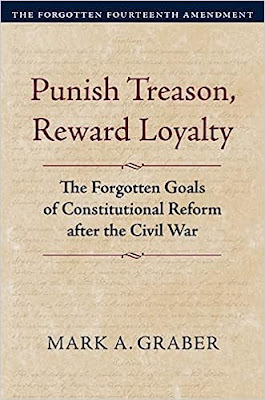
Mark A. Graber, Punish Treason, Reward Loyalty: The Forgotten Goals of Constitutional Reform after the Civil War (University of Kansas Press, 2023)
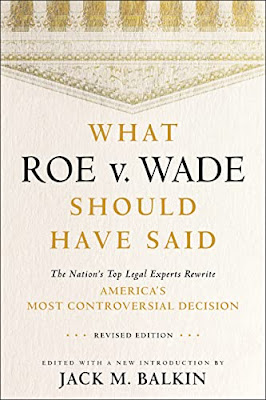
Jack M. Balkin, What Roe v. Wade Should Have Said: The Nation's Top Legal Experts Rewrite America's Most Controversial Decision - Revised Edition (NYU Press, 2023)

Andrew Koppelman, Burning Down the House: How Libertarian Philosophy Was Corrupted by Delusion and Greed (St. Martin’s Press, 2022)

Gerard N. Magliocca, Washington's Heir: The Life of Justice Bushrod Washington (Oxford University Press, 2022)
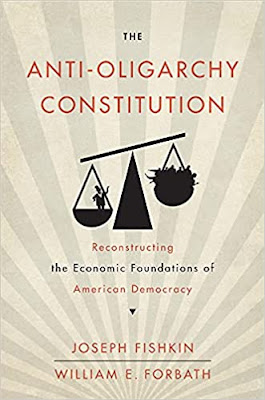
Joseph Fishkin and William E. Forbath, The Anti-Oligarchy Constitution: Reconstructing the Economic Foundations of American Democracy (Harvard University Press, 2022)
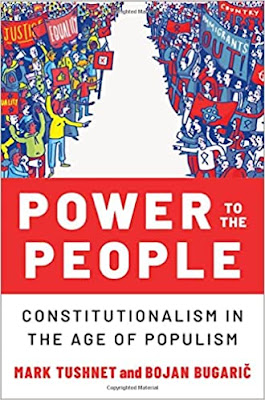
Mark Tushnet and Bojan Bugaric, Power to the People: Constitutionalism in the Age of Populism (Oxford University Press 2021).

Mark Philip Bradley and Mary L. Dudziak, eds., Making the Forever War: Marilyn B. Young on the Culture and Politics of American Militarism Culture and Politics in the Cold War and Beyond (University of Massachusetts Press, 2021).

Jack M. Balkin, What Obergefell v. Hodges Should Have Said: The Nation's Top Legal Experts Rewrite America's Same-Sex Marriage Decision (Yale University Press, 2020)

Frank Pasquale, New Laws of Robotics: Defending Human Expertise in the Age of AI (Belknap Press, 2020)

Jack M. Balkin, The Cycles of Constitutional Time (Oxford University Press, 2020)

Mark Tushnet, Taking Back the Constitution: Activist Judges and the Next Age of American Law (Yale University Press 2020).

Andrew Koppelman, Gay Rights vs. Religious Liberty?: The Unnecessary Conflict (Oxford University Press, 2020)

Ezekiel J Emanuel and Abbe R. Gluck, The Trillion Dollar Revolution: How the Affordable Care Act Transformed Politics, Law, and Health Care in America (PublicAffairs, 2020)

Linda C. McClain, Who's the Bigot?: Learning from Conflicts over Marriage and Civil Rights Law (Oxford University Press, 2020)
Sanford Levinson and Jack M. Balkin, Democracy and Dysfunction (University of Chicago Press, 2019)

Sanford Levinson, Written in Stone: Public Monuments in Changing Societies (Duke University Press 2018)

Mark A. Graber, Sanford Levinson, and Mark Tushnet, eds., Constitutional Democracy in Crisis? (Oxford University Press 2018)

Gerard Magliocca, The Heart of the Constitution: How the Bill of Rights became the Bill of Rights (Oxford University Press, 2018)

Cynthia Levinson and Sanford Levinson, Fault Lines in the Constitution: The Framers, Their Fights, and the Flaws that Affect Us Today (Peachtree Publishers, 2017)

Brian Z. Tamanaha, A Realistic Theory of Law (Cambridge University Press 2017)

Sanford Levinson, Nullification and Secession in Modern Constitutional Thought (University Press of Kansas 2016)

Sanford Levinson, An Argument Open to All: Reading The Federalist in the 21st Century (Yale University Press 2015)

Stephen M. Griffin, Broken Trust: Dysfunctional Government and Constitutional Reform (University Press of Kansas, 2015)

Frank Pasquale, The Black Box Society: The Secret Algorithms That Control Money and Information (Harvard University Press, 2015)

Bruce Ackerman, We the People, Volume 3: The Civil Rights Revolution (Harvard University Press, 2014)
Balkinization Symposium on We the People, Volume 3: The Civil Rights Revolution

Joseph Fishkin, Bottlenecks: A New Theory of Equal Opportunity (Oxford University Press, 2014)

Mark A. Graber, A New Introduction to American Constitutionalism (Oxford University Press, 2013)

John Mikhail, Elements of Moral Cognition: Rawls' Linguistic Analogy and the Cognitive Science of Moral and Legal Judgment (Cambridge University Press, 2013)

Gerard N. Magliocca, American Founding Son: John Bingham and the Invention of the Fourteenth Amendment (New York University Press, 2013)

Stephen M. Griffin, Long Wars and the Constitution (Harvard University Press, 2013)

Andrew Koppelman, The Tough Luck Constitution and the Assault on Health Care Reform (Oxford University Press, 2013)

James E. Fleming and Linda C. McClain, Ordered Liberty: Rights, Responsibilities, and Virtues (Harvard University Press, 2013)
Balkinization Symposium on Ordered Liberty: Rights, Responsibilities, and Virtues

Andrew Koppelman, Defending American Religious Neutrality (Harvard University Press, 2013)

Brian Z. Tamanaha, Failing Law Schools (University of Chicago Press, 2012)

Sanford Levinson, Framed: America's 51 Constitutions and the Crisis of Governance (Oxford University Press, 2012)

Linda C. McClain and Joanna L. Grossman, Gender Equality: Dimensions of Women's Equal Citizenship (Cambridge University Press, 2012)

Mary Dudziak, War Time: An Idea, Its History, Its Consequences (Oxford University Press, 2012)

Jack M. Balkin, Living Originalism (Harvard University Press, 2011)

Jason Mazzone, Copyfraud and Other Abuses of Intellectual Property Law (Stanford University Press, 2011)

Richard W. Garnett and Andrew Koppelman, First Amendment Stories, (Foundation Press 2011)

Jack M. Balkin, Constitutional Redemption: Political Faith in an Unjust World (Harvard University Press, 2011)

Gerard Magliocca, The Tragedy of William Jennings Bryan: Constitutional Law and the Politics of Backlash (Yale University Press, 2011)

Bernard Harcourt, The Illusion of Free Markets: Punishment and the Myth of Natural Order (Harvard University Press, 2010)

Bruce Ackerman, The Decline and Fall of the American Republic (Harvard University Press, 2010)
Balkinization Symposium on The Decline and Fall of the American Republic

Ian Ayres. Carrots and Sticks: Unlock the Power of Incentives to Get Things Done (Bantam Books, 2010)

Mark Tushnet, Why the Constitution Matters (Yale University Press 2010)

Ian Ayres and Barry Nalebuff: Lifecycle Investing: A New, Safe, and Audacious Way to Improve the Performance of Your Retirement Portfolio (Basic Books, 2010)
.jpg)
Jack M. Balkin, The Laws of Change: I Ching and the Philosophy of Life (2d Edition, Sybil Creek Press 2009)

Brian Z. Tamanaha, Beyond the Formalist-Realist Divide: The Role of Politics in Judging (Princeton University Press 2009)
Andrew Koppelman and Tobias Barrington Wolff, A Right to Discriminate?: How the Case of Boy Scouts of America v. James Dale Warped the Law of Free Association (Yale University Press 2009)

Jack M. Balkin and Reva B. Siegel, The Constitution in 2020 (Oxford University Press 2009)

Heather K. Gerken, The Democracy Index: Why Our Election System Is Failing and How to Fix It (Princeton University Press 2009)

Mary Dudziak, Exporting American Dreams: Thurgood Marshall's African Journey (Oxford University Press 2008)

David Luban, Legal Ethics and Human Dignity (Cambridge Univ. Press 2007)

Ian Ayres, Super Crunchers: Why Thinking-By-Numbers is the New Way to be Smart (Bantam 2007)

Jack M. Balkin, James Grimmelmann, Eddan Katz, Nimrod Kozlovski, Shlomit Wagman and Tal Zarsky, eds., Cybercrime: Digital Cops in a Networked Environment (N.Y.U. Press 2007)

Jack M. Balkin and Beth Simone Noveck, The State of Play: Law, Games, and Virtual Worlds (N.Y.U. Press 2006)

Andrew Koppelman, Same Sex, Different States: When Same-Sex Marriages Cross State Lines (Yale University Press 2006)

Brian Tamanaha, Law as a Means to an End (Cambridge University Press 2006)

Sanford Levinson, Our Undemocratic Constitution (Oxford University Press 2006)

Mark Graber, Dred Scott and the Problem of Constitutional Evil (Cambridge University Press 2006)

Jack M. Balkin, ed., What Roe v. Wade Should Have Said (N.Y.U. Press 2005)

Sanford Levinson, ed., Torture: A Collection (Oxford University Press 2004)
Balkin.com homepage
Bibliography
Conlaw.net
Cultural Software
Writings
Opeds
The Information Society Project
BrownvBoard.com
Useful Links
Syllabi and Exams
