Balkinization
an unanticipated consequence of
Jack M. Balkin
Balkinization Symposiums: A Continuing List
E-mail:
Jack Balkin:
jackbalkin at yahoo.com
Bruce Ackerman
bruce.ackerman at yale.edu
Ian Ayres
ian.ayres at yale.edu
Corey Brettschneider
corey_brettschneider at brown.edu
Mary Dudziak
mary.l.dudziak at emory.edu
Joey Fishkin
joey.fishkin at gmail.com
Heather Gerken heather.gerken at yale.edu
Abbe Gluck abbe.gluck at yale.edu
Mark Graber
mgraber at law.umaryland.edu
Stephen Griffin
sgriffin at tulane.edu
Jonathan Hafetz
jonathan.hafetz at shu.edu
Jeremy Kessler
jkessler at law.columbia.edu
Andrew Koppelman
akoppelman at law.northwestern.edu
Marty Lederman
msl46 at law.georgetown.edu
Sanford Levinson
slevinson at law.utexas.edu
David Luban
david.luban at gmail.com
Gerard Magliocca
gmaglioc at iupui.edu
Jason Mazzone
mazzonej at illinois.edu
Linda McClain
lmcclain at bu.edu
John Mikhail
mikhail at law.georgetown.edu
Frank Pasquale
pasquale.frank at gmail.com
Nate Persily
npersily at gmail.com
Michael Stokes Paulsen
michaelstokespaulsen at gmail.com
Deborah Pearlstein
dpearlst at yu.edu
Rick Pildes
rick.pildes at nyu.edu
David Pozen
dpozen at law.columbia.edu
Richard Primus
raprimus at umich.edu
K. Sabeel Rahmansabeel.rahman at brooklaw.edu
Alice Ristroph
alice.ristroph at shu.edu
Neil Siegel
siegel at law.duke.edu
David Super
david.super at law.georgetown.edu
Brian Tamanaha
btamanaha at wulaw.wustl.edu
Nelson Tebbe
nelson.tebbe at brooklaw.edu
Mark Tushnet
mtushnet at law.harvard.edu
Adam Winkler
winkler at ucla.edu
Compendium of posts on Hobby Lobby and related cases
The Anti-Torture Memos: Balkinization Posts on Torture, Interrogation, Detention, War Powers, and OLC
The Anti-Torture Memos (arranged by topic)
Recent Posts
The Difference Between "Rule of Law" and "Rule by Law" (A.G. Gonzales Please Take Note)
![[Powered by Blogger]](https://lh3.googleusercontent.com/blogger_img_proxy/AEn0k_vx0SG0ovVBzoICSJtkW7Tm06owVx-QW0K5JSmE6Dx8zXk0wO3XtUgcLm5ITd5XubhZtefGooYtONKKct0eE_XQm-3Lxj9CgeZxNlr1hzNR=s0-d)
Just A Few Blogs
ACS Blog
Alas, a Blog
Althouse
Arts and Letters Daily
Atrios (Eschaton)
Bill of Health
Buzzflash.com
Buzz Machine
Cato at Liberty
Juan Cole (Informed Comment)
Concurring Opinions
The Constitution in 2020
Corrente
Crooked Timber
Daily Howler
Daily Kos
Dana Boyd
Brad DeLong
Digby (Hullabaloo)
Discriminations
Daniel Drezner
Kevin Drum (Mother Jones)
Electrolite
En Banc
Eunomia (Daniel Larison)
Fafblog
Michael Froomkin (Discourse.net)
GovLab (Beth Noveck)
Rick Hasen (Election Law)
History News Network
How Appealing
Ignatz (Sam Heldman)
The Importance of (Ernie Miller)
Infolaw
Instapundit
International Economic Law and Policy Blog
IntLawGrrls
Jacob Levy
Jesus' General
Jurisdynamics
The Kitchen Cabinet
Mark Kleiman
Law Blog Central
Larry Lessig
Lawyers, Guns and Money
Liberal Oasis
Brian Leiter's Law School Reports
The Leiter Reports
Marginal Revolution
Megan McArdle
Memeorandum
Metafilter
Mirror of Justice
The New Republic
Newseum
No More Mister Nice Blog
Brendan Nyhan
Opinio Juris
Orcinus
The Originalism Blog
Pandagon
Passport (Foreign Policy)
Overcoming Bias
Political Animal (Washington Monthly)
Political Theory Daily Review
Political Wire (Taegan Goddard)
The Poor Man
Virginia Postrel
Prawfsblawg
Public Reason
Jonathan Rauch
Raw Story
Redstate
ReligiousLeftLaw.com
Reporters Committee For Freedom of the Press
Reproductive Rights Blog
Rothman's Roadmap to the Right of Publicity
SCOTUS Blog
Seeing the Forest
Clay Shirky
The Shifted Librarian
The Situationist
Larry Solum (Legal Theory)
Andrew Sullivan
Talking Points Memo
Talk Left
Tapped
Tbogg
TechPresident
The Paper Chase (Jurist)
Tom Paine
Tom Tomorrow (This Modern World)
Eve Tushnet
Uggabugga
University of Chicago Law School Faculty Blog
Unqualified Offerings
The Volokh Conspiracy
War and Piece (Laura Rozen)
Wampum
Oliver Willis
Wonkette
Written Description
Matthew Yglesias
Yin
Your Choice of Feeds
1. XML
powered by

2. Atom Feed
3. RSS 2.0
The Difference Between "Rule of Law" and "Rule by Law" (A.G. Gonzales Please Take Note)
Brian Tamanaha
Although there are various definitions of the “rule of law,” a core element that all definitions share is the notion that the government and its citizens must abide by the law. This idea raises a problem that prompted philosophers as diverse as Aquinas and Hobbes to express doubts about whether the rule of law is possible. The problem is this: the government is the source of (state) law, so it cannot be bound or coerced by the law, because one cannot bind or coerce oneself. In Hobbes’ words, “he that is bound to himself only, is not bound.” Aquinas put it in these terms: “The sovereign is said to be exempt from the law; since, properly speaking, no man is coerced by himself, and law has no coercive power save from the authority of the sovereign. Thus then is the sovereign said to be exempt from the law, because none is competent to pass sentence upon him, if he acts against the law.”
We have partially solved this conundrum through an institutionalized separation of the “sovereign.” Now there is no single sovereign in control of producing and applying the law, but rather legal actions are divided up between the legislature, executive, and judiciary. Thus it is no longer the case that a sovereign “is bound to himself only,” because each institution has various ways to hold the others accountable to the law. That’s how it’s supposed to work in our system (in theory anyway).
This arrangement helps, but it does not eliminate the problem. The ultimate guarantor of the rule of law is the power to threaten and exert violence, which is allocated to the executive branch. That is where the problem reappears in concentrated form. How can the executive branch be subject to coercion if it is the source of coercion? More specifically, how can we insure that the Justice Department, which holds the coercive power of the federal government, abides by and enforces the law?
We can try internally dividing up the Justice Department, with one part holding the others accountable, but that can only go so far. The Office of the Inspector General and the Office of Professional Responsibility investigate questions of legal impropriety within the Justice Department (and by internal regulation an independent prosecutor can be appointed when the need arises). But none of these various institutional arrangements necessarily solve the problem, for all are internal to the Justice Department, and therefore are susceptible to influence. If the entire Justice Department is compromised, it is impossible to construct any mechanism that will be capable of “coercing the coercive power.” Under these circumstances, the rule of law, in the sense that the government is bound by the law, would indeed be impossible.
In the end, Hobbes and Aquinas were right: whatever wields the coercive power cannot coerce itself. The only possible answer to this problem was given by Aquinas: the source of coercive power, through a commitment of its own will, must bind itself to abide by the law in good faith. Without this, the rule of law would not exist. It’s a thin reed on which to rest the rule of law, but there is no other way.
For this reason, although it has largely gone unnoticed from the outside, the non-partisan culture within the Justice Department has made a large contribution to the rule of law. Although the heads of divisions are political appointees who change with administrations, the rank and file have always taken pride in being excellent lawyers committed to upholding the law. The political party membership of the lawyer didn’t matter. Administrations may be Republican or Democratic, but never the Justice Department itself. What made this work was the commitment of each lawyer to, above all else, abide by and act consistent with the law.
This is why the systematic ideological (party membership, political beliefs, etc.) screening of applicants for positions in the Justice Department poses such a serious threat to the rule of law. The evident purpose of this screening is to insure that the legal actions and decisions of Justice Department lawyers will be consistent with and further an ideological agenda. Although recent reports about this effort place the blame on a neophyte lawyer, Monica Goodling, she was appointed by others who knew what she was doing, and she is just one player in a broader pattern to seed the Justice Department with ideologues.
An editorial in the New York Times said this effort by the Bush Administration would “politicize the rule of law,” but that is an oxymoron. When the institution that has the authority to enforce the law—wielding the awesome coercive power of the government—becomes “politicized,” the “rule of law” fails to exist.
The system becomes one of “rule by law,” in which those who control the levers of government utilize the law to advance their ends (as Marty details below). This is not a partisan issue. Everyone—Republicans, Democrats, and independents—should be alarmed.
Posted
3:43 PM
by Brian Tamanaha [link]

We also tried to solve it by having a special class of law which is supposed to bind the sovereign, but which the sovereign isn't permitted to change without an involved formal procedure meant to require social consensus.
But there does in fact seem to be no way to force the sovereign to use that procedure anymore. Remarkably, some people actually celebrate the loss of that safeguard.
I have worked in two prosecutor's offices and practiced in cooperation with or against several others.
News flash!
Every single office I have had dealings with is political in that they prioritize their limited resources to accomplish what the boss wants done. If an attorney does not want to pursue the goals of the boss, he or she is generally not long for the office.
This is how it should be. Prosecutors are elected to serve the will of the voters or are appointed by elected officials who serve the will of the voters.
My first boss was elected on a platform of jailing criminals and enforcing laws against pornography in our rural district.
In contrast, my second boss was elected on a platform of alternative sentencing to rehabilitate criminals in our urban district. He developed one of the most innovative juvenile programs in the nation and devoted a far larger percentage of his budget there than did my first boss.
There is nothing "corrupt" or wrong about following the priorities of the elected official in charge of that prosecutor's office.
Of course, the targets of the prosecutor's law enforcement priorities will probably have a different and more negative view of those priorities than will the voters who elected the prosecutor or the official who appointed the prosecutor. That is the situation here where congressional Dems are the target of Justice's priorities to prosecute election fraud and are fighting back by attacking that priority as "political" because they cannot defend the fraud itself.

But the good news is that responsible Republicans are of the considered opinion that even the lowly White House Travel Office should not be subject to allegedly partisan machinations, and if such is alleged, a special prosecutor equipped with the full power and resources of the FBI and millions in taxpayer funds in pocket ought to be brought in to get to the bottom of things.....
Cheers,
Actually, much more interesting than the case of the fired USAs is what those that were not fired were up to.
The ones that got fired refused to go on partisan witch-hunts (or pursued corruption within the maladministration, or both). They have unarguably done nothing wrong.
Did the ones that didn't get fired make a deal with the devil? Did they pursue cases (and/or ignore others) for partisan purposes like good little Bushistas?
Cheers,
Via The Carpetbagger Report:
[...]
* Paul Krugman noted a couple of weeks ago, for example, that Chris Christie, the former Bush “Pioneer” who is now the U.S. attorney for New Jersey, issued subpoenas as part of an investigation against Sen. Bob Menendez (D) shortly before last year’s election.
* In New Hampshire, Democrats want Congress to investigate whether prosecution of a Republican phone-jamming scheme on Election Day 2002 was intentionally delayed until after the presidential election two years later.
* Did the U.S. Attorney’s office in Pennsylvania intentionally target Bob Casey allies to undermine his Senate campaign against Rick Santorum?
* Why was the career U.S. Attorney in Guam removed in 2002 after he started investigating disgraced GOP lobbyist Jack Abramoff?
* Why has Western Pennsylvania’s U.S. attorney, Mary Beth Buchanan, spent a disproportionate amount of her time launching public-corruption investigations against Democrats, while overlooking Republicans?
* In July 2005, the U.S. Attorney in Denver decided not to pursue a matter in which bouncers at a Bush event impersonated Secret Service agents to throw out three law-abiding ticket-holders because of their bumper sticker (the Denver Three controversy). Did politics dictate the decision?
As Bud Cummins, one of the purged prosecutors, recently explained:
“[T]he public must perceive that every substantive decision within the department is made in a neutral and non-partisan fashion. Once the public detects partisanship in one important decision, they will follow the natural inclination to question every decision made, whether there is a connection or not.”
Bingo. It’s the consequence of the administration undermining public confidence in the system.
This is why they didn't let the federal government have a large standing army which would enable it to enforce its will without the active support and cooperation of the individual states, and the individual citizens.
The 2nd Amendment is, and was always intended to be, the "reset" button for our government
Cynicism masquerading as realistic sophistication is still cynicism.
Before I became a professor, I practiced law as a public defender and later as a prosecutor, and Marty worked in DoJ, so you are not the only one with insights from the field.
We have all seen (and engaged in) good and bad practices--the key is to be able to recognize the difference.
Brian
If there's a story here, it's that incompetent lawyers were hired. But, that lawyers with political associations or leanings were hired is old news.
To the victor goes the spoils, right?
To the victor goes the spoils, right?
Better in the original French: "L'etat c'est moi"....
Cheers,
That manner of checking executive power didn't work so well for the Roman Republic. (See Julius Caesar.) The Constitution empowers Congress to hold the office accountable, with the power of the purse, among other things. Congress needs to assert its own authority as vigorously as the Executive asserts its.
papabear wrote: The 2nd Amendment is, and was always intended to be, the "reset" button for our government
I have trouble imagining a citizenry armed with shotguns, or even assault rifles, prevailing against modern tanks. If we were serious about maintaining the ability of the citizenry to violently overthrow their government, then we would preserve unfettered access to information on producing weapons of terrorism. I don't think that would be a good idea. Far better to rely upon civilians' economic power to check their government.
dsc25 wrote: Bart DePalma doesn't seem too cynical to me. Doesn't everyone in politics hire based on politics?
See arne langsetmo's comment above on the difference between having policy priorities versus using government offices as a tool for partisan entrenchment. That is the crucial distinction.
Do you actually believe this? Was the Clinton era Justice Dept neither Democratic nor Republican? The Kennedy era one, run by JFK's brother? This seems to be deliberate self-deception.
If the Democrats do it, it is setting policy priorities, but if the Republicans do it, it is "partisan entrenchment"? How can the two be distinguished, other than by your partisan affiliation? Was Clintons firing of the US Attorneys "setting policy priorities", or was it "partisan entrenchment"? Explain your answer.
When decisions are made to further the partisan political asperations of a specific party, then it is partisan entrenchment.
For example, deciding to focus prosecutorial resources on public corruption is an appropriate policy objective. By contrast, filing a dubious "voter fraud" indictment two weeks before an election because it will suppress voter turnout and favor your party is inappropriate partisan entrenchment.
Sometimes distinguishing the two may be hard; there are certainly gray areas. That's why Congress is holding hearings. From the testimony that I have heard, I don't believe that what occurred falls close to a gray area. I am convinced that some people in the Justice Department (such as Bradley Schlozman) were inappropriately using a government office for partisan entrenchment.
(By the way, please forgo the conservative talking points like "Clinton dismissed prosecutors too." Those lines work only on the uninformed. Most everyone reading this blog understands the difference between dismissing prosecutors at the start of an administration ... which both Bushes, Clinton and Reagan all properly did ... versus dismissing a select few prosecutors mid-term.)
Certainly congress can check the power of the executive branch, but they cannot charge the executive branch with misconduct, or abuse of power, which is what I was referring to. For that they charge the person holding the office, challenging the validity of that person’s claim to the office.
But this clarification reminds me I forgot to make my point in the previous reply. The question was “How can the executive branch be subject to coercion if it is the source of coercion? More specifically, how can we insure that the Justice Department, which holds the coercive power of the federal government, abides by and enforces the law?”
My answer: The executive branch cannot be subject to coercion, but the person occupying the executive office can be (once removed from office.) It is this non-identification between office and office-holder, implicit in congress’s right to impeach, that essentially prevents sovereignty from accumulating in the executive branch.
Before Bush, the opinion was that a great deal more in the constitution prevented this accumulation of power, but it turns out that much of this can be circumvented by clever lawyers (Addington). Impeachment remains, however.
thanks so much i like very so much your post
حلي الاوريو الفطر الهندي صور تورتة حلى قهوه طريقة عمل السينابون طريقة عمل بلح الشام بيتزا هت كيكة الزبادي حلا سهل صور كيك
عجينة العشر دقائق
طريقة عمل الدونات طريقة عمل البان كيك طريقة عمل الكنافة طريقة عمل البسبوسة طريقة عمل الكيك طريقة عمل عجينة البيتزا فوائد القرفه
bola.arenabetting.com
http://arenabetting.us
Cara mengobati kanker dengan herbal, Cara mengobati kanker dengan tradisional, Cara mengobati kanker dengan alami, Cara mengobati kanker dengan cepat, Cara mengobati kanker stadium 3, Cara mengobati kanker stadium 4, Cara mengobati kanker stadium awal, Cara mengobati kanker stadium 2, Cara mengobati kanker stadium akhir, Cara mengobati kanker tanpa ke dokter, Gambar obat kanker yang ampuh, Gambar obat kanker yang ampuh, Obat kanker ampuh dengan singkong, Cara mengobati kanker stadium awal tanpa operasi, Obat kanker manjur dari tumbuhan, Cara mengobati kanker stadium 1 tanpa operasi, Obat kanker ampuh dengan daun sirsak, Cara mengobati kanker stadium 2 tanpa operasi, Obat kanker paling mujarab yang efektif, Cara mengobati kanker stadium 3 tanpa operasi, Cara mengobati kanker stadium 3, Cara mengobati kanker stadium 4 tanpa operasi, Obat kanker paling manjur 2016, Cara mengobati kanker stadium akhir tanpa operasi, Pengobatan kanker mujarab tanpa operasi, Cara pengobatan kanker yang manjur, Pengobatan kanker manjur dan aman, Cara pengobatan kanker yang mujarab, Cara pengobatan kanker tanpa operasi, Cara pengobatan kanker yang ampuh, Obat kanker mujarab tanpa operasi, Obat kanker manjur tanpa operasi, Obat De Nature
obat alami untuk mencegah kanker serviks
obat medis untuk kanker serviks
wwwobat kanker serviks
obat vaksin kanker serviks
obat untuk mengatasi kanker serviks
Tumbuhan untuk obat kanker serviks
Obat untuk menyembuhkan kanker serviks
obat untuk penderita kanker serviks
obat tradisional untuk kanker serviks
obat utk kanker serviks
obat untuk kanker serviks
obat tradisional utk kanker serviks
sirsak obat kanker serviks
obat sakit kanker serviks
hello world obat untuk kanker rahim stadium 3
obat herbal kanker rahim stadium 4
obat kanker rahim stadium 1 1
Obat kanker rahim stadium 2
Obat penyakit herpes kelamin pria
bola tangkas onilne terbaik
Obat herbal herpes genital manjuur sembuh 2 hari
Obat herbal herpes genital manjuur sembuh 2 hari
Obat herbal herpes genital manjuur sembuh 2 hari
Obat herbal herpes genital manjuur sembuh 2 hari
Obat herbal herpes genital manjuur sembuh 2 hari
Obat herbal herpes genital manjuur sembuh 2 hari
Obat herbal herpes genital manjuur sembuh 2 hari
Obat herbal herpes genital manjuur sembuh 2 hari
Obat herbal herpes genital manjuur sembuh 2 hari
Obat herbal herpes genital manjuur sembuh 2 hari
Obat herbal herpes genital manjuur sembuh 2 hari
Obat herbal herpes genital manjuur sembuh 2 hari
Obat herbal herpes genital manjuur sembuh 2 hari
Obat herbal herpes genital manjuur sembuh 2 hari
Obat herbal herpes genital manjuur sembuh 2 hari
Obat herbal herpes genital manjuur sembuh 2 hari
obat kanker serviks manjur
obat kanker serviks manjur
obat kanker serviks manjur
obat kanker serviks manjur
obat kanker serviks manjur facebook
obat herpes genital manjur
obat herpes genital manjur
obat herpes genital manjur
obat herpes genital manjur
obat herpes genital manjur
obat herpes genital manjur
obat herpes genital manjur
obat herpes genital manjur
obat herpes genital manjur
obat herpes genital manjur
obat herpes genital manjur
obat herpes genital manjur
obat herpes genital manjur
obat herpes genital manjur
obat herpes genital manjur
obat herpes genital manjur
obat herpes genital manjur
obat herpes genital manjur
obat herpes genital manju
Obat herpes genital manjur
Obat herpes genital manujur di youtube
Obat kanker dan herpes di twitter
obat herpes genital manjur facebook
European Soccer
cybola.loveslife.biz
Agen Sbobet
افضل شركة نظافه عامه بتبوك وذلك لمميزاتها المتعددة ومن أهم مميزاتها تحافظ على المنازل وعلى صلاحيتها وجمالها وعدم حدوث اى أضرار له وهذا ما تفعله شركتنا للحفاظ على أشياء العملاء لانهم يهتمون بكل شىء يخص عملائهم كما أن شركتنا تمتلك عمال ذات خبره عاليه فى مجال شركة تنظيف منازل بتبوك التنظيف الشامل من تنظيف منازل وقصور وفلل وبيوت كما لديهم عمال مدربين يقدمون لحضراتكم أفضل تنظيف وكل هذا واكثر سوف تجدونه فى شركة نظافة عامة بتبوك فهذة الشركة لديها متخصصين أصحاب خبره كبيرة ولديهم عمال محترفين ومدربين على هذا المجال وأيضا نقوم بعمل تنظيف للانتريهات والآثاث والرخام والزجاج والمراتب والستائر والحمامات التى يجب تنظيفها بشكل دائم شركة تنظيف خزانات بتبوك وغسيل الأرضيات مهما كانت صعوبة الأرضيات وبمختلف انواعها من السيراميك او الرخام وغيرها والأسقف والحوائط وأن الكثير من أعمال النظافة تقولم بها وخدمات شاملة كما أن شركتنا تستخدم أحدث المعدات والأدوات الخاصه بالنظافة أدوات فعاله ومن أفضل الأدوات الحديثة والمتطورة المتواجدة فى الاسواق وايضا تمتلك شركتنا قسم لتنظيف الزجاج والأرضيات والرخام ومن اجل كل هذه الخدمات فاننا نعتبر شركة مكافحة حشرات بتبوك من احسن الشركات التى تعمل فى مجال التنظيف واننا نعمل من اجل ارضاء عملائنا الكرام فشركتنا الاولى بالمملكة وانتظروا المزيد عندما تتعاملون معنا شركة تنظيف بتبوك شركة نظافة عامة بالخبر نظافة فلل وشقق وقصور توضح لنا ان شركة تنظيف منازل بتبوك الشعور بالتميز والانفراد أمرا بالغ الأهمية هل فكرت يوما أن تتعامل مع أفضل شركة نظافة فلل وقصور تقوم باحداث عملية تغيير شامل للمكان الذى تعيش فيه مع اضفاء شركة تنظيف خزانات بتبوك جمال يختلف عن أى مكان أخر مع شركة نظافه فلل لدينا كافة الامكانيات والأدوات شركة تنظيف مسابح بالرياض
التى تستخدمها لجعلك أنت الأفضل والأرقى فمع الانشغال بالحياة اليومية يمكنك أن تترك نظافه الفيلا الخاصة بك لدى شركتنا التى سوف تشعرك بالسعادة والراحة الداخلية نظرا لاضفاء شركة مكافحة حشرات بتبوك اللمسة الجمالية على المكان الذى تعيش فيه قسم خاص للنظافه العامه نظافة فلل شقق قصور ونظافة خزانات بيوت الشعر مجالس موكيت وجهات زجاجية او رخام جلى بلاط رخام تلميع سيراميك كشف تسربات المياه عمل جميع العوازل خزانات اسطح نظافة مطابخ حمامات دريش نظافة خزان وشكراا
Books by Balkinization Bloggers

Mark Tushnet and Bojan Bugaric, Constitutionalism and Its Discontents (University of Chicago Press, 2026)

Gerard N. Magliocca, The Actual Art of Governing: Justice Robert H. Jackson's Concurring Opinion in the Steel Seizure Case (Oxford University Press, 2025)

Linda C. McClain and Aziza Ahmed, The Routledge Companion to Gender and COVID-19 (Routledge, 2024)

David Pozen, The Constitution of the War on Drugs (Oxford University Press, 2024)

Jack M. Balkin, Memory and Authority: The Uses of History in Constitutional Interpretation (Yale University Press, 2024)
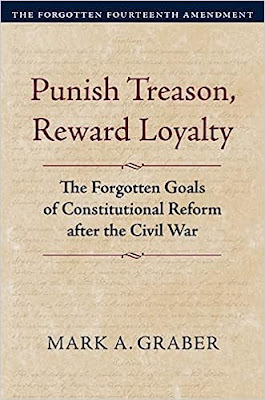
Mark A. Graber, Punish Treason, Reward Loyalty: The Forgotten Goals of Constitutional Reform after the Civil War (University of Kansas Press, 2023)
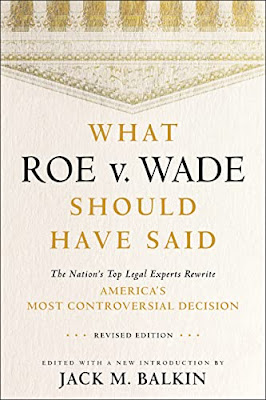
Jack M. Balkin, What Roe v. Wade Should Have Said: The Nation's Top Legal Experts Rewrite America's Most Controversial Decision - Revised Edition (NYU Press, 2023)

Andrew Koppelman, Burning Down the House: How Libertarian Philosophy Was Corrupted by Delusion and Greed (St. Martin’s Press, 2022)

Gerard N. Magliocca, Washington's Heir: The Life of Justice Bushrod Washington (Oxford University Press, 2022)
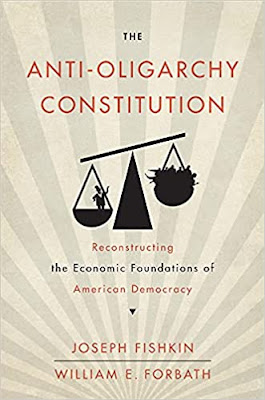
Joseph Fishkin and William E. Forbath, The Anti-Oligarchy Constitution: Reconstructing the Economic Foundations of American Democracy (Harvard University Press, 2022)
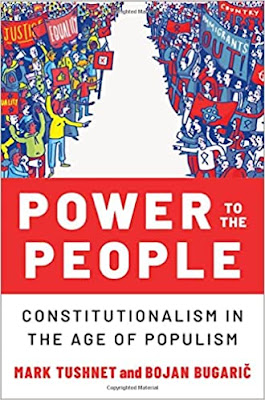
Mark Tushnet and Bojan Bugaric, Power to the People: Constitutionalism in the Age of Populism (Oxford University Press 2021).

Mark Philip Bradley and Mary L. Dudziak, eds., Making the Forever War: Marilyn B. Young on the Culture and Politics of American Militarism Culture and Politics in the Cold War and Beyond (University of Massachusetts Press, 2021).

Jack M. Balkin, What Obergefell v. Hodges Should Have Said: The Nation's Top Legal Experts Rewrite America's Same-Sex Marriage Decision (Yale University Press, 2020)

Frank Pasquale, New Laws of Robotics: Defending Human Expertise in the Age of AI (Belknap Press, 2020)

Jack M. Balkin, The Cycles of Constitutional Time (Oxford University Press, 2020)

Mark Tushnet, Taking Back the Constitution: Activist Judges and the Next Age of American Law (Yale University Press 2020).

Andrew Koppelman, Gay Rights vs. Religious Liberty?: The Unnecessary Conflict (Oxford University Press, 2020)

Ezekiel J Emanuel and Abbe R. Gluck, The Trillion Dollar Revolution: How the Affordable Care Act Transformed Politics, Law, and Health Care in America (PublicAffairs, 2020)

Linda C. McClain, Who's the Bigot?: Learning from Conflicts over Marriage and Civil Rights Law (Oxford University Press, 2020)
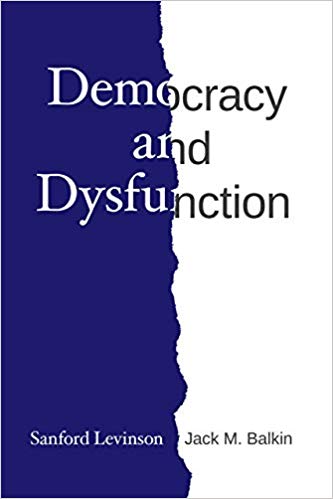
Sanford Levinson and Jack M. Balkin, Democracy and Dysfunction (University of Chicago Press, 2019)

Sanford Levinson, Written in Stone: Public Monuments in Changing Societies (Duke University Press 2018)

Mark A. Graber, Sanford Levinson, and Mark Tushnet, eds., Constitutional Democracy in Crisis? (Oxford University Press 2018)

Gerard Magliocca, The Heart of the Constitution: How the Bill of Rights became the Bill of Rights (Oxford University Press, 2018)

Cynthia Levinson and Sanford Levinson, Fault Lines in the Constitution: The Framers, Their Fights, and the Flaws that Affect Us Today (Peachtree Publishers, 2017)

Brian Z. Tamanaha, A Realistic Theory of Law (Cambridge University Press 2017)

Sanford Levinson, Nullification and Secession in Modern Constitutional Thought (University Press of Kansas 2016)

Sanford Levinson, An Argument Open to All: Reading The Federalist in the 21st Century (Yale University Press 2015)

Stephen M. Griffin, Broken Trust: Dysfunctional Government and Constitutional Reform (University Press of Kansas, 2015)

Frank Pasquale, The Black Box Society: The Secret Algorithms That Control Money and Information (Harvard University Press, 2015)

Bruce Ackerman, We the People, Volume 3: The Civil Rights Revolution (Harvard University Press, 2014)
Balkinization Symposium on We the People, Volume 3: The Civil Rights Revolution

Joseph Fishkin, Bottlenecks: A New Theory of Equal Opportunity (Oxford University Press, 2014)

Mark A. Graber, A New Introduction to American Constitutionalism (Oxford University Press, 2013)

John Mikhail, Elements of Moral Cognition: Rawls' Linguistic Analogy and the Cognitive Science of Moral and Legal Judgment (Cambridge University Press, 2013)

Gerard N. Magliocca, American Founding Son: John Bingham and the Invention of the Fourteenth Amendment (New York University Press, 2013)

Stephen M. Griffin, Long Wars and the Constitution (Harvard University Press, 2013)

Andrew Koppelman, The Tough Luck Constitution and the Assault on Health Care Reform (Oxford University Press, 2013)

James E. Fleming and Linda C. McClain, Ordered Liberty: Rights, Responsibilities, and Virtues (Harvard University Press, 2013)
Balkinization Symposium on Ordered Liberty: Rights, Responsibilities, and Virtues

Andrew Koppelman, Defending American Religious Neutrality (Harvard University Press, 2013)

Brian Z. Tamanaha, Failing Law Schools (University of Chicago Press, 2012)

Sanford Levinson, Framed: America's 51 Constitutions and the Crisis of Governance (Oxford University Press, 2012)

Linda C. McClain and Joanna L. Grossman, Gender Equality: Dimensions of Women's Equal Citizenship (Cambridge University Press, 2012)

Mary Dudziak, War Time: An Idea, Its History, Its Consequences (Oxford University Press, 2012)

Jack M. Balkin, Living Originalism (Harvard University Press, 2011)

Jason Mazzone, Copyfraud and Other Abuses of Intellectual Property Law (Stanford University Press, 2011)

Richard W. Garnett and Andrew Koppelman, First Amendment Stories, (Foundation Press 2011)

Jack M. Balkin, Constitutional Redemption: Political Faith in an Unjust World (Harvard University Press, 2011)

Gerard Magliocca, The Tragedy of William Jennings Bryan: Constitutional Law and the Politics of Backlash (Yale University Press, 2011)

Bernard Harcourt, The Illusion of Free Markets: Punishment and the Myth of Natural Order (Harvard University Press, 2010)

Bruce Ackerman, The Decline and Fall of the American Republic (Harvard University Press, 2010)
Balkinization Symposium on The Decline and Fall of the American Republic

Ian Ayres. Carrots and Sticks: Unlock the Power of Incentives to Get Things Done (Bantam Books, 2010)

Mark Tushnet, Why the Constitution Matters (Yale University Press 2010)

Ian Ayres and Barry Nalebuff: Lifecycle Investing: A New, Safe, and Audacious Way to Improve the Performance of Your Retirement Portfolio (Basic Books, 2010)
.jpg)
Jack M. Balkin, The Laws of Change: I Ching and the Philosophy of Life (2d Edition, Sybil Creek Press 2009)

Brian Z. Tamanaha, Beyond the Formalist-Realist Divide: The Role of Politics in Judging (Princeton University Press 2009)
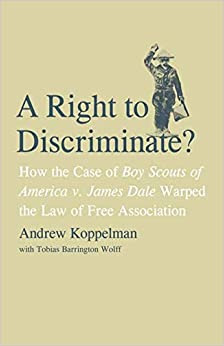
Andrew Koppelman and Tobias Barrington Wolff, A Right to Discriminate?: How the Case of Boy Scouts of America v. James Dale Warped the Law of Free Association (Yale University Press 2009)

Jack M. Balkin and Reva B. Siegel, The Constitution in 2020 (Oxford University Press 2009)

Heather K. Gerken, The Democracy Index: Why Our Election System Is Failing and How to Fix It (Princeton University Press 2009)

Mary Dudziak, Exporting American Dreams: Thurgood Marshall's African Journey (Oxford University Press 2008)

David Luban, Legal Ethics and Human Dignity (Cambridge Univ. Press 2007)

Ian Ayres, Super Crunchers: Why Thinking-By-Numbers is the New Way to be Smart (Bantam 2007)

Jack M. Balkin, James Grimmelmann, Eddan Katz, Nimrod Kozlovski, Shlomit Wagman and Tal Zarsky, eds., Cybercrime: Digital Cops in a Networked Environment (N.Y.U. Press 2007)

Jack M. Balkin and Beth Simone Noveck, The State of Play: Law, Games, and Virtual Worlds (N.Y.U. Press 2006)

Andrew Koppelman, Same Sex, Different States: When Same-Sex Marriages Cross State Lines (Yale University Press 2006)

Brian Tamanaha, Law as a Means to an End (Cambridge University Press 2006)

Sanford Levinson, Our Undemocratic Constitution (Oxford University Press 2006)

Mark Graber, Dred Scott and the Problem of Constitutional Evil (Cambridge University Press 2006)

Jack M. Balkin, ed., What Roe v. Wade Should Have Said (N.Y.U. Press 2005)

Sanford Levinson, ed., Torture: A Collection (Oxford University Press 2004)
Balkin.com homepage
Bibliography
Conlaw.net
Cultural Software
Writings
Opeds
The Information Society Project
BrownvBoard.com
Useful Links
Syllabi and Exams
