Balkinization
an unanticipated consequence of
Jack M. Balkin
Balkinization Symposiums: A Continuing List
E-mail:
Jack Balkin:
jackbalkin at yahoo.com
Bruce Ackerman
bruce.ackerman at yale.edu
Ian Ayres
ian.ayres at yale.edu
Corey Brettschneider
corey_brettschneider at brown.edu
Mary Dudziak
mary.l.dudziak at emory.edu
Joey Fishkin
joey.fishkin at gmail.com
Heather Gerken heather.gerken at yale.edu
Abbe Gluck abbe.gluck at yale.edu
Mark Graber
mgraber at law.umaryland.edu
Stephen Griffin
sgriffin at tulane.edu
Jonathan Hafetz
jonathan.hafetz at shu.edu
Jeremy Kessler
jkessler at law.columbia.edu
Andrew Koppelman
akoppelman at law.northwestern.edu
Marty Lederman
msl46 at law.georgetown.edu
Sanford Levinson
slevinson at law.utexas.edu
David Luban
david.luban at gmail.com
Gerard Magliocca
gmaglioc at iupui.edu
Jason Mazzone
mazzonej at illinois.edu
Linda McClain
lmcclain at bu.edu
John Mikhail
mikhail at law.georgetown.edu
Frank Pasquale
pasquale.frank at gmail.com
Nate Persily
npersily at gmail.com
Michael Stokes Paulsen
michaelstokespaulsen at gmail.com
Deborah Pearlstein
dpearlst at yu.edu
Rick Pildes
rick.pildes at nyu.edu
David Pozen
dpozen at law.columbia.edu
Richard Primus
raprimus at umich.edu
K. Sabeel Rahmansabeel.rahman at brooklaw.edu
Alice Ristroph
alice.ristroph at shu.edu
Neil Siegel
siegel at law.duke.edu
David Super
david.super at law.georgetown.edu
Brian Tamanaha
btamanaha at wulaw.wustl.edu
Nelson Tebbe
nelson.tebbe at brooklaw.edu
Mark Tushnet
mtushnet at law.harvard.edu
Adam Winkler
winkler at ucla.edu
Compendium of posts on Hobby Lobby and related cases
The Anti-Torture Memos: Balkinization Posts on Torture, Interrogation, Detention, War Powers, and OLC
The Anti-Torture Memos (arranged by topic)
Recent Posts
The Profound Effects of Justice O'Connor's Retirement
![[Powered by Blogger]](https://lh3.googleusercontent.com/blogger_img_proxy/AEn0k_tlT4rTb8lusYdtbpBfS7PpcMykCDez8O9iZ21Y4vpOdkiolS5ALbGmE9WYvnvGYqTiUR7GvwmCHpnqftFhVhYA8r_0NEIuil6zQj8RVDa1=s0-d)
Just A Few Blogs
ACS Blog
Alas, a Blog
Althouse
Arts and Letters Daily
Atrios (Eschaton)
Bill of Health
Buzzflash.com
Buzz Machine
Cato at Liberty
Juan Cole (Informed Comment)
Concurring Opinions
The Constitution in 2020
Corrente
Crooked Timber
Daily Howler
Daily Kos
Dana Boyd
Brad DeLong
Digby (Hullabaloo)
Discriminations
Daniel Drezner
Kevin Drum (Mother Jones)
Electrolite
En Banc
Eunomia (Daniel Larison)
Fafblog
Michael Froomkin (Discourse.net)
GovLab (Beth Noveck)
Rick Hasen (Election Law)
History News Network
How Appealing
Ignatz (Sam Heldman)
The Importance of (Ernie Miller)
Infolaw
Instapundit
International Economic Law and Policy Blog
IntLawGrrls
Jacob Levy
Jesus' General
Jurisdynamics
The Kitchen Cabinet
Mark Kleiman
Law Blog Central
Larry Lessig
Lawyers, Guns and Money
Liberal Oasis
Brian Leiter's Law School Reports
The Leiter Reports
Marginal Revolution
Megan McArdle
Memeorandum
Metafilter
Mirror of Justice
The New Republic
Newseum
No More Mister Nice Blog
Brendan Nyhan
Opinio Juris
Orcinus
The Originalism Blog
Pandagon
Passport (Foreign Policy)
Overcoming Bias
Political Animal (Washington Monthly)
Political Theory Daily Review
Political Wire (Taegan Goddard)
The Poor Man
Virginia Postrel
Prawfsblawg
Public Reason
Jonathan Rauch
Raw Story
Redstate
ReligiousLeftLaw.com
Reporters Committee For Freedom of the Press
Reproductive Rights Blog
Rothman's Roadmap to the Right of Publicity
SCOTUS Blog
Seeing the Forest
Clay Shirky
The Shifted Librarian
The Situationist
Larry Solum (Legal Theory)
Andrew Sullivan
Talking Points Memo
Talk Left
Tapped
Tbogg
TechPresident
The Paper Chase (Jurist)
Tom Paine
Tom Tomorrow (This Modern World)
Eve Tushnet
Uggabugga
University of Chicago Law School Faculty Blog
Unqualified Offerings
The Volokh Conspiracy
War and Piece (Laura Rozen)
Wampum
Oliver Willis
Wonkette
Written Description
Matthew Yglesias
Yin
Your Choice of Feeds
1. XML
powered by

2. Atom Feed
3. RSS 2.0
The Profound Effects of Justice O'Connor's Retirement
Marty Lederman
Back in July 2005, I posted to SCOTUSblog a list of precedents that were the most vulnerable in the wake of Justice O'Connor's retirement. The list is republished below. At the time, I wrote that the most important and most vulnerable of those precedents were in the areas of the Establishment Clause (especially the direct funding cases such as Mitchell v. Helms), affirmative action (and just watch what happens to Grutter later this Term), and abortion, where Stenberg v. Carhart was hanging by a thread. Today, the thread snapped, as a five-Justice majority upheld the federal "partial-birth abortion" prohibition.
In its decision today, the Court effectively overruled Stenberg's "undue burden" test for facial challenges to abortion-restriction statues (see pages 36-37 of the opinion).
[By the way: Justice Thomas in his concurrence suggests that he might have voted to invalidate the statute if a Commerce Clause challenge had been raised. In other words, if the Respondents had raised a Commerce Clause challenge, as well -- something they were wise not to do, not of least of which because statutes governing medical facilities plainly are valid Commerce legislation -- the Court might well have invalidated the statute, even though there would have been no majority of the Court for any particular ground of invalidation (a form of "Tidewater Transfer" disposition). That's not really very important, however, because the practical significance of today's case is not so much the fate of the federal statute itself as the evisceration of the Casey/Carhart undue burden test for facial challenges.]
My post from July 2005:
These are among the cases in which Justice O'Connor's has been the decisive vote or opinion, and in which a more conservative Justice might well vote to overrule the governing precedent.
Note: Because most Justices consider stare decisis a more serious obstacle in cases of statutory construction, those cases (e.g., the Davis and Jackson Title IX decisions) might be more secure, even if Justice O'Connor's replacement would not have agreed with her as a matter of first impression.
McCreary County v. ACLU (2005) -- Ten Commandments displays
Jackson v. Birmingham Board of Educ. (2005) -- Title IX Liability for Retaliation
Rompilla v. Beard (2005) -- standard of reasonable competence that Sixth Amendment requires on the part of defense counsel
Johanns v. Livestock Marketing (2005) -- assessments for government speech
Smith v. Massachusetts (2005) -- double jeopardy
Small v. United States (2005) - felon firearm possession ban doesn't cover foreign convictions
Tennessee v. Lane (2004) -- Congress's Section 5 power
Hibbs v. Winn (2004) -- Tax Injunction Act
Alaska Department of Environmental Conservation v. EPA (2004) -- EPA authority under Clean Air Act to issue orders when a state conservation agency fails to act
McConnell v. FEC (2004) -- campaign finance
Groh v. Ramirez (2004) -- sufficiency of non-particularized search warrant
Grutter v. Bollinger (2003) -- affirmative action
Brown v. Legal Foundation of Washington (2003) -- no takings violation in IOLTA funding scheme
American Insurance Ass'n v. Garamendi (2003) -- presidential foreign-affairs "pre-emption" of state law
Stogner v. California (2003) -- ex post facto clause as applied to changes in statutes of limitations
Alabama v. Shelton (2002) -- right to counsel
Rush Prudential HMO v. Moran (2002) -- upholding state laws giving patients the right to second doctor's opinion over HMOs' objections
Kelly v. South Carolina (2002) -- capital defendant's due process right to inform jury of his parole ineligibility
FEC v. Colorado Republican Federal Campaign Committee (2001) -- upholding limits on "coordinated" political party expenditures
Zadvydas v. Davis (2001) -- prohibiting indefinite detention of immigrants under final orders of removal where no other country will accept them
Easley v. Cromartie (2001) -- race-based redistricting
Rogers v. Tennessee (2001) -- "judicial" ex post facto
Brentwood Academy v. Tennessee Secondary School Athletic Association (2001) -- state action
Stenberg v. Carhart (2000) -- "partial-birth abortion" ban
Mitchell v. Helms (1999) -- direct aid to religious schools
Davis v. Monroe County Board of Educ. (1999) -- recognizing school district liability under Title IX for student-on-student sexual harrassment
Schenck v. Pro-Choice Network (1997) -- injunctions against abortion-clinic protestors
Richardson v. McKnight (1997) -- private prison guards not entitled to qualified immunity in section 1983 suits
Camps Newfound/Owatonna v. Town of Harrison (1997) (dormant Commerce Clause)
Morse v. Republican Party of Virginia (1996) -- provisions of the Voting Rights Act are constitutional as applied to choice of candidates at party political conventions
Schlup v. Delo (1995) (habeas, actual innocence)
Posted
10:34 AM
by Marty Lederman [link]
I am printing out the decision now. Should be interesting.

The pro-life rhetoric (strongly rejected by the dissent) and attack on facial challenges (much practical effect, opening up the way for lots more dubious laws that will be struck down as applied, but on books for years since there are various situations when the laws might be okay) appears to be the core problem here.
The opinion, much to a few justices annoyance I'm sure, left open the way for 'as applied' challenges to the law. But, it also supplied a rational basis test for disputed health requirements, leaving partisan legislatures not a woman's doctor the ultimate power to decide cases where expert testimony leans the way toward allowing a procedure.
So, though some of the pro-choice rhetoric is over the top, the ruling is of real concern.
Thomas has a long-standing position limiting the commerce clause (Raich dissent, Lopez concurrence, e.g.). Given that, I don’t think Thomas was bluffing when he said he would have nullified the federal abortion ban on those grounds. That is, Thomas could have been a fifth vote to strike the law. Scalia might have been a sixth.
There is no question, either, that the liberal justices would have upheld the law under the commerce power and voided it under their abortion jurisprudence. That is, they were going to be four votes to strike it no matter what.
That means that Kennedy, whose vote was certain based on Stenberg where he voted to uphold a partial birth abortion ban by a state, did not have to be the swing vote.
At this point in my research, I believe strongly that the pro choice movement made a significant and decisive error in not raising a commerce clause challenge to this law. Instead of charging towards an almost certain 5-4 decision against them, they could have had a better shot at a 5-4 or better victory. Yes, the victory would have been without the benefit of a majority opinion, but they were heading towards that anyway.
Honestly, what could have motivated the pro choice movement to willfully fail their constituency so terribly? This is a question that must be answered.
For now, my $0.02 are here.
obat sipilis buat wanita
obat sipilis bawang putih
obat sipilis bandung
obat sipilis bagi wanita
obat sipilis beli di apotik
obat sipilis bisa di beli di apotik
obat buat sipilis
obat sipilis yang bagus
obat sipilis di batam
obat sipilis di bogor
obat sipilis yang bisa di beli di apotik
Pengobatan kutil di sekitar kelamin
obat kutil di sekitar kelamin
obat sakit kutil kelamin
obat kutil kelamin terbaik
obat kutil kelamin salep
obat kutil kelamin terbaru
obat tradisional kutil kelamin
obat tradisional untuk kutil kelamin
obat herbal untuk kutil kelamin
obat tradisional untuk menyembuhkan kutil kelamin
obat kutil kelamin yang tersedia di apotek
toko obat kutil kelamin
Obat herpes kelamin tradisional yang ampuh
Books by Balkinization Bloggers

Gerard N. Magliocca, The Actual Art of Governing: Justice Robert H. Jackson's Concurring Opinion in the Steel Seizure Case (Oxford University Press, 2025)

Linda C. McClain and Aziza Ahmed, The Routledge Companion to Gender and COVID-19 (Routledge, 2024)

David Pozen, The Constitution of the War on Drugs (Oxford University Press, 2024)

Jack M. Balkin, Memory and Authority: The Uses of History in Constitutional Interpretation (Yale University Press, 2024)
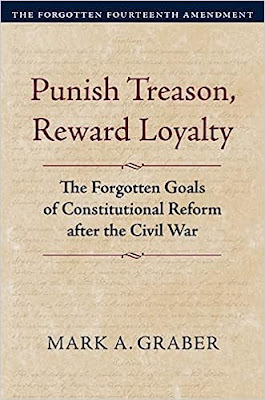
Mark A. Graber, Punish Treason, Reward Loyalty: The Forgotten Goals of Constitutional Reform after the Civil War (University of Kansas Press, 2023)
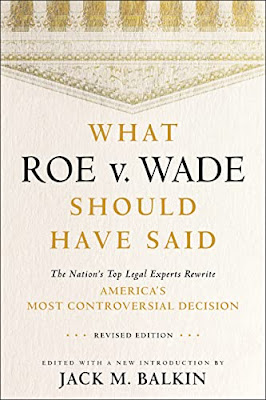
Jack M. Balkin, What Roe v. Wade Should Have Said: The Nation's Top Legal Experts Rewrite America's Most Controversial Decision - Revised Edition (NYU Press, 2023)

Andrew Koppelman, Burning Down the House: How Libertarian Philosophy Was Corrupted by Delusion and Greed (St. Martin’s Press, 2022)

Gerard N. Magliocca, Washington's Heir: The Life of Justice Bushrod Washington (Oxford University Press, 2022)
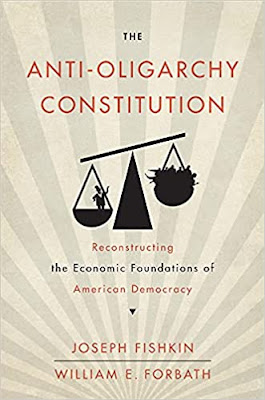
Joseph Fishkin and William E. Forbath, The Anti-Oligarchy Constitution: Reconstructing the Economic Foundations of American Democracy (Harvard University Press, 2022)
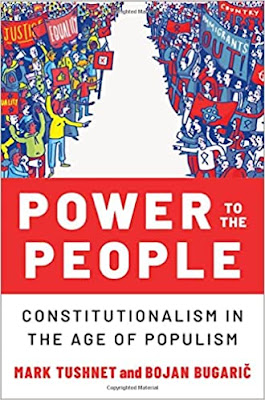
Mark Tushnet and Bojan Bugaric, Power to the People: Constitutionalism in the Age of Populism (Oxford University Press 2021).

Mark Philip Bradley and Mary L. Dudziak, eds., Making the Forever War: Marilyn B. Young on the Culture and Politics of American Militarism Culture and Politics in the Cold War and Beyond (University of Massachusetts Press, 2021).

Jack M. Balkin, What Obergefell v. Hodges Should Have Said: The Nation's Top Legal Experts Rewrite America's Same-Sex Marriage Decision (Yale University Press, 2020)

Frank Pasquale, New Laws of Robotics: Defending Human Expertise in the Age of AI (Belknap Press, 2020)

Jack M. Balkin, The Cycles of Constitutional Time (Oxford University Press, 2020)

Mark Tushnet, Taking Back the Constitution: Activist Judges and the Next Age of American Law (Yale University Press 2020).

Andrew Koppelman, Gay Rights vs. Religious Liberty?: The Unnecessary Conflict (Oxford University Press, 2020)

Ezekiel J Emanuel and Abbe R. Gluck, The Trillion Dollar Revolution: How the Affordable Care Act Transformed Politics, Law, and Health Care in America (PublicAffairs, 2020)

Linda C. McClain, Who's the Bigot?: Learning from Conflicts over Marriage and Civil Rights Law (Oxford University Press, 2020)
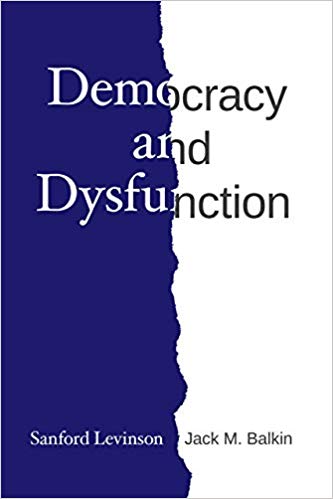
Sanford Levinson and Jack M. Balkin, Democracy and Dysfunction (University of Chicago Press, 2019)

Sanford Levinson, Written in Stone: Public Monuments in Changing Societies (Duke University Press 2018)

Mark A. Graber, Sanford Levinson, and Mark Tushnet, eds., Constitutional Democracy in Crisis? (Oxford University Press 2018)

Gerard Magliocca, The Heart of the Constitution: How the Bill of Rights became the Bill of Rights (Oxford University Press, 2018)

Cynthia Levinson and Sanford Levinson, Fault Lines in the Constitution: The Framers, Their Fights, and the Flaws that Affect Us Today (Peachtree Publishers, 2017)

Brian Z. Tamanaha, A Realistic Theory of Law (Cambridge University Press 2017)

Sanford Levinson, Nullification and Secession in Modern Constitutional Thought (University Press of Kansas 2016)

Sanford Levinson, An Argument Open to All: Reading The Federalist in the 21st Century (Yale University Press 2015)

Stephen M. Griffin, Broken Trust: Dysfunctional Government and Constitutional Reform (University Press of Kansas, 2015)

Frank Pasquale, The Black Box Society: The Secret Algorithms That Control Money and Information (Harvard University Press, 2015)

Bruce Ackerman, We the People, Volume 3: The Civil Rights Revolution (Harvard University Press, 2014)
Balkinization Symposium on We the People, Volume 3: The Civil Rights Revolution

Joseph Fishkin, Bottlenecks: A New Theory of Equal Opportunity (Oxford University Press, 2014)

Mark A. Graber, A New Introduction to American Constitutionalism (Oxford University Press, 2013)

John Mikhail, Elements of Moral Cognition: Rawls' Linguistic Analogy and the Cognitive Science of Moral and Legal Judgment (Cambridge University Press, 2013)

Gerard N. Magliocca, American Founding Son: John Bingham and the Invention of the Fourteenth Amendment (New York University Press, 2013)

Stephen M. Griffin, Long Wars and the Constitution (Harvard University Press, 2013)

Andrew Koppelman, The Tough Luck Constitution and the Assault on Health Care Reform (Oxford University Press, 2013)

James E. Fleming and Linda C. McClain, Ordered Liberty: Rights, Responsibilities, and Virtues (Harvard University Press, 2013)
Balkinization Symposium on Ordered Liberty: Rights, Responsibilities, and Virtues

Andrew Koppelman, Defending American Religious Neutrality (Harvard University Press, 2013)

Brian Z. Tamanaha, Failing Law Schools (University of Chicago Press, 2012)

Sanford Levinson, Framed: America's 51 Constitutions and the Crisis of Governance (Oxford University Press, 2012)

Linda C. McClain and Joanna L. Grossman, Gender Equality: Dimensions of Women's Equal Citizenship (Cambridge University Press, 2012)

Mary Dudziak, War Time: An Idea, Its History, Its Consequences (Oxford University Press, 2012)

Jack M. Balkin, Living Originalism (Harvard University Press, 2011)

Jason Mazzone, Copyfraud and Other Abuses of Intellectual Property Law (Stanford University Press, 2011)

Richard W. Garnett and Andrew Koppelman, First Amendment Stories, (Foundation Press 2011)

Jack M. Balkin, Constitutional Redemption: Political Faith in an Unjust World (Harvard University Press, 2011)

Gerard Magliocca, The Tragedy of William Jennings Bryan: Constitutional Law and the Politics of Backlash (Yale University Press, 2011)

Bernard Harcourt, The Illusion of Free Markets: Punishment and the Myth of Natural Order (Harvard University Press, 2010)

Bruce Ackerman, The Decline and Fall of the American Republic (Harvard University Press, 2010)
Balkinization Symposium on The Decline and Fall of the American Republic

Ian Ayres. Carrots and Sticks: Unlock the Power of Incentives to Get Things Done (Bantam Books, 2010)

Mark Tushnet, Why the Constitution Matters (Yale University Press 2010)

Ian Ayres and Barry Nalebuff: Lifecycle Investing: A New, Safe, and Audacious Way to Improve the Performance of Your Retirement Portfolio (Basic Books, 2010)
.jpg)
Jack M. Balkin, The Laws of Change: I Ching and the Philosophy of Life (2d Edition, Sybil Creek Press 2009)

Brian Z. Tamanaha, Beyond the Formalist-Realist Divide: The Role of Politics in Judging (Princeton University Press 2009)
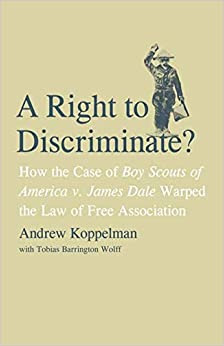
Andrew Koppelman and Tobias Barrington Wolff, A Right to Discriminate?: How the Case of Boy Scouts of America v. James Dale Warped the Law of Free Association (Yale University Press 2009)

Jack M. Balkin and Reva B. Siegel, The Constitution in 2020 (Oxford University Press 2009)

Heather K. Gerken, The Democracy Index: Why Our Election System Is Failing and How to Fix It (Princeton University Press 2009)

Mary Dudziak, Exporting American Dreams: Thurgood Marshall's African Journey (Oxford University Press 2008)

David Luban, Legal Ethics and Human Dignity (Cambridge Univ. Press 2007)

Ian Ayres, Super Crunchers: Why Thinking-By-Numbers is the New Way to be Smart (Bantam 2007)

Jack M. Balkin, James Grimmelmann, Eddan Katz, Nimrod Kozlovski, Shlomit Wagman and Tal Zarsky, eds., Cybercrime: Digital Cops in a Networked Environment (N.Y.U. Press 2007)
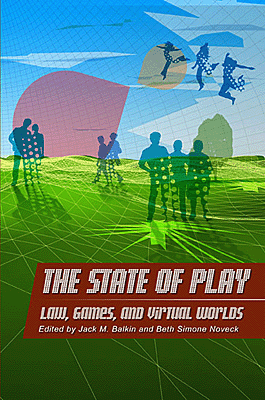
Jack M. Balkin and Beth Simone Noveck, The State of Play: Law, Games, and Virtual Worlds (N.Y.U. Press 2006)

Andrew Koppelman, Same Sex, Different States: When Same-Sex Marriages Cross State Lines (Yale University Press 2006)

Brian Tamanaha, Law as a Means to an End (Cambridge University Press 2006)

Sanford Levinson, Our Undemocratic Constitution (Oxford University Press 2006)

Mark Graber, Dred Scott and the Problem of Constitutional Evil (Cambridge University Press 2006)

Jack M. Balkin, ed., What Roe v. Wade Should Have Said (N.Y.U. Press 2005)

Sanford Levinson, ed., Torture: A Collection (Oxford University Press 2004)
Balkin.com homepage
Bibliography
Conlaw.net
Cultural Software
Writings
Opeds
The Information Society Project
BrownvBoard.com
Useful Links
Syllabi and Exams
