Balkinization
an unanticipated consequence of
Jack M. Balkin
Balkinization Symposiums: A Continuing List
E-mail:
Jack Balkin:
jackbalkin at yahoo.com
Bruce Ackerman
bruce.ackerman at yale.edu
Ian Ayres
ian.ayres at yale.edu
Corey Brettschneider
corey_brettschneider at brown.edu
Mary Dudziak
mary.l.dudziak at emory.edu
Joey Fishkin
joey.fishkin at gmail.com
Heather Gerken heather.gerken at yale.edu
Abbe Gluck abbe.gluck at yale.edu
Mark Graber
mgraber at law.umaryland.edu
Stephen Griffin
sgriffin at tulane.edu
Jonathan Hafetz
jonathan.hafetz at shu.edu
Jeremy Kessler
jkessler at law.columbia.edu
Andrew Koppelman
akoppelman at law.northwestern.edu
Marty Lederman
msl46 at law.georgetown.edu
Sanford Levinson
slevinson at law.utexas.edu
David Luban
david.luban at gmail.com
Gerard Magliocca
gmaglioc at iupui.edu
Jason Mazzone
mazzonej at illinois.edu
Linda McClain
lmcclain at bu.edu
John Mikhail
mikhail at law.georgetown.edu
Frank Pasquale
pasquale.frank at gmail.com
Nate Persily
npersily at gmail.com
Michael Stokes Paulsen
michaelstokespaulsen at gmail.com
Deborah Pearlstein
dpearlst at yu.edu
Rick Pildes
rick.pildes at nyu.edu
David Pozen
dpozen at law.columbia.edu
Richard Primus
raprimus at umich.edu
K. Sabeel Rahmansabeel.rahman at brooklaw.edu
Alice Ristroph
alice.ristroph at shu.edu
Neil Siegel
siegel at law.duke.edu
David Super
david.super at law.georgetown.edu
Brian Tamanaha
btamanaha at wulaw.wustl.edu
Nelson Tebbe
nelson.tebbe at brooklaw.edu
Mark Tushnet
mtushnet at law.harvard.edu
Adam Winkler
winkler at ucla.edu
Compendium of posts on Hobby Lobby and related cases
The Anti-Torture Memos: Balkinization Posts on Torture, Interrogation, Detention, War Powers, and OLC
The Anti-Torture Memos (arranged by topic)
Recent Posts
More on presidential dictatorship
![[Powered by Blogger]](https://lh3.googleusercontent.com/blogger_img_proxy/AEn0k_u1tu6ydbErKOxt6yIGqouGAIcPhLdD6FnqelRuAqVM-49r1zSezfUS53YR6M0PDIt7kBXTYP7nMZ0sTQP6pztdQbCnHiQxbXgVW6f5wpQB=s0-d)
Just A Few Blogs
ACS Blog
Alas, a Blog
Althouse
Arts and Letters Daily
Atrios (Eschaton)
Bill of Health
Buzzflash.com
Buzz Machine
Cato at Liberty
Juan Cole (Informed Comment)
Concurring Opinions
The Constitution in 2020
Corrente
Crooked Timber
Daily Howler
Daily Kos
Dana Boyd
Brad DeLong
Digby (Hullabaloo)
Discriminations
Daniel Drezner
Kevin Drum (Mother Jones)
Electrolite
En Banc
Eunomia (Daniel Larison)
Fafblog
Michael Froomkin (Discourse.net)
GovLab (Beth Noveck)
Rick Hasen (Election Law)
History News Network
How Appealing
Ignatz (Sam Heldman)
The Importance of (Ernie Miller)
Infolaw
Instapundit
International Economic Law and Policy Blog
IntLawGrrls
Jacob Levy
Jesus' General
Jurisdynamics
The Kitchen Cabinet
Mark Kleiman
Law Blog Central
Larry Lessig
Lawyers, Guns and Money
Liberal Oasis
Brian Leiter's Law School Reports
The Leiter Reports
Marginal Revolution
Megan McArdle
Memeorandum
Metafilter
Mirror of Justice
The New Republic
Newseum
No More Mister Nice Blog
Brendan Nyhan
Opinio Juris
Orcinus
The Originalism Blog
Pandagon
Passport (Foreign Policy)
Overcoming Bias
Political Animal (Washington Monthly)
Political Theory Daily Review
Political Wire (Taegan Goddard)
The Poor Man
Virginia Postrel
Prawfsblawg
Public Reason
Jonathan Rauch
Raw Story
Redstate
ReligiousLeftLaw.com
Reporters Committee For Freedom of the Press
Reproductive Rights Blog
Rothman's Roadmap to the Right of Publicity
SCOTUS Blog
Seeing the Forest
Clay Shirky
The Shifted Librarian
The Situationist
Larry Solum (Legal Theory)
Andrew Sullivan
Talking Points Memo
Talk Left
Tapped
Tbogg
TechPresident
The Paper Chase (Jurist)
Tom Paine
Tom Tomorrow (This Modern World)
Eve Tushnet
Uggabugga
University of Chicago Law School Faculty Blog
Unqualified Offerings
The Volokh Conspiracy
War and Piece (Laura Rozen)
Wampum
Oliver Willis
Wonkette
Written Description
Matthew Yglesias
Yin
Your Choice of Feeds
1. XML
powered by

2. Atom Feed
3. RSS 2.0
More on presidential dictatorship
Sandy Levinson
I have gotten into hot water before by suggesting that our vaunted (and highly defective) Constitution in effect creates a partial presidential dictatorship. Some people, wrongly I believe, assume that the notion of "a partial...dictatorship" is an oxymoron. I will address that point more below. Others, just as wrongly, say that we can't describe the President as a dictator because, after all, he (and I won't bother adding the usual "or she" in this particular posting) is "accountable" to We the People, unlike "real" dictators.
So let me explain: First, as to the "partial" nature of the dictatorship. No one would argue that the president has anything approaching dictatorial power with regard to making changes happen on the domestic side. Indeed, presidents traditionally learn early on in their terms that we have a constitutional system geared for gridlock and that they can achieve little, if any, of their more ambitious agendas, such a medical care reform for Clinton or privatizing social security for Bush. To be sure, as Elena Kagan explained in a brilliant article on the Clinton Administration's version of the administrative state, aggressive presidents can try to capture control of some of the executive agencies and use their power to get compatible regulatory changes that have not (and might well not) be approved by Congress, but, at the end of the day, it would indeed be hyperbolic to describe this as "dictatorial," not least because an aroused Congress has a variety of ways of exacting revenge against administrative agencies who become clear outliers relative to congressional preferences.
Where "dictatorship" becomes somewhat less hyperbolic is with regard to the policy-based presidential veto that I have previously railed against. Here, one man, with the stroke of a pen, can negate the judgment of majorities of both houses. Yes, it's true that vetoes can theoretically be overridden, but as I demonstrate in my book (which I won't bother to name, since you can find it in the right margin), the "success" rate for presidents is approximatly 95%. So even if presidents have limited power to make things happen, with regard to domestic policy, they have close to absolute power to prevent things from happening, at least at the national level, unless the particular policy in question can survive both a partisan-gerrymandered House and a Senate that gives unconsionable power to senators representing small-population states. (States, of course, may take the lead, as is happening to an extent both with medical and environmental policy, but for all sorts of well-known reasons, policy in these areas must ultimately be made at the national (or, re the environment, international) level rather than left to smaller units of government.
One defense of the veto, as well as other exercises of presidential power (especially by "unitary executive" buffs) is that the president is "accountable" to the electorate. This may be true in the first term of a presidency, when one assumes a) that a president will wish to run for re-election and b) that a president will behave as a "rational actor" and shape actions around the prospect of appealing to voters. But this model has not apparent application to a second-term president, who knows above all that he will be out of office in a measurable number of days (currently, I believe 655) and will never be facing the electorate again. If the president is a loyal party man, then one might build in a "transferred accountability" notion, by which the altruistic president will shape actions about what will help a future candidate from his own party, but that may be a stretch, particularly when we come to the area where the term "dictatorship" is most appropriate, which is foreign and military policy.
Ironically, in these areas, it's not even crystal clear that we would want a president to be "accountable" to the public in the way described above if that meant that a president would engage in actions that he believed would be harmful to American foreign policy or security interests merely to pander to voters. Sure, this occurs--see, e.g., the idiotic boycott of Cuba because of the fortuitous power of Cuban-Americans in Miami (and, to some degree, in Jersey City)--but there are few who will defend such phenomena on "political grounds" alone. (If you think the boycott is a good idea, fine. Then the president is doing the right thing and not pandering. Don't bother sending in comments about how bad Castro is and how efficacious the boycott is.) But does anyone believe, for example, that someone so smart as Bill Clinton believed that our Cuba policy made the slightest bit of sense? And does anyone believe that Hillary Clinton is any more committed to that policy on the merits than her husband most probably was(n't)?)
And, incidentally, one might place the presidential pardon in the basket of "dictatorial powers," if presidents choose to use them that way. Just as veto can negate the solemn judgment of majorities of both houses of Congress, so can a pardon negate the conclusions of a jury and of the judiciary. Can you spell I. Lewis Libby or, for that matter, Caspar Weinberger, the beneficiary of a pardon at the very end of George H. W. Bush's administration, a far, far more serious act than Bill Clinton's presumptively indefensible pardon of Marc Rich? Pardons, of course, are directly traceable to the prerogatives of kingship. I'm actually not opposed to a presidential pardon power, but we should note that it is in fact subject to abuse, whether or not there is a legal remedy for such abuse.
In any event, second-term presidents have none of the "electoral connection," with regard to their own retention in office, that David Mayhew so memorably describes when discussing members of Congress. And even if a lame-duck president has an interest in the mid-term election, given its relevance to the potential success of his agenda, there is no such "connection" in the last two-years of an eight-year term, which is, of course, our own present situation. Let me suggest, incidentally, that one relevant difference between Clinton's request for the resignation of all 93 US Attorneys and Bush's more recent efforts, is precisely that Clinton as acting at the beginning of his first term, and if there's anything we know about Bill Clinton, it is that he was thinking from day one of his next campaign. Thus he presumably expected to be held "accountable" in the 1996 campaign, though, interestingly enough, no one seemed to care. George W. Bush, on the other hand, is acting in an extremely different context, where there is no such electoral incentive to keep him (or Karl Rove) minimally honest (and, guess what, they aren't).
Nor can one maintain that "accountability" is provided by some previous "authorization" by an electorate. Even if one believes that mass electorates can be said to "authorize" particular policies, to rely on past elections for some general decisional authority by a president is to adopt something far closer to a notion of "limited-term dictatorship" than a truly "accountable" presidency. (As I shall note below, there is no necessary contradiction in describing someone as a "limited-term" dictator.)
So, as Mr. Bush so unforgettably described himself, in certain realms he is, indeed, "the decider," with little or no accountability in any formal sense. The threat of impeachment doesn't work, for at least two reasons. One is that it is spectacularly unlikely in fact to work as a means of getting rid of a president. The second is that the Constitution forces us into an almost entirely beside-the-point debate about whether the president has committed a "high crime and misdemeanor" rather than the proper debate about whether his policies are in fact a menace to the nation and the world (not to mention the brave young (and not so young) men and women whose lives are indeed being "wasted," as was said in incautious moments by Sen. John McCain
and Sen. Barack Obama). What I believe we need, as most of you know, is some system for a vote of no-confidence, which would make a president accountable, but there's no point in rehearsing that oft-presented argument.
Most Americans have an unanalyzed picture of "dictatorship," revolving around, say, "ideal- type" dictators like Stalin, Hitler, Castro, or Saddam Hussein. But, as Clinton Rossiter pointed out almost sixty years ago in a marvelous (and scary) book, Constitutional Dictatorship, such dictatorships are only at one end of a spectrum. The notion of institutionalized (and limited) dictatorship goes back to ancient Rome. One might not be able to be partially pregnant, but one can be a "partial dictator" if there is a policy domain over which one has basically near-absolute authority, even if it's only for a specified period of time, without fearing political consequences beyond loss of popularity. (And certain "leaders," including, one suspects, Mr. Bush, to some extent luxuriates in his present unpopularity as a sign that he is indeed standing up for principles, just as did his hero Winston Churchill during theh 1930s.) Some defend the DOJ purge on ground that the US Attorneys are mere "employees at will," subject to presidential whim; would they support the right of Bush, like Caligula, to appoint his horse (named, in this case, Alberto "Fredo" Gonzales)? In any event, I believe they are adopting a theory of government akin to dictatorship. I might be unfair to them if they recognize Congress's genuine participation in the appointment process and the right to refuse to confirm some of these nominees, though I would then expect them to support the repeal of the the Administration's cleverly salted recent legislation that operated precisely to cut Congress out of the loop.
It's probably true that I wouldn't be moved to be reflecting so much on "constitutional dictatorship" if it weren't for my opposition to George W. Bush, which I know that some of you believe is over the top. Even if it is, I am offering an institutional analysis that applies to all of our contemporary presidents, particularly in their second terms after mid-term elections. And, for what it is worth, for all of my loathing of Mr. Bush, I have publicly opposed, in an essay in The Nation, impeaching him. Even I concede that there is nothing that can be done (other, for those who believe it is efficacious, than to pray that the great "decider" gains some wisdom to go along with his arrogance) about the Bush presidency. But we have another president who will take over on Jan. 20, 2009, and, regardless of our political preferences, we might have a useful conversation about whether we're entirely happy with the kinds of powers--including smothering with "executive privilege" communications from party hacks whose sole job is to aggrandize presidential power--that that man or woman will have, particularly in the second term.
Carl Sandburg once wrote that "the fog comes in on little cats feet." So can authoritarian/dictatorial governance. This is the discussion we ought to be having as we decide who shall next inhabit the White House. But, of course, one thing that prevents its taking place, besides the "horse-race" media coverage of the races, is that such a discussion requires admitting that our sacred Constitution might not be the barrier against tyranny (even if the tyrant has only a limited term) that we'd like to think it is.
Posted
2:24 PM
by Sandy Levinson [link]
And its 645 days.

It is not counting angels on a pin given the lists of violations raised by many people. I have this idea this is ignored for some sort of strategic point, akin to thinking that the modern administrative state was impossible since hey it wasn't really done ... before it was.
The breadth of "dictator-like" powers is also interesting. Is prosecutorial discretion a problem then, esp. as decided from up high, perhaps if we can have a grand jury (representing the populance) decided whether or not to bring the case? If it decides yes, is it "dicatatorial" for a single prosecutor to decide to not bring the case to fruitation, perhaps for a reason not compelled by civil liberties concerns?
IOW, any number of decisions boil down to acts of one. Not just in the executive dept. I'm sure some are troubling, like the power of individual senators (is senatorial courtesy overall, including for local officials, to be damned totally? etc.) in practice.
Finally, to get anything done, the President (usually) has to compromise if Congress cares to challenge singular acts in various cases. Bush himself pulled back repeatedly, as various lists of his "flip flops" suggest. And, overall, over history, Presidents acted more carefully, even if their had the power not to do so.
But, the concern is there, surely, and the professor supplies food for thought.
As for Miguel's important point about the virtues of looking south for evidence, he is absolutely correct, just as he is with regard to distinguishing between "totalitarian" dictatorships (which Bush gives no evidence of aspiring to) and the more limited domain dictatorship to which Miguel draws our attention. I'd also note that Kim Lane Scheppele, a sometime contributor to Balkinization, is doing absolutely seminal work on the world-wide growth of executive power that is occurring partly in response to UN Security Council resolutions encouraging an "emergency-power" view of what is necessary to fight the "global war on terrorism." Part of her argument is elaborated in an article that recently appeared in the Georgia Law Review, responding to my own essay on "Constitutional Norms and Permanent Emergencies." I strongly recommend her response and, indeed, anything that she has published on the subject.
The basic problem is that we need to give the Executive some discretion in order to accomplish good. At the same time, of course, we'd like to prevent that discretion from being misused, but taking away the power also means taking away the ability when we need it.
From my perspective, the real failures of the last 7 years have been the Courts (the decision in Bush v. Gore was indefensible); Congress (where the Republican majority sacrificed the national interest to partisan interests); and the press (which woefully failed to expose the lies and inadequacies of the Administration).
For these reasons, I think the problem is broader than you suggest, but, perhaps, easier to fix. Good effects might come from relatively minor changes in the Executive such as reducing a veto override to 60 votes or eliminating executive privilege in order to assure transparency or writing the War Powers Act into the Constitution. At the same time, though, we need to focus on the failure of Congress and the courts to fulfill their responsibilities and of the press to change its "he said/she said" style of "reporting". Whatever we do with or to the presidency can't alone suffice; only countervailing power can do that.
Changing executive privilege--I'm not sure that even I would favor eliminating it entirely--would presumably require a statute that could itself be vetoed by the President. And, of course, any prosecution for contempt of Congress appears to have to go through the DOJ controlled by the President.
As for the failures of Congress, one of the reasons I have been so vigorously commending Darryl (no relation) Levinson's work is that he demonstrates that the "villain," if such it is, is the party system that leads members of Congress to play dead with regard to presidents of their own party. That we see a Democratic Congress now vigorously investigating the Executive is evidence of how the party system operates, in conjunction with separated institutions, rather than a sign that a reified entity called "congress" has suddenly determined to wake up from its four-year slumbers. I don't how much I would trust the present Congress to engage in significant oversight over a Clinton presidency for just that reason.
I would agree. So long as the parties remain as polarized as they are today, our choices are divided government, with little getting done, or one-party government, with abuses running unchecked. Divided government is the lesser evil.
That's worked out well.
Of course, but there are different dynamics to the situation. With an amendment there's no immediate partisan issue as there is with a veto. Thus, party loyalty isn't on the line. Relatedly, Congress has institutional interests which may incline them to support a lower threshold; it makes Congress more influential, after all.
It's also possible to "sweeten" the amendment in order to avoid potential resistance. For example, it could be written so as not to take effect for 4 years, thereby making it unclear which party will benefit. Alternatively, it might be combined with some other issue of importance such as a line item veto.
So long as the parties remain as polarized as they are today, our choices are divided government, with little getting done, or one-party government, with abuses running unchecked. Divided government is the lesser evil.
I personally think gerrymandering causes much of the problem. If we could eliminate that (yeah, I know), there might be less incentive to wish for divided government.
I have a hard time seeing the President's range of plenary powers (which are primarily limited to foreign policy) to be any more "dictatorial" than Congress' much broader range of plenary powers.
Plenary powers are not dictatorial. Rather, they are simply a division of duties.
No plenary power granted to either elected branch is free from checks by the other branch. Congress may check the President's foreign policy powers through the power to declare war, raise money and approve treaties. The President has the veto.
If the stakes are high enough, the Congress has the ultimate trump of impeachment. The President cannot remove a Congress.
Institutionally, the Congress has far more power than the President under the Constitution. However, this is balanced somewhat by the fact that the Executive has one decision maker wielding power - the President - while the Congress can tie itself in knots and must rule through consensus.
However, this in itself does not make the President a "dictator." Dictators can dictate policy. However, the President is subject to congressional and judicial checks and balances.
You make an interesting point about the lack of accountability for a term limited President in his final term which is not shared by congressional representatives and senators who can run over and over again for a lifetime.
However, I would also observe that a President who cannot run again is also at the nadir of his power because he cannot punish a recalcitrant Congress by running against it in the next election. Indeed, the off year election in a President's second term often results in substantial losses for the President's party in Congress, weakening him further. Thus, the Congress will begin ignoring the "lame duck" President more and more as time passes after the second election and especially when new faces take the lead for the party as the next presidential election gets underway.
Thus, a President in his second term is more often reduced to second fiddle rather than promoted to dictator over Congress.
And, of course, I don't think that impeachment represents a serious threat to most presidents. I continue to believe that the Republicans would never have impeached Clinton had they not been confident that the Senate would not convict and therefore put Al Gore in the White House, free to run as the incumbent. Impeachment can tie up a president's domestic agenda, as it most certainly did for Clinton, but it doesn't affect his formal military or foreign policy authority.
or writing the War Powers Act into the Constitution....
Been there, done that. What we need to do is to getthe freakin' courts off their butts and get them to say that the Constitution means what it says. To my mind, the reluctance fo the courts to do so previously has to do with some deference in times of at least debatable threats to national security and interests. Maybe the present situation(s?) may make an excellent time for the courts to say "enough's enough" and rein in the executive usurpation of a sometimes-more-than-willingly-delegated war powers, and perhaps a closer look at whether in fact the "exigencies" cited for a need for the executive to engage in precipiate action w/o Congressional action really make sense. In my mind, they don't (and what the Founders thought that the limits on such unilateral executive actions were back then aren't too much different from what pertains today).
Maybe with such a stoopid and unnecessary war, we have the right vehicle to really properly assess the proper roles of Congress and the executive.
I continue to believe that the Republicans would never have impeached Clinton had they not been confident that the Senate would not convict and therefore put Al Gore in the White House, free to run as the incumbent.
Prof. Levinson: I think you ascribe to them more rationality than warranted, and far less hostility and anger. As for the consequences and sequelae, I suspect they were like the Underpants Gnomes.
Cheers,
But Professor Levinson gets at some very fundamental value issues with his characterization. If I had to choose between (a) being ruled by a King who I could sue in common law court and whose powers were limited and dependent upon securing basic rights of the people, and (b) being ruled by a perfectly democratic body that had unrestricted and undelegated authority, I would choose the King.
To me some of the most problematic aspects of some of the President's unchecked powers are that modern office holders don't feel a responsibility to use them. There are far more people than Scooter Libby who have a case for pardoning.
Foreign policy is a tougher question. If the President really had dictatorial powers in that arena, we wouldn't be arguing about his powers in Gitmo. He could simply declare himself judge, jury, executioner, and court stenographer. Or rather, he could declare it and be unchallenged.
I am surprised that Professor Levinson expresses the least concern about regulatory agencies. Veto and pardon powers are limited and defined, but regulatory agencies touch nearly every aspect of modern life. Here the King's powers are least guaranteed to be premised upon respect for the rights of the people, and they can do the most amount of active harm to ordinary Americans.
I remember at the time that there were lots of ordinary Republicans who supported impeachment but didn't want Gore to be the incumbent.
It's really a matter of a different irrationality: the Republicans impeached Clinton as a value statement rather than a practical measure. It was an expression of their moral contempt for Clinton rather than an attempt to accomplish a goal.
I will leave it as an excercise to the reader to note other Republican policies that better serve to express a moral value than to accomplish their ostensible goal.
The presidency inherently has some problems, and unlike some here imply, Sandy Levinson has been say so before 1/20/01, but this one has been particularly so. And, the lack of adequate checks and balances (plus 9/11 ... before 9/11 his credibility was already slipping and after 9/11 helped the Rs regain control of the Senate) is a major part of the problem.
As to Arne and the courts, a tragedy is that Bush v. Gore perverted the hope for an adequate check in this regard, though there is some hope given even Bush appointees realize some limits on executive power. The SC and lower courts in the immediate future, until grade school children go to college in various cases, will have the balance of power in large part controlled by Bush judges.
It is a bit depressing.
Perhaps because they don't, as a rule, arrest, detain and execute you?

We always work from the assumption that the US Constitution is a work of genius, that the "Founding Fathers" were exceptional, that our success as a nation over the last century and a half is due to their fine craftsmanship. This naturally leads to discussions on how to tweak the congress or the presidency.
Is that true? If not, discussing tweaking is downright silly - it won't make a significant difference.
Why would I suspect that it's not true? Well, as pointed out up-thread, the basic presidentialist model has been tried throughout the Americas, and has failed, often disastrously, everywhere but in the US. It naturally leads towards dictatorship, or at least to a destructive centralization of power.
How are we different? One possibility is that our legal system is not Napoleonic but common-law, which creates a certain judicial friction against centralizing power.
But the most obvious difference is wealth: our nation was founded at one edge of an extraordinarily wealthy continent, but whose native peoples were extraordinarily technologically unsophisticated. In South and Central America there simply did not exist the same opportunity to steal a continent - Central America had large cities, and South America is geographically split by the spine of the Andes. Additionally, North America is much closer via ocean trade routes with both Europe and Asia, giving it a huge trade advantage over our southern neighbors (the most successful of which, Chile and Argentina, were on those same trade routes before the opening of the Panama canal).
So maybe, just maybe, almost any system would have succeeded that was friendly to business and technologically advanced. We didn't need to be geniuses, we didn't need a well designed political system, just a minimally competent system. Our advantaged position made it inevitable that almost any such system would succeed. And now we face a changed world and a matured nation: the cracks will emerge (and have been emerging), decade by decade. If that is so, tinkering with presidential power will do little to avoid the oncoming problems.
I've been waiting to see if anybody else would say it, but nobody has, so -- here goes:
Lacking a mathematics of politics I cannot prove this, but I rather strongly suspect that any office powerful enough to be effective can be abused by an unscrupulous person. (Call this Godel's theorem of politics.)
In a perfect world, a system designed around checks and balances would be sufficient to restrain such an executive, but as we see in the world we have, those whose job it should be to perform the balancing may instead be unwilling or unable to balance.
The electorate may be misinformed or misled into returning those who have not done their constitutional duty, and how do you contemplate forcing the electorate to perform their portion of the task of upholding their freedom?
A new constitution, while possibly fixing some problems with our current system, does not appear to me to have a good chance to fix any of the above problems, and they are at the center of the problems we face today.
Why should any particular office be effective? In all seriousness, in any security situation, you always partition effectiveness across numerous offices requiring consensus to act. Two different keys have to be turned to launch a missile. The Romans had two consuls who could block each other. The Spartans had two kings. Some European countries use coalition systems, so any significant policy change without consensus is likely to collapse the government.
It's what is meant by checks and balances. But those checks and balances can not be static - in the dynamism of the real world, they need to be continually (at the rate of decades or centuries) re-partitioned. The "real" problem today is that a system designed to constrain a small bureaucracy is incapable of handling the massive bureaucracy of a world hegemon - see Rome for former examples. The bureaucrats (and their master, the president) outweigh the representative arms of the government. Our current system has too few points of capture to effectively control that bureaucracy (including the military).
Of course, you're right by Godel that any formal system is going to have "bugs". Any election system can be manipulated to thwart the electorate, for example. But that just means that we are in a constant arms race, fixing bugs as new ones appear - that's just the "Red Queen Effect" in biology.
Or is your position simply that the Swiss are smarter than we are?
The "real" problem today is that a system designed to constrain a small bureaucracy is incapable of handling the massive bureaucracy of a world hegemon - see Rome for former examples. The bureaucrats (and their master, the president) outweigh the representative arms of the government.
That, I think, encapsulates the real problem today. The executive power of government, all government, has grown beyond what anyone in the 18th century could have imagined. A form of government that was perfectly reasonable then is out of balance now because of the vast growth in executive power. Also, the Founders assumed political parties would be limited to the legislature and the excutive would be above partisanship. So we have an executive vastly larger than anyone in the 18th century could have foreseen, with an unabashedly partisan leader.
Brett, presumably, would say that we should cut back our executive to what it was in the 18th century and government will be back in balance, but I think the vast growth in executive power is necessary and inevitable for our highly complex, commercial, technically specialized society.
Significantly, newer government than ours do more to curb the executive. Most European governments are parliamentary and dispense with an independent executive altogether. Most US states have multiple executive offices, independently elected. Either approach, as you say, would require a radical reorganization of our government.
1) The Framers succeeded in their goal of creating a constitutional system which limits the exercise of government power to the bare minimum necessary to govern. The vertical checks and balances between the federal and state governments and the horizontal checks and balances between the three branches of government require and effective super majority consensus to exercise power. Given the failure rate among our representative systems, I think the Founders found the right balance.
2) Short of a military coup, there is no way a President can exercise anything close to dictatorial power. Because this is so, we are well and truly blessed with a military which (with the exception of military funding) generally stays out of politics. The military is sworn to uphold the Constitution, not to declare loyalty to any particular government.
(However, as I posted before, I worry that this may change if the members of the military continue to come from the same families and membership in and support for the military continues to be a partisan affair.)
3) The Government generally respects the law. Probably because they were enacted with super majority support, there is no dispute over following the vast majority of laws. When there is a dispute between the branches or parties over the legitimacy of a law, the democratic branches have almost always respected the tie breaker function of the judiciary. For example, the caricature here of "King George" doesn't quite match the fact that the President has complied with court orders which have gone against him. Compare that with "KIng Abraham."
There may be no hope that we'll converge here, but let me just say a few things about your reply:
Vesting effectiveness in multiple, rather than single positions, is pretty much a recipe for responsibility failures and for ineffective government. Why have government at all, if it isn't going to be effective?
(That's rhetorical: I've got these strong libertarian leanings that answer that question for me.)
I've never been a big fan of Roman government, nor of Sparta. As for the Swiss, what little real predictive or explanatory "political science" exists indicates that, the more homogeneous a society is, the more effective a pure democracy is likely to be, or so I've seen argued.
My point was that the current failure in American government -- and let me state, for the record, that I absolutely agree with the Professor's assertion that we are currently living under a form of dictatorship, unaccountable to the wishes of the people -- anyway, the current situation appears to stem from a failure of the electorate to elect "good government" rather than directly from a hopelessly flawed constitution.
If the problem does lie with the electorate, then it seems that fixing other problems are unlikely to be effective.
There is a balance between completely ineffective and overly effective. We needn't go libertarian to reign in some "over-effectiveness".
The electorate is not disjoint from the system. In other words, just calling people idjits gets us no where - we are idjits for a reason, and I say it's the system.
You may be right about democracy working better with a closer common understanding. There's an easy fix to that - decentralize. Who thinks that a centralized nation of 300 million is a good idea? I certainly don't - hard to see how we could have democracy under those conditions.
Obat tradisional menyembuhkan kutil kelamin
Obat minum untuk kutil kelamin
Obat medis untuk kutil kelamin
Obat kutil kelamin DE NATURE
Merek obat kutil kelamin
Obat kutil kelamin de nature
Nama obat kutil kelamin
Nama salep obat kutil kelamin
Obat kutil kelamin tanpa operasi
Obat oles untuk kutil kelamin
Obat kutil di alat kelamin pria
Obat untuk kutil pada kelamin
Obat tradisional kutil pada kelamin
Obat penyakit kutil kelamin
Obat penghilang kutil kelamin
Obat perontok kutil kelamin
Obat tradisional kutil kelamin pada pria
Obat untuk penyakit kutil kelamin
Propolis untuk obat kutil kelamin
Obat alami untuk penyakit kutil kelamin
Obat kutil pd kelamin
Resep obat kutil kelamin
Obat anti sifilis
Obat sipilis dijual di apotik
Obat sipilis murah di apotik
Obat alami sipilis pada pria
Obat sifilis ampuh
Obat sipilis beli di apotik
Obat sipilis buat wanita
Obat sipilis buatan sendiri
Obat sipilis bagi wanita
Obat buat sipilis
Obat biotik sifilis
Obat antibiotik buat sipilis
Obat tradisional buat sipilis
Obat herbal buat sipilis
Obat dokter buat sipilis
Obat generik buat sipilis
Obat sipilis dengan bayam duri
Obat sipilis yang bagus
Obat buat sifilis
Obat sipilis.com
Obat sipilis ciprofloxacin
Obat china sipilis
obat kutil kelamin dan leher
obat alami menghilangkan kutil kelamin
obat tradisional untuk menghilangkan kutil kelamin
kumpulan obat kutil kelamin
obat tradisional kutil kelamin
obat penyakit kutil kelamin
obat tradisional untuk kutil kelamin
Books by Balkinization Bloggers

Mark Tushnet and Bojan Bugaric, Constitutionalism and Its Discontents (University of Chicago Press, 2026)

Gerard N. Magliocca, The Actual Art of Governing: Justice Robert H. Jackson's Concurring Opinion in the Steel Seizure Case (Oxford University Press, 2025)

Linda C. McClain and Aziza Ahmed, The Routledge Companion to Gender and COVID-19 (Routledge, 2024)

David Pozen, The Constitution of the War on Drugs (Oxford University Press, 2024)

Jack M. Balkin, Memory and Authority: The Uses of History in Constitutional Interpretation (Yale University Press, 2024)
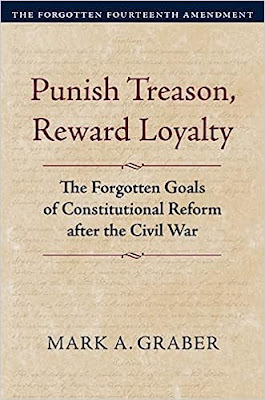
Mark A. Graber, Punish Treason, Reward Loyalty: The Forgotten Goals of Constitutional Reform after the Civil War (University of Kansas Press, 2023)
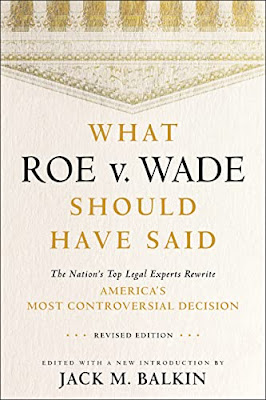
Jack M. Balkin, What Roe v. Wade Should Have Said: The Nation's Top Legal Experts Rewrite America's Most Controversial Decision - Revised Edition (NYU Press, 2023)

Andrew Koppelman, Burning Down the House: How Libertarian Philosophy Was Corrupted by Delusion and Greed (St. Martin’s Press, 2022)

Gerard N. Magliocca, Washington's Heir: The Life of Justice Bushrod Washington (Oxford University Press, 2022)
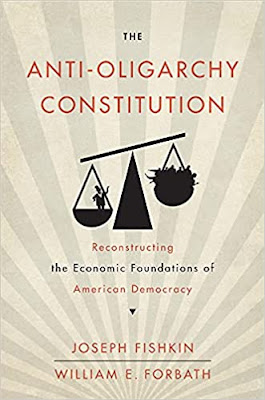
Joseph Fishkin and William E. Forbath, The Anti-Oligarchy Constitution: Reconstructing the Economic Foundations of American Democracy (Harvard University Press, 2022)
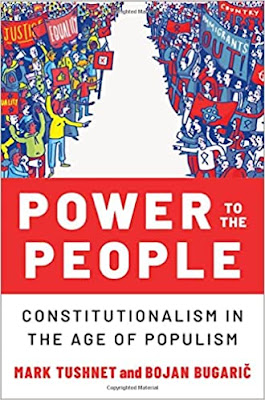
Mark Tushnet and Bojan Bugaric, Power to the People: Constitutionalism in the Age of Populism (Oxford University Press 2021).

Mark Philip Bradley and Mary L. Dudziak, eds., Making the Forever War: Marilyn B. Young on the Culture and Politics of American Militarism Culture and Politics in the Cold War and Beyond (University of Massachusetts Press, 2021).

Jack M. Balkin, What Obergefell v. Hodges Should Have Said: The Nation's Top Legal Experts Rewrite America's Same-Sex Marriage Decision (Yale University Press, 2020)

Frank Pasquale, New Laws of Robotics: Defending Human Expertise in the Age of AI (Belknap Press, 2020)

Jack M. Balkin, The Cycles of Constitutional Time (Oxford University Press, 2020)

Mark Tushnet, Taking Back the Constitution: Activist Judges and the Next Age of American Law (Yale University Press 2020).

Andrew Koppelman, Gay Rights vs. Religious Liberty?: The Unnecessary Conflict (Oxford University Press, 2020)

Ezekiel J Emanuel and Abbe R. Gluck, The Trillion Dollar Revolution: How the Affordable Care Act Transformed Politics, Law, and Health Care in America (PublicAffairs, 2020)

Linda C. McClain, Who's the Bigot?: Learning from Conflicts over Marriage and Civil Rights Law (Oxford University Press, 2020)
Sanford Levinson and Jack M. Balkin, Democracy and Dysfunction (University of Chicago Press, 2019)

Sanford Levinson, Written in Stone: Public Monuments in Changing Societies (Duke University Press 2018)

Mark A. Graber, Sanford Levinson, and Mark Tushnet, eds., Constitutional Democracy in Crisis? (Oxford University Press 2018)

Gerard Magliocca, The Heart of the Constitution: How the Bill of Rights became the Bill of Rights (Oxford University Press, 2018)

Cynthia Levinson and Sanford Levinson, Fault Lines in the Constitution: The Framers, Their Fights, and the Flaws that Affect Us Today (Peachtree Publishers, 2017)

Brian Z. Tamanaha, A Realistic Theory of Law (Cambridge University Press 2017)

Sanford Levinson, Nullification and Secession in Modern Constitutional Thought (University Press of Kansas 2016)

Sanford Levinson, An Argument Open to All: Reading The Federalist in the 21st Century (Yale University Press 2015)

Stephen M. Griffin, Broken Trust: Dysfunctional Government and Constitutional Reform (University Press of Kansas, 2015)

Frank Pasquale, The Black Box Society: The Secret Algorithms That Control Money and Information (Harvard University Press, 2015)

Bruce Ackerman, We the People, Volume 3: The Civil Rights Revolution (Harvard University Press, 2014)
Balkinization Symposium on We the People, Volume 3: The Civil Rights Revolution

Joseph Fishkin, Bottlenecks: A New Theory of Equal Opportunity (Oxford University Press, 2014)

Mark A. Graber, A New Introduction to American Constitutionalism (Oxford University Press, 2013)

John Mikhail, Elements of Moral Cognition: Rawls' Linguistic Analogy and the Cognitive Science of Moral and Legal Judgment (Cambridge University Press, 2013)

Gerard N. Magliocca, American Founding Son: John Bingham and the Invention of the Fourteenth Amendment (New York University Press, 2013)

Stephen M. Griffin, Long Wars and the Constitution (Harvard University Press, 2013)

Andrew Koppelman, The Tough Luck Constitution and the Assault on Health Care Reform (Oxford University Press, 2013)

James E. Fleming and Linda C. McClain, Ordered Liberty: Rights, Responsibilities, and Virtues (Harvard University Press, 2013)
Balkinization Symposium on Ordered Liberty: Rights, Responsibilities, and Virtues

Andrew Koppelman, Defending American Religious Neutrality (Harvard University Press, 2013)

Brian Z. Tamanaha, Failing Law Schools (University of Chicago Press, 2012)

Sanford Levinson, Framed: America's 51 Constitutions and the Crisis of Governance (Oxford University Press, 2012)

Linda C. McClain and Joanna L. Grossman, Gender Equality: Dimensions of Women's Equal Citizenship (Cambridge University Press, 2012)

Mary Dudziak, War Time: An Idea, Its History, Its Consequences (Oxford University Press, 2012)

Jack M. Balkin, Living Originalism (Harvard University Press, 2011)

Jason Mazzone, Copyfraud and Other Abuses of Intellectual Property Law (Stanford University Press, 2011)

Richard W. Garnett and Andrew Koppelman, First Amendment Stories, (Foundation Press 2011)

Jack M. Balkin, Constitutional Redemption: Political Faith in an Unjust World (Harvard University Press, 2011)

Gerard Magliocca, The Tragedy of William Jennings Bryan: Constitutional Law and the Politics of Backlash (Yale University Press, 2011)

Bernard Harcourt, The Illusion of Free Markets: Punishment and the Myth of Natural Order (Harvard University Press, 2010)

Bruce Ackerman, The Decline and Fall of the American Republic (Harvard University Press, 2010)
Balkinization Symposium on The Decline and Fall of the American Republic

Ian Ayres. Carrots and Sticks: Unlock the Power of Incentives to Get Things Done (Bantam Books, 2010)

Mark Tushnet, Why the Constitution Matters (Yale University Press 2010)

Ian Ayres and Barry Nalebuff: Lifecycle Investing: A New, Safe, and Audacious Way to Improve the Performance of Your Retirement Portfolio (Basic Books, 2010)
.jpg)
Jack M. Balkin, The Laws of Change: I Ching and the Philosophy of Life (2d Edition, Sybil Creek Press 2009)

Brian Z. Tamanaha, Beyond the Formalist-Realist Divide: The Role of Politics in Judging (Princeton University Press 2009)
Andrew Koppelman and Tobias Barrington Wolff, A Right to Discriminate?: How the Case of Boy Scouts of America v. James Dale Warped the Law of Free Association (Yale University Press 2009)

Jack M. Balkin and Reva B. Siegel, The Constitution in 2020 (Oxford University Press 2009)

Heather K. Gerken, The Democracy Index: Why Our Election System Is Failing and How to Fix It (Princeton University Press 2009)

Mary Dudziak, Exporting American Dreams: Thurgood Marshall's African Journey (Oxford University Press 2008)

David Luban, Legal Ethics and Human Dignity (Cambridge Univ. Press 2007)

Ian Ayres, Super Crunchers: Why Thinking-By-Numbers is the New Way to be Smart (Bantam 2007)

Jack M. Balkin, James Grimmelmann, Eddan Katz, Nimrod Kozlovski, Shlomit Wagman and Tal Zarsky, eds., Cybercrime: Digital Cops in a Networked Environment (N.Y.U. Press 2007)
Jack M. Balkin and Beth Simone Noveck, The State of Play: Law, Games, and Virtual Worlds (N.Y.U. Press 2006)

Andrew Koppelman, Same Sex, Different States: When Same-Sex Marriages Cross State Lines (Yale University Press 2006)

Brian Tamanaha, Law as a Means to an End (Cambridge University Press 2006)

Sanford Levinson, Our Undemocratic Constitution (Oxford University Press 2006)

Mark Graber, Dred Scott and the Problem of Constitutional Evil (Cambridge University Press 2006)

Jack M. Balkin, ed., What Roe v. Wade Should Have Said (N.Y.U. Press 2005)

Sanford Levinson, ed., Torture: A Collection (Oxford University Press 2004)
Balkin.com homepage
Bibliography
Conlaw.net
Cultural Software
Writings
Opeds
The Information Society Project
BrownvBoard.com
Useful Links
Syllabi and Exams
