Balkinization
an unanticipated consequence of
Jack M. Balkin
Balkinization Symposiums: A Continuing List
E-mail:
Jack Balkin:
jackbalkin at yahoo.com
Bruce Ackerman
bruce.ackerman at yale.edu
Ian Ayres
ian.ayres at yale.edu
Corey Brettschneider
corey_brettschneider at brown.edu
Mary Dudziak
mary.l.dudziak at emory.edu
Joey Fishkin
joey.fishkin at gmail.com
Heather Gerken heather.gerken at yale.edu
Abbe Gluck abbe.gluck at yale.edu
Mark Graber
mgraber at law.umaryland.edu
Stephen Griffin
sgriffin at tulane.edu
Jonathan Hafetz
jonathan.hafetz at shu.edu
Jeremy Kessler
jkessler at law.columbia.edu
Andrew Koppelman
akoppelman at law.northwestern.edu
Marty Lederman
msl46 at law.georgetown.edu
Sanford Levinson
slevinson at law.utexas.edu
David Luban
david.luban at gmail.com
Gerard Magliocca
gmaglioc at iupui.edu
Jason Mazzone
mazzonej at illinois.edu
Linda McClain
lmcclain at bu.edu
John Mikhail
mikhail at law.georgetown.edu
Frank Pasquale
pasquale.frank at gmail.com
Nate Persily
npersily at gmail.com
Michael Stokes Paulsen
michaelstokespaulsen at gmail.com
Deborah Pearlstein
dpearlst at yu.edu
Rick Pildes
rick.pildes at nyu.edu
David Pozen
dpozen at law.columbia.edu
Richard Primus
raprimus at umich.edu
K. Sabeel Rahmansabeel.rahman at brooklaw.edu
Alice Ristroph
alice.ristroph at shu.edu
Neil Siegel
siegel at law.duke.edu
David Super
david.super at law.georgetown.edu
Brian Tamanaha
btamanaha at wulaw.wustl.edu
Nelson Tebbe
nelson.tebbe at brooklaw.edu
Mark Tushnet
mtushnet at law.harvard.edu
Adam Winkler
winkler at ucla.edu
Compendium of posts on Hobby Lobby and related cases
The Anti-Torture Memos: Balkinization Posts on Torture, Interrogation, Detention, War Powers, and OLC
The Anti-Torture Memos (arranged by topic)
Recent Posts
What Would the Iraq Redeployment Bills Actually Do, Anyway?
![[Powered by Blogger]](https://lh3.googleusercontent.com/blogger_img_proxy/AEn0k_uopZn9K2DelT-lv5aIi2svzZvN92-hR-o9x1jnDQztIT2qILQrGGpr-7xX6T23K1QuwmU0djWNyfpf8ZVON46L0I3P7ofU_tf8mEdGIa1E=s0-d)
Just A Few Blogs
ACS Blog
Alas, a Blog
Althouse
Arts and Letters Daily
Atrios (Eschaton)
Bill of Health
Buzzflash.com
Buzz Machine
Cato at Liberty
Juan Cole (Informed Comment)
Concurring Opinions
The Constitution in 2020
Corrente
Crooked Timber
Daily Howler
Daily Kos
Dana Boyd
Brad DeLong
Digby (Hullabaloo)
Discriminations
Daniel Drezner
Kevin Drum (Mother Jones)
Electrolite
En Banc
Eunomia (Daniel Larison)
Fafblog
Michael Froomkin (Discourse.net)
GovLab (Beth Noveck)
Rick Hasen (Election Law)
History News Network
How Appealing
Ignatz (Sam Heldman)
The Importance of (Ernie Miller)
Infolaw
Instapundit
International Economic Law and Policy Blog
IntLawGrrls
Jacob Levy
Jesus' General
Jurisdynamics
The Kitchen Cabinet
Mark Kleiman
Law Blog Central
Larry Lessig
Lawyers, Guns and Money
Liberal Oasis
Brian Leiter's Law School Reports
The Leiter Reports
Marginal Revolution
Megan McArdle
Memeorandum
Metafilter
Mirror of Justice
The New Republic
Newseum
No More Mister Nice Blog
Brendan Nyhan
Opinio Juris
Orcinus
The Originalism Blog
Pandagon
Passport (Foreign Policy)
Overcoming Bias
Political Animal (Washington Monthly)
Political Theory Daily Review
Political Wire (Taegan Goddard)
The Poor Man
Virginia Postrel
Prawfsblawg
Public Reason
Jonathan Rauch
Raw Story
Redstate
ReligiousLeftLaw.com
Reporters Committee For Freedom of the Press
Reproductive Rights Blog
Rothman's Roadmap to the Right of Publicity
SCOTUS Blog
Seeing the Forest
Clay Shirky
The Shifted Librarian
The Situationist
Larry Solum (Legal Theory)
Andrew Sullivan
Talking Points Memo
Talk Left
Tapped
Tbogg
TechPresident
The Paper Chase (Jurist)
Tom Paine
Tom Tomorrow (This Modern World)
Eve Tushnet
Uggabugga
University of Chicago Law School Faculty Blog
Unqualified Offerings
The Volokh Conspiracy
War and Piece (Laura Rozen)
Wampum
Oliver Willis
Wonkette
Written Description
Matthew Yglesias
Yin
Your Choice of Feeds
1. XML
powered by

2. Atom Feed
3. RSS 2.0
What Would the Iraq Redeployment Bills Actually Do, Anyway?
Marty Lederman
One salutary effect of the blogosphere is that it has prompted the mainstream media to more frequently link to primary documents -- e.g., leaked memos, government reports, etc. -- that are the subject of their breaking stories. It was not too long ago that the public lacked ready access to the very subject matter of many important news stories -- not without difficult and time-consuming library retrieval, anyway.
One oddity, however, is that it remains rare for newspapers and other outlets to link to, or even quote from, important legislation being considered in Congress, even when it's the grist for front-page stories. The recent legislative debates concerning proposals to hasten withdrawal from Iraq are a prime example. I've yet to see a single newspaper article online that actually links to or quotes from the provisions that have been the subject of such heated debate in Washington over the past few weeks. It's odd to expect the public to be able to meaningfully understand and debate these important initiatives without knowing what they say.
It will only be a matter of time before such linking becomes commonplace in leading mainstream newspapers online.
Meanwhile, here's the relevant language about Iraq withdrawal in the current House and Senate bills, best I can tell. (If this isn't the right language, please let me know.):
The House Bill (Section 1904 of H.R. 1591):
Thus, under the House bill, if the President fails to certify on specified dates that certain Iraqi benchmarks have not been met, redeployment of the Armed Forces from Iraq must begin, and must be completed in 180 days. More importantly, even if the President makes the requisite "benchmark" findings, redeployment must commence by March 1, 2008 and be complete by August 28, 2008.
SEC. 1904. (a) The President shall make and transmit to Congress the following determinations, along with reports in classified and unclassified form detailing the basis for each determination, on or before July 1, 2007:
(1) whether the Government of Iraq has given United States Armed Forces and Iraqi Security Forces the authority to pursue all extremists, including Sunni insurgents and Shiite militias, and is making substantial progress in delivering necessary Iraqi Security Forces for Baghdad and protecting such Forces from political interference; intensifying efforts to build balanced security forces throughout Iraq that provide even-handed security for all Iraqis; ensuring that Iraq's political authorities are not undermining or making false accusations against members of the Iraqi Security Forces; eliminating militia control of local security; establishing a strong militia disarmament program; ensuring fair and just enforcement of laws; establishing political, media, economic, and service committees in support of the Baghdad Security Plan; and eradicating safe havens;
(2) whether the Government of Iraq is making substantial progress in meeting its commitment to pursue reconciliation initiatives, including enactment of a hydro-carbon law; adoption of legislation necessary for the conduct of provincial and local elections; reform of current laws governing the de-Baathification process; amendment of the Constitution of Iraq; and allocation of Iraqi revenues for reconstruction projects; and
(3) whether the Government of Iraq and United States Armed Forces are making substantial progress in reducing the level of sectarian violence in Iraq.
(b) On or before October 1, 2007, the President--
(1) shall certify to the Congress that the Government of Iraq has enacted a broadly accepted hydro-carbon law that equitably shares oil revenues among all Iraqis; adopted legislation necessary for the conduct of provincial and local elections, taken steps to implement such legislation, and set a schedule to conduct provincial and local elections; reformed current laws governing the de-Baathification process to allow for more equitable treatment of individuals affected by such laws; amended the Constitution of Iraq consistent with the principles contained in article 137 of such constitution; and allocated and begun expenditure of $10 billion in Iraqi revenues for reconstruction projects, including delivery of essential services, on an equitable basis; or
(2) shall report to the Congress that he is unable to make such certification.
(c) If in the transmissions to Congress required by subsection (a) the President determines that any of the conditions specified in such subsection have not been met, or if the President is unable to make the certification specified in subsection (b) by the required date, the Secretary of Defense shall commence the redeployment of the Armed Forces from Iraq and complete such redeployment within 180 days.
(d) If the President makes the certification specified in subsection (b), the Secretary of Defense shall commence the redeployment of the Armed Forces from Iraq not later than March 1, 2008, and complete such redeployment within 180 days.
(e) Notwithstanding any other provision of law, funds appropriated or otherwise made available in this or any other Act are immediately available for obligation and expenditure to plan and execute a safe and orderly redeployment of the Armed Forces from Iraq, as specified in subsections (c) and (d).
(f) After the conclusion of the 180-day period for redeployment specified in subsections (c) and (d), the Secretary of Defense may not deploy or maintain members of the Armed Forces in Iraq for any purpose other than the following:
(1) Protecting American diplomatic facilities and American citizens, including members of the U.S. Armed Forces.
(2) Serving in roles consistent with customary diplomatic positions.
(3) Engaging in targeted special actions limited in duration and scope to killing or capturing members of al-Qaeda and other terrorist organizations with global reach.
(4) Training members of the Iraqi Security Forces.
(g) Notwithstanding any other provision of law, 50 percent of the funds appropriated by title I of this Act for assistance to Iraq under each of the headings ``IRAQ SECURITY FORCES FUND'', ``ECONOMIC SUPPORT FUND'', and ``INTERNATIONAL NARCOTICS CONTROL AND LAW ENFORCEMENT'' shall be withheld from obligation until the President has made a certification to Congress regarding the matters specified in subsection (b)(1).
(h) The requirement to withhold funds from obligation pursuant to subsection (g) shall not apply with respect to funds made available under the heading ``ECONOMIC SUPPORT FUND'' for continued support for the Community Action Program and Community Stabilization Program in Iraq administered by the United States Agency for International Development or for programs and activities to promote democracy in Iraq.
The Senate Bill (Sections 1315(a)-(b) of the Byrd Amendment to H.R. 1591):SEC. 1315. REVISION OF UNITED STATES POLICY ON IRAQ.
(a) Findings.--Congress makes the following findings:
(1) Congress and the American people will continue to support and protect the members of the United States Armed Forces who are serving or have served bravely and honorably in Iraq.
(2) The circumstances referred to in the Authorization for Use of Military Force Against Iraq Resolution of 2002 (Public Law 107-243) have changed substantially.
(3) United States troops should not be policing a civil war, and the current conflict in Iraq requires principally a political solution.
(4) United States policy on Iraq must change to emphasize the need for a political solution by Iraqi leaders in order to maximize the chances of success and to more effectively fight the war on terror.
(b) Prompt Commencement of Phased Redeployment of United States Forces From Iraq.--
(1) TRANSITION OF MISSION.--The President shall promptly transition the mission of United States forces in Iraq to the limited purposes set forth in paragraph (2).
(2) COMMENCEMENT OF PHASED REDEPLOYMENT FROM IRAQ.--The President shall commence the phased redeployment of United States forces from Iraq not later than 120 days after the date of the enactment of this Act, with the goal of redeploying, by March 31, 2008, all United States combat forces from Iraq except for a limited number that are essential for the following purposes:
(A) Protecting United States and coalition personnel and infrastructure.
(B) Training and equipping Iraqi forces.
(C) Conducting targeted counter-terrorism operations.
(3) COMPREHENSIVE STRATEGY.--Paragraph (2) shall be implemented as part of a comprehensive diplomatic, political, and economic strategy that includes sustained engagement with Iraq's neighbors and the international community for the purpose of working collectively to bring stability to Iraq.
(4) REPORTS REQUIRED.--Not later than 60 days after the date of the enactment of this Act, and every 90 days thereafter, the President shall submit to Congress a report on the progress made in transitioning the mission of the United States forces in Iraq and implementing the phased redeployment of United States forces from Iraq as required under this subsection, as well as a classified campaign plan for Iraq, including strategic and operational benchmarks and projected redeployment dates of United States forces from Iraq.
The Senate provision therefore is a bit more of a "soft" requirement than that found in the House bill: The President would be required to "promptly transition the mission of United States forces in Iraq" to the specified "purposes"; and he would also be required to "commence the phased redeployment of United States forces from Iraq" within four months of the statute's enactment; but the redeployment of all combat forces by March 31, 2008 (with specified exceptions) would only be a required "goal" of executive action, not a firm mandate for execution.
The House passed its bill last Friday; the Senate will vote on its bill this week. They would then have to be reconciled in conference, and approved again by both houses. The President has threatened to veto the bill if it contains either of the two redeployment provisions.
Posted
3:51 AM
by Marty Lederman [link]
Kemerburgaz Evden Eve Nakliyat
Göktürk Evden Eve Nakliyat
Kozyatağı Evden Eve Nakliyat
Dudullu Evden Eve Nakliyat
Bahçeşehir Evden Eve Nakliyat
Şerifali Evden Eve Nakliyat
Gebze Evden Eve Nakliyat
Bostancı Evden Eve Nakliyat
Bebek Evden Eve Nakliyat
Mecidiyeköy Evden Eve Nakliyat
Cevizli Evden Eve Nakliyat
Güzelyalı Evden Eve Nakliyat
Kaynarca Evden Eve Nakliyat
Kavacık Evden Eve Nakliyat
Çengelköy Evden Eve Nakliyat
Çamlıca Evden Eve Nakliyat
Kurtköy Evden Eve Nakliyat
Samandıra Evden Eve Nakliyat
Uğurmumcu Evden Eve Nakliyat
Yakacık Evden Eve Nakliyat
Soğanlık Evden Eve Nakliyat
Adalar Evden Eve Nakliyat
Arnavutköy Evden Eve Nakliyat
Ataşehir Evden Eve Nakliyat
Avcılar Evden Eve Nakliyat
Bahçelievler Evden Eve Nakliyat
Bakırköy Evden Eve Nakliyat
Bayrampaşa Evden Eve Nakliyat
Beşiktaş Evden Eve Nakliyat
Beylikdüzü Evden Eve Nakliyat
Beyoğlu Evden Eve Nakliyat
Büyükçekmece Evden Eve Nakliyat
Beykoz Evden Eve Nakliyat
Çatalca Evden Eve Nakliyat
Çekmeköy Evden Eve Nakliyat
Esenler Evden Eve Nakliyat
Esenyurt Evden Eve Nakliyat
Eyüp Evden Eve Nakliyat
Fatih Evden Eve Nakliyat
Gaziosmanpaşa Evden Eve Nakliyat
Güngören Evden Eve Nakliyat
Kadıköy Evden Eve Nakliyat
Kağıthane Evden Eve Nakliyat
Kartal Evden Eve Nakliyat
Küçükçekmece Evden Eve Nakliyat
Maltepe Evden Eve Nakliyat
Pendik Evden Eve Nakliyat
Sancaktepe Evden Eve Nakliyat
Sarıyer Evden Eve Nakliyat
maltepe evden eve nakliyat
şehirler arası evden eve nakliyat
kolumanlar nakliyat
kolumanlar evden eve nakliyat
istanbul izmir arası parça eşya taşıma
KOLUMANLAR nakliyat
kolumanlar evden eve nakliyat
kadıköy evden eve nakliyat
çekmeköy evden eve nakliyat
maltepe nakliyat firmaları
ümraniye nakliyat firmaları
şehirler arası nakliyat
istanbul izmir arası parça eşya taşıma
izmir istanbul arası parça eşya taşıma
ofis taşıma firması
eşya depolama şirketleri
ev eşyasi depolama hizmetleri
istanbul izmir evden eve taşımacilik
evden eve nakliyat firmaları

istanbul izmir nakliyat firmaları
şehirlerarası parça eşya taşıma
parsiyel taşımacılık
şehirlerarası nakliyat
izmir nakliyat firmaları
parça eşya taşıma
bodrum evden eve nakliyat
şehirler arası nakliyat
Ankara evden eve nakliyat firmaları
Ankara nakliye fiyatları
Ankara Güven nakliyat
Beylikdüzü nakliyat
obat herpes tradisional yang ampuh
obat herpes terbaik
obat herpes tangan
obat herpes tercepat
obat herpes tipe 2
obat herpes tradisional untuk bayi
obat herpes tenggorokan
obat herpes terbaru
obat herpes tablet
obat herpes tomcat
obat herpes tumbuhan
Kapur sirih untuk obat kutil kelamin
Obat kutil kelamin medis
Obat menghilangkan kutil kelamin
Obat menyembuhkan kutil kelamin
Obat tradisional menyembuhkan kutil kelamin
Obat minum untuk kutil kelamin
Obat medis untuk kutil kelamin
Merek obat kutil kelamin
Obat kutil kelamin de nature
Nama obat kutil kelamin
Obat tradisional buat sipilis
Obat herbal buat sipilis
Obat dokter buat sipilis
obat gonore untuk ibu hamil
obat gonore untuk wanita hamil
harga obat gonore
obat injeksi gonore
obat kutil kelamin yang ada di apotik
obat kutil kelamin yg dijual di apotik
obat kutil di kemaluan wanita
pengobatan kutil kelamin pada pria
pengobatan penyakit kutil kelamin pada pria
obat penyakit kutil pada kelamin pria
Pengobatan kutil kelamin aman dan tanpa operasi
obat kutil pada alat kelamin pria
pengobatan kutil kelamin
pengobatan kutil kelamin pada pria dan wanita
pengobatan kutil kelamin pria
pengobatan kutil kelamin wanita
pengobatan kutil kelamin dengan cuka apel
pengobatan kutil kelamin di anus
Cara mengobati kutil di kelamin wanita hamil
pengobatan kutil kelamin di bandung
obat kutil kelamin
obat kutil kelamin di apotik
obat kutil kelamin tradisional
obat kutil kelamin wanita
obat kutil kelamin apotik
obat kutil kelamin murah
obat kutil kelamin de nature
obat kutil kelamin untuk ibu hamil
obat kutil kelamin dokter
Cara mengobati jengger ayam dan kutil kelamin
Obat untuk kutil kelamin pada wanita
Pengobatan kutil pada kelamin pria
Ciri ciri kutil kelamin dan obatnya
Cara mengobati wasir dengan cepat
Cara mengobati wasir dengan propolis
Cara mengobati wasir tanpa obat
Cara mengobati wasir yang sudah parah
Cara mengobati wasir berdarah secara alami
Cara mengobati wasir luar secara alami
Cara mengobati wasir dengan lidah buaya
Cara mengobati wasir setelah melahirkan
Cara mengobati wasir luar tanpa operasi
Cara mengobati wasir alami
Cara mengobati wasir akut
Cara mengobati wasir atau ambeyen
Cara mengobati wasir/ambeyen
Cara mengobati wasir atau ambien
Cara mengobati wasir/ambien
Cara mengobati wasir yang alami
Cara mengobati penyakit wasir ambeyen
Obat tradisional menyembuhkan kutil kelamin
Obat minum untuk kutil kelamin
Obat medis untuk kutil kelamin
Obat kutil kelamin DE NATURE
Merek obat kutil kelamin
Obat kutil kelamin de nature
Nama obat kutil kelamin
Nama salep obat kutil kelamin
Obat kutil kelamin tanpa operasi
Obat oles untuk kutil kelamin
Obat kutil di alat kelamin pria
Obat untuk kutil pada kelamin
Obat tradisional kutil pada kelamin
Obat penyakit kutil kelamin
Obat penghilang kutil kelamin
Obat perontok kutil kelamin
Obat tradisional kutil kelamin pada pria
Obat untuk penyakit kutil kelamin
Propolis untuk obat kutil kelamin
Obat alami untuk penyakit kutil kelamin
Obat kutil pd kelamin
Resep obat kutil kelamin
Obat anti sifilis
Obat sipilis dijual di apotik
Obat sipilis murah di apotik
Obat alami sipilis pada pria
Obat sifilis ampuh
Obat sipilis beli di apotik
Obat sipilis buat wanita
Obat sipilis buatan sendiri
Obat sipilis bagi wanita
Obat buat sipilis
Obat biotik sifilis
Obat antibiotik buat sipilis
Obat tradisional buat sipilis
Obat herbal buat sipilis
Obat dokter buat sipilis
Obat generik buat sipilis
Obat sipilis dengan bayam duri
Obat sipilis yang bagus
Obat buat sifilis
Obat sipilis.com
Obat sipilis ciprofloxacin
Obat china sipilis
obat kutil kelamin dan leher
obat alami menghilangkan kutil kelamin
obat tradisional untuk menghilangkan kutil kelamin
kumpulan obat kutil kelamin
obat tradisional kutil kelamin
obat penyakit kutil kelamin
obat tradisional untuk kutil kelamin
obat alami untuk menghilangkan kutil kelamin
obat alami kutil kelamin
Obat kencing nanah pria
Obat kencing nanah dan darah
Obat kencing nanah apotik
Obat kencing nanah antibiotik
Obat kencing nanah amoxicillin
Obat kencing nanah apa
Obat kencing nanah apa ya
Obat kencing nanah atau gonore
Obat kencing nanah akut
Obat kencing nanah ada di apotik
Obat kencing nanah di apotik umum
Obat kencing nanah paling ampuh
Obat kencing nanah yang ampuh
Obat kencing nanah secara alami
Obat kencing nanah bandung
Obat kencing nanah buatan sendiri
Obat kencing nanah yang bisa dibeli di apotik
Obat herbal untuk mengobati kencing nanah
Obat kencing nanah paling bagus
Obat kencing nanah yang bisa dibeli di apotek
Obat kencing nanah di apotik bebas
Obat kencing nanah yang dijual bebas
fangyanting20151030
true religion jeans
north face jackets
ray ban sunglasses
gucci
nike air force 1
moncler outlet
cheap nba jerseys
louis vuitton outlet
oakley sunglasses
louis vuitton outlet
canada goose jackets
christian louboutin uk
tiffany and co jewelry
oakley
mulberry outlet
the north face uk
ralph lauren outlet
louis vuitton handbags
the north face
air max 2015
roshe run
nfl jerseys wholesale
the north face outlet
michael kors handbags clearance
ugg boots
coach outlet
michael kors factory outlet
michael kors outlet clearance
coach outlet online
ralph lauren uk
http://www.zenginanahtar.com
çilingir http://www.cilingircisi.com
http://www.saadetderecilingir.com
http://www.ispartakulecilingir.com
http://www.kiraccilingir.com
http://www.mimarobacilingir.net
http://www.mimaroba.cilingircisi.com
Avcılar çilingir http://www.avcilarcilingiri.com
Beylikdüzü çilingir http://www.beylikduzucilingirci.com
Bahçeşehir çilingir http://www.bahcesehircilingiri.com
Esenyurt çilingir http://www.esenyurtcilingirci.com
Beykent çilingir http://www.beykentcilingir.net
Gürpınar çilingir http://www.gurpinarcilingiri.com
Büyükçekmece çilingir http://www.buyukcekmececilingiri.com
Hadımköy çilingir http://www.hadimoycilingir.com
Yakuplu çilingir http://www.yakuplucilingir.net
İnnovia çilingir http://www.innovia.cilingircisi.com
Ispartakule çilingir http://www.ispartakule.cilingircisi.com
Esenyurt çilingir http://www.esenyurt.cilingircisi.com
Bahçeşehir çilingir http://www.bahcesehir.cilingircisi.com
Beylikdüzü çilingir http://www.beylikduzu.cilingircisi.com
Büyükçekmece çilingir http://www.buyukcekmece.cilingircisi.com
Bizimkent çilingir http://www.bizimkentcilingir.com
http://www.kavakli.cilingircisi.com
http://www.muratcesme.cilingircisi.com
http://www.guzelyurt.cilingircisi.com
http://www.haramiderecilingir.com
http://www.ambarlicilingir.com
http://www.yesilkent.cilingircisi.com
http://www.beylikduzucilingir.xyz
http://www.ikitellicilingir.com
http://www.zengincilingir.com/beylikduzu-cilingir-anahtarci.html
http://www.zengincilingir.com/esenyurt-cilingir-anahtarci.html
http://www.zengincilingir.com/bahcesehir-cilingir-anahtarci.html
http://www.zengincilingir.com/buyukcekmece-cilingir-anahtarci.html
http://www.zengincilingir.com/beykent-cilingir-anahtarci.html
http://www.cilingiri.biz
http://www.zenginanahtar.com
çilingir http://www.cilingircisi.com
http://www.saadetderecilingir.com
http://www.ispartakulecilingir.com
http://www.kiraccilingir.com
http://www.mimarobacilingir.net
http://www.mimaroba.cilingircisi.com
Avcılar çilingir http://www.avcilarcilingiri.com
Beylikdüzü çilingir http://www.beylikduzucilingirci.com
Bahçeşehir çilingir http://www.bahcesehircilingiri.com
Esenyurt çilingir http://www.esenyurtcilingirci.com
Beykent çilingir http://www.beykentcilingir.net
Gürpınar çilingir http://www.gurpinarcilingiri.com
Büyükçekmece çilingir http://www.buyukcekmececilingiri.com
Hadımköy çilingir http://www.hadimoycilingir.com
Yakuplu çilingir http://www.yakuplucilingir.net
İnnovia çilingir http://www.innovia.cilingircisi.com
Ispartakule çilingir http://www.ispartakule.cilingircisi.com
Esenyurt çilingir http://www.esenyurt.cilingircisi.com
Bahçeşehir çilingir http://www.bahcesehir.cilingircisi.com
Beylikdüzü çilingir http://www.beylikduzu.cilingircisi.com
Büyükçekmece çilingir http://www.buyukcekmece.cilingircisi.com
Bizimkent çilingir http://www.bizimkentcilingir.com
http://www.kavakli.cilingircisi.com
http://www.muratcesme.cilingircisi.com
http://www.guzelyurt.cilingircisi.com
http://www.haramiderecilingir.com
http://www.ambarlicilingir.com
http://www.yesilkent.cilingircisi.com
http://www.beylikduzucilingir.xyz
http://www.ikitellicilingir.com
http://www.zengincilingir.com/beylikduzu-cilingir-anahtarci.html
http://www.zengincilingir.com/esenyurt-cilingir-anahtarci.html
http://www.zengincilingir.com/bahcesehir-cilingir-anahtarci.html
http://www.zengincilingir.com/buyukcekmece-cilingir-anahtarci.html
http://www.zengincilingir.com/beykent-cilingir-anahtarci.html
http://www.cilingiri.biz
 http://www.istanbulexpresnakliye.com/2018/05/29/istanbul-izmir-evden-eve-nakliyat/ : 4:29 AM
Eşyaların hayatımızda önemli bir rolü vardır. Modern hayatta insanlar evlerinin dekorasyonlarına önem vermektedirler. Bu da evin eşyaları dizilirken maddi anlamda harcamalar yapmalarına sebep olmaktadır. Sadece dekorasyon değil modern hayatın gereklerinden olan beyaz eşyalarda maddi olarak değerlidir. Bu tür eşyalar insanların ev değiştirirken atabileceği eşyalar değildir.
Şehir için ve şehirlerarası taşımacılık sektörü bu taşınma ihtiyacının sonucu olarak ortaya çıkmıştır. Her ev değiştirildiğinde yeni eşya almak eşyaları taşımaktan daha pahalıya mal olacağından insanlar eşyalarıyla birlikte taşınmayı tercih ederler. Taşınma için profesyonel yardım almak eşyalarınızın veya evinizin zarar görmemesi için yapılması gereken doğru harekettir.
İstanbul Express Nakliyat şehirlerarası taşımacılık alanındaki tecrübesiyle sizleri beklemektedir. Profesyonel anlamda verdiğimiz hizmetimiz ve evden eve nakliyat sitemimiz sayesinde rahat bir şekilde taşınabilirsiniz. Eşyaların alınacağı ve bırakılacağı adresi vererek elinizi bile sürmeden taşımacılık hizmetimizden yaralanabilirsiniz. Şehirlerarası taşımacılık işlemleri uzman ekibimiz tarafından gerekli özen gösterilerek yapılmaktadır. Eşyalarınız adresten alınır zara görmeyecek şekilde taşıma araçlarımıza yerleştirilir ve taşınacak adrese aynı özenle ulaştırılır.
Books by Balkinization Bloggers

Mark Tushnet and Bojan Bugaric, Constitutionalism and Its Discontents (University of Chicago Press, 2026)

Gerard N. Magliocca, The Actual Art of Governing: Justice Robert H. Jackson's Concurring Opinion in the Steel Seizure Case (Oxford University Press, 2025)

Linda C. McClain and Aziza Ahmed, The Routledge Companion to Gender and COVID-19 (Routledge, 2024)

David Pozen, The Constitution of the War on Drugs (Oxford University Press, 2024)

Jack M. Balkin, Memory and Authority: The Uses of History in Constitutional Interpretation (Yale University Press, 2024)
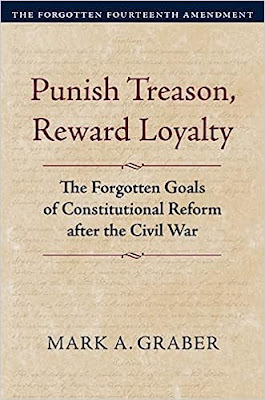
Mark A. Graber, Punish Treason, Reward Loyalty: The Forgotten Goals of Constitutional Reform after the Civil War (University of Kansas Press, 2023)
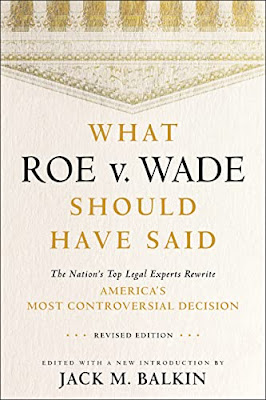
Jack M. Balkin, What Roe v. Wade Should Have Said: The Nation's Top Legal Experts Rewrite America's Most Controversial Decision - Revised Edition (NYU Press, 2023)

Andrew Koppelman, Burning Down the House: How Libertarian Philosophy Was Corrupted by Delusion and Greed (St. Martin’s Press, 2022)

Gerard N. Magliocca, Washington's Heir: The Life of Justice Bushrod Washington (Oxford University Press, 2022)

Joseph Fishkin and William E. Forbath, The Anti-Oligarchy Constitution: Reconstructing the Economic Foundations of American Democracy (Harvard University Press, 2022)
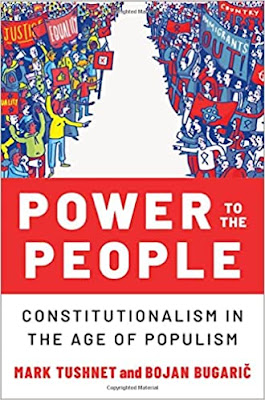
Mark Tushnet and Bojan Bugaric, Power to the People: Constitutionalism in the Age of Populism (Oxford University Press 2021).

Mark Philip Bradley and Mary L. Dudziak, eds., Making the Forever War: Marilyn B. Young on the Culture and Politics of American Militarism Culture and Politics in the Cold War and Beyond (University of Massachusetts Press, 2021).

Jack M. Balkin, What Obergefell v. Hodges Should Have Said: The Nation's Top Legal Experts Rewrite America's Same-Sex Marriage Decision (Yale University Press, 2020)

Frank Pasquale, New Laws of Robotics: Defending Human Expertise in the Age of AI (Belknap Press, 2020)

Jack M. Balkin, The Cycles of Constitutional Time (Oxford University Press, 2020)

Mark Tushnet, Taking Back the Constitution: Activist Judges and the Next Age of American Law (Yale University Press 2020).

Andrew Koppelman, Gay Rights vs. Religious Liberty?: The Unnecessary Conflict (Oxford University Press, 2020)

Ezekiel J Emanuel and Abbe R. Gluck, The Trillion Dollar Revolution: How the Affordable Care Act Transformed Politics, Law, and Health Care in America (PublicAffairs, 2020)

Linda C. McClain, Who's the Bigot?: Learning from Conflicts over Marriage and Civil Rights Law (Oxford University Press, 2020)
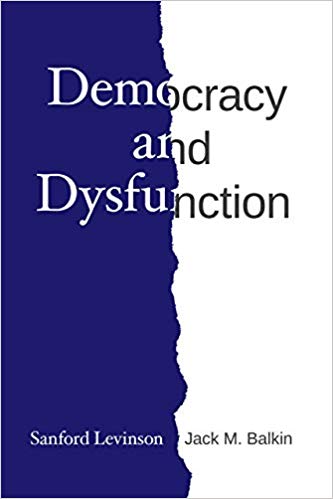
Sanford Levinson and Jack M. Balkin, Democracy and Dysfunction (University of Chicago Press, 2019)

Sanford Levinson, Written in Stone: Public Monuments in Changing Societies (Duke University Press 2018)

Mark A. Graber, Sanford Levinson, and Mark Tushnet, eds., Constitutional Democracy in Crisis? (Oxford University Press 2018)

Gerard Magliocca, The Heart of the Constitution: How the Bill of Rights became the Bill of Rights (Oxford University Press, 2018)

Cynthia Levinson and Sanford Levinson, Fault Lines in the Constitution: The Framers, Their Fights, and the Flaws that Affect Us Today (Peachtree Publishers, 2017)

Brian Z. Tamanaha, A Realistic Theory of Law (Cambridge University Press 2017)

Sanford Levinson, Nullification and Secession in Modern Constitutional Thought (University Press of Kansas 2016)

Sanford Levinson, An Argument Open to All: Reading The Federalist in the 21st Century (Yale University Press 2015)

Stephen M. Griffin, Broken Trust: Dysfunctional Government and Constitutional Reform (University Press of Kansas, 2015)

Frank Pasquale, The Black Box Society: The Secret Algorithms That Control Money and Information (Harvard University Press, 2015)

Bruce Ackerman, We the People, Volume 3: The Civil Rights Revolution (Harvard University Press, 2014)
Balkinization Symposium on We the People, Volume 3: The Civil Rights Revolution

Joseph Fishkin, Bottlenecks: A New Theory of Equal Opportunity (Oxford University Press, 2014)

Mark A. Graber, A New Introduction to American Constitutionalism (Oxford University Press, 2013)

John Mikhail, Elements of Moral Cognition: Rawls' Linguistic Analogy and the Cognitive Science of Moral and Legal Judgment (Cambridge University Press, 2013)

Gerard N. Magliocca, American Founding Son: John Bingham and the Invention of the Fourteenth Amendment (New York University Press, 2013)

Stephen M. Griffin, Long Wars and the Constitution (Harvard University Press, 2013)

Andrew Koppelman, The Tough Luck Constitution and the Assault on Health Care Reform (Oxford University Press, 2013)

James E. Fleming and Linda C. McClain, Ordered Liberty: Rights, Responsibilities, and Virtues (Harvard University Press, 2013)
Balkinization Symposium on Ordered Liberty: Rights, Responsibilities, and Virtues

Andrew Koppelman, Defending American Religious Neutrality (Harvard University Press, 2013)

Brian Z. Tamanaha, Failing Law Schools (University of Chicago Press, 2012)

Sanford Levinson, Framed: America's 51 Constitutions and the Crisis of Governance (Oxford University Press, 2012)

Linda C. McClain and Joanna L. Grossman, Gender Equality: Dimensions of Women's Equal Citizenship (Cambridge University Press, 2012)

Mary Dudziak, War Time: An Idea, Its History, Its Consequences (Oxford University Press, 2012)

Jack M. Balkin, Living Originalism (Harvard University Press, 2011)

Jason Mazzone, Copyfraud and Other Abuses of Intellectual Property Law (Stanford University Press, 2011)

Richard W. Garnett and Andrew Koppelman, First Amendment Stories, (Foundation Press 2011)

Jack M. Balkin, Constitutional Redemption: Political Faith in an Unjust World (Harvard University Press, 2011)

Gerard Magliocca, The Tragedy of William Jennings Bryan: Constitutional Law and the Politics of Backlash (Yale University Press, 2011)

Bernard Harcourt, The Illusion of Free Markets: Punishment and the Myth of Natural Order (Harvard University Press, 2010)

Bruce Ackerman, The Decline and Fall of the American Republic (Harvard University Press, 2010)
Balkinization Symposium on The Decline and Fall of the American Republic

Ian Ayres. Carrots and Sticks: Unlock the Power of Incentives to Get Things Done (Bantam Books, 2010)

Mark Tushnet, Why the Constitution Matters (Yale University Press 2010)

Ian Ayres and Barry Nalebuff: Lifecycle Investing: A New, Safe, and Audacious Way to Improve the Performance of Your Retirement Portfolio (Basic Books, 2010)
.jpg)
Jack M. Balkin, The Laws of Change: I Ching and the Philosophy of Life (2d Edition, Sybil Creek Press 2009)

Brian Z. Tamanaha, Beyond the Formalist-Realist Divide: The Role of Politics in Judging (Princeton University Press 2009)

Andrew Koppelman and Tobias Barrington Wolff, A Right to Discriminate?: How the Case of Boy Scouts of America v. James Dale Warped the Law of Free Association (Yale University Press 2009)

Jack M. Balkin and Reva B. Siegel, The Constitution in 2020 (Oxford University Press 2009)

Heather K. Gerken, The Democracy Index: Why Our Election System Is Failing and How to Fix It (Princeton University Press 2009)

Mary Dudziak, Exporting American Dreams: Thurgood Marshall's African Journey (Oxford University Press 2008)

David Luban, Legal Ethics and Human Dignity (Cambridge Univ. Press 2007)

Ian Ayres, Super Crunchers: Why Thinking-By-Numbers is the New Way to be Smart (Bantam 2007)

Jack M. Balkin, James Grimmelmann, Eddan Katz, Nimrod Kozlovski, Shlomit Wagman and Tal Zarsky, eds., Cybercrime: Digital Cops in a Networked Environment (N.Y.U. Press 2007)

Jack M. Balkin and Beth Simone Noveck, The State of Play: Law, Games, and Virtual Worlds (N.Y.U. Press 2006)

Andrew Koppelman, Same Sex, Different States: When Same-Sex Marriages Cross State Lines (Yale University Press 2006)

Brian Tamanaha, Law as a Means to an End (Cambridge University Press 2006)

Sanford Levinson, Our Undemocratic Constitution (Oxford University Press 2006)

Mark Graber, Dred Scott and the Problem of Constitutional Evil (Cambridge University Press 2006)

Jack M. Balkin, ed., What Roe v. Wade Should Have Said (N.Y.U. Press 2005)

Sanford Levinson, ed., Torture: A Collection (Oxford University Press 2004)
Balkin.com homepage
Bibliography
Conlaw.net
Cultural Software
Writings
Opeds
The Information Society Project
BrownvBoard.com
Useful Links
Syllabi and Exams
