Balkinization
an unanticipated consequence of
Jack M. Balkin
Balkinization Symposiums: A Continuing List
E-mail:
Jack Balkin:
jackbalkin at yahoo.com
Bruce Ackerman
bruce.ackerman at yale.edu
Ian Ayres
ian.ayres at yale.edu
Corey Brettschneider
corey_brettschneider at brown.edu
Mary Dudziak
mary.l.dudziak at emory.edu
Joey Fishkin
joey.fishkin at gmail.com
Heather Gerken heather.gerken at yale.edu
Abbe Gluck abbe.gluck at yale.edu
Mark Graber
mgraber at law.umaryland.edu
Stephen Griffin
sgriffin at tulane.edu
Jonathan Hafetz
jonathan.hafetz at shu.edu
Jeremy Kessler
jkessler at law.columbia.edu
Andrew Koppelman
akoppelman at law.northwestern.edu
Marty Lederman
msl46 at law.georgetown.edu
Sanford Levinson
slevinson at law.utexas.edu
David Luban
david.luban at gmail.com
Gerard Magliocca
gmaglioc at iupui.edu
Jason Mazzone
mazzonej at illinois.edu
Linda McClain
lmcclain at bu.edu
John Mikhail
mikhail at law.georgetown.edu
Frank Pasquale
pasquale.frank at gmail.com
Nate Persily
npersily at gmail.com
Michael Stokes Paulsen
michaelstokespaulsen at gmail.com
Deborah Pearlstein
dpearlst at yu.edu
Rick Pildes
rick.pildes at nyu.edu
David Pozen
dpozen at law.columbia.edu
Richard Primus
raprimus at umich.edu
K. Sabeel Rahmansabeel.rahman at brooklaw.edu
Alice Ristroph
alice.ristroph at shu.edu
Neil Siegel
siegel at law.duke.edu
David Super
david.super at law.georgetown.edu
Brian Tamanaha
btamanaha at wulaw.wustl.edu
Nelson Tebbe
nelson.tebbe at brooklaw.edu
Mark Tushnet
mtushnet at law.harvard.edu
Adam Winkler
winkler at ucla.edu
Compendium of posts on Hobby Lobby and related cases
The Anti-Torture Memos: Balkinization Posts on Torture, Interrogation, Detention, War Powers, and OLC
The Anti-Torture Memos (arranged by topic)
Recent Posts
Update on the Sixth Circuit Litigation Challenging the NSA's Terrorist Surveillance Program
![[Powered by Blogger]](https://lh3.googleusercontent.com/blogger_img_proxy/AEn0k_uq9BZZlf80bJW3cDA8t_kkg3p_ZTZrZg1OXhFmymjUmCVdayaZkBPq3yyJuRNzUUW08lNFfNSFZF05yYGOlFt3YwStczvJzoEntFeF0GSA=s0-d)
Just A Few Blogs
ACS Blog
Alas, a Blog
Althouse
Arts and Letters Daily
Atrios (Eschaton)
Bill of Health
Buzzflash.com
Buzz Machine
Cato at Liberty
Juan Cole (Informed Comment)
Concurring Opinions
The Constitution in 2020
Corrente
Crooked Timber
Daily Howler
Daily Kos
Dana Boyd
Brad DeLong
Digby (Hullabaloo)
Discriminations
Daniel Drezner
Kevin Drum (Mother Jones)
Electrolite
En Banc
Eunomia (Daniel Larison)
Fafblog
Michael Froomkin (Discourse.net)
GovLab (Beth Noveck)
Rick Hasen (Election Law)
History News Network
How Appealing
Ignatz (Sam Heldman)
The Importance of (Ernie Miller)
Infolaw
Instapundit
International Economic Law and Policy Blog
IntLawGrrls
Jacob Levy
Jesus' General
Jurisdynamics
The Kitchen Cabinet
Mark Kleiman
Law Blog Central
Larry Lessig
Lawyers, Guns and Money
Liberal Oasis
Brian Leiter's Law School Reports
The Leiter Reports
Marginal Revolution
Megan McArdle
Memeorandum
Metafilter
Mirror of Justice
The New Republic
Newseum
No More Mister Nice Blog
Brendan Nyhan
Opinio Juris
Orcinus
The Originalism Blog
Pandagon
Passport (Foreign Policy)
Overcoming Bias
Political Animal (Washington Monthly)
Political Theory Daily Review
Political Wire (Taegan Goddard)
The Poor Man
Virginia Postrel
Prawfsblawg
Public Reason
Jonathan Rauch
Raw Story
Redstate
ReligiousLeftLaw.com
Reporters Committee For Freedom of the Press
Reproductive Rights Blog
Rothman's Roadmap to the Right of Publicity
SCOTUS Blog
Seeing the Forest
Clay Shirky
The Shifted Librarian
The Situationist
Larry Solum (Legal Theory)
Andrew Sullivan
Talking Points Memo
Talk Left
Tapped
Tbogg
TechPresident
The Paper Chase (Jurist)
Tom Paine
Tom Tomorrow (This Modern World)
Eve Tushnet
Uggabugga
University of Chicago Law School Faculty Blog
Unqualified Offerings
The Volokh Conspiracy
War and Piece (Laura Rozen)
Wampum
Oliver Willis
Wonkette
Written Description
Matthew Yglesias
Yin
Your Choice of Feeds
1. XML
powered by

2. Atom Feed
3. RSS 2.0
Update on the Sixth Circuit Litigation Challenging the NSA's Terrorist Surveillance Program
Marty Lederman
This Wednesday, a panel of the U.S. Court of Appeals for the Sixth Circuit, sitting in Cincinnati, will hear oral argument in ACLU v. NSA, one of the principal cases challenging the legality of the National Security Agency's NSA's "Terrorist Surveillance Program." The panel will consist of Judges Alice Batchelder (appointed 1991), Ronald Gilman (appointed 1997) and Julia Smith Gibbons (appointed 2002). The United States will be represented by Deputy Solicitor General Greg Garre. The ACLU will be represented by Ann Beeson. Garre and Beeson are both superb attorneys and oral advocates. (Lyle Denniston has more on the procedural moves in the case -- including a dispute over the government's refusal to file certain documents with the court -- here. And see Adam Liptak here: "In ordinary civil suits, the parties’ submissions are sent to their adversaries and are available to the public in open court files. But in several cases challenging the eavesdropping, Justice Department lawyers have been submitting legal papers not by filing them in court but by placing them in a room at the department. They have filed papers, in other words, with themselves.")
[Disclosure: I am an amicus in the case, on a brief arguing that the TSP violated FISA and that the President does not have constitutional authority to ignore FISA.]
Of course, two weeks ago, the Administration announced that the President has "determined not to reauthorize the Terrorist Surveillance Program when the current authorization expires," and that the Department of Justice will now submit its surveillance applications to the FISA Court for approval under FISA.
What does this development portend for the current case?
Let's recap where we are.
Last August, Judge Taylor found that the TSP was unlawful, and enjoined its continued implementation. In particular, the NSA was enjoined from engaging in electronic surveillance except as authorized under FISA. That decision was stayed pending the Sixth Circuit appeal.
But now, it appears that the NSA is complying with the injunction. If the Administration's account is to be believed, NSA now is conducting electronic surveillance only in accord with FISA, i.e., only after demonstrating to the satisfaction of the FISA Court that there is probable cause to believe (i) that the target of the interceptions is a foreign power or an agent of a foreign power, and (ii) that each of the facilities or places at which the electronic surveillance is directed is being used, or is about to be used, by a foreign power or an agent of a foreign power.
This development doesn't necessarily moot the appeal, any more than compliance with an injunction ever moots an appeal challenging that injunction. If the government were to prevail on this appeal and in other related cases, then presumably it would no longer be bound by legal orders requiring compliance with FISA. And the government's continuing legal position is that it does not have to comply with FISA; therefore it has some interest in continuing its appeal.
But the government has filed an unusual memorandum with the court of appeals, in essence arguing that the government's recent compliance with FISA eliminates the controversy between the parties.
If that were stictly true -- if the government were now committed to FISA compliance going forward -- it could simply dismiss its appeal, because the underlying injunction does not require anything more than such statutory compliance.
But the government isn't dismissing its appeal, because it does not want to be bound by the injunction -- that is, it wants to retain the option of departing from FISA again if and when the President sees fit to do so. As I wrote above, that's perfectly fine, and not out of the ordinary, even if I disagree with the merits of the government's position.
What is very odd, however, is that the government is now arguing that because of its compliance with FISA, the court of appeals should vacate the district court injunction.
According to the Department of Justice, there is "no longer any live genuine controversy to adjudicate." Well, that would be true, if the government were committed to FISA compliance going forward -- in which case the government could simply live under the injunction, and withdraw its appeal. But the government understandably wishes to preserve its future prerogatives to depart from FISA, which is why it has not withdrawn its appeal.
What, then, is the government's argument for why the injunction should be vacated? After all, parties generally do not have a right to have an injunction against them vacated simply because they begin to abide by it. Whether the "extraordinary" remedy of vacating an injunction should be granted, the Supreme Court has held, is a question principally determined by "whether the party seeking relief from the judgment below caused the mootness by voluntary action." U.S. Bancorp, 513 U.S. at 24. And here, the government inded has, by its own account, voluntarily complied with FISA, i.e., has done what plaintiffs requested and what the injunction demands. "To allow a party who steps off the statutory path to employ the secondary remedy of vacatur as a refined form of collateral attack on the judgment would--quite apart from any considerations of fairness to the parties--disturb the orderly operation of the federal judicial system." U.S. Bancorp, 513 U.S. at 27. (Indeed, even apart from compliance with an injunction, the general rule is that voluntary cessation of challenged conduct in response to a lawsuit challenging such conduct does not even moot a case, unless subsequent events make it "absolutely clear that the allegedly wrongful behavior could not reasonably be expected to recur." Friends of the Earth, 528 U.S. at 189. There is no such assurance here, of course, that the government will not resume the disputed conduct if not judicially compelled to refrain from doing so.)
I must confess that I don't quite understand the government's argument to the contrary. It claims on page 10 of its memo that its compliance with FISA was not voluntary but was instead the result of the action of an "independent judicial body," the FISA Court. See also page 13 ("the critical event was the product of an intervening act of a corrdinate branch of government"). But of course the FISA court has simply granted FISA orders sought by the government itself, and pursuant to a request from the government for such orders. (That's the way FISA works -- the government seeks an order, and the FISA court decides whether to grant it. The FISA court does not initiate proceedings on its own.) Moreover, that is precisely the remedy plaintiffs were seeking -- to require the government to seek and obtain orders from the FISA court finding probable cause that FISA's standards are met before engaging in any electronic surveillance. I should add that the FISA court orders in question presumably are only with respect to the particular electronic surveillance requested by the government in a particular case. The government's voluntary representation that it will not engage in such surveillance in the future -- i.e., in all other cases going forward -- except in accordance with FISA is not, of course, a representation made or ordered by the FISA court. It is the Administration's own doing. The letter is signed by the Attorney General, not the FISA Court. (For the ACLU's response to the government's request for vacatur, see pages 12-16 of its recently filed brief.)
The government's memo also appears to argue (page 14) that the injunction should be vacated because the district court's opinion addressed "extraordinarily sensitive questions touching upon issues of statutory construction and constitutional law, separation of powers, and, ultimately, Presidential authority in a time of war." I don't understand why that's a reason to vacate the injunction. The district court opinion has no stare decisis effect -- even other district judges in the Eastern District of Michigan are not bound to follow it. It will either be persuasive to other courts when similar questions are litigated in the future, or it won't be. And to the extent the government wishes to create better, more binding precedent in its favor, it can seek reversal on the merits in the court of appeals.
For these reasons, this non-objective observer predicts that the court of appeals will reach the "merits," at least of the government's state-secrets privilege claim, if not also of the statutory and constitutional questions in the case.
Posted
6:02 AM
by Marty Lederman [link]

If they follow the lead of some of the lower courts, the 6th Circuit could decide to vacate summary judgment, apply the state secrets privilege and remand for discovery on standing consistent with the state secrets privilege. Given how fast and loose with the law Judge Taylor was in prematurely granting summary judgment, it would not surprise me at all if she orders disclosure of classified material and the government appeals this case to 6th Circuit once again.
The government is obviously attempting to short circuit this process by giving 6th Circuit an out with the mootness defense. The Government appears to be attempting to reassure the Court that the FISA court is the proper place to resolve this complaint and that the FISA court has already provided a remedy for plaintiffs.
I think the Government is well aware of the points which Professor Balkin raised in this post. The way the Government is presenting its mootness argument followed by a long list of policy arguments, I think they realize that dismissal on this ground will be a matter of discretion by this panel.
I would dearly love to see 6th Circuit reverse Judge Taylor's awful decision on the merits so it cannot be used as precedent in future suits in this area. However, courts generally seek to avoid political battles between the elected branches and may leap at this opportunity to bail.
http://www.eff.org/legal/cases/att/
308_order_on_mtns_to_dismiss.pdf
I suspect this opinion earned Judge Vaughn the jurisdiction over the other FISA cases and may be followed by 6th Circuit to remand the case to Judge Vaughn's court for further discovery.
[From Denniston's article on Scotusblog]: "Moreover, [the gummint] added, the Circuit Court should avoid a ruling in the case on the merits, because that would involve exploration of "extremely sensitive constitutional issues" about presidential power."
Say huh?!?!?
Cheers,

In its submissions Wednesday, the Justice Department argued that, while the trial judge's order not to conduct the Program outside of the FISA Court's reach was now moot, that order should be wiped off the books because it sought to resolve "extraordinarily sensitive questions touching upon issues of statutory construction and constitutional law, separation of powers, and, ultimate, presidential authority in a time of war."
Heavne forbit they do such a thing.... At least that's what the maladminstration is hoping, and that's what JaO and Glenn Greenwald have been claiming -- correctly, it seems -- for quite some time. The maladministration doesn't want -- and in fact fears -- a decision on the merits.
Cheers,
I believe this blog was posted by Marty Lederman, actually.
I think the Government is well aware of the points which Professor Balkin raised in this post.
I believe this blog was posted by Marty Lederman, actually.
Ouch! You are right. My apologies to both men.
Cara mengobati kanker dengan herbal, Cara mengobati kanker dengan tradisional, Cara mengobati kanker dengan alami, Cara mengobati kanker dengan cepat, Cara mengobati kanker stadium 3, Cara mengobati kanker stadium 4, Cara mengobati kanker stadium awal, Cara mengobati kanker stadium 2, Cara mengobati kanker stadium akhir, Cara mengobati kanker tanpa ke dokter, Gambar obat kanker yang ampuh, Gambar obat kanker yang ampuh, Obat kanker ampuh dengan singkong, Cara mengobati kanker stadium awal tanpa operasi, Obat kanker manjur dari tumbuhan, Cara mengobati kanker stadium 1 tanpa operasi, Obat kanker ampuh dengan daun sirsak, Cara mengobati kanker stadium 2 tanpa operasi, Obat kanker paling mujarab yang efektif, Cara mengobati kanker stadium 3 tanpa operasi, Cara mengobati kanker stadium 3, Cara mengobati kanker stadium 4 tanpa operasi, Obat kanker paling manjur 2016, Cara mengobati kanker stadium akhir tanpa operasi, Pengobatan kanker mujarab tanpa operasi, Cara pengobatan kanker yang manjur, Pengobatan kanker manjur dan aman, Cara pengobatan kanker yang mujarab, Cara pengobatan kanker tanpa operasi, Cara pengobatan kanker yang ampuh, Obat kanker mujarab tanpa operasi, Obat kanker manjur tanpa operasi, Obat De Nature
obat herbal kanker serviks ampuh
Obat herbal kanker serviks paten
obat herbal kanker serviks manjur
obat herbal kanker serviks mujarab
obat herbal kanker serviks terpercaya
obat herbal kanker servik
obat herbal kanker servik ampuh
obat herbal kanker servik manjur
Obat herbal kanker servik mujarab
obat herbal kanker servik paten
obat herbal kanker servik terpercaya
obat herbal herpes genital klik disini
Obat herbal herpes genital baca sekarang
obat herbal herpes genital manjur
obat herbal herpes genital ampuh
obat herbal herpes genital 2016
obat herpes genital herbal 2015
obat herpes genital herbal 2016
Obat herpes genital herbal bulan ini
obat herpes genital herbal klik sekarang
obat herpes genital herbal 1945
obat herpes genital herbal manjur
obat herbal herpes genital berkhasiat
mengobati kutil kelamin dengan cuka apel
Harga obat kutil kelamin de nature
cara pengobatan kutil kelamin
cara pengobatan tradisional kutil kelamin
cara pengobatan kutil di kelamin
mengobati kutil kelamin dengan cuka
pengobatan kutil di kelamin
mengobati kutil kelamin dengan daun sirsak
mengobati kutil kelamin dengan kapur sirih
Pengobatan setelah operasi kutil kelamin
obat kutil kelamin dari dalam
mengobati kutil di kelamin
Obat herbal herpes genital manjuur sembuh 2 hari
Obat herbal herpes genital manjuur sembuh 2 hari
Obat herbal herpes genital manjuur sembuh 2 hari
Obat herbal herpes genital manjuur sembuh 2 hari
Obat herbal herpes genital manjuur sembuh 2 hari
Obat herbal herpes genital manjuur sembuh 2 hari
Obat herbal herpes genital manjuur sembuh 2 hari
Obat herbal herpes genital manjuur sembuh 2 hari
Obat herbal herpes genital manjuur sembuh 2 hari
Obat herbal herpes genital manjuur sembuh 2 hari
Obat herbal herpes genital manjuur sembuh 2 hari
Obat herbal herpes genital manjuur sembuh 2 hari
Obat herbal herpes genital manjuur sembuh 2 hari
Obat herbal herpes genital manjuur sembuh 2 hari
Obat herbal herpes genital manjuur sembuh 2 hari
Obat herbal herpes genital manjuur sembuh 2 hari
obat kanker serviks manjur
obat kanker serviks manjur
obat kanker serviks manjur
obat kanker serviks manjur
obat kanker serviks manjur facebook
obat herpes genital manjur
obat herpes genital manjur
obat herpes genital manjur
obat herpes genital manjur
obat herpes genital manjur
obat herpes genital manjur
obat herpes genital manjur
obat herpes genital manjur
obat herpes genital manjur
obat herpes genital manjur
obat herpes genital manjur
obat herpes genital manjur
obat herpes genital manjur
obat herpes genital manjur
obat herpes genital manjur
obat herpes genital manjur
obat herpes genital manjur
obat herpes genital manjur
obat herpes genital manju
Obat herpes genital manjur
Obat herpes genital manujur di youtube
Obat kanker dan herpes di twitter
obat herpes genital manjur facebook
obat kanker serviks tradisional jawa sumatera
Obat kanker serviks tradisional sumatera
Obat kanker serviks tradisional kalimantan
obat kanker serviks tradisional herbal jawa
obat kanker serviks tradisional herbal jawa sumatera
obat kanker serviks tradisional herbal sumatera
obat kanker serviks tradisional herbal suku pedalaman
obat kanker serviks tradisional herbal suku pedalaman sumatra
Obat kanker serviks tradisional herbal suku jawa
obat kanker serviks tradisional herbal s
obat kanker serviks tradisional herbal suku minang
obat kanker serviks tradisional herbal suku sunda
Obat kanker serviks tradisional herbal suku irian
obat kanker serviks tradisional herbal suku dayak
obat kanker serviks tradisional herbal suku kubu
obat tradisional kanker serviks suku
obat kanker serviks tradisional herbal suku bugis
obat herbal herpes genital dompo
obat herbal herpes genital dompo simplex
obat gonore untuk ibu hamil
obat gonore untuk wanita hamil
harga obat gonore
obat injeksi gonore
obat kutil kelamin yang ada di apotik
obat kutil kelamin yg dijual di apotik
obat kutil di kemaluan wanita
pengobatan kutil kelamin pada pria
pengobatan penyakit kutil kelamin pada pria
obat penyakit kutil pada kelamin pria
Pengobatan kutil kelamin aman dan tanpa operasi
obat kutil pada alat kelamin pria
pengobatan kutil kelamin
pengobatan kutil kelamin pada pria dan wanita
pengobatan kutil kelamin pria
pengobatan kutil kelamin wanita
pengobatan kutil kelamin dengan cuka apel
pengobatan kutil kelamin di anus
Cara mengobati kutil di kelamin wanita hamil
pengobatan kutil kelamin di bandung
obat kutil kelamin
obat kutil kelamin di apotik
obat kutil kelamin tradisional
obat kutil kelamin wanita
Obat sipilis beli di apotik
Obat sipilis buat wanita
Obat sipilis buatan sendiri
Obat sipilis bagi wanita
Obat buat sipilis
Obat biotik sifilis
Obat antibiotik buat sipilis
Obat tradisional buat sipilis
Obat herbal buat sipilis
Obat dokter buat sipilis
Obat generik buat sipilis
Obat sipilis dengan bayam duri
Obat sipilis yang bagus
Obat buat sifilis
Obat sipilis.com
Obat sipilis ciprofloxacin
Obat china sipilis
obat kutil kelamin dan leher
obat alami menghilangkan kutil kelamin
obat tradisional untuk menghilangkan kutil kelamin
kumpulan obat kutil kelamin
obat tradisional kutil kelamin
obat penyakit kutil kelamin
obat tradisional untuk kutil kelamin
Books by Balkinization Bloggers

Mark Tushnet and Bojan Bugaric, Constitutionalism and Its Discontents (University of Chicago Press, 2026)

Gerard N. Magliocca, The Actual Art of Governing: Justice Robert H. Jackson's Concurring Opinion in the Steel Seizure Case (Oxford University Press, 2025)

Linda C. McClain and Aziza Ahmed, The Routledge Companion to Gender and COVID-19 (Routledge, 2024)

David Pozen, The Constitution of the War on Drugs (Oxford University Press, 2024)

Jack M. Balkin, Memory and Authority: The Uses of History in Constitutional Interpretation (Yale University Press, 2024)
Mark A. Graber, Punish Treason, Reward Loyalty: The Forgotten Goals of Constitutional Reform after the Civil War (University of Kansas Press, 2023)
Jack M. Balkin, What Roe v. Wade Should Have Said: The Nation's Top Legal Experts Rewrite America's Most Controversial Decision - Revised Edition (NYU Press, 2023)

Andrew Koppelman, Burning Down the House: How Libertarian Philosophy Was Corrupted by Delusion and Greed (St. Martin’s Press, 2022)

Gerard N. Magliocca, Washington's Heir: The Life of Justice Bushrod Washington (Oxford University Press, 2022)
Joseph Fishkin and William E. Forbath, The Anti-Oligarchy Constitution: Reconstructing the Economic Foundations of American Democracy (Harvard University Press, 2022)
Mark Tushnet and Bojan Bugaric, Power to the People: Constitutionalism in the Age of Populism (Oxford University Press 2021).

Mark Philip Bradley and Mary L. Dudziak, eds., Making the Forever War: Marilyn B. Young on the Culture and Politics of American Militarism Culture and Politics in the Cold War and Beyond (University of Massachusetts Press, 2021).

Jack M. Balkin, What Obergefell v. Hodges Should Have Said: The Nation's Top Legal Experts Rewrite America's Same-Sex Marriage Decision (Yale University Press, 2020)

Frank Pasquale, New Laws of Robotics: Defending Human Expertise in the Age of AI (Belknap Press, 2020)

Jack M. Balkin, The Cycles of Constitutional Time (Oxford University Press, 2020)

Mark Tushnet, Taking Back the Constitution: Activist Judges and the Next Age of American Law (Yale University Press 2020).

Andrew Koppelman, Gay Rights vs. Religious Liberty?: The Unnecessary Conflict (Oxford University Press, 2020)

Ezekiel J Emanuel and Abbe R. Gluck, The Trillion Dollar Revolution: How the Affordable Care Act Transformed Politics, Law, and Health Care in America (PublicAffairs, 2020)

Linda C. McClain, Who's the Bigot?: Learning from Conflicts over Marriage and Civil Rights Law (Oxford University Press, 2020)
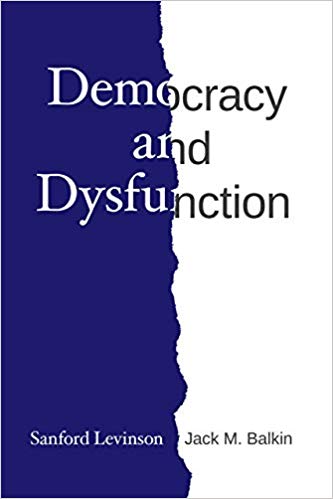
Sanford Levinson and Jack M. Balkin, Democracy and Dysfunction (University of Chicago Press, 2019)

Sanford Levinson, Written in Stone: Public Monuments in Changing Societies (Duke University Press 2018)

Mark A. Graber, Sanford Levinson, and Mark Tushnet, eds., Constitutional Democracy in Crisis? (Oxford University Press 2018)

Gerard Magliocca, The Heart of the Constitution: How the Bill of Rights became the Bill of Rights (Oxford University Press, 2018)

Cynthia Levinson and Sanford Levinson, Fault Lines in the Constitution: The Framers, Their Fights, and the Flaws that Affect Us Today (Peachtree Publishers, 2017)

Brian Z. Tamanaha, A Realistic Theory of Law (Cambridge University Press 2017)

Sanford Levinson, Nullification and Secession in Modern Constitutional Thought (University Press of Kansas 2016)

Sanford Levinson, An Argument Open to All: Reading The Federalist in the 21st Century (Yale University Press 2015)

Stephen M. Griffin, Broken Trust: Dysfunctional Government and Constitutional Reform (University Press of Kansas, 2015)

Frank Pasquale, The Black Box Society: The Secret Algorithms That Control Money and Information (Harvard University Press, 2015)

Bruce Ackerman, We the People, Volume 3: The Civil Rights Revolution (Harvard University Press, 2014)
Balkinization Symposium on We the People, Volume 3: The Civil Rights Revolution

Joseph Fishkin, Bottlenecks: A New Theory of Equal Opportunity (Oxford University Press, 2014)

Mark A. Graber, A New Introduction to American Constitutionalism (Oxford University Press, 2013)

John Mikhail, Elements of Moral Cognition: Rawls' Linguistic Analogy and the Cognitive Science of Moral and Legal Judgment (Cambridge University Press, 2013)

Gerard N. Magliocca, American Founding Son: John Bingham and the Invention of the Fourteenth Amendment (New York University Press, 2013)

Stephen M. Griffin, Long Wars and the Constitution (Harvard University Press, 2013)

Andrew Koppelman, The Tough Luck Constitution and the Assault on Health Care Reform (Oxford University Press, 2013)

James E. Fleming and Linda C. McClain, Ordered Liberty: Rights, Responsibilities, and Virtues (Harvard University Press, 2013)
Balkinization Symposium on Ordered Liberty: Rights, Responsibilities, and Virtues

Andrew Koppelman, Defending American Religious Neutrality (Harvard University Press, 2013)

Brian Z. Tamanaha, Failing Law Schools (University of Chicago Press, 2012)

Sanford Levinson, Framed: America's 51 Constitutions and the Crisis of Governance (Oxford University Press, 2012)

Linda C. McClain and Joanna L. Grossman, Gender Equality: Dimensions of Women's Equal Citizenship (Cambridge University Press, 2012)

Mary Dudziak, War Time: An Idea, Its History, Its Consequences (Oxford University Press, 2012)

Jack M. Balkin, Living Originalism (Harvard University Press, 2011)

Jason Mazzone, Copyfraud and Other Abuses of Intellectual Property Law (Stanford University Press, 2011)

Richard W. Garnett and Andrew Koppelman, First Amendment Stories, (Foundation Press 2011)

Jack M. Balkin, Constitutional Redemption: Political Faith in an Unjust World (Harvard University Press, 2011)

Gerard Magliocca, The Tragedy of William Jennings Bryan: Constitutional Law and the Politics of Backlash (Yale University Press, 2011)

Bernard Harcourt, The Illusion of Free Markets: Punishment and the Myth of Natural Order (Harvard University Press, 2010)

Bruce Ackerman, The Decline and Fall of the American Republic (Harvard University Press, 2010)
Balkinization Symposium on The Decline and Fall of the American Republic

Ian Ayres. Carrots and Sticks: Unlock the Power of Incentives to Get Things Done (Bantam Books, 2010)

Mark Tushnet, Why the Constitution Matters (Yale University Press 2010)

Ian Ayres and Barry Nalebuff: Lifecycle Investing: A New, Safe, and Audacious Way to Improve the Performance of Your Retirement Portfolio (Basic Books, 2010)
.jpg)
Jack M. Balkin, The Laws of Change: I Ching and the Philosophy of Life (2d Edition, Sybil Creek Press 2009)

Brian Z. Tamanaha, Beyond the Formalist-Realist Divide: The Role of Politics in Judging (Princeton University Press 2009)
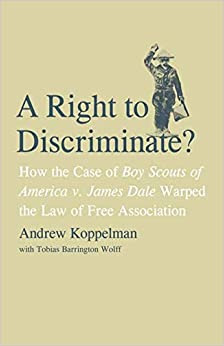
Andrew Koppelman and Tobias Barrington Wolff, A Right to Discriminate?: How the Case of Boy Scouts of America v. James Dale Warped the Law of Free Association (Yale University Press 2009)

Jack M. Balkin and Reva B. Siegel, The Constitution in 2020 (Oxford University Press 2009)

Heather K. Gerken, The Democracy Index: Why Our Election System Is Failing and How to Fix It (Princeton University Press 2009)

Mary Dudziak, Exporting American Dreams: Thurgood Marshall's African Journey (Oxford University Press 2008)

David Luban, Legal Ethics and Human Dignity (Cambridge Univ. Press 2007)

Ian Ayres, Super Crunchers: Why Thinking-By-Numbers is the New Way to be Smart (Bantam 2007)

Jack M. Balkin, James Grimmelmann, Eddan Katz, Nimrod Kozlovski, Shlomit Wagman and Tal Zarsky, eds., Cybercrime: Digital Cops in a Networked Environment (N.Y.U. Press 2007)
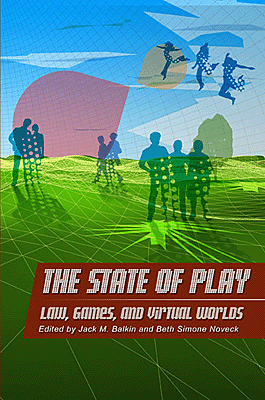
Jack M. Balkin and Beth Simone Noveck, The State of Play: Law, Games, and Virtual Worlds (N.Y.U. Press 2006)

Andrew Koppelman, Same Sex, Different States: When Same-Sex Marriages Cross State Lines (Yale University Press 2006)

Brian Tamanaha, Law as a Means to an End (Cambridge University Press 2006)

Sanford Levinson, Our Undemocratic Constitution (Oxford University Press 2006)

Mark Graber, Dred Scott and the Problem of Constitutional Evil (Cambridge University Press 2006)

Jack M. Balkin, ed., What Roe v. Wade Should Have Said (N.Y.U. Press 2005)

Sanford Levinson, ed., Torture: A Collection (Oxford University Press 2004)
Balkin.com homepage
Bibliography
Conlaw.net
Cultural Software
Writings
Opeds
The Information Society Project
BrownvBoard.com
Useful Links
Syllabi and Exams
