Balkinization
an unanticipated consequence of
Jack M. Balkin
Balkinization Symposiums: A Continuing List
E-mail:
Jack Balkin:
jackbalkin at yahoo.com
Bruce Ackerman
bruce.ackerman at yale.edu
Ian Ayres
ian.ayres at yale.edu
Corey Brettschneider
corey_brettschneider at brown.edu
Mary Dudziak
mary.l.dudziak at emory.edu
Joey Fishkin
joey.fishkin at gmail.com
Heather Gerken heather.gerken at yale.edu
Abbe Gluck abbe.gluck at yale.edu
Mark Graber
mgraber at law.umaryland.edu
Stephen Griffin
sgriffin at tulane.edu
Jonathan Hafetz
jonathan.hafetz at shu.edu
Jeremy Kessler
jkessler at law.columbia.edu
Andrew Koppelman
akoppelman at law.northwestern.edu
Marty Lederman
msl46 at law.georgetown.edu
Sanford Levinson
slevinson at law.utexas.edu
David Luban
david.luban at gmail.com
Gerard Magliocca
gmaglioc at iupui.edu
Jason Mazzone
mazzonej at illinois.edu
Linda McClain
lmcclain at bu.edu
John Mikhail
mikhail at law.georgetown.edu
Frank Pasquale
pasquale.frank at gmail.com
Nate Persily
npersily at gmail.com
Michael Stokes Paulsen
michaelstokespaulsen at gmail.com
Deborah Pearlstein
dpearlst at yu.edu
Rick Pildes
rick.pildes at nyu.edu
David Pozen
dpozen at law.columbia.edu
Richard Primus
raprimus at umich.edu
K. Sabeel Rahmansabeel.rahman at brooklaw.edu
Alice Ristroph
alice.ristroph at shu.edu
Neil Siegel
siegel at law.duke.edu
David Super
david.super at law.georgetown.edu
Brian Tamanaha
btamanaha at wulaw.wustl.edu
Nelson Tebbe
nelson.tebbe at brooklaw.edu
Mark Tushnet
mtushnet at law.harvard.edu
Adam Winkler
winkler at ucla.edu
Compendium of posts on Hobby Lobby and related cases
The Anti-Torture Memos: Balkinization Posts on Torture, Interrogation, Detention, War Powers, and OLC
The Anti-Torture Memos (arranged by topic)
Recent Posts
Our Secret Law of Interrogation
![[Powered by Blogger]](https://lh3.googleusercontent.com/blogger_img_proxy/AEn0k_v0TPcTfzfWQ3DlEtTvEh1Fp86MW4Q1L3ur0_ImHNkSwkECqRmoiZydNt5tHzQOHigRmQ5swYVpEPkhZ3KNB5gl6VTvQq_J3JUgVsQL0cj0=s0-d)
Just A Few Blogs
ACS Blog
Alas, a Blog
Althouse
Arts and Letters Daily
Atrios (Eschaton)
Bill of Health
Buzzflash.com
Buzz Machine
Cato at Liberty
Juan Cole (Informed Comment)
Concurring Opinions
The Constitution in 2020
Corrente
Crooked Timber
Daily Howler
Daily Kos
Dana Boyd
Brad DeLong
Digby (Hullabaloo)
Discriminations
Daniel Drezner
Kevin Drum (Mother Jones)
Electrolite
En Banc
Eunomia (Daniel Larison)
Fafblog
Michael Froomkin (Discourse.net)
GovLab (Beth Noveck)
Rick Hasen (Election Law)
History News Network
How Appealing
Ignatz (Sam Heldman)
The Importance of (Ernie Miller)
Infolaw
Instapundit
International Economic Law and Policy Blog
IntLawGrrls
Jacob Levy
Jesus' General
Jurisdynamics
The Kitchen Cabinet
Mark Kleiman
Law Blog Central
Larry Lessig
Lawyers, Guns and Money
Liberal Oasis
Brian Leiter's Law School Reports
The Leiter Reports
Marginal Revolution
Megan McArdle
Memeorandum
Metafilter
Mirror of Justice
The New Republic
Newseum
No More Mister Nice Blog
Brendan Nyhan
Opinio Juris
Orcinus
The Originalism Blog
Pandagon
Passport (Foreign Policy)
Overcoming Bias
Political Animal (Washington Monthly)
Political Theory Daily Review
Political Wire (Taegan Goddard)
The Poor Man
Virginia Postrel
Prawfsblawg
Public Reason
Jonathan Rauch
Raw Story
Redstate
ReligiousLeftLaw.com
Reporters Committee For Freedom of the Press
Reproductive Rights Blog
Rothman's Roadmap to the Right of Publicity
SCOTUS Blog
Seeing the Forest
Clay Shirky
The Shifted Librarian
The Situationist
Larry Solum (Legal Theory)
Andrew Sullivan
Talking Points Memo
Talk Left
Tapped
Tbogg
TechPresident
The Paper Chase (Jurist)
Tom Paine
Tom Tomorrow (This Modern World)
Eve Tushnet
Uggabugga
University of Chicago Law School Faculty Blog
Unqualified Offerings
The Volokh Conspiracy
War and Piece (Laura Rozen)
Wampum
Oliver Willis
Wonkette
Written Description
Matthew Yglesias
Yin
Your Choice of Feeds
1. XML
powered by

2. Atom Feed
3. RSS 2.0
Our Secret Law of Interrogation
Marty Lederman
Patrick Leahy, the incoming Chair of the Senate Judiciary Committee, requested that the Department of Justice provide him with two documents: (i) President Bush's directive authorizing certain CIA interrogation methods and detention facilities located outside the United States; and (ii) the August 2002 OLC Memorandum to the CIA General Counsel explaining which interrogation techniques the CIA may and may not legally use. (Leahy also requested any other documents covering the same topics.)
Not surprisingly, the Department of Justice has denied that request. There are two basic grounds for the denial.
The first is that the Administration simply will not publicly reveal which techniques it considers lawful and which are unlawful--because the enemy must remain uncertain about what the legal limits are. The theory is that if Al Qaeda knows what is lawful and what is not, it will better be able to train its operatives to resist those techniques that are lawful.
As I've written previously, there is ususally very good reason for not disclosing information on exactly which tactics and methods the CIA has actually used on which detainees, and which techniques have been successful. Much of what the CIA does around the world is kept secret, at least in the short run. But I remain unconvinced that it is necessary to classify the legal limits on the CIA's interrogation techniques -- i.e., to have a secret law that the public and the Congress cannot know about. Here's what I wrote back in September:[T]his argument [that we can't let Al Qaeda know what is legal and what's not] is no longer tenable (if it ever was), because we are now obviously very willing to disclose all sorts of limits beyond which we cannot go. The Administration's own bill today lists 27 specific forms of conduct that we ourselves will consider "war crimes" triable by military commission (pages 65-76). The Administration's draft amendment to the War Crimes Act (pages 79-84) contains nine categories of meticulously described conduct that could be punished as war crimes in the civilian criminal justice system. And . . . the Army Field Manual released today goes into great and specific detail about what the military can, and cannot do, to its detainees. After all of these highly specific provisions are in the public record specifying what can and cannot be done within the law, it's no longer very persuasive to assert that the CIA's techniques cannot likewise be codified. It's no secret that the CIA has used waterboarding, hypothermia and threats to detainees' families. Knowing that such techniques are legal would not make it any easier for detainees to resist them.
That is to say: If the public were to learn that the Administration considers waterboarding, or hypothermia, or sleep deprivation, legal, that knowledge would hardly assist Al Qaeda, because presumably they already are doing all they can to prepare their agents to withstand these well-known techniques, to the extent such resistence is possible. (The whole point of the extreme techniques, we had been led to believe, is that they are difficult if not impossible to resist.)
If, on the other hand, OLC has concluded that certain techniques are not lawful -- say, because they constitute "cruel treatment" prohibited by Common Article 3 of the Geneva Conventions -- how would learning that information help Al Qaeda? Yes, it would mean that, as a practical matter, we could no longer terrify Al Qaeda detainees by threatening to use such techniques on them. But such a threat to use unlawful techniques would itself be unlawful, so that's no real loss.
There are many, many techniques and weapons of warfare that are known to be illegal -- that's the whole point of the laws of war and modern treaties, not to mention the Military Commissions Act itself and the new Army Field Manual: They all specify, in great detail, a long list of things that are off-limits, or even criminal, in warfare. There's no reason the CIA techniques cannot or should not be treated likewise. (Again, I might understand an exception for a technique that is both legal and not previously known. But I doubt the CIA is using many such "new" technqiues that have not previously been described in public sources.)
The second reason DOJ gives for not releasing the OLC advice in particular is "the Department's longstanding practice that non-public OLC opinions and memoranda involving involving . . . confidential advice are not disclosed outside the Executive Branch."
In part, this explanation is simply question-begging: The principal dispute here concerns whether it is appropriate for such legal advice to be "non-public" in the first instance. I tend to think that, except in narrow circumstances, OLC advice that certain Executive conduct is lawful ought to be made public--not least because it will help ensure that such advice is well-considered and that possible counter-arguments have been adequately anticipated and addressed. (See Principle No. 6, here.) Others disagree, principally for the reasons stated in the DOJ letter--namely, that if OLC advice will presumptively be public, the substance of that advice will be less candid, and officials will be less likely to seek it in the first place. I think these concerns are greatly overstated, and that when OLC is working as it ought to, its lawyers will be willing to provide very candid and honest legal advice, even knowing -- indeed, because -- such legal analysis will be subject to public scrutiny. But I understand that thoughtful OLC alums sincerely disagree on this point. It's a topic worthy of further debate.
But even if such OLC advice is not made public, that is not a reason to keep it secret from the Senate Judiciary Committee, which is responsible for crafting legislation governing the subject matter of the advice (including whether the advice itself should be classified). At the very least, the other political branch ought to be aware of how the Executive branch interprets current legal limits, so that if the Executive branch's views do not fairly reflect congressional intent, Congress can work to amend the law with full knowledge of what the problems are.
(The DOJ letter suggests that the congressional intelligence committees have been briefed, at least in general, about the CIA programs. But it's not clear that the intelligence committees have seen these and related legal documents. Moreover, presumably the intelligence committees may not share the information with their colleagues, without whom a legislative response would be impossible.)
Posted
12:24 AM
by Marty Lederman [link]
As for legal advice, the Congress can hire its own attorneys. They have no right to access to the legal advice given to the President. It is amazing how many attorneys here and elsewhere argue for abolishing the attorney client privilege enjoyed by political opponents.
In requesting the Executive disclose top secret interrogation methods and the legal advice given to the President, Leahy is simply playing a game of political gotchya by looking for dissenting opinions.

A corresponding argument would be that the relationship between executive branch directives and illegal activities undertaken by members of the USDA could only be subject to oversight by the Committee on Agriculture.
I see no reason why the Judiciary Committee can't be fully briefed in matters that involve compliance with US and international law.

If the President wants legal advice that a co-equal branch of government cannot touch, he is free to hire a private attorney.
This cuts to the heart of the issue. There is no "attorney-client" privilege which applies to "political enemies". To the extent there is a privilege, it is held by the US government, not by any individual within the government (including the President). Congress being part of the US government, it is entitled to see the documents.
If there is any claim to be made here, it is executive privilege, not attorney-client.
Bart DePalma says: "(...) It is amazing how many attorneys here and elsewhere argue for abolishing the attorney client privilege enjoyed by political opponents."
The attorney-client privilege is, like any other legal privilege, subject to exceptions. An example, applicable in this case, is the crime-fraud exception, which can render the privilege moot when communications between an attorney and client are themselves used to further a crime or fraud (Clark v. United States, 289 U.S. 1, 15 (1933)).
Exactly who do you claim the CIA attorneys assisted Mr. Bush in defrauding?
I see no reason why the Judiciary Committee can't be fully briefed in matters that involve compliance with US and international law.
This is an easy one. The more folks who know classified material, the more likely it is to be compromised. Given that Congress has proven to be a sieve when they think they can stick a partisan knife in a political opponent, the fewer in Congress who are privy to classified material the better.
I believe the Intelligence Committees are comprised of a bipartisan group of over 30 representatives and senators from a wide variety of ideological persuasions. This is adequate oversight to determine if the President is acting illegally.
Bart DePalma: The proper Congressional oversight for classified activities are the Intelligence Committees, not the Judiciary Committee. It appears that the Intelligence Committees have been briefed on these interrogation methods. If the Intelligence Committees want more information, then they can ask for or subpoena it.
Cite, please. I am not aware of any member of Congress even being briefed on the specific interrogation methods that have been used, let alone being privy to the documents in question.
See the last paragraph of Professor Lederman's post.
As for the question of committee jurisdiction, that is a political question determined wholly within the Senate.
Actually, I believe that the Intelligence Committees were a product of negotiations between Congress and the Executive. This was a compromise between the Executive's concerns for operational security of the classified information and Congress' wish to provide oversight.
The Executive agreed to provide this information to one committee. In turn, the Intelligence Committee members undergo extensive background checks and agree to a variety of restrictions in order to gain access to this information.
If the Senate wants to unilaterally change the rules, then I would expect any President to tell them to take a hike.
Who pays the salary of OLC attorneys? Is it the President, or is it me?
You and I do not have ready access to classified material or an attorney's legal advice given to the President by virtue of the mere fact that we pay taxes. No one would give controversial or politically sensitive advice to the President if it would be splashed on the front page of the NYT the next day. The Courts have long recognized this fact of life in upholding executive and attorney / client privilege.
We should be discussing why Bush does not want to share this advise. If we can make him is a less interesting question.
But it's not you or I asking for the information, it's Congress.
Steve, you raised the issue of your access to the legal advice given to the President based on the fact that you were a taxpayer. I just answered your point.
They hold the privilege just as much as the Executive Branch does. You know this, I suspect, which is why you feel obligated to duck the issue.
The client (in this case the President) possesses the privilege, not a third party who may be paying my fee. I have to pay close attention to this distinction when I am paid by an insurer to represent an insured. The insured is my client, not the insurer.
Bart, I already did read the last paragraph of the post, which does not say what you seem to imply. A "general" briefing is by definition not specific; and the paragraph expresses doubt that the legal documents in question were revealed to the Intelligence Committee at all.
Neither one of us knows the extent of the briefing given to the Intelligence Committees concerning interrogation methods. That is why I added my second comment that the committee can ask further questions, by subpoena if necessary.
As to the documents, the Committee could probably get access to the Presidential directive, but I doubt the President would provide Congress a memorandum of the legal advice he had received.
You do not address the core point of my comment, which is that the language of the statute is not limited to behavior of intelligence agencies. These statutes are applicable to everyone, and OLC opinions presumably apply to the entire executive branch.
Perhaps I could have made myself clearer, but I responded while wolfing down lunch between court appearances today.
The point I was attempting to make is that I believe that the Executive and the Congress entered into a negotiated deal that the Executive would provide classified material to the Intelligence Committees to conduct oversight.
I do not disagree with you that other committees might normally have jurisdiction under the rules of that body over some of the subject matter which is classified. However, I believe by virtue of the fact that the material is classified, the jurisdiction shifts to the Intelligence Committees.
There also may be significant legal issues that trancend any specific interrogation practices. If, for example, OLC memos secretly assert a general Article II power to ignore certain statutes -- as similar powers have been asserted in related fields, however disengenously -- that would be a hugely controversial legal theory, not a matter of classified facts. It may well be that if OLC's theory were exposed to public and congressional scrutiny, the adminstration would be shamed into disavowing it, as it was with the infamous Bybee torture memo.
The Congress is not a bunch of helpless potted plants. They can make their own determinations about whether an Executive act or omission is legal or not. Such a determination never was the goal of Leahy's request for these memos.
Here is how the game is played. Congress does not want to take a stand on the legality of many of these issues and open themselves up to political attack. Rather, they wish to attack the President through guilt by association with the persons giving him advice (See the requests for information concerning Cheney Oil Task Force ) and/or attack the President by pointing out dissenting advice the President received and then complain that the President ignored the advice such and such "career professional." (See the fiasco known as the review of pre war intelligence).
None of this has to do with changing policy or forging new policy. It is all attack politics.
Bart, So your position is that if the Intelligence Committee asks for the same documents Leahy did, the administration should comply with the request?
If I were President, I would provide a copy of the executive order, but not all the different legal advice that I had received. Instead, I would provide the legal reasoning which I decided to adopt to support my order. Any different or contrary advice which I received is none of Congress' business.
If the Intelligence Committees do not accept my legal rationale, let them offer alternative legislation, cut off funding for my activities or file articles of impeachment.
However, Congress does not want to take actual responsibility and act affirmatively to change current policies because that would expose them to political criticism. As I pointed out before, they are content to lay low and snipe in a cowardly game of political gotchya.
But even if such OLC advice is not made public, that is not a reason to keep it secret from the Senate Judiciary Committee, which is responsible for crafting legislation governing the subject matter of the advice (including whether the advice itself should be classified). At the very least, the other political branch ought to be aware of how the Executive branch interprets current legal limits, so that if the Executive branch's views do not fairly reflect congressional intent, Congress can work to amend the law with full knowledge of what the problems are.
This is the single stongest and most unarguable reason why the executive recalcitrance here is inexcusable and unlawful.
I'd point out that this issue of "oversight" hasn't really come to a head before (except perhaps in the Nixon maladministration and its aftermath), but that's because no administration prior to the Dubya maladministration seems so intent on ignoring wholesale the laws passed by Congress. Time to kick some butt and start taking names....
Cheers,
Is it not impossible by definition to determine if a new interrogation technique is legal or against the law if only the people using it are the ones who discovered it?
Does a tree fall in the forest if no one can hear it scream?
Cheers,
The proper Congressional oversight for classified activities are the Intelligence Committees, not the Judiciary Committee.
"Yep, written right into the Constitution there ... ummm, yeah, there ... ummm, yeah, I thought I saw it there, waiddaminnit, get right back to you......"
If the Intelligence Committees want more information, then they can ask for or subpoena it.
Dontcha worry, "Bart", subpoenas are coming.
As for legal advice, the Congress can hire its own attorneys. They have no right to access to the legal advice given to the President.
Betcha dollar to donuts "Bart" sang a different song in the 90's....
It is amazing how many attorneys here and elsewhere argue for abolishing the attorney client privilege enjoyed by political opponents.
One I can think of was named "Starr". He lost the big one there, FWIW, and I had argued (published on the LTTE page of the N.Y. Times) against Starr's usurpations. I doubt that "Bart" did the same, so I suspect his sudden respect for ACP is of relatively recent provenance. IOKIYAR, you know. But then again, Starr was doing the important work of sniffing through people's panties, rather than looking into whether the laws of Congress were being obeyed.
In requesting the Executive disclose top secret interrogation methods and the legal advice given to the President, Leahy is simply playing a game of political gotchya by looking for dissenting opinions.
There's two hundred million "dissenting opinions". No shortage there. What Leahy's looking for (amongst other things) is whether Dubya is intentionally violating the law.
Cheers,
[pms_chicago]: I see no reason why the Judiciary Committee can't be fully briefed in matters that involve compliance with US and international law.
This is an easy one. The more folks who know classified material, the more likely it is to be compromised. Given that Congress has proven to be a sieve when they think they can stick a partisan knife in a political opponent, the fewer in Congress who are privy to classified material the better.
"Bart"'s been listenting to Hannity (or the echo chamber's repeats of the meme du jour) here. But the response is easy: Point out the part in the Constitution that says (with "plain meaning") that the executive is exempt from Congressional oversight when they're (allegedly) shown t be leaking like a sieve. I'd say that, given the source of most of the "leaks" of "classified material" in recent years, perhaps we ought to make Dubya's motto "Impeach me before I leak again". You know, start withholding secret information from Dubya and his cohorts.
Cheers,
If I were President, I would provide a copy of the executive order, but not all the different legal advice that I had received. Instead, I would provide the legal reasoning which I decided to adopt to support my order. Any different or contrary advice which I received is none of Congress' business.
Ahhhh. Here's we're getting to the nub of the matter (and to Anne's question). "One word, Ben. One word: Intent."
Cheers,
However, even such hypothetical cooperation would leave the Justice Department's performance untouched by oversight. In my opinion, the questionable lawyering that has occurred there with regard to "war on terror" issues -- abdicating OLC's traditional mission of providing objective advice in favor of rationalizing whatever policies the White House wants to adopt -- is badly in need of scrutiny.
jao, if you are game, let's take your suggestion a bit further.
Based on what has been leaked or released to date, it appears that the President has received a variety of often contradictory legal advice from Justice attorneys on the scope of the Presidential powers which he has exercised during this war.
The fact that the legal opinions given by Justice are conflicting is unsurprising since many of the issues addressed are unsettled by the courts and precedent. You and I may agree with some and disagree with others just as we have differing personal opinions.
Now, let us postulate that the President waives his executive and attorney / client privileges and allows all the attorneys who provided advice to testify in front of Senator Leahy's committee.
Are you suggesting that Congress somehow sanction Justice attorneys or Justice itself for the thought crime of providing legal opinions with which a majority of Senators disagree?
Apart from making it very unlikely that any Justice attorney will give controversial advice in the future, what would you hope to accomplish with such sanctions?
If not to deal sanctions, what is the purpose of conducting the hearings?
If the purpose is simply to gather legal advice for future legislation, Congress may bring in any attorney inside or outside of the Executive and simply ask their opinions without trolling through what advice was given to the President.
It is amazing how many attorneys here and elsewhere argue for abolishing the attorney client privilege enjoyed by political opponents.
Yes, it truly is amasing. Why, if you total up the number of attorneys ere that "argue for abolishing the attorney client privilege enjoyed by political opponents", it comes to ... give me the tally sheet there, Fred, yes, the grand total is ... ummm, zero?!?? Well, howdydoody, "Bart" is delude once again....
Unless, of course, dear ol' "Bart" here was counting himself, perhaps after having urged that Vince Foster's personal client files ought to be divulged to Grand Inquisitor Starr. Fortunately for those of us that believe that ACP should not be gutted in pursuit of actual political witch-hunts, Starr's way didn't hold sway, and the Supreme Court told him to take a hike.
Cheers,
The lawyer-client privilege does not shield disclosure of OLC memos to Congress because the President is not the OLC's client. The government is. A congressional committee is an arm of that same government.
If the President decided to hire personal lawyers and seek advice from those lawyers regarding whether authorizing particular interrogation tactics would result in civil or criminal penalty, of course that legal advice would be privileged against disclosure to Congress.
But the Justice Department is not the President's personal law firm on retainer; it represents the United States government. The request by another arm of its client for information is not barred by privilege.
I'm amazed that no one has yet called Mr. DePalma on this outrageous misstatement of black letter attorney-client privilege law, so I will pick up the ball and run with it.
Bart DePalma says: "(...) It is amazing how many attorneys here and elsewhere argue for abolishing the attorney client privilege enjoyed by political opponents."
randomopinion said... The attorney-client privilege is, like any other legal privilege, subject to exceptions. An example, applicable in this case, is the crime-fraud exception, which can render the privilege moot when communications between an attorney and client are themselves used to further a crime or fraud (Clark v. United States, 289 U.S. 1, 15 (1933)).
Bart DePalma says: Exactly who do you claim the CIA attorneys assisted Mr. Bush in defrauding?
This isn't even a good try...your reframing of the issue raised by randomopinion is (to be charitable) disingenuous. As you must know, no one is suggesting that OLC legal advice is stripped of any otherwise applicable privilege because it was was given with the understanding or intent that it would be used in furtherance of a fraud.
Rather, the suggestion is that the legal advice in question is not privileged because it was given with the understanding or intent that it would be used in the commission of a crime.
My friend, before you accuse me of misrepresenting the law, you may want to actually read the case cited by randomopinion, which deals with attorneys actively assisting a fraud. Thus, my retort asking for evidence that Mr. Bush's attorneys were assisting him in perpetrating a fraud.
Since you have decided to pick up the gauntlet for randomopinion and change his argument, exactly how do you claim that this legal advice advanced a crime?
It is not a crime for an attorney to opine that an action does not violate the law only to have another attorney or a court later disagree. Otherwise tens of thousands of attorneys would now be in prison.
Bart: The lawyer-client privilege does not shield disclosure of OLC memos to Congress because the President is not the OLC's client. The government is. A congressional committee is an arm of that same government.
We disagree.
In In re: Grand Jury Subpoena Duces Tecum, the 8th Circuit noted that the Federal Rule of Evidence 503 recognized a governmental attorney client privilege. Furthermore, the 8th Circuit analogized the government attorney client privilege to the executive privilege:
[The Supreme Court in the Nixon case] recognized that the need for confidential presidential communication “can be said to derive from the supremacy of each branch within its own assigned area of constitutional duties” and that the privilege for presidential communications “is fundamental to the operation of Government and inextricably rooted in the separation of powers under the Constitution. (Citations omitted).
As did the Supreme Court in the Nixon case concerning the executive privilege, the 8th Circuit only made an exception to the governmental attorney client privilege for subpoenas seeking evidence possessed by the government attorney necessary for a criminal investigation.
In contrast, the 8th Circuit appeared to recognize the validity of an attorney client privilege for advice given by the AG to the President. See Memorandum for the Attorney General re: Confidentiality of the Attorney General's Communications in Counseling the President, 6 Op. Off. Legal Counsel 481, 490-97 (1982).
Senator Leahy is not running a criminal investigation and does not allege that the attorneys at issue possess evidence of criminal wrongdoing by the government. Rather, Leahy is seeking access to the legal advice given to the President.
You are overreading that case. Yes, there is an "analogy" between executive privilege and lawyer-client privilege, in that both protect confidential deliberations. No, that doesn't mean that the President, rather than the government, is the "client".
There is NO authority recognizing that the Justice Department serves as the President's personal lawyers. Indeed, this is why when Presidents have legal problems, they hire private lawyers rather than seeking the advice of the Justice Department.
If the President decided to hire personal lawyers and seek advice from those lawyers regarding whether authorizing particular interrogation tactics would result in civil or criminal penalty, of course that legal advice would be privileged against disclosure to Congress.
But the Justice Department is not the President's personal law firm on retainer; it represents the United States government. The request by another arm of its client for information is not barred by privilege.
During the Starr Inquisition, in fact, that's precisely what the Republicans argued in seeking Clinton's communications with the White House lawyers, and IIRC, they got their wish. It's when Starr over-reached and tried to get Clinton's parsonal files from Vince Foster's records that the Supes slapped his silly face.
Cheers,
[Bart DePalma]: Exactly who do you claim the CIA attorneys assisted Mr. Bush in defrauding?
[burnspbesq]: ... no one is suggesting that OLC legal advice is stripped of any otherwise applicable privilege because it was was given with the understanding or intent that it would be used in furtherance of a fraud.
Rather, the suggestion is that the legal advice in question is not privileged because it was given with the understanding or intent that it would be used in the commission of a crime.
My friend, before you accuse me of misrepresenting the law, you may want to actually read the case cited by randomopinion, which deals with attorneys actively assisting a fraud. Thus, my retort asking for evidence that Mr. Bush's attorneys were assisting him in perpetrating a fraud.
Before "Bart" shoots his mouth off, he ought to actually read what "burnspbesq" wrote....
"Bart" pretends (contrary to law) that only "fraud" will pierce the veil of ACP.
Aside from that, "Bart" didn't "ask[] for evidence that Mr. Bush's attorneys were assisting him in perpetrating a fraud". He asked "who" it was that "burnspbesq" had "claim[ed]" had committed a fraud. Obviously, "burnspbesq" hadn't made any such claim, and "Bart"'s asking "who" is a question akin to "when did you stop beating your wife". That is to say, a "red herring". Rank dishonesty on the part of "Bart" once again. In other news, the sun rose in the east today....
Cheers,
The case was In Re Lindsey.
The case was In Re Lindsey.
Thanks for the link. Wrote that in the airport; no real time for much digging.
Cheers,
Very awesome post , i am really impressed with it a lot
فوائد الزنجبيل
فوائد الرمان فوائد الحلبة فوائد البصل فوائد الزعتر فوائد زيت السمسم علاج البواسير فوائد اليانسون فوائد الكركم قصص جحا صور يوم الجمعه علامات الحمل تعريف الحب حياة البرزخ فوائد الزبيب
Judi Bola
Judi Bola
ngakak abisss,..
ulah Pramugara dan Pramugari
Asli Kocak Abiss,.
LOL,.......
Judi Bola
Judi Bola
Judi Bola
Judi Bola
Judi Bola
Judi Bola
Judi Bola
Judi Bola
Judi Bola
Judi Bola
Judi Bola
Judi Bola
Judi Bola
Tukang Becak : " Boleh neng..emang mau kemana.."
Wanita Cantik : " Ikutin saya aja bang, nanti juga abang tau..."
Judi Bola
Judi Bola
Tersedia MINI NFT untuk bertanam sayuran Hydroponic
Judi Bola
Judi Bola
Judi Bola
Judi Bola
" DARIPADA ELU TUKANG BECAKKKKK.!!!."
Judi Bola
Judi Bola
Wanita Cantik : " Disini aja bang..." dengan suara datar dan dingin..
Judi Bola
Situs Judi Bola Online
Situs Judi Online
Situs Judi Indonesia
obat herpes tradisional yang ampuh
obat herpes terbaik
obat herpes tangan
obat herpes tercepat
obat herpes tipe 2
obat herpes tradisional untuk bayi
obat herpes tenggorokan
obat herpes terbaru
obat herpes tablet
obat herpes tomcat
obat herpes tumbuhan
Kapur sirih untuk obat kutil kelamin
Obat kutil kelamin medis
Obat menghilangkan kutil kelamin
Obat menyembuhkan kutil kelamin
Obat tradisional menyembuhkan kutil kelamin
Obat minum untuk kutil kelamin
Obat medis untuk kutil kelamin
Merek obat kutil kelamin
Obat kutil kelamin de nature
Nama obat kutil kelamin
Obat tradisional buat sipilis
Obat herbal buat sipilis
Obat dokter buat sipilis
Obat sipilis dengan bayam duri
Obat sipilis yang bagus
Obat china sipilis
Cara obat sipilis di apotik
Cara obat sipilis pada pria
Cari obat sipilis
Contoh obat sipilis
http://agusus1.blogspot.com/
http://agusyafii.blogspot.com/
http://amateursexxxx.blogspot.co.id/
Obat sipilis Obat kutil kelamin obat wasirhttp://oplosanobatkutilkelamin.blogspot.com/
http://www.smaboy.com/u/obatkutil
http://tinyblogs.net/u/obatkutil/
http://tinyblogs.net/u/obatkutil/
http://obatkutil.blogszino.com/
http://obatkutil.over-blog.com/
http://obatkutilkelamin-tradisional.jimdo.com/
http://www.lautanindonesia.com/blog/obatkutilkelamindanjenggerayam/
http://obatkutilmanjur.weebly.com/
http://obatkutilampuh.livejournal.com/
http://obatkutilkelamintradisional123.blogdetik.com/
http://obatkutil12345.edublogs.org/
http://pengobatankutil.blog.planetbiru.com/
http://obatkutil.freeblog.biz/
http://batkutil.blog.com/
obat gonore tenggorokan
obat gonore paling efektif
obat gonore pada wanita
obat gonore atau kencing nanah
obat gonore apa
obat alternatif gonore
obat gonore yang ampuh
obat gonore yg ampuh
obat gonore yang paling ampuh
obat gonore yang dijual di apotik
obat buat gonore
obat bakteri gonore
obat gonore dijual bebas
obat pembunuh bakteri gonore
buah obat gonore
obat gonore dan klamidia
obat gonore dokter
nama obat gonore di apotek
jenis obat gonore di apotik
harga obat gonore di apotik
merk obat gonore di apotik
obat sifilis dan gonore
fungsi obat gonore
obat gejala gonore
obat kutil kelamin apotik
obat kutil kelamin murah
obat kutil kelamin de nature
obat kutil kelamin untuk ibu hamil
obat kutil kelamin dokter
Cara mengobati jengger ayam dan kutil kelamin
Obat untuk kutil kelamin pada wanita
Pengobatan kutil pada kelamin pria
Ciri ciri kutil kelamin dan obatnya
Cara mengobati wasir dengan cepat
Cara mengobati wasir dengan propolis
Cara mengobati wasir tanpa obat
Cara mengobati wasir yang sudah parah
Cara mengobati wasir berdarah secara alami
Cara mengobati wasir luar secara alami
Cara mengobati wasir dengan lidah buaya
Cara mengobati wasir setelah melahirkan
Cara mengobati wasir luar tanpa operasi
Cara mengobati wasir alami
Cara mengobati wasir akut
Cara mengobati wasir atau ambeyen
Cara mengobati wasir/ambeyen
Cara mengobati wasir atau ambien
Cara mengobati wasir/ambien
Cara mengobati wasir yang alami
Cara mengobati penyakit wasir ambeyen
Books by Balkinization Bloggers

Mark Tushnet and Bojan Bugaric, Constitutionalism and Its Discontents (University of Chicago Press, 2026)

Gerard N. Magliocca, The Actual Art of Governing: Justice Robert H. Jackson's Concurring Opinion in the Steel Seizure Case (Oxford University Press, 2025)

Linda C. McClain and Aziza Ahmed, The Routledge Companion to Gender and COVID-19 (Routledge, 2024)

David Pozen, The Constitution of the War on Drugs (Oxford University Press, 2024)

Jack M. Balkin, Memory and Authority: The Uses of History in Constitutional Interpretation (Yale University Press, 2024)
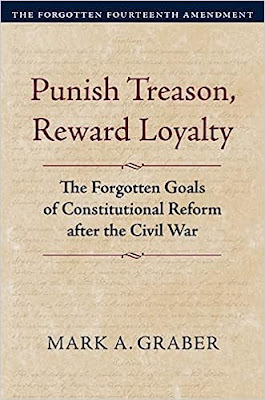
Mark A. Graber, Punish Treason, Reward Loyalty: The Forgotten Goals of Constitutional Reform after the Civil War (University of Kansas Press, 2023)
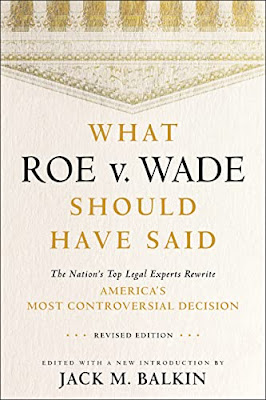
Jack M. Balkin, What Roe v. Wade Should Have Said: The Nation's Top Legal Experts Rewrite America's Most Controversial Decision - Revised Edition (NYU Press, 2023)

Andrew Koppelman, Burning Down the House: How Libertarian Philosophy Was Corrupted by Delusion and Greed (St. Martin’s Press, 2022)

Gerard N. Magliocca, Washington's Heir: The Life of Justice Bushrod Washington (Oxford University Press, 2022)
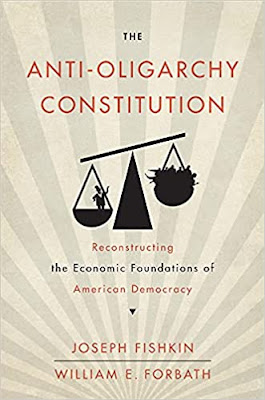
Joseph Fishkin and William E. Forbath, The Anti-Oligarchy Constitution: Reconstructing the Economic Foundations of American Democracy (Harvard University Press, 2022)
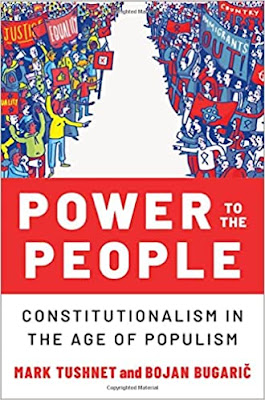
Mark Tushnet and Bojan Bugaric, Power to the People: Constitutionalism in the Age of Populism (Oxford University Press 2021).

Mark Philip Bradley and Mary L. Dudziak, eds., Making the Forever War: Marilyn B. Young on the Culture and Politics of American Militarism Culture and Politics in the Cold War and Beyond (University of Massachusetts Press, 2021).

Jack M. Balkin, What Obergefell v. Hodges Should Have Said: The Nation's Top Legal Experts Rewrite America's Same-Sex Marriage Decision (Yale University Press, 2020)

Frank Pasquale, New Laws of Robotics: Defending Human Expertise in the Age of AI (Belknap Press, 2020)

Jack M. Balkin, The Cycles of Constitutional Time (Oxford University Press, 2020)

Mark Tushnet, Taking Back the Constitution: Activist Judges and the Next Age of American Law (Yale University Press 2020).

Andrew Koppelman, Gay Rights vs. Religious Liberty?: The Unnecessary Conflict (Oxford University Press, 2020)

Ezekiel J Emanuel and Abbe R. Gluck, The Trillion Dollar Revolution: How the Affordable Care Act Transformed Politics, Law, and Health Care in America (PublicAffairs, 2020)

Linda C. McClain, Who's the Bigot?: Learning from Conflicts over Marriage and Civil Rights Law (Oxford University Press, 2020)
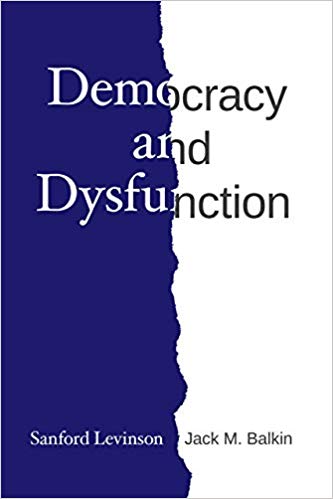
Sanford Levinson and Jack M. Balkin, Democracy and Dysfunction (University of Chicago Press, 2019)

Sanford Levinson, Written in Stone: Public Monuments in Changing Societies (Duke University Press 2018)

Mark A. Graber, Sanford Levinson, and Mark Tushnet, eds., Constitutional Democracy in Crisis? (Oxford University Press 2018)

Gerard Magliocca, The Heart of the Constitution: How the Bill of Rights became the Bill of Rights (Oxford University Press, 2018)

Cynthia Levinson and Sanford Levinson, Fault Lines in the Constitution: The Framers, Their Fights, and the Flaws that Affect Us Today (Peachtree Publishers, 2017)

Brian Z. Tamanaha, A Realistic Theory of Law (Cambridge University Press 2017)

Sanford Levinson, Nullification and Secession in Modern Constitutional Thought (University Press of Kansas 2016)

Sanford Levinson, An Argument Open to All: Reading The Federalist in the 21st Century (Yale University Press 2015)

Stephen M. Griffin, Broken Trust: Dysfunctional Government and Constitutional Reform (University Press of Kansas, 2015)

Frank Pasquale, The Black Box Society: The Secret Algorithms That Control Money and Information (Harvard University Press, 2015)

Bruce Ackerman, We the People, Volume 3: The Civil Rights Revolution (Harvard University Press, 2014)
Balkinization Symposium on We the People, Volume 3: The Civil Rights Revolution

Joseph Fishkin, Bottlenecks: A New Theory of Equal Opportunity (Oxford University Press, 2014)

Mark A. Graber, A New Introduction to American Constitutionalism (Oxford University Press, 2013)

John Mikhail, Elements of Moral Cognition: Rawls' Linguistic Analogy and the Cognitive Science of Moral and Legal Judgment (Cambridge University Press, 2013)

Gerard N. Magliocca, American Founding Son: John Bingham and the Invention of the Fourteenth Amendment (New York University Press, 2013)

Stephen M. Griffin, Long Wars and the Constitution (Harvard University Press, 2013)

Andrew Koppelman, The Tough Luck Constitution and the Assault on Health Care Reform (Oxford University Press, 2013)

James E. Fleming and Linda C. McClain, Ordered Liberty: Rights, Responsibilities, and Virtues (Harvard University Press, 2013)
Balkinization Symposium on Ordered Liberty: Rights, Responsibilities, and Virtues

Andrew Koppelman, Defending American Religious Neutrality (Harvard University Press, 2013)

Brian Z. Tamanaha, Failing Law Schools (University of Chicago Press, 2012)

Sanford Levinson, Framed: America's 51 Constitutions and the Crisis of Governance (Oxford University Press, 2012)

Linda C. McClain and Joanna L. Grossman, Gender Equality: Dimensions of Women's Equal Citizenship (Cambridge University Press, 2012)

Mary Dudziak, War Time: An Idea, Its History, Its Consequences (Oxford University Press, 2012)

Jack M. Balkin, Living Originalism (Harvard University Press, 2011)

Jason Mazzone, Copyfraud and Other Abuses of Intellectual Property Law (Stanford University Press, 2011)

Richard W. Garnett and Andrew Koppelman, First Amendment Stories, (Foundation Press 2011)

Jack M. Balkin, Constitutional Redemption: Political Faith in an Unjust World (Harvard University Press, 2011)

Gerard Magliocca, The Tragedy of William Jennings Bryan: Constitutional Law and the Politics of Backlash (Yale University Press, 2011)

Bernard Harcourt, The Illusion of Free Markets: Punishment and the Myth of Natural Order (Harvard University Press, 2010)

Bruce Ackerman, The Decline and Fall of the American Republic (Harvard University Press, 2010)
Balkinization Symposium on The Decline and Fall of the American Republic

Ian Ayres. Carrots and Sticks: Unlock the Power of Incentives to Get Things Done (Bantam Books, 2010)

Mark Tushnet, Why the Constitution Matters (Yale University Press 2010)

Ian Ayres and Barry Nalebuff: Lifecycle Investing: A New, Safe, and Audacious Way to Improve the Performance of Your Retirement Portfolio (Basic Books, 2010)
.jpg)
Jack M. Balkin, The Laws of Change: I Ching and the Philosophy of Life (2d Edition, Sybil Creek Press 2009)

Brian Z. Tamanaha, Beyond the Formalist-Realist Divide: The Role of Politics in Judging (Princeton University Press 2009)
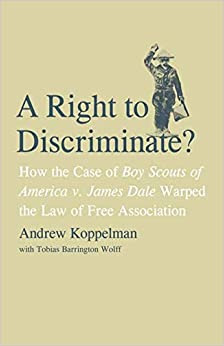
Andrew Koppelman and Tobias Barrington Wolff, A Right to Discriminate?: How the Case of Boy Scouts of America v. James Dale Warped the Law of Free Association (Yale University Press 2009)

Jack M. Balkin and Reva B. Siegel, The Constitution in 2020 (Oxford University Press 2009)

Heather K. Gerken, The Democracy Index: Why Our Election System Is Failing and How to Fix It (Princeton University Press 2009)

Mary Dudziak, Exporting American Dreams: Thurgood Marshall's African Journey (Oxford University Press 2008)

David Luban, Legal Ethics and Human Dignity (Cambridge Univ. Press 2007)

Ian Ayres, Super Crunchers: Why Thinking-By-Numbers is the New Way to be Smart (Bantam 2007)

Jack M. Balkin, James Grimmelmann, Eddan Katz, Nimrod Kozlovski, Shlomit Wagman and Tal Zarsky, eds., Cybercrime: Digital Cops in a Networked Environment (N.Y.U. Press 2007)

Jack M. Balkin and Beth Simone Noveck, The State of Play: Law, Games, and Virtual Worlds (N.Y.U. Press 2006)

Andrew Koppelman, Same Sex, Different States: When Same-Sex Marriages Cross State Lines (Yale University Press 2006)

Brian Tamanaha, Law as a Means to an End (Cambridge University Press 2006)

Sanford Levinson, Our Undemocratic Constitution (Oxford University Press 2006)

Mark Graber, Dred Scott and the Problem of Constitutional Evil (Cambridge University Press 2006)

Jack M. Balkin, ed., What Roe v. Wade Should Have Said (N.Y.U. Press 2005)

Sanford Levinson, ed., Torture: A Collection (Oxford University Press 2004)
Balkin.com homepage
Bibliography
Conlaw.net
Cultural Software
Writings
Opeds
The Information Society Project
BrownvBoard.com
Useful Links
Syllabi and Exams
