Balkinization
an unanticipated consequence of
Jack M. Balkin
Balkinization Symposiums: A Continuing List
E-mail:
Jack Balkin:
jackbalkin at yahoo.com
Bruce Ackerman
bruce.ackerman at yale.edu
Ian Ayres
ian.ayres at yale.edu
Corey Brettschneider
corey_brettschneider at brown.edu
Mary Dudziak
mary.l.dudziak at emory.edu
Joey Fishkin
joey.fishkin at gmail.com
Heather Gerken heather.gerken at yale.edu
Abbe Gluck abbe.gluck at yale.edu
Mark Graber
mgraber at law.umaryland.edu
Stephen Griffin
sgriffin at tulane.edu
Jonathan Hafetz
jonathan.hafetz at shu.edu
Jeremy Kessler
jkessler at law.columbia.edu
Andrew Koppelman
akoppelman at law.northwestern.edu
Marty Lederman
msl46 at law.georgetown.edu
Sanford Levinson
slevinson at law.utexas.edu
David Luban
david.luban at gmail.com
Gerard Magliocca
gmaglioc at iupui.edu
Jason Mazzone
mazzonej at illinois.edu
Linda McClain
lmcclain at bu.edu
John Mikhail
mikhail at law.georgetown.edu
Frank Pasquale
pasquale.frank at gmail.com
Nate Persily
npersily at gmail.com
Michael Stokes Paulsen
michaelstokespaulsen at gmail.com
Deborah Pearlstein
dpearlst at yu.edu
Rick Pildes
rick.pildes at nyu.edu
David Pozen
dpozen at law.columbia.edu
Richard Primus
raprimus at umich.edu
K. Sabeel Rahmansabeel.rahman at brooklaw.edu
Alice Ristroph
alice.ristroph at shu.edu
Neil Siegel
siegel at law.duke.edu
David Super
david.super at law.georgetown.edu
Brian Tamanaha
btamanaha at wulaw.wustl.edu
Nelson Tebbe
nelson.tebbe at brooklaw.edu
Mark Tushnet
mtushnet at law.harvard.edu
Adam Winkler
winkler at ucla.edu
Compendium of posts on Hobby Lobby and related cases
The Anti-Torture Memos: Balkinization Posts on Torture, Interrogation, Detention, War Powers, and OLC
The Anti-Torture Memos (arranged by topic)
Recent Posts
Our adolescent President
![[Powered by Blogger]](https://lh3.googleusercontent.com/blogger_img_proxy/AEn0k_vk3RYXMHdxZ4H_bt9TKZM3K8P-HiO8EcjQXOQtZ-7H8o_ueF3fGJNi2LAPqw6AH4Y9B_XG8Y1OmjvmhXPE42OLNxddY-Sl1UEKCfLcXNxT=s0-d)
Just A Few Blogs
ACS Blog
Alas, a Blog
Althouse
Arts and Letters Daily
Atrios (Eschaton)
Bill of Health
Buzzflash.com
Buzz Machine
Cato at Liberty
Juan Cole (Informed Comment)
Concurring Opinions
The Constitution in 2020
Corrente
Crooked Timber
Daily Howler
Daily Kos
Dana Boyd
Brad DeLong
Digby (Hullabaloo)
Discriminations
Daniel Drezner
Kevin Drum (Mother Jones)
Electrolite
En Banc
Eunomia (Daniel Larison)
Fafblog
Michael Froomkin (Discourse.net)
GovLab (Beth Noveck)
Rick Hasen (Election Law)
History News Network
How Appealing
Ignatz (Sam Heldman)
The Importance of (Ernie Miller)
Infolaw
Instapundit
International Economic Law and Policy Blog
IntLawGrrls
Jacob Levy
Jesus' General
Jurisdynamics
The Kitchen Cabinet
Mark Kleiman
Law Blog Central
Larry Lessig
Lawyers, Guns and Money
Liberal Oasis
Brian Leiter's Law School Reports
The Leiter Reports
Marginal Revolution
Megan McArdle
Memeorandum
Metafilter
Mirror of Justice
The New Republic
Newseum
No More Mister Nice Blog
Brendan Nyhan
Opinio Juris
Orcinus
The Originalism Blog
Pandagon
Passport (Foreign Policy)
Overcoming Bias
Political Animal (Washington Monthly)
Political Theory Daily Review
Political Wire (Taegan Goddard)
The Poor Man
Virginia Postrel
Prawfsblawg
Public Reason
Jonathan Rauch
Raw Story
Redstate
ReligiousLeftLaw.com
Reporters Committee For Freedom of the Press
Reproductive Rights Blog
Rothman's Roadmap to the Right of Publicity
SCOTUS Blog
Seeing the Forest
Clay Shirky
The Shifted Librarian
The Situationist
Larry Solum (Legal Theory)
Andrew Sullivan
Talking Points Memo
Talk Left
Tapped
Tbogg
TechPresident
The Paper Chase (Jurist)
Tom Paine
Tom Tomorrow (This Modern World)
Eve Tushnet
Uggabugga
University of Chicago Law School Faculty Blog
Unqualified Offerings
The Volokh Conspiracy
War and Piece (Laura Rozen)
Wampum
Oliver Willis
Wonkette
Written Description
Matthew Yglesias
Yin
Your Choice of Feeds
1. XML
powered by

2. Atom Feed
3. RSS 2.0
Our adolescent President
Sandy Levinson
Today's New York Times includes the lead story by David Sanger on Bush's speech, which includes the following paragraph:
[Bush] put [the logic of his plan] far more bluntly when leaders of Congress visited the White House earlier on Wednesday. “I said to Maliki this has to work or you’re out,” the president told the Congressional leaders, according to two officials who were in the room. Pressed on why he thought this strategy would succeed where previous efforts had failed, Mr. Bush shot back: “Because it has to.”
Two comments: 1) What exactly does it mean to say "I said to Maliki this has to work our you're out." I thought that the US considered Iraq a "sovereign" state--recall the justification for handing over Saddam Hussein to the Shi'ite government. So how, precisely, can the US assure that Maliki is "out." Is the Iraqi government a wind-up toy after all, whose energy from the last winding-up is running down and thus in need of another American wind-up? 2) Even more to the point, does "Because it has to" count as an answer to the question? Isn't this exactly the response one would might expect from, say, a semi-delusional adolescent when asked why he believes that some particular act will enable him to attain a goal, say a date with the homecoming queen? Perhaps John Hinckley might have given that answer if a friend had asked why he thought shooting Ronald Reagan would be an effective way to Jodie Foster's heart. Yes, I know this is a cheap shot, but the point is deadly serious: We have a criminally incompetent President (alas, this is only a metaphor rather than an evocation of the "high crime and misdemeanor" standard requisite for impeachment) who is literally incapable to giving a cogent response to the most important question currently before the American people (and the world): I.e., why would any rational person believe that the new escalation will be successful? The only reason we take this egregious man seriously is because the Constitution makes it impossible to replace him with someone capable of carrying on an adult conversation. Lots of people are about to die because of the mistaken decision of the Framers not to make "maladministration" an impeachable offense and our supine belief that whatever the Framers decided serves as well (or "well enough") today.
Thanks to the Constitution, we have to endure 740 more days of George Bush as Commander-in-Chief.
Have a good day.
Posted
10:38 AM
by Sandy Levinson [link]
In Bush's speech, he mentioned several times that the Iraqi government (Maliki, etc.) would soon lose the support of the both the Iraqi people and the American public unless things changed -- cracking down on the Shiite death squads, provincial elections, equitable distribution of oil revenues, etc. So, Bush's statement to Maliki was merely an acknowledgment of the political realities. This Surge lite is the last best chance we and they have for things to work out from Bush's and Maliki's perspective. If not, the Maliki government will likely lose all support both domestic and American, and the current Iraqi government will fall. This is a much more plausible and nuanced explanation.

Despite your snide remarks, the statement rings true. Bush knows he has one last play before both he and the Iraqi government lose a critical mass of support in our ongoing efforts. Bush knows and is stating that this is the last move that he can make and still have a hope of "winning" (however defined). If this gamble doesn't pay off, then we likely lose and he knows it. So, yes, it has to succeed because it just has to. If not, not only will this gamble not have worked out, but likely Iraq would have failed.
So forgive Bush if this one statement you pick out by him doesn't contain a long drawn out explanation of this strategy and thinking. But even a half effort on your part would make it perfectly clear as to what he meant.
You're assuming (a) that the Iraqi government is responsive to Iraqi public opinion, and (b) that said opinion oppposes current government policy. I don't share either of those assumptions.
IMO, Maliki is responsive to the Shiite majority, specifically certain clerics. He answers to them; it would take more pressure than Bush has shown he's willing or even able to apply (see Execution) to interfere with that relationship.
I also think that the majority of Shiites in Iraq aren't going to exercise any political power opposing current government policy. Some because they agree with it, most because there is no history of democracy in Iraq which would give them any confidence they could do so without serious risk to themselves.
Thanks to what is becoming an obsession, Professor Levinson's posts are going to end with this comment for the next 740 days.
Maliki will be out only if he commits himself to the Bush plan. But today's NY Times also indicates that he in opposes it, not least becasue one reading is that it threatens Shi'ite hegemony. So, even if one concedes the altogether dubious proposition that the Iraqi "government" is responsive to local public opinion, it's not clear that Maliki stands to lose with American failure to crack down on Shi'ite thugs (who constitute some of his most important support).
American failure to crack down on Shi'ite thugs
Are we going to crack on Shi'ite thugs or Sunni thugs? (okay, that's facetious).
Well, Cato the Elder ended every speech with the words "Delenda est Carthago". Same basic principle.
Doesn't bode well for Bush if the analogy holds true.
I've got the patent on "maladministration™". I've been using it for far longer that Stephen Colbert has his "truthiness" (a "Word Of The Year"). You're infringing my intellectual property here. You have bee warned. Ok, OK!, so maybe it's been around a while. But I'm warning ya, I have priority for the method patent of referring to the Dubya regime as the "maladministration"....
Cheers,

There is a legitimate explanation for the Maliki statement.
In Bush's speech, he mentioned several times that the Iraqi government (Maliki, etc.) would soon lose the support of the both the Iraqi people and the American public unless things changed....
Rather ironic for a post where Prof. Levinson bemoans the inability of the U.S. to remove a preznit who's lost all support and confidence, eh?
And what does the "support of ... the American people" have to do with the price of tea in Sri Lanka?
Cheers,
The "it has to work statement"
Despite your snide remarks, the statement rings true. Bush knows he has one last play before both he and the Iraqi government lose a critical mass of support in our ongoing efforts....
See here. Clap louder. "It has to work."
Cheers,
So forgive Bush if this one statement you pick out by him doesn't contain a long drawn out explanation of this strategy and thinking. But even a half effort on your part would make it perfectly clear as to what he meant.
Pardon me for sayng so, but I think Prof. Levinson's effort did make it "clear as to what [Dubya] meant". Seems to me by your other comments that you caught on as well.
Cheers,
You argue that Mr. Bush's plan for stabilizing Iraq until Iraq is develops its government and military to the point where it can govern on its own is "maladministration" which should be an impeachable offense.
Do you or the political party for which you would vote in your hypothetical no confidence election have a plan which would better accomplish this goal than the Bush plan?
If not, I would suggest that you are throwing daily stones in a glass house.
If Levinson were to come up with a plan for Iraq, the outcome would be part of the plan and couldn't be preset by you and the likes of you
What I'm quite confident of, based on what I've been reading about the assessment of professional military officers is that the current "plan" makes very little sense under any plausible set of assumptions and rests on what is indeed a desperate hope that it will work even though nothing else has. One wonders whether Gen. Petraeus believes that 20,000 new soldiers (only a portion of whom, presumably, could actually engage in combat, given the need for logistical support troops, etc.) are "enough," or whether he believes that this escalation will only make it easier for the next one to take place, until we indeed have (at least) another 100,000 troops in Iraq.
I think that anyone who argues that there is a "happy" solution to Iraq is a fool. There are only catastrophic and slightly less catastrophic ones at this point, in part thanks to Bush's almost literally incredible incompetence.
What we are not discussing, incidentally, is the extent to which the emphasis on Iraq is leading to the equally catastrophic failure of the US mission in Afghanistan, which is far, far more defensible than the Iraqi venture. By all accounts, the Taliban is gaining important ground while allied forces seem stymied. It may be that the Democrats can win in 2008 on the slogan "who lost Afghanistan," whatever happens in Iraq. To put it mildly, that would be terrible, whatever my views of a Democratic victory might be.
A completely gratuitous aside: I do not understand the venom directed at Bart DePalma. I obviously don't agree with him very often, but I have often been led to sharpen my own ideas by his own postings. The last thing I want to do is to generate a thread with yet more discussion of why people feel so hostile, but I want to register my own unhappiness with the tone of some of the postings. As JS Mill argued in On Liberty, one of the virtues of a free-speech regime is precisely that one is forced to consider the merits of one's own ideas by being forced to hard the views of people one may have little patience with.
End of sermon.
Of course, Professor Levinson may agree with you that our best course would be to surrender the battlefield to the enemy and withdraw. However, such a course could in no way be defined a military victory. Rather, surrender to avoid further casualties in combat is the age old epitome of military defeat.
Perhaps, you or Professor Levinson might argue that it is simply impossible for nearly 160,000 US troops and over 200,000 Iraqi troops to win a military victory against what are maybe 20,000 terrorists. If this is the case, then such an argument begs the question of whether you believe that the US military can ever win a military victory against any foe and who would that foe be?
However, I suspect that your goal is in fact military defeat. You are free to disabuse me of this notion.
Which enemy is that - Shi'a or Sunni?
A completely gratuitous aside: I do not understand the venom directed at Bart DePalma.
You mistake "venom" for ridicule and contempt. As well documented, "Bart" is far from an honest disputant, and refuses to engage in any discussion of substantive rebuttals to his "argument by repeated assertion" (or even admit mistakes, such as where he claimed that Brown II
"held that courts may legislate forced bussing of students to achieve desegregation"; his mistaken comments on what is required as "evidence" for motions is also a case in point).
His "arguments" should be met with ridicule and contempt, until he gets his act straight and treats the statements of others as other than annoying noise. If he can't be bothered with addressing the holes in his own logic or dealing with contrary evidence or facts, he's hardly contributing to an productive back-and-forth discussion.
Cheers,
As JS Mill argued in On Liberty, one of the virtues of a free-speech regime is precisely that one is forced to consider the merits of one's own ideas by being forced to hard the views of people one may have little patience with.
End of sermon.
Perhaps "Bart" should take heed, eh?
Cheers,
No healthy forum shall live by one viewpoint alone.
I appreciate your response to my query.
I think the reinforcement of 20,000 troops is far less important than the fact that we are changing our strategy from reacting to the enemy and returning to base to an offensive strategy of clearing and holding. I am uncertain whether 20,000 additional troops are needed to make this work, but I am not on the ground with the necessary information to make that decision.
In a recent Atlantic article, James Fallows noted that we have achieved all of out prewar goals and called for the US to declare victory and high tail it out of Iraq. That prescription is very tempting. However, Fallows ignores the results of a withdrawal. I would suggest that withdrawal will lead to two outcomes.
To start, the Shia would crush the far outnumbered Sunni in an exceedingly bloody civil war which would strongly resemble the Bosnian ethnic cleansing. This outcome could have been avoided if the Sunni joined the government from the outset and accepted their minority status. At that time, the Shia were thrilled simply to rule themselves. However, the Sunni have murdered upwards of 50,000 Shia civilians in a terror campaign with al Qaeda over the past four years. The Shia have been hitting back over the past year and would have done far worse if we had not been present. If we leave, the Shia will finish the job.
Maybe we are willing to wash our hands of the situation and allow the Iraqis to finish this war as I have outlined above. With considerable sympathy for the Soviets, we allowed the Red Army to rape and pillage Germany at the end of WWII.
However, even if we are that callous, withdrawal still leaves our sworn enemy al Qaeda a sanctuary in Iraq. al Qaeda will claim that they drove the US out of Iraq the way they drove the Soviets out of Afghanistan and claim to have driven the US out of Somalia. al Qaeda will have a large pool of Sunni recruits in Iraq as the Shia wage war. Finally, once we are gone, al Qaeda will have a sanctuary from which to train and launch attacks. Once we withdraw, going back in will be nearly politically impossible.
Sometimes the course is not clear and all the outcomes appear to be bad. However, you might feel about entering the war in the first place, we are in the war now and must choose a course. In such a circumstance, it is not sufficient just to complain about the lousy choices. As a sovereign people, we must make a choice on how to proceed. We owe our troops (one of whom is my brother), nothing less.
Of course, Professor Levinson may agree with you that our best course would be to surrender the battlefield to the enemy and withdraw. However, such a course could in no way be defined a military victory. Rather, surrender to avoid further casualties in combat is the age old epitome of military defeat.
The instant "battlefield" is a sovereign country we invaded under false pretenses. By "Bart"'s 'reasoning' here, we would have "surrendered" to Germany and Japan when we withdrew our troops from there post-WWII. While it would be a stretch to say that Iraq and post-WWII Axis countries are identical, "Bart" has long maintaned that we 'succeeded' in Iraq, Dubya has insisted that we won, Iraq has had numerous elections, and the erstwhile raison d'etre for invading Iraq has been allayed. Why isn't it time to go home? Perhaps "Bart" thinks there's a new battle to be fought there. If so, we don't have to take on this new task. I think the reason lies more in what "Bart" considers a "defeat": That people in other countries have the temerity to not do what Dubya tells them to do (not counting his "Bring it on!" taunt).
"We're the cops of the world, boys, we're the cops of the world." -- P. Ochs
Cheers,
In a recent Atlantic article, James Fallows noted that we have achieved all of out prewar goals and called for the US to declare victory and high tail it out of Iraq. That prescription is very tempting. However, Fallows ignores the results of a withdrawal. I would suggest that withdrawal will lead to two outcomes.
As many people pointed out before the ill-fated and unjustiified invasion, should have thought about that beforehand. I don't think that the Dubya maladministration has gotten any wiser in the interim.
In point of fact, yes, there's a couple of possibilities for what might happen if (and when) we leave. None of them particularly good. That hasn't changed; it was pretty much intrinsic in the political and social landscape before the first GBU hit the streets. Nor is it likely to change. "Bart" thinks of military "victory", but while he and others demand a "plan" for "victory" from the nay-sayers, it is he that is devoid for a plan for anything other than some illusory military "victory" where no one is shooting at the U.S. troops any longer (ain't gonna happen), nor does he describe in any realistic terms how he expects us to get there. Furthermore, he neglects to mention how the guns and airstrikes are going to change the political and social realities on the ground to make any difference as to the outcome or the sequelae when we leave. This was the flaw of the PNAC dream to begin with: The Underpants Gnome Plan:
1. Collect Underpants
2. ???
3. Profit!
"Bart" continues to advance military solutions ("When all you've got is a hammer..."). There are no "military solutions" to what hapens when we leave, regardless of when that happens.
Cheers,
I've debated whether to post on this subject or not. I rarely find meta-discussions productive, but since you raised it...
I don't read Bart's posts. I used to, but soon found him intellectually dishonest, a view apparently shared by a number of other posters. That doesn't mean I would adopt the style of some of the responses to him. Personally, I think it best just to ignore posters when I don't think they add anything to the discussion. Some people think a response important because readers might be deceived; in my view, Enlightened Layperson has a good method of achieving this goal with respect to Bart's posts.
This outcome [Shia dominating the Sunnis] could have been avoided if the Sunni joined the government from the outset and accepted their minority status.
Why, oh why didn't they just listen to ol' "Bart", eh? Damn. Why, everyone else does.....
Doesn't matter, though. Counterfactual hypotheticals just ain't worth discussing. "How dare the facts of the ground disagree with me!" "Bart" would have made a poor commander; in one of the early warning signs, the U.S. military war-gamed Iraqi strategy, and the Marine assigned to "play" the Iraqis ended up blowing up the U.S. Navy. He didn't do what they expected him to do. The top brass stopped the game, reset it, and in the end cashiered him. "Bart" is seemingly just as vulnerable to the nasty surprises of reality....
Cheers,
However, even if we are that callous, withdrawal still leaves our sworn enemy al Qaeda a sanctuary in Iraq....
Perhaps. Might have thought of that beforehand.
... al Qaeda will claim that they drove the US out of Iraq the way they drove the Soviets out of Afghanistan and claim to have driven the US out of Somalia..
Oh. So we did support "al Qaeda" in the war against Russia. Another good move.
Anyone listening to the numbnutz that think that U.S. military adventurism is the best thing since sliced bread?
"Bart" needs to read (outside of Freeperville and WhirledNutzDaily, that is). Here's a start. Might even get a heads-up on where we went wrong in Vietnam....
Cheers,
To start, the Shia would crush the far outnumbered Sunni in an exceedingly bloody civil war which would strongly resemble the Bosnian ethnic cleansing. . . . Sunni have murdered upwards of 50,000 Shia civilians in a terror campaign with al Qaeda over the past four years. The Shia have been hitting back over the past year and would have done far worse if we had not been present. If we leave, the Shia will finish the job.
Up till now you have portrayed this war as bad guys (the insurgents) preying on innocents. This is the first time I recall you admitting that our Shiite allies are not so nice either, and that restraining them is an important part of our mission.
But that is, after all, an important part of why so many people doubt that 20,000 more troops will make any difference. Because their mission includes not only defeating insurgents, but restraining our Shiite semi-allies. Groups like the Madhi Army are growing more and more resistent to restraint and more and more eager to get with the ethnic cleansing. Keeping people determined to wage civil war from doing so is hard work, much harder than the sort of straightforward assault we staged on Fallujah. That is one of the reasons we need 500,000 troops to do the job.
Bart writes:claim to have driven the US out of Somalia.
Did they really ever make such a claim?
al Qaeda equates itself with Islam in general. In their speeches and fatwas, al Qaeda trumpet the victories of Islam against the US infidel as if they were their own.
bin Laden's fatwa against the US, which has been called a declaration of war, cites the victory of Islam against the US in Somlia quite prominently to rally support for the jihad against the United States.
http://www.pbs.org/newshour/terrorism/
international/fatwa_1996.html
More recently, the enemy celebrated the recommendation for withdrawal in the Baker Report and claimed victory.
http://www.reliefweb.int/rw/RWB.NSF/
db900SID/ACIO-6W9JJT?OpenDocument
But that is, after all, an important part of why so many people doubt that 20,000 more troops will make any difference. Because their mission includes not only defeating insurgents, but restraining our Shiite semi-allies. Groups like the Madhi Army are growing more and more resistent to restraint and more and more eager to get with the ethnic cleansing. Keeping people determined to wage civil war from doing so is hard work, much harder than the sort of straightforward assault we staged on Fallujah. That is one of the reasons we need 500,000 troops to do the job.
The Mahdi Army is a glorified street gang. We routed them out of Najaf with one battalion. Give me a brigade and two weeks and we can clean them out of Sadr City the same way we cleared Fallujah.
It is important not to grant the enemy imaginary super human powers. In reality, they are pretty poor fighters in a direct engagement. They are far better at killing unarmed civilians.
Did they really ever make such a claim?
Yeah, in an interview with ABC's John Miller in 1998, bin Laden took credit for Somalia, although the relationship is a bit fuzzy, in that it seems unclear that it was done under al-Qaeda's auspice rather than a sort of universal resistance of which al-Qaeda is a part. Do a find search in the page for Somalia, and you'll see what I mean.
This may be surprising to you, but I'd be more than willing to give up much of this supposed future salary if it meant I could reverse a few Administration policies.
It gets easier with practice. :)
The Mahdi Army is a glorified street gang. We routed them out of Najaf with one battalion. Give me a brigade and two weeks and we can clean them out of Sadr City the same way we cleared Fallujah.
At the risk of belaboring the obvious, a "clear and hold" strategy is about clearing and holding. It is the holding, not the clearing that makes it so labor-intensive. None of the forces we are fighting in Iraq are any match for us in direct combat. That is why they are resorting to guerrilla tactics.
Routing any hostile force has never been the problem. The questions are how do we keep them from coming back? How to we keep them from just taking their dirty work somewhere else? How do we know the "routed" forces have not just blended back into the general population? And this is not taking into account that in places like Sadr City the Madhi Army is liable to mean every able-bodied male of military age, which will make "clearing" a messy business.
So it is not enough to "clear." We must hold Najaf. And Sadr City. And Fallujah. And Tal Afar. And Ramadi. And the entire country. That is where the 500,000 troops come in.
Assumed necessity won the day. One can find the relevant Federalist Papers quote. But, our Constitution has an out here. No need for even creative interpretation. Impeach and remove. Tie his hands in various ways. Censure him. Etc.
I think it useful to underline it is not the Constitution alone that doesn't let this happen. It helps by the institutions it sets up. But, if the people demanded it in full force, the means is there.
But, if Sen. Biden is going to equivocate or send conflicting signals on talk shows, well, I don't blame the Constitution alone. I blame those who didn't have to start this thing or make it last this long, this badly. No C. forced them.
btw my niece is an adolescent. To call the president one, well, it's sorta an insult. Many are selfish sorts, but basically have more judgment than GB. Some inherent moral compass which simply would not do this.
True enough a few do not. You hope after trusting them once, one won't again. Live and learn. Anyway, the shot seems a bit cheap, but my problem is more that it doesn't fully define the man.
I reckon I ride Bart second only to Arne, and thus feel it appropriate to address your remark. I can't speak for folks who have history with him at Glenn Greenwald's blog, from which Bart is apparently banned, but for myself this post best reflects Bart, especially his words:
"We are engaged in a debate, not 'proceed[ing] as partners in search of a richly nuanced truth via synthesis,' whatever you think that incomprehensible drivel means."
Then there was:
I am a black and white ideologue...
from this post and:
"Preaching to the choir on libertarian and conservative blogs is mental masturbation and is generally boring."
from the same Balkinization post.
I can't bring myself to interpret these selections, and his general behavior over the weeks I've engaged him, as aimed at anything more than vandalism. He has no use for, and apparently feels himself no use to, "his side," so he has to come to "the other side" to pick fights as a diversion. He is a member of the Colorado Bar, and so I would hold him to a higher standard than I might hold others. How a person could describe dialectic as "incomprehensible" and yet manage to pass the Bar is quite beyond me.
I see others have added their thoughts while I was pulling the links for this (and getting some work done at the day job.) There was a moment I hoped to negotiate a peace with Bart as I have come to enjoy with HumbleLawStudent (and other conservatives who are dear friends in other venues with whom I have enjoyed vigorous debate.) That moment has passed.
Connotation is your primary trick, it wears thin. No one here has defeat as their goal. Most of us here recognize defeat has already happened, it happened when this administration went in under false pretenses with inadequate plans like "shock and awe" and "greet us with flowers in the street." The defeat is real, it's here, it was unavoidable the way these idiots ran things. And now it is time to admit the illegal and immoral invasion and occupation of the sovereign nation of Iraq was a failure in every sense of the word, to cut our losses (oooh, there's that scary word, "cut", which the Cheney junta seems to think is just a pre-fix for "-and-run"!) and stop killing and having our brave troops killed for PNAC lies, crimes and failures.
But, true to Rovian form, you hide behind connotation to avoid confronting reality. Defeat was your reality even during the "mission accomplished" photo-op. Time to staunch the flow of blood this defeat is costing us. If you have the balls, or morals, to do the right thing. Takes a grown up to know when to fold.
Bart: However, I suspect that your goal is in fact military defeat.
Connotation is your primary trick, it wears thin. No one here has defeat as their goal. Most of us here recognize defeat has already happened, it happened when this administration went in under false pretenses with inadequate plans...
Those who wish to withdraw our troops and surrender Iraq to the enemy often claim that a withdrawal is not actually a defeat since the defeat has already happened. If find this excuse weak and self serving. However, I will play this game if you like.
How has our military in Iraq been defeated in any way?
Has our military lost a single battle of any size to the enemy?
Has the enemy compelled our military to retreat from any territory in Iraq?
Does the enemy control the territory of Iraq? A single province? A single province? A single city?
Does the enemy control the government of Iraq? A single province? A single city?
No?
Then, under what measure of military science can you claim that our military has been defeated?
All I can conclude is that you were personally defeated in you own mind before the fight began without personally seeing a single shot fired in anger.
Oh how I wish that killfile worked in the post-a-comment page...
Is it al Qaeda? Is it the Iranians? Is it the Syrians? Is it the Saudis? Is it the Jordanians? Is the Sunnis? Is it the Shi'ites? Is it the Cylons? Please tell us.
BTW, the Channel 4 TV station in the UK recently broadcast two programmes about the war in Afghanistan. They made for very depressing viewing. For instance, the British, under equipped as always, are trying to pacify an area of ten thousand square miles with about 4,000 men. The US 10th Monutain Division consider that the are fighting a "forgotten war". The Taliban appear to be everywhere although still not in a position to stand and fight. The Americans and British need rearm the Iraqi Army and then get out of Iraq and let the current Iraqi government sort out the situation and instead focus on Afghanistan.
We shouldn't leave because it is poor military policy - we should leave because our being there violates the basic tenets of American Democracy.
Obat sipilis dengan bayam duri
Obat sipilis yang bagus
Obat china sipilis
Cara obat sipilis di apotik
Cara obat sipilis pada pria
Cari obat sipilis
Contoh obat sipilis
http://agusus1.blogspot.com/
http://agusyafii.blogspot.com/
http://amateursexxxx.blogspot.co.id/
Obat sipilis Obat kutil kelamin obat wasirhttp://oplosanobatkutilkelamin.blogspot.com/
http://www.smaboy.com/u/obatkutil
http://tinyblogs.net/u/obatkutil/
http://tinyblogs.net/u/obatkutil/
http://obatkutil.blogszino.com/
http://obatkutil.over-blog.com/
http://obatkutilkelamin-tradisional.jimdo.com/
http://www.lautanindonesia.com/blog/obatkutilkelamindanjenggerayam/
http://obatkutilmanjur.weebly.com/
http://obatkutilampuh.livejournal.com/
http://obatkutilkelamintradisional123.blogdetik.com/
http://obatkutil12345.edublogs.org/
http://pengobatankutil.blog.planetbiru.com/
http://obatkutil.freeblog.biz/
http://batkutil.blog.com/
Obat sipilis beli di apotik
Obat sipilis buat wanita
Obat sipilis buatan sendiri
Obat sipilis bagi wanita
Obat buat sipilis
Obat biotik sifilis
Obat antibiotik buat sipilis
Obat tradisional buat sipilis
Obat herbal buat sipilis
Obat dokter buat sipilis
Obat generik buat sipilis
Obat sipilis dengan bayam duri
Obat sipilis yang bagus
Obat buat sifilis
Obat sipilis.com
Obat sipilis ciprofloxacin
Obat china sipilis
obat kutil kelamin dan leher
obat alami menghilangkan kutil kelamin
obat tradisional untuk menghilangkan kutil kelamin
kumpulan obat kutil kelamin
obat tradisional kutil kelamin
obat penyakit kutil kelamin
obat tradisional untuk kutil kelamin
obat alami untuk menghilangkan kutil kelamin
obat alami kutil kelamin
Obat kencing nanah pria
Obat kencing nanah dan darah
Obat kencing nanah apotik
Obat kencing nanah antibiotik
Obat kencing nanah amoxicillin
Obat kencing nanah apa
Obat kencing nanah apa ya
Obat kencing nanah atau gonore
Obat kencing nanah akut
Obat kencing nanah ada di apotik
Obat kencing nanah di apotik umum
Obat kencing nanah paling ampuh
Obat kencing nanah yang ampuh
Obat kencing nanah secara alami
Obat kencing nanah bandung
Obat kencing nanah buatan sendiri
Obat kencing nanah yang bisa dibeli di apotik
Obat herbal untuk mengobati kencing nanah
Obat kencing nanah paling bagus
Obat kencing nanah yang bisa dibeli di apotek
Obat kencing nanah di apotik bebas
Obat kencing nanah yang dijual bebas
Books by Balkinization Bloggers

Gerard N. Magliocca, The Actual Art of Governing: Justice Robert H. Jackson's Concurring Opinion in the Steel Seizure Case (Oxford University Press, 2025)

Linda C. McClain and Aziza Ahmed, The Routledge Companion to Gender and COVID-19 (Routledge, 2024)

David Pozen, The Constitution of the War on Drugs (Oxford University Press, 2024)

Jack M. Balkin, Memory and Authority: The Uses of History in Constitutional Interpretation (Yale University Press, 2024)
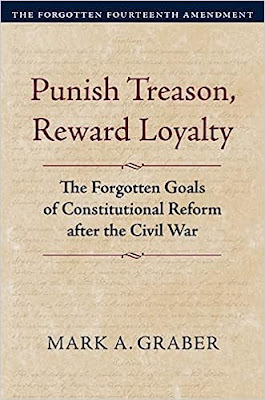
Mark A. Graber, Punish Treason, Reward Loyalty: The Forgotten Goals of Constitutional Reform after the Civil War (University of Kansas Press, 2023)
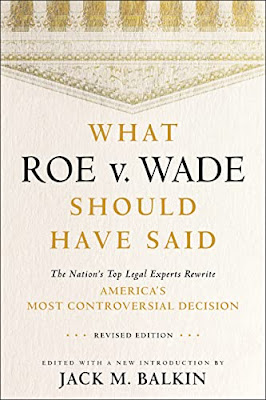
Jack M. Balkin, What Roe v. Wade Should Have Said: The Nation's Top Legal Experts Rewrite America's Most Controversial Decision - Revised Edition (NYU Press, 2023)

Andrew Koppelman, Burning Down the House: How Libertarian Philosophy Was Corrupted by Delusion and Greed (St. Martin’s Press, 2022)

Gerard N. Magliocca, Washington's Heir: The Life of Justice Bushrod Washington (Oxford University Press, 2022)
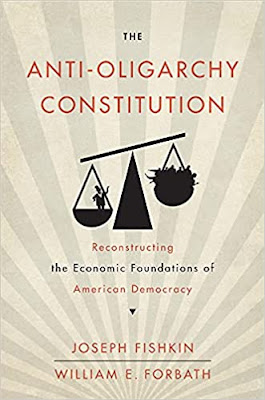
Joseph Fishkin and William E. Forbath, The Anti-Oligarchy Constitution: Reconstructing the Economic Foundations of American Democracy (Harvard University Press, 2022)
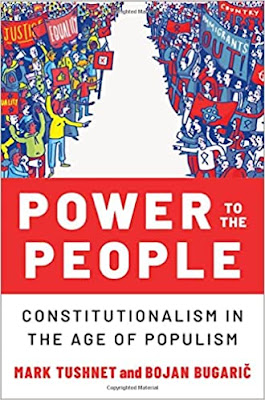
Mark Tushnet and Bojan Bugaric, Power to the People: Constitutionalism in the Age of Populism (Oxford University Press 2021).

Mark Philip Bradley and Mary L. Dudziak, eds., Making the Forever War: Marilyn B. Young on the Culture and Politics of American Militarism Culture and Politics in the Cold War and Beyond (University of Massachusetts Press, 2021).

Jack M. Balkin, What Obergefell v. Hodges Should Have Said: The Nation's Top Legal Experts Rewrite America's Same-Sex Marriage Decision (Yale University Press, 2020)

Frank Pasquale, New Laws of Robotics: Defending Human Expertise in the Age of AI (Belknap Press, 2020)

Jack M. Balkin, The Cycles of Constitutional Time (Oxford University Press, 2020)

Mark Tushnet, Taking Back the Constitution: Activist Judges and the Next Age of American Law (Yale University Press 2020).

Andrew Koppelman, Gay Rights vs. Religious Liberty?: The Unnecessary Conflict (Oxford University Press, 2020)

Ezekiel J Emanuel and Abbe R. Gluck, The Trillion Dollar Revolution: How the Affordable Care Act Transformed Politics, Law, and Health Care in America (PublicAffairs, 2020)

Linda C. McClain, Who's the Bigot?: Learning from Conflicts over Marriage and Civil Rights Law (Oxford University Press, 2020)
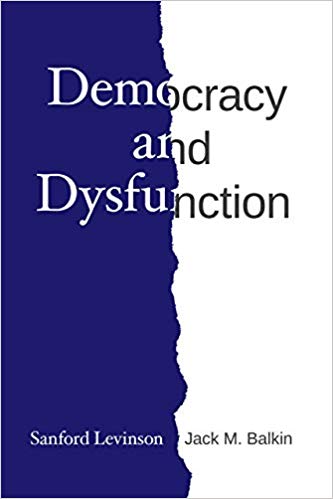
Sanford Levinson and Jack M. Balkin, Democracy and Dysfunction (University of Chicago Press, 2019)

Sanford Levinson, Written in Stone: Public Monuments in Changing Societies (Duke University Press 2018)

Mark A. Graber, Sanford Levinson, and Mark Tushnet, eds., Constitutional Democracy in Crisis? (Oxford University Press 2018)

Gerard Magliocca, The Heart of the Constitution: How the Bill of Rights became the Bill of Rights (Oxford University Press, 2018)

Cynthia Levinson and Sanford Levinson, Fault Lines in the Constitution: The Framers, Their Fights, and the Flaws that Affect Us Today (Peachtree Publishers, 2017)

Brian Z. Tamanaha, A Realistic Theory of Law (Cambridge University Press 2017)

Sanford Levinson, Nullification and Secession in Modern Constitutional Thought (University Press of Kansas 2016)

Sanford Levinson, An Argument Open to All: Reading The Federalist in the 21st Century (Yale University Press 2015)

Stephen M. Griffin, Broken Trust: Dysfunctional Government and Constitutional Reform (University Press of Kansas, 2015)

Frank Pasquale, The Black Box Society: The Secret Algorithms That Control Money and Information (Harvard University Press, 2015)

Bruce Ackerman, We the People, Volume 3: The Civil Rights Revolution (Harvard University Press, 2014)
Balkinization Symposium on We the People, Volume 3: The Civil Rights Revolution

Joseph Fishkin, Bottlenecks: A New Theory of Equal Opportunity (Oxford University Press, 2014)

Mark A. Graber, A New Introduction to American Constitutionalism (Oxford University Press, 2013)

John Mikhail, Elements of Moral Cognition: Rawls' Linguistic Analogy and the Cognitive Science of Moral and Legal Judgment (Cambridge University Press, 2013)

Gerard N. Magliocca, American Founding Son: John Bingham and the Invention of the Fourteenth Amendment (New York University Press, 2013)

Stephen M. Griffin, Long Wars and the Constitution (Harvard University Press, 2013)

Andrew Koppelman, The Tough Luck Constitution and the Assault on Health Care Reform (Oxford University Press, 2013)

James E. Fleming and Linda C. McClain, Ordered Liberty: Rights, Responsibilities, and Virtues (Harvard University Press, 2013)
Balkinization Symposium on Ordered Liberty: Rights, Responsibilities, and Virtues

Andrew Koppelman, Defending American Religious Neutrality (Harvard University Press, 2013)

Brian Z. Tamanaha, Failing Law Schools (University of Chicago Press, 2012)

Sanford Levinson, Framed: America's 51 Constitutions and the Crisis of Governance (Oxford University Press, 2012)

Linda C. McClain and Joanna L. Grossman, Gender Equality: Dimensions of Women's Equal Citizenship (Cambridge University Press, 2012)

Mary Dudziak, War Time: An Idea, Its History, Its Consequences (Oxford University Press, 2012)

Jack M. Balkin, Living Originalism (Harvard University Press, 2011)

Jason Mazzone, Copyfraud and Other Abuses of Intellectual Property Law (Stanford University Press, 2011)

Richard W. Garnett and Andrew Koppelman, First Amendment Stories, (Foundation Press 2011)

Jack M. Balkin, Constitutional Redemption: Political Faith in an Unjust World (Harvard University Press, 2011)

Gerard Magliocca, The Tragedy of William Jennings Bryan: Constitutional Law and the Politics of Backlash (Yale University Press, 2011)

Bernard Harcourt, The Illusion of Free Markets: Punishment and the Myth of Natural Order (Harvard University Press, 2010)

Bruce Ackerman, The Decline and Fall of the American Republic (Harvard University Press, 2010)
Balkinization Symposium on The Decline and Fall of the American Republic

Ian Ayres. Carrots and Sticks: Unlock the Power of Incentives to Get Things Done (Bantam Books, 2010)

Mark Tushnet, Why the Constitution Matters (Yale University Press 2010)

Ian Ayres and Barry Nalebuff: Lifecycle Investing: A New, Safe, and Audacious Way to Improve the Performance of Your Retirement Portfolio (Basic Books, 2010)
.jpg)
Jack M. Balkin, The Laws of Change: I Ching and the Philosophy of Life (2d Edition, Sybil Creek Press 2009)

Brian Z. Tamanaha, Beyond the Formalist-Realist Divide: The Role of Politics in Judging (Princeton University Press 2009)
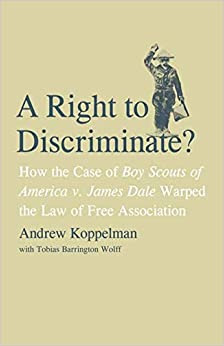
Andrew Koppelman and Tobias Barrington Wolff, A Right to Discriminate?: How the Case of Boy Scouts of America v. James Dale Warped the Law of Free Association (Yale University Press 2009)

Jack M. Balkin and Reva B. Siegel, The Constitution in 2020 (Oxford University Press 2009)

Heather K. Gerken, The Democracy Index: Why Our Election System Is Failing and How to Fix It (Princeton University Press 2009)

Mary Dudziak, Exporting American Dreams: Thurgood Marshall's African Journey (Oxford University Press 2008)

David Luban, Legal Ethics and Human Dignity (Cambridge Univ. Press 2007)

Ian Ayres, Super Crunchers: Why Thinking-By-Numbers is the New Way to be Smart (Bantam 2007)

Jack M. Balkin, James Grimmelmann, Eddan Katz, Nimrod Kozlovski, Shlomit Wagman and Tal Zarsky, eds., Cybercrime: Digital Cops in a Networked Environment (N.Y.U. Press 2007)
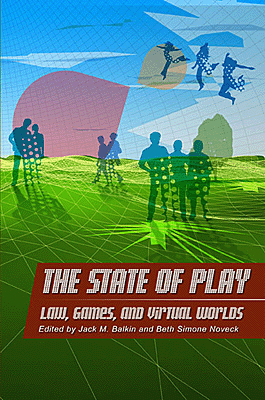
Jack M. Balkin and Beth Simone Noveck, The State of Play: Law, Games, and Virtual Worlds (N.Y.U. Press 2006)

Andrew Koppelman, Same Sex, Different States: When Same-Sex Marriages Cross State Lines (Yale University Press 2006)

Brian Tamanaha, Law as a Means to an End (Cambridge University Press 2006)

Sanford Levinson, Our Undemocratic Constitution (Oxford University Press 2006)

Mark Graber, Dred Scott and the Problem of Constitutional Evil (Cambridge University Press 2006)

Jack M. Balkin, ed., What Roe v. Wade Should Have Said (N.Y.U. Press 2005)

Sanford Levinson, ed., Torture: A Collection (Oxford University Press 2004)
Balkin.com homepage
Bibliography
Conlaw.net
Cultural Software
Writings
Opeds
The Information Society Project
BrownvBoard.com
Useful Links
Syllabi and Exams
