Balkinization
an unanticipated consequence of
Jack M. Balkin
Balkinization Symposiums: A Continuing List
E-mail:
Jack Balkin:
jackbalkin at yahoo.com
Bruce Ackerman
bruce.ackerman at yale.edu
Ian Ayres
ian.ayres at yale.edu
Corey Brettschneider
corey_brettschneider at brown.edu
Mary Dudziak
mary.l.dudziak at emory.edu
Joey Fishkin
joey.fishkin at gmail.com
Heather Gerken heather.gerken at yale.edu
Abbe Gluck abbe.gluck at yale.edu
Mark Graber
mgraber at law.umaryland.edu
Stephen Griffin
sgriffin at tulane.edu
Jonathan Hafetz
jonathan.hafetz at shu.edu
Jeremy Kessler
jkessler at law.columbia.edu
Andrew Koppelman
akoppelman at law.northwestern.edu
Marty Lederman
msl46 at law.georgetown.edu
Sanford Levinson
slevinson at law.utexas.edu
David Luban
david.luban at gmail.com
Gerard Magliocca
gmaglioc at iupui.edu
Jason Mazzone
mazzonej at illinois.edu
Linda McClain
lmcclain at bu.edu
John Mikhail
mikhail at law.georgetown.edu
Frank Pasquale
pasquale.frank at gmail.com
Nate Persily
npersily at gmail.com
Michael Stokes Paulsen
michaelstokespaulsen at gmail.com
Deborah Pearlstein
dpearlst at yu.edu
Rick Pildes
rick.pildes at nyu.edu
David Pozen
dpozen at law.columbia.edu
Richard Primus
raprimus at umich.edu
K. Sabeel Rahmansabeel.rahman at brooklaw.edu
Alice Ristroph
alice.ristroph at shu.edu
Neil Siegel
siegel at law.duke.edu
David Super
david.super at law.georgetown.edu
Brian Tamanaha
btamanaha at wulaw.wustl.edu
Nelson Tebbe
nelson.tebbe at brooklaw.edu
Mark Tushnet
mtushnet at law.harvard.edu
Adam Winkler
winkler at ucla.edu
Compendium of posts on Hobby Lobby and related cases
The Anti-Torture Memos: Balkinization Posts on Torture, Interrogation, Detention, War Powers, and OLC
The Anti-Torture Memos (arranged by topic)
Recent Posts
Using Our Fears to Justify a Power Grab
![[Powered by Blogger]](https://lh3.googleusercontent.com/blogger_img_proxy/AEn0k_vzqMJqtuAV_8TswcJg5R6A9n3OeoyvTt3mr_HUhUQV2auD1BI-4LZzk3GsGZNyU9w5LSJlFIdTTp140v67wc9PmvmjJBtpn7e2saBp3CiN=s0-d)
Just A Few Blogs
ACS Blog
Alas, a Blog
Althouse
Arts and Letters Daily
Atrios (Eschaton)
Bill of Health
Buzzflash.com
Buzz Machine
Cato at Liberty
Juan Cole (Informed Comment)
Concurring Opinions
The Constitution in 2020
Corrente
Crooked Timber
Daily Howler
Daily Kos
Dana Boyd
Brad DeLong
Digby (Hullabaloo)
Discriminations
Daniel Drezner
Kevin Drum (Mother Jones)
Electrolite
En Banc
Eunomia (Daniel Larison)
Fafblog
Michael Froomkin (Discourse.net)
GovLab (Beth Noveck)
Rick Hasen (Election Law)
History News Network
How Appealing
Ignatz (Sam Heldman)
The Importance of (Ernie Miller)
Infolaw
Instapundit
International Economic Law and Policy Blog
IntLawGrrls
Jacob Levy
Jesus' General
Jurisdynamics
The Kitchen Cabinet
Mark Kleiman
Law Blog Central
Larry Lessig
Lawyers, Guns and Money
Liberal Oasis
Brian Leiter's Law School Reports
The Leiter Reports
Marginal Revolution
Megan McArdle
Memeorandum
Metafilter
Mirror of Justice
The New Republic
Newseum
No More Mister Nice Blog
Brendan Nyhan
Opinio Juris
Orcinus
The Originalism Blog
Pandagon
Passport (Foreign Policy)
Overcoming Bias
Political Animal (Washington Monthly)
Political Theory Daily Review
Political Wire (Taegan Goddard)
The Poor Man
Virginia Postrel
Prawfsblawg
Public Reason
Jonathan Rauch
Raw Story
Redstate
ReligiousLeftLaw.com
Reporters Committee For Freedom of the Press
Reproductive Rights Blog
Rothman's Roadmap to the Right of Publicity
SCOTUS Blog
Seeing the Forest
Clay Shirky
The Shifted Librarian
The Situationist
Larry Solum (Legal Theory)
Andrew Sullivan
Talking Points Memo
Talk Left
Tapped
Tbogg
TechPresident
The Paper Chase (Jurist)
Tom Paine
Tom Tomorrow (This Modern World)
Eve Tushnet
Uggabugga
University of Chicago Law School Faculty Blog
Unqualified Offerings
The Volokh Conspiracy
War and Piece (Laura Rozen)
Wampum
Oliver Willis
Wonkette
Written Description
Matthew Yglesias
Yin
Your Choice of Feeds
1. XML
powered by

2. Atom Feed
3. RSS 2.0
Using Our Fears to Justify a Power Grab
JB
[This essay was first published in the Los Angeles Times two months after the 9/11 attacks, on Thursday, November 29, 2001. It was written before many of the Administration's most controversial decisions were revealed to the public, including the NSA domestic surveillance program, the torture memos, the detention of American citizens as enemy combatants, the practice of extraordinary rendition to countries that torture, the secret CIA prisons, and the abuses at Guantanamo Bay. Nevertheless, its analysis of what was about to happen, and of the incentives facing government officials seems entirely relevant five years later.]
* * * * * * *
Moments of crisis do not merely create emergencies. They also create temptations.
Many see the central issue before us as how to balance civil liberties and national interests. This is wrong. The danger we face today is not that government officials will make hasty decisions out of fear or that they will strike the wrong balance between liberty and security. It is that they will use a national crisis as an opportunity to make themselves more powerful and less accountable for what they do--not because they are corrupt and venal but because they are so utterly convinced of their uprightness.
In times of fear, authoritarian impulses are less constrained and people feel less able to complain about them. After all, no one wants to be thought unpatriotic when the country is in such grave danger. And when there is no check on government officials certain of their own rectitude, the temptation for them to act unilaterally and arbitrarily becomes irresistible. Such is the problem we face today, with a president and an attorney general who have dedicated themselves to stamping out all evildoers both outside the country and within it.
An increasingly authoritarian tone is pervading the Bush administration. We have seen it in the so-called USA Patriot legislation hastily pushed through Congress. We have seen it in the presidential order authorizing military tribunals without traditional due process protections and without a right of appeal to anyone but the president himself. We have seen it in new federal policies that permit eavesdropping of confidential communications between attorneys and their clients. And we have seen it in new regulations that allow the attorney general to imprison noncitizens indefinitely, even if an immigration judge has ruled that there is no evidence to justify holding them against their will.
Little by little, the basic elements of procedural fairness that keep democratic governments from acting arbitrarily are being chipped away. No apology is offered for these actions. Those who seize power always feel perfectly entitled to it. Instead, they blame their critics for failing to recognize the seriousness of the situation or for being soft on terrorism, as in the past other critics were blamed for being soft on communism.
The authoritarian impulse is justified, as it always is, through paranoia. The more fearful Americans are, the more they are willing to give their officials a free hand. It is no accident that the same attorney general who has withheld information about who is being detained and why has also repeatedly warned in ominous tones that more terrorist attacks are just around the corner. Secrecy lends credibility to paranoia, which in turn justifies increased secrecy and increased power.
Officials who want greater authority always prefer to work in secret so that they cannot easily be called to account. And when complaints are raised, lack of available information makes it all the more difficult to prove that violations have occurred.
Thus, it is entirely predictable that the current administration has made a fetish of secrecy, for secrecy increases power, not only overseas but in our own country.
Authoritarianism never attacks the institutions of freedom at their strongest point; it always attacks them at their weakest. Even before Sept. 11, the country's immigration laws were often arbitrary and highhanded. Therefore it is no surprise that the administration's latest grabs for executive authority have targeted noncitizens, who have no right to representation and no natural constituency to defend them. The present conflict may not be a war on Islam. But it is increasingly turning out to be a war on noncitizens.
The members of this administration do not want to be dictators. They simply do not want anyone getting in their way. They do not want to be autocrats. They simply do not want to be second-guessed when they know that they are right. They do not want to be antidemocratic. They simply want to be able to act unilaterally in the interests of righteousness. If we would merely allow them to go about their business in secret, and with as much authority as they feel they need, they will take care of things for us.
In times like these, it is a tempting offer, but we should refuse it. For what profit has a country if it shall control the whole world and lose its democratic soul?
Posted
1:50 PM
by JB [link]
I must respectfully disagree here. "Utterly convinced of their uprightness" correlates too strongly with atrocities throughout history, from the Inquisition to Hilter's Final Solution. One might argue it is really a fair gloss for "corruptible."
In the instant case, with this administration, son of an ex-CIA chief, puppet of or participant in the openly imperialist PNAC, which in turn "just happens" to be made up of financial interests of Haliburton and Bechtel, what we have is high-flown ideals acting simply as facade for unbridled will to wealth and power. This is not news, nor is it particularly controversial. We can argue all we like whether the financial interests drive the ideological or the other way around. The result is the same, evil worked in your name and mine.
In particular I would like to point to arguments that H.R.3162, the so-called "patriot" act is a fine example of exactly the opportunism you write of. The result of cointelpro was, in part, the "stove-piping" complained of post-nine-one-one. The intelligence community, with it's obvious links to this administration, leapt at the chance to undo these fetters, "in the name of security." And to this day too wide a swath of our citizens are blind to the dangers therein. Some are willfully blind, some are blinded by their immersion in backwaters of popular culture dominated by the likes of Coulter or O'Reilly or Limbaugh. But the result is the same, evil being done in your name and mine and theirs. Don't give the miscreants of PNAC and this administration one iota of ground, the simply don't deserve it.

I realize the comparisons between then and now are not complete and there are many differences, but its also a somewhat noteworthy that the number of Pompey's force was fairly close to the size of the occupying force in Iraq. Again, I admit there isn't much commonality beyond that, but it struck me as interesting nonetheless.
In times like these, it is a tempting offer, but we should refuse it. For what profit has a country if it shall control the whole world and lose its democratic soul?
While you may disagree with the tools with which we are fighting this war, these tools were the product of our democracy.
Our twice elected President is exercising the authority granted him as commander in chief by the Constitution.
In concert with the President, our elected Congress enacted the Patriot Act, the DTA, the MCA and AUMFs against al Qaeda and Iraq by large bipartisan margins.
There is nothing authoritarian about this democratic process. No one has seized the government by force and is enacting laws by decree. This is our democracy at work.
It's interesting to examine those large bipartisan margins in terms of the arbitrary chipping of "procedural fairness" that the original post laments. For example, while the MCA passed handily (65-35) in the Senate, Specter and Leahy's amendment to the MCA that would have preserved habeas corpus was very narrowly defeated (51-48). Systematizing the military commission system may have bipartisan appeal, but stripping people of their rights does not. Would that it had no appeal at all!

BD: In concert with the President, our elected Congress enacted the Patriot Act, the DTA, the MCA and AUMFs against al Qaeda and Iraq by large bipartisan margins.
It's interesting to examine those large bipartisan margins in terms of the arbitrary chipping of "procedural fairness" that the original post laments. For example, while the MCA passed handily (65-35) in the Senate, Specter and Leahy's amendment to the MCA that would have preserved habeas corpus was very narrowly defeated (51-48). Systematizing the military commission system may have bipartisan appeal, but stripping people of their rights does not. Would that it had no appeal at all!
Nearly all of the Dems voted for their own amendments to satisfy their left base and then 25% or so jumped ship to vote for the overall GOP bill so that they could get re-elected back home where the left Dem base is a small minority.
I think Specter and Leahy's stated intent to restore habeas corpus under the MCA speaks against your election year hypothesis. If it were just a matter of politics, Specter wouldn't have put the amendment up in the first place.
BD: Nearly all of the Dems voted for their own amendments to satisfy their left base and then 25% or so jumped ship to vote for the overall GOP bill so that they could get re-elected back home where the left Dem base is a small minority.
I think Specter and Leahy's stated intent to restore habeas corpus under the MCA speaks against your election year hypothesis. If it were just a matter of politics, Specter wouldn't have put the amendment up in the first place.
Pennsylvania is a solid blue state and Vermont a deep blue state. I am referring to those Dems from the far more numerous purple or red states.
Pennsylvania is a solid blue state...
Just like good ol' Colorado, eh? Yepsters, Pennsylvania is so "solid blue" that it elected Rick Santorum to the Senate until people wised up to the fact that's he's in fact batsh*t crazy.
Just remember, folks: "Bart" lives in a wonderful world where facts come true to fit his theories, rather than the ther way around. He'd make a good 'creation scientist'.
Cheers,
obat perangsang wanita
obat kuat, obat kuat pria
alat sex wanita
Tersedia :
1.PUSAT PEMBESAR PENIS ALAMI dan PERMANEN
2.VIMAX ASLI
3.OBAT PERANGSANG WANITA CAIR SPONTAN
4.ALAT BANTU SEX WANITA TERBARU
5.OBAT KUAT VIAGRA USA Asli 100mg
6.OBAT KUAT HERBAL
7.SELAPUT DARA BUATAN made in JAPAN
8.OBAT PERANGSANG WANITA SPONTAN
9.OBAT PENYUBUR SPERMA dan KANDUNGAN
10.ALAT BANTU SEX WANITA (SEX TOYS) KOMPLIT
11.ALAT BANTU SEX PRIA (SEX TOYS) KOMPLIT
12.Alat Bantu Sex PRIA Wanita LENGKAP
13.KOSMETIK KECANTIKAN HERBAL ALAMI
info lebih lengkap clik disini
Obat Pembesar Penis
Alat Pembesar Penis
Vimax Extender
Vakum Pembesar Penis
Obat Penghilang Tatto
Tottonox
http://pusatobat69.com/
produk pria wanita dewasa
alat bantu sex pria
alat bantu seksual wanita
alat bantu sex wanita
kondom bergerigi
obat kuat pria
obat sex ampuh
obat penguat sex pria
obat pembesar penis
jual obat pembesar alat vital
alat pembesar alat vital
obat pembesar alat vital
obat perangsang wanita
obat sex perangsang wanita
obat perangsang wanita murah
obat perangsang wanita cair
obat perangsang ampuh
cream pemutih wajah
obat penghilang bekas luka
obat pelangsing badan
jual obat pelangsing badan
obat pelangsing super
obat pemerah bibir
obat peninggi badan cepat
obat perapat vagina
obat perontok bulu
pembesar pantat
alat pembesar payudara
obat pembesar payudara
jual obat pemutih gigi
Obat Perangsang Wanita
Perangsang Opium Spray
Perangsang Max Women
Perangsang DH2O Cair
Perangsang Potenzol Cair
Perangsang Sex Drops Cair
Perangsang Blue Wizard
Obat Sex Wanita
Obat Pembesar Penis
Vacum Pembesar Penis
Pembesar Penis VigRX Plus Asli
Pembesar Penis Celana Vakou
Pembesar Penis Vacum Handsomp
Pembesar Penis Vimax Canada
Pembesar Penis Arabian Oil
Pembesar Penis Lintah Papua
Obat Kuat Sex
Obat Kuat Viagra Usa
Obat Kuat Maxman
Obat Kuat Procomil Spray
Obat Kuat Africa Black Ant
Obat Kuat Nangen ZhengZhanzu
Obat Kuat Maximum Powerfull
Obat Kuat Srigala Merah
Obat Kuat Long Stick
Obat Kuat V6 Tian
Obat Kuat Levitra
Obat Kuat Cialis
Alat Bantu Sex Alat Sex Alat Bantu
very good.....!!!!!
? Obat Perangsang Permen
? Obat Perangsang
? Obat Perangsang Wanita
? Perangsang Permen Karet
? Perangsang Permen Cinta
? Sex Love - Chewing Gum
? Permen Cinta
? Obat Tahan Lama Terbaik
? Obat Tahan Lama Alami
? Obat Tahan Lama Pria
? Obat Kuat SexTerbaik
? Obat Kuat Sex Pria Herbal
? Pil Biru Tahan Lama
vmenplus asli
harga vmenplus
Procomil spray
Cilais 80mg
Obat viagra
obat kuat maxman
dildo getar goyang
wanita malam penghibur
cara merangsang wanita
cara memperbesar penis secara alami
cara memperbesar payudara
payudara besar artis
cara melangsingkan tubuh
jenis buah untuk kuat ereksi
cara tahan lama hubungan pasutri
ciri orang pecandu seks
ciri pria yang romantis
foto model pakai bigini
obat gonore tenggorokan
obat gonore paling efektif
obat gonore pada wanita
obat gonore atau kencing nanah
obat gonore apa
obat alternatif gonore
obat gonore yang ampuh
obat gonore yg ampuh
obat gonore yang paling ampuh
obat gonore yang dijual di apotik
obat buat gonore
obat bakteri gonore
obat gonore dijual bebas
obat pembunuh bakteri gonore
buah obat gonore
obat gonore dan klamidia
obat gonore dokter
nama obat gonore di apotek
jenis obat gonore di apotik
harga obat gonore di apotik
merk obat gonore di apotik
obat sifilis dan gonore
fungsi obat gonore
obat gejala gonore
obat gonore untuk ibu hamil
obat gonore untuk wanita hamil
harga obat gonore
obat injeksi gonore
obat kutil kelamin yang ada di apotik
obat kutil kelamin yg dijual di apotik
obat kutil di kemaluan wanita
pengobatan kutil kelamin pada pria
pengobatan penyakit kutil kelamin pada pria
obat penyakit kutil pada kelamin pria
Pengobatan kutil kelamin aman dan tanpa operasi
obat kutil pada alat kelamin pria
pengobatan kutil kelamin
pengobatan kutil kelamin pada pria dan wanita
pengobatan kutil kelamin pria
pengobatan kutil kelamin wanita
pengobatan kutil kelamin dengan cuka apel
pengobatan kutil kelamin di anus
Cara mengobati kutil di kelamin wanita hamil
pengobatan kutil kelamin di bandung
obat kutil kelamin
obat kutil kelamin di apotik
obat kutil kelamin tradisional
obat kutil kelamin wanita
obat kutil kelamin apotik
obat kutil kelamin murah
obat kutil kelamin de nature
obat kutil kelamin untuk ibu hamil
obat kutil kelamin dokter
Cara mengobati jengger ayam dan kutil kelamin
Obat untuk kutil kelamin pada wanita
Pengobatan kutil pada kelamin pria
Ciri ciri kutil kelamin dan obatnya
Cara mengobati wasir dengan cepat
Cara mengobati wasir dengan propolis
Cara mengobati wasir tanpa obat
Cara mengobati wasir yang sudah parah
Cara mengobati wasir berdarah secara alami
Cara mengobati wasir luar secara alami
Cara mengobati wasir dengan lidah buaya
Cara mengobati wasir setelah melahirkan
Cara mengobati wasir luar tanpa operasi
Cara mengobati wasir alami
Cara mengobati wasir akut
Cara mengobati wasir atau ambeyen
Cara mengobati wasir/ambeyen
Cara mengobati wasir atau ambien
Cara mengobati wasir/ambien
Cara mengobati wasir yang alami
Cara mengobati penyakit wasir ambeyen
Obat tradisional menyembuhkan kutil kelamin
Obat minum untuk kutil kelamin
Obat medis untuk kutil kelamin
Obat kutil kelamin DE NATURE
Merek obat kutil kelamin
Obat kutil kelamin de nature
Nama obat kutil kelamin
Nama salep obat kutil kelamin
Obat kutil kelamin tanpa operasi
Obat oles untuk kutil kelamin
Obat kutil di alat kelamin pria
Obat untuk kutil pada kelamin
Obat tradisional kutil pada kelamin
Obat penyakit kutil kelamin
Obat penghilang kutil kelamin
Obat perontok kutil kelamin
Obat tradisional kutil kelamin pada pria
Obat untuk penyakit kutil kelamin
Propolis untuk obat kutil kelamin
Obat alami untuk penyakit kutil kelamin
Obat kutil pd kelamin
Resep obat kutil kelamin
Obat anti sifilis
Obat sipilis dijual di apotik
Obat sipilis murah di apotik
Obat alami sipilis pada pria
Obat sifilis ampuh
Obat sipilis beli di apotik
Obat sipilis buat wanita
Obat sipilis buatan sendiri
Obat sipilis bagi wanita
Obat buat sipilis
Obat biotik sifilis
Obat antibiotik buat sipilis
Obat tradisional buat sipilis
Obat herbal buat sipilis
Obat dokter buat sipilis
Obat generik buat sipilis
Obat sipilis dengan bayam duri
Obat sipilis yang bagus
Obat buat sifilis
Obat sipilis.com
Obat sipilis ciprofloxacin
Obat china sipilis
obat kutil kelamin dan leher
obat alami menghilangkan kutil kelamin
obat tradisional untuk menghilangkan kutil kelamin
kumpulan obat kutil kelamin
obat tradisional kutil kelamin
obat penyakit kutil kelamin
obat tradisional untuk kutil kelamin
Books by Balkinization Bloggers

Gerard N. Magliocca, The Actual Art of Governing: Justice Robert H. Jackson's Concurring Opinion in the Steel Seizure Case (Oxford University Press, 2025)

Linda C. McClain and Aziza Ahmed, The Routledge Companion to Gender and COVID-19 (Routledge, 2024)

David Pozen, The Constitution of the War on Drugs (Oxford University Press, 2024)

Jack M. Balkin, Memory and Authority: The Uses of History in Constitutional Interpretation (Yale University Press, 2024)
Mark A. Graber, Punish Treason, Reward Loyalty: The Forgotten Goals of Constitutional Reform after the Civil War (University of Kansas Press, 2023)
Jack M. Balkin, What Roe v. Wade Should Have Said: The Nation's Top Legal Experts Rewrite America's Most Controversial Decision - Revised Edition (NYU Press, 2023)

Andrew Koppelman, Burning Down the House: How Libertarian Philosophy Was Corrupted by Delusion and Greed (St. Martin’s Press, 2022)

Gerard N. Magliocca, Washington's Heir: The Life of Justice Bushrod Washington (Oxford University Press, 2022)
Joseph Fishkin and William E. Forbath, The Anti-Oligarchy Constitution: Reconstructing the Economic Foundations of American Democracy (Harvard University Press, 2022)
Mark Tushnet and Bojan Bugaric, Power to the People: Constitutionalism in the Age of Populism (Oxford University Press 2021).

Mark Philip Bradley and Mary L. Dudziak, eds., Making the Forever War: Marilyn B. Young on the Culture and Politics of American Militarism Culture and Politics in the Cold War and Beyond (University of Massachusetts Press, 2021).

Jack M. Balkin, What Obergefell v. Hodges Should Have Said: The Nation's Top Legal Experts Rewrite America's Same-Sex Marriage Decision (Yale University Press, 2020)

Frank Pasquale, New Laws of Robotics: Defending Human Expertise in the Age of AI (Belknap Press, 2020)

Jack M. Balkin, The Cycles of Constitutional Time (Oxford University Press, 2020)

Mark Tushnet, Taking Back the Constitution: Activist Judges and the Next Age of American Law (Yale University Press 2020).

Andrew Koppelman, Gay Rights vs. Religious Liberty?: The Unnecessary Conflict (Oxford University Press, 2020)

Ezekiel J Emanuel and Abbe R. Gluck, The Trillion Dollar Revolution: How the Affordable Care Act Transformed Politics, Law, and Health Care in America (PublicAffairs, 2020)

Linda C. McClain, Who's the Bigot?: Learning from Conflicts over Marriage and Civil Rights Law (Oxford University Press, 2020)
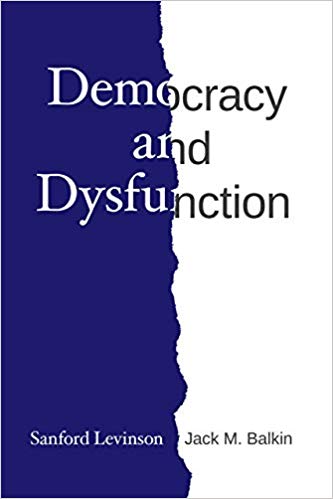
Sanford Levinson and Jack M. Balkin, Democracy and Dysfunction (University of Chicago Press, 2019)

Sanford Levinson, Written in Stone: Public Monuments in Changing Societies (Duke University Press 2018)

Mark A. Graber, Sanford Levinson, and Mark Tushnet, eds., Constitutional Democracy in Crisis? (Oxford University Press 2018)

Gerard Magliocca, The Heart of the Constitution: How the Bill of Rights became the Bill of Rights (Oxford University Press, 2018)

Cynthia Levinson and Sanford Levinson, Fault Lines in the Constitution: The Framers, Their Fights, and the Flaws that Affect Us Today (Peachtree Publishers, 2017)

Brian Z. Tamanaha, A Realistic Theory of Law (Cambridge University Press 2017)

Sanford Levinson, Nullification and Secession in Modern Constitutional Thought (University Press of Kansas 2016)

Sanford Levinson, An Argument Open to All: Reading The Federalist in the 21st Century (Yale University Press 2015)

Stephen M. Griffin, Broken Trust: Dysfunctional Government and Constitutional Reform (University Press of Kansas, 2015)

Frank Pasquale, The Black Box Society: The Secret Algorithms That Control Money and Information (Harvard University Press, 2015)

Bruce Ackerman, We the People, Volume 3: The Civil Rights Revolution (Harvard University Press, 2014)
Balkinization Symposium on We the People, Volume 3: The Civil Rights Revolution

Joseph Fishkin, Bottlenecks: A New Theory of Equal Opportunity (Oxford University Press, 2014)

Mark A. Graber, A New Introduction to American Constitutionalism (Oxford University Press, 2013)

John Mikhail, Elements of Moral Cognition: Rawls' Linguistic Analogy and the Cognitive Science of Moral and Legal Judgment (Cambridge University Press, 2013)

Gerard N. Magliocca, American Founding Son: John Bingham and the Invention of the Fourteenth Amendment (New York University Press, 2013)

Stephen M. Griffin, Long Wars and the Constitution (Harvard University Press, 2013)

Andrew Koppelman, The Tough Luck Constitution and the Assault on Health Care Reform (Oxford University Press, 2013)

James E. Fleming and Linda C. McClain, Ordered Liberty: Rights, Responsibilities, and Virtues (Harvard University Press, 2013)
Balkinization Symposium on Ordered Liberty: Rights, Responsibilities, and Virtues

Andrew Koppelman, Defending American Religious Neutrality (Harvard University Press, 2013)

Brian Z. Tamanaha, Failing Law Schools (University of Chicago Press, 2012)

Sanford Levinson, Framed: America's 51 Constitutions and the Crisis of Governance (Oxford University Press, 2012)

Linda C. McClain and Joanna L. Grossman, Gender Equality: Dimensions of Women's Equal Citizenship (Cambridge University Press, 2012)

Mary Dudziak, War Time: An Idea, Its History, Its Consequences (Oxford University Press, 2012)

Jack M. Balkin, Living Originalism (Harvard University Press, 2011)

Jason Mazzone, Copyfraud and Other Abuses of Intellectual Property Law (Stanford University Press, 2011)

Richard W. Garnett and Andrew Koppelman, First Amendment Stories, (Foundation Press 2011)

Jack M. Balkin, Constitutional Redemption: Political Faith in an Unjust World (Harvard University Press, 2011)

Gerard Magliocca, The Tragedy of William Jennings Bryan: Constitutional Law and the Politics of Backlash (Yale University Press, 2011)

Bernard Harcourt, The Illusion of Free Markets: Punishment and the Myth of Natural Order (Harvard University Press, 2010)

Bruce Ackerman, The Decline and Fall of the American Republic (Harvard University Press, 2010)
Balkinization Symposium on The Decline and Fall of the American Republic

Ian Ayres. Carrots and Sticks: Unlock the Power of Incentives to Get Things Done (Bantam Books, 2010)

Mark Tushnet, Why the Constitution Matters (Yale University Press 2010)

Ian Ayres and Barry Nalebuff: Lifecycle Investing: A New, Safe, and Audacious Way to Improve the Performance of Your Retirement Portfolio (Basic Books, 2010)
.jpg)
Jack M. Balkin, The Laws of Change: I Ching and the Philosophy of Life (2d Edition, Sybil Creek Press 2009)

Brian Z. Tamanaha, Beyond the Formalist-Realist Divide: The Role of Politics in Judging (Princeton University Press 2009)
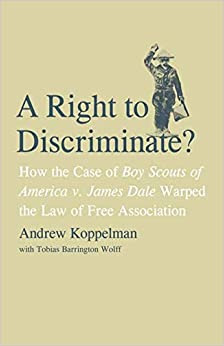
Andrew Koppelman and Tobias Barrington Wolff, A Right to Discriminate?: How the Case of Boy Scouts of America v. James Dale Warped the Law of Free Association (Yale University Press 2009)

Jack M. Balkin and Reva B. Siegel, The Constitution in 2020 (Oxford University Press 2009)

Heather K. Gerken, The Democracy Index: Why Our Election System Is Failing and How to Fix It (Princeton University Press 2009)

Mary Dudziak, Exporting American Dreams: Thurgood Marshall's African Journey (Oxford University Press 2008)

David Luban, Legal Ethics and Human Dignity (Cambridge Univ. Press 2007)

Ian Ayres, Super Crunchers: Why Thinking-By-Numbers is the New Way to be Smart (Bantam 2007)

Jack M. Balkin, James Grimmelmann, Eddan Katz, Nimrod Kozlovski, Shlomit Wagman and Tal Zarsky, eds., Cybercrime: Digital Cops in a Networked Environment (N.Y.U. Press 2007)
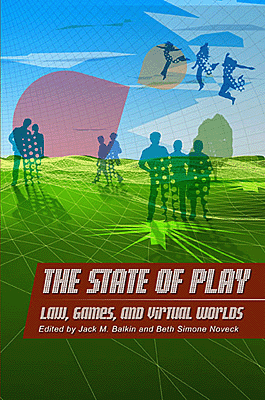
Jack M. Balkin and Beth Simone Noveck, The State of Play: Law, Games, and Virtual Worlds (N.Y.U. Press 2006)

Andrew Koppelman, Same Sex, Different States: When Same-Sex Marriages Cross State Lines (Yale University Press 2006)

Brian Tamanaha, Law as a Means to an End (Cambridge University Press 2006)

Sanford Levinson, Our Undemocratic Constitution (Oxford University Press 2006)

Mark Graber, Dred Scott and the Problem of Constitutional Evil (Cambridge University Press 2006)

Jack M. Balkin, ed., What Roe v. Wade Should Have Said (N.Y.U. Press 2005)

Sanford Levinson, ed., Torture: A Collection (Oxford University Press 2004)
Balkin.com homepage
Bibliography
Conlaw.net
Cultural Software
Writings
Opeds
The Information Society Project
BrownvBoard.com
Useful Links
Syllabi and Exams
